Gen X vs Millenial vs Gen Z | Car Culture. Takeovers, EVs, Hypercars & Burble Tune
About this episode
Gen X host Brian Scato, millennial Ron Zarris, and Gen Z photographer Chas Warren (Chasidog) kick off a “generational conflict” discussion on how car culture is evolving. They compare access and tastes shaped by age, from Chas’s start with Midnight Club and Gran Turismo to his film-first photography style and growing reach. The conversation touches on how meets shifted from mixed crowds to more specialized supercar/JDM scenes, plus takeovers, EVs, hypercars, and the appeal of burble tune—along with the inevitable “kids these days” debates.
It’s the Battle of the Generations on Very Vehicular this week, as our three guests debate their views on car culture. Representing Gen X is your host, Scotto. In the tastefully grey (or is it green these days?) Millennial corner, it’s returning friend of the pod, Ron Zaras, and lastly, hoisting the flag for all of Gen Z, we’ve got newcomer Chaz Warren (@ChazzyDawg). Chazzy made his name in the world of film photography, where his visceral style found viral success on Instagram, his camera acting as a passport to a world of cars he’d only dreamed of being able to approach. Now, alongside working for big names in the industry, he’s set his sights on creating his own culture of photo-forward meets, where the old rules don’t apply, as he brings community to legions of young car worshippers, whether they’re toting analog or digital machinery. So whether you’re prehistoric; or barely old enough to sneak out of the house unhindered by your parents tracking you on Life360, find out what this unusual council makes of it all. Enjoy.
Partners:
FCP Euro
Heatwave Visual
Wera Tools
KW Suspension
Producer: Nick Rutter @nickrutterarts
Editor: Julius Adorsu @adorsu.j
Music: SlikSound
Patreon: https://patreon.com/u37266647
https://bio.site/321actionaction
00:00 - Welcome & Introduction
02:42 - Chazzy Origin Story
04:39 - It All Started With Midnight Club 2
08:03 - Access and Car Meets
11:00 - First Serious Shoots
14:24 - Is Automotive Culture Peak Right Now?
18:44 - Drifting as the Next Wave
23:01 - $100K Dream Car You Could Buy From A Dealership Today
28:36 - Favorite Motorsport
34:57 - Style Over Specs
36:05 - Do Kids Care About Supercars and Hypercars?
37:22 - When Was Peak Hypercar?
40:34 - EV Emotion Debate
44:30 - Cybertruck Reality Check
45:00 - Car Prices Are out of Control
47:15 - Automotive Gentrification
52:43 - Sponsor: FCP Euro
54:09 - Takeovers Then vs Now
58:54 - Clout Culture and Danger
01:09:32 - Legal Places to Slide
01:16:20 - Hooning Isn’t a Crime
01:17:17 - Getting Pulled Over
01:22:04 - Is There Still Love for RWB?
01:23:31 - Sponsors: Heat Wave Visual, Wera Tools & KW Suspensions
01:25:16 - That Time Scotto Nearly Killed Himself and Ron in the 911 Turbo
01:28:44 - Is It Time for Spinners to Make a Comback?
01:35:13 - Is the Answer Always Japan and JDM?
01:46:11 - Do Kids Really Like Burble Tune?
01:51:55 - Hearing 2-Step in the Flesh
01:54:37 - Street Legal Race Cars
01:56:24 - Photo Meets and Community
01:58:42 - We Need to Bring Back Cruising
01:59:50 - DTLA Car District on the Rise
02:02:34 - Learning from Low Rider Culture
02:06:59 - Three Car Garage Picks
02:15:33 - Dailying an RS6?
super cars
"“if you grew up in like, you know, whatever Kansas city, like you, there probably a lot less super cars there.”"
“Super cars” means extremely expensive, very fast, rare cars. The point here is that in some places you’ll see lots of them, and in other places you won’t.
“Super cars” is shorthand for very high-performance, high-cost exotic cars that are typically rare and expensive compared with mainstream vehicles. The host uses it to contrast what kinds of cars people can realistically see and photograph depending on where they grew up.

Dodge Srt
"I guess I'll do the photos. Nothing against Dodge SRT fours. But you're going to shoot the one SRT four..."
“Dodge” is the car brand being discussed. The speaker is talking about Dodge performance models, including an SRT version. They’re deciding which one to focus on for photos.
“Dodge” in this context refers to the brand, with the speaker specifically calling out “Dodge SRT fours” and choosing which car to photograph. That suggests the conversation is about Dodge performance models and how certain trims or variants stand out. It’s discussed because the brand’s performance lineup is a key part of the episode’s car talk.
Cobalt SS
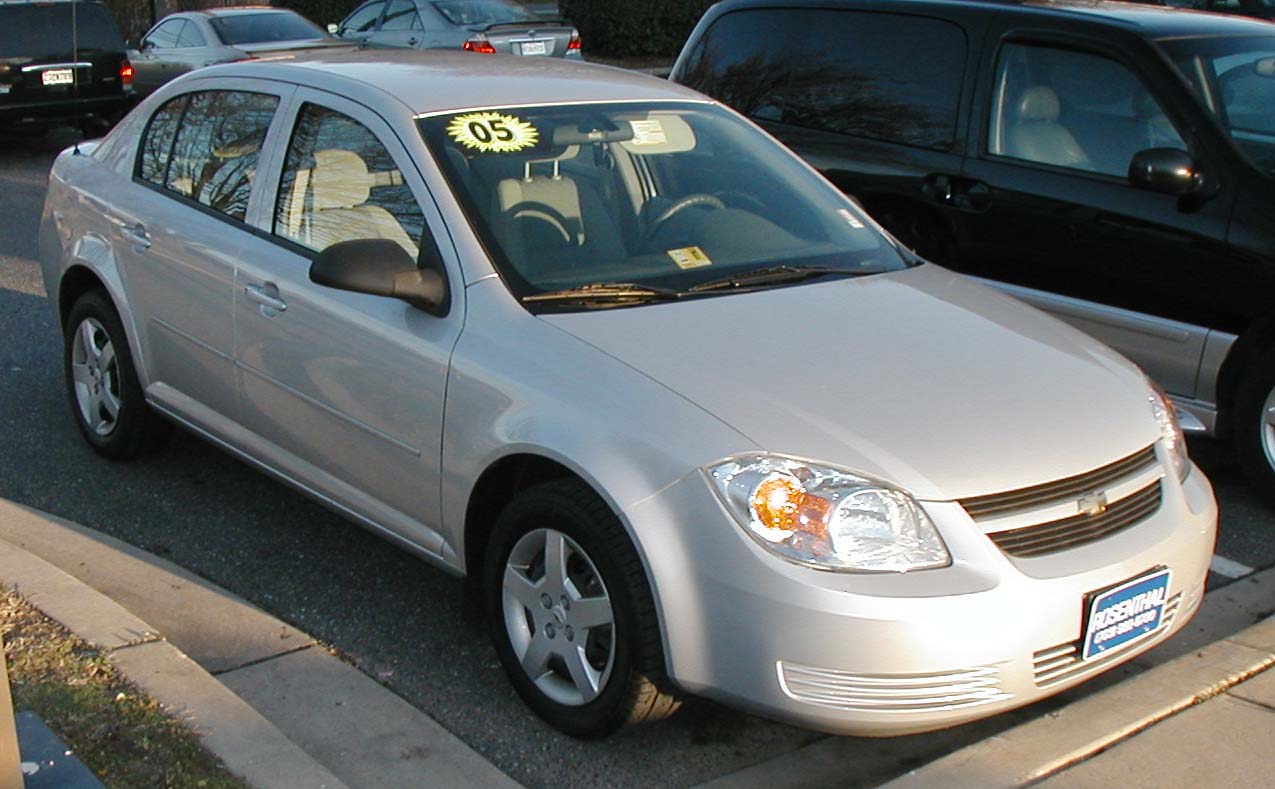
"And like, I think we need to just start moving some of the shade to the Cobalt SS."
The Chevrolet Cobalt SS is a sportier version of the Chevy Cobalt. People mention it because it’s a common “starter” performance car that many enthusiasts start with before upgrading.
The Chevrolet Cobalt SS is a performance trim of the compact Cobalt, known in enthusiast circles for being an affordable, turbocharged-ish (depending on year) platform with a strong aftermarket. In car culture talk, it often represents the “entry-level” performance scene before people move up to higher-end cars.

Honda Civic
"Cause that is what I call it the other day, the Midwest civic. It's the Midwest civic."
The Honda Civic is a very common compact car. In car culture, it’s often the go-to car people see at meets, so it becomes a kind of local stereotype.
The Honda Civic is a long-running compact car line that’s especially popular in the tuner and street-racing communities. When someone calls it “the Midwest civic,” they’re usually referring to a common, locally recognizable Civic that shows up at meets and events.
car spotting
"Yeah. So like doing like car spotting type stuff."
Car spotting is basically hunting for cool cars you see in the wild and taking pictures. It’s a way to get into car culture without needing to own a super expensive car first.
Car spotting is the hobby of finding and photographing interesting cars in public places—often in parking lots, neighborhoods, or outside events. It’s a common “gateway” activity for people who later get access to more exclusive meets or media coverage.
takeovers
"And then at the end before takeovers and all that were a thing, people would just do burnouts leaving."
In car culture, “takeovers” usually refers to large, informal meetups where groups of cars gather and drive/park together in a public area, often with a social-media spotlight. They’re associated with a more organized, viral style of street-event culture than a casual car meet.
hyper cars
"And how I kind of got into super cars and hyper cars was because I was really into car shooting flames, like, but twin turbo cars."
“Hyper cars” are like supercars, but even more extreme—usually rarer and more high-tech. The speaker is saying they got into the most intense end of the car world.
“Hyper cars” refers to an even more extreme tier than supercars—typically limited-production, cutting-edge machines with very high performance and price. The speaker uses it to describe the direction their interest in car culture evolved toward.
shooting flames
"And how I kind of got into super cars and hyper cars was because I was really into car shooting flames, like, but twin turbo cars."
“Shooting flames” is when you see fire come out of the exhaust. It usually happens when the car is tuned and/or driven in a way that causes extra fuel to ignite in the exhaust.
“Shooting flames” is the visible burst of fire from a car’s exhaust, usually caused by unburned fuel igniting in the exhaust stream. It’s commonly associated with aggressive tuning and certain driving conditions, and it’s often discussed alongside “burble”/pops and bangs culture.
twin turbo
"And yeah, that's kind of just how it was. And then over time you noticed them getting a lot more specialized, like super cars only. ... I was really into car shooting flames, like, but twin turbo cars."
“Twin turbo” means the engine has two turbochargers. Turbos cram extra air into the engine so it can make more power.
A twin-turbo setup uses two turbochargers to force more air into the engine, improving power and responsiveness. It’s often discussed in performance circles because it can help reduce turbo lag compared with a single turbo, depending on the design.
Michael Rigo
"And like, I remember seeing a photographer named Michael Rigo taking photos of this one hurricane that was twin turbo shooting flames in New York."
Michael Rigo is mentioned as a photographer whose pictures inspired the speaker. The speaker liked his photos of a dramatic twin-turbo car scene.
Michael Rigo is referenced as a photographer who captured images of a twin-turbo car “shooting flames” in New York. This is relevant because it highlights how specific photographers helped shape modern car-culture aesthetics through social media.
Hoonigan
"And I remember I was just like, I need to get a print of this and I put it on my wall. And then again, Hoonigan, shout out Hoonigan. I saw Jim Conner, the Los Angeles one."
Hoonigan is a car-culture brand/media that puts out videos and content about cars and driving. The speaker is saying it helped inspire them.
Hoonigan is a motorsports media and lifestyle brand known for car culture content, stunt driving, and performance-tuning communities. In this context, it’s being credited as an inspiration source for the speaker’s interest in cars.
pro charger
"The first photo shoot where I really took it serious was this pro charge Mustang and it was when the pro charger was first thing."
A ProCharger is a type of engine upgrade that forces extra air into the engine. More air usually means more power, so it’s a common modification for faster, more exciting cars.
A “ProCharger” is a brand of supercharger (a forced-induction device) that increases engine airflow and typically boosts power. Enthusiasts often use it to make a Mustang or other V8 feel much stronger than stock, and it’s commonly discussed in the context of drag and street performance builds.

Ford Mustang
"The first photo shoot where I really took it serious was this pro charge Mustang and it was when the pro charger was first thing."
The Ford Mustang is a famous American performance car. Here, they’re talking about taking photos of a Mustang that’s been modified for more power, which is a popular thing at car meets.
The Ford Mustang is one of the most iconic American muscle cars, known for its long-running performance heritage and huge aftermarket support. In this segment, the speaker mentions a “pro charge Mustang,” implying they shot a boosted Mustang setup, which is a common way enthusiasts highlight power and sound.
Canon 20 D
"It was like a Canon 20 D with like a whatever lens on it. And he's like, all right, check it out. Uh, this is kind of, you know, it's fast action, but you don't want to park the"
That’s a specific Canon camera model. They’re using it to take pictures of fast-moving cars, where the camera settings help you capture the moment.
“Canon 20 D” refers to Canon’s EOS 20D DSLR camera body. It’s mentioned because it’s being used to capture fast rally action, where shutter speed and lens choice matter a lot.
shutter down
"Uh, this is kind of, you know, it's fast action, but you don't want to park the car. So put your shutter down to like, I don't know, start at 250 and then go down from there and I'm like, all right, tight."
This is about camera settings. “Shutter down” means changing how long the camera lets light in, which changes whether moving cars look sharp or blurry.
In photography, “shutter down” here means lowering the shutter speed (the length of time the camera’s shutter stays open). A slower shutter speed can blur motion, while a faster shutter speed freezes action—so the host is adjusting it for fast-moving car moments.
crest
"And then like Ken just comes over this crest jumps like the car bucks, like, you know, back high and I'm like, that was sick. I like experienced a WRC jump for the first time."
A crest is the top of a hill or bump in the road. If a rally car hits it fast, the suspension can unload and the car can bounce or jump.
A “crest” is the top of a rise in the road. In rally driving, hitting a crest at speed can unload the suspension and cause the car to lift or jump briefly.
WRC jump
"And then I hear like the car coming like, in rally, you hear the car like noise like bouncing off the mountains and stuff like that. And then like Ken just comes over this crest jumps like the car bucks, like, you know, back high and I'm like, that was sick. I like experienced a WRC jump for the first time."
WRC is the World Rally Championship—rally racing on rough roads. A “WRC jump” is when a rally car hits a bump or crest and launches into the air for a moment.
WRC stands for World Rally Championship, a top-level rally series where cars race on loose surfaces like gravel and dirt. A “WRC jump” refers to the kind of crest/launch behavior rally cars do when they hit a rise in the road at speed, causing the car to become briefly airborne.
rollers
"Like when I was taking rollers of the Mustang on my first shoot, like seeing that come to life was like, Oh my gosh, like, it's crazy. Yeah."
“Rollers” are moving shots of a car—usually the car drives by so the camera can capture it in motion instead of parked.
In car photography/videography, “rollers” are shots of a vehicle rolling under its own power (often on a controlled route) to capture motion blur, stance, and sound/attitude. It’s different from static “hero” shots because the car is moving.
Tokyo drift
"and then like Tokyo drift and things like that were part of it."
“Tokyo drift” is a phrase people use for the drifting scene that became famous through movies and online car culture. It points to a style of driving where the car slides sideways on purpose.
“Tokyo drift” refers to the popularized idea of drifting culture associated with Japan, especially the style of controlled oversteer seen in street-racing media. It’s often used as shorthand for that whole scene’s influence on global car fandom.
F one
"earth is the most popular it's ever been like people getting into cars as far as F one, social media and stuff like that."
“F one” sounds like Formula 1, which is the highest level of race car competition. The point here is that big racing and social media help more people get interested in cars.
“F one” is almost certainly referring to Formula 1 (F1), motorsport’s top-tier open-wheel racing series. The speaker is linking mainstream attention to car culture with F1 and social media.
hybrid system
"Now cars are super, super heavy and more like the hybrid system and the batteries and all the conversations we all have had before."
A hybrid system means the car uses two kinds of power: a gas engine and an electric motor. It can switch between them or use both, depending on driving conditions.
A hybrid system is a power setup that combines an internal-combustion engine with an electric motor and battery. The car can use one power source or both, which changes how it accelerates and how it manages energy.
batteries
"Now cars are super, super heavy and more like the hybrid system and the batteries and all the conversations we all have had before."
Here, batteries mean the big rechargeable pack in the car that stores electricity. That electricity helps the car move and affects things like weight and how the car feels when you accelerate.
In modern cars, batteries usually refer to the high-voltage battery pack used to store electrical energy for electric motors and hybrid operation. Battery size and chemistry strongly influence weight, range (for EVs), and how the car responds to throttle.
traction control
"traction control is off. You know, now it's like you have to make sure all of this stuff is very, a lot of rules and stuff."
Traction control helps prevent your tires from spinning when you’re accelerating on slippery roads. If the car senses wheel spin, it will reduce power and may brake certain wheels to regain grip.
Traction control is a car-safety system that reduces wheel spin when the tires lose grip. When it detects slip, it can cut engine power and/or apply brakes to individual wheels to help the car stay stable and move forward.

Volkswagen Jetta
"So like a 2001 Mark four Jetta is technically a classic car. It's crazy, which is crazy. Cause to me, like when you say the word classic, I just think like a, like a tri"
A “Mark four Jetta” is a specific generation of the Volkswagen Jetta from around the late 1990s to early 2000s. People often talk about it because it’s a common platform for modifications and it’s well-known in the enthusiast community.
A “Mark four Jetta” refers to the Volkswagen Jetta generation commonly called the Mk4 (Volkswagen’s compact sedan from the late 1990s into the early 2000s). It’s a popular era in car culture because many Mk4s were modded heavily and have a large enthusiast support base.

55 Chevy
"Cause to me, like when you say the word classic, I just think like a, like a tri five, like a 55 Chevy or something."
The “55 Chevy” means a 1955 Chevrolet. It’s a famous old American car that many people picture when they think of “classic cars.”
The “55 Chevy” is shorthand for a 1955 Chevrolet, a classic American car that’s become a cultural icon. It’s often used as a reference point for what people imagine when they hear “classic car,” like the speaker does here.

Chevrolet Nova
"See, I think, I think like classic Chevy Nova or like, you know, like late seventies muscle car."
The Chevy Nova is a classic American car that people often associate with muscle cars and hot-rodding. Here it’s mentioned as an example of the older style of car culture the speaker likes.
The Chevrolet Nova is a classic American muscle car platform from the 1960s–1970s era, known for its popularity in drag racing and street builds. In this segment, it’s used as an example of “classic” late-20th-century muscle-car culture.
E 36 M three
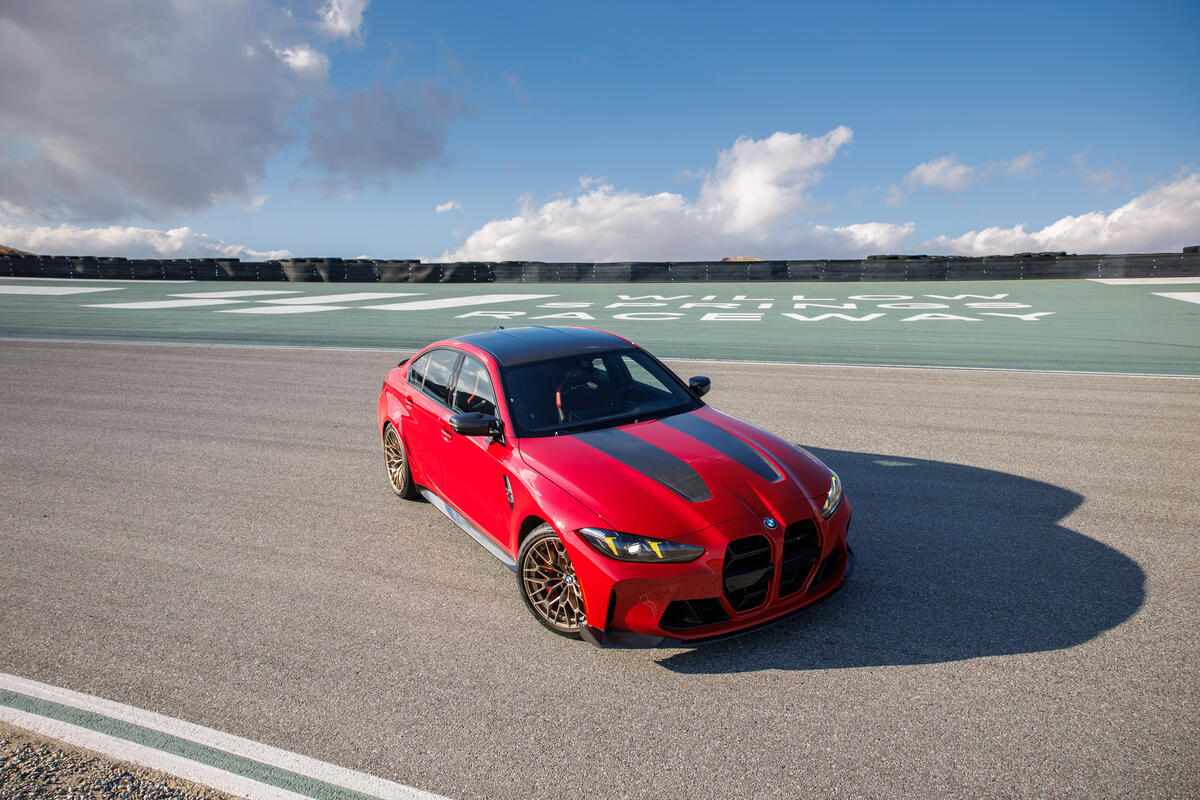
"So to you, old school is like E 36 M three. It's getting there now."
The BMW E36 M3 is a famous 1990s BMW performance car. People like it because it feels very connected and driver-focused, especially compared to more modern, computer-heavy cars.
BMW’s E36 M3 is a 1990s-generation M3 that became a benchmark for driver-focused “analog” handling—light steering feel, strong chassis balance, and a manual-friendly character. It’s often referenced as the point where “old school” enthusiast tastes start to overlap with modern performance expectations.
analog raw cars
"And I like way analog raw cars. Like I like, you know, rally type stuff that's super light manual"
“Analog raw cars” means cars that feel more old-school and connected, where the driver can really feel what’s happening. The speaker is saying they like cars that don’t rely as much on computers to do the work.
“Analog raw cars” refers to cars that feel mechanically direct—less filtered by electronic driving aids—so steering, throttle, and gear changes communicate clearly to the driver. It’s a preference for an unassisted, driver-involvement feel rather than heavily computerized behavior.
super light manual
"And I like way analog raw cars. Like I like, you know, rally type stuff that's super light manual"
The speaker is saying they like lightweight cars with a manual transmission. A lighter car is easier to move and steer quickly, and a manual lets you control the gears yourself.
“Super light manual” describes a preference for a low-weight car paired with a manual transmission. Lower mass improves acceleration and handling response, while a manual gearbox emphasizes driver control and engagement.
no ABS
"gearbox, all wheel drive, no ABS, like nothing."
ABS is a safety system that helps prevent the wheels from locking up when you brake hard. If a car has “no ABS,” it can be easier to lose control and slide.
ABS (anti-lock braking system) prevents wheel lockup during hard braking by modulating brake pressure. “No ABS” implies a car without that safety/traction control feature, which can make braking less stable and more prone to skidding.
all wheel drive
"gearbox, all wheel drive, no ABS, like nothing."
All-wheel drive means the car can send power to both the front and rear wheels. That usually helps it grip better on wet or snowy roads.
All-wheel drive (AWD) means power is sent to more than one axle, typically both the front and rear wheels. It’s used to improve traction and stability, especially on slippery or uneven surfaces.

E 92
"So to me, the E 92 was like, Oh, I'm living luxury. Like this is crazy."
“E 92” refers to a BMW 3 Series model generation (the E92). People like it because it feels more like a driver’s car than a typical luxury sedan.
“E 92” is shorthand for the BMW 3 Series generation with the E92 chassis code. It’s known for being a driver-focused, rear-wheel-drive-era BMW that many enthusiasts associate with “living luxury” while still feeling engaging to drive.
manuals
"But if you're purely just trying to drive, I mean, who's making manuals anymore, almost nobody, you know, so."
“Manuals” means cars you shift yourself with a clutch and gear stick. The speaker is saying fewer new cars are being made with that option.
In this context, “manuals” refers to manual transmissions—cars where the driver selects gears with a clutch and gear lever. The speaker is pointing out that modern cars increasingly use automatics, so manual cars are becoming rarer.
drifting
"I think so. I think drifting is the next wave."
Drifting is when a driver intentionally makes the car slide sideways while still steering and controlling it. It’s a popular style in car culture and has its own fans and events.
Drifting is a driving style where the driver intentionally over-rotates the car so the rear wheels lose grip while maintaining control through steering and throttle. It’s become a major motorsport and street-culture discipline, influencing car choices and tuning trends.
tire marks
"[1150.8s] I think tire marks are art. [1151.8s] I think the smokers are, I think the way people turn into a corner is you're,"
Tire marks are the rubber streaks you see on the road after drifting. They show where the car slid and how hard it was pushing through the turn.
“Tire marks” are the visible scuffing and rubber streaks left on the track surface by a drifting car. They’re often used as a visual indicator of the car’s path, slip angle, and how aggressively the driver held the slide.
smokers
"[1151.8s] I think the smokers are, I think the way people turn into a corner is you're, [1157.3s] you know, you get different styles."
“Smokers” is slang for drivers or cars that make a lot of smoke while drifting. The smoke usually comes from the tires spinning and getting hot.
“Smokers” in drifting slang refers to cars/drivers that produce lots of smoke during slides, usually from tire spin and heat. It’s often associated with dramatic visuals, though it’s not the only measure of skill.
Formula Drift
"[1163.4s] Where do things like formula drift live in drifting for you versus [1168.8s] things like final bout versus just like street jammers."
Formula Drift is a major professional drifting competition series in the U.S., known for structured events and judging. In this segment, it’s used as a reference point for where different drifting styles and event formats “live” within the broader drifting scene.
street jammers
"[1163.4s] Where do things like formula drift live in drifting for you versus [1168.8s] things like final bout versus just like street jammers."
“Street jammers” refers to drifting events or groups that focus on street-style driving—often emphasizing showmanship, aggressive lines, and crowd energy rather than a strict professional judging format. It’s more about the vibe and driving style than a single standardized competition rule set.
final bout
"[1168.8s] things like final bout versus just like street jammers. [1172.8s] Man. [1173.5s] Uh, I think final bout is really cool because the tandems that they do, like"
“Final bout” sounds like a specific drifting event format. In this conversation, the speaker likes it because it features multiple cars drifting together in tandem.
“Final bout” appears to be an event format within drifting culture that emphasizes tandem-style runs and large group participation. Here, the speaker highlights the appeal of multiple cars/teams executing tandems together.
tandems
"[1173.5s] Uh, I think final bout is really cool because the tandems that they do, like [1179.6s] 10 cars, teams, like you guys all got to hit it."
Tandems in drifting means two cars slide through the turn together. The second car tries to follow the first car closely and stay matched up.
In drifting, “tandems” are runs where two cars drift together, with the lead car setting the line and the chase car matching angle and speed. Judges typically score how well the cars stay synchronized and how cleanly the chase car follows.
D one Japan
"[1199.3s] Um, that's why it's interesting to us. [1200.6s] Cause I think D one Japan is the king of drift events right now because it's a [1209.1s] mixture of both style and, you know, like, uh, really hardcore like points."
“D one Japan” is a drifting event scene in Japan that the speaker thinks is currently the top one. They say it combines style with serious competition.
“D one Japan” is referenced as a leading drift-event platform in Japan, described here as the “king of drift events.” The speaker attributes its appeal to a mix of style and highly competitive, hard-scoring judging.
backies
"You should do backies into a corner."
“Backies” is a drifting move that’s meant to look cool and be controlled. It’s basically a special way of setting up the slide, not just driving straight into the turn.
“Backies” here refers to a drifting maneuver where the car is rotated and the driver uses throttle and steering to keep the slide going while moving backward or setting up a reverse-style entry. The key idea is a stylized, controlled setup rather than a straight, conventional approach.
Diego Sido
"I'm going to Japan soon to watch Diego Sido drift. I've only seen videos."
Diego Sido is a well-known professional drift driver. The host is saying he’s so good that he changed what drifting looks like, especially the amount of smoke and the style of the car.
Diego Sido is a professional drifter the host is planning to watch in Japan. The segment credits him with influencing drifting culture—especially the look of smoke and the use of body modifications to enhance the visual effect.
SC 431
"Like in, in an SC 431, the weirdest platform and he just upset the entire year."
“SC 431” sounds like a specific car setup or platform used for drifting. The host is saying Diego Sido showed up with that car and surprised everyone, but the exact car isn’t clear from this clip.
“SC 431” appears to be a specific car platform or chassis code tied to a drifting setup the host mentions. However, the transcript doesn’t provide enough detail to confidently identify the exact make/model or what “431” refers to.
pillow smoke era
"Cause I don't think I argue that he introduced like the pillow smoke era of drifting because his car was making so much more smoke..."
“Pillow smoke era” is a nickname for a drifting style where the goal is huge, puffy smoke clouds. It’s about making the slide look extra dramatic.
“Pillow smoke era” is drifting slang for a period/style where drivers prioritize producing thick, billowing smoke clouds during slides. The host links it to Diego Sido’s car making more smoke, implying a cultural shift toward more dramatic visual effects.
fenders
"...he cut holes out of the fenders to put more thought into that was super cool."
Fenders are the panels around the wheel area. Here, the host says they were cut to help the car create more smoke while drifting.
Fenders are the body panels over the wheel area, and in this context they’re being modified by cutting holes. The host is describing how those changes were used to manage airflow and help the car produce more smoke during drifting.
James Dean
"[1289.9s] So James Dean, Diego, and then who's your third?"
James Dean was a famous actor. People still connect him to car culture because his image became tied to the idea of a cool, rebellious driver.
James Dean is a legendary American actor strongly associated with classic car culture, especially the idea of the rebellious “bad boy” driver. His name often comes up in conversations about iconic driving aesthetics and early celebrity influence on motorsport fandom.
animal style
"[1307.1s] You familiar with, um, like animal style boys, Julian Jacobs and those guys. [1311.9s] I need to see more of them for sure."
“Animal style” is a slangy car-culture way of saying a certain aggressive look and vibe. It usually means the car is meant to look wild and be driven hard, not just parked.
“Animal style” is a car-culture phrase used to describe a specific aesthetic and attitude—often aggressive styling, loud presence, and a focus on how the car looks while being driven hard. In this context, it’s tied to a group of drivers who blend style with driving aggression.
mid corner
"[1322.8s] also driving aggression is super important. [1325.2s] Like anytime you see those dudes behind the wheel, it is the most aggressive [1329.4s] entries, the most aggressive mid corner and somehow also exit."
“Mid corner” means the middle part of a turn—after you’ve started turning but before you’re finishing and heading out. It’s when the car is usually working the hardest.
“Mid corner” is the phase of a turn after initial turn-in and before the car starts to unwind toward exit. Drivers and instructors use it to talk about balance—how the car feels when it’s at its most loaded and sideways/rotated (especially in drifting or aggressive street driving).
exit
"[1325.2s] Like anytime you see those dudes behind the wheel, it is the most aggressive [1329.4s] entries, the most aggressive mid corner and somehow also exit."
“Exit” is when you’re coming out of a turn. Good exit means you can straighten the car and accelerate effectively.
“Exit” is the part of a corner where the car straightens up and transitions from cornering to accelerating. In performance driving, exit quality often matters as much as entry because it determines how quickly and smoothly you can put power down.
side bite
"[1333.5s] And they just every time they're behind the wheel and it's not like, you know, [1338.9s] how much side bite do I have and how much, you know, like, can I put on this guy?"
“Side bite” is how well the tires grip when you’re turning hard. If the tires have more side bite, the car can slide less or slide more controllably.
“Side bite” refers to lateral grip—how much traction the tires can provide sideways when the car is loaded in a turn. More side bite generally means the car can hold a more aggressive line or slide angle without losing control.
cars don't need to make a thousand horsepower
"And they also really stand behind the idea of like cars don't need to make a thousand horsepower, like just have a car that drive all weekend. Like that's more important than building like some crazy YouTube car that breaks, you know, or like trying to drive a pro car or something like that."
They’re saying you don’t need an absurdly powerful car to have fun. The point is to have something you can actually drive and enjoy for a long time, not just a car built to impress online.
This is a philosophy about performance priorities: chasing extreme peak power (like “a thousand horsepower”) isn’t the only way to have a great car. The host argues that usable, enjoyable driving—“drive all weekend”—matters more than building a fragile, internet-famous project.
manual versions
"Okay. Cause they just came out with manual versions, right? And so they're definitely targeting the enthusiasts with that."
They’re talking about cars that come with a manual gearbox. That means you shift gears yourself, which many car people see as more fun and more engaging.
“Manual versions” means the car is offered with a traditional manual transmission, where the driver shifts gears with a clutch. In enthusiast culture, manual availability is often treated as a signal that the manufacturer is targeting drivers who want more direct control.
Chevrolet Camaro
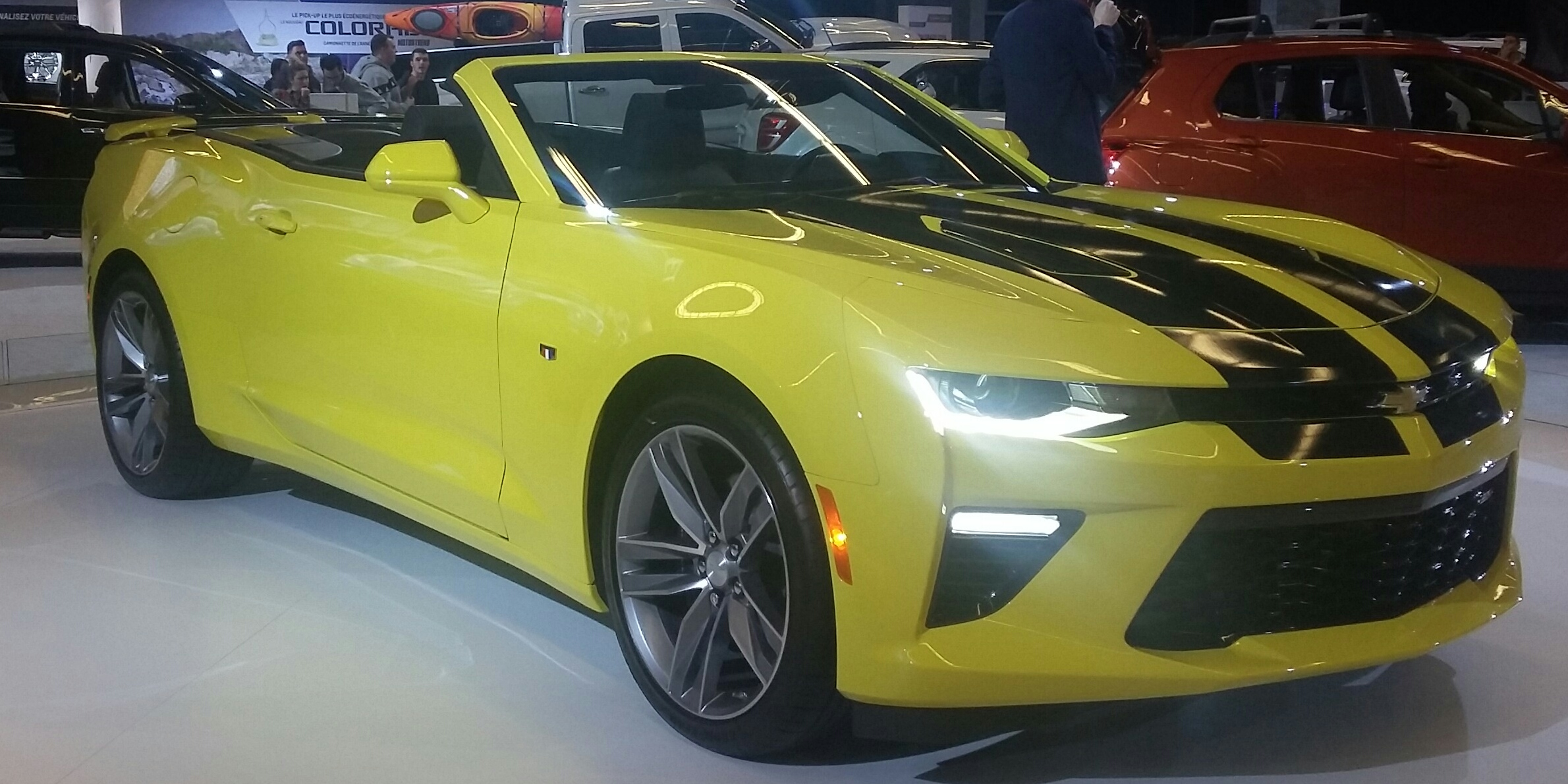
"... do you remember like Chevy did that with the new Camaro in the mid 2000s? Transformers."
The Chevrolet Camaro is a muscle car from Chevrolet. It’s built to be fast and sporty, and it has a lot of fans. The podcast mentions a mid-2000s Camaro because it was widely seen through movies and TV.
The Chevrolet Camaro is an American muscle car that’s been produced in many generations, combining performance with a distinctive design. The podcast reference to the mid-2000s “Transformers” era points to how that generation became especially visible in pop culture. It’s discussed because that Camaro helped keep the muscle-car spotlight on the road and in media.
FT one concept
"And I feel like unfortunately Nissan just found the super as well. The FT one concept. Everyone was like, Oh my God."
A concept car is a prototype/show vehicle that’s shown to tease what a brand might build next. The host is saying Nissan’s FT-One concept got huge excitement, but the real-world follow-through felt off.
The “FT-One concept” refers to Nissan’s concept-car preview (a show-car) that generated major attention when it was revealed. Concept cars often signal design direction, but the speaker is implying Nissan’s later production execution didn’t match the early hype.
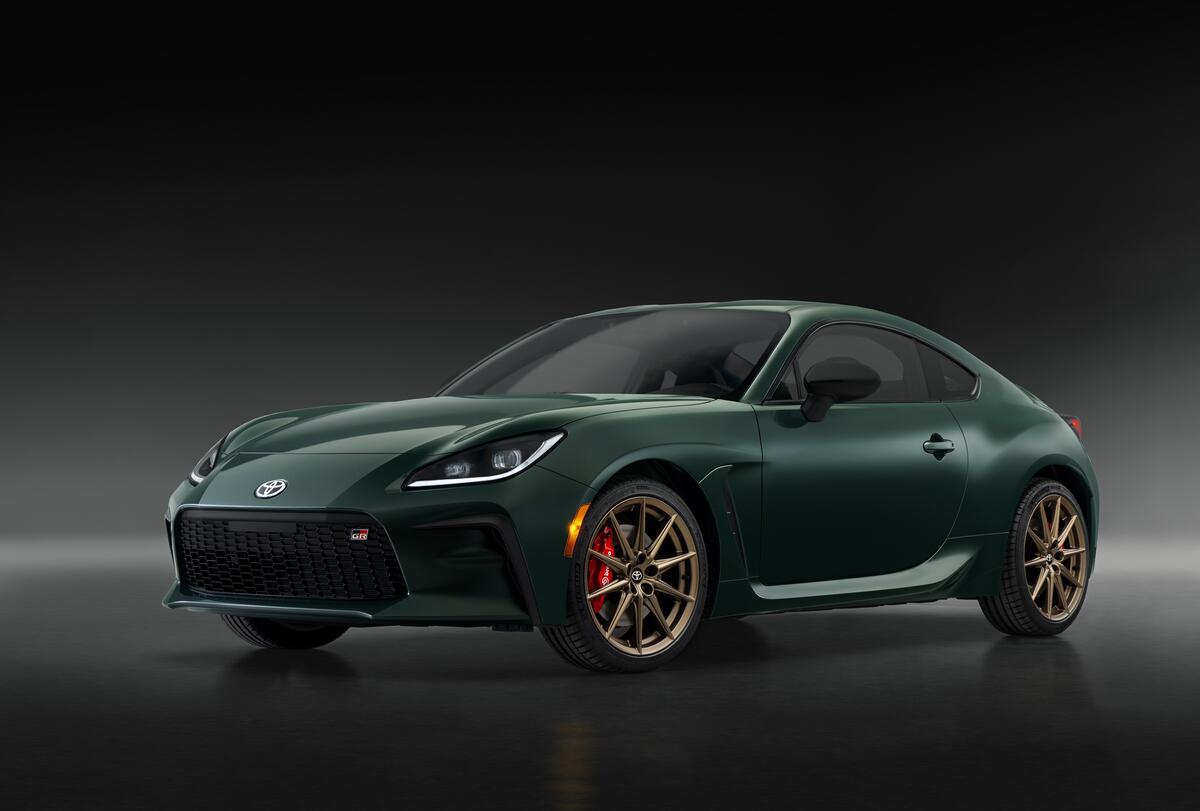
Toyota Gr86
"I mean, listeners of the pod will know I'm a big, big fan of the GR 86. So I know that's way under the budget, but then spend the rest on track time and tires, right?"
The Toyota GR 86 is a fun, affordable sports car that’s designed to be easy to drive fast. The host likes it because you can really feel what the tires are doing, so it feels predictable and confidence-inspiring.
The Toyota GR 86 is a lightweight, rear-wheel-drive sports coupe built around driver feedback and predictable handling. The host emphasizes how it’s “telepathic” and lets them feel exactly what the front tire is doing, which is a big part of why the GR 86 is popular for track days on a budget.
front tire
"feeling like I know with my hand exactly what the front tire is doing."
The “front tire” is the tire at the front of the car that helps the car turn and stick to the road. The host is saying the GR 86 makes it easy to tell what the front tires are doing while you drive.
“Front tire” refers to the tires on the front axle, which largely control steering grip and how the car responds to inputs. The host’s point is that the GR 86 communicates front-end traction clearly, making the car feel predictable when turning.

a 90 Supra
"it's just so fun to flick around like the a 90 Supra has really grown on me a lot."
The “A90 Supra” is the modern Toyota Supra generation. The host is saying they didn’t start out loving it as much, but now they like it more.
The “a 90 Supra” refers to the Toyota GR Supra (A90 generation), a modern Supra known for its strong performance and tuning potential. The host says it has “grown on” them, implying they’ve warmed up to the A90 Supra’s character over time.
manual one
"[1540.2s] And I've driven one. [1540.9s] I drove the manual one when it came out, drove the auto one on track. [1545.0s] Great car."
“Manual” means you shift gears yourself using a clutch and gear stick. The host is saying they drove both the manual and automatic versions.
“Manual one” refers to a version of the car equipped with a manual transmission, where the driver selects gears with a clutch and shifter. The host contrasts it with an automatic version they drove on track.
auto one
"[1540.9s] I drove the manual one when it came out, drove the auto one on track. [1545.0s] Great car. [1546.4s] But to me, it's still like that little bit of numbness is there where the G,"
“Auto” means the car shifts gears for you. The host is saying they drove the automatic version on a track to see how it performs.
“Auto one” refers to an automatic-transmission version of the car, where gear changes are handled by the car rather than the driver. The host specifically mentions driving it on track, implying they evaluated how it behaves under harder use.

Toyota Gt86
"[1546.4s] But to me, it's still like that little bit of numbness is there where the G, [1551.2s] the, the GT 86, GR 86 is like, perfect. [1556.3s] Such a sick car."
The Toyota GT 86 is a small, fun sports car that’s meant to feel connected to the driver. People like it because it’s not overly complicated—just quick and engaging to drive.
The Toyota GT 86 is a lightweight, rear-wheel-drive sports coupe built around a simple, driver-focused formula. It’s known for its approachable handling and “feel” at the limit, which is why the host compares its steering/response to other similar cars.

Chevrolet Corvette C8
"[1564.3s] Cause I already had one before, but I probably buy a C eight Corvette. [1567.8s] That's nice. [1569.4s] Cause like bang for the buck. [1571.4s] What you can pick one up for like new 70 or something now."
The Chevrolet Corvette C8 is the newer Corvette with the engine in the middle of the car. The host is saying it’s a lot of performance for the money, and they’re considering buying one.
The Chevrolet Corvette C8 is the modern Corvette that moved to a mid-engine layout, which dramatically changes how it drives and handles compared with older front-engine Corvettes. The host is also talking about it as a value proposition (“bang for the buck”) and mentions pricing for a near-new example.
slammed
"Like when I see a slammed C five driving, definitely the kid in the car is under 30."
“Slammed” means the car is lowered a lot so it looks very close to the ground. People do it for the look (and sometimes for driving feel).
“Slammed” describes a car that sits extremely low to the ground, usually from lowering springs or coilovers and often with reduced suspension travel. It’s a common look in car culture because it changes the stance and handling feel.
pop ups
"For style purposes, I think C five has the pop ups and you could make it like a stance car. So yeah."
“Pop-ups” means headlights that pop up from the front of the car instead of being fixed in place. The host is saying the C5 has that look, which makes it easier to build a certain style.
“Pop-ups” here refers to pop-up headlights, a styling feature where headlamps rise from the front of the car. The speaker is using it to describe why the Corvette C5 looks especially “style-able.”
stance car
"For style purposes, I think C five has the pop ups and you could make it like a stance car. So yeah."
A “stance car” is a car built to look extra low and aggressive. People usually change suspension and wheel fitment mainly for the look.
A “stance car” is a heavily modified look where the car sits very low and the wheels/tires are positioned for visual fitment. It’s more about appearance and attitude than stock ride height or handling balance.
LS swapped
"Like an FDR X and it comes LS swapped. So they already fixed the biggest problem. Right."
“LS swapped” means the car was converted to use a GM LS V8 engine. People do it because the LS engines are popular, strong, and there are lots of parts and tuning options.
“LS swapped” means replacing the original engine with an LS-series V8 from GM (the common “LS” family). The LS engines are popular for swaps because they’re compact, powerful, and have strong aftermarket support.
autocross
"And it's like, Oh my God, whatever. Or they're at an autocross bragging that they just smoked a mini Cooper. "
Autocross is a competition where you drive a car through a cone-marked course, usually in a parking lot. It’s a way to test how well your car handles and how good you are at driving it.
Autocross is a motorsport where drivers navigate a marked course with tight turns at relatively low speeds, usually on a parking lot or temporary track. It’s often used to compare driver skill and basic car setup (tires, alignment, suspension).

mini Cooper
"Or they're at an autocross bragging that they just smoked a mini Cooper. "
A MINI Cooper is a small, sporty compact car made by the MINI brand. The hosts are using it as the benchmark car that someone claims they beat.
The “mini Cooper” is a compact car from MINI (the brand). In the segment, it’s used as a comparison target—someone is bragging they “smoked” a MINI Cooper at autocross.
real track
"Go to a real track. And then I, I don't, it was like somewhat recently that they really started growing"
A “real track” means an actual racing course designed for fast driving. It’s safer and more consistent than driving on public roads, so you can really see how a car performs.
A “real track” is a purpose-built racing circuit (or track day venue) where you can drive at speed safely and repeatedly. It contrasts with street driving, where traction, visibility, and legal limits make it hard to evaluate a car’s true handling and braking.
V eight era
"I think what I love about that is that the generational gap between us, you did not grow up watching F one with the V eight era, with the V 10 era."
The “V eight era” means a time when Formula 1 used V8 engines—engines with eight cylinders arranged in a V shape. Different engine types sound and feel different, so fans notice the change.
The “V eight era” refers to a period in Formula 1 when the engines were V8s, meaning they used a V-shaped arrangement of eight cylinders. Engine architecture affects sound, vibration, and how the car delivers power, which is why fans often compare eras by noise and character.
V 10 era
"I think what I love about that is that the generational gap between us, you did not grow up watching F one with the V eight era, with the V 10 era. You were not into it at that point."
The “V 10 era” means a time when Formula 1 used V10 engines—ten-cylinder engines arranged in a V shape. That engine setup changes the car’s sound and feel, which fans often miss.
The “V 10 era” refers to another Formula 1 period when engines were V10s (ten cylinders in a V layout). Like V8s, V10s have a distinct sound and power delivery, which is part of why the speaker says older F1 videos were more appealing.
Goodwood
"Um, I brought him out to Goodwood in 2024 and we were with Williams and the Patek Juan Pablo Montoya and the 2004 BMW Williams F one car at 18,000 RPM."
Goodwood is a famous motorsports venue in the UK. People go there for big car and racing events, and it’s known for showing off cool cars.
Goodwood refers to the Goodwood Motor Circuit and the surrounding Goodwood estate in the UK, which hosts major motorsport and car-culture events. It’s a common place for automakers and racing teams to showcase cars and for fans to see historic and modern performance machinery together.
18,000 RPM
"Um, I brought him out to Goodwood in 2024 and we were with Williams and the Patek Juan Pablo Montoya and the 2004 BMW Williams F one car at 18,000 RPM. They fired it up."
RPM means how many times the engine spins each minute. “18,000 RPM” is a huge number, and it’s part of why race cars like Formula 1 cars sound so intense.
RPM (revolutions per minute) is how fast an engine spins. “18,000 RPM” is extremely high and is a hallmark of Formula 1 powertrains, where engines are designed to operate at very high engine speeds to make power efficiently.
V10s
"Bring back the V10s. And the man that drives the 92 M3, like the sound."
“V10s” means engines with 10 cylinders. People like them because they tend to sound exciting and rev freely, which adds to the driving experience.
A “V10” is an engine with 10 cylinders arranged in a V shape (two banks of five). V10s are often associated with high-revving sound and strong character, which is why people bring them up when talking about the “vibe” of older performance cars.
supercharged
"Well, yours is supercharged. Yeah."
“Supercharged” means the engine has a device that pushes extra air in. More air usually means more power, so the car feels faster.
A “supercharged” engine uses a belt-driven compressor (a supercharger) to force more air into the engine. That typically boosts power and helps the car feel quick, especially compared with a similar naturally aspirated setup.
rally
"We all know it's rally easily by far. I still have to get introduced to rally more. I want to definitely see a car fly over me besides the Tesla."
Rally is a motorsport where cars race on closed public roads or road-like stages, often with changing surfaces and weather. It’s known for driver skill, car setup, and the spectacle of jumps and slides—so it can be a “gateway” discipline for fans who then prefer rally over other forms of racing.
Australian supercar
"the sport that I'm actually watching the most of right now is Australian supercar. [1929.4s] V8 supercars."
This is a name for Australia’s main “big-time” race series for production-based cars. When people say “Australian supercars,” they usually mean the V8 Supercars style of racing.
“Australian supercar” refers to the top-level touring-car racing category in Australia. It’s commonly associated with the V8 Supercars era, where manufacturers and teams race production-based cars on circuits and street tracks.
watching motorsports channels
"And for me, when I was young, the, the one channel that played motorsports and [1940.5s] racing was a channel called speed vision before it became speed, which then [1943.9s] became like a NASCAR channel."
They talk about how they got into racing by watching certain TV channels. It’s basically about how their favorite race types changed over time based on what was available to watch.
The hosts discuss how their motorsports viewing habits were shaped by TV channels and where they found different racing series. This includes the shift from one channel identity to another and how that affected what they watched.
British touring car
"So we got British touring car, we got the WRC and we got V8 supercars."
British touring car racing refers to a UK-based series where race cars are based on production sedans and hatchbacks. Touring-car rules typically emphasize close racing, durability, and maintaining a connection to road-going models.
DTM
"Are you familiar with like the old, uh, DTM? ... It's like the modern version of that in a way."
DTM is a famous German race series for touring cars. The hosts are saying the driving they’re watching now feels like that old-school, aggressive racing style.
DTM (Deutsche Tourenwagen Masters) is a German touring-car racing series known for close, aggressive racing and frequent contact. In this segment, the hosts compare the driving style they’re seeing in modern cars to the old DTM vibe.
Bathurst
"Bathurst, which is like one of the greatest ones. ... It's like this crazy elevation changes in the road. ... So narrow."
Bathurst is a famous race track in Australia. It’s known for being really twisty and having big up-and-down changes in the road, which makes it feel intense to drive or watch.
Bathurst refers to Mount Panorama Circuit in Bathurst, Australia, a track famous for steep elevation changes and narrow sections. The hosts highlight how the road layout—tight and with big climbs/descents—creates a challenging, high-adrenaline experience.
Nurburgring
"It has like a Nurburgring kind of vibe to it, although shorter."
The Nürburgring is a legendary race track in Germany. People use it as a yardstick for how “serious” a car feels, so saying it has a Nürburgring vibe means it feels intense and track-focused.
The Nürburgring is a famous motorsport venue in Germany, best known for the Nordschleife (“North Loop”) circuit. It’s used as a benchmark for performance cars and is known for being long, fast, and punishing, so “Nürburgring vibe” usually means something feels intense and track-like.
formula one
"I think my generation is heavily formula one right now. Yeah. I think like they, cause they've always been, but like now it's like, it's there."
Formula One is the highest level of open-wheel race car racing. Teams build and tune their cars under strict rules, and the races are followed worldwide.
Formula One (F1) is the top tier of open-wheel racing, run by the FIA, with teams racing highly engineered single-seaters. It’s known for strict technical rules, constant development, and big global fan attention.
Max
"No driver seems to be happy about this, especially Max. We want to, we as a whole, I think we want to see the racers feel good."
“Max” here is likely Max Verstappen, one of the top Formula One drivers. He’s famous for being very competitive and often at the center of big race conversations.
“Max” is almost certainly Max Verstappen, a leading Formula One driver. He’s known for aggressive driving style and has been a central figure in recent F1 storylines.
Lewis Hamilton
"if you had to pick a favorite F1 driver, I mean, Lewis Hamilton for sure. Hell yeah."
Lewis Hamilton is a famous Formula One race driver from the UK. He’s won multiple championships and is one of the biggest names in modern F1.
Lewis Hamilton is a British Formula One driver and one of the most successful in the sport’s modern era. He’s widely recognized for multiple world championships and for being a major public face of F1.
Schumacher
"...cause I was like, I got into it like Schumacher, Montoya, Davis."
That’s Michael Schumacher, one of the most famous Formula 1 race drivers ever. People talk about him because he won a lot of races and championships and was known for being extremely good at driving and helping improve the car.
This refers to Michael Schumacher, the legendary German Formula 1 driver. He’s known for dominating F1 in multiple eras, especially with Ferrari, and for being a benchmark for racecraft and car development feedback.
Montoya
"...I got into it like Schumacher, Montoya, Davis."
That’s Juan Pablo Montoya, a famous race driver from Colombia. He’s known for racing in Formula 1 and later doing well in other big racing series too.
This refers to Juan Pablo Montoya, a Colombian Formula 1 driver who also raced in IndyCar. He’s often remembered for being fast and aggressive, and for his success across different top-level racing series.
zero to 60 time
"...cars were about the specs early on, right? Like you're reading car and driver, road and track, like you go, what's the zero to 60 time on that?"
Zero-to-60 time is how fast a car goes from standing still to 60 mph. Lower numbers mean quicker acceleration, and it’s a common way car magazines compare cars.
Zero-to-60 time is the elapsed time it takes a car to accelerate from 0 mph to 60 mph. It’s a simple, standardized performance metric that many reviews use to compare acceleration.
quarter mile time
"...what's the zero to 60 time on that? What's the quarter mile time on that?"
Quarter-mile time is how fast a car can run a quarter mile from a stop. It’s another common performance number you’ll see in reviews and drag-racing discussions.
Quarter-mile time measures how long a car takes to cover one quarter mile (about 402 meters) from a standing start. It’s closely tied to acceleration and traction, and it’s a staple metric in drag racing culture.

Bugatti Veyron
"And we both said that the Bugatti Veyron for us [2205.1s] was sort of the end of the hypercar. [2208.4s] Oh, wow. [2209.2s] Because that came out and it was like, oh, wow, okay."
The Bugatti Veyron is one of the most famous “super-advanced” hypercars ever made. It’s known for having a special W16 engine and for being massively powerful, which is why people treat it like a benchmark car.
The Bugatti Veyron is a landmark hypercar known for its extreme performance and engineering complexity. It uses a W16 engine layout (two banks of eight cylinders in a compact arrangement) and is famous for being turbocharged and for its very high power output.
W16
"That's a W16. [2215.7s] It's got four turbos. [2216.9s] It's got a thousand horsepower. [2218.1s] Like anything after that, like what are you doing?"
W16 is the name for the engine’s cylinder layout. It means the engine has 16 cylinders arranged in a special compact shape, which is part of why the car is so unusual.
W16 refers to an engine configuration where 16 cylinders are arranged in a “W” shape for compact packaging. In the Bugatti Veyron, the W16 layout helps fit a large-displacement, multi-cylinder engine into the car while maintaining performance and balance.
four turbos
"That's a W16. [2215.7s] It's got four turbos. [2216.9s] It's got a thousand horsepower. [2218.1s] Like anything after that, like what are you doing?"
“Four turbos” means the engine has four turbochargers. Turbochargers cram extra air into the engine so it can make more power.
“Four turbos” means the engine uses four turbochargers to force more air into the cylinders. More forced air generally allows higher power output, especially in a high-performance engine like the Bugatti Veyron’s.

Ferrari F80
"Cause we have no idea. So school us a little bit. Like what is, like what are the top hypercars right now for you? ... let's talk about the Ferrari F80, okay?"
The Ferrari F80 is a very high-end Ferrari “hypercar.” The conversation is mostly about how it looks—there’s a noticeable design detail at the front, and they’re debating whether it improves the car’s appearance.
The Ferrari F80 is a (newer) Ferrari hypercar that’s being discussed here as part of the current “hypercar era.” In this segment, the hosts focus on its styling details—specifically a prominent front-end design element—arguing about whether it looks good with or without that feature.
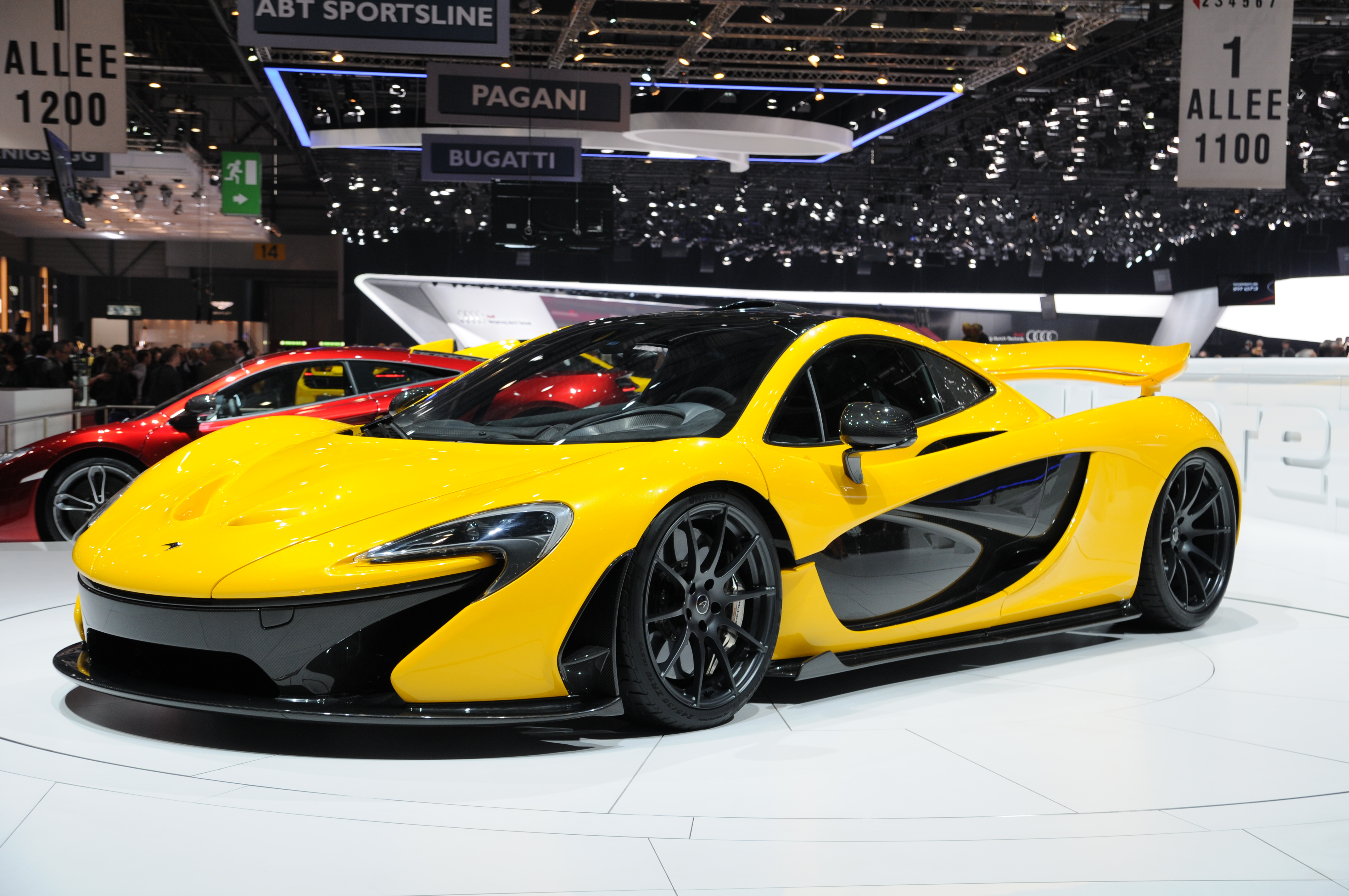
P1
"I think it's a lot of, again, style. I think the P1 looked so good. Even when it first came out, when people first saw it,"
“P1” is the McLaren P1, a famous super-expensive hypercar. The host is saying it looked really good right when people first saw it, compared to newer designs.
“P1” here refers to the McLaren P1, a landmark modern hypercar known for its advanced hybrid approach and aggressive, futuristic styling. The host uses it as a comparison point, saying it looked great when it first appeared.

Ferrari LaFerrari
"Even when it first came out, when people first saw it, it was like, okay. Yeah. The same with the LaFerrari, same with all the hypercars of that era, like the 918 also looked good."
The LaFerrari is a famous Ferrari hypercar, known for being a big deal when it came out. The host mentions it as part of a past generation of hypercars that felt more exciting to people.
The LaFerrari is Ferrari’s iconic hybrid hypercar from the “hypercar era” the host is reminiscing about. The speaker groups it with other legendary hypercars and claims that era had more excitement than what they’re seeing from newer releases.

Porsche 918 Spyder
"The same with the LaFerrari, same with all the hypercars of that era, like the 918 also looked good. But now, I think it's peak hypercar era."
“918” is shorthand for the Porsche 918 hypercar. The host is saying that car looked great too, and that earlier hypercars had more visual impact.
“918” refers to the Porsche 918, a celebrated Porsche hypercar known for its high-tech hybrid system and standout design. The host uses it as another example of how earlier hypercars looked great when they were new.

Mclaren F1
"As you know, it was the McLaren F1, [2302.6s] the Mercedes CLK GTR."
The McLaren F1 is a famous supercar from the 1990s. It’s known for being built like a race car and for having a special seating setup that puts the driver in the center.
The McLaren F1 is a landmark supercar known for its unusual three-seat layout and a focus on driver-centric performance. It’s often mentioned alongside other “holy trinity” cars because it represents a peak of 1990s-era engineering and motorsport-inspired design.

Mercedes CLK GTR
"As you know, it was the McLaren F1, [2302.6s] the Mercedes CLK GTR. [2305.6s] The Ferrari F40."
The Mercedes CLK GTR is a supercar made to compete in racing. It’s special because it’s connected to Mercedes’ serious GT racing efforts, not just normal road-car design.
The Mercedes CLK GTR is a rare, track-focused supercar built around Mercedes’ GT racing program. It’s strongly associated with endurance racing credibility, and it shows up in “holy trinity” discussions because it’s a homologation-era machine tied to top-level competition.

Ferrari F40
"The Mercedes CLK GTR. [2305.6s] The Ferrari F40. [2306.5s] The Ferrari F40."
The Ferrari F40 is one of the most famous Ferraris ever. People love it because it’s a raw, no-nonsense supercar that became a poster-car for a whole generation.
The Ferrari F40 is an iconic 1980s supercar famous for being brutally focused on performance and driver feel. It’s often treated as a benchmark “kid-on-a-poster” car, and it appears in these generational “trinity” lists because it became a cultural symbol as much as a technical one.

Porsche GT1
"Okay, so my Trinity, my Trinity was McLaren F1, [2315.7s] the Porsche GT1, and then the CLK GTR."
The Porsche GT1 is a Porsche supercar that’s closely tied to racing. It’s remembered because it was built with endurance racing in mind, not just for looks.
The Porsche GT1 is a race-bred Porsche built to compete in endurance racing and is known for its serious motorsport pedigree. In “holy trinity” conversations, it represents the era when Porsche’s GT program produced road-legal machines that felt like they belonged on track.
Request an Explanation
Heard something you'd like explained? We'll add it to this episode.
Sign in to request explanations for terms you heard.
Want to learn more?
Browse our glossary for plain-English explanations of automotive terms, jargon, and concepts.
Help improve this episode
See something that's not quite right? Our annotations are AI-generated and can sometimes miss the mark. Click the flag icon on any annotation to suggest a correction.
2 community members have helped improve this episode.