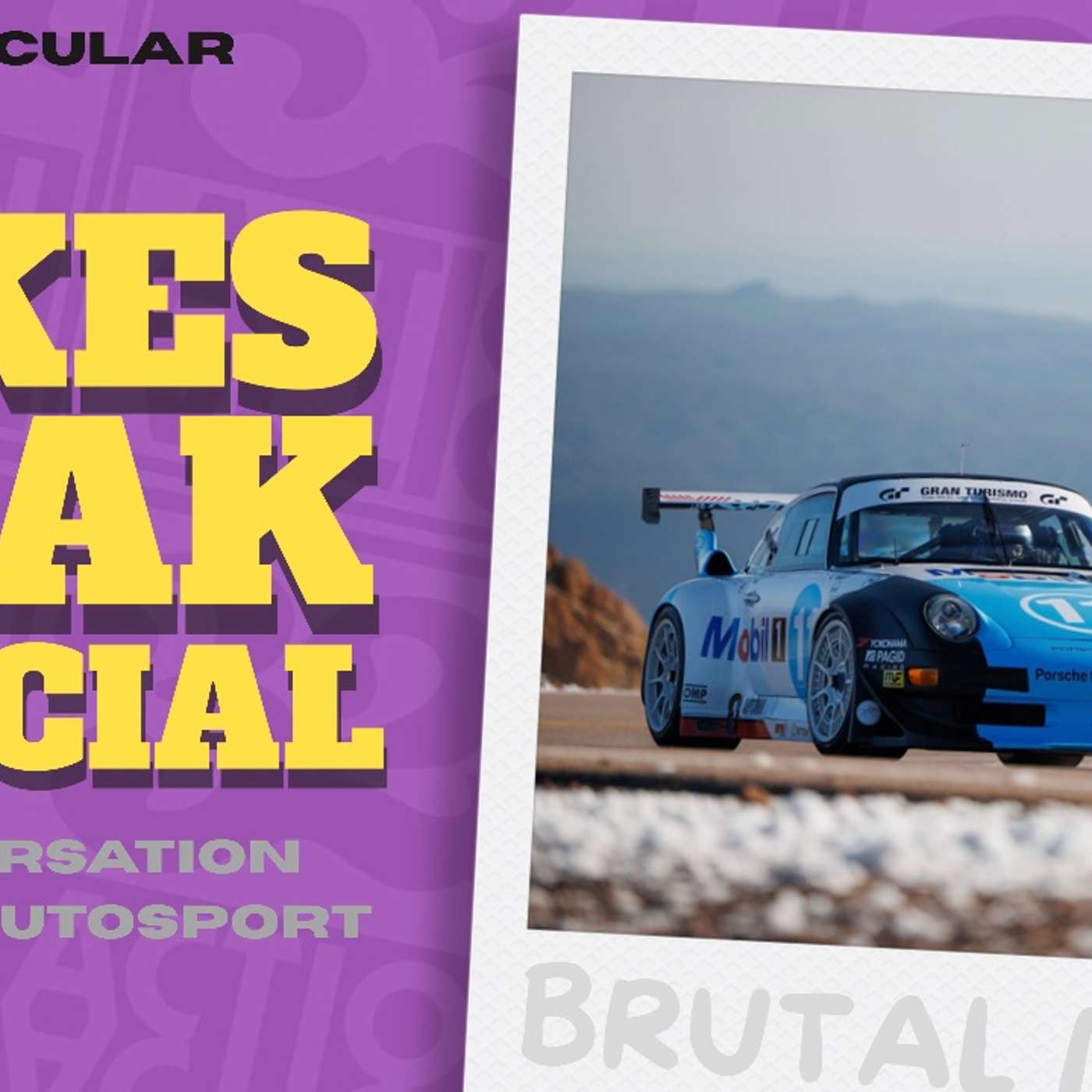
Pikes Peak is a very famous race up a mountain in Colorado. Because the air gets thinner as you climb, it’s a tough test for engines—especially turbo cars.
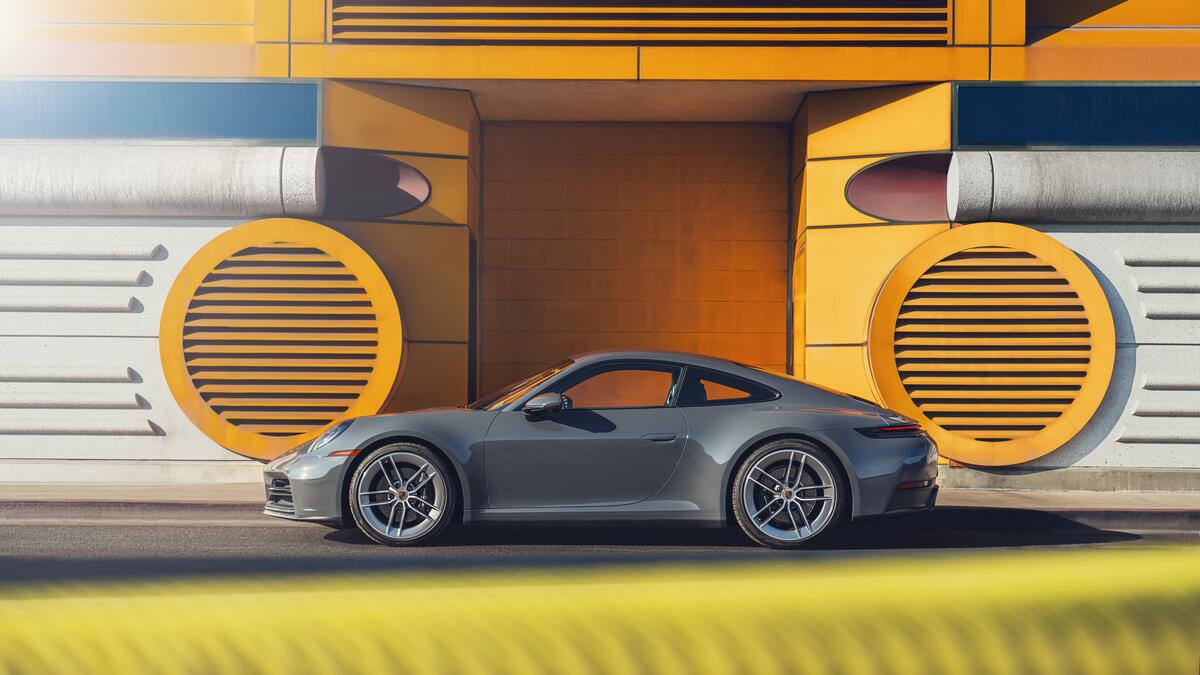
This is a Porsche 911 GT2 RS from 2010. It’s a very serious, fast, track-oriented turbo Porsche, and the guest is talking about using it as a starting point for a custom build.
A “cup car” is a track-focused version of a car, usually lighter and set up for racing. Here, they’re trying to combine that track setup with turbo power for a mountain race.
A turbo is a device that helps an engine make more power by forcing extra air into it. At high altitude, it can help the engine keep making power even though the air is thinner.
Term
B8 engine
“B8 engine” sounds like the shop’s own name for a particular engine build they already know how to make. They’re saying they modified that proven setup to create a turbo engine for the race car.
Term
800 horsepower of the ground
They’re saying the car makes about 800 horsepower in a real, measurable way—power that actually reaches the wheels and the car. It’s not just a theoretical engine spec.
Time attack is racing where the goal is to set the quickest timed run or lap. It’s more about getting the car to work perfectly for speed than racing for hours.
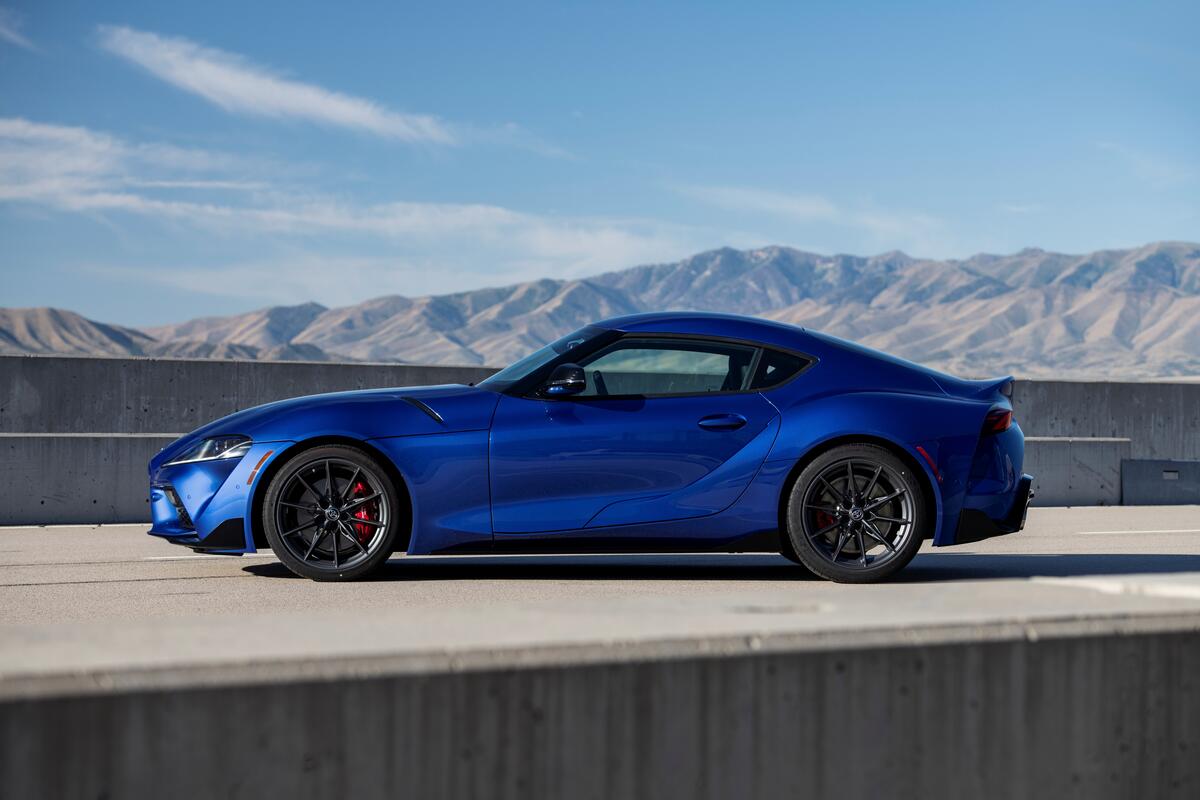
The Toyota Supra is a sports car made by Toyota. It’s built for performance and is popular with people who like to modify cars. The podcast mentions it being put together in a very short amount of time for a performance-focused project.
A “rolling chassis” is basically the car’s skeleton and wheels/suspension, but not the finished, complete car. It can roll around, but it’s missing a lot of the stuff that makes it street/track-ready.
A wire harness is the car’s wiring bundle—basically the electrical “plumbing” that connects all the electronics together. If it’s missing, the car can’t run normally because the computers and sensors don’t have connections.
Sway bars help keep the car from leaning too much when you turn. If you can adjust them, you can make the car handle more like you want—either tighter or more balanced in corners.
“Baja” here refers to the Baja off-road races (commonly Baja California events), where vehicles tackle rough desert terrain at speed. Like Pikes Peak, it’s associated with unpredictability—small issues can escalate quickly because the surface and conditions are so demanding.
The Isle of Man is a famous motorcycle race on real roads. It’s considered especially dangerous because crashes are hard to avoid and there’s very little margin for mistakes.
“Dakar” is the Dakar Rally, a very tough off-road race. It’s famous for long distances, rough terrain, and how easily things can go wrong if you’re not prepared.
The Nürburgring 24 Hours is a long endurance race at a famous German track. Because it’s so tough and it lasts a full day, drivers and cars have to handle both speed and long-duration stress.
Term
works mad
“Works” means the car team is backed by the manufacturer, not just private owners. “Works mad” is basically saying they’re trying to hit a top, factory-backed standard even if it costs everything.
The gearbox is what changes how fast the engine spins versus how fast the wheels turn. “Re-gearing” means changing the gear ratios so the car accelerates and pulls better for the track.
On a turbo car, “boost” is extra pressure that helps make more power. The “boost strategy” is the computer’s plan for when and how hard to add that pressure.
A “tick” is a new, noticeable clicking sound from the engine. In racing, that kind of sound usually means something isn’t right and could lead to bigger damage.
This means the engine broke so badly that pieces came apart and could shoot out. It’s a sign of a major failure, not a minor problem.
Term
tribute run
A “tribute run” is a special, often ceremonial or commemorative driving session where the car is driven up the course as a tribute to someone or something. In mountain-climb contexts, it typically happens alongside official runs and may be less about outright racing and more about honoring the moment.
A harness is a safety belt system used in race cars. It holds the driver in place more firmly than a normal seat belt, especially during crashes or big forces.
Concept
go up the mountain
They’re describing a hill-climb style run—driving up a steep mountain course. The big concerns are doing it safely, staying quick, and making sure the car doesn’t break while climbing.
“Hold together” means the car keeps working reliably during the race. They’re basically asking whether it will survive the hard driving without breaking.
Qualifying time is the time you set in the event’s practice/qualifying run. It’s used as a benchmark (and sometimes to set your starting spot) before the main runs.
EGT means exhaust gas temperature. An EGT bung is a small fitting on the exhaust where a temperature sensor mounts. If it loosens, hot exhaust can escape and damage nearby wires and parts.
A wiring harness is the car’s bundle of wires. If it gets melted by extreme heat, the car can lose electrical functions or even short out.
Term
caught the back of the car on fire
The fire started near the back of the car, probably because hot exhaust damaged something flammable. In racing, fires can spread fast and can be hard to stop quickly.
“Park” is the gear position that locks the car when it’s stopped (usually on automatics). If she couldn’t get it into Park, it suggests the car wasn’t responding normally for shifting.
“Homologated” means the race car has been officially approved to race in that category. It’s like getting permission from the rules so the car has to match the approved setup.
McLaren is a British supercar and racing brand that competes in multiple GT and endurance programs. Here, the mention is about taking a call with McLaren while planning which car to run under the GT4/turbo rule set.
Aston Martin makes high-performance cars and also races them. They’re discussing which racing car/manufacturer is likely to do best, and they chose Aston Martin.
GT4 is a type of race category for cars that start as regular production models. Teams modify them for racing, but the rules are meant to keep things more affordable and competitive.
The BMW E30 M3 is an older BMW M3 from the 1980s/early 1990s that’s well-known for being a driver-focused race-ready car. The speaker says it was their first race car.
Autoclub Speedway was a race track where cars used to compete. The speaker mentions it when talking about their first race and how fast their BMW M3 was going there.
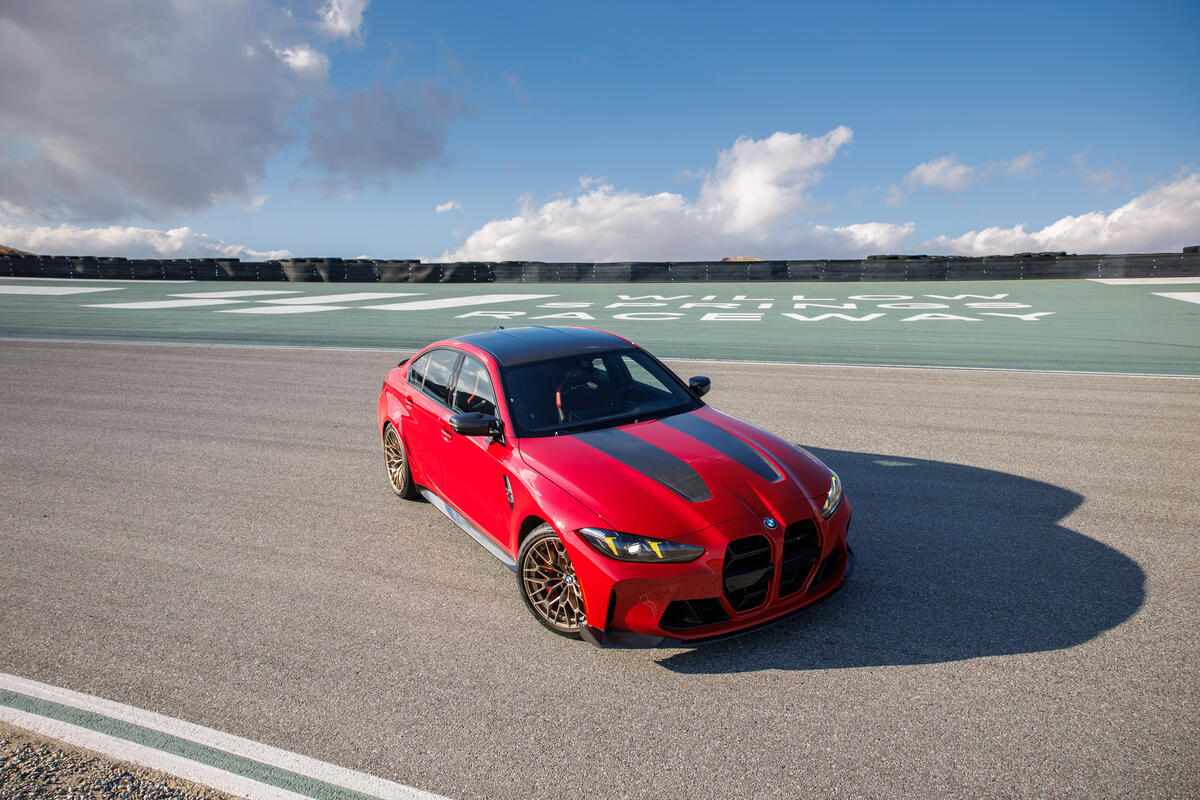
The BMW 3 Series is a compact car made by BMW. The podcast specifically talks about the E30 M3, which is a more performance-oriented version used for racing. It’s mentioned because it was the speaker’s first race car.
“D mod” is a racing category with rules about what you’re allowed to change on the car. The speaker says it let them do some upgrades, but they still had to keep the engine size under a set limit.
The Porsche Cayman is a mid-engine sports car. Here it’s mentioned as a comparison point to another race car, because it’s lighter and has a different setup than the Aston they were preparing.
A full slick tire has no tread grooves, so it can grip the road very well on a dry track. They had to switch away from it because the rules required a treaded spec tire.
A spec tire is a specific tire that everyone in the class has to run. That keeps the competition fair, so the team’s setup work matters more than picking a faster tire.
Making the chassis “more compliant” means tuning the car to ride and react more smoothly over bumps. That can help the tires stay planted and make the driver feel more confident.
Ride height is how high the car sits relative to the ground. Adjusting it changes how the suspension works and can affect grip and balance, so teams tune it carefully for track conditions.
“Roll in the back” is how much the rear of the car leans during cornering. If it leans too much, the car can feel off-balance, so they adjust settings to calm it down.
Term
thermal
“Thermal” here means heat. They’re talking about letting the car get up to its normal operating temperature so it behaves the way it will during the race.
A “shake down” is a pre-event test session where the team runs the car briefly to find problems before the main run. It’s meant to catch issues like setup errors, leaks, or unexpected failures under real operating conditions.
An “altitude test” means testing the car at high elevation. The air is thinner up there, so the car can feel and perform differently than it does at sea level.
“Cooling” is how the car keeps its engine and other parts from overheating. On a mountain climb, it can be harder for the car to shed heat, so cooling becomes critical.
They’re basically saying the goal is to get the most out of the car and the driver. That means driving smart for the conditions and doing the basics well, not just hoping things go your way.
Tires work best when they’re warm. Early in the run, drivers try to heat the tires up so they stick better to the road and you can go faster with more confidence.
Tire pressure affects contact patch shape and grip, and it changes as tires heat up. In racing, drivers and teams manage pressure so the tire operates in its ideal temperature/pressure window for consistent traction.
A hill climb is a race where cars go up a steep mountain road. The climb makes it tougher because the road is always changing and the air gets thinner higher up.
A brake point is the spot on the road where you start slowing down for a turn. If you brake too early or too late, the car won’t be positioned right to take the corner smoothly.
In racing, momentum just means keeping your speed going through the turn. The goal is to slow down smoothly, not waste speed, and then accelerate out efficiently.
Tires work best when they’re warm. If they’re cold, they don’t stick to the road as well, so you have to drive more carefully until they get up to temperature.
ABS is a system that helps your brakes keep gripping instead of locking up. “ABS settings” means the car can be tuned to brake more smoothly for the conditions, like dust and low tire grip.
Traction control helps prevent the drive wheels from spinning when the road is slippery. “TC settings” means the car can be tuned to be more or less intervention-heavy depending on how much grip you have.
“Torquey” means the car feels like it has strong pulling power. That helps it accelerate out of turns, but on a slippery surface you still have to manage traction.
Understeer is when the car doesn’t turn as much as you want. It tends to slide wide toward the outside of the turn because the front tires lose grip first.
A sector is just a section of the track that gets timed separately. Drivers use it to figure out which parts of the course they’re doing well in and which need improvement.
“The bottom” means taking the lower/inside line through a turn. It’s often closer to the inside curb, and drivers pick it based on how well the tires grip there.
Term
up top
“Up top” means taking a higher/outside line through the turn. Drivers may do this to get a better angle and traction when they exit.
In racing, “timing” means the stopwatch system that records how fast each run or lap is. Being “at the top of the timing” means you were quickest based on the official recorded times.
Pikes Peak is a very famous mountain road climb in Colorado. It’s hard on cars because the road is steep and conditions change as you go up. The hosts are referencing that event context for their runs.
Road America is a famous race track in the U.S. Here, it’s where they went to test before moving on to a bigger race schedule.
Car
BMW GT four
This is a BMW race car built to compete in the GT4 class. GT4 cars are based on real production cars, but they’re modified for racing and safety so private teams can compete.
Michelin Pilot Challenge is a North American sports-car racing series run under IMSA, where teams compete in classes like GT4 and other production-based categories. The “Pilot Challenge” name comes from Michelin’s sponsorship, and it’s known for endurance-style race formats.
IMSA is the organization that runs and governs a lot of sports-car racing in North America. If a race is “in IMSA,” it’s part of their official series and rule set.
Endurance racing is when the race lasts a long time, like a few hours. Since it’s not just a quick dash, teams plan stops and driver swaps so the car can keep going strong.
Pit stops are planned stops during the race where the team services the car. In longer races, when you pit (and what you do there) can make a big difference in how fast you can keep going.
Fuel is the amount of gas the race car has and how the team plans to refill it. In endurance races, when and how much you refuel can change your speed and stop frequency.
Term
shortstop
A shortstop is a quicker pit stop where the team does only what’s needed, not a full service. It’s used to save time and keep the race strategy on track.
Sometimes teams replace only the tires on one side of the car. If one side is wearing out faster, swapping just those tires can help the car grip better without spending as much time in the pits.
The Nürburgring is a legendary race track in Germany. People call it “brutal” because it’s really hard on both cars and drivers—lots of turns and changes in elevation make it a tough test.
A factory team is a racing team backed by the car company itself. They usually get more support and resources than smaller teams, so they’re often the ones everyone measures against.
A privateer is a racing team that isn’t directly run by a car company. They may still race fast and compete with top teams, but they usually have less manufacturer backing.
A “five cylinder” engine means the car has five cylinders that help generate power. It’s just a specific engine layout, and it can feel smoother than some smaller cylinder counts.
“Mid-engine” means the engine is placed closer to the middle of the car instead of the front. That can help the car handle better because the weight is more balanced.
Term
group S car
“Group S” is a racing category with rules that cars have to follow. The speaker is saying the prototype was meant to be built to fit that kind of race class.
LIVE
Welcome to a very vehicular showcase.
What is that?
We're not even sure ourselves, because, hey, we're still making it, but it's going to be
a little bit of a hybrid of a podcast with a documentary.
I don't know.
It's just another way for me to tell a story.
Let's tell the story of why we have to tell it this way.
About a year and a half ago, I set out to do a project that we were calling the Brutal
Mountain and was following some of my favorite people, which are the guys at BBI on yet another
attempt at going to Pikes Peak.
But it kind of all fell apart.
For years, I have wanted to tell the story of Pikes Peak.
This is a place that first grabbed me in around 2008.
I saw it as a kid, but I went there in 2008.
I got to stand on top of that mountain.
I got to ride up it in Mike Ryan's Freightliner race truck.
He had 12,000 pounds.
It captivated me.
It was something that became this thing.
I wanted to go back and drive it myself.
I wanted to tell the story.
It felt so unique compared to all the other types of motor sports that I had been involved
in.
From that point on, I kept looking for stories to tell there.
I have told multiple stories there, from races to even bringing Ken Block and the Hunicorn
there for Climb Kana.
That mountain has fought me every which way.
I should have known a year and a half ago when the opportunity to go finally tell the
documentary I really wanted to tell about this mountain where I got to follow five different
drivers who all had very different stories and lived in very different classes on the
mountain.
I should have known then that that story wasn't going to actually happen.
Like all good projects, sometimes they just fall apart for multitude of reasons.
But we're not here to talk about why it fell apart.
We're here to talk about the pieces that we did capture.
And today joining me will be Tim Berisha from BBI as well as his good buddy Steve Wetter.
And their story last year and actually really BBI story over the past decade of this mountain
and how it has been an absolute nightmare to go and compete there.
Yet they keep going back, except for this year actually.
And last year we left Colorado with a bit of unfinished business on all fronts, which
made me convinced we'd be going back this year.
But like all things pikes, it's completely uncertain and totally unexpected.
And now a conversation with Tim and Steve on all things pike speak.
All right, so the big elephant in the room is that the two of you and myself included
are not on our way to Colorado for pike speak this year.
Right?
Why?
There's a lot of reasons.
We needed a break.
Last year was brutal, brutal, but we did well.
But we prepped, we did everything we could, then the mountain shut us down halfway up.
So that was an asterisk year.
Can I ask a question though?
Has there ever been a year that wasn't brutal?
Have you ever had a year where you just went and everything went swimmingly?
No.
Does that make you at all question your relationship with this event?
Yes, it does.
But it's just something that I daydream about that that place and competing
there like almost every day, you know, there is something that every time you're
like, I could have done this a little bit better as you walk away.
And the whole point of like maybe exercising the last ounce of discipline I have, you know,
and saying no and sticking to no and not going back is so I can kind of reflect
a little bit and see what's next.
What do you think the what do you think the exact draw is?
Like, if you had to explain to somebody, like, let's say I was a therapist
who knew nothing about pikes and you had to explain like, what is the draw of this
thing that is so difficult?
Right? I mean,
it's like a tough mother style race, but an automotive like what is the the draw for
it's like a tough mother with wild animals that you don't like a tough mother.
You know, OK, I'm going to get shocked as I go through this.
I got to climb over this thing.
It is like marmots again.
Yeah, marmots.
It's literally you literally could hit an animal, the pike's peak and your race.
And the next corner, you're like 22 corners off, started.
Yeah, those variables.
But the backdrop, the beauty, the camaraderie amongst the teams, the
the kind of grinning in the face of adversity, the whole grittiness of that place,
the grassroots feeling of it, being able to rub elbows with factories out there
as a privateer and looking at multi-generational people and families
and teams that have been there forever.
There's so much, so much that brings you in.
And then as you come in, oh, why is it great?
We're back. You get kicked in the head.
And you're like, oh, I remember why.
I remember this, this is going to, to hurt.
And Steve is someone who has crewed there now for years.
And first time driver and winner.
What is it like?
Like what's the draw for you?
And I love the challenge.
I mean, it's sometimes it's just really hard to put into words.
I mean, I think about it every day.
I open up my laptop and there's a picture of the car going up the mountain.
I mean, it's amazing.
But.
I mean, sometimes it's just after a good practice day.
And if everything goes well, you're just hanging out and having a beer
and just saying, yeah, let's go do this again tomorrow.
But do you find it as brutal as it is?
I mean, it really is.
But Tim, Tim, have those pretend to making it brutal.
There is there's got to be part of that.
I heard this thing today called a type two activity,
which is an activity that's not fun while you're doing it.
It's only fun when you're done.
I was like, well, that is definitely what I'm into.
Here, I think you just coined it.
I like it because I like chaos and I get to blame it on something.
I get to blame the chaos on on something and still just go through and thrash.
Oh, no, we got to do this.
You know, I'm not the one who caused this by no means.
But none of my.
I didn't put it in this mountain.
Horrible situation.
The man decides, right, guys?
But Steve, for you, I mean, do you find it to is that brutality
something that you're attracted to?
Yeah, I think that the chaos is just one of those things.
So is something new that comes around a corner and like, oh,
crap, we got to go do this.
Got to go to that.
But I kind of like it.
Yeah. And not like I do like it.
Let's go do it again.
He's he's a extreme problem solver, too.
So he throws stuff at him and that's he, like I said, he tries to act like
he's calm and pragmatic, but he's just as crazy as I am.
Like he's if not more sometimes, like, you know, but it's it's fun to watch him
go from being my buddy, then running a car there with Tanner,
then helping out and watching the ups and downs and still be like,
you know, I think it would be fun if I actually drove.
So I mean, one more car to the pile.
But but it's yeah.
I mean, for the first four years, crewing and helping out with Tim and the team,
it was just get done with it.
You're like, that was so crazy.
I would never want to do it again.
A week later.
Hey, you doing pikes again next year?
Yeah. So.
The chaos.
I mean, it's you're doing it together with just such a tight knit group
that works so well together.
And yeah, you're at each other's throat sometimes, but that's no different
than anything else. So it's it's awesome.
Yeah, it is.
It's you never know that you're in the adventure when you're going through it,
you know, but then you like what Steve was saying, then you reflect back
even a week later, you lick your wounds a little bit, catch up on sleep.
Some of your skin grows back and you're like.
That that was insane.
We just and then then the stories come and then, you know, then all of a sudden
you're amped and charged again and then the vicious cycle happens.
I mean, just like imagine the outside looking in.
You're like, oh, cool, these guys got to go drive Pike's Peak.
That's awesome. Mm hmm.
I want to be on that team.
Then they show up and like, what the hell is going on here?
No sleep, altitude sickness, no food, only food for this five minutes,
no food after that. Yes.
It's going to rain.
It's going to be 90 degrees and also 30 degrees.
And then I'll just do this again.
And then like 70 percent of your sleep is in the back of an F 250.
Yeah. And by the way, if you sleep for too long, you get altitude sickness.
Don't sleep enough.
You get dizzy and get up.
Where do I sign up?
Nice. It sounds like an awesome.
By the way, you also shouldn't drink caffeine, but you need caffeine to stay
awake the whole time.
Hope you some mounts of it, but then that's going to hurt you.
Sign me up.
Yeah. How did for you, Tim, how did like
Pike's Peak first like kind of find you?
Pike's Peak found me long story short
by the guy named Jeff sort, you know, BBI was rolling.
And we've we've obviously heard of Jeff.
He he was a local to us in Southern California at the time.
And in 2012, he came rolling into the shop and just walked right
past the front desk right in the back.
And I was like, oh, hey, and then he looks like there you are.
I'm like, there you are.
And then we started talking.
He said, hey, I drove a 2010 GT 2 RS street car, won that class.
And I drove a cup car, won that class.
But you know, it'd be really cool if I mixed those two, put the turbo in the cup,
you know, the agility and the lightweight of the cup and the geometry and the
horsepower and grunt of the turbo for the altitude.
And I'll be like, well, we can do that because we've been building high horsepower
turbo engines that that can survive for quite a while.
So we literally just took one of our very standard, we call them the B8 engine,
which is 800 horsepower of the ground and kind of retooled it and put it in the car.
And 800 horsepower in 2013 was a lot of power.
Yeah.
Like now it seems a little more normal.
Now your dailies are doing it.
You know, but back then it was it was unique.
Yeah.
And that that hooked me.
We went out there and I did not know what to expect.
And we get there and I was blown away.
And then from then on, I've been obsessing over that place and figuring out like,
how can we do better?
You know, before that, you're working for portion portion motor sports.
You're working in road racing.
I mean, you have sort of like the ideal job for someone who wants to go
into motor sports, you leave all of that to go do be go do BBI.
Did you ever think that you'd end up going and making pikes peak?
Like sort of what the company revolves around in terms of like its storytelling?
No, never.
I never thought that in 2012 and a half, whenever before like a day before Jeff
showed up, I never thought we'd be there.
I always loved it and I watched it even as a kid.
I watched when like Chevy was there when it was all dirt on speed TV.
They're worldwide.
That's what it was.
Yes.
Wide world of sports.
I remember them talking.
They left the tailgate open.
They were cheating or whatever it was.
But I just remember how cool that was.
But I never thought that we would build our brand identity around that mountain.
Yeah.
Never.
And then there you are.
You we pivoted, fell in love with it and just said, we got to do this
and make a business out of it because it's too cool to like, you know,
just sit back on the sideline and watch other people do it.
And then from then on, I was like, this will be my thing that I get to go do.
And that's kind of how we did it.
And then 13, 14, 15, he got first in 2015.
We took a break till 2019.
And then that's when 30 days till the Sunday when we were running the Carpikes Peak.
During those times, I was daydreaming about the whole time.
Got a 991 Cup car and I was like, we're just going to build everything we learned
on Jeff's car, everything we've learned from other people.
We're going to build, I think, our ultimate night 11 to go in time attack one
and see what we can do in 2018.
Started building the car and we were trying to build.
It was odd.
Bought a 91 Cup car and I wanted to build a 1500 horsepower 911.
I was going to try to break the top speed record in it and then turn it into a
Pike's Peak car and I was going to drive.
That was going to be my thing.
Found out that we were going to have a baby.
Wife said, nope, you're not doing that.
Go work on the car, be an engineer, but put somebody faster in it and go, go chase it.
So shifted the focus and we weren't going to do it.
And I, you remember this very clearly about a month before the race, Optima came
on board and said, Hey, I think we would, we're going to team up with you.
We'd like to do it.
I'm like, well, it would have been great six months ago.
Right.
But if I remember correctly, it was like a 90 day thrash to get the car done or 60
day, it was something incredibly small.
I think it was 60 days and it was basically a rolling chassis at the time.
No glass, no, nothing in it, no wire harness, nothing.
And so we thrashed on it, barely made it.
I mean, we made it to tech.
The engine started like twice and then we went and broke it in after tech at the
track, went and did the first day without even an alignment on the car, came back
down, did the alignment and started anyways.
And this is project Lucy.
Yeah, this is project Lucy.
Yeah.
Is it time to tell people why project Lucy is called project Lucy?
No, never.
That's fine.
That's like a, yeah, we're really that one.
So then we ended up doing actually qualifying to a time that we thought, oh,
if we can, if we can hang on to this, you know, we have a shot at, you know,
place in top three in class.
Because I remember after qualifying, we were a tenth of a second off of fourth.
Like, and I remember so we started chasing tents.
We went through the whole car.
We pulled everything off.
We used to have adjustable sway bars pulled it off, pulled cool suit, everything
that we didn't need pulled it out of the car.
And then Raf got in the car and just.
Oh, God.
Damn it.
Yes.
I mean, he just turned it up and because finally the car came together.
The chassis setup was there.
Engine was great.
So he put it all together and ran a 923 up there in 2019, which I think it was
like 941 was the old record.
Something like that.
And that was like.
And what record was that exactly?
Time Attack One record.
That was a Time Attack One record, which is a class that I've always really
liked. Jeff's the one who introduced us to that class.
And it really was cool because it pertained to our business.
It was the kind of direct reflection of what we do on 911s.
I mean.
And to rewind back to the business, because I think this is something that a
lot of people maybe don't understand is that you guys are not a race shop.
You are a customer car shop, right?
So it's like, you don't go racing every weekend.
You don't have like a full blown stacker trailer to just go racing with.
Like you guys serve as customer cars.
And a lot of those are street cars.
Yeah.
Yeah.
We were known for building big power turbo cars.
Yeah.
We were, we were building big power turbo cars, street car.
And then we would go race sometimes.
We weren't a race car that did street cars.
We were a street shop that did.
We touched, we dabbled in the race car.
Yeah.
Yeah.
Um, but you weren't like champion, right?
Which was like really focused on going racing.
Exactly.
Running a series.
Right.
Yeah.
So which kind of made you guys the underdog.
Yeah.
And that's what it felt like it, but it made it fun because then you bring your
ag tag group of, of rad individuals and you're like, Hey, let's, let's go racing.
And let's see what it's like to rub elbows with real race teams.
And that's what we always call them real race teams because we, we weren't one.
Um, which is a perfect transition to the person sitting next to you.
Yeah.
So now you can introduce Steven because this is when Steven comes into the story.
So how did you end up in this mess?
Gosh, I mean, if I, if I could rewind back time and I know we've been trying
to figure out when do we first meet?
And it was, I think it might have been like an Optimus Streetcar challenge
out in Vegas or at like a NASA race.
Some were back in like the early.
20, 10, something.
Yeah.
2010, 2011, 12, 13.
Yeah.
Yeah.
That's about that same time.
Either way, we met, met at the track somewhere.
Yeah.
And, um, but Tim and I lived about like two blocks opposite of each other.
And I'd walk my dog over in the morning to go grab coffee and a donut and hear
Tom, but Tim and Frankie and little Beck who was just born and we'd sit down and
just talk about life and what's going on.
And one thing leads to another where, um, you know, fast forward through street
car stuff and my dad was a big, like big power guy.
So we wanted all the power we could get out of, you know, one of his cars,
whatever.
So we always show up at the time shop and hang out and whatnot.
And then, um, Pikes Peak rolls around.
And I remember, I think I still have photos of Lucy being built and it was
like 30 or 45 days, whatever the timeframe was.
And I just cruise over, cruise over with the dogs, see what's going on and
like, what's she working on?
What's going on?
Yeah, we're going up to Pikes Peak this year.
I'm like, Oh, cool.
So we watched the race that year and Raft just destroyed it.
It was insane run.
And then, um, go another year after that, I was going through some
challenging times in my life and but Tim's like, Hey dude, like, why don't
you just come up and work for me for this week?
Yeah.
I want to, you know, I could tell he was, he was going through it and I wasn't
there as a buddy because I was at Pikes, but it's like, why don't you just come up?
Like you got some birds one stone.
I was like, you got some time, come breathe some mountain air and, and I'm like,
sure, I don't know what I'm getting myself into.
Like, yeah, I'll go work on some race cars.
Like, yeah, we'll show up at the track, like have a good time, whatever.
Roll around.
And it was like a mad thrash getting stuff done.
I think you guys have just rolled off the mountain.
I rolled in on like a Tuesday and off we go.
And it was just nonstop for the whole week.
I think I slept a couple hours.
Oh yeah.
This is 2021.
I think it's 21.
Yeah.
That is a set.
That was 21.
This is the three car run.
Right.
Yeah.
Yeah.
And then, yeah, there was a three car run.
We had Donahue, RAF and Tanner.
Tanner was in the GT four.
Donahue was in the GT two, which is called Sunny.
And then Lucy point two, basically.
And I remember that year because I remember telling you, I thought you were
crazy because it was already a lot of work to get one car.
And you're like, I'm going to make it even harder and bring three cars to the mountain.
Right.
Right.
But it was a good year.
It was a good year.
It was a good year.
I mean, you remember having engines out of cars the night before the race, but
other than that, it was a good year.
There's it feels like that's always the case.
You know, whether if you're chasing something or you just trying to
hear you broke something, whatever it is, like it just, it's never, it's never
been like, Hey, this is great.
All right, we're going to get some night.
Good night.
Sleep.
Wake up the morning.
Go do it.
That's just.
Do you think that's part of the appeal for you though?
Yeah.
Yes, it absolutely is.
I, um, I have the problem of not leaving things alone.
And also I don't back down from a fight and that gets me, um, and my poor crew
and I guess everybody in a lot of, a lot of trouble.
Yeah.
Yeah.
Yeah.
I heard from somebody, um, this year when they heard that you weren't coming.
And he said, wow, it's going to be such an uneventful week leading to the race.
Not the race itself.
It's the week leading up to the race.
Cause you know, having been there with you, you know, through multiple experiences,
um, there was always the story of, oh, I heard BBI didn't sleep last night and drove
an engine out from California or.
With all my interns.
Yeah.
I work in a mini van.
In a mini van.
And, and they swapped it out in the middle of the night and they stole parts out of a
production car that was parked at, you know, at the dealership or whatever.
We've, we've, we've done that a lot.
Actually, um, that's not a badge of honor.
That's a.
That's not like a good thing.
Right.
I don't know.
It, it, you seemed, you seemed to like weirdly be driven by that.
Oh, I am.
Absolutely.
Um, what I'm not driven by is, is just things going okay.
Right.
So I guess, I don't know.
I don't know.
That's, that's for another conversation.
But yeah, but then Steve came out, um, and we were in over our heads.
Tanner was doing great in the GT four car that came in.
And Steve kind of adopted that program along with just supporting us in anything
that we needed and, and not sleeping with us.
And he, I could tell he was enjoying it.
Oddly.
And, but, you know, cause nobody needs that, right?
But he, I could tell he enjoyed it.
I can tell you liked it.
And then, um, I don't know.
I would just, I, you know, obviously having your best friend with you doing this is a
lot of fun too.
Is the, the misery loves company.
Yeah.
I mean, what was it from your perspective, Steve, that kind of come into this and.
I mean, I didn't know what to expect, but at the same time, I think it just totally
got my mind off of whatever was going on at the time.
And that's what I find attractive to motor sports is I can just fully focus on
something and whether it's being on the sidelines, helping support my best buddy
and his crew, uh, or doing my own program and just being fully committed.
And I just absolutely love that.
Well, I mean, during that period, you know, was it a lot of fun, just kind of just
crewing with the teams and doing all that?
Cause I mean, I remember.
Think you and I had met just before that, but I remember coming in on the three car
team and it was like, you know, you guys had expanded on the level.
Like all of a sudden it was like, there was a lot going on.
Every driver is in a different class.
So you're racing in three different spaces and cars are running at different times.
Like a lot of organization and like, that's not your strong suit.
Nope.
Nope.
So like you came in to kind of help and you were doing a bit of everything.
Yeah.
Yeah.
Um, obviously, you know, we'll get to it, but you eventually go to run.
You rent, you go and race there.
Um, how much of that was like a learning experience being in all of that?
100%.
Just seeing how the logistical operations going on.
I mean, getting these cars, number one, just to Colorado, then finding a space,
not just for one car, but three cars and then eventually five cars.
Yeah.
You know, it's just insane.
All the support to get, you know, get the cars up on the mountain, find space for
all, you know, three cars at the time.
And then it was eventually five cars.
Um, and understand how everything operated.
And it was crazy.
Quite frankly, it was just absolutely nuts.
Yeah.
I mean, look, for those who are listening to this and they haven't experienced a
week of like what it's like to be there.
I mean, like explain that for someone.
Cause like you came in, had never experienced it before, right?
You hadn't been to the mountain before.
And all of a sudden you're dealing with practice, all of this.
I mean, give people an idea of what that feels like.
I mean, imagine just showing up, rolling in on an airplane, grabbing a
rental car, getting over to the shop.
And it's, you know, three o'clock in the afternoon, engines out of the car or all
the suspensions out, replacing dampers, what have you.
Um, hoping that everything works right.
You're getting the car done, getting it all buttoned up, comes around 10 o'clock.
Cars almost buttoned up, ready to go, fired up.
You're good to go, load it on the truck.
All right.
Now go back.
We'll see here in two hours.
Yeah.
You load up like a lot of times we're loading up at midnight and, and we're,
we're meeting at the truck and trailer at two AM so we can gas up, grab coffee
and start heading up the mountain.
And then the next day happens again.
It's just not even time to reset.
And it just keeps on going.
And it's all an altitude, which I think everybody forgets how fast that
fatigues you.
It was brutal.
And then that was absolutely just the first time ever going up.
I think we were practicing at starting a glink hove.
And I got up there and I got out of the truck and I almost fell over.
And I was used to being up in altitude, but I'm just next.
See, I'm like, okay, I need to sit down for a second.
And then, okay, off we go.
And these bodies starts to acclimate over a couple of days, but yeah,
because then you get out of the truck.
It's about three 30 in the morning.
You get out of the truck and it's not like we're going to do some stretching and
group exercise.
This is like, you have to unload this trailer quickly because we're going green
in an hour.
You got to get the cars warmed up, the tires that warmed up.
Everybody has to be organized.
Driver has the driver's meeting 15 minutes after it.
It's just this crazy cadence, which, which I love.
I think I do well in those situations.
And as we've, you know, at Steve's point, like he got to look at the back end of
everything and kind of look over his shoulder because he's a very organized
person. He, that's how his mind works.
He works.
I'm glad it looks that way.
Yeah.
I mean, to people like it's him and I, doesn't take much to look organized.
Right.
Right.
But anyways, the point is he, he got, it was cool to have my buddy, because
you're always describing it.
I don't care like what we talk about here, what nobody will feel it.
Nobody will understand it until you get there.
Um, and I know everybody says, oh, it's a mountain, but you do not understand
the gravity of the entire week, especially if you're, because that's one thing
that I am is highly competitive.
Right.
If you're highly competitive, you know, I don't care about sleep.
I don't care if we're chasing tents or chasing tents.
If we have to pull dampers off and I look at my poor crew while they're just
like fingers are bleeding and they're ready to go home, that we were doing shifts.
Like I would drive half a crew back home.
So they sleep, pick up the crew that wakes up and we're doing like these four
hour on four hour off shifts and cycling people through Steve was driving people
around and that's if you go through the effort to be there, then you, then you
be there, right?
And that's, that's like, that's kind of the mentality.
Maybe that's why I enjoy that is because I, I do enjoy pressure.
I do enjoy, um, my wife says chaos, you know, but I don't know.
I just do.
I, it's, it's a problem.
I mean, out of all the different types of racing and events you've been to,
do you feel like pikes is the most chaotic of them?
Baja, I think I did that in 2006 as a co-driver.
Uh, and that, that is along the same lines, but it's different, but it has
that same staticky, like things can just go way wrong at any time.
But, but pikes, the problem, I don't know, they both love rally racing.
I know.
I know.
Yeah.
Yeah.
Cause I think there's something interesting about, there's a few races that
still exist that are like almost from a yesteryear, right?
When like chaos was acceptable, right?
Isle of man, Baja, Dakar, um, the Nürburgring 24 hour, um, obviously pikes.
Right.
Um, these are these events that like still feel like really dangerous, but
also kind of very untamed.
It's almost like all those events you just said you couldn't start today.
You know, you're going to be like, you know, they, they're, they're
grandfathered in.
Yeah.
Yeah.
Yeah.
There's not a, there's not an insurance company in the world that would ensure
a new idea like that.
No.
I mean, so, you know, after going, Stephen, like, you know, getting into it,
um, does all of this sort of excite you to go compete at the mountain?
Like, are you sitting there while you're doing this thinking this is a lot of fun?
I'm really happy crewing or in the back, you had to, you think I'm happy to help
attend with whatever needs for the most part, but when it comes to competing at a
high level, that's what I love.
I just like feet off of it.
But when, when was it, when was it that you were up there and you're like, so we
were, we were up at devils of a devil's playground.
And, um, I never forget this.
And I still have on the back of my phone, it's still the, the picture that I took
when I was up there.
And just as the sun was starting to rise and you're looking down to Glenn
Cove, you can see the W's and there's Glenn Cove and see all the way, almost
all the way down to the start line.
And as that sun came up and how it just like lit up the whole mountain, I was
just like, holy crap.
This is insane, but I want to do this so bad.
And that was, that would have been the second morning that we were up there.
Um, at least for me up on the mountain, you see the cars run the first day and
that's great.
You're just kind of standing down at the bottom of Glenn Cove and you're just
like, shoot on up.
Cool.
But now you're up on top and you get to see the cars run up from Glenn Cove to
devil's playground and looking down across that hearing it and just, there
was something that just looked as fire.
And I was going to do whatever it took to figure out how to get up there and do it.
And that set off conversations, nonstop up until this day of how to
go do it.
Yeah.
So despite all of the trials and tribulations and drama there was leading
up to the actual race, like actually had a really good result in the race.
Despite it being an asterisk event, meaning we didn't go to the top.
Yeah.
No, and that's, that's the, the kick in the teeth, but we did, we did really well.
We had two first and a third.
Um, Tanner Faust did first place in GD four.
Raphael did first place in open and Donnie Hugh did third in, um, in TA one
time attack one that that was, I think the first time a privateer car, our team
has ever entered three cars in three different classes and, um, been on the
podium and one deal.
Uh, so yeah, 2021 was good.
It was a great learning experience.
But like, if you, I remember right in this is where I'm going to start pointing
fingers at you, we're after the race, the conversation in the woods.
Yeah.
After the race, we dropped our shoulders a little bit.
I sat next to you.
I was drinking a Corona and you're like, well, what's next?
And I'm like, like, how you did great.
What are you going to do next?
And then that's where that is what I said, what do you want?
And you said, I said, why would you come back here?
Oh yeah.
And you said I would come back here because I want King of the mountain.
Yeah.
True.
And so then we, then that spiraled into a disaster of 2022, which was the
who knew pig.
Yeah.
Who knew pig projects?
Yeah.
And that's like its own podcast, but just run us through and you were a part of
this too.
You were there for it.
I mean, what I think that's a classic.
Your eyes were bigger than your belly in terms of what you thought your ambitions
were and your ability to get it done.
And we unfortunately gave you the money to go do it.
Yeah.
Yeah.
And that was not like I said, it's your fault.
The who knew pig got greenlit.
That was really at like SEMA in November, right?
We were sitting at that meeting.
Um, and then we had to order a bunch of tubes with Scarbo and Scarbo started
going nuts on a chassis and then we started, and we had to build this thing.
Made it to the track.
The car was just, we just, we needed 18 more months.
We have a few issues with suspension setup where the car is kind of snap
oversteering on me.
Much better for that to happen here on a track where there's sand around gravel
around the track as opposed to on the mountain where there's trees at the edge.
That was one of the hardest, hardest years I've had at Pike.
And it's not only pikes, it's like the six, and I'm not complaining.
So lucky to be a part of this.
So lucky, but it's when you're building it and you're putting everything you
got for six months straight into this, um, you know, your family's upset.
Uh, your friends are like, hi, uh, your team's exhausted.
Teams exhausted.
My vendors are pissed.
We're aiming at works mad because we're spending every penny we have plus, um, it
just is one of those things that, and then you get there, you're like, okay, this
is going to be worth it.
Right.
Ken's going to get in the car.
He's going to kill it.
That guy knows how to drive.
Uh, and then the car lets us down.
You know, we, we missed something on the engine.
Uh, this didn't work.
That didn't work back and forth.
And there's no worse feeling to have Ken Block look at you and have that.
What did I get myself into here?
Look, I was like, you know, so then we just kept going,
trying finally get to re regeared the gearbox, changed the entire boost
strategy, knocked a bunch of the, tried to simplify the car as much as we could.
I remember him at playable, ripping.
And then I heard a, um, a tick and I was like, oh, okay.
Well, well, we have to practice in the morning and we went up there and
grenade at the engine.
And that was horrible.
Um, and especially when we couldn't fix it, flew engine parts, people, everything
you could possibly fly out and there was just no fixing Humpty Dumpty.
Uh, and then then the, then, you know, like the adrenaline, everything catches back
up to you and then you just almost want to collapse.
That's how 22 was.
Um, so that was, that was tough.
Like, I mean, that was a kick in the teeth.
Um, but Steve was there the entire time by my side the whole time watching,
helping, doing whatever took.
Um, but he was also going through his own things at that time.
Arguably the best opportunity I've ever had in my career, probably ever will
have is to, to be a part of that program of the Huna pig.
And then it didn't work out.
And that was, that, that was tough because there was a lot of eyes on us.
And when you, you sacrifice everything, health, sleep, whatever,
to get something done, usually when you succeed or you do well enough, it's like,
okay, cool, got it.
But then you do all that.
And all of a sudden you're like, oh, never mind.
There was no like, you know, so.
We, in my head, okay, we're going to rebuild, put Ken back in the car.
Um, and then, but then unfortunately we never got that opportunity again.
Um, yeah.
And so we, we were, we were shook by that because now not only will he not be able
to ever see what this thing's made of and what we can actually do as a group,
but there was, that was, that's just a tiny bit of the, the backlash of him passing.
Tiny bit of it.
Uh, but, but that was really tough.
Uh, and then the, one of the best things ever was to get, I forgot who maybe it
was you, but somebody said put Leah in the car and do a tribute run up.
Pedal fitting done.
Done.
Harnesses everything.
Yep.
All done.
What's left to do?
Time to go drive.
14,110 feet and the climb is complete.
And that was one of that had to have been a highlight of my pikes, my pikes peak
experience was having her run that car up, have fun in it and get to the top of the hill.
It was crazy to see her do that.
She was really young and I knew we all had a bit of a fear of putting her in a car
that was like that powerful and that much of a weapon.
Um, I know we dialed it back a little bit, but, and she pushed it through some sections.
Right.
Um, even though we asked her not to be amazing to see what she could eventually do in that machine
or, or another machine.
She was fast at Pueblo real fast in that car.
She's fast.
And then it gets even worse because four months later, we have a fucking heart attack.
Dude.
Yeah.
Four months later, uh, yeah, whatever it was, uh, had a heart attack and that was,
that was like, okay.
Dude, I'm almost dead.
Right.
And spent five weeks in a hospital in and out and then they did a double bypass.
I'm here right now.
Made it.
We're happy about that.
Yeah.
But, um, how much do you think was because you were not, not taking care of yourself,
running yourself ragged?
I mean, I imagine I had a lot to do with it.
Yeah.
No, it did.
I, I just, I mean, that does nothing good for you.
Nothing.
But, you know, there was a genetic issue.
There was some other underlying issues that were creeping up and then it just let go.
Yeah.
Just let go and, and, but yeah, the stress and the lifestyle was not, not helping it at all.
But it was inevitable.
I mean, and Steve, at this point, like you're obviously one of his best friends and you're
sitting there seeing this.
What did you think when you found out that you guys were going to go to Pikes again after that?
Because I think we all thought that it was over.
Yeah.
Maybe, maybe I was no longer going to go racing, let alone.
I'll just back up a little bit too.
Because I mean, the night before the heart attack, we were just hanging out at the bar
and eating pizza and life was good.
And, um, then, you know, the next morning I'm like, you know, you're going to go fishing,
I think with your son.
And, uh, all of a sudden I just, you know, didn't get a text back like, Hey, how's it going?
Like, let's go see you later on tonight, whatever.
And then Amy calls me.
It says, Hey, he's in the hospital.
He had a massive heart attack.
And in my head, I'm just like, Holy shit.
Like we were just hanging out last night.
Here's my best buddy.
And I wasn't even thinking about how BB I was going to go on and, and racing or any of that
thing.
I just want to make sure that him and his family are going to be great, you know, as best they
could be.
So you fast forward through that and, um, get to the point of like, Hey,
you about ready to get back after this?
I remember being pissed at you when I heard that you were going back.
Yeah.
What are you doing?
Take a year off.
Let it be like you won't like you gave us all a really big scare.
Yeah.
No, it was, it was a big one.
Um, I pushed really hard through, uh, cardiac rehab training.
I pushed through, um, getting back on my feet and, you know, and just trying to get
healthy again.
And I just couldn't stop thinking about, you know,
and I feel bad for Amy, my wife.
I told her things would be different, you know, in the bed.
If I make it through this, I swear things are going to be different.
And sure as shit, they are different.
Just I stacked way more on.
I didn't say how, but it's going to get worse.
I didn't say which way.
Because they're in the hospital.
They're like, Oh, he, half his heart's dead now.
He's going to live a sedentary life.
And I, I refused to accept that.
And I was like, no, that's not, that's not how this is going to go down.
So we, we train, train, train, but the whole time I was thinking about project EVO.
And it's, Steve and I have been talking about this a long time, building something, you know,
an air cooled base, but, but throwing a lot of really neat components at it and kind of
build our little dream, dream 9 11.
So we got back after it and I don't know what happened.
I think mobile one.
Yeah. Mobile one contact to you.
Yeah.
Mobile one contact and said, Hey, and they were checking, they were checking on us all the time,
but they said, Hey, if you're good enough for this, we'd like to have
the run up the mountain again, you know, with the car or two.
And so there, there goes.
And then I was, I'm back in the shop, cutting metal and working with the boys, just not at
the capacity that I could be before, but, you know, pushing and then
fucking found myself right in that same spot again, like pushing way too hard,
pissing off everybody around me and trying to get project EVO out to the mountain.
And we did.
And then we blew that engine up and then, then miss all the practice.
And rewind a little bit, but Steve, like in that moment, as you're seeing him getting back
there, like, as his friend, are you sitting there being like, I know he needs this, but
maybe he doesn't need this.
Like, how do you sit?
I don't know.
He's just as demented as I am.
He's knowing, knowing, knowing, but Tim, when he's telling me like, yeah, the doctor's telling
me I'm going to, you know, sedentary lifestyle and I'm not going to be able to do half the
stuff I was able to do.
I'm like, those doctors are a bunch of, that's a bunch of BS.
Like there's, there's no way that you're going to sit around and do that.
And you know, you bounce back surprisingly.
I mean, I'll do respect surprisingly quick, but it was, it was really, it was really good.
And so I'm seeing this happen.
The EVO project starts to come together.
And while you're overseeing everything, the most amazing thing, I mean, that's, when I think
about BBI and up on the mountain, it's like the grit of getting something done and how
that team comes together to make sure that those cars go up the mountain.
They're safe.
They're going to be fast.
And if they hold together or not, you know, we'll see, but you know what, most of the time
they held together and EVO comes around and the whole team just rallied.
They saw the vision that Bittem had set out to build that car.
And they went to war.
And they went, they, they got after it.
Yeah.
And yeah, I, the one thing that I have found very impressive about the BBI team is that
you guys are like an ad hoc group to go racing, right?
This isn't what everyone does as they're full time, but when they come together, it's like,
it's like, they get this one really rad chance to, to go do it.
And they all, even though they may not have the experience as the people who are, you know,
in the paddock next to them who've been wrenching on race cars every single weekend,
like I think in some ways, like it actually drives them more.
Like you guys have this really good under, you know, underdog sort of like attitude of like,
we're not these guys, but like we can still do it.
And I actually think it's funny because I don't even know if you guys are underdogs anymore.
Like I think, I think you may still feel like you are, but I don't think other people that,
I think there are people this year who are like, oh, BBI is not there.
Good.
You know, I know that for a fact.
Of teams that have been testing the past couple of weeks, running up until this week
or race week that have said of all the teams that they've worked on,
BBI always got it done.
And they're, yeah, I don't, would put them up against anybody.
Yeah, I would put them up against anybody.
But when, when they're really one big race that you do a year, it matters even more.
Oh yeah.
When you do 20 races a year, it's okay when one goes bad, you know, it's not great,
but you get, you got next weekend or you got the weekend after to go do it again.
I think for you guys, it was like, this is the one event.
So when it does go bad, like it did in 24, it's like, you spend an entire year
without having that, you have an entire year to think about how do you get some sort of revenge.
I use the word revenge as a purpose because it feels like revenge, right?
That's a thousand percent, you know, and that's, so in 24, Steve Page, everybody was up there
because this was our, this was our kind of like, hey, this is, this is our comeback,
but Tim's back, the team, the team rallied, they, they, they ran so hard while I was down.
And so we were excited about it.
We show up, I, I lunched the engine during practice.
Jeff barely gets any time in the car, the little time he did have, he liked it,
but there was no time.
And then flying engine parts out, mini fans, everything, rebuild the end,
we're right back in the same shit again, right?
And then we're going, going, going, Steve's there.
Get the car running again, missed, qualifying.
It was such a disaster.
Lonnie in the meantime is just ripping.
She's, she's ripping in Lucy, right?
And she's doing such a good job there.
And that, that year, the mountain, you know, everybody says the mountain decides or whatever.
She was angry.
She turned so many cars back around for reruns.
A lot of car crashes, a lot of mechanicals.
The day just drug on and on and on.
So even Lonnie went up, Lonnie's run in 24, her first section time was nine seconds faster
than her qualifying time.
She was on a ripper and three quarters of the way up the mountain, everything was going great.
They turned her around because of a mechanical.
Turn it back around, come back down.
And we didn't have time.
We wanted to keep heating the tires.
We didn't need to refuel because we always fuel enough for just about that much.
And then she went back up and there was a EGT bung on the exhaust that worked its way loose
and it blew hot exhaust there like a jet stream out, like a six millimeter jet stream out of
the top and melted the harness and caught the back of the car on fire.
And what we were listening to is like, she lit the forest on fire and they can't put it out.
I'm like, is she out of the car?
You know, and then what we did understand is that she was on a hill, couldn't put it in park
or get it in neutral, whatever, but she was fine.
And then we were just thinking like the whole car's melted to the ground.
So we're dealing with that, right?
And then we're like, okay, she's fine.
We got radio confirmation.
She's okay.
She's in the truck.
And she was actually ended up partying up there and hanging out with a bunch of fans.
That's awesome.
Yeah.
And just classic answers.
I mean, when you're mountain royalty, you get to do that.
Yeah.
And just hanging out with all the fans up there.
So that was actually pretty cool to hear.
And then Zort, we had to wait till somebody goes getting married up there.
You remember like, and it was just, it just, we were, the day was so long.
We pulled the tire warmers off.
We thought we were going in four minutes.
So we didn't go for 35 minutes.
Man, it was just, it was like the death of a thousand cuts, you know, where
so many little things went wrong that then we're like, okay, cool, Jeff, just enjoy yourself,
get up the mountain.
And as he takes off.
Oh, oh, fuck.
Oh, oh, that's a tree.
That's a fucking tree.
That's a fucking tree.
Get some second, turn to third.
And then then I don't hear him anymore.
I'm already walking back to look at timing and scoring and watch, try to get the,
on the jumbotron to see what he's doing.
And then I'm like, I don't hear him.
I turn around and all I can see is like a puff of dust coming up around turn one.
It's not even turn one.
I don't think they just lit the tires and the car went off.
And he just never had enough time in the car.
And then we had cool tires and,
all the way down hot track.
It was just like a, so we, I'm like eight months out of a heart attack, right?
And a double bypass.
We've blown up our engine.
Did everything we can to get there.
I'm broke.
Everything's gone.
I feel, I think our car, Lucy's done.
So I thought that was a total right off.
And then this car was basically a total right off.
And I just, I just sat there.
I was like, what just happened?
Like, I don't belong here.
I like, I don't belong here.
This is the mountain doesn't want me here.
Something doesn't want me here.
And then, so we look our wounds, get back together.
Steve, we reconvene.
And at this time, Steve, what were you thinking at that time?
Like, did you, I remember I was standing, standing at the start line and car takes off
just like Tim described it.
I walked back to go watch the live feed and like, yep, everything's going to be great.
This is going to be a good run.
Capstone a weekend.
Then all of a sudden, I remember turning around to see Sander just walking up.
Just I said, Hey man, and he just kept on walking.
I said, okay, that's not good.
When Sanders not telling you what's going on, then not a good deal.
And so I walked down a bunch of the boys ran up to go check on Jeff, make sure he's okay.
He's out of the car.
He's fine.
Go look at the car and there it's sitting in the tree and get all the boys back and just
grouped everybody up and said, Hey guys, like, let's just pull this together.
Keep your head high, get it loaded back on a trailer and let's get out of here and we'll
figure out something for what may be the future.
Yeah.
And that, that point, I was like, I'm not coming back.
Like I can't do this anymore.
And then I guess what?
The redemption year.
The redemption year.
So let's, let's move.
So this is where it gets spicy with Steve.
Um, we get there.
When I say there, it's like six months prior to pikes.
We're talking.
And this is basically, not to cut you off, but this is basically the same cycle every year.
Right.
As you go, you're kind of like, I don't think I'm going to do it next year.
And then either inbound, Hey, you want to run my car or we've got some money to go racing
comes around Christmas time.
And then all of a sudden in January, you're like, okay, we're going.
Well, what happened was leaving or up in the mountain.
Mobile one said, you're doing this again.
We, we, we, you can't just, you can't just end it like this.
And I was like, yes, I can.
I'm out.
And then, um, we kept talking and when we got back, Steve and I were like looking at
this destroyed car.
So we were built this thing, took it to Monterey for car week, just like as a prototype
and drove it around the street and actually had a lot of fun in it.
And me driving it on the street and like just having people go drive it around Eva.
We're talking about Eva.
Um, that like really,
invigorated something in me.
I was like, we, we have to go back, you know, and then so after that we put soulics on it.
We went out to button willow, Steve and I were shaking it down and then the day before
that I called soul, I go, where are you?
Like you got to, or maybe a week before that you need to come out here and get back in the car,
reasons than one, he needed to get back on the horse, you know,
so to speak.
And he had a great time in it.
And because we sorted the car out, we changed a few things.
Um, and then the car also become this like little violent thing that you
could throw around and have fun with.
And I was like, Hey, uh, we're going back and you got to drive it again.
You know, mobile ones on board, you, the same crew, everybody.
Um, so he said, okay.
And then Lonnie, obviously when the car came back down in 2024,
we're like, Oh, it's not even that bad.
We had to just rewire it, fix that.
And then the car, we mess with it a little bit and, you know, um, ended up in
that time building another car.
So then we're like, Hey, let's retire that car.
Cause it spooked me.
Let's, let's build another car.
So actually Steve and I ended up buying a, a flipped 992 cup car at Texas.
We flew to Texas to look at this thing.
It just looks like God picked it up and threw it across a field.
And it's just like, there's just like a ball of a car, but then it came with a
brand new Porsche chassis.
And so yeah, brand new tub.
So we made a deal with them.
Um, and then built this thing up to be a pretty bad ass twin turbo cup car.
And all the things we learned from the Huna Pig engine, basically this thing has
the same architecture of that, almost the same engine as the Huna Pig.
Um, and then standard did all the electronics.
It's a really, really fun car to drive.
I just drove it two weeks ago at Sonoma and actually got dusted by Leah in the
nine and three.
This is Dixie.
This is Dixie.
Um, and so we go back and start planning these two cars because we need Lonnie to
have another shot and we need Jeff to have another shot.
And this is a redemption for us.
And then Steve, he, uh, he's like, you know, I really want to do that GT four class.
And for me, I think the GT four class is a relatively good way to enter that place
because it's, it's, it doesn't require so many crew.
You can't touch the car as much.
You, it's not like this whole custom one off thing.
Uh, you kind of have to run it as they, as like the AC or the, yeah, you have to run
it all homologated.
So yeah, it's a whole homologated series.
So it's a driver's event.
So he's telling me this in winter, right?
And we, we're, we're skiing.
Where were we?
We were in map.
We were in may, yeah, we, then he's like, Hey man, come over here real quick.
We got to take a call with McLaren.
I'm like, what?
So we take a call with McLaren.
We're talking about, so he's looking already at which car is going to be the
best in the GT four class because now they opened up for turbo class as well.
And then he's like, Hey man, you want to go to Daytona?
Like, cool.
We went, we went met with Aston Martin.
I think you met with BMW on your own.
So he's just trying to figure out and looking at which car has the, the best,
um, chances within the rule set and landed on Aston Martin.
So we, we took a red eye out of, I think Orange County or LA or whatever, down to
Daytona, landed at Daytona, went to the track, had the meetings, basically came back home.
We were at the, and this is also, also Donny, who was already like, Hey, we're running.
Right.
So, and we're teaming up with Porsche Colorado Springs.
So this is like a Porsche up to three cars.
Now we're, you're three cars now, which is already the most you've ever ran.
Right.
We're already matched that, which I said I'd never do again.
And then we're at the Atlanta lounge, the Delta lounge in Atlanta.
And we were talking about it.
And, and you know, I'm kind of like, ah, this seems kind of cool, but dude,
can we just do it another year?
We already have three cars.
And Steve's hit his words.
He always says, it's, how can I help?
How can I help you?
You know, and he's genuine.
He really wants to know how, like, what can I do to help you?
That's usually how he ends the phone call.
And he asked me that.
I go, don't fucking run.
Not this year.
And he's like, how else can I help you?
Yeah.
It's another way.
A lot like, a lot like that.
And, but I remember saying that.
And Sandra was like, we can't, we can't do this.
Say it because Sandra came with us because, and he's like, we can't do this.
That's, that's going to be four cars.
And he said, you said something to the effect and I might, I'm paraphrasing
or I could be exaggerating here, but you kind of said, like, well, I'm going to
run it anyways.
Like, or you said, like, I'm going to do this.
I think if I remember in the interview I did with you last year, you said
something to the effect of like, he's so stubborn, he was going to do it anyway.
So I figured I might as well just run the new car.
For a fact he would have.
Like if I, and this would have been like, he would have said, no disrespect
be, I know your plate's full.
Um, I got another team, we're going to do it.
We'll, we'll figure it out.
And you know, we'll still work together.
I knew that was going to happen.
And like, well, dude, if my bud's going to go up the mountain, I can't not be a
part of that.
I can't, I have to be, be in that, you know, cause then you have me.
I'm like, well now, I care about him a lot.
Um, this, there's, you know, all the way down and it was just a weird, a
different element to it where when Steve is behind the wheel, um, I know he's
one of the most pragmatic drivers.
He's very calculated and, and it's clean.
Yeah.
And so I knew he's not going to be a showbutter.
I knew he was going to take this extremely seriously.
And, and so I was like, okay.
Also, I want to point out at this point, his, um, soon to be wife is your
wife's best friend.
Yes.
So like that double trouble.
That was one of the things that I was doing there.
So she's on, she's on that.
Like you could be in both trial.
You could have been in both like good graces or bad graces by saying yes or no.
Like it was a damned if you do don't.
Here's a great conversation.
We were out at sushi and is this a good conversation?
That's not a great.
It's actually a good conversation.
Okay.
So page, page was so concerned for me the year before about what happened.
And so like traumatized about what happened.
I was, she, she did not take that while watching both cars crash and watching
what we went through the whole week and all that stuff.
She's just like, well, you can't come back here.
And then this guy tells her like very nonchalantly that we are running.
The car's already like being shipped over or being built right now.
I didn't, I didn't tell her that was the problem.
It was that, Hey, we hadn't done it.
The deal wasn't, you're still your fiance at this point.
Not even, not even yet.
Oh, okay.
Okay.
Not yet.
Not yet.
And so we got to dinner that night.
And I think it was either before or after Daytona, I'm going to go look at these cars,
check with the teams who can provide us some of the support, etc.
Whatever we go down that path, but nothing, no deal was inked yet.
It wasn't finalist.
We get back from Daytona.
She comes in my office and she's, she's crying.
She's like, I just heard from Amy, you're going to run Pike's Peak.
I'm like, well, deal's not done yet.
So technically no, probably not the best answer.
Uh, but either way it goes, it goes on and on.
And, um, she's like, why can't you just race on flat ground?
I'm like, well, that'd be boring.
So either way, fast forward, we get, we get a deal done and off we go and sort of set
wheels in motion to kind of at least you'll figure out how we're going to get this all done.
So to rewind a bit back, cause clearly you've been plotting and strategizing this from 21.
Yeah.
Right.
So you're there in 21.
You go, you experience this.
And you're like, I need to do this myself.
So what is the next sort of, you know, four years look like until we get to 25 for you
while you're also helping Tim just make bad life decisions at the mountain.
We're good at that together.
So maybe this is one of those bad life decisions, but, um, from 21, I got connected.
Um, at the time it was Eric Skirmance who was, um, I think the program manager for
Porsche Motorsport North America.
He was like, you know, we're chatting about it.
I'm like, yeah, it's pretty cool.
Like, you know, all these cars at the time were all GT four Caymans and, hey, being
in a spec class going up first time, you know, up the mountain would be pretty awesome.
Really benchmark yourself against other drivers because it truly is a driver's class.
Um, so year after year going up and watching that class evolve.
And then you see the other cars that are running.
Um, and then I think it was in 23 or 24 when they opened it up to all homologated GT four
cars.
Um, and that really kind of set it a little bit further in motion.
I mean, the Cayman is a great car up the mountain, uh, but there's also other
manufacturers that I think could really showcase what they have as well in the GT
four class.
And so that's where the conversations really sped up and relationships, you
know, really can help a lot of things move forward.
And at the time we had a good friend that was, um, uh, running, uh, Aston Martin
North America and he's like, Hey, we've got this, got this new advantage coming out.
You should come check it out.
Um, so we did that.
And we also talked with some other manufacturers, but it made the most sense
to partner with AMR and you know, throughout those four years leading up to
that point, it was just exploring and what would be number one, what would be a
safe car up the mountain?
Number two, what would be a fun car up then?
And number three, which one of my buddies are going to come up and come work
with me to go get this done.
And up until this point, like you mostly had road race experience, right?
That's right.
So started out, um, a little bit in carts and then really BMWs.
So first race ever was in an E 30 M three J stock BMW CCA class, uh, at Autoclub
Speedway, which is no longer there, but you imagine a 120 mile an hour, you know,
E 30 M three going around Autoclub Speedway.
It was kind of boring, but we were pretty quick.
And then, um, ended up building a, what's called a D mod E 46 M three.
Um, D mod was like, you could add arrow.
You could do some engine stuff.
We had to be below a certain, uh, engine displacement for that tall work well.
And, uh, had a great time doing that.
And that car was hyper competitive, but then at the time I really just
need to focus on work.
I'm like, Hey, racing is great, but I got to pay the bills.
So, um, focused on just a little bit on my career on during that time, but then
I just got this itch again, like time to jump back into carts.
So just bounce out to Cal speed every weekend, go rip around.
Um, they were doing, uh, LA KC races, the local regional carding stuff.
So did some tag racing out there.
And then, um, jumped on the scoosest circuit and did shifter carts and won the
championship.
Um, can't remember what year that was, but it scratched the itch.
You get the deal together with, with Aston.
Yep.
So we get, we get the deal together and it was, uh, it came together pretty quick.
We had some help, but also we had to find partners to make the program work.
And that's where TPC came in and, uh, TPC, they've just been good friends
of mine for a very long time and they wanted to be a part of something that
fits their clientele and Aston Martin worked out very well.
And then just the backdrop of pikes peak was just when they saw some
photos of years past and meeting with Tim and seeing what he's done.
They're like, we got to be a part of this.
Yeah.
Yeah.
Sorry.
Yeah.
And there, there's such a great group.
Everybody there.
Like when Steve says a friend of his, you know, it's, that's a friend, you
know, and that, that group is, um, there are a lot of fun to be around and they,
they get it and they, you know, and if you don't, you're like, I don't know
if I want to go.
Steve's like, well, I got the car and then I have the team and I, you know,
and he developed Steve basically built his team up around that with TPC, with
BBI, with all the other partners.
And then that's just kind of like, uh, he's got to go do it.
Yeah.
I mean, if you've got the car and you have the sponsorship and the team to
go do it, of course you're going to show up, right?
That's the idea.
I mean, AMR was so stoked to be a part of this program.
They, they really helped get this thing off the ground.
Uh, I had somebody mentioned to me like, when we're up at Pike's, well,
all you got to do is write a check.
I'm like, it's a lot more than that.
And sometimes you don't have to write a check that big for people to really
come on and see what you're trying to do.
Yeah.
And, and band together.
And they, they did.
Well, ask them to never run.
Like, never.
So this is the first ever, you know, vehicle that they built that was going.
Mm hmm.
Um, and they built a car for GT four racing, not for Pike.
So I'm assuming you guys had a bit of a teething program to go through or to
get the car ready.
I mean, where, where was that?
Cause like, obviously you were up against the Cayman, which is slightly different
vehicle, smaller, lighter weight, obviously not turbo, but those cars have also
been running there for years and their suspension is tuned a lot better now for that.
Right.
Yeah.
They have a, they have a lot of laps up there.
Um, the, the Aston came out of the box.
Awesome.
So we had to, we had to change the tires out from a full slick to a treaded motor
sport tire, the AO 52 by Oklahoma, cause that's a spec tire in the class.
Uh, then we had to, within the window of what is allowed, we had to make the chassis
more compliant, we played with ride heights, but we had to be, they were
watching us so closely.
So, um, so closely.
And so we had to operate in a very, very small window to make Steve comfortable.
And we're doing like 10 millimeter ride height changes in the rear up top, coming
back down, seeing if he's to how, you know, the, do we have too much roll in the
back and he'd come back and he's like, yeah, it's too much.
So then finding that compromise between the two narrow windows of operation to
make sure that he's comfortable in the car, that he can do his best work and then
stay within the rules because we were getting scrutinized like crazy.
Cause dudes like lighten the world on fire up there and, um, and, and, but to rewind
back a little bit, you know, even though you had, you're, you're working on this
for a couple of years, if I remember correctly, you didn't get into the Aston
until like a month or so before the race.
So you had very little seat time, right?
And development time.
Yeah.
I mean, here's like the car was supposed to show up.
I want to say beginning of March, something like that.
And I'm calling the guys across the pond of like, what's going on?
Like, where's the car?
Like, Oh yeah, we, it should have been on a plane.
It should be over there.
Weeks go by.
I called the Tim.
I'm like, Hey dude, have you heard anything?
And next thing you know, a flatbed truck just shows up outside of BBIs.
I was on the same, what do you do?
Like check a tracking number.
Dude, like I'm just sitting there and it's like, I don't know.
It still says it's out for delivery.
I'm making, I'm making calls trying to find where the car is at.
And it shows up on like, like Sam's flatbed.
This beautiful brand new white ass.
And just like, this is where we're dropping it off.
Is this BBIs?
Yeah, exactly.
And it was, it was a trip.
But yeah, the car was there and it was late.
So we had to get to work immediately.
And then Steve went out and tested it out at thermal and we couldn't be there
because we had the Zort and two of us were in Pueblo.
Yeah, we were in Pueblo.
Yeah, we were in Pueblo.
Pueblo and Steve and half of our team were at thermal.
So we had the three cars going three out of the five.
Fifth car was Amelia, right?
And that came in last minute through mobile one, teamed up with
Porsche, Colorado Springs, and they really ran that car mostly.
I mean, they, I shouldn't say mostly they ran that whole program.
And like I said, we had some of their team on ours.
We had some of our team.
We worked as one team, you know, we all, which was great.
Yeah, Joe and the crew over there.
Great.
Yeah.
Yeah.
I mean, and that was also, I forgot about that yet.
There was the fifth car at additions.
So Amelia Hartford decides she wants to come race.
My wife literally cried, not joking, cried, not being dramatic.
When I told her we're going to run five cars, she just put her head down.
I could see tears come out of her eyes.
And she's like, why are you doing this?
I was like, oh, man.
I mean, at a certain point, like once it's ridiculous, how much more ridiculous can it?
Oh, that's it.
That's kind of it.
I mean, it's just, it's already a circus.
Yeah.
Add another truck and trailer and a few crew guys and let's go see what we can do.
But yeah, so back to Steve running that a thermal.
That was his first time.
And I remember you and I are calling back trying to see how, how that was happening.
And it was, it was, that gave me a taste of what the month of June was going to be like,
because we had split crews, communication, organization, five trucks, five trailers,
thousands of gallons of diesel, hundreds of race tires.
No, that's exaggerating.
We have five sets per car.
Well, five times five.
Yeah.
Right.
A lot.
A lot.
Yeah.
That's, that's a lot.
Yeah.
And the math.
Yeah.
And that's a lot of maths.
And then, but he, he said, he reported back.
I remember we were talking, he's like, hey, the car is great.
Yeah.
So how did the thermal test go?
Thermal test went great.
I mean, we showed up and we had a lead engine program program manager from
AMR show up as well.
So two days, get the car, just shake down, see what's going on.
And out of the box, it was pretty solid.
We're just running on the lowest power setting just to kind of feel things out.
And it was really compliant, almost too compliant for where we were at with
the AO 52 is on there, which is a great tire.
It was solid tire for the class.
And we just kept on working it, tweaking it.
And then finally, after two days, it was like, well, shoot, we can pack up and get
out of here.
We don't really need to spend much more time on this thing is ready to go.
Is that the only time that you drove before I went to the mountain?
Yes.
Wait, really?
Yeah.
So you drove the car once.
Two days.
Two days of thermal.
I mean, it was probably like maybe.
Technically that's driving it once.
But yeah, maybe, maybe like a couple hours in it.
And then that was, it was ready to go.
I think we maybe went to Pueblo one day before we went up.
Yep.
We did a shake down on Pueblo.
Yeah.
Just kind of something a little bit more in Alto.
Week of or week before.
We, yeah, because you always want to do an altitude test.
And for some reason, you could be perfect here in California and we get the
Colorado and weird shit breaks off the trailer.
So we want to think it's like one of the biggest challenges of Pike's Peak of guys
is showing up and not really accounting for knowing that, hey, you're going up a
mountain, but when you're starting at 9000 feet.
And I don't know a lot of weird things to cars.
If you're cooling, it's a big one.
I know.
Yeah.
No, we chased a, we chased a problem with the unicorn.
Three different trips cost us a million dollars.
Oh my God.
I know.
Okay.
So I mean, let's, so we get into it, right?
So you're there.
You're at Pike's.
You have spent four years now driving up and down that road in probably a series
of different F four fifties, F three fifties, probably rental cars.
You now finally get to go at it at speed.
I mean, what was that first moment in practice?
I remember we were practicing the first first practice was we're starting in
Glen, Glen Cove, I think running up to Devils and pulling the car off the trailer
and just I just stepped outside of car, kind of leaned up against it and just
looked up at the mountain and just like, had a big sigh.
Like we're finally here finally doing it.
That's cool.
And then as the sun starts to come up, I'm getting my gear on.
We're about, we're lining up ready to go as soon as it goes green.
We want to just get at least first pass in to kind of see the data that we get off
and where things are at.
And off we went and going through, you got that little break check shack that's
right there.
Remember, just like just on it, just, you know, I think it was Jeff was like,
just take it easy the first time.
Like, let's just go.
Bra, like bomb right on up and car was great.
And it was, you know, at that time of the year, you had just snow on the side
of the mountain and like, you're still kind of, you know, a little bit sketchy here
in there.
So I'm coming down the mountain, pull back into pits and things are just great.
I mean, it was just like, finally that first taste of really running the mountain,
like finally here.
And then, but Tim comes running over to me and is like, Hey, they're not going to
let you run again due to some technicality.
What have you?
And I'm like, well, I'm like getting back in the car and I get will get in the car
and go right over to line.
Like I'm ready to go and they're about ready to release cars.
And yeah, they're, they're, they're, they're very hot about not letting that
thing run.
And I, yeah, kind of Tim, Tim kind of Tim's watching what he says right now.
But Tim had his eyes on it.
Yeah, there are some eyes on it.
And rightfully so.
I mean, we were, we showed up and we had a really solid car, brand new car.
And, you know, I get it, but either way, we move on and we figured it out.
And I would rather be Tim figured it out in his, in his ways.
He got to run.
It got to run.
We got to run.
That's the point that makes me.
And the whole, that whole first weekend was, was fantastic.
I mean, car performed well.
The, the guys that came in from AMR were all over that car and making sure
everything was where they'd want it to be, where I wanted it to be.
And we just, we're starting to play around with just little tiny settings to
find, fine tune where we wanted that car.
And that really set us up for the next, you know, do we have two practice weekends
before the, before the main week?
And then race week rolls around and we were just set up ready to go.
But after that first run, he did the sigh of relief I had when I could hear him
coming back down.
I was like, okay, he made it cool.
And then how was he like, oh, it's great.
It's so cool.
Okay.
And he was like, oh, it's awesome.
And then that's when he's like putting his helmet back on.
He wants to go back out and do it again.
So I think it was like, Hey, let's try it, but play with the ride height a little
bit.
Let's go do this, that and the other thing.
Like, right, let's go.
And then, yeah.
Yeah.
And then he was like, cool, I have another fire.
I have to go take it out.
Yeah, you're good.
Okay.
She has.
You know, you know, and speaking about that, like I interviewed you like a day or
two days before the race, maybe I should think the day before.
And you were really confident, like extra confident, more confident than most people
are, I think the day before a race there.
And I think a lot of people tend to kind of use the, I'm just here to get to the
top, right?
I just want to get to the top.
And at that point you were like, no, I feel like I can go
on win.
What do you think, you know, gave you that confidence at that point?
I think, you know, confidence can be a killer a lot of times, but, you know, in
that, in that situation and showing up for pikes for my first year, we had the team,
we had the support that we needed from AMR.
We had the right setup on the car.
And I was extremely confident in my driving.
And I think the mix of all that coming together really just helped set up what
the race day was.
And I don't want to say that I was like overconfident, but I really felt that
this was everything just fit so well, it just works so well.
You know, you get that perfect mix of everything that makes a team great, that
ultimately is going to give the driver confidence to get in the car, regardless
whether it's pikes out on an endurance race, what have you.
It just felt right.
Yeah.
And I don't mean to call you off for saying you're overconfident.
I think there's like a weird superstition at pikes.
Yeah, there you go.
Where nobody ever says that they're going to do well.
Yeah.
Like it's the mountains listening.
He's the first person who's ever said that.
And to that I've ever heard.
What I said.
You said no, that you said you were like, I'm going to go there to win.
I think most the super and I don't hear this at racetracks.
Like I think that the confidence is pretty standard in most places, but
there's a superstition about the brutality of that mountain that if you go
out there and you say anything other than, you know, I'm just out there to drive
to the top.
I just want to make it to the top.
I just want to get the car and myself there in one piece.
But if you say anything other than that, so the mountain will smite you.
Mountains like what was that?
Yeah, like, like, wait.
You're getting it.
You know, I think that's really interesting though, because
maybe, you know, in a way that I was thinking about it was, you know, I set
my goal.
I was coming up there to win the GT four class plain and simple.
And I do, you know, looked at everything to make sure that that we had the best
opportunity to do that.
Um, and maybe it's the rookie mentality of not even though I've been around for
a while and hearing all these superstitions, all the mountain decides and all
that stuff, the end of the day, it's up to you.
Driving that car up the mountain, regardless of whatever the conditions may
be to maximize the performance of that car and you as an individual.
And so for me, it's almost like, well, F all those superstitions or whatever
the mountain decides, all that crap.
Um, it just, I want to go up and just perform.
There's always getting nervous right now that the mountain.
I might get it.
Yeah.
I know.
You're just gonna be, you know, chill out.
Chill out, man.
So, you know, with all due respect to everybody that may think all that other
stuff, I mean, Hey, that's, that's on you.
But ultimately, you know, I set my course and that's how I think about it.
So Steve said, and I'm not paraphrasing here.
Um, if we go do this, I'm not going to fuck.
I'm not going there to fuck around.
There's exact words.
We're going there to wreck shop.
Yeah.
So we wake up the next morning.
It is a beautifully clear day.
It is one of the nicest days I've ever seen at 9,000 feet.
But at 11,000 feet, Porter potties are being flung around like something out
of the Wizard of Oz.
And it is a major windstorm.
I forget the speeds, but it was, it was over a hundred miles an hour.
It was one of the craziest storms they've seen, which was wild for us
because we're all at the bottom and we can't really see what's happening.
We feel a little bit of wind, but apparently it's really bad up top.
And they make the decision to once again, Astrix and event.
And I just realized every time you bring three or more cars, but Tim,
the event ends up becoming a half mountain race.
So this ends up becoming a half mountain race.
And I remember just this mood shift throughout the entire like
paddock area where everybody just was like, oh, no, you can feel it.
And it's weird.
I've been there before for that.
But the last time I was there, there was clear weather.
You were socked in, you couldn't even see up the mountain.
It was, it felt like it was going to rain any second.
This was a completely different situation.
It was a beautiful day.
And it almost felt like something was just stopping everybody.
And this was also the first time that you actually had a pretty good run of cars.
So all five cars, other than a slight TCU issue with Donahue's car,
are there at the mountain.
Everyone got a good night's sleep the night before.
No engine swaps leading the week up.
But here we are now with a half mountain.
I'll let you start, Tim, like kind of how you felt about, you know, that, that news.
I'm, I'm bummed because they called, they called it a half race.
So now we just get to go to Kalan Cove.
It's like, it's like a fucking practice day.
It's heartbreaking.
It's, I suppose I understand safety and all that stuff.
It's just, I mean, fuck, we've pushed so hard.
So all the attempts at records are gone.
All the attempts at setting any sort of time is gone.
It's like, cool, you won practice.
I just wanted to pack everything back up in the trailer and go home.
I really did.
I, it was like, not because I'm giving up, but it's just like, I'm not worth it.
It's not worth right now for us to have done all of this and be here right now.
But then, you know what happened?
You shall not pass.
Fucking mountain heard him say that.
Shit in your interview.
Yeah.
I didn't even think about that.
Yeah.
The mountain was like, apparently, yeah.
She's like, you're going to win with an asterisk.
You'll have an asterisk by your name, but good job.
No, but in all seriousness, that was a, that was a tough one, but hey, look, every.
So we say, all right, let's make the best of it.
We re, we kind of regroup slapped ourselves in the face.
They'd stop whining where everybody, at least everybody is dealt the same deck of cards.
So let's play it the best we can.
And the team did great.
So how would you feel?
That was, uh, that was a tough one.
I mean, you work so hard and every day was just, it kept on the, our program kept on
getting better and better and better.
And to go up there, trying to take GT four overall and then potentially set a record
for that class and that day that comes down for an asterisk race.
And we're just, you know, what else can I say?
Well, hey, we're here.
You know, the mountain guys heard me from the day before.
So screw you, but off we go.
Yep.
Um, yeah, it was, was pretty rough, but you know, especially the AMR guys, you
know, they had put a lot in this program and we're ready to, to really celebrate
something really special regardless of how we finished.
Um, because just for them being there was, was pretty special, uh, like it was for myself.
And so, you know, you just wrap your head around it and say, all right, well, if
that's what it's going to be, we can't change it.
I'd love to go run it all the way.
Just keep on driving on up and see where we get to the border parties.
Exactly.
Um, and so that was it.
It was just, you know, we're about, I think we were, we're pretty early on in the running.
I think GT four class was the last one in the class to run.
And, um, you're just helmet on ready to go.
So I think we, did we cross out like, did like on a poster, like half something.
Yeah.
It was like the mileage.
We crossed it out and just like divided by two.
Yeah.
So Mio, you goes out first.
So Mio, Harper goes out first and you're out second.
Um, I mean, walk us through that.
So like that now the moment's here, you're finally getting to go do this thing.
It's, it's an asterisk, but you're still getting a race.
That's right.
It's still really, really big moment.
Like what was sort of your, your strategy while you were there and you kind of walk
us through that, you know, the run for yourself.
Yeah.
So like, um, you know, cars are going off.
I think they have like a experimental class or something that runs or goes first.
And so you're the cars take off and you're kind of, you know, you get the, you know,
get a little antsy around the car, getting ready to go.
You start to see all the, the other GT four car guys, you know, put their gear on, get in.
And for me, um, you know, I'm just thinking about, you know, regardless of half
run or full run, I just going through the first couple of corners, especially, um,
you get, you want to get the, you know, some temp in the tires, get some pressure
built up so then you can really start to accelerate as you get further on up.
And, um, so Amelia's cars rolls off.
I got my gear on.
I think I give Tim a big hug and my mom was there.
Yeah.
You're saying my mom was there.
We had a bunch of friends up there and, uh, my wife was up there too.
So, you know, off we go.
And, um, rolling up to the start line, you've got so many people around there.
It's always amazing to see the crowd that pikes peak gets.
And these are diehard pikes peak hill climb guys and, and families that are just
coming up forever, just to see what's going on.
And there was so much buzz around the Aston.
The car looked so sexy.
So as I'm rolling up to the start line, you just see all these kids just, you
know, loving the car.
And I'm just kind of in this element.
And now you get through the, the little, I guess like security gate where the guards
are to roll up, you're about two cars deep.
And, uh, I get there and I look over to my left and there's my mom and my wife.
And then Tim rolls over and is like, Hey, go get him.
I think you're wearing my cowboy hat at the time, whatever it might have been.
And you're sitting there for about a good two minutes or so.
And you're just looking out and just, I'm just thinking through the first couple
of corners and, um, where things go to next after that, I've got a good feel for the
track.
I'm confident.
I know what the car is capable of.
And then, uh, you know, here comes the green flag and that's when it all kind of
settles in.
You take it all in right at the, right before that green flag goes off and then
it's almost like time stops.
And then I'm off the line.
And so.
And do you have like a particular strategy through the sections there?
I mean, it was something that you had thought through.
I know a lot of people attack the mountain in many different ways because there's
so many corners.
There's obviously, you know, there's literally corners named for rookies because
people make a lot of dates in certain corners.
Like what was your thinking around that?
I know Jeff and, and Donnie, you work with you on those pieces too.
Yeah.
Jeff.
So Jeff and I did a ride up in the mountain, um, early on, uh, just he and I one
time up and giving me all his pointers and it's, it's amazing to listen to him talk
about all his break points or apexes.
It's like, oh yeah, that little tiny pine tree that's in the crack on the left side.
Like, yeah, that's, that's my spot.
This, that, the other thing.
And you know, you have some of those thoughts, but for myself, there's really,
you know, you got rookie corner.
There's a reason why it's rookie corner.
You don't want to be the rookie that goes off in that corner to then really
stamp that name harder into what it is.
Um, and in the Aston and specifically GT four class, you want to roll as much
momentum as you can, cause it's still comparatively to other cars.
You've got, you know, GT four, it is really a momentum car, whether you're racing
up a mountain or out, you know, in an endurance race, what have you.
And, um, so my, my big thing was get through the first corner per the year prior.
Yeah.
And, uh, and then really start to build up the speed to where we knew this car
would have been a really fast through the W's in the top section, but in the
lower section, it was really, really strong, but also the, the big thing that
happened that day, as you mentioned, obviously the wind and while we were down
in the pits, you couldn't really feel the wind at all, but as soon as you got
on course, there was, it was dusty and dirty all over the place.
So until you get some heat in the tires, you really got to play it pretty
careful on what's going on and dialing in some ABS settings, TC settings to kind
of deal with that a little bit throughout the run.
Um, and then just let the car, let the car do its thing.
So two days prior, knowing where the track was, um, and how things would have
changed, obviously don't want to go send it into a corner, um, where it could
be dirty and all that wind, all the talk of the wind, the portapotti is disappearing
like in Wizard of Oz was just, you know, that was in my mind a little bit.
Um, but building up the speed, feeling at the track, dialing in the right settings
that felt right for the car and those conditions.
And then just letting the car do its work.
That car was going to be really fast in the W's and then up in the upper section.
But in the lower section, it has a really great opportunity for some good speed
and carrying speed through a lot of those corners.
That car was very compliant and it worked really, really well.
So going off the line, uh, I just remember, I remember just making another look
over to, to my wife and my mom and then hauling ass.
And, um, off we went in the first corner and just got a good amount of
understeer coming through that is as it was tires were kind of cold and dust on
the track and then just let that thing eat that very torquey car felt really
solid and as building up pace further and further up understeer, um, you know,
came out a little bit more, which was great.
Um, the car wanted to oversteer a little bit more, which was kind of fine with
some of the tighter corners that you get.
And then I get to rookies and just sent it on through there.
Like it was nothing and it just felt so, so good.
Did you have any moments or was it pretty smooth on up?
There was one, I'd have to go back and look at the video, but there was one
where I just went a little bit too, maybe a little bit too deep and just with
the dust on the track, it just kind of washed out.
But it was, I remember a pretty tight left and just kicked the back in
around and off we went.
So like not a big deal, but it probably cost half a second, maybe a second
in that, that position, but, um, the car just, I can't say enough about all
the work that the guys at AMR did on getting that car set up.
And then between the, the team of taking my feedback of what I was looking for
in that car and just corner by corner and just feeling the front of that car
and the, the grip just continued to build as the tires built some temp in them.
It just, that thing just sung.
It was the most amazing feeling.
What was your favorite sector during practice?
Like, did you, were you prepping for the bottom?
Cause I know a lot of people sort of drive the bottom and then try to make a lot
especially the turbo cars, try to make some time up top.
Like what was your strategy before actual race day?
I think our strongest section, I know this from our times, um, but also just
how I felt was the upper section bottom sections.
Great.
It's nice and long and kind of flowy that you get to the W's and
get the switch back.
You go, once you get past doubles and then you shoot through the upper section,
that car just eight, it was so quick and go through bottomless pit.
And that thing just, I remember seeing this video and it just hugged and
just off it went and it was, was just hooked up.
I mean, whatever we had figured out on geometry on that car, it worked really,
really well.
Um, and I think it was one of our practice days up there where I was fastest
overall on the GT four car and not to toot my own horn, but being the rookie up
there and senior name at the top of the timing, even though it's just a practice.
That's pretty, this is with other classes.
This is other, so practice three.
And I think we had, we had open, we had open and do we have time attack?
No, um, you had open and.
I don't know what else.
I mean, exhibition, but yeah, you had pike peak open in that because we were
together.
Yeah.
Yeah.
Yeah.
Oh, let's, let's go with that.
Yeah.
But it was, yeah, just in how the car, how compliant that car was over some of the
bumps, the top section was pretty rough.
I guess from years past it has progressively gotten worse.
Um, but that car worked out really, really well.
Love that section.
It's just, it feels like you're on Mars when you've got nothing out there and
it's just crushing these corners that if you get it wrong, you're really wrong.
Um, but then the nice open flowing sections, it's just, it was perfect.
Yeah.
Cause you're above tree line there and that's where it gets really cool.
I mean, I feel like that's the saddest part about the.
Astrix moment is that until you get above tree line, it doesn't feel like pikes.
Not saying that the road isn't challenging there.
A lot of people obviously get caught up in the lower section, but there's
something about that above tree line.
Like that is the iconic moment that transition out of Glen Cove when you come
up and then there's no more trees.
It's.
And just how fast you go through the, like how fast you rise up in elevation
through the W's and just then yeah, it's wild.
It's epic.
Epic.
Such a, such a uniquely cool place.
Right.
And it's just, it, like, as we're talking about it now, I'm like, man, why aren't
we going to pikes this weekend?
We're at the beginning of this week.
I was like, I am so happy I'm not there.
I know, but then you start.
I get nothing, but I get an altitude migraine the whole time.
I'm like, oh man, we should go and just be spectators.
Yeah.
I don't know if that's much fun.
Yeah.
I'm not a lot.
No, if we're not there at two o'clock in the morning to get started and sleeping
in the car as we wait for the sun to rise, like I'm with you guys.
All in all, that's what makes it.
So.
It was a good year.
Like I know that it was, there was an asterisk year, but it's the most
successful year that BBI had as a team.
Yeah.
We, so we, um, I think four out of the five cars podiumed.
Um, and that, uh, here's the deal.
All five cars made it up.
Yeah.
I made a deal with our team that if we, because it's an asterisk, I got, I got out
of, yeah, how'd you get out of this asterisk?
What was the deal again?
The deal is, um, I'd shave my head and my beard if all five cars made it to the
top of the mountain.
Oh yeah.
But you got off on a, yeah.
Because they're like, all right, get the shaver and I like top of the mountain.
No, but look, I couldn't be more proud of the team all, and here's, here, I'll get
a little commercial here, all of our partners.
Everybody just came together in such a way that, you know, the drivers, everyone,
I mean, Donnie Hughes scraping out a second with the car not shifting.
I mean, he basically drove the mountain on two, maybe three years.
Yeah.
He's an, he's an animal.
Amelia did great.
Steven did great.
Lonnie was just on fire.
Jeff was actually having a great time in Evo.
And I spoke to Jeff at the end.
He got the redemption he was looking for.
Here we go.
Look at this.
The road crew asked for that.
And that's why he was there.
It was important to have a year like this.
Um, I'm so grateful for it because the year prior to that just,
beat, beat, beat us all down.
Um, and, you know, to try to get out of something like that, hold your head
high and show back up, um, with this type of effort is, you know, it was, it was great.
And I'm so happy that Steve ended up doing this because it was a lot of fun to
watch and just watch him come together in that car in the mountain and the team.
Um, so, uh, obviously the million dollar question, are you going back?
I actually do not have anything.
I don't know what I would do.
I have nothing planned for, for next year.
Um, who knows what happens.
I've got something else cooking in the back of my head right now that I'd like to do.
I would love to go back.
I mean, having ending last year, like it did, to run that car all the way up would
have been fantastic.
And I think, um, there's a lot of other priorities that are coming about right now.
Um, this season that if it happens, great.
It's got to be the right, the right situation.
Obviously I'd only do it with the 10.
So we've got to figure out, you know, when and where or when and what really,
we know where you're doing a lot more racing now too.
Right.
So you, what, what have you ran this year?
So right.
Interesting enough, right after, um, one of the, we were up there race week up at
pikes and then, uh, I was asked to go to a breakfast and right at that breakfast
was a gentleman named Steve Dynan.
And we sat down.
Just a gentleman, Steve Dynan, legendary, legendary.
And he wanted to chat and kind of see my thoughts around pikes, but also wanted
to kind of explore what the future would hold, you know, and potentially GT four
class or beyond.
We just got to know each other.
And, um, out of that conversation was a test at road America.
Um, they had a driver that wasn't able to make the race and well, go test.
Let's see what we're, what, you know, how you like this.
So it was in a BMW GT four, um, running, uh, Michelin pilot challenge in Imsa.
And test went great.
And next thing you know, we're signed up for the race in August.
And I show up there.
I'm driving with cam shields and, um, we ended up putting the race ended up second
and first ever Imsa pilot challenge race.
So two hour race.
And that set off a firestorm after that of shoot what's next for you next season.
And we had some great discussions and then that kicked off a full season run
in Michelin pilot challenge with a peregrine racing, which is Steve
Dynan's race team and, uh, in partnership with TPC, which is another great, you know,
bring the partner along as well.
That helps us out in pikes peak.
And now they're a partner with us on the, on the endurance side.
So running that all season, we kicked off at Daytona, um, in January.
And it's been nonstop ever since.
From going from pikes into an endurance race, like how different is the mindset?
Like, does it feel similar?
Does it feel like two completely different worlds?
Is the pressure like pikes, you know, just feels like a pressure cooker
that's different than a lot of other racing.
Do you feel that way or?
It is different.
Pikes is so different in a sense where race day comes around and you have one
shot to get to the top of that mountain or halfway in our case.
And, um, where in endurance racing over two hours or four hours, or we move
on to GTD or beyond, um, you've got bigger endurance, you know, more hours
to be able to formulate different strategies to work your way back up the ladder,
depending upon where things are at, uh, where it pikes, it's one shot.
And that's it.
So it's, there's a ton of pressure on both sides.
Um, for pikes, you got to show up and make sure that the car's ready to go.
And then you got to set a great time and then you only get one shot.
Endurance racing, you've got a so much strategy that goes into when you're
doing your pit stops, when you're doing driver changes, how much fuel we're
doing, are we doing a shortstop?
We're doing left side tires or only right side tires, whatever it may be.
Um, and it's been a great learning year for myself in that series.
We've got a, we've got a ton of pace.
We're really quick.
Unfortunately, we just haven't had the results that we'd like so far this year,
but you know, it's one of those things about racing, not everything goes your
way, but we're having a good time doing it.
We're hyper competitive.
We've got great partners along with us.
So it's an interesting ride.
There's endurance racing.
Just not like check your dominatrix kink that you have with motor sports.
Yeah, the whip isn't big enough.
No, no, it, it, it does.
I love it.
Um, but it has to be like Nurburgring, which is like real brutal.
Yeah.
Yeah.
Yeah.
That's to be something like that.
I get that.
I get that.
I mean, look, I think that, you know, obviously this will be a week that we're
not there at bikes and, and I miss it.
But it is, it is one of the most brutal events.
Like it's brutal for everybody.
It is.
It's brutal for the media teams.
It's brutal for the crew.
It's brutal for the, the track workers.
I mean, everyone who's safety, everything.
Oh yeah.
God bless the safety.
Yeah.
So it's like, it's like these, and it's even kind of brutal for spectators.
Yeah.
Right.
I mean, you get up high and then get stuck there the whole day.
You know, they went up there and they were there the night before when the
winds were happening.
Nobody, I wanted to know what happened with them because they lost
porta-potties.
Like, I mean, you're, I saw photos.
I don't know if I can find one, but I saw photos of porta-potties that had blown
across the road and they were just blue.
So, oh man.
Yeah.
Yeah.
No, you know, I do miss it.
And the, it's even harder when I've gotten a lot of opportunities to go.
We have, we have some crew guys up there.
We have some of our equipment.
Our trailer.
You guys are servicing Lucy again for the show.
Yeah.
Yeah.
Lucy came back down.
We went through her with Billy Johnson and the Allegra team.
Great team.
Great group.
Billy's, you're going to see some pace out of that car.
They've, they've done a good job in developing that thing further.
I'll be watching very closely.
I was going to ask, like coming this weekend, do you watch or do you not?
I have to.
When you're there.
I have to.
We'll have a watch party.
Yeah.
We'll have a watch party.
Yeah.
We'll be over here.
Yeah.
But it's, it is.
I mean, I got the racer plus subscription.
So perfect.
Perfect.
So yeah.
No, it is a bummer not being there, but it is nice to actually spend Father's Day
home.
You know, it's nice to spend my birthday here, which, which we just did.
And I haven't, that's, that's been a long time since that's happened.
Felt weird.
I'm like, what do I do?
Have you?
I've been by the way.
Yeah.
Thanks.
Um, but yeah, I'm, I'm always exploring things.
I'm always considering things, but you know, like.
Yeah.
I mean, I'll be honest.
I lost the bet because like we all talked last year.
I was like, there's no way we're not going back to Pikes.
A lot of people lost the bet.
And then January came and I'm like, it's coming.
And then February came and March, April, May, and there were no Pikes plans.
And yeah, I think you won.
If you, depending on whether you bet yourself, not sure, not sure where you
have a poly market right now.
I made a lot of money off you guys.
That's why, because you're actually raising money for next year off of, off
of taking one for this year.
Right.
Right.
I got it.
I threw the fight.
Yeah.
Yeah.
All right.
Well, I mean, I feel like you're going to go back at some point.
As long as he's going back.
Yeah.
It's a package deal at this point.
So yeah, I don't think you can stay away.
No, it's too cool of an event.
I'll tell you that right now.
It's like, I'm not going to equate it to like a next girlfriend.
And then you're like, you get there.
You're like, oh, this is why we broke up.
But like you're imagining being back there the whole time or whatever it may have
been, you know, and like, and then you get there.
You're like, oh, I forgot how hard this is.
And you do.
It's like, it's weird.
It's a weird thing that because now all I picture is beautiful mountain, a
backdrop, great people working with Colorado Springs, like having a home base
for a month straight, trying to figure out where we're going to go eat, look
up something different.
You know, it's like that all those weird little things.
Let's go to Dutch brothers.
Let's get some coffee.
You know, it's like just a, I miss that.
I do.
It's in the camaraderie and that we laugh so hard when we're there, even though
how hard it is, but we have such a good time.
It's like trauma bonding while you have to work.
You know, it's, it's, it's interesting.
I think one thing that's extremely unique about pikes, um, because it is so brutal
is that it actually makes your competitor, your, like your peer and your friend.
Oh yeah.
It's like we just survived a huge earthquake and we're all in this together.
Um, you know, no matter, like settle, settle all the differences, but we're all
homies and we're like, yeah, it's like, like, like another team breaks something.
And if you have it, you'll supply a thousand like that doesn't exist in a lot
of other sides of race.
Yeah.
Stoked that they broke because now they're not going to beat you where.
I think everyone understands it pikes.
How, like you said, you get one chance.
Yeah.
Like, like you worked so hard this year to come here.
And, um, for me, one of the things that's the most infectious part of pikes is
like that group that's there.
I mean, you talked about it.
There's like the rabid fans as the people who are always there,
dude with cowbell.
Um, and there's also just those teams that keep coming back.
And it's also such a, a wide and diverse group of people in cars.
So you've got top level factory teams that are showing up, trying to set
records like a Ford and a crazy spaceship.
Um, and then you have guys like yourselves who are privateers, but running
on the top level of the performance.
And you got other guys who are running up in like 1990s, outies.
Nothing, nothing.
I want to get back to the point where like you watch like IMSA racing back in
like the seventies and you got the dude smoking a cigarette and no shirt on
wearing his Levi's 501s on pit wall with like a, with a, a craftson box.
9,62.
I think we got to go do Hillclubs in Mexico to bring that back.
I think you're right.
But yeah, I don't want a shirt on.
I want to smoke a cigarette working on the car.
That's why I like events like that because you, you, you just touched on it.
Uh, private tears at any level can go rub elbows with the big dogs with the,
with the factory.
And that's kind of a cool thing to be a part of.
You got a factory Ford, you know, electric crazy thing going on next to a guy
that him and his son and probably his grandfather all built a car together.
Right.
I mean, what makes it great is Pikes Peak is the most professional grass roots
event in the world.
Yeah.
Cause it is like, it has a grassroots vibe.
Everyone gets the grass roots.
Yep.
Everybody gets the exact same parking spot.
Yeah.
I remember like Bentley showing up and it's like, guess what?
You get the same footprint, the same 10 by 20, the same 10 by 20, whatever.
It's like the guy next to you and like whatever, a Toyota starlet.
That's what you get.
You know, and there's something great about that democratization of racing
bikes, like no one gets special treatment.
I mean, there is special treatment on some levels, but in that side, like
there's really very little special treatment.
You get what you get, you go and everyone's working elbow to elbow.
That's kind of one thing to make it.
And it is cool because the family who, who's multi-generational, they're doing
whatever they can go hang out in the Ford pit and check this spaceship out.
And they're, they'll welcome you and they'll, oh yeah, yeah.
You know, like, yeah, it's, it's cool because like me going there, I'm still
an enthusiast.
I still geek out on all of it.
I still go hang out and look at some of the, you know, like the, that Audi, right?
And then the, the, with the, with the five cylinder and the, oh yeah, the guys
who came over, yeah, yeah, they came over with that thing with super reds.
Basically built a mid-engine sort of Audi based on, um, like two photos,
so three photos of what was supposed to be the group S car.
Right.
That prototype group, that major group S car.
But yeah, so like I still geek out, I still go spend time with, with everybody
out there because I truly enjoy it.
And I think I'm a real enthusiast when it comes to that, not jaded, you know,
but by the, by seeing it every day.
So it's that, that place, it exposes all that, which is great.
Yeah, that's really good.
Well, I guess I'll see you there next year.
I will see.
I don't know, Steve.
Not accepting enough to visit this time.
Goodbye.
Goodbye.
Thank you very much for being part of this very vehicular experiment.
Still figuring out what showcase is all about, but I enjoyed it.
Hopefully you did too.
Let us know and we'll keep making them.
And, uh, despite what we all say, we'll probably see you at pike speak next year.
About this episode
Pikes Peak is introduced as the “Brutal Mountain” project’s centerpiece, with the hosts and guests trading stories about why the climb is so unforgiving—and why teams keep coming back. From Freightliner race-truck rides and altitude-sickness realities to chaos-driven “type two” fun, the conversation follows the build-and-crew grind: rushed tech, suspension and tire changes, and the constant threat of mechanical failure. Along the way, they compare Pikes Peak’s one-shot pressure to endurance strategy and celebrate the camaraderie it creates.
Racing FIVE Cars up America’s Most Brutal Mountain with Betim Berisha and Steven Wetterau
This week we’re trying out something brand new: a Very Vehicular Showcase: PIKES PEAK SPECIAL Episode with Betim Berisha (of BBi Autosport) and Steve Wetterau! It’s a bit of an experiment but we wanted to take the time to explore a subject in a more involved way, bringing you closer to the action with more footage and images, and what better to kick off with than the mysticism of the Brutal Mountain itself: Pikes Peak International Hill Climb – the ‘Race to the Clouds! Our guests this week have done battle at the mountain for several years and faced unimaginable challenges, but this year… they’re not going back? Stay tuned as they explain it all. Enjoy!