
DAILY: BMW i7 Gets Updated, Rivian Starts Building R2 and Smart Bring Back ForTwo | 23 Apr 2026
About this episode
BMW’s i7 gets a major refresh: bigger 112.5 kWh battery, up to 452 miles range, 250 kW DC charging, and a cabin overhaul with a 43-inch panoramic iDrive display plus a standard front passenger touchscreen. Rivian begins R2 customer production in Illinois, targeting spring deliveries and scaling costs down sharply, while Smart unveils the electric two-seat #2 concept with ~186 miles range. The show also covers GM denying canceled next-gen electric trucks, ChargePoint’s 600 kW Express Solo, France’s charging corridor plan, and vehicle-to-grid pilots from Tesla/Cybertruck to VW’s integrated system.
You can read all the latest news on the blog here: https://EVne.ws/blog
Subscribe for free and listen to the podcast on audio platforms:
➤ Apple: https://EVne.ws/apple
➤ YouTube Music: https://EVne.ws/youtubemusic
➤ Spotify: https://EVne.ws/spotify
➤ TuneIn: https://EVne.ws/tunein
➤ iHeart: https://EVne.ws/iheart
BMW GIVES I7 MORE RANGE AND SCREEN SPACE https://evne.ws/4e5h1pd
RIVIAN STARTS R2 PRODUCTION IN ILLINOIS https://evne.ws/4e4bW0y
GM SAYS NO DELAY TO ELECTRIC TRUCK PROGRAMME https://evne.ws/4ctZvtK
SMART #2 SETS UP FORTWO RETURN https://evne.ws/3QohDMV
ID. BUZZ ADDS AWD AND NEW TECH https://evne.ws/3QWmJA3
CHARGEPOINT LAUNCHES 600 KW EXPRESS SOLO https://evne.ws/4vM5Gkc
FRANCE SETS 2035 ROAD CHARGING PLAN https://evne.ws/4tYMBtj
COKE CANADA ADDS VOLVO ELECTRIC TRUCKS https://evne.ws/4mHYlOw
PG&E ADDS CYBERTRUCK TO V2G PILOT https://evne.ws/4tYMPRb
VOLKSWAGEN SETS GERMAN V2G LAUNCH FOR 2026 https://evne.ws/3Qndd96
multi-agentic AI
"Capital One's tech team isn't just talking about multi-agentic AI. They already deployed one."
Multi-agentic AI means using several AI helpers working together instead of just one. For car shopping, that can help the system answer questions and guide you through steps like finding cars and booking tests more quickly.
Multi-agentic AI refers to using multiple AI “agents” that can collaborate or specialize in different tasks (like researching cars, checking inventory, or answering questions). In a car-shopping context, it can make the experience more interactive and faster than a single chatbot.
Chat Concierge
"It's called Chat Concierge, and it's simplifying car shopping. Using self-reflection and layered reasoning with live API checks, it doesn't just help buyers find a car they love."
Chat Concierge is an AI tool meant to make buying a car easier. Instead of only suggesting cars, it can also help you book a test drive and get steps like financing pre-approval and trade-in estimates.
Chat Concierge is described as an AI assistant that simplifies car shopping by combining self-reflection/layered reasoning with live API checks. The key value is that it can move beyond recommendations—helping schedule test drives, estimate trade-in value, and support financing pre-approval.
live API checks
"Using self-reflection and layered reasoning with live API checks, it doesn't just help buyers find a car they love."
Live API checks mean the system looks up up-to-date information while you’re talking to it. That helps it give more accurate answers about things like what cars are available and what your trade-in might be worth.
Live API checks mean the AI queries real-time data sources (via application programming interfaces) while the conversation is happening. For car shopping, that can improve accuracy for things like current inventory, pricing, financing options, and trade-in estimates compared with relying on static information.
pre-approved for financing
"It helps schedule a test drive, get pre-approved for financing, and estimate trading value."
Pre-approved financing means a lender checks you and gives you an early approval for a loan amount or terms. It can make it easier to shop because you know what you can afford before you choose the exact car.
“Pre-approved for financing” is an early step where a lender reviews your information and offers a financing decision before you pick a specific vehicle. In EV shopping, it can speed up the purchase process and help you understand your budget constraints upfront.
estimate trading value
"It helps schedule a test drive, get pre-approved for financing, and estimate trading value."
Trade-in value is what a dealer might give you for your current car. An estimate helps you understand how much that will reduce the price of the new EV you want to buy.
Estimating trade-in value is the process of predicting what your current vehicle is worth if you trade it in. Accurate estimates depend on real-time market data and vehicle details, and they can significantly affect the final “out-the-door” price of the new car.

BMW i7
"on the podcast at ABMW Update the i7. [125.8s] Rivian starts building the R2,"
BMW i7 is BMW’s big, luxury electric sedan. When people say it “gets updated,” they usually mean changes to the software and how it charges or drives, not just a new badge.
The BMW i7 is BMW’s all-electric flagship sedan in the 7 Series family. In EV news, updates to the i7 typically cover software, charging behavior, range/efficiency tweaks, and sometimes hardware changes.
vehicle to grid
"Later in the show, I'll tell you how two new pilots are bringing vehicle to grid. [134.4s] Another step closer to the rest of us."
Vehicle-to-grid means your EV could potentially share electricity back to the electric grid. Instead of only charging from the grid, it can help the grid when demand is high.
Vehicle-to-grid (V2G) is the idea that an EV can send electricity back to the power grid, not just draw power from it. That can help balance grid demand, support renewable energy, and potentially create new value streams for EV owners depending on local rules and hardware.
CATL
"Over on our spin-off podcast at EV News China today, we're talking about CATL making battery breakthroughs, [141.5s] the Leap Motor D19,"
CATL is a major company that makes EV batteries. If they have a “breakthrough,” it can mean batteries that charge faster, last longer, or cost less to build.
CATL (Contemporary Amperex Technology) is one of the world’s largest lithium-ion battery manufacturers. When EV news focuses on CATL “battery breakthroughs,” it usually means improvements in cell chemistry, energy density, charging speed, safety, or cost that can influence many automakers’ future EVs.
VW
"[141.5s] the Leap Motor D19, [143.2s] and VW's China Revies. [145.0s] I wish I could spend longer talking about"
VW (Volkswagen) is a major automaker heavily involved in China’s EV market. When EV news mentions VW in a China-focused segment, it often relates to local product plans, partnerships, or manufacturing strategy.
10 to 90% battery charge
"But basically, they're introducing [162.7s] a 10 to 90% battery charge"
“10 to 90% battery charge” refers to a commonly used test window for evaluating charging performance and battery behavior. It avoids the extremes (very low and very high state-of-charge) where charging speed and efficiency can differ significantly.
10 to 90 it's a full battery
"[168.2s] 10 to 90, it's a full battery. [170.7s] They're also introducing a new LFP pack"
That “10 to 90” number is about how fast the battery charges from 10% to 90%. It’s used because charging is usually faster in the middle range than near empty or near full.
“10 to 90” refers to charging from 10% state of charge up to 90%. It’s a common way to report charging speed because it avoids the slower top-of-charge behavior near 100% and the slower initial ramp near very low battery levels.
LFP pack
"[170.7s] They're also introducing a new LFP pack [173.5s] for long-range EVs that'll charge at 15C"
An LFP battery is a type of lithium battery that’s generally safer and tends to last a long time. Automakers use it when they want good durability and often lower cost.
LFP stands for lithium iron phosphate, a battery chemistry known for strong safety and long cycle life. An “LFP pack” typically targets cost and durability, and it can be paired with strategies to maintain performance in real-world charging.
charge at 15C
"[173.5s] for long-range EVs that'll charge at 15C [176.3s] and on an average size pack, around 100 kilowatt hours,"
“15C” describes how aggressively the battery is being charged compared to its size. Higher C-rates mean faster charging, but real-world results can vary based on conditions like temperature and how the car limits charging.
“15C” is a charging-rate shorthand: C-rate compares charging power to battery capacity. A 15C claim implies extremely fast charging (15× the battery’s capacity in terms of equivalent current), so listeners should treat it as a marketing figure that may depend on temperature, pack design, and charging limits.
100 kilowatt hours
"[176.3s] and on an average size pack, around 100 kilowatt hours, [178.8s] I think, delivering 600 miles, 1,000 kilometers."
That “100 kilowatt hours” is how much energy the battery can store. More storage usually helps with range, but how efficiently the car uses that energy matters too.
“100 kilowatt hours” is battery capacity, a key driver of potential range. Larger kWh generally means more energy available, but real range also depends on vehicle efficiency, aerodynamics, and charging/discharge behavior.
600 miles, 1,000 kilometers
"[178.8s] I think, delivering 600 miles, 1,000 kilometers. [182.8s] Also, a new aviation grade technology,"
That’s the claimed driving range. Real-world range can be different depending on weather, driving style, and how the car is tested.
Range claims like “600 miles / 1,000 kilometers” are typically based on a specific test cycle and assumptions about speed, temperature, and charging strategy. Listeners should interpret these as comparable marketing numbers rather than guaranteed real-world results.
hybrid battery, which mixes LFP and NCM
"[182.8s] Also, a new aviation grade technology, [186.7s] a new hybrid battery, which mixes LFP and NCM,"
This is a battery that uses two types of lithium chemistry together. The idea is to get the best mix of long life and good energy/range, depending on how each chemistry performs.
Mixing LFP and NCM means using two different lithium chemistries in one pack to balance tradeoffs. LFP is often chosen for durability and cost, while NCM can offer higher energy density—so a hybrid approach can target both range and charging performance.
battery-swapping network
"[190.2s] sodium ion, and a battery-swapping network as well. [194.0s] It's just, well, we can't get it outside of China,"
Battery swapping means you don’t wait for charging—you trade your empty battery for a full one at a station. It can be faster, but it only works well if the batteries and stations are set up to match.
A battery-swapping network is an infrastructure model where vehicles exchange depleted packs for charged ones at stations. It can reduce downtime versus charging, but it requires standardized pack designs, logistics, and station investment to work at scale.
sodium ion
"[190.2s] sodium ion, and a battery-swapping network as well. [194.0s] It's just, well, we can't get it outside of China,"
Sodium-ion batteries use sodium instead of lithium for the charge carriers. They’re often discussed as a potential cost and supply-chain alternative, but they typically have different energy density and charging/temperature characteristics than mainstream lithium-ion chemistries.

BMW seven series
"[204.6s] Let's get into it today. [205.8s] BMW's revealed and updated seven series [208.3s] and calls it the most extensive, [209.6s] refresh ever applied to a BMW."
The BMW 7 Series is BMW’s big luxury sedan. The host says this update is a major refresh, affecting both the electric model and later plug-in hybrid versions.
BMW’s 7 Series is the brand’s large luxury sedan platform, and the host describes this as the most extensive refresh ever applied to a BMW. The segment ties the update to both the electric i7 and later plug-in hybrid variants, indicating a broad product overhaul rather than minor styling changes.
Pricing will be up
"[212.1s] The electric i7 will arrive in September [214.8s] with plug-in hybrids later. [216.2s] Pricing will be up from what it is at the moment."
“Pricing will be up” signals that the updated model’s MSRP (or UK starting price) increases versus the outgoing version. For EV buyers, higher pricing can offset benefits like improved battery tech or faster charging, so it’s important to compare total value, not just specs.
105,000 pounds
"[216.2s] Pricing will be up from what it is at the moment. [218.5s] Now, here in the UK, starts 105,000 pounds. [221.2s] It'll be more."
That “105,000 pounds” is the starting price in the UK. It’s the baseline number you’d use to estimate what the car might cost before extras.
“105,000 pounds” is the UK starting price figure mentioned for the updated 7 Series/i7. Starting price is a key buying metric because it sets expectations for budgeting before taxes, options, and dealer-related costs.
kilowatt hours (kWh) battery capacity
"Goes from 105.7 to 112.5 kilowatt hours. Uses the same Gen 6 cylindrical cells..."
Kilowatt-hours (kWh) measure how much energy a battery can store. A higher kWh number generally means the vehicle can travel farther, assuming efficiency and powertrain behavior are similar. Here, the segment ties the capacity increase to a range improvement.
Gen 6 cylindrical cells
"Uses the same Gen 6 cylindrical cells as all the latest Neuer-class of goodness..."
Battery cells can come in different shapes. “Cylindrical” means the cells are like small metal cans, and “Gen 6” means a newer version of that cell design. They’re saying the i7 update uses the same newer cell generation as other BMW electric models.
“Cylindrical cells” refer to battery cells shaped like small cans, commonly used in EV packs for manufacturing and thermal management advantages. “Gen 6” implies a specific generation of cell design, chemistry, or packaging improvements. The hosts are saying the updated BMW i7 uses the same Gen 6 cylindrical cells as other recent BMW EVs.

BMW iX3
"but it's not a full Neuer-class of platform vehicle like the iX3 and the incoming i3."
The BMW iX3 is another BMW electric vehicle, and the hosts mention it to explain how BMW is sharing technology across models. They use it as a comparison for the i7’s design and drivetrain choices. It’s basically a “related BMW EV” they’re drawing from.
The BMW iX3 is an electric SUV from BMW that the hosts use as a reference point for platform and powertrain choices. In this segment, the iX3 is mentioned as a vehicle that uses a “full” platform approach compared with the i7’s setup. Later, the iX3 is also referenced as the source of the i7’s motor type.

BMW i3
"like the iX3 and the incoming i3."
The BMW i3 is a smaller electric BMW that the hosts bring up as part of BMW’s future EV plans. They’re using it to talk about how BMW’s electric cars may use different underlying designs. It’s not the main focus here, but it’s part of the comparison.
The BMW i3 is a compact electric car that BMW has used as a technology and design reference point over multiple generations. In this segment, it’s mentioned as an “incoming” model in the context of BMW’s platform strategy—contrasted with the i7’s approach. The key takeaway is that BMW is planning different EV architectures across its lineup.
maximum range
"Maximum range, though, is, it's really big. It goes from 387 to 452 miles."
Maximum range is the distance the car is expected to go on a full battery, based on testing rules. Real driving can be more or less depending on conditions like weather and how fast you drive. Here, they’re highlighting that the updated i7 can go farther than before.
Maximum range is the estimated distance an EV can travel on a full charge under a standardized test cycle. It’s useful for comparing vehicles, but real-world results can vary with speed, temperature, driving style, and charging behavior. The segment connects the range increase to the battery capacity update.
DC charging (250 kilowatts)
"Maximum DC charging. Well, it's not Chinese speeds, but it's 250 kilowatts..."
DC fast charging is the quick-charging method that uses high-power electricity. 250 kilowatts is a measure of how fast the charger can deliver power to the car. How fast you actually charge can still depend on things like battery temperature and how full the battery already is.
DC fast charging is the ability to charge an EV directly with high-power DC electricity, which can significantly reduce charging time. The segment mentions a peak of 250 kW, which is a common benchmark for how quickly the car can add energy during fast-charging sessions. Higher peak power can help, but actual results depend on battery temperature and state of charge.
electrically excited synchronous motor
"Both i7 variants use the iX3's electrically excited synchronous motor and dual-motor drive."
This is the type of electric motor the car uses. “Electrically excited” means the motor’s magnetic field is created using electricity, not just fixed magnets. The point here is that BMW is carrying the same motor approach from the iX3 into the i7.
An electrically excited synchronous motor uses a field winding (electromagnet) to create the magnetic field instead of relying solely on permanent magnets. This can offer advantages in control and efficiency across operating conditions. The hosts are saying the i7 variants use the same motor type as the BMW iX3.
dual-motor drive
"Both i7 variants use the iX3's electrically excited synchronous motor and dual-motor drive. BMW makes adaptive dampers and active rear steering available on the whole range."
Dual-motor drive means there are two electric motors working together. Usually one helps the front wheels and the other helps the rear wheels. That can improve grip and make the car feel quicker and more controllable.
Dual-motor drive means the EV uses two electric motors, typically one for the front axle and one for the rear. This layout can improve traction, enable stronger acceleration, and allow more precise torque vectoring. The segment groups this with the i7’s motor choice as part of its overall powertrain.
active rear steering
"BMW makes adaptive dampers and active rear steering available on the whole range. The styling also looks like a Neuer-class of styling..."
Active rear steering means the rear wheels can turn a little, controlled by the car. At low speeds it can make the car easier to maneuver, and at higher speeds it can help it feel more stable. BMW is offering this on the i7.
Active rear steering uses an electronically controlled steering mechanism to steer the rear wheels, improving low-speed maneuverability and high-speed stability. It can reduce turning effort in parking and help the car feel more planted at speed. The hosts mention it as available across the i7 range.
adaptive dampers
"BMW makes adaptive dampers and active rear steering available on the whole range."
Adaptive dampers are shocks that can change how stiff or soft they feel while you drive. That helps the car stay comfortable on rough roads but also feel more stable when you corner. BMW is saying this feature is available on the i7 lineup.
Adaptive dampers are electronically controlled shock absorbers that adjust damping force based on driving conditions. The goal is to balance ride comfort with handling stability. The segment notes BMW offers them across the i7 range.
22-inch wheels
"and this is a big vehicle, the i7. 22-inch wheels look right-sized."
22-inch wheels are just a measure of how big the wheel rims are. Bigger wheels usually mean thinner tire sidewalls, which can make the ride feel a bit firmer. They’re saying the i7’s wheel size looks well matched to the car.
Wheel size (like 22 inches) affects ride comfort, steering feel, and tire sidewall height. Larger wheels typically mean shorter sidewalls, which can make the ride feel firmer and change how the car absorbs bumps. The hosts are using the 22-inch size to comment on whether the proportions look right for the BMW i7.
front passenger touchscreen
"The seven series becomes the first BMW to offer a front passenger touchscreen. If your front passenger really wants a touchscreen, they can now have one, a 14.6-inch unit, and that's fitted to standard."
This is a screen placed where the front passenger can reach it. It lets the passenger control things like entertainment and settings without bothering the driver.
A front passenger touchscreen is a dedicated display aimed at letting the passenger control infotainment and settings without using the main center screen. In luxury EVs, this often supports media, navigation, and comfort controls while keeping the driver focused.
14.6-inch unit
"they can now have one, a 14.6-inch unit, and that's fitted to standard."
That’s the size of the front passenger screen—big enough to feel like a tablet. The point is to make it easy to use while you’re sitting there.
The 14.6-inch size indicates a large, tablet-like display for the front passenger. Larger screens in passenger-focused luxury cabins are meant to make controls and media easier to use at a glance.
17.9-inch slanted central touchscreen
"The cabin gets the iX3's 17.9-inch slanted central touchscreen and the iX3 steering wheel."
This is the main infotainment screen in the middle, tilted so it’s easier to see. The tilt helps reduce reflections and makes it simpler to interact with.
A slanted central touchscreen is mounted at an angle to improve visibility and reduce glare from the driver’s perspective. In EVs and modern luxury cars, screen placement is a big part of usability and perceived “tech” feel.
43-inch panoramic iDrive display
"The traditional instrument cluster makes way for the 43-inch panoramic iDrive display."
BMW’s iDrive is the car’s main computer and screen system. This 43-inch display is a huge screen that shows the driver’s information instead of the usual instrument cluster.
The 43-inch panoramic iDrive display replaces traditional gauges with a wide, continuous screen. “iDrive” is BMW’s infotainment system, and a panoramic layout is designed to make navigation, media, and vehicle information easier to read at a glance.
8K 31-inch cinema screen
"At the back, you still get the 8K 31-inch cinema screen that folds down from the roof,"
A “cinema screen” is a large rear entertainment display designed for passengers, and “8K” refers to very high resolution. The 31-inch size suggests a theater-like viewing experience, typically used for streaming media or high-quality video playback.
folds down from the roof
"At the back, you still get the 8K 31-inch cinema screen that folds down from the roof,"
The screen is built into the roof and drops down when you want it. When it’s not needed, it folds away to keep the cabin looking uncluttered.
A roof-mounted, folding display is a packaging solution that keeps the cabin looking clean when the screen isn’t in use. It also helps position the screen for better sightlines from the rear seats.
35-speaker audio system
"35-speaker audio system, and Alcantara-trimmed fully reclining executive seats in the rear."
This means the car has a lot of speakers for better sound. The goal is to make music and movies sound more surround-like.
A multi-speaker premium audio system is designed to create a more immersive soundstage for passengers. With many speakers, manufacturers can better control where sound appears to come from inside the cabin.
Alcantara-trimmed fully reclining executive seats
"and Alcantara-trimmed fully reclining executive seats in the rear."
Alcantara is a fancy soft material used on seats. “Fully reclining executive seats” means the rear seats can lay back like a lounge chair.
Alcantara is a soft, suede-like synthetic material often used in luxury interiors for grip and comfort. “Fully reclining executive seats” indicates rear seats that can move to a lounge position, emphasizing comfort over sporty driving.
Automatically opening doors
"Automatically opening doors come as standard on every model because touching a door handle these days is quite so last year."
These doors open automatically when you approach or when you activate the system. It’s meant to make getting in and out easier and feel more high-end.
Automatically opening doors are an advanced convenience feature that reduces the need to touch door handles. On luxury EVs, this is often paired with sensors and keyless entry to improve ease of entry and reinforce the “premium” experience.
100K plus saloon car
"Okay, I know the market is small for an expensive 100K plus saloon car,"
They’re talking about a very expensive luxury sedan—over about $100,000. At that price, the car is mainly about comfort and fancy features, not value.
This refers to an ultra-luxury sedan priced above roughly $100,000, where buyers prioritize comfort, technology, and status over cost efficiency. In that price tier, features like large screens and rear entertainment become key differentiators.

Rivian R2
"Here's a car that more people will buy, the Rivian R2. And it just begun production of customer cars at its normal Illinois plant."
The Rivian R2 is Rivian’s newer EV that’s meant to be cheaper and sold in bigger numbers. They’re talking about when people can start getting it and how the price changes as production ramps up.
The Rivian R2 is a more affordable, higher-volume EV that Rivian positions as a step up from its earlier, more expensive models. In this segment, the hosts discuss its production start, customer deliveries timing, and pricing strategy (including a “launch edition” and a lower-cost version).
customer deliveries begin in the spring
"Rivian says first customer deliveries begin in the spring, but we know that reservation holders won't get their invitations until June to configure the car."
Production starting doesn’t always mean customers get cars right away. “Customer deliveries” is when the cars actually start being handed over to buyers.
“Customer deliveries” refers to when Rivian starts handing vehicles to reservation holders and buyers, not when production begins. Delivery windows can lag behind production starts because cars must be built, inspected, shipped, and prepared for customers.
reservation holders
"but we know that reservation holders won't get their invitations until June to configure the car."
Reservation holders are customers who signed up early to get one of the cars. The company then invites them to pick options and schedule delivery later.
Reservation holders are people who put down money or signed up to secure a place in line for a future vehicle. Automakers often use reservations to forecast demand and to schedule configuration and delivery slots.
configure the car
"reservation holders won't get their invitations until June to configure the car."
Configuring the car is picking the exact version you want—like options and features. Companies often do this in batches so production can be planned efficiently.
To “configure” a car means choosing the specific options and configuration (like trims, battery/drive options, and interior/exterior choices) that match what you want. Many EV makers use configuration invitations to manage production planning and ensure the right parts are available.
launch edition
"And besides the first ones anyway, the launch edition, which costs $58,000."
A launch edition is the first version of a new car that comes out. It usually costs more because it’s the early run and may include specific features or limited supply.
A “launch edition” is an early, limited or specially packaged version of a new model offered at the start of sales. It’s often priced higher than later, more standardized versions to reflect early demand and constrained availability.
run rate volumes
"Rivian expects the R2 to reach high run rate volumes next year."
Run rate volumes is basically an estimate of how many cars they can make if things keep going the same way. It helps investors understand how fast production is ramping up.
“Run rate volumes” is a business metric estimating how many vehicles a company would produce or sell if current production conditions continued for a full period. It’s commonly used to describe how quickly a factory is ramping toward steady, repeatable output.
scale of production
"And then when it reaches scale of production, it will cost less than half"
Scale of production means making more cars. When a company makes a lot of them, each car can cost less to build, so the price can drop.
“Scale of production” means increasing manufacturing volume so fixed costs are spread over more vehicles and supply chains become more efficient. The segment ties this to pricing power: as production scales, the company expects the vehicle to cost less than half (implying lower per-unit cost).
autonomy plus package
"[424.3s] It supports their autonomy plus package. [426.0s] That cost $2,500 and the firm's own [428.5s] in-house self-driving chip program,"
This sounds like a bundle of self-driving or advanced safety features you can buy with the vehicle. Instead of being vague “someday” tech, they’re describing it as something that can roll out in specific places.
An “autonomy plus package” refers to a bundled offering of advanced driver-assistance or self-driving capabilities, typically tied to specific hardware and software. The segment implies Rivian is packaging autonomy as a product feature (and not just a future promise), with rollout tied to cities and partnerships.
in-house self-driving chip program
"[426.0s] That cost $2,500 and the firm's own [428.5s] in-house self-driving chip program,"
This means Rivian is making its own computer chip for self-driving features. Building it themselves can help them control how fast and how well the car’s “thinking” works.
An in-house self-driving chip program means the company designs its own compute hardware for autonomy (AI processing for perception, planning, and control). Owning the chip stack can improve performance, reduce costs over time, and help tailor the system to the company’s software.
Uber
"[430.6s] in-house self-driving chip program, [432.1s] which they're also working with Uber on, [433.1s] which is worth about $1.25 billion,"
Uber is the ride-hailing company. The hosts are saying Rivian is working with Uber to help develop or use self-driving technology.
Uber is referenced here as a partner in Rivian’s self-driving efforts, indicating collaboration between a ride-hailing platform and an automaker/robotics stack. Partnerships like this often focus on testing, deployment, and demand for autonomous services.
waning EV sales
"[485.4s] amid waning EV sales and a pivot back [487.3s] to internal combustion engine technology."
It means fewer people are buying EVs than before. When that happens, companies often pause or slow down new EV projects because they’re not sure the market is ready yet.
“Waning EV sales” means demand for EVs is slowing compared to earlier growth. That can change automakers’ investment plans, delaying new EV programs or shifting resources to other powertrains.
internal combustion engine technology
"[485.4s] amid waning EV sales and a pivot back [487.3s] to internal combustion engine technology."
This just means the normal gas/diesel engine technology cars have used for decades. The point here is that GM may be putting more effort into gas engines while EV demand is weaker.
“Internal combustion engine technology” refers to traditional engines that burn fuel to make power. The transcript suggests GM is temporarily leaning back toward ICE development while EV sales soften, which can affect future EV timelines and investment.

Gmc Sierra
"[492.4s] lower-cost, refreshed versions of the all-electric GMC Sierra, [495.9s] Silverado, and Hummer EVs"
The GMC Sierra is a big pickup truck model. Here, the hosts are talking about GM’s plan to update an all-electric version of that truck to be cheaper and easier to build.
The GMC Sierra is GM’s full-size pickup line, and the segment specifically references “all-electric GMC Sierra” as part of GM’s lower-cost, refreshed EV truck plans. For listeners, it’s a key example of how GM is trying to scale EV trucks with updated products rather than starting from scratch every cycle.
next-gen electric truck program was halted
"[505.4s] Suppliers were recently informed [506.8s] that the next-gen electric truck program was halted [508.9s] and no new timetable specified."
It means GM paused the next big step of its electric truck plans. That can delay new EV trucks and also affect the companies that make parts for them.
A “next-gen electric truck program” being halted means GM stopped work on the following generation of its all-electric full-size truck plans. This is significant because it can ripple through suppliers, tooling, and product launch schedules for years.
platform
"[510.8s] The Escalade IQ, underpinned by the same platform, [513.6s] is expected for an eyes-off driving"
A platform is the shared “base” that different vehicles are built on. If two cars share a platform, changes to one plan can affect the other.
A “platform” is the shared underlying architecture—like the vehicle’s major structural and engineering foundations—that multiple models can use. The transcript’s point is that GM’s Escalade IQ and its electric truck plans share this platform, so delays or updates can propagate across vehicles.
Super Cruise
"[513.6s] is expected for an eyes-off driving [516.0s] supercruise update next year, sorry, 2028."
Super Cruise is GM’s system that can help the car drive more automatically on certain roads. The update mentioned here is about improving what the car can do, potentially including more situations where you can take your hands off.
Super Cruise is GM’s hands-free driver-assistance system that can manage steering and some driving tasks on compatible roads. In the segment, they mention a “supercruise update” expected in 2028, which matters because software updates can expand capability without changing the hardware as much.
eyes-off driving
"[510.8s] The Escalade IQ, underpinned by the same platform, [513.6s] is expected for an eyes-off driving [516.0s] supercruise update"
“Eyes-off driving” means the car can handle more of the driving so you don’t have to keep your hands on the wheel. Even then, you typically still have to pay attention and follow what the system allows.
“Eyes-off driving” refers to scenarios where the driver can remove hands from the wheel while the vehicle performs steering and monitoring tasks. It’s a marketing/feature description that usually still requires driver attention and compliance with system limits.
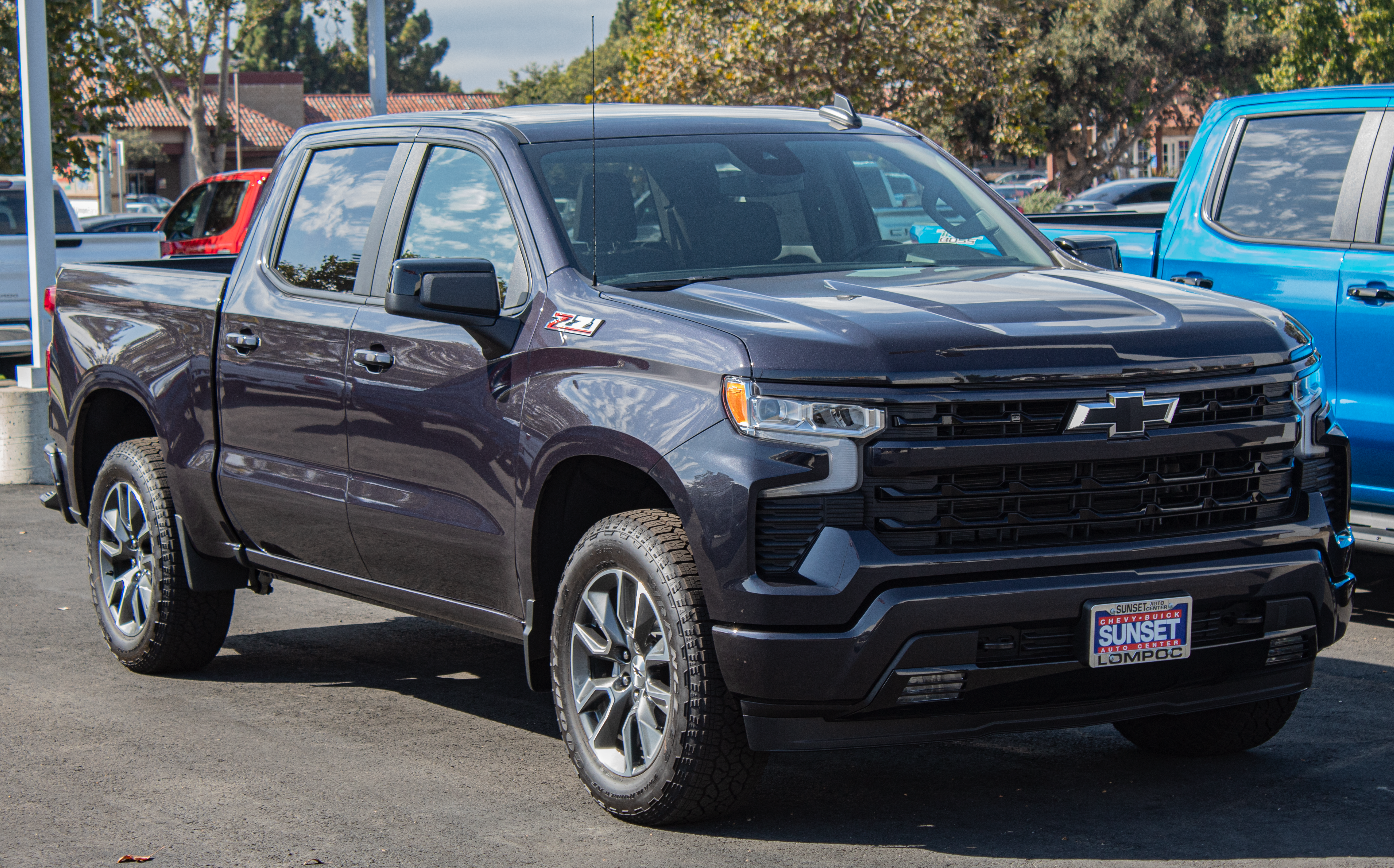
Chevrolet Silverado
"Their truck line up the Chevrolet Silverado, GMC Hummer, Cadillac Escalade."
The Chevrolet Silverado is a big pickup truck made by Chevrolet. The hosts are talking about GM delaying the next version of these trucks.
The Chevrolet Silverado is GM’s full-size pickup truck line. In this segment, it’s mentioned as part of GM’s next-generation truck plans that were reportedly delayed.

Gmc Hummer
"Their truck line up the Chevrolet Silverado, GMC Hummer, Cadillac Escalade."
GMC Hummer is a truck/SUV nameplate from GMC. The episode mentions it as part of GM’s lineup that could be affected by delays.
GMC’s Hummer name is used for the brand’s pickup/SUV lineup, including the modern Hummer EV family. Here it’s referenced as one of GM’s high-tech, high-volume truck products tied to next-generation delay talk.

Cadillac Escalade
"Their truck line up the Chevrolet Silverado, GMC Hummer, Cadillac Escalade."
The Cadillac Escalade is Cadillac’s big luxury SUV. The hosts are saying delays to the next version would be a big deal for GM.
The Cadillac Escalade is GM’s flagship full-size luxury SUV. In the segment, it’s grouped with other GM trucks/SUVs whose next-generation timing reportedly matters for the company’s reputation.
Smart hashtag two
"The smart number two, sorry, hashtag two has been unveiled... Smart expects to produce this model. The Smart hashtag two will be electric only and use the electric compact architecture platform. Smart puts range of 186 miles, that's 300 kilometers."
Smart is planning an all-electric city car called “hashtag two.” It’s meant to follow the idea of the Smart 4-2, but as a smaller two-door, two-seat EV, and they’re saying it should go about 186 miles on a charge.
Smart’s “hashtag two” (often stylized as #2) is being positioned as the spiritual successor to the Smart 4-2. The segment says it’s a two-door, two-seat city-focused EV, expected to be produced, and it will use Smart’s electric compact architecture platform with a stated range of 186 miles (about 300 km).
spiritual successor
"This is the spiritual successor to the Smart 4-2. Unlike that car, it's a two-door, two-person layout for city use."
A “spiritual successor” is basically a spiritual follow-up—same idea or vibe, even if it’s not the exact same car. Here, Smart is saying hashtag two continues the purpose of the Smart 4-2.
A “spiritual successor” is a new model that carries forward the original concept, target use case, or design philosophy rather than being a direct mechanical replacement. In this segment, Smart is framing the hashtag two as continuing the intent of the Smart 4-2.
range of 186 miles
"Smart expects to produce this model. The Smart hashtag two will be electric only and use the electric compact architecture platform. Smart puts range of 186 miles, that's 300 kilometers."
“Range of 186 miles” means how far the EV should drive on one full battery charge. Your actual miles can be more or less depending on how you drive and the weather.
“Range of 186 miles” is the stated driving distance the EV is expected to achieve on a full charge. It’s commonly reported as an estimate based on a specific test standard, so real-world results can vary with speed, temperature, and driving style.
10 to 80 charge in under 20 minutes
"So it will do 10 to 80 charge in under 20 minutes, they say. It'll have vehicle to load."
It means the battery can go from 10% to 80% in less than 20 minutes. Charging is usually fastest in the middle, and slows down near full, so this number is used to compare EVs fairly.
This is a fast-charging metric: how long it takes to charge from 10% to 80% battery state of charge. EVs often charge quickly at low to mid percentages, then slow down as the battery fills, so “10 to 80” is a common apples-to-apples comparison.
vehicle to load
"So it will do 10 to 80 charge in under 20 minutes, they say. It'll have vehicle to load. I think this could be really popular in some parts of the world."
Vehicle-to-load (V2L) lets an EV power external devices—like tools, appliances, or camping gear—using the car’s battery through an outlet or adapter. It’s especially useful for people who want backup power or off-grid convenience.
parking in small spaces
"for blatting around the city, for parking in small spaces, for getting through narrow gaps. I can see this being popular."
They’re saying a smaller EV is easier to park and maneuver in tight city spots. That can matter more than big power numbers for everyday driving.
This highlights a key EV-buying use case: compact dimensions make daily life easier in dense cities. Shorter length and tight turning/packaging help with parallel parking, garage access, and navigating narrow streets.

Dacia Spring
"That puts it very close to the old 4-2 in size. Smaller than a Dacia Spring, which is like, that's a tiny car here and the Renault Twingo as well."
They compare the new car’s size to the Dacia Spring. The Spring is a small, affordable EV, so it’s a good yardstick for how “tiny” this new vehicle is.
The Dacia Spring is used as a reference point for size, with the new Smart-sized vehicle described as smaller than it. The Spring is known for being a budget-friendly, compact EV, so it’s a common benchmark in “tiny car” comparisons.

Renault Twingo
"Smaller than a Dacia Spring, which is like, that's a tiny car here and the Renault Twingo as well. One more story before we take a break."
They’re saying the car is even smaller than a Renault Twingo. The Twingo is known as a very compact city car, so it helps you picture the size.
The Renault Twingo is referenced as another benchmark for a very small car. Using both the Twingo and Dacia Spring helps listeners visualize the new EV’s compact dimensions and city-friendly packaging.

Volkswagen ID buzz
"One more story before we take a break. Volkswagen commercial vehicles is rolling out an update to the ID buzz. They call it a technology update this summer across the entire range,"
They’re talking about an update for the electric Volkswagen ID Buzz van. Updates can add new features or improve how the vehicle works, even without major hardware changes.
The Volkswagen ID Buzz is an all-electric van based on the ID family, and the segment says Volkswagen Commercial Vehicles is rolling out an update. This matters because software/feature updates can change usability, charging behavior, and available tech across the model range.
4-motion
"It's the pro trim 4-motion. [668.8s] So it's the ID buzz pro 4-motion and so it's got all-wheel drive, but it's not the GTX,"
“4-motion” is Volkswagen’s name for a 4-wheel-drive setup. It means the car can drive more than one axle, which can help with grip in rain, snow, or slippery conditions.
“4-motion” is Volkswagen’s branding for an all-wheel-drive system. In this context, it’s being used to describe an ID Buzz configuration that provides traction to both the front and rear, rather than only the rear wheels.
210 kilowatt rear motor
"So it's got all-wheel drive, but it's not the GTX, [675.0s] but it is the same powertrain now as the GTX. [678.2s] So 210 kilowatt rear motor [681.2s] and a second front motor for a combined 250."
That number is how strong the rear electric motor is. In an electric AWD setup, the rear motor does some of the work, and another motor up front can add more power.
This refers to the power of the rear electric motor in the ID Buzz setup. The speaker is breaking down the dual-motor architecture, where the rear motor provides a baseline output and the front motor adds additional power.
combined 250
"[678.2s] So 210 kilowatt rear motor [681.2s] and a second front motor for a combined 250. [684.1s] Also you can spec it in cherry red,"
This is the total power from both electric motors combined. It matters because it tells you how much the whole car can produce when you accelerate.
“Combined 250” is the total system power output from both electric motors working together. It’s a key EV spec because it reflects what the vehicle can deliver as a complete drivetrain, not just one motor’s rating.
cherry red
"[684.1s] Also you can spec it in cherry red, [686.1s] which used to be the GTX color. [687.8s] So you could probably get,"
This is just a paint color option. The interesting part is that the speaker says this color used to be reserved for the higher GTX trim, so the Pro can now look more like the top model.
“Cherry red” is a paint color option being discussed as part of the ID Buzz trim strategy. The speaker notes it previously belonged to the GTX color palette, implying the Pro trim can now be ordered with a similar look.
towing limit
"[700.4s] The old 600 kilogram towing limit [702.1s] goes to 1.8 tons on the short wheelbase. [705.6s] The standard wheelbase version"
The towing limit is the maximum trailer weight the car is allowed to pull. If you tow bikes, boats, or gear, this number tells you whether the vehicle is up to the job.
The towing limit is the maximum weight the vehicle is rated to tow. The speaker contrasts an “old” towing limit with a higher limit on the short wheelbase version, which is important for buyers who need to haul trailers or equipment.
short wheelbase
"[700.4s] The old 600 kilogram towing limit [702.1s] goes to 1.8 tons on the short wheelbase. [705.6s] The standard wheelbase version"
Wheelbase is the distance between the front and rear wheels. A “short wheelbase” version is more compact, and in this segment they’re saying it also changes the towing rating.
“Short wheelbase” refers to a shorter distance between the front and rear axles, which can affect interior space and towing/packaging. Here, the speaker ties the short wheelbase to a higher towing rating.
79 kilowatt hours net
"[705.6s] The standard wheelbase version [706.7s] keeps a smaller battery, 79 kilowatt hours net. [709.5s] The longer wheelbase version,"
“79 kilowatt hours net” is the usable battery capacity for the standard wheelbase version. Net capacity matters because it’s the portion of the battery you can actually use for driving, not the total physical pack size.
six-seat configuration
"[709.5s] The longer wheelbase version, [711.1s] which is probably the one you should get anyway, [713.3s] because then you can get, [714.1s] if you want, the six-seat configuration."
This means the van can be set up to seat six people. It’s useful for families or carpooling, and the speaker says it’s tied to the longer version.
A “six-seat configuration” means the vehicle can be ordered with seating for six people, which affects interior packaging and how the van is used. The speaker connects this option to the longer wheelbase version, suggesting it’s the more practical family layout.
86 kilowatt hour battery
"[716.4s] It's almost 12 inches longer, [718.2s] that is 30 centimeters. [719.9s] That's the 86 kilowatt hour battery."
This is the bigger battery option. A larger battery usually means you can drive farther before needing to recharge, and in this case it also pairs with the longer, more family-friendly layout.
The “86 kilowatt hour battery” is the larger usable battery capacity for the longer wheelbase version. The speaker implies this is the better choice, likely because it supports more range and the option for a six-seat configuration.
LFP battery cells
"It skips the smaller LFP battery cells used in other MEBs."
LFP is a type of EV battery chemistry. It’s often chosen because it can last a long time and is generally considered safer than some other battery types. If the car is using different cell sizes or types, it can change how the battery performs and how expensive it is.
LFP stands for lithium iron phosphate, a battery chemistry known for being relatively safe and long-lived. Saying the update “skips the smaller LFP battery cells” implies the pack design or cell format is changing, which can affect cost, longevity, and energy density.
MEBs
"It skips the smaller LFP battery cells used in other MEBs."
MEB refers to Volkswagen Group’s Modular Electric Drive Matrix, a platform used across multiple EV models. Mentioning “other MEBs” suggests this update is changing battery/cabin features compared with other cars built on the same EV platform.
travel assist becomes connected travel assist
"Volkswagen's also reworked the cabin tech, travel assist becomes connected travel assist, which reflects live online data."
Travel Assist is a set of help features that can steer and manage speed in certain conditions. “Connected” means it can also use live information from the internet, not just what it sees with cameras and sensors.
“Travel Assist” is Volkswagen’s driver-assistance suite, and “connected” implies it can use live internet data rather than only sensors and preloaded maps. That matters because the system can anticipate situations like traffic signals based on real-time information.
pickup traffic lights
"And for the first time on the buzz, it'll have pickup traffic lights. And if it detects a red light, it breaks the vehicle to a standstill."
This means the car can recognize traffic lights and use that info to plan what to do next. If it knows a light is red ahead of time, it can slow down more smoothly instead of reacting at the last second.
“Pickup traffic lights” here refers to the system detecting and using traffic-signal information to guide driving behavior. Combined with connected data, it can anticipate red lights earlier than a purely camera-based approach.
One pedal driving
"One pedal driving is standard, which it always should have been on every EV. But anyway, so recuperation will bring the vehicle to a complete stop."
One-pedal driving means you can slow down mostly by lifting your foot off the accelerator. The car uses the motor to slow down and recharge the battery a bit, so you brake less often.
One-pedal driving is an EV control strategy where lifting off the accelerator triggers strong deceleration via regenerative braking. The goal is to reduce the need for the brake pedal in normal driving, especially in stop-and-go traffic.
recuperation
"But anyway, so recuperation will bring the vehicle to a complete stop."
Recuperation is the EV’s way of slowing down while also recharging the battery. When you lift off the accelerator, the car turns that slowing into electricity instead of wasting it as heat.
“Recuperation” is regenerative braking—capturing energy when slowing down and sending it back to the battery. The transcript connects it to bringing the vehicle to a complete stop, which is a common one-pedal behavior.
two kilowatts
"You can pull two kilowatts, not the six kilowatts that many Chinese cars that do vehicle to load, but that's still better than nothing."
Two kilowatts tells you how much power the car can provide to devices. It’s not the biggest number, but it can still run a lot of common electronics and small appliances.
Two kilowatts is the stated V2L output limit in this update. For listeners, the key takeaway is that it’s enough for many everyday uses, but it’s lower than higher-output systems (like the six kilowatts mentioned) that can run more demanding appliances.
EV News China
"If you wanna hear all about the Chinese cars, by the way, it's why we launched a month-long project last summer called EV News China"
EV News China is a special project the show did to focus on EV news coming out of China. It’s basically a themed series within the podcast.
EV News China is referenced as a month-long project the hosts launched to cover Chinese EV developments. It’s a segment/topic marker rather than a technical EV term.
ChargePoint
"Welcome back to the podcast. ChargePoint has unveiled the Express Solo. That's a new DC fast charger that will deliver 600 kilowatts of power from a single box."
ChargePoint makes EV charging stations and the systems that run them. Here they’re talking about a new fast charger they built to deliver a lot of power from one unit.
ChargePoint is a major EV charging network and hardware provider. In this segment, they’re introducing the Express Solo, a high-power DC fast charger designed to be installed in constrained spaces like urban fueling areas.
DC fast charger
"ChargePoint has unveiled the Express Solo. That's a new DC fast charger that will deliver 600 kilowatts of power from a single box."
A DC fast charger is the kind of charger that can add a lot of EV range quickly. It’s faster than regular home-style charging because it sends power in a form the battery can use right away.
A DC fast charger uses direct current to rapidly charge an EV’s battery, bypassing the car’s onboard AC-to-DC conversion. It’s typically measured by maximum power output (like kilowatts), which strongly affects how quickly you can add range.
600 kilowatts
"That's a new DC fast charger that will deliver 600 kilowatts of power from a single box."
600 kilowatts is how much power the charger can provide at maximum. Your EV may not always take the full amount, but higher-rated chargers are generally better for fast charging.
600 kW is an extremely high charging power level, intended to shorten charging times for EVs that can accept that much input. In practice, the car’s charging limit and battery temperature management determine the actual rate you’ll see.
Express Solo
"Express Solo supports two simultaneous charging sessions, but it can, if you want, send all 600 kilowatts to a single vehicle."
Express Solo is the name of a particular charging setup. The important point is that it can charge more than one car at a time, and it can also concentrate power for faster charging on one car.
Express Solo appears to be the name/model of a specific charging unit being discussed. The key detail is that it supports multiple charging sessions and can route very high power to a single vehicle.
NACS
"It's got CCS-1 and J3400, or NACS, and the charger accepts direct DC input."
NACS is a charging plug type. If your EV uses a NACS-style connector, this charger can plug in and fast-charge it.
NACS (often associated with Tesla’s connector) is a DC fast-charging plug standard that’s spreading across North America. In this context, the charger supports NACS so it can serve EVs that use that connector.
CCS-1
"It's got CCS-1 and J3400, or NACS, and the charger accepts direct DC input."
CCS-1 is a type of charging plug used for fast charging in many places. It’s designed to deliver high power to an EV so you can charge quicker than with a regular outlet.
CCS-1 (Combined Charging System) is a common DC fast-charging plug standard in North America. It combines AC pins with larger DC pins so the same connector can support both slower AC charging and high-power DC charging.
J3400
"It's got CCS-1 and J3400, or NACS, and the charger accepts direct DC input."
J3400 is the official standard name for the NACS-style charging connector. It helps ensure different chargers and EVs are compatible.
J3400 is the formal SAE standard designation for the NACS connector. Mentioning J3400 signals the charger is built to the standardized connector spec, not just a brand-specific shape.
inverter
"...removes the need for an AC to DC converter, or inverter really."
An inverter is an electronics box that switches electricity between AC and DC forms. The idea here is that this charger design can avoid some of that conversion work.
An inverter converts DC electricity to AC (or vice versa) depending on the system design. The transcript claims the charger’s DC architecture reduces or removes the need for an AC-to-DC conversion stage, which can improve efficiency and simplify the power path.
on-site energy storage systems
"It says that let operators link with on-site energy storage systems and removes the need for an AC to DC converter..."
On-site energy storage is a battery at the charging site. It can store electricity and then help the charger run more efficiently, especially during busy times.
On-site energy storage systems are batteries installed at the charging location to store electricity when it’s available and release it when needed. Linking chargers to local storage can help manage peak demand and support bidirectional energy flows.
bidirectional charging
"ChargePoint says this DC architecture enables bidirectional charging so the unit can draw power from a parked EV to replenish an on-site battery if you wanted to configure it that way."
Bidirectional charging means your EV can act like a small power bank. Instead of only charging, it can also send electricity back to help power something else.
Bidirectional charging lets an EV send power back to the charger’s site instead of only taking power in. That enables features like using the EV as a temporary power source to support an on-site battery or grid needs.
DC fast charging
"ChargePoint says this DC architecture enables bidirectional charging so the unit can draw power from a parked EV..."
DC fast charging is the high-power way to charge an EV quickly. Instead of using AC from the grid, it sends DC power directly for faster charging.
DC fast charging delivers direct current at high power to recharge an EV quickly. The transcript’s emphasis on “direct DC input” and DC architecture points to a charger designed to feed DC straight into the vehicle-charging system.
EV charging corridor strategy
"France's government has unveiled a national strategy to deploy EV charging across major road corridors by 2035... The strategy centers on high-powered charging for medium and long-distance electric travel,"
This is a government plan to put EV chargers along busy highways and main roads. The goal is to make it easier to drive longer distances without running out of charge.
An EV charging corridor strategy is a government plan to place charging infrastructure along major travel routes so long-distance driving is practical. The transcript describes France’s approach: focusing on high-powered charging for medium- and long-distance trips by a target year.
Request an Explanation
Heard something you'd like explained? We'll add it to this episode.
Sign in to request explanations for terms you heard.
Want to learn more?
Browse our glossary for plain-English explanations of automotive terms, jargon, and concepts.
Help improve this episode
See something that's not quite right? Our annotations are AI-generated and can sometimes miss the mark. Click the flag icon on any annotation to suggest a correction.