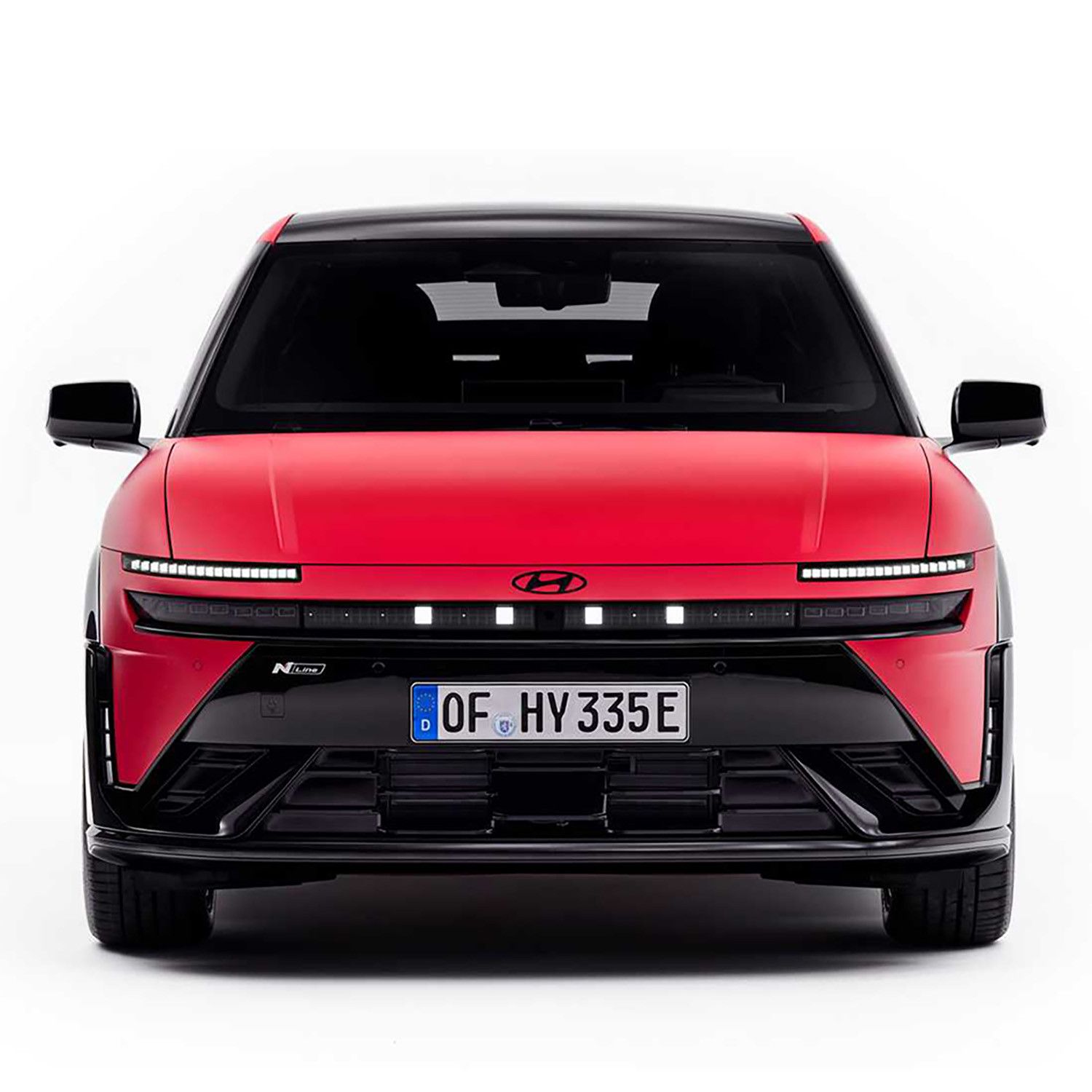
DAILY: IONIQ 3 Revealed, Euro EV Sales Surge Again and U.S. Used EVs Smash New Record | 21 Apr 2026
About this episode
Hyundai’s Ioniq 3 is unveiled as a more affordable, efficient compact hatch with a slippery “aero hatch” design, 42/61 kWh 400V EGMP batteries, up to ~308 miles WLTP, and a new Android-based “Plios OS” infotainment platform. The show also tracks Europe’s EV momentum (EU/EFTA BEV share ~22% and rising), plus a US used-EV boom hitting a new monthly record. UK tax rules are shifting for expensive cars, Germany forecasts rapid BEV growth, and Nissan says solid-state batteries are still on track for 2028.
You can read all the latest news on the blog here: https://EVne.ws/blog
Subscribe for free and listen to the podcast on audio platforms:
➤ Apple: https://EVne.ws/apple
➤ YouTube Music: https://EVne.ws/youtubemusic
➤ Spotify: https://EVne.ws/spotify
➤ TuneIn: https://EVne.ws/tunein
➤ iHeart: https://EVne.ws/iheart
HYUNDAI REVEALS IONIQ 3 DETAILS https://evne.ws/4cUKnWi
HYUNDAI REVEALS PLEOS OS FOR FUTURE EVS https://evne.ws/3QASEpz
EU EV SALES SURGE IN MARCH https://evne.ws/4n14llT
U.S. USED EV SALES HIT RECORD IN MARCH https://evne.ws/3OCIq7E
AFEELA SCALES BACK AS SONY AND HONDA RETREAT https://evne.ws/41OaYOx
UK RAISES EV LUXURY TAX THRESHOLD https://evne.ws/4u0TJWj
FORD CUTS EXPLORER AND CAPRI PRICES https://evne.ws/4tAkalC
GERMANY EYES 8 MILLION BEVS BY 2030 https://evne.ws/4tlaBab
EV RANGE NOW OUTRUNS MOST DRIVERS https://evne.ws/48U40ez
DUTCH SCRAPPAGE SCHEME SHIFTS TO USED EVS https://evne.ws/3OAxyXK
NISSAN STACKS 23 SOLID-STATE CELL LAYERS https://evne.ws/4tulWF2

Hyundai Ioniq 3
"...al One. Welcome back to EV news daily. Today the Ioniq 3 is revealed. Euro EV sales surge again and US ..."
solid-state battery technology
"Welcome back to EV news daily. Today the Ioniq 3 is revealed. Euro EV sales surge again and US used EVs smash a new record. Plus they tuned because later in the show I'll tell you when Nissan say their solid-state battery technology will be ready for prime time."
Solid-state batteries are a newer type of EV battery that uses a solid material inside instead of a liquid. People are interested because it could make EV batteries safer and potentially improve range, but it’s still a developing technology.
Solid-state battery technology refers to EV batteries that use a solid electrolyte instead of the liquid electrolyte found in most current lithium-ion packs. This approach is widely discussed because it could enable higher energy density, improved safety, and potentially faster charging—though commercialization timelines vary by company.
Nissan
"Welcome back to EV news daily. Today the Ioniq 3 is revealed. Euro EV sales surge again and US used EVs smash a new record. Plus they tuned because later in the show I'll tell you when Nissan say their solid-state battery technology will be ready for prime time."
Nissan is mentioned because they’re talking about solid-state batteries. Solid-state batteries are a next-step battery design that could help EVs go farther and be safer, but the timing for real-world availability is the key point here.
Nissan is mentioned as the company that will be sharing timing for when its solid-state battery technology is ready for mainstream use. Solid-state batteries are a major EV technology focus because they promise potential improvements in energy density and safety versus conventional lithium-ion designs.
BYD
"Over on EV news China today we're talking about Ford chasing the Chinese. BYD's C-Lion 05 is launched and VW i's an oil shock China sale. Let's get into it."
BYD is a big Chinese company that makes electric cars and batteries. In this episode, they’re mentioned because they launched a new EV model.
BYD is a major Chinese EV and battery manufacturer mentioned here in connection with a new model launch. BYD’s role is often central in discussions about China’s EV growth because it competes aggressively on both price and technology.
EV news China today
"Over on EV news China today we're talking about Ford chasing the Chinese. BYD's C-Lion 05 is launched and VW i's an oil shock China sale. Let's get into it."
The show briefly switches to what’s happening in China’s EV market. It’s like a quick news update focused on Chinese EV companies and announcements.
This segment shifts to EV developments in China, including mentions of major automakers and new product moves. It’s a structural “regional roundup” within the episode.
VW
"Over on EV news China today we're talking about Ford chasing the Chinese. BYD's C-Lion 05 is launched and VW i's an oil shock China sale. Let's get into it."
Volkswagen (VW) is mentioned as part of the China EV news. In this clip, they’re brought up in connection with a sales situation, but there aren’t details here.
VW (Volkswagen) is referenced in the China EV news portion. The mention is tied to a sales/marketing angle (“oil shock” phrasing), but the transcript segment doesn’t include enough detail to explain the specific product or policy.
Ioniq 5
"Hyundai unveiled the Ioniq 3 at Milan Design Week, adding its first compact electric hatchback to the Ioniq series. The car sits below the Ioniq 5 as a smaller, more affordable sibling. Ioniq 3 are using a new silhouette they call Aero hatch."
The Ioniq 5 is Hyundai’s bigger EV in the same family. The Ioniq 3 is being described as smaller and more affordable, basically “below” the Ioniq 5.
The Hyundai Ioniq 5 is referenced as the larger model in the Ioniq lineup that the Ioniq 3 sits below. This positioning matters because it signals Hyundai’s strategy to offer multiple EV sizes under the same brand ecosystem.
Aero hatch
"Ioniq 3 are using a new silhouette they call Aero hatch. Hyundai says the shape improves efficiency and interior space. In fact this car is"
Hyundai calls the Ioniq 3’s shape an “aero hatch.” The idea is that the car is shaped to cut through the air more easily, which can help it go farther on a charge.
“Aero hatch” is Hyundai’s branding for a hatchback shape designed to improve efficiency. In EVs, aerodynamic styling helps reduce drag, which can translate into better range and less energy use.
Hyundai Ioniq 3
"the most efficient, the slipperiest in its class. It also says the Ioniq 3 aims to beat the Kia ... Hyundai say they've applied their art of steel design language."
400 volt version of EGMP
"Under the skin the Ioniq 3 uses the 400 volt version of EGMP. Two battery sizes 42 or 61 kilowatt hours."
EGMP is Hyundai’s EV “building system” that many of its electric cars share. The “400-volt” part is about how the car’s electrical system is set up, which can affect how quickly it can charge.
EGMP is Hyundai’s Electric-Global Modular Platform, and the “400-volt” version refers to the electrical architecture used to power the drivetrain and charge system. Voltage level matters because it influences charging speed and how components like inverters and cables are designed.
80 percent charge 10 to 80
"Hyundai says the Ioniq 3 will do an 80 percent charge 10 to 80. We always want 10 to 80. Anything else you know they're fudging the numbers in less than 30 minutes"
“10 to 80” is a way to measure how fast an EV charges when you’re not trying to fill the battery all the way. It’s a practical test because charging usually slows down near 100%.
“10 to 80” is a common EV charging benchmark because it reflects a realistic use case: topping up without waiting for the slowest part of charging. Charging speed typically drops as the battery approaches full capacity, so 10–80% often shows the most meaningful performance.
single front mounted motor
"So it beats the Kiri V2's range it has a single front mounted motor and inside it's the first one to use their new Plios Connect infotainment system."
“Single front mounted motor” means the electric motor powers just the front wheels. That usually makes the car simpler and can help efficiency.
A single front-mounted motor means the EV drives only the front wheels (front-wheel drive layout). This can simplify packaging, reduce cost, and often improves efficiency compared with dual-motor all-wheel-drive setups.
Plios Connect
"and inside it's the first one to use their new Plios Connect infotainment system. Android based 14.6 inch touchscreen for nav and connectivity and vehicle functions."
Plios Connect is Hyundai’s new in-car computer system. It runs on Android and powers the big screen for navigation and other car settings.
Plios Connect is Hyundai’s new infotainment software/hardware system mentioned here as the Ioniq 3’s first application. The segment highlights it as an Android-based touchscreen interface for navigation, connectivity, and vehicle functions.
relaxation seats
"Now a little bit about the upper trims. The upper trims swap in so-called relaxation seats. In fact both front and rear passengers get heated and ventilated seats"
“Relaxation seats” are comfort-focused seats meant to make long drives feel better. Here, they’re described as heated and ventilated for both front and rear passengers.
“Relaxation seats” is a trim/feature term used for seats designed to improve comfort, often with heating/ventilation and supportive ergonomics. In this segment, the hosts connect it to heated and ventilated front and rear seating.
Dual zone automatic climate control
"Dual zone automatic climate control, ambient lighting, Bose premium audio all push the interior ambiance into a class above the price tag."
Dual-zone climate control means the driver and passenger can choose different temperatures. The car then tries to keep each side at the selected comfort level.
Dual-zone automatic climate control lets the driver and front passenger set different temperatures while the system automatically maintains them. It’s a comfort feature that’s especially noticeable in EVs because cabin heating/cooling can affect efficiency.
Bose
"Dual zone automatic climate control, ambient lighting, Bose premium audio all push the interior ambiance into a class above the price tag."
Bose is a company famous for car and home audio systems. If a car has “Bose premium audio,” it usually means better speakers and tuning for clearer, richer sound.
Bose is a well-known audio brand, and “Bose premium audio” indicates the Ioniq 3 uses a higher-end sound system than base trims. Premium audio can be a meaningful differentiator in EVs where cabin quietness makes sound quality more noticeable.
wheelbase
"Hyundai says it's longer than a Kiri V2 has a longer wheelbase than a Kiri V2 as well for more interior space."
Wheelbase is the spacing between the front and rear wheels. A longer wheelbase usually means more room inside, especially for rear passengers.
Wheelbase is the distance between the front and rear axles, and it strongly affects interior space—especially rear legroom. The hosts use wheelbase comparisons to argue the Ioniq 3 has more cabin room than the referenced rival.
Boot capacity 441 liters
"Boot capacity 441 liters and a mega box under the load floor which is very useful for extra storage."
Boot capacity tells you how much stuff the trunk can hold, measured in liters. Higher numbers generally mean more cargo space for groceries, bags, or luggage.
Boot capacity is the volume of the cargo area, measured in liters, and it’s a key practicality metric for hatchbacks and liftbacks. The segment pairs it with storage features to emphasize everyday usability.
mega box under the load floor
"Boot capacity 441 liters and a mega box under the load floor which is very useful for extra storage. It's smaller than an ID3 and a Chevy Bol TV."
The “mega box” is extra storage under the trunk floor. It’s useful for keeping things like charging cables or small gear out of sight.
A “mega box” under the load floor is an underfloor storage compartment that uses space other cars might leave unused. These compartments are popular because they keep smaller items organized and can help with everyday practicality.

Volkswagen Id3
"...ry useful for extra storage. It's smaller than an ID3 and a Chevy Bol TV. Safety kit standard. The Hyu..."
The Volkswagen ID.3 is a smaller electric hatchback. It’s meant to be practical, including having extra storage space. The podcast also notes that safety features are standard.
The Volkswagen ID.3 is a smaller electric hatchback designed for everyday practicality, including storage space. In the podcast, it’s mentioned as being smaller than an ID.4/ID.5-sized model and as having standard safety equipment. That makes it relevant when discussing which EV sizes and feature levels fit different buyers.
HDA2
"[355.2s] HDA2, highway driving assist 2. I think I had down the Kona when we owned that for a year. [360.7s] Very very capable system. Remote smart parking is cool."
HDA2 is Hyundai’s system that helps you drive on highways. It can keep the car centered in the lane and make highway driving less tiring, but you still have to pay attention and be ready to take over.
HDA2 stands for Hyundai’s Highway Driving Assist 2, a driver-assistance system aimed at helping on highways with steering and lane keeping. It’s designed to reduce workload during long, straight drives, though it still requires driver supervision.

Hyundai Kona
"... highway driving assist 2. I think I had down the Kona when we owned that for a year. Very very capable..."
The Hyundai Kona is a small SUV, and it can be an electric car. The podcast mentions it because it can handle highway driving and includes driver-assist features. It’s brought up as a car the speaker owned and found capable.
The Hyundai Kona is a compact SUV that’s been offered with electric power, making it a common choice for people looking for an EV that’s easy to live with. The podcast references it in terms of driving capability, including highway driving assistance. That kind of feature set is often a key part of why the Kona is discussed in EV technology updates.
Kia Kona
"[355.2s] HDA2, highway driving assist 2. I think I had down the Kona when we owned that for a year. [360.7s] Very very capable system."
The Kia Kona is mentioned because the host previously owned one and experienced a similar driver-assistance setup. It’s not the main topic here—just a personal reference point.
The Kia Kona is referenced as a prior vehicle the hosts owned, specifically in relation to Hyundai’s driver-assistance system behavior (HDA2). The mention is mainly experiential—how capable the system felt in a real-world ownership context.
remote smart parking
"[360.7s] Very very capable system. Remote smart parking is cool. Didn't have that. Memory reverse assists [368.4s] around view monitor, blind spot monitor and all the safety toys."
Remote smart parking lets the car park itself with help from your phone or key. You’re still in control, but it can make tricky parking spots easier.
Remote smart parking is a feature that allows the car to maneuver into or out of a parking spot using the driver’s command via a phone or key fob. It’s meant to reduce the difficulty of tight parking and low-speed maneuvers.
around view monitor
"[368.4s] around view monitor, blind spot monitor and all the safety toys. Hyundai designed the Ioniq 3 [373.7s] in Europe in Germany actually but they'll build it at Hyundai Motor Turkey's Ismit plant."
An around view monitor uses cameras to show you what’s around the car. It’s especially helpful for parking because it helps you see curbs, walls, and other cars.
An around view monitor (AVM) uses multiple cameras to stitch together a top-down or wide-angle view around the car. It helps drivers judge clearance when parking, pulling out of tight spaces, or maneuvering at low speeds.
Plios OS
"[409.8s] Now onto our second story. What is this about Hyundai's new operating system? Plios OS. Well [415.5s] Plios OS is the new software platform underpinning their future vehicles. They say that the Ioniq [421.2s] 3 is the first cart that it will debut in."
Plios OS is Hyundai’s new “car computer” software platform. It’s meant to power future Hyundai EVs and support things like apps and a refreshed interface.
Plios OS is Hyundai’s new software platform intended to underpin future vehicles. In this segment, it’s described as running on Android/Android Automotive and as the foundation for Hyundai’s own app market and updated user interface.
software defined vehicle
"[415.5s] Plios OS is the new software platform underpinning their future vehicles. They say that the Ioniq [421.2s] 3 is the first cart that it will debut in. It's a properly software defined vehicle. Plios runs on [427.7s] Android, Android Automotive."
A software-defined vehicle is a car where software does a lot of the work. That can mean easier updates and new features later, instead of everything being locked in at the factory.
A software-defined vehicle (SDV) means the car’s key functions—like infotainment, driver-assistance behavior, and user interfaces—are heavily driven by software rather than fixed hardware. This enables faster feature updates, more customization, and potentially longer-term improvements over time.
Android Automotive
"[427.7s] Android, Android Automotive. They haven't said whether they will definitively add the Google [433.8s] Automotive stuff that I'm used to in the Polestar like the Maps Assistant and the Play Store."
Android Automotive is software that runs inside the car and helps power the screen and apps. It can make the infotainment feel more like a phone experience, depending on what features the automaker enables.
Android Automotive is Google’s in-car operating system platform that supports apps and services built for vehicles. The hosts discuss whether Hyundai will include Google Automotive features like maps assistants and app-store access, and how that affects the user experience.
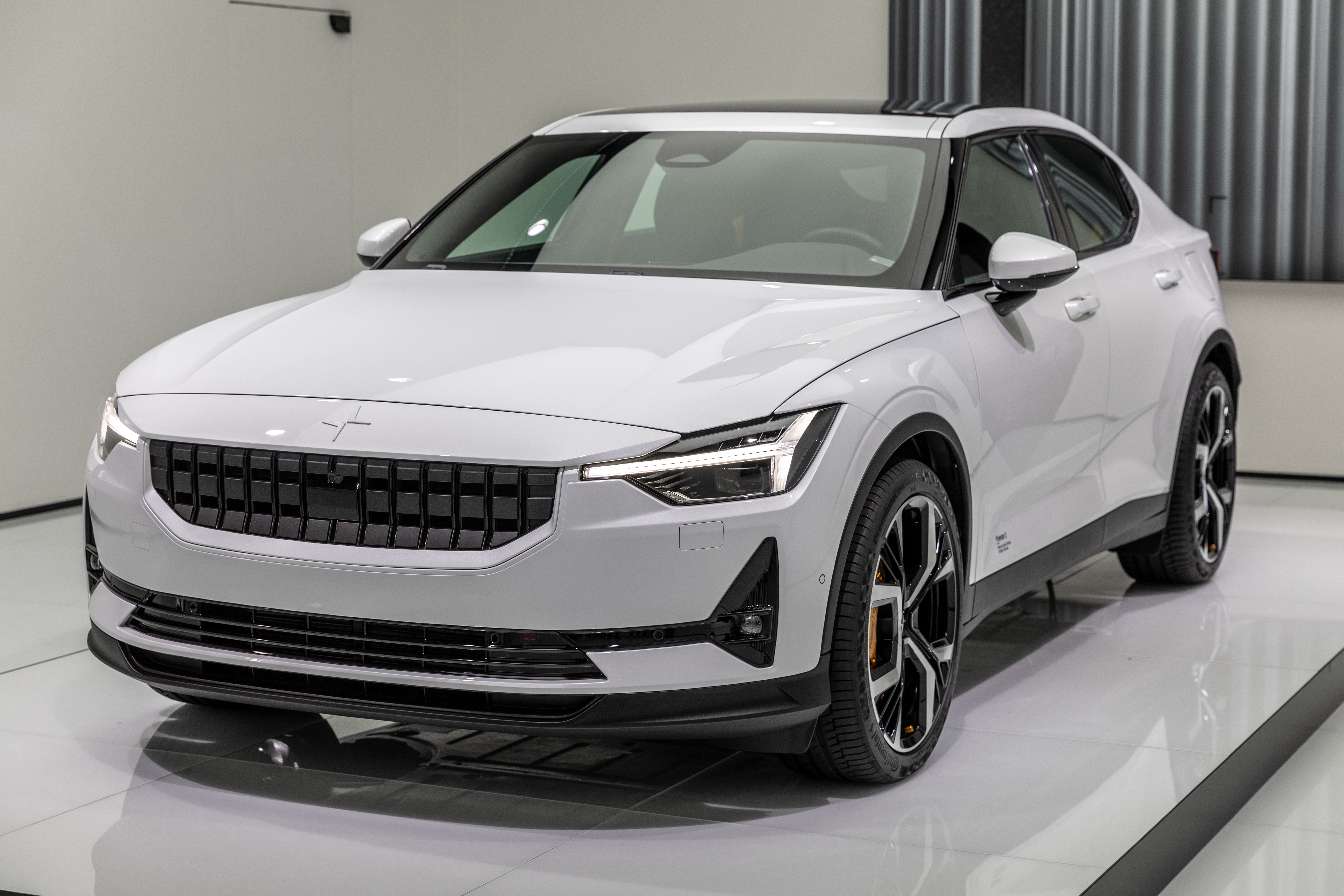
Polestar 2
"[440.6s] attest to that working incredibly well and I've got like what six-year-old hardware now whenever [445.9s] the Polestar 2 was first designed which is probably you know you go back a little bit and the specs [450.4s] they were putting in my car getting long in the tooth now."
The Polestar 2 is used as a comparison point for how well certain Android/Google Automotive features work in a real car. The hosts reference older hardware in the Polestar 2 but say it still performs well, implying software longevity matters.
800 volt
"[471.8s] Hyundai builds great EVs and the 800 volt ones were the first cars that [479.6s] brought that technology in the west at least to reasonable price points. I mean not the Tycons [484.9s] and the Audi e-trons, e-tron GTs of the world so they charge really quickly..."
“800 volt” is an EV charging/electrical design that can help the car charge faster. The idea is that the battery and charging system can handle higher power more efficiently.
“800 volt” refers to a high-voltage EV electrical architecture that can enable faster charging and more efficient power delivery. The hosts credit Hyundai with bringing 800-volt technology to more reasonable price points, contrasting it with higher-end competitors.

Audi e-tron GT
"[479.6s] brought that technology in the west at least to reasonable price points. I mean not the Tycons [484.9s] and the Audi e-trons, e-tron GTs of the world so they charge really quickly and they use energy [491.9s] really well but they're in car software."
The Audi e-tron GT is referenced as a premium EV example. The hosts are basically saying that faster charging tech used to be mostly found on expensive cars like this.
The Audi e-tron GT is mentioned as an example of a high-end EV that uses advanced charging and energy-efficiency tech. It’s used to contrast with Hyundai’s more affordable approach to similar “800-volt” benefits.

Hyundai Genesis
"[491.9s] really well but they're in car software. Well if you've ever driven a Hyundai or a Kia or a Genesis [497.7s] even a really old one you'll certainly recognize the bones of the infotainment system even though [504.8s] it's it's been given a facelift..."
The hosts say Hyundai, Kia, and Genesis cars tend to feel similar in their screen/software layout. Even when the design changes, you can still recognize the same basic approach.
This grouping highlights that Hyundai, Kia, and Genesis share recognizable “infotainment bones,” even as interfaces get updated. The point is that the underlying user experience and layout philosophy can feel familiar across the Hyundai group.
new regime of crash testing
"There's physical controls. Well the new crash testing by the way the new regime of crash testing is going to take into account things like distracted driving so a lot of the car makers are saying oh we're putting in we've always believed in physical controls"
Car safety testing rules are changing. The new tests are trying to account for how distracted a driver might get while using the car. That can affect whether cars use physical buttons or rely more on touchscreens.
The “new regime” refers to updated crash-test rules that increasingly consider real-world driver behavior, including distracted driving. That can push automakers toward designs that reduce the need for complex touchscreen interactions while driving.
distracted driving
"is going to take into account things like distracted driving so a lot of the car makers are saying oh we're putting in we've always believed in physical controls and things like that."
Distracted driving means the driver isn’t fully focused on the road. In this episode, it’s about how using car controls—especially while driving—can take attention away. Safety rules are trying to measure and reduce that distraction.
“Distracted driving” in this context means the driver’s attention is pulled away by interacting with vehicle controls. The hosts tie it to safety testing, implying that interfaces that are harder to use quickly (like some touchscreen workflows) may be penalized.
physical controls
"we're putting in we've always believed in physical controls and things like that. Well yeah but you also want your five-star Euro NCAP rating and that means you're going to have to control but back in the car so I wonder how much of it has been forced on the car makers"
Physical controls are real buttons and knobs you can feel with your fingers. The podcast suggests they’re safer because you can use them without taking your eyes off the road. That’s why some automakers are keeping them even as screens become more common.
“Physical controls” refers to buttons and knobs that can be operated by touch without looking. The hosts argue that regulators and safety testing pressure may be pushing automakers to keep these controls for functions like volume, temperature, and seat heating.
Euro NCAP rating
"Well the new crash testing by the way the new regime of crash testing is going to take into account things like distracted driving so a lot of the car makers are saying oh we're putting in we've always believed in physical controls and things like that. Well yeah but you also want your five-star Euro NCAP rating"
Euro NCAP is a safety test organization for cars in Europe. If a car earns a five-star rating, it means it did very well in crash tests. The podcast suggests that to get top safety scores, automakers may need to design controls in a way that helps drivers stay focused.
Euro NCAP is Europe’s vehicle safety testing program, and a “five-star” rating is a public benchmark for crashworthiness. The hosts connect it to the idea that safety testing requirements can influence how much manufacturers rely on physical controls versus touchscreens.
zonal controllers
"Hyundai says Plios is a software defined vehicle platform with zonal controllers that means you can cut out a ton of wiring looms, reduce complexity, make vehicles easier to update and work on"
Zonal controllers means the car’s electronics are organized by different areas of the vehicle. Instead of one huge system with lots of wiring, each area can be managed more locally. The benefit is simpler wiring and easier updates.
“Zonal controllers” is an architecture where electronics are grouped by vehicle zones (areas) and managed by dedicated controllers. The hosts say this can reduce wiring “looms,” lower complexity, and make the vehicle easier to update and service.
wiring looms
"Hyundai says Plios is a software defined vehicle platform with zonal controllers that means you can cut out a ton of wiring looms, reduce complexity, make vehicles easier to update and work on"
A wiring loom is basically the car’s main bundle of electrical wires. If the design uses fewer or simpler looms, the car can be easier to build, repair, and update. The podcast links this to the platform’s zonal controller design.
A “wiring loom” is a bundled set of wires that runs through the car to connect components. The segment argues that zonal controller architectures can “cut out” some wiring looms, which can reduce weight, cost, and complexity and help with serviceability.
upgrade over the air
"make vehicles easier to update and work on and make them easier to upgrade over the air. Again perhaps that's been a chink in their armour and so that's being fixed."
“Upgrade over the air” (OTA) means the car can receive software updates wirelessly, similar to how phones update. The hosts frame it as a key advantage of software-defined platforms, making it easier to improve features without dealer visits.
Battery EV registrations
"All right let's move on. Battery EV registrations in 14 key EU and EFTA markets up 51% year on year last month in March compared to 2025."
Battery EV registrations means how many new fully electric cars are being newly registered. The hosts use these numbers to talk about whether EV sales are really slowing down or still growing. It’s a way to measure real-world adoption.
“Battery EV registrations” refers to new registrations of fully electric vehicles powered by batteries (as opposed to hybrids or plug-in hybrids). The segment uses registration growth in EU/EFTA markets to argue about EV adoption trends and whether the market is accelerating or cooling.
Purebev
"Purebev's 224,000 new ones sold and that as a percentage of the market is 22% so in the EU and EFTA over a fifth of all new cars sold were Bev's."
“Purebev” means a fully electric car—no gas engine and no hybrid mode. The podcast uses it to show what share of new car sales are truly electric. It helps separate BEVs from plug-in hybrids.
“Purebev” is shorthand for “pure battery electric vehicles,” meaning vehicles that are fully electric rather than plug-in hybrids. The hosts use it to quantify how much of the market is truly BEV versus other electrified powertrains.
EU and EFTA markets
"Purebev's 224,000 new ones sold and that as a percentage of the market is 22% so in the EU and EFTA over a fifth of all new cars sold were Bev's."
EU and EFTA are groups of countries in Europe. The podcast uses them as a combined reference point to talk about EV sales trends across the region. It’s basically “how Europe as a whole is doing” for electric cars.
EU and EFTA are major European regions used as a reporting baseline for vehicle sales and registrations. The hosts cite these markets to show how BEV adoption differs across Europe and to support their discussion about broader EV demand.
new incentives
"Germany's Bev markets followed new incentives to a recovery about one in four new cars registered in Germany in March were fully electric"
Incentives are programs that make EVs cheaper to buy, like rebates or tax breaks. The episode suggests that when incentives change, EV sales can rise quickly.
“New incentives” refers to government or policy measures that reduce the effective cost of buying an EV—often through rebates, tax credits, or subsidized financing. The hosts connect these incentives to stronger BEV performance in Germany, implying policy can quickly shift consumer demand and market share.
social leasing scheme
"France had EVs at 28% of the market in March. Its social leasing scheme is doing well."
A “social leasing scheme” is a program that helps people access EVs through subsidized or more affordable leasing terms, often aimed at affordability and wider adoption. The hosts cite France’s scheme as a reason EV share is holding up, highlighting how financing structure can matter as much as sticker price.
used EVs
"What if you don't want to drive a showroom fresh vehicle? What if you like me are all about value?... we always buy used EVs either way... if that's you in America you just bought 43,000 used EVs last month"
The segment focuses on the used EV market—buyers choosing “nearly new” EVs to avoid the steep initial depreciation that can hit new EV purchases. The hosts also tie used EV momentum to policy timing (when incentives were in place) and to consumer demand shifts driven by fuel prices.
depreciation
"I've been hit by depreciation over the years on EVs. I've probably lost out by buying EVs but we always buy used EVs either way... I've had that first hit of depreciation."
Depreciation is how much a car loses value after you buy it. The episode is saying EVs can drop in value faster at first, so buying used later can be a better deal.
“Depreciation” is how much a vehicle’s value drops over time. The hosts discuss EV depreciation specifically—suggesting early EV buyers may have “lost out” versus waiting to buy later, when prices reflect the initial value drop.
Cox Automotive
"...in America you just bought 43,000 used EVs last month in March according to Cox Automotive and that is a new all-time record."
Cox Automotive is a company that collects and analyzes car market data. In this segment, they’re the source for the used EV sales record number.
Cox Automotive is a major automotive data and analytics company that tracks vehicle shopping and sales trends. The hosts cite its figures to support the claim about used EV sales hitting an all-time record in the U.S.
petrol prices
"Demand is helping too. It's unmistakable that elevated petrol prices are a talking point in the US right now... petrol prices can really swing people's buying decisions"
“Petrol prices” are gasoline prices, and the hosts argue they influence consumer buying decisions—especially for people comparing the cost of driving a gasoline car versus an EV. When fuel prices rise, the running-cost advantage of EVs can become more compelling, boosting demand.
Sony Honda Mobility
"Now Sony Honda Mobility are next in the news. They're scaling back their Ophelia joints EV venture. Maybe if they ever put it back together again they could come up with a better name..."
Sony Honda Mobility is a partnership between Sony and Honda to build EVs. The episode says they’re backing away from one of their EV projects, so some employees are being moved back into other parts of the business.
Sony Honda Mobility is a joint venture focused on developing and selling EVs. In this segment, the hosts say the company is scaling back its EV venture tied to the Ophelia brand, which affects staffing and future product plans.
Ophelia one sedan
"The move follows the cancellation of the Ophelia sedan and the Ophelia crossover SUV. The Ophelia one sedan was going to be delivered in 2026 so although they never specifically said what stage the product's got to it would have been nearly done..."
The Ophelia one was going to be an EV sedan, and the plan was to start delivering it in 2026. The hosts imply it was already well into development before the project was canceled.
The Ophelia one sedan is described as a software-defined vehicle planned for delivery in 2026. The hosts suggest that by the time it was canceled, much of the validation work would likely have been completed, meaning the project was far along even if the exact stage wasn’t stated.
Ophelia crossover SUV
"The move follows the cancellation of the Ophelia sedan and the Ophelia crossover SUV. The Ophelia one sedan was going to be delivered in 2026..."
The Ophelia crossover SUV was another planned EV in the Ophelia lineup. The episode says it was canceled along with the sedan as the company scaled back the project.
The Ophelia crossover SUV is mentioned as part of the Ophelia lineup that was canceled. The segment frames these cancellations as a result of Sony Honda Mobility scaling back its EV venture, with employees being reassigned to other parts of the business.
Capital One
"Capital One's tech team isn't just talking about multi-agentic AI they are already deployed one it's called Chat Concierge and it's simplifying car shopping..."
Capital One is using AI to make buying a car easier. The episode says its system can help you find a car, book a test drive, and even start the financing approval process.
Capital One is discussed here as using AI to streamline car shopping and financing workflows. The segment highlights its “Chat Concierge” system, which can help with tasks like scheduling test drives and getting pre-approved for financing.
Chat Concierge
"Capital One's tech team isn't just talking about multi-agentic AI they are already deployed one it's called Chat Concierge and it's simplifying car shopping..."
Chat Concierge is an AI chat tool from Capital One for car shopping. The idea is that it can help you search for cars and also move the process forward—like setting up a test drive and starting financing.
Chat Concierge is Capital One’s AI assistant described as simplifying car shopping. The hosts say it uses self-reflection and layered reasoning with live API checks to support actions like finding vehicles, scheduling test drives, and helping with financing pre-approval.
pre-approved for financing
"it doesn't just help buyers find a car they love it helps schedule a test drive get pre-approved for financing..."
Pre-approved financing means a lender checks you first and gives you an approval before you choose the exact car. It can make buying faster because you already know you’re likely to qualify.
“Pre-approved for financing” means a lender reviews your information and offers a financing decision before you pick a specific car. In EV shopping, this can speed up the purchase process and reduce uncertainty at the dealership or online checkout.
expensive car supplement
"All right welcome back to the podcast the United Kingdom has raised the expensive car supplement let me explain that's a threshold that when you bought a car for £40,000 or more you then had to..."
The “expensive car supplement” is a UK tax rule that kicks in once a car’s price is £40,000 or higher. It can make a pricey EV cost more overall, so it matters when budgeting.
The “expensive car supplement” is described as a UK tax threshold that applies when a car costs £40,000 or more. This kind of surcharge can significantly affect the total cost of ownership, especially for higher-priced EVs and company car arrangements.

Opel Astra
"...d add some options and you could spec a Vauxhall Astra over 40k and that's the example I always give and..."
The Opel Astra is a compact car. The podcast uses it as an example of how the price can change depending on the trim and options you pick. It’s mentioned to explain how buyers can end up paying more or less than expected.
The Opel Astra is a compact car that’s often discussed in pricing and option-value terms. In the podcast, it’s used as an example of how you can choose different trims and add options, affecting the final cost compared with what you might expect. That makes it relevant to the episode’s broader theme of EV/auto pricing and equipment strategies.
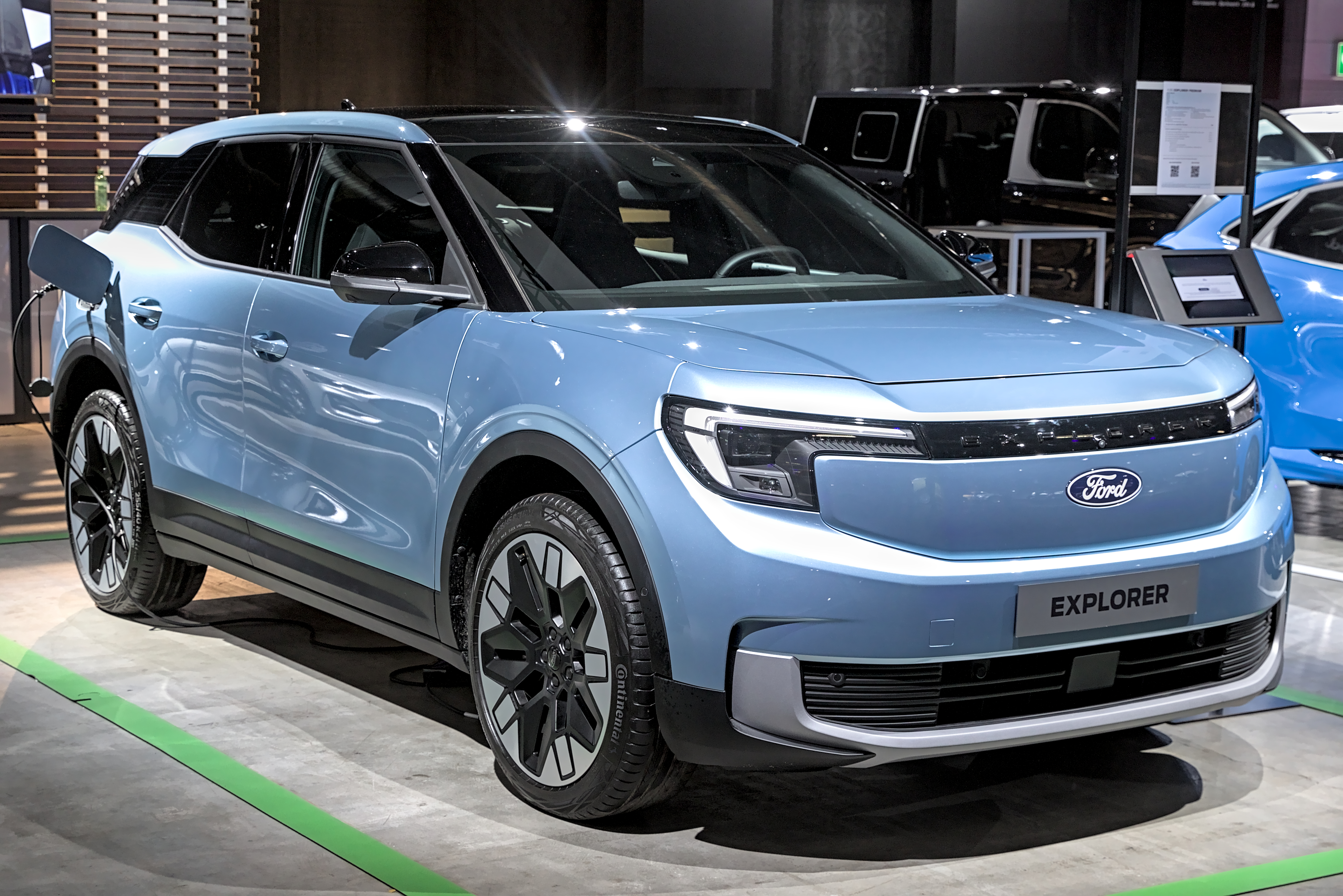
Ford Explorer
"but Ford have cut the prices of the Explorer and the Capri by £5,000 and they're adding more kit and yes these cars are basically Volkswagen's and yes the ID4 and the ID5 have recently been updated"
They’re talking about the Ford Explorer as an EV that got cheaper and came with more features. They also mention different versions depending on whether it’s rear-wheel drive or all-wheel drive.
The Ford Explorer is discussed here in the context of UK EV pricing and a recent update. The hosts say Ford cut the price and added more equipment, and they break down configurations like rear-wheel drive versus all-wheel drive battery sizes.

Ford Capri
"but Ford have cut the prices of the Explorer and the Capri by £5,000 and they're adding more kit ... Capri falls by about the same the price cuts come with the updates that Volkswagen have rolled out"
The hosts say the Ford Capri EV got cheaper and also received an update. They mention improvements to the battery and motor, plus better efficiency that helps it go farther.
The Ford Capri is presented as another EV that received a price cut and an update package. The segment links the changes to Volkswagen’s platform updates, including battery chemistry, motor upgrades, and improved efficiency/aero that boosts range and power.
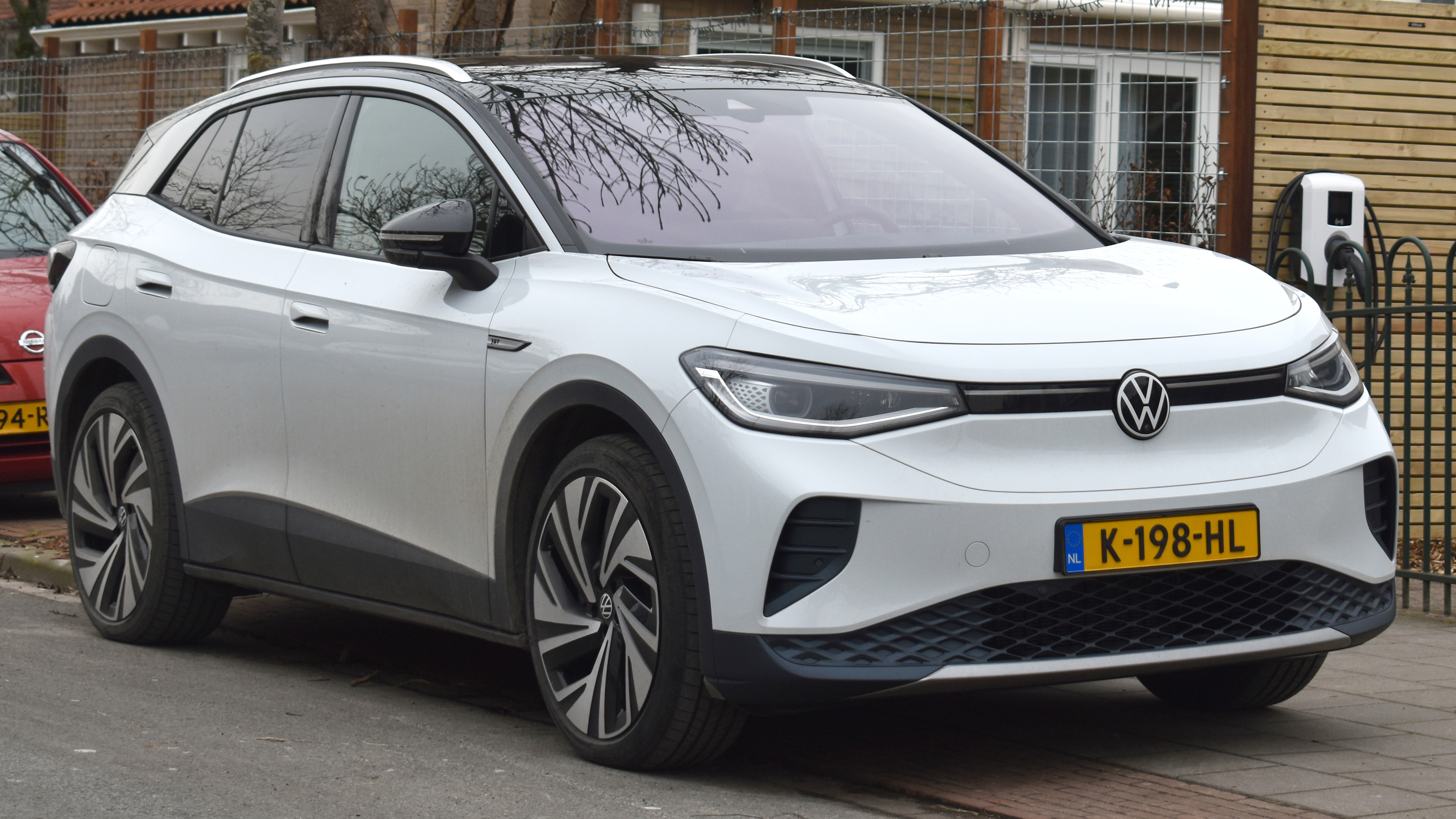
Volkswagen Id4
"...hese cars are basically Volkswagen's and yes the ID4 and the ID5 have recently been updated and yes th..."
The Volkswagen ID.4 is an electric SUV. Volkswagen has updated it recently, which can mean changes to features and how the car behaves. It’s mentioned because those updates affect what buyers get.
The Volkswagen ID.4 is an electric SUV built on Volkswagen’s EV platform and is one of the brand’s core volume EV models. The podcast notes that the ID.4 has recently been updated, which matters because software, features, and driving/charging behavior can change over time. That’s why it’s mentioned alongside the ID.5 in the context of recent revisions.

Volkswagen Id5
"...e basically Volkswagen's and yes the ID4 and the ID5 have recently been updated and yes those updates ..."
The Volkswagen ID.5 is an electric crossover based on Volkswagen’s EV platform. Volkswagen has updated it recently, which can change features and how the car works day to day. That’s why it’s included in the discussion.
The Volkswagen ID.5 is an electric SUV/crossover that’s closely related to the ID.4, sharing much of the EV platform and overall design approach. The podcast highlights that the ID.5 has recently been updated, which is important because updates can bring new features and improvements to the ownership experience. It’s mentioned together with the ID.4 for that reason.
rear wheel drive
"the Explorer falls between £4,000 and £5,000 the rear wheel drive 58 kilowatt hour version starts at £35,000 now the all-wheel drive 77 kilowatt hour"
Rear-wheel drive means the power goes to the back wheels. They’re using it to describe one version of the car versus a version that drives all four wheels.
Rear-wheel drive (RWD) means the electric drive system sends power to the rear axle. The hosts use it to describe a specific Explorer configuration (rear-wheel drive with a 58 kWh pack) and contrast it with an all-wheel drive version.
all-wheel drive
"now the all-wheel drive 77 kilowatt hour premium is under £50,000 and that's important because well you know now because of our previous story"
All-wheel drive means the car can send power to all four wheels. The hosts say the AWD version pairs with a bigger battery and costs more.
All-wheel drive (AWD) distributes power to both front and rear axles, typically improving traction and drivability in low-grip conditions. In the segment, the hosts tie AWD to a higher-capacity battery configuration and a higher price bracket.
lithium-ion phosphate battery
"the updates that Volkswagen have rolled out the lithium-ion phosphate battery the upgraded electric motor the energy contents of the batteries rises from 52 to 58 kilowatt hours"
This is a type of EV battery chemistry. The hosts say switching/using lithium-ion phosphate helps the battery store more energy, which can translate into more range.
A lithium-ion phosphate (LFP) battery is a specific lithium chemistry used in EVs. In this segment, the hosts say Volkswagen rolled out an LFP battery update, which increases energy capacity and contributes to improved range.
electric motor
"the lithium-ion phosphate battery the upgraded electric motor the energy contents of the batteries rises from 52 to 58 kilowatt hours in the standard pack"
The electric motor is the part that actually drives the wheels. The hosts say the motor was upgraded, which helps the car feel stronger and can improve efficiency.
The electric motor is the traction unit that converts electrical energy into motion. Here, the hosts describe an “upgraded electric motor” and later mention a specific motor designation for the Capri, tying motor changes to power and range improvements.
energy contents of the batteries
"the upgraded electric motor the energy contents of the batteries rises from 52 to 58 kilowatt hours in the standard pack and also you get a lot more range as well"
They’re talking about how much energy the battery can hold. More battery energy usually means you can drive farther before recharging.
“Energy contents” refers to how much usable energy is stored in the battery pack, typically expressed in kWh. The segment uses this phrase to connect the battery capacity increase to the observed range gains.
kilowatt hours
"the energy contents of the batteries rises from 52 to 58 kilowatt hours in the standard pack and also you get a lot more range as well"
Kilowatt-hours (kWh) measure battery energy capacity—how much energy the pack can store. The segment uses kWh to explain the battery capacity jump (52 to 58 kWh) and links that to the range increase.
WLTP
"standard range goes up by 43 miles on WLTP that's 444 kilometers total the Capri goes even further because it's a bit more aero"
WLTP is a standardized test used to estimate how far a car can go on a charge. It’s the number you’ll see in brochures, even though real-world range can be different.
WLTP (Worldwide Harmonized Light Vehicles Test Procedure) is the standardized testing method used to estimate a vehicle’s range and fuel/energy consumption. The segment uses WLTP to quantify how much range improves after updates to the battery and powertrain.
battery electric vehicles
"[1224.7s] Germany will put eight million battery electric vehicles on the road by 2030 this new forecast [1230.4s] draws on data from major manufacturers"
A battery electric vehicle is a car that runs only on electricity from a battery. The discussion is about how many are being sold and how that share is expected to grow.
“Battery electric vehicles” (BEVs) are EVs powered only by electricity stored in a battery pack, with no gasoline engine. The segment uses BEV adoption numbers to describe how quickly Germany’s EV market is growing and how BEVs are expected to take a larger share of new car sales.
BEVs
"[1235.8s] the numbers show how fast the market will move registered bevs rose from 34,000 bevs in Germany [1243.5s] in 2017 when i began the podcast and there's now more than two million on germans driveways"
BEVs just means battery electric cars. They’re using BEV registration numbers to show EVs are becoming much more common.
BEVs is the acronym for battery electric vehicles. In this segment, the host tracks BEV registrations and growth rates in Germany to show momentum—moving from tens of thousands in 2017 to more than two million on German driveways.
bidirectional charging
"[1269.8s] of bev models rising by 40 percent over the next four years in germany and innovations like [1275.4s] bidirectional charging vehicle to x becoming more common in new bevs"
Bidirectional charging means the EV can act like a power source, not just a device that charges. Instead of only taking electricity, it can also send electricity back.
Bidirectional charging lets an EV not only draw power from the grid, but also send power back out to the home or potentially the grid. The segment frames it as an innovation becoming more common in new BEVs, which can improve energy flexibility and resilience.
vehicle to x
"[1275.4s] bidirectional charging vehicle to x becoming more common in new bevs according to this forecast by [1281.3s] 2030"
Vehicle to X is the idea that your EV can share power with other things—like your house or the power grid. It’s basically the EV turning into a backup battery.
“Vehicle to X” (often written V2X) is the umbrella term for bidirectional power flow between an EV and “X,” such as a home (V2H), the grid (V2G), or other infrastructure. The host mentions it as a growing feature in new BEVs, implying more EVs will support energy-sharing use cases.
SMMT
"[1281.3s] let's move on the smmt that's a uk trade body and a lobby really they [1292.2s] lobby on behalf of the car industry who subscribe to them"
SMMT is a UK group that represents car makers and the auto industry. They’re being used here as a source for EV statistics.
SMMT is the UK’s Society of Motor Manufacturers and Traders, a trade body that represents the automotive industry. In this segment, the host cites SMMT data to support claims about average EV range and real-world suitability.
average bev range
"[1292.2s] lobby on behalf of the car industry who subscribe to them the average bev range is nearly 300 miles [1301.5s] now that's the average bev range on sale in the uk"
Average BEV range is how far an EV can go before it needs charging. They’re using that number to show most drivers don’t actually need to drive far enough to worry about running out.
“Average BEV range” refers to how far an electric car can typically drive on a full charge under standardized testing. The segment uses UK average range figures to argue that real-world driving needs are usually within EV capability, challenging common “range anxiety” narratives.
motor finance
"[1324.2s] close brothers motor finance also points to the same thing it found 74 percent of each drivers [1329.1s] travel fewer than 150 miles a week"
They’re citing a finance company’s research about how far people actually drive. The takeaway is that many drivers don’t rack up huge weekly mileage, so EVs fit their routines.
The host references “motor finance” research (via Close Brothers Motor Finance) to support claims about typical UK driving distances. This is used as evidence that many drivers stay within EV-friendly daily ranges.
range anxiety
"[1341.6s] with an average ev and that technology has now overtaken the mythology around electric vehicles [1351.4s] which still permeates some sections of the media"
Range anxiety is the worry that an electric car won’t have enough charge to finish your trip. The point here is that for most people’s normal driving, that worry isn’t really justified.
Range anxiety is the fear or concern that an EV won’t have enough battery to reach a destination or charging point. The host argues that EV technology and typical driver needs have moved past the “mythology” that EVs can’t handle everyday life.
scrappage scheme
"the dutch government will launch a new scrappage scheme for old vehicles as part of a new billion euro package they're going to spend 52 million euros and give it to buyers of used electric cars"
A scrappage scheme is basically a trade-in incentive. The government gives money if you scrap an old, polluting car and move to a cleaner vehicle—here, used EVs.
A scrappage scheme is a government program that pays people to trade in older, higher-emissions vehicles for newer, cleaner ones. In this case, the Netherlands is offering a premium to buyers of used electric cars who scrap qualifying older “gas guzzlers.” These programs can accelerate EV adoption by lowering the effective purchase price.
solid state batteries
"nissan has stacked 23 battery cells into a single solid state prototype battery pack and they say that the real world vehicle use is now meeting the required targets so they're on target for a 2028 launch"
Solid state batteries are a newer type of EV battery. Instead of using a liquid inside the battery, they use a solid material, which could make the battery safer and let it store more energy for longer range.
Solid state batteries replace the liquid electrolyte found in conventional lithium-ion packs with a solid electrolyte. That can improve safety and potentially enable higher energy density, which helps extend driving range. The transcript also frames this as a near-term industry race toward mass production.
lycap
"nissan is working with a us-based company called lycap and uh they'll do mass production using their activated dry electrode technology removing the need for drying and solvent recovery processes"
Lyten (spoken here as “lycap”) is referenced as a U.S.-based partner providing “activated dry electrode technology” for solid-state battery manufacturing. The key idea is that the process reduces or eliminates steps like drying and solvent recovery, which can lower production cost and improve efficiency. This is an example of how battery breakthroughs often depend on specialized manufacturing tech companies.
Factorial
"other companies like factorial well their ceo said that solid state batteries will be uh in production vehicles in 2027... its solstice platform delivers 450 watt hours per kilogram of energy density"
Factorial is a company working on EV battery tech. They’re claiming their battery platform can store a lot of energy and they’re working with major car brands to bring it to production.
Factorial is mentioned as a battery company claiming solid-state production timing and specific performance targets. The transcript attributes an energy-density figure to its “solstice platform,” and it also says Factorial has partnerships with multiple automakers. For listeners, this highlights how battery suppliers can influence EV range and how partnerships shape commercialization timelines.

Pontiac Solstice
"... 2027 yeah that's next year the company said its solstice platform delivers 450 watt hours per kilogram of..."
The Pontiac Solstice is a sports car name that’s being mentioned for a battery-related claim. The podcast talks about how much energy a battery can store for its weight. That’s why the Solstice platform comes up in the EV technology discussion.
The Pontiac Solstice is a sports car platform referenced in the podcast in a technical context—specifically, a claim about energy density (watt-hours per kilogram). The reason it’s discussed here is to illustrate how a platform or design approach can relate to EV battery performance. Even though it’s a Pontiac nameplate, the key point in the episode is the battery-related metric tied to the platform.
energy density
"its solstice platform delivers 450 watt hours per kilogram of energy density that is 80 higher than some of the conventional lithium ion batteries on the road"
Energy density tells you how much “battery power” you can fit into a certain weight. If a battery has higher energy density, the EV can often go farther on the same weight of battery.
Energy density is how much electrical energy a battery can store for a given weight (here, watt-hours per kilogram). Higher energy density generally means more potential driving range without increasing battery mass. The transcript uses this metric to compare solid-state claims versus conventional lithium-ion packs.
Mercedes-Benz
"Factorial has partnered with Mercedes-Benz, Stellantis, Hyundai and Kia yeah the the news"
Mercedes-Benz is mentioned as a partner working with a battery company. That suggests they’re preparing for newer battery tech that could improve EV range and performance.
Mercedes-Benz is named as one of Factorial’s partners, indicating interest in next-generation battery technology. Automaker partnerships like this can accelerate development and help battery suppliers scale manufacturing. It also signals that solid-state (or solid-state-adjacent) batteries are becoming a mainstream competitive focus.
Stellantis
"Factorial has partnered with Mercedes-Benz, Stellantis, Hyundai and Kia yeah the the news"
Stellantis is mentioned as a partner with a battery company. That means they’re likely planning to use newer battery tech in future EVs.
Stellantis is listed among Factorial’s partners, showing that multiple major automakers are backing battery development efforts. Partnering helps align battery supply, vehicle integration, and timelines for production. It’s a business signal that solid-state battery commercialization is moving from lab to planning.
charge rate
"but some of the solid state batteries [1544.2s] that are coming they're talking about maybe a 2c or 3c charge rate and yeah okay that's not 15c"
Charge rate is how fast an EV battery can take in electricity from the charger. Faster charge rates mean less time plugged in, but the battery has to be kept at the right temperature to do it safely.
Charge rate describes how quickly a battery can accept energy from a charger, commonly expressed relative to the battery’s capacity (often as “C-rate”). Higher charge rates can shorten charging time, but they can also stress the battery and require smart thermal management.
C-rate
"they're talking about maybe a 2c or 3c charge rate and yeah okay that's not 15c [1551.5s] charge rate of lithium ion phosphate"
C-rate is a shorthand for charging speed compared to the battery’s size. If you hear “2C” or “3C,” it’s basically saying the battery is designed to charge much faster than normal—though the actual results depend on conditions.
C-rate is a way to express charging speed relative to battery capacity: 1C means charging from empty to full in one hour (in ideal conditions). So a “2C” or “3C” claim implies a much faster charging target than today’s typical EV charging rates, though real-world performance depends on temperature, battery chemistry, and charger limits.
1500 kilowatt charging
"that's not the 1500 kilowatt charging that's catl and byd and [1558.6s] sun woda have talked about"
1500 kilowatt charging is an extreme “fast charging” goal—basically aiming for very high power so you can add energy quickly. Even if a charger can deliver that much, the car’s battery has to be able to accept it safely.
“1500 kilowatt charging” refers to extremely high-power charging targets for EVs, which would dramatically reduce charging time if the vehicle and battery can handle it. In practice, peak power is limited by the charger, the battery’s chemistry, and thermal limits, so real-world results may be lower than the headline number.
CATL
"that's catl and byd and [1558.6s] sun woda have talked about but this is a very rapidly developing technology"
CATL is a big company that makes EV batteries. When they talk about very fast charging, it’s because the battery design determines how quickly an EV can safely charge.
CATL (Contemporary Amperex Technology) is a major Chinese EV battery manufacturer. The segment ties CATL to high-power charging targets, highlighting how battery makers influence what charging speeds are feasible.
Sunwoda
"catl and byd and [1558.6s] sun woda have talked about but this is a very rapidly developing technology"
Sunwoda is a company that makes EV batteries. They’re mentioned because battery makers are competing to enable faster charging in the future.
Sunwoda is a Chinese battery manufacturer mentioned here alongside CATL and BYD in the context of high-power charging targets. The takeaway is that multiple battery suppliers are racing to improve charging performance as EV demand grows.
self-charging hybrid
"have a good and see tomorrow and remember there's no such thing as a self-charging hybrid [1590.8s] overtime moss molding mildew stands cover your home and cleaning them is too much work"
A “self-charging hybrid” usually means the car charges its battery on its own while you drive. It does that using the engine and regenerative braking, not by plugging into a charger like a plug-in hybrid.
The phrase “self-charging hybrid” is a marketing term that can confuse people. In most cases, it refers to a hybrid that charges its battery using the engine and regenerative braking rather than plugging in, unlike a plug-in hybrid (PHEV) that relies on external charging.
Request an Explanation
Heard something you'd like explained? We'll add it to this episode.
Sign in to request explanations for terms you heard.
Want to learn more?
Browse our glossary for plain-English explanations of automotive terms, jargon, and concepts.
Help improve this episode
See something that's not quite right? Our annotations are AI-generated and can sometimes miss the mark. Click the flag icon on any annotation to suggest a correction.