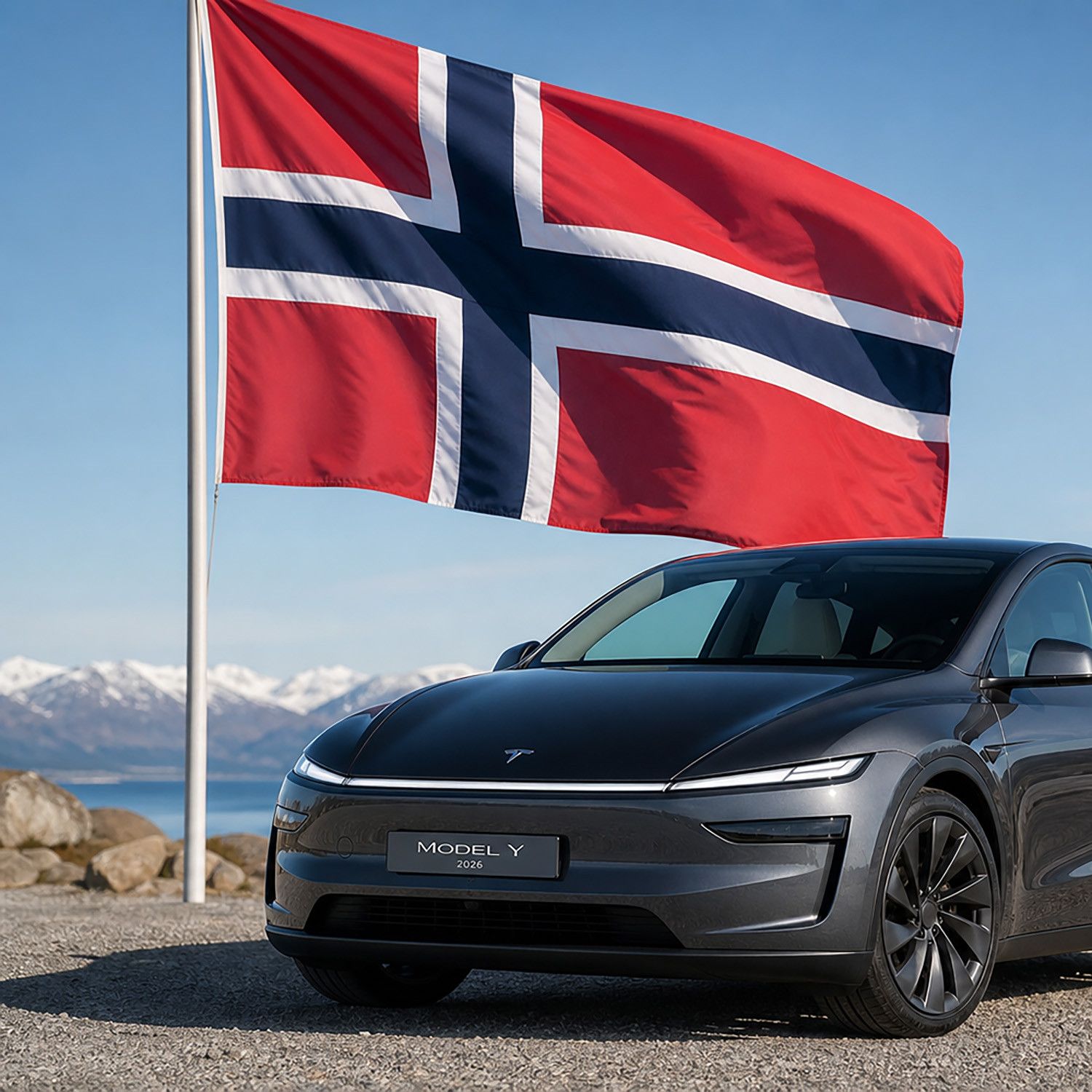
DAILY: Norway Now Almost 99% BEV, Tesla Drops Canada Prices and Factorial Says Don’t Copy China | 05 May 2026
About this episode
Norway’s EV transition keeps accelerating, with battery electrics taking 98.6% of new passenger car registrations. Tesla also cut Canadian Model 3 pricing, while Factorial argued Western automakers should not simply copy China’s battery playbook. The episode then shifts to manufacturing and charging news, including Volkswagen’s pilot production line, Tesla’s Base Charger for depots, and Rivian’s coming AI voice assistant. It closes with software and AI updates from Volvo, Google, and Capital One.
You can read all the latest news on the blog here: https://EVne.ws/blog
Subscribe for free and listen to the podcast on audio platforms:
➤ Apple: https://EVne.ws/apple
➤ YouTube Music: https://EVne.ws/youtubemusic
➤ Spotify: https://EVne.ws/spotify
➤ TuneIn: https://EVne.ws/tunein
➤ iHeart: https://EVne.ws/iheart
NORWAY BEV SHARE HITS 98.6% IN APRIL https://evne.ws/4naVBt9
TESLA CUTS MODEL 3 PRICES IN CANADA https://evne.ws/48IdgTj
FACTORIAL BETS SOLID-STATE CAN BREAK CHINA’S LEAD https://evne.ws/4tVo2hw
IONIQ 5 SALES HOLD UP AFTER US TAX CREDIT LOSS https://evne.ws/4w6sNq5
RIVIAN ASSISTANT SET FOR WEEKS-LONG ROLLOUT https://evne.ws/3OYBW3e
VOLKSWAGEN RAISES RIVIAN STAKE TO 15.9% https://evne.ws/4eZCMHl
VW TESTS ‘GAMECHANGER’ AT WOLFSBURG https://evne.ws/4tgruSM
TESLA LAUNCHES BASECHARGER FOR SEMI DEPOTS https://evne.ws/4tN7DeN
MFG EV POWER ADDS PLUG&CHARGE https://evne.ws/3R1uLaX
ALLEGO APP ADDS EUROPE-WIDE CHARGING ROAMING https://evne.ws/4eMdKM3
GOOGLE GEMINI REACHES POLESTAR AND VOLVO EVS https://evne.ws/4dtQPCX
multi-agentic AI
"Capital One's tech team isn't just talking about multi-agentic AI. They are already deployed one."
Multi-agentic AI means using several AI helpers at once. They can split up the work—like one plans, another checks details—so the result is more accurate.
Multi-agentic AI refers to systems where multiple AI “agents” work together, often with different roles, to complete a task. Instead of one chatbot doing everything, agents can coordinate planning, checking, and execution steps.
Chat Concierge
"It's called Chat Concierge, and it's simplifying car shopping. Using self-reflection and layered reasoning with live API checks, it doesn't just help buyers find a car they love."
Chat Concierge is an AI tool from Capital One meant to make buying a car easier. It can help you narrow down cars and even guide steps like scheduling and financing.
Chat Concierge is Capital One’s deployed AI assistant for car shopping. In the segment, it’s described as using reasoning plus live API checks to help with tasks like finding cars, scheduling test drives, and handling financing steps.
live API checks
"Using self-reflection and layered reasoning with live API checks, it doesn't just help buyers find a car they love."
Live API checks mean the app looks up information in real time from other services. That helps it answer with fresher, more accurate details.
“Live API checks” means the software queries external systems in real time through application programming interfaces (APIs). In this context, it’s used to verify or update information while the AI is helping with car-shopping tasks.
pre-approved for financing
"It helps schedule a test drive, get pre-approved for financing, and estimate trading value."
Pre-approved financing means a lender has already reviewed you and is willing to offer you a car loan, pending the final details. It can make the purchase go faster.
“Pre-approved for financing” is a lender’s conditional approval of a buyer for a certain loan amount or credit terms before the final car purchase. It can speed up the buying process because the financing piece is largely handled upfront.
battery electric vehicles
"Norway set another monthly record in April 2026. Battery electric vehicles took 98.6% of new passenger car registrations."
Battery electric vehicles (BEVs) are fully electric cars. They run on a battery you charge, not on gasoline.
Battery electric vehicles (BEVs) are cars powered only by electricity stored in a battery pack. They don’t use gasoline engines and typically charge from the grid.
BEV market share
"Norway set another monthly record in April 2026. Battery electric vehicles took 98.6% of new passenger car registrations."
BEV market share is how many of the newly registered cars are electric. If it’s near 100%, it means almost everyone buying a new car is choosing an EV.
BEV market share is the percentage of new vehicle registrations (or sales) that are battery electric vehicles. A figure like 98.6% indicates how dominant BEVs have become in that market for new purchases.
plug-in hybrid
"...if the world stops at 99% Bev, like Norway, would you be happy? Because I think I'd be alright with that if the 1% of power changes mixed between petrol diesel, plug-in hybrid, the shabby kind of e-power stuff that doesn't have a plug socket"
A plug-in hybrid is part-electric and part-gas. You can charge it with a plug, but it also has a gas engine for longer trips.
A plug-in hybrid electric vehicle (PHEV) uses both an electric motor and an internal-combustion engine. Unlike a full hybrid, it has a battery large enough to charge externally via a plug, so it can drive some distance purely on electricity.
Nissan
"...the 1% of power changes mixed between petrol diesel, plug-in hybrid, the shabby kind of e-power stuff that doesn't have a plug socket on the side, like the Nissan cars and that, that you have to put fuel in, but do some,"
Nissan is the car brand being referenced. They’re being used as an example of electrified cars that aren’t necessarily plug-in BEVs.
Nissan is mentioned in the context of EV powertrain types—specifically cars that use non-plug-in “e-power” systems. The point is that not all electrified vehicles are BEVs; some are hybrids or other electrified setups.
full hybrid
"Petrol plug-in hybrids, 20 of them. The full hybrid was below 0.1%. I've even heard a rumour that some people call them self-charging hybrids, but as you"
A full hybrid uses both electricity and gas, but you usually can’t plug it in. It charges its battery using braking and the engine.
A full hybrid uses an electric motor and a gasoline (or diesel) engine, but it typically cannot be charged from an external plug. Instead, the battery is replenished through regenerative braking and the engine, so it relies on the engine for sustained driving.
self-charging hybrid
"The full hybrid was below 0.1%. I've even heard a rumour that some people call them self-charging hybrids, but as you"
“Self-charging hybrid” usually means a hybrid you don’t plug in. It keeps its battery charged using braking and the gas engine.
“Self-charging hybrid” is a common nickname for hybrids that don’t require plugging in. The battery is replenished internally via regenerative braking and/or the engine, so the car “charges itself” during normal driving.
regen energy
"...petrol cars with a slightly larger battery that'll maybe capture some of the regen energy and, you know, basically like the 12-volt under your bonnet..."
“Regen energy” is the electricity a car makes when you slow down. Rather than turning all that motion into heat, the car turns some of it back into battery power. It helps the car use less energy overall.
“Regen energy” refers to energy recovered during deceleration via regenerative braking. Instead of wasting speed as heat, the drivetrain uses an electric motor/generator to slow the car and send electricity back to the battery. This is a key reason hybrids and BEVs can reduce fuel or electricity use in stop-and-go driving.
12-volt under your bonnet
"...capture some of the regen energy and, you know, basically like the 12-volt under your bonnet, but a little bit bigger."
Most cars have a small 12-volt battery that powers things like lights and electronics. Even in hybrid or electric cars, you still typically need a 12-volt system for the car’s computers and accessories. The high-voltage battery is for driving, but the 12V battery is for everyday electrical needs.
The “12-volt under your bonnet” is the conventional low-voltage electrical system found in most cars, powered by a 12V battery. Even in electrified vehicles, a 12V system is used to run accessories and control modules, while the high-voltage battery powers propulsion. The episode uses it as an analogy for a small auxiliary battery in hybrids.
pure BEV
"...they just go and buy themselves a pure Bev instead. Like the rest of the world will do."
A “pure BEV” is a fully electric car. It doesn’t use gasoline to drive, so you have to charge it with electricity. The point here is that Norway is buying more of these instead of hybrids.
A BEV (battery-electric vehicle) is a fully electric car that runs on energy stored in a traction battery. Unlike hybrids, it has no gasoline engine for propulsion, so it must be charged from the grid (or another external power source). The episode contrasts BEVs with “self-charging hybrids,” arguing Norwegians are choosing BEVs instead.

Tesla Model 3 rear-wheel drive
"[258.0s] Premium rear-wheel drive. [270.9s] Then you might want all-wheel drive. [273.4s] But if Model 3 rear-wheel drive suits you, it starts at 39,000 Canadian."
The Tesla Model 3 is an electric car. “Rear-wheel drive” means the power goes to the back wheels, which can be a good fit if you don’t deal with lots of snow. In this episode, they’re talking about how this version is priced in Canada and what Tesla sells there.
Tesla Model 3 is an electric compact sedan, and this segment specifically discusses the rear-wheel-drive version. Rear-wheel drive means the motor(s) send power to the rear axle, which can be cheaper and efficient in mild weather. The hosts tie this trim to Canada pricing and how it changes what Tesla offers in the lineup.
all-wheel drive
"[270.9s] Then you might want all-wheel drive. [273.4s] But if Model 3 rear-wheel drive suits you, it starts at 39,000 Canadian."
All-wheel drive means the car can send power to all four wheels. That helps it grip the road better in snow or slippery weather. The hosts bring it up as the option if you expect bad winter conditions.
All-wheel drive (AWD) sends power to both the front and rear axles. That typically improves traction in snow, rain, and low-grip conditions compared with rear-wheel drive. The hosts mention it as a choice for harsher Canadian winter conditions.
EPA range
"[300.8s] The new car has an EPA range of 463 kilometers. [304.6s] It'll hit 62 miles an hour in 5.2 seconds."
EPA range is a standardized estimate of how far an electric car can go on one full charge. It’s meant to let you compare cars fairly, but your real range can be higher or lower depending on how you drive and the weather.
EPA range is the estimated distance an EV can travel on a full charge under the U.S. EPA testing procedure. It’s a standardized way to compare EVs, though real-world range varies with speed, temperature, and driving style. The episode cites an EPA range figure for the Model 3 trim being discussed.
supply-change strategy
"[335.8s] The move put into effect the supply-change strategy I've been talking about for a few months now. [341.4s] Canadian Model 3 units now come from Shanghai rather than Fremont in California."
A supply-change strategy is a manufacturing and sourcing plan that changes where vehicles are built or how components are supplied. In this episode, it’s used to explain why Canadian Model 3 units are coming from a different factory. That kind of shift can affect pricing, availability, and how quickly Tesla can respond to demand.
Fremont in California
"[335.8s] The move put into effect the supply-change strategy I've been talking about for a few months now. [341.4s] Canadian Model 3 units now come from Shanghai rather than Fremont in California."
Fremont in California refers to Tesla’s manufacturing operations there, historically associated with Model 3 production. The episode contrasts this with cars coming from Shanghai, implying a change in factory sourcing. That kind of shift can be part of how Tesla manages supply and pricing.
Shanghai
"[335.8s] The move put into effect the supply-change strategy I've been talking about for a few months now. [341.4s] Canadian Model 3 units now come from Shanghai rather than Fremont in California."
Shanghai is where Tesla builds cars in China. The episode says Canada is now getting Model 3 cars made in Shanghai instead of the U.S. factory, as part of Tesla’s supply planning.
Shanghai refers to Tesla’s manufacturing presence in China, which the hosts say is now supplying Canadian Model 3 units. Changing the production location can help a company respond to demand and logistics constraints. In this segment, it’s presented as part of Tesla’s broader supply-change strategy.
import quota
"The timing matters, Canada opened its Chinese EV import quota on the 1st of March and it awards those on a first-come-first-served basis. The first quota covers 24,500 vehicles on the 6 months March to August."
An import quota is a cap on how many cars can be brought into a country during a certain time. After that time, the rules can change or the cap can increase.
An import quota is a limit on how many vehicles (or other goods) can be imported over a set period. In this segment, Canada’s quota is allocated in time windows and then expanded later.
first-come-first-served basis
"and it awards those on a first-come-first-served basis. The first quota covers 24,500 vehicles on the 6 months March to August."
First-come-first-served means whoever applies/qualifies first gets the limited slots. If the slots fill up, others have to wait for the next round.
“First-come-first-served” means the quota allocations go to importers (or buyers) in the order they apply or qualify. Once the allocation for the period is filled, later applicants miss out.
most favored nation tariff
"Canada's new import quota applies 6.1% most favored nation tariff on China. Canada charges 25% section 232 tariffs on US-made vehicles, which seems nuts."
An MFN tariff is a “standard best-rate” import tax a country charges under trade rules. In this case, it’s a relatively low tax Canada applies to imports from China.
A most favored nation (MFN) tariff is a trade rate a country applies to another country under standard “best terms” rules. Here, the speaker notes Canada applies a 6.1% MFN tariff on China for these imports.
section 232 tariffs
"Canada charges 25% section 232 tariffs on US-made vehicles, which seems nuts. The lower tariff on Chinese-made cars means it's way better for Canadians to drive a Chinese-made car, which is bonkers."
Section 232 tariffs are import taxes tied to a U.S. trade-law process. The point here is that the tax on U.S.-made cars is much higher than the tax on Chinese-made cars.
Section 232 tariffs are U.S. trade tariffs imposed under a law that allows restrictions based on national security and domestic industry considerations. The speaker is comparing Canada’s 25% Section 232 tariffs on U.S.-made vehicles to the lower tariff on Chinese-made cars.
EVAP rebate
"Shanghai-built Model 3 variants don't actually qualify for Canada's Federal Electric Vehicle Availability Program, the EVAP rebate, but that 5,000 Canadian to qualifying buyers might leave Tesla at the disadvantage against Canadian-made vehicles or free trade agreement countries."
The EVAP rebate is a government cash discount for eligible electric-vehicle buyers. If a specific car version doesn’t qualify, the buyer may pay more than they otherwise would.
EVAP rebate refers to Canada’s Federal Electric Vehicle Availability Program incentive. It provides a cash rebate to eligible buyers, and the segment highlights that certain Tesla Model 3 variants don’t qualify, which can change effective pricing.
Factorial energy
"Let's move on. Factorial energy is the Massachusetts-based solid-state battery startup. They say Western and European carmakers will not catch China if you copy them."
Factorial Energy is a company working on next-generation EV batteries. The episode uses it to make the point that battery progress—especially solid-state—could decide who stays competitive.
Factorial energy is a Massachusetts-based solid-state battery startup discussed as a potential competitive threat to today’s lithium-ion battery leaders. The speaker frames the company’s argument as “don’t copy China,” implying Western/European automakers may fall behind if they don’t innovate fast enough.
solid-state batteries
"Solid-state batteries, she argues, are the way to go beyond the current lithium-ion battery leaders."
Solid-state batteries are a newer type of EV battery that uses a solid material inside instead of a liquid. The claim is that they could be better than today’s common lithium-ion batteries.
Solid-state batteries use a solid electrolyte instead of the liquid electrolyte found in conventional lithium-ion cells. The segment argues they’re the path beyond current lithium-ion battery technology, implying potential improvements in energy density, safety, or charging performance.
solid electrolyte
"The cell's actually using a solid state or solid electrolyte, which removes flammable liquid, which is used in current EVs. The company says the cells can charge from 15% to 90% in 18 minutes."
A solid electrolyte is the ion-conducting material inside a solid-state battery. By using a solid instead of a liquid electrolyte, the battery can potentially be safer and may enable higher energy density and different cell designs.
15% to 90% in 18 minutes
"The company says the cells can charge from 15% to 90% in 18 minutes. But yeah, if you are paying attention, then that is a lot slower than the six minutes."
This is a way to describe how fast an EV can charge. It means the battery goes from 15% to 90% in about 18 minutes, which is useful because charging usually slows down as the battery gets near full.
“15% to 90% in 18 minutes” is a common EV charging benchmark that measures how quickly a battery can be replenished over a realistic partial-to-high state-of-charge window. It’s often used because charging speed typically changes as the battery gets fuller.
LFP cells
"BYD have even said that they feel that they're getting towards the limits of the obvious development path of LFP cells."
LFP is a type of EV battery chemistry. It’s generally considered safer and long-lasting, but the speaker is saying there may be a ceiling on how much you can improve it without changing the basic approach.
LFP (lithium iron phosphate) cells are a common EV battery chemistry known for good safety and long cycle life. The segment suggests there are “limits” to how much performance improvement you can get by continuing to develop LFP along the same path.

Mercedes-Benz EQS
"And starting to put those claims on the road now, Mercedes-Benz have been using an EQS with factorial cells for testing. One of them drove 750 miles or 1200 kilometers without stopping to charge."
The Mercedes-Benz EQS is an electric Mercedes sedan built for long-distance driving. Here, it’s being used to test Factorial’s new battery cells in real-world driving.
The Mercedes-Benz EQS is Mercedes-Benz’s flagship electric sedan, known for its long-range focus and advanced EV platform. In this segment, it’s used as a test vehicle to evaluate Factorial’s battery cells, including a long drive without charging.
federal tax credit
"“Hyundai's Anik 5 is recovering in the United States after a hit from the end of the federal tax credit. And for those vehicles that didn't get it, often Hyundai Kia would just match it...”"
A federal tax credit is a government discount that can lower what you owe in taxes when you buy a qualifying EV. The hosts are saying the EV market shifted when that credit ended, and some brands tried to make up the difference.
A federal tax credit is a government incentive that reduces a buyer’s tax bill for qualifying purchases, often including certain EVs. This segment says the Ioniq 5’s U.S. momentum improved after the tax credit situation changed, and that some automakers offset the loss by matching the incentive.

Tesla Model Y
"“Last year, Anik 5 was the fifth bestseller ahead of the Model Y, Model 3...”"
The Tesla Model Y is a popular Tesla electric SUV/crossover. In this discussion, it’s mentioned to compare sales numbers.
The Tesla Model Y is Tesla’s high-volume compact electric crossover, typically one of the best-selling EVs in many markets. Here it’s used as a sales benchmark against the Hyundai Ioniq 5.

Ford Mustang Mach-E
"“...which is behind 3Y equinox and Mustang. The early numbers this year... say it's holding up really well, like the Ford Mustang Mac E's down 60% year on year.”"
The Ford Mustang Mach-E is Ford’s electric SUV/crossover. The hosts mention it to compare how different EVs are doing year to year.
The Ford Mustang Mach-E is Ford’s electric crossover based on a dedicated EV platform, competing in the same mainstream EV segment as the Tesla Model Y. In this segment it’s used as a sales comparison point (notably year-over-year changes).
Volkswagen
"“Volkswagen have raised their Rivian stake to 16% after a milestone share purchase... It brings their stake in Rivian up.”"
Volkswagen is investing money into Rivian by buying more shares. The point is to strengthen their partnership and gain access to Rivian’s EV know-how.
Volkswagen is an automaker making a strategic investment in Rivian, increasing its stake through milestone-based share purchases. In this segment, the hosts connect the investment to access for Volkswagen’s joint venture and to Rivian’s technology.
software stack
"“Volkswagen gets access to Rivian software stack, Zonal architecture technology and electrical systems.”"
A software stack is the collection of computer programs that make the car’s systems work. The hosts are saying Volkswagen will be able to use Rivian’s car software foundation.
A software stack is the layered set of software components that work together to run a vehicle—everything from the operating system and control software to infotainment and connectivity. The segment says Volkswagen gets access to Rivian’s software stack as part of the partnership.
zonal architecture technology
"“Volkswagen gets access to Rivian software stack, Zonal architecture technology and electrical systems.”"
Zonal architecture is how a car’s electronics are organized into different areas. Instead of everything being controlled from one place, the car can use controllers by region, which can simplify the car’s wiring and systems.
Zonal architecture is an automotive electrical design approach where vehicle functions are grouped into zones (for example, front, rear, body) with localized controllers and networks. The segment mentions it as part of the technology Volkswagen gains from Rivian, which can affect wiring complexity, scalability, and how updates are managed.
electrical systems
"“Volkswagen gets access to Rivian software stack, Zonal architecture technology and electrical systems.”"
“Electrical systems” means the car’s wiring and electronic control hardware that manages power. The hosts are saying Volkswagen gets access to Rivian’s approach, not just the software.
In EV partnerships, “electrical systems” typically refers to the vehicle’s power distribution and control hardware—how electricity is routed and managed across modules. The segment groups it with software and zonal architecture as part of what Volkswagen gains from Rivian.
Rivian
"Rivian keeps ownership of its motors, batteries, chassis and autonomy. That matters because Volkswagen tried to do their own thing with Kariad and it didn't work out too well."
Rivian is an electric-vehicle company. The point here is that Rivian designs a lot of the important parts and software itself, rather than relying on other suppliers.
Rivian is an EV maker that designs and builds key vehicle systems like motors, battery packs, and its software stack. In this segment, the hosts emphasize Rivian’s control over those components, including its autonomy software.
Kariad
"That matters because Volkswagen tried to do their own thing with Kariad and it didn't work out too well. Future Volkswagen Group brands, including Scout, are all expected to run Rivian-derived software."
Kariad is Volkswagen’s software effort for EVs. The hosts are saying it didn’t meet expectations, so Volkswagen is looking for a different approach.
Kariad is Volkswagen Group’s software organization/platform effort for vehicle electronics and EV software. The hosts frame it as a project that struggled, which is why Volkswagen is now expected to pivot toward Rivian-derived software.
Scout
"Scout sits closest to Rivian's own lineup within Volkswagen Group. And even there, the overlap is limited. Scout will launch with range extenders, they've said, if ever making the pure bear version of their terror and traveller vehicles."
Scout is a brand within the Volkswagen Group that’s planning new EVs. The hosts say it will use software derived from Rivian and that early models will include range extenders.
Scout is a Volkswagen Group brand being discussed as a future EV lineup that will use Rivian-derived software. The segment also notes Scout’s positioning relative to Rivian’s own products and that it plans to launch with range extenders.
range extenders
"Scout will launch with range extenders, they've said, if ever making the pure bear version of their terror and traveller vehicles. The R2 is a much different beast from Rivian."
A range extender is extra equipment that helps an electric vehicle go farther. Instead of adding more battery, it provides power to keep the battery charged for longer trips.
A range extender is an additional power source—often a small engine or generator—that helps recharge the battery and extend driving range. It’s commonly used in EVs to reduce “range anxiety” without relying solely on large battery capacity.
Tesla base charger stick around back
"Talking Volkswagen, we've got a bit more news about how they're going to make EVs in the future. And Tesla's new base charger stick around back in a mo. Advanced, intuitive and deployed. That's how they stack."
They’re talking about a Tesla charging product and where it’s used or mounted. This part reads like quick EV news rather than a full explanation.
This segment mentions Tesla’s “base charger” hardware and implies a change or update to where it’s located/used (“stick around back”). It’s a product/charging-related news item rather than a deep technical explanation in this excerpt.
Capital One
"Advanced, intuitive and deployed. That's how they stack. That's technology at Capital One. Capital One's tech team isn't just talking about multi-agentic AI."
Capital One is a company that provides financial services. In this segment, they’re using tech to make car shopping easier.
Capital One is a financial services company mentioned as using technology to support car shopping. The hosts describe an AI-driven workflow that helps with tasks like finding vehicles and scheduling steps in the buying process.
SSP
"...launch a new platform called SSP, which is so delayed, it's ridiculous. The project will widely be expected to include mega-casting."
SSP is Volkswagen’s planned new “foundation” for electric cars. The idea is that it will help Volkswagen build EVs more efficiently, potentially using new manufacturing methods like large cast parts.
SSP is Volkswagen’s new electric-vehicle platform mentioned in the segment. In this context, it’s tied to a manufacturing strategy that may include mega-casting and a more modular, parallelized production flow for next-gen EVs.
mega-casting
"The project will widely be expected to include mega-casting. The process forms large body sections from a few high-pressure cast parts rather than hundreds of individually stamped components."
Mega-casting means making big sections of the car body in fewer, larger cast pieces. That can reduce the number of parts and steps needed to build the car.
Mega-casting is a manufacturing approach where very large body sections are formed from a small number of high-pressure cast parts. Instead of using hundreds of individually stamped panels, it can reduce part count and potentially lower cost and assembly complexity.
high-pressure cast parts
"The process forms large body sections from a few high-pressure cast parts rather than hundreds of individually stamped components."
High-pressure casting is a way to pour metal into a mold using strong pressure. It helps make large, consistent metal parts for the car body.
High-pressure casting refers to forcing molten metal into a mold under high pressure to create strong, repeatable shapes. In mega-casting, it’s the method used to produce the large structural pieces that replace many smaller stamped components.

parallel assembly streams
"Parallel assembly streams remove a single point of failure. And according to proponents of that system, that approach would have factory footprints and production costs and speed the throughput..."
Parallel assembly streams means building different parts of the car on different lines at the same time. The benefit is that if one part of the process slows down, it’s less likely to shut down the whole production line.
Parallel assembly streams is a production strategy where different major vehicle modules are built on separate lines at the same time. The segment argues this reduces risk because a single bottleneck in one area won’t necessarily stop the entire factory from producing vehicles.
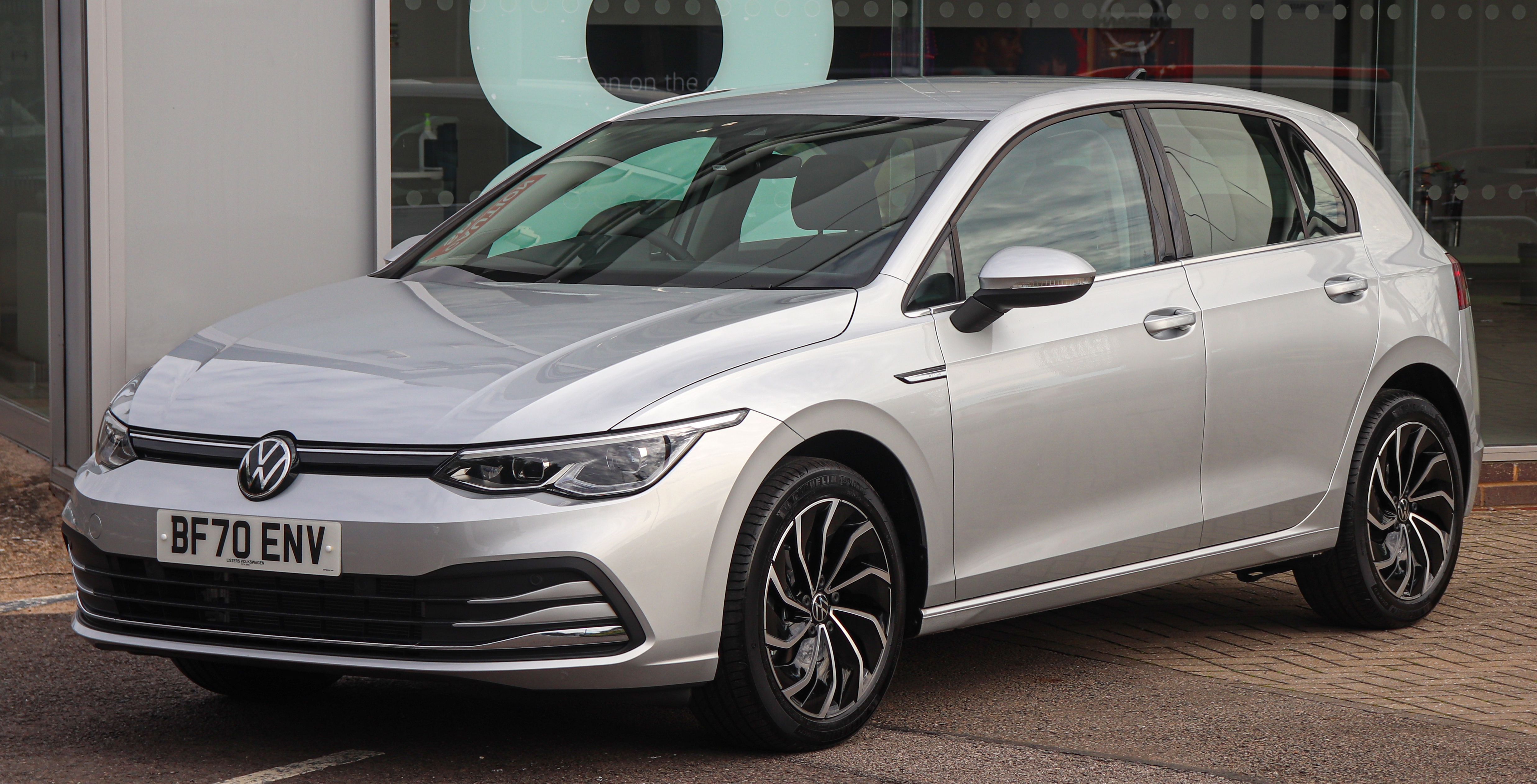
Volkswagen Golf
"And so when the Golf and the T-Rock go electric, they'll be on SSP, whether they're called ID Golf and ID Rock..."
The Volkswagen Golf is being mentioned as a model that could be converted to electric using Volkswagen’s new EV platform. It’s an example of how mainstream models are moving to EVs.
Volkswagen Golf is mentioned as one of the models expected to go electric using Volkswagen’s SSP platform. The segment frames it as part of a broader shift where familiar nameplates transition to EV architecture.
DC fast charger
"And it's a new DC fast charger for depots. So this isn't leaning into the greatest technology that they've got."
An EV DC fast charger is a public charger that can charge your battery quickly. It uses direct current, which lets it push more power into the car than a regular wall charger.
A DC fast charger is an EV charging station that delivers direct current (DC) directly to the vehicle’s battery system. It’s designed for much higher charging power than typical home AC charging, so you can add meaningful range in less time.
megawatt charging
"This is not megawatt charging. 125 kilowatt output at its peak."
Megawatt charging means charging at extremely high power—on the order of about 1,000 kilowatts. It’s meant to charge EVs very quickly, especially for fleets.
Megawatt charging refers to EV charging systems capable of around 1,000 kW (1 MW) class power levels. The goal is ultra-fast charging for heavy-duty vehicles or high-throughput depots, reducing downtime.
kilowatt output
"125 kilowatt output at its peak. And it looks like a fourth-generation V4 Supercharger from the outside, by the way."
Kilowatts (kW) tell you how strong the charger is. More kW usually means faster charging, as long as the car can accept that power.
Kilowatt output is the charging power level a charger can deliver, measured in kW. Higher kW generally means faster charging (up to the limits of the vehicle’s onboard charging hardware and battery acceptance).
V4 Supercharger
"And it looks like a fourth-generation V4 Supercharger from the outside, by the way. The visual design is of the same, inside totally different..."
V4 Supercharger means Tesla’s newer generation of fast-charging hardware. They’re saying Base Charger looks similar from the outside, but the inside is different.
V4 Supercharger refers to Tesla’s fourth-generation Supercharger hardware platform. This segment contrasts the external look of a V4 Supercharger with a different internal design for the Base Charger.
AC to DC conversion
"...a big old power cabinet somewhere behind a fence or, you know, out back, as it were, that converts AC to DC and does what I call the heavy lifting."
AC to DC conversion means changing the electricity from the grid (AC) into the kind of electricity EV batteries use (DC). Fast chargers do this conversion so the car can charge.
AC to DC conversion is the process of turning alternating current (AC) from the grid into direct current (DC) suitable for charging an EV battery. Fast chargers typically do this conversion using power electronics before delivering DC to the vehicle.
power electronics trays
"So one of the 16 power units, or the power electronics trays from a V4, goes inside the actual unit."
Power electronics trays are the charger’s internal electronics modules that manage and convert the electricity. They’re like the “power control” parts inside the charger.
Power electronics trays are modular sections of a charger that contain the circuitry (power electronics) needed to control and convert electrical power. In this segment, they’re moved from a larger cabinet into the Base Charger unit.
dwell time
"...that suits a longer dwell time. If a trailer or something is being loaded during that time..."
Dwell time is how long the truck sits still. Charging during that downtime is efficient because the vehicle isn’t on the road anyway.
Dwell time is the period a vehicle spends parked and not actively driving—often during loading/unloading or scheduled stops. Depot charging strategies often target dwell time because it allows charging without disrupting operations.
amps continuous (150 amps continuous)
"...the hardware points to 150 amps continuous, works across a voltage range from 180 to 1,000 volts."
“Amps continuous” is the charger’s steady current rating—how much current it can safely provide for a long time. More current can help deliver more charging power.
“Amps continuous” describes the maximum current the charger can supply continuously without overheating or exceeding design limits. For EV charging, current (amps) strongly affects how much power can be delivered at a given voltage.
voltage range (180 to 1,000 volts)
"...works across a voltage range from 180 to 1,000 volts. Nice big six-meter cable, as well, uses MCS..."
The voltage range is how wide a set of electrical voltages the charger can handle. A wider range means the charger can work with more kinds of EV battery systems.
A charger’s voltage range is the set of battery/vehicle voltages it can support while delivering power. A wide range (here, 180–1,000 V) helps the same charger work across different EV architectures and battery systems.

Tesla Semi
"That's standard. Only Tesla Semi operators can currently use Base Charger. CCS-eq..."
The Tesla Semi is an electric truck designed for commercial use. The podcast is saying that, right now, only certain Semi operators can use a specific charging option called “Base Charger.” That matters because charging availability is a big part of whether fleets can use electric trucks.
The Tesla Semi is an all-electric heavy-duty truck built for long-haul and fleet use. The podcast context mentions that only Tesla Semi operators can currently use “Base Charger,” which highlights how charging access and infrastructure are tied to specific vehicle programs. That’s important in EV business news because it affects real-world adoption and operating costs for fleets.
CCS
"CCS-equipped trucks can't. The new Tesla Semi actually uses MCS 3.2, as that's a megawatt charging system 3.2."
CCS is the common plug/charging standard used for many EVs. The host is saying that trucks already set up for CCS aren’t able to use the same megawatt charging setup being described.
CCS (Combined Charging System) is the common EV charging connector standard used widely for passenger cars and many commercial charging networks. The host notes that “CCS-equipped trucks can’t” use the same approach being discussed, implying the heavy-truck megawatt standard requires different hardware/compatibility.
MCS 3.2
"The new Tesla Semi actually uses MCS 3.2, as that's a megawatt charging system 3.2. That is a... I haven't talked about it a lot on the podcast, actually."
MCS 3.2 is a high-power charging standard for EVs—here, especially for electric trucks. It’s meant to support very fast charging at megawatt-level power, using an open approach.
MCS 3.2 refers to a megawatt charging system version used for high-power EV charging, aimed at heavy vehicles like electric trucks. The “3.2” indicates the specific standard/profile being discussed, and the host frames it as an open industry approach rather than a Tesla-only design.
Charin
"Now, MCS is done by Charin, an organization, the CCS connector, of which Tesla is a part, by the way. And it's not a..."
CharIN (spoken here as “Charin”) is an industry organization that develops and promotes charging standards for high-power EV charging. In this segment, the host credits CharIN as the driver of the open standard behind MCS, contrasting it with Tesla’s past proprietary tendencies.
daisy-chained
"Up to three Base Chargers can be daisy-chained on a single breaker. The company says this reduces setup costs and installation time."
“Daisy-chained” here means linking several chargers so they can run off the same electrical breaker. That can make installations cheaper and faster for charging depots.
“Daisy-chained” in charging infrastructure means connecting multiple base chargers together so they can share electrical supply from a single breaker. This can reduce electrical work and cost when deploying charging sites for fleets.
ISO 15118-2
"And they are fully open with ISO 15118-2 and OCPI. They're not locked into anything Tesla."
ISO 15118-2 is a set of rules for how an EV and a charger talk to each other. Mentioning it signals the charging system follows widely used standards, not a Tesla-only method.
ISO 15118-2 is a communications standard for EV charging that enables features like authentication and smart charging between the vehicle and charger. The host highlights it to show the system is compatible with established, non-Tesla-specific standards.
OCPI
"And they are fully open with ISO 15118-2 and OCPI. They're not locked into anything Tesla."
OCPI is a common “language” that lets different charging networks and apps work together. The point here is that the system should be easier to integrate with non-Tesla charging services.
OCPI (Open Charge Point Interface) is a protocol for communication between charging networks, roaming services, and charging point operators. The host uses it to argue the charging setup is “open” and interoperable rather than locked to Tesla’s own ecosystem.
Daimler
"There's an open standard run by Charin, not Tesla. So Daimler, Volvo, Scania, all making MCS trucks could all use this hardware in the depot."
Daimler is a major truck manufacturer. The host is saying that if multiple companies like Daimler adopt the same open charging hardware, it makes fleet charging easier and less locked-in.
Daimler is referenced as a truck maker that could use the MCS hardware in depots. The host’s point is interoperability: multiple manufacturers can adopt the same open charging hardware rather than being forced into one company’s ecosystem.
Volvo
"So Daimler, Volvo, Scania, all making MCS trucks could all use this hardware in the depot."
Volvo is a truck brand. The host is saying Volvo (along with other makers) could use the same open charging hardware, which helps fleets avoid being locked into one system.
Volvo is mentioned as one of the truck brands that could adopt MCS-compatible hardware for depot charging. This supports the segment’s theme that the megawatt charging approach is intended to be open and usable across different manufacturers.
Scania
"So Daimler, Volvo, Scania, all making MCS trucks could all use this hardware in the depot."
Scania is a truck manufacturer. The host is saying Scania could use the same open megawatt charging hardware, so fleets can standardize charging without being tied to one company.
Scania is cited as another truck manufacturer that could use MCS hardware in depots. The mention reinforces that the charging standard is positioned for cross-brand compatibility rather than a single-vendor ecosystem.
plug and charge
"have added plug and charge to their network [1042.4s] as of the 1st of May. [1044.0s] That's 2,000 rapid and ultra-rapid Chargers."
Plug and charge means you just plug the car in and it starts charging automatically. You don’t have to scan a card or use an app to begin the session—your account is recognized in the background.
Plug and charge is an EV charging method where you authenticate automatically when you plug in, instead of starting the session with an app or card. The car and charger exchange credentials in the background so billing and session start happen with minimal user steps.
Hubject
"They work with Hubject, their partner, to do plug and charge. [1051.3s] So if you have got plug and charge on your car [1052.7s] and you're all registered, rock on up, plug it in,"
Hubject is a service that helps different charging networks work together. It’s part of the system that lets your car/account be recognized on chargers from other companies.
Hubject is a company that helps coordinate interoperability for EV charging, including roaming and plug-and-charge authentication across different charging networks. In practice, it acts like a backend “plumbing” layer so your car/account can work on chargers you don’t directly subscribe to.
RFID cards
"with no tapping of your credit card on the front [1058.0s] or RFID cards or mobile apps. [1063.5s] Just the way it should be."
RFID cards are contactless cards that identify you to a charger. You tap or present the card to start charging, instead of using an app.
RFID cards use radio-frequency identification to let you start and pay for charging without a phone app. The transcript contrasts RFID cards with plug-and-charge, where authentication happens automatically when you plug in.
roaming platform
"ALEGO has turned its app into a roaming platform. [1071.8s] EV Drivers can now use the ALEGO app [1073.5s] to access charging points from competing networks"
A roaming platform lets you charge at different companies’ stations using just one app or account. The service also handles the payment so you don’t have to deal with each network separately.
A roaming platform lets EV drivers use charging points from competing networks using one account. Instead of signing up separately for each operator, the roaming service handles access and consolidates billing.
ALEGO
"ALEGO has turned its app into a roaming platform. [1071.8s] EV Drivers can now use the ALEGO app [1073.5s] to access charging points from competing networks"
ALEGO is an app for EV charging. It lets you use chargers from different companies using one account, and it manages the payment for you.
ALEGO is presented here as an EV charging app that supports roaming across multiple charging networks. The episode describes using a single ALEGO account to access chargers from competing operators and have billing handled through the app.
Octopus Electroverse
"So I like Octopus Electroverse for that, but ALEGO is doing exactly the same thing here. One account, one app, and being able to charge wherever you want."
Octopus Electroverse is an EV-charging service from Octopus Energy. The host is talking about how a referral code can earn credits on your home electricity bill when someone else signs up.
Octopus Electroverse is an EV-charging service tied to Octopus Energy that lets you charge using electricity plans and apps. In this segment, it’s mentioned in the context of a referral program that credits your home electricity account when friends sign up.
AI-powered voice assistant
"And finally, Rivian says its AI-powered voice assistant gets to customers in coming weeks. The CEO, RJ Scarridge, gave that timing on the company's earnings call, but didn't give a launch date."
An AI voice assistant is software that listens to what you say and responds or performs actions. Here, it’s a new Rivian feature that’s taking longer than originally expected to arrive.
An AI-powered voice assistant is a system that uses artificial intelligence to understand spoken commands and carry out actions in the vehicle or connected services. In this context, Rivian is describing a feature that will reach customers after being delayed versus earlier targets.
earnings call
"The CEO, RJ Scarridge, gave that timing on the company's earnings call, but didn't give a launch date. That puts the feature about four months behind the original targets."
An earnings call is when a company talks to investors about its recent results and plans. In this case, Rivian’s CEO mentioned when the feature might arrive, but didn’t give an exact date.
An earnings call is a scheduled presentation where a company reports financial results and provides business updates to investors. Here, Rivian’s CEO uses the earnings call to give a rough timing for the voice assistant, but not a specific launch date.
OTA updates
"Rivian first unveiled the assistant at its autonomy and AI day back in December last year. It didn't appear in any OTA updates"
OTA updates are software updates that get sent to your car over the internet. The host is saying this feature didn’t arrive through those normal wireless updates.
OTA updates (over-the-air updates) are software updates delivered wirelessly to a vehicle, without needing a dealer visit. The host notes the voice assistant didn’t show up in any OTA updates, implying it wasn’t enabled via the usual update channel.
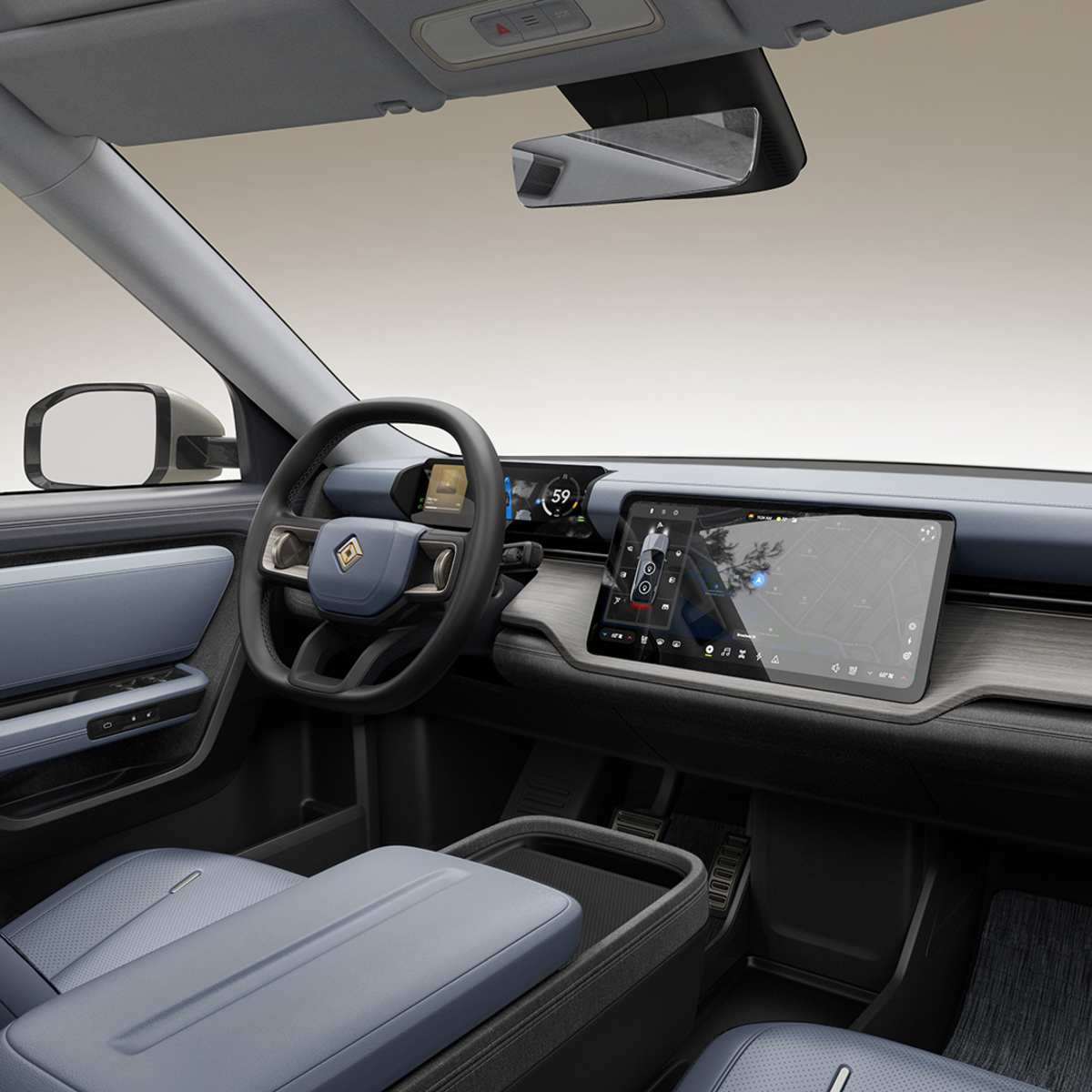
Rivian R2
"The assistant will happen on both R1s and R2 vehicles. Chief software officer, Wasim Benseid, said it would come to every existing Rivian."
Rivian R2 is another electric Rivian model. The key point here is that the same AI assistant is planned to be built into it too.
Rivian R2 is Rivian’s upcoming electric vehicle platform/model line. In this segment, the hosts say the Rivian assistant will be available on R2 as well as the R1s.

Rivian R1S
"The assistant will happen on both R1s and R2 vehicles. Chief software officer, Wasim Benseid, said it would come to every existing Rivian."
Rivian R1s is an all-electric SUV. The hosts are saying Rivian’s new AI assistant will work in this SUV and can connect to apps beyond the car.
Rivian R1s is one of Rivian’s electric SUV models. The segment says Rivian’s assistant (a conversational AI) will be available on the R1s, tying into the vehicle and third-party apps.
Google Gemini
"Separately, Google is now rolling out Gemini to Polestar's and Volvo's, at least in North America, first. So those vehicles run Android Automotive."
Google Gemini is an AI “chat” system from Google. The hosts are saying it’s coming to certain EVs so you can talk to the car more like you’re having a conversation.
Google Gemini is Google’s conversational AI model. The segment says Gemini is being rolled out to Polestar and Volvo vehicles, meaning drivers can use more natural, back-and-forth requests instead of limited voice commands.
Android Automotive
"So those vehicles run Android Automotive. The Polestar 2 was the first vehicle, which you could get running purely on Android back when they first launched that."
Android Automotive is the Android software platform that runs in some cars. It’s what allows apps and AI features (like Gemini) to work inside the vehicle.
Android Automotive is Google’s Android-based operating system used inside some vehicles for the infotainment and app ecosystem. The segment connects it to Polestar and Volvo, explaining why Gemini can be integrated into those cars’ software.

Polestar 2
"The Polestar 2 was the first vehicle, which you could get running purely on Android back when they first launched that. More regions and languages are going to follow."
Polestar 2 is an electric car from Polestar. The hosts are pointing out that it was an early adopter of Android-based software, which makes it a good fit for Google’s Gemini AI.
Polestar 2 is Polestar’s electric liftback sedan and one of the first EVs to offer a more “app-like” infotainment experience. The segment notes it was the first vehicle where you could run purely on Android, which is relevant because Gemini is rolling out on Android Automotive.
command-based voice control
"The update replaces command-based voice control, which works okay, because I've got the Polestar 2. It works all right."
Command-based voice control means you have to speak in specific, pre-set ways for the car to understand you. The hosts say the new system is meant to be more flexible and natural.
Command-based voice control is a voice system that understands a limited set of fixed phrases or commands. The segment says the Gemini update replaces this approach, because conversational AI can handle more varied requests.
multi-turn dialogue
"Drivers can make more complex requests while without memorizing fixed phrases. Gemini supports multi-turn dialogue so it can keep track of context,"
Multi-turn dialogue means the AI can remember what you and it said earlier in the conversation. That helps it understand your next request in context, not as a brand-new question.
Multi-turn dialogue is a conversational AI capability where the system keeps track of earlier parts of the conversation. The segment says Gemini supports multi-turn dialogue so it can maintain context across multiple back-and-forth requests.
destination planning
"In the car, that means trip and destination planning in conversational ways, asking what time Tesco is going to close on my way there."
Destination planning means telling your navigation system where you want to go. The car can then suggest the best route and, for EVs, may also help plan charging stops.
Destination planning is the process of choosing a route and end point with navigation software, often including traffic and timing. In EVs, it can also factor in charging needs so the car can recommend where to stop to keep the battery charged for the trip.
sat-nav
"Although, again, if I'm setting my sat-nav to destination, of course, it's all Google."
Sat-nav is the car’s GPS navigation system. It helps you find where you’re going and can guide you with directions while you drive.
Sat-nav is short for satellite navigation, the in-car system that uses GPS signals to show your location and provide turn-by-turn directions. In EVs and other cars, it’s also commonly used for route and destination planning so the car can estimate arrival time and suggest charging stops when needed.
Google Home
"[1360.0s] But I'm still using a bit of the Google stuff. [1363.2s] We have Google Home and it is really good. [1366.8s] Gemini is really good."
Google Home is a smart-home app/service. The host is saying their car setup can connect with it, likely for voice control and convenience.
Google Home is a smart-home platform that can integrate with connected devices. The host’s mention suggests the car’s ecosystem may work with Google services for voice control and home/assistant-style features.
Android stuff
"[1382.4s] but what about Volvo? [1382.4s] Every car they've made that has the Android stuff in it. [1386.1s] So that since 2020, we'll get it."
“Android stuff” means the car uses Android-like software. That can let the car get new features and improvements over time, like updating a phone.
When the host says “Android stuff,” they’re referring to Android-based in-car software platforms. These platforms enable app-like features and over-the-air updates, so the car’s interface and capabilities can improve after purchase.
National Car Charging
"[1396.9s] And that's your podcast for today. [1398.2s] Thanks to our premium partners, National Car Charging [1400.0s] on the US mainland and the Loha Charge in Hawaii,"
National Car Charging is a company involved with EV charging. They’re mentioned as a sponsor for the show.
National Car Charging is mentioned as a premium partner, indicating it provides EV charging services or related infrastructure. The host’s sponsor callout frames it as part of the EV ecosystem discussed in the episode.
Loha Charge
"[1400.0s] on the US mainland and the Loha Charge in Hawaii, [1402.4s] and Test TV, Avalu's trusted partner [1404.7s] for independent EV battery health testing"
Loha Charge is a company that helps with EV charging in Hawaii. They’re mentioned as a sponsor/partner.
Loha Charge is referenced as a charging-related partner in Hawaii. The mention is about EV charging availability and services rather than a specific vehicle or technical component.
Avalu
"[1402.4s] and Test TV, Avalu's trusted partner [1404.7s] for independent EV battery health testing [1406.6s] in Australia and New Zealand."
Avalu is a company that checks how healthy an EV battery is. That can help you understand battery wear before you buy or after you’ve owned an EV.
Avalu is mentioned as providing independent EV battery health testing. That kind of testing helps assess battery condition beyond what the car’s dashboard may show, which can matter for buying, selling, or maintaining an EV.
trading value
"[1435.2s] get pre-approved for financing, [1437.1s] and estimate trading value. [1439.0s] Advanced, intuitive, and deployed."
Trading value is the price someone offers for your current car if you trade it in. That number can change how much you end up paying for the new car.
Trading value refers to what a dealer or buyer is willing to pay for your current vehicle as part of a trade-in. It’s often estimated using vehicle condition, mileage, options, and market demand, and it can materially affect the final out-the-door price.
Request an Explanation
Heard something you'd like explained? We'll add it to this episode.
Sign in to request explanations for terms you heard.
Want to learn more?
Browse our glossary for plain-English explanations of automotive terms, jargon, and concepts.
Help improve this episode
See something that's not quite right? Our annotations are AI-generated and can sometimes miss the mark. Click the flag icon on any annotation to suggest a correction.