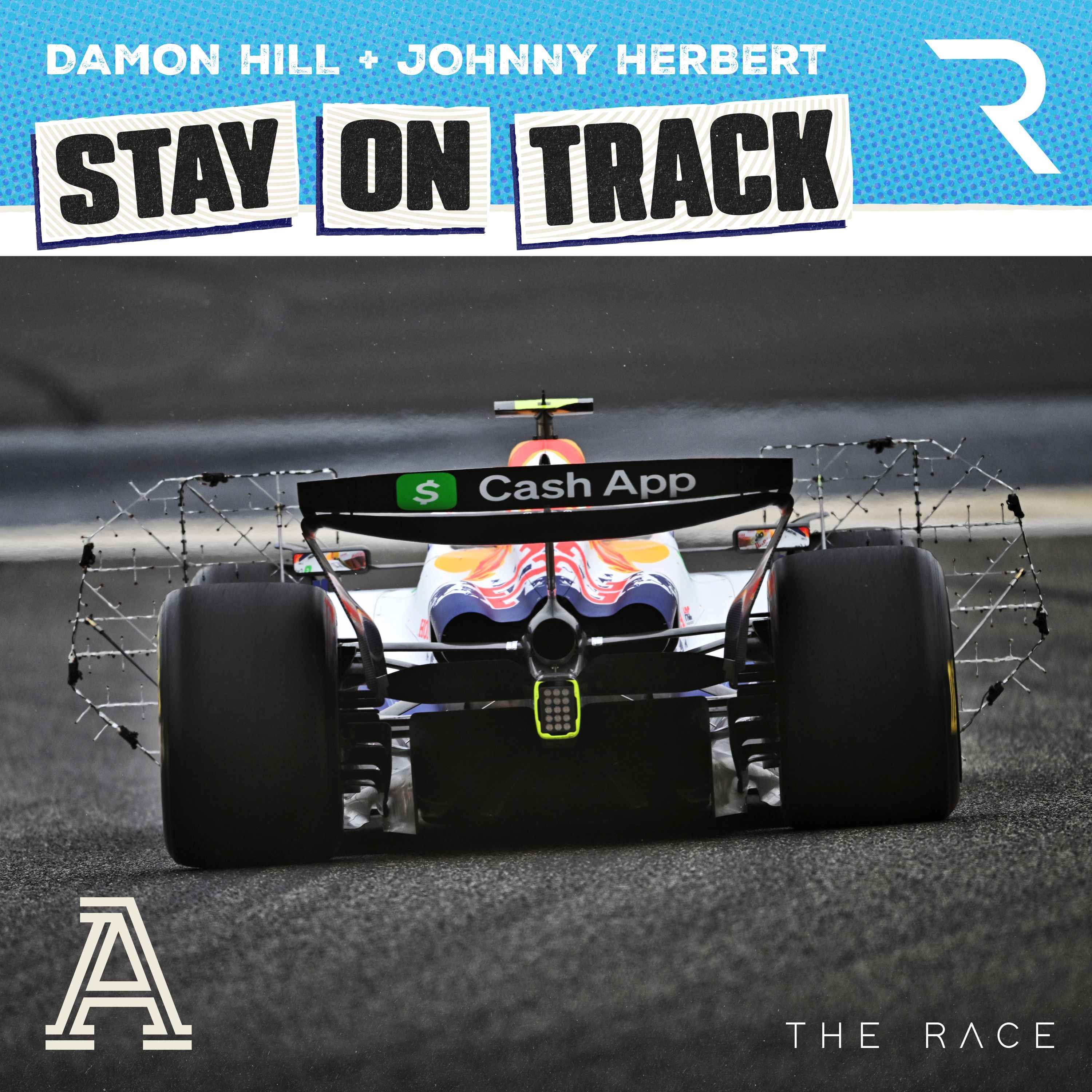
Damon and Johnny on testing secrets and mad car launches
About this episode
Damon and Johnny dive into the behind-the-scenes world of car launches and testing, sharing their personal experiences and anecdotes from their racing careers. They discuss the challenges of marketing in motorsport, including the pressure to create engaging launch events and the sometimes bizarre promotional activities drivers are asked to participate in. With humorous exchanges, they reflect on memorable launches, the evolution of car designs, and the balance between performance and aesthetics in Formula 1. The episode offers a unique glimpse into the intersection of racing and marketing.
With F1 pre-season in full swing, Damon and Johnny return with another episode of Stay On Track, and this time they’re discussing car launches and testing from a driver’s perspective. They share some weird and wacky stories from their own careers, including the time Damon was almost sacked during a car launch and the time Johnny inadvertently found himself part of a space opera! They also discuss how testing has changed over the years, and debate whether the current restrictions on testing have limited opportunities for drivers to experiment with new driving techniques - something that could be a big factor this year, with the new regulations…
Get your 7-day free trial to The Race Members' Club on Patreon today and enjoy bonus F1 podcasts and ad-free listening.
Hosted on Acast. See acast.com/privacy for more information.
Lotus
"...they remember the John player Lotus, you know, and then you get into this discussion about how good they look,..."
Lotus is a car brand from the UK that makes sports cars. They are known for making cars that are very light and fast, often used in racing.
Lotus is a British automotive company known for its lightweight sports cars and engineering innovations. The brand has a rich history in motorsport and is recognized for models like the Elise and Exige.
titanium skid plates
"[1215.4s] Titanium skid plates. [1216.4s] Y ellos creían estos espacios."
Titanium skid plates are tough pieces that protect the bottom of cars from getting damaged. They help keep the car safe when driving on rough roads or trails.
Titanium skid plates are protective components installed on the underside of vehicles to shield them from damage when driving over rough terrain or obstacles. They are lightweight yet strong, making them ideal for off-road vehicles.
Ferrari
"McLaren, Williams, Ferrari, y ahí es Bobbi Throw Benetton en los años 90,"
Ferrari is a well-known Italian car company that makes very fast and expensive sports cars. They are also famous for their success in car racing.
Ferrari is an iconic Italian luxury sports car manufacturer known for its high-performance vehicles and success in Formula 1 racing. The brand is synonymous with speed, luxury, and racing heritage.
McLaren
"McLaren, Williams, Ferrari, y ahí es Bobbi Throw Benetton en los años 90,"
McLaren is a famous car company from the UK that makes fast sports cars and is also a big name in car racing, especially in Formula 1.
McLaren is a British automotive manufacturer known for producing high-performance sports cars and its involvement in Formula 1 racing. The brand has a rich history in motorsport and is recognized for its innovative engineering and design.
Benetton
"McLaren, Williams, Ferrari, y ahí es Bobbi Throw Benetton en los años 90,"
Benetton is a brand that used to have a racing team in Formula 1 and is also known for making clothes. They were successful in racing during the 1990s.
Benetton is a brand that was involved in Formula 1 as a racing team and is also known for its fashion business. The team had notable success in the 1990s, particularly with drivers like Michael Schumacher.
Williams
"McLaren, Williams, Ferrari, y ahí es Bobbi Throw Benetton en los años 90,"
Williams is a racing team from the UK that competes in Formula 1, known for being very competitive and successful in the sport.
Williams is a British Formula 1 racing team known for its competitive history and engineering excellence. The team has won multiple championships and is recognized for its contributions to motorsport.
Tire
"Entonces, necesitas tener el más estrés en el Tire, pero eres el más rápido equipo de ahí."
Tires are the rubber parts of a car that touch the road. In racing, the right tires are very important because they help the car grip the track and go fast.
In motorsport, tires are crucial components that affect a car's performance, handling, and speed. Different types of tires are designed for various conditions and racing strategies, impacting how a car performs on the track.
end plate
"...you've got the end plate and it's just literally a square little end plate, rectangular end plate and these little bits on it..."
An end plate is a flat piece attached to the end of a car's wing that helps control the air moving around it. It makes the car more stable and helps it stick to the track better.
An end plate is a component often found on the wings of race cars, designed to improve aerodynamic efficiency by reducing drag and increasing downforce. It helps to stabilize airflow around the wing and the car's body.
understeer
"...a bit of a Porsche, a bit of a understeer or maybe there's a little bit of an oversteer on the exit, whatever it may be. But you turned in and it literally went down..."
Understeer happens when the front of the car doesn't turn as much as you want it to, making it feel like the car is sliding forward instead of turning. It's like when you try to steer but the car just keeps going straight.
Understeer is a handling characteristic of a vehicle where the front tires lose grip before the rear tires, causing the car to turn less than intended. This often results in the car continuing straight instead of following the desired path during a turn.
oversteer
"...a bit of a Porsche, a bit of a understeer or maybe there's a little bit of an oversteer on the exit, whatever it may be. But you turned in and it literally went down..."
Oversteer is when the back of the car starts to slide out during a turn, making it feel like the car is trying to spin around. It's the opposite of understeer and can be tricky to handle.
Oversteer is a handling characteristic where the rear tires lose grip before the front tires, causing the rear of the car to swing out during a turn. This can lead to a loss of control if not managed properly.
mid-corner
"...it literally went down, it went through the mid-corner, it got to the exit and it was unbelievable..."
Mid-corner is the part of a turn when the car is fully turned and is trying to go through the bend. It's important for keeping speed and control while turning.
Mid-corner refers to the phase of a turn when a vehicle is at its apex, or the point where it is most turned in. This is a critical moment for maintaining speed and control during a corner.
wake
"...when you put lock on the car going under the car and disturbing the downfall."
Wake is the messy air that swirls behind a car as it moves. This can make it harder for the car to stay stable and grip the road.
In aerodynamics, 'wake' refers to the turbulent air that is created behind a moving object, such as a car. This turbulence can negatively affect the performance of the vehicle by disrupting airflow and reducing downforce.
downforce
"...you suddenly got clean air going under the car and the car stuck."
Downforce is what keeps a car glued to the road, especially when going fast. It helps the tires grip better, so the car doesn't slide around in turns.
Downforce is the aerodynamic force that pushes a car down onto the track, increasing traction and stability at high speeds. It is crucial for performance in racing, as it helps maintain control during cornering.
aerodynamicist
"...because I was the only racing driver, not an aerodynamicist. But you know, I've long held the view that if they carried on with those things..."
An aerodynamicist is a person who studies how air moves around things like cars. They help make cars faster and more stable by improving their shape.
An aerodynamicist is an engineer who specializes in the study of how air interacts with moving objects, particularly vehicles. Their work is crucial in optimizing car designs for better performance and stability.
front wings
"But as I said, I don't have the maths to prove it. I don't have the maths, but I would take the front wings off."
Front wings are parts on the front of a race car that help it stick to the ground when going fast. Changing them can change how the car handles turns.
Front wings are aerodynamic components on a race car that help generate downforce, improving grip and stability during high-speed cornering. Adjusting or removing them can significantly affect a car's handling characteristics.
traction control
"But one other thing we discovered, which was talking to Paddy Lowe because I did the development of traction control. And what the traction control does is when you put your foot down, it cuts some of the engine."
Traction control is a feature in cars that helps keep the wheels from spinning too much when you accelerate. It makes driving safer by helping the car maintain grip on the road.
Traction control is a system that helps prevent wheel spin during acceleration by adjusting engine power or applying brakes to specific wheels. This technology enhances vehicle stability and control, especially in slippery conditions.
wheel speed
"Well, it sees wheel speed. So if the wheel starts to overspeed, in other words, you're losing grip with power going through the rear wheels."
Wheel speed is how fast the wheels of a car are turning. It's important for systems that help the car stay stable and not skid when accelerating.
Wheel speed refers to the rotational speed of a vehicle's wheels, which is crucial for systems like traction control to monitor and adjust power delivery. It helps determine if the wheels are slipping or losing grip.
Moog valve
"we basically had a little Moog valve."
A Moog valve is a part used in cars to help control how fluids move, which can be important for systems like traction control that help the car maintain grip on the road.
A Moog valve is a type of control valve often used in automotive applications for managing fluid flow and pressure. In this context, it likely relates to the vehicle's traction control system.
throttle
"No, it was cutting the throttle."
The throttle is a part of the car that controls how much air goes into the engine. When you press the gas pedal, it opens the throttle to let in more air and make the car go faster.
The throttle is a component in an engine that controls the amount of air entering the engine, which in turn regulates engine power and speed. It is typically operated by the accelerator pedal.
Honda That Honda
"...rly a kind of technical challenge. I've just seen that Honda, Watanabe, is saying that maybe we'll struggle. S..."
The Honda That's is a small car that was made by Honda in the 1990s. It's designed to be practical and easy to drive in cities, with a shape that helps it fit into tight spaces. People might talk about it because of its quirky design and how it makes good use of space inside.
The Honda That's is a compact multi-purpose vehicle (MPV) that was produced by Honda in the 1990s. It is known for its unique design and versatility, making it a popular choice in urban environments where space is limited. The car's significance lies in its innovative approach to maximizing interior space while maintaining a small footprint.
flappy wings
"...but having to make this work and learning to drive the car with flappy wings and approaching the strategy of racing per lap..."
'Flappy wings' are parts of a race car that can move up and down to help the car go faster or have better grip on the track. Drivers can adjust them while racing to match the track conditions.
'Flappy wings' refer to adjustable aerodynamic wings on a race car that can change their angle to optimize downforce and drag. This technology allows drivers to adapt their car's performance to different racing conditions.
racing strategy
"...and approaching the strategy of racing per lap, how you utilize these options that you have..."
Racing strategy is the plan drivers and teams use during a race to decide when to change tires, when to refuel, and how to drive to get the best results. It's like a game plan for winning the race.
Racing strategy involves planning how to approach a race, including decisions on tire selection, pit stops, and how to manage speed and fuel throughout the race. It is crucial for maximizing performance and achieving the best possible finish.
lift and coasting
"...if that safety car doesn't come out, they have to ease off and do a bit of lift and coasting to save the fuel."
Lift and coasting means letting off the gas pedal and letting the car roll instead of speeding up. Drivers do this to save fuel, especially during races when they need to be careful about how much fuel they have left.
Lift and coasting is a driving technique used to save fuel by easing off the throttle and allowing the car to coast instead of accelerating. This method is often employed during races when fuel conservation is critical, especially when the strategy involves a safety car.

Williams FW18
"No, the championship car, the FW18. I jumped in, I just knew that was a great car. It was just immediately fantastic."
The Williams FW18 is a famous racing car from Formula 1, used in the 1996 season. It was very successful and helped its driver win the championship.
The Williams FW18 is a Formula 1 car that competed in the 1996 season. It was known for its strong performance and was driven by notable drivers like Damon Hill, who won the World Championship that year.
wet races
"The logic was wet races are exciting. And that's because there's less grip. So if we made the tyres have less grip, the cars will be more exciting because the drivers would slide around a bit more."
Wet races happen when it rains during a race, making the track slippery. This can change how cars handle and how drivers need to drive.
Wet races refer to motorsport events that take place on a wet track, typically due to rain. These conditions can significantly affect tire performance and grip, making the race more challenging for drivers.
grip
"And that's because there's less grip. So if we made the tyres have less grip, the cars will be more exciting because the drivers would slide around a bit more."
Grip is how well the tires stick to the road. More grip means the car can go faster and turn better without sliding.
Grip refers to the friction between the tires and the road surface, which affects a car's ability to accelerate, brake, and corner effectively. Higher grip means better control and stability, especially in racing.
slip angle
"the way that you can have more slip angle on the tyre"
Slip angle is how much a tire is turned compared to where it's actually going. It helps explain how cars can slide when they turn too fast.
Slip angle is the angle between the direction a tire is pointing and the direction it is actually moving. It is crucial for understanding how a car behaves during cornering, especially at the limit of grip.
Request an Explanation
Heard something you'd like explained? We'll add it to this episode.
Sign in to request explanations for terms you heard.
Want to learn more?
Browse our glossary for plain-English explanations of automotive terms, jargon, and concepts.
Help improve this episode
See something that's not quite right? Our annotations are AI-generated and can sometimes miss the mark. Click the flag icon on any annotation to suggest a correction.