Dario Franchitti, a three-time Indy 500 winner, shares insights from his illustrious racing career and his passion for high-performance road cars in a live podcast recorded in London. He discusses the challenges of driving at over 200 mph, the intricacies of racing strategy, and his transition from IndyCar to NASCAR. Franchitti reflects on his love for cars, his work with Gordon Murray Automotive, and the thrill of driving classic vehicles. The episode is filled with engaging anecdotes and a deep appreciation for the art of driving.
Dan Prosser and Andrew Frankel are joined by IndyCar legend Dario Franchitti in this live podcast in partnership with car finance specialist JBR Capital. They ask Dario about his stellar racing career, during which he won four IndyCar championships and three Indy 500s, making him Britain's most successful motor racing export.
Other topics include the horrifying crash that ended Dario's professional racing career prematurely and the lasting consequences of it, plus Dario's love of high-performance roads cars, including the Ferrari F40 and Porsche Carrera GT that are the centrepieces of his eclectic collection, and the work he does developing some of the best hypercars in existence with Gordon Murray Automotive.
Find out more about JBR Capital here – https://www.jbrcapital.com
Finance is subject to status. Terms and conditions apply. JBR Capital Limited is authorised and regulated by the Financial Conduct Authority. Firm reference number 682493.
"...the great Dario Franchitti. We talk about his stellar professional racing career..."
Dario Franchitti is a famous race car driver from Scotland who won the Indy 500 three times and has many championships in racing.
Dario Franchitti is a retired Scottish racing driver, known for his success in IndyCar racing, including three wins at the Indianapolis 500 and multiple championships.
"...his love of high performance road cars, and the work he does with Gordon Murray Automotive. Please enjoy the episode..."
Gordon Murray Automotive is a car company that makes very fast and light cars, focusing on innovative designs and technology.
Gordon Murray Automotive is a manufacturer known for creating high-performance vehicles, particularly the T.50 supercar, which emphasizes lightweight design and advanced engineering.
"...motorsport greatness. Three Indy 500 wins, four IndyCar championships..."
IndyCar is a racing series in the U.S. where cars with open wheels race on different types of tracks, including oval tracks like the Indy 500.
IndyCar is a type of open-wheel racing series in the United States, known for its high-speed races on various tracks, including ovals and road courses.
"...motorsport greatness. Three Indy 500 wins, four IndyCar championships..."
The Indy 500 is a famous car race that happens every year in Indianapolis, where cars race for 500 miles. It's a big deal in the racing world.
The Indy 500 is one of the most prestigious automobile races in the world, held annually at the Indianapolis Motor Speedway, featuring open-wheel cars competing over 500 miles.
"...this month of May, this Indianapolis 500, it's just a microcosm of that. And it's so bloody difficult to win."
The Indianapolis 500 is a famous car race that takes place every year. It's known for its long distance of 500 miles and very fast cars that can go over 200 miles per hour.
The Indianapolis 500, often referred to as the Indy 500, is one of the most prestigious automobile races in the world, held annually at the Indianapolis Motor Speedway. It is part of the IndyCar Series and features cars racing 500 miles at high speeds, often exceeding 200 miles per hour.
"...you are doing an average of well over 200 miles an hour for 500 miles. Does that ever feel normal when you're in the car?"
200 miles per hour means that a car can travel 200 miles in one hour if it goes that fast the whole time. It's a very high speed, especially for racing cars.
200 miles per hour is a measurement of speed that indicates how far a vehicle travels in one hour at that pace. In racing, achieving such speeds is a testament to the engineering and performance capabilities of the race cars.
"...there were several different stages of the whole thing. Qualifying, your average speed is something like 233 miles an hour in qualifying."
Qualifying is when drivers try to set their fastest lap times before a race. The better their time, the better their starting position in the race, which can help them win.
Qualifying is a session in motorsport where drivers compete for the best lap times to determine their starting positions for the race. It's crucial because a good starting position can significantly impact a driver's chances of winning.
"...it starts to get the vertical load and then you can start putting a little bit of lock in. And the whole way around those four laps..."
Vertical load is how much weight is on the tires when a car is turning or speeding up. It affects how well the car grips the road and handles turns.
Vertical load refers to the weight that is transferred to the tires during cornering or acceleration, affecting grip and handling. Adjusting the vertical load can help optimize a car's performance on the track.
"...Sterling Moss used to say this when he was driving around Goodwood. He had enough mental space left that he could see a friend in the crowd and wave to them. But he wasn't doing 200, he was like doing..."
Goodwood is a well-known racetrack in England where many car events take place. It's famous for its history and the exciting races that happen there.
Goodwood is a famous motorsport venue in the UK, known for hosting various events including the Goodwood Festival of Speed and Goodwood Revival. It features a historic racing circuit and is a popular location for car enthusiasts and racing fans.
"I'll give you an example. Formula 1 on the road courses, it's a lot of compromise in the setup because somewhere like Silverstone, the slowest corners, 50 miles an hour, the fastest corners, 180 miles an hour."
Formula 1 is a top-level car racing series where teams race high-performance cars on tracks around the world. It's known for its speed and advanced technology.
Formula 1 is a premier international auto racing sport known for its high-speed cars and competitive races on various circuits. The sport emphasizes technology, engineering, and driver skill, with teams competing for the World Championship.
"... how it affects it. And then, as I said, then the wind gets involved and that completely screws it up an..."
The Renault Wind is a small car that you can take the roof off of, making it fun to drive outside. It's designed to be stylish and enjoyable for people who want a sporty feeling without spending too much money.
The Renault Wind is a compact convertible sports car that was produced in the early 2010s, known for its unique design and fun driving experience. It features a retractable roof, allowing for an open-air experience, and is aimed at those looking for an affordable yet stylish car. Discussions about the Wind often center around its quirky design and driving enjoyment.
"Is there any bit of you... I mean, you were offered a test in a Formula One car. I have no doubt at all that you could have had an amazing career in Formula One."
Formula One is a top-level car racing series where drivers compete in fast cars on special tracks. It's famous for its exciting races and high-tech vehicles.
"McLaren are going to send the MP4/10. But I tested that car, and then I was offered a job as a test driver..."
The McLaren MP4/10 is a race car used in Formula One racing during 1995. It was designed to be fast and efficient on the track.
The McLaren MP4/10 is a Formula One car that competed in the 1995 season. It was known for its advanced aerodynamics and competitive performance during that era.
"Those late 90s, mid and late 90s Formula One cars with V10 engines were so small, so light..."
A V10 engine is a type of car engine that has ten cylinders arranged in a V shape. It's known for being powerful and is often used in fast cars.
A V10 engine is a ten-cylinder engine arranged in a V configuration. This type of engine is known for its high power output and smooth operation, making it popular in high-performance vehicles, particularly in motorsport.
"And that Cosworth engine was going to like 19,000 RPM? Some of them were, some of them were really good, some of them were average..."
A Cosworth engine is a type of high-performance engine used in racing cars. It's known for being able to spin very fast, which helps the car go faster.
The Cosworth engine refers to high-performance engines developed by Cosworth, a British engineering company known for its expertise in motorsport. These engines are famous for their high RPM capabilities, often exceeding 19,000 RPM in racing applications, which allows for exceptional power output.
"And also places like Monaco, it's the only race on the calendar where Saturday is more interesting than Sunday..."
The Monaco Grand Prix is a famous car race that takes place in Monaco. It's known for being very difficult to pass other cars because the track is narrow and winding.
The Monaco Grand Prix is one of the most prestigious automobile races in the world, held annually on the streets of Monaco. It is known for its challenging circuit, tight corners, and the difficulty of overtaking, making it a unique event in the Formula 1 calendar.
"I can believe it. Bigger than Le Mans? Yeah, it is. But they're all in that sort of quite tight stadium."
Le Mans is a famous car race that lasts for 24 hours. It's known for its challenging course and the endurance of the cars and drivers.
Le Mans refers to the 24 Hours of Le Mans, one of the most prestigious endurance races in the world, held annually in France. It features teams racing for 24 hours straight, testing both speed and durability of the cars.
"...I walked out what they call Gasoline Alley into the, you go through Gasoline Alley into the circuit itself."
Gasoline Alley is a part of the Indianapolis Motor Speedway where race cars are kept and worked on before and during the race. It's an important area for the teams.
Gasoline Alley is a famous area at the Indianapolis Motor Speedway where teams prepare their cars and where the pit stops occur during the Indianapolis 500 race. It's a key part of the racing experience.
"...you realised it was an error to switch from IndyCar to NASCAR the first time you pulled out of the pits, and the car was dreadful. True story, yeah..."
NASCAR is a type of car racing that uses specially built cars that look like regular cars. Most races happen on oval tracks, and it's very popular in the U.S.
NASCAR (National Association for Stock Car Auto Racing) is a popular stock car racing series in the United States, featuring races primarily on oval tracks. The cars are modified versions of production vehicles and are known for their close racing and high speeds.
"although I did buy an aeroplane instead of a McLaren F1, but that's a different story."
The McLaren F1 is a famous sports car from the 1990s. It's known for being very fast and has a unique design with a central driving position.
The McLaren F1 is a legendary supercar produced in the 1990s, known for its innovative design, lightweight construction, and powerful BMW-sourced V12 engine. It was once the fastest production car in the world and remains highly sought after by collectors.
"and I thought, I want to try NASCAR. And I got in the car at Talladega."
Talladega is a well-known racetrack in Alabama where NASCAR races take place. It's famous for being very fast and exciting.
Talladega refers to the Talladega Superspeedway, a famous NASCAR racetrack located in Alabama. It is known for its high-speed races and is one of the largest and most prestigious tracks in the NASCAR circuit.
"To start with, street courses, because I'd done a lot of it in the DTM over in Germany."
DTM is a car racing series in Germany where modified cars race against each other. It's famous for exciting races and skilled drivers.
DTM, or Deutsche Tourenwagen Masters, is a touring car racing series based in Germany, featuring modified production cars. It is known for its close racing and high level of competition.
"Since your accident and your recovery, you've been racing again in historic cars, places like Goodwood, places like Spa. Is that actually the most fun a racing driver can have?"
Historic cars are older cars that are usually at least 30 years old. People often race them or show them off because they have a lot of history and are interesting to see.
Historic cars refer to vehicles that are at least 30 years old and are often preserved or restored for racing or exhibition purposes. They are celebrated for their engineering, design, and the history they represent in motorsport.
"...when the wheel fell off an E-type, but that's a different story. But yeah, I love it. I love doing it."
The E-type is a classic sports car made by Jaguar. It's famous for its elegant design and was very popular in the 1960s. Many people still admire it today for its beauty and speed.
The Jaguar E-type is a British sports car that was produced from 1961 to 1975, known for its stunning design and performance. It is often regarded as one of the most beautiful cars ever made.
"Unfortunately, I also put a dent in the car in the first stage. But it was a Vauxhall Firenza, people of a certain age."
The Vauxhall Firenza is a car that was made in the UK during the 1970s. It was popular for its sporty look and was sometimes used in races.
The Vauxhall Firenza is a classic British car that was produced in the 1970s. It is known for its sporty design and performance, often modified for racing or rallying.
"But it had a six litre Chevy V8 in it. It wasn't a shy horse."
The Chevy V8 is a type of engine made by Chevrolet that has eight cylinders arranged in a V shape. It's known for being powerful and is often used in fast cars.
The Chevy V8 refers to a series of V8 engines produced by Chevrolet, known for their power and performance. These engines are commonly used in various performance and muscle cars.
The Daytona 24 is a long car race that lasts for 24 hours, held at a famous track in Florida. Cars race around the track, and the team that goes the farthest wins.
The Daytona 24, or 24 Hours of Daytona, is an endurance race held annually at Daytona International Speedway in Florida. It is one of the premier endurance races in the United States, featuring a mix of sports cars and prototypes.
Horsepower is a way to measure how powerful an engine is. The more horsepower a car has, the faster it can go.
Horsepower is a unit of measurement for power, commonly used to describe the power output of engines. In this context, it indicates the performance level of the Raynard Honda.
"Yeah, I think I've seen you race at the members meeting in a GT40. Yeah, yeah."
The Ford GT40 is a famous race car that won many races in the 1960s, especially against Ferrari. It's known for being fast and well-designed.
The Ford GT40 is a legendary race car known for its success at the 24 Hours of Le Mans in the 1960s. It was designed to compete against Ferrari and is celebrated for its performance and engineering.
"...of the Levant Strait was 186 in the Gordon Murray T50S track car. I was on for a 105 lap."
The Gordon Murray T.50 is a super-fast sports car made by a famous car designer. It’s special because it’s very light and has a powerful engine, making it really exciting to drive.
The Gordon Murray Automotive T.50 is a cutting-edge supercar designed by renowned automotive engineer Gordon Murray, known for its lightweight construction and exceptional performance. It features a naturally aspirated V12 engine and a unique fan system that enhances aerodynamics, making it a standout in the modern supercar market. Discussions about the T.50 often focus on its innovative design and engineering principles.
"...tal. For the thrill seekers, the adventurers, the trailblazers. Bespoke finance for luxury, classic and supercar..."
The Chevrolet TrailBlazer is a type of SUV, which is a bigger car that can carry more people and stuff. It's good for families and people who like to go on adventures because it has a lot of space and can handle rough roads.
The Chevrolet TrailBlazer is a midsize SUV that offers a balance of utility and comfort, making it a popular choice for families and adventurers alike. Known for its spacious interior and capable performance, the TrailBlazer has been a versatile option in Chevrolet's lineup. It is often discussed for its practicality and off-road capabilities.
"...o have. We all saw, I'm sure a lot of you saw his F40 getting crashed. By the technician of the Monaco ..."
The Ferrari F40 is a very famous and fast sports car that was made a long time ago. It's loved by car fans because it looks cool and drives super fast, making it a special car in Ferrari's history.
The Ferrari F40 is a legendary supercar produced in the late 1980s and early 1990s, celebrated for its raw performance and minimalist design. It was the last car personally approved by Enzo Ferrari and is often regarded as one of the greatest Ferraris ever made. Discussions about the F40 often focus on its iconic status and thrilling driving experience.
"...I mean, I was seven years old when my dad got his 911 turbo. And as my mother points out, it cost twice what ..."
The Porsche 911 Turbo is a fast and fancy sports car that many people admire. It has a powerful engine that helps it go really fast, and it's known for being very well made and fun to drive.
The Porsche 911 Turbo is a high-performance variant of the iconic 911 sports car, known for its powerful turbocharged engine and all-wheel-drive system. It represents a blend of luxury and performance, making it a significant model in Porsche's lineup and a favorite among enthusiasts. Its legacy and performance capabilities often lead to discussions about automotive excellence.
"...hinking. But from, I've driven a 1914 Rolls-Royce Silver Ghost. I loved it."
The Rolls-Royce Silver Ghost is a very old and luxurious car that was made over a hundred years ago. It's famous for being really well made and is considered one of the best cars from its time, showing how luxury cars have changed.
The Rolls-Royce Silver Ghost is a historic luxury car produced in the early 20th century, renowned for its craftsmanship and engineering excellence. Often considered one of the best cars of its time, it set the standard for luxury vehicles and is a significant part of automotive history. Discussions about the Silver Ghost often focus on its legacy and the evolution of luxury cars.
"And he said, you're not. Anyway, it was a Mark II Golf GTI I ended up with. And it got nicked."
The Volkswagen Golf GTI is a fun and sporty version of a regular car called the Golf. It's popular because it’s easy to drive and has a lot of power, making it exciting for people who enjoy driving.
The Volkswagen Golf GTI is a sporty version of the popular Golf hatchback, known for its agile handling and peppy performance. It has a strong following due to its practicality combined with a fun driving experience, making it a staple in the hot hatch segment. The GTI is often discussed for its balance of everyday usability and spirited driving.
"... you're right. And then I swapped it for a yellow Testarossa. Okay, so a big mistake to a not quite so big mis..."
The Ferrari Testarossa is a famous sports car that looks very cool and is really fast. It was popular in the 1980s and 1990s and is still admired today for its unique style and powerful engine.
The Ferrari Testarossa is an iconic sports car produced in the 1980s and 1990s, known for its distinctive design and powerful flat-12 engine. It became a symbol of luxury and performance, often associated with the high-octane lifestyle of its era. The Testarossa is frequently discussed for its cultural impact and timeless appeal.
"...ving that thing. And then I swapped that in for a 355 Spider, which I still own. Bought that new."
The Ferrari 355 Spider is a fancy sports car that you can drive with the top down, making it fun to feel the wind while driving. It’s known for being fast and stylish, and many people love it for the exciting experience it offers.
The Ferrari 355 Spider is a convertible version of the 355 series, celebrated for its combination of performance and open-air driving experience. Launched in the mid-1990s, it features a V8 engine and a sleek design that captures the essence of Italian sports cars. Discussions about the 355 Spider often highlight its driving enjoyment and classic Ferrari styling.
"...ing soon, but it's the car that wouldn't. No, the Carrera GT was in there for a minute of that. It is, right."
The Porsche Carrera GT is a really fast and special sports car made by Porsche. It has a powerful engine and is made from lightweight materials, which helps it go super fast and handle well on the road.
The Porsche Carrera GT is a high-performance supercar known for its exceptional engineering and driving dynamics. Produced in the early 2000s, it features a powerful V10 engine and a lightweight carbon fiber body, making it a standout in Porsche's history. It is often discussed for its rarity and the driving experience it offers.
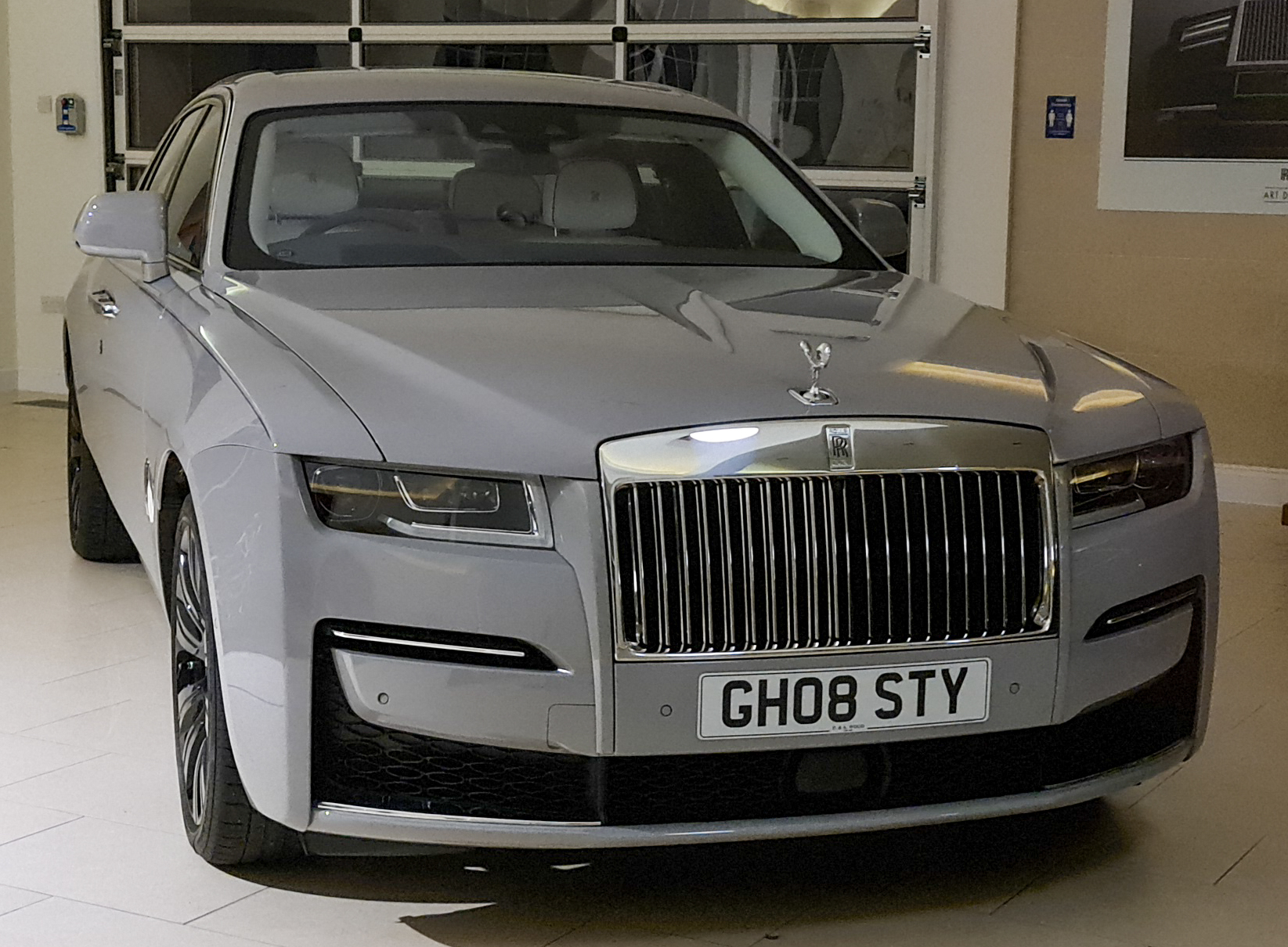
"...ch man called Niels, who designed the Rolls Royce Wraith shooting brake. And a company called Carat, who d..."
The Rolls-Royce Wraith is a very fancy car that looks beautiful and is really powerful. It's designed for people who want to drive in style and comfort, making it a popular choice for luxury car lovers.
The Rolls-Royce Wraith is a luxury grand tourer known for its elegant design and powerful performance. It combines classic Rolls-Royce craftsmanship with modern technology, offering a comfortable and dynamic driving experience. The Wraith is often discussed for its blend of luxury and sportiness, appealing to those seeking a high-end driving experience.
"...y a few words. Can we please just have a round of applause for Darren?"
The Daihatsu Applause is a small car that was made a long time ago and is known for being cheap and reliable. It’s not very famous, but it’s a good choice for people looking for an affordable car.
The Daihatsu Applause is a compact car that was produced in the 1990s, known for its practicality and affordability. While not as well-known as other models, it offered a reliable option for budget-conscious consumers. Discussions about the Applause may focus on its value and the lesser-known aspects of automotive history.
Select text to request an explanation
Welcome back to the Intercooler podcast everybody, and it's a special one this week, recorded
a couple of weeks ago at a glitzy event in London, hosted by our car finance partner
JBR Capital. The team at JBR Capital very kindly invited Andrew and I along to record
a live podcast with the great Dario Franchitti. We talk about his stellar professional racing
career, his love of high performance road cars, and the work he does with Gordon Murray
Automotive. Please enjoy the episode and if you want to know more about JBR Capital, check
out the link in the description.
So, ladies and gentlemen, we are in the presence of motorsport greatness. Three Indy 500 wins,
four IndyCar championships. I think that's enough to make Dario, in my view, one of Britain's
greatest, most successful racing drivers. Is that fair?
Yeah, I mean, probably our greatest motor racing expert.
Thank you, thank you. I like this. So, we're so pleased that you're here, Dario. It's great
to talk. If I had to steal away from you one Indy 500 win or one IndyCar championship,
which are you going to give up?
I'll tell you what I would do. I'd give, you could have a couple of championships if you
give me another Indy 500.
So this is the point I'm getting at. The Indy 500, to a racing driver like you, is bigger
than the entire IndyCar series, isn't it?
It means more, yeah. And we've had this discussion, you know, a championship season is every lap,
every race counts. People always talk about the last races, you know, with Lewis, Max
Verstappen thing. But it's the first lap of the first race counts as much as the last
lap of the last race. And every person on that team, from the person that builds the
engine to the guy driving the car, whatever it is, has to do the job perfectly. But then
this month of May, this Indianapolis 500, it's just a microcosm of that. And it's so
bloody difficult to win.
So you're doing the Indy 500. So to everybody in here, you are doing an average of well
over 200 miles an hour for 500 miles. Does that ever feel normal when you're in the car?
Do you get to a place in your head where, you know, we are seeing cars going around
over 200 miles an hour, which is an unimaginable speed to most of us, but you're just in there
doing your job. Does it feel normal? Or is it always, are you always just on the edge?
And I mean, how does it feel?
You've always got to respect for it. I always had a respect for it. And as soon as I didn't,
I always felt a bad thing was going to happen. But there were several different stages of
the whole thing. Qualifying, your average speed is something like 233 miles an hour
in qualifying.
Average?
Average. So you're banking along at 240 something as you turn into turn one. And if the wind's
behind you, you're backing it in like a bike.
No you're not.
And you're absolutely terrified to turn the wheel. And so you come down and you've got
to do four laps, four lap average. And so you just fade the car in.
And so do you gear the car for the wind?
Oh yeah.
So you have one gear for one straight and another gear for the other straight?
Depends how strong the wind is and which direction it's coming from. It's all very complicated
in Indianapolis with stuff like that. But you see you're backing this thing in and then
it starts to get the vertical load and then you can start putting a little bit of lock
in. And the whole way around those four laps, you're making minute adjustments in the car
and you're on the absolute ragged edge, the tightest of tightropes. That's one level.
But then in the race, it's more about the other cars around you and the speed. Unless
something goes wrong, I will say to you, 200 and whatever miles an hour, something goes
wrong it feels, all of a sudden it feels bloody quick.
I'll just speak from experience on that one. But you, yeah, the speed becomes normal to
the point you're picking up ridiculous levels of detail. And sometimes when you're doing
a lot of maybe testing, you'll be driving along and you go, oh, there's somebody in
the grandstand with a red jacket on. You shouldn't really be looking at that, but you pick up
this level of tiny detail.
I can remember Sterling used to say this when he was driving, Sterling Moss used to say
this when he was driving around Goodwood. He had enough mental space left that he could
see a friend in the crowd and wave to them. But he wasn't doing 200, he was like doing
half that speed.
But your brain speeds up. This is the thing. The first time I drove on a super speedway,
I went out of the pits and got up to somewhere north of 240 miles an hour. And I was looking,
if you imagine, there, I don't know, 150 yards ahead. All of a sudden I realised my brain
couldn't compute it quickly enough and I had to look 300 yards ahead. And then your brain
just gets used to it. It's a muscle, isn't it? And it just gets, with repeated use of
that speed, you start computing things so, so quickly that you then have time to do all
of the things you start calculating, even strategy in the car. And you're thinking about
what the car is doing, how it's sliding around, what you need to do to fix it. There's this
sort of mental data recorder going on as well.
I'll give you an example. Formula 1 on the road courses, it's a lot of compromise in
the setup because somewhere like Silverstone, the slowest corners, 50 miles an hour, the
fastest corners, 180 miles an hour. It's braking, you're up and down through the gears. With
an Indy car, you would do those type of tracks, you would do street courses, and then you
would do short ovals, 0.75 miles a mile long, and then you'd do super speedways. When you're
on a super speedway, the car is only designed to really work between 215 and 245 miles an
hour and turn left, not brake, not even drive in a straight line. The bloody thing feels
terrible in a straight line. And it's only designed to do that. And because of that,
there's no compromise. So then the tightrope gets really, really narrow. And you're just
this gust of wind, a change in temperature, and it can completely screw the whole thing
up.
So if you're driving in a straight line, it's still trying to turn, isn't it?
Yeah, so you've got to turn right on the straight.
That's so strange.
It's weird.
So Indy is a super speedway. It's a big oval. Is it four corners, essentially?
Very much four corners.
And they're not quite the same?
No. And you would think turns one and three would be exactly the same. They're not. And
we've now scanned it because of advances in technology. We've scanned it to such a degree
we can actually tell when it's running downhill, the shape of the banking, how the banking
comes on, how it affects it. And then, as I said, then the wind gets involved and that
completely screws it up and changes it again. So you could be testing all month, and the
wind's coming out the west, and your car feels great, and you're thinking, here we go, qualifying's
coming, look out. And you wake up on pole day, and the wind's coming out of the east.
And all of a sudden, it's a complete bag of bolts.
That is extraordinary. What do people not understand about driving an oval like Indy?
To me, it looks like the cars are planted, like they're stuck. But actually, are they
sliding through all those corners?
Yeah. Actually, my brother Marino and I, my brother was a racing driver too, he's kind
of retired like me now. And we were talking about it the other day, and we would watch
it, and I'd say, look at that moment he had, and he's going, what? Because, again, you're
working in such fine margins that the other car's sliding just ever so slightly. And you
do all this preparation and you make the car so it's perfectly balanced and all this stuff.
And that's probably true for about 90% of the race, and there's 10% you've just got
to hang on. And you're actually sliding it around like you would on a normal track.
But you're just doing a speed over.
So you can look at somebody's in-car, and you can see stuff which we wouldn't be able
to see. And you'll be able to say, he's had a bit of a whoopsie there. And it'll just
be a fractional move on the steering wheel.
Yeah. I mean, somewhere like Indianapolis, you probably put about that much lock in,
and then that is a massive...
And that's like a big...
That is the equivalent of that.
That's all of that, isn't it?
Yeah.
But that's right. But the consequences of getting that correction, that catch, just
a little bit right, you're off into the wall.
Yeah. I mean, to hit a wall at somewhere like Indianapolis, a proper hit somewhere north
of 100, 110 G's, and it really hurts.
It really hurts.
It bloody hurts a lot. To the point, actually, most of the times I've hit the wall there,
I don't remember hitting the wall because you end up with such a concussion and a brain
injury that you're... Yeah. Which is actually a good thing, to get back in the car because
you don't remember how much it hurt.
Is there any bit of you... I mean, you were offered a test in a Formula One car. I have
no doubt at all that you could have had an amazing career in Formula One. Is there any
bit of you which looks back now and goes, what if? Or if only... Or are there any regrets
at all? Or are you just someone who's clearly achieved so much on that side of the Atlantic
that it more than makes up for anything?
There's always regrets, Andrew, isn't there? And I got the opportunity... In 95, I tested
the McLaren, which they're sending to Amelia Island for me. I'm doing the Amelia next year.
I'm the guest of honour or something, and they're sending a bunch of old cars. McLaren are going
to send the MP410. But I tested that car, and then I was offered a job as a test driver
at McLaren, and that's when they were doing three days testing a week. So I was going
to test during the week. This will show how long ago it was. Then I'd fly back and forwards
on Concord to the IndyCar races. So I'd test Monday, Tuesday, Wednesday at Jerez or something.
They'd fly me back to Heathrow. I'd jump on the Concord. I'd fly back. I'd race Thursday,
Friday, Saturday, Sunday, and then repeat the trip. This was the deal that was offered
from Ron. I wanted to stay. I wanted to do Formula One. The opportunity didn't come.
I went to America. Mercedes put me in that position. Actually, with Paul Morgan from
Wilmore was a big factor in that. First, get to America, and I get a phone call saying,
hey, Ron wants to see you. So that's when that opportunity came up. But I never did
it. Then I did a test for Jaguar in 2000, and there was actually a long-term contract
had to be signed before I was allowed to test. So I had a contract with Jaguar if the test
went well, but I would become the driver of the Jag. But I had crashed at the start of
the season, and I'd broken my pelvis, and I'd really damaged my brain on an oval. Really
bad. It took me probably five, six years to get over it. So when I tested the Jaguar,
I was not in any way proper form. Also, I showed up there, and it was clear those people
on the team didn't want me there anyway. So I got back on the Concord and went home, back
to America.
When you have tested Formula One cars, tested them or just driven them for fun, I know you
have done up the hill at Goodwood, doesn't really count, but when you sampled F1 machinery,
what has been the lasting impression from those cars compared to the stuff that you're
used to racing?
Those late 90s, mid and late 90s Formula One cars with V10 engines were so small, so light,
and so responsive, and just unbelievable. I remember driving that Jaguar in Silverstone
thinking, I'd like to swear on this podcast by the way, thinking, how can this car be
so shit? It feels so good. The change of direction, it was absolute crap. I tried to buy one recently
just to crush it. It was that bad, but it was incredible.
And that Cosworth engine was going to like 19,000 RPM?
Some of them were, some of them were really good, some of them were average, and I didn't
know which ones, the whole thing was a mess. But even the crap ones were good. And I think
they've lost their way a bit now with F1, the cars are just so big, so heavy.
They look stiff now as well, don't they?
They do.
And also places like Monaco, it's the only race on the calendar where Saturday is more
interesting than Sunday, because Sunday is a foregone conclusion, isn't it? Because you
literally can't overtake.
But you think about it, the tracks are the same size they were in the 60s and the 70s,
the same width. And the cars are...
Twice the size?
They're huge, and that really, as a race fan, that upsets me. The Indy cars have always
been a bit bigger than an F1 car was at that point, because they had to dissipate so much
energy in the event of a crash. Now the F1 car is physically bigger, and it's all wrong.
Can I ask you, your career was...
Sorry, to answer your final question as well, the only time I've ever really felt that I
was... I wished I'd done it. I didn't want to show up in F1 and say, I was an F1 driver,
you know. No bloody interest, no interest, I wanted to win whatever I was doing. But
then Johnny Herbert and I were at Silverstone for the young driver competition, we were
both judges.
The Autosport?
And we were both limping up the stairs to go back across to the hotel. And there was
a big picture of Johnny having won the British Grand Prix in the Benetton, and he's on the
podium. And I just thought, I would have loved to have raced my home Grand Prix.
Yeah, but come on, you won the Indy 500 three times. Can you give us a sense of how big
that event is? What is the scale of it?
350,000 people in one place. What's bigger than that, as opposed to that?
Is that the most attended, organised event in the US?
The biggest single day sporting event in the world, that's the thing they always say.
I can believe it. Bigger than Le Mans?
Yeah, it is. But they're all in that sort of quite tight stadium.
A third of a million people.
When I did it, when I was competing, I would never see any of it though, I'd never get
involved, because my job was to control my emotions. My job was to drive that race like
there was nobody in the stands. So I would completely switch myself off from the whole
thing. And then the first year I retired, my mum came to the race with me, because I
was driving the pace car, and my dad came to all my races. But they came with me and
I walked out what they call Gasoline Alley into the, you go through Gasoline Alley into
the circuit itself. And because I think because I'd hurt myself and everything, the reaction
from the crowd was quite nice. But all of a sudden, I saw it for the first time. I saw
this event, and all the things that go along with it. And it was mind blowing.
I'm sure.
One year, they had B2 bombers as the flyover.
Not the Red Arrows?
No, you're just thinking, Oh, my God.
Can I just ask about, you retired after a major accident. We were talking to your friend,
Jason Plato, last week, who retired out of choice. He decided that he'd had enough, done
it for long enough. And then he was very honest and talked about how he'd struggled about
not being a racing driver anymore, because it had come to define him. And as I said,
he did that out of choice. You didn't. You had your career taken away from you. How did
you get on with not being a racing driver anymore? Did you struggle with it? Were you
okay with it? Were you able to turn your back on it?
I was not. I was actually just happy I was alive, because of the severity of the accident.
So I didn't really have time to be, Oh, God. And I got to, I remember there was a point
I was at home, up in Scotland, kind of sitting there drooling. And it was, I'm going to make
fun of it, but it was pretty bad. And I thought I can either be really pissed off that this
has ended, or I can just look at all the really cool stuff I got to do that I never thought
I would. And that's the route I chose to take. And I got, and I managed, and I just sort of
threw myself into the next part of life.
For those who don't know, Dario's top flight racing career did come to an end early, when
he had an accident in 2013 at Houston that was not his fault. But before that, I think
you had won your first IndyCar championship, and you made a switch, but only for a year.
And I think you've told me in the past that you realised it was an error to switch from
IndyCar to NASCAR the first time you pulled out of the pits, and the car was dreadful.
True story, yeah. So, and my friend Jimmy Johnson, he won seven NASCAR championships,
and he did it the other way, and he was as crap in IndyCar as I was in NASCAR.
So yeah, I won my first Indy 500 and first championship in 07, and I could just feel
my motivation. You know when you're in a job and you just feel your motivation sort of
just waning a bit, and I thought I need to do something else. I'm just not.
It's interesting that racing drivers get that too.
Yeah.
I'm just not in love with this anymore. So I did this NASCAR deal, and it had all kinds
of advantages. It was all mostly financial, to be honest. The car budget went up,
although I did buy an aeroplane instead of a McLaren F1, but that's a different story.
Oh, oh, oh.
Yeah, one half the volume, one's gone up about 10x.
But I decided I have to do something different, and so I thought, I want to try NASCAR.
And I got in the car at Talladega. I've never driven a car. I've never even been to a race,
and I've committed my life to this thing, and I got in it. I didn't know how to start
it up. I didn't know how to put it in reverse. I didn't know anything about it, and I sat
at the end of the pit lane, and the official sort of waved me on. He said, you can go,
you can go. Well, that's if you speak English. I'm like, oh, here we go. This is great.
Anyway, I accelerate, first gear, second gear, third gear, and just at that point,
I thought, what the hell have I done? What have I done? Because an Indy car,
even on the bad days, it just makes you shake with adrenaline. It absolutely stops your breath.
They're so bloody impressive, and I thought, oh, Christ, what have I done? And it took me a while
to- And the NASCAR just felt like a big old pile of- Yeah, I wasn't excited by it.
But did you get into it over the course of the season?
I got better at it, never really got into it, and the drivers are phenomenal, by the way. NASCAR
drivers, oh my God, the talent level's huge. You never enjoyed it?
Never enjoyed it at all. Couldn't figure it out. All the stuff I'd learned my whole life was
actually to my detriment, because my instincts were to do certain things, and none of it worked.
I got out of there pretty quick. And then won a load more in IndyCar.
Yeah, then won the next three championships. That was a good decision to go back.
One of the interesting things about the IndyCar Championship is that it takes in,
as you mentioned earlier, all sorts of different circuits, so small ovals, big ovals,
street courses, and road courses, which we would just know as a permanent racetrack.
What was your favorite? What did you excel at?
To start with, street courses, because I'd done a lot of it in the DTM over in Germany,
and the bumps and the different road surfaces, and just being very precise through the walls,
and being able to actually turn into a corner. Most street course corners are blind, because
of the way the walls are, and being able to turn into a corner and knowing exactly what was coming.
It's a weird thing to say, but I could position the car. As I turned in,
I was exactly where I needed to be, and with the speed and all that. So it worked well.
The hardest one was the ovals. Super speedways were difficult, because again,
it was something completely new. And I don't mind admitting there were times I was bloody scared of
it, particularly after one of my first shunts. I was terrified for about three or four years.
I'm sure.
And I didn't...
I didn't stop you.
I didn't know what else to do. This was a really bad... I injured myself quite badly.
Being fully honest, I was getting paid a hell of a lot of money to do this,
and I didn't know what else to do. And I was like, Christ, I'm really not enjoying this.
But I kept at it, and I eventually got back and just fell in love with it again.
And I'm glad I stuck with it. That felt really good to get over the other side of that hill.
So last one from me, then, before we open up to...
We can take a few questions from the floor in a moment.
Since your accident and your recovery, you've been racing again in historic cars,
places like Goodwood, places like Spa. Is that actually the most fun a racing driver can have?
Well, yeah, I managed to convince... My doctor said I couldn't race anymore,
then I managed to convince them five years later that old cars were safer than new.
It was a good sales job.
Well done.
Thank you. I love it. I adore it. I've always loved Goodwood.
I did it when I was actually still racing an IndyCar. I did it a couple of times,
once I won the TT, once I ended up in hospital when the wheel fell off an E-type,
but that's a different story. But yeah, I love it. I love doing it.
I love driving these interesting old cars. I love driving...
I think the enjoyable thing is I drive them now as fast as I want to drive them,
not as fast as is necessary, because sometimes you just don't feel it.
And it doesn't matter if I win or if I...
It's fun.
It's just pure fun. I did the McRae Rally at the weekend.
Yeah.
That was really fun. I've never done a rally before. Unfortunately,
I also put a dent in the car in the first stage. But it was a Vauxhall Forenza,
people of a certain age. But it had a six litre Chevy V8 in it. It wasn't a shy horse.
That sounds fun.
It was really good fun.
So we've got to be really quick, because I know we need to go to the Q&A.
But you are still of an age where you must have people, I mean, coming to you from modern race
teams saying, do you want to come and do the Nürburgring 24, the Spa 24, Le Mans 24?
Is there any bit of you that wants to get back and just do some contemporary racing?
Because you could still win Le Mans, win your class or take on...
And these are things that most of us would dream of being able to do.
Or are you just very happy recreationally racing?
I might be doing a 24 hour race in January. A modern one.
There's only one of those?
In January, there's only one of those.
But it's with friends. It's with really good friends that I'm going to do it.
The Le Mans thing is interesting. I was supposed to do Le Mans.
Yeah, before your crash.
Yeah, I had a deal signed up with Porsche. I had a handshake with Porsche to jump in the 919.
And do world endurance. But unfortunately, the crash got in the way of that.
But I don't know. I'm not sure if I would do Le Mans. I think I would do a GT only race.
But the thought of sort of in the middle of the night coming through
Indianapolis and some poor guy in a prototype trying to do something and I'm
fully committed. I don't know. I've never been in any sports car races.
I've done. We won Daytona 24 in 2008, I think. But I've always been in the quickest car.
So the thought of actually having to drive this car in the limit
and look in the mirror for something quicker.
Not your idea of fun.
Might be a bit interesting.
Okay, well, let's open it up to the floor then.
This is your chance to ask a multiple IndyCar champion and Indy 500 winner a question.
Dario, lovely to meet you. It's been a real insight to your career.
And if you could have one aspect from an old IndyCar and have one aspect from a modern IndyCar,
what would you choose to create the best car and why?
And one more question on your concentration levels you were talking about before.
You were saying sometimes you have to change from 150 meters to 300 meters.
Does anything ever come into your memory where you go?
Something comes in from family life or anything like that at any point?
Sorry to ask that question.
But I need to understand it because, yeah, because of that.
Racing, it becomes a rhythm when you're doing it.
And you'd lap after lap, you get into a rhythm with it.
And for some reason, this is, you're all going to think I'm bloody mad.
I was racing in Japan on the oval at Motegi.
And I'd been listening to Billy Connolly tape.
And this Billy Connolly song came into my head.
And I couldn't get the bloody thing out of my head for the whole race.
So that, because you get into the, I would get into almost a trance,
like I would almost hypnotize myself before I got in the car.
You know, slow my heartbeat down and just switch my brain on.
And that was the way I performed at my best.
So it became, yeah, it was very unusual.
Something came in, but when it did, it was quite unusual.
And the other.
And then what would you choose?
Oh, the hybrid car, yeah.
Right. I've got it in my garage.
My 1999 Surfers Paradise winning Raynard Honda.
It was about a thousand horse.
It was the tires on it, the lovely soft tires,
all these chemicals that you're not allowed to use.
It was just mega.
It was the funnest car to drive.
That car was some of the modern safety.
You know, the seats, we've got the halo and F1,
but in IndyCar, they've got the aero screen.
People say, oh, God, it doesn't look good.
But I've lost three or four friends to the accidents
that would have been prevented with an aero screen.
So I think that, and it sounds great.
Remember when racing cars used to sound really, really good.
Yeah.
OK, I think there's another question over on this side of the room somewhere.
Yeah, I think I've seen you race at the members meeting in a GT40.
Yeah, yeah.
I just wondered, you know, when we're watching that from the sidelines,
how fast are you going down the Levant Strait at the end?
And then what does it feel like going to the chicane at the end as well?
In a GT40 or something similar?
Too quick.
I think my top speed in anything at the end of the Levant Strait was 186
in the Gordon Murray T50S track car.
I was on for a 105 lap.
105?
105.
And we had a little issue.
It was 186 into no name.
We're going to talk a lot about that in the next section.
Yeah, bonkers.
But in the GT40, yeah, you're going quick there.
I mean, it is a fast track.
160 maybe towards the end of the Strait?
160.
I think I did a 1 minute 20 round there in a GT40.
And I did one lap.
I've got the in-car on my phone.
I did this one lap, got pole position in the race,
and pulled straight over and slowed down.
I was like, yeah, that's as quick as I want to go.
Anybody else goes quicker, they can have it.
I was just literally shaking.
Great.
Yeah, Goodwood, you're pushing on.
I think everybody that's running close to the front is seriously, yeah, pushing on.
I think we have time for one more question.
Other than obviously the pivotal moment in your career and the crash,
if you had your time again, would there be one thing that you could change?
Oh, wow.
It would be easy to say I wouldn't go to NASCAR, but I would.
Because I learned so much that helped me when I got back in the IndyCar.
When I left IndyCar to go to NASCAR, I was used to driving a car.
I could set the car up exactly the way that I wanted it.
And I had to feel a certain way for me to perform at my best.
But sometimes you weren't able to get the car to do that.
And then I was in trouble.
After my time in NASCAR, I was much better at driving cars
that were completely outwith my comfort zone.
Didn't feel the way I wanted to feel, but I was still able to do a lap time.
So that would be one thing I would, I wouldn't change.
I would, a couple of the times, honestly, a couple of the deals I did,
I've since apologized to some of the people.
You have to be ruthless in some of the deals you do.
And with hindsight, I've looked back and I've gone to the people involved and said,
look, I'm really sorry I didn't handle that better.
And that was important as I got older to do that.
Let's take a break for a moment to hear from our sponsor JBR Capital.
For the thrill seekers, the adventurers, the trailblazers.
Bespoke finance for luxury, classic and supercars.
Finance from 25,000 to 2 million.
Designed for enthusiasts.
Your passion.
Our expertise.
In part one, we learned that Dario Franchitti is a driving god,
that he had a stellar racing career.
What we're going to learn in part two is that you love road cars
and you're involved with road cars on the development side today.
You have lots of racing driver mates.
You know lots and lots of racing drivers.
Is it unusual for a racing driver to love road cars the way that you do?
Well, my brother does.
He does, he does, yes.
We are equally, I think.
My mother actually says we share this one brain cell between us.
But we are completely aligned in how much we love road cars.
I'm just trying to think of drivers I know.
As a driver, you tend to get offered some cool stuff and various different drivers.
Like an F1, Fernando Alonso, big car guy.
Is he?
Big car guy.
Loves his cars.
Lando, Lando Norris, has got some proper cars.
And it's not like, oh, I've got the red one.
It's like, I want this one and I want this model of it
because this is the one to have.
We all saw, I'm sure a lot of you saw his F40 getting crashed.
By the technician of the Monaco Ferrari dealer, which is sad.
But he is a proper petrol head.
And other guys, some of them see them a bit as an investment, which, yeah, whatever.
But, yeah.
Yeah, I think that there are lots of racing drivers who love winning, love doing really
well, but the car is almost just the figure of the pound vehicle in which they do it.
In which they do what they do and what they do, what they want to do is not drive cars
so much as to win, as to compete.
And I know a lot of racing drivers and I'm not sure I know any who are actually even
at the same level of just loving cars the way you and your brother do.
And we can see this, particularly on social media.
We can just see all the stuff you're liking and favoriting and that sort of thing.
And you wouldn't, you don't have to do that.
No one's paying you to do it because you just, because you love it.
And it stands at half a mile.
And actually, it's just really, for all of us, you know, petrol heads, it's just really
nice to think that there's somebody who's doing it for reasons other than I'm sure the
money's really good and I'm sure you love winning.
But it's not just that.
You actually love the cars too.
Thank you.
No, you're absolutely right.
When I was competing, I mean, I fell in love and especially looking back with some of the
cars I've got, I adore, but they were tools to do a job.
Yeah.
And you, in races, after the race, you'd go, but yeah, that was fun.
Or, wow, that was interesting.
Oh, Christ, that was terrifying.
But when you were doing it, you never thought, wow, this is really good fun.
You know when you're driving down a Scottish back road or one of the ones in Wales and
you have a wonderful interaction with a car?
That didn't happen.
You're like, oh, man, I'm X too slow here.
I need to do that.
The car's doing this.
It needs to do that.
You just, it was so, but from the, I mean, I was seven years old when my dad got his
911 turbo.
And as my mother points out, it cost twice what the house cost.
He's a brave man, my dad.
The good story of that is he sold it a couple of years later to help pay for my racing,
but I found it about 10 years ago and restored it and gave him it back.
So it's back in the family, which is brilliant.
But from that moment on, I've adored, I just adore everything about cars, road cars.
Got some pretty strong views on them, I guess.
Yeah.
But I, like you guys, it's our life.
Most of the people in this room, I'm sure, it's our life.
We live it and breathe it.
And how fortunate are we that we get to do that and get to go play in cars?
Is there a particular era of car or type of car?
I mean, just pre-war stuff or lots of people do just sort of tend to gravitate towards
a certain kind of car.
But I don't know whether that's your...
I had a very strong red 911 thing at one point.
Very strong.
There's a lot of them.
And I don't know what I was thinking.
But from, I've driven a 1914 Rolls-Royce Silver Ghost.
I loved it.
But didn't want to buy one.
I actually did.
But I just thought it was madness.
Alfa 8C with the Monza body.
Yeah, yeah.
Ex-Scooter Ferrari car.
The center throttle.
Yeah.
Everything.
You give, show me a car from any era and I will fall in love with it.
I've contemplated recently selling quite a few cars and then buying a 250 short wheelbase.
Wow.
Because I...
Would you race it if you got it?
No, no.
I've been lucky enough to race them.
My cousin Joe Macari has got one now, his own.
And he let me have it for a couple of weeks.
And I drove it to Gordon Murray every day around the M25.
So I like to imagine a 20-something Dario Franchitti,
already a professional racing driver, a few quid in your pocket.
You win a race, you get a big bonus.
You probably spend it all on something red and Italian.
Was there a lot of that going on?
Yeah.
No.
It started off...
So I was driving...
I won the Young Driver of the Year and I got 20 grand for it.
And I sat down at the table after winning it.
I'm betting my mum and dad had remortgaged the house not long before to pay for my racing.
Anyway, I win this 20 grand.
I sit down, I look at my dad and I say, I'm going to buy an Integrale.
And he said, you're not.
Anyway, it was a Mark II Golf GTI I ended up with.
And it got nicked.
Eight or 16 valves?
16 valve.
Ah.
The mirrors, the quarter lights and everything.
Yeah, yeah.
It was an 87 on a D, I think it was.
Great car.
And then I got a 205 diesel.
Anyway, and then I signed for Mercedes and I went from that to having a C36 company car
and I was getting paid money.
So as soon as I could, I bought...
The first thing I did was buy a little flat in the town I was from.
And not long after that, I bought a 3.2 Speedster.
White with blue top, 27 and a half...
27,250 quid.
And I loved it.
And I sold it to a friend of mine for 29.
A couple of years later, I thought I'd swum the channel.
Was dead happy.
He still owns it.
And I bought a yellow 348, which is one of the biggest mistakes in life.
Really big mistake.
Absolute piece of junk.
Are there any 348 owners in the room?
I hope not.
I'm sorry, but yeah.
But you're right.
And then I swapped it for a yellow Testarossa.
Okay, so a big mistake to a not quite so big mistake.
Well, I didn't...
I wanted an F40, but I couldn't afford one.
But yellow's quite strong, isn't it?
Well, especially in Scotland in the 90s, I didn't stand out at all.
23 years old driving that thing.
And then I swapped that in for a 355 Spider, which I still own.
Bought that new.
What kind of trouble were you getting yourself into
as a 20-something year old with these amazing cars?
What's the statute of limitations?
Okay, good, good.
Oh no, I drove like a lunatic.
Absolutely.
My C36.
Actually, I met the guy the other day who owned a dealership
and I hadn't seen him in 30 years.
And at the time, I remember him saying to me,
how do you get the brake discs that colour?
Come on, I'll show you.
And I drove around like a nutter on all the back roads.
Different now?
Yeah, I'm a bit calmer now.
Really, I'm a bit calmer.
I got, then I got my F40 in the late 90s.
Which you still have?
Which I still have.
And the stuff I did in that.
Yeah, I'm lucky I'm still here, basically.
Catalyst car?
Cat adjust, but it no longer has cats or adjust.
I've changed the dampers because the adjust kept trying to kill me.
I was driving with Colin McRae and I were,
I went to his house, he wanted to drive it.
And...
Oh my God, you let Colin McRae drive your F40?
Oh my God, he was...
Wow, you are a brave man.
He was incredible.
Honestly, it was like watching just poetry.
And I'm a terrible passenger.
Wow.
It was fascinating to watch.
Anyway, after that, Colin said,
I need to go to the airport, we're testing in somewhere tomorrow.
And this was early 2000s.
And his pilot was called Alistair.
I bumped into the other night.
Give Al a ride to the petrol station in Forth.
He said, and we'll swap cars and everything.
Okay.
Anyway, Colin's in a Jaguar XKR because he had this Ford contract.
And I come out of this roundabout near Lanark,
and I look in the mirror,
and he's like 45 degrees to the road with smoke billowing off his back.
So I'm like, okay.
And the way Colin tells it, he was doing
multiples of the speed limit.
And I was disappearing like he was stopped in the F40.
But then, of course, I hit a bump in the F40,
and it went airborne at said speed.
And somehow it landed and did all this and went straight.
But there was trees either side of the road,
and it just went one or two degrees further,
and I wouldn't be sitting here.
Yeah, so I've come down a lot since then.
Yeah, that was the days when you were young.
I mean, F40, as you know, it's 60 miles an hour.
It can give you an adrenaline buzz like not much.
Yeah, is that the one in your collection that you won't give up?
I went through an odd time with it, actually,
because I brought it down here.
All my cars used to stay in Scotland.
I lived in America.
The cars were all in Scotland.
And I'd come home and drive on these great roads.
Anyway, I moved down here, and I brought it down.
And I would drive it, and I'd go, eh.
I'd drive it again, and then it would set,
and I wouldn't drive it for a long time.
Anyway, I got it shipped up to Scotland again,
and I did 100 miles in it in one day.
And I fell in love with it again.
Yeah, it needs the right roads.
So yeah, and it's the car, I think, of all the stuff that's there.
Just now, the T50's coming soon, but it's the car that wouldn't.
No, the Carrera GT was in there for a minute of that.
It is, right.
It's the one, isn't it?
And it's got nothing to do with how fast it is in a straight line or anything.
It's just so visceral and involving.
And it just makes you feel alive, like no other road car I've driven.
It's not just frightening supercars and hypercars that you have, though.
Can you tell us all about your custom Rolls Royce?
Yeah.
So, again, Joe Macari features a lot in this, and my car travels.
So I work with Gordon Murray, which we're going to talk about.
Gordon's all about lightweight and stuff.
My daily driver's a G-Wagon, and Gordon hates it.
To the point when I got it, I walked in and he looked at me above his glasses and said,
please tell me you're joking.
So I like a car like that.
Joe, I think the long story short, there was a Dutch man called Niels,
who designed the Rolls Royce Wraith shooting brake.
And a company called Carat, who did all the modifications,
the Mercedes stuff in the 80s, all the crazy S classes and stuff.
They built it, carbon roof, all that stuff.
They've only built one.
Anyway, this guy, I think somewhere in Europe, had it built, used it,
sold it to the Middle East, and then it ended up at an auction.
And Joe bought it, and it sat in Joe's showroom for a minute,
and I used to just go in and stare at it.
So what year is this car?
2016 Wraith.
And my cousin and I were having a bit of a ski car competition.
Who could take the craziest car to Switzerland skiing in the winter?
And he had this, he's got a Dakar that had the, this is him and I,
I bought, my one was dark green, his was in the martini colours.
I thought, how am I going to get one over on him here?
So I bought this Rolls Royce, stuck winter tyres on it,
matching roof box, and rocked up to the ski resort.
Yeah, that would do the trick.
It's a job that...
Comfy way to get to Switzerland to go skiing.
Brilliant.
I just drove it to Scotland last week.
I drove it to Switzerland a couple of times, Scotland a couple of times.
Lovely.
Gets people's attention like nothing.
Not attention, but people just go, what the hell is that?
And going back to my Golf GTI 16 valve,
this car is my Golf GTI 16 valve of middle age.
Things have changed.
Yeah, it's mega.
And I get out, and I normally wear jeans and a t-shirt and dress like a tramp,
and I get out of it and people are just going...
So you mentioned that you are working with Gordon Murray, Gordon Murray Automotive.
What is your, you have a job title?
I have a job title.
I am executive director of product and brand.
Really? That means you're the test driver?
No, we have test drivers who do the hard work.
It means that I occasionally drive the cars and give the test drivers some direction.
And then I get to sit with Gordon and the team and concoct,
whether it's future ideas or whether it's perfecting the ones we've got.
Working with customers, front facing stuff, all that.
But the best part of it is sitting.
When Gordon gets on a roll, we have these meetings,
and they're supposed to be very, very serious.
And we're talking about these agendas, and then we start talking about old cars.
And we just get to...
Gordon Murray is my, he's one of my heroes.
And when I get just to spend these hours with him, you guys have talked to him a lot.
And we go off on these tangents.
And it's brilliant.
And I love what we do.
I'm really proud of the cars that we make.
Because we could go on a whole thing about cars getting bigger, heavier,
not sounding as good and all that stuff.
And everybody's gone off this direction.
Because Gordon Murray is such a small company,
and we make 100 cars of each model, maximum 100 cars of each model.
We can do all this fun stuff that others can't.
So we've got these V12s that rev to 12,000 revs and fun stuff.
So the T50 is not the most powerful car out there.
Gordon has no interest in doing a Nurburgring lap time or anything like that in it.
It's not got the highest top speed.
Can you just tell us what the magic of that car is?
You know what you just said about the F40?
Yeah.
It's that.
That is driving.
Gordon calls it driving perfection.
It's a car you get in.
And from the first day I drove it, it was so important you get in this car.
And at 30 miles an hour, 130, 230, or whatever, you feel alive.
It's about the pleasure of driving a car.
It doesn't do anything for you.
It's quite easy to drive at sane speeds.
I drive it into London quite a lot, in traffic, whatever it is.
It's quite sane.
That last bit, though, when you really start pushing it, it asks you questions.
And to me, that's fabulous.
At any speed, it's...
Because you want to be challenged.
You want to be challenged.
You want a car to...
It's not a car you want it.
You want this car.
You buy it as a choice to buy it.
It's not because you buy it because it's your daily conveyance to work.
Nor because you're trying to show off and look cool on the King's Road or something.
No.
But you can do that.
I have tried it.
And it works.
Yeah.
No, it's a Kraken.
But it's all about that enjoyment of driving.
And luckily, we've got the 100 people bought that car.
And then we've got T33 now.
The next project's starting as well.
So there's all different parts of the company do different things.
And we've got the special vehicles coming along.
So it's a really exciting time.
And I think Gordon's looking at this company that he's built with this great team going,
wow, I didn't see this coming.
But it's really fun to be part of.
And it's encouraging, isn't it, to know that the appetite and the demand for cars like that
is out there.
It's very low volume.
But there really is a sort of groundswell of interest in Gordon's cars.
And quite rightly so.
When you look at, mentioning no names, but we all know which ones they are,
the big established supercar and hypercar makers.
Do you think that they've just sort of been waylaid a bit?
They've taken the wrong turn, and Gordon actually has got the right route?
I think some of the scale of their businesses mainly cannot do what we do at Gordon Murray.
Yeah.
Because of the regulations.
And again, because of the amount of cars they produce and the relative small number of cars
we produce, it changes really a little bit what you can do.
And I've had people from some of the big companies say,
you guys are making the cars we want to make, and we can't make them.
Really?
Yeah, sure.
And that's, yeah, in a lot of ways what we do is very uncompromising.
Again, because Gordon builds what he wants.
And Gordon has this vision of what he wants.
And then he goes to the team and goes, right, that's what I want.
Get on with it.
And then he checks in about once every couple of days and makes sure we're all
doing exactly what he wants.
Do you think that even Gordon, and I don't want to dwell on this subject,
but do you think even Gordon could make an EV fan?
We had a conversation about this very early in my, I've been there for five years now.
And he said to me, one day we will have to make EVs.
Yeah.
He said, but we will make the lightest, most fun EV we possibly can.
He said, but we're going to keep using that V12.
We're going to keep using that V12 for absolutely as long.
And the way the world's going, he'll be able to use it for a good time yet.
It looks it.
And it's such an efficient engine.
This is the thing that people maybe misunderstand.
It is massively efficient.
And that's, I think, it's good to see that some of the bigger manufacturers are all now
looking again at internal combustion.
Yeah, all of them.
We need to really up our efficiency in that.
Sustainable fuels.
There's a place for them all, isn't there?
There's a place for EVs.
But I think it was rammed so hard down our throats by politicians who know absolutely
nothing about the subject of which they force rules on other people that it's very difficult.
While forgetting that the customer actually has a choice.
Exactly right.
Well, listen, we are quickly running out of time.
So we're going to throw this one out to the floor.
There will be microphones moving around the room again.
So please put your hands in the air.
Here we go.
First question.
Good evening.
Was curious to understand during your career, what did a typical race week preparation look
like for you in terms of physically, mentally, technically?
And which aspects of that routine did you find most critical to performing your best
in the race?
Thank you.
Good question.
Because the way the seasons work, you would finish a race on Sunday, for instance, and
you might be racing again on Saturday night if it was a night race.
So your preparation really started, I would try and have as much of December off as I
could normally.
But then your training and stuff would be non-stop.
And I wasn't one of those people that love training.
I didn't like getting in the gym twice a day, all that crap.
I really didn't like it.
But I did it because if I didn't do it, I wasn't competitive.
But the interaction with the engineers was a big part of it.
But also trying to find the time because you're doing this race.
The race weekend would take up three or four days.
And then in other days, you're trying to get some rest.
You're trying to rehydrate.
You're trying to get whatever injuries you've sustained, as in when I say muscle strains
or whatever, get those taken care of.
Get refocused for the weekend.
And that was not just me, but that's the whole organization.
And every driver down the grid was going through the same thing.
But I like to be very planned.
Everything was planned out in advance.
I liked to have that.
I wasn't just a show up and jump in the car type of person.
Do we have another question?
Here we go.
Thank you.
You've had an amazing career, and you've got an incredible collection of cars.
But if you lost it all, add five grand to buy a car.
Five grand.
Might give you a bit of leeway, but not too much.
Um, probably a little Golf or something.
A Golf.
I think, yeah.
Good choice.
I think a little Golf.
I think they're wonderful.
Again, going back to that.
You'd get a Mark V GTI for that, wouldn't you?
You would.
Yeah.
That's exactly what I thought the moment the question came up.
I had an R.
I had two of them, one after the other.
A Golf R.
I know it's a lot more than five grand, but I wish I hadn't sold it.
Seven and a half, is that what they called it?
Yeah, seven and a half was the best.
What a car!
What an absolute mega car, and I loved it.
And I sold it for an RS6, I think.
Which then became a Bentley Mulsanne, but that was a different thing.
Not five grand.
No, that was not five grand.
I think we've got time for one more towards the back somewhere.
Do you have any lucky charms?
Like, some people would like to wear lucky pants.
David Coulthard used to wear lucky pants, actually, when he was in his early days,
but then he broke his leg and the lucky pants had to come off, I think.
No, no, I didn't.
And I would say a lot of the drivers I know and I was friends with would all say we weren't
superstitious.
Oh, no, we're not superstitious.
But I definitely had things like, if a helmet was successful, then I would wear it at another
race.
But then the one from India, if it won, it got put straight away.
You've got a lot of helmets, haven't you?
Yeah, I've got, I think there's 80-something helmets at home.
Yeah.
And they're not all.
That's just the ones I've kept that have done something.
But they're not all yours, are you swap helmets?
Then there's the ones I swapped as well.
We all swap helmets, people you admire.
I bought some as well.
I got given some.
But yeah, it's quite a collection of memorabilia.
We call it the I love me building.
And it's just full of my old crap, basically, and a few cars.
So I think we've got time for one last question from the birthday boy.
Well, can I nick it?
Go on, then.
When you win the Indy 500, they make you drink milk.
Why?
Because they pay you.
No, no, I'm dead serious.
The Indiana Dairy Association will pay you because, I think it was Wilbur Shaw,
he loved, I think it was buttermilk or something, and he drank it.
And the Indiana Dairy Association saw that.
This was in the 40s, I want to say, maybe 50s.
And since then, part of the thing is, and it's become tradition,
the only person not to do it was Emerson Fittipaldi,
because he had an orange farm in Brazil and he drank orange and got booed.
So they give you this, you come in, you win the race, you drive around,
you drive into what they call Victory Circle.
And the best bit about Victory Circle for me was always seeing my team
and my family all there, all happy, and it was like, yeah, this is cool.
And then you get out of the car and you put this big wreath on you
and they hand you this bottle of milk.
And before the race, they say to you, what kind of milk would you like?
I was going to ask.
Would you like 50% or half and half?
I said, you can give me 10-year-old yak's milk if I win that race.
I'm drinking it, I don't care.
But then they hand you this bottle and it's ice cold.
The last race I won there was 100 degrees.
It was the second hottest on record.
I'm really dehydrated.
And ice cold milk.
Then I poured it on my head, which was a tribute to my pal Dan Weldon,
because he used to do that when he won it.
And I did it.
And it was a really silly idea because in 100 degree heat,
milk eventually starts to curdle in the sun.
Your cheese running down.
Yeah, exactly.
But then I drank, poured it on my head, drank the rest of it,
handed it to the guy from the Indiana Dairy Association and said,
have you got any more?
Because I'm really thirsty.
And he went, no.
I said, well, there's a bottle there.
He said, that's not for you.
But I won the race.
So that's the story behind it.
And they pay.
And they pay.
A lot of money.
It comes as part of the prize money.
Well, we have run out of time.
So listen, thank you all for your questions.
Thank you for listening to us.
Thank you to JBR Capital and Shawbrook for having us along this evening.
Darren's going to come on and say a few words.
Can we please just have a round of applause for Darren?
Request an explanation for:
16 cars
Scroll for more
16 cars featured
Request an Explanation
Heard something you'd like explained? We'll add it to this episode.
Sign in to request explanations for terms you heard.
Want to learn more?
Browse our glossary for plain-English explanations of automotive terms, jargon, and concepts.
See something that's not quite right? Our annotations are AI-generated and can sometimes miss the mark.
Click the flag icon on any annotation to suggest a correction.