Driven Radio Show #351: The Great Car Show
About this episode
The show moves from the Great Car Show in Kansas City into a tour of standout builds and the people behind them. Along the way, the hosts talk with Corvette and Thunderbird club members, a dealership custom shop, and builders focused on Fox-body conversions, Coyote swaps, and brake upgrades. The episode also highlights how local organizers turn car shows into community events with charity tie-ins, food donations, and carefully planned logistics.
Hosted on Acast. See acast.com/privacy for more information.
Great American Car Show
"Coming to you, well, it's live for us. It's not live for you. Coming to you from the great car show here in Kansas City, abruptly relocated from the World War I Museum to the, is this the American truck museum?"
This is the name of the car show where the hosts are broadcasting from. It’s a structural reference to the event context rather than a technical automotive topic.
Corvette Club of Kansas City
"Oh my God, there's Steve Garrett of the Corvette Club of Kansas City, of which I am a member. Look at that sexy piece of man. Steve Garrett. Looking good. Look like a man on a mission. He's headed someplace."
That’s a local club for people who like Corvettes. They get together for events and show up as a group at car shows.
This refers to a Corvette-focused enthusiast group in Kansas City. Car clubs like this often organize meetups, events, and group appearances at shows.

Hyundai Venue
"...ive cars here. Okay, cool. So with the change of venue, I think it threw a lot of people off. We have 1..."
The Hyundai Venue is a small SUV-style car made by Hyundai. In the podcast, the word “venue” is also used to mean the event location, so it sounds like they’re connecting the car name to that mix-up. The mention is brief and tied to that context.
The Hyundai Venue is a small crossover designed for easy everyday driving and parking-friendly size. In the podcast, it’s mentioned during a discussion about a change in “venue” (the location of an event), which likely caused some confusion with the car name. That makes it relevant as a quick, light mention tied to the event context rather than deep technical details.
tricolor
"I love the car. It's the, you know, the white pearl metallic is the first time they've ever had a tricolor on Corvette. And the white pearl metallic is"
A “tricolor” is a design that uses three colors together, usually as stripes or a special paint pattern. In this case, it’s a unique Corvette look the speaker says they hadn’t done before.
A “tricolor” refers to a three-color stripe or livery treatment used on the car’s exterior. Here, the speaker says it was the first time Corvette used a tricolor theme, which makes the visual package distinctive and tied to the anniversary styling.
Alcantara
"So it's kind of a unicorn, which is really, really cool. The interior is all Alcantara. It's gorgeous. Just gorgeous."
Alcantara is a soft, suede-like material used on car interiors. It usually feels nicer and more grippy than regular fabric, and it’s often used in higher-end trims.
Alcantara is a synthetic suede-like upholstery material used in many performance and luxury cars. The speaker notes the interior is “all Alcantara,” which typically means a soft, grippy, premium-feeling surface compared with standard cloth or leather.
carbon fiber
"Okay. I'll come take a look. Come take a look. And I'm a carbon fiber freak. Everything that was black or black metallic has been switched over to carbon fiber. Interior, exterior, engine bay."
Carbon fiber is a strong, lightweight material that’s used to make parts look high-tech. In this story, they’re saying the car’s styling and even some under-hood areas use carbon fiber instead of darker finishes.
Carbon fiber is a lightweight, high-strength composite material often used for trim and performance parts. The speaker says the car has been switched from black/black metallic to carbon fiber across interior, exterior, and even the engine bay, emphasizing both weight savings and a distinctive look.
cold air intake
"There's not a, there's not any black or brushed silver on the car at all. Wow. I've got an eventuary carbon fiber cold air intake for the"
A cold air intake is a modification that helps the engine breathe cooler air. Cooler air can be denser, which may help the engine make a bit more power and feel more responsive.
A cold air intake is an aftermarket intake system designed to route cooler, denser air into the engine. The speaker mentions an “eventuary carbon fiber cold air intake,” implying a carbon-fiber intake setup intended to improve airflow and potentially throttle response compared with a stock intake.

Bristol Bullet
"...ittle, and he was, uh, he's got a 62 or a 61, uh, bullet bird here, convertible, cool. Almost all origina..."
The Bristol Bullet is a rare older car. The podcast mentions a specific early model year and says it’s a convertible and mostly original. That’s important because collectors often care a lot about originality.
The Bristol Bullet is a rare classic car, known for its distinctive design and limited production. In the podcast, it’s specifically described as a “62 or a 61” Bullet and noted as a convertible with “almost all original” details. That makes it a standout in a discussion about originality, preservation, and collectible condition.
triple deuce
"And he's got a triple deuce on the top of it that, uh, the, okay. So side story, but, um, he's only got two of the barrels rolling."
“Triple deuce” is a hot-rod slang term for a setup using three two-barrel carburetors (often on classic V8s). The speaker also notes it’s not fully functional as intended—only two barrels are being used—so it’s being treated as a preservation choice rather than maximum performance.
four barrels
"he's like, you know, I put my foot into it to kind of test the four barrels, but this is not a new engine. So I don't want to be putting that kind of stress on it."
“Four barrels” means a carburetor design with four openings that can feed the engine more fuel when you press the gas. The owner is being cautious about using that full capability.
“Four barrels” refers to a four-barrel carburetor (or four-barrel carburetor system), which can deliver more fuel/air when more throttle is used. The speaker contrasts testing a four-barrel setup versus not stressing an engine that isn’t meant to be pushed hard.
cork gaskets
"And the other two, uh, also, you know, they were cork, um, uh, gaskets and they dry out pretty quick. So yeah, he's like, if you don't use them, you don't use them."
Cork gaskets are seals made from cork material, commonly used in older engines and carburetor-related areas. The speaker says they “dry out pretty quick,” which can lead to vacuum leaks or poor sealing and can affect how well the engine runs.
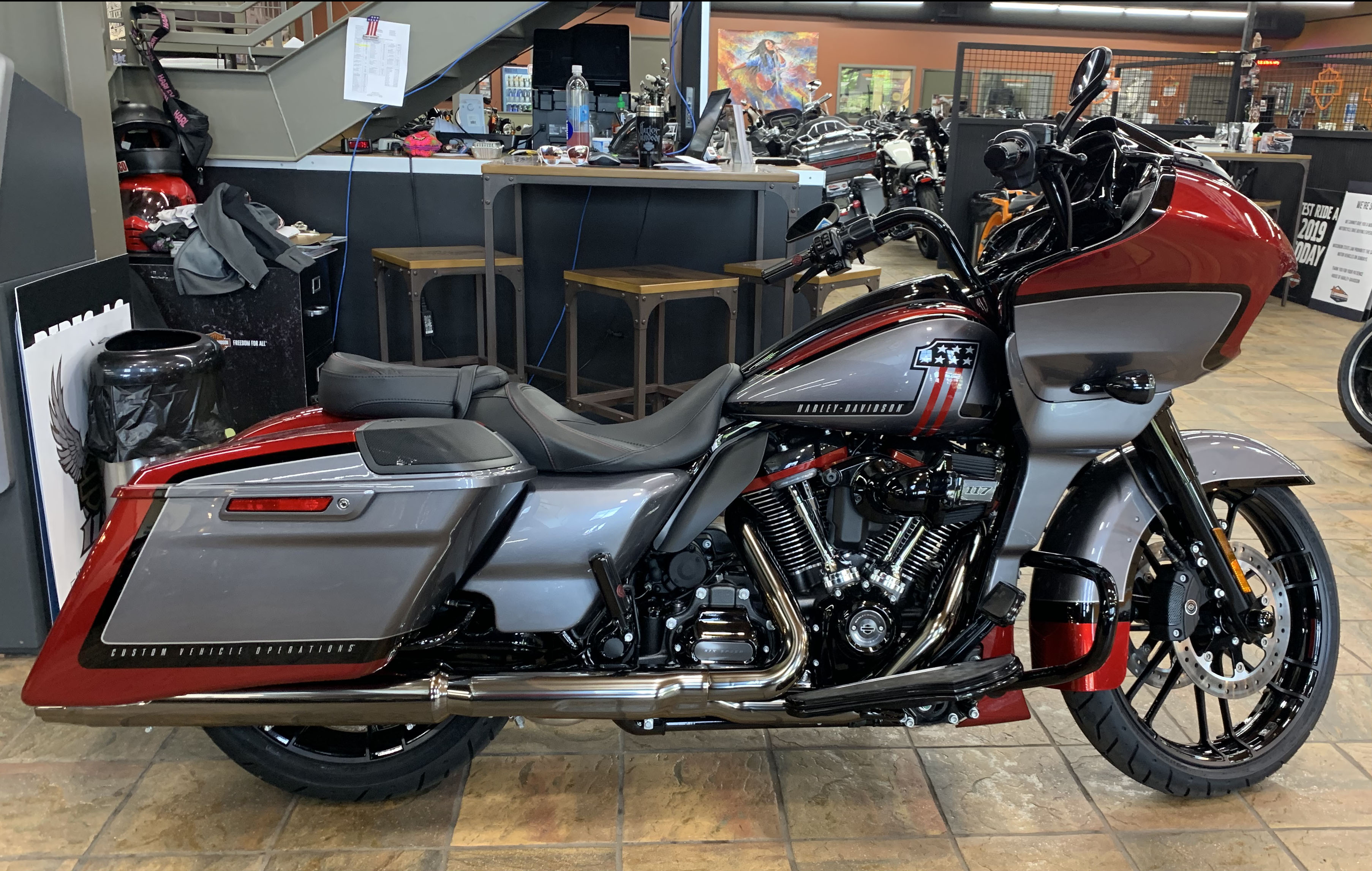
Harley Davidson road glide
"Dollar hauler, baby. Yeah. They've all been dressed up and they're very pretty and there's a road glide and there's a road King and that heritage is coming."
A Harley-Davidson Road Glide is a type of Harley touring motorcycle. It’s built for comfortable rides, and the hosts are mentioning it as one of the bikes they’re selling or moving.
This refers to a Harley-Davidson Road Glide, a touring motorcycle known for its fairing and comfortable long-distance riding setup. In the segment, they’re talking about specific Harley models being moved and advertised for sale.
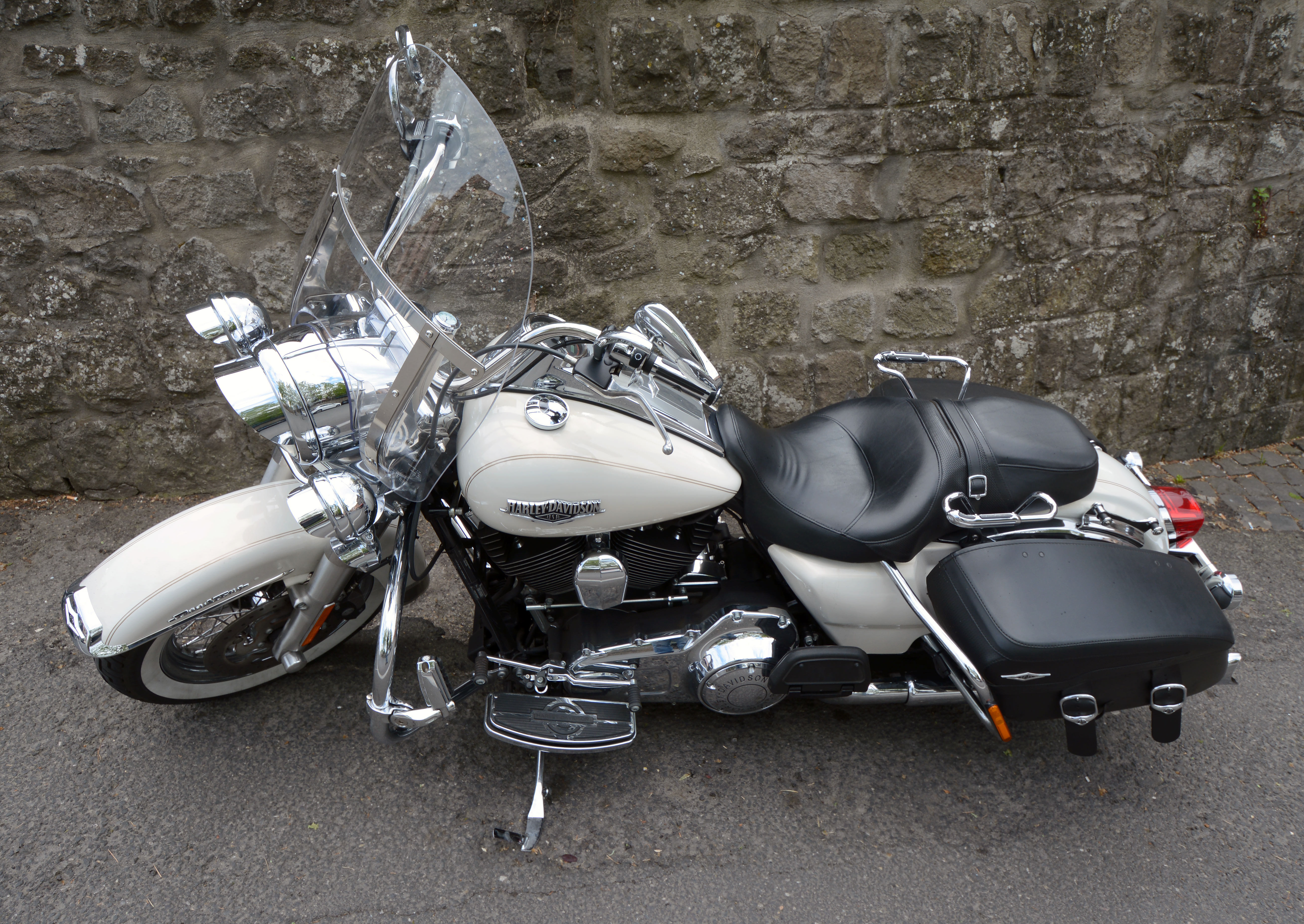
Harley Davidson road King
"Dollar hauler, baby. Yeah. They've all been dressed up and they're very pretty and there's a road glide and there's a road King and that heritage is coming."
A Harley-Davidson Road King is a touring-style Harley motorcycle. It’s mentioned alongside other Harleys as part of the bikes they’re showing off and finding new owners for.
This refers to the Harley-Davidson Road King, another touring motorcycle in Harley’s lineup. The hosts group it with other Harleys they’re preparing to move and sell, implying it’s one of the featured bikes at the show.

charger
"Looks like possibly ZL one Camaro and a charger sitting next to it."
The Dodge Charger is a well-known performance car from Dodge. They’re just calling it out as another cool car in the lineup.
“Charger” refers to the Dodge Charger, a performance sedan/coupe that’s often paired with muscle-car styling and powerful engines. Here it’s mentioned next to the Camaro as another standout vehicle at the show.
quad cab or crew cab
"which is essentially a quad cab or crew cab, uh, lightning, uh, there'd be a bus VW bug,"
“Quad cab” and “crew cab” describe pickup truck cab configurations—how many doors and how much rear-seat space the truck has. A crew cab typically has four full doors and more rear seating than a smaller-cab layout.

VW bug
"uh, lightning, uh, there'd be a bus VW bug, uh, pretty slick 67 and pala coop."
A “VW bug” is a nickname for the Volkswagen Beetle. They’re pointing it out as one of the cars on display.
“VW bug” is a common nickname for the Volkswagen Beetle. The hosts mention it as part of the classic-car lineup they’re seeing at the show.

Ford F-150 Lightning
"...which is essentially a quad cab or crew cab, uh, lightning, uh, there'd be a bus VW bug, uh, pretty slick 67..."
The F-150 Lightning is a Ford pickup truck that runs on electricity instead of gasoline. The podcast mentions it as part of a group of cars being talked about. It’s notable because it’s a modern electric take on a popular truck.
The Ford F-150 Lightning is an electric version of the F-150 pickup, combining the familiar truck shape with an all-electric powertrain. In the podcast, it’s mentioned as part of a lineup that includes other vehicles, suggesting the Lightning is being shown or discussed as a modern standout. It’s relevant because it represents a shift from traditional gas pickups to electric trucks.

Chevrolet Nova
"There's a couple of Ford lightings... There's, and I think that's a 67 Nova that was next to it."
The Nova is a classic Chevrolet muscle car. They’re saying they think one of the cars is a 1967 Nova and comparing it to nearby years.
“Nova” refers to the Chevrolet Nova, a classic American muscle car. The hosts mention a 1967 Nova as part of the lineup, and they discuss body-size differences between 1967 and later years.

Shelby, uh, GT 350
"It, it looks like a Shelby, uh, GT 350, but it's a Mustang says GT 302 on it, but slick looking car, uh, Mazda RX eight running LS power."
The Shelby GT 350 is a special, high-performance version of the Ford Mustang. People love it for its aggressive look and exciting engine sound.
The Shelby GT 350 is a performance Mustang variant made famous by Carroll Shelby. It’s known for its high-revving V8 character and classic muscle-car styling.

Shelby GT350
"all kinds of stuff, uh, that they kind of pulled up to give it that stance. Yeah. It, it looks like a Shelby, uh, GT 350, but it's a Mustang says GT 302 on it, but slick looking car, uh, Mazda RX eight running LS power. If you heard it pull in, you're like, that's not a rotary engine."
The Shelby GT350 is a performance version of the Mustang. The podcast says a car looks like a GT350, but the badge says “GT 302,” meaning the exact model might be different than what it resembles. That’s why it comes up—people are trying to identify what it really is.
The Shelby GT350 is a high-performance Mustang variant known for its track-oriented character and Shelby branding. In the podcast, the car is described as looking like a Shelby GT350, while the badge is said to show “GT 302,” which points to a discussion about appearance versus exact model details. It’s also mentioned alongside other cars, suggesting it’s part of a lineup where enthusiasts are identifying builds.

Mazda RX eight
"…slick looking car, uh, Mazda RX eight running LS power. If you heard it pull in, you're like, that's not a rotary engine."
The Mazda RX-8 is famous for its rotary engine, which doesn’t sound like a normal car engine. In this case, it’s been converted to use an LS V8, so it won’t sound like a rotary anymore.
The Mazda RX-8 is known for its rotary engine (the Wankel design), which sounds and drives differently than a typical piston V8. Here, the host says it’s running LS power, meaning it’s been swapped to an LS-series V8 rather than keeping the rotary.
LS power
"…Mazda RX eight running LS power. If you heard it pull in, you're like, that's not a rotary engine."
“LS power” means the car has been swapped to a GM V8 from the LS engine family. People like them because they’re powerful and there are lots of parts and tuning options.
“LS power” refers to using GM’s LS-series V8 engines (like the LS1/LS3 family) in a swap. LS engines are popular because they’re compact, make strong power, and have lots of aftermarket support.
Mustang Fox Body
"...irebird and a Cobra replica there. Fox buddy, uh, Fox body, notch back Mustang, cop car black and white wit..."
The Mustang is a sporty car made by Ford. The podcast mentions different Mustang styles, including older “Fox body” versions and a black-and-white car that looks like a police car. It’s brought up because Mustangs come in many recognizable forms.
The Mustang is Ford’s iconic performance car line, with many generations and body styles. In the podcast, it’s referenced in a more general way alongside other cars, including a “Fox body” notchback Mustang and a black-and-white “cop car” style example. That suggests the conversation is about recognizable Mustang variants and how people identify them.

Pontiac Firebird
"Uh, see a Firebird and a Cobra replica there. Fox buddy, uh, Fox body, notch back Mustang,"
The Pontiac Firebird is a classic muscle car. It’s the kind of car people recognize for its old-school V8 attitude and looks.
The Pontiac Firebird is a classic American muscle car line from Pontiac. In show contexts, it’s often referenced by enthusiasts for its styling and V8 performance heritage.

Shelby Cobra
"...'s not a rotary engine. Uh, see a Firebird and a Cobra replica there. Fox buddy, uh, Fox body, notch bac..."
The Shelby Cobra is a sports car known for being fast and exciting. The podcast is clarifying that it doesn’t use a rotary engine, meaning it uses a more traditional engine type. It’s brought up as a specific example of a performance car in the lineup.
The Shelby Cobra is a legendary American sports car known for its lightweight design and high-performance reputation. In the podcast, it’s mentioned alongside other cars and notes about the engine, including that it’s “not a rotary engine,” which helps clarify what kind of powertrain it uses. That makes it a focal point in a conversation about car types and what’s under the hood.

Cobra replica
"Uh, see a Firebird and a Cobra replica there. Fox buddy, uh, Fox body, notch back Mustang,"
A Cobra replica is a car made to resemble the famous AC Cobra. Instead of being an original, it’s usually built with modern parts so it can be more practical to own.
A “Cobra replica” is a car built to look like the iconic AC Cobra, often using a modern chassis and drivetrain. Replicas are popular because they capture the classic shape while being easier to build, maintain, or power than an original.

Chevrolet Chevelle
"…cop car black and white with lights on top. There's three Chevelle's right over there. It looks like a 70, 71, 72 all with cowl induction hoods that are up."
The Chevrolet Chevelle is a classic muscle car. It’s the kind of car people collect and show off because it looks great and can be very powerful.
The Chevrolet Chevelle is a classic mid-size muscle car from Chevrolet’s lineup. Enthusiasts often seek specific years and engine options, and it’s a common sight at car shows.
cowl induction hoods
"…There's three Chevelle's right over there. It looks like a 70, 71, 72 all with cowl induction hoods that are up. There is a bunch of fun stuff to see."
A cowl induction hood has an intake on the hood that brings in air from outside the engine bay. It can help the engine breathe better and it looks very “muscle car.”
A cowl induction hood is a hood design with an intake that pulls air from near the base of the windshield area. It’s often used to improve airflow to the engine and is also a distinctive muscle-car styling cue.

1979 Ford Fairmont Futura
"…there's a guy that I, as God as my witness, I'm going to find him and drag him over here who has a 1979 Ford Fairmont Futura. Oh, I want to see that."
The 1979 Ford Fairmont Futura is usually a pretty normal-looking Ford. This one sounds like a sleeper—looks stock, but it’s been built to be much faster than you’d expect.
The 1979 Ford Fairmont Futura is a late-1970s Ford compact/midsize model, typically not thought of as a high-end performance car. In this segment, the host highlights a heavily modified example with a stock-looking body and interior, which is the setup for a “sleeper” build.

Ford Granada
"Now the cool, the other cool thing about, I love it. I love Granada's, which is embarrassing. Um, but I think they look cool. The two doors might you."
The Granada is another Ford from the same era. The host is basically comparing the shapes and how you can modify them for bigger tires and a more aggressive setup.
The Ford Granada is another late-1970s Ford model that the host compares to the Fairmont Futura. The discussion is about body shape and how enthusiasts modify these cars for fitment and performance.
wheel tub it
"I think if you take a Granada, yeah, you wheel tub it. Oh yeah. You put tubs in the trunk so you can put great big fat meats under it."
“Wheel tubbing” is when you reshape the inner fender area so you can fit wider tires. It helps the tires clear the body and lets the car run a more aggressive setup.
“Wheel tubbing” (often shortened to “wheel tub it”) means modifying the inner fender area to create clearance for wider tires. It’s commonly done in custom builds so the car can fit “fat meats” without rubbing.
fat meats
"Oh yeah. You put tubs in the trunk so you can put great big fat meats under it. And then you run either a voodoo or, uh, the new, uh, the new 50, uh, the coyote motor."
“Fat meats” just means wide tires. Wider tires can grip better and look more aggressive, but you often need extra room in the wheel wells.
“Fat meats” is enthusiast slang for very wide tires. Wider tires can improve traction and allow a more aggressive stance, but they also require clearance work like wheel tubs.
voodoo
"…And then you run either a voodoo or, uh, the new, uh, the new 50, uh, the coyote motor. That's what he's got in here."
“Voodoo” is a nickname for a specific Ford V8 used in the Mustang Shelby GT350. It’s popular because it revs high and feels special compared to many other engines.
“Voodoo” refers to Ford’s naturally aspirated 5.2L V8 used in the Mustang Shelby GT350. It’s known for a high-revving character and strong sound, and it’s being mentioned as an engine swap option for the Fairmont/Granada-style build.
coyote motor
"…the new 50, uh, the coyote motor. That's what he's got in here. Uh, yeah. He's got a car talking and the thing is going to be stupid."
“Coyote” is a nickname for Ford’s 5.0-liter V8. It’s popular for swaps because it’s powerful and there are lots of parts to support it.
“Coyote” is the nickname for Ford’s modern 5.0L V8 (the Coyote engine family). It’s widely used for swaps because it makes good power, has strong aftermarket support, and fits many chassis with the right mounts and wiring.
dropped the car onto the motor
"…one of the things that I was like, really? He didn't drop the motor in it. He dropped the car onto the motor. That works."
It sounds like they installed the engine by positioning the car around it, instead of trying to force the engine into the space. It’s a swap trick that can make the job easier.
This describes an engine-install approach where the chassis is positioned over the engine rather than lowering the engine into the bay. It’s a practical technique that can make alignment and clearance easier during swaps.
sleeper
"Well, I think that would be a fantastic sleeper. Yes. And it would also make you wonder when you're sitting at the light, why that thing next year is going. What is that making that noise?"
A “sleeper” is a car that looks ordinary, but it’s actually fast. The fun part is surprising people when they hear it or see how it moves.
A “sleeper” is a car that looks relatively tame or stock, but has been modified to be quick and surprising. The idea is to catch people off guard—especially when you’re just sitting at a light and the car’s real performance isn’t obvious.
brake pedal
"It's shaking the ground and you can feel it through the brake pedal in your car. So that's what's, you know, that's what's shaking here."
The brake pedal is what you press to slow down the car. If the steering wheel or the pedal shakes when braking, it usually means something in the braking system isn’t smooth—like the brake parts aren’t lining up evenly.
The brake pedal is the driver’s control for slowing the car. If the car is shaking and you feel it through the brake pedal, it often points to a braking-related vibration issue like warped rotors or uneven brake contact.
Crossley Ford
"We're here with Todd Gentry, the general sales manager of Crossley Ford. Also, do you run Crossley customs?"
Crossley Ford is the dealership Todd works for. They’re also connected to a custom shop that builds modified cars and trucks.
Crossley Ford is the dealership where Todd Gentry works as general sales manager. The episode segment uses the dealership as the hub for a custom-building operation tied to the store.
Crossley customs
"Also, do you run Crossley customs? Yeah, I do. Okay. And tell us a little bit about that."
Crossley customs is the custom shop Todd runs. It’s where they take cars and trucks and modify them for performance and style.
Crossley customs is the dealership’s in-house custom shop Todd runs. The segment describes it as a long-running department that has expanded into more serious performance and appearance builds.
suspension
"So we do a lot of pro charger, Whipple super chargers, suspension. I mean, really kind of the sky's the limit. Lots of custom paint work and trim pieces..."
Suspension is what helps the tires stay in contact with the road and controls how the car rides over bumps. Upgrading it can make the car feel more stable and more “planted” in corners.
Suspension is the system that connects the wheels to the car’s body and controls how the car rides and handles bumps. When a custom shop mentions “suspension” builds, they usually mean upgrades like lowering, stiffer springs, or improved shock/strut setups for better handling.
factory warranty
"...and still offer the factory warranty. Oh, no kidding. That was, that's the difference. Okay. Cause I was like, well, it's a, it's a custom shop and I'm not really used to hearing custom shops being connected with a dealership."
A factory warranty is the official coverage that comes with the car from the manufacturer. They’re saying that, in many cases, their custom work doesn’t automatically cancel that warranty.
A factory warranty is coverage provided by the vehicle manufacturer. The segment highlights a key point for buyers: certain dealership-installed custom work may still keep the original warranty active, depending on how the modifications affect covered components.
void the factory warranties
"...95% of the time we do get a little bit edgy on some of our builds and they do void the factory warranties, but 95% of the time, you're going to have a factory warranty on what we build."
“Void the warranty” means the manufacturer might not pay for repairs under the warranty. They’re saying it doesn’t happen all the time—only when certain builds cross a line.
“Void the factory warranties” means the manufacturer may refuse warranty coverage because the modification is considered to have caused or contributed to the problem. The speaker says this happens only on some builds, implying the rest of the time warranty coverage remains intact.

Ford F150
"I would say the most typical build for us is going to be a single cab short bed F 150 XL. And that's how what we call the chassis starts, you know, it's got either chrome or steel front bumpers and rear bumpers."
They start with a Ford F-150 XL pickup truck. “XL” is the trim level, and “single cab short bed” tells you the cab and bed size they’re using before adding performance parts.
They’re describing a typical build starting with a Ford F-150 XL single-cab short-bed truck. The “XL” is a trim level, and “single cab short bed” describes the body style and bed length used as the base for the modifications.
coil over four-link kit
"We'll usually do a ride tech suspension, which is a coil over four-link kit. Uh, we do a lot of Ford performance whipple superchargers and we've also started doing pro charger as well."
This is a suspension upgrade. Coilovers help control how the truck rides and sits, and a four-link setup helps keep the rear axle positioned more accurately—especially when you launch or drive hard.
A coilover is a suspension setup that combines a coil spring and shock absorber into one unit, allowing ride height and damping to be tuned. A four-link kit uses four control arms to precisely locate the rear axle, improving handling and traction for a lowered truck.
Ride Tech
"We'll usually do a ride tech suspension, which is a coil over four-link kit. Uh, we do a lot of Ford performance whipple superchargers and we've also started doing pro charger as well."
RideTech makes aftermarket suspension parts. Here, they’re using RideTech to lower the truck and improve how the rear suspension behaves.
RideTech is a suspension brand known for aftermarket kits used to lower trucks and improve ride/handling. In this context, they’re using RideTech components as the basis for a coilover + four-link suspension.
dino on 91 octane
"We usually do a 22 with a Nitto 420 V 305 tire and, you know, it's a very conservative build. Uh, they dino on 91 octane at 557 horsepower to the rear wheels."
They’re testing the truck on a dyno to measure power. “91 octane” is the fuel type they used—higher octane helps the engine run more safely when it’s tuned for extra boost.
“Dyno” refers to a dynamometer test that measures engine output under controlled conditions. “91 octane” is the fuel’s octane rating, which indicates its resistance to knock; higher octane often allows more aggressive tuning, especially on boosted engines.
rear wheels
"they dino on 91 octane at 557 horsepower to the rear wheels. Wow. Did you say 597, 557, 557, so probably six and a quarter, maybe a little bit more at the crank, probably a little bit more than that at the crank."
They’re talking about power measured at the back wheels. That number is usually lower than what the engine makes because some power gets used up inside the drivetrain.
“Rear wheels” power refers to wheel horsepower measured at the drivetrain output, not engine horsepower. Wheel numbers are typically lower than crank/engine numbers because some power is lost to the transmission and drivetrain.
traction control
"Well, I'm, I'm curious about the fist fight between the horsepower and traction control in that truck. Yes. Well, and here's another thing too."
Traction control is a safety feature that helps prevent the wheels from spinning. If a truck has a lot of power, traction control may step in to keep it from losing grip.
Traction control is an electronic system that reduces wheel slip by cutting engine power and/or applying braking to specific wheels. On high-power builds, traction control can strongly affect how much torque actually reaches the road during launches.
four wheel drive launches
"when we do our testing and tuning, we'll do four wheel drive launches and knock on wood, things don't break, you know, they just hold together really, really well."
This is a hard takeoff where the truck uses power to all four wheels to accelerate quickly. It’s tough on the tires and drivetrain, so it’s a good way to see if the build can handle real stress.
A four-wheel-drive launch is a hard acceleration event where the truck uses traction from all four wheels to get moving quickly. It’s a demanding test for tires, drivetrain, and suspension because torque is transferred aggressively to the ground.

Ford Mustang GTD
"just sold a, just a basic Mustang GT. So how we order them is we order them as a 401. So you just get the brimbo brakes, but it's still a cloth seat."
The Mustang GT is a more powerful version of the Ford Mustang. It’s the trim people pick when they want quicker acceleration, and in this story they start with a basic one and then add more power.
The Ford Mustang GT is the performance-focused trim of the Mustang, typically paired with a V8 and tuned for stronger acceleration than the base models. In this segment, they’re talking about ordering a “basic” Mustang GT and then adding performance upgrades like a supercharger.
Whipple
"And then for around 15,000 bucks, you can throw a Whipple on it, which is closer to 800 horsepower at the flywheel."
Whipple is a company that makes superchargers. A supercharger squeezes more air into the engine so it can make a lot more power than stock.
Whipple is a brand of superchargers (typically positive-displacement units) used to force more air into the engine, which allows much higher power output. Here, they’re describing adding a Whipple to a Mustang GT to reach roughly 800 horsepower at the flywheel.
flywheel
"And then for around 15,000 bucks, you can throw a Whipple on it, which is closer to 800 horsepower at the flywheel."
“At the flywheel” means the horsepower number is measured at the engine before power is sent to the wheels. The wheels usually get a bit less because of losses through the drivetrain.
“At the flywheel” refers to measuring engine power before it goes through the transmission and drivetrain. It’s a common way to quote horsepower because it reflects the engine’s output, not what the tires actually receive.

Ford Explorer
"So for example, we do a lot of Ford explorers. Okay. Where we lower them and put a 24 inch wheel on them."
The Ford Explorer is a popular family SUV. Here, they’re saying they modify it—lowering it and adding big wheels/tires—to make it look better and feel more “sporty.”
The Ford Explorer is a midsize SUV platform they customize for a more aggressive, performance-like stance. In this segment, they lower it and fit large wheels/tires to change handling feel and appearance.
24 inch wheel
"Where we lower them and put a 24 inch wheel on them. And you think 24, okay, well, you know, you're probably going to be prone to paw holes and stuff like that."
Wheel size changes how the car rides and handles. Bigger wheels often mean less “cushion” from the tire, but the right tire and suspension setup can still make it feel good.
Wheel size affects ride quality, steering response, and tire sidewall height. Larger wheels typically mean shorter sidewalls, which can make the ride feel firmer, but the right tire choice and suspension setup can still keep it comfortable.
potholes
"And you think 24, okay, well, you know, you're probably going to be prone to paw holes and stuff like that. But on a 24 on the Explorer..."
Potholes are road hazards that can be more punishing with low-profile tires and larger wheels because there’s less rubber sidewall to absorb impacts. The speaker is addressing that concern directly for their wheel/tire setup.

Expedition
"We've done some expeditions too. In the historically, they don't offer a lot of parts for expeditions as far as lift kits and stuff. But with this new generation of expedition, there's a lot more parts availability."
The Ford Expedition is a large SUV. They’re saying the newer version has more aftermarket support, so they can fit bigger tires for a tougher, more capable look and feel.
The Ford Expedition is a full-size SUV they customize, especially for off-road-oriented setups. They mention improved parts availability on the “new generation,” enabling larger tire sizes like 33-inch and 35-inch.
lift kits
"In the historically, they don't offer a lot of parts for expeditions as far as lift kits and stuff."
A lift kit raises the SUV higher off the ground. That helps fit bigger tires and can make it better for rough roads, but it can also change how it drives.
A lift kit raises a vehicle’s ride height, usually by changing suspension components. This creates clearance for larger tires and can improve off-road capability, but it also affects steering geometry and ride quality.
35 inch tires
"So we've done some 33 inch tires and 35 inch tires on those as well."
35-inch tires are very large and usually part of a serious off-road setup. They can help with clearance, but they can also make the vehicle work harder and may require extra suspension work.
35-inch tires are a significant size jump that typically goes with off-road suspension and careful wheel/tire fitment. They can improve obstacle clearance, but they may increase rolling resistance and can stress drivetrain components if the vehicle isn’t tuned for it.
33 inch tires
"So we've done some 33 inch tires and 35 inch tires on those as well."
Bigger tires (like 33-inch) can help a truck/SUV handle rough terrain and look more rugged. They also usually require suspension changes so everything fits correctly.
Tire diameter (like 33 inches) is a key part of off-road and stance builds because it determines ground clearance and how much the vehicle can clear obstacles. Larger tires also require compatible suspension lift/fitment and can change speedometer accuracy and gearing feel.
supercharge
"Don't. Can you supercharge an expedition? We can't. And here's why, because they come standard with one engine."
To supercharge an engine means adding a supercharger to increase the amount of air entering the cylinders. More air (plus fuel) generally means more power, but it also requires supporting components and careful tuning to stay reliable.
turbo
"They come with a 3.5 liter. Now they do have that. It comes with the turbo. I wasn't thinking of them."
A turbocharger (“turbo”) uses exhaust gases to spin a turbine that forces more air into the engine. That lets smaller engines make more power, but it also changes how the engine responds and how it needs to be tuned under boost.
3.5 liter
"And here's why, because they come standard with one engine. They come with a 3.5 liter. Now they do have that. It comes with the turbo."
“3.5 liter” tells you the engine’s size. Bigger displacement generally means the engine can move more air and fuel, but turbocharging can also boost power a lot.
“3.5 liter” is engine displacement, meaning the total volume of all cylinders. Displacement is a major factor in how much air/fuel the engine can move, and it often correlates with potential power—though turbocharging can change that relationship.

Cadillac Escalade
"Well, you know, Cadillacs got the Escalade V. Yeah. And Ford doesn't have that."
Cadillac has a high-performance Escalade called the Escalade V. The point here is that Cadillac offers a sportier version, while the speaker thinks Ford doesn’t have a similar one.
The Cadillac Escalade V is the high-performance version of the Cadillac Escalade SUV line. The speaker brings it up as an example of a “V” performance model that exists for Cadillac, implying Ford doesn’t have a direct equivalent in the same category.

Lincoln Navigator
"...at. I'd be interested in that. You know, I had a navigator forever that was just the best truck. And I reall..."
The Navigator is a large luxury SUV made by Lincoln. It’s built for comfortable driving and lots of space. The podcast mentions it because the speaker had one for a long time and liked it.
The Lincoln Navigator is a full-size luxury SUV focused on comfort, space, and a premium driving experience. In the podcast, it’s mentioned because someone owned one “forever” and describes it as “just the best truck,” indicating it’s part of a personal ownership story. That makes it relevant to discussions about long-term satisfaction with a large SUV.
1994 Ford Lightning
"So my pride and joy is my 1994 Ford Lightning. And it's an all original truck. It's got just a touch over 20,000 miles on it..."
The 1994 Ford Lightning is a special, faster version of the Ford F-150 pickup. The speaker is saying theirs is a very clean, original truck with low miles and factory upgrades that make it stronger than a normal pickup.
The 1994 Ford Lightning is a performance-oriented version of the Ford F-150, built to deliver more power than the typical pickup of the era. In this segment, the host emphasizes it’s an all-original, low-mileage truck and discusses its factory performance parts and drivetrain setup.
GT 40 heads
"They came with GT 40 heads. They came with headers from the factory, different suspension, transmission, more horsepower..."
GT40 heads are upgraded engine cylinder heads. They help the engine breathe better, which can make more power than the stock heads.
“GT 40 heads” refers to cylinder heads associated with Ford’s GT40 performance engine family. Cylinder heads are a major part of the engine’s breathing—changing them can improve airflow and help support higher power output.
headers
"They came with GT 40 heads. They came with headers from the factory, different suspension, transmission, more horsepower..."
Headers are parts that change how exhaust gases leave the engine. Better exhaust flow can help the engine produce more power.
Headers are exhaust components that replace the factory exhaust manifolds with tuned piping. They can improve exhaust flow, which often helps an engine make more power, especially at certain RPM ranges.
302
"...more horsepower because typically you had either a straight six or a 302 and a single cab short bed back in 94."
“302” is a Ford V8 engine size. The speaker is comparing typical pickup engines (like the 302) to the Lightning’s bigger 351.
“302” refers to Ford’s 302 cubic-inch V8 (often called the 5.0L in later marketing). Here it’s mentioned as one of the common engine options in 1994 pickups, contrasted with the Lightning’s 351 Windsor setup.
351 Windsor
"And this got the 351 Windsor. So what was the 351 with the GT 40 heads rated?"
The 351 Windsor is a Ford V8 engine. The speaker is saying this truck uses that engine instead of the more common smaller engines.
The 351 Windsor is a Ford small-block V8 engine displacement (351 cubic inches) from the Windsor engine family. In this segment, it’s used to explain what engine the Lightning has and how that relates to the truck’s factory performance parts.
torque
"I think it was 340 foot pounds of torque. So heavy duty transmission, 410 gears, you know, they're not built for high end, but they're built for torque."
Torque is the engine’s twisting force. More torque usually means the truck feels stronger when you accelerate from low speeds.
Torque is the twisting force an engine produces, measured in units like foot-pounds. It’s especially important for trucks because it helps with acceleration from low speeds and towing/hauling, even if peak horsepower isn’t the highest.
heavy duty transmission
"So heavy duty transmission, 410 gears, you know, they're not built for high end, but they're built for torque."
A heavy-duty transmission is a tougher gearbox designed to survive harder use. The speaker is saying this truck’s transmission is built to handle strong twisting force (torque).
A heavy-duty transmission is a stronger, more robust transmission built to handle higher loads and torque. In this context, the speaker is contrasting it with transmissions that might be optimized for high-revving power rather than pulling torque.
410 gears
"So heavy duty transmission, 410 gears, you know, they're not built for high end, but they're built for torque."
“410 gears” means the rear axle is geared for stronger acceleration. It helps the truck pull and move quickly, but it can make highway driving less efficient.
“410 gears” refers to a rear axle gear ratio of 4.10:1, which multiplies torque to the wheels. Higher numerical ratios like 4.10 typically improve acceleration and pulling power, but can reduce highway cruising efficiency.
Vermillion Red
"So we got the Vermillion Red, which is a newer color in a 2026 single cab short bed."
Vermillion Red is the name of the paint color they chose for the truck. They picked it because it helps the new build visually match the older one.
Vermillion Red is a specific paint color used on the 2026 truck. The hosts are using it to match the look of an earlier truck while still using a newer factory color.
directional wheel
"So we scaled them up and went to a 20. We did a directional wheel, put the valve stems on the inside."
A directional wheel is a wheel that’s meant to spin one way only. It can be for performance and tire wear, but it also helps achieve a certain style.
A directional wheel is designed to rotate in a specific direction, usually indicated by an arrow or spoke shape. This can affect how the tire’s sidewall pattern and tread wear behave, and it’s often chosen for a particular look.
valve stems on the inside
"We did a directional wheel, put the valve stems on the inside. So it's got a nice clean look…"
They moved the tire air valves to the inner side of the wheel. That way the outside looks cleaner and more uniform.
Placing valve stems on the inside of the wheel keeps the outside face cleaner and more symmetrical. It’s a common custom-wheel detail that improves the visual “finished” look.
lowered it
"So it's got a nice clean look tried to match that sidewall, you know, with the rubber. Of course, we lowered it."
“Lowered it” means they made the truck sit closer to the ground. It usually looks better, but it can make bumps harsher and reduce clearance.
“Lowered it” means the truck’s suspension ride height was reduced, typically by changing springs/coilovers or using lowering components. Lowering changes handling feel and the visual stance, but it can also affect ride quality and clearance.
intake painted at silver
"We did a different intake painted at silver, just like the GT 40 back in 94…"
They painted the air intake part silver. It’s mainly for the look, matching the overall style of the truck.
They’re describing a custom-finished intake component (the air intake system) painted silver. While paint doesn’t change function by itself, it’s part of the build’s visual theme and can also help with heat/appearance management.
high flow cats
"…stainless works headers with high flow cats. That's of course as type exhaust."
High flow cats are catalytic converters made to let exhaust pass more easily. They’re meant to improve flow while still doing the emissions-cleaning job.
“High flow cats” are aftermarket catalytic converters designed to reduce exhaust restriction compared to stock. They still aim to meet emissions requirements, but flow characteristics can vary by design and legal status.
side of the rear wheel
"So the exhaust tips would come out on the side of the rear wheel just like they did in 94…"
They’re saying the exhaust tips come out near the rear wheel area. That’s a styling choice and it also changes where the hot exhaust goes.
They’re describing an exhaust tip location: exiting near the side of the rear wheel. This is a visual and packaging choice that also affects how exhaust gases are routed and where heat is concentrated.
modern throwback
"We embroidered the floor mats just like they did in 1994 no window tint just like they were in 1994 modern throwback."
“Modern throwback” describes a build that uses modern components or newer execution while intentionally copying the styling cues of an older era. It’s a common customization approach: keep the vibe, update the execution.
no window tint
"We embroidered the floor mats just like they did in 1994 no window tint just like they were in 1994 modern throwback."
They’re saying the truck has no window tint. That’s mostly about keeping the look similar to the older truck.
“No window tint” means the truck’s windows are left untinted. Tint level affects appearance and can change heat/UV rejection, but here it’s mainly part of matching the original 1994 look.
retro bolt
"So we call it the retro bolt, the retro Gary Crossley forge retro bolt lightning."
“Retro bolt” sounds like the name they gave to this finished retro-style truck build. It’s basically a custom nickname, not a technical part.
“Retro bolt” appears to be a nickname for the finished truck package/theme. It’s not a standard automotive term, but it signals the hosts’ branding of the build’s look.
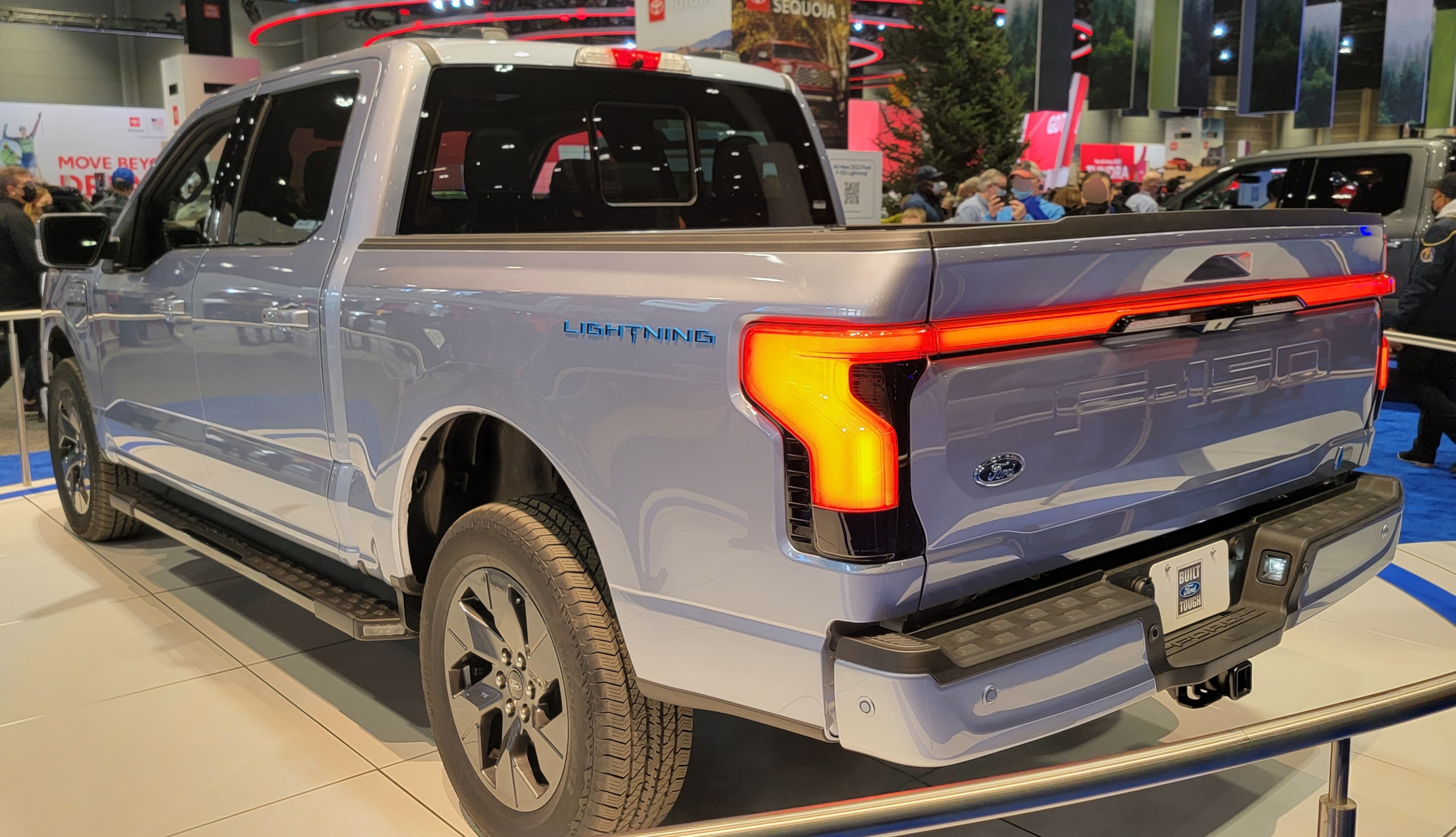
lightning trucks
"Of course, I have I have the the illegitimate child of the lightning trucks sitting right behind us, which I love the those Harley trucks are just crew cab lightnings."
“Lightning trucks” refers to the Lightning model line of Ford performance pickups (commonly known as the Ford F-150 Lightning). The hosts are talking about a related Lightning truck configuration and how fun it is to drive.
rated at 340
"even in 2002. And they were rated at 340. And I'm not sure on the torque…"
They say the truck is “rated at 340,” meaning it has a published performance number. The speaker isn’t fully sure whether that 340 refers to horsepower or torque.
“Rated at 340” is a performance rating figure the speaker associates with the truck’s output, but the unit (horsepower vs torque) isn’t clearly confirmed in the excerpt. The host later says they’re unsure on torque, suggesting the number may be horsepower or a published spec.

Corvette
"And you got to remember, this is with the Corvette in 1990 putting 250. Yeah, they didn't get the didn't get the LT one until 92 jumped to 300 horse."
They’re using the Corvette as a reference point for speed. The Corvette is a well-known sports car, so comparing to it helps estimate how fast the truck might feel.
The Chevrolet Corvette is used as a performance benchmark in the discussion. The hosts reference Corvette horsepower and model-year changes to argue how quick the Lightning would have been compared to sports cars of that era.
LT one
"Yeah, they didn't get the didn't get the LT one until 92 jumped to 300 horse. So lightning was probably Corvette quick."
They’re talking about a specific engine version in a Corvette. When they say “LT1,” they mean the particular V8 that showed up in those early-’90s cars and made more power.
“LT one” refers to the LT1 engine used in certain Chevrolet Corvettes starting in the early 1990s. It’s a specific small-block V8 variant, and the hosts mention it in the context of horsepower increases.
rear brake conversions
"One of them is Richard Oben from NorthRaceCars.com, by the way, which does Fox body rear brake conversions and then a bunch of other cool stuff. But that's kind of their, their big deal and it is a big deal."
A rear brake conversion means changing the back brakes to a better setup than what the car came with. It’s usually done to help the car stop more strongly and consistently.
A “rear brake conversion” is an aftermarket or swap-style upgrade that changes the rear braking system—often to use larger rotors/calipers or a different brake setup than stock. The goal is typically better stopping power and fade resistance.
NorthRaceCars.com
"One of them is Richard Oben from NorthRaceCars.com, by the way, which does Fox body rear brake conversions and then a bunch of other cool stuff."
They’re giving a shout-out to a shop/website that builds brake upgrades. In this case, it’s focused on improving the rear brakes for certain Mustangs.
NorthRaceCars.com is mentioned as the website for Richard Oben, who does performance brake upgrades for Fox-body Mustangs. The hosts highlight the shop’s specialty as rear brake conversions.
1979 Ford Fairmont future
"Richard has driven in and has, as part of the show, a 1979 Ford Fairmont future. ... 79 Fairmont future. That has Fox body underpinnings, doesn't it?"
They’re talking about a custom 1979 Ford Fairmont. It’s been built as a show car, and it uses the same basic underpinnings as Ford’s Fox-body Mustangs.
The hosts are discussing a 1979 Ford Fairmont “future” (a custom build). It’s notable because it’s based on Ford’s Fox-body platform, but with a Fairmont body used as the foundation for a show/demo car.
Fox body underpinnings
"79 Fairmont future. That has Fox body underpinnings, doesn't it? ... That is correct. Okay. And I built it as a, quote, product car for our Fox body conversions."
They mean the car is built on the same basic foundation as Ford’s Fox-body Mustangs. That usually makes it easier to build and maintain because the parts are common.
“Fox body underpinnings” refers to the chassis and basic mechanical architecture used on Ford’s Fox-body cars (especially the 1979–1993 Mustang). Using that platform makes it easier to source parts and gives predictable handling and drivetrain fitment.

04 Mach 1
"My wife picked the Mach 1 wheels from an 04 Mach 1. Oh really? She likes the five spoke."
They’re using wheel designs taken from a 2004 Mustang Mach 1. The goal is to get that classic five-spoke look on the custom Fairmont.
The wheels on the 1979 Fairmont build are sourced from an ’04 Mach 1 Mustang. The Mach 1 is a performance trim, and the specific wheel design (five-spoke) is being reused for the custom car’s look.
Magnum 500
"...she loves the five spokes and the Magnum 500. That pretty, that probably looks cool."
Magnum 500 is a particular wheel design used on some Mustangs. The name helps car people picture the exact style right away.
Magnum 500 is a specific wheel style associated with certain Ford Mustangs. It’s commonly recognized by its distinctive multi-spoke pattern, and the speaker is using it as a reference for the look they’re aiming for.
Fox body 10 hole
"I've seen one with a Fox body 10 hole. Yeah, that's a pretty common"
“10 hole” is a shorthand for a wheel design/wheel pattern with ten openings/holes. They’re saying it’s a common look on Fox-body cars.
“10 hole” is a wheel/bolt-pattern reference that enthusiasts use to describe a common Fox-body Mustang wheel style. It’s mentioned as a visual comparison to show what other wheel setups look like on similar cars.
pro stock
"...Oh, by the way, while we are old enough to remember Bob Glidden and his Fairmont Futura in pro stock in the late seventies."
Pro Stock is a category of drag racing with strict rules about what kinds of cars and engines can compete. The speaker is saying the Fairmont Futura has a history in that racing class.
Pro Stock is a class in drag racing where cars are heavily regulated in terms of engine and vehicle configuration, but still built for high performance. The speaker references Bob Glidden’s Fairmont Futura as an example of that car competing in Pro Stock in the late 1970s.
bench
"...I also drove it with the seat that's in it now, which is the original bench from the car. No, it's it was in such perfect condition. I'm like, I'm going to take the buckets out and I'm going to put the bench back in it."
A bench seat is the kind of seat that’s one long seat for more than one person. The speaker is saying they kept the original bench and later considered changing it to different seat shapes.
A bench seat is a wide, multi-person seat mounted to the floor, typically with a single base rather than separate individual seats. Here, the speaker contrasts the original bench with later “bucket” seats and discusses how swapping them changes seating position and usability.
buckets
"...I'm going to take the buckets out and I'm going to put the bench back in it."
Bucket seats are the separate, contoured seats you usually see in performance cars. The speaker is talking about swapping them out for the original bench seat.
“Bucket seats” are individual, contoured seats designed to hold one person with more lateral support than a bench. The speaker is planning to remove bucket seats and reinstall the original bench to restore the car’s original seating setup.
seat extender
"...there's a company that makes a seat extender. There you go. And the seat extender will extend your Fox body seats to be four inches further back."
A seat extender is a kit that bolts to the seat mounts to slide the seat farther back. The speaker tried it to get more room, but it made the back seat area unusable.
A seat extender is an aftermarket bracket that moves a seat farther back by changing the mounting position. In this case, it’s used on a Fox body to gain rearward legroom, but it causes fitment issues for passengers.
Fox body coyote swap
"...15 years ago, I was drafted by engine power the show out of Nashville. Okay. And they were doing a Fox body coyote swap. Ford gave him an illuminator."
A “Coyote swap” means putting a newer Ford Coyote V8 engine into an older Mustang. In this case, they’re doing it to a Fox-body Mustang.
A “Coyote swap” refers to installing Ford’s Coyote V8 engine into a different car, and “Fox body coyote swap” means doing that conversion into a Fox-body Mustang chassis. It’s a common enthusiast modification because it replaces older engines with a modern, higher-performance powerplant.
illuminator
"...they were doing a Fox body coyote swap. Ford gave him an illuminator. And they called me and said, Hey, you do brakes, right?"
“Illuminator” here sounds like something Ford gave the show for promotion or filming. It doesn’t clearly refer to a normal car part based on the snippet alone.
In this context, “illuminator” appears to refer to a branded promotional/production item provided for the show (not a standard automotive component). Without more surrounding transcript, it’s unclear whether it’s a specific Ford product or a show prop.

2014 coyote
"...the guy said I have a 1000 mile 2014 coyote. ...he’s got 1000 miles on his coyote, he took it out, put an illuminator into and turboed it."
“Coyote” is the name enthusiasts use for Ford’s newer 5.0-liter V8. In this story, they’re talking about a 2014 version of that engine for the swap.
“Coyote” is Ford’s nickname for its modern 5.0L V8 (introduced in the 2011 model year). Saying “2014 coyote” means the specific engine generation used for the swap, which is popular because it’s compact, modern, and makes strong power with aftermarket support.
Request an Explanation
Heard something you'd like explained? We'll add it to this episode.
Sign in to request explanations for terms you heard.
Want to learn more?
Browse our glossary for plain-English explanations of automotive terms, jargon, and concepts.
Help improve this episode
See something that's not quite right? Our annotations are AI-generated and can sometimes miss the mark. Click the flag icon on any annotation to suggest a correction.
2 community members have helped improve this episode.