Ep 108: Why everyone hates the Ferrari Luce… and loves the Renault 5
About this episode
Ferrari’s first all-electric, five-door Luce sparks heavy backlash, and the hosts argue the real problem isn’t EVs—it’s that the car “does not deserve that lovely prancing horse” because it doesn’t look like a Ferrari. They still dig into the Luce’s claimed battery, range, and 0–62, plus the market reaction after the reveal. The conversation then pivots to what they’ve been driving and why the Renault 5 keeps winning over the Alpine A290—mostly thanks to cup holders.
Ferrari has finally shown its hand with the upcoming Luce EV – and the internet has had thoughts. Lots of them. In this week’s Kilowatt Half Hour, Ginny, Vicky and Mike dive into the fierce reaction to Ferrari’s first electric car, asking whether the criticism is justified or if we’re all judging too soon.
Away from Maranello, the team catches up on the latest cars they’ve been driving, including the Alpine A290, Skoda Elroq, Renault 5 and Renault 4, plus a brief encounter with a diesel Transit. There’s also a look at BYD’s reported interest in Formula 1, some cracking EV bargains in the new and used markets, and another Electric Virgin success story as a listener takes the plunge with a brand-new Renault 5.
As always, we tackle your comments, questions and hot takes – from charger etiquette and Chinese challengers to retro-inspired Citroëns, automatic-only licences, and whether Mercedes has completely lost the styling plot.
All that, plus the week’s favourite comment and plenty of automotive moaning along the way.
Hosted on Acast. See acast.com/privacy for more information.
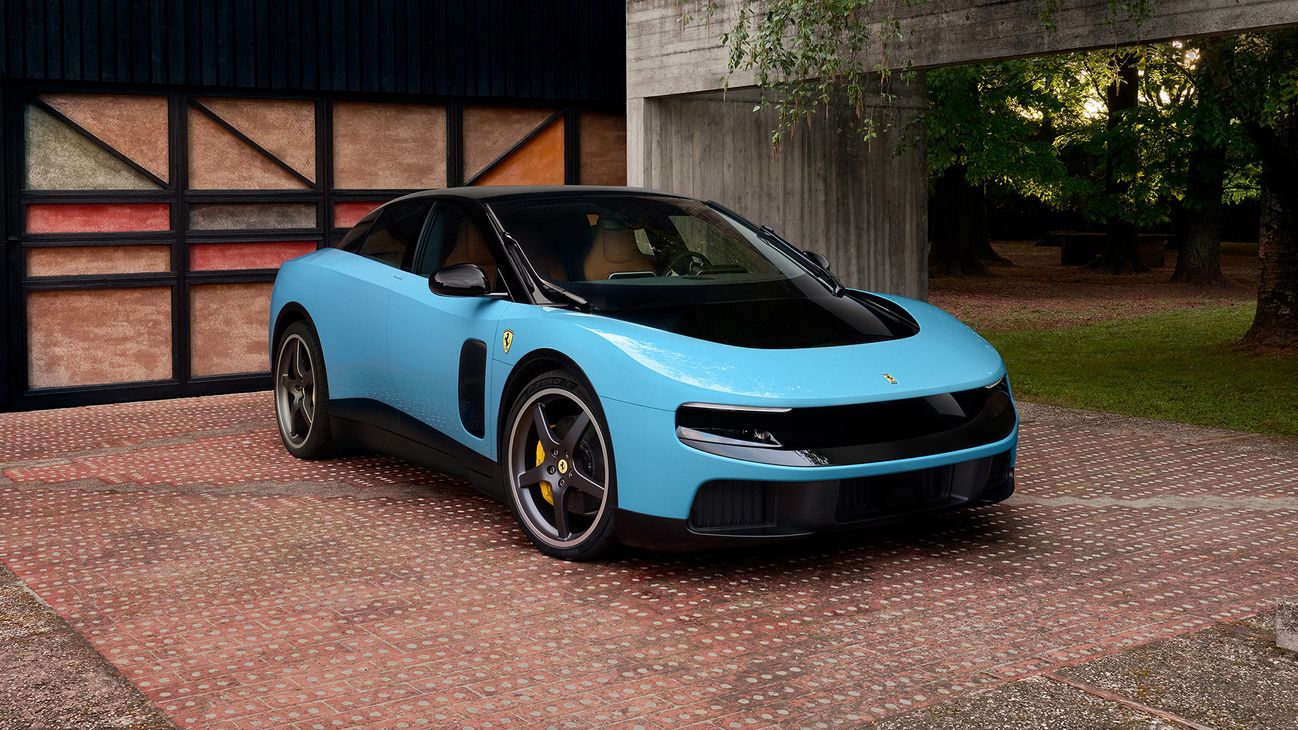
Ferrari Luce
"Tell, in case people have been living under a rock for the past sort of four days, just talk to us about the Luce. What do we know about it? Okay, it's Ferrari's first all-electric car built from the ground up as an electrics, a five door car..."
The Ferrari Luce is Ferrari’s first fully electric car, designed specifically as an EV rather than converted from a gas model. The episode highlights that it’s also a five-door layout and that people are reacting strongly to how different it looks.
Ferrari Luce is described as Ferrari’s first all-electric car built from the ground up as an EV. The hosts also frame it as a five-door EV, and emphasize that its design is a major departure from what Ferrari has done before.

Type 00
"...rebrand and car launch of years has been Jaguar's Type 00 and Ferrari saw that and they just went hold my b..."
The Type 00 is a new model name connected to Jaguar’s brand changes and new car launches. The podcast is mentioning it as a big moment for the company. It’s included because it signals what Jaguar is planning next.
The Type 00 is a new car name associated with Jaguar’s recent rebrand and launch efforts, positioned as part of the brand’s move into a new era. The podcast references it as a “car launch” moment, implying it’s significant in how Jaguar is trying to reset its image. It’s discussed because it represents a major step in the company’s product direction.
all-electric car built from the ground up
"Okay, it's Ferrari's first all-electric car built from the ground up as an electrics, a five door car..."
“Built from the ground up” means the car was designed as an EV right from the beginning, not adapted from a gas car. That can help the battery and motors fit better and work more efficiently.
“Built from the ground up” means the vehicle’s architecture was designed specifically for electric power from the start. That typically allows better packaging for the battery and electric drivetrain than converting an existing gasoline platform.
five door car
"Okay, it's Ferrari's first all-electric car built from the ground up as an electrics, a five door car and they have put the design out..."
A “five-door” car has four regular doors for passengers and an extra door at the back for loading (usually a hatch). The episode mentions it because it affects the overall shape and practicality of the EV.
A “five-door” layout refers to a body style with four passenger doors plus a rear hatch/trunk door. In EVs, this often matters for packaging because the battery and drivetrain influence how much interior space and cargo access the design can provide.
Pininfarina
"and they have put the design out not to their usual people, which you need [mention] Pininfarina or it's just our in-house."
Pininfarina is a famous Italian design company that has helped shape the look of many Ferraris. In this episode, they bring it up because the Luce isn’t following Ferrari’s usual design route.
Pininfarina is an Italian design and coachbuilding firm long associated with Ferrari styling work. The hosts mention it to contrast Ferrari’s usual design approach with the Luce’s more outsourced/agency-led process.
Johnny Ive
"which is run by a chap called Johnny Ive who very famously an Apple designer..."
Jony Ive is a famous designer best known for his work at Apple. The hosts mention him because his involvement is part of why the Luce’s styling is seen as a big departure from what people expect from Ferrari.
Jony Ive is a well-known industrial designer who previously led design work at Apple. The episode ties him to the Luce’s design agency, framing it as part of why the car’s look feels so different to Ferrari’s traditional aesthetic.
Mark Newsom
"and Mark Newsom who is also an industrial designer with he's done bits and pieces of cars..."
Mark Newsom is an industrial designer. In this segment, the hosts mention him as part of the design team connected to the Luce, helping explain the car’s unusual look.
Mark Newsom is described as an industrial designer with experience including work on cars. The hosts mention him alongside Jony Ive to explain the design team behind the Luce and why its styling is controversial.
controversial look
"It's been put to an agency, Love From... It's been a very controversial look. It's a complete departure..."
They’re saying the Luce’s design is polarizing—some people hate it and others might like it. The episode treats it as a big deal because Ferrari’s design language is usually more consistent.
The hosts are discussing how the Luce’s styling is being received as a “controversial look,” meaning it’s polarizing rather than universally appealing. In car culture, that kind of reaction often reflects how strongly a brand’s visual identity is tied to its heritage.
five seat SUV
"I think and also I think a lot of people are asking the question about why it has to be a five seat SUV for their first EV."
A “five seat SUV” is a bigger family car type meant for about five people. The hosts are basically asking why Ferrari’s first electric car would be that kind of vehicle.
“Five seat SUV” describes a sport-utility vehicle configured for five passengers. The hosts use it to question Ferrari’s strategy for its first EV—why start with a family-oriented SUV instead of a more traditional Ferrari-style layout.
EV
"I completely agree. And I actually don't think the problem is that it's an EV because I've spent a lot of time looking at the comments this week on, you know, the stuff that we put up about [208.4s] and just comments generally."
EV just means an electric car. It runs on electricity from a battery, not gasoline, and in this segment the hosts say people aren’t mainly upset about it being electric.
EV means electric vehicle—cars powered primarily by electric motors and a battery rather than a gasoline engine. Here, the hosts argue that the criticism isn’t really about the car being an EV, but about how it looks and whether it fits Ferrari’s identity.
prancing horse
"My bigger issue is that it does not deserve that lovely prancing horse on the side of the car. It just looks weird."
The “prancing horse” is the Ferrari logo. The hosts are saying the car looks so different that it doesn’t feel like it should have that Ferrari badge on it.
The “prancing horse” is Ferrari’s iconic shield logo (the Cavallino Rampante). In this segment, the hosts say the car’s design feels wrong for carrying that emblem, implying a mismatch between branding identity and the new model’s styling.

Dacia Springs
"...ne, I think my favorite is that you could have 38 Dacia springs, which equates to over 5,000 miles of range. And ..."
The Dacia Spring Electric Cargo is a small electric car that’s set up to carry items, not just people. The podcast is making a point about how much you can realistically do with it—using the vehicle’s size and range as the basis for the comparison. It’s aimed at showing how practical a small electric vehicle can be for deliveries.
The Dacia Spring Electric Cargo is a small electric vehicle adapted for carrying goods, based on the Dacia Spring platform. The podcast highlights a playful but practical point: you can fit many “Dacia Springs” worth of cargo into a comparison, emphasizing how the vehicle’s packaging and range planning matter. It’s discussed because it represents low-cost electric mobility and light commercial use.
122 kilowatt hour battery
"It's got a, is it 122, I'm just trying to get the stuff, 122 kilowatt hour battery, does that sound about right?"
“122 kilowatt-hour battery” is the size of the EV’s battery. Bigger battery capacity usually means you can drive farther before needing to recharge, but it’s not the only factor.
A 122 kilowatt-hour (kWh) battery refers to the battery’s energy capacity, measured in kilowatt-hours. In EVs, a larger kWh number often means more potential range, though real-world mileage still depends on efficiency, weight, and driving conditions.
320 miles of range
"but the range is about what, 300 and something miles? 320 miles? Just a bit like, so you're also not going to make it technically like really wow either"
“Range” is how far the EV can drive on one full charge. The hosts are basically saying 320 miles isn’t a standout number compared with what people expect from EVs now.
“Range” is the distance an EV can travel on a full charge under a specified test cycle. The hosts frame “320 miles” as only “average” because newer EVs (and different battery/efficiency setups) can sometimes exceed that, especially for similar battery sizes.
gross NMC battery
"Yeah, 122 hour gross NMC battery, 320 miles of range."
“NMC” is the type of chemistry inside the EV battery cells. The “gross” wording is about how the capacity is measured/quoted, and it matters because not all of that energy is necessarily usable for driving.
“Gross NMC battery” points to both the battery capacity accounting method (“gross”) and the cell chemistry: NMC (nickel manganese cobalt). NMC is a common lithium-ion chemistry used in many EVs because it balances energy density and cost, but the exact pack design affects how much usable energy you actually get.
0-62 in two and a half seconds
"And yes, it can do 0-62 in two and a half seconds, but so kind of old though these days"
“0–62” means how fast the car can go from standing still to 62 (mph). Two and a half seconds is very quick acceleration, but it doesn’t automatically mean the car has great range.
“0–62” is a common EV/performance metric: how quickly a car accelerates from 0 to 62 mph (or sometimes 100 km/h, depending on region). A “two and a half seconds” claim indicates very strong straight-line acceleration, even if the hosts argue the range isn’t as impressive.
cut out at the front
"But I think it might be one of those cars you need to see in the metal, because I think the cut out at the front is really dramatic."
A “cut out” at the front is a styling feature that changes the shape of the front fascia (the nose of the car). Hosts describe it as “really dramatic,” implying the design is a major visual talking point for the Ferrari Luce.
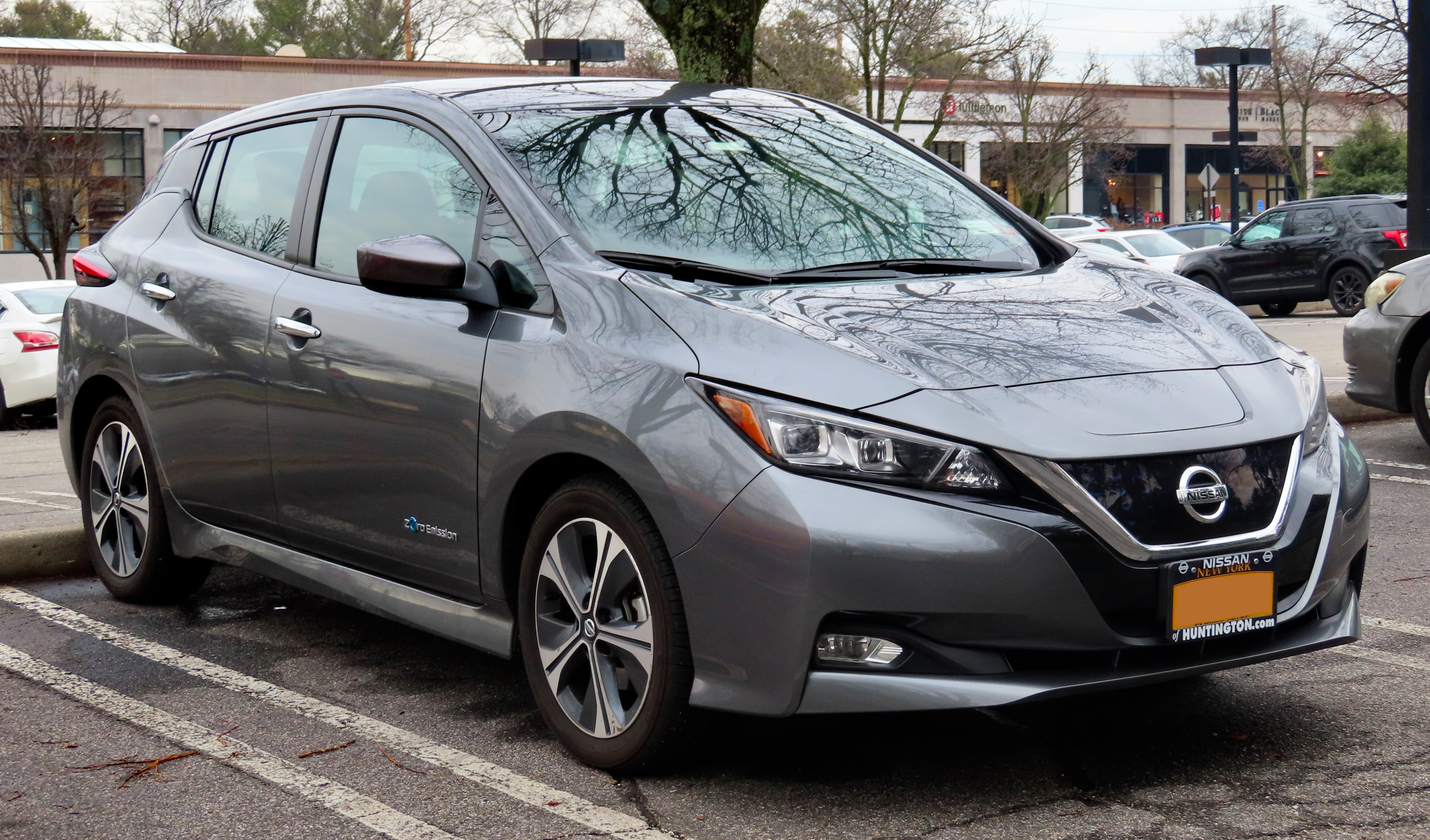
Nissan Leaf
"But the problem is, it's exactly the same launch colour that Nissan used for the leaf. So the internet is full of pictures of the leaf and the luce."
The Nissan Leaf is an electric car. In this discussion, it’s mentioned because the hosts say Ferrari’s Luce used the same launch color as the Leaf, so people already associate that color with Nissan’s EV.
The Nissan Leaf is an electric car, and here it’s used as a reference point for the launch color Ferrari Luce allegedly shares. The comparison matters because it highlights how a specific EV-associated color became widely photographed, making the Luce’s similar choice feel less “fresh” to the internet.
Milan stock exchange
"because the shares fell 8% of the Milan stock exchange following the reveal. I haven't checked as to whether they've bounced back."
The Milan stock exchange is where companies’ shares are traded in Italy. The hosts mention it because Ferrari’s stock price fell there after the new car was revealed.
The Milan Stock Exchange is Italy’s major stock market venue, referenced here to quantify Ferrari’s share-price drop after the Luce reveal. It’s used as a concrete indicator of how investors reacted to the announcement.
move into electrification
"I think they've come back slightly, but it's obviously this move into electrification is massive. But I think on a different note, I think for me,"
“Electrification” means car companies are moving toward electric drivetrains instead of relying only on gasoline engines. In this segment, they suggest that shift is big enough to worry investors.
“Electrification” here refers to automakers shifting their lineup toward electric powertrains (like battery-electric vehicles and related technologies). The hosts frame it as a major strategic change for Ferrari, implying it affects both product decisions and investor confidence.
halo EV
"if Ferrari is now going, having a halo EV is part of our future then, we've just moved in."
A “halo EV” is a brand’s standout electric car that’s meant to be the showpiece. It’s usually the most exciting example of what the company wants to build next.
A “halo EV” is a brand’s headline electric vehicle—usually a premium, attention-grabbing model designed to represent the company’s technology and design future. It’s often more about signaling and engineering credibility than about being the most practical or affordable EV in the lineup.
plug-in hybrid
"Lo and behold, he's in a plug-in hybrid now. Lo and behold, he's just said to me, I quite fancy trying the electric transit."
A plug-in hybrid is a car that uses both electricity and fuel. You can charge it like an EV, but it also has a gas engine for longer trips.
A plug-in hybrid (PHEV) is a hybrid car that can be charged from an external power source, usually via a home or public charger. It typically combines an electric motor with a gasoline engine, letting you drive some distance on electricity before the engine takes over.

Toyota Hilux
"...e new pickups, haven't we? We've got the electric Hilux and we've got the electric Isuzu D-Max, I think i..."
The Toyota Hilux is a pickup truck, usually used for work and hauling. The podcast talks about an electric version, meaning it would run on a battery instead of petrol or diesel. That’s why it’s mentioned—people are comparing what electric pickups can do.
The Toyota Hilux is a widely used pickup truck known for durability and practical, work-focused capability. The podcast mentions an “electric Hilux,” placing it in the context of new electrified pickups being discussed alongside other models. It’s relevant because electrifying a traditional workhorse segment changes how people think about range, charging, and daily usability.
recall
"So I'm not using the buzzer much because I've got a recall on it. Oh, another one. Well, no, it's nothing to worry about, it's just a fire risk, it says."
A recall is when the car maker says there’s a safety problem and asks owners to take action. Here, the recall is related to a potential fire risk, and the message explains what to do if it happens.
A vehicle recall is a manufacturer-initiated safety action when a defect or risk is identified. In this segment, the host mentions a recall tied to a fire risk and then quotes the safety instructions for what to do if a fire occurs.
two wheels
"So I'm doing fewer miles in that and whether, while the weather's nice, I've been on two wheels. Yeah. And you had to go in the Alpine this week, didn't you?"
“Two wheels” here means a motorcycle situation where one wheel isn’t on the ground. The host is basically saying they’ve been riding a bike in a way that’s physically intense, so they didn’t want a car that would feel jarring.
Riding “on two wheels” refers to using a motorcycle in a way that lifts one wheel off the ground, such as during balance maneuvers or wheelies. The host mentions it as part of their week’s driving, contrasting it with getting into a car that feels too firm after a long motorcycle session.
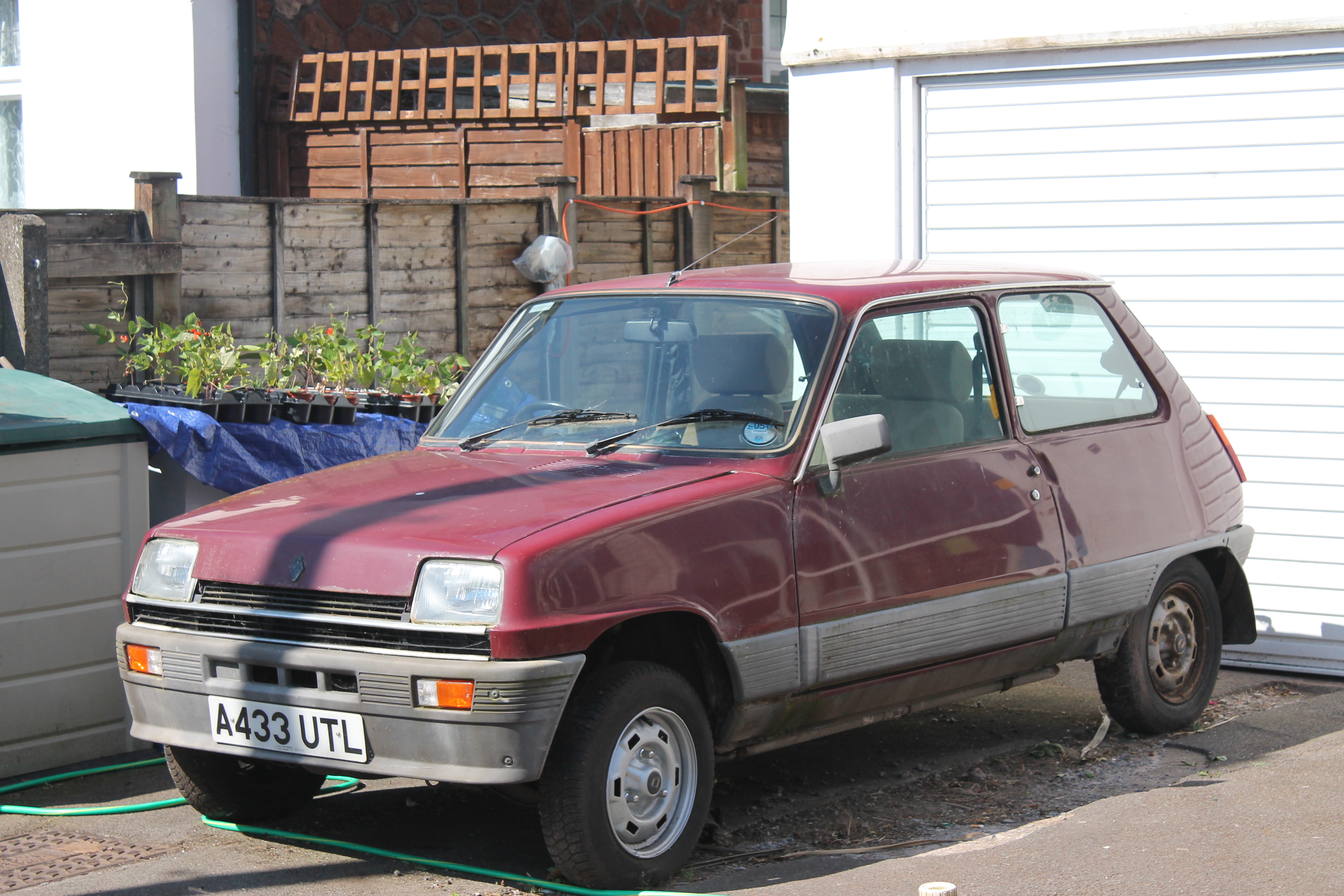
Renault 5
"This is what I was going to say. I absolutely love this car. I love the Renault 5. So my long-term Renault 5 video has gone up and is getting a lot of views..."
The Renault 5 is a small, fun French hatchback that many people love for being easy and enjoyable to drive. Here, the host is saying they really like it, but they’re also comparing it to another car’s everyday features.
The Renault 5 is a classic French hot hatch that’s known for being small, light, and fun to drive. In this segment, the hosts highlight it as a long-term favorite and focus on practical usability—specifically how it compares to the Alpine A290 in everyday comfort details like cup holders.

5 Renault 5
"... was very difficult because I really did love the Renault 5 for a year. It's just a cracking car. So I was in..."
The 5 E-Tech Electric is the electric version of the Renault 5. The podcast says they liked it a lot during a year of using it. It’s mentioned because it’s an example of a small electric car that can work well day to day.
The “5 E-Tech Electric” refers to the electric version of the Renault 5, using a battery-electric powertrain. The podcast frames it as the car the host loved for a year, then moved on from, which suggests it’s being discussed as a strong all-rounder in the small electric segment. It’s relevant because it shows how an electric small car can fit real daily life.
cup holder
"There's no cup holder. Like what were they thinking? Like what they think that just because you want to have fun and, you know, and have a kind of sporty, fun little, you know, hot hatch that you don't also want to have a cup of tea in the car?"
A cup holder is the place in a car where you can put a drink so it doesn’t spill. The host is upset because the car they’re talking about doesn’t have one, so they’re improvising and getting burned when the tea slips.
A cup holder is a built-in storage feature designed to secure a drink in the cabin while driving. Here it’s treated as a critical usability requirement, because the host says they’re currently forced to carry tea between their legs and have had burns from spills.
hot hatch
"Like what? Is it like that's classed as a demographic that doesn't take a drink with them? It literally would stop me. I found myself googling."
A hot hatch is a small hatchback that’s been tuned to feel more exciting to drive. It’s meant to be sporty, but the host is saying it should still have practical features for daily life.
A hot hatch is a performance-oriented version of a hatchback, typically tuned for quicker acceleration and more engaging handling than a normal family hatch. The host uses it to describe the kind of “sporty, fun” car they want—while still expecting basic everyday practicality like cup holders.

Alpine A290
"Because for me, the Alpine A290 is literally my, it's my spirit car. Honestly, I love it that much, but it's got to get a cup holder."
The Alpine A290 is a sporty small car from Alpine. The host really likes how it drives, but they’re annoyed it doesn’t have a cup holder, which they say makes daily life less convenient.
The Alpine A290 is a small, modern hot-hatch from Alpine (Renault’s performance brand), positioned as an enthusiast-focused, fun-to-drive car. In this segment, it’s treated as a “spirit car,” but the host complains it’s missing a cup holder—highlighting how everyday usability can matter as much as driving feel.

Hyundai Ioniq 5
"...the same folder as the rear wiper on the original IONIQ 5, doesn't it? In so much as, no amount, no amount ..."
The Hyundai Ioniq 5 is an electric car (it runs on a battery instead of petrol). The podcast is talking about a small design detail on the car, like where parts are placed. Those details can affect how easy the car is to use day to day.
The Hyundai Ioniq 5 is a fully electric crossover built around a modern battery and fast-charging setup. It’s discussed in the context of a specific detail—something like a rear wiper location or related design feature—showing how the car’s layout and packaging can be distinctive. That kind of detail matters because it affects usability, visibility, and how the car is built.
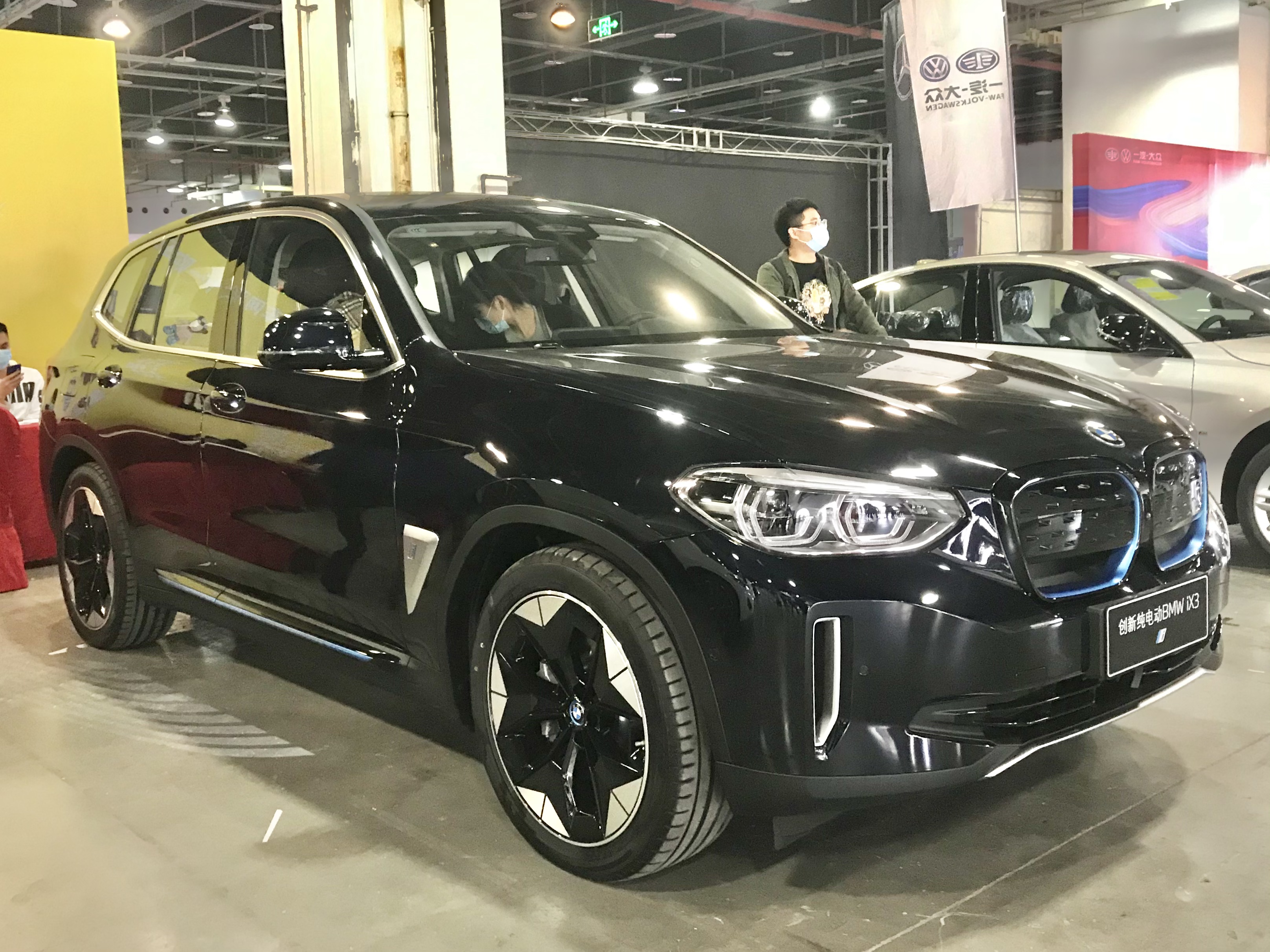
Bmw Ix3
"...ve all been spending some time in the GLC and the BMW iX3, so we've managed to get the first twin test of t..."
The BMW iX3 is an electric SUV made by BMW. In the podcast, they talk about testing it alongside another SUV to see how it compares. It’s mainly about how the electric SUV drives and works day to day.
The BMW iX3 (G08) is an electric SUV version of BMW’s X3 platform, designed to deliver BMW-style driving dynamics with an all-electric powertrain. The podcast mentions it alongside the GLC in a “twin test,” meaning they’re evaluating how these SUVs compare in real-world use. It’s discussed because it’s a mainstream electric SUV option with a focus on everyday usability and performance feel.

GLC
"Sadly for the GLC, it's the year that we get the BMW iX3 and then the Volvo EX60 is coming as well. So you almost feel a little bit sorry for it..."
The “GLC” is a Mercedes-Benz SUV. They’re talking about how good it feels to drive, and how the ride changes depending on whether it has air suspension or the normal suspension.
“GLC” refers to the Mercedes-Benz GLC, a compact luxury SUV known for its balanced ride and comfort-focused chassis tuning. In this segment, they’re comparing how the GLC stacks up against newer electric rivals and discussing how suspension choice changes the feel.

Volvo EX60
"Sadly for the GLC, it's the year that we get the BMW iX3 and then the Volvo EX60 is coming as well."
The Volvo EX60 is Volvo’s electric SUV that they say is coming soon. They’re basically saying the timing isn’t great for the GLC because more EV options are on the way.
The Volvo EX60 is Volvo’s upcoming electric SUV model mentioned as an additional rival in the premium EV space. In this discussion, it’s used to explain why the Mercedes-Benz GLC’s appeal is harder to justify when EV alternatives are arriving.
air suspension
"It was interesting, the car we had was on air suspension... It does feel a little bit sort of wallowy... I genuinely think it would probably be better without the air suspension."
Air suspension is a suspension system that uses air-filled “springs” instead of regular metal springs. It can make the ride feel softer, but in this case they think it might also feel a bit too loose or floaty.
Air suspension uses air-filled springs (instead of steel coils) to automatically adjust ride height and damping characteristics. In this segment, they say it can feel “wallowy” and dynamically change the ride, and they even suggest the GLC might feel better without it.
passive dampers
"I drove the standard GLC on its standard passive dampers back when I was on the launch... and that was actually really, really good."
Passive dampers are the normal shock absorbers that don’t adjust themselves. They’re saying the standard setup can still ride nicely, even if it’s not as soft as the air-suspension feel.
Passive dampers are shock absorbers that don’t actively change their settings; their behavior is fixed by design. The hosts contrast this with air suspension, saying the standard GLC with passive dampers felt “really good,” even if it could feel a bit firm at times.
range difference
"But it's the range difference between the IX3 and the GLC, isn't it? And that's the thing now..."
“Range difference” means how far a car can go before it needs charging. They’re saying the EVs’ range makes the comparison tougher for the GLC, even if the GLC is a great car.
“Range difference” refers to how far an EV can travel on a charge compared with alternatives being discussed. Here, it’s framed as a key reason the BMW iX3 and the Mercedes-Benz GLC feel mismatched in value—because EV range expectations are raising the bar.
BYD
"the rumor mill this week for me has been the news that BYD is potentially putting a bid together to enter F1 with ex-Red Bull boss, Christian Horner at the helm."
BYD is a big car company from China that makes electric cars and batteries. The host is talking about BYD trying to get into Formula 1 to get more global visibility.
BYD is a major Chinese automaker known for large-scale EV and battery production. In this segment, the host discusses BYD potentially bidding to enter Formula 1, highlighting how automakers use top motorsport exposure to build brand awareness.
Christian Horner
"the news that BYD is potentially putting a bid together to enter F1 with ex-Red Bull boss, Christian Horner at the helm."
Christian Horner is a key leader in Formula 1, best known for running Red Bull Racing. The host is saying he could be involved in BYD’s plan to join F1.
Christian Horner is the longtime team principal of Red Bull Racing, and he’s referenced here as potentially leading BYD’s effort to enter Formula 1. His involvement matters because team principals shape strategy, operations, and how a new entrant builds credibility quickly.
Formula E
"I was kind of a little surprised that maybe the Formula E wasn't where they were going. But I guess given all the electrification now in F1, I don't know, do you reckon that's going to be a go and mic?"
Formula E is a racing series where the cars are fully electric. The host is comparing its audience size and popularity to Formula 1.
Formula E is an all-electric single-seater racing series. The host compares it to Formula 1 in terms of viewership and discusses how electrification rules and popularity affect where a company like BYD might want to invest.
Formula One
"Formula E has quite a large read of viewership, but it pales into comparison with Formula One, which is a massive sport."
Formula One is the biggest, most watched kind of race series in the world. The host is saying it’s the more valuable place for a company to get attention.
Formula One (F1) is the top tier of global open-wheel motorsport, with massive mainstream attention compared with other series. The host argues that if BYD wants maximum exposure, F1 is the bigger platform, especially as electrification rules evolve.
50-50 with electrification and internal combustion power
"It's a strange one, especially this year was when they went 50-50 with electrification and internal combustion power in the carts."
The host is talking about a rules change where the cars use a mix of electric power and regular fuel power. They’re saying that specific mix didn’t work out well for racing.
This refers to a temporary balance in F1 powertrain rules, where a portion of the performance/energy comes from electrified systems and the rest from internal combustion. The host says it was unpopular, implying teams and fans didn’t like the resulting racing characteristics.
60-40 in favor of the internal combustion
"So they're going to wind it back to 60-40 in favor of the internal combustion for next year."
The host says the rules are going to change again so the cars rely more on regular fuel power than electric power. It’s a way of tuning the balance of the technology used in the race cars.
This is the next planned split in F1 powertrain rules, shifting more emphasis back toward internal combustion relative to electrified components. The host uses it to argue that BYD’s potential F1 bid would still be about exposure, even if the tech mix isn’t fully electric.
Volkswagen
"they acquired the sponsorship for that under the nose of Volkswagen. And the tournament was in Germany, and yet the main sponsor was BYD everywhere, wasn't it?"
Volkswagen is another big car brand. The host is saying BYD got major sponsor visibility in a tournament where Volkswagen used to be involved.
Volkswagen is a major global automaker referenced here as the previous sponsor whose sponsorship BYD allegedly took over for a major football tournament. The point is how automakers compete for high-visibility sponsorships to build brand recognition.

Byd Seal
"...and rather than thinking we're going to flog some seals on the back of it. I think from what we know of B..."
The BYD Seal is an electric car, meaning it runs on a battery. The podcast mentions it with a joke about the name, but the point is that it’s a real model people are talking about. It’s included because it’s part of the current EV lineup.
The BYD Seal is an electric car positioned as a more mainstream, efficient alternative in the EV market. The podcast mentions “flog some seals,” which is a wordplay reference to the model name, and it suggests the discussion is about how the car is marketed or perceived. It’s brought up because it’s a notable EV model and often discussed in terms of value and practicality.
MG S6 trophy
"So we've got, I found a lease on an MG Motors, MG S6 trophy. So you're talking about a 329 mile range car there."
The MG S6 Trophy is an electric SUV from MG Motors. They’re talking about it as a good deal because it’s supposed to go a long way on a charge and still feels roomy and practical for families.
The MG S6 is an MG Motors electric SUV, and the “Trophy” trim is positioned as a more premium, higher-spec version. In this segment they’re highlighting its long claimed electric range (around 329 miles) and lease-style pricing, framing it as a family-friendly EV value.

Audi S6
"...So we've got, I found a lease on an MG Motors, MG S6 trophy. So you're talking about a 329 mile range ..."
The Audi S6 is a faster, sportier version of an Audi sedan. The podcast mentions it while talking about a specific listing and range expectations. That’s why it’s included—people are comparing what they can get from a particular car offer.
The Audi S6 is a high-performance version of the A6, typically offering stronger acceleration and sportier tuning than the standard model. In the podcast, it’s mentioned in the context of a lease and a claimed range figure, which suggests the discussion is centered on electric range or efficiency comparisons. It comes up because it’s a recognizable performance car used to frame what buyers might expect from a specific deal or spec.

Polestar 4 long range single motor
"Or how about a used 2025 Polestar 4 long range single motor, so you're talking 385 mile range premium car there, £31,000 and it's only got 17,000 miles on it as well."
The Polestar 4 is an electric premium SUV/crossover. This “long range single motor” version is meant to get you farther on a charge, and the hosts are debating how comfortable it feels to ride in.
The Polestar 4 is a premium electric crossover, and the “long range single motor” version is the rear/one-motor configuration aimed at maximizing efficiency and range. The hosts discuss its real-world ride quality and ownership experience, comparing it to other EVs and calling it a “cracking car.”
one pedal driving
"I wrote into the podcast a few weeks ago to ask if you heard any news about one pedal [1497.3s] driving and regen paddles coming to the Renault 5."
One-pedal driving means you can drive and slow down mostly using just the accelerator pedal. When you take your foot off it, the car slows itself down using the battery’s energy recovery.
One-pedal driving is an EV driving style where the accelerator pedal controls both acceleration and deceleration. When you lift off the pedal, the car uses regenerative braking to slow down, reducing how often you need the brake pedal.
regen paddles
"I wrote into the podcast a few weeks ago to ask if you heard any news about one pedal [1497.3s] driving and regen paddles coming to the Renault 5."
Regen paddles let you choose how strongly the car slows down when you lift off the accelerator. It’s a way to recover energy and reduce brake use.
Regen paddles are controls (often behind the steering wheel) that let the driver adjust regenerative braking strength. More regen means stronger slowing when you lift off the accelerator, helping manage energy use and brake wear.
80%
"I have been driving an EV since 2019 and I'm a bit of an earlier doctor. If I needed a charge away [1601.1s] from home, I would only charge up to 80% to let others use the charger if needed, which I think [1605.8s] probably all of us do, and charging gets much lower anyway."
Charging to 80% means you stop the battery at about four-fifths full instead of topping it all the way up. It can be faster for day-to-day charging and may be easier on the battery over time.
Charging to 80% refers to limiting the battery’s state of charge during everyday charging. Many EV owners do this because charging speed often slows as the battery gets fuller, and keeping the battery from sitting at very high charge can be gentler for long-term battery health.

Dodge Charger
"...would only charge up to 80% to let others use the charger if needed, which I think probably all of us do, a..."
The Dodge Charger is a big, powerful car model. In the podcast, it’s mentioned because the driver talks about charging only up to about 80% so other people can use the charger too. That’s about how you manage charging, not about changing the car itself.
The Dodge Charger is a large, performance-oriented sedan/coupe-style car known for strong power and a muscular design. In an EV-charging discussion, it’s mentioned in the context of charging behavior—specifically limiting charge to around 80% to keep chargers available for others. That’s why it comes up: it’s a recognizable car name used to talk about real-world charging habits.
EV drivers
"I would only charge up to 80% to let others use the charger if needed, which I think [1605.8s] probably all of us do, and charging gets much lower anyway. Is it me or do you think EV drivers [1610.6s] are now less considerate and staying at charges longer than needed?"
“EV drivers” just means people who drive electric cars. In this part, they’re asking whether electric-car owners are being less considerate when using shared charging stations.
“EV drivers” is used here to describe people who drive battery-electric vehicles and how they behave at public chargers. The listener’s question is about whether EV charging etiquette has changed—specifically, whether some drivers stay plugged in longer than needed.
public charging
"it was at times a bit tricky to charge and it could be quite a sort of stressful thing. But now, I mean, I don't plan charging, public charging, I just pull into services and plug in"
Public charging means plugging your EV into a charger that’s available outside your home. You usually have to find an open spot and use the station’s payment or app to start charging.
Public charging is using charging stations that are accessible to anyone, typically at places like motorway services, shopping centers, or public streets. It’s different from charging at home because you’re relying on station availability and payment/app workflows.
etiquette
"there was almost was a, in those earlier days, there was a bit of a kind of an etiquette, wasn't there? There was. There was. About it."
In EV charging, “etiquette” refers to informal norms around how long you should occupy a charger and how you behave when others need access. The hosts contrast early-adopter behavior (helping each other at chargers) with today’s more anonymous, “like a petrol pump” approach.
EV chargers
"because where EV chargers tend to end up in the busy motorway services, it's often quite difficult to see if they're, if they are full"
EV chargers are the machines where you plug in an electric car to charge it. At busy places, it can be hard to tell if a charger is free or already taken.
EV chargers are the charging stations that supply electricity to electric vehicles, often with multiple bays at a site. In busy locations, the key issue is whether bays are occupied and whether drivers can tell at a glance.
icing
"I'll tell you what, I don't see as much, I don't see as much icing. Do you remember when we used to talk a lot about being iced? So this would be ice cars parking in EV charging, charging bays."
“Icing” means someone parks a gas car in an EV charging spot, so the EV can’t plug in. It’s basically blocking the charger.
“Icing” is EV-charger etiquette slang for when an internal-combustion (gas/diesel) car parks in an EV charging bay, blocking access. It’s a frustration point because EV drivers can’t charge if the bay is occupied.
EV bay
"“...I see more EV owners not plugged in in an EV bay these days...” “...if it's taking things to the literal level, isn't it? If you see something written on the tarmac that says EVs only...”"
An EV bay is a parking spot meant for electric-car charging. The problem being discussed is that some people park there even when they aren’t charging, so it’s annoying for drivers who actually need the charger.
An EV bay is a designated parking spot at a charging location intended for electric-vehicle charging. The hosts are describing how some drivers park in these areas even when they’re not actively charging, which blocks access for others.
EVs only
"“...sometimes people say, if it's taking things to the literal level, isn't it? If you see something written on the tarmac that says EVs only...” “...people just park there and then don't realise that it's a charging date.”"
“EVs only” is a sign that means the spot is reserved for electric cars. The hosts are saying some people see it and think they can park there, even if they aren’t actually using the charger.
“EVs only” is a charging-site restriction marking that indicates the space is reserved for electric vehicles, typically because it’s tied to charging availability. The hosts use it as an example of how some drivers interpret the sign as permission to park rather than as a requirement to charge.
Skoda Epic
"“...keen to know your thoughts on a high spec Skoda Epic for approximately 32 grand versus something like a Leap Motor B10 at 30 grand...” “...it did cross my mind to actually a high spec one of those because it really is surprisingly spacious inside...”"
The Škoda Epic is an EV the hosts talk about as being roomy enough to work as a family car. They compare it to another EV and suggest people may choose it based on how it drives and the brand they want.
The Škoda Epic is positioned here as a high-spec EV option that’s described as surprisingly spacious and usable as a family car. The hosts compare it directly against a Chinese EV, focusing on how it feels to drive and how much buyers care about brand image.

Alpina B10
"...ately 32 grand versus something like a Leap Motor B10 at 30 grand as well. Given the Chinese cars are a..."
The Alpina B10 is a luxury car that’s tuned to feel faster and more special than a standard version. The podcast is talking about how much it costs compared with another similarly named car. It comes up because people want to know whether the price matches the features.
The Alpina B10 is a performance-oriented luxury sedan based on a BMW 5 Series platform, tuned for a balance of comfort and speed. The podcast compares pricing against a “Leap Motor B10,” indicating the conversation is about value and what buyers get for the money. It’s discussed because it’s a premium performance option where cost and specification matter a lot.

Leap Motor B10
"“...versus something like a Leap Motor B10 at 30 grand...” “...the B10 is quite a bit bigger and that's not always useful for everybody if you've got, you know, different driving or parking...”"
The Leap Motor B10 is another EV option the hosts compare to the Škoda Epic. They point out that it’s bigger, which can make parking and everyday use less convenient for some buyers, even though it offers good features for the money.
The Leap Motor B10 is discussed as a Chinese EV alternative priced around 30 grand, with the key comparison being size and perceived value. The hosts suggest its larger footprint can be less convenient for some people, even if it feels “pretty nice inside” and comes with lots of equipment.
brand image
"“...I think there is an aspect of brand image. Some people prefer having a smaller car...” “...it just comes down to personal taste to, you know, how much you value how the car drives and your brand image...”"
Brand image is basically what people think of a car brand—like how it feels or what it says about you. The hosts suggest some buyers choose a car partly because of that, not just because of the features or price.
Brand image is the buyer perception of a car marque—how it’s viewed socially and emotionally—separate from measurable specs like space, equipment, or price. In this discussion, it’s presented as a reason some people might choose the Škoda Epic over the Leap Motor B10 even if the Chinese car is competitive on quality.
automatic license
"I'm one sort of four digits and a couple of letters after that. But I'm glad to because it's a nice easy one to read. I'm one of the only from the few people who owns an automatic license."
An automatic license means you’re only allowed to drive cars with automatic transmissions. If you have one, you may not be legally able to drive a manual car without getting the right qualification.
An “automatic license” is a restricted driving license that only allows you to drive vehicles with automatic transmissions. It matters because it changes what cars you’re legally allowed to drive, and it can affect whether you ever learn to operate a manual gearbox.

Volkswagen E up
"I'm one of the only from the few people who owns an automatic license. I did so as I'll only drive ever drive EVs. Yes, I have a beautiful X little X demo Volkswagen E up in Kings red metallic."
The Volkswagen E up is a small Volkswagen that runs on electricity instead of gasoline. It’s meant for city driving and everyday errands, and it was an early example of a normal-sized car going electric.
The Volkswagen E up is an all-electric version of the VW up! city car, designed for short trips with a simple, compact footprint. It’s notable because it’s one of the earlier mainstream EVs that kept the “small car” idea while going electric.
manual gearbox
"I don't think I'd be happy never to drive manual gearbox again. I realize that probably the only one who says that but no, I would be happy never to drive a manual manual. Vicky will disagree."
A manual gearbox is the kind of car where you choose the gears yourself, usually using a clutch pedal and a stick. The discussion here is about whether people miss that experience or prefer automatic driving.
A manual gearbox is a transmission controlled by the driver using a clutch and gear lever, rather than relying on the car to shift automatically. The hosts are discussing how some people prefer the “analog” feel of manual driving, while others are happy to never drive one again.
analogue thing
"So I just wonder if there's a bit more of that whole analogue thing that might start coming back in with the kids. I don't know."
When they say “analogue,” they mean the older, more hands-on way of driving. They’re talking about whether kids might start wanting the more traditional experience instead of fully automated driving.
“Analogue” here is shorthand for the more traditional, human-driven aspects of driving—like manual gear selection and direct mechanical interaction—versus modern cars that automate more tasks. The hosts are wondering if younger drivers will start wanting that more old-school feel again.

Citroen 2CV
"And we had loads of comments in actually about the Citroen 2CV which you were talking about on the podcast last week."
The Citroën 2CV is a classic Citroën that’s known for being simple and weird in a charming way. People mention it when they’re talking about old-school driving and cars that feel more “mechanical” than modern ones.
The Citroën 2CV is a famously quirky, air-cooled, front-engine small car from Citroën, known for its simple design and “do anything” rural-roads character. It’s often brought up in conversations about analog driving because it represents a very old-school, mechanical feel compared with modern cars.

Volkswagen Id Buzz
"...s it up big time. Not unlike how VW messed up the ID buzz. I thought we wanted to get your reaction to this..."
The Volkswagen ID. Buzz is an electric van-style vehicle. The podcast is talking about how it didn’t meet expectations, meaning people felt it wasn’t as good as they hoped. It’s mentioned because it’s a big, visible electric family vehicle.
The Volkswagen ID. Buzz is an electric version of the classic “Bus” concept, built as a people-moving van with a modern electric powertrain. The podcast references it in the context of “VW messed up the ID Buzz,” implying there were expectations versus the final outcome. It’s brought up because it’s a notable electric family/utility vehicle and often discussed for how well it delivers on practicality and design goals.
Stellantis
"...I love the 2CV2 much that I fear Stellantis will mess it up big time."
Stellantis is a big car company that owns multiple brands. In this clip, someone is worried that Stellantis could ruin a retro-style car concept. It’s basically a complaint about how the company might change the original idea.
Stellantis is a major global automaker formed from the merger of Fiat Chrysler Automobiles and PSA Group. In this segment, the speaker fears Stellantis will “mess it up,” tying the company to concerns about how a retro-inspired vehicle might be handled. It’s used as a shorthand for corporate decision-making affecting product direction.
retro premium vehicle
"I thought we wanted to get your reaction to this one, Mike, as a retro premium vehicle instead of a van comparing rather poorly in their opinion to the Kia PV5."
“Retro premium vehicle” means a car that looks like it’s inspired by the past, but is sold as a nicer, more upscale product. In this discussion, that framing matters because people judge it not only by specs, but by whether it captures the right vibe. That’s why the debate gets heated.
“Retro premium vehicle” describes a strategy of combining a nostalgic design language with higher-end positioning and features. In this segment, the hosts frame the comparison as “retro premium” rather than just a van, implying expectations about styling, brand feel, and product execution. That’s why reactions to the ID Buzz and other vans are emotionally charged beyond simple practicality.

PV5 Kia Pv5
"...n comparing rather poorly in their opinion to the Kia PV5. I thought that was quite controversial statement..."
The PV5 is an electric car mentioned in a comparison discussion. The podcast says some people think it compares poorly to another PV5-related option, and that caused disagreement. It’s included because it’s being evaluated against similar electric cars.
The PV5 is an electric vehicle that the podcast compares—somewhat controversially—to the Kia PV5, implying differences in performance, value, or overall appeal. The mention suggests listeners debated whether the PV5 is being judged fairly. It’s discussed because it’s part of the ongoing conversation about how competing EVs stack up in the same segment.
retro pastiche
"…they said they definitely need to do a retro pastiche two CV. If you market a car with a name like two CV, there's nothing else you can do… It's a pathetic attempt at the retro looking camper concept."
“Retro pastiche” means copying the style of an older car or era, but making it new. The speaker is basically saying the attempt doesn’t work and doesn’t feel authentic or appealing.
A “retro pastiche” is a design that imitates the look and styling cues of an older era, but as a modern interpretation rather than a faithful reproduction. Here, the hosts criticize a proposed retro-style camper concept as being a weak attempt to capture that classic vibe.
Frank Stephenson
"…you've got to get Frank Stephenson, the designer to do it, because if you look, he revived the Mini. He revived the Fiat 500."
Frank Stephenson is a car designer. The hosts are saying he’s responsible for bringing back the look of some classic cars, so they think he should design the new 2 CV too.
Frank Stephenson is a well-known automotive designer credited with shaping the look of multiple modern retro-inspired cars. In this segment, the hosts argue that he “revived” the Mini and Fiat 500, so he’d be a logical choice to design a new Citroën 2 CV.

Fiat 500
"…he revived the Mini. He revived the Fiat 500."
The Fiat 500 is a famous little Italian car. The speaker is saying it was brought back with a retro look, and that’s why they think the same designer could handle a new 2 CV.
The Fiat 500 is an iconic Italian city car whose modern revival leaned heavily on classic styling cues from the original. Here, the hosts use it as an example of how Frank Stephenson helped “revive” a retro nameplate—suggesting a similar strategy for a new Citroën 2 CV.
concept car
"I think it's a shame the concept car, the GT XX looked lovely. It was really simple and it sort of drew its inspiration from the C111 concept car 1970."
A concept car is a prototype/show vehicle built to preview future styling, engineering ideas, or brand direction. They can look very different from the final production model, which is why the host is disappointed that the production version doesn’t match the concept’s appeal.
Request an Explanation
Heard something you'd like explained? We'll add it to this episode.
Sign in to request explanations for terms you heard.
Want to learn more?
Browse our glossary for plain-English explanations of automotive terms, jargon, and concepts.
Help improve this episode
See something that's not quite right? Our annotations are AI-generated and can sometimes miss the mark. Click the flag icon on any annotation to suggest a correction.