
Ep 357 The Big Super charger Kit from Rababak performance
About this episode
Father-and-son builders Ron and Kevin Trujella of Rababak Performance break down their new Whipple-based MK supercharger kit for air-cooled Volkswagens. They trace the evolution from their earlier AMR 500 and 371 blower experiments to a compact, bolt-on setup that fits under a stock-style decklid with standoffs. The conversation digs into custom camshaft development, draw-through carburetion, pulley ratios, cooling, and dyno results, including a 2276 making 210 hp and 250 lb-ft, and a 2498 hitting 240 hp and 285 lb-ft at 3,000 rpm.
Supercharging a classic Volkswagen isn't a new idea—it's been around since the 1960s—but today's technology is taking air-cooled performance to a whole new level. With the rise of modern kits like the AMR500, more VW enthusiasts are exploring forced induction as a serious upgrade for their street and performance builds.
In this episode of Let's Talk Dubs, we welcome back Ron and Kevin Trewhella from Rababak Performance to break down their latest innovation—the all-new MK supercharger kit. Designed specifically for larger displacement air-cooled VW engines like 2276cc, 2332cc, and 2.2L+ builds, this system is built for real, usable power. We're talking dyno-proven numbers pushing up to 240 horsepower and 288 lb-ft of torque at just 3000 RPM—the kind of low-end torque you can actually feel on the street.
We get into the development process behind the MK kit, what makes it different from smaller AMR500 setups, and what engine combinations work best to maximize performance and reliability. Whether you're building a street-driven Volkswagen, a weekend warrior, or just curious about bolt-on supercharger kits for air-cooled VWs, this episode is packed with insight straight from the source.
If you're into supercharged VW engines, air-cooled performance upgrades, Volkswagen engine builds, or forced induction setups for classic Beetles and buses, this is one you don't want to miss.
Rababak performance
"Episode: Ep 357 The Big Super charger Kit from Rababak performance ... How how long is it taking you guys to develop this setup that you have here?"
Rababak Performance is the shop/company that built the supercharger kit they’re talking about. They didn’t just bolt it on—they tested it on the road and on a dyno to make sure it works.
Rababak Performance is the company behind the supercharger kit being discussed in this episode. The hosts talk about how the kit was developed and validated with both street testing and dyno testing.
supercharger kit
"Episode: Ep 357 The Big Super charger Kit from Rababak performance"
A supercharger kit adds extra air to the engine so it can make more power. It’s a bigger upgrade than just a bolt-on filter, and it usually needs the right setup to run safely.
A supercharger kit is an aftermarket forced-induction system that increases engine airflow using a belt-driven compressor. On classic Volkswagens, these kits can significantly raise power but also require correct fuel, tuning, and supporting upgrades to stay reliable.
VW trends magazine
"[62.6s] Let's talk dubs [63.7s] That would be vw trends magazine a magazine for the people by the people go get a subscription today for issues annually"
They’re plugging a Volkswagen magazine. It’s a way to stay connected with VW events and builds.
VW Trends Magazine is promoted as a VW-focused publication. For listeners, it signals the show’s community ties and where enthusiasts often learn about events, builds, and parts.
Ross Wolf
"[72.5s] Magazine comm also Ross Wolf high quality aftermarket parts built for enthusiasts by enthusiasts [78.4s] They just came out if you're watching them on their Instagram or following their Facebook"
Ross Wolf makes aftermarket parts for VW owners. They’re talking about seal kits designed to fit correctly and help prevent leaks.
Ross Wolf is mentioned as a source for high-quality aftermarket parts for Volkswagen enthusiasts. The episode highlights their approach to sealing components by matching original factory wheel seals and using Viton seals to reduce leaks.
rear wheel seal set
"[82.9s] They just came out with the rear wheel seal set [85.5s] They've gone through and matched up the original factory wheel seals versus just a replacement seal"
This is a set of seals for the rear wheel area. Seals keep fluids from leaking, and the point here is that these are designed to fit like the original ones so they don’t leak.
A rear wheel seal set is a service part that prevents gear oil or grease from leaking at the rear wheel area (commonly around the axle/hub assembly depending on the VW platform). The hosts emphasize that Ross Wolf’s set is designed to match original factory seals and reduce leakage.
Viton seals
"[90.6s] And these are the ones that are supposed to not leak at all. So they've got that they've got the viton seals [96.2s] They've they've got a lot of different"
Viton seals are made from a tougher rubber that resists heat and oil better than many standard seal materials. That helps them last longer and stay leak-free.
Viton is a brand of high-performance elastomer (fluorocarbon rubber) known for strong heat and chemical resistance. Using Viton seals can help them hold up better in environments where oil, heat, and time would otherwise harden or degrade cheaper rubber.
Icon pistons
"[105.0s] So go check them out today at Ross Wolf calm [109.0s] Icon pistons the highest quality aftermarket piston you can pick up here Volkswagen"
Icon Pistons is a brand that makes replacement or performance pistons. Pistons are inside the engine, and for higher-power builds you want them to be strong and reliable.
Icon Pistons is referenced as a high-quality aftermarket piston brand for Volkswagen applications. Pistons are critical for engine durability, especially when you add performance upgrades like forced induction.
Wrist pin height
"Wrist pin height and also the 94 is available in a b and c for different strokes and compression ratios on your motor"
Wrist pin height is where the piston’s pin sits in the piston. It changes how the piston sits in the engine, which can affect compression and how the engine is built to work with different crankshaft setups.
Wrist pin height refers to the vertical location of the piston pin relative to the piston crown and the engine’s crankshaft centerline. Changing wrist pin height affects piston deck height, compression ratio, and how the engine’s geometry works—especially in stroker builds with different crank strokes.
compression ratios
"...the 94 is available in a b and c for different strokes and compression ratios on your motor"
Compression ratio is how “tight” the engine squeezes the air-fuel mixture before it ignites. With a supercharger, you usually can’t just crank it up without thinking, because too much compression can cause knocking.
Compression ratio is the relationship between the cylinder’s volume when the piston is at the bottom versus at the top of its stroke. Higher compression generally increases efficiency and power potential, but forced induction often requires careful compression ratio selection to avoid detonation.
Type you motorsports
"One of one of our favorite people we like to go to for the icon pistons is type you motorsports... order yourself a set of icon pistons today"
They’re talking about pistons—one of the main internal engine parts. The hosts say they like the “icon pistons” from a specific supplier, which matters because pistons need to survive the extra stress from performance builds.
The hosts mention “icon pistons” sourced from “Type you motorsports,” indicating a specific piston supplier used for these VW performance builds. Pistons are a critical part of engine durability and performance, especially when combined with higher boost and displacement.
Whipple supercharger
"It is a Whipple supercharger and it's super super rad. I mean the whole setup."
Whipple makes superchargers—devices that cram more air into the engine. People like them because they’re built for making real power, and there’s usually plenty of info on how to install and tune them.
Whipple is a well-known American manufacturer of superchargers, especially for high-output street and drag applications. Their units are popular because they’re designed for efficient boost delivery and are commonly supported by tuning and installation communities.
standoffs
"It's all legit top-of-line stuff and it's built to fit with Declared standoffs so that you know, it'll fit in the engine compartment... you're gonna need some standoffs and a bottom standoff as well."
Standoffs are basically spacers that move parts away from the engine or body so everything clears and lines up correctly. With a supercharger, that’s important so the belt and hardware don’t rub and the system fits under the decklid/engine bay space.
Standoffs are spacers used to position components at the correct height/clearance. In a supercharger installation, standoffs help ensure the kit fits in the engine compartment and maintains proper belt alignment and clearance to surrounding parts.
prototype motor setups
"they've got some miles behind a few prototype motor setups that they've got out there"
A prototype setup is a test version of the engine build. They run it to make sure the parts fit and the power is safe before selling the final kit.
Prototype motor setups are test engines built to validate fitment, boost targets, cooling, and reliability before a kit is finalized. In forced-induction projects, prototypes are especially important because small changes in packaging or tuning can significantly affect drivability and engine safety.
rabbit-back performance
"[233.6s] rabbit-back performance [236.2s] The superchar the big supercharger for your Volkswagen on let's talk dubs"
This is the company that makes the supercharger kit they’re talking about. They’re a performance shop, not a mainstream car brand.
Rabbit-back Performance is the specialty shop being highlighted for building a Volkswagen supercharger kit. In this episode, they’re presented as the builders behind a specific twin-screw supercharger setup.
supercharger set up
"[285.9s] And if you were there you guys saw this wild bug that had this super sick supercharger set up on it [291.1s] It was like twin screw set up and we talked about it [294.1s] And it was it was built by the guys from rabba rabba back performance out of Apple Valley"
A supercharger setup is the complete forced-induction system used to pressurize the intake air. It typically includes the supercharger itself, drive components, and intake plumbing, and it’s designed to increase engine power by adding boost.
twin screw
"[291.1s] It was like twin screw set up and we talked about it [294.1s] And it was it was built by the guys from rabba rabba back performance out of Apple Valley [297.9s] And they've been working on this for quite a while"
“Twin screw” describes the type of supercharger. It uses two spinning parts to push air into the engine, helping it make more power.
A twin-screw supercharger uses two intermeshing rotors to move air and create boost. Compared with some other supercharger types, twin-screw designs are often chosen for strong midrange power and relatively efficient boost delivery.
evolved from there to where we got today
"[341.4s] So tell me a little bit how this evolved from there to where we got today and and how this all came together [346.4s] Well, we did the did the interview with you and yeah, it was I think it was November 22 or something like that [352.4s] episode 60 to be exact"
This segment frames the supercharger project as an iterative development process—starting with an earlier design and refining it over time. For forced-induction builds, evolution usually means improving packaging, drive ratios, boost control strategy, and overall reliability.
evolution of supercharging
"So it kind of followed through to that and we talked about the evolution of supercharging... That's gone to the Volkswagen..."
Supercharging is when you force more air into the engine to make more power. The “evolution” part means people have kept improving blower types and sizes so the car is faster but still manageable to run and cool.
The hosts are discussing how supercharging technology has evolved over time—from early, larger setups to smaller, more targeted blower configurations. In practice, this evolution is about balancing boost response, packaging, cooling, and reliability for different uses (street, sand cars, racing).
Volkswagen
"That's gone to the Volkswagen is all the way from my judge send up to the up to the dickland..."
Volkswagen is the car brand they’re talking about. The idea is that VW engines are popular for modifications like supercharging because people have lots of experience making them work.
Volkswagen is the brand the hosts connect this supercharging discussion to, implying the community and platform they’re working with. In air-cooled VW circles, supercharger and turbo setups are common because the engines respond well to forced induction when built and cooled correctly.
low compression 1800
"...it was on a low compression 1800 It makes it super snappy real quick."
Low compression means the engine is built to handle boost more safely. When you add a supercharger, the engine can knock if it’s too high-compression, so lowering compression helps it run stronger without damage.
“Low compression” refers to reducing the engine’s compression ratio, which helps prevent detonation when running higher boost from a supercharger. Pairing a low-compression setup with forced induction is a common strategy to keep the engine safe and “snappy” under load.
371 blowers
"...working on Some setups with like a 370 with the 371 blowers... So, yeah, and then you know, So you start with the 371 because that's kind of the smallest blower that they make pretty much like a B&M, right?"
A blower is the supercharger unit that forces air into the engine. Using a “371” blower is basically choosing a particular size/type that changes how quickly boost comes on and how the car feels.
The “371 blowers” refers to a specific supercharger blower size/model used for forced induction. Blower size affects boost characteristics: smaller blowers typically spool/pressurize quicker for response, while larger ones can support more top-end power but may be less immediate.
electric fans
"But it had some logistical issues or cooling issues and we're running electric fans and things like that and it made it Difficult for practicality."
Electric fans are aftermarket or upgraded cooling fans that help pull heat out of the engine bay. When a supercharger setup runs hotter than expected, fans can be the difference between “works” and “overheats.”
Electric fans are used to manage cooling when the supercharger setup (and associated airflow constraints) makes traditional cooling less effective. The hosts specifically tie electric fans to logistical/cooling issues on a high-boost blower configuration, implying cooling is a key limiting factor.
root style
"So, yeah, and then you know... In the root style. Yeah, there was a dyer's blower. Yeah, and then with a root style the"
A “root style” blower is a type of supercharger that pushes air in quickly. It tends to make power early, but you still have to keep the engine cool so it doesn’t overheat or knock.
A “root style” supercharger (often called a Roots blower) uses intermeshing rotors to move air into the intake. Roots-style blowers are known for strong low-end boost and immediate throttle response, but they can be sensitive to heat management and airflow efficiency.
B&M
"So, yeah, and then you know... So you start with the 371 because that's kind of the smallest blower that they make pretty much like a B&M, right?"
They mention “B&M” as a reference for what kind of blower setup they’re talking about. It’s basically shorthand for a known performance parts brand/category.
B&M is referenced as a comparison point for the blower size/type (“pretty much like a B&M”). In the performance world, B&M is commonly associated with aftermarket forced-induction and transmission-related products, so the mention likely frames the blower category and expectations for performance.
compressor size
"So the way that works the blower right is like compressor size and all that type of stuff with volume of all that stuff... It's like trying to fill a bucket with a with a syringe"
Compressor size is basically how big the supercharger’s air-moving capability is. If the engine can’t use all that extra air, the system can’t make the boost you’d expect.
Compressor size (and overall blower displacement/flow capacity) affects how much air the supercharger can move and how quickly it can build boost. The hosts connect this to engine airflow limits—if the engine can’t ingest enough air, extra blower capacity won’t translate into more pressure or power.
displacement
"When we started with the amr 500 we realized that We were limited to displacement... we tested them up to 1914"
Displacement is how big the engine is internally. A bigger engine can usually use more air and fuel, so it can work better with a more aggressive supercharger setup.
Displacement is the engine’s total cylinder volume, which strongly influences how much air/fuel it can process. In the segment, they explain that their supercharger setup was limited by displacement and that they tested different sizes to find where performance falls off.
1914
"we tested them up to 1914 The engine then you're done, right? So"
“1914” is a way builders refer to engine size—about 1.9 liters. They’re saying their supercharger testing topped out around that size before performance stopped improving.
“1914” is shorthand for an engine displacement of about 1914cc, commonly used in VW air-cooled builds. The hosts say they tested up to that size and then hit a limit where the setup no longer works as intended.
bucket with a syringe analogy (engine airflow limit vs boost output)
"Would they drop off in boost... It's like trying to fill a bucket with a with a syringe, right? If the engine can only take so much air, but the supercharger is only a half a liter"
It’s like trying to pour a lot of water into a bucket that’s too small. If the engine can only “take in” so much air, the supercharger can’t magically make more power than the engine can use.
The analogy describes a mismatch between the supercharger’s ability to move air and the engine’s ability to ingest it. If the engine’s displacement/flow limits are reached, boost can fall off or the blower can’t create enough pressure/airflow to match the demand.
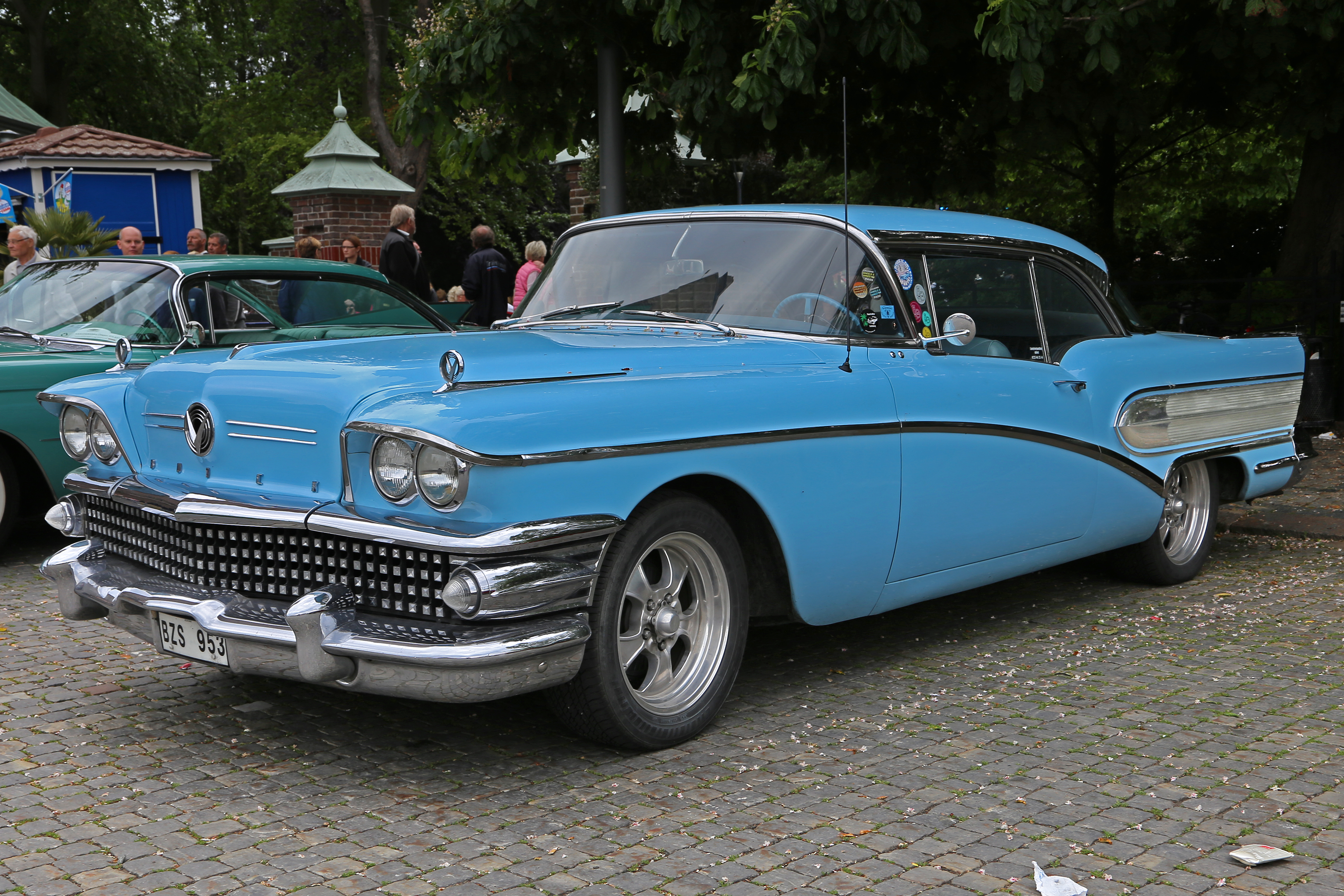
Buick Century
"...t one where we saw the 371 it was kind of central century centrally mounted and then you had Electric fans..."
The Buick Century is an older American car that was built as a comfortable midsize vehicle. In the podcast, they’re describing a modified engine setup and how the cooling system was handled with electric fans. Electric fans can help keep the engine cool, especially after changes to the engine.
The Buick Century is a midsize American car that’s often brought up in classic and enthusiast circles, especially when people talk about engine swaps and cooling upgrades. The podcast context mentions a specific setup with a 371 and electric fans, including how the fans were mounted (“centrally mounted” and “electric fans”). That kind of detail matters because cooling and packaging are key when modifying older engines.
side alternator
"...centrally mounted and then you had Electric fans and then like a side alternator right to try to get kind of a kind of setup put together on it"
A side alternator means the alternator is mounted off to the side to make room for the supercharger setup. It’s usually done so belts and brackets fit correctly.
A side alternator refers to relocating the alternator from the more typical position to clear space or support belt routing for the supercharger. This kind of packaging change is common in custom forced-induction kits where pulley alignment and accessory clearance are critical.
2180
"Designed for what displacement motors?... We're testing right now right now We're setting them right around a 2180 on up"
“2180” is shorthand for an engine displacement of about 2180cc, a common VW air-cooled build size. They’re stating the MK supercharger kit is being tested for engines at roughly 2180cc and up, which helps listeners understand intended application range.
cooling fan runs off the belt
"I mean, that's the biggest thing with the Volkswagen is you've got the cooling fan runs off the belt and then Anytime you're gonna start now you're putting all that stuff hanging off the front end of the pulley"
They’re saying the cooling fan is powered by the belts. If you change the belt system for the supercharger, the fan speed can change too, which can affect how well the engine stays cool.
This highlights a key dependency: the cooling fan is belt-driven, so any changes to belt routing, pulley size, or belt tension can affect fan speed and cooling effectiveness. That’s why they call cooling “the biggest thing” during the conversion.
serpentine setup
"Okay, how am I aligning all this up because that's like a car with multiple belts where you can or a big serpentine setup So did you guys try serpentine setup at first or were you doing two belts?"
A serpentine setup is when one belt runs a bunch of accessories using different pulleys. It can be cleaner than using several separate belts, but it has to be aligned perfectly so it doesn’t slip or wear out fast.
A serpentine setup uses one long belt routed around multiple pulleys to drive accessories. Compared with multiple separate belts, it can simplify routing and improve packaging, but it requires careful pulley alignment and belt sizing.
two belts
"So did you guys try serpentine setup at first or were you doing two belts? Because on the seven on the six seven when you're doing two or the three seven when you're doing two belts, right?"
Instead of one long belt, a two-belt setup uses two belts to run different accessories. That can work well, but you have to get both belts aligned and tensioned correctly.
The hosts contrast serpentine routing with using two separate belts to drive accessories like the alternator and other front-end components. Two-belt setups can be easier to adapt in some conversions, but they add complexity in belt tensioning and alignment.

Dodge Charger
"...just get a longer belt for it In the new whipple charger of the setup that we have now We're running was ..."
The Dodge Charger is a car made for strong acceleration and performance. The podcast mentions a supercharger setup, which is an add-on that helps the engine make more power. They also talk about using the right belt length so the supercharger can run correctly.
The Dodge Charger is a performance-focused American muscle car that’s often discussed in the context of engine upgrades and forced-induction setups. In the podcast context, it sounds like the conversation is about a Whipple supercharger (“Whipple charger”) and how the belt drive is set up for that system. That’s why it comes up: the belt routing and parts selection matter for reliability and correct operation when boosting power.
micro V six belt
"We're running was it a five. I think it's six six K. That's a six K. It's a serpentine belt or a micro V So so the six K is it's a it's a belt that's able to ... micro V six so you've got basically two of those running on the motor"
They mention a “micro V six” belt, which is a specific belt type/profile used in modern multi-rib belt systems. In supercharger conversions, belt profile and size matter because the belt must transmit power reliably without slipping while also fitting the pulley system.
alternator belt
"Yeah, the original is just a standard alternator belt. Okay on a standard Seven-inch bottom pulley."
The alternator belt is the belt that drives the alternator to charge the battery and power electrical systems. In a supercharger conversion, the alternator belt may be part of the original belt routing or replaced/retensioned to work with the new pulley and charger setup.
turbo setup
"What you're doing is is you're running off the crank to run your supercharger rather than a turbo setup ... Which is exhaust pressure driven ..."
A turbo setup uses exhaust gas energy to spin a turbine that compresses intake air. The hosts describe turbo operation as exhaust-pressure driven and contrast it with their crank-driven supercharger approach, including how that changes stress on cooling and belt systems.
dyno testing
"... So we we wanted to do some street testing and we want to do some dyno testing ... because you guys dinoed it ..."
A dyno is a machine that measures how much power and torque an engine makes. It’s useful because you can test the same car repeatedly under controlled conditions.
Dyno testing measures engine performance on a dynamometer, allowing controlled pulls and repeatable data. The hosts mention doing both street testing and dyno testing, and they reference dyno pulls as a key part of validating the setup.
intake boot
"... you kind of had to go through the process of modeling the intake the intake boot some stuff like that ..."
An intake boot is the flexible ducting that connects intake components (like the carb/intake manifold to the supercharger). In this segment, they discuss modeling the intake boot as part of the system development, which matters for airflow sealing and fitment.
blow-through setup
"... modeling the intake boot some stuff like that because this again is after the carburetor, right? ... It's it's a it's not a blow-through setup. It's a draw-through setup correct ..."
A blow-through setup means the supercharger pressurizes the air first, and then fuel is added afterward. They mention it mainly to clarify that their system is not that style.
A blow-through setup routes air through the supercharger first, then mixes fuel after the blower (typically via fuel injection or a carb positioned downstream). The segment uses it as the comparison point to explain why their configuration is draw-through and how that impacts cooling and drivability.
carburetor
"... because this again is after the carburetor, right? ... So it's it's a it's not a blow-through setup. It's a draw-through setup ..."
A carburetor meters fuel and mixes it with incoming air before it enters the engine. The hosts tie the carburetor location to whether the system is draw-through or blow-through, which affects how the supercharger handles the mixture and temperatures.
draw-through setup
"So it's it's a it's not a blow-through setup. It's a draw-through setup correct and which even with turbos ..."
A draw-through setup places the carburetor upstream of the supercharger, so the engine “draws” the fuel/air mixture through the blower. The hosts note it can help with cooling because the fuel/air mixture can cool the supercharger, and they contrast it with blow-through layouts.
pulley size
"Are you just changing pulley size to get different pressure as part of it? ... because with it with a smaller motor you would go with a smaller pulley so you wouldn't kind of over"
On a belt-driven supercharger, pulley sizes control how fast the supercharger spins. Faster spin usually means more boost; slower spin means less.
Pulley size on a supercharger changes the belt speed, which changes how fast the supercharger spins. Smaller pulleys typically spin the supercharger faster (more boost), while larger pulleys spin it slower (less boost).
effective compression ratio
"What's the effective compression ratio about 13.5 or so so 13 so you got it?"
When you add boost, the air entering the engine is already more compressed. That makes the engine behave like it has a higher compression ratio, which can require careful tuning to prevent knocking.
With forced induction, the “effective compression ratio” rises because the engine is compressing a denser air charge before combustion. That increases cylinder pressure and can make detonation more likely unless ignition timing and fueling are managed.
ignition retarding
"Do you have any type of is is the ignition retarding or is it doing any or you think about doing any kind of?"
Ignition timing controls when the spark happens. If you retard (delay) it, the engine is less likely to knock when boost and cylinder pressures are high.
Ignition retarding means delaying spark timing to reduce peak cylinder pressure and combustion temperature. It’s commonly used under high boost to help prevent detonation (knock) when the engine is running more aggressive conditions.
Snow Performance
"Yeah, we’ve been messing around with the snow performance Injection and when we actually did the in-car testing"
Snow Performance makes aftermarket injection kits that spray cooling fluid into the intake. People use them to help prevent knocking when their engine is making more boost.
Snow Performance is an aftermarket company known for methanol/water injection systems used to cool intake charge and reduce knock on boosted engines. Their kits are often paired with tuning changes to safely run higher boost.
methanol injection
"Yeah, we’ve been messing around with the snow performance Injection and when we actually did the in-car testing that car was set up with the methanol injection ... So it cools the charge to keep it and kind of keeps it from Detonating"
Methanol injection sprays a cooling fluid into the intake. It helps keep temperatures down and reduces the chance of the engine knocking when you’re running boost.
Methanol injection is an aftermarket fuel/charge-cooling system used on boosted engines. Injected into the intake/manifold, it absorbs heat and helps suppress detonation, allowing higher boost or safer tuning under load.
foot-pounds of torque
"we were pulling 285 foot-pounds of torque at 3000 rpms 285"
Torque is the engine’s twisting force. Higher torque usually means the car feels stronger when you’re driving or accelerating, especially from lower speeds.
Torque is the twisting force the engine produces, and it strongly influences how quickly a car accelerates, especially at lower RPM. The segment uses torque figures to describe the engine’s “pull” characteristics.
stump pullers
"That's a transmission snapper. It is. They call them the stump pullers"
“Stump pullers” just means the engine has strong grunt—good pulling power. It’s usually about torque you can feel at lower RPM.
“Stump pullers” is a slang term for engines that make strong low-end torque and feel like they can pull hard under load. In this context, it’s describing the character of the build rather than a specific technical component.
custom ground cam
"Right, and so you guys have a custom ground cam in in the motor specifically for yeah [983.3s] We've had a couple different grinds that we've used now"
The camshaft controls when the engine’s valves open and close. A custom cam is made to help the engine make power where you want it, instead of using a generic profile.
A camshaft controls valve timing and lift, which strongly affects how an engine makes power across the RPM range. A “custom ground” cam means the grind profile was tailored to the build’s goals—here, matching the supercharged setup’s target horsepower and torque curve.
supercharged motors
"We've had a couple different grinds that we've used now. How many supercharged motors have you guys built for customers? [987.2s] Previous to this like just supercharged in general"
A supercharged motor is an engine that’s been modified to make more power using a supercharger. The hosts are saying they’ve done a lot of these builds, so they’ve learned what works.
“Supercharged motors” refers to engines modified with a supercharger to increase intake air pressure and power output. The discussion highlights the shop’s experience building multiple customer supercharged setups and learning how small changes affect results.
turnkey kit
"Now with this setup here [1011.6s] When someone buys this kit because you now have this kit ready to go [1015.4s] It's a turnkey kit ready to install the whole nine yards"
A turnkey kit means you don’t have to hunt down a bunch of separate parts. It’s basically a mostly-complete package that’s meant to be installed as one project.
A turnkey kit is an all-in-one package designed to be installed with minimal sourcing of individual parts. In this case, the supercharger kit is “ready to go,” with most components supplied so the buyer mainly needs to handle the remaining major item (the supercharger).
re-manufactured or rebuilt supercharger vs cheap china ones
"So it's a brand new supercharger because the amr setup like they're rebuilt [1036.1s] Those are all rebuilt because they come from they're like a jdm market type thing in the 1900s [1040.6s] If you got the quality ones you would have got the re-manufactured or rebuilt ones not the cheap china ones that we're failing"
The hosts contrast quality-controlled rebuilt/re-manufactured superchargers with low-cost “cheap china” units that may not hold up under boost. This matters because superchargers operate under high stress; poor materials or tolerances can lead to rapid failure (“chew itself up”).
direct drive
"So what they've done is what they're called direct drive. It doesn't have the snout on it, right? So it's just the bully is right on the main rotor"
“Direct drive” here refers to a supercharger drive arrangement where the blower is mounted so the drive components don’t require a long snout. The goal is to reduce pressure/drive issues associated with extended drive geometry and keep the setup compact for clearance.
snout
"So what they've done is what they're called direct drive. It doesn't have the snout on it, right? So it's just the bully is right on the main rotor"
The “snout” is the part that sticks out to connect the supercharger to the belt/pulley drive. A shorter or eliminated snout can make the whole setup easier to fit and align.
In supercharger terminology, the “snout” is the extended housing/drive section that connects the blower to the drive pulley system. Longer snouts can create packaging and alignment challenges, so removing it (via direct drive) can improve fitment and reduce stress points.
pulley alignment
"And then it keeps it compact to fit underneath underneath the deck because we had to watch the firewall versus the pulley alignment And yeah, it took a little bit to figure out the math on it"
Pulley alignment means the belt has to track straight between the crank pulley and the supercharger pulley. If it’s off, the belt can wear out faster and the system won’t run as smoothly.
Pulley alignment is critical in belt-driven supercharger systems because misalignment can cause belt wear, noise, and reduced drive efficiency. This segment highlights that firewall clearance and pulley alignment had to be balanced during the design.
custom pulleys
"You have to have custom pulleys made on probably everything in the beginning as you're doing the r&d on this thing Yeah, there was a lot of custom stuff, but the pulleys themselves are basically over the over the counter."
Custom pulleys are belt wheels made to the exact size and shape needed for the supercharger setup. They’re used to get the right belt routing and power transfer without clearance problems.
Custom pulleys are often required in supercharger installations to achieve the correct belt geometry, ratio, and clearance. Here, the hosts describe an R&D phase where multiple pulleys were custom-made before settling on a mix of off-the-shelf and machined components.
6v pulley
"Yeah, there was a lot of custom stuff, but the pulleys themselves are basically Over the over the counter. Oh really the the 6v pulley. Yeah, you buy that and then what we do is we'll get the"
The “6v pulley” is referenced as an off-the-shelf pulley component used in the supercharger drive system. The segment contrasts it with other custom/machined parts, implying it’s a commonly available piece that still needs to work with the kit’s overall geometry.
billet steel crank pulley
"Actually, we get it from ampie, but it's the it's the billet steel Crank pulley and then you'll machine and then we machine that to fit the"
A crank pulley is the belt wheel on the engine crankshaft. Using a billet steel version means it’s made from solid steel and can be machined precisely for a strong, reliable belt drive.
A billet steel crank pulley is a machined pulley made from a solid block of steel, typically chosen for strength, durability, and precise fitment. In this segment, it’s used as the base for further machining to match the supercharger drive requirements.
ampie
"Yeah, you buy that and then what we do is we'll get the Actually, we get it from ampie, but it's the it's the billet steel Crank pulley and then you'll machine and then we machine that to fit the"
They’re getting a crank pulley from a supplier, then doing additional machining so it fits the exact supercharger setup. That’s common when off-the-shelf parts aren’t perfect for a specific engine bay.
“Ampie” appears to be a supplier/source for a billet steel crank pulley used in the kit. The key point is that the build uses a billet steel crank pulley as a starting component, then machining is performed to fit the application.
merged header
"So we've had two or three different systems that we've used And we noticed that when we were doing the dyno on the 2276 we had a stattered merged header"
A merged header is an exhaust setup where the pipes join together to help exhaust gases move out more efficiently. It can affect how the engine breathes and can change power.
A merged header is an exhaust manifold design where exhaust pipes combine (“merge”) into a common section to improve scavenging and exhaust flow. The segment suggests they tested different header/muffler configurations and saw changes in how the system behaved.
collector
"It would shrink down to You know like way small bottle next to it. I think it was like literally cut Yeah, we cut the collector right off and it welded the muffler straight on to the collector"
The collector is where the exhaust pipes come together into one section. Welding the muffler directly to the collector can help the exhaust flow better and avoid leaks or bottlenecks.
The collector is the part of the exhaust where multiple exhaust runners come together before routing to the rest of the exhaust (like the muffler). Here, they describe cutting the collector and welding the muffler directly to it, which is a common fabrication approach to reduce restrictions and improve fit.
pistons and rings
"You can't have just like a cheap set of pistons and rings. Oh, no, we call it conditioning"
Pistons and rings are parts that seal the combustion pressure and help the engine run correctly. On boosted engines, they need to be built to handle extra stress, not just stock or cheap parts.
The transcript discusses using pistons and piston rings that are appropriate for high cylinder pressures and heat from forced induction. It emphasizes that cheap or basic piston/ring setups may not survive, implying the need for stronger, purpose-built components.
conditioning
"You can't have just like a cheap set of pistons and rings. Oh, no, we call it conditioning"
Here, “conditioning” means setting up the engine parts so they can survive boost. It’s basically making sure the internals are strong enough and the sealing parts are right for the extra pressure.
In this context, “conditioning” refers to preparing or selecting engine internals (like pistons, rings, and related parts) so they can reliably handle forced-induction conditions. The speaker frames it as more than a basic parts swap—it's about matching components to boost pressure and heat.
Total Seal rings
"We like the 224 ring ring spacing with total seal rings"
Total Seal rings are special piston rings meant to seal better inside the engine. Better sealing can help a boosted engine stay reliable under higher pressure.
Total Seal rings are a brand/type of piston rings designed to improve sealing and reduce blow-by. The transcript ties ring choice (including ring spacing) to forced-induction reliability, suggesting the builder is optimizing for pressure and heat control.
224 ring spacing
"We like the 224 ring ring spacing with total seal rings"
Ring spacing is how the piston’s rings are positioned on the piston. The exact spacing can matter for sealing and durability when the engine is under boost.
“224 ring spacing” refers to the distance between piston ring grooves, which affects ring placement, sealing behavior, and piston strength under heat and pressure. In performance builds, ring spacing is chosen to match the piston design and the expected operating conditions.
forged crank
"of course your your cranks are all forged... But a good quality forged crank at least these are your minimums"
A forged crankshaft is made from forged steel, which typically provides higher strength and durability than cheaper cast alternatives. The transcript calls out a forged crank as a minimum requirement to keep the engine together in a high-power forced-induction build.
H-beam rods
"We like the h-beam rods and of course your your cranks are all forged"
H-beam rods are stronger connecting rods used in performance engines. They help the engine survive the extra forces from boosting.
H-beam rods are connecting rods with an “H” shaped cross-section that’s commonly used for strength in performance engines. The speaker lists them as part of the minimum component set for keeping the engine together under forced-induction loads.
cylinder head temperature
"With testing on this if you guys run cylinder head temp test and stuff like that to see where where that stuff's at... monitor your cylinder head temperature if it gets above a certain point then stop"
Cylinder head temperature is basically how hot the engine’s top part gets during combustion. With boosted engines, it can climb, so monitoring it helps you avoid damage.
Cylinder head temperature (CHT) is a key heat metric for forced-induction engines because it reflects how hot the combustion chamber area is running. Builders monitor it to avoid overheating and to decide when to back off or stop, especially when intercooling isn’t practical.
forced induction heat management (intercooler packaging limits)
"When you compress air it gets hot... And there's not enough room on the outlet side of the supercharger to go through an intercooler and come back"
Boosted engines heat up the air as it gets compressed. If there isn’t room to add an intercooler, you can’t cool that air as much, so you have to manage the heat another way (like watching temperatures).
Forced induction increases air temperature when it’s compressed, which can raise engine heat. The transcript highlights a packaging constraint: there may not be enough space on a supercharger outlet to fit an intercooler, so the builder must rely more on monitoring and operating limits rather than cooling the charge.
dyno runs
"I mean, obviously the dyno runs and stuff like that, but you guys have it in a working driving vehicle We did. Yeah, not anymore."
A dyno is like a treadmill for an engine. Instead of driving on the road, they load the engine in a controlled way so they can measure how much power it makes and how it behaves.
A dyno run is when a car or engine is tested on a dynamometer to measure power and tuning behavior under controlled load. It helps builders validate fueling, ignition timing, and heat management before (or alongside) real-world driving.
Cajon pass
"Did you guys ever take it up Cajon pass? I did not take it up Cajon pass Yeah, that's probably gonna get a little hot."
Cajon Pass is a steep hill climb. People use it to see if a car gets too hot when it has to work hard for a long time.
Cajon Pass is a well-known steep mountain grade in Southern California, often used as a real-world stress test for engines and cooling systems. A long climb can reveal heat-soak issues that might not show up during flat-road driving.
static compression ratio
"And what's your what on a motor like this? What's your what's your suggested static compression ratio when you're starting on a motor like this? We like to keep it about 8 to 8.2 8 to 8.2"
Static compression ratio is the engine’s geometric compression based on cylinder volume, before accounting for cam timing and dynamic effects. For boosted engines, builders often target a relatively lower static ratio to reduce knock risk and keep cylinder pressures under control.
brother's machine
"We primarily we have a Well, not a thing but we we get our heads from brother's machine. Okay, right? I just call rallyo up and I say hey, I want this and you make some for me"
This sounds like the machine shop that makes or prepares the cylinder heads. Good cylinder heads matter because they help the engine breathe and can handle boost better.
“Brother’s Machine” appears to be a machine shop supplying cylinder heads for this supercharger kit application. In performance builds, the head casting and machining quality can strongly affect flow, combustion efficiency, and durability under boost.
Rallyo
"I just call rallyo up and I say hey, I want this and you make some for me Okay, and usually within a day or two. They're sitting on my porch"
Rallyo is mentioned as the place the builder contacts to request cylinder heads. If this is a parts sourcing or machining service, it highlights how specific head options are obtained quickly for custom kit builds.

Alfa Romeo GTV
"...other heads won't work? No, you can run the amp e gtv two heads if you wish So is this are you running..."
The Alfa Romeo GTV is a sporty two-door car. The podcast is talking about engine parts—specifically cylinder heads—and whether different heads can be used together. Choosing the correct compatible parts matters so the engine can be assembled and run properly.
The Alfa Romeo GTV is a sporty Italian coupe known for its driving feel and enthusiast-focused engineering. In the podcast context, the discussion is about cylinder heads and whether certain head configurations will work with a specific setup (“other heads won’t work?” and “you can run the amp… GTV two heads”). It’s being discussed because head compatibility and the right parts selection directly affect how the engine can be built and tuned.
cylinder head castings
"So is this are you running stock cylinder head castings on these on this motor right now? No, the castings that that brothers uses are basically a one castings So they're either the 501s or the 502 castings"
Cylinder head castings are the metal “starting blocks” for the top of the engine. Using stronger, thicker castings can help the head survive higher heat and pressure from boost.
Cylinder head castings are the raw cast aluminum/iron forms that get machined for valves, ports, and combustion chambers. The discussion contrasts stock-style castings with “heavier duty” castings that have more alloy/silicone and thicker areas for strength and reduced need for welding.
501s or the 502 castings
"So they're either the 501s or the 502 castings which that's more like a heavier duty cast It is there's a lot more alloy in it a lot more silicone in it"
Those numbers are different versions of the cylinder head metal. The builder says the 501/502 versions are tougher and have more material where it counts.
“501s” and “502 castings” refer to specific cylinder head casting variants. The hosts describe them as heavier-duty castings with more alloy/silicone and thicker sections where needed, which can matter for durability when running a supercharger.
140 or the 100
"I mean, obviously you would you would you would sell the kit and size the supercharger up the 140 or the 100 for their setup"
They’re talking about choosing between two supercharger sizes. Bigger generally means more boost potential, but it also needs the rest of the engine to be built to handle it.
The “140” and “100” likely refer to supercharger sizing options (commonly different compressor sizes or flow ratings) chosen to match the vehicle’s goals. Without more context in the excerpt, it’s best understood as selecting a larger or smaller blower for the customer’s build.
cool shroud
"We had to go with I don't know what they call that it's called the cool shroud the cool shroud [1530.0s] So it does not have a doghouse on it. It's like that one."
A shroud is like a cover/duct that helps air move where it needs to go for cooling. This one is shaped to make room for the supercharger without changing the cooling setup as much.
The “cool shroud” is an aftermarket-style shroud used to package the supercharger while still managing airflow and cooling. The key detail here is that it avoids a doghouse-style layout and uses slanted sides to position the supercharger more centrally.
doghouse
"So it does not have a doghouse on it. It's like that one. Yeah, it's like that one right there [1536.9s] So and and that was to put the supercharger in a more central location to it"
On some air-cooled Volkswagens, the fan shroud has a “doghouse” shape that helps cool the oil cooler better. If your kit doesn’t use that style, the airflow path and fitment are different.
A doghouse refers to a specific style of fan shroud used on some air-cooled Volkswagen engines that improves cooling airflow to the oil cooler. This kit’s shroud is described as not having a doghouse, which matters because it changes how cooling and packaging are handled around the supercharger.
supercharger packaging/fitment
"So and and that was to put the supercharger in a more central location to it [1547.3s] So it's an it's like an aftermarket style shroud that's got the slanted sides"
When you add a supercharger, you can’t just bolt it on—you have to make it fit around existing parts. The shroud shape and component placement are what prevent clearance problems.
This segment focuses on how the supercharger is positioned “more central” using a specific shroud design to clear surrounding components. Packaging/fitment is critical because the distributor, alternator location, and belt routing all have to coexist without interference.
distributor
"You've got the distributor. You get everything right there [1564.5s] Yeah, it's close and then you guys set you set the distributor which distributor you guys using it"
The distributor helps control ignition timing by distributing spark to the cylinders. When you install a supercharger, you have to ensure the new parts don’t interfere with it.
The distributor is an ignition component that must be accounted for during supercharger installation because its location affects clearance and component routing. The speaker specifically mentions setting the distributor as part of the installation context.
self-oiling unit
"As far as now the the supercharger itself is a self-oiling unit... Yes, so I've contained oil and you change it oil every so often..."
“Self-oiling” means the supercharger lubricates itself internally. You still need to follow the service schedule, because the oil eventually wears out.
A self-oiling supercharger means it has an internal oiling system that lubricates the blower without requiring a separate external oil reservoir. Even so, it still needs periodic oil changes or service intervals to keep bearings and gears healthy.
side draft
"...it's a prototype to where we did a side draft Set up with a new intake system and put it on there"
“Side draft” describes how the carburetor is mounted so air comes in from the side. It’s often chosen to fit better and to make tuning easier in tight engine compartments.
A side-draft carburetor setup positions the carburetor so airflow enters from the side, which can improve packaging and tuning on certain engine bays. The hosts mention using a side-draft setup as part of a new intake system prototype.

Volkswagen Type 3
"Have you guys At all messed around with type 3 setups try to figure out how to get a type 3 supercharger to work"
The Volkswagen Type 3 is a classic VW with a tighter engine compartment. They’re saying it’s hard to fit a supercharger there because there’s not much room and it’s difficult to route the belt.
The Volkswagen Type 3 is a classic air-cooled model line known for its compact engine bay packaging. The hosts discuss whether a Type 3 supercharger conversion is feasible, but note space constraints and belt routing challenges.
fuel sender
"Yes for to get to the fuel the fuel sender Yeah, some of the guys actually they'll use the"
The fuel sender is the unit that measures fuel level and sends that information to the gauge. Access to it matters when owners cut or modify panels to reach the sender without removing major components.
cut that rear section out
"They'll go to a late model a late bay and they'll cut that rear section out so they can access I mean, it's super handy when you're used to working on your motor to come in from the top versus the face"
This describes a common service-modification on air-cooled VW buses: removing or cutting the rear body section to create an access opening. The goal is easier top-side work compared to reaching in from the face of the engine bay.
low prof low profiles
"No, it's looking like it. It's looking like it's it's got a pretty I mean it says low prof low profiles you're going to get for this supercharger Yeah, we're compact as much as you're going to get it"
“Low profile” refers to keeping the supercharger’s height and packaging compact so it fits under limited clearance in the engine bay. This is especially relevant on air-cooled VW setups where space above the engine is tight.
whipplet
"Yeah, we're compact as much as you're going to get it and then obviously with the supercharger since it's from directly from whipplet Comes to the factory warranty on the supercharger."
The transcript says the supercharger is “from directly from whipplet,” which appears to be the supercharger manufacturer. The key point is that the supercharger comes with its own factory warranty, which can be important for long-term ownership.
eight week wait
"But uh, right now if you order the kit from us, we order the superchargers as the kits are ordered So there's about up to an eight week wait for the supercharger"
They say if you order the kit, you might wait around eight weeks to get the supercharger. That’s useful to know if you’re planning a build timeline.
The hosts mention an up-to lead time of about eight weeks for the supercharger when ordering the kit. This is a practical buying consideration because forced-induction kits often require sourcing components and scheduling installation.
Whipple charger
"Yeah, they build they build supercharger for just about anything and the whipple charger's been around forever"
A Whipple charger is a supercharger brand. It forces more air into the engine so you can make more power, and it uses a screw-style design that tends to be efficient.
A Whipple supercharger is a brand of positive-displacement forced-induction system that uses a screw-type (twin-screw) design. It’s commonly chosen for making boost efficiently and smoothly compared with older rotor styles.
screw blower
"Right, and it's not a roots blower. It's a screw blower. So ... where there's several winds and they and they blend together as they go around"
A screw blower is a type of supercharger. Instead of using two spinning lobes to shove air around, it compresses the air as it moves through the blower, which can make boost feel more responsive.
A screw blower is a supercharger that uses helical rotors (like an “Archimedes screw” concept) to compress air internally as the rotors spin. Compared to roots-style blowers, screw designs typically build boost more efficiently and can feel smoother because of how the air is trapped and compressed.
roots blower
"Explain the difference to some of the listeners that if you look at a roots blower if you look at the two rotors ... So the outlet or the inlet of the supercharger is on the end not on the top"
A roots blower is a supercharger that uses spinning rotors to push air into the engine. It doesn’t compress the air inside the blower the same way a screw-type supercharger does.
A roots blower is a positive-displacement supercharger that uses two rotors to move air from the inlet to the outlet. It’s often associated with “boost by pushing” rather than compressing internally, which is why it can have different boost characteristics than screw-type designs.
B&M 90 blower
"Would be like the the dicklandy or the um, yeah the b&m the b&m 90 that they used on those was basically as I think it was a 0.75 cubic inch Blower"
They mention the B&M 90 as an example of a roots-style supercharger. The point is to compare that older rotor-push design to the newer screw-type design.
The speaker references a “B&M 90” as an example of a roots-style blower used on older applications. The key takeaway is the comparison of rotor/packaging and how that style differs from screw-type blowers.
0.75 cubic inch blower
"...the b&m 90 that they used on those was basically as I think it was a 0.75 cubic inch Blower that they used on those"
That “cubic inch” number is basically how big the supercharger is. A bigger blower can move more air, which can mean more power, but it can also change how the car feels.
“Cubic inch” blower size is a displacement rating that indicates how much air the supercharger moves per revolution (or per cycle, depending on the design). Larger displacement generally supports higher potential boost/power, but it can also affect drivability and efficiency.
corkscrew
"So the screw type blower is going to probably spin ... What’s the two names? We've got a root style blower. Yeah a corkscrew and you have a screw type"
They’re using “corkscrew” to describe the screw-style supercharger design. It’s basically talking about the helical shape that helps compress air as it moves through.
In this context, “corkscrew” is being used as a descriptive nickname for the screw-type supercharger rotor/airflow concept. It’s not a separate supercharger brand here—it's describing the helical screw action.
blow-through system
"Unlike some of the turbos they need a return and depends if you have a blow-through system This one just just a regular fuel system..."
A blow-through setup means the carburetor sits in the boosted airflow path. Because pressure is higher than normal, the fuel system has to be set up so the carb still gets the right fuel.
A blow-through fuel/air setup routes the pressurized air from the supercharger through the carburetor while boosting is present. This often changes what fuel system components are required (like whether you need a return line) because fuel pressure must stay stable under boost.
fuel pump
"...a high good quality fuel pump that produces you know eight to ten pounds and then a good regulator to regulate the carburetor and it will work"
A fuel pump is what delivers fuel to the engine. When you add boost, the engine needs more fuel, so the pump has to be strong enough and properly regulated.
For high-boost forced induction, the fuel pump must supply enough fuel volume and pressure to prevent lean conditions. Here they specify a high-quality pump producing “eight to ten pounds” and then use a regulator to set the carburetor pressure.
Request an Explanation
Heard something you'd like explained? We'll add it to this episode.
Sign in to request explanations for terms you heard.
Want to learn more?
Browse our glossary for plain-English explanations of automotive terms, jargon, and concepts.
Help improve this episode
See something that's not quite right? Our annotations are AI-generated and can sometimes miss the mark. Click the flag icon on any annotation to suggest a correction.