
Ep 364 Mark Prossser Auto Techniks The Baddest Bays in the UK
About this episode
Mark Prosser of UK shop Auto Techniks talks Bay Window obsession at EBI 2026, sharing how he went from Ford/Cosworth life into building fast, stance-heavy Type 2s for decades. He describes early projects that evolved from big-engine street builds to drag-style buses, plus the “recipe” he sticks to: king-and-link front end, upgraded brakes, big wheels, and custom rear suspension/IRS conversions. Mark also covers building his own stroker-style engines for relaxed highway cruising, and the story behind his Savannah Beige bus imported as a shell.
For over 40 years, Mark Prosser has been proving that you don't have to build a split-window Bus to create something truly unforgettable. While most enthusiasts chase the iconic early buses, Mark has dedicated his career to transforming 1968-and-later Bay Window Buses into some of the coolest, most performance-oriented Volkswagens on the road.
Think slammed stance, serious horsepower, perfectly dialed suspension, and a no-compromise attitude. Mark takes what many people once overlooked and turns it into something that stops people in their tracks. One look at one of his builds, and you may find yourself shopping for a Bay Window before the episode is over.
From routine tune-ups and mild performance upgrades to full, ground-up custom builds, Mark has spent decades perfecting his craft and earning a reputation for creating Bay Window buses that are as exciting to drive as they are to look at.
But this episode isn't just about incredible Volkswagens. It's also the story of a man who walked away from the security of a steady career, a guaranteed retirement, and the safe path in life to pursue the thing he truly loved. That leap of faith led him to build a business creating some of the most inspiring Bay Window buses cruising the streets of London.
Join us as we get into Mark's 40-plus years in the Volkswagen scene, the evolution of Bay Window performance, the challenges of building custom buses, and why he's made it his mission to show the world that Bay Windows deserve just as much respect as their split-window predecessors.
https://www.facebook.com/Autotechniks/
Fuchs 16
"They look good. They've got a six stance usually on fuchs 16, sixes and sevens with a nice little rake but before we get into that..."
“Fuchs” refers to the classic Porsche wheel design, and “Fuchs 16” means a 16-inch version of that style. Enthusiasts use them on classic VWs because the look matches the retro, motorsport-inspired aesthetic.
rake
"They look good. They've got a six stance usually on fuchs 16, sixes and sevens with a nice little rake but before we get into that..."
“Rake” means the car’s tilt from front to back—whether the nose sits higher or lower than the rear. It’s mostly about the setup and the look.
“Rake” is the fore-to-aft tilt of the vehicle—how much the front is higher or lower than the rear. Builders use it to achieve a particular look and sometimes to influence weight transfer and handling feel.
Ross Wolf
"Ross Wolf high-quality aftermarket parts built for enthusiasts by enthusiasts. Don't forget go to the website and get some of the cool latest stuff they've got out."
Ross Wolf is a company that makes aftermarket car parts. In this episode, they’re being promoted for a seal meant to fit correctly and stop rear axle leaks.
Ross Wolf is an aftermarket parts brand mentioned here for its wheel bearing seal product. The host claims their “unique wheel bearing seal” is engineered to be the correct fit and to prevent leaks on rear axle applications.
wheel bearing seal
"They've just released and made for themselves their own unique wheel bearing seal. So if you guys have been on your rear axle seals, if your rear axle has been leaking..."
A wheel bearing seal is a protective seal that keeps grime out and helps stop fluid from leaking near the wheel bearing. The right seal fit matters a lot for long-term leak prevention.
A wheel bearing seal is the seal that protects the wheel bearing from water/dirt and helps retain grease or prevent oil leakage. If the seal doesn’t fit correctly, it can fail early and allow leaks around the axle/hub area.
rear axle seals
"So if you guys have been on your rear axle seals, if your rear axle has been leaking, everybody's been swapping those out with something that's just not the exact fit."
Rear axle seals are small rubber/metal seals that stop oil from leaking where the rear axle connects. When they wear out, oil can start leaking, and you need the right replacement seal.
Rear axle seals are the seals that keep gear oil from leaking out around the rear axle shafts. If they fail, you’ll often see oil seepage around the rear hubs/axle area, and the fix is a seal replacement with correct fitment.
Viton gasket seals
"plenty of other cool stuff. All the Viton gasket seals, the sump kits, velocity stacks, pulley kits, you name it they got it."
Viton is a special rubber used for gaskets. It holds up better than normal rubber when the engine gets hot and when it’s exposed to oil and fuel, helping prevent leaks.
Viton is a brand of high-performance rubber (a fluoroelastomer) known for resisting heat, oil, and many chemicals. Using Viton gasket seals helps keep oil and fuel leaks down in engines that run hot or see harsh fluids.
sump kits
"All the Viton gasket seals, the sump kits, velocity stacks, pulley kits, you name it they got it."
A sump kit is an upgrade to the engine’s oil storage area. It can help keep oil where it belongs when you drive hard, which helps the engine stay properly lubricated.
A sump kit is an aftermarket oil-pan/oil-sump setup that changes how engine oil is stored and scavenged. On air-cooled and performance builds, sump kits are often used to improve oil control during hard cornering or spirited driving.
velocity stacks
"All the Viton gasket seals, the sump kits, velocity stacks, pulley kits, you name it they got it."
Velocity stacks are intake parts that sit in front of the carburetor/throttle. They help the air flow in more smoothly, which can improve engine breathing and power.
Velocity stacks are intake trumpets fitted to carburetors or throttle bodies to smooth airflow into the engine. They’re designed to improve airflow efficiency and can help power by tuning the intake’s pressure and flow characteristics.
pulley kits
"All the Viton gasket seals, the sump kits, velocity stacks, pulley kits, you name it they got it."
A pulley kit changes the gearing of a belt-driven system. That can change how fast something spins—often to make more boost or change how the engine feels.
Pulley kits are aftermarket sets of pulleys (often for superchargers or belt-driven accessories) that change belt ratio. Changing the ratio can alter boost or accessory speeds, which affects how the engine responds and how much power it makes.
Icon Pistons
"Also for the best pistons on the market go check out Icon Pistons. ... available in 85.5, 90.5 now and 94 millimeters."
Icon Pistons are replacement pistons made for performance engines. The different sizes and heights affect how the engine is built and how it makes power.
Icon Pistons is an aftermarket piston brand used in performance Volkswagen builds. The host mentions multiple piston heights and specific piston diameters (85.5, 90.5, 94 mm), which matter because they determine compression characteristics and how the engine is built.
85.5 millimeters
"Most retailers anywhere available in 85.5, 90.5 now and 94 millimeters."
85.5 mm is the piston’s diameter size. Bigger or different sizes change the engine’s displacement, which can affect power.
85.5 mm is a piston diameter size used in Volkswagen engine builds. Piston diameter is a key dimension because it affects cylinder displacement (how much air/fuel the engine can move).
90.5 millimeters
"Most retailers anywhere available in 85.5, 90.5 now and 94 millimeters."
90.5 mm is another piston size option. That size choice helps determine how big the engine is and can affect how it performs.
90.5 mm is another piston diameter option the host lists for Icon Pistons. Choosing a diameter size is part of building an engine’s displacement and can also influence clearances and compression.
94 millimeters
"Most retailers anywhere available in 85.5, 90.5 now and 94 millimeters."
94 mm is a piston diameter size. Using a larger bore can increase engine displacement, which often helps torque and power when the rest of the engine is set up correctly.
94 mm is a piston diameter size commonly used in performance Volkswagen stroker/bore combinations. Larger bore sizes generally increase displacement, which can improve torque potential depending on the rest of the build.
piston heights
"Multiple piston heights and the highest quality aftermarket piston that you can get 40 Volkswagen is Icon Pistons."
Piston height is how tall the piston is. It affects how the piston sits in the engine and can change compression, which influences power and engine behavior.
Piston height refers to how tall the piston is from crown to skirt, which affects deck height and compression ratio in an engine build. Different piston heights can be used to achieve the desired compression and clearance with a given crankshaft and cylinder setup.
DanVolks.com
"One of their suppliers at Icon Pistons is Dan Volks, Boulder City and Southern Nevada's VW distributor. So go check them out. Veteran owned and operated. Check them out at DanVolks.com."
DanVolks.com is a website the host points to for Volkswagen-related parts. They’re connecting it to the piston supplier they mentioned.
DanVolks.com is presented as the UK/US distributor connection for Icon Pistons via Dan Volks. The host frames it as a Volkswagen parts distribution site.
AutoTechnics
"Well let's get into it guys this week. If you're talking Bay Window buses, some of the raddest stuff on the street, Mark Prosser is the guy if you're in the UK. So you guys want to check him out at AutoTechnics."
AutoTechnics is the shop the host recommends for Bay Window bus fans. It’s tied to Mark Prosser’s work in the UK scene.
AutoTechnics is named as Mark Prosser’s shop/resource for Bay Window buses in the UK. The host uses it as a place to check out the builder’s work.
EBI 2026
"Well I'm here at EBI this year and it's EBI 2026, EBI number 11 and I'm here sitting down."
EBI 2026 is the name of the event happening this year. The host is there and talking about the bus community.
EBI 2026 is the specific edition of the event the host is attending. It’s used as the context for meeting and discussing the bus scene and builders.
Mark Prosser
"[257.7s] which is Mark Prosser. Mark, welcome to the podcast. Thank you very much."
Mark Prosser is the person behind the bus-building shop mentioned in the episode. He’s been doing this for many years and is known for making Volkswagen vans look and drive aggressively.
Mark Prosser is the builder behind AutoTechnics, known here for creating highly modified Volkswagen buses in the UK. The hosts frame him as a long-time specialist, with decades of experience turning vans into “baddest buses.”
Autobahn
"it looks bad as bad as could be and that it could just bomb down the Autobahn. [279.6s] Now the way we always start the podcast is what's your VW story"
The Autobahn is Germany’s famous highway system known for very fast driving. Mark is basically saying his bus isn’t just for looks—it can handle fast roads too.
The Autobahn is Germany’s high-speed highway network, often associated with long stretches of very fast driving. Mark uses it as a punchline to say his “mean” bus builds can still handle real high-speed road use, not just look good.

Sierra Cosworth
"I was a Ford man, grew up around Cortinas, Escorts, ended up [290.0s] with a Sierra Cosworth, Sapphire."
The Ford Sierra Cosworth is a well-known fast Ford from the UK. Mark used it as the reference point for how quick he wanted his later VW bus to be.
The Ford Sierra Cosworth is a performance-focused version of the Sierra, famous in the UK for rally-bred engineering and strong aftermarket support. Mark mentions it as his earlier “fast car” benchmark before he moved into VW van building.
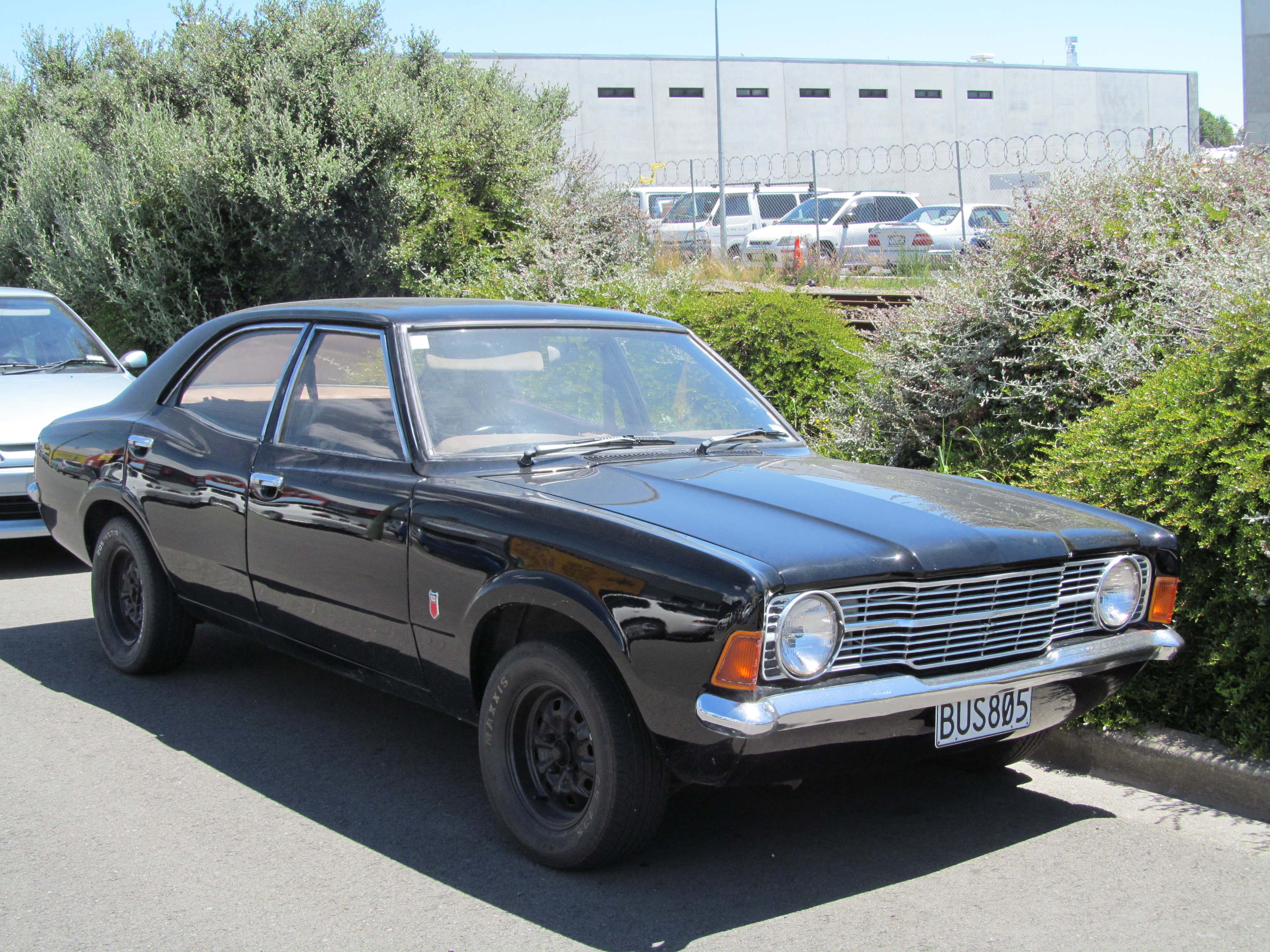
Ford Cortina
"I was a Ford man, grew up around Cortinas, Escorts, ended up [290.0s] with a Sierra Cosworth, Sapphire."
The Ford Cortina is a classic UK Ford model. Mark brings it up to explain that he grew up around that kind of car before he got into VW vans.
The Ford Cortina is a classic British Ford family car, popular for decades and especially common in the UK enthusiast scene. Mark mentions growing up around Cortinas to set the context for how he became a “Ford man” before moving into Volkswagen projects.
max power scene
"Then the whole scene got too max power for me, [294.9s] didn't like the max power scene."
The “max power scene” is slang for a car trend where people chase flashy mods and big power in a very showy way. Mark says he didn’t like that vibe anymore.
The “max power scene” is UK car-culture slang for the late-1990s/early-2000s style of heavily modified cars focused on loud visuals and big power claims. Mark says he got tired of that scene and moved toward building a VW van instead.

Type 2 Bay Window
"So I sold the Cosworth and bought a Type 2 [299.6s] Bay Window and all of my friends thought I'd got absolutely crackers."
The Volkswagen Type 2 “Bay Window” is a classic VW van. Mark bought one as a project and aimed to make it quicker than his previous performance car.
The Volkswagen Type 2 “Bay Window” is a classic VW van generation known for its distinctive side window shape and retro styling. In this segment, Mark explains he sold his Ford Sierra Cosworth and bought a Bay Window to build a faster, more aggressive bus.
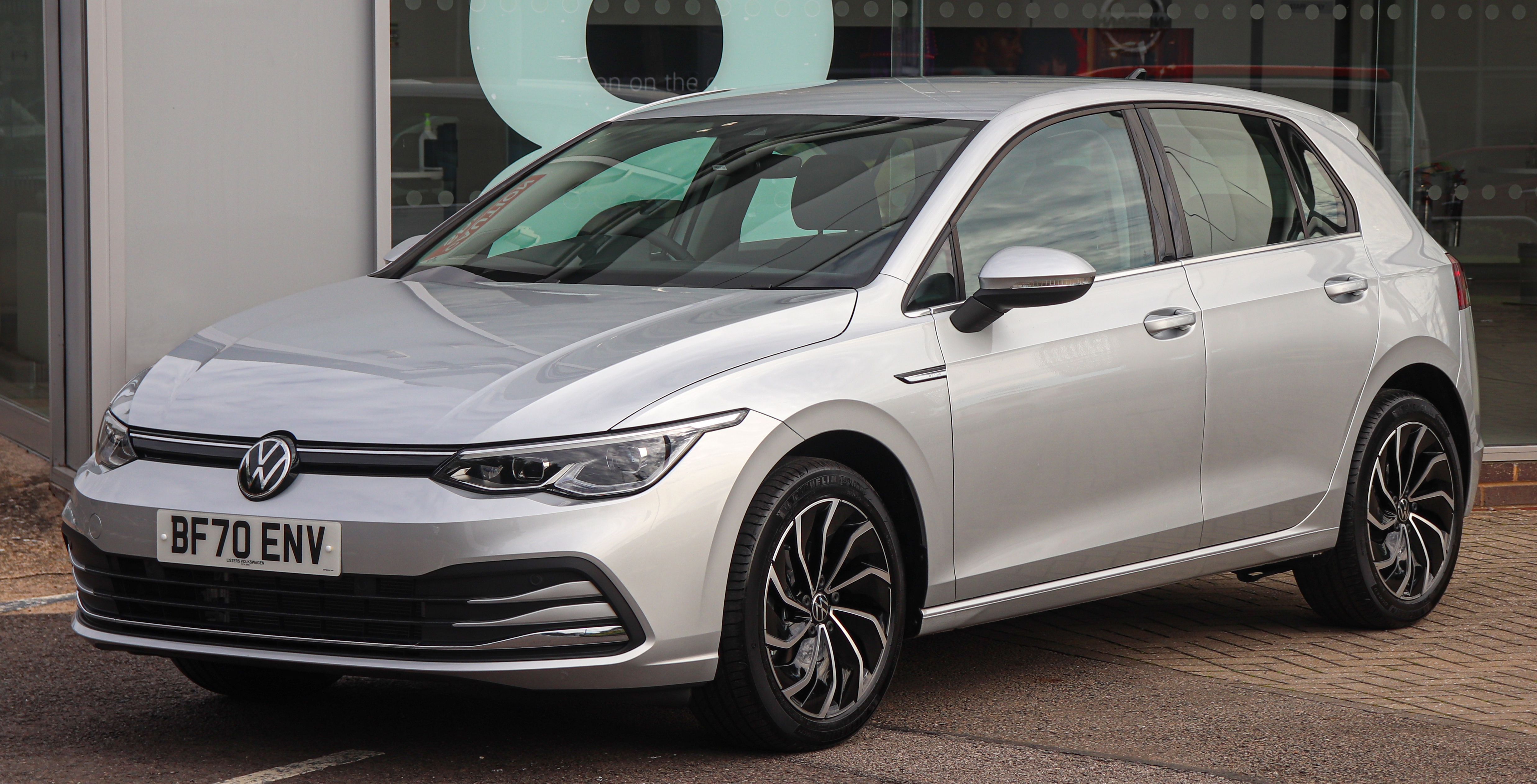
Volkswagen Gti
"...ed at the time. May it be a Ford or a Peugeot 205 GTI or Renault 5 GZ Turbo or any of these cars we use..."
The Volkswagen Golf is a compact car made by Volkswagen. It’s known for being practical for daily driving while still feeling good to drive. The podcast brings it up as an example of the kinds of cars people had or talked about.
The Volkswagen Golf is a compact car line that became a benchmark for everyday usability and driving dynamics. In the podcast context, it’s mentioned alongside other classic performance cars as part of the broader set of cars people owned or used at the time. It’s often discussed because it’s common, practical, and has a long history of enthusiast support.

Peugeot 205
"...r that I owned at the time. May it be a Ford or a Peugeot 205 GTI or Renault 5 GZ Turbo or any of these cars we..."
The Peugeot 205 CTI is a small car from Peugeot that was made to be fun to drive. It’s part of the “hot hatch” category, meaning it’s a regular compact car but tuned for better performance. The podcast mentions it as one of the kinds of cars people owned back then.
The Peugeot 205 CTI is a compact hot-hatch from the 1980s known for its lively driving feel and strong enthusiast following. In classic car discussions, it often gets grouped with other small, driver-focused performance cars from the same era. The podcast references it as an example of a car someone might have owned or enjoyed.

5 Renault 5
"...he time. May it be a Ford or a Peugeot 205 GTI or Renault 5 GZ Turbo or any of these cars we used to have out..."
The Renault 5 E-Tech Electric is a small hatchback that runs on electricity. The podcast mentions it as one of the cars someone has had or tried. It’s designed to feel like a classic small car, but without gasoline.
“5 E-Tech Electric” refers to the Renault 5 E-Tech Electric, a modern retro-styled electric hatchback. The podcast mentions it in the same “cars we used to have” type of context, suggesting it’s part of a lineup of vehicles the hosts have owned or tried. It’s discussed because it blends a familiar small-car shape with an all-electric powertrain.
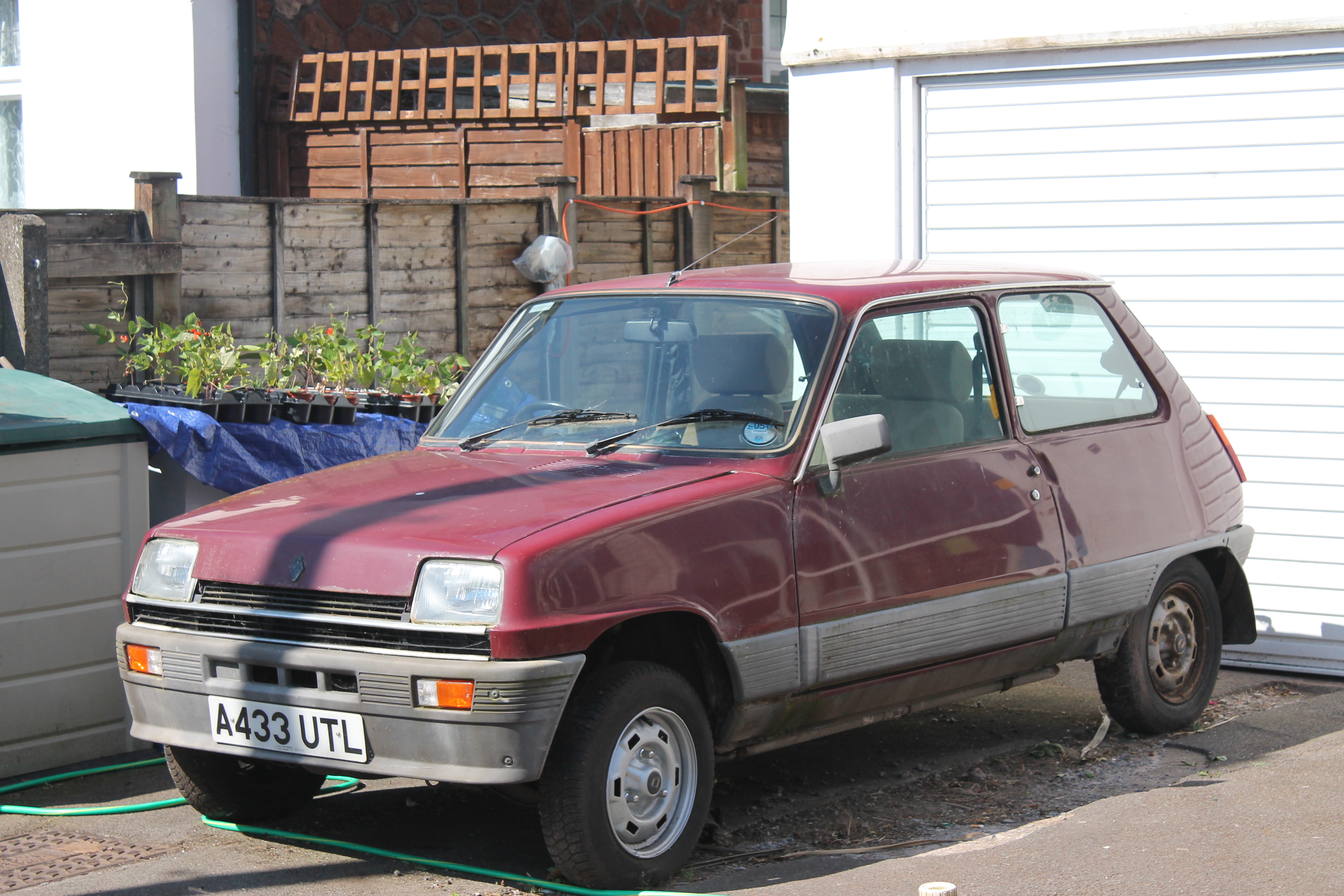
Renault 5 GZ Turbo
"May it be a [337.4s] Ford or a Peugeot 205 GTI or Renault 5 GZ Turbo or any of these cars we used to have outside the workshop."
The Renault 5 GZ Turbo is a small Renault that had a turbo engine. Mark mentions it as one of the performance cars he had before his VW bus projects became the main thing.
The Renault 5 GZ Turbo is a turbocharged variant of the Renault 5 supermini, known for being a compact, punchy performance car in its era. Mark lists it among the cars he owned and had around the workshop before the VW van focus took over.

Peugeot 205 GTI
"Again, we used to do whatever car that I owned at the time. May it be a [337.4s] Ford or a Peugeot 205 GTI or Renault 5 GZ Turbo or any of these cars we used to"
The Peugeot 205 GTI is a famous small “hot hatch” from Peugeot. Mark mentions it as an example of the kinds of cars he owned while building his business.
The Peugeot 205 GTI is a legendary hot hatch known for its lightweight feel and sharp handling. Mark says that early in his career he used whatever car he owned—like the 205 GTI—while people brought cars into his workshop.

Volkswagen Bus
"... first Bay Window. Or the first, first, the first bus you did is what year? The first bus I did 35 year..."
The Volkswagen Bus is a van made by Volkswagen that’s known for being roomy and recognizable. The podcast talks about the “Bay Window” version, which is one specific style of Bus. People discuss it because different Bus years look different and can be more or less desirable to collectors.
The Volkswagen Bus is a classic van platform best known for its spacious interior and iconic styling. The podcast specifically references the “Bay Window” era and asks about the year of the first bus, which highlights how different generations are identified and valued. It’s discussed because these buses are popular for restoration, customization, and long-term ownership.
slammed it on the floor
"color and the top half the original white, slammed it on the floor, put a big-ish engine in it and drove it."
“Slammed” means the bus is lowered a lot so it sits very close to the ground. It looks dramatic, but it can make everyday driving harder on bumps and speed bumps.
“Slammed it on the floor” is a custom-car term meaning the vehicle is lowered aggressively, typically by changing suspension components. The goal is a very low stance and visual impact, though it can affect ride comfort and clearance.
2.4
"and it got bigger and until it was 2.4 and we used to go racing with it."
“2.4” here refers to the engine displacement being increased to about 2.4 liters for the bus build. In VW drag builds, increasing displacement is a common path to more torque and faster acceleration.
Santa Pod
"Oh, 14 and a fully loaded bus? Fully loaded bus. At Santa Pod. That's nuts."
Santa Pod is a famous UK drag strip. If someone says they raced there, it means they were doing proper drag runs with timing.
Santa Pod is a well-known drag racing venue in the UK. It’s where enthusiasts go to run timed acceleration passes, so mentioning it signals the bus was built for drag-style performance.
drag panel bus
"And then we chopped it all in and put it all in a panel van. And then built a drag panel bus? A built drag panel bus, which you still got today."
A “drag panel bus” is a VW bus turned into a drag-racing car. People modify the body and setup to make it faster for straight-line runs.
A “drag panel bus” is a VW bus converted for drag racing, typically with bodywork changes (like panel-van style) to reduce drag and improve packaging for performance parts. It’s a niche build category in the classic VW scene.

Beetle Super Beetle
"...bay window, right? Like bay window is kind of the super beetle of the bus world, right? Yeah. And so you come in..."
The Volkswagen Beetle is a classic small car with a very recognizable shape. In the podcast, it’s being used as a comparison point for another Volkswagen model, meaning it’s considered the top or most iconic one in its category. People talk about it a lot because it’s popular to own and restore.
The Volkswagen Beetle is a classic compact car with a long production history and a huge enthusiast community. In the podcast context, it’s being compared to the Bay Window Bus, with the Beetle treated as the “super” version within its own family. It comes up often because it’s one of the most recognizable classic Volkswagens and has strong support for parts and restoration.
electric power steering
"And I saw the one bus, particularly you had some electric power steering and stuff"
Electric power steering helps you turn the wheel using an electric motor. It’s often easier to install or upgrade than older hydraulic systems.
Electric power steering (EPS) uses an electric motor to assist steering instead of relying on hydraulic pressure from a pump. It can make steering feel more consistent and can simplify swaps in older vehicles.
IRS
"And you did the suspension on Andy's bus. I did everything. Yeah. And you're a fan of converting the IRS in the"
IRS means the rear wheels are connected in a way that lets them move independently. That usually improves how the vehicle rides and grips the road.
IRS stands for independent rear suspension, a setup where the rear wheels can move somewhat independently rather than being tied together. Converting to IRS changes ride quality and handling characteristics, which is why it’s a common enthusiast modification on VW buses.
trailing arms
"arms, all that stuff? We use early trailing arms and then we cut and shut the rear chassis to"
Trailing arms are parts of the suspension that hold the wheel in the right position. They help the wheel move smoothly over bumps while keeping the handling predictable.
Trailing arms are suspension links that locate the wheel and control how it moves through bumps and cornering. In this build, they’re using early trailing arms as part of a rear suspension conversion, likely to get the correct geometry and strength for the lowered/modified setup.
cut and shut
"We use early trailing arms and then we cut and shut the rear chassis to mount the shocks properly rather than, you know, they break the rear chassis normally."
“Cut and shut” means cutting metal apart and welding it back together to change the car’s structure. It’s a serious fabrication step to make parts fit and to strengthen the mounting points.
“Cut and shut” is a fabrication method where sections of a chassis or body are cut apart and welded back together to create a new shape or mounting points. Here it’s used to modify the rear chassis so the shocks can be mounted properly without the structure failing in the usual way.
ball joint suspension
"there's been a lot of, you know, there's, with the bay windows, they've got ball joint suspension. Yeah, we change all that to King and Link pin straight away."
Ball joint suspension is a common way to connect the steering/suspension parts so the wheels can move. They’re saying the original setup uses ball joints, but they swap it out for another system.
Ball joint suspension uses ball-and-socket joints to allow steering and suspension movement. The speaker says the bay windows (VW Transporter/“bay” vans) originally use ball joints, and they change that to a different front suspension design for better fitment and ride height.
bay windows
"with the bay windows, they've got ball joint suspension. Yeah, we change all that to King and Link pin straight away."
“Bay windows” is a nickname for a specific Volkswagen van shape. They’re talking about that van’s front suspension and how builders swap it to a different setup.
“Bay windows” refers to the Volkswagen Transporter/van body style with the distinctive window shape on the front. In the segment, it’s used as shorthand for that VW van generation, specifically discussing its original ball-joint front suspension and the common conversion to king and link pin.
King and Link pin
"Yeah, we change all that to King and Link pin straight away. So even on all your bays, you do King and Link pin. All King and Link pin."
King and link pin is an older front suspension/steering design used on some classic Volkswagens. They like it because it gives a higher stance and more clearance when you’re building a low van.
King and link pin is an older VW-style front suspension design where the steering axis is supported by kingpins and a link mechanism. The speaker prefers it because it sits higher in the chassis, giving more road clearance—important for lowered vans and big wheel/tire setups.
beam with a race center pin
"And then you buy a beam with a race center pin and, you know, or you can raise the beam in the chassis, but it gets a bit complicated."
A beam axle uses a solid axle beam to support the front suspension, and the “center pin” is the pivot point for the kingpin/linkpin geometry. A “race” center pin typically refers to a performance-oriented version that’s meant to improve alignment/strength and support more aggressive driving or suspension setups.
tub the front end
"You have to tub the front end. You got no choice. So you take care of all that."
Tubbing the front end means modifying the inner body so the suspension and wheels have enough space. It’s usually required when you lower a van or change the suspension so nothing rubs.
“Tub the front end” means cutting and reshaping the inner front body/inner fender area (“tubbing”) to create clearance for suspension components and wheels/tires. The speaker says you have to do this when converting to king and link pin, because the parts won’t fit without modifying the bodywork.
stoker
"So I don't mean like a race engine. I mean a big, powerful stroker that will just pull in fourth gear, third gear around roundabouts,"
A stroker engine is an engine build that makes the pistons travel farther. That usually helps it make more low-to-mid torque, which is great for pulling and cruising in a heavy van.
A “stroker” engine is built with a crankshaft and internal parts that increase stroke length, which typically boosts torque. The speaker wants a “big, powerful stroker” for a bay window van so it can pull strongly in everyday gears and cruise without constant downshifting.
upgrade the ratios
"just cruise, upgrade the gearboxes, upgrade the ratios, and sit at 70 mile an hour at three and a half thousand RPM."
Gear ratios control how the engine and wheels work together. Changing them can make the van feel stronger and also let it cruise without the engine screaming.
“Gear ratios” are the numerical relationships between gears in the gearbox/differential that determine how fast the engine spins at a given road speed. Upgrading ratios lets the van cruise at lower RPM while still having enough torque to pull in higher gears.
three piece, Fuchs
"I mean, you've got, you've got three piece, Fuchs on there, right? Yeah. I have another Savannah beige one, which I've had for 20, 25 years, but this one"
Fuchs are a famous wheel design associated with classic Porsche culture. “Three-piece” means the wheel is made from multiple parts, which is part of why it’s considered special.
Fuchs wheels are iconic Porsche-style alloy rims, and “three-piece” means the wheel is built from separate sections that can be serviced and refinished. The speaker is highlighting a specific, higher-end wheel construction that changes how the wheel can be built and fitted.
two piece Compromotives
"Three piece, they were two piece Compromotives. So Compromotive is the name of the company. Compromotives, Dage Motorsport, they were built for Dage Motorsport. Built for Dage Motorsport and they made a two piece few."
These are special wheels made by a company called Compromotives. “Two-piece” means the wheel is built in two main sections, which affects how it’s made and later modified.
“Compromotives” is the company name the speaker associates with these Fuchs-style wheels, and “two-piece” describes a wheel built from two major sections. The point is that the wheel started as a two-piece setup and later got converted to a different construction.
Dage Motorsport
"Compromotives, Dage Motorsport, they were built for Dage Motorsport. Built for Dage Motorsport and they made a two piece few."
Dage Motorsport is mentioned as the group these wheels were made for. It’s basically part of the wheel’s backstory and who originally commissioned or supported the setup.
Dage Motorsport is mentioned as the entity the wheels were “built for,” implying a specific wheel program or fitment direction. Here it’s part of the provenance of the wheel setup on the van.
Westy
"As time's gone on, we narrowed the rear end of the Westy that we own and put the eights on the back and then the sevens on the front tubbed and narrowed and, you know, it all worked."
“Westy” is a nickname for the Volkswagen camper version (Westfalia). They’re saying they modified their camper van’s rear to make the wheels fit.
“Westy” is shorthand for the Westfalia camper conversion used on Volkswagen Transporters. The speaker uses it to describe their own van and how they narrowed the rear end to fit wider wheels.
tubbed and narrowed
"and put the eights on the back and then the sevens on the front tubbed and narrowed and, you know, it all worked."
“Tubbed” means the wheel area was modified so wider wheels/tires can fit. “Narrowed” means they also adjusted the body/fitment so everything lines up correctly.
“Tubbed” refers to modifying the wheel wells/body so wider tires and wheels can fit, often by reshaping or adding metal “tubs.” “Narrowed” indicates additional body/fitment work to bring the rear track width in line with the wheel setup.
two piece to three piece
"And recently a company in England make these bands to change them from two piece to three piece and step them up to six things. So that's what you see there."
They’re talking about changing the wheel design from two parts to three parts. It’s a modification that helps get the right fit and look on the vehicle.
This describes a wheel conversion from a two-piece construction to a three-piece construction. The speaker also says it was “stepped up,” meaning the wheel was reworked to a different size/fitment configuration for the van.

72 changeover van
"And this is a, this is a later bay. What year is this bay? This is a 72 changeover van. So it's all early apart from that back end. All the knobs and everything inside is early way."
They’re describing a 1972 Volkswagen van that sits in the middle of two generations of styling. It has later taillights, but many interior details are from the earlier version.
A “changeover” Volkswagen Bay refers to a transition year where parts and styling moved from early T2 details to later ones. Here, the speaker says it’s a 1972 van, notable for having the later “tombstone” taillights while much of the interior is still early-style.
tombstone taillights
"So 72 is the first year for the big, for the tombstone taillights. That's it. That's it."
“Tombstone taillights” are a specific style of rear lights on these classic VW vans. They’re a visual clue that helps tell which version/year the van’s rear end is closest to.
“Tombstone taillights” is the enthusiast nickname for the later T2 rear light design that looks like a tombstone shape. In this context, it’s used to identify the van’s later rear-end styling even when the rest of the interior is early.
Bandstead, London
"Now your shop is in, you're in Bandstead, London. Yeah. And that's just, just, just inside the, the M 25,"
Bandstead is where the shop is based, in the London area. It’s just the location they’re talking about.
Bandstead is a town in the London area, and the host is describing where Mark Prossser’s shop is located. For listeners, it helps ground the conversation in a real UK tuning/build scene rather than a generic “shop somewhere.”
M 25
"And that's just, just, just inside the, the M 25, [795.2s] the M 25, which is the big circular highway that goes around all about in London."
The M25 is a big highway ring around London. They’re using it to explain where the shop is and how easy it is to reach.
The M25 is the major ring road highway that circles London, connecting many suburbs and radial motorways. Mentioning it gives a sense of how accessible the shop is for customers bringing in vehicles.
building a VW van budget
"somebody brings you a bus like this, they just roll in a shell. [799.4s] Mark, I want you to do the works to it. What kind of, they're going to range from where to where ... to build the van ... I'd be happy with, 15 to 20,000 pounds to start."
They talk about how much money it takes to build a custom van from scratch. It’s basically setting expectations for the budget.
This segment focuses on what it costs to build a custom van from a shell, including a starting budget range. It’s useful context for listeners because it frames expectations for how expensive “baddest bays” style builds can get.

Jaguar Mark I
"with something like this, somebody brings you a bus like this, they just roll in a shell. Mark, I want you to do the works to it. What kind of, they're going to range from where to where to do, to do the, do the business. What, what, price wise? Yeah. To build the van,"
The Jaguar Mark I is an older Jaguar car from the 1950s. The podcast is talking about restoring one, starting from a bare body shell and then doing the needed work to make it complete again. It’s mentioned because it’s a classic model that people preserve and rebuild.
The Jaguar Mark I is a classic British sports saloon from the late 1950s, known for its elegant styling and period-correct driving character. The podcast mentions receiving a “shell” and having someone do the “works to it,” which suggests restoration work and the scope of bringing one back to life. It’s discussed because these cars are restoration projects with a strong identity and dedicated parts/support ecosystem.
stance
"I mean, I think, you know, everybody, everybody's into it until they start to see the stance, which, you know, I'm a big fan of getting the car stance real quick."
In car culture, “stance” refers to the vehicle’s ride height and wheel fit—how low it sits and how the wheels sit in the arches. It’s a big part of the look for custom vans and VW builds, and the host mentions it as something that can motivate owners early on but also becomes a reality-check later.
mock up in the workshop
"I, I, I do a mock up in the workshop where I'll say, bring the wheels to me, strip everything out on the ramp, set, set the thing down on the ramp on the wheels."
A “mock up” is a temporary, non-final setup used to visualize the end result before committing to the full build. Here, they’re describing a staged process to set the wheels/ride height and show customers photos of what the van will look like.

Chevrolet Chevelle
"Yeah. I mean, that's anybody can take, anybody can take a Chevelle or a hot rod or something kind of cool. That's already sporty and make it sportier, right?"
The Chevrolet Chevelle is a famous old American muscle car. The host is saying it’s already sporty, so it’s easier to make it even cooler than starting with a more normal vehicle.
The Chevrolet Chevelle is a classic American muscle car line known for its V8 power and strong aftermarket support. In this episode, it’s used as an example of a car that’s already “cool,” so the builder’s challenge is making something more ordinary feel special.
2332
"You're going to 2332 or what are you doing? Yeah, 2276, 2332 or 2387."
“2332” is shorthand for the engine’s displacement target—how big the engine is in cc. Bigger displacement usually means more torque, and builders choose it based on how they want the bus to drive.
In VW engine building, numbers like “2332” typically refer to a displacement target in cubic centimeters (cc) for an air-cooled VW “stroker” or big-bore build. The host is discussing what displacement and cam choices are ideal for an “ideal bus motor.”
bus motor
"And then your motor, the motors you like to build, somebody's looking for the ideal bus motor."
A “bus motor” is an engine built for how a bus is actually used—moving weight and driving smoothly in everyday traffic. Builders focus on torque and smoothness so it feels right in a bus, not just fast at the top end.
“Bus motor” means an engine built specifically for a Volkswagen bus’s typical use: carrying weight, driving in traffic, and needing strong torque rather than only peak horsepower. It’s a builder’s shorthand for matching displacement, cam choice, and gearing to bus-friendly drivability.
2276
"Yeah, 2276, 2332 or 2387."
“2276” is shorthand for an engine size target in cc. It helps builders talk about how much power/torque the engine will make for a bus build.
“2276” is another displacement target used in VW engine building, usually meaning a 2276 cc configuration. Builders use these numbers to quickly compare how different builds will feel in the bus—especially torque and drivability.
2387
"Yeah, 2276, 2332 or 2387."
“2387” is shorthand for the engine’s displacement target in cc. Builders pick displacement to get the driving feel they want—often more torque for a bus.
“2387” refers to a displacement target (about 2387 cc) commonly discussed in VW air-cooled engine builds. Higher displacement builds are often chosen to improve low-to-midrange torque for heavier vehicles like buses.
K8 cam
"You go like a K8 cam or what do you do for 7, 7, 8 or 10, depending on how they're going to drive it? Really? Yeah. Not like an FK87. K8. K8."
A camshaft “cam” controls when the engine’s valves open and close. “K8 cam” is a specific cam choice that VW builders use to shape where the engine feels strong—like more low-end or more top-end.
A “cam” is the camshaft profile that controls valve timing and lift, which strongly affects how an engine makes power. “K8 cam” here refers to a specific camshaft grind designation used by VW engine builders to target a particular powerband for street driving.
FK87
"Really? Yeah. Not like an FK87. K8. K8. You're talking about K7."
“FK87” sounds like a specific camshaft type/build. The point is that different cam choices make the engine behave differently, so builders pick one based on how the bus will be driven.
“FK87” is a camshaft designation mentioned as an alternative to the “K8 cam.” In VW air-cooled engine building, different cam grinds are chosen to match intended driving style and to balance idle quality, throttle response, and high-RPM power.
4,000
"Yeah. Don't do anything under 4,000 and it just, you know, hits you in the face."
They mean engine speed measured in RPM. Below about 4,000 RPM, the engine won’t feel as strong or responsive, so they’re saying to keep it above that range.
They’re talking about engine RPM (revolutions per minute). “Don’t do anything under 4,000” means the car should be driven/used without expecting good response below about 4,000 RPM, because the engine’s power and throttle response come on higher in the rev range.
964 calipers
"Front end is usually 964, 944 hubs, 964 calipers or 944 turbo calipers."
Calipers are the clamp parts of a disc brake. When you press the brake pedal, they squeeze pads onto a spinning disc to slow the car down.
“Calipers” are the parts of a disc brake that squeeze the brake pads against the rotor to slow the car. Using Porsche 964 calipers (or matching calipers) is a common swap approach to get stronger, more consistent braking on a modified VW.
944 turbo calipers
"Front end is usually 964, 944 hubs, 964 calipers or 944 turbo calipers."
Calipers are what squeeze the brake pads onto the disc. “944 Turbo calipers” means they’re using calipers from a Porsche 944 Turbo as the upgrade parts.
These are brake calipers sourced from a Porsche 944 Turbo application. In this context, the shop is using them as part of a front brake upgrade for VW buses, aiming for better braking performance and fitment.
drums on the rear
"If people want to go to a disc kit, then we can put a disc kit on, but all of ours are running drums on the rear."
Rear drum brakes use a round drum with brake shoes inside. They’re saying their setups keep the rear brakes as drums and they don’t wear out quickly.
“Drums” are rear brakes where shoes press outward inside a drum to create friction. They’re saying their builds keep drum brakes on the rear (instead of converting to rear discs), and that the drums last a long time without adding extra width.
disc kit
"If people want to go to a disc kit, then we can put a disc kit on, but all of ours are running drums on the rear."
A disc kit is a conversion that replaces drum brakes with disc brakes. It’s an upgrade option if you want stronger or more consistent braking.
A “disc kit” is an aftermarket (or conversion) package that changes a brake setup from drums to disc brakes. Here, it’s offered as an option, but the shop’s standard builds use rear drums.
back space
"Oh no, these are seven and a half. So I built these to seven and a half, these ones. Oh, you did. So five and a half inch back space. So a little deeper, a little deeper and a back to put that bigger tire on."
Backspacing is how far the wheel sits inboard/outboard. Changing it helps the tire clear suspension and body parts.
“Back space” (backspacing) is the distance from the wheel’s mounting surface to the inner rim edge. They’re adjusting backspacing to fit a wider tire without rubbing, which is a key part of wheel fitment on classic VW builds.
205/55
"There's a 205, 55. Yeah. Does that drop, does that drop out all the way? Yes. You can get the wheel on and off."
That’s the tire size. “205” is the width, and “55” tells you how tall the sidewall is compared to the width—important for clearance and fitment.
“205/55” is a tire size code: 205 is the tire width in millimeters, and 55 is the sidewall aspect ratio (sidewall height as a percentage of width). They’re discussing whether that tire size will clear and fit on the bus with the wheel/tire setup they built.
spring plates
"Yeah. You can get the wheel on and off. Yeah. Really? Yeah. Yeah. On spring plates, you know, we cut and mess with the chassis, notches and, you know, cut half the casting off and yeah, just all those little trickery bits you've got to do, but it, it works."
Spring plates are part of the rear suspension that help support the wheel. They’re saying they had to cut and modify the chassis/spring-plate area so the bigger wheels and tires would fit.
Spring plates are the components in a VW Type 2’s rear suspension that connect the torsion spring to the wheel/axle assembly. They’re describing cutting/notching the chassis and modifying around the spring-plate area to clear wheels and fit wider tires.
944 rotors
"Yeah. And then so you do the 911 brake or the 944 rotors, 964 hubs, and then you, you make all the brackets, all that stuff for to work."
Rotors are the spinning metal discs in a disc brake. The brake pads clamp onto them to slow the car down.
“Rotors” are the disc brake surfaces that the pads clamp onto. Using Porsche 944 rotors as part of the conversion indicates the shop is mixing Porsche front-end brake hardware to achieve the right fitment and braking performance.
964 hubs
"Yeah. And then so you do the 911 brake or the 944 rotors, 964 hubs, and then you, you make all the brackets, all that stuff for to work."
Hubs are the parts that the wheel mounts to and that connect the wheel to the axle. They’re also involved in how the brake rotor fits.
“Hubs” are the wheel mounting components that connect the wheel to the axle and often carry the brake rotor mounting interface. Here, they’re using Porsche 964 hubs as part of the brake conversion hardware stack.
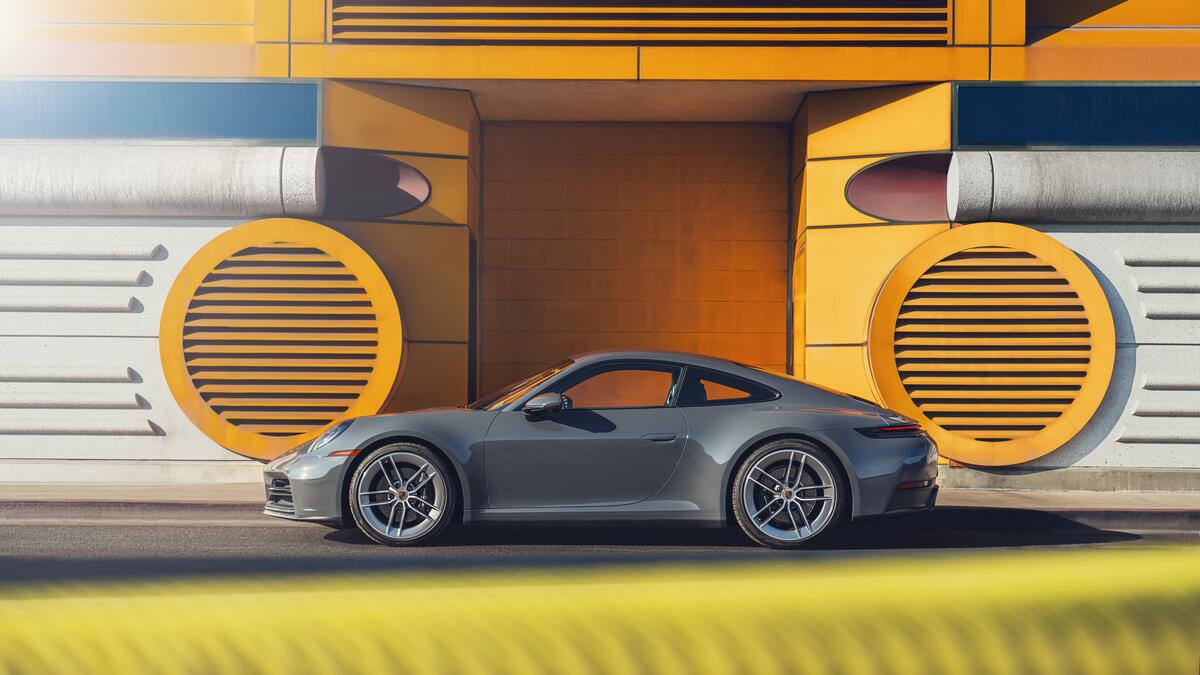
Porsche 911
"...o, but it, it works. Yeah. And then so you do the 911 brake or the 944 rotors, 964 hubs, and then you, ..."
The Porsche 911 is a sports car made by Porsche that’s been around for many decades. It’s known for its strong performance and for having lots of parts and upgrade options. The podcast mentions it because people often use or adapt parts from different Porsche models when working on brakes and suspension.
The Porsche 911 is a long-running sports car known for its rear-engine layout and distinctive handling. In the podcast context, it’s being discussed alongside other Porsche parts and brake/rotor/hub components, which suggests a focus on how different generations share or swap parts. It comes up often in classic and enthusiast circles because it’s both performance-focused and heavily supported by the aftermarket and restoration community.
servo master cylinder
"And then the master cylinder you're running on this thing. You said you're running a servo on it? A servo, yeah, just a late bay servo master cylinder that you can put other things, Volvo do one that's pretty similar."
This is the brake system part that helps you push the brakes with less pedal force. It’s basically the “power assist” for the brake pedal.
A “servo master cylinder” refers to a brake booster-assisted master cylinder setup that uses engine vacuum (or a similar assist method) to reduce pedal effort. They’re describing a late-bay VW servo master cylinder as the brake hydraulic/assist component for the bus.
Volvo master cylinder
"A servo, yeah, just a late bay servo master cylinder that you can put other things, Volvo do one that's pretty similar."
They’re saying you can use a similar brake master cylinder from Volvo instead of the VW one, as long as it fits and works the same way.
They mention a Volvo master cylinder as a similar alternative to the late-bay VW servo master cylinder. The point is cross-compatibility: using a different manufacturer’s hydraulic/booster component that matches the needed function and feel.
second pump
"The second pump's always a full, full pedal. The first pump's better than any bus you'll ever drive. But the second pump is like, you've probably still got a little air or something."
They’re talking about how the brake pedal feels after you press it once versus twice. If the second press is better, it can mean there’s still some air or the system isn’t fully primed yet.
They’re describing a two-stage pedal feel where the “second pump” provides a fuller pedal. That often points to residual air, brake system bleeding/air management, or how the booster/master cylinder circuit is behaving after sitting.

944 turbos
"The carbon cab has the 944 turbos and neither bus has a servo. And of course,"
They’re referring to turbo parts from a Porsche 944. Using turbo hardware can make a big difference in power, but it also means the rest of the engine has to be set up to handle boost safely.
“944 turbos” refers to Porsche 944 turbocharger hardware being used on the VW bus. Turbo setups can dramatically change how the bus makes power, but they also require matching supporting systems (fueling, intercooling, and engine management) to work reliably.
split buses
"I'm running split buses on those, but I do have, I do have a 70 bay that I'm getting ready to"
“Split buses” are early Volkswagen Transporters with a split windshield. They’re a recognizable classic VW style that enthusiasts love.
“Split buses” refers to the early Volkswagen Transporter/Type 2 style with a split windshield. This is a specific classic VW body/era, and it’s a big part of why these buses are so popular in the UK scene.
four inch beam
"I've got the 16, sixes and sevens. I've got the four inch beam. I've got the whole thing and it's a bit of a camper."
A “four inch beam” is a suspension lowering part for a classic VW bus. It drops the front end by a lot, which changes how the tires fit and how the bus drives.
A “four inch beam” refers to a lowered front beam axle setup on a classic VW bus. Lowering beams are a common suspension modification, and the amount (like four inches) strongly affects ride height, steering geometry, and tire clearance.
16, sixes and sevens
"I've got the 16, sixes and sevens. I've got the four inch beam."
They’re talking about wheel size—16-inch wheels, and likely two different widths (6-inch and 7-inch). Wheel width changes what tires fit and how the car sits and turns without rubbing.
This sounds like wheel sizing shorthand: “16” for 16-inch wheels, with “sixes and sevens” referring to wheel widths (6-inch and 7-inch). Wheel width affects tire choice, stance, and how much the tire may rub when the bus is lowered.
low profile tires
"No, they're not, mate. No, there's low profile tires. There's more one over there."
Low profile tires have less “rubber” between the wheel and the road. They can look right on lowered cars and handle better, but they can ride firmer and be easier to damage if you hit potholes.
Low profile tires have shorter sidewalls than standard tires. On lowered buses, low-profile tires help maintain overall wheel/tire fitment and can reduce sidewall squirm, but they can also make ride comfort harsher and increase the chance of rim damage.
slam bay
"All in a slam bay. All in a slam bay. So we're here, while we're here right now, everybody's in the burnout."
“Slam” means the car is lowered a lot so it sits very close to the ground. A “slam bay” is a lowered VW bus/van look that people show off at meets.
“Slam” in car culture means lowering a vehicle’s ride height to sit very close to the ground. A “slam bay” here refers to a lowered VW van/bus setup that’s part of the show scene.
burnout
"So if you're at EBI, the center of the madness is happening right here. As soon as the sun goes down, this place gets kind of, kind of bananas, right? No, it's, listen, it's too cool, man. I'm glad we got to sit chat for a bit."
A burnout is when the tires spin and smoke while the car is barely moving. People do it for fun and to make a big show at car meets.
A burnout is when a driver spins the driven wheels while the car is stationary or moving very slowly, usually to heat the tires and create smoke. In meets, it’s also a spectacle that shows off power and tire grip.
Porsche rims
"They're like, what the hell is that mark, you know, on the Porsche rims, land on the floor, that it ain't not seen anything like that there."
“Porsche rims” just means wheels that look like (or are) Porsche-style wheels. People swap them onto VWs to change the look and help the car sit right.
“Porsche rims” means wheels styled or branded as Porsche wheels, which are commonly used on VW buses because they can improve the stance and visual fitment. In this context, it’s part of the van’s custom wheel-and-fitment identity.
sway bars
"And that you run sway bars on these things or no? No. So no sway bars on these things and no, I mean, they're, they're pretty hooked and low to the ground."
Sway bars help keep a car from leaning too much when you turn. Here they’re saying this bus setup doesn’t use them, so the handling feel can be different.
Sway bars (anti-roll bars) reduce body roll during cornering by linking the left and right suspension. The host is saying this setup runs without sway bars, which can change how the bus feels in turns.
static suspension
"Now you run all static suspension, no air. I tried air. Yeah. I don't like the drive."
Static suspension means the car’s ride height is set and doesn’t change while you drive. It’s different from air suspension, which can raise and lower the car.
Static suspension means the ride height is fixed (not adjustable on the fly). In the VW scene, “static” setups are often contrasted with air suspension because they prioritize a consistent feel and predictable handling.
air ride
"I've not been in anything with air on it that I'm satisfied with the drive. It always seemed either very, very hard, very, very soft or bouncy."
Air ride uses air bags instead of regular springs to change how high or low the car sits. The speaker says they didn’t like how it felt—either too stiff, too soft, or too bouncy.
Air ride (air suspension) uses air springs and an onboard system to adjust ride height. The speaker dislikes it because they feel it can make the ride too hard, too soft, or bouncy compared with a more traditional fixed setup.

Lucid Air
"...nything that I would be happy to call my own with air on. I've tried it. got a van with all the stuff o..."
The Lucid Air is an all-electric car, meaning it runs on electricity instead of gasoline. People bring it up because it’s designed to be comfortable and practical for everyday driving, not just a short-range EV. The podcast is referencing someone who has tried one and liked it.
The Lucid Air is an electric sedan built to deliver long-range driving and a comfortable, modern ride. The podcast mentions it in the context of trying an EV and being happy to “call my own,” which points to ownership experience and how it feels day-to-day. It’s discussed because it represents a mainstream, premium approach to electric performance and usability.
Neil Lightsteer
"Very clever guy, Neil Lightsteer. It just transforms a bay window drive."
Neil Lightsteer is the person the host credits with building the electric power steering setup. He’s presented as the maker of the conversion.
Neil Lightsteer is credited in the segment as the person who manufactured the electric power steering system. The host frames him as a “very clever guy” who built the conversion himself.
speed sensitive power steering
"is it's, it's, it's speed sensitive. Speed sensitive. Speed sensitive power steering."
Speed-sensitive steering changes how much help the car gives you depending on how fast you’re driving. It usually feels lighter when you’re moving slowly and more direct when you’re going faster.
Speed-sensitive power steering changes the amount of steering assist based on vehicle speed. Typically, it provides more help at low speeds for parking and less help at higher speeds for stability and feel.
ECU
"All run for an ECU. Yeah. So it's got its own ECU that picks up the speed of the car."
An ECU is a computer that controls parts of the car. In this case, it uses speed information to decide how much steering help to provide.
ECU stands for Engine Control Unit, but in modern conversions it can also refer to a dedicated electronic control unit for a subsystem. Here, the ECU monitors vehicle speed and uses that input to control the steering assist behavior.
magnesium race car wheels
"Harold would tell you exactly what they are, but they're magnesium race car wheels. Early BBSs, yeah."
These wheels are made from magnesium, which is very light. Lighter wheels can help the suspension work better because there’s less weight for it to control.
Magnesium wheels are lightweight alloy wheels made from magnesium, often used in motorsport because they reduce unsprung mass. Lower unsprung mass can help the suspension respond more quickly over bumps, improving ride/handling feel.
BBS
"Early BBSs, yeah. Yeah, I can't tell you the name because I'm not really a BBS freak, but Harold would tell you exactly what they are, but they're magnesium race car wheels."
BBS is a brand that makes aftermarket wheels. People who care about cars often like BBS wheels because they’re made for performance and look great.
BBS is a well-known wheel manufacturer, especially respected in enthusiast circles for motorsport-style alloy wheels. The host is describing early BBS wheels on the van, implying a period-correct or performance-oriented wheel choice.
rear hub
"his van rolled into my workshop, broke down, left the festival and it broke in a rear hub, smashed the wheel bearings and pieces. It come in, I said, all the rear hubs are old bay window ones."
The rear hub is the part the wheel bolts to, and it connects the wheel to the rest of the rear axle. If it gets damaged, it can ruin the bearings and cause the wheel to wobble or fail.
A rear hub is the mounting point where the wheel attaches and where the wheel bearings live. If a hub fails or is damaged, it can destroy wheel bearings and make the wheel unsafe or impossible to align correctly.
tracing arms
"but you can have other problems. Tracing arms all at funny angles and he said, what can you do to them up?"
Those arms are part of the rear suspension that help position the wheels correctly. If they’re bent or misaligned, the car can handle badly and the tires can wear unevenly.
Tracing arms (often called trailing arms in rear-suspension setups) are linkages that locate the rear axle/suspension and control wheel alignment angles. If they’re “at funny angles,” it usually means the suspension geometry is off, which can cause poor handling and uneven wear.
rear end
"I said, well, we'll have to put 944 rear end to it, discs and, you know, do the whole IRS thing. Yeah. And he just agrees over the phone straight away"
“Rear end” means the whole rear section that includes the rear suspension and axle. Swapping it can change how the rear wheels sit and handle.
“Rear end” here means the rear axle/suspension assembly of the vehicle. The speaker is describing a swap to a different rear-end setup to fix the van’s suspension and geometry problems.
Request an Explanation
Heard something you'd like explained? We'll add it to this episode.
Sign in to request explanations for terms you heard.
Want to learn more?
Browse our glossary for plain-English explanations of automotive terms, jargon, and concepts.
Help improve this episode
See something that's not quite right? Our annotations are AI-generated and can sometimes miss the mark. Click the flag icon on any annotation to suggest a correction.
1 community members have helped improve this episode.