
Ep 361 Tony Moreci his 54 bug Crashed at Samoa
About this episode
A crash at Samoa’s Memorial Day Mayhem race becomes the episode’s centerpiece, starting with the moment the hosts realize it’s Tony Marisi’s silver 1954 ragtop/oval-window Beetle wrecked into a wall. Tony Moreci then walks through how his “54 bug” evolved from a high-school project into a race car, what the Duren Keifer Cup meant (“fast cars plus clean cars”), and the detailed damage and repairs after the impact. The conversation also detours into engine-build plans, drag-racing setup, and upcoming VW event reminders.
What started as a great weekend at the drag strip quickly turned into a moment no racer ever wants to experience. Longtime Volkswagen enthusiast and drag racer Tony Moreci joins us to share the story behind the crash that damaged his iconic 1954 Ragtop Beetle during a recent racing event.
Tony has spent decades behind the wheel of this legendary Oval-window Beetle, campaigning it at tracks across the country and earning respect throughout the vintage Volkswagen drag racing community. In this episode, we break down exactly what happened on race day, the sequence of events leading up to the accident, and the emotions that follow when years of hard work and history are suddenly put at risk in a matter of seconds.
Beyond the crash itself, we take a look into the history of Tony's '54 Ragtop—its evolution from a classic street car into a well-known drag racing machine—and the memories attached to a car that has become part of his identity. We also reflect on our longtime friendship, the experiences we've shared over the years, and our connection through the legendary DBK Car Club.
This conversation isn't just about bent sheet metal and damaged parts. It's about perseverance, friendship, the risks that come with motorsports, and the passion that keeps racers coming back to the starting line. Whether you're a Volkswagen drag racing fan, a vintage VW enthusiast, or simply appreciate the stories behind the people and cars that shape our hobby, this is an episode you won't want to miss.
pistons
"The best pistons on the market. Those are Icon Pistons available at multiple retailers, Dan Volks here in Las Vegas, CB"
Pistons are parts inside the engine that move up and down in the cylinders. They help squeeze the fuel-air mixture and push power to the crankshaft, and stronger performance pistons can help an engine survive harder use.
Pistons are the reciprocating parts inside an engine’s cylinders that move up and down to compress the air-fuel mixture and transfer force to the crankshaft. In performance engines, piston choice affects strength, weight, and how reliably the engine can handle higher cylinder pressures.
Type E Motorsports
"Performance, Type E Motorsports. If you want yourself some of the best pistons available on the market, go get yourself some Icon Pistons."
Type E Motorsports is the shop the host mentions for buying the pistons. Think of it as the place you’d go to purchase the parts being talked about.
Type E Motorsports is presented as the retailer/vendor where listeners can buy Icon Pistons. In this segment, it’s acting as a product seller for performance parts rather than as a technical topic.
85.5, 90.5 now, and 94 millimeter
"Go to Type E Motorsports, pick up a set of Icon Pistons available in 85.5, 90.5 now, and 94 millimeter and multiple wrist pin offsets."
Those millimeter numbers are piston sizes that relate to how big the engine’s cylinders are. Choosing the right size helps determine engine displacement and must match the rest of the engine parts.
The “millimeter” numbers refer to piston diameter (bore size), which determines the cylinder’s internal size. Different bore sizes change displacement and how the engine’s internal geometry is set up, so matching piston diameter to the correct cylinder/bore is critical.
wrist pin offsets
"and 94 millimeter and multiple wrist pin offsets. So go check them out today."
The wrist pin is the small pin that connects the piston to the connecting rod. An “offset” means it’s positioned slightly off-center, which changes how the piston moves and can help fit the piston correctly in a specific engine build.
Wrist pin offset is the designed position of the piston’s wrist pin relative to the piston’s centerline. Changing the offset alters piston-to-rod geometry and can affect compression height, piston skirt wear, and how the engine’s timing/clearances behave.
Lufthuygan
"Schedule update for this year. I'm going to be heading to Lufthuygan. It's going to be taking place on June 13th at Santa Anita Raceway Park."
Lufthuygan sounds like the name of a VW event the host is going to. They’re telling people to register and that spots are filling up.
Lufthuygan appears to be the name of a specific VW-related event the host is promoting, with registration and limited spaces. It’s treated as an event/topic rather than a technical automotive term in this segment.
Santa Anita Raceway Park
"I'm going to be heading to Lufthuygan. It's going to be taking place on June 13th at Santa Anita Raceway Park. Go check them out."
Santa Anita Raceway Park is the location where the event is happening. It’s a real racing venue in Southern California, and the host is telling listeners to go there.
Santa Anita Raceway Park is a named racing venue in Southern California where the host says an event will take place. The mention matters because it frames where the VW-related gathering will happen.
MP 70th anniversary
"Also, I'll be at the MP 70th anniversary and your boy here is going to be live streaming the World Cup engine build off here."
The host says they’ll be at an “MP 70th anniversary” event. They also mention they’ll be live streaming an engine build there.
The “MP 70th anniversary” is referenced as an event the host will attend, with a live stream planned for an engine build. This is a scheduling/event mention rather than a car-tech explanation.
torque performance motor
"They're going to have people from all over the globe battling it out to see who can build the highest torque performance motor."
Torque is the engine’s twisting force. More torque usually means the car feels stronger when you accelerate, especially from slower speeds.
“Torque” is the twisting force an engine produces, and it strongly affects how quickly a car accelerates, especially at lower speeds. When they say “torque performance motor,” they mean an engine build aimed at maximizing that twisting force rather than just peak horsepower.
MP
"So using MP parts specified in the program. We're going to get more in a detail on that, but there's going to be plenty of people there, J-Bugs, Seward Speed Shop, D&J Auto..."
“MP” here is a company that makes and sells performance parts. They’re also involved in the engine competition and have videos about it.
In this segment, “MP” refers to a parts brand/program sponsor that supplies specified components for the engine build-off. The hosts are telling listeners to follow MP on YouTube for details on the build rules and the live stream.

54 Oval
"Well, guys, without any further ado, let's get into it. The Memorial Day mayhem accident that took place with the 54 Oval."
A “54 Oval” is a 1954 Volkswagen Beetle. It’s called an “oval” because of the oval-shaped window design, and people really love that classic look.
A “54 Oval” refers to a 1954 Volkswagen Beetle (the classic oval-window body style). This is a big deal in air-cooled VW circles because the oval-window era is one of the most recognizable and sought-after Beetle generations.
Memorial Day mayhem
"Well, guys, without any further ado, let's get into it. The Memorial Day mayhem accident that took place with the 54 Oval."
“Memorial Day mayhem” is the name of the event where the crash happened. The show is focusing on what went wrong during that weekend.
“Memorial Day mayhem” is the event name the hosts are discussing, tied to an accident involving a Volkswagen “54 Oval.” It’s the episode’s narrative hook for why they’re bringing Tony Moreci on to talk about what happened.
Samoa Raceway
"…watching some of the races at the Memorial Day mayhem that was taking place at Samoa Raceway by the Volkswagen group. And I saw this super clean oval on BRMs and I saw it take off."
Samoa Raceway is the track where the Volkswagen event happened. It’s where the racing was going on that weekend.
Samoa Raceway is the physical track where the Memorial Day Mayhem races took place. The hosts mention it as the venue for the Volkswagen-group event and the oval’s takeoff on BRMs.
BRMs
"And I saw this super clean oval on BRMs and I saw it take off."
“BRMs” are wheels (rims) that people put on classic VWs. They’re known for the look and how they fit the car.
“BRMs” are a wheel brand/model commonly referenced in classic VW circles—typically lightweight wheels used for a period-correct look and fitment. In this context, it’s describing the 1954 oval’s stance and appearance on those wheels.
Oval RAG
"unfortunately wrecked his silver 54 Oval RAG into the wall at Samoa."
“Oval” is about the Beetle’s oval-shaped windows. “RAG” usually means ragtop, which is another way of saying it’s a convertible.
“Oval” refers to the oval-window design used on early classic Volkswagen Beetles, a recognizable styling cue for enthusiasts. “RAG” is commonly used shorthand for a ragtop (convertible), meaning the car’s roof is designed to open.
drag racing
"So I had this really cherry oval street slash strip car [405.0s] But, you know, the last restoration on it was a pan off."
Drag racing is racing in a straight line to see which car gets up to speed fastest. It’s usually done over a short distance.
Drag racing is a straight-line motorsport where two cars compete over a short distance to see which accelerates fastest. In the context of a classic VW, it explains how the car was used beyond show/restoration—testing power and traction in short bursts.
pan off
"But, you know, the last restoration on it was a pan off. [409.2s] Everything was painted inside. [410.3s] Now all the hardware was chromed and polished."
“Pan off” refers to a full-body-off restoration where the car’s body is removed from the pan/chassis tub. On classic Volkswagens, this is a major, labor-intensive process used to properly address rust, structural issues, and to do thorough refinishing.
chromed and polished
"Everything was painted inside. [410.3s] Now all the hardware was chromed and polished. [413.6s] And I mean, I just put a lot of time and energy into that car."
Chroming and polishing are ways to make metal parts shiny and protect them. On show cars, it’s part of making everything look really clean.
Chroming and polishing are finishing processes used to make metal parts reflective and corrosion-resistant. In classic VW judging and show culture, this kind of detailing is a big part of “clean car” presentation.
Duren Keifer Cup series
"And for some of you guys that don't know, the Duren Keifer Cup series was [419.7s] I think it was started by Frenchy and it was. [422.6s] Yes, yes, Frenchy started it."
This was a racing/show series where they cared about how fast the cars were and how clean they looked. The speaker says it ran in the mid-2000s.
The “Duren Keifer Cup” is described as a mid-2000s series where cars were evaluated for both speed and cleanliness. The host explains it as “fast cars plus clean cars,” and notes it ran roughly from 2003 to 2008.
Frenchy
"And for some of you guys that don't know, the Duren Keifer Cup series was [419.7s] I think it was started by Frenchy and it was. [422.6s] Yes, yes, Frenchy started it."
Frenchy is the person the speakers credit with starting the Duren Keifer Cup series. He’s part of the classic VW scene behind that event.
“Frenchy” is named as the person who started the Duren Keifer Cup series. In this segment, he’s presented as an organizer/initiator within the classic VW community.
quarter
"It started and it was like fast cars plus clean cars. [439.0s] Like they were judged on how clean and nice the car was and your quarter"
They’re likely talking about the quarter panel, which is the body panel near the rear wheel. Show judges often look closely at how straight, clean, and well-finished it is.
“Quarter” here appears to be the start of “quarter panel,” a body panel on the side of the car near the rear wheel. In judging contexts, quarter panels are often scrutinized for fit, finish, and overall cleanliness.
Sacramento Raceway
"You know, my my fastest quarter mile E.T. was an 1160 up at Sacramento Raceway. Which was super fast, but I think Sean ran like 10, 10, 9."
Sacramento Raceway is a drag-racing venue where the host measured a quarter-mile time. Track-specific results matter because surface, weather, and setup can change how quickly a car runs.
10, 10, 9
"Which was super fast, but I think Sean ran like 10, 10, 9. Yeah, he was high, high 10."
“10, 10, 9” is how they’re talking about drag-race times in seconds. It means the car ran in the 10-second range, which is quicker than the 11-second range they mentioned.
“10, 10, 9” is shorthand for very low elapsed times in drag racing—likely “10.9” seconds or similar—indicating a faster quarter-mile run than the 11.60 mentioned earlier. In this context, the exact decimal matters because drag racing is all about hundredths.
Buggerama 2023
"Yeah, I had it out at the last Buggerama 2023. And what would that car run then?"
Buggerama is a VW event. They’re saying they brought their car to the 2023 edition.
“Buggerama 2023” refers to a VW-focused event where Beetles and other air-cooled VWs gather and often race or show. The speaker says they brought the car out for the last Buggerama in 2023.
detuned
"And I kind of detuned the motor to make it last a little longer. I think I was running like 12 those out there with it."
“Detuned” means the engine is set up to make less power than it could. The tradeoff is usually better reliability and longer life.
To “detune” an engine means reducing its output—often by changing fueling, ignition timing, cam choice, or compression/boost strategy—so it makes less power but lasts longer. In this context, the speaker detuned the motor to improve durability for repeated racing.
rag top
"Because, you know, my my rag top, my 63 was polar silver. And it was kind of had a similar vibe to accept. ...because it was rag tops"
“Rag top” just means the car is a convertible with a fabric roof. It’s a different body setup than a normal hardtop.
“Rag top” is slang for a convertible with a fabric soft top. On classic VWs, the convertible body style changes how the car is built and restored compared with a fixed-roof Beetle.
junkyard
"My brother and I, we pulled it out of the junkyard after it crashed my 64 and I'm interested by the car."
A junkyard is where non-running or wrecked cars are stored and broken up for parts. In classic VW ownership, buying a crashed or incomplete car from a junkyard is a common way to source rare trim or body pieces for a restoration.
blew up grenade the motor
"And I went through the whole thing, finished the car and then blew up, grenade the motor and then just was so disgusted with all the money I put."
That phrase means the engine failed in a really serious way—like it got so damaged that it basically can’t be used anymore. It usually leads to a rebuild or replacing the engine.
“Grenade the motor” is slang for catastrophic engine failure where internal parts break and the engine is effectively destroyed. It’s the kind of failure that can turn a running project into a costly rebuild or swap.
3500 dollars
"I sold it for 3500 dollars with no engine, which was big money in 96 for a bug."
They’re talking about how much the car sold for—$3,500—back in the mid-90s. The key detail is that it didn’t have an engine, so it was basically a “shell” worth money to the right buyer.
The host is quoting a purchase/sale price—$3,500—for a Volkswagen Beetle in 1996 with no engine. That context matters because it shows how much value a rolling shell (body/chassis) could have even when the drivetrain was missing.
teal pearl
"And he ends up getting it. And the person that bought it before and put a teal pearl over top of it, ruined the look of the car."
“Pearl” paint is a shiny paint that can look different depending on the angle and lighting. “Teal pearl” means the car was painted a teal color with that extra shimmering effect.
“Pearl” paint refers to a metallic paint system that uses mica-like flakes to create a color-shifting, lustrous effect. “Teal pearl” would be a teal base color with that pearl flake effect, which can drastically change how a classic car’s original look reads in different light.
drag strips
"You know, the Samoa drag strips, probably five and a half, six hour drive from me. [706.0s] And it's a more all day."
A drag strip is a track made for straight-line racing. Cars run down the track to see who’s fastest.
“Drag strips” are purpose-built tracks for straight-line acceleration runs, typically with timed passes down a fixed distance. The speaker’s mention of drive time and “the end of the track” places the discussion firmly in drag-racing format.
burnout
"Saturday, I took it off the trailer, made a pass on the car. [724.1s] It was kind of, you know, my burnout sucks. [726.5s] I didn't launch it hard."
A burnout is when you briefly spin the tires before the race to get them warmed up. They’re saying they didn’t do it very well.
A burnout is when the driver spins the tires briefly before a run to warm them up and improve traction. The speaker says their burnout “sucks,” implying they didn’t get the tires into the best prep state before launching.
launch
"It was kind of, you know, my burnout sucks. [726.5s] I didn't launch it hard. [727.5s] I just hadn't driven the car in three years."
In drag racing, “launch” means how you get going from the start line. They’re saying they didn’t try to accelerate as aggressively as possible.
In drag racing, “launch” refers to how the car starts off the line—especially throttle application and traction management. The speaker notes they “didn’t launch it hard,” meaning they eased into the start rather than going for maximum acceleration.
tire pressure
"came back to the pits and everybody's like, how much tire pressure do you got? I got 15 pounds. I dropped it down to 12."
Tire pressure is how much air is in the tires. Changing it changes how much of the tire touches the road and how the tire behaves as it gets hot during a run.
Tire pressure is the amount of air in the tire, and it strongly affects grip and how the tire heats up during runs. Lowering pressure slightly can increase the tire’s contact patch, but too low can cause overheating or instability.
K rails
"Nice track. The lanes are super tight. The K rails, you know, there's no room for error on this track."
“K rails” are the concrete barriers along the track. They help keep cars safe, but they also mean you can’t make mistakes because the walls are close.
“K rails” are concrete barrier systems used along racetracks. They’re designed to protect drivers and reduce the chance of a vehicle leaving the track, but they also make the racing line unforgiving because there’s little room for error.
super index
"So my third, my third test pass, you know, we're racing on Sunday, I'm racing super index and I'm like, I got to see what this car is going to pull"
“Super index” likely refers to a racing format where you’re aiming for a target time, not just the fastest run. The driver tries to set up the car so it hits that target as closely as possible.
“Super index” sounds like a class or ruleset where cars are timed against a target (“index”) rather than only racing for the outright fastest time. Drivers tune launch and shift points to land as close as possible to the index.
dial
"I'm racing super index and I'm like, I got to see what this car is going to pull so I can get my dial on set."
Here, “dial” means getting the car set up the way the driver wants for the next run. It’s about adjusting the tune so the car performs consistently.
In racing context, “dial” usually means setting up the car’s tune for the next runs—often by adjusting things like ignition timing, gearing, or throttle response. The driver is trying to learn what the car can pull so they can set the car’s setup correctly.
burned out
"So my last pass of the day, I let the smear out of the tires, burned out"
“Burned out” means you spin the tires to heat them up. It can help the tires grip better for the next run, but it also wears the tires.
“Burned out” means spinning the tires while stationary or at low speed to heat them up and sometimes to clean off the tire surface. In racing, it can help the tires bite sooner, but it also wastes tire life and can affect traction consistency.
crosswinds
"Yes. Yeah. [855.9s] And usually some of that stuff is happening by strong crosswinds [859.8s] and stuff like that over there in SAC, usually."
Crosswinds are wind that hits your car from the side. That sideways push can make the car feel like it’s drifting or getting harder to control, especially when you’re going fast or changing gears.
Crosswinds are wind blowing sideways across the car as it moves. In motorsport and track driving, they can push the car off its intended line and make traction harder to predict, especially during high-speed transitions like shifting.
unloads suspension
"[868.0s] I mean, psychologically, you don't because you're, you just, as soon as something [871.7s] starts happening, you let off throttle, which unloads suspension, you know. [875.7s] Yeah. Yeah."
Unloading the suspension means reducing the load on the tires as the car’s weight shifts away from the contact patches. When the driver lifts off the throttle, the car can lose rear traction and become more likely to rotate or slide, especially during a gear change.
let off throttle
"[868.0s] I mean, psychologically, you don't because you're, you just, as soon as something [871.7s] starts happening, you let off throttle, which unloads suspension, you know. [875.7s] Yeah. Yeah."
Letting off the throttle means you lift your foot off the gas. That changes how much pulling force the engine is providing, and it can make the rear tires lose grip and the car start to rotate.
Letting off the throttle abruptly reduces engine torque and changes how forces act on the drivetrain and rear tires. That torque change can shift traction and weight balance, which can trigger oversteer or a spin if the car is already near its grip limit.
shifted into third gear
"[875.7s] Yeah. Yeah. [876.7s] But no, it happened immediately when I shifted into third gear. [879.9s] If you listen to the video, you'll hear me."
Shifting into a new gear changes how the engine’s power is delivered to the wheels. Here, the car starts going sideways right as the upshift completes, which points to a traction/grip issue happening at that exact moment.
A gear change can momentarily alter engine torque and drivetrain behavior, which affects tire grip and vehicle balance. In this story, the spin begins right when the driver completes the upshift into third, suggesting the car was near its traction limit at that moment.
clutch
"[876.7s] But no, it happened immediately when I shifted into third gear. [879.9s] If you listen to the video, you'll hear me. [881.6s] The clutch will go in, the car will hit third, and then it goes sideways on me, [884.8s] you know, right when I released the clutch."
The clutch is what you use in a manual transmission to connect and disconnect the engine from the gearbox. When you shift, the clutch changes how power flows, and that can influence whether the car stays planted or starts to slide.
The clutch is the pedal-operated (or hydraulically operated) connection between the engine and the transmission in a manual car. During an upshift, the clutch engagement/disengagement changes torque delivery to the wheels, which can affect stability if traction is marginal.
slicks
"So, and I noticed a lot of the pro turbo guys, you know, they all run 10, 11 inch slicks on their cars. I'm running a six inch slick, you know, and I think my horsepower to, you know,"
“Slicks” are race tires with no tread grooves. They usually grip really hard on a dry track, but they don’t work as well if the track surface is poor or changing.
“Slicks” are race tires with no tread pattern, designed to maximize contact patch and grip on dry surfaces. They’re commonly used in drag racing because they can provide very high traction, but they’re also sensitive to track conditions.
horsepower to
"I'm running a six inch slick, you know, and I think my horsepower to, you know, ratio compared to like the street NA guys, they're running drag radials. I think my car just had a little more power and the weight of it."
He’s talking about how much power the car has compared to how heavy it is. That balance affects how quickly the car can accelerate.
“Horsepower-to” is shorthand for a power-to-weight relationship (often discussed as horsepower per unit of weight). It’s used to compare how strongly a car accelerates, especially in drag racing where traction and mass both affect results.
trailing arms
"The initial impact was the front passenger side, you know, it buckled the quarter panel. It destroyed the fender. The wheel broke off. It broke the trailing arms."
Trailing arms are suspension links that control wheel movement and alignment under load. In a crash, damage to the trailing arms can change wheel geometry and make the car unsafe or undrivable.
king link pins
"It broke the trailing arms. It broke the king link pins. It bent the tie rod, pulled the brake line off."
On classic VWs, the front suspension uses link pins that act like pivot points for the steering. If the king link pins break in a crash, the front end can lose proper steering and alignment.
“King link pins” refers to the link-pin front suspension hardware used on many classic Volkswagens, where the steering knuckle pivots on replaceable pins. If these are broken or damaged, steering geometry and control can be severely compromised.
tie rod
"It broke the king link pins. It bent the tie rod, pulled the brake line off. "
The tie rod is a steering part that connects the steering to the front wheels. If it bends, the wheels won’t point correctly and steering can become dangerous.
A tie rod is a steering linkage that transfers movement from the steering system to the steering knuckles, helping set and maintain wheel alignment. Crash damage to the tie rod can cause misalignment and unsafe steering response.
brake line
"It bent the tie rod, pulled the brake line off. "
A brake line carries the fluid that makes the brakes work. If it gets pulled off in a crash, the brakes may not work properly.
A brake line is the hydraulic fluid line that carries pressure from the master cylinder to the brake calipers or wheel cylinders. If it’s pulled off or damaged, braking can fail or become severely reduced.
engine case
"And then I discovered the engine case was cracked. I go to pull the engine out. It's wobbling around in there."
The engine case is the main body of the engine. If it’s cracked, the engine can leak oil and may not be safe to run until it’s properly repaired.
The engine case is the main structural housing of the engine that holds internal components and supports mounting. The host discovered the engine case was cracked, which is serious because it can lead to oil leaks, loss of structural integrity, and catastrophic engine failure if not repaired.
bell housing
"It's wobbling around in there. The bell housing was in probably three pieces. It just shattered almost in half."
The bell housing is the metal part that connects the engine to the transmission. If it breaks like this, the drivetrain can’t stay aligned and the car usually needs major repairs.
The bell housing is the housing that sits between an engine and the transmission. In this crash, the host says the bell housing was “in…three pieces” and “shattered,” which indicates severe drivetrain mounting damage.
tranny
"And then trying to get the tranny out of the car, the nose cone broke in half. And then once I had all the suspension out of the car,"
“Tranny” is a casual term for the transmission. The host mentions trying to remove the transmission after the crash, and that related components (like the nose cone) broke, pointing to drivetrain structural damage.
nose cone
"And then trying to get the tranny out of the car, the nose cone broke in half. And then once I had all the suspension out of the car,"
On many Volkswagens, the transmission/differential has a front cover called the nose cone. If it breaks in a crash, it usually means the transaxle housing is damaged too.
The nose cone is the front housing/cover on a Volkswagen transaxle (the transmission + differential assembly). In this episode, the host says the nose cone “broke in half,” which implies the transaxle housing took major impact.
Berg mid-mount
"And then once I had all the suspension out of the car, I got a Berg mid-mount welded into that car. The frame horns tweaked up and the welds on my Berg mid-mount cracked."
A Berg mid-mount is a reinforced mounting point for the engine/transmission area on classic VW cars. After the crash, they welded one in, and later discovered the welds cracked—meaning the drivetrain support got damaged.
A “Berg mid-mount” is a specific aftermarket engine/transaxle support mount associated with Berg (Berg Engineering), used on classic air-cooled Volkswagens to strengthen and correctly locate the drivetrain. The host says they installed a Berg mid-mount after the crash, then found cracks in the welds—so the mount area was a key structural repair point.
salvageable
"And so do you think that the car is salvageable or what? [1115.8s] Well, yeah, I'm going to fix it."
“Salvageable” means the car isn’t totally ruined—it can be fixed and driven again. The big question is whether the crash bent important structural parts or if it’s mostly sheet metal.
“Salvageable” means the car can be repaired back to a safe, drivable condition rather than being written off. In classic VW crash situations, the key question is whether the damage is structural (like the frame horns) or mostly body panels that can be replaced.
frame horns
"They said they could straighten that pan, the frame horns. [1126.7s] They said it's probably 40 to 50 hours of labor and plus the metal"
Frame horns are strong metal parts that help hold the front of the car’s structure in the correct shape. If they’re bent, the car may not line up right, so fixing it can take a lot of work.
Frame horns are structural mounting points on a car’s front-end body/frame structure. If the frame horns are bent in a crash, it can affect alignment, safety, and how straight the front end sits—so repair work is often extensive.
Katie
"So Katie built it and then I had a problem with the case. [1173.2s] And then Chris Loeffler took it to his shop"
Katie is the person who built the engine at first. Later, they found a problem and other people rebuilt parts of it.
Katie is credited with building the engine initially. The host then describes later work by others after a problem with the case, suggesting an evolving build process.
new case
"And then Chris Loeffler took it to his shop and redid it new case, [1178.6s] changed the cam, did a few things to it."
The “case” is the main engine housing where the internal parts sit. Replacing it usually means the original had a serious problem and they had to rebuild the engine properly.
The “case” is the engine’s main housing (often referring to the crankcase in air-cooled VW-style builds). Replacing it suggests the original had an issue severe enough to require a full rebuild-level correction.
Chris Loeffler
"And then Chris Loeffler took it to his shop and redid it new case, [1178.6s] changed the cam, did a few things to it."
Chris Loeffler is the person who worked on the engine. He rebuilt it and made changes inside, like replacing parts and updating the cam.
Chris Loeffler is the builder who took the engine to his shop and rebuilt it. The host mentions specific internal changes (new case, cam changes), which implies a hands-on engine build rather than a simple refresh.
cam
"changed the cam, did a few things to it. [1181.0s] The motor Chris built me was bogging off the line a little bit"
The camshaft controls when the engine’s valves open and close. Swapping it can change how the engine feels—especially how it responds when you accelerate.
A cam (camshaft) controls valve timing by opening and closing the engine’s valves. Changing the cam can significantly alter power delivery and throttle response, which can interact with carburetor and exhaust changes.
515 carburetors
"The motor Chris built me was bogging off the line a little bit [1183.5s] because we put a two inch header on it and 515 carburetors."
Carburetors are what mix fuel and air before it goes into the engine. If you change parts like the exhaust and the carb setup doesn’t match, the car can hesitate or “bog” when you start moving.
“Carburetors” are fuel-mixing devices that meter gasoline into the engine based on airflow and throttle position. “515” is likely a carburetor model/size designation, and pairing specific carb sizes with an exhaust change can cause drivability issues like bogging if the fuel/air setup isn’t matched.
two inch header
"The motor Chris built me was bogging off the line a little bit [1183.5s] because we put a two inch header on it and 515 carburetors."
A header is part of the exhaust system that collects gases from the engine. The “two inch” size is about the pipe diameter, and changing it can affect how the engine runs, particularly when you first accelerate.
An exhaust header is the tuned exhaust manifold that routes exhaust gases into the rest of the exhaust system. A “two inch” header refers to the pipe diameter, which can change exhaust flow and how the engine responds—especially at low rpm.
bogging off the line
"The motor Chris built me was bogging off the line a little bit [1183.5s] because we put a two inch header on it and 515 carburetors."
“Bogging off the line” means the car feels like it hesitates when you first hit the gas from a stop. It’s usually a sign the engine isn’t getting the right fuel/air mix at that moment.
“Bogging off the line” is hesitation or a stumble when you accelerate from a stop. It often points to a mismatch in fueling or airflow (for example, carburetor jetting or throttle response) after modifications like exhaust changes.
compression
"That's when I lowered the compression because I said, hey, I'm going to make this more of a street car. So yeah, the last guy to have his hands on it was Rick Eichler and Sonoma."
Compression ratio is how “squeezed” the air-fuel mixture is inside the engine before it ignites. Lowering it can make the engine safer and easier to live with on the street, especially with pump gas.
Compression ratio is the ratio of the engine’s maximum cylinder volume to its minimum volume. Lowering it (as they did to make the car more street-friendly) generally reduces peak stress and detonation risk, but can also reduce efficiency and power compared with a higher-compression setup.
Rick Eichler
"So yeah, the last guy to have his hands on it was Rick Eichler and Sonoma. And what what was the compression on the final build?"
Rick Eichler is the person who worked on and adjusted the engine build. The host is basically saying he was the last person to make important changes before the car’s current setup.
Rick Eichler is credited with fine-tuning and tweaking the build after the previous owner’s work. In a classic VW context, that kind of hands-on tuning is often where compression, fueling, and engine durability choices get finalized.
twelve to 112 and a half to one
"And what what was the compression on the final build? Twelve to 112 and a half to one. So before that, you had like fourteen or what?"
They’re giving the engine’s compression ratio numbers for the final build. Higher compression usually makes more power potential, but it also needs the right fuel and tuning to avoid knocking.
They’re quoting the engine’s compression ratio targets for the final build (around 12:1 and 12.5:1). Those numbers matter because compression ratio strongly influences how much cylinder pressure the engine makes and how sensitive it is to fuel quality and ignition timing.
fourteen to one
"So before that, you had like fourteen or what? Four, yeah, it was fourteen to one. That's wild, man."
“Fourteen to one” means the engine was squeezing the fuel-air mixture a lot. That can help power, but it can also cause problems if the car isn’t tuned for it or if the fuel isn’t good enough.
“Fourteen to one” is a high compression ratio for a street engine, meaning the engine squeezes the mixture much more than typical stock setups. That level of compression can increase power, but it also raises the risk of detonation if the fuel or tuning isn’t right.
fifty twos
"And you still running the fifty twos on it? No, no, I put the forty eights back on it. And so what what got what got broken?"
“Fifty twos” sounds like a shorthand for the carburetor/intake setup size. They changed it back to a different size (“forty eights”), which changes how the engine gets fuel and how it drives.
“Fifty twos” is almost certainly shorthand for a carburetor or intake setup size (commonly used in VW circles to refer to carburetor model/size). The key point is they changed the induction setup back to “forty eights,” which affects fueling and drivability.
forty eights
"And you still running the fifty twos on it? No, no, I put the forty eights back on it. And so what what got what got broken?"
“Forty eights” likely refers to a smaller carburetor/intake setup than what they had before. Changing between carb sizes can make the engine feel better for normal street driving.
“Forty eights” is likely shorthand for a smaller carburetor/intake size compared with “fifty twos.” Swapping between these sizes is a common way to tune street drivability versus top-end flow on classic VW builds.
aftermarket aluminum auto linear case
"Yeah, it's got an aftermarket aluminum auto linear case and it cracked right up at the top at the starter here."
They’re talking about the engine’s main housing (“case”) made from aluminum, not the original factory part. In this story, that aluminum case cracked, which is a serious problem because it can break under load.
This refers to an aftermarket aluminum engine case (the “case” that houses the crankshaft and internal rotating assembly). Aluminum cases can be strong, but if the case cracks—like they describe here—it can cause catastrophic failure and requires repair or replacement.
starter
"auto linear case and it cracked right up at the top at the starter here. And then the lower stud on the driver's side busted off,"
They say the crack happened near where the starter mounts. That area matters because the starter is bolted in and can put stress on the engine case.
They mention the crack running “at the top at the starter,” pointing to a failure near the starter mounting area. That location is important because starter torque and mounting stresses can reveal weak points in the case or studs.
lower stud on the driver's side busted off
"And then the lower stud on the driver's side busted off, sheared off in the case. Jeez. Yeah."
A “stud” is like a heavy-duty bolt that’s threaded into the engine. If it shears off, it usually means the engine case cracked or couldn’t handle the load, so the fix isn’t just replacing the stud—you have to repair the case too.
A “stud” is a threaded fastener used to secure parts of the engine case and related components. When a stud shears off in the case, it indicates the case material failed under stress, and it also means the engine will need case repair plus proper re-threading or a replacement stud.
Dave Bonbride
"I talked to Rick, Dave Bonbride, is going to weld the aluminum case. I got to pull the flywheel off, get the case fixed, get a stud put in it,"
Dave Bonbride is the person they’re planning to have weld the cracked engine case. Welding an engine case is a specialized repair, not a quick DIY fix.
Dave Bonbride is mentioned as the person who will weld the cracked aluminum engine case. Case welding is a specialized repair, so his involvement suggests the damage is serious enough to require professional metalwork.
flywheel
"I talked to Rick, Dave Bonbride, is going to weld the aluminum case. I got to pull the flywheel off, get the case fixed, get a stud put in it, and then we'll throw it on the test fan"
The flywheel is a heavy rotating part attached to the engine. They’re saying they’ll have to remove it to get to the engine case so they can repair the damage.
The flywheel is the rotating mass connected to the crankshaft that helps smooth engine operation and provides a mounting surface for the starter ring gear. If they need to “pull the flywheel off” to fix the case, it implies the case repair requires access to internal mounting surfaces.
test fan
"and then we'll throw it on the test fan and, you know, just run it, you know, "
They’re talking about running the engine on a test setup after repairs. The goal is to make sure it runs correctly before putting it back into the car.
A “test fan” here likely means an engine test setup where the engine is run with controlled airflow (often for cooling) while it’s not installed in the car. It’s used to verify the repaired engine starts, idles, and runs without obvious issues.
dyno
"Did the law for his ever dyno that engine? Yeah, I believe Chris did. He emailed me the sheet that was years ago."
A dyno is a testing machine for an engine. It measures how strong the engine is (power and torque) and produces a printout you can compare over time.
A dyno (dynamometer) is a machine that measures how much power and torque an engine makes under controlled conditions. When someone asks if a car “ever dyno’d,” they’re checking whether the engine’s output was tested and recorded on a dyno sheet.
red line
"Yeah. Yeah, I mean, what's the red line on that motor? I shift it probably around eight grand, I believe."
The red line is the highest safe engine speed (RPM). If you go past it, you risk damaging the engine.
The red line is the engine’s maximum recommended RPM range. Past the red line, the engine is more likely to suffer damage, so enthusiasts often shift before it or treat it as a hard limit.
throttle cable
"After the crash, my throttle cable was the engine twisted. It pulled on it, pulled on the linkage."
The throttle cable is the cable that connects your gas pedal to the engine’s air/fuel control. If the cable gets bent or pulled in a crash, the engine may not behave normally.
A throttle cable is a mechanical linkage that connects the accelerator pedal to the throttle body/carburetor. If it’s pulled or twisted after a crash, it can change throttle position and affect how the engine responds.
linkage
"It pulled on it, pulled on the linkage. And when I shut the car off, the tack was at 8500 RPMs."
Linkage is the set of parts that move together to transfer motion from the gas pedal to the throttle. If it gets bent, the throttle can end up stuck or pulled the wrong way.
In this context, linkage refers to the mechanical parts (rods/couplers) that transmit motion from the throttle cable to the throttle. Crash damage can misalign the linkage, causing the throttle to stick or pull unexpectedly.
tack
"And when I shut the car off, the tack was at 8500 RPMs. So right before I shut it down. Yikes."
A “tack” is the RPM gauge. It tells you how fast the engine is spinning, so a high reading right after shutdown is a red flag.
“Tack” is a shorthand for the tachometer, the gauge that shows engine RPM. Seeing the tach at 8500 RPMs after shutting the car off suggests the engine was still being driven or the throttle was stuck open.
roll cage
"Now, you know, you got a roll cage in that car? [1354.8s] Yes. [1355.5s] And then it's just a, it's just a two point, four point or six point?"
A roll cage is a strong metal frame inside the car. It’s there to help protect you in a serious crash, especially if the car tips or rolls.
A roll cage is a reinforced metal framework installed inside a car to protect occupants during a crash or rollover. In this case, the speaker specifies a “four point” cage with driver and passenger bars, which helps maintain a survival space if the body deforms.
traction bar device
"And then I got the Ron Lumis, the traction bar device, they sandwiched to the bottom [1372.3s] of the roll cage in the back of the car and then they tie into the frame horns"
A traction bar helps the car put power down more effectively. It reduces unwanted axle movement when you accelerate hard, and it’s usually mounted so the force goes into the car’s frame.
A traction bar device (often called a traction bar) is a suspension reinforcement used to control axle wrap and wheel hop under hard acceleration. The speaker describes it being sandwiched to the bottom of the roll cage area and tied into the frame horns, which is a common way to route forces into the chassis for stability.
catastrophic damage
"because that just does catastrophic damage on top of everything else. [1390.7s] Yeah."
They mean really serious damage—so bad it can ruin the car. They’re saying the safety setup helps prevent a rollover, which is when that kind of damage is most likely.
“Catastrophic damage” here means severe, potentially total-loss-level destruction that can happen when a car rolls over. The speaker is connecting the presence of the roll cage and reinforcement to reducing the chance of rollover and the extreme damage that follows.
stock seats
"And you're running, you're running stock seats in that thing. [1395.1s] Yeah. It's got the original seats in it."
Stock seats are the original seats that came with the car. The speaker is pointing out they didn’t replace them with aftermarket racing seats.
“Stock seats” are the original factory seats rather than upgraded racing seats. In a car with a roll cage, some builds switch to racing seats for better restraint and compatibility with harnesses, so mentioning stock seats is a notable setup detail.
lap belt
"[1406.3s] the interior is all stock, the door panels, the German carpet, rubber mats. [1410.7s] It's got a lap belt in it. [1412.3s] And right before I made that last pass, for some reason,"
A lap belt is a seat belt that goes across your hips. Even though it doesn’t hold your shoulders, it can still keep you from moving too much during a crash.
A lap belt is a seat belt that restrains you across your hips rather than your shoulders. In older cars, it’s common to see lap-only setups, and in a crash it can still help keep the occupant from being thrown out of position.
EMTs
"[1435.4s] Well, I'm glad you're okay, bro. And you didn't, you didn't get, [1437.9s] did you have it? Were you wearing a helmet? [1439.8s] Yes, of course. [1440.8s] Oh yeah. That's good. So then you'd, if your head bobbed around, you probably didn't. [1445.7s] Yeah. The EMTs checked me out and, you know, my, my phone was in the glove box."
EMTs are medical first responders who show up when someone is hurt. They check you over at the scene and help decide what care you need.
EMTs (Emergency Medical Technicians) are first responders trained to provide medical care at the scene of an emergency and during transport. The transcript notes that EMTs checked the driver after the crash and advised waiting until the adrenaline wore off.
glove box
"[1439.8s] Yes, of course. [1440.8s] Oh yeah. That's good. So then you'd, if your head bobbed around, you probably didn't. [1445.7s] Yeah. The EMTs checked me out and, you know, my, my phone was in the glove box."
The glove box is the storage compartment in a car’s dashboard, typically on the passenger side. It’s mentioned here because the speaker’s phone was stored there, which then triggered emergency calling after the crash.
911
"[1452.0s] And of course it called 911 for me because it detected a crash. [1456.0s] So the 911 operator were super persistent. They're like, you were in a vaccine. [1461.5s] And I go, yeah, I go, I'm not the drag strip. I'm fine."
911 is the emergency number people call for police, fire, or medical help. Here, the phone called 911 automatically after the crash.
“911” is the emergency telephone number used in the U.S. The speaker says the phone detected a crash and automatically placed a call, and the operator stayed on the line while EMTs were responding.
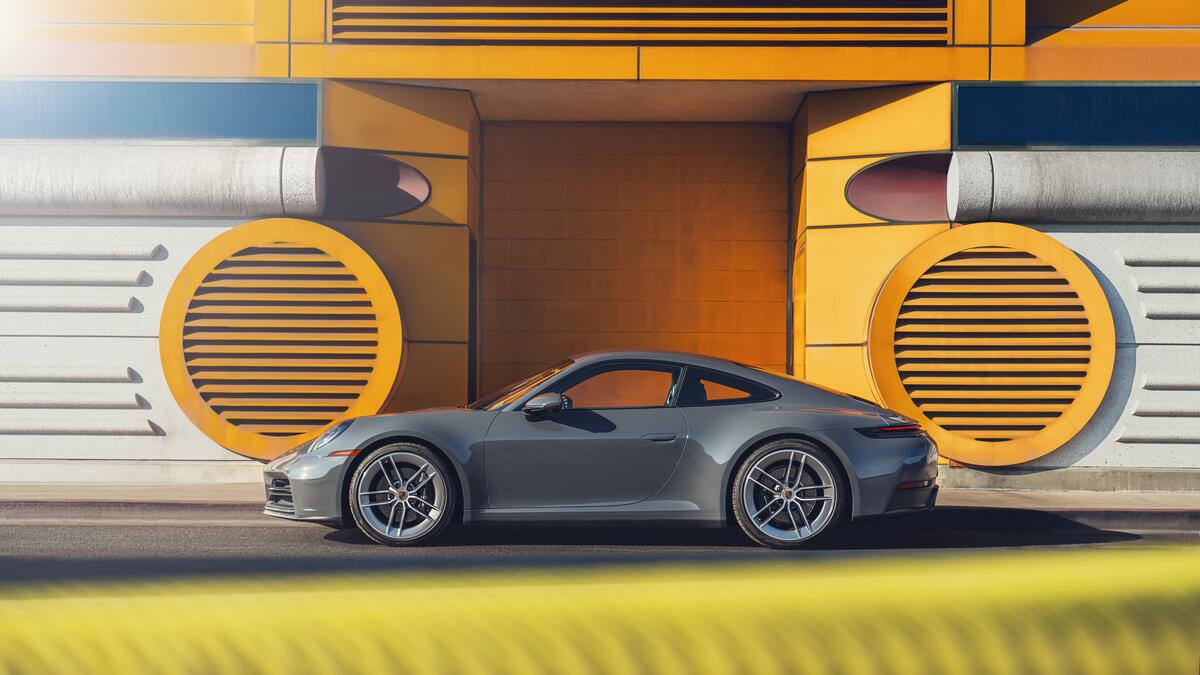
Porsche 911
"...one was in the glove box. And of course it called 911 for me because it detected a crash. So the 911 op..."
The Porsche 911 is a sports car made by Porsche that’s famous for its performance and recognizable shape. In the story you mentioned, “911” is also the emergency phone number, and the car’s system can call for help if it senses a crash. That’s why it stands out in the conversation.
The Porsche 911 is a long-running sports car known for its distinctive rear-engine layout and classic silhouette. In a podcast context, it’s often mentioned because it’s a recognizable, performance-focused icon, and the “911” reference can also tie into emergency-call behavior when a crash is detected. That makes it a memorable detail in stories about safety features or memorable car moments.
track bite
"Yeah. Well, there is a lot of track bite on the track or a sticky stuff is [1508.4s] called. Yeah. I kind of had to, my vans were sticking to it. So."
“Track bite” means how grippy the track is. If the tires can grab the surface well, you get more traction; if not, the car can feel slippery.
“Track bite” is a motorsports term for how much grip the track surface provides—how strongly tires can “bite” into it. More track bite generally means better traction, while low bite can make cars slide or feel unpredictable.
oil containment pan
"And when I got up there, [1535.9s] I didn't have an oil containment pan on the car. And I said, you know what? [1539.6s] I said, I don't need to raise."
It’s a catch-pan that sits under the engine area to hold oil if there’s a leak or failure. The goal is to keep oil off the track for safety.
An oil containment pan is a safety device that catches engine oil (and sometimes other fluids) if something fails or leaks during a race. In motorsports, it helps prevent oil from spreading on track, which can create fire and traction hazards.
transmission
"And we wrapped the transmission. They're like, oh, you're ready to raise. [1562.0s] So that kind of got, I'm like, well, I'm like, these guys put all this effort into"
The transmission is the part that sends power from the engine to the wheels using different gears. When people add protection around it for racing, it’s usually to prevent damage or leaks if something goes wrong.
The transmission is the gearbox that transfers power from the engine to the drive wheels, typically through different gear ratios. In racing contexts, “wrapping” or protecting the transmission usually means adding protective shielding or containment to reduce damage and fluid leaks after a failure.
floor jacks
"between him and Mike Preston, I mean, Mike has his trailer and there were the full blown toolbox floor jacks, jack stands. I mean, we got everything done right there."
Floor jacks are the big hydraulic tools you pump to lift a car. You usually put jack stands under the car too, so it’s supported safely while you work.
Floor jacks are hydraulic lifting tools used to raise a car for work like tire changes or suspension/underbody access. They’re commonly paired with jack stands so the car is supported safely.
jack stands
"between him and Mike Preston, I mean, Mike has his trailer and there were the full blown toolbox floor jacks, jack stands. I mean, we got everything done right there."
Jack stands are supports that hold the car up after you lift it. They’re important because they keep the car from falling if the jack isn’t holding it perfectly.
Jack stands are rigid supports placed under the car so it stays elevated even if a jack is removed or loses pressure. They’re a core safety tool when doing any under-car work.
chains
"And then when it came time to get that, try and get that car in the trailer, they had to come along chains. We had six guys, two floor jacks, you know, we, uh, we made, you know, and that's what I love..."
Chains are used for securing or pulling a car during loading/unloading—especially when a vehicle needs to be guided into a trailer. In motorsport contexts, they’re part of the practical “get it done” toolkit when ramps or tow straps aren’t enough.
17s
"And that was the first, that was the first set of 17s that he did."
“17s” means 17-inch wheels. Bigger wheels usually change how the car rides and handles, and the speaker is saying these were early examples of that upgrade.
“17s” refers to 17-inch wheels, a common enthusiast upgrade that changes tire sidewall height and steering feel. The speaker is emphasizing that the wheels being discussed were among the first sets of 17-inch wheels on these cars in their local scene.
static too
"I bought the thing was hammered. It was all static too."
“All static too” sounds like the car wasn’t really being driven or running normally when they got it. That usually means you’ll have to do more work to get it back on the road.
“All static too” suggests the car was not running/driving under its own power and may have been a non-running or non-daily-use vehicle at the time of purchase. In restoration circles, that often implies more work is needed before it can be driven again.
lowered split
"They got kind of mad that a lowered split."
“Lowered split” means a classic VW with the early “split window” look, and the suspension is lowered so it sits closer to the ground. People often argue about this because it changes the car’s look and how “stock” it feels.
“Lowered split” is shorthand for a lowered Volkswagen split-window model (split-window refers to the early Beetle/Type 2 window layout). Lowering the car changes stance and handling feel, and in VW show culture it can also affect how people judge originality versus style.
split window class
"I won best of show with it and split window class."
“Split window class” is a car-show category for early Volkswagens with the split-window look. If you win that class, it means your car matched what the judges wanted for that style.
“Split window class” is a judged category at VW shows for split-window Volkswagens—cars identified by the early split windshield/window arrangement. Winning in that class signals the car’s build matched the show’s criteria for that specific model-era look.
best of show
"I won best of show with it and split window class."
“Best of show” is the highest award at a car show. It means the judges thought that car was the best overall.
“Best of show” is the top award at a car show, typically given to the overall best-prepared vehicle. In this context, it’s being used to emphasize how highly the lowered split-window Beetle was judged.
17 inch fuchs
"but that I just wanted to touch base on that being one of the first cars that was on the 17 inch fuchs, especially what a lot of people don't realize"
“17 inch fuchs” refers to 17-inch Fuchs-style wheels, a classic Porsche wheel design that VW owners often adapt for a period-correct look. The episode highlights that this was an early/important adoption of larger Fuchs wheels on a VW build.
Request an Explanation
Heard something you'd like explained? We'll add it to this episode.
Sign in to request explanations for terms you heard.
Want to learn more?
Browse our glossary for plain-English explanations of automotive terms, jargon, and concepts.
Help improve this episode
See something that's not quite right? Our annotations are AI-generated and can sometimes miss the mark. Click the flag icon on any annotation to suggest a correction.