
Episode 17: Stellantis Constructs A Footgun To Surpass Metal Gear
About this episode
The hosts start with NASCAR’s Kyle Busch—“passed away, uh from pneumonia”—and frame his legacy through persona and win totals, including “234 career wins across the three top series of nascar.” The conversation then pivots into EV ownership and driving feel: one-pedal regen, steering feedback, charging “crapshoot,” and Hyundai’s “800 volt architecture.” Ferrari’s electric “Luce” becomes the centerpiece of brand-identity debate, followed by a satirical Stellantis/Ram “Rumble Bee” discussion and broader fuel-price politics.
Hello! On this OVER TWO HOUR episode of Tran Girlismo, we catch up on some weeks where decades happened. First, we give an earnest rest in peace to Kyle Busch, one of the greatest drivers of all time, who died suddenly at the age of 41 a few weeks back. (Victoria references a eulogy you should really read, and it's here on Road & Track, from Alanis King. It's genuinely beautiful.)
After that, we have good news finally: Jordan gets a new car!!! And it's electric!!! Hormuz who??? Then we discuss the most bitter contentious topic we've tackled yet: The Ferrari Luce. Is it a horrendous abomination against man and God, or is it fine actually? Finally, we discussed the Ram Rumble Bee, the 777 HP pickup truck launched when The Banks Are Out Of Oil, thickening our shoot-on-sight file at Stellantis HQ.
Thank you for listening! Shirts and stickers should be arriving in peoples' hands throughout the week, and we will be opening another round of orders in the very near future if you missed out!
Our theme, as always, is off Stella Spazzatura's Horse Tranquilizer Simulator!
Referenced Stories:
Kyle Busch's Incredible Records In NASCAR @Front Stretch
Kyle Busch Dies At 41 @ESPN
Kyle Busch Invoking The Constitution Over The Radio When He Got Pissed Off @Bluesky
FERRARI LUCE REVEALED @Car and Driver
Mark Newson Ford 021C @Wikipedia
2027 Ram Rumble Bee Revealed @Car and Driver

Dodge Road Runner
"...ke, uh, you know The the coyote has like lost the road runner or vice versa Basically where like, you know, the..."
The Dodge Road Runner is a muscle car from Dodge’s classic lineup. The podcast mentions it in a playful way, comparing it to the “Road Runner” cartoon idea. It’s more about the name and character than technical specs.
The Dodge Road Runner is a classic muscle car model associated with the late-1960s era of American performance. In the podcast, it’s referenced alongside the “coyote” and “road runner” idea, which is likely a playful comparison about speed or pursuit. That makes the mention more about the name and vibe than specific mechanical details.

Dodge Omni
"...rial circumstances have not affected the show the omni crisis has not Devoured us all something just goo..."
The Dodge Omni is an older compact car model. The podcast mentions it in a joking way with the phrase “omni crisis.” It’s not really about the car’s mechanics in that moment.
The Dodge Omni is a compact car that’s often remembered as an older, smaller model in Dodge’s lineup. In the podcast, it’s referenced with the phrase “omni crisis,” which sounds like a humorous or metaphorical mention rather than a technical one. That suggests the car is being used as a reference point in a broader joke or story.
stop sale
"Well, I mean given what I know about how manufacturers are leaving evs by the way side No one wants to dance. I assume negative five 65 people are on that list to call for when they can sell that car"
A stop sale means dealers aren’t allowed to sell some cars for a while. It’s usually because the manufacturer is still working on the fix for a problem.
A stop sale is an order that prevents dealers from selling certain vehicles while a recall remedy is pending. In practice, it can delay deliveries and affect what’s available on lots until the manufacturer’s fix is ready.
recall
"We were gonna hold out for the six getting fixed on recall until we went to the dealership for uh, stella to drive uh"
A recall is when the car maker says there’s a problem that needs fixing. They usually want you to take the car to a dealer so they can repair it.
A recall is when a manufacturer asks owners to bring a vehicle in for a safety or compliance fix, usually because of a defect or nonconformity. The hosts also mention a “stop sale,” which is often paired with recalls to prevent new sales until the issue is corrected.

Ioniq six
"We were gonna hold out for the six getting fixed on recall until we went to the dealership for uh, stella to drive uh"
The Hyundai Ioniq 6 is an electric car. The hosts are saying they wanted to wait until a recall issue was fixed, because dealers may not be allowed to sell affected cars until it’s resolved.
The Hyundai Ioniq 6 is a battery-electric sedan/coupe-style EV, and the hosts mention waiting for a recall and stop-sale to be resolved before buying. That kind of timing matters because recalls can temporarily prevent dealers from selling certain vehicles.
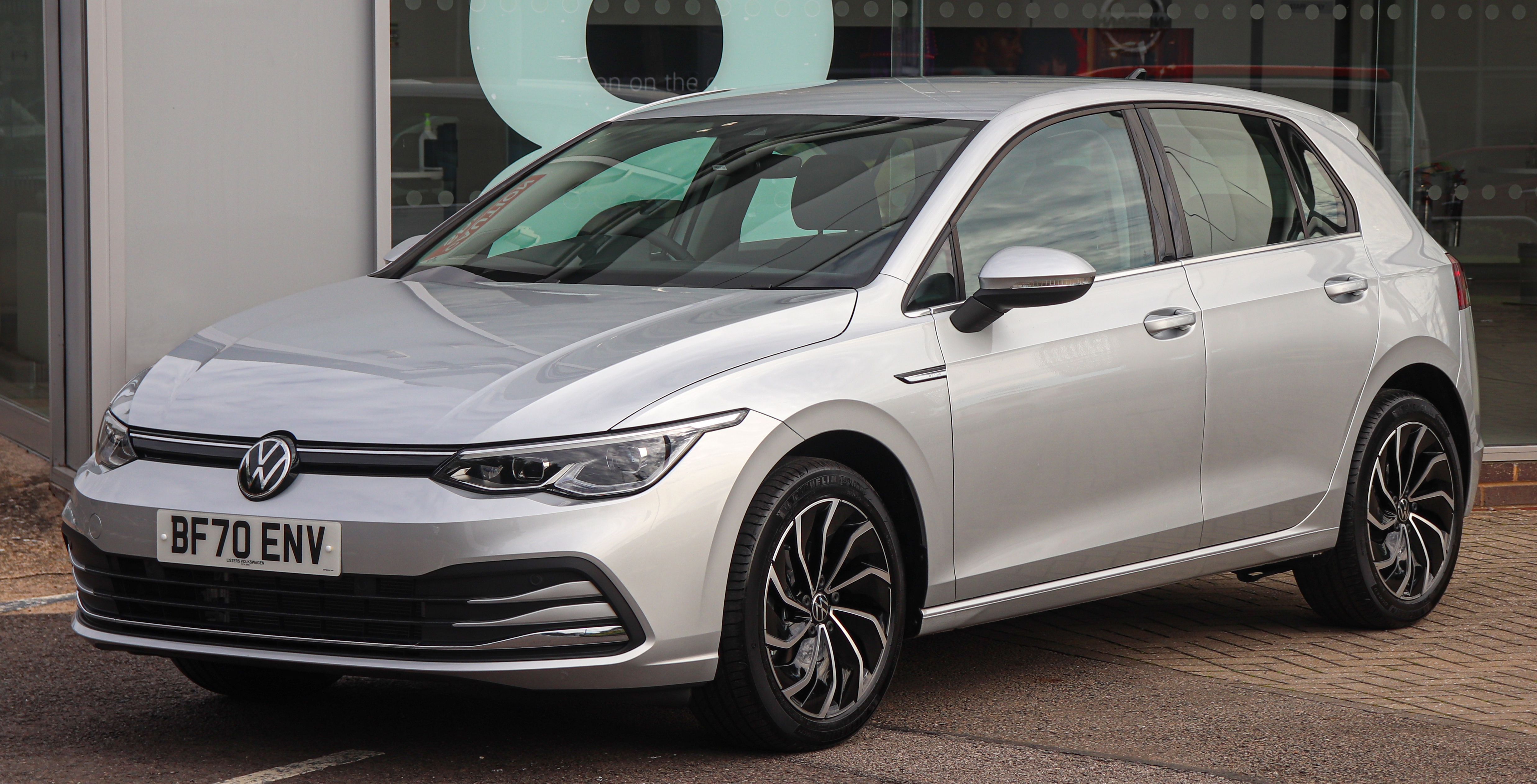
Volkswagen Golf
"...ch it yeah It feels slightly taller than the last golf I sat inside like I it's it's not tall That is a ..."
The Volkswagen Golf is a small car you can use for everyday driving. People talk about it a lot because it’s comfortable and practical. The podcast is describing how tall it felt when someone sat in it.
The Volkswagen Golf is a compact hatchback that’s known for being practical and easy to live with. It often comes up in discussions because small changes in size, seating position, and comfort can feel noticeable between generations. In the podcast, it’s mentioned in the context of how the latest Golf felt when sat inside.
hatchback
"That is a hatchback. That is just a little a little gangly, you know Victoria do you want to know how many names they have on the list"
A hatchback is a car where the back opens like a door, and the cargo area is part of that same opening. The host is using this to describe the car’s overall shape.
A hatchback is a body style where the rear door opens upward and the trunk area is integrated into that opening. The host uses it to describe how the Ioniq 5’s shape feels compared with the previous car they sat in.

Hyundai Elantra
"... car, which was a hand-me-down o3 Base base model elantra And sure I think hundime may have gone through so..."
The Hyundai Elantra is a small, everyday car. In the podcast, someone mentions having a basic older Elantra as a hand-me-down. The point is personal experience with that kind of car.
The Hyundai Elantra is a compact sedan that’s typically positioned as an affordable, practical daily driver. The podcast mentions an “o3 base model” Elantra as a hand-me-down, indicating it’s part of the speaker’s personal ownership history. That’s why it comes up—more about lived experience than performance specs.
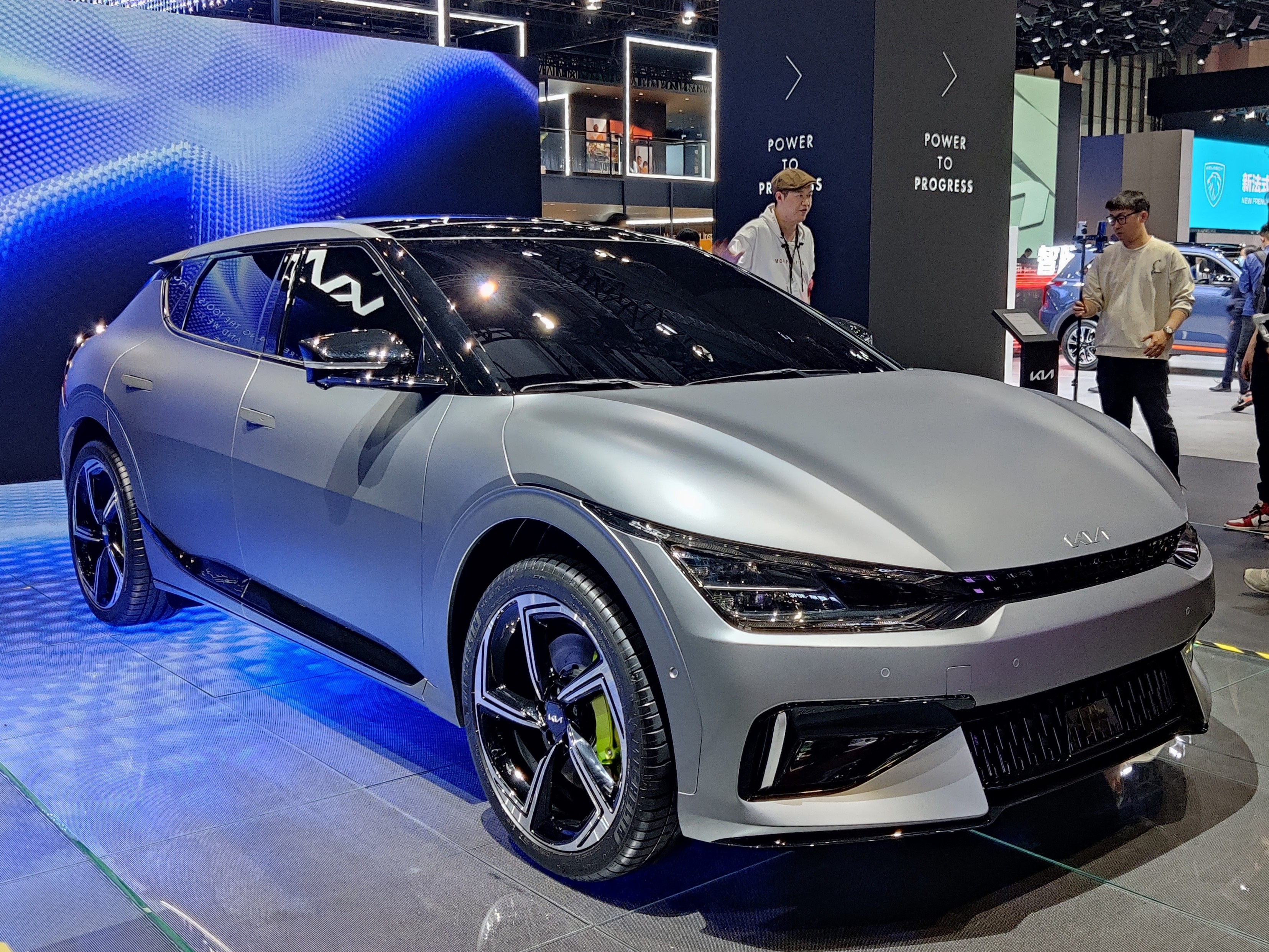
Kia EV6
"But I did drive the kia ev6 which is built on the same e gmp platform And the ev6 is such a nice car that it redefined what evs could be for me mentally"
The Kia EV6 is an all-electric Kia. It’s built to be efficient and practical, and the host says it feels fun to drive while still having good driving range and not being too expensive.
The Kia EV6 is an electric crossover built on Hyundai-Kia’s E-GMP platform, which supports efficient battery packaging and fast charging. In this segment, the host highlights it as a fun-to-drive EV with good range and a reasonable price, using it as a benchmark for what EVs can feel like day to day.
e gmp platform
"But I did drive the kia ev6 which is built on the same e gmp platform And the ev6 is such a nice car"
E-GMP is the EV “building system” Hyundai and Kia use for their electric cars. It helps them make different models that share similar electric parts and layout, which can improve efficiency and how the car charges.
E-GMP (Electric-Global Modular Platform) is Hyundai-Kia’s modular EV architecture. It’s designed so multiple models can share core components like battery placement and electric drive packaging, which helps improve efficiency and charging behavior across the lineup.
tesla yaoi hole for the charger
"We have a we have the updated for 26 one Which means it has the the tesla the tesla yaoi hole for the charger Uh, and it came with all the adapters in the trunk."
The host is talking about how the charging plug/port is set up on the updated Ioniq 5. They’re saying it’s more convenient—similar to what people associate with Tesla—and that the car includes the needed adapters.
This appears to be the host describing a Tesla-style charging port location/connector setup on the updated Ioniq 5. The key idea is that the car’s charging interface is designed to be more convenient and straightforward, and the host notes it comes with adapters in the trunk.
charging
"Charging still seems to be a crapshoot sometimes, but I think that's infrastructure and not the car [1430.9s] It is uh, there are enough tesla [1433.7s] Either tesla style chargers or just straight up tesla chargers in the area that i'm not"
Here, “charging” means how your electric car gets power at home or at public stations. The host is saying it can be hit-or-miss depending on the charging setup where you are.
In EV context, “charging” isn’t just plugging in—it includes how quickly power is delivered, whether the connector/protocol works, and whether the station is available when you arrive. The host frames it as a “crapshoot,” meaning outcomes can vary by location and infrastructure rather than the car alone.
level one
"We only have level one at the house [1444.5s] Which is not great, but it is usually overnight enough [1448.6s] To replenish all daily driving."
Level 1 charging is the slowest way to charge an electric car, usually using a normal wall outlet. It’s fine if you can charge overnight, but it won’t refill as quickly as faster chargers.
“Level 1” charging is the slowest common way to charge an EV, typically using a standard household outlet (often 120V in the US). It can be enough if you’re topping up overnight, but it takes longer than faster public chargers.

ev 9
"Yeah, I since I had an ev 9 [1466.5s] That I had for a press trip and I did a road trip with it"
The Kia EV9 is an electric SUV. Here, the host is talking about how their EV9 road trip showed that charging can be frustrating if the chargers aren’t easy to use.
The Kia EV9 is a battery-electric SUV that’s often used as a real-world reference for how EV charging works on longer trips. In this segment, the host uses their EV9 press-trip road experience to highlight how charging can become stressful when chargers don’t behave as expected.
charger incompatibility
"And then charging was way more of a nightmare than I expected it to be part of this is because of uh [1473.7s] Charger incompatibility part of this is because rivian is a big fat liar"
“Charger incompatibility” is when your electric car can’t use a charger the way you expected. It can happen because of differences in connector types or the charger’s system/network rules.
“Charger incompatibility” means an EV can’t reliably use a specific charger due to connector type, charging protocol, or network access rules. Even when a charger is physically present, the car and charger may not “agree” on how to communicate and deliver power.
capacitive touch buttons
"But uh [1562.8s] But uh [1562.8s] The amount of the amount of capacitive touch buttons really does blow [1566.6s] Uh, there's no getting around that the big center touchscreen already. I see every single fingerprint"
These are buttons you touch that don’t really click. They sense your finger electronically, and they can get messy with fingerprints or feel a little vague compared to real buttons.
Capacitive touch buttons use a sensor that detects your finger’s presence (via electrical capacitance) instead of a physical switch you press. In practice, they can be more sensitive to fingerprints and may feel less “certain” than tactile buttons, especially while driving.
drive select mode selection
"On it. That's not great. Uh, the drive select mode selection looks like it's a knob, but it's actually a fucking button [1581.0s] Uh, and that is uh really [1584.6s] Bothering me the regular steering is so numb it almost borders on"
This is the car’s “driving mode” selector. Switching modes can change how the car responds—like steering feel or how quickly it reacts when you press the gas.
“Drive select mode selection” refers to the car’s selectable driving modes (like Sport, Normal, Eco, etc.) that change how systems behave. Depending on the vehicle, it can adjust steering feel, throttle response, and sometimes transmission behavior.
Sport steering
"However [1608.3s] Sport steering all the time ain't no problem adds enough weight back that I know what it's doing and I can like feel it"
Sport steering is a mode that makes the steering feel more responsive and “heavier” or more connected. The idea is to give you better feedback so you trust what the front wheels are doing.
Sport steering is a driving-mode setting that typically changes steering assist and/or steering ratio/response to make the wheel feel more direct. The host is describing a contrast: regular steering feels disconnected, while Sport steering adds weight and feedback so the driver feels more in control.
all-wheel drive
"We got the sel all-wheel drive, which was a higher trim level than we intended but also 395 horse all-wheel drive pennsylvania winters"
All-wheel drive means the car can send power to all four tires. That usually helps it grip better on slippery roads like snow or ice.
All-wheel drive (AWD) sends power to all four wheels, which can improve traction in low-grip conditions like snow and rain. The host is discussing how AWD helps for winter driving, but also how availability and pricing can affect what you can actually buy.
trim level
"We got the sel all-wheel drive, which was a higher trim level than we intended"
A trim level is the version of the car you choose—different trims come with different features and options.
A trim level is a specific configuration of a model that bundles features and equipment (like different drivetrains, tech, or comfort items). The host notes they ended up with an AWD trim level higher than they originally planned to get.
lease rates
"They didn't have the original of re-wheel drive base one. We were looking at and like the lease rates weren't"
Lease rates are the numbers that determine how much you pay each month to rent the car through a lease. They can change based on the deal and the car’s expected value.
Lease rates are the pricing terms used to calculate your monthly lease cost, influenced by factors like the car’s residual value and money factor (interest-like component). The host is comparing lease rates to the cash discount they saw on the car.
cash on the hood
"There was $9,000 in cash on the hood of this thing"
“Cash on the hood” means the dealer is offering a big discount or incentive to lower the price of the car.
“Cash on the hood” is dealer-speak for a large cash incentive or discount applied to the vehicle to make the deal more attractive. Here, the host says there was $9,000 in cash incentives available.
EV market
"The the EV market Still feels entirely disconnected from reality, but in a positive way for the consumer"
The EV market is just the world of electric cars—how many are available, how much they cost, and how people are buying them.
The EV market refers to the supply, pricing, and consumer demand dynamics for electric vehicles. The host claims it “feels disconnected from reality,” arguing that incentives and inventory issues are shaping what consumers can get.
frunk
"The front frunk is also way too small. That's that's also fine."
A frunk is a trunk in the front of the car. It’s like a second storage area, but in this case the host says it’s not very big.
A frunk is the front trunk area in many EVs and some cars with a front-mounted trunk, created because there’s no conventional engine taking up that space. The host says the front frunk is “way too small,” implying limited everyday practicality.
crumple zone
"The front frunk is also way too small. That's that's also fine. Uh, there's a crumple zone and like where the 12 volt battery is at"
A crumple zone is an area of the car that’s designed to crumple in a crash. That helps protect passengers by absorbing impact energy.
A crumple zone is a designed part of a car’s body that deforms in a crash to absorb energy and reduce the force transferred to occupants. The host mentions it while describing what’s located in the front area near the battery.
12 volt battery
"Uh, there's a crumple zone and like where the 12 volt battery is at everything up there."
The 12-volt battery runs the car’s basic electronics, like lights and computers. Even electric cars still use a 12-volt system for many everyday functions.
The 12-volt battery powers the car’s low-voltage systems (like lights, infotainment, and control modules), even in many EVs that have a high-voltage traction battery. The host is pointing out packaging tradeoffs in the front area where this 12-volt battery sits.
regenerative braking
"There's these beautiful machined aluminum paddles on the back of the wheel That set your regenerative braking Yeah, oh my god, they're so nice, uh"
Regenerative braking is an EV feature that helps slow the car down while also recharging the battery. It turns some of the energy from slowing down into electricity instead of wasting it.
Regenerative braking is how an EV slows down while turning some of that motion back into electricity. Instead of wasting all the energy as heat, the car uses a motor/generator to recharge the battery during deceleration.

Chevrolet Blazer EV
"... Tesla I was thinking about GM with this like the blazer EV feels criminally cheap inside For a car that cost..."
The Chevrolet Blazer EV is an electric SUV. The podcast is talking about how the inside feels, saying it seems too cheap for what it costs. The main topic is interior quality and value.
The Chevrolet Blazer EV is an all-electric version of the Blazer nameplate. The podcast criticizes the interior feel, saying it feels “criminally cheap inside” for a car with a high price. That’s why it’s discussed—focused on perceived build quality and value.
Sport mode
"because maybe the sport steering is like a newer setting but like that that Rack when it's in sport mode is the nicest"
Sport mode is a car setting meant to make the driving feel more responsive. The host thinks it improves steering feel compared with the regular setup.
Sport mode is a driving setting that typically sharpens throttle response, steering weighting, and sometimes traction/shift behavior to make the car feel more responsive. Here, the host says Sport mode changes the steering feel and helps address complaints that the base setup feels “numb.”
drive by wire rack
"but like that that Rack when it's in sport mode is the nicest like drive by wire rack. I've ever touched"
Drive-by-wire steering means the steering system is controlled electronically rather than through a direct mechanical linkage. The host likes how it feels in Sport mode—smooth, responsive, and fun.
A drive-by-wire steering rack uses electronic signals to control steering instead of a purely mechanical connection. The host praises the steering feel in Sport mode, saying the “rack” is the nicest drive-by-wire steering they’ve ever touched.
Pittsburgh vintage Grand Prix
"There is a road that is used here in Pittsburgh for the hill climb portion of the Pittsburgh vintage Grand Prix"
This is a racing event in Pittsburgh. The host is talking about a hill-climb road used for the event and using it to test how the car feels when driving hard.
The Pittsburgh Vintage Grand Prix is a motorsport event in Pittsburgh that includes hill-climb-style road sections. The host uses a specific local road tied to that event to evaluate how the car behaves dynamically.
break the wheels loose
"It wants to push a little bit or break the wheels loose, which that's also"
This phrase means the tires lose grip and start to slide. The host is saying that sometimes the car will push or let the wheels slip when you drive it aggressively.
“Break the wheels loose” describes losing traction so the tires start to slip rather than grip the road. The host says that occasionally the car wants to push or break traction when asked to stop or change direction quickly.
one pedal driving
"It's a joy, uh one pedal driving with regen all the way up feels Incredibly intuitive"
On an EV, “one-pedal driving” means you can drive and slow down mostly with the accelerator. When you take your foot off it, the car slows down by using the battery’s energy recovery system.
One-pedal driving is an EV technique where you mainly use the accelerator to control both acceleration and deceleration. When you lift off the pedal, the car slows using regenerative braking instead of relying on the brake pedal.
range
"it's nice to go out for a drive and literally break even on range Not wash my range drip at all because I was going like, you know, I was using one pedal in full regen."
Range is the estimated distance an EV can travel before the battery is depleted. It’s strongly affected by driving style, speed, temperature, and how much regenerative braking you can use.
800 volt architecture
"That I am a huge fan of is that they're all 800 volt architecture Uh because Hyundai was like we're going to actually spend money Developing this um instead of doing a last minute"
This means the car’s electrical system is designed to run at a higher voltage than most EVs. That can make charging and power delivery more efficient and can help the car run cooler, which may help parts last longer—especially if you’re not constantly fast-charging.
An 800-volt architecture is an electric-vehicle electrical system that runs at a higher voltage than the more common ~400-volt setup. The higher voltage can reduce current for a given power level, which helps with efficiency and can reduce heat buildup in components, supporting longer-term durability.
400 volt architecture
"It's like kia Hyundai and uh, Porsche outie. Is the cyber truck not on 800 volt. I believe that is a 400 volt architecture fascinating."
This is the standard voltage level used by many EVs. It can still be fast, but compared to an 800-volt setup it may generate more heat for the same charging power, depending on the car.
A 400-volt architecture is the more common EV electrical system voltage level. Compared with 800-volt systems, it typically means higher current for the same power, which can affect efficiency and heat management—especially during fast charging.

Chevrolet Volt
"... uh, Porsche outie. Is the cyber truck not on 800 volt. I believe that is a 400 volt architecture fascin..."
The Chevrolet Volt is a car that uses a battery but can also use gas when needed. The podcast is talking about different electrical “voltage” setups that affect charging behavior. The Volt is mentioned as an example in that discussion.
The Chevrolet Volt is a plug-in hybrid electric vehicle that can run on electricity and also uses a gasoline engine to extend range. The podcast references “800 volt” versus “400 volt” architecture, using the Volt as part of a discussion about charging and electrical systems. That’s why it comes up in a technical-sounding context.
iccu
"I kind of want to see what the market looks like e v wise in three years... they were having early issues with the iccu, which is there like routing system between the the 800 volt system and the 12 volt system"
ICCU is a control box in an EV that helps manage electricity between the big high-voltage battery system and the normal 12-volt systems that run things like lights and accessories. The host is saying early versions had problems, but later cars got an updated part.
ICCU (in this context) refers to a power electronics/control unit that manages electrical routing between the EV’s high-voltage (800V) and low-voltage (12V) systems. The host says early units had reliability issues severe enough that the part was updated with a fix.
routing system
"they were having early issues with the iccu, which is there like routing system between the the 800 volt system and the 12 volt system"
Think of routing as the EV’s wiring and control logic for deciding where electricity should go. This segment is describing how power gets managed between the high-voltage battery and the car’s 12-volt electronics.
In an EV, a routing system is the set of power-electronics paths and control logic that directs where electrical power flows. Here, the host uses it to describe how the ICCU routes power between the 800-volt traction system and the 12-volt auxiliary system.

cyber truck
"Apparently the cyber truck does actually use an 800 volt System by paralleling two 400 volt batteries together and then they did actually update the Architecture for it..."
The Tesla Cybertruck is an electric pickup known for using a high-voltage battery system. Higher voltage can help it charge faster, but it also needs the rest of the car’s electronics to handle the extra electrical stress.
Tesla Cybertruck is notable for its high-voltage electrical system, which is designed to support faster charging than typical 400-volt setups. In this segment, the host discusses how Tesla achieves an 800-volt architecture and how that relates to charging speed and component stress.
800 volt system
"Apparently the cyber truck does actually use an 800 volt System by paralleling two 400 volt batteries together..."
In an EV, the battery and charging system can run at different voltages. An 800-volt setup can let the car take in energy faster because it can move the same power with less current.
An 800-volt system is an electric-vehicle electrical architecture that runs the traction power system at roughly 800 volts instead of the more common ~400 volts. Higher voltage can reduce current for the same power, which helps enable faster charging and lower losses in cables and power electronics.
paralleling two 400 volt batteries together
"Apparently the cyber truck does actually use an 800 volt System by paralleling two 400 volt batteries together..."
The host is describing how the EV can connect battery packs in a way that makes the whole system act like it’s running at a higher voltage. Higher voltage helps the car charge faster.
Paralleling two 400-volt battery packs means connecting them so the system behaves like a higher-voltage architecture (as described by the host) rather than staying at 400 volts. The key idea is that the battery/power electronics configuration can be arranged to support faster charging by enabling an effective 800-volt operation.
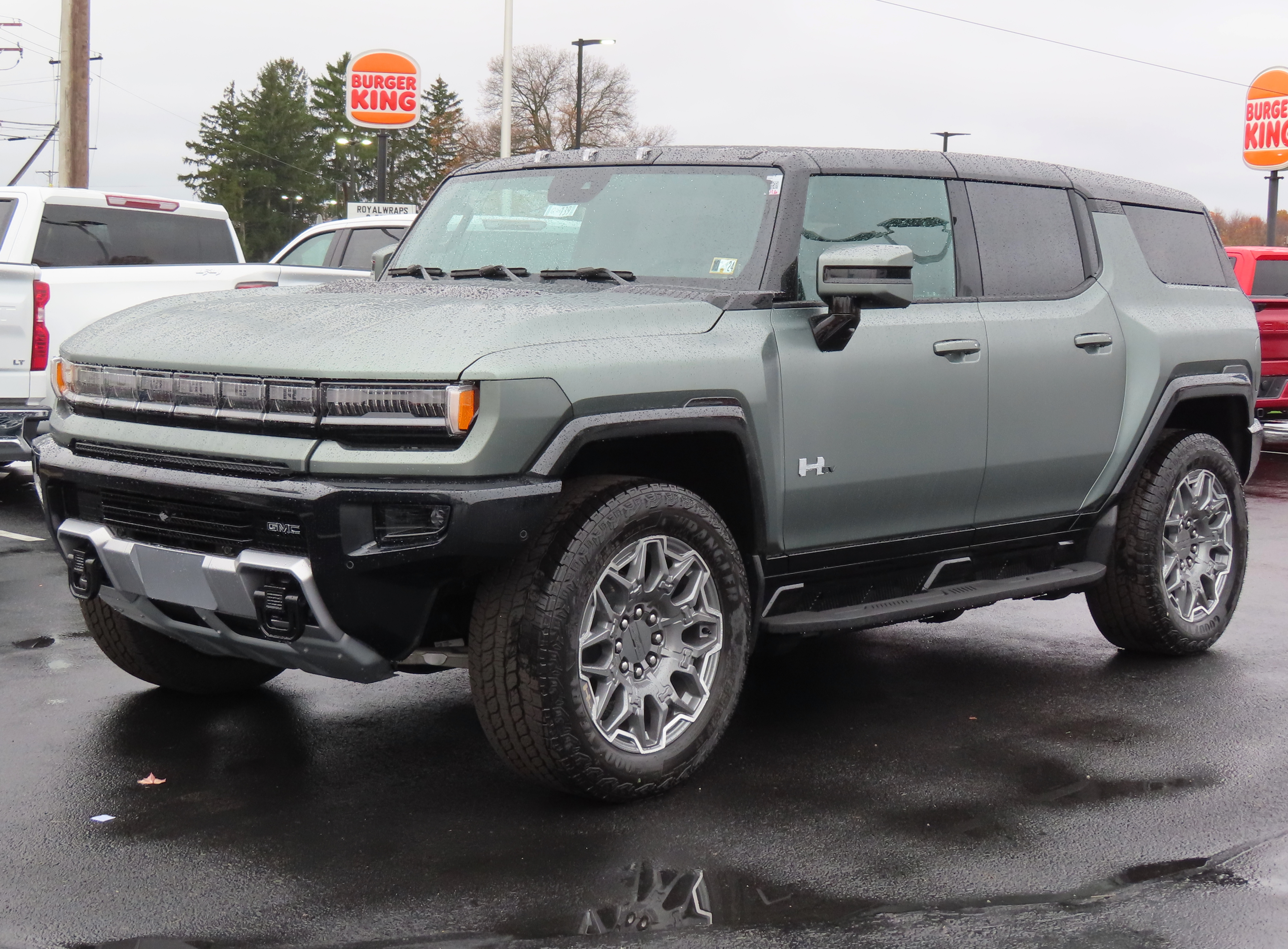
Hummer Ev
"... that in I wasn't I couldn't remember because the Hummer EV used two 400 volt batteries"
The Hummer EV SUV is an electric SUV. The podcast mentions that it uses two battery packs and talks about their voltage. The point is how the car’s electric system is set up.
The Hummer EV SUV is an all-electric SUV known for its large size and off-road capability. The podcast specifically mentions that it used two 400-volt batteries, which ties directly to how its electrical system is designed. That’s why it’s brought up in a discussion about voltage and EV architecture.

Bmw I4
"We poked around at a bmw i4 It feels it feels like they made a last gen Four series electric it doesn't feel like a new car"
The BMW i4 is BMW’s electric car. The speaker is basically saying it doesn’t feel very new or innovative compared to what they expected from a newer EV.
The BMW i4 is an all-electric 4-series-style sedan/gran coupe from BMW, and the speaker is critiquing how it feels. They say it feels like a “last gen” electric BMW rather than a truly new design, implying the i4’s updates don’t feel fresh.

Mini Coopers
"... of the fondness I used to have for uh all of the mini coopers that were in have been in my life Oh, yeah, yeah ..."
The Mini Cooper is a small car that’s designed to feel fun to drive. The podcast is talking about how the speaker used to like Mini Coopers they encountered. It’s mainly about personal experience.
The Mini Cooper is a small, sporty car known for its compact size and distinctive driving feel. The podcast references a personal “fondness” for Mini Coopers the speaker has had in their life. That makes it a nostalgia or ownership-experience topic rather than a technical one.
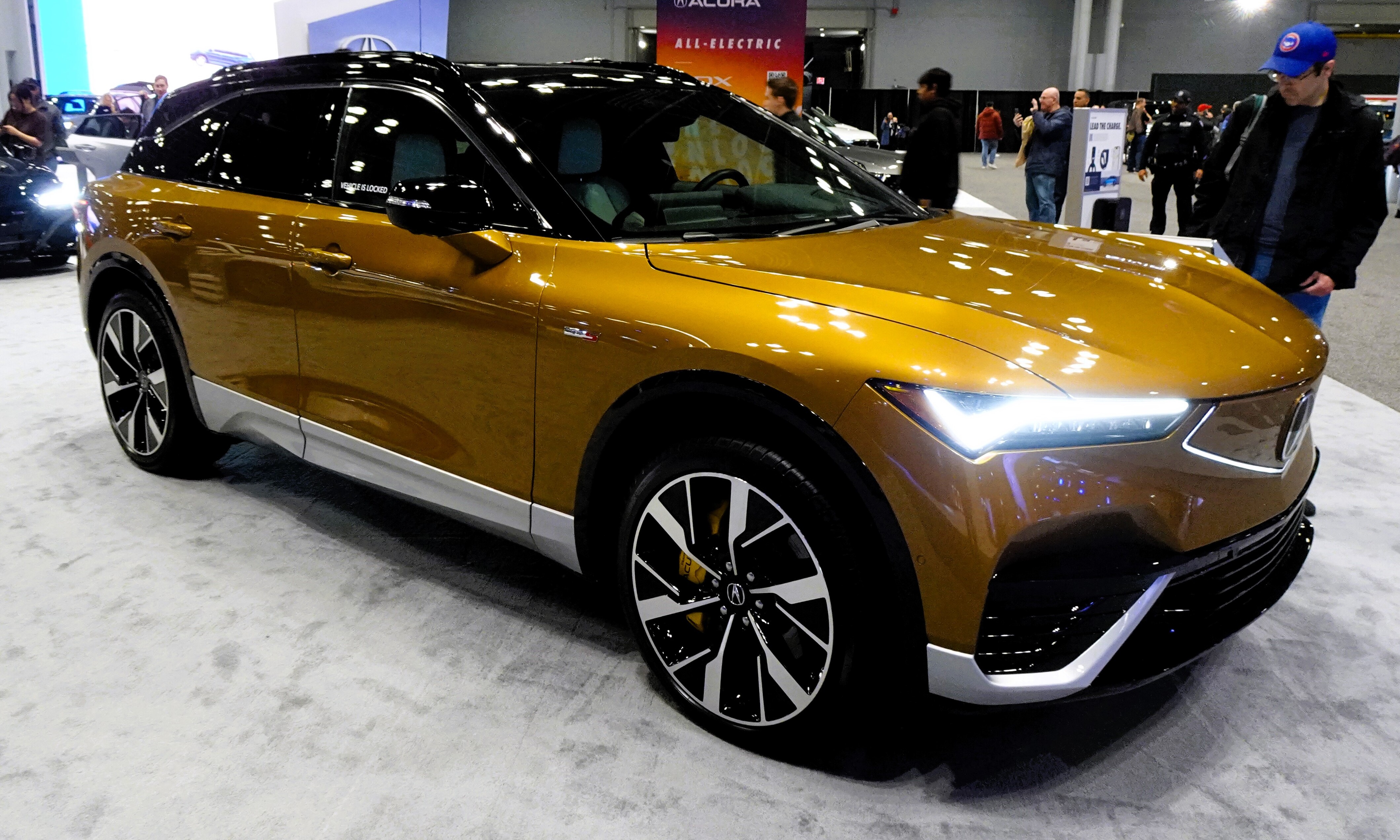
Acura Zdx
"...ut like if you buy a prologue or if you bought an acura zdx for the 20 minutes it was out I am going to side ..."
The Acura ZDX is a crossover SUV with a more sporty, coupe-like shape. The podcast mentions it because it was available for a short time. It’s being used as a comparison point for another car.
The Acura ZDX is a sporty, coupe-like crossover that Acura produced for a short period. The podcast references it as something people could buy briefly, implying it didn’t last long in the market. It’s mentioned in the context of comparing it to another model the speaker is discussing.

Honda Prologue
"...e a honda apologist forever But like if you buy a prologue or if you bought an acura zdx for the 20 minutes ..."
The Honda Prologue is an electric SUV made by Honda. The podcast mentions it while comparing it to another car and talks about how quickly that other model was available. The focus is on shopping and comparisons, not technical details.
The Honda Prologue is an electric SUV from Honda, positioned as a practical EV for everyday use. The podcast compares it to the Acura ZDX and mentions buying one “for the 20 minutes it was out,” implying it was short-lived or hard to find. It’s brought up as part of a comparison between EV and crossover options.

Chevrolet Blazer
"...ide eye you to be fair. That was also a chevrolet blazer, which I would have been pretty vocally anti Uh c..."
The Chevrolet Blazer is an SUV made by Chevrolet. The podcast mentions it because the speaker has a strong opinion about a Blazer they saw or talked about. The focus is on how it was discussed, not on specs.
The Chevrolet Blazer is a mid-size SUV that’s been offered in multiple generations and configurations. In the podcast, it’s mentioned as a vehicle the speaker would have been “anti” about, implying a strong opinion about that particular Blazer. The context suggests the conversation is about comparing or reacting to a specific Blazer.
ev
"Being an ev owner ... I can now detect when people are falling for like ev based culture war bullshit"
“EV” just means an electric car. It runs on electricity stored in a battery, not gasoline.
“EV” means electric vehicle—cars powered primarily by an electric motor and battery instead of a gasoline engine. In the segment, the hosts use “EV” to talk about culture and consumer attitudes around electric cars.
johnny ive
"Ferrari Unveiled the entire luce. We had seen the interior design before which was designed by uh johnny ive ... Um, which I also hated I'm back to negative on the interior of that thing"
Jony Ive is a well-known designer who helped define the look of Apple products. Here, the hosts say he designed the interior of the Ferrari Luce, which is why they’re judging the style so strongly.
Jony Ive is a famous industrial designer known for shaping Apple’s product design language. The hosts mention him as the designer behind the Ferrari Luce’s interior, implying a particular “tech-luxury” design approach.
allocations
"Granted they will probably sell all of them because people are just gonna buy whatever so they can keep their allocations because cars are just Rolexes now"
“Allocations” means limited production spots—like when a company can’t make enough cars, so it assigns who gets them. The host is saying people may buy anyway just to get one.
In car sales, “allocations” are limited production slots assigned to dealers or buyers, often used for high-demand models. The host compares it to luxury watches (“Rolexes”), suggesting buyers may accept the product because they want access.
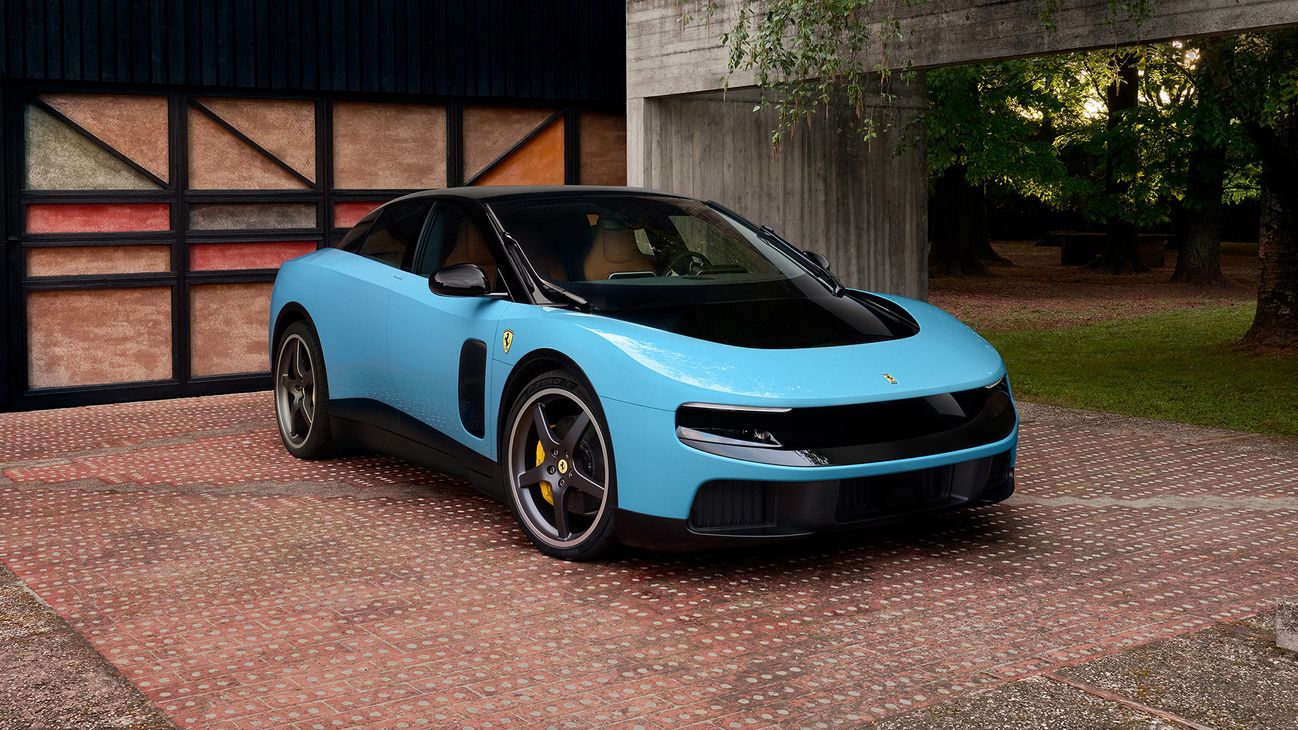
Ferrari Luce
"Ferrari executive chairman john elkin uh said about the luce we are expanding what a ferrari can be not losing what a ferrari is"
Ferrari Luce is a Ferrari electric-car idea that’s meant to show how Ferrari could do EVs without losing what makes a Ferrari feel like a Ferrari. The host is talking about how Ferrari is trying to keep the brand’s “look and vibe” even as it goes electric.
Ferrari Luce is described as a Ferrari EV concept/production direction, with Ferrari executive chairman John Elkann discussing it as expanding what a Ferrari can be. The key point is that Ferrari is positioning an electric design and performance concept while trying to preserve the brand’s identity.
horsepower
"it makes some over 1,000 horsepower number through some combination of motors"
Horsepower is a number that tells you how much power the car’s motor can produce. The host is saying that when the number gets huge, it doesn’t automatically mean the car will feel faster in practice.
Horsepower is a measure of engine (or motor) power output, used to describe how much work the drivetrain can do. The host argues that once power numbers get extremely high (over 1,000 horsepower), the headline figure becomes less meaningful than real-world results like acceleration.
0 to 60
"which has 1500 horsepower and is like a full half a second quicker to 60."
0 to 60 mph is how fast a car can accelerate from a stop to 60 miles per hour. It’s a simple way to compare which car is quicker in a straight-line sprint.
0 to 60 mph (often written as 0–60) is a common acceleration benchmark measuring how quickly a car reaches 60 miles per hour from a standstill. The host uses it to compare EV performance between the Ferrari Luce discussion and the Xiaomi SU7 claim.
two-tone
"They did this weird Fuck-ass two-tone thing where it you know the rear end looks like it is swallowing a much smaller more attractively styled car"
Two-tone means the car’s paint uses two different colors. It’s often used to make the car look more dramatic, but here the host thinks it makes the rear look weird.
A two-tone paint scheme uses two different colors on the body, often to emphasize shape lines or create contrast between sections. In this segment, it’s criticized as a styling choice that makes the rear end look like it’s swallowing a smaller-looking car.
front air dam
"The the front air dam is kind of interesting and pays homage to like more ambitious concepts in the past"
The front air dam is a low piece at the bottom of the front bumper. It helps the car cut through the air more cleanly and can make it feel more planted when you’re driving faster.
A front air dam is a low panel at the front of a car that helps manage airflow under and around the vehicle. By reducing turbulence and directing air, it can improve aerodynamic efficiency and sometimes stability at speed.

Plymouth Prowler
"...ctual car then there was between like the concept prowler and what we actually got You know what I mean?"
The Plymouth Prowler is a small-run sports car with a very unusual, retro look. The podcast talks about how the concept version looked different from the real production car. The focus is on design changes from idea to final product.
The Plymouth Prowler is a distinctive retro-styled sports car that was produced in limited numbers. The podcast contrasts the “concept Prowler” with what was actually built, pointing out differences between the show car and the production version. That’s why it comes up—design expectations versus reality.

Xiaomi SU7
"Any number of like high-end performance Chinese EVs [2840.5s] I think the su7 is a good example here or notably in the u.s. The taikan"
The Xiaomi SU7 is an electric car known for looking sporty and modern. The host is basically saying that other EVs—like the SU7—pull off the “performance look” better than this car does.
The Xiaomi SU7 is an electric performance sedan that’s become a benchmark for modern, aggressive EV styling. The host compares the car’s cheap-looking design paneling to the SU7’s more convincing execution, especially in the U.S. market conversation.

Honda Civic
"It's $640,000 if if ferrari came out with a car that was the 2008 civic si I'd be like damn that would be a great honda, but I am not paying $640,000 for a honda civic si"
The Honda Civic Si is a sportier version of the regular Civic. The host is using it as a “normal car” example to make a point about how much money people would (or wouldn’t) pay for a Ferrari-branded version.
The Honda Civic Si is a performance-oriented trim of the Honda Civic, typically positioned as an enthusiast-friendly, sporty daily driver. Here it’s used as a comparison point to argue about pricing and design expectations if Ferrari made something similar.
e.v.
"Yes, they're a publicly traded company. They're not owned by fiat anymore They took a huge hit after announcing this e.v. By the way, sure they did"
“E.V.” means electric vehicle. It’s a car that runs on electricity from a battery instead of using gasoline like most cars.
“E.V.” here is shorthand for an electric vehicle, meaning the car is powered primarily by an electric motor and battery rather than a gasoline engine. The host is debating whether high-end supercar buyers want an electric version that still feels like the brand’s traditional design and identity.

Lamborghini Urus
"But I mean here's the thing right is it like lamborghini already made the urus So like I expect basically the worst thing ever from them at this point the urus is one of the what like If you were ranking automotive sins against design, I think the urus belongs in your top 10."
The Lamborghini Urus is Lamborghini’s SUV. The speaker is saying it’s a particularly bad-looking or misguided design choice compared with what people expect from Lamborghini.
The Lamborghini Urus is Lamborghini’s high-performance SUV, notable for bringing supercar-style performance and styling into a crossover format. The host calls it one of the most offensive “automotive sins” in terms of design, using it to criticize how Lamborghini’s lineup has evolved.
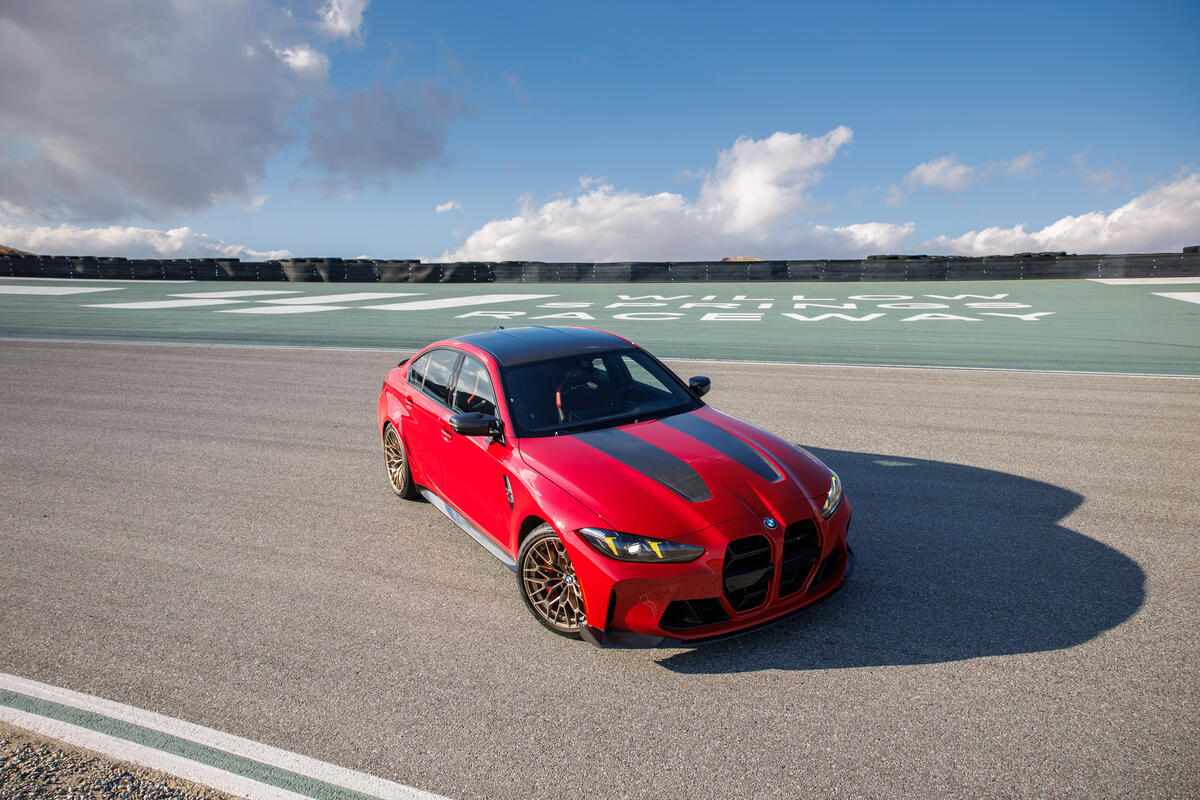
BMW M3
"I know I I am not a huge fan of the most recent like f80, you know tester us a revival thing [3090.2s] We talked about this before but also like that's still"
“F80” refers to the BMW M3 from the F80 generation. The host is basically saying they don’t really like that particular M3 version.
“F80” is shorthand for the BMW M3 (F80 generation), which is the turbocharged, modern-era M3. In this segment, the speaker says they’re not a big fan of the “most recent” F80, implying they didn’t like how it drives or feels compared with other M3s.

Ferrari Ff
"I mean, okay, so I actually disagree because my cultural document that I think of in my mind for the ferrari ff [3120.4s] And why it has established itself in the mythology [3123.0s] You know internally for me as like this incredible ferrari is dan neale reviewed it"
The Ferrari FF is a Ferrari grand tourer (a fast, comfortable long-distance car) that’s unusual for Ferrari because it has four-wheel drive. People remember it as a “different” Ferrari that still looks great and drives well.
The Ferrari FF is a grand tourer from Ferrari that’s known for its four-wheel-drive system and a front-mounted V12 layout. It’s also famous for being a “non-standard” Ferrari—more practical than the brand’s usual rear-drive, two-seat sports-car formula.
shooting break
"Yeah, it is a shooting break [3162.6s] This I saw somebody standing next to this it had I think it's about the same size as uriatic 5 if not bigger"
A shooting break is a car body style that looks like a sporty coupe, but it’s built with more space in the back like a wagon. So it’s a “sporty + practical” shape.
A shooting break is a body style that blends the shape of a coupe with the practicality of a wagon—typically a longer roofline and a rear cargo area. When someone calls the Ferrari FF a shooting break, they’re describing its unusual “car-like” proportions with added space.

Mazda Rx8
"...the fact that both front and rear doors. Yeah the rx8 doors The mini clubmen doors we could do this all..."
The Mazda RX-8 is a sports car made by Mazda. The podcast mentions it because its doors are distinctive and it’s being compared to another car’s door style. It’s mainly about the way the car looks and opens.
The Mazda RX-8 is a sports car known for its rotary engine design, which is different from the more common piston engines. The podcast compares door styles, mentioning “RX-8 doors” alongside “mini clubmen doors,” which suggests the conversation is about unusual door layouts. That makes it a styling/packaging reference rather than a powertrain deep dive.
launch spec
"[3245.5s] I think a bunch of the colors they picked for the launch spec bad [3250.1s] That that yellow one with the yellow color matched wheels. That's heinous the blue"
“Launch spec” is the exact setup a car comes in when it first goes on sale. It usually includes things like the paint color and wheel style, and the hosts here think those early choices look ugly.
“Launch spec” means the specific configuration a car is first sold in—typically including the initial color choices, wheel design, trim, and option package. The hosts criticize the launch-spec colors because they think the combinations look bad.
Internal combustion engines
"Paradoxically the most woke position you can take because if you actually want evies to work you have to convince people they are actually like a worthy successor technology to Internal combustion engines"
Internal combustion engines are the traditional gas engines that burn fuel to make power. The episode is contrasting them with electric cars to explain why brands need to persuade people that EVs can be the next step.
Internal combustion engines (ICE) generate power by burning fuel inside the engine to drive pistons. The host contrasts ICE with EVs to make the point that brands must convince customers that EVs can be a “successor technology,” not just a replacement.
hybrids
"they did this with all of their hybrids again. I lean on the la ferrari Which you know stylistically I it's aging better than I expected"
A hybrid car uses two energy sources: a gas engine and an electric motor. The host is saying brands used hybrids first to make people comfortable with electrification before going fully electric.
Hybrids are vehicles that use both an internal combustion engine and an electric motor/battery system. In this episode, hybrids are referenced as the stepping stone that helped brands convince buyers that electrified powertrains can still deliver the “supercar” experience.

LaFerrari
"they did this with all of their hybrids again. I lean on the la ferrari Which you know stylistically I it's aging better than I expected"
Ferrari’s LaFerrari is a supercar that uses both a gas engine and an electric motor. In the episode, it’s brought up as proof that hybrids can still feel like real supercars, not a compromise.
The Ferrari LaFerrari is Ferrari’s hybrid supercar, known for pairing a high-performance gasoline engine with an electric motor. The host uses it as an example of how Ferrari’s hybrid era helped make electrification feel “worthy” to supercar buyers.

Porsche 918 Spider
"I think that like that that's had a weird curve of appreciation to that original trio of like 918 spider mclaren p1 la ferrari were all extremely like that felt like"
The Porsche 918 Spider is a high-end supercar that uses both gas and electricity. The episode mentions it to show that hybrids already changed how people think about what a “future” supercar should be.
The Porsche 918 Spider is a hybrid supercar famous for combining a combustion engine with electric power for strong performance and efficiency. The host groups it with other “hybrid future” supercars to argue that electrification already reshaped expectations in the supercar world.
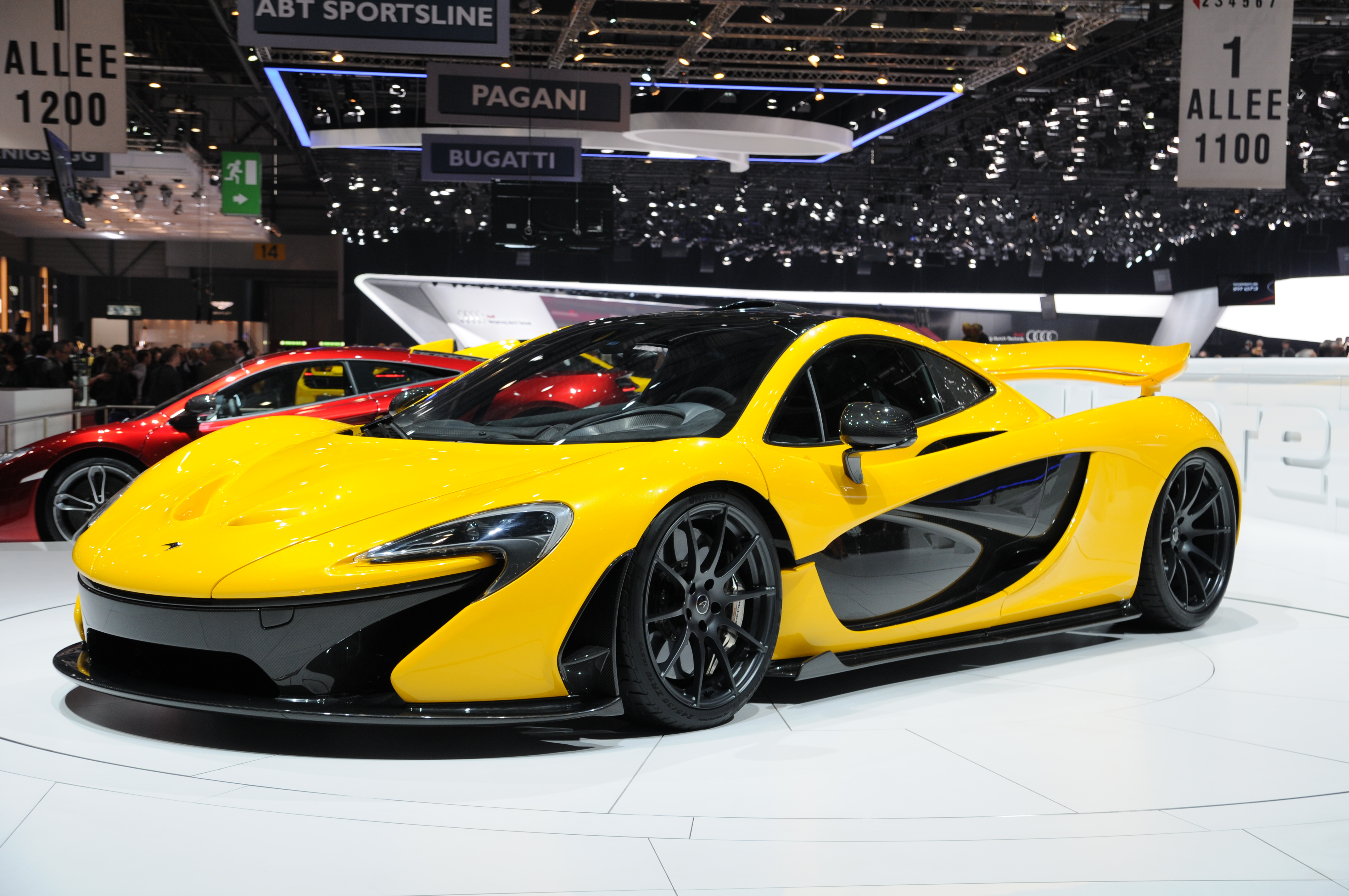
McLaren P1
"I think that like that that's had a weird curve of appreciation to that original trio of like 918 spider mclaren p1 la ferrari were all extremely like that felt like"
The McLaren P1 is a supercar that uses a gas engine plus electric power. The host is using it as an example of early hybrids that made people believe the future of supercars could be electric.
The McLaren P1 is a hybrid supercar that helped popularize the idea of electric assistance in the most performance-focused cars. Here it’s used as part of a trio of early hybrid “future” supercars that made electrification feel exciting rather than dull.
platform share
"And you are ferrari [3462.8s] Why would you develop something that looks like it has to platform share with like three other cars?"
Platform sharing is when different cars are built using the same basic “skeleton” and parts. That helps the company make new models faster and cheaper.
“Platform sharing” means multiple car models are built on the same underlying architecture (hard points, chassis structure, and often major components). The goal is to reduce development cost and speed up production by reusing that base across many variants.
modular
"It's gonna have a 15 year life cycle. It's gonna have to have like [3482.8s] Different motors and drive like it's modular. That's how mass marketing works"
“Modular” means the car is built from sections that can be changed. So the same basic design can fit different engines or setups.
A “modular” vehicle platform is designed so key systems can be swapped or adapted—like different engines, drivetrains, or powertrain setups—without redesigning everything from scratch. This supports producing many related cars over a long model life.

Ferrari 296
"The amal is the amal fee the roma replacement the amal fee [3528.3s] The 296 you're asking ferrari questions. I don't know [3532.5s] They don't want to touch anything in their existing lineup."
The Ferrari 296 is a Ferrari model with a mid-mounted engine. In this discussion, it’s used to point out that Ferrari moved to a twin-turbo V6 instead of a V8.
The Ferrari 296 is a modern Ferrari that’s notable for its mid-engine layout and for using a twin-turbo V6 rather than the V8 configuration many buyers expected from the brand’s recent history. In this segment, it’s brought up as an example of Ferrari changing its powertrain approach within its lineup.
twin turbo v6
"Right because their buyers won't take [3540.8s] Think about how much their buyers freaked out when the 296 was using the twin turbo v6 [3549.1s] Instead of yeah v8 and even then yeah"
A “twin-turbo V6” is a V6 engine with two turbochargers. The turbos force more air into the engine, which can make it feel stronger and more responsive.
A “twin-turbo V6” is an engine configuration where a V6 has two turbochargers feeding compressed air into the cylinders. Compared with a naturally aspirated engine, turbocharging can improve torque and responsiveness, especially at lower RPMs.
fiat
"It's a ferrari and ferrari needs to change and expand what they are because they're an independent company Who's not getting subsidized by fiat anymore?"
Fiat is a car company (an automaker) that used to be connected to Ferrari. The host is saying Ferrari isn’t in that same financial/ownership relationship anymore, which they think matters for how Ferrari behaves.
Fiat is an Italian automaker that historically owned or controlled parts of Ferrari’s corporate structure. The host contrasts Ferrari’s current situation with being “subsidized by fiat,” implying a change in ownership/financial backing that could affect how Ferrari operates and designs cars.
prancing course
"People do you see you you see what logo it's got on it? It's the yellow little prancing course"
Ferrari’s logo is a yellow prancing horse on their cars. The host is basically saying that because it’s a Ferrari, people will still want it.
The “prancing horse” is Ferrari’s iconic shield-and-horse emblem used to identify the brand instantly. The host uses it as a shorthand for Ferrari’s identity and argues that the logo and brand cachet will help sales regardless of design criticism.

Porsche Panamera
"...nd like Why I don't but the tecan is based on the panamera, which everyone fucking hated when it first came ..."
The Porsche Panamera is a luxury sedan that’s meant to drive more like a sports car than a typical family car. The podcast brings it up because another Porsche model is said to be based on it. It also mentions that early buyers didn’t like it at first.
The Porsche Panamera is a luxury performance sedan that blends everyday usability with Porsche-style driving dynamics. The podcast mentions it because the Panamera’s platform and design influence are discussed in relation to another Porsche model. It also notes that people “hated it when it first came,” referring to early reactions to the Panamera.

Lucid Air Sapphire
"But you can buy almost three lucid air sapphires [3993.1s] Then I all have more horsepower than this and accelerate."
Lucid Air is an electric luxury sedan. “Sapphire” is a more powerful version, and the host is using it as a value comparison against a much more expensive car.
The Lucid Air is Lucid’s electric luxury sedan, and “Sapphire” refers to a higher-performance variant. The host compares it to a Ferrari, arguing you could buy multiple Lucid Air Sapphires for the money and that the Lucid has more horsepower and acceleration.
tastefully lowered
"Also, I have a spec for a luce, which I think will blow everyone's fucking socks off and it's the one I texted you which is tastefully lowered"
“Lowered” refers to modifying a car’s suspension so the body sits closer to the ground. Enthusiasts do this for aesthetics and sometimes handling, but the host argues that lowering can make certain styling details (like trim and wheel/ground proportions) look worse than expected.
bbs
"tastefully lowered bbs fans black and gold fans dark red car"
BBS is a company that makes wheels. Here it’s part of the car’s build, contributing to the black-and-gold look.
BBS is a wheel brand known for aftermarket alloy wheels. In this context, the host is listing a wheel choice (“bbs”) as part of the car’s spec and overall look (black/gold theme).
black trim on the bottom
"It I think I actually do the only issue that I actually do have with that is like when you tend to lower cars that do the Cowards way out with the black trim on the bottom"
When you lower a car, the body sits differently relative to the wheels. The host thinks that can make the dark lower trim look awkward instead of stylish.
Lowering a car changes its visual proportions, which can make lower body trim stand out differently. The host’s point is that when the car is lowered, the black lower trim may look less balanced than you’d expect, especially on cars with a “chunky” lower visual mass.
cargo space
"They're like, oh, it's got a ton of cargo space and like I know the tecan is like not act doesn't really have that much"
Cargo space is how much stuff you can fit in the car. The host is saying the marketing claim doesn’t match what the car actually provides.
Cargo space is the usable volume for carrying items, typically measured in liters or cubic feet. The host mentions it because the marketing argument is that a vehicle has “a ton of cargo space,” but they dispute how much it really offers compared to what buyers expect.

ferrari
"Like reasonable cargo space, but for the love of christ, it's a ferrari ... Comparison shopping with a tesla model y stats for a ferrari."
Ferrari is a famous Italian car brand that makes high-performance sports cars. In this clip, the host is basically saying you shouldn’t compare a Ferrari to normal cars like you would with everyday shopping.
Ferrari is a high-end Italian automaker known for performance-focused sports cars and strong brand identity. The host uses “Ferrari” as the specific target of the styling and marketing critique—arguing that the car’s presentation shouldn’t be judged like a spreadsheet comparison against mainstream vehicles.

tesla model y
"Comparison shopping with a tesla model y stats for a ferrari. How have you not already just realized you've lost?"
The Tesla Model Y is an electric SUV. Here, it’s being used as the “other option” people compare against when thinking about a Ferrari.
The Tesla Model Y is an electric crossover SUV that’s often used as a mainstream comparison point for pricing and practicality. In this segment, it’s referenced as a benchmark in a “comparison shopping” framing against a Ferrari.

Ferrari 400
"...l like as we all know ferrari went away after the 400 I came out Like ferrari makes bad cars all the fu..."
The Ferrari 400 is an older Ferrari model. In the podcast, it’s mentioned as a point in time in a story about Ferrari. The transcript doesn’t give details about how it drives—just that it marks a change.
The Ferrari 400 is a classic Ferrari model referenced in the podcast as part of a timeline of Ferrari’s history. The speaker says “Ferrari went away after the 400 I came out,” which frames the 400 as a turning point in their narrative. It’s mentioned more as a historical reference than a technical discussion.

Acura Integra
"...I say this is a huge apologist for the the newest integra. I love it. I think it drives incredible I think ..."
The Acura Integra is a compact car that’s meant to feel fun to drive. The podcast is praising the newest version and saying it drives really well. The main point is how it feels behind the wheel.
The Acura Integra is a compact performance-oriented car that’s known for being engaging to drive. The podcast calls the newest Integra a “huge apologist” moment, saying it drives incredible. That’s why it’s discussed: the speaker is praising its driving feel and overall execution.

Chevrolet Impala
"...n Which I still think looks more like a chevrolet impala getting bored than it does a ferrari Uh, is that ..."
The Chevrolet Impala is a large, comfortable American car. In the podcast, it’s mentioned because someone thinks another car’s design looks more like an Impala than a Ferrari. It’s a style comparison, not a performance one.
The Chevrolet Impala is a full-size American car that’s historically known for comfort and classic styling. In the podcast, it’s used as a visual comparison—someone thinks a different car looks more like an Impala than a Ferrari. That indicates the discussion is about body shape and styling cues.
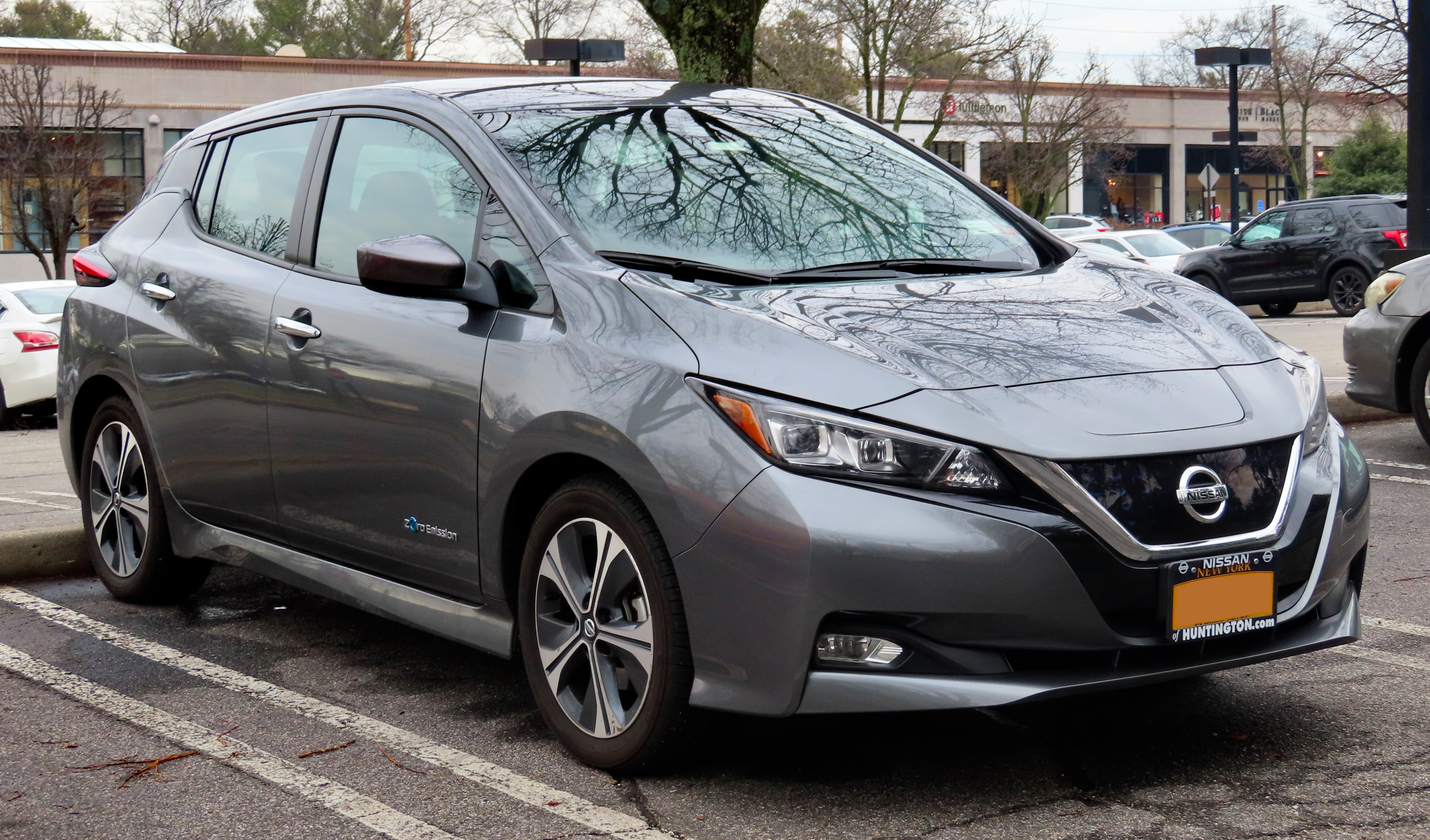
Nissan Leaf
"...r valet confuses this for a three-year-old Nissan leaf in the country club parking lot you have lost. I ..."
The Nissan Leaf is an electric car that runs on a battery instead of gasoline. It’s popular enough that people often recognize it quickly. The podcast mentions it because someone thought another car was a Leaf.
The Nissan Leaf is a fully electric compact car designed for everyday commuting. It’s a common reference point because many people recognize it as an EV and it’s widely seen in parking lots. In the podcast, it’s brought up as a comparison when someone mistakes a car for a Leaf.
roll race
"And you do a roll race from 60 next to some guy who's got a xiaomi [4416.1s] Su7 that cost you could buy like four of for this car"
A roll race is a drag-style race where both cars are already moving when the race starts, rather than starting from a standstill. It emphasizes acceleration and traction in the mid-speed range, which often favors modern powertrains like EVs.
EVs
"Obviously, we've already seeded ground on that argument every ev like evs can be good [4463.9s] But that's not even the focus anymore the focus is how big of a number can you put in it?"
EVs are electric cars that run on batteries instead of gasoline. The host says EVs can be good, but now people care a lot about big performance numbers.
EVs (electric vehicles) are cars powered primarily by electric motors and rechargeable batteries. The host argues that EVs can be good, but the real “game” has shifted to how large a performance number a car can advertise.
zero to 60
"And how fast can it go from zero to 60 and it's like your Ferrari?"
“0–60” means how fast a car can go from standing still to 60 mph. It’s a simple test people use to compare how quick different cars feel.
“0–60” (zero to 60 mph) is a common acceleration benchmark that measures how quickly a car can reach 60 miles per hour from a complete stop. It’s often used to compare performance between cars.
halo car
"You it's it's a dangerous thing unless you are like one of maybe two people left on earth [4560.4s] No one will give you an honest opinion about this car [4564.1s] because the entire point of car journalism at the highest end of the market is to"
A “halo car” is the flashy, top-status car a brand uses to make people think the company is awesome. The host is saying it can be hard to get honest criticism of those cars.
A “halo car” is a brand’s prestige model used to build excitement and credibility, even if it’s not the highest-volume seller. Because it represents the brand’s image, journalists and companies may be more cautious about criticism.
car journalism
"because the entire point of car journalism at the highest end of the market is to [4569.8s] convince [4569.8s] People who already the three years of buyers already have for this that they have made an intelligent decision"
The host is talking about how car reviews at the high end can sometimes feel more like persuasion than honest evaluation. The idea is that the goal may be to help people feel confident they made the right choice.
The host is describing a concept about high-end car media: that coverage can be shaped to persuade buyers rather than provide fully independent critique. In other words, the “review” function becomes partly marketing for expensive, image-driven models.

Fiat 500
"... how you just do a compliance car. That is a fiat 500 eu is some fucking Ferrari badges on it That's if..."
The Fiat 500 is a tiny car meant for city driving. In the podcast, it’s mentioned in a humorous way about how it can be made to look more special with badges. The focus is on appearance and branding.
The Fiat 500 is a small city car designed for easy parking and everyday driving. In the podcast, it’s discussed as a “compliance car” and compared visually to something with “Ferrari badges,” implying a joke about branding or styling. That makes it a conversation about how small cars can be marketed or dressed up.
six-speed manual
"Okay, give him give him white socks season tickets or something. Let him go have some fun. You heard about his manual for fusion [4967.2s] No, actually really that's the wokest thing about him. It's his six-speed manual [4973.2s] Yeah, we're not doing woke pope apology on the show."
A “six-speed manual” means you have to shift gears yourself using a clutch. It has six different gear ratios, and it usually gives the driver more control than an automatic.
A “six-speed manual” is a gearbox where the driver uses a clutch pedal and shifts through six gear ratios. Compared with automatics, manuals typically give more direct control over engine speed and can be more engaging for drivers who like to manage shifts themselves.
Stellantis
"Um speaking of not woke. There's our transition into our next topic [5017.7s] He all heard about this little car company called stilantis [5022.2s] I swear to god, we're our main goal of this show is to have a dodge [5026.3s] Dodge contract."
Stellantis is a major multinational automaker formed from the merger of Fiat Chrysler Automobiles and PSA Group. The host brings it up as the next topic, framing it as a big corporate player in the auto industry. In practice, Stellantis owns many car brands, so it’s often discussed when talking about product plans and strategy.
Ram
"Well, so have you heard of this small company called ram? [5046.1s] Is that what is that where dodge spun off all of their trucks for dl gay guys? [5055.3s] Sorry, is that not woke to say that i've never been a dl guy who didn't drive a ram?"
Ram is a truck-focused American brand (especially known for pickups) that is also part of Stellantis. The host jokes about Ram trucks and stereotypes, but the key automotive point is that Ram is a distinct brand within the same corporate group as Dodge. That matters because it often shares platforms and marketing strategies under Stellantis.

Challenger Hellcat
"...ase uh ram announced that they're going to cram a hellcat into"
The Challenger is a muscle car model from Dodge. The podcast is talking about putting a very powerful engine into it. It’s about performance possibilities rather than everyday features.
The Challenger refers to the Dodge Challenger model, which is a muscle car known for powerful engine options. In the podcast, it’s mentioned in connection with “cram a Hellcat into,” implying talk about fitting a high-performance engine into that platform. That makes it a discussion about performance potential and future/imagined configurations.

F-150 Raptor
"... ram has had the trx, which is the twister Stupid raptor thing, uh The blue lives matter thing"
The Ford F-150 is a large pickup truck. The podcast mentions it while talking about different kinds of high-performance trucks. It’s part of a general conversation about pickup options.
The Ford F-150 is a popular full-size pickup truck known for being offered in many trims and configurations. The podcast mentions it indirectly while discussing other performance truck ideas and branding, using it as part of a broader pickup conversation. It’s included because it’s the baseline name people use when talking about modern truck performance variants.
Request an Explanation
Heard something you'd like explained? We'll add it to this episode.
Sign in to request explanations for terms you heard.
Want to learn more?
Browse our glossary for plain-English explanations of automotive terms, jargon, and concepts.
Help improve this episode
See something that's not quite right? Our annotations are AI-generated and can sometimes miss the mark. Click the flag icon on any annotation to suggest a correction.
1 community members have helped improve this episode.