
The hosts compare the 2026 Volkswagen Golf GTI Autobahn and the 2026 Genesis GV70, debating what enthusiasts actually miss and what modern tech gets wrong. The GTI gets praise for its responsive 2.0T, well-matched 7-speed dual-clutch, and torque management (including an electronically controlled LSD), but the infotainment interface and touch controls spark frustration. The GV70 earns strong recommendations after a 1,000 km road trip, with standout interior design, smooth 3.5T V6 performance, and efficient real-world fuel use—plus a broader discussion on Genesis’ “special” luxury feel.
The Unnamed Automotive Podcast returns this week to discuss the hypothetical friendship survey, weird V8 powered FWD cars, engines that powered motorhomes and they even review a few new cars along the way. The first is a look at the 2026 Volkswagen Golf GTI, which Sami was already dismissive of due to its deletion of the manual transmission. However, some spirited drives helped change Sami's mind a bit. Is it enough to recommend it? Listen to find out!
Then Benjamin shares his thoughts on the 2026 Genesis GV70, one of the newer faces among the luxury compact SUV segment, but one that is consistently recommended by our hosts. That's for a reason, as Benjamin explains, and the show further discusses who Genesis may be appealing to with all of its offerings. Thanks for listening!
"Remember that? But the thing about the HRV is people are interested in them. That's why we ..."
The HR-V is a small SUV/crossover made for everyday driving. The podcast says people are interested in it, meaning it’s a popular type of car for buyers. It comes up because it’s a common choice in its category.
The Honda HR-V is a subcompact crossover designed for easy daily use, good visibility, and practical space. The episode notes that people are interested in it, which is significant because it points to the HR-V’s role as a mainstream, high-demand choice rather than a niche performance car. It’s discussed as part of a conversation about what buyers actually want in the market.
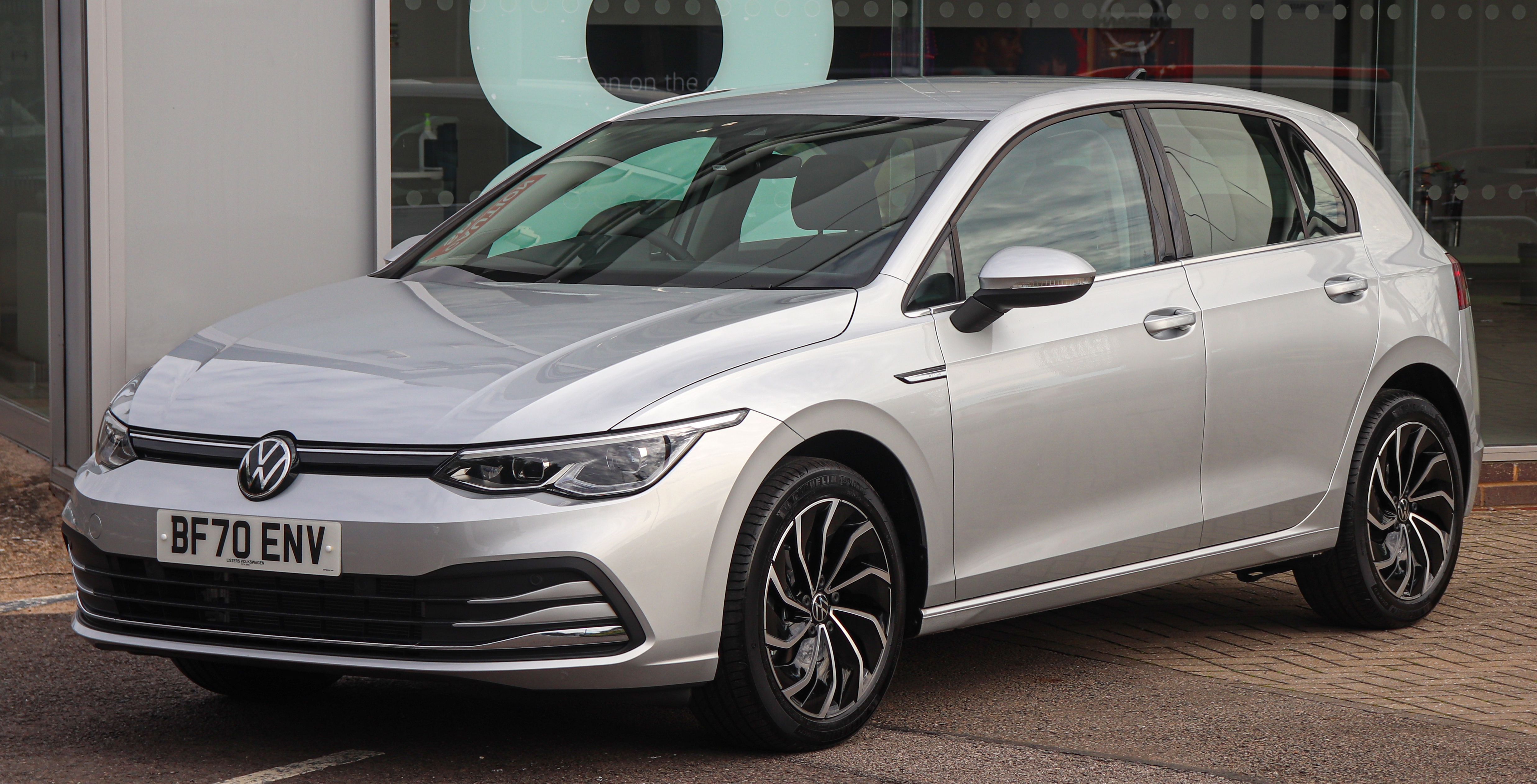
"This week, though, I've got a car that I was very curious about... It is the 2026 Volkswagen Golf GTI and, specifically, the Autobahn."
The Volkswagen Golf GTI is a sporty version of the normal Golf hatchback. It’s popular because it’s fun to drive and has a turbo engine. Here, they’re talking about the 2026 GTI and what’s different about it.
The Volkswagen Golf GTI is the performance-focused version of the Golf hatchback, known for its turbocharged power and enthusiast-friendly driving feel. In this episode, the host is driving the 2026 model to discuss how the GTI has changed recently, including transmission availability.
"It is the 2026 Volkswagen Golf GTI and, specifically, the Autobahn."
“Autobahn” is a trim level/option package on the Volkswagen Golf GTI that typically adds comfort, convenience, and driver-assistance features. It’s not the engine or drivetrain itself, but it changes what equipment you get compared with other GTI trims.
"...n in a very long time. It is the 2026 Volkswagen Golf GTI and, specifically, the Autobahn. Now, when y..."
The Volkswagen Golf is a small car you can use every day. The GTI version is the sportier model, and the Autobahn package is meant to make it nicer and more comfortable for highway driving. The podcast brings it up because it’s a popular performance-style hatchback.
The Volkswagen Golf is a compact hatchback that’s been a long-running, mainstream staple for decades. In this episode it’s specifically the 2026 Golf GTI Autobahn, which matters because the GTI is the performance-focused trim and “Autobahn” typically adds comfort and highway-oriented features. It’s discussed as a benchmark for how a practical daily car can still feel quick and engaging.
"...they have been fighting for manual transmissions at pretty much every brand they've ever worked at."
A manual transmission is the kind where you use a clutch pedal and a stick to change gears yourself. The discussion is basically about whether enough people want manuals for brands to keep offering them.
A manual transmission lets the driver select gears using a clutch and gear lever, rather than relying on an automatic system. The segment discusses how different markets and brands offer manuals, and whether enough customers buy them to justify keeping the option.
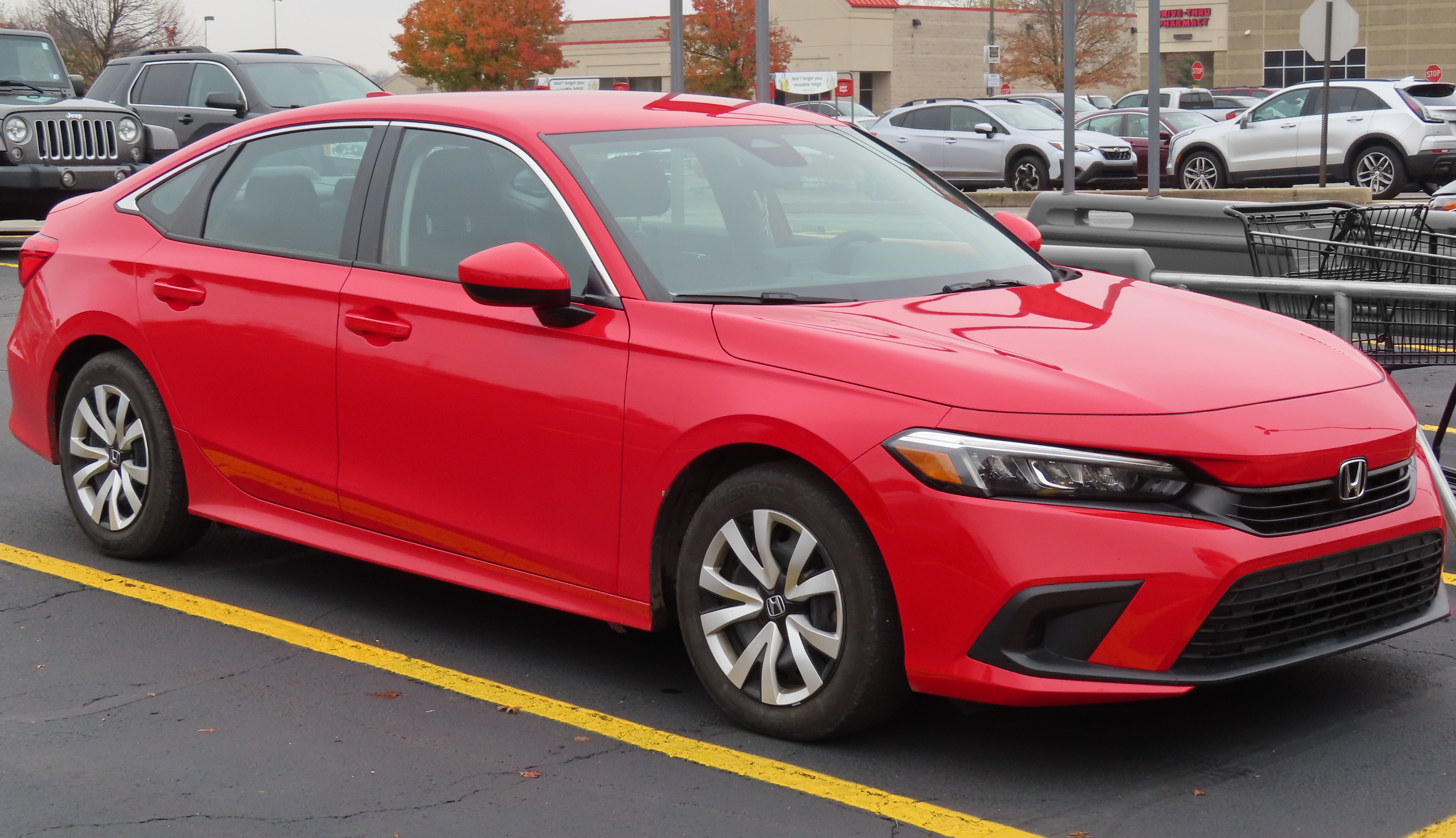
"[363.4s] I think that the GTI is what gives us the Civic Si.
[367.6s] I think you're actually, I agree with you."
The Civic Si is a sportier version of the Honda Civic. It’s meant for people who want a compact car that’s more fun to drive without going full race-car.
The Civic Si is Honda’s sport trim of the Civic, positioned as a more performance-oriented alternative to the base model. The speaker connects the GTI’s influence to the broader idea of “enthusiast” compact trims like the Civic Si.
"Because I know it's 258 pound feet of torque, right?
No, man.
You're way off on all these numbers."
“Pound-feet” is just the unit used to measure torque. It’s the number people use to describe how strong the engine’s pull is.
“Pound-feet” (lb-ft) is the unit used to measure torque in many U.S. markets. When someone quotes lb-ft, they’re telling you how much twisting force the engine makes.
"by today's measurement of of front wheel drive.
Hot hatches, that one only had like 270 something.
280 280. Yeah."
A hot hatch is a small car that’s been tuned to be faster and more fun than a normal version. They often have turbo power and sportier handling, and they’re usually front-wheel drive.
Hot hatches are compact cars tuned for performance, typically with turbocharged engines and sporty suspension/braking. The episode uses hot hatch comparisons to discuss how different FWD cars manage traction and acceleration.
"I remember the first front wheel drive car that I thought had like eyebrow raising amounts of horsepower was the Cadillac S.T.S. in the 90s..."
Front-wheel drive means the engine powers the front wheels. It’s popular because it’s efficient and works well in bad weather.
Front-wheel drive (FWD) sends engine power to the front wheels. It’s common in mainstream cars because it packages well and can improve traction in slippery conditions, but it can also affect steering feel and torque steer.
Northstar is the name GM used for a Cadillac engine family. Here, they’re saying the S.T.S. had a powerful Northstar V8.
The Northstar is a GM V8 engine family (most famously used in Cadillac models) known for being a high-performance, modern-for-its time design. In this segment, it’s referenced as the engine behind the S.T.S.’s strong output.
"Cadillac El Dorado. There we go. So it's a seven and a half liter V8."
The Cadillac El Dorado is a luxury Cadillac model that was known for big, powerful V8 engines. The speaker is using it as an example of the kind of torque-heavy performance those cars had.
The Cadillac El Dorado is a flagship personal luxury car line that became famous for its large-displacement V8s and big, comfortable cruising. The speaker ties it to a “7.5 liter V8” and the era’s torque-heavy character.
"A friend of mine was in BMW, Formula BMW for a while."
Formula BMW was a racing league for up-and-coming drivers. It’s like a training ground before bigger, more serious racing series.
Formula BMW was a junior open-wheel racing series used to develop young drivers. It’s often a stepping stone for people aiming toward higher-level motorsport careers.
"according to car and driver, this car does hit 60 miles per hour
from a standstill in around five and a half seconds"
“0 to 60” means how fast a car can go from stopped to 60 mph. It’s a simple way to compare acceleration between cars.
“0 to 60” is shorthand for how quickly a car accelerates from a standstill to 60 mph. It’s a common performance metric, but it can vary based on testing method, traction, and vehicle setup.
"is the Toyota RAV4 PHEV.
Something with 300 horsepower."
PHEV means the car is a plug-in hybrid. It can run using electricity, but it also has a gas engine for longer trips.
PHEV stands for Plug-in Hybrid Electric Vehicle. It uses both a battery-powered electric drive and a gasoline engine, and the battery can be charged from an external power source.
"The issues still remain that changing the HVAC settings and changing the the media settings... is still a really frustrating thing..."
HVAC is how you control the car’s heat and A/C. They’re saying it’s annoying to change it because you have to use touch controls while driving.
HVAC stands for heating, ventilation, and air conditioning. The speaker complains that adjusting HVAC settings is frustrating because it requires interacting with touch controls rather than quick physical knobs/buttons.
"...this car does not have additional cameras. It just has a reverse camera..."
A reverse camera displays what’s behind the vehicle when shifting into reverse. The speaker contrasts this car’s camera setup with the Atlas having additional camera views, implying the interface and camera controls differ by model.
"I had an issue with the Volkswagen Atlas last week... every time I was talking about it... the car is then suddenly like it would prompt me for a voice command."
The Volkswagen Atlas is a larger SUV with room for passengers and cargo. The speaker mentions it because the car keeps interrupting with voice-command prompts, and they recommend disabling that behavior.
The Volkswagen Atlas is a midsize three-row SUV known for family-focused practicality. In this segment, it’s used as an example of a built-in voice-command prompt that becomes annoying while driving and recording content.
"Anyways, that's something to talk about with these like infotainment system and these interfaces, they obviously are not super well designed for the driver to utilize"
Infotainment is the car’s main screen and controls for things like music, maps, and phone features. The point here is that the system feels awkward to use while driving.
An infotainment system is the car’s integrated electronics for media, navigation, phone connectivity, and vehicle settings—usually controlled through a touchscreen or buttons. The speaker criticizes how the system’s design makes it harder for the driver to use safely and effectively.
"The steering is excellent. The throttle response is really good for a turbocharged engine."
Throttle response is how fast the car reacts when you press the gas pedal. A “good” response means it feels immediate and predictable.
Throttle response describes how quickly the car reacts when you press the accelerator. It’s influenced by engine mapping, turbo boost behavior, and transmission/gear selection.
"It's like, cause turbo fours don't always sound good. It's a bit of a drone, but you know, it's, it's better than."
“Turbo fours” means a 4-cylinder engine with a turbocharger. The speaker is saying these engines don’t always sound great, depending on the car’s tuning.
“Turbo fours” refers to turbocharged inline-four-cylinder engines. They can produce a distinctive sound, but some setups may feel buzzy or droney depending on exhaust tuning, intake design, and how the car amplifies engine noise.
"[1532.2s] Is it like a leather nub? [1534.4s] Yeah... [1534.9s] ...do you have cool tartan seats? [1540.3s] Yes, I do."
Tartan seats mean the seat fabric has a tartan-style pattern. It’s a visual upgrade that makes the interior look more special.
Tartan seats refer to upholstery patterned in a tartan-style fabric or design, which is often used to give a distinctive, upscale look. In this context, it’s part of the fancier Audubon trim details the host is pointing out.
"The in its class, it goes X3, GV 70, one after the other. Check those two out."
The BMW X3 is another popular luxury SUV. The host is basically saying the Genesis GV 70 competes with the BMW X3 for the same kind of shopper.
The BMW X3 is a compact luxury SUV that Genesis GV 70 is being compared against. This kind of “in its class” comparison helps listeners understand the GV 70’s target buyers and competition.
"Visually in the exterior, they're very similar.
But the interiors, they make the difference."
They’re saying the outside looks almost the same between trims, but the inside is where you notice the upgrade. That usually means better materials and a nicer feel.
The speaker emphasizes that while the exterior styling is similar across trims, the interior is where the differences show up. This is a common luxury-car strategy: upgrade materials and comfort features more than the exterior design.
"If you want to get crazy, you have an eco mode or whatever they call the eco mode. If you just want it to be normal and there's a comfort mode,"
“Eco mode” is a drive mode designed to improve fuel economy by softening throttle response and adjusting powertrain behavior. It often reduces how aggressively the engine makes power and may change transmission logic.
"If you just want it to be normal and there's a comfort mode, which is what I kept it in most of the time."
Comfort mode is the “easy going” driving setting. It’s meant to make the ride and responses feel smoother and less aggressive.
“Comfort mode” is typically a drive mode that prioritizes smoothness and reduced harshness. Compared with sport modes, it usually makes throttle and drivetrain responses gentler for everyday driving.
"I want to say I got around 11 liters per 100 kilometers. I'm going to double check that now because I have it right here in front of me."
This is a way of measuring fuel economy used in many countries. It tells you how many liters the car uses to travel 100 kilometers—lower is better.
Liters per 100 kilometers (L/100km) is a fuel-consumption unit commonly used outside the U.S. Lower numbers mean better efficiency, and the speaker uses it to estimate their real-world consumption.
"I'm going to look that up for miles per gallon. But I want to say that's going to be like 25. So let me check 10.1 convert."
Miles per gallon (MPG) is the U.S. fuel-economy unit that indicates how many miles you can drive per gallon of fuel. The speaker converts their L/100km figure to MPG to make it easier to interpret.
"because if you look like a Lexus RX, it is distinctive. Like you can't mistake it for something else."
The Lexus RX is a popular midsize luxury SUV known for a recognizable design and mainstream comfort. The speaker uses it as an example of a vehicle that’s “distinctive” enough that you can’t mistake it for something else.
"...they're following this trend of like more screens, more tech, more gimmicks, more nonsense. A lot of them are."
Some newer cars put lots of screens and digital features everywhere. The speaker is saying that not everyone likes that—some people prefer fewer gimmicks and a more straightforward luxury feel.
This phrase describes a modern infotainment trend where automakers add larger displays, more digital features, and additional interface complexity. The speaker frames it as something that can feel like “nonsense” to buyers who want a simpler, more tactile luxury experience.
"It's like, you know, when I was talking about the Lucid a few months ago and I said that I wasn't into I felt that the interior was too restrained."
Lucid is an electric-vehicle brand. People often talk about its interior design and tech vibe, and the speaker is using it as a comparison for how different luxury brands try to appeal to the same type of customer.
Lucid is an EV brand known for modern, tech-forward interiors and a minimalist design approach. The speaker mentions Lucid as an example of a company whose cabin feels “too restrained,” and then connects that to whether Genesis’ G 90 interior is targeting a similar buyer demographic.
"But even before that, you know, we had like I3, the other I3, the I8. The I7, these are unusual vehicles, right?"
The BMW i8 is a BMW model that uses electricity along with a gasoline engine. It’s brought up as an example of BMW doing unusual electrified vehicles before the newer strategy.
BMW i8 is mentioned as part of BMW’s earlier EV/hybrid experimentation. The i8 is known for its plug-in hybrid setup, which helped BMW learn how to package electrification in a sports-car form.
"But then you look at Hyundai and Kia and it's like that across the board. It's like we've talked about how there's no EV design language for either of these companies."
Hyundai and Kia are car brands. The point is that their cars tend to look like they belong together, and the speakers are comparing how they handle EV styling.
Hyundai and Kia are discussed together as brands that, in the speakers’ view, have consistent design approaches across their lineups. The segment connects this to how EVs are being styled and how much a brand uses a unified “design language.”
Select text to request an explanation
Hello, and welcome to the Unnamed Automotive Podcast.
My name is Sammy Hajesad, and with me as always is my good friend and fellow automotive journalist,
Benjamin Hunting.
Say hi to the people, Ben.
Greetings, human listeners.
Greetings to everyone.
If this is the first time you're listening to our podcast, thank you for trying something
new.
I will reiterate, Ben and I are a pair of automotive journalists.
But more important than that, we're very good friends, right, Ben?
Sammy, friendship is such a nebulous concept.
Yeah, but I mean, if you're going to take a like survey, it would be like for there
would be four bubbles that you'd have to fill out.
It would be like bad friends, OK friends, good friends and very good friends.
And I think what's an OK friend?
It's below a good friend, I think.
No, I get the hierarchy, but like what what makes an OK friend?
Somebody wouldn't help move.
That's everyone I am.
No, I am past the age.
I would help you move.
I would not ask you because I'm past the age where I would ask someone to help me
move or offered to help somebody move because I'm too old.
I break easily and I am of dubious use.
I would do both.
I will ask you and I will help you.
I will help you helping me.
How about that, too?
I don't know.
I'm just going to get in the way.
I'm probably going to break something.
It's not good.
Anyways, that's Ben hunting.
I'm my my friend of dubious usage and durability.
You know what he is very useful at?
Publishing a bunch of cool stories about cars.
Ben, hit the listener with some of the
latest publications that you've written for.
Sure, you can find my work at Motor Trend, at Hagerty and at Inside Hook.
And you can find my work at autotrader.ca and driving.ca.
This week, Ben, we've got a couple of cool cars
that I think it's been a while since we've talked about.
Are you excited to do this?
I'm always excited, Sammy.
I might not be useful, but I can get I can get my blood up for the podcast.
Yikes.
I think you I think there are certain days when it's like,
oh, here we go with a couple of like
weird cars that nobody's super interested in, like I try to drive those vehicles.
Like the HRV episode.
Remember that?
But the thing about the HRV is people are interested in them.
That's why we have to caution people about them.
And Ben is constantly making me review cars that he doesn't want to review.
So I have zero hand in anything, Sammy, of yours.
Let's put that out there.
You send me these messages.
I think you you assign me ideas on the pod for the podcast in the middle of the night.
I think you you sleep message.
You sleep pitch.
I sleep messy.
You sleep message.
This week, though, I've got a car that I was very curious about,
something I haven't driven in a very long time.
It is the 2026 Volkswagen Golf GTI and, specifically, the Autobahn.
Now, when you say you're very interested,
how does the GTI change significantly of late?
Yes. So the last generation model 2022, right?
I believe that that's considered the Mark 8 or the is that what they call it?
Mark 8 or Gen 8 version of the Gulf.
And it received a refresh in 24,
which was really important to the GTI
because it cut the manual transmission option for us North American folk,
which is a very important thing to talk about as an enthusiast car.
Is it still available in the Gulf are?
I don't think so. OK, so it was across the board.
I thought that Canada kept I wasn't I wasn't reviewing the Gulf are.
So I didn't I didn't look.
Ben, if I had known that you were going to ask me a bunch of questions
about that car's direct sibling, I know what am I thinking?
I'm way out of line.
But I did think that the no, those are only autos.
I thought I thought I had kept it for Canada.
And I know the US lost the transmissions a lot before we did.
Yeah. From what I didn't know that I wasn't paying attention.
I I was just reviewing HRVs and really lame things because we have some cool
product planners up here in Canada.
Shout out, they know who they are and they have been fighting for manual
transmissions at pretty much every brand they've ever worked at.
And it has worked out in our favor in our favor, but but really not the consumer's
favor, although the GTI I think is a car that probably had a pretty good take
rate on on manual transmissions.
I'll do my research in a moment to to double check that if only we lived
in a world where take rate determined features because like remember when
when half of Subaru WRX buyers were getting hashbacks and then Subaru was
like, no more hashbacks, whoops.
But you know, actually, I've I've also heard that like take rates at Subaru
for their manual transmission cars like the BRZ and the WRX is actually
quite positive as well.
I think they're 50 50.
And I think the other one that also has a really high manual take rate
is the Miata. I think that goes without saying.
Yeah. But the problem with vehicles like the Miata and the BRZ is it's like
50 percent of a very small number.
Yeah, I mean, yeah, it's like two people this year and one of them got a
manual and the other one forgot about it.
But anyways, GTI, a really interesting car for me to talk about because
when it comes to enthusiast versions of the golf, I would always
prefer driving the GTI with a manual and the golf bar with the with the
dual clutch transmission that it comes it offered at the time.
Now both of them are are set with dual clutch transmission.
So there's no really an important no, no important separation there.
But for the people who do not know, the GTI is a hopped up version
of the golf hopped up.
Yeah, I think it's just shy of calling it a hot hatch.
How is it just shy?
I'm very confused.
There's something even hotter than the GTI in the golf bar, right?
I think that the GTI is the original hot hatch.
I think the GTI is what gives us the Civic Si.
I think you're actually, I agree with you.
I completely agree with you.
The GTI is the hot hatch.
And unlike other automakers that are that are selling sport compact,
I think the output of the GTI has improved over the years.
Like if you go to to Honda and you get an Si that's still like a
200, 200, 210 horsepower car.
What isn't the GTI 220?
It's actually more than that, man.
How much is it now?
Because I know it's 258 pound feet of torque, right?
No, man.
You're way off on all these numbers.
What's happening, Ben?
I'm asking questions.
That's what's 241 horsepower.
OK. And 270 273 pound feet of torque.
So that's a quick car, man.
How many times did you roast the front tires?
Um, I did not, I did not count the amount of times I did it.
So let's just say more than more than one and less than 100.
OK.
Do you want a 300 horsepower front wheel drive car?
Because Honda thinks you do.
I've driven.
Yeah, folks like it seems to think, no, I've driven the that one.
That one that was called Type R. There's two of them.
I've driven the type R.
I haven't driven the type S from Acura.
Are you serious? I don't think so.
Oh, well, I didn't know that.
It's a great car. You should drive it.
It's way better than the type R, in my opinion.
Or maybe I haven't the other way around.
No, I think I've driven the type R and the the the the front wheel drive
wheel roaster that I remember is no longer in production.
It was the speed three.
Yeah, I know where you're going.
This is the wildest front wheel drive car that I have driven.
A car that actually had to pull torque in the first two gears.
First two years, not even.
I think it's the three gears, actually.
No way.
Because of too much wheel spin and first year.
One of the wildest cars that I've ever driven,
because it was a wrestling match anytime you did anything.
And I'm happy to say, I mean, frankly speaking,
by today's measurement of of front wheel drive.
Hot hatches, that one only had like 270 something.
280 280. Yeah.
And we had I would say probably focus.
S.T. was in that range as well.
Focus S.T. was three of the S.T.
Yeah, yeah, it was it was below 280.
If you want to go back even farther, for me,
I remember the first front wheel drive car that I thought had like
eyebrow raising amounts of horsepower was the Cadillac S.T.S.
in the 90s, when the 300 horsepower North Star.
Yeah. Yeah.
Even though if you go back even farther than that,
the very first front wheel drive GM car, which I believe was the.
Pontiac.
The Oldsmobile Riviera. Oh, yes.
But also there was a Buick version.
I can't remember what it was called.
Sorry, Cadillac version.
The Toronato was also was from Buick, I think.
And then the Cadillac was, I can't remember,
either way, 500 pound feet of torque.
Oh, my gosh.
It was the same drivetrain that they ended up using in the motor home.
The giant motor home.
They could just lift it out of the the sedans
and put it in the front wheel drive motor homes.
Now, see, that's that's really innovative thinking.
Truly an engine from a sedan to be used in a motor home.
You mean like an RV, like literally the GMC made a motor home for for a while.
Straight up straight up like you could go to GMC.
You didn't have to go to like Winnebago.
You could go there and you could get the super cool like a motor home.
And that had it was it was called the Unitized Power Package,
which was in the Oldsmobile. It was not Oldsmobile.
It was sorry. It was not Buick.
It was Oldsmobile for the Toronato and the the Buick Riviera.
And then the Cadillac model.
I'm trying to find it here and I absolutely can't.
But it was it was a 455 cubic inch V8 and in Cadillac,
they use a 500 cubic inch V8 and it was insane amounts of like torque.
But it was very lazy torque, you know, it comes on low, blah, blah, blah.
Cadillac El Dorado. There we go.
So it's a seven and a half liter V8.
But yeah, they we forgot about those for a while
because the energy crisis, I mean, you know,
the energy crisis that we're experiencing now has its predecessor in the 70s.
And it kind of knocked out all of these big V8 engines.
Right. And then it took a long time for Cadillac to come back
with another super high horsepower V8 formal drive car.
They had a four and a half liter V8 in the 90s, early 90s, late 80s
that was like 190 horsepower or 220 something around there
that wasn't that impressive before they had the North Star.
So they're taking baby steps.
What are we going to talk about after this?
We're going to keep talking about the GTI.
Are you sure? Yeah, why not?
We took a big detour.
Yeah, talking about motorhomes.
Are you saying you're done?
You can't you get at the motorhomes wiped you out?
Yeah, no, I don't know how to I don't know how to keep up with this.
There's no way to follow it.
Just too good.
Anyway, so it's it's me more mostly saying that when other automakers
have kind of kept their power trains and at least the output of their power
trains kind of static, I think it's really cool to see that Volkswagen
has still pushed things quite a bit.
What I've got in this car that I think is worth mentioning
is the seven speed on dual clutch transmission.
It works very nicely.
I will say it works very nicely.
It seems like the two the the powertrain is really
smartly packaged, doesn't feel like there's any sort of hiccups
between the two or like a transmission that doesn't know what to do
with the the the powertrain that it has.
And when you asked me, obviously, oops, when you asked me about the.
How much how many times that I roast the front tires?
You obviously are alluding to the fact that that's quite a bit of power
going to the front wheels and it's winter time and you're on winter tires.
Yes.
So I will say that this car also features an LSD, a limited slip differential.
It's an electronically controlled yet.
It's an electronically controlled limited slip differential.
But still like a hydraulically actuated.
So I don't know how you describe that to the it's not quite an ediff,
but it's not quite like a like a mechanical limited slip differential.
It's something kind of of a hybrid of the two.
Very confusing to describe.
But I will say that I did not have any concerns about
torque steer.
I loved that about it.
And I was really impressed with the with the power delivery
of this two liter turbocharged engine.
Now, I wanted to get to that power delivery.
So do you think that this GTI could beat Jesse's Jetta in a straight line
at Race Force?
Oh, that's a really tough question.
That thing looked quick, in my opinion.
But I mean, that's there's been a movie magic involved.
A little bit, because that was a naturally aspirated two liter automatic Jetta.
Which is really if I if I if I had a flow, that is a flow automobile.
If I check the stats, it's still accelerating towards 60 miles
an hour from 2001.
Then yes, it should have no issues.
OK, based on the I always thought it was funny
that Frankie Muniz of all the Fast and Furious cars, he bought that one.
Did he really? Yeah.
A friend of mine was in BMW, Formula BMW for a while.
And when Muniz was starting his career, they had the nickname for him.
It was Malcolm at the back.
OK, yeah, that's funny.
Um, according to car and driver, this car does hit 60 miles per hour
from a standstill in around five and a half seconds, which is not slow.
No, that's pretty fast.
That's like five point five seconds off like an E39 M five.
So is that an E39 M five?
Yeah, like a 20 car 20 year old car.
A car that people think is fast.
You think it's fast by today's standards.
I think that's pretty quick.
Probably puts it in around.
I'll have to double check.
What is the an EcoBoost Mustang do these days?
I don't want to know.
But I can tell you I was doing some research earlier today
and a vehicle that does zero to 60 in five point five seconds
is the Toyota RAV4 PHEV.
Something with 300 horsepower.
So if you're lining up against the RAV and electric motor now,
GTI, you need to be careful about pink slips.
That's wild.
What's what does the Elantra N do?
Let me double check.
I'm looking at this number right now.
I want to say it's somewhere around six.
It's not very fast.
Oh, and and five point one.
So the Elantra N is a tiny bit quicker.
Yeah. OK, well, that's important to point out.
This car isn't super heavy either.
It weighs around thirty three hundred pounds,
which is still a little bit bigger than the Elantra N
that I just mentioned.
It's about the same as a C five Corvette.
Wow, you're really good at pulling up these twenty year old car.
Honestly, this is the unnamed twenty five year old podcast that we just
should we just keep comparing cars to new cars to things that were twenty years
older? Every car today weighs five thousand pounds.
So I can't find like I can't find like a modern equivalent.
That's very true.
So what are the things that you want to ask me about this car?
Because otherwise, I will say it's all totally
what you expect from my first question is how frustrating is the infotainment system?
Slightly less frustrating than the Atlas's infotainment system that I drove last week
because they put shortcuts to the heated seats on the on the bottom
like a shortcut menu, I guess, which is really handy because the Atlas did not have that.
And it was easier to use the the little like it has like a you know,
like modern phones today have like a pull down notification shade, basically.
Oh, my goodness.
I do not need this in a car.
This has that for like quick settings, like turning off
automatic engine start stuff and stuff like that.
Why couldn't I just have like a button that does that?
Why does it have to be a shade?
Yeah, I suppose they they could have they should have physical buttons
for these kinds of features because the phrase let me open the app drawer
should never be uttered when we're talking about a car.
The issues still remain that changing the HVAC settings and changing
the the media settings in terms of volume or temperature is still a really
frustrating thing that has to be done with like a touch sensitive bar beneath
the steering wheel beneath the infotainment screen.
And as a result, you end up like touching this area of the screen.
Maybe inadvertently, when you're just trying to use the touchscreen,
I did not have the same issues that I had last week with the Atlas,
which was I couldn't figure out how to turn on the the the additional
cameras because this car does not have additional cameras.
It just has a reverse camera and that we're going to look back on this era
of automotive interface design the same way we look back at like cars from the
fifties that had like absurd amounts of chrome and like steering
steering wheels made of like stab you in the face metal.
Like it's going to be that level of what were they thinking?
I read an interview from an from an exec that said that these touch buttons
are 50 are 50 percent cheaper than physical buttons.
Oh, I believe it. You know what else is cheaper?
Just like a metal box.
Like, you know, we want to go there.
No buttons at all, of course.
Do everything from.
So, I mean, I think automakers have toyed with the idea of making
everything operable, operable through like voice commands.
But nobody like wants to do that, right?
I suppose if you're forced to do it, you'll do it.
But then you'll not live.
You won't enjoy your experience.
You won't buy the two.
So like last week, I had the Hyundai N line, right?
I don't know if I mentioned this during our conversation.
But did I mention that I do like a hospital test with the car?
And I say like, I need to go to the hospital and I often shout it
or I say it like in a stressed voice because I feel like that's something
that someone could do like I do this every time I do do it for the navigation
system to see if in an emergency situation, if the voice commands
will route me to the closest medical provider, I could not get the Elantra
to recognize hospital period, even if I said it nicely.
And then it popped up a thing on the screen that like told you how to
phrase it, like try saying it this way.
And I did and it didn't work either.
I could find gas stations, but I couldn't find hospitals.
And it kept telling me activate blue link for better voice command recognition.
No, I need to go to the hospital right now.
I'm not going anywhere.
Yeah, 45 minutes later on online with an operator bleeding out in my Elantra.
But I bring this up because there's a lot of talk about how so many
car features require a subscription nowadays.
And if your voice commands are so basic that you actually have to pay
for another subscription to get something that's actually useful.
I don't think that's a step up, but I don't think that's a win for anyone.
I will say I will say when I used the Android Auto voice commands,
they worked perfectly.
So so it's all like a it's all potentially not potentially is entirely reliant.
When something is reliant on your phone, which is, I guess, calibrated to
it's reliant on your data connection.
Yeah, that's that too.
I had an issue with the Volkswagen Atlas last week because I was I was doing
I was shooting a video for driving that CA with it.
And every time I was talking about it, every time I would say, you know,
one of the interesting things about the Volkswagen Atlas while I'm driving
the car is then suddenly like it would prompt me for a voice command.
Yeah, you got to disable that.
It's so annoying.
Oh, it's so frustrating.
And then I'm worried that like I forgot to just to like re-enable it.
Now the next person is going to drive it.
Normally it's a phrase that you wouldn't use like, Hey, BMW.
Yeah.
You know, but I guess Volkswagen was like, no, it's every mention of her.
The this one was brutal.
They wanted me.
So my, my, my publication wants me to do some social media videos for them,
basically like 30 or 60 second long videos.
And I introduced the car and I'm like, so today I'm here with the Volkswagen
Atlas and immediately it was like Bing and ruin every take that I've done with
the Bing.
Did you want to go to the hospital?
Did you meet hospital?
Anyways, that's something to talk about with these like infotainment system
and these interfaces, they obviously are not super well designed for the driver
to utilize and maybe more, more useful for passengers or something.
I don't think either, either case is great.
I think, you know, you'll be relying me mostly on Android Auto,
Apple CarPlay or a voice recognition system.
Like you mentioned, the Volkswagen, especially the Volkswagen, this Volkswagen
generation of infotainment is among the worst.
And I don't understand how they can continually sell cars with this kind of
functionality.
I think it's, I think it's irresponsible.
So my next question is, I think maybe more importantly, did you have fun
with this vehicle?
Cause that's why they're selling it, right?
Like, this is why you buy a GTI because you want more fun than the TSI.
Is it still called the TSI?
The base on the non, I don't even think they sell a Volkswagen golf anymore.
Oh, you're right.
They're gone completely.
I forgot about that.
You buy the, you buy the GTI because you don't want to buy a Jetta.
Or a, or a ID for, or an RT on as we found out last week.
Actually the RT, the ID four is a 25.
So who knows?
All right.
Okay.
Did I have fun with this thing?
Look, I got in this car and I said, where's my third pedal?
Why does this thing have a little tiny nub for a gear stick?
This can't be that much.
This can't be a replacement for manual transmission.
And then I started driving it and it reminded me how much fun a sport
compact car is to drive.
And you know this, I have a small little sports car in the FRS that is
my pallet cleanser between cars.
Like I drive my little car around town and between automakers when I go
and pick up cars.
And also it's your side hustle as a getaway driver.
Yeah, except for only one person.
Yeah, it's very specific type of crime.
It's mostly white collar crime.
But I will say, like I, I do like, I will call it my pallet cleanser
because I get into that car, I drive it.
I say, oh yeah, this is what I love about driving.
This is what I love about an engaging performance car.
It's something that responds to you with a, with a manual transmission.
It's naturally aspirated and it is like agile.
It feels responsive.
Every time I want to change lanes or whatever, I can, I can do that.
Every time I want to tackle a corner, I don't really have to think twice.
It's just, here we go.
Get like, let's feel, let's feel this corner.
The GTI is a, is an excellent sport compact.
It feels great.
It feels so solid.
The steering is excellent.
The throttle response is really good for a turbocharged engine.
The gearbox really surprised me at how predictable it was in terms of
downshifting and upshifting.
It didn't, and there are multiple sort of like
settings that you can, you can select from to customize the driving experience.
So that if you want it to stay like in a lower gear for a longer period of time,
I found, I found myself using a sport mode or a custom mode, and it would stay in
like fourth or fifth gear on the highway.
And you just hear that wonderful like buzz, buzz.
It sounds good.
It's like, cause turbo fours don't always sound good.
It's a bit of a drone, but you know, it's, it's better than.
Are you trying to drown out the sound of a crying child in the backseat?
No, no, my, my child thought, so first thing is in the customized setting,
there's an interior engine noise and exterior engine noise option, which I
thought was very interesting, which means I could entertain my child without
bothering everyone else around me and looking like an irresponsible parent.
So my kid really liked that because he first said, oh, it's a bit quiet.
He said like that.
He said that.
Yeah.
He said, oh, it's a little bit quiet.
All right.
You're raising it right because he said, I want to hear the engine.
Yeah, you're raising it.
I said, oh, it's a, it might be a bit quiet because again, I'm like, it's a
turbocharged car and then he threw a shoe at your head and said, did I stutter?
I already hear the engine already removed his shoes.
I already removed his shoes at this point.
And he said, and he repeated, he repeated what I said, which was, oh,
it's a little bit quiet.
And then I found this option and I said, Hey, do you think you can hear
something now?
And he goes, I hear, it's, it's not as quiet.
It's not quiet anymore or something like that.
Or it's getting, or it is loud now.
That's the kind of thing a kid says that's cute when they're in the back
seat of your car and is terrifying at four in the morning in their room when
you show up and you're like, what's, what's, you hear a sound and the, and
the kid's like, daddy, it's not quiet anymore.
Yeah.
Um, first time my kid sleeps very well.
I probably won't sleep well now after thinking about that.
But, uh, he really enjoyed it.
I will say the pricing of this car is really curious in Canada, where
I tested it and drove it costs a round $43,000.
That's because it's the Audubon model, which is certainly fancier in a couple of ways.
What's the fancier?
Is it like a leather nub?
Yeah.
No, it is a, how do you describe, do you have cool tartan seats?
Yes, I do.
I do have cool tartan streets seats.
I think I have bigger wheels.
All right.
Um, I have that customizable, um, drive mode selector with like chassis control.
So you don't have that on the non-audubon?
No, I have parking assist and I have a Harman Kardon sound system.
Okay.
The price difference between the two is just $4,000.
Do you think it's worth it?
And if so, which of those features pushed you over the edge to spending?
Of those features, I would say that chassis control is really solid and the,
the, I mean, a Harman Kardon sound system is always nice, but if you say so for
grand, I don't think so.
Chassis control is probably hard to replace in the aftermarket without spending
similar money.
Absolutely.
In the US, this car starts at around $36,000 and tops out at $44,000.
So the pricing is really not that only the, the base model is like a big deal
compared to the Canadians.
So I would probably get this for 36 grand.
That's perfect.
That's a really, I mean, it's probably really bare bones at that level.
And in Canada, what is it?
39.
39.
Yeah.
Wow.
Definitely a deal.
Huh?
Definitely a deal here in comparison.
Yeah.
That's what I think.
And in general, I'm, I was ready to be so skeptical, skeptical about this car
because I've always felt like the, the, the golf needs a manual to be really, I
mean, the GTI needs a manual to be really appreciated because it was relatively
low power and kind of like chuckable.
And now I'm realizing that with more power, the more power that it has and the,
the tuning of this transmission makes it feel pretty responsive.
Now, I do want to say one thing though, when we're talking about price is that
$39,000 in Canada, in my mind, a GTI should cost like 30 grand.
Yeah, I know.
So it is a bit of a shift.
Yeah.
Our, our experience for what cars cost for what you're getting is wild, right?
I mean, we used to think that like base level mustangs were around, around 30 or
on, or under two.
No, no, no.
Base level mustangs, like you used to be able to get a GT for like 30 or 35.
Exactly.
That's what I mean.
And now it's a $50,000 car and that's, that's within 11 grand of this GTI.
So it's, I think that what's done it for me is how fast the prices have moved
because I don't think like I'm talking about like, you know, earlier, I was talking
about all these early 2000s cars, right?
Like, oh, Benjamin's got his rose-colored glasses on.
But no, I think like literally the pricing I'm stuck in is from like six years ago.
Prior to COVID, prior to all the supply chain disruptions.
Yeah, no, I think you're, I actually do think you're right.
I think you're definitely onto something in terms of how expensive cars have become.
And I think especially if you want to call it niche vehicles, like
See something that's not quite right? Our annotations are AI-generated and can sometimes miss the mark.
Click the flag icon on any annotation to suggest a correction.