The Lotus Eletre is the first SUV that Lotus has ever made. It’s a big change for Lotus, because they’re usually known for smaller, lighter sports cars.
Car
Lotus 7
The Lotus 7 is a very lightweight, simple sports car that Lotus is known for. The hosts mention it to explain what kind of Lotus cars they’re talking about—small, driver-focused ones.
Car
Caterham 7
The Caterham 7 is a modern take on the classic Lotus 7 idea. It’s a small, lightweight sports car, and they’re using it as another example of the kind of Lotus-adjacent car they’re talking about.
The Genesis G90 is a large luxury car designed for comfort and a premium feel. People may talk about it as a “white whale” when a specific version or example is hard to find. The podcast is using it as a point of comparison for luxury cars.
Maserati is a famous Italian car brand that makes sporty luxury cars. Here it’s mentioned because the speaker has worked with them on new-car development and testing.
Alfa Romeo is another Italian car brand, also known for sporty cars. In this conversation, it’s mentioned because the speakers are comparing it to Maserati and talking about how the brands relate.
This sounds like “Stellantis,” which is a big company that owns multiple car brands. The hosts are saying Maserati and Alfa Romeo are part of the same larger group.
Electric cars run on electricity stored in a battery instead of burning gasoline. The hosts are saying Geely makes lots of electric cars, which influences Lotus’s electric lineup.
They’re talking about horsepower differences between versions of the same car. A 600 hp version is less powerful than the 900 hp one mentioned earlier.
Term
R or sport
This is a name for a more performance-focused version of the car. The host is saying the naming can vary by country, but it’s one of the stronger variants.
A tariff is a tax on things brought into the country from elsewhere. If it’s “100 percent,” that means the tax is so high it can roughly double the cost of the car.
“Transport and destination” is the cost to ship the car and deliver it to where it’s sold. When someone quotes a price including this, it’s closer to what you’ll actually pay than just the sticker price.
An internal combustion engine is the traditional gas or diesel engine that burns fuel to make power. The hosts are saying Lotus may have been better off choosing an electric setup instead.
A combustion powertrain means the car makes power by burning fuel, like a normal gas or diesel engine. The discussion is contrasting that with an electric approach.
Max Trentini is a top executive at Lotus Americas. In this episode, he’s quoted explaining why Lotus went with an electric SUV and how battery weight matters.
Battery powered vehicles run mainly on electricity stored in a battery. The point here is that batteries are heavy, and that weight has to be accounted for when designing the car.
Energy density is basically how much “power” a battery can store compared to its size and weight. If it’s limited, the car can’t carry enough energy to do everything you might want.
Term
EV aspect
“EV aspect” refers to how electric powertrains change evaluation criteria—like instant torque, packaging, and battery constraints—compared with traditional internal-combustion cars. Here, the hosts argue the EV nature helps justify judging the vehicle on its own merits rather than against a two-seat sports car.
“Lotus DNA” is a brand concept describing the driving characteristics Lotus is known for—especially lightweight construction and the resulting steering/handling feel. In this segment, they define it as lightweight benefits plus “the feeling behind the wheel,” rather than engine brute force.
A twin-turbo V8 is a V8 engine with two turbochargers, designed to produce strong power and torque. The hosts mention it as an example of the kind of “brute force” approach they think Lotus is avoiding in favor of a different driving experience.
ICE stands for internal combustion engine—typically gasoline or diesel engines that burn fuel to make power. The segment contrasts an ICE approach (like a twin-turbo V8) with an EV approach to how the vehicle should be evaluated and experienced.
Toyota is mentioned as the typical source of engines for Lotus, implying Lotus often uses partner-supplied powertrains rather than building its own. That matters because it shapes how Lotus can pursue its “Lotus feel” without relying on a bespoke engine lineup.
A V12 is an engine with twelve cylinders arranged in a “V” shape, commonly associated with smoothness and high power potential. The hosts use it as another example of a traditional, high-displacement “power-first” approach they’re arguing against.
An electric SUV is an SUV that runs on electricity. Instead of a gas engine, it uses electric motors, and you typically charge it like a phone—at home or at a charging station.
Here, “pricing” just means how expensive the cars are. The idea is that if one EV costs a lot more, it won’t attract the same buyers as the cheaper option.
This is the system that monitors your tire pressure. If it thinks something is wrong with the tire-pressure readings, the car may disable certain performance features.
Traction control helps keep the tires from spinning when you accelerate. If the car detects a problem, it may not let you fully turn it off for launch mode.
The Chevrolet Corvette is a sports car made by Chevrolet. It’s built to go fast and feel exciting to drive. People talk about it a lot because it can accelerate very quickly.
The Chevrolet Corvette is a well-known fast sports car. The host is using it as a comparison for how the car’s acceleration numbers feel like they’re right on the edge of what you can actually achieve.
Term
twisty roads
Twisty roads are winding roads with lots of turns. They make it harder to keep the car stable and gripping the road while you’re driving fast.
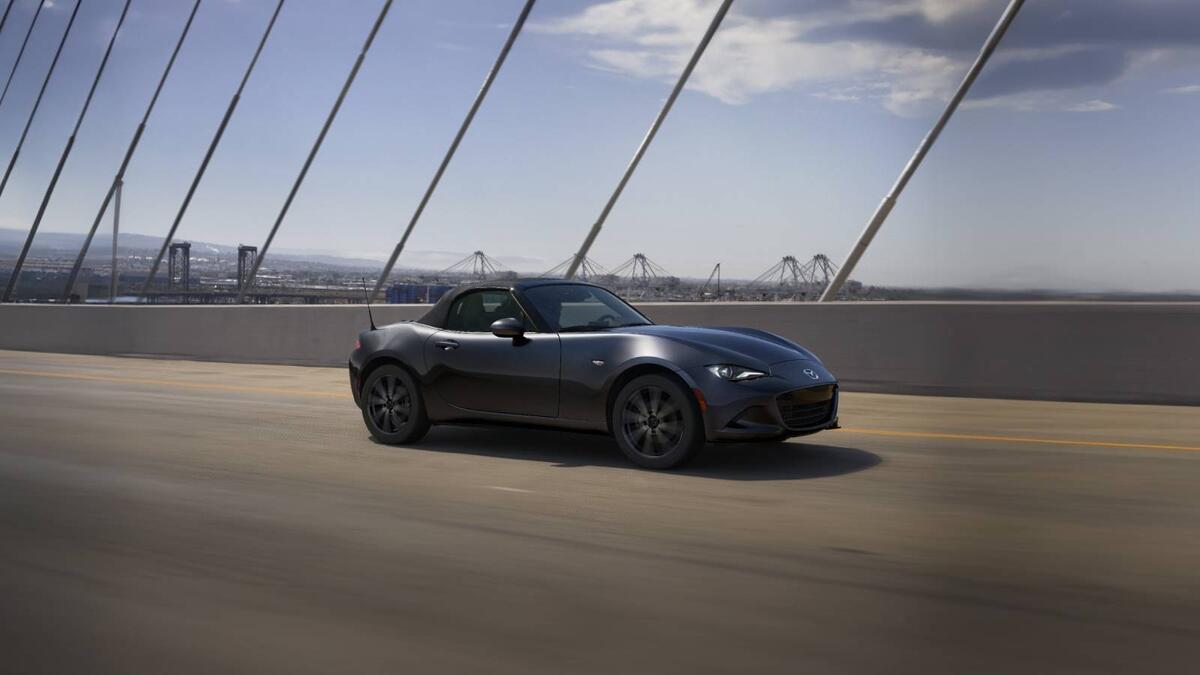
The Mazda MX-5 (Miata) is a small two-seat car made for driving enjoyment. It’s light and handles well, which is why some people take it to track days. It’s also a common car to modify for better performance.
The Aston Martin DBX is a luxury performance SUV. The host says it feels more rough and dramatic because it’s powered by a traditional gas engine, unlike the EV they’re discussing.
The Land Rover Defender is a large SUV designed to handle rough roads and off-road driving. Some versions are built to be much faster than the standard model. The podcast is likely comparing that high-performance Defender to other powerful SUVs.
The BMW X5 M is the performance version of the BMW X5 SUV. The hosts bring it up as another very fast SUV, but one they’re implying might be less extreme than the vehicle they’re talking about.
The Challenger is a muscle car designed to be very powerful. It’s known for strong acceleration and a sporty, classic look. The podcast is mentioning it while talking about an especially extreme high-performance version.
Electric power means the car’s electric motors push you forward right away. The point they’re making is that it can make fast acceleration easier to repeat without needing perfect launch technique.
All-wheel drive means power goes to more than just the rear or front wheels. That helps the tires grip better, so hard acceleration is more consistent and less dependent on perfect technique.
Term
perfect launch
A “perfect launch” is when a car starts so well that it grips the road and accelerates hard right away. The host is saying that with AWD and electric power, you don’t have to nail that launch as precisely to get strong results.
A drag car is a car set up mainly for racing in a straight line. The host is using it as an example of how hard it can be to get a great start every time.
A dual-clutch transmission is a gearbox with two clutches that helps the car shift gears quickly. It can line up the next gear ahead of time, so the shift feels almost instant.
A performance envelope is basically the set of situations where the car feels at its best. If the host says it smooths over weight, they mean the car still drives well even though it’s heavy.
Range is how far a vehicle can travel on a full charge (for an EV) under a defined test cycle. “280 miles” is a key real-world shopping metric because it affects whether the car fits daily driving and typical road trips.
This describes EV fast-charging performance: how quickly the battery fills between two state-of-charge levels (10% to 80%). Charging is usually slower near full capacity, so the 10–80% window is commonly used because it’s more representative of typical fast-charge stops.
The infotainment system is the car’s screen and controls for things like music, maps, and phone features. The host is saying Lotus’s screen is easier to use than usual.
“Regen” is how an electric car slows down while also recharging its battery. The car can slow you down using the motor, and if that switch isn’t smooth, braking in stop-and-go traffic can feel a little weird.
A “24 sensors” setup indicates a dense suite of hardware used for perception—detecting lane markings, vehicles, pedestrians, and obstacles. More sensors can improve coverage and redundancy, which matters for advanced driver-assistance and semi-autonomous driving.
“Advanced driving” means the car has more sophisticated help features than just cruise control. It uses cameras and sensors to assist with steering and speed, and sometimes can drive more of the way for you.
“Level four autonomy” means the car can drive itself in certain situations without you having to take over. The host is saying it might meet that standard, but laws may not allow it yet.
A “frunk” is a trunk in the front of the car. People use it for small stuff like groceries, a gym bag, or bottles—basically anything you don’t want in the back.
Air suspension is a suspension system that uses air instead of metal springs. It can raise the car up or lower it down to help with comfort, efficiency, or rough roads.
Multiple drive modes are different settings the car offers. They change how the car behaves, like making it feel more aggressive for driving hard or more forgiving for rough terrain.
Track mode is a driving profile tuned for performance driving. It typically sharpens throttle/steering response and may adjust stability control and suspension behavior for faster, more consistent cornering.
Front grill louvers are adjustable openings in the front of the car. They can open for cooling or close to help the car move more efficiently through the air.
The Land Rover Range Rover is a luxury SUV meant to feel comfortable on the road. Its suspension is tuned for a smooth ride. The podcast is referencing that distinctive ride feel when getting in and out.
A suspension tune is the way the car’s suspension is set up to ride. It affects how smooth it feels on rough roads and how “firm” or “busy” it feels over bumps.
A kilowatt-hour battery is a way to describe how much energy the battery can hold. More kWh usually means the car can go farther before it needs charging.
Brushless motors are electric motors that don’t use worn-out brushes. They’re controlled electronically, which helps the car manage power more precisely.
Declutch here means the car can “disconnect” the motor’s drive when you’re just cruising. That helps reduce wasted energy because the motor doesn’t have to work as hard.
Power on demand is when the car only sends extra power to the wheels when it actually needs it. That can make the car feel more efficient and less “busy” during normal driving.
Hummer is a truck brand that’s usually big and heavy. Here, they’re comparing it to another SUV by pointing out the Hummer weighs about 3,000 pounds more.
Car
Ferrari
Ferrari is a famous supercar brand. They’re using it as a reference point to talk about how expensive (or not) the Lotus feels compared with a Ferrari.
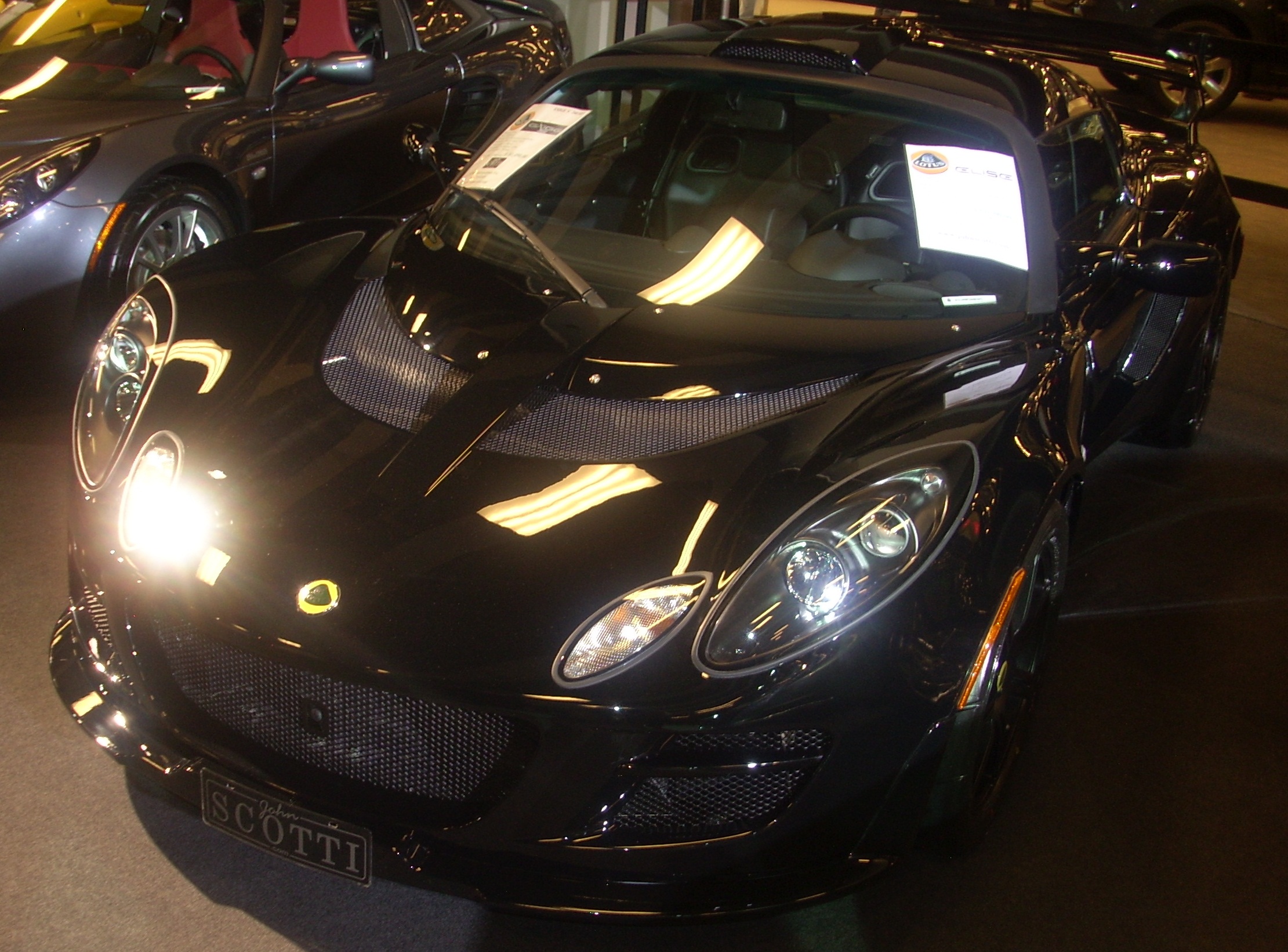
The Lotus Elise is a small sports car built to be fun and responsive. It’s designed to handle well and feel sporty when you drive it. People talk about it because it’s lightweight and performance-oriented.
The Lotus Exige is a small, sporty Lotus that’s designed to feel sharp and fun to drive. In this conversation it’s brought up as one of the classic Lotus cars people admire.
The Lotus Evora is a sports car made by Lotus. It’s designed to be fun to drive and has an engine placed in the middle of the car. The podcast is mentioning it because the speaker really likes it compared with other Lotus models.
Concept
go electric
“Go electric” means the car uses an electric motor instead of a gas engine. That changes how you charge it and how it drives.
A “tradeoff” means you get something good, but you also give up something else. The host is saying that when you switch to electric cars, you usually have to accept compromises.
The Ford Bronco Sport is a small SUV from Ford that’s meant to look and feel more adventurous than a typical crossover. Here, the host is saying the 2026 model isn’t just a simple copy of another Ford SUV—it’s its own thing.
The Ford Escape is another Ford compact SUV/crossover. In this conversation, it’s used as the comparison car to explain why the host questioned the Bronco Sport’s existence at first.
“Drive train” is basically how the car sends power from the engine to the wheels. Different versions can feel different because they use different setups for power and traction.
Concept
retro themed
“Retro themed” means the car is styled to feel like an older, classic era. The host is saying that theme helps it feel more unique than typical modern crossovers.
A “platform” is the car’s underlying foundation—its main structure and engineering layout. Cars that share a platform often feel similar because many key parts are designed around the same base.
“Badlands” is a special trim level that’s meant to make a vehicle feel more off-road capable. The host is saying this version adds upgrades compared to the base model.
“Soft rotor” sounds like the host’s way of describing a car that feels smoother and more relaxed to drive. In this context, it’s about the overall driving character they were aiming for.
A “heritage play” means a company uses its past—its recognizable identity and history—to make a new vehicle feel special. The host is saying the retro theme is a big part of why the car stands out.
An off-road package is a set of add-ons that’s supposed to make a normal SUV feel more suited for dirt roads or trails. Sometimes it’s mostly cosmetic, and that’s what the host is criticizing here.
The Plymouth Fury is an older American car model. It was known for its big, classic look and for being available in different colors. The podcast is talking about the Fury in terms of its specific options and appearance.
An extra cost paint finish is a premium exterior color or coating option that costs more than the base paint. Automakers often charge for metallic, pearl, or multi-coat finishes, and the host argues that paying more for a white metallic finish is “silly” because it’s still a non-custom color choice.
Trim is basically the “version” of the car—what features and options it includes from the factory. Different trims can change the look and what equipment you get.
LIVE
Hello and welcome to the unnamed automotive podcast.
My name is Sammy Hachasad,
and with me as always is my good friend
and fellow automotive journalist, Benjamin Hunting.
Say hi to the people, Ben.
Greetings, human listeners.
Greetings to everyone.
If this is the first time you're listening to our podcast,
thank you for trying something new.
I will reiterate, Ben and I are a pair
of automotive journalists, but more important than that,
we're really good friends, right, Ben?
Friendship is an important thing.
It's more important than so many other things
in this world, like climate change.
Okay.
I just felt like throwing that at the, is that okay?
I can't stop you from saying whatever pops into your head.
Ben can, he is a very,
I would call him a very accomplished writer,
but more than that, you can find his work
all over the internet, Ben, do it.
Sammy's upset about climate change right now
because his skies are orange, is that correct, Sammy?
Yeah, they were more orange yesterday than they are today.
Yeah, that's what happens.
Canada's on fire and we're in Canada, so.
And it smells like a campfire outside.
It didn't really smell like a campfire here
when it happened, it smelled like a house fire.
You know that subtle difference?
I don't know.
I have never been close enough to a house fire.
Like one means you're gonna get some s'mores,
the other one means you're gonna meet an insurance adjuster.
This is the two primary differences.
I haven't had the pleasure of learning about that difference,
but it means that I'm very concerned
for the health of my family
because it's really smoky out there.
It's really awful air quality.
It's bad news.
But you know what's not bad news?
The places you can find Ben's work.
Come on, plug something, Ben.
Let's go with Motortraded Hagerty, how about that?
And you can find my work at autotrader.ca and driving.ca,
as well as driving.ca's YouTube channel.
You're gonna see my work over there.
You're gonna see my pretty little face.
You're gonna see me saying some things about cars.
It's a good time.
Sometimes they just blur your face, don't they?
Yeah.
Wasn't there a weird lawsuit about that?
Like you borrowed your face from someone else
who didn't get permission.
They had to take a bunch of videos down.
It was really complicated.
I didn't find the disclosure that they wanted
about being able to train their AI models
with my face and my facial expressions
because apparently I have very unique facial expressions.
So 100% human podcast, by the way.
I just wanna get that out there.
Completely human.
We don't blur anyone's face.
I would say more than 100%.
More human than human, that's our motto.
I would say that it's like 101 or 2%.
Like there's a little bit more human.
Running hot.
That's what makes the show so sustainable.
That's like that line in Hunt for Red October
where Connery's like,
bring me up to 104% on the reactor.
Yes.
Engineering says it is possible, but not advisable.
You watch, I forgot how often you watch The Hunt
for Red October.
I can't get enough of it, honestly.
So this is nothing to do with it.
It's like once a week for you.
This has nothing to do with cars.
But you know how there's those movies that whenever you're,
I don't really have cable or anything like that.
So I don't really channel surf,
but when I'm at someone else's house
or at a hotel or whatever,
there's always those movies that if you stop,
if you see one on it's,
that's what you're doing for the next two hours.
Like it just cancels the rest of your plans.
So if I'm flipping around and Hunt for Red October is on,
I'm going to be watching Hunt for Red October.
Do you have a movie like that?
I feel like it's, I'm caught more often than not
watching things that like,
because you're channel surfing on a hotel or whatever.
And it's usually like something like Rush Hour
or the like any Jackie Chan movie apparently on TBS.
Do you remember that?
If you're lucky to see a Jackie Chan movie on cable,
that's a great day.
But when you're on the airplane and Space Jam is there
or Oceans 11 is there or Jurassic Park one is there.
I'm in, I'm all in.
You're talking about the original Oceans 11, right?
With Frank Sinatra and Sammy Davis Jr.
No, no, no, no, no.
I'm talking, I'm talking George Clooney and that other guy,
Brad Pitt.
The other guy, yeah, okay.
That guy that people say I look like Brad Pitt.
You're always getting mistaken for him.
In fact, that's actually why they had to blur your face.
That's true.
Brad Pitt's dude reached out.
Take down notice to driving.ca.
Take that face off that car review.
Have you watched the new Transformers?
The latest, no, the reboot of Transformers?
Absolutely not.
You should watch some Transformers.
It's very hard to watch Transformers.
It is, especially when you don't have cable.
What about Pacific Rim?
What do you mean?
There's a Pacific Rim, I don't understand.
There's a movie called Pacific Rim.
Yeah, I love that movie,
but what does that have to do with Transformers?
You've seen that lately?
No, not lately.
I love it so much.
We're getting really far from what we're talking about
on this podcast, Sammy.
Maybe we should circle back to cars.
I know Transformers are sort of about cars.
Well, the robots in disguise as cars.
It's more than meets the eye.
Let's just leave it at that.
Until they became beasties or whatever they were called then.
Yeah, I don't like to anthropomorphize my robots.
I loved beasties and Beast Wars.
If we could have a beasties podcast, I would be all in.
Unlike this current podcast,
which apparently I'm not all in on.
So I drove a car that is as expensive as a transformer
would be if you could buy a transformer
and is also powered by Energon cubes, I guess.
If we want to take that as a stand-in for electricity,
which I think it was on the TV show, am I wrong?
Energon, yeah, I guess it was their energy.
Because they would go to a dam
and they would just pull out cubes of Energon
from what I remember.
Well, every time I visited a dam,
I was always looking for those cubes.
And I never saw them and I never handled them,
which is probably for the best.
Yes, this car that you've been driving
is loaded with Energon.
I'm speaking, of course, about the 2026 Lotus Eletre
or Elytra.
You're speaking, of course, about it.
Cannot be mistaken for any other vehicle
we have talked about ever in our history.
I'm starting to realize that maybe the pronunciation
is Elytra because there used to be a car
called the Lotus Elite and they're trying
to do like a heritage thing.
Elite?
There was a car called the Lotus Elite?
Long time ago.
Yes. Or a Leaf.
I know a Leaf.
Everything now starts with an E at Lotus.
Everything does start with an E, Sammy.
That is tautologically correct.
Oh, there was an Elite, 1974, 1982.
We're real punchy on the podcast today
and I apologize in advance.
It's just that kind of day.
We got wildfires, we got all sorts of weird talk
about Hunt for Rod October.
One ping only.
And now we're talking about the Lotus Elytra or Eletre,
as they call it here in Quebec.
This is the first SUV that Lotus has ever made.
Sammy, it's also the first SUV, it's also the first SUV.
The first Lotus I ever drove.
You've never driven a Lotus 7 before?
Have you?
Or a Caterham 7?
Have you?
No, of course not.
Me neither.
I've seen them driven.
I've seen them driven too by people
who are very terrified about something going wrong.
There's a list of car companies
whose vehicles I've never driven.
Are you ready for this list?
Yeah, it's not Lotus anymore.
Not Lotus anymore, that's off of there.
Maserati.
No way.
I've driven like three Maserati.
All three of the Maserati.
Do you know why I've never driven a Maserati?
Why?
Because every time I have booked a Maserati,
just before I went to pick it up, it has broken.
This is like your Genesis G90 white whale that has it.
It's like multiple Maseratis.
It doesn't matter if I book a Maserati from the press
guaranteed it's going to have an accident
or some type of check engine light or a fire or something
that removes it from service forever.
OK, so you got that one in the bag.
What's the other one?
That's it.
I'd never driven a Maserati.
That's the one.
I have gone on launch programs with Maserati.
Can you believe that?
I know you've done everything cool and I haven't.
So I mean, we could talk about that.
Nothing broke on those ones.
Are you sure?
Yeah, only my heart.
Weren't you being followed by a team of Maserati technicians?
I hear that's the most effective form of Maserati ownership.
I think you're confusing Maserati for Alfa Romeo.
I don't think so.
I think it's the I don't think the apple falls far from that tree
or Stalantis in general, which is, I guess, Maserati
and Alfa Romeo.
I think that's the only North American
presenting brand that hasn't I haven't sat and driven sadly.
Tell me about this Lotus.
So what was it like to like the thing about Lotus is that
it's a pretty it is a British car company.
It was a British car company and then was a British car company.
Yes.
And now I think owned by a Chinese car company.
Yeah, it's owned by Geely.
And most people will know Geely as making electric cars.
And that's kind of why the electric exists, because Lotus itself
had a reputation for building very lightweight sports cars.
In fact, Colin Chapman, who was the founder of Lotus,
had that famous saying of simplify and add lightness, basically,
which was did not translate to anything Geely understood.
Is that correct?
Well, the Electra weighs two point six tons.
And I say tons in the Canadian sense.
It's 262600 kilograms.
It's just under 6000 pounds.
Not only is it heavy, but it's heavier than like
the entire starting grid at your local Lotus clubs track day.
It's every single vehicle could fit into the the the mass of this one SUV.
But on the other side of that equation
is the version that I drove, the carbon that has 900 horsepower.
And I mean, if you're going to make something heavy,
at least get the power to make it a nice weight to power to weight ratio.
I want to put that in context, Sammy,
because there are three other versions,
depending on where you live, there are three other versions of the Electra.
There is the base model.
And then there's something I think it's called the touring or the sport.
I can't remember.
And that has 600 horsepower.
And then there's a version called the R or sport are again, depends where you live.
And that has the 900
And then there's the carbon, which is basically a sport are with everything on top of it.
Now, if you live in the United States, you can only get the carbon.
And if you live in the U.S., you will be paying a 100 percent tariff
on the Lotus because it's built in China.
So I don't know how that's folded into the pricing.
The base model in in in Canada, we were quoted prices in U.S. dollars.
And very useful back before these tariffs went into effect.
Lotus was planning to bring all of these vehicles, all trim levels to the U.S.
as well, where it was starting around like 100 and twenty grand.
And going up to the carbon price was just 232 including
including transport and destination and all that stuff.
So it's not a budget oriented cars, which are not anymore.
Canada still has all of the different options available.
But I happen to drive the one that is available in the U.S.
The exclusive to the U.S. version.
But I want to point out that 900 horsepower.
If you look at every other super SUV on the market right now,
it dwarfs them in terms of output.
I think the closest is the Puro Sangui.
How do you say that from Ferrari? OK.
I think that has 700 and fifty horsepower from a twelve cylinder engine.
And then I think the Urus is like just under 700 or something.
And then, of course, you have the Aston Martin DBX
and then it gets down to like Cayenne S
and that kind of thing, Bentayga speed and all that stuff.
But it's really interesting that Lotus is pretty much
the only hyper luxury hyper SUV that's available.
And it happens to be the most powerful.
Oh, sorry, hyper luxury hyper SUV EV that's available.
And it's the most powerful.
So they knew that they were going into a situation where I think going with
an internal combustion engine might have been the wrong call.
So instead, and this is how I've been thinking about it, I drove it last week.
So I had the chance to kind of you're saying you're saying that
if Lotus had come into come into this world
as it is now, like a Geely company with a combustion powertrain SUV,
they would just be compared to all of these established brands.
Yeah, it would have already been they already have their market.
They already know what they're doing.
And it's really hard to like look Lamborghini eye to eye
and be like, we've got something here.
And not only that, but they would also be compared to other lotuses, right?
Because every other Lotus right now is internal combustion.
That's currently available.
They have a supercar that's all the way that's going to be EV.
But instead, they've created something that they wanted to when I spoke to the CEO,
Max Trentini, about CEO of Lotus Americas,
about why they decided to do this.
And he's like, look, we can't get around the weight of this vehicle.
You know, battery powered vehicles.
They have a hard cap because of energy density is all we can do.
So instead, they tried to take the vehicle into a different context.
So it could be evaluated on its own merits rather than comparing it to a two seat
sports car. I think the EV aspect helps them do that.
And they tried to make Lotus DNA a part of the package.
Now, that sounds a lot like marketing.
Yeah, what is Lotus DNA a part of the package?
I mean, so for them of an EV, because if you're going to ask me what Lotus DNA was,
it was lightweight car, right?
Yeah, but also it was the feeling behind the wheel.
It was what the lightweight stuff gives you.
Right. So I think that if you had had an ICE, like a twin turbo V8 or something,
because again, Lotus doesn't really make their own engines either.
No, usually they get them from Toyota.
Yeah, they have traditionally done that.
So by going with this in-house geely platform, which is one of the funniest things
that Toyota like Toyota is not really.
I mean, when you look at performance, Toyota engines are not exactly the whoo-whoo,
like, but they made a work, I suppose.
The going with this geely platform, it lets them define what they think
Lotus experience is.
And I also think that by avoiding a twin turbo V8 or a V12 or whatever,
you also avoid the idea of a vehicle that is going to brute force its way
through whatever situation you put in front of it.
Like the experience is going to be different versus those other competitors.
So you have a chance, fighting chance.
And the Lotus built this vehicle because they had customers in a sense
asking for it, saying, like, look, I want to buy a Lotus, but I don't want
to leave my family behind, you know, like I need something else in the driveway
that I can drive when I'm not just going out on weekends.
And I think they were tired of seeing those customers going to a competitor
and buying something from them.
So it's not so much that it was there was demand for this vehicle,
but Lotus felt there was a niche that they could fill and only they could fill.
And in a way, they're right because they're kind of the only electric SUV at this level.
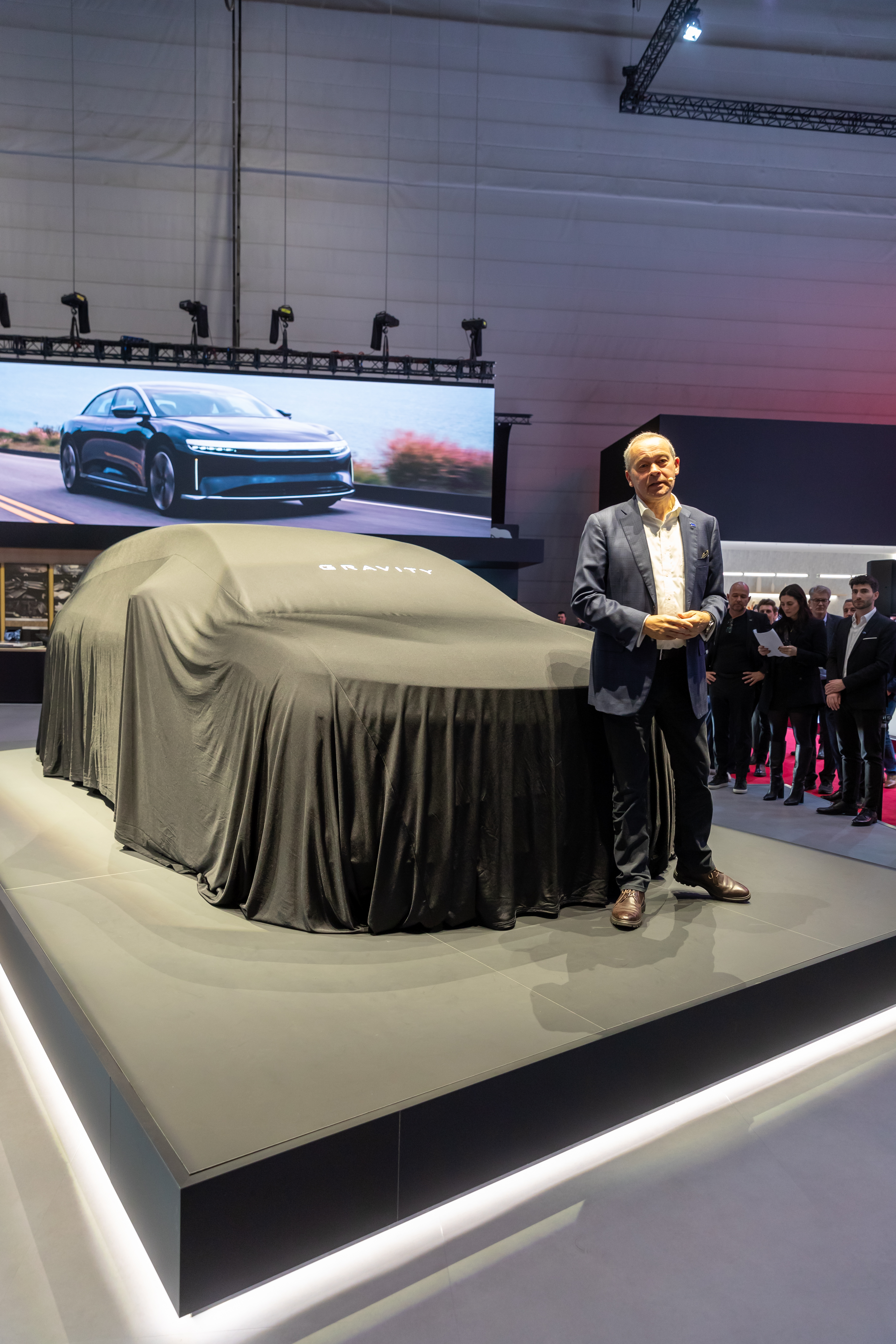
I asked them how they felt about companies like Lucid with the gravity.
Yeah, I was going to say maybe that.
But the gravity is kind of big.
Like it's it. Oh, I assure you that the electric.
I assure you the electric is also quite big.
I'm looking at pictures of the Electra and it doesn't look it looks more like
SUV coupe in terms of it's as big or bigger than it was.
No question. Yeah.
But the hides it well with design.
You can talk about I think we should talk about that later.
But the Lotus answer to that question was they don't consider Lucid whatsoever.
It's not something they think about.
And I think if you look at the pricing, that makes sense. OK.
Why they're not even close.
Is gravity not expensive?
Is gravity not 230,000 US?
If there was a Vigilion or power one, I would imagine.
No, it's not even close to that price. Wow.
So in any case, I came to the vehicle with with an open mind.
Look, very rare for you.
No, I'm joking.
These SUVs are are a fact of life now
because companies are looking for volume so they can stay alive.
And there's rumors that Lotus is actually planning to build a sports car
and a sedan that are based on the same platform that the electric is using.
So this is kind of their best foot forward in building a family of vehicles,
electric vehicles around this particular model.
I can tell you that it is outrageously fast.
I could not get the launch control system to work.
I think it's because I had there was a problem with the the only problem
I experienced with the vehicle was the tire sensors for inflation
on one side of the vehicle were showing as not working.
But I was assured that they were.
It was just a problem with with the configuration.
So I think that that's why it would not let me turn off traction control
completely to do the launch control.
You do not need launch control with 900 horsepower.
It does 60 in less than three seconds,
but it does the whole Chevy Corvette thing where it says 2.95.
Oh, really? Where it's like skin of its teeth kind of thing.
Yeah. It is absurdly fast.
I said this to you when I was on the day I was driving it,
but I had my my cell phone and a little cubby underneath the dashboard.
And one of the times that I launched it, my cell phone flew through the air.
I didn't slide along the console.
It flew through the air and hit the backseat rest and slammed down onto the ground
because of how violent the launches are.
It's so powerful that on twisty roads,
I was able to break the rear wheels free in an all wheel drive electric vehicle.
No way.
And feel it squirm and slide a little bit.
That is you have to be careful when you're driving it
because it has that much that much grunt.
It is it is a wild experience.
But do you like that kind of like raw, loose kind of experiment?
It's not raw and loose.
That's that's not the impression I'm giving.
I want to say tell you that you can break the tires free.
It's you have to roll.
Feral feeling. It's not. It's not feral.
It's very, very refined and competent.
Just you can do that if you want to in the same way
that you could like do a burnout in a car because you're abusing a kind of deal.
The real impression this vehicle left was
and I think this is what they meant when they were talking about Lotus DNA.
You know, you always hear the cliche about how like,
oh, this car shrink shrinks around you and you don't feel how heavy it is.
That's not necessarily true with the Electra,
but it did at least shrink wrap the car
and bring it to maybe a more manageable proportion
where you always know the weight is there.
But the weight isn't having an adverse effect on cornering or handling.
I was on some very, very tight roads.
It's a it's just north of Montreal.
There's a road that a friend of mine used to use to tune his Miata
for the track and we would go up there every once in a while.
And there's a lot of elevation changes through corners.
And the car hustled or the truck, I guess,
they should say hustled itself really well through that.
You could get ahead of yourself with breaking if you really overcooked things.
But aside from that, I never really felt like I was on the edge of control.
I never really felt like I was touching the limits of the vehicle.
And that surprised me because a lot of the times where I've driven
something like an Aston Martin DBX, for example,
it does feel rougher and more raw and more visceral in terms of experience.
And I think that that's the internal combustion engine is playing a big part there.
And so skipping over that, it gives the Electra something totally different
in terms of personality.
I want to do an apples to orange oranges comparison if possible,
because I don't I don't think any of us really understand
what it's like to have a 900 horsepower super SUV on the go.
I mean, I've driven some other ones that have lots of horsepower, 600 horsepower.
Let's like that's the Defender Octa and Range Over Sport as V and like BMW X5M.
Are those like seriously a tier below this in terms of performance and handling?
And thousand percent.
That's unbelievable.
I don't know how to like fathom it.
Do you know what I mean?
You're going to have to do a little bit more work for me here.
Well, have you driven a the Hellcat Demon?
No, not the demon.
So it's a similar step up in terms of acceleration,
except since you have all wheel drive and electric power,
you don't have all the drama that goes with like a perfect launch
on a dribble drive drag car.
You know, OK, OK, I get that.
I have been in a Hellcat in a track and a what is it called track?
Hawk, right? Yeah.
So imagine something way quicker than those.
That's hard to believe.
Truly, it is. It is.
It's so weird and and not just quicker, but like repeatedly quicker.
You know, like easy to achieve.
There's no skill required to achieve the speed.
And I think that that's with these kinds of vehicles, like there's not a lot
of skill in other super SUVs, because they're all like dual clutch transmissions.
No, but what I'm saying is like in a in an internal combustion engine,
you have to if you're launching it at a drag strip, the right RPM,
and you have to make sure you hook up and whatnot.
And traction control is much more limited as to what you can achieve with
electrics. But 900 horsepower is just just like 700 horsepower or 600
horsepower or 500 horsepower.
It's a party trick that you get tired of.
OK, it's not something that's going to inform your experience of this vehicle
on a daily basis, because you'll terrify yourself.
You'll either you'll either be terrified or just get bored of it, you know.
With that in mind, then, if you get bored of it or it's a party trick,
what is left over for you to enjoy?
So you did mention that it shrink wraps a little bit.
The performance can the that that performance envelope
seems to be able to smooth over a little bit of the weight.
Yeah, it drives very well.
It drives surprising well for a vehicle of its size.
Within the context of super SUVs and the limited number that I've driven.
Yeah, it's probably the best handler, no question. Wow.
But like that's a that's a big asterisk there, you know.
Realistically, this vehicle is very comfortable on a daily basis.
You're going to enjoy it.
It has about 280 miles of range, which is decent.
It charges in 20 minutes from 10 to 80 percent.
It has 350 kilowatt, although Lotus says it'll really
do 400 kilowatt at a charging station if you can find it.
And it's the interior is quite nice.
I was really surprised to see for the first time
an exotic car company that had good graphics on its infotainment system.
Normally, they're garbage.
Yeah, they're just like the last thing they thought about.
Yeah, it's it's like feels like from six or seven years ago.
So you get into the Lotus and it looks really great.
Everything looks great. The menus make sense.
Another thing that surprised me in terms of me liking it was
instead of having a traditional gauge cluster,
it has like a horizontal readout in front of you that stretches a little bit.
Instead of being rectangular, it's like a ribbon and it's quite narrow.
And then most of the information you need is on the HUD.
So instead of doing what Toyota does and pushing the gauge cluster
all the way to the windshield, which is super annoying and I don't like that.
Everything I needed was right in front of my eyes.
And then everything else was directly in front of my face on the HUD.
And it was I'm looking at a picture of this ribbon.
It was really well done.
It's the first time I think I've seen an alternative gauge cluster
that didn't make me want to, you know, pierce my eyes and run screaming.
Yeah, I mean, I think of a run screaming.
I feel the same way.
It reminds me a little bit of like, you know, when the MacBook Pro had that
like touch bar on the top of its like above its.
Don't talk to me about Mac software, you know, you know.
But they had like this like OLED display that I think they all broke
or something like that. But like it was it's it's slim.
It's like integrated. It looks really crafty. I like that.
So it's I think more usable
day to day than some of the SUVs I've driven in this price range and power level.
The brakes are a bit touchy at low speeds when you're crawling through traffic.
I think they need to work on tuning the difference between regen and actual breaking.
Yeah. The what else?
Was there anything else that kind of does have weird mirrors?
It doesn't have weird mirrors, but it has these cameras on the side fenders.
You'll probably see it.
They there's like 24 sensors.
There's a whole sensory package that comes with it for its advanced driving,
like its whole like limited self driving.
Lotus says they want it. It could technically
it could technically qualify for level four autonomy if that were legal.
No one wants that. I don't want that, but it's baked into this car.
So that's all there.
The back seat is surprisingly big.
The trunk is OK.
There is a front under the back seats is like aggressively bolstered as the front.
No, no, much more open.
And there's a front that is like pretty useless.
You're not going to use it for anything.
But I guess I'm glad it's there.
You know, I like Frank's more than a space you can't access at the front of the car.
Is it good for like a gym bag?
Me, a small gym bag.
Let me take a look.
I actually took a picture of it because I wanted to remember it forever, Sammy.
I'm going to load it up here because I always think about this because I remember
I remember I think Jaguar I type.
Yeah, you could put a small gym bag in there.
I think Jaguar, I remember who was the designer?
It's a tiered it's a tiered thing.
It looks a little bit like a bench seat for a baby.
You can put like a baby in there and have it watch whatever is happening,
like like you're like you're at Little League or something.
I'm saying this because I remember like Ian Callum was like showing me
the the I type one time with the with the the frunk like that open.
And he was like, you can put some wine bottles in there.
And I'm like, they make like 300 and something.
Doesn't it do like zero to 60 in three seconds or four seconds?
You're going to shatter those things in an instant.
Yeah, anything that rules around doesn't go in the trunk.
That's just like I will be blunt.
I have broken so many bottles in the in the trunk of my FRS
because I forget that they're loosely rolling around back there.
So many bottles, man.
This is a different time.
Why are you forgetting them?
What's the link between those?
What's the link there?
Once you drive, once you start driving a car that's fun to drive,
you forget about all the other like practical elements in your life.
And you're like, I can I can slide this thing into my parking spot.
And then you're just like, bang, shh.
And I'm like, oh, no, the the vehicle suspension to it's an air suspension.
It's got to be for for something this big, right?
So it has it has multiple drive modes.
It's like a track mode that like a wing pops up in the back.
It has little louvers at the front grill.
So like you can open for cooling or close for efficiency.
And then when you select trail mode, it it it rises up slowly in the front
and it creaks a little bit, kind of like you're in an old, old wooden sailing.
Yeah, yeah, it's pretty funny.
The suspension is like a Range Rover.
Every time you get out of a Range Rover, it doesn't make all those crazy
noises like a Range Rover does like a Range Rover acts like the moon lander
when you get out of it, like it's off gassing.
And yeah, I hate it.
It sounds like it's like, yeah, it can be really startling if you're not expecting it.
It sounds like a bus. It's insane.
So the suspension, though, the tune is on the harsher side in regular driving,
not in the sense that it jostles you, but it will be a bit louder than maybe
like a Rolls Royce would be or Bentley would be.
OK. And I think that that's the compromise you're going to have
for the life this of its handling.
OK. I also want to point out,
I mentioned there are like three different, you know, base touring
and then sport and then carbon, which is built on sport are, I guess.
They all technically have the same drivetrain.
I think it's a hundred and twelve kilowatt hour battery.
But the the carbon and the sport are have a larger
rear motor that gives it the extra power.
Hmm. Interesting.
Can you tell me more?
So they're they're not they're not symmetrical, the front and rear.
No, I don't think many of performance vehicles are.
Yeah, I think these days you're starting to see real differences.
And also, I mean, if you look at BMW, they're starting to go with like brushless
motors versus brush and what not, different designs
because they're able to declutch them more easily, I think.
OK. Take them out of the equation when you're just cruising.
So it's kind of like the we're back to the power on demand days
of all wheel drive systems where you didn't really need the traction.
So they didn't give it to you until you were stuck.
OK, interesting.
So to you, it's like one of the most original
super SUVs. I don't know if I'd say it's original, but it is different.
But there's nothing.
There's almost nothing else quite like this, right?
Yeah, other ones that have insane amounts of horsepower.
A lot of trucks like Hummer.
Isn't there a Hummer with a bajillion horse? Absolutely no comparison.
Yeah, the Hummer weighs 3000 pounds more than this does.
It's insane to believe that, right?
Like that that is an unbelievable.
Difference.
We yeah, we're in this whole new world
and Lotus is trying to be the first one.
I mean, some some of us are in this world, not neither you nor I.
No, but I mean, sometimes these automakers are the first to
are these like luxury automakers try to push the
the conversation towards these kinds of things.
I will say, you know, at 200 and 32000
it's almost it's almost half the price of a Ferrari.
Perosongi. Yeah, like that's wild.
You know, do you think it has the presence of a Ferrari?
I mean, the Ferrari Ferraris and Lamborghinis gain that badge,
instant badge recognition there.
I don't think that like the Lotus badge has the same recognition,
but I also don't think anyone cares about a Ferrari SUV.
And I think the exterior design of this
Electra is kind of oh, it's a good looking vehicle.
I also don't think the Lamborghini has a positive connotation with its.
I think that, like, I don't know.
I love Lambos right now.
No, no, I'm just talking about the Urus.
Oh, yeah, the Urus.
I feel like the Urus has become brofied in a way that other Lamborghinis haven't.
It's like the crypto.
It's like the sign that I try.
I made it big on crypto, you know.
So I feel like that's a unfortunate for the brand.
But I do think that the Ferrari SUV is somewhat anonymous looking.
OK, and I'm not super into it.
The DBX is it looks like a Aston Martin.
It's hard to say whether the Electra looks like a Lotus.
I mean, there's Lotus elements in it.
But it like as a cohesive package, it kind of stands on its own.
That's also probably for the best, especially if they're going to be
building out a family of cars based around it.
Well, I think it's imperative that they build a family of vehicles
because it feels like right now there is a it's like a new generation of Lotus.
It's not so it's not the same Lotus we recall.
Especially when it comes to things like the
Elise and the what's the other one I really like.
The Exige.
Exige. And then there's that other one.
What's the other one?
I don't know. Smaller one.
I'm going to find it.
I'm going to say the real problem for Lotus is the 100 percent tariff
on Chinese built vehicles.
If they're going to go ahead with a family based on the Electra,
then they're going to be up against that because those vehicles
are going to be built in China by Geely.
So it becomes a question of, you know, is there a market
outside the United States for that family? Right, right.
That's tough.
In any case, that's kind of all I had to say about this vehicle.
I'm a little sad that my first Lotus was this vehicle
and not one of the Elises that I've always, you know, admired.
Evora was the one that I was thinking of.
I've never driven an Evora, obviously.
But in any case, it was an interesting experience.
I did not expect it to go as well and make as positive
as of an impression as it did.
I think that's a fair thing to say.
I mean, the what's impressive here is that they didn't just,
you know, stick the badge on a on something that that was not interesting.
And I think Lotus has always made interesting cars
and this at least continues that tradition if in a totally different,
you know, path than than the other ones used to.
And that's what happens when you go electric, though.
Wait, wait is added.
Like it's it's it's a tradeoff that seems to be inevitable right now.
So what did you drive?
I drove a 2026 Ford Bronco Sport.
Listeners of this podcast will probably remember
that I used to have a very
what's the word I'm looking for?
Apathetic response to the Bronco Sport
when it was first introduced, I used to think and I and I maybe I still do
that Ford was filling up its portfolio with cars it didn't need to
because I found the Ford Escape to have a reputation that was really positive.
It offered a lot of different drive trains.
It was efficient.
It was affordable.
It was it was practical.
And then when I saw that the Bronco Sport was just basically
a boxy version of an escape, I wondered why would they make that decision?
Especially when the Bronco Sport can be a little bit more expensive, too.
I need to stop you right there. Oh, no.
I don't think that the Bronco Sport is just a boxy escape.
I think you're really, really gliding over what this vehicle actually is.
And I think now I finally got it.
I think finally got it.
Even from the start, this was a retro themed.
I'm at affordable.
I think like tech, like the platform and the engine,
which make up a lot of the characteristics of some of these cars.
Sure, parts of the platform and the engine.
But like the package itself, it was intended to be, you know,
the ultimate soft rotor, plus they made the Badlands version,
which had 240 horsepower and, you know, the H.O.S.S.
suspension upgrade and all that stuff.
But I think most importantly, this was a big heritage play.
This is a big retro play.
And that alone sets it apart from the escape, which is a good vehicle,
but is a blob that looks like all the other blobs at the same price point.
Right. So in my in my experience, in my sorry, perspective,
when the Bronco Sport came out, I saw it as
Ford was not was clearly shifting away from the escape,
which was a solid competitor to the rest of the compact car segment.
And now I get it. I think I totally understand it.
It is what you just explained.
It is a different car.
It has personality in a way that a lot of other
compact car compact crossovers do not have.
And it does it without the I sound so hypocritical now.
All of these other compact crossovers come with these really dopey
off road packages that don't really like
they don't do anything to the person to the car.
They don't do anything to the personality of the car.
They feel so lame, like they feel so like tacky.
And the Bronco Sport does not feel like that,
even though it could be, you know, distilled as a as a, you know,
an off road package compact compact crossover.
I also want to point out that the Bronco Sport is available in three actual colors.
Yeah, it's orange, fury, velocity, blue and ruby red.
So in particular, I drove a slate.
I think slate gray is the color of it or space gray.
Earns. There's a space white metallic.
And there's a space white.
Yes. Space white metallic.
It looked great to me, which is an extra cost paint finish,
which I think is kind of silly because you're spending more money
on a on a white on a non color.
It was not the top end Badlands model.
Instead, I had a big bend trim, which was loaded with all kinds of
that's the base. Packages. Yeah.
All kinds of packages, convenience package, black diamond package,
blue cool bronze.
They're called sinister bronze painted wheels.
What does black diamond mean?
I think it has.
I think it relates to skills, maybe.
OK, I'm listening black diamond, a rating for a ski hill.
This is challenging for how challenging.
Maybe I'm mistaken.
I'm trying to build the black that your vehicle now.
And there's a section called discount package and I expand it.
And it says discount bronze plus black diamond off.
I have that.
I think when you combine the two packages, it's a discount applied
to those two packages, yet it's presented as some kind of option.
That's so strange.
So yeah, black diamond is off road.
It gives you bumper stuff, recovery hooks,
tow package, skid plates and those wheels that you got.
And then it deletes the tire and flare and sealant kit.
And it deletes your overhead console with sunglasses storage for some reason.
Yeah. And then you get your bronze wheels.
You get both.
I also had auxiliary switches.
They weren't connected to anything, but they made a very tactile,
lovely click whenever I clicked inside them.
I have to say there are so many adorable parts about this car.
The brush guard.
So like agro, it's so cool.
I have tie downs on the front fenders, which have like a weight limit to them.
I have rear tow, like tow hooks or recovery hooks as well.
So it makes it look like this car would be really easy to mount
a like a canoe on or a kayak.
Um, I also noted that the exterior screws on some of those like features
were stamped with Bronco, like the text Bronco,
which is a detail that I don't think you would find on on other cars,
on other compact crossovers.
You don't think I don't think I'm seeing exterior trim bits of the RAV4.
Things as small as a screw.
They say Wilderness on them for Subaru, for example.
Yeah. Wilderness screw.
Can you imagine the font on that?
If they had to, um, and I was just starting to get,
I'm starting to become like really more comfortable with this
because we've we've seen so many off-road trims.
And I'm starting to see this being like it's not an off-road trim.
It's like it's like a it is an off-road.
Vehicle like it presents itself as an off-road vehicle from the get go.
It doesn't need a trim package to do that.
Well, I mean, to be fair, if you really want to do back real off-roading,
you probably want the badlands.
Yes, I think the badland badlands come
to the different all-wheel drive system and suspension setup.
Mine did have all continental all-terrain tires,
which was kind of impressive.
And I want to talk a little bit about the about the power train.
It's got a 1.5 litre turbocharged four cylinder engine
that makes 180 horsepower and just to come with a three cylinder.
Yeah, I remember that if this is not a three cylinder, I got to make sure.
This is not a three cylinder.
I remember when they launched, it was a three cylinder
and the only four cylinder was the badlands.
The 1.5 Dragon B is a turbo three, actually, I'm mistaken.
Yes, I will say it's called the Dragon B.
Yeah, man, that sounds like like what you would call like a cargo rocket.
It is a three cylinder.
I'm so sorry that I mistook that, but I will say that it has.
It might be gearing, but it has a lot of like pep down low.
The moment you put your foot into it, it really like leaps forward.
It's both a good thing and a bad thing that responses.
This is really appreciated for a car with seemingly just 180 horsepower.
But it means I can stop and go traffic.
The car can get kind of like, like you're getting kind of seasick here on the go,
though, driving it and trying to get up to speed on the highway.
It works.
There's a little bit of engine in.
There's a little bit too much engine and wind noise, I think, at higher speeds.
But I think that has a lot to do with just the overall exterior design.
And did you have the fender toe hooks deployed?
Apparently, you know what?
I they don't like stay up.
They they they don't stay up.
I don't know.
You should see your doctor.
Oh, yes.
Thank you, Ben.
Very good work there.
It's it's made with an.
I got to make sure I got this eight speed automatic transmission.
Works pretty nicely.
Interestingly enough, there are no paddle shifters.
There's no way to control the transmission in a like specific way.
There's an low range, basically, on the on the gear selector.
But I don't think that is a I don't think that's like what you what you think of
in a low range, like four wheeled low kind of that Dodge Ram 2500 that I had.
It was the same thing.
You could just shift to like drive and then there were if you could limit the
gears, like with yeah, yeah, yeah.
But there was no low or anything traditional like that.
So I don't have that either.
There are drive modes, including like a slippery mode,
slippery conditions mode and stuff like that, which is kind of cool.
But I was really surprised that it didn't have for a car that kind of
like wants to present itself as an off road vehicle.
I think that having a little bit more control of your gears would go a far
a long way.
I kept looking at it and saying to myself that it's surprising to me
that there are a couple of features that I'm missing.
It didn't have dual zone climate control, for example.
It didn't have which which really like surprised me given the the price of this
thing in Canada, it costs $50,000, which is a lot for a compact crossover.
So your base model is 50,000.
Yeah, with all the features it had, it had about $9,000 in extra features.
OK, it starts at about 32 in the US.
And then the model that I I built for myself,
I tried to get as close as I could is about, I think, 40,000 US.
So that would be two more than the Badlands, which is 38.
And I think it would be a good idea to get a Badlands.
I mean, based on how much I really enjoyed the overall character of this car now.
Yeah, it's interesting.
Like I'm trying to look at the the build sheet of the Badlands to see
really what options it offers.
I mean, you wouldn't get that brush guard.
I mean, the brush guard is such a silly thing to add to the car.
You know, like if you're looking at the so you're saying that basically
you built a base tier Bronco that is more expensive than the top tier,
but doesn't have the off-road specific gear that you can get with the top tier.
So I looking at the top tier, it seems like the only real package
you can get for it is this Sasquatch package, which adds
the position sensitive dampers.
It says it has this Haas 3.0 off-road suspension.
I thought that that was if you look at just the yeah,
because I'm going to go back to the build thing here.
And if you look at power and handling, it says standard Haas 2.0.
OK, OK, so it's a 3.0 version.
I don't know what that gives you, but that's that's what you're getting
from Sasquatch. And I think you get some other stuff where you know,
it's there's some appearance stuff that goes with it.
So everyone knows you have the Sasquatch, like different bumpers.
There's fender flares to kind of clear the tires and whatnot.
But it's not it's not a huge deal like that's 2400 bucks.
There's that same bronze package that you had.
And then there's some graphics that you can buy.
There's really not anything else.
So like, yeah, definitely if you think you're going to go off road,
go for the badlands.
There's a tech package, which I mean, in particular, that badlands
is what separates this Bronco sports from other compact crossovers.
Yeah, for sure.
But I don't know some of the other gear you got is kind of a separating point, too.
Yeah, no, I mean, it looks sharp.
The cabin was was OK.
Like I said, it's missing a few kind of key features
and felt a tiny bit plastic here and there.
But the infotainment system worked.
I didn't love the gauge the gauge cluster.
Reminded me of how you just described some of those ones that made you want to.
What did you say? Gouged my eyes and run screen.
It was a kind of like simple gauge cluster, despite it being a digital a digital one.
There wasn't a lot I could change with it.
And I didn't see the point of having that kind of screen to be limited
in terms of what I can do with it.
You know, the ones that you can put like a full map display there
and then leave your infotainment system for media.
I appreciate that kind of customization.
I appreciate you're almost talking about Android Auto.
Yeah, I mean.
I wish that there was more to do with that screen.
It just seems to have a bunch of numbers go up and down.
Isn't it just isn't enough?
I think it's not.
We had gauges that did that and there was nothing wrong with that.
So full disclosure, my dad has a bad lands.
A bad land.
Yes, he does not go off roading, but it presented itself at a local dealership
that he's friendly with.
And as has happened more than once, he ended up driving at home.
He likes it a lot.
He drives it quite a bit.
He used to daily his pickup, full size pickups, and that's become financially
unviable, given how expensive gas is these days.
So a lot of the time now he's in the Bronco.
He came to the Bronco from a Kia Soul that he picked up for like no money
and drove for three years in the in the summer.
It was his summer daily so that he could save cash.
And he really liked it was a manual transmission.
He really liked it.
He thought it was fun.
And I think the Broncosport is like an interesting upgrade
from a Kia Soul because it's like one box to another box.
The one thing he doesn't like about his Broncosport is that it came with
the painted steel wheels that everyone fetishizes on the Internet.
Yeah. But he finds ugly.
That's so funny.
So he bought a set of like wheels from aftermarket wheels and put them on.
And the other thing I wanted to mention about the Broncosport is
a couple of years ago, I was at the launch of the Lobo, the Maverick Lobo.
And they had a tremor there for us to go on an off-road course, also a Maverick.
And I was talking to one of the development engineers
and he said, I mentioned my father had this badlands.
And he said that that version of the Broncosport, when they go off-roading
and let's say he has to pick from, you know, the big, full-size Bronco,
the small Bronco or any of the Ford off-road vehicles they have,
he always picks the badlands because to him,
it's much more fun than the big Bronco because it requires actual technical driving.
And if you're a decent driver, it's just as capable as the full-size Bronco.
And he appreciates the challenge more.
So that was a very surprising revelation.
I think that makes sense, though.
You you want to feel like you're doing something right?
Like, are we are we saying this is the Mazda Miata of like soft road vehicles?
Yeah, I used to think, what was the the renegade used to try to be like that?
Or yeah, the renegade is fun, but I feel like it was not fully executed.
It also looked tippy.
Like the proportions of it looked like it could not survive on a on a trail.
It's a vehicle that like I see when I see it in the right color.
I'm like, oh, why not me?
And then I remember, you drove this at the launch.
You know, why not you?
Do you remember that cabin that interior?
Yeah, you're not really a tiger shark, too.
Guy, are you?
Well, that's what I kind of like appreciate with this thing.
I will say that I found that the cargo space was a tiny bit smaller
than I had expected, and they had put this like weird shelf
in the trunk of the of the Broncos for that's a new thing
that so many car companies are doing.
Have you noticed that this is a different new shelf?
OK, actually separated the two.
It made it look like I had a lower compartment
and a higher compartment at the same time.
And then that shelf was like actually hinged
and a top part of it could fold down and become like a table.
OK. Have you seen this thing?
No, I don't know how to describe it any better than that.
Apparently, it was really a bad way of describing it.
How strong do you think it is?
Um, it had a weight limit listed on it.
But what was that weight lift limit?
I do sheets of paper.
Yeah, it reminds me of that weird fold out thing
I had in the back of the ramp.
Remember, like underneath the seats that felt super flimsy
and like served as a shelf and I just didn't trust myself and didn't use it.
Yeah, yeah, yeah, it's kind of like it's just this weird thing
that I was looking at and I'm like, I don't think this is going to be useful for me.
In terms of fuel consumption, I did not have a great time with it
because, as you know, I drive mostly in the city these days.
And all that extra gear and those all terrain tires also do not help.
It's rated for everywhere you drive in Hamilton's uphill, right?
Yeah, we're always going up the mountain side.
It's late rated for a pretty modest 27 miles per gallon.
I did not get that.
I just didn't. It was not even close.
OK, I felt bad for the how much you make.
I'm sure our listeners picture you as like some kind of Ferris Bueller's Day
off type of guy who has like the down all the time.
No, no, the press car is on like a treadmill inside your garage.
Yeah, you just try to take the miles off.
Yeah, no, it killed me.
Like I was so surprised.
And at the end of my my week, I ended up getting about 22 miles per gallon,
which is not compact crossover.
It's not three cylinder kind of fuel economy.
It's worse fuel economy than my CTSV.
Yeah, so I was not.
But again, like I said, I'm doing a lot of in town driving
really dense traffic and flat out.
That's how you drive the way I'm driving lately these days.
So I would imagine that if you're buying this thing,
especially without all the off road, off road components,
you're going to get something closer to that 27 miles per gallon.
But keep those fender hooks in and you'll do better than Sammy.
There you go.
I'm I'm I'm starting to fall for this thing.
I think it's the more I'm driving it, the more I'm spending time with it,
the more I'm understanding that it is an actual car with personality.
It drives well. It looks good.
Now, it's the interesting question for me is,
would you take this over, say, a Wilderness Cross Trek?
The Wilderness Cross Trek is the only one that I think has as much personality,
but it fails in a very critical point.
It's it's performance.
It's like just drivetrain is absolutely uninspired.
The turbocharged engine, even though it only makes 180 horsepower,
it it has serious pep to it.
I really like it.
200 horse, the 200
Sorry, 180 horsepower and 200 pound feet of torque.
And as I mentioned, a lot of like responsiveness down low
gives a lot of personality and that's similar horsepower
to the Wilderness as well.
Yeah, it's just a different character and the way it's delivered.
But the more 100 percent and sounds different too.
Like the like boxer engines don't exactly sound too cool,
unless they're made to sound cool.
So I think that would be the most
that would be the most impressive comparison.
But I think price and size wise,
would the Forester Wilderness be a better comparison?
I don't I think the Forester is is bigger.
I think that the Bronco still counts as subcompact in my mind.
Yeah, that's a lot of money to spend on a subcompact.
40000 dollars.
I mean, maybe it's not subcompact.
I don't know.
It's I would I would consider it a compact.
But I do I do think the Forester is bigger.
Interesting, maybe taller.
Yeah, I don't know, just like based on visual impression.
Anything else you want to say about the the Ford?
Yeah, I think that this is the real off-road trim.
You know, cute you'd right like the real all those other ones
that say they've got like X pro or X line or XRT.
Shout out X X 90 Suzuki X 90.
Yeah, Rock Creek or or oh, my goodness.
Is there a Rock Creek Rogue?
I don't know. Yeah, there is almost certain there is.
I don't know about that.
And there is what is the name of the one
that I was just about to say and I got interrupted so harshly.
Sorry. Trailsport, Trailsport.
Is there a transport CRV?
Yeah, it's a dud.
It's so not worth it.
We did have that TRD off-road RAV4 for a while.
Yeah, now it's a trails. Wow.
So all of those are nothing in comparison to this.
It's wilderness and Broncosport.
I think those are here.
You heard it here. That's the level.
That's the playing ground, like that's the benchmark
that all the other automakers have to meet with their off-road trims.
Sammy, if people wanted to get in touch with you
and say how wrong you are or how right you are, how would they do that?
You can head on over to our website, unnamed automotivepodcast.com.
And when you get there, there is a contact form.
You fill that out.
It lands right in our inbox.
Me and Ben read every single piece of mail we get.
We tend to respond to them.
And if we get some good questions or feedback,
we'd love to talk about it on the show as well.
If you don't want to go through that rigmarole, just email us.
It's Benjamin at benjaminhunting.com
or you can reach out to us on social media.
You can probably find us on Instagram whenever Ben is active on there.
He's at Hunting Benjamin.
I'm at Sammy underscore hat.
Yeah, I'm not an Instagram.
Don't don't go.
You can also find us on Blue Sky.
I'm at Sammy underscore ha or sorry, Sammy dash ha
because I don't think they put underscores in blue sky.
And Ben is at Hunting Benjamin.
What are you going to be driving next week, Sammy?
I'm I don't have anything, actually.
I'm going to tell you day of.
I'm going to tell you what's going on day of.
Sounds exciting.
I'm going to be talking about the Nissan Pathfinder.
Not my Pathfinder.
Not my Rock Creek.
It's not a Rock Creek.
It's something else entirely.
And it's it's it's the new Pathfinder, not the old one.
Very cool. I can't wait.
Thanks for listening, everybody.
Bye bye.
About this episode
Wildfire smoke and poor air quality in Canada kick things off, followed by a detour into an AI “face training” lawsuit. The conversation then zeroes in on the 2026 Lotus Eletre: its naming, “Energon cubes,” Lotus’s first SUV claim, and how EV weight, battery limits, and launch-control/traction logic shape the drive. They also cover charging, HUDs, autonomy talk, and U.S. tariff pricing. The second half shifts to the 2026 Ford Bronco Sport—heritage styling, Black Diamond off-road packaging, and real-world practicality.
The Unnamed Automotive Podcast gets its first taste of Lotus this week as Benjamin test drives the new Eletre. This large electric SUV might not be the most Lotus thing you could think of, but it represents a new chapter of the automaker, one that has left Benjamin with many thoughts and impressions that he is keen to share.
Then Sami reviews the 2026 Ford Bronco Sport, a car he had trouble understanding in the past, but now totally gets, especially in light of all these other fake off-road trims that have come out. With a bunch of upgrades and features, the Bronco Sport stands out, but is a bit expensive. Sami details more Pros and Cons in his full take of this cute-ute. Thanks for listening!