
EV Fires: a Storm in a Teacup
About this episode
Electric vehicle fires get treated like a “storm in a teacup” as the hosts tackle conspiracy claims with thermal-science reasoning. They compare EV and gas-car fire patterns—highlighting that many gas-car fires involve aging fuel lines, while EV risk can persist because “there’s still energy trapped in the battery.” The discussion walks through runaway thermal events, fast escalation, and why responders may need different tactics, including rapid cooling and training.
Motoring Historian Jon Summers examines claims that electric vehicles frequently catch fire, drawing on a Society of Automotive Engineers talk in Palo Alto by Dr. Abid Kemal of Exponent, a firm known for major failure investigations. He says vehicle fires have halved since 1980 and usually involve 10–20-year-old cars, while EVs appear 5–10 times less likely to burn than ICE vehicles, though their fires can occur later—on tow trucks or weeks in yards—because stranded battery energy remains after a crash. He explains thermal runaway: a weak cell heats from charge cycles, damages neighbors, melts plastics, boils electrolyte, generates oxygen, and can ignite in milliseconds, with severity influenced by state of charge. Examples include the 2021 Chevy Bolt battery recall and GM’s 80% charge limit, shipping policies under 50% charge, and the need for firefighter and tow-industry training.
===== (Oo---x---oO) =====00:00 EV Fire Panic 02:36 Conspiracy Claims 04:22 What The Data Says 05:07 Why EV Fires Differ 07:41 Who Is Exponent? 08:24 A Quick EV History 11:53 Inside Battery Packs 14:49 Thermal Runaway Explained 19:53 Charge Level Risks 22:39 Recalls And Real Cases 23:37 Final Takeaways
====================
The Motoring Podcast Network : Years of racing, wrenching and Motorsports experience brings together a top notch collection of knowledge, stories and information. #everyonehasastory #gtmbreakfix - motoringpodcast.net
- More Information: Visit Our Website
- Become a VIP at: Patreon
- Online Magazine: Gran Touring
- Follow us on Social: Instagram
Jon Summers is the Motoring Historian. He was a company car thrashing technology sales rep that turned into a fairly inept sports bike rider. On his show he gets together with various co-hosts to talk about new and old cars, driving, motorbikes, motor racing, motoring travel. Copyright Jon Summers, The Motoring Historian. This content is also available via jonsummers.net. This episode is part of the Motoring Podcast Network and has been republished with permission.

Chevrolet Chevelle
"...ars ago. It just feels like instinctively a Chevy Chevelle is more likely to burst into flames rather than a..."
The Chevrolet Chevelle is a classic American car that was built for performance, especially in the 1960s and 1970s. People still talk about it because it has a strong, sporty reputation. In the podcast, it’s mentioned as an example in a comparison about how a car might fail dramatically.
The Chevrolet Chevelle is a classic American muscle car from the 1960s and 1970s, known for its strong engine options and bold styling. It’s often brought up in enthusiast conversations because it represents a key era of performance-focused cars. In the podcast context, it’s referenced as a vivid example of a car that “feels” like it could be prone to dramatic failure—specifically, the speaker’s comparison about the likelihood of a fire.
EV fires
"But then just a couple of weeks later, he did another EV fires thing being like, oh, doom and gloom. These EV cars will be the death of us."
“EV fires” means fires involving electric cars. The point here is that EVs might be less likely to burn, but when they do, it can happen in different situations than with gas cars.
“EV fires” refers to fires involving electric vehicles, which can have different ignition sources and timelines than gasoline-car fires. The host argues that while EVs may be less likely to catch fire, the circumstances (like post-crash recovery) can differ.
vehicle fires
"But look, the number of vehicle fires since 1980 has decreased by half. Consistently, the study that he had showed, you know, from like insurance data showed that vehicle fires almost always occur in vehicles that are 10 to 20 years old."
“Vehicle fires” just means fires that start in or around a car. Here, the hosts are using fire statistics to compare how often different kinds of cars catch fire.
“Vehicle fires” refers to fires involving the vehicle itself, typically measured through incident reports or insurance data. In this episode, it’s used to compare how often fires happen across different vehicle types and ages.
fuel lines
"So it's that stravelle where the fuel lines have got old and have started to crack. It does get on the exhaust. Those cars do catch fire."
Fuel lines are the tubes that move fuel from the gas tank to the engine. If they get old and crack, fuel can leak and ignite—especially if it reaches hot parts like the exhaust.
Fuel lines are the hoses/pipes that carry fuel from the tank to the engine. The host is arguing that older fuel lines can crack, allowing fuel to leak and contact hot surfaces like the exhaust, which can lead to fire.
exhaust
"It does get on the exhaust. Those cars do catch fire. It seems like EVs five times or 10 times less likely to actually catch fire."
The exhaust is the system that carries engine fumes out of the car. It gets extremely hot, so if fuel leaks onto it, that fuel can catch fire.
The exhaust system routes hot exhaust gases out of the engine. In fire scenarios, leaked fuel can reach the exhaust and ignite because exhaust components run very hot.
tow truck
"I mean, you know, they'll wreck you'll get it on the back of the tow truck. The thing will catch fire afterwards. You'll get it in the tow yard."
A tow truck is what you use to pull a broken car out of the way. The host is saying EV fires can sometimes start after a crash, during recovery, not just while the car is moving.
A tow truck is the vehicle used to recover a disabled car. The host’s point is that EV fires can happen after a crash during recovery—e.g., once the car is on the tow truck—rather than only while driving.
tow yard
"There are even stories of that happening in an LA tow yard. So that is fuel to the fire."
A tow yard is where cars get stored after they’re towed. The host is saying EV fires can sometimes happen after the car is already sitting there.
A tow yard is the storage lot where towed vehicles are kept after a crash or breakdown. The host uses it to illustrate that EV battery incidents may occur later, when the vehicle is already parked and unattended.
gas line
"the Hillman Hunter with its cracked gas line spraying gas right onto the hot manifold."
A gas line is the tube that carries gasoline to the engine. If it cracks, gasoline can leak and potentially catch fire if it lands on hot engine parts.
A gas line is the fuel pipe that carries gasoline from the tank to the engine. If it cracks or leaks, fuel can spray onto hot surfaces like the exhaust manifold, creating an ignition source.
hot manifold
"the Hillman Hunter with its cracked gas line spraying gas right onto the hot manifold."
The manifold is part of the exhaust system that gets very hot. If fuel leaks onto it, it can ignite and start a fire.
An exhaust manifold is the part that collects exhaust gases from the engine’s cylinders and routes them toward the rest of the exhaust system. It gets extremely hot, so leaking fuel that lands on it can ignite.

Hillman Hunter
"the Hillman Hunter with its cracked gas line spraying gas right onto the hot manifold."
The Hillman Hunter is an older British gasoline car. The host is using it as an example that gas cars can also catch fire if a fuel line leaks and sprays fuel onto hot parts.
The Hillman Hunter is a British car from the 1970s known for its classic mechanical layout and carbureted-era fuel system. In this segment, it’s used as an example of an ICE (gasoline) car that can still create fire risk when fuel leaks onto hot engine components.
rollover accident
"Or the other thing he said is a lot of them are like rollover accidents."
Rollover accidents are crashes where a vehicle tips onto its side or roof. In EVs, rollovers can damage the battery pack or its protective structure, increasing the chance of thermal events and making firefighting more complicated.
batteries
"Or if the cars not rolled over the batteries caught fire, you can actually spray the fire retardant where the fire is."
In an EV, the battery pack stores the electricity that powers the car. The host is saying that the fire risk comes from energy stored in that battery area.
In EVs, the battery pack is the high-voltage energy storage system, typically mounted low in the vehicle. This segment emphasizes that the fire risk is tied to energy stored in the battery pack, not just the presence of a flammable fuel.
fire retardant
"Or if the cars not rolled over the batteries caught fire, you can actually spray the fire retardant where the fire is."
Fire retardant is a substance firefighters use to slow down burning. The idea here is that EV battery fires may require specific suppression methods aimed at the battery area.
Fire retardant is a chemical or foam used to slow or suppress combustion. The host is describing how, for some EV incidents, responders may apply retardant directly to the battery-area fire to control spread and heat.
battery that's in the floor of the car
"Because the fire is on the battery that's in the floor of the car."
Many EVs put the battery pack under the floor. If that battery is what’s burning, it can be tougher to put out because it’s located low in the car.
Many EVs place the battery pack under the cabin floor to lower the center of gravity and improve crash packaging. The host notes that when the battery is the source of the fire, it can be harder to extinguish because it’s located low and protected within the vehicle structure.
energy trapped in the battery
"The problem with EVs is there's still energy trapped in the battery. That energy has to go somewhere, you know, can't just sit in the gas tank inert."
The EV battery can still hold energy even after the car is turned off. If the battery gets damaged, that stored energy can end up feeding the fire instead of just sitting there safely.
This refers to stored electrical energy in the EV battery pack that can remain available even after shutdown. If the battery is damaged or enters a thermal runaway condition, that energy must be dissipated, which can contribute to fire and prolonged heating.
recovery truck
"And that's why the fires can happen, you know, when the accident's over, when the car's on the back of the recovery truck or in the tow yard."
A recovery truck is the vehicle that tows or hauls a crashed or broken car. The host is saying EV battery issues can show up after the crash, not just at the moment of impact.
A recovery truck is a tow/vehicle recovery vehicle used to move disabled or crashed cars. The segment notes that EV battery fires can occur after the accident—such as while the car is being recovered or stored—because the battery can continue to develop a problem.

Space Chariot
"...to say, you know, first there was the Cugno steam chariot, then there was, you know, car bends at his wife ..."
“Space Wagon” sounds like a made-up or themed vehicle name. In the podcast, it’s used in a playful way, not as a specific real-world car you can buy. The point is to describe an imaginative “vehicle from the future” idea.
“Space Wagon” is a fictional or themed vehicle name used in the podcast’s wordplay rather than a specific, widely standardized production car model. It’s referenced alongside other imaginative “chariot” style descriptions, suggesting the discussion is about creative or exaggerated vehicle concepts. Because of that context, it’s likely being used as a playful metaphor for how people picture vehicles evolving over time.
lead acid battery
"the history of, you know, how did we get to where we were 1859, the first lead acid battery, gas storm, plantae, apparently 1888."
A lead-acid battery is a type of rechargeable battery. It was one of the earliest battery technologies used in vehicles because it could store electricity and deliver power reliably.
A lead-acid battery is an early rechargeable battery chemistry that uses lead plates and sulfuric acid to store and release electrical energy. It was widely used in early electric vehicles because it was relatively well-understood and could deliver the high current needed to start and run motors.

La Jamais Contente
"And he called it La Jamais Contente. They're never happy."
La Jamais Contente is the name of an early electric car that set a land-speed record. It’s remembered because it proved electric cars could be extremely fast even back then.
La Jamais Contente is the name of a famous early electric land-speed-record car. It’s notable because it demonstrated that electric power could achieve top-end speed records in the early era of automotive experimentation.
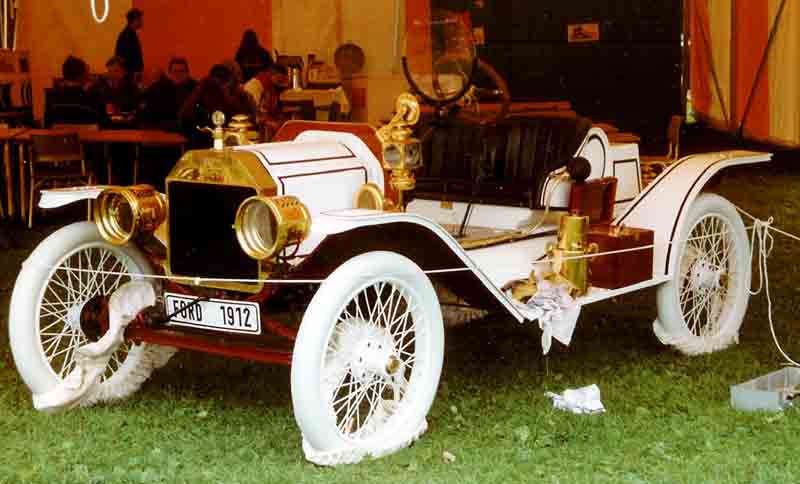
Ford Model T
"...tic of, you know, all vehicles, that's before the Model T and it's before Rockefeller and oil consolidation..."
The Ford Model T is an old car that was made in large numbers. It’s important because it helped make cars more common for everyday people. The podcast mentions it to point to a time period before that car existed.
The Ford Model T is an early, mass-produced automobile that helped popularize car ownership in the United States. It’s frequently discussed in historical conversations about how vehicles became more accessible and how the automotive industry scaled up. In the podcast context, it’s used as a timeline marker—“before the Model T”—to frame a broader point about the era of vehicles and industry changes.
Model T
"So that 28% statistic of, you know, all vehicles, that's before the Model T and it's before Rockefeller and oil consolidation."
The Model T was a very popular early Ford car. In this episode, it’s mentioned because it helped gasoline cars become the mainstream choice, pushing electric cars back for a while.
The Model T is Ford’s mass-market car that helped accelerate gasoline-powered vehicle adoption in the early 1900s. In this discussion, it’s used as a historical marker for when gasoline cars became dominant relative to early electric vehicles.
regenerative brakes
"Oh, I've missed the 1902 Studebaker Electric that had a 40 mile range and had regenerative brakes."
Regenerative braking helps slow the car while also recharging the battery. Instead of wasting the slowing energy as heat, the car uses it to put some power back in.
Regenerative brakes (regenerative braking) slow the vehicle by turning the electric motor into a generator. That recovers energy back into the battery instead of converting it all into heat at the friction brakes.
lithium iron flow
"He made the point that, you know, all these batteries or these EVs, it's all about lithium iron flow."
This phrase is about the battery chemistry—what the battery is made of and how it works internally. The host is saying the battery’s behavior (how well it works and stays stable) is what matters most.
“Lithium iron flow” appears to refer to a lithium-iron battery chemistry used in some EVs. The key idea being discussed is how the battery’s internal electrochemical “flow” (ion movement) affects performance and safety.
failure rate
"And it's about making sure that even though you have many, many battery cells, you don't have a failure rate. So the example that he gave was that Tesla came to exponent years ago saying the failure rate of their cells was about one in a million."
Failure rate just means how likely something is to break. In EV batteries, manufacturers want it to be extremely unlikely—so they can build cars at scale without constant battery problems.
Failure rate is a reliability metric describing how often a component (here, EV battery cells) fails. The discussion uses an “one in a million” target to show how strict EV battery reliability requirements are before manufacturers will scale production.
battery cells
"And it's about making sure that even though you have many, many battery cells, you don't have a failure rate. So the example that he gave was that Tesla came to exponent years ago saying the failure rate of their cells was about one in a million."
Battery cells are the small building blocks inside the battery pack. The speaker is saying that because there are lots of them, the system has to be designed so one bad cell doesn’t cause bigger problems.
Battery cells are the individual electrochemical units inside an EV battery pack. The episode’s logic is that with many cells in one pack, manufacturers must manage reliability so one failing cell doesn’t create a dangerous situation.

BMW 740
"One thing that I did think was quite interesting was he did refer to EVs as glorified golf carts whilst talking himself about driving a BMW 740."
The BMW 740 is a BMW 7 Series sedan used here as a comparison point while discussing EVs. The host contrasts the idea of EVs being “glorified golf carts” with the experience of driving a traditional luxury car like a BMW 740.
single cell warming up
"So the cause of fires in EVs comes from a single cell warming up. And the way that these things are laid out is that there's hundreds of these cells."
This is the idea that a battery fire can start when one small part of the battery gets too hot. Once it overheats, it can make neighboring parts overheat too.
The “single cell warming up” idea describes how EV battery fires can begin when one battery cell overheats. If that cell’s temperature rises enough, it can trigger a chain reaction that spreads heat to nearby cells.

Toyota Prius
"...way to perhaps think about it is something like a Prius. He's under the back seat."
A Toyota Prius is a car that uses both a gas engine and an electric motor. The goal is to use less fuel than a typical gas-only car. In the podcast, it’s mentioned as a recognizable example of a real car people know.
The Toyota Prius is a hybrid electric car known for combining a gasoline engine with an electric motor to improve fuel economy. It often comes up in discussions about practical, everyday transportation and how hybrid tech changed what “efficient” driving can look like. In the podcast context, it’s referenced as a familiar example of a vehicle with a distinctive layout and packaging.
high voltage
"And it is a bit frightening because the voltages are so huge that it just fucking fry you and kill you if you made a mistake."
EV batteries run on very high voltage. That’s why working on them is risky—if you touch the wrong thing or skip safety steps, it can be deadly.
EV and hybrid battery systems use high-voltage electricity to power the motor and charge systems. The danger described here is that high voltage can cause severe electric shock or death if proper procedures aren’t followed.
EV dealer
"And, you know, when he was there with he went to an EV dealer, who he's friends with and he did the work. But he had like the guy that steals in these second hand EVs."
An EV dealer is a shop that sells and services electric cars. Here, it’s mentioned because the work on the used EV is being handled through people who know EVs.
An EV dealer is a retailer or service channel focused on electric vehicles. In this context, it’s where the work on a second-hand EV is being coordinated, including access to technicians and parts.
pack
"And what Havnut was saying is the business of taking the pack out or access it. The pack wasn't too difficult. But the business of when you put the pack back together, making sure that it's all like cross referenced in the right way."
In an electric car, the “pack” is the car’s big battery. It’s made of lots of smaller battery pieces, and if it’s taken apart and put back, it has to be put together correctly.
In an EV, the battery “pack” is the assembled high-voltage battery system made up of many individual cells. The pack can be removed for service, but reassembly requires careful verification so the cells are connected and managed correctly.
runaway thermal events
"He talked about EV fires as being runaway thermal events. At first you're a bit like, oh, adult beverage. It's not really that because what we're saying is that one cell, there's a fault in the manufacturing somewhere."
A “runaway thermal event” means the battery gets hotter and hotter in a way that can’t be stopped. If it keeps escalating, it can turn into a fire.
A “runaway thermal event” is when heat builds inside a battery faster than it can be controlled, potentially leading to fire or explosion. The episode frames EV fires as this kind of escalating battery failure, often starting from a weak or faulty cell.
ions flowing backwards and forwards
"And after the cycles of charge and recharge and you know, the ions flowing backwards and forwards and forwards, it gets hot. "
Inside the battery, charged particles (ions) move around when you charge and when you drive. The point here is that repeated charging and discharging can make a weak cell get hotter over time.
In EV batteries, ions move between electrodes during charging and discharging. The episode describes “ions flowing backwards and forwards” to explain how repeated charge cycles can contribute to heat buildup when a cell has a manufacturing fault or weakness.
coolant
"he showed video of this happening that, you know, if you can, you know, if you can spot it, come in like and get coolant to it within like half a second, you might stop it catching fire. [963.5s] But fundamentally, when you can spot a little bit when it starts to get overheated, but the thermal runway path is quite short."
In EV fire-safety discussions, “coolant” refers to cooling fluid used to reduce battery temperatures and slow or stop thermal runaway. The key idea here is timing—cooling early can limit how far overheating spreads.
thermal runway path
"But fundamentally, when you can spot a little bit when it starts to get overheated, but the thermal runway path is quite short. [974.0s] So think of it one, but catch is fire."
It’s the battery’s “domino effect” when one part gets too hot and then heats up the neighboring parts. If you don’t stop it quickly, it can turn into a self-feeding fire.
A thermal runaway path is the chain of overheating events inside a battery where one failing cell transfers heat to nearby cells. Once that heat-transfer loop starts, the battery can rapidly escalate from “hot” to “fully on fire.”
thermal runaway event
"So the specifics of the thermal runaway event of this, that first the heating starts because of the cycling backwards and forwards..."
Thermal runaway is when a battery starts overheating and then keeps getting hotter on its own. Once it starts, it can turn a small problem into a much bigger fire risk very quickly.
Thermal runaway is the self-accelerating failure mode in a battery where heat causes internal reactions that generate even more heat. In EVs, it’s the key process behind why a damaged cell can rapidly escalate from heating to active fire conditions.
electrolyte
"That causes the electrolytes, which is the secret source of the battery that determines the electron flow."
Electrolytes are the battery’s internal chemicals that help the battery move energy around. If the battery gets too hot, those chemicals can start boiling and breaking down, making fire more likely.
Electrolytes are the chemical medium inside a lithium-ion battery that allows ions to move between electrodes. During overheating, the electrolyte can break down and contribute to the flammable gases and fire chemistry.
O2
"The boiling of the electrolyte fluid creates O2. And that's the first ingredients then for a full normal fire."
O2 means oxygen. When the battery overheats, it can create oxygen around the cell, which helps a fire burn more strongly.
O2 (oxygen) is produced when overheated battery components decompose or boil. More oxygen available in the cell environment helps the reaction transition into a sustained, “normal” fire.
200 milliseconds
"He's showed it in slow motion and basically the whole thing, like the process from like okay to full on fire was 200 milliseconds."
200 milliseconds is a tiny fraction of a second. The speaker is emphasizing that once the battery starts failing, it can turn into a full fire almost instantly.
200 milliseconds is an extremely short time window for a battery failure to escalate from initial conditions to full fire. The point is to show how quickly thermal runaway can progress once it starts.
stay of charge
"So if you're on 80% stay of charge, the fire risk there, you know, for an EV which has wrecked and been damaged"
This is likely “state of charge,” meaning how full the battery is. The speaker is saying being at a higher level can make a damaged EV battery more likely to catch fire.
“Stay of charge” appears to be a transcription error for “state of charge,” meaning how full the battery is. The speaker ties higher charge levels to increased fire risk after EV damage.
state of charge
"that the cars ship with a less than 50% state of charge to avoid the fire risk because if they have a fuller battery, the fire, there's just, you know, there's more gas to burn, right?"
State of charge just means how full the battery is. If it’s more full, there’s more energy inside, so a problem can turn into a bigger fire.
State of charge is how full a battery is, usually expressed as a percentage. In EV fire discussions, a higher state of charge means more stored energy available if something goes wrong, which can make a thermal event more severe.

Chevy Bolts
"One of them was that in 2021, all Chevy Bolts had a recall and they replaced all the batteries."
The Chevrolet Bolt EV is a mass-market EV that became central to battery-safety discussions after major recalls. In this segment, the host references a 2021 recall where batteries were replaced, highlighting how battery issues can drive large-scale safety actions.
GM
"Apparently it cost GM $2 billion to do it."
GM is General Motors, the company that makes Chevrolet cars. The host is saying GM spent a lot of money fixing the battery issue.
GM refers to General Motors, the automaker behind the Chevrolet Bolt EV. Here it’s mentioned in the context of the financial cost of the battery replacement recall.
limited charging to 80%
"they limited charging to 80% because when they were carrying more than 80% charge, that was when there was a fire risk."
Limiting charging to 80% means the car won’t fill the battery all the way. The goal is to lower risk by staying away from the most full-charge condition.
Limiting charging to 80% means capping the battery’s maximum state of charge below full. The idea is to reduce fire risk by avoiding the highest charge levels where the battery was considered more prone to problems.
ICE cars
"But these were ICE cars. It just goes to show that even, you know, there's modern versions of Hillman hunters being built with cracked fuel lines"
ICE means the car runs on a gas or diesel engine. So “ICE cars” are the normal gas/diesel cars, not electric cars.
ICE stands for internal combustion engine. “ICE cars” are vehicles powered by gasoline or diesel engines, rather than an electric powertrain.
accident prevention
"Is it important that we train our firefighters and all of the infrastructure around accident prevention, you know, tow truck drivers, all of that?"
Accident prevention is the idea of reducing crashes and incidents before they happen through training, procedures, and infrastructure. In the context of EV fires, it includes how emergency services and tow operators handle incidents to lower the chance of ignition and escalation.
EV
"We're much better now than we were years ago. These EVs are orders of magnitude better than even the gas-powered cars of the 2010s,"
EVs are electric cars that run on electricity, not a gas engine. The host says modern EVs are much better than older gas cars when it comes to fire risk.
EVs are electric vehicles powered by an electric powertrain instead of an internal combustion engine. The host argues that EVs have improved significantly versus older gas cars in terms of fire risk.
gas powered cars
"These EVs are orders of magnitude better than even the gas-powered cars of the 2010s, let alone the gas-powered cars of the 70s and the 80s for fire risk."
Gas-powered cars are the usual type that run on gasoline. The episode is comparing how fire risk differs between those and electric cars.
“Gas-powered cars” are vehicles that use gasoline as their fuel, typically via an internal combustion engine. The comparison here is about relative fire risk between EVs and gasoline cars across different decades.
Request an Explanation
Heard something you'd like explained? We'll add it to this episode.
Sign in to request explanations for terms you heard.
Want to learn more?
Browse our glossary for plain-English explanations of automotive terms, jargon, and concepts.
Help improve this episode
See something that's not quite right? Our annotations are AI-generated and can sometimes miss the mark. Click the flag icon on any annotation to suggest a correction.