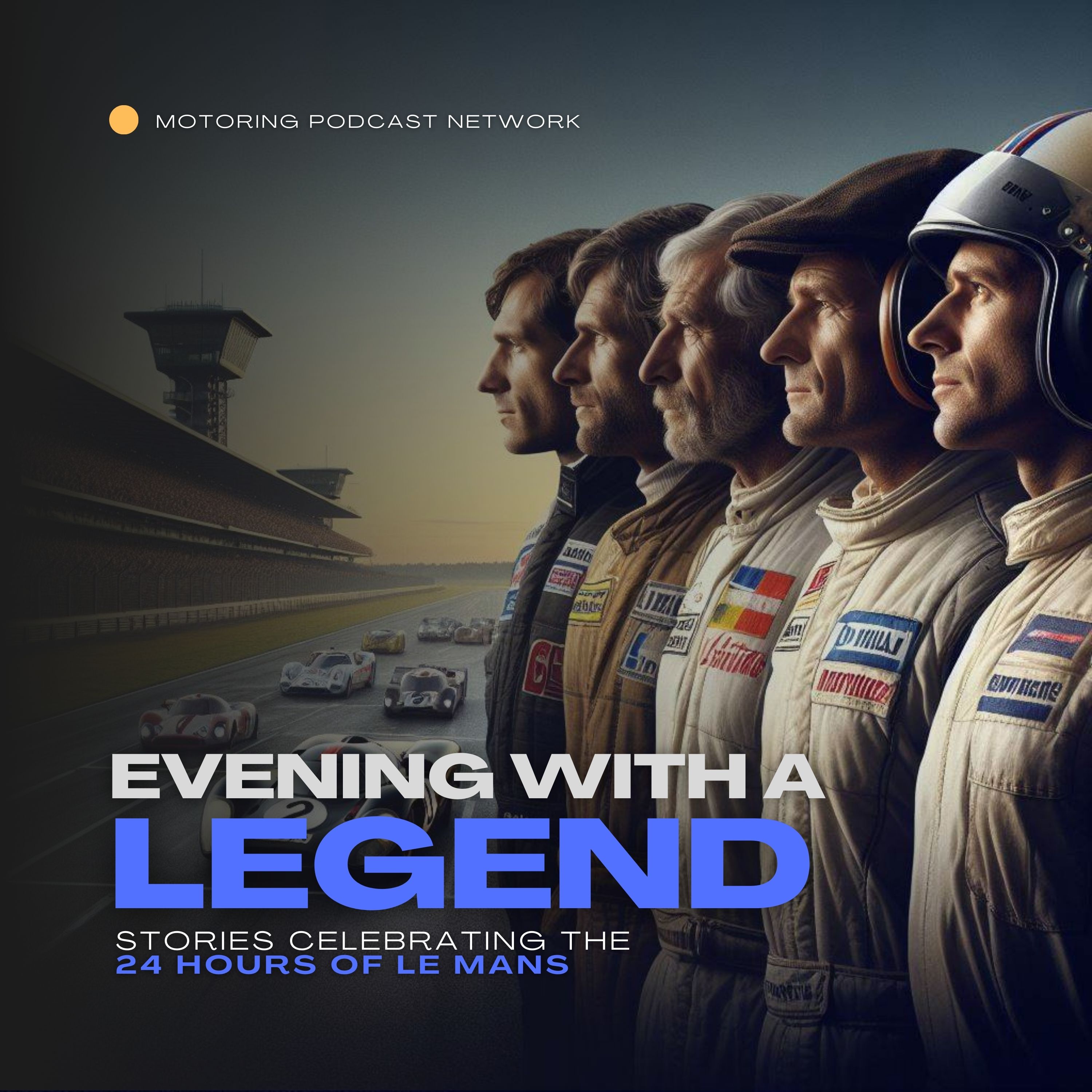
Evening With A Legend: Tommy Kendall
About this episode
Tommy Kendall’s path to Le Mans is traced from early licensing hurdles and pre-internet racing awareness to a Trans Am peak and a secret Conrad Porsche ride arrangement. The conversation then zooms in on what endurance racing really demands—faster corners, overheating, sleep limits, and multi-driver pacing—plus the chaos of a rain-heavy Viper Le Mans year, slick-vs-rain decisions, and a right-rear failure at the Mulsanne hairpin. Kendall also reflects on Le Mans’ unique mental load, growth in coverage, and the rules that shape modern GT racing.
This Evening With A Legend welcomes road racing standout Tommy Kendall tracing his long path to the 24 Hours of Le Mans. Tommy recounts early racing beginnings, limited U.S.-Europe crossover in his prime, and how a secret pre-Saleen S7 plan led to his 2000 Le Mans debut in a Franz Konrad Porsche, including a spoof “Fumfour” story published during the race. He describes Le Mans’ unmatched speed, endurance-race sleep discipline, international pageantry, and the shift to relentless modern pace. Kendall then details his 2013 return with the factory SRT Viper GTS-R amid heavy rain, long cautions, a fatal early accident, a risky slick-tire stint without traction control, and a right-rear failure that made it his worst stint. He also discusses Corvette-Viper rivalry, broadcasting Le Mans remotely, Daytona vs. Le Mans demands, dream cars, and possible Le Mans Classic interest.
===== (Oo---x---oO) =====
00:00 Meet Tommy Kendall 01:49 Early Racing Dreams 03:54 Why Le Mans Took Time and His Secret 2000 Entry 08:55 First Laps Reality Check 11:44 Endurance Sleep Strategy 14:51 Team Chemistry & Pageantry 16:49 American Pride in 2000 and Garage 56 Reaction 20:14 Dream TransAm Choice for Le Mans 21:54 Road Back to 2013 ... the Viper Deal Comes Together 27:10 Viper Corvette Rivalry 30:15 Chasing Le Mans Podium 31:08 Viper versus TransAm? 35:27 The Worst Stint of Tommy's Life: The Night Rain Tire Gamble 42:16 Calling Races From Afar 44:19 Why Endurance Matters 47:50 Dream Cars And Le Mans Classic 49:33 Whats Next? And Farewell====================
The Motoring Podcast Network : Years of racing, wrenching and Motorsports experience brings together a top notch collection of knowledge, stories and information. #everyonehasastory #gtmbreakfix - motoringpodcast.net
- More Information: Visit Our Website
- Become a VIP at: Patreon
- Online Magazine: Gran Touring
- Follow us on Social: Instagram
To learn more about or to become a member of the ACO USA, look no further than www.lemans.org, Click on English in the upper right corner and then click on the ACO members tab for Club Offers. Once you become a Member you can follow all the action on the Facebook group ACOUSAMembersClub; and become part of the Legend with future Evening With A Legend meet ups.
24 Hours of Le Mans
"Evening with the Legend is a series of presentations exclusive to legends of the famous 24 Hours [5.9s] of Le Mans, giving us an opportunity to bring a piece of Le Mans to you. [10.0s] By sharing stories and highlights of the big event, you get a chance to become part of"
The 24 Hours of Le Mans is a legendary race that lasts a full day. Cars and drivers have to stay fast and reliable for 24 hours, which is much harder than a normal race.
The 24 Hours of Le Mans is one of the world’s most famous endurance races, where cars must keep running at high speed for a full day. It’s a major proving ground for race engineering, driver skill, and long-term reliability.

SRT Viper GTSR
"[55.5s] Nearly a decade and a half later, Tommy made a celebrated return to Le Mans in 2013, [60.9s] driving the SRT Viper GTSR with the factory-backed team in GTE Pro. [66.6s] Together, Tommy's two Le Mans appearances illustrate a remarkable, full-circle journey"
The SRT Viper GTSR is a Viper that’s been turned into a race car for long endurance events. The “GTSR” label means it’s a particular competition version designed to keep running strongly for hours.
The SRT Viper GTSR is a factory-developed Viper race car built for endurance competition, especially in the FIA GT classes. “GTSR” denotes a specific racing-spec version optimized for reliability and consistent performance over long stints.
GTE Pro
"[55.5s] Nearly a decade and a half later, Tommy made a celebrated return to Le Mans in 2013, [60.9s] driving the SRT Viper GTSR with the factory-backed team in GTE Pro. [66.6s] Together, Tommy's two Le Mans appearances illustrate a remarkable, full-circle journey"
GTE Pro is a class within the FIA endurance racing structure for professional teams using GT-spec cars. It’s designed for factory-backed or top-tier professional competition, with rules that balance performance across different manufacturers.

Mazda Rx7
"Your debut after karting was in IMSA 1985 and in RX-7, which if I recall,"
The Mazda RX-7 is a sports car with a special engine that spins instead of using pistons. That made it popular with racers because it can rev high and be tuned for performance.
The Mazda RX-7 is a famous sports car known for its rotary engine, which uses a spinning rotor instead of the usual piston-and-crankshaft setup. In racing, it became a common platform because the engine revs freely and responds well to tuning.
IMSA 1985
"Your debut after karting was in IMSA 1985 and in RX-7, which if I recall,"
IMSA is a big American road-racing series. Mentioning “1985” is just saying this was happening in the mid-1980s, when sports-car racing was a serious path for drivers.
IMSA is a major American sports-car racing organization/series, and “IMSA 1985” places the discussion in the mid-1980s era of prototype and GT racing. The key idea is that it was a high-level stepping stone for drivers aiming at bigger international events.
SCCA
"Back then, you couldn't get an SCCA or an IMSA license until you're 18."
SCCA stands for the Sports Car Club of America, a U.S. motorsports organization that sanctions and organizes many amateur-to-semi-pro racing events. In the transcript, it’s part of the licensing pathway that controlled when drivers could race in certain series.
IMSA license
"Back then, you couldn't get an SCCA or an IMSA license until you're 18."
An IMSA license is permission from the racing organization to enter their events. It’s there to make sure drivers have the right training and meet safety rules.
An IMSA license is the authorization required to compete in IMSA-sanctioned racing events. It’s essentially a gatekeeping credential that ensures drivers meet minimum experience and safety requirements.
Jim Russell School Series
"But I found out that the Jim Russell School Series would let you in if you were 16, as long as you'd been through their school."
The Jim Russell School Series is a training path for race drivers. It helps younger people get seat time and experience before they can move up to bigger racing licenses.
The Jim Russell School Series is a driver development program/ladder associated with the Jim Russell Racing Drivers School. It’s used to train and place younger drivers into competitive racing before they can obtain higher-level series licenses.
on track magazine
"My connection to everything back then was basically auto week and on track magazine."
“On Track” magazine was a racing-focused publication. The host is saying that, before the internet, magazines were one of the main ways people followed motorsport.
“On Track” magazine was a motorsports publication that provided race coverage and reporting. Here it’s mentioned as part of the pre-internet media ecosystem that shaped how drivers and fans tracked events.
AutoWeek
"My connection to everything back then was basically auto week and on track magazine."
“Auto Week” was a car and racing magazine. The point here is that, back then, people learned about races from printed publications instead of online updates.
“Auto Week” refers to a motorsports/automotive news magazine that covered racing and car industry developments. In the transcript, it’s used to describe how the speaker followed racing before the internet.
Indy
"You had three channels, network channels that had maybe two races a year on. Daytona and Indy tape delayed."
“Indy” refers to the famous Indianapolis race track. The host is saying those big races weren’t always shown live on TV back then.
“Indy” is shorthand for the Indianapolis Motor Speedway and the IndyCar/Indy-style racing scene associated with it. The transcript uses it to describe how major races were often shown tape-delayed on TV.
Trans-Am racing
"in the first 15 years, a lot of folks know Tommy Kendall, like the name that is synonymous with Transam racing in the United States."
Trans-Am is a big American race series for sports cars. Drivers often use it to prove themselves before stepping up to bigger international races like Le Mans.
“Trans-Am” (often written “Transam”) is a North American sports-car racing series run by SCCA, known for production-based race cars and strong manufacturer involvement. It’s one of the main platforms where American drivers built reputations before moving to global endurance events.
Nürburgring
"You had guys racing at Nürburgring when it wasn't on anyone's radar."
The Nürburgring is a famous race track in Germany. It’s known for being very challenging, and people use it to test how good a car or driver really is.
The Nürburgring is a major motorsport venue in Germany, best known for the Nordschleife (“North Loop”) circuit. It’s historically been a proving ground for drivers and cars, even when it wasn’t a mainstream target for certain American programs.
Trans Am Championship
"So my career basically ended in 97. I won my fourth, I guess, Trans Am Championship. That was the year we won 11 races in a row."
Trans Am is a famous American racing series for production-based cars. Drivers race on road courses, and manufacturers have historically backed teams heavily.
The Trans Am Championship (often called Trans-Am) is a major American road-racing series run by SCCA. It’s known for touring-car-style racing and manufacturer involvement, especially in the muscle-car era.
NASCAR
"So that wasn't really an option anymore. I was being pushed towards NASCAR. I actually had agreed to a deal to go to NASCAR racing with Roush..."
NASCAR is a big American racing league, mostly raced on oval tracks. The cars and driving style are different from road-course racing.
NASCAR is a major American stock-car racing series, best known for oval-track racing and close, door-to-door competition. It’s a different style of racing than road racing like Trans Am, with different car setups and driving demands.
Roush
"I was being pushed towards NASCAR. I actually had agreed to a deal to go to NASCAR racing with Roush and then they changed their mind at the last second right before it got signed."
Roush is a well-known racing team in NASCAR. He was talking about working with them for a potential NASCAR opportunity.
Roush refers to Roush Racing, a prominent NASCAR team organization. In the transcript, it’s the team the speaker was negotiating with for a NASCAR ride.
Greg Biffle
"And then Ford was getting out of Trans Am. So that wasn't really an option anymore. I was being pushed towards NASCAR. I actually had agreed to a deal to go to NASCAR racing with Roush and then they changed their mind at the last second... And ironically, signed Greg Biffle."
Greg Biffle is an American NASCAR driver who competed for Roush Racing. In this story, he’s the driver who was signed when the speaker’s NASCAR deal fell through.

Audi S7
"... I had signed a deal with Celine to drive the new S7. And the deal hadn't been announced yet. They sai..."
The Audi S7 is a faster, sportier version of the Audi A7. It’s a four-door car meant for comfortable everyday driving, but with more power for quicker acceleration. It’s the kind of car people review and drive because it’s meant to do both commuting and spirited driving.
The Audi S7 is a performance-oriented version of the A7, combining a fast engine with a more practical, four-door “grand tourer” body style. It’s the kind of car that gets attention because it blends everyday usability with higher-performance driving characteristics. In the podcast context, it’s mentioned because someone signed a deal to drive the new S7 before it was publicly announced, highlighting its relevance as a current model at the time.
Mark Coglan
"There were a few people that know there was a dinner the night before with Mark Coglan, who was with Valveline. And then he was the one that kind of broke the deal to get me into that Celine car."
Mark Coglan is a person who helped make the deal happen behind the scenes. He’s connected to Valvoline in the story.
Mark Coglan is mentioned as a key person involved in arranging the speaker’s Le Mans-related ride. The transcript also links him to Valvoline and to breaking the deal.
Valveline
"There were a few people that know there was a dinner the night before with Mark Coglan, who was with Valveline. And then he was the one that kind of broke the deal to get me into that Celine car."
Valvoline/Valveline is a company that makes car oils and fluids. Here it’s mentioned because someone connected to that brand helped arrange the ride.
Valveline appears to refer to Valvoline, a well-known automotive fluids brand. In the transcript, it’s tied to Mark Coglan’s involvement in the deal.
Paul Fanner
"And then Paul Fanner from Racer also was there and he knew, but they were sworn to secrecy."
Paul Fanner is a person who was in the loop about the secret deal. He’s mentioned as part of the media/insider group around the racing world.
Paul Fanner is mentioned as being present and as someone who “knew” the secret arrangement. The transcript frames him as being associated with Racer.
Racer
"And then Paul Fanner from Racer also was there and he knew, but they were sworn to secrecy."
Racer is a motorsports media outlet. In this story, it’s mentioned because the person attending the dinner works for that kind of racing publication.
Racer is referenced as the publication Paul Fanner is associated with. It’s a motorsports media brand, relevant here because it signals insider knowledge and coverage of racing deals.
grid sheets
"I always thought it was so funny that his name showed up as one name like Madonna on all the grid sheets. It was Fumfor."
Grid sheets are the official race paperwork that lists the drivers and cars for the event. He’s saying his fake name would show up on those official lists.
Grid sheets are the official documents listing which drivers and cars are entered for a race, typically including starting positions and names. In the transcript, he’s joking about how a pseudonym would appear on those official race documents.
Le Mans race
"In the middle of the Le Mans race, it was up for a handful of hours. So just idle minds, do fun things."
Le Mans is a super famous long-distance race in France. Instead of racing for a short time, teams race for hours and have to manage tires, fuel, and driver fatigue.
“Le Mans” refers to the famous endurance race held at Circuit de la Sarthe in France. It’s known for long stints, driver changes, and cars being pushed for hours rather than minutes.
24 hours at a track like Le Mans
"up until that point, you really hadn't done too much long format racing, especially 24 hours at a track like Le Mans, which is a whole nother level of endurance racing out there."
That’s the endurance format where the race lasts a full day—24 hours. The hard part is staying consistent and keeping the car running for the entire time.
This is describing the endurance-racing format where teams compete for a full 24 hours. The challenge is maintaining consistent lap times and mechanical reliability across an entire day.
endurance racing
"which is a whole nother level of endurance racing out there. So when you got there and you're turning your first laps, you're learning the track, obviously there was probably a ton of preparation or maybe there wasn't."
Endurance racing is racing that lasts a long time. It’s not just about going fast—it’s also about keeping the car healthy and driving consistently.
Endurance racing is motorsport where the goal is to cover the most distance or achieve the best overall result over a long time period. It emphasizes durability, strategy, and consistency as much as outright speed.
medium speed corners
"And so the medium speed corners are just faster medium speed corners. The fast corners are faster than the fast corners."
Medium-speed corners are turns where you’re going fast, but not at the very highest speeds. They matter because they happen a lot and they can wear out tires and stress the car over a long race.
“Medium speed corners” are bends where the car carries a moderate amount of speed and requires a balance of grip, braking stability, and steering control. In endurance racing, they’re especially important because they repeat constantly and affect tire wear.
fast corners
"The fast corners are faster than the fast corners. And so it's really impressive and daunting."
Fast corners are the high-speed turns where you don’t slow down much. They’re tough because the car has to stay stable and grippy at speed.
“Fast corners” are high-speed turns where the car must maintain stability and traction with less time spent slowing down. They’re demanding because small setup or driving errors can quickly become big at higher speeds.
rear engine
"but to be not as sharp as I was used to being in a car that I had never driven before in a configuration rear engine that I'd never driven before."
A rear-engine car has the engine in the back. That changes how the car feels when you turn and when you accelerate, so it can take time to get used to.
A rear-engine layout places the engine behind the driver, which changes weight distribution and how the car turns and accelerates. Compared with front-engine cars, rear-engine cars often feel different in balance—especially when you’re learning a new car’s limits.
overheating problem
"We had a little bit of an overheating problem and had to back the revs down at one point, but we really had pretty much a trouble for run."
An overheating problem means the engine or cooling system wasn’t keeping temperatures under control during the race. In endurance racing, teams may respond by reducing engine output (like backing off the revs) to protect the engine and finish reliably.
back the revs down
"We had a little bit of an overheating problem and had to back the revs down at one point, but we really had pretty much a trouble for run."
It means the driver reduces engine speed. In a race, that can help keep the car from getting too hot or wearing out too quickly.
“Back the revs down” means reducing engine speed (RPM) to lower heat and stress. It’s a common endurance strategy when temperatures rise or when the team wants to preserve the car for the rest of the stint.
Daytona
"And so that was a shock too, because the last time I had run at Daytona in the big V8 cars, a decade, yeah, not quite even a decade, but there was still a very much an element of pacing and saving the equipment somewhat."
Daytona is a famous race track in Florida. Because it’s so fast and long, drivers often have to manage tires, fuel, and effort instead of going flat-out the whole time.
Daytona refers to Daytona International Speedway in Florida, one of the most famous oval tracks in North America. It’s especially known for high-speed racing where pacing, tire wear, and fuel strategy can matter a lot over long stints.
Rolex
"And so that element wasn't that foreign. One thing I learned early on after 85, I did several show them stock 24 hour races and I did Daytona, the Rolex. I did that, I guess, five times."
“Rolex” refers to a long endurance race at Daytona. Drivers rotate and the cars run for a long time, so it’s a different kind of challenge than short races.
“Rolex” here refers to the Rolex 24 at Daytona, an endurance race held at Daytona International Speedway. It’s known for long stints and multiple driver rotations, which is why the speaker says the format wasn’t foreign to them.
Lamont
"One of our previous legends referred to Lamont as a British race on French soil and kept referred to as a battle at Lamont between all the different teams."
They’re talking about a specific spot/section at Le Mans where things get really intense. The point is that it feels like a big, dramatic fight between many teams.
“Lamont” here is being used as shorthand for the famous race battle at Le Mans’ Circuit de la Sarthe section known for the Lamont area. It’s a way of describing the intense, multi-team competition that happens during the event.
co-driver
"You were fortunate on the France Conrad team to be partnered with Charles Slatter, who's also an American, and then you had a German co-driver as well."
A co-driver is a second (or additional) driver who shares driving duties with you in the same race car. In endurance racing like Le Mans, co-drivers are essential because the car must be driven over long periods.
rapport
"We hadn't met each other before. So you have to form that rapport. And that's one of the funny things is you, once the race starts, you don't get a lot of time to hang out..."
Here, “rapport” means how well you get along and communicate with your teammates. In racing, that matters because you have to work together fast.
In motorsport team context, “rapport” means the working relationship and mutual understanding between drivers. Good rapport helps drivers coordinate quickly on setup preferences, communication, and race strategy.
National Anthem
"They play the full national anthem, not a stiff, the full national anthem of every country where there's a driver from."
They’re describing a pre-race ceremony where the event plays the national anthems for the countries represented by the drivers. It’s meant to feel special and international.
The “national anthem” moment is a Le Mans-style ceremonial tradition where the event recognizes each driver’s country. It’s part of the event’s pageantry and highlights how international the grid is.
Andy Pilgrim
"But at the same time, we had a previous legend on here named that is familiar to a lot of people running for Team Corvette. We had Andy Pilgrim up on the podium representing the United States, representing GM."
Andy Pilgrim is a race car driver. In this story, he’s standing on the podium representing the U.S. and GM, which shows how big the competition was.
Andy Pilgrim is a racing driver associated with American endurance and Corvette programs. Here, he’s described as representing the United States and GM on the podium, highlighting the rivalry between American teams and the dominant European entries.
Team Corvette
"named that is familiar to a lot of people running for Team Corvette. We had Andy Pilgrim up on the podium representing the United States, representing GM."
“Team Corvette” means the group of people and resources that race Corvettes. It’s the racing effort behind the Corvette, not just the car itself.
“Team Corvette” refers to the racing program built around the Corvette nameplate, typically involving engineers, drivers, and support staff campaigning Corvettes in major events. It’s not just the car—it’s the whole organized effort behind the Corvette’s racing presence.

Corvette
"Andy Pilgrim up on the podium representing the United States, representing GM. How did that make you feel to see that? You're out there in a 9-11 watching Andy, you know, in the Corvette."
The Chevrolet Corvette is an American sports car brand known for its V8 performance and long history in racing. In this segment, “Andy… in the Corvette” ties the Corvette name to Le Mans-era endurance competition and U.S. representation.
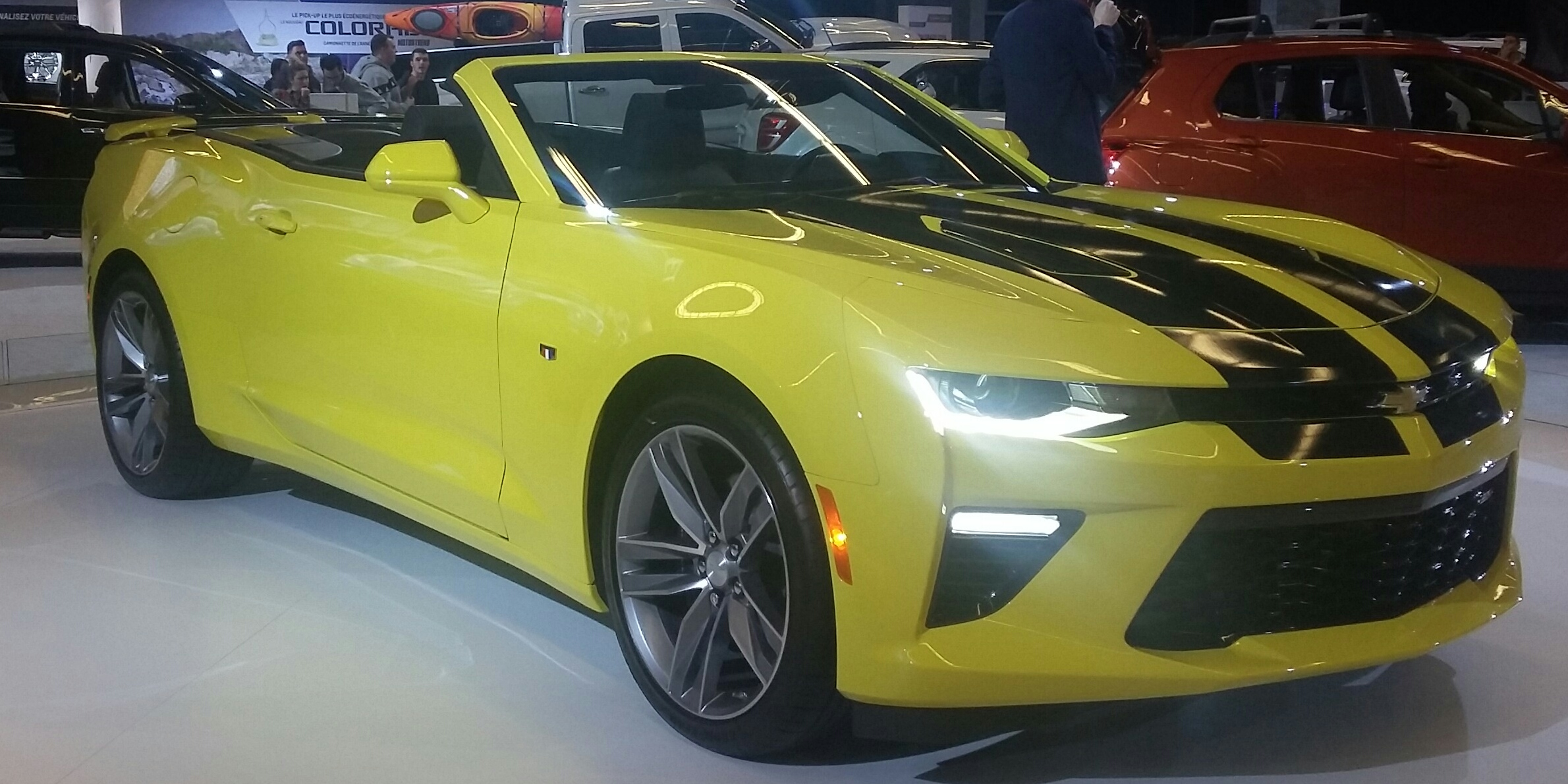
Chevrolet Camaro
"I remember when my dad was racing, Billy Hagen took the Stratigraph Camaro over there. And it was just, it seemed like it was nothing like anything they'd seen before."
The Camaro is a well-known American car from Chevrolet. When the speaker says “Stratigraph Camaro,” they mean a Camaro race car tied to a particular sponsor or team setup.
The Chevrolet Camaro is an American muscle car platform that has been used in racing. “Stratigraph Camaro” indicates a specific Camaro entry associated with a sponsor/program name, showing how American V8 race cars were being used in competition during the speaker’s father’s era.
Billy Hagen
"I remember when my dad was racing, Billy Hagen took the Stratigraph Camaro over there. And it was just, it seemed like it was nothing like anything they'd seen before."
Billy Hagen is a person who drove race cars. Here, he’s mentioned as the driver who took the Stratigraph Camaro to the event.
Billy Hagen is referenced as a driver who raced the “Stratigraph Camaro.” In this story, he represents the kind of American racing talent and machinery that felt novel to the speaker’s family at the time.
American V8
"But just the American V8 aspect, it's sort of unapologetically American, for better or worse."
An “American V8” is a big V-shaped engine (V8) that’s strongly associated with American performance cars. The speaker is saying that style of engine made the cars feel unmistakably American.
“American V8” refers to the cultural and engineering identity of large-displacement V8 engines commonly associated with U.S. performance cars. The speaker uses it to describe why the racing cars felt “unapologetically American,” emphasizing character and sound as part of the appeal.
Garage 56
"Well, you said Camaro, which opens the door for a one word, or maybe two word question. Garage 56. Oh yeah."
Garage 56 is a special “wild card” entry at the 24 Hours of Le Mans. Teams use it to bring experimental race cars that don’t fit the usual rules, so they can try new ideas on a huge stage.
Garage 56 is a special entry category at the 24 Hours of Le Mans reserved for experimental or unusual cars. It’s meant to encourage innovation—teams can bring concepts that wouldn’t fit the normal class rules, and the car is judged on both performance and novelty.
weight is the enemy
"So when they first started down that road, and I said, they're going to use a cup chassis and weight is the enemy. In cup racing, everyone weighs the same."
In racing, heavier cars usually feel slower and less responsive. The quote means that saving weight can help lap times, but in some one-make or equal-rule racing, everyone is already similar so it matters less.
“Weight is the enemy” is a racing rule of thumb: extra mass makes it harder to accelerate, brake, and change direction quickly. In cup racing where cars are equalized, teams may focus less on shaving weight because everyone starts from similar baselines.
cup chassis
"So when they first started down that road, and I said, they're going to use a cup chassis and weight is the enemy. In cup racing, everyone weighs the same."
A “cup chassis” is a race car setup built to match a specific rulebook used in a cup-style series. Because the rules limit differences between cars, it can make the racing closer and more about driver skill and setup details.
A “cup chassis” typically means a race-prepped chassis built to a specific one-make or spec-rules “cup” format. The point is that the chassis and setup are constrained by regulations, which can reduce variables like weight differences and make competition more about driving and fine tuning.
lap time
"You can always pour power to it and get lap time. But if all the time was coming on the straightaway, and you're just like a jam car in the corners, I said, you're not going to make any friends."
Lap time is how long it takes to go around the track once. Faster lap times usually mean the car is working better in acceleration and corners.
Lap time is the time it takes to complete one circuit of a track. Teams use lap time as the primary performance metric, and they’ll trade off things like acceleration, cornering grip, and stability to improve it.

Subaru Uncharted
"...ty damn cool. So you mentioned before the 911 was uncharted territory. You were basically building the airpla..."
I can’t identify a specific Subaru car called “Uncharted” from common model names. It might be a name used in the podcast for something else, not the actual car model. If you paste the exact line, I’ll explain the correct car.
“Subaru Uncharted” doesn’t match a specific, widely recognized Subaru model name. It may be a mishearing or a reference to a project or segment title rather than a particular car. If you can share the exact wording from the transcript, I can generate an accurate explanation for the intended vehicle.

Chevrolet Beretta
"...uld have taken any one of your Trans Am cars, the Beretta, the Ford, whatever it is, and gone to Le Mans, i..."
The Chevrolet Beretta is a Chevrolet car that was sold for everyday driving. People sometimes mention it in racing talk because some versions were used in motorsport events. In the podcast, it’s being used as an example of a car that could have been chosen for a race program.
The Chevrolet Beretta is a compact-to-mid-size car that Chevrolet produced, and it’s often brought up in motorsports conversations because certain versions were used in racing series. In the podcast context, it’s mentioned alongside other cars as an example of what could have been chosen for a Le Mans-style effort. That kind of reference usually points to the car’s racing eligibility or historical use rather than its everyday role.

Pontiac Sport Trans
"... which one would you have chosen? I mean, the All Sport Trans Am car, that was the longest I was in one place e..."
The Pontiac Trans Sport is a minivan-type vehicle made by Pontiac. It’s meant to transport people comfortably, not to be a dedicated race car. In the podcast, it’s likely being mentioned as one of the choices in a “which would you pick” conversation.
The Pontiac Trans Sport is a minivan-style vehicle from Pontiac, built to carry people and handle family or utility needs. In the podcast excerpt, it’s mentioned in a question about which car someone would have chosen, with the conversation referencing a “Trans Am” context and the “All Sport Trans Am” wording. That suggests the Trans Sport is being used as a specific option in a lineup discussion rather than as a track-focused machine.
stint
"Well, there wasn't anything huge [1296.6s] in that one. That's been that same question after the 2013 race, because there was, I'll tease it a [1305.1s] little bit, the worst stint of my life."
In endurance racing, drivers don’t stay in the car the whole time. A “stint” is the chunk of time one driver is behind the wheel before they hand off to the next driver.
A “stint” is the period of time a driver drives before switching to another driver in endurance racing. The speaker references the “worst stint” of his life, which is a specific endurance-racing moment rather than a general driving term.
factory Salina S7
"Interesting thing. Well, let's talk about 2001 because that's sort of [1343.7s] the, you know, I buried the lead there. I, you know, I was supposed to drive the factory Salina S7 [1348.4s] and I didn't."
A “factory” car is one backed by the company itself, not a private team. The speaker wanted to drive a specific race car called the Salina S7, but the plan fell apart.
A “factory” car means it’s supported directly by the manufacturer’s program rather than being an independent privateer effort. The “Salina S7” is the specific race car model being discussed, and the speaker explains that the deal changed before Sebring.
Laguna Seca
"I, you know, I was supposed to drive the factory Salina S7 [1348.4s] and I didn't. I drove it in its debut race at Laguna Seca at the end of 2000 after it had been [1355.4s] announced and so forth."
Laguna Seca is a famous race track in California. The speaker is saying the Salina S7 first raced there at the end of 2000.
Laguna Seca is a well-known road course in California, famous for its elevation changes and the “Corkscrew” corner. Here it’s referenced as the debut-race location for the Salina S7.
privateer factory assisted privateer car
"But then the deal fell apart before Sebring. You know, I won't get into [1361.3s] all the details on that. But basically, there ended up not being a full factory car. It ended [1366.6s] up being a privateer factory assisted privateer car with Franz."
A privateer team is basically an independent racing team. In this case, it sounds like they still got some help from the manufacturer, but it wasn’t a full factory-backed effort.
A “privateer” is a team that isn’t the manufacturer’s full works team, but may still receive some manufacturer support. “Factory-assisted privateer” describes that hybrid situation: the car is backed in part, but not run as a full factory program.
open heart surgery
"was racing in NASCAR and he'd had a series of issues. First, it was a health scare where he had [1420.3s] blood clots and then open heart surgery as a result of that."
Open heart surgery is a serious operation on the heart. The episode mentions it to explain why Brian Vickers had to step away and then come back to racing later.
Open heart surgery is a major medical procedure used to treat serious heart conditions, and it’s mentioned here to explain Brian Vickers’ health scare and recovery timeline. In motorsport terms, such a disruption can affect a driver’s ability to race and influences contract and seat availability decisions.
garage area
"to go behind the garage area and see the setups, you know, that primarily Audi at the time, the number of people, all the spares, the semis, the sleeping pods, the hospitality, the chefs,"
The garage area is where the racing teams work on the cars during the event. It’s where you’d see the team’s setup and how they keep the car running.
The garage area is the team’s working zone at a race, where cars are serviced, prepared, and repaired between stints. It’s also where you can see setups and logistics that affect performance.
Trans-Amant
"“...But Corvette was kind of like we were in Trans-Amant. They were a finely oiled machine...”"
This sounds like “Trans-Am,” a well-known American road-racing series. The host is using it as a comparison for how competitive and dialed-in the top teams felt.
“Trans-Amant” appears to be a transcription of “Trans-Am,” referring to the Trans-Am racing series. The host uses it as a comparison point, saying Corvette felt like the dominant, well-prepared benchmark team in that kind of racing environment.
BOP
"“...That particular year ended up being Porsche's year in GT. ... I'm not a huge fan of BOP. You're not allowed to talk about it now. I think in IMSA, you're literally not allowed to talk about it...”"
BOP is a set of race rules meant to make different cars more evenly matched. The idea is that if one car is too strong, the rules can limit it so other cars have a fair chance—though it can still be very hard to win.
BOP (Balance of Performance) is a racing rule that adjusts things like weight, engine power, or aerodynamic limits so different cars can compete more evenly. The host says he’s “not a huge fan” of BOP, but also explains why teams want it: it’s hard to win even when the rules are in your favor.
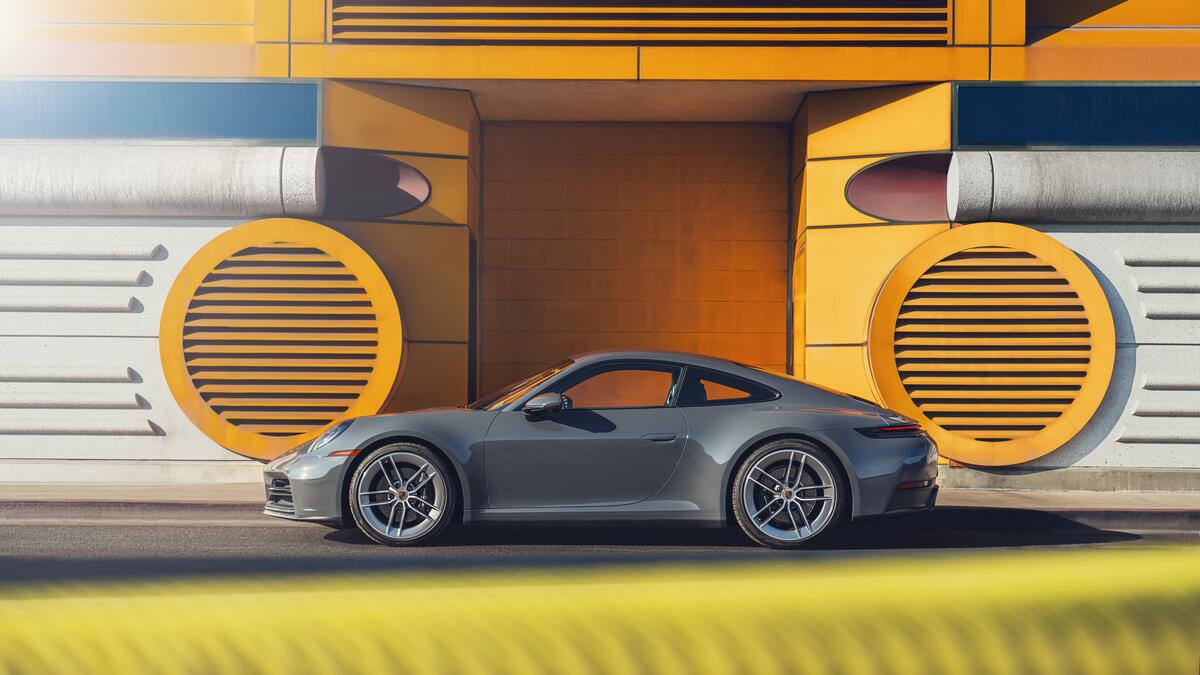
911
"“...I saw the back of all the grandstands had these huge Porsche banners. And I think it was the 50th year anniversary of the 911.”"
The 911 is Porsche’s most famous sports car model. The host is saying that year was a big anniversary for the 911, and Porsche was heavily represented in the racing scene.
“911” refers to the Porsche 911, Porsche’s iconic rear-engine sports car line. The host notes a 50th anniversary year for the 911, tying it to the prominence of Porsche branding and the competitive focus in GT racing.
fuel window
"There's pressure on every single aspect of it, stretching stints on tires, the fuel windows, the pit stops, of course, are incredible now."
A fuel window is the planned stretch of laps you can drive before you must pit to refuel. Teams time it so you don’t run out and so your pit stops line up with tire changes and race conditions.
Fuel windows are the planned ranges of laps where a car can run before it needs to pit for fuel. Teams use them to coordinate strategy with tire wear, traffic, and pit-stop timing.
Monza F1
"It's the best podium in sports period. Monza F1 and Le Mans are the two greatest podiums in sports."
Monza is a famous race track in Italy. The speaker is saying that getting on the podium there is a big deal, similar to Le Mans.
Monza is the Italian circuit known for high-speed racing and heavy braking zones. The speaker mentions “Monza F1” to compare the prestige of podiums in Formula 1 versus endurance racing.
TransAm car
"Let's talk about the Viper a little bit more. Compared to your Trans Am cars and other cars you've campaigned, is the Viper similar in a way?"
Trans Am is a racing series. The speaker is comparing the kind of race cars used in Trans Am to the Viper’s racing setup, especially how “production-like” the cars are.
Trans Am refers to the Trans-Am racing series, which historically used production-based rules but also featured special race-prep cars. The speaker contrasts those “Trans Am cars” with the Viper’s racing approach, emphasizing differences in how closely the cars resemble production models.
silhouette cars
"I mean, the Trans Am cars of my year were not actually production based at all. They were pure silhouette cars, full tube frame, little piece of joke."
“Silhouette” cars look like a production car from the outside, but they’re built for racing underneath. The goal is to keep the recognizable shape while using a race-focused design for speed and handling.
Silhouette cars are race cars that keep only the outward body shape of the production model, while the underlying structure and engineering are purpose-built for racing. This can allow teams to optimize aerodynamics, weight, and chassis performance beyond what a street-based car would allow.
full tube frame
"They were pure silhouette cars, full tube frame, little piece of joke. It was the windshield and the tail lights were the parts."
A full tube frame means the car’s main structure is built from metal tubes, like a purpose-built racing skeleton. That can make the car lighter and stronger in the way race engineers want for better handling.
A full tube frame is a chassis made from welded metal tubes rather than a production-style unibody. Tube-frame race cars are often lighter and can be engineered for stiffness and safety, improving handling consistency.
homologation
"sports car racing has gone back big time where obviously the homologation and everything has to be, they're allowed to move certain things with waivers."
Homologation is the rule that says a race car has to be approved to compete in a certain class. It usually means it has to be based on a real production car, not a totally custom design.
Homologation is the process of certifying a race car so it’s eligible for a specific racing category. In practice, it ties the race car to production rules, and it’s why teams can’t freely design anything they want from scratch.
waivers
"they're allowed to move certain things with waivers. But that's one of the hard things is you don't get to go clean sheet of paper with stuff"
A waiver is an official exception to the racing rules. It lets a team do something slightly different when the organizers approve it.
In motorsports, waivers are exceptions granted by the rules body that allow teams to deviate from specific regulations. They’re often used to handle safety, development, or category-specific constraints while still meeting the intent of the rules.
clean sheet of paper
"But that's one of the hard things is you don't get to go clean sheet of paper with stuff and you got to optimize every single piece that way."
A “clean sheet of paper” is a fresh start—designing something with no prior limits. In racing, rules usually prevent teams from having that kind of freedom.
“Clean sheet of paper” means designing without being constrained by existing requirements or prior designs. In racing, the opposite is common: teams must work within homologation rules, so they can’t start completely from scratch.
tire technology
"The tire technology also totally different. You know, Michelin has become, they've kind of, I mean, there's other people that still nibble around"
Tire technology means how the tire is engineered—what it’s made of and how it’s built. That affects how much grip you get and how quickly the tire wears out during a race.
Tire technology refers to the engineering of race tires—rubber compounds, construction, and tread design—that determines grip, wear rate, and puncture resistance. The host is saying the tire tech in the series he’s discussing is fundamentally different from Trans Am.
Michelin
"You know, Michelin has become, they've kind of, I mean, there's other people that still nibble around, but Michelin has done such a good job."
Michelin is a tire manufacturer known for high-performance racing tires and tire development. Here, the host credits Michelin with better grip, durability (rare punctures), and more consistent performance over a race distance.
race craft
"I'm going to need some time to get in race shape and race craft. And he nodded. And the reality was, in a multi driver setup and so forth"
Race craft is how you drive smart during a race. It includes things like when to push, how to handle traffic, and how to keep the car working well for the whole stint.
Race craft is the set of driving skills used during a race—managing tire and brake behavior, choosing lines, timing passes, and adapting to traffic. It’s more than just speed; it’s how you stay consistent and effective over a full stint.
multi driver setup
"And the reality was, in a multi driver setup and so forth, I never got the full rep. So I had four races in 2012."
A multi-driver setup means more than one person drives the same race car. Because you only drive for part of the event, you may not get as much practice time as a single-driver race.
A multi-driver setup means multiple drivers share the same car during an event, typically swapping between stints. That changes how much “seat time” each driver gets, which can affect how quickly they build rhythm and confidence.
endurance slot
"And so they promoted Bomberito to the full time slot. And I was in the endurance slot. And so exactly what I needed was more laps"
An endurance slot is a scheduled driving stint in an endurance race, where the team assigns which driver drives during specific time windows. In multi-driver programs, getting the right slot affects how many laps you can build rhythm and how much track time you get.
endurance races
"I was getting less because I was only doing the four endurance races for the year."
Endurance races are long races where the goal is to keep the car and driver going for hours, not just sprint fast. Teams usually rotate drivers and manage tires and brakes carefully.
Endurance races are events where the key challenge is lasting for a long time—often with multiple drivers, pit stops, and careful tire/brake management. The transcript contrasts doing only a few endurance races with having more laps and better preparation.
guardrail repairs
"We had tons of rain in 13 tons of rain, lots of guardrail repairs, crashes that were not going to be long yellows and so forth."
Guardrail repairs are fixing the barriers along the track after cars hit them. It’s a safety job that becomes more common when there are lots of crashes.
Guardrail repairs are track maintenance actions after impacts, where damaged barriers are repaired or replaced to restore safety. In heavy-rain endurance races, repeated incidents can lead to frequent barrier work and changing track conditions.
long yellows
"crashes that were not going to be long yellows and so forth. I got in the car in the middle of the night. It was probably 2am. It was under one of these long yellows"
“Long yellows” means the race is under caution for a long time, usually because of an accident or debris. Cars slow down and teams have to adjust strategy while drivers stay careful.
“Long yellows” refers to extended caution periods signaled by yellow flags, typically caused by crashes or debris. During a caution, cars slow down and the race is controlled, which changes strategy and can bunch traffic.
pace car
"So we're behind the pace car and they're fixing the guard rail and it kind of dried out."
A pace car is a car that leads the race at a slower speed when conditions aren’t safe for full-speed racing. It keeps everyone spaced out while officials fix things on track.
A pace car is a safety/pace vehicle that leads the field at reduced speed during cautions, weather changes, or track incidents. It helps control spacing so the race can restart safely after the track is serviced.
pitting for rains
"And so meanwhile, everyone in front of me and behind me is pitting for rains, including my teammate."
“Pitting for rains” means coming into the pits to swap tires for wet-weather tires. Those tires have tread that helps them grip on a wet track and helps prevent sliding on standing water.
“Pitting for rains” means stopping in the pit lane to change from slick tires to wet-weather tires when rain begins or intensifies. Wet tires have tread patterns that channel water to maintain grip and reduce hydroplaning risk.
slicks
"do you think you can do it on slicks? I'm like, I mean, you can do anything."
Slicks are tires meant for dry weather—they have no tread. When it’s wet, they can become slippery because they can’t push water out from under the tire.
Slicks are tires with no tread grooves, optimized for dry conditions because they maximize rubber contact with the road. On a wet track, slicks can lose grip quickly because they can’t evacuate water effectively.
rain tires
"Well, we don't have enough rain tires if it rains hard the rest of the way."
Rain tires are tires made for wet track conditions. They’re designed to grip better in rain, but teams also have to manage how many sets they have available during the race.
Rain tires are wet-weather tires designed to work in specific levels of precipitation, typically with deeper tread and/or different rubber compounds than slicks. Teams manage tire availability and timing because the race may transition between wet and dry conditions.
traction control
"And so they had made the decision going into the race to not run traction control. So we had no traction control."
Traction control is a computer system that helps prevent the drive wheels from spinning when the car loses grip. In some race situations, teams turn it off to let the car behave more directly.
Traction control is an electronic system that limits wheelspin by reducing engine power and/or applying brake intervention when it detects loss of grip. In racing, teams may disable it to avoid unwanted interference or because of setup/handling goals.
brake zones
"I think it's literally, it's a lap or two from when I'm getting called in. So I'm finally getting into the brake zones and so forth."
On a race track, there are certain spots where drivers brake to slow the car before turning. If you brake in the wrong place, it can make the corner harder and cost time.
“Brake zones” are the specific areas on a race track where drivers apply the brakes to slow down for a corner. In racing, braking is planned precisely because braking too early or too late can ruin your corner entry and lap time.
Mulsanne hairpin
"And basically I lose a right rear right as I touch the brakes heading into the Mulsanne hairpin."
The Mulsanne hairpin is a well-known tight corner at Le Mans that you have to brake hard for. It’s a spot where mistakes can quickly turn into a big slide or spin.
The Mulsanne hairpin is a famous slow corner on the Circuit de la Sarthe at Le Mans, used to turn the long Mulsanne straight into a tight braking event. It’s called out because losing control there is especially dramatic and dangerous.
right rear
"And basically I lose a right rear right as I touch the brakes heading into the Mulsanne hairpin."
“Right rear” means the back-right tire is the one that’s causing the problem. If that tire loses grip, the car can suddenly feel unstable, especially when you’re braking.
“Right rear” refers to the rear-right wheel/tire losing traction or control. In racing, losing a single corner (like the right-rear) can destabilize the car during braking and trigger spins or oscillations.
tank slapper
"And so it's doing a big tank slapper and I'm thinking, I'm crashing."
A “tank slapper” is when a car starts violently wobbling back and forth instead of staying stable. It usually means the tires have lost grip and the car can’t calm down.
A “tank slapper” is a violent oscillation of the car’s front and rear (often the steering) where the vehicle rapidly swings side-to-side. It typically happens when the car loses grip and the suspension/tires can’t settle smoothly, especially under braking or after a sudden loss of traction.
limp on a flat tire
"And so I'm pulled out. There's a yellow. I'm getting pulled out. Oh, no, there was just a local yellow. They drug me out because I was out of the way. And now I have to limp on a flat tire at night through the Porsche curves."
“Limp on a flat tire” means you keep driving even though the tire is basically ruined. You have to go very slowly to avoid making the damage worse.
“Limp on a flat tire” describes continuing to drive with a severely deflated tire, usually at reduced speed to avoid further damage. It’s a common racing survival strategy, but it can quickly destroy the tire and potentially stress suspension components.
local yellow
"There's a yellow. I'm getting pulled out. Oh, no, there was just a local yellow. They drug me out because I was out of the way."
A “local yellow” means there’s a caution in only part of the track. Drivers have to slow down and watch for danger, even if the whole track isn’t under caution.
A “local yellow” is a localized caution flag condition where drivers must slow down and be prepared for hazards in a specific section of the track. It’s less restrictive than a full-course yellow, but it still changes how aggressively drivers can race through that area.
Porsche Curves
"And now I have to limp on a flat tire at night through the Porsche curves. And so I'm going, and I feel like I'm going as slow as I can go, but it was probably 40 miles an hour."
“Porsche curves” are a known section of the Nürburgring track. It’s the kind of corner sequence where you really need the car to be stable and grippy, and it’s extra stressful if you’re dealing with a flat tire.
“Porsche curves” refers to a set of corners at the Nürburgring Nordschleife that are associated with Porsche’s presence and branding there. Drivers mention them because they’re a recognizable section where stability and traction matter a lot—especially at night or with a damaged tire.
pit reporters
"And so Le Mans was a little bit like that was speed channel, [2583.0s] where I think the year I did it was the first year they didn't send announcers to Le Mans. So [2588.3s] the only people on site were the pit reporters, which is why Justin, who everyone would rather"
Pit reporters are journalists who stand near the pits during a race and tell you what’s going on in real time. They’re especially useful in long races because the action happens during pit stops.
Pit reporters are media members stationed at the pit lane who provide live updates during a race. In endurance events like Le Mans, they focus on what’s happening during stops—strategy changes, timing shifts, and team decisions.
Speed Channel
"And so Le Mans was a little bit like that was speed channel, [2583.0s] where I think the year I did it was the first year they didn't send announcers to Le Mans."
Speed Channel was a U.S. TV network focused heavily on motorsports coverage. In the context of this discussion, it’s being used to describe how Le Mans coverage and on-site staffing worked during that era.
Charlotte
"But Justin says, the booth's going to be in Charlotte. ...outside of the Fox studios in Charlotte."
They’re talking about Charlotte, North Carolina. It’s where the broadcast setup was happening, and that affects how easy it is to coordinate everything.
Charlotte refers to the city in North Carolina where the hosts describe setting up the broadcast operation. In motorsports media, the location matters for logistics like access to production areas and coordination with teams.
France
"I want to be in France. So I'm going to be the pit lane guy here."
They mention wanting to be in France. That’s because some of the biggest endurance races are based there, and it’s a major part of racing culture.
France is referenced as the speaker’s preferred destination because major endurance races like Le Mans are held there. For motorsports fans, France is strongly associated with the sport’s history and marquee events.
pit lane
"So I'm going to be the pit lane guy here. ...you're texting from the tower down to the pit lane."
The pit lane is the area next to the track where race teams work on the cars during the event. It’s where you’d expect quick service and where race updates come from.
The pit lane is the dedicated lane beside the track where teams service cars during races. It’s where pit crews perform stops (like tire changes and refueling where applicable) and where broadcasters often need real-time updates.
24 Hours of Spa
"...with the 24 hours of Rolex going to 24 hours of spa, all these big race endurance races around the world?"
They’re talking about a race at Spa that lasts 24 hours. It’s one of the big endurance events people follow because it’s so challenging and long.
“24 hours of spa” refers to the Spa-Francorchamps endurance race held over a full day and night. It’s grouped with other major endurance events to illustrate how endurance racing remains compelling worldwide.
Pikes
"And there's a commonality with the one you mentioned, spa, indie, pikes, peak, Le Mans..."
“Pikes” is short for Pikes Peak, a famous hill climb race. It’s known for being tough because of the steep climb and changing conditions.
“Pikes” refers to Pikes Peak, the famous hill climb in Colorado known for steep elevation changes and challenging course conditions. It’s grouped with other endurance/major events to discuss what makes racing special.

Audi 919
"dream dream scenario, you know, the Audi 919 era is the pinnacle for me. The 962956 is, but knowing what I know now, I wouldn't get in one of those just from a safety standpoint."
The Audi 919 is a top-level race car Audi built for Le Mans. It was especially impressive because it was very fast and technologically advanced for endurance racing.
The Audi 919 is Audi’s Le Mans Prototype race car from the 2010s, known for its hybrid powertrain and dominance in endurance racing. When Kendall calls it the “pinnacle,” he’s pointing to how advanced and competitive the car felt during the peak of the 919 era.
Le Mans classic drive
"Would you consider a Le Mans classic drive? Would you go back and do a vintage version of Le Mans? I would. I would, yes."
A “Le Mans classic drive” is basically an event where people get to drive older race cars connected to Le Mans. It’s about experiencing the history, but older cars can still be dangerous compared to modern ones.
A “Le Mans classic drive” refers to driving or participating in a vintage/heritage event connected to the Le Mans weekend, typically using older race cars. It’s a way to experience historic machinery in a modern event setting while acknowledging that older cars can still be risky.
GTP
"And there's certain cars. I think one of my GTP cars was eligible, even though it never raced there."
GTP means a special kind of race car class built for endurance racing. It’s basically a prototype category—cars made to race long distances, often in North America.
GTP stands for Grand Touring Prototype, a prototype racing class used in North America (notably IMSA) for cars built specifically for endurance racing. Kendall mentions a GTP car being eligible for a Le Mans classic drive, even though it never raced there.
SRT Viper GTSR
"From the raucous [3037.5s] TransAm cars he piloted to victory to the thunderous roar of the SRT Viper GTSR, Tommy's journey"
The SRT Viper GTSR is a Dodge Viper race car built for competition. It’s basically a high-performance Viper turned into something that can race in endurance events.
The SRT Viper GTSR refers to a race-prepped Dodge Viper built by SRT (Street and Racing Technology) for endurance competition. It’s notable because the Viper’s big-displacement V10 character and American muscle identity were adapted into a serious Le Mans-style racing package.
ACO USA
"This episode has been brought to you by the Automobile Club of the West and the ACO USA. [3095.7s] From the awe-inspiring speed demons that have graced the track"
ACO USA is the U.S. group connected to the organization that runs major endurance racing. In this episode, it’s mentioned because they’re supporting the show and offering membership info.
ACO USA is the U.S. arm/association connected to the Automobile Club de l’Ouest (ACO), the organization behind major endurance racing. The episode credits ACO USA as a sponsor and references membership and follow-along channels.
Automobile Club of the West
"This episode has been brought to you by the Automobile Club of the West and the ACO USA. [3095.7s] From the awe-inspiring speed demons that have graced the track"
This is a motorsports-related organization that’s sponsoring the episode. In this context, it’s basically the show’s sponsor rather than a technical topic.
The Automobile Club of the West is an organization associated with motorsport and motorsports media/partnerships in this episode. Here, it’s mentioned as the sponsor/producer backing the show segment.
Request an Explanation
Heard something you'd like explained? We'll add it to this episode.
Sign in to request explanations for terms you heard.
Want to learn more?
Browse our glossary for plain-English explanations of automotive terms, jargon, and concepts.
Help improve this episode
See something that's not quite right? Our annotations are AI-generated and can sometimes miss the mark. Click the flag icon on any annotation to suggest a correction.