The 24 Hours of Le Mans is a legendary race that lasts a full day. Cars and drivers have to stay fast and reliable for 24 hours, which is much harder than a normal race.
The SRT Viper GTSR is a Viper that’s been turned into a race car for long endurance events. The “GTSR” label means it’s a particular competition version designed to keep running strongly for hours.
GTE Pro is a class within the FIA endurance racing structure for professional teams using GT-spec cars. It’s designed for factory-backed or top-tier professional competition, with rules that balance performance across different manufacturers.
The Mazda RX-7 is a sports car with a special engine that spins instead of using pistons. That made it popular with racers because it can rev high and be tuned for performance.
IMSA is a big American road-racing series. Mentioning “1985” is just saying this was happening in the mid-1980s, when sports-car racing was a serious path for drivers.
SCCA stands for the Sports Car Club of America, a U.S. motorsports organization that sanctions and organizes many amateur-to-semi-pro racing events. In the transcript, it’s part of the licensing pathway that controlled when drivers could race in certain series.
An IMSA license is permission from the racing organization to enter their events. It’s there to make sure drivers have the right training and meet safety rules.
The Jim Russell School Series is a training path for race drivers. It helps younger people get seat time and experience before they can move up to bigger racing licenses.
Term
on track magazine
“On Track” magazine was a racing-focused publication. The host is saying that, before the internet, magazines were one of the main ways people followed motorsport.
“Auto Week” was a car and racing magazine. The point here is that, back then, people learned about races from printed publications instead of online updates.
Trans-Am is a big American race series for sports cars. Drivers often use it to prove themselves before stepping up to bigger international races like Le Mans.
The Nürburgring is a famous race track in Germany. It’s known for being very challenging, and people use it to test how good a car or driver really is.
Trans Am is a famous American racing series for production-based cars. Drivers race on road courses, and manufacturers have historically backed teams heavily.
Greg Biffle is an American NASCAR driver who competed for Roush Racing. In this story, he’s the driver who was signed when the speaker’s NASCAR deal fell through.
The Audi S7 is a faster, sportier version of the Audi A7. It’s a four-door car meant for comfortable everyday driving, but with more power for quicker acceleration. It’s the kind of car people review and drive because it’s meant to do both commuting and spirited driving.
Grid sheets are the official race paperwork that lists the drivers and cars for the event. He’s saying his fake name would show up on those official lists.
Le Mans is a super famous long-distance race in France. Instead of racing for a short time, teams race for hours and have to manage tires, fuel, and driver fatigue.
Topic
24 hours at a track like Le Mans
That’s the endurance format where the race lasts a full day—24 hours. The hard part is staying consistent and keeping the car running for the entire time.
Medium-speed corners are turns where you’re going fast, but not at the very highest speeds. They matter because they happen a lot and they can wear out tires and stress the car over a long race.
A rear-engine car has the engine in the back. That changes how the car feels when you turn and when you accelerate, so it can take time to get used to.
An overheating problem means the engine or cooling system wasn’t keeping temperatures under control during the race. In endurance racing, teams may respond by reducing engine output (like backing off the revs) to protect the engine and finish reliably.
Term
back the revs down
It means the driver reduces engine speed. In a race, that can help keep the car from getting too hot or wearing out too quickly.
Daytona is a famous race track in Florida. Because it’s so fast and long, drivers often have to manage tires, fuel, and effort instead of going flat-out the whole time.
“Rolex” refers to a long endurance race at Daytona. Drivers rotate and the cars run for a long time, so it’s a different kind of challenge than short races.
Topic
Lamont
They’re talking about a specific spot/section at Le Mans where things get really intense. The point is that it feels like a big, dramatic fight between many teams.
A co-driver is a second (or additional) driver who shares driving duties with you in the same race car. In endurance racing like Le Mans, co-drivers are essential because the car must be driven over long periods.
Term
rapport
Here, “rapport” means how well you get along and communicate with your teammates. In racing, that matters because you have to work together fast.
They’re describing a pre-race ceremony where the event plays the national anthems for the countries represented by the drivers. It’s meant to feel special and international.
The Chevrolet Corvette is an American sports car brand known for its V8 performance and long history in racing. In this segment, “Andy… in the Corvette” ties the Corvette name to Le Mans-era endurance competition and U.S. representation.
The Camaro is a well-known American car from Chevrolet. When the speaker says “Stratigraph Camaro,” they mean a Camaro race car tied to a particular sponsor or team setup.
An “American V8” is a big V-shaped engine (V8) that’s strongly associated with American performance cars. The speaker is saying that style of engine made the cars feel unmistakably American.
Garage 56 is a special “wild card” entry at the 24 Hours of Le Mans. Teams use it to bring experimental race cars that don’t fit the usual rules, so they can try new ideas on a huge stage.
In racing, heavier cars usually feel slower and less responsive. The quote means that saving weight can help lap times, but in some one-make or equal-rule racing, everyone is already similar so it matters less.
Term
cup chassis
A “cup chassis” is a race car setup built to match a specific rulebook used in a cup-style series. Because the rules limit differences between cars, it can make the racing closer and more about driver skill and setup details.
I can’t identify a specific Subaru car called “Uncharted” from common model names. It might be a name used in the podcast for something else, not the actual car model. If you paste the exact line, I’ll explain the correct car.
The Chevrolet Beretta is a Chevrolet car that was sold for everyday driving. People sometimes mention it in racing talk because some versions were used in motorsport events. In the podcast, it’s being used as an example of a car that could have been chosen for a race program.
The Pontiac Trans Sport is a minivan-type vehicle made by Pontiac. It’s meant to transport people comfortably, not to be a dedicated race car. In the podcast, it’s likely being mentioned as one of the choices in a “which would you pick” conversation.
In endurance racing, drivers don’t stay in the car the whole time. A “stint” is the chunk of time one driver is behind the wheel before they hand off to the next driver.
Term
factory Salina S7
A “factory” car is one backed by the company itself, not a private team. The speaker wanted to drive a specific race car called the Salina S7, but the plan fell apart.
A privateer team is basically an independent racing team. In this case, it sounds like they still got some help from the manufacturer, but it wasn’t a full factory-backed effort.
Term
open heart surgery
Open heart surgery is a serious operation on the heart. The episode mentions it to explain why Brian Vickers had to step away and then come back to racing later.
The garage area is where the racing teams work on the cars during the event. It’s where you’d see the team’s setup and how they keep the car running.
Term
Trans-Amant
This sounds like “Trans-Am,” a well-known American road-racing series. The host is using it as a comparison for how competitive and dialed-in the top teams felt.
BOP is a set of race rules meant to make different cars more evenly matched. The idea is that if one car is too strong, the rules can limit it so other cars have a fair chance—though it can still be very hard to win.
The 911 is Porsche’s most famous sports car model. The host is saying that year was a big anniversary for the 911, and Porsche was heavily represented in the racing scene.
A fuel window is the planned stretch of laps you can drive before you must pit to refuel. Teams time it so you don’t run out and so your pit stops line up with tire changes and race conditions.
Trans Am is a racing series. The speaker is comparing the kind of race cars used in Trans Am to the Viper’s racing setup, especially how “production-like” the cars are.
“Silhouette” cars look like a production car from the outside, but they’re built for racing underneath. The goal is to keep the recognizable shape while using a race-focused design for speed and handling.
A full tube frame means the car’s main structure is built from metal tubes, like a purpose-built racing skeleton. That can make the car lighter and stronger in the way race engineers want for better handling.
Homologation is the rule that says a race car has to be approved to compete in a certain class. It usually means it has to be based on a real production car, not a totally custom design.
A “clean sheet of paper” is a fresh start—designing something with no prior limits. In racing, rules usually prevent teams from having that kind of freedom.
Tire technology means how the tire is engineered—what it’s made of and how it’s built. That affects how much grip you get and how quickly the tire wears out during a race.
Michelin is a tire manufacturer known for high-performance racing tires and tire development. Here, the host credits Michelin with better grip, durability (rare punctures), and more consistent performance over a race distance.
Race craft is how you drive smart during a race. It includes things like when to push, how to handle traffic, and how to keep the car working well for the whole stint.
A multi-driver setup means more than one person drives the same race car. Because you only drive for part of the event, you may not get as much practice time as a single-driver race.
An endurance slot is a scheduled driving stint in an endurance race, where the team assigns which driver drives during specific time windows. In multi-driver programs, getting the right slot affects how many laps you can build rhythm and how much track time you get.
Endurance races are long races where the goal is to keep the car and driver going for hours, not just sprint fast. Teams usually rotate drivers and manage tires and brakes carefully.
Guardrail repairs are fixing the barriers along the track after cars hit them. It’s a safety job that becomes more common when there are lots of crashes.
“Long yellows” means the race is under caution for a long time, usually because of an accident or debris. Cars slow down and teams have to adjust strategy while drivers stay careful.
A pace car is a car that leads the race at a slower speed when conditions aren’t safe for full-speed racing. It keeps everyone spaced out while officials fix things on track.
“Pitting for rains” means coming into the pits to swap tires for wet-weather tires. Those tires have tread that helps them grip on a wet track and helps prevent sliding on standing water.
Slicks are tires meant for dry weather—they have no tread. When it’s wet, they can become slippery because they can’t push water out from under the tire.
Rain tires are tires made for wet track conditions. They’re designed to grip better in rain, but teams also have to manage how many sets they have available during the race.
Traction control is a computer system that helps prevent the drive wheels from spinning when the car loses grip. In some race situations, teams turn it off to let the car behave more directly.
On a race track, there are certain spots where drivers brake to slow the car before turning. If you brake in the wrong place, it can make the corner harder and cost time.
The Mulsanne hairpin is a well-known tight corner at Le Mans that you have to brake hard for. It’s a spot where mistakes can quickly turn into a big slide or spin.
“Right rear” means the back-right tire is the one that’s causing the problem. If that tire loses grip, the car can suddenly feel unstable, especially when you’re braking.
A “tank slapper” is when a car starts violently wobbling back and forth instead of staying stable. It usually means the tires have lost grip and the car can’t calm down.
A “local yellow” means there’s a caution in only part of the track. Drivers have to slow down and watch for danger, even if the whole track isn’t under caution.
“Porsche curves” are a known section of the Nürburgring track. It’s the kind of corner sequence where you really need the car to be stable and grippy, and it’s extra stressful if you’re dealing with a flat tire.
Pit reporters are journalists who stand near the pits during a race and tell you what’s going on in real time. They’re especially useful in long races because the action happens during pit stops.
Speed Channel was a U.S. TV network focused heavily on motorsports coverage. In the context of this discussion, it’s being used to describe how Le Mans coverage and on-site staffing worked during that era.
They’re talking about Charlotte, North Carolina. It’s where the broadcast setup was happening, and that affects how easy it is to coordinate everything.
The pit lane is the area next to the track where race teams work on the cars during the event. It’s where you’d expect quick service and where race updates come from.
They’re talking about a race at Spa that lasts 24 hours. It’s one of the big endurance events people follow because it’s so challenging and long.
Topic
Pikes
“Pikes” is short for Pikes Peak, a famous hill climb race. It’s known for being tough because of the steep climb and changing conditions.
Car
Audi 919
The Audi 919 is a top-level race car Audi built for Le Mans. It was especially impressive because it was very fast and technologically advanced for endurance racing.
A “Le Mans classic drive” is basically an event where people get to drive older race cars connected to Le Mans. It’s about experiencing the history, but older cars can still be dangerous compared to modern ones.
GTP means a special kind of race car class built for endurance racing. It’s basically a prototype category—cars made to race long distances, often in North America.
The SRT Viper GTSR is a Dodge Viper race car built for competition. It’s basically a high-performance Viper turned into something that can race in endurance events.
ACO USA is the U.S. group connected to the organization that runs major endurance racing. In this episode, it’s mentioned because they’re supporting the show and offering membership info.
This is a motorsports-related organization that’s sponsoring the episode. In this context, it’s basically the show’s sponsor rather than a technical topic.
LIVE
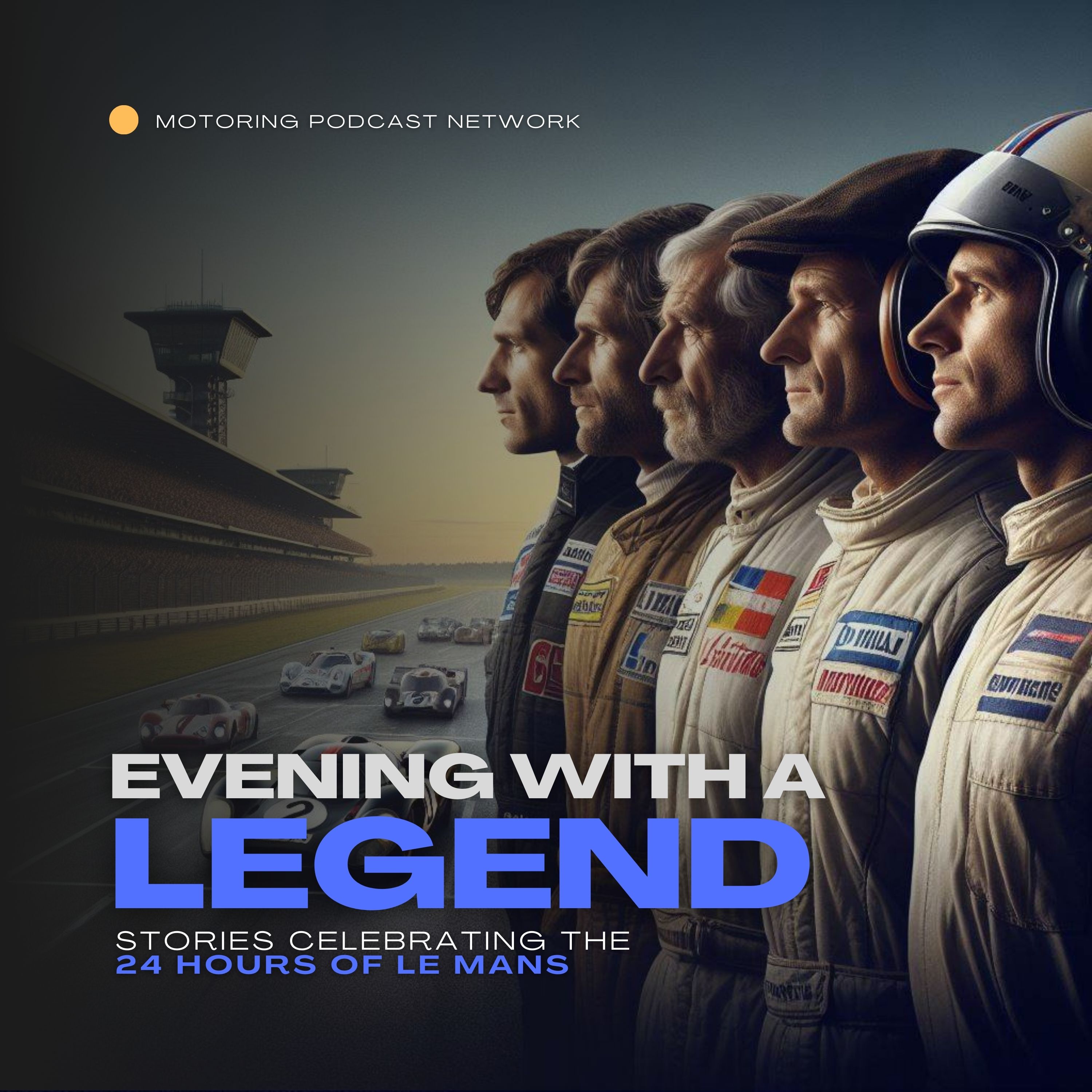
Evening with the Legend is a series of presentations exclusive to legends of the famous 24 Hours
of Le Mans, giving us an opportunity to bring a piece of Le Mans to you.
By sharing stories and highlights of the big event, you get a chance to become part of
the legend of Le Mans, with guests from different eras of over 100 years of racing.
Tonight, we have an opportunity to bring a piece of Le Mans to you, sharing in the legend of Le Mans,
with guests from different eras of over 100 years of racing.
And as your host, I am delighted to introduce Tommy Kendall, one of America's most versatile
and accomplished road racers, who first attempted to take on the 24 Hours of Le Mans in 2000,
driving a Franz Conrad GT2 Porsche.
Nearly a decade and a half later, Tommy made a celebrated return to Le Mans in 2013,
driving the SRT Viper GTSR with the factory-backed team in GTE Pro.
Together, Tommy's two Le Mans appearances illustrate a remarkable, full-circle journey
defined by skill, resilience, and a genuine love for racing at the highest level.
And with that, I am your host, Khrushchev Erich from the Motoring Podcast Network,
welcoming everyone to This Evening with the Legend.
So Tommy, welcome to the show.
Wow, thank you. That was quite the intro. I appreciate that.
And then actually, I got to show you my t-shirt, which is, I won't butcher it in French,
but it basically says Open 24 Hours, a clever t-shirt.
This was the next t-shirt on my stack in the closet today.
So it was lined up, wasn't it?
Or nearly I'd put maybe a collared shirt on, but I said, you know what, this is appropriate.
So we're in a little Le Mans merch.
Well, we're going to crank up the way-back machine, which is eventually going to get
us to how you got that shirt. But you got started in racing at a very young age.
Your debut after karting was in IMSA 1985 and in RX-7, which if I recall,
your dad got you into at the ripe young age of 18.
So at that time, was it on your mind? Was it a dream to race at Le Mans?
Well, actually, it goes even before that. I found a loophole.
Back then, you couldn't get an SCCA or an IMSA license until you're 18.
But I found out that the Jim Russell School Series would let you in if you were 16,
as long as you'd been through their school. So I ran the Jim Russell School Series
the year before when I was 17. But on some level, I had these grandiose dreams
that included everything, Formula One, et cetera.
My connection to everything back then was basically auto week and on track magazine.
It's hard for people, even people that lived through it, to really remember what it was like
then. There was no cable TV. There was no internet. And so the coverage was so much different.
You had three channels, network channels that had maybe two races a year on.
Daytona and Indy tape delayed. And the magazines came out with a huge lag from what was live or,
you know, so they weren't even really news related. They'd have a little blurb on Le Mans
three months later. On track and auto week were my connection.
Once my dad started doing some IMSA racing, I was 13, 14 years old.
And I was just a sponge. And so I literally read those cover to cover.
So that was my only exposure to the European scene.
But I remember, you know, when Mario went with Harley-Cluckston and that garage and
or Mirage, and they got sent away at the last second. And so all the drama.
So it was on my radar as one of the greatest races. But it was part of the pun. It was so foreign.
I mean, I couldn't really even imagine or grasp what it was like.
So what's fun about your story is started in 85 and we have 15 years until your first attempt
at Le Mans. And then we got almost 15 years, your second attempt at Le Mans. So in that gap
in the first 15 years, a lot of folks know Tommy Kendall, like the name that is synonymous with
Transam racing in the United States. And then unfortunately, there was the crash at the Glen
in 91. We don't have to go there if you don't want to. But let's talk about your road to Le Mans
from 85 to 2000. How did you put the deal together?
Why did it take so long to get there as such a superstar in American racing?
Now things are so good in terms of the US and Europe and Le Mans, all being well integrated
and commonality of platforms and all that. It was exactly the opposite for basically my whole
career. And so 2000 is really after my career. My career was 86 to 97. The serious part of my
career was a factory guy and just doing all kinds of stuff. That whole era, there was very little
American participation or involvement either as a team or a driver because they didn't intersect
from a platform standpoint and that stuff. They diverged virtually completely. It's sort of,
I don't know, the regrets. I guess a regret, I don't like to have regrets. I think things work
out for a reason. But if things were different, I was one of the main factory guys here. So if
there was any factory programs, I'd have been over there. And so when I was with Chevrolet,
that was always on Herb Fishel's radar. He was trying to figure out how to get to Le Mans because
he held it in the highest regard right there, up with all the big races of the world. And so
he was trying to figure it out when I was there and he eventually turned into the Cadillac program
with Riley did and then the Corvette program also Herbs doing. So for me, it literally just wasn't
really an option. You could always say, it's on my list and I'm going to go outside of my
sphere of influence and try to make something happen over there. You had guys racing at Nürburgring
when it wasn't on anyone's radar. So you can do whatever you want, but my focus was here. All
my opportunities were here. And that's kind of how it was. So kind of a bummer in that regard.
It underscores how good things are right now. And I know it took a long time to get there,
but I remember, ironically, I was at Baltimore racing the Viper in 2012 and they first announced
the top class at IMSA and Le Mans Europe were going to converge. And Robin Miller came up to
me and said, what do you think? I said, this is so great because it's like we race in parallel.
And everyone wants to see everybody, the best go at it and full representation. And so what's
happened since then has been really awesome to watch. So my career basically ended in 97. I won
my fourth, I guess, Trans Am Championship. That was the year we won 11 races in a row. I almost
swept the table. And then Ford was getting out of Trans Am. So that wasn't really an option anymore.
I was being pushed towards NASCAR. I actually had agreed to a deal to go to NASCAR racing with
Roush and then they changed their mind at the last second right before it got signed. And ironically,
signed Greg Biffle. And so it worked out well for him and it worked out well for me,
even though it was the end of my serious race day. So the 2000 thing, there's a really interesting
story about how I ended up there. I guess it was in the end of 99 maybe, I had signed a deal with
Celine to drive the new S7. And the deal hadn't been announced yet. They said, we want you to get
some Le Mans experience before we go back with the S7, but it hasn't been announced. So you can't
tell anyone why. So they actually arranged the ride in the Conrad Porsche. So I showed up there
four years after retiring, just in a plain white suit. I couldn't tell anyone why I was there. So
it was like, well, I just thought I'd come rent a ride at Le Mans. And so it was really, it was
really unusual. There were a few people that know there was a dinner the night before with Mark Coglan,
who was with Valveline. And then he was the one that kind of broke the deal to get me into that
Celine car. He went on to big things, brokering the sprint deal for NASCAR and so forth. And then
Paul Fanner from Racer also was there and he knew, but they were sworn to secrecy. And so
that night, they each indulged in plenty of wine. I did the night before the race,
but I crafted this story. I said, you know what, I've always wanted to do this story about an
imaginary persona and adopt that and go racing and just totally off the wall. And we just kept
spitballing and it turned into that I was going to change my name to Fumfor, who was this Salvadoran
racer that used to race in Imsen. I always thought it was so funny that his name showed up as one
name like Madonna on all the grid sheets. It was Fumfor. I said, I'm going to relaunch as Fumfor
and I'm not going to speak a word. I'm never going to talk to anyone. And it's going to be called
the Fumfor Silent the Deadly Tour. And I'm going to have beautiful girls on either side of me.
And whenever I'm interviewed, I'm just going to make a hand motion, one of four hand motions,
and they're going to answer the question for me. So this whole spitball thingy happened.
Paul Fanner wrote this up into a story and released it on the racer website as real.
In the middle of the Le Mans race, it was up for a handful of hours. So just idle minds,
do fun things. How do you feel being the inspiration for Franz Herman? There you go.
And I mean, John Winter is a great story. Louis Kragas, who I raced with in GTP,
his family didn't want him racing and he couldn't tell. So he entered under the
norm to drive, I guess you would say. So let's talk a little bit more about 2000.
We'll get deeper into the details of the race itself. But up until that point,
you really hadn't done too much long format racing, especially 24 hours at a track like Le Mans,
which is a whole nother level of endurance racing out there. So when you got there and you're
turning your first laps, you're learning the track, obviously there was probably a ton of
preparation or maybe there wasn't. How did it compare to what you were used to here stateside?
Well, you said I hadn't raced on a track like Le Mans. Let me stop you right there. There is no
track like Le Mans. It's its own league. And that was the biggest impression. And the way I
explain it to people is obviously racing is speed and it's fast. And we've got some fast tracks,
but it's like Le Mans. Everything is just that much faster. Everything is a gear higher. And so
the medium speed corners are just faster medium speed corners. The fast corners are faster than
the fast corners. And so it's really impressive and daunting. Now, I'd been out of a car for four
years, three years, I guess. I wasn't razor sharp. I never drove the car before I showed up. And
then we got a chance to, I never raced a Porsche, Range. And so it was not ideal.
It's not how I like to go about those kinds of things. You know, my whole career was kind of a
study in the opposite, total preparation, giving myself every advantage and so forth. So I mean,
that was my first takeaway was just how fast the track was and how daunting. Now, if I had been there
when I was super, super sharp, like in 97, and in a car I knew, and it was the only variable,
it probably wouldn't have been as daunting, but to be not as sharp as I was used to being in a car
that I had never driven before in a configuration rear engine that I'd never driven before.
Obviously, I was still only 30 something years old, young and, you know, I hadn't forgotten a lot,
but just wasn't as practiced. So I felt good, but I didn't feel, I was used to feeling like
in full command of everything and the guy to be, I didn't feel that way there. It turns out that
year, the vets and the vipers had sort of proceeded beyond where that Porsche was. It was a little
long on the tooth, but it was, it was the perfect way to learn the car ran well. We had a little
bit of an overheating problem and had to back the revs down at one point, but we really had pretty
much a trouble for run. And I think we finished either seventh or eight in class. And so that was
a shock too, because the last time I had run at Daytona in the big V8 cars, a decade, yeah,
not quite even a decade, but there was still a very much an element of pacing and saving the
equipment somewhat. And so that was the transition into the era where the cars were really getting
bulletproof and you could really drive them hard the whole time to have a trouble for your run
and not be on the podium. I thought that was a, that was an eye opener to me. And we were,
we were seventh or eight. Those were the main takeaways that year.
Coming from Trans Am, which is considered sprint racing, even though it's probably maybe the longest
sprint race format that there is almost, you know, nowadays it's almost a two hour race.
What was the physical demands like coming from that type of format or even from NASCAR into
Le Mans, where you, you're doing 23 hour stints, but it drags on for the whole day.
And you got to be up and be in the team and get the notes and be in sync with the other drivers.
And what was that like? I mean, fortunately, that aspect wasn't that foreign to me because
85, I did several show them stock 24 hour races and I did Daytona, the Rolex. I did that, I guess,
five times. And so that element wasn't that foreign. One thing I learned early on after
my first Rolex was you don't want to miss anything and you want to keep track of everything. And,
and as the driver, you don't have to do that. That's not your job. And so to learn to leave that to
other people and go get your rest and go do everything you need to do, I learned thankfully
early in my career. And so that's, that's a really important part that maybe a lot of people don't
fully appreciate. There's like this part where you're like, if I close my eyes, the world's going
to fall apart. You know, I need to watch to make sure nothing happens. Well, you can't do anything
about it. And you're not the guy that works on the car anyways, but it's just get really good at
the mental discipline of shutting down, getting your rest so that you're sharp. That's what's so
cool about those types of races. Even if you do all that stuff, you're still short on sleep because,
you know, with three drivers in the long, you're limited to three drivers at Daytona, you can have
four. What you don't realize is say you're out of the car, if everyone's doing two hour stints,
that means you're going to be out of the car for four. Well, of that four, there's 30 minutes to
get out. You're cooling down. You're debriefing a little bit. You're going to get something to eat.
You're getting out of your wet stuff. And then you can't just show up right when the car comes in.
You've got to be there ahead of time because if a yellow comes out, might put them into too long.
So the reality is, even if you do it perfectly in that situation, you might be getting an hour
and a half of sleep. Sometimes I had some teammates before at IMSA, like Mark Martin was my favorite
teammate. I mean, people say, well, he's an S car guy. I said, yeah, but that guy has no problem
driving three and a half hours. I would drive three and a half hours. The limit was four.
If you could get one more guy like that, now you're talking seven hours out of the car. So
you clip an hour or two on either end, you get some real sleep. That's an element that I don't
think people fully appreciate how hard that is and why you're so drained. And then Lamont also,
one thing, because it started later in the day, you kind of have almost a full day before the
race starts when it had a three PM start. And so you're tired and so forth. So it really is like
a day and a half deal, which just exacerbates it. It really is an amazing challenge. And that's why
even finishing there, ordinarily, it's all about winning. Even finishing there really,
really does have a sense of accomplishment. You really feel like you've been through the wars
and you've done something special. And there's a sense of bonding whenever you go through something
really, really hard with a group of people. It's unlike anything else.
Well, it's funny you say that, talking about the war aspect of it. One of our previous legends
referred to Lamont as a British race on French soil and kept referred to as a battle at Lamont
between all the different teams. And so what was that like for you coming over? I mean,
there's been Americans that have gone to Lamont, but it's always sprinkled over its history.
You were fortunate on the France Conrad team to be partnered with Charles Slatter,
who's also an American, and then you had a German co-driver as well. So how were you guys
received? Had you met each other beforehand? How did the team dynamics and chemistry work?
We hadn't met each other before. So you have to form that rapport. And that's one of the funny
things is you, once the race starts, you don't get a lot of time to hang out because everyone's
focused on getting your sleep. And so you have this quick exchange when you're getting into that
car. There was no weirdness at all about being foreign. It's such an international thing. And
I do remember explicitly that 2000 drivers meeting. I sat by McKaylee Almoreto and I remember
just looking around at this incredible gathering of veterans like him that have been through Formula
One and now we're running Le Mans, youngsters, guys like me that were somewhere in the middle.
And you have a lot of drivers. That many 54 cars with three drivers, what's that? 162 drivers. So
it really is pretty cool in that regard. And it's my favorite part of Le Mans has to do with that.
They play the full national anthem, not a stiff, the full national anthem of every country where
there's a driver from. And so this takes an hour at least in the run up. And obviously the French
anthem is the last one. And it's just, it's so cool, the pageantry. And that's the kind of thing.
Maybe when they did it at first, people thought, oh, this is hokey. I don't know. Whenever someone
starts new things, you're like, what's the point of this? Well, those are the things that become
such a part of the fabric, whether it's the seventh inning stretch in a baseball game or
all these things with 100 plus years of history now at Le Mans, all those things are just really
cherished rituals. And so the parade is unlike anything else. And you can explain to people that
they can't understand what it's like to parade through the title of Le Mans.
Well, I'm glad you bring up the patriotism part of this. And I keep going back to the year 2000,
because it's important. A lot of things happened that year. Those are the years of the big
rains. You had Audi coming on the scene and kind of dominating and taking over. But at the same
time, we had a previous legend on here named that is familiar to a lot of people running for
Team Corvette. We had Andy Pilgrim up on the podium representing the United States, representing GM.
How did that make you feel to see that? You're out there in a 9-11 watching Andy, you know, in the
Corvette. And that team was also comprised. The guys, when I retired and left Rausch, the bulk
of those guys, they did Craftsman Truck for a little while, but by 2000, they were over running
the Corvette team from Doug Feehan, Dan Binks, Brian Hoy, Jim Durbin, Ross Jeffries, on and on and on,
all those guys. And I've always been really patriotic. My dad was that way and passed it
along to me. And so that aspect of it, I like healthy patriotic rivalry, you know. And so I
have an appreciation for all the different ones. But there is an element, A, the American stuff.
The cars were just different, you know, the Big Thunder and so forth and so on. And I remember
when my dad was racing, Billy Hagen took the Stratigraph Camaro over there. And it was just,
it seemed like it was nothing like anything they'd seen before. Obviously, if I'd
thought about it at the time, I would have realized there had been other big ground pounding cars
before. But just the American V8 aspect, it's sort of unapologetically American, for better or worse.
And it's funny. So there seems to be mostly good nature, but a little bit of a love hate with
American stuff, you know, the parodies of Americans. I'm kind of that, you know, Ricky
Bobby, Big Harry American winning machine, you know. And so that just adds to the cool part of
it. And Americans were definitely underrepresented, very well represented now,
now. And that's a function of, like I said, how they've gotten everything's worked out,
where the technical specs are well aligned, the classes, and it just really supercharges the
involvement for everyone. It just makes it a lot easier to be involved.
Well, you said Camaro, which opens the door for a one word, or maybe two word question. Garage 56.
Oh yeah. You know, I have to say, I was very pleasantly surprised. I know a lot of the Hendrick
guys, especially the special project guys that fell under. Jimmy Johnson's a very old good friend
of mine as well. So I have to admit, when they first started down that road, and I said, they're
going to use a cup chassis and weight is the enemy. In cup racing, everyone weighs the same. So
no one notices. And it's kind of an element of why the racing I think is as different as it is,
is that weight. But I said, if they go over there and they don't really do some work to get a big
chunk of that weight out, everything else could be the same. I said, it could turn out really
not like they think it will. You can always pour power to it and get lap time. But if all the time
was coming on the straightaway, and you're just like a jam car in the corners, I said, you're not
going to make any friends. And you're not going to also have the effect from it. But they nailed it
because I mean, has there ever been a more popular program? I mean, the reaction to that and they
did a great job in terms of how they, the guys that drove it was a big piece of it. So it really was
a flawlessly executed from a marketing standpoint and from a product and technical
standpoint. It was pretty damn cool. So you mentioned before the 911 was uncharted territory.
You were basically building the airplane while you were in flight when it comes to experience
with that car. And you had mentioned, you know, it would have been more comfortable if it was
something that you knew. So if you could have taken any one of your Trans Am cars, the Beretta,
the Ford, whatever it is, and gone to Le Mans, if they could have made the full 24 hours, which
one would you have chosen? I mean, the All Sport Trans Am car, that was the longest I was in one
place ever in my career. Whenever you get to do that, you kind of get a level of refinement where
you just understand what you're doing better. Everybody knows their role and you just get
better and better at optimizing. You know, that car and the beauty of the Trans Am one, when you
don't share a seat with anyone, being a big guy tall like me, it supported me really well. There
were never any aches and pains after races, which always happened for me when I shared a seat with
anyone. So that would be the one. And that car was literally like an extension of me. I didn't
have to think about controlling it at all. I had to think about what are we trying to do here,
what technique and what's going to try to optimize and what we can do to adjust the car to the track.
So that would be the one without a doubt. So sticking with 2000 before we move on,
what was the big maybe oops moment or eye-opening experience or something that happened that left
a lasting impression on you after you came away from Le Mans? Well, there wasn't anything huge
in that one. That's been that same question after the 2013 race, because there was, I'll tease it a
little bit, the worst stint of my life. So other than the one where I had my big crash in the GTB
car. Well, let's sort of fast forward our audience there. So you were retired in 97.
You come back and make this all-star Cambio appearance at Le Mans in the Conrad Porsche.
And then the year 2001 happens in 2002 and 2003. So what happened between 2000 and your next return
to Le Mans 2013? Did you go back into retirement? Did you do some more racing? How did you get the
itch? How'd you get the call? Interesting thing. Well, let's talk about 2001 because that's sort of
the, you know, I buried the lead there. I, you know, I was supposed to drive the factory Salina S7
and I didn't. I drove it in its debut race at Laguna Seca at the end of 2000 after it had been
announced and so forth. But then the deal fell apart before Sebring. You know, I won't get into
all the details on that. But basically, there ended up not being a full factory car. It ended
up being a privateer factory assisted privateer car with Franz. It would have been fun in certain
ways, but it was not what was sold to me on the front end. And so I did that to prepare for 2001
and then 2001 never happened back into retirement. I got coaxed to drive. I drove the Jag in Transamin
04. So a full season. But all my racing post-97 kind of fell in my lap. I didn't pursue anything.
The Saline program did and that was supposed to be a proper double throw down, go for it program.
The Transam one, Transam, there was not a lot of factory support by 2004, but I enjoyed it a lot.
It was fun in my natural habitat, if you will, that I knew so well. But so I was basically retired.
And then to the way the Viper deal came about is Brian Vickers, who's a good friend of mine,
was racing in NASCAR and he'd had a series of issues. First, it was a health scare where he had
blood clots and then open heart surgery as a result of that. Then he came back and then he was
driving for the Red Bull team and Red Bull shut their operation down last minute and all the seats
were taken. Everyone was pushing him to get into a not a great car in NASCAR because that's all that
was available. And he asked me what I thought. I said, I wouldn't do it. He said, you're the only
person telling me that. I said, well, I said, you've won in both cars you've raced. I said,
it's not like you're trying to prove you can do it. I said, if you were still trying to prove that,
knock yourself out. But I said, chances are you'll only look worse. And if you're committed to this,
when the good cars come available, you'll be committed to the bad one. And so he's like,
oh, well, that makes a lot. He said, well, what do I do? I said, you should do what every NASCAR
friend of mine always says they wish they could do, which is race all the other stuff that they
never have time to race. I said, you could do a cool program. I'm going to try to run indie. I'm
going to try to run Baja. I'm going to do road racing. I'm going to run Daytona. I'm going to run
Le Mans. He said, oh my God, that sounds awesome. He started working on all this stuff. And so I had
heard that the Viper program was coming. I was in New York with him. I said, let's go to the New
York Auto Show. I'll introduce you to all the executives. And so I took them there, introduced
them around all the Dodge executives to Bill Riley and so forth. And he ended up doing a deal with
Rob Kaufman to race in a Ferrari. And then 34 weeks later, Bill Riley called, he says,
what about you? I said, what do you mean? He said, you? I said, what do you mean me? He said,
you want to drive? I said, me? I said, I'm 46 years old. I'm out of shape. I haven't driven in,
you know, I guess that was eight years since Trans Am. He says, yeah. I said, well, it's funny
you say that because I never said I would never do it again. But my conditions for doing it were
always such that it was not likely to happen. Proper team, proper funding, all this stuff.
And that was all that. I said, well, I can give it a shot. And so he says, well, everyone has to
test for this program. That was kind of an interesting deal that they did at SRT. I won't
say the name. There was a Formula One world champion that called his agent called and said, hey,
so-and-so would like to do this. And they said, great, haven't come test. And they said,
what do you mean test? He won't test. They said, well, everyone's testing. And he says,
he won't test. They said, well, that he's not driving. It was kind of a Bill Riley filter for,
is this person going to be a team player? And so maybe it's not a perfect deal, but for him,
it was a go, no, go thing. So Ryan Hunter Ray, who was in that car, any 500 winner, he had no
problem testing. I said, I'll go to the test. And so I went to the test and Long Story Short got
offered the deal in a way we went. You returned to Le Mans nearly a decade and a half later.
What was the first thing you noticed? What had changed since you had been there in 2000?
Everything was getting bigger. I mean, this was an era, it had been around for a long time. But I
mean, it was now that you were getting American participation, it was much bigger in America.
You had good TV coverage in America. And it was just as big everywhere else and bigger,
you know, because you had the guys, the Audi run was going on, which was getting so much attention.
There was a lot of focus. So it's just how much bigger everything was, all the efforts,
you know, to go behind the garage area and see the setups, you know, that primarily Audi at the
time, the number of people, all the spares, the semis, the sleeping pods, the hospitality, the
chefs, you know, it was just, it was, you know, it become not just big racing events,
as big a sporting event as you could have. So when you left Le Mans the first time you were amid
Corvette's journey to dominance, right? The C5Rs were kicking butt and taking names. You jump back
in the C6Rs are kicking butt and taking names. So it's sort of interesting because there was a
Viper Corvette rivalry for a very long time. And it seemed very real on TV, whether it was
placated by the broadcasters or otherwise, you were there battling with them. Was the Corvette
Viper rivalry still a thing at that time or were they just running away with it?
We weren't really on their level yet. So I mean, there was, there was a lot of talk about it,
you know, just because it's a natural rivalry, crosstown stuff. My experience, you know,
Detroit is a small town and they're all there. So when I was with Chevy racing Ford,
that was the most important thing was beating the Fords. And when I was with Ford racing Chevy,
same thing, Viper Corvette. So it's just sort of the crosstown rivalry, the bragging rights.
Literally, I think executives that would run in each other around town, you know, is as simple
as that. They're human and they wanted to be able to brag. But Corvette was kind of like we were
in Trans-Amant. They were a finely oiled machine, you know, even the best, you don't win all the
time, but you're always in the hunt. And again, my crew chief, Danny, it was now firmly it's
gone. At that point, I don't know how many wins they'd had, but they'd had a bunch of wins in
all the big races. And so they were really the benchmark. That particular year ended up being
Porsche's year in GT. You know, it's funny. I'm not a huge fan of BOP. You're not allowed to talk
about it now. I think in IMSA, you're literally not allowed to talk about it, but I'm not there.
So I can talk about a little bit. I get why you have it. And everyone's doing the best job they
can. And it's still really, really hard to win. But it's almost like the thing rotates and they
never get it perfect. And so you just want to be ready when it's in your favor. When I got there,
I saw the back of all the grandstands had these huge Porsche banners. And I think it was the 50th
year anniversary of the 911. And I'm like, Oh, this is the big Porsche year. I said, I'm pretty
sure Al one of those guys have been working overtime to make sure they're at least even on the BOP.
And so the reality is, as a team, we weren't ready to win the race yet. So even if we had gotten
the ideal BOP, I don't know if we could have executed every single aspect of it perfectly,
because even when you have that in your favor, you're either a little bit ahead of everyone or
you're dead even with someone else. And then it comes down to all the things that win races. And
the margins have just gotten smaller and in that regard. It used to be, like I
said, if you did everything perfect in the X bell days, you'd win by five laps. And that just
doesn't, it's just a different era because you're not babying anything. There's pressure on
every single aspect of it, stretching stints on tires, the fuel windows, the pit stops, of course,
are incredible now. So that's the framing. And so we weren't as strong as we would have liked to
have been both our side of it and the BOP side. We also were a little bit. But I mean, racers are
racers, even if you're the only person out there, you're racing really against yourselves. And we
have pride in what we do. And so you're all trying to figure out, how can I get more out of
myself? How can we get more out of this? And so forth. So that challenge remained. You know,
again, after that race, the relief and the excitement and the celebration of Viper returning
and being part of that, him across some pictures the other day of all of us up on the wall,
here's a bunch of guys that have been racing for a long time myself, done kind of at all.
You're jaded about a lot of things, but Le Mans is just is just different and it's special.
And so the unfittest business would be getting on the podium there. It's the best podium in sports
period. Monza F1 and Le Mans are the two greatest podiums in sports. I never got to see the view
from up there. There aren't too many places I raced where I didn't win, or at least get on the
podium. And safe to say on the driver's side, that's never say never. That's probably not happening.
Well, I promise I won't tell Mark Raffolf anything you said about BOP. All right.
Let's talk about the Viper a little bit more. Compared to your Trans Am cars and other cars
you've campaigned, is the Viper similar in a way? Is it still a little too much production car? I mean,
it is much like the Benzes of that era, big torque. And at that time, they had big torque
numbers in the Viper compared to everything else. Now by today's hypercar standards, maybe not so
much, but was it similar to what you were used to or just a leap away? Nothing like it. Nothing
like it. For a number of reasons. I mean, the Trans Am cars of my year were not actually production
based at all. They were pure silhouette cars, full tube frame, little piece of joke. It was the windshield
and the tail lights were the parts. And so the Viper GT racing Trans Am as well. I mean, for a lot
of these, originally they were production based and then it got to where so much was being thrown
away. They're like, why don't we just make them look like it? And then sports car racing has gone
back big time where obviously the homologation and everything has to be, they're allowed to move
certain things with waivers. But that's one of the hard things is you don't get to go clean sheet
of paper with stuff and you got to optimize every single piece that way. So it didn't drive anything
like it, like a Trans Am car. The tire technology also totally different. You know, Michelin has
become, they've kind of, I mean, there's other people that still nibble around, but Michelin
has done such a good job. They've literally run everybody else out of town. And it's not only
do they grip, they rarely puncture, they don't fall off. I mean, and now they keep challenging
themselves. Again, they're racing against themselves, but they're still challenging
themselves. How can we make it so the teams use less tires? There's less waste. They're more
sustainable. Literally all the things that matter to the consumer as well and so forth. So whereas
Trans Am, you know, 100 mile race, if you tried to, you could cook the tires in 40 miles easy. Yet
you had to make a blast 100. Whereas the Michelin's within a few exceptions, you could run the
Michelin's as hard as you wanted the whole time. And it would eventually start to fall off some,
but it was just, that was the nature of the life. It wasn't anything that you were doing. They would
just work. So did you like driving the Viper? I did. You know, it's a different totally, it was
a totally different challenge. I never got, I shouldn't say, when I did well off the shootout
to get off the deal, I said to Bill Riley, I said, even though it looks like I'm super sharp,
I said, I'm not. The shootout kind of played to my strengths, where I was always a really good
qualifier, especially when there wasn't a lot of practice. I could ramp up fast. I said, I'm,
I'm going to need some time to get in race shape and race craft. And he nodded. And the reality was,
in a multi driver setup and so forth, I never got the full rep. So I had four races in 2012.
And I guess if we're telling the full story, I actually wasn't going to drive in 2013. And then
Ralph Gill said, you know, I went to Detroit, I thought I was going to craft my separation agreement
and what we were going to announce. And he took me to dinner and he begged me, he said, please,
come on, how bad can it be? We're taking a Viper to Le Mans. We really want you to part of this
program. I said, oh, okay. And so, but part of that was because I wasn't as, you know, I bought
them on, I wasn't as quick as I needed to be or wanted to be. And so they promoted Bomberito
to the full time slot. And I was in the endurance slot. And so exactly what I needed was more laps
and I was getting less because I was only doing the four endurance races for the year.
I went to them all that way. So I wasn't, I was getting few laps leading up to it. And so it wasn't
my favorite memory because I just, I like being on top of things. I like having everything
exactly how I want it. I mean, I guess I'm kind of spoiled that I never in my career was I not
with that, you know, and a lot of probably really accomplished guys are probably would listen to
this and say, oh, that's part of the deal. But I was, I was lucky that I had always been
in the right deals at the right timing with the right support and so forth. And then I'd like
to think I did my job well too, which helped put me in those positions. But the Viper program
wasn't really that it was a big ask. And we might as well, I don't know if you want to go into the
the stint that I'm talking about. You teased us earlier. So might as well. Yeah. So that was the
year. Well, I mean, this is intense because my wife wasn't happy. I was coming back. She also
knew that I thought Lamont is just next level fast and hairy. And so she wasn't super stoked.
But, you know, once I was committed, we were doing it. So we're there. That was the year
Alan Simonson was killed on lap four. And in our class, we all heard about it. And so sucking it
up there. And my wife was, we didn't even talk about it, but she looked at me and I just gave
her a look like, we'll talk about this when it's over. I said, I need, I'm not happy about it. So
it was really intense in that regard. So now, so that's the setup they got. We had tons of rain
in 13 tons of rain, lots of guardrail repairs, crashes that were not going to be long yellows
and so forth. I got in the car in the middle of the night. It was probably 2am. It was under
one of these long yellows, which is actually kind of nice that you get in and you're not having to
go 10 tents right now. So your eyes are getting adjusted. You're waking up, you're doing all
this and you have a little bit of time. So we're behind the pace car and they're fixing the guard
rail and it kind of dried out. Now it starts to sprinkle. And so I sat on the radio and said,
Hey, it's starting to rain. And the answer came back everywhere. I said, No, no, not everywhere.
And they said, Okay, let us know. Keep us posted. So pretty soon it's, I said, Hey,
it's raining everywhere now. And they're like, hard. I'm like, No, not hard. It's not. No, no.
He said, Well, let us know if it starts raining harder. And so meanwhile, everyone in front
of me and behind me is pitting for rains, including my teammate. I said, it's raining hard everywhere
now. They're like, Okay, I said, Are we going to stop for rains? They're like, Well,
do you think you can do it on slicks? I'm like, I mean, you can do anything. I said,
it's a question of how fast you want to go and how much risk you want to take. And so I'm kind of
like, what is they say? Well, we don't have enough rain tires if it rains hard the rest of the way.
That's not the answer you want to hear. But it's also, if you think about it,
I mean, you could, you could blow your top. There aren't enough tires on the property.
If it rains the whole race for everyone, just logistically, you can't bring enough tires
for both wet and dry, all the compounds, all this stuff. So part of me is thinking in my head,
I said, I don't, I'm guessing this conversation has never happened with Alan McNish.
But now's not the time to litigate that. So anyways, I said, yeah. And so basically,
they said, well, you know, if you can, and then it kind of petered off a little bit and it was,
but it was, it was wet, it was proper wet. And so at Le Mans, you've got the three paced cars
because the lap's so long. And so you've got three pack ups. Well, now that everyone has stopped
for rains, I'm at the front of my pack up. I'm the car behind the thing. And then we had also
been having some driveline vibration issues. And so they had made the decision going into the race
to not run traction control. So we had no traction control. So I'm sitting here with a third of the
field behind me on rains. I'm on slicks. I'm in the front of the deal. Talk about suboptimal.
I'm just like every time the wheels would spin up, you know, on the, your heart just jumps. And so
it was just not a lot of fun. I mean, I don't know how I was slow. I expected to be slow.
I don't know if I was slower than I should have been, you know, but so huge chunks of time,
but I didn't go off. I didn't wreck. I didn't do any of these things, which you see a lot of,
a lot of good guys and none of us are immune to it in the rain. All that stuff happens.
So now it's starting to get dry, dry line, so forth. And finally, so I'm starting to get in a
rhythm, get going, lap times coming down, feeling pretty good about things, getting to the end of
my stint. I think it's literally, it's a lap or two from when I'm getting called in. So I'm finally
getting into the brake zones and so forth. And basically I lose a right rear right as I touch
the brakes heading into the Mulsanne hairpin. And so it's doing a big tank slapper and I'm
thinking, I'm crashing. No, I'm not. I'm going to the sand. No, I'm not. I got it. Yes, no, yes,
no. Got into the sand, but not hard. Didn't hit anything. I'm pulled out. There's a yellow. I'm
getting pulled out. Oh, no, there was just a local yellow. They drug me out because I was out of the
way. And now I have to limp on a flat tire at night through the Porsche curves. And so I'm going,
and I feel like I'm going as slow as I can go, but it was probably 40 miles an hour. And they're
like, you got to go slower. You're going to rip the thing apart. The tires, you got to slow down,
you got to slow down. So now you're going, whatever it is, it's 20 miles an hour. And I'm
having to go through the Porsche curves. It's green, just not what you want to do. And so
thankfully I made it through. No one hit me, handed the car off, but that was the worst stint
of my life. I'm bitching. I'm venting, whatever. These are the things with a little perspective,
things like this underscore how hard it is, how hairy many things have to go right,
all the stuff that you're managing. And even when you're in the middle of it, sometimes you don't
realize how much you're doing and how good you are at managing all this stuff. And that's why
you see grown men crying when they win that race, or it slips away at the end and so forth.
So would you say that's a defining moment for you as a driver? Because every legend that's been on,
we sort of asked them this variant of the same question. Le Mans is an education. It taught
you something at that moment, or was there a bigger takeaway for you? I mean, that whole race,
the emotional roller coaster, literally of a colleague dying. And it's the only sport that
not only do they not stop it, they keep going. And nobody questions that or like, this is what
we do. This is what we do. It's why it matters. It's why Hemingway said, you know, it's one of the
only three real sports, the rest are games. So I mean, that whole, that race is kind of everything
in a microcosm. It's like your whole life in a microcosm, you know, it's just not exclusively a
man thing, but men live for testing themselves against each other and against themselves.
And it's one of these things everyone says, I don't, you know, if I'm up by myself and there's
the rock and I want to see how close I can get to the edge of it. Like, well, that's not smart.
You're like, no, it's not. But that's part of what makes you feel, you know, alive and you want to
pursue mastery and all these. So it's, it's literally, you know, Le Mans, McQueen movie talks
about it and it's real. I mean, it's, it's, it's a microcosm for life. It's as intense an experience
as you can have. And so consequently, the lows are literally life and death and heartbreak and
the highs are the opposite, you know. So after you finally stepped away from the steering wheel
and behind the microphone, just like tonight, you found yourself commentating on a bunch of
different racing series out there and some long format races as well. Was there ever an opportunity
or was Le Mans on your radar to go into booth and do commentating and return another time?
Well, I didn't call, I don't know how many I'd called with speed channel, but this was, this
seems to be a trend. I get there right after the best days. Racing, I don't feel that way. Racing,
I feel like I lived in one of the great eras. But in my TV stuff, when I did IndyCar, it was
the year after the huge budgets and the $1,000 bottle of wine dinners and the four seasons,
I was there right after the cutbacks. And so Le Mans was a little bit like that was speed channel,
where I think the year I did it was the first year they didn't send announcers to Le Mans. So
the only people on site were the pit reporters, which is why Justin, who everyone would rather
work the booth, it's usually a better gig. But Justin says, the booth's going to be in Charlotte.
I want to be in France. So I'm going to be the pit lane guy here. Kind of a cool experience.
They set up, it was almost like our own race. We had this tent with chefs and so forth
outside of the Fox studios in Charlotte. You had guys, literally one guy brought a little tent
into his cubicle. One of the production guys, it was like a race team. Everyone was trying to
figure out their snacks and their food and so forth. And so I did get to call the race, but it
was a little bit dissociated. In some ways, that is actually better. You hate to admit it because
the executives think they should always send you to the races. But in terms of everything being in
one spot, logistics were a hell of a lot better. Everything was better in terms of the conditions
for doing it, but you weren't there. So to get your information, you're texting people on the
other side of the world in the pits, guys that you know to get insight. But that's no different
than at Daytona, you're texting from the tower down to the pit lane. So I've gotten to be a part
of, I'm going to say probably four or five Le Mans broadcasts.
Kind of back to front, Tommy, when you've been following Le Mans since you were a kid,
like you said at the top of the conversation, and you've seen it evolve just like I have and
watching the movies and looking back even further than our time. What does that say about the popularity
of endurance racing with Le Mans still going on after a hundred plus years with the 24 hours of
Rolex going to 24 hours of spa, all these big race endurance races around the world? What does
that say? It says it matters. has meaning basically because if this world's tough
and if things become sort of redundant or not special, they don't last. And there's a commonality
with the one you mentioned, spa, indie, pikes, peak, Le Mans, I Le Mans, they're all hairy.
And you know, one of my sort of filters is when everybody in the stands says, I could do that,
you've lost some of the specialists. Now, there's always people in every stands that say they,
I could do that. But when a bunch of people, then the allure and the mystique and the aspiration
of man, those people are doing something I wouldn't do. I think that's a key part of it in racing.
I explains the appeal of UFC fights. I mean, I watch those fights and I'm like, I mean,
I've been hitting the face a couple of times in my life. And so, you know, they might think I'm
crazy for doing what I do. I think they're crazy. So the fact that it's been around for so long
means that it has meaning and it matters for all the reasons I talked about before.
Then also when it's existed for a long time, the layers of meaning get stacked on top of each
other. You know, there's the tradition which adds to it, all these generational things with
fathers and sons and then grandfathers and so forth that it gets passed down like you have
with Derek Bell and Justin, all the rituals and so forth. So I think it just means there's a lot
of meaning and the longer it goes, the more layers of meaning there are. You've got to be careful
because, you know, marketing people get involved and marketing is important, but if they start
tweaking with the formula too much or they cut out the reason for it, then it can disappear
in a heartbeat. So I feel glad that things seem to be in a really good spot in that regard. They
can always be better and like racing, you're always tweaking the setup to try to make it
better and some work and some don't. But generally speaking, you zigzag your way forward.
Well, Tommy, it looks like we do have a crowd question here. Neil Smith writes,
Daytona is coming up and drivers who have done both Le Mans and Daytona have often said Daytona
is harder. What's your opinion about that? And let's throw Sebring into the mix. Is that harder
than both of them? They're different. They're harder. I would say they're harder physically.
Both of them. Well, Sebring is comparable, but, you know, the sleep deprivation adds
an element at Daytona and Le Mans that Sebring doesn't have. That is the one thing about Le Mans,
because of the length of the straightaway, there's more rest, less time under load. You hear in
workout time under load or strain is. And so that's kind of the thing you deal with at Daytona.
Your body's just under strain for longer. So even the banking, because of the G load diagonally,
that's part vertical and part horizontal, it comes in lower back hips, all that kind of stuff,
work on you more. So physically, Daytona is harder, I think. But the other side of that, mentally,
because of the speed and because you're threading the needle that much more in the really high risk
spots, I would say the mental load at Le Mans is higher than any of them. And it's high everywhere,
but I would say a little bit higher at Le Mans. Looking to the future, you said there will always
be unfinished business for you at Le Mans. So if you could go back today, behind the wheel of
any of the cars of the last couple of years, what would you pick to drive? Oh boy, I would say
dream dream scenario, you know, the Audi 919 era is the pinnacle for me. The 962956 is,
but knowing what I know now, I wouldn't get in one of those just from a safety standpoint.
We have it better safety wise now for sure, still risk, but we have it better. So I would say that
that would be an incredible challenge. You ride on board. And I remember the year, I think the
first year of the 919 or the first year they won, one of those stints with Nick Tandy riding on board
with him and just the commitment and the closing speed and all that stuff, challenging as it gets.
And so that's probably why it has the most appeal to me. Would you consider a Le Mans classic drive?
Would you go back and do a vintage version of Le Mans? I would. I would, yes. And there's certain
cars. I think one of my GTP cars was eligible, even though it never raced there. It was the
spice, but it was of that era. Yeah, I would. I wouldn't drive everything there again because
of the risk. Whenever there's risk on the table, it's like, okay, you can't be totally safe or
you never leave your house. But I'm at the point where I'm in a different phase now. So generally
speaking, I try to de-risk everything I do, whether it's investing or not charging down the
hill on a mountain bike. I tend to do more uphill stuff on a mountain bike for the fitness side
of things. So I'm long winded here. So I would definitely consider a Le Mans classic drive.
Because that makes me wonder, so is that in the cards or is there something else? What's next for
Tommy Kendall? You know, it's funny. I don't know what's next. Ever since I retired from driving,
my life has kind of been an exercise in serendipity. Even my TV work, all the TV stuff,
literally found me. There's probably a middle ground there. But I find enjoyment literally doing
almost anything these days. And so, which is a nice place to be, I kind of say, let's see what
the universe offers up. So I really don't know what's next. Well, Tommy, before we sign off,
I want to pass the microphone to our ACO USA representative, David Lowe, for some parting
thoughts. Tommy, on behalf of the ACO and endurance racing fans everywhere and drivers,
we've got Margie on tonight. I want to thank you for a wonderful evening. Thank you. It's fun.
Super fun. Cool thing you have going here. And that wraps up this evening with a legend,
where we explored Tommy Kendall's remarkable connection to the 24 hours of Le Mans, a story
that began in 2000 and came full circle with his celebrated return in 2013. From the raucous
TransAm cars he piloted to victory to the thunderous roar of the SRT Viper GTSR, Tommy's journey
reflects not only his evolution as a driver, but also the enduring spirit of American endurance
racing on the world stage. His perspective reminds us that passion, perseverance, and adaptability
are timeless qualities that define true racers. To keep up with Tommy Kendall, follow him on
social media, on Twitter or X, and Instagram at TommyKandel11 for news, appearances, and more.
And with that, we hope you enjoyed this presentation and look forward to more
evening with a legend throughout the season. And on behalf of everyone here,
Tommy, and those listening at home, thank you for sharing your evening with us. My pleasure.
This episode has been brought to you by the Automobile Club of the West and the ACO USA.
From the awe-inspiring speed demons that have graced the track to the courageous drivers who
have pushed the limits of endurance, the 24 hours Le Mans is an automotive spectacle like no other.
For over a century, the 24 hours Le Mans has urged manufacturers to innovate for the benefit
of future motorists and it's a celebration of the relentless pursuit of speed and excellence
in the world of motorsports. To learn more about or to become a member of the ACO USA,
look no further than www.lemans.org, click on English in the upper right corner,
and then click on the ACO members tab for club offers. Once you've become a member,
you can follow all the action on the Facebook group ACO USA members club and become part of
legend with future evening with the legend beat-ups. This episode has been brought to you by
Grand Touring Motorsports as part of our motoring podcast network. For more episodes like this,
tune in each week for more exciting and educational content from organizations like the exotic car
marketplace, the motoring historian, brake fix, and many others. If you'd like to support Grand
Touring Motorsports and the motoring podcast network, sign up for one of our many sponsorship
tiers at www.patreon.com forward slash gt motorsports. Please note that the content opinions
and materials presented and expressed in this episode are those of its creator and this episode
has been published with their consent. If you have any inquiries about this program, please contact
the creators of this episode via email or social media as mentioned in the episode.
About this episode
Tommy Kendall’s path to Le Mans is traced from early licensing hurdles and pre-internet racing awareness to a Trans Am peak and a secret Conrad Porsche ride arrangement. The conversation then zooms in on what endurance racing really demands—faster corners, overheating, sleep limits, and multi-driver pacing—plus the chaos of a rain-heavy Viper Le Mans year, slick-vs-rain decisions, and a right-rear failure at the Mulsanne hairpin. Kendall also reflects on Le Mans’ unique mental load, growth in coverage, and the rules that shape modern GT racing.
This Evening With A Legend welcomes road racing standout Tommy Kendall tracing his long path to the 24 Hours of Le Mans. Tommy recounts early racing beginnings, limited U.S.-Europe crossover in his prime, and how a secret pre-Saleen S7 plan led to his 2000 Le Mans debut in a Franz Konrad Porsche, including a spoof “Fumfour” story published during the race. He describes Le Mans’ unmatched speed, endurance-race sleep discipline, international pageantry, and the shift to relentless modern pace. Kendall then details his 2013 return with the factory SRT Viper GTS-R amid heavy rain, long cautions, a fatal early accident, a risky slick-tire stint without traction control, and a right-rear failure that made it his worst stint. He also discusses Corvette-Viper rivalry, broadcasting Le Mans remotely, Daytona vs. Le Mans demands, dream cars, and possible Le Mans Classic interest.
===== (Oo---x---oO) =====
00:00 Meet Tommy Kendall
01:49 Early Racing Dreams
03:54 Why Le Mans Took Time and His Secret 2000 Entry
08:55 First Laps Reality Check
11:44 Endurance Sleep Strategy
14:51 Team Chemistry & Pageantry
16:49 American Pride in 2000 and Garage 56 Reaction
20:14 Dream TransAm Choice for Le Mans
21:54 Road Back to 2013 ... the Viper Deal Comes Together
27:10 Viper Corvette Rivalry
30:15 Chasing Le Mans Podium
31:08 Viper versus TransAm?
35:27 The Worst Stint of Tommy's Life: The Night Rain Tire Gamble
42:16 Calling Races From Afar
44:19 Why Endurance Matters
47:50 Dream Cars And Le Mans Classic
49:33 Whats Next? And Farewell
====================
The Motoring Podcast Network : Years of racing, wrenching and Motorsports experience brings together a top notch collection of knowledge, stories and information. #everyonehasastory #gtmbreakfix - motoringpodcast.net
To learn more about or to become a member of the ACO USA, look no further than www.lemans.org, Click on English in the upper right corner and then click on the ACO members tab for Club Offers. Once you become a Member you can follow all the action on the Facebook group ACOUSAMembersClub; and become part of the Legend with future Evening With A Legend meet ups.