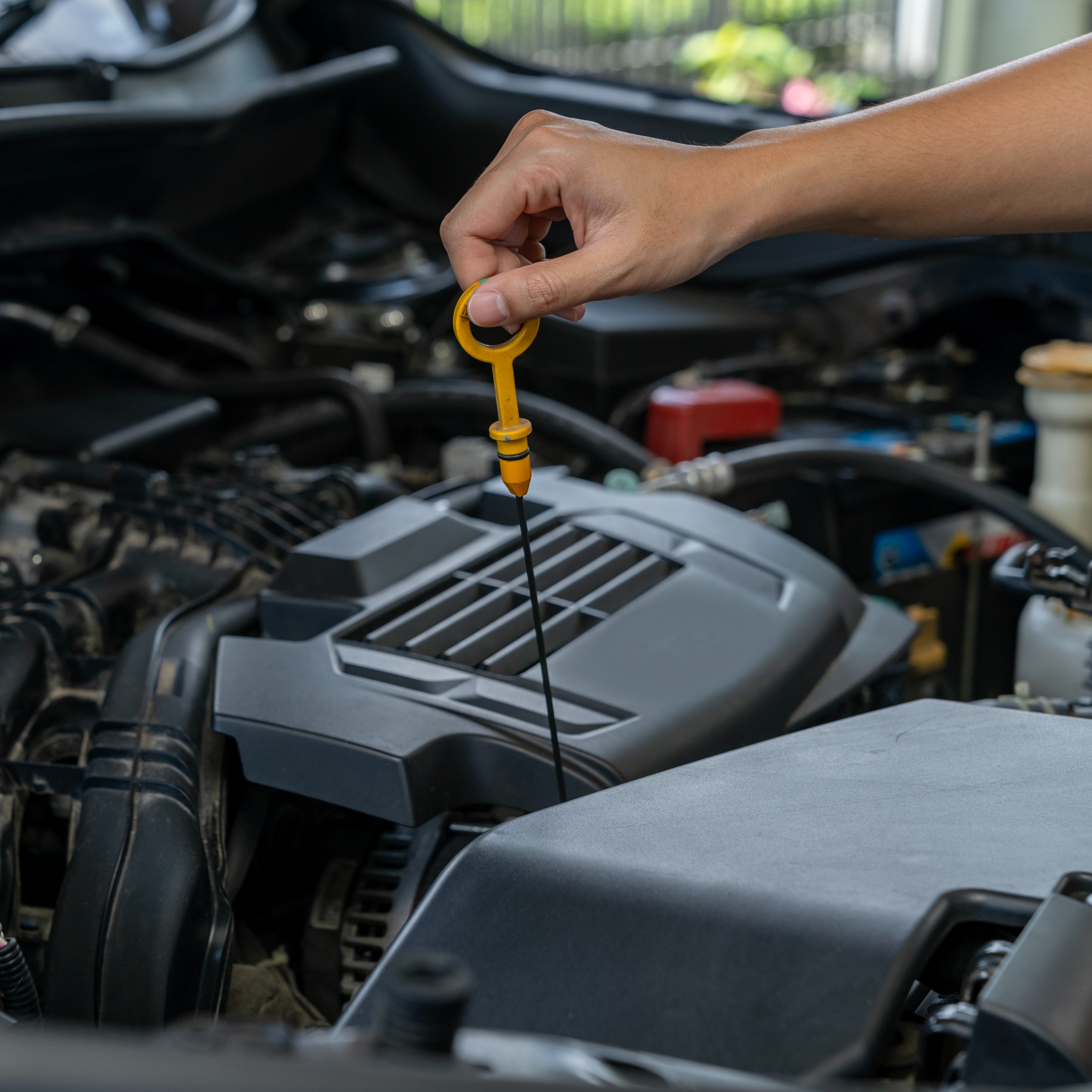
Explaining Oil Issues, Check Engine Light Urgency, Turning Off Vehicle Appliances
About this episode
Nick Stoffel, an A.S.C. Certified Technician from Lloyd's Automotive, shares valuable insights on common car issues, including oil maintenance, check engine light concerns, and the importance of timely repairs. Listeners ask questions about differential fluid changes, the implications of using different oil viscosities, and the urgency of addressing fuel smells in vehicles. The discussion also touches on the benefits of regular maintenance and the impact of weather on vehicle performance. Nick emphasizes the importance of following manufacturer recommendations and staying proactive with car care.

Toyota RAV4
"...and it's for RAV4. I'm not sure how many years or which ones, but nonetheless, here's the deal."
The RAV4 is a small SUV made by Toyota, known for being practical and good for families or outdoor activities.
The Toyota RAV4 is a compact SUV that has been popular for its versatility and reliability. It is often used for both city driving and outdoor adventures.
wire harness protector
"...they will install a wire harness protector to seal the HV floor under wire connector."
A wire harness protector is a cover that keeps electrical wires safe from damage and helps them work correctly in a car.
A wire harness protector is a component that helps shield electrical wires from damage and interference, ensuring proper function and safety in vehicles.
interference
"...that electric motor is putting off a frequency, and if that AM antenna is picking that up, it can create some little noise."
Interference is when something disrupts the sound or signals in a car, often caused by electrical parts like motors.
Interference in automotive terms refers to unwanted signals that can disrupt the functioning of audio systems, often caused by electrical components like motors.
AM antenna
"...if that AM antenna is picking that up, it can create some little noise."
An AM antenna is a part of the car that helps pick up AM radio signals, but it can sometimes get interference from other electrical parts in the car.
An AM antenna is a device used to receive amplitude modulation radio signals, which can be affected by electrical interference from a vehicle's components.
differential fluid
"Yeah, thanks, guys. I've owned Hondas for the last 10, 12 years, and right around 20,000 miles, when I take it in for an oil change, they keep saying I should change the differential fluid. What is that about?"
Differential fluid helps keep a car's differential working smoothly. It's important to change it regularly because it can get dirty and affect how well the car drives, especially when turning.
Differential fluid is a lubricant used in the differential, a component that allows the wheels to rotate at different speeds, especially during turns. Changing this fluid is important for maintaining the performance and longevity of the differential, as it can collect dirt and debris over time.
maintenance schedule
"I mean, you guys have all the information of various manufacturers that kind of tells you the maintenance schedule. It's not like you're trying to upsell people."
A maintenance schedule is like a checklist for taking care of your car. It tells you when to get things like oil changes or inspections done to keep your car running well.
A maintenance schedule outlines the recommended service intervals for a vehicle, including oil changes, inspections, and other necessary maintenance tasks. Following this schedule helps ensure the vehicle operates efficiently and can prevent costly repairs in the future.
oil changes
"And here's the reasons why, you know, we talk about oil, you know, oil changes. A lot of times a manufacturer might say 10,000 miles."
An oil change is when you replace the old oil in your car's engine with new oil. This helps keep the engine running smoothly and prevents damage.
Oil changes are a crucial part of vehicle maintenance, involving the replacement of old engine oil with new oil to ensure proper lubrication and function of the engine. Manufacturers often provide a mileage interval for when these changes should occur, typically ranging from 5,000 to 10,000 miles depending on the vehicle and oil type.
engine
"...we see a lot more mechanical issues with engines..."
The engine is what makes the car go. It turns fuel into power to move the vehicle.
The engine is the heart of a vehicle, converting fuel into mechanical energy to power the car. It consists of various components that work together to create motion.
viscosity
"...would it be okay if I added a different viscosity, not that much of a change from what's recommended..."
Viscosity is how thick or thin a liquid is. For example, thicker oils flow slower than thinner oils, which can affect how well they work in your car's engine.
Viscosity refers to the thickness or resistance to flow of a fluid, such as engine oil. It affects how well the oil lubricates engine components and how easily it flows at different temperatures.
quart of oil
"If you're going in for, you have an appointment the following week and it's down a quart of oil, sure, top it up with, you know, not whatever you have, but something close, I think is just fine."
A quart is a way to measure liquid, like oil. Cars need a certain amount of oil to work well, and if there's not enough, it can cause problems.
A quart is a unit of measurement for liquid volume, commonly used to measure engine oil. Most cars require a specific amount of oil to function properly, and running low can lead to engine damage.
oil specifications
"There's a reason they make recommendations or they have certain specifications. We really want to try to follow the best we can."
Oil specifications are guidelines from the car maker about what kind of oil to use. Using the right oil helps the engine work better and last longer.
Oil specifications refer to the specific type and viscosity of oil recommended by the manufacturer for a vehicle. Following these specifications is crucial for optimal engine performance and longevity.
fuel economy
"...it's a lot to do with fuel economy, emissions, and, you know, the technology is amazing."
Fuel economy is how far your car can go on a certain amount of gas. Better fuel economy means you spend less money on fuel and help the environment.
Fuel economy refers to the efficiency of a vehicle in terms of how far it can travel on a certain amount of fuel. It's an important consideration for both cost savings and environmental impact.
emissions
"...it's a lot to do with fuel economy, emissions, and, you know, the technology is amazing."
Emissions are the harmful gases that come out of your car's exhaust. Lower emissions are better for the environment and help reduce air pollution.
Emissions are the pollutants released into the air from a vehicle's exhaust system. Reducing emissions is crucial for environmental protection and is often regulated by government standards.
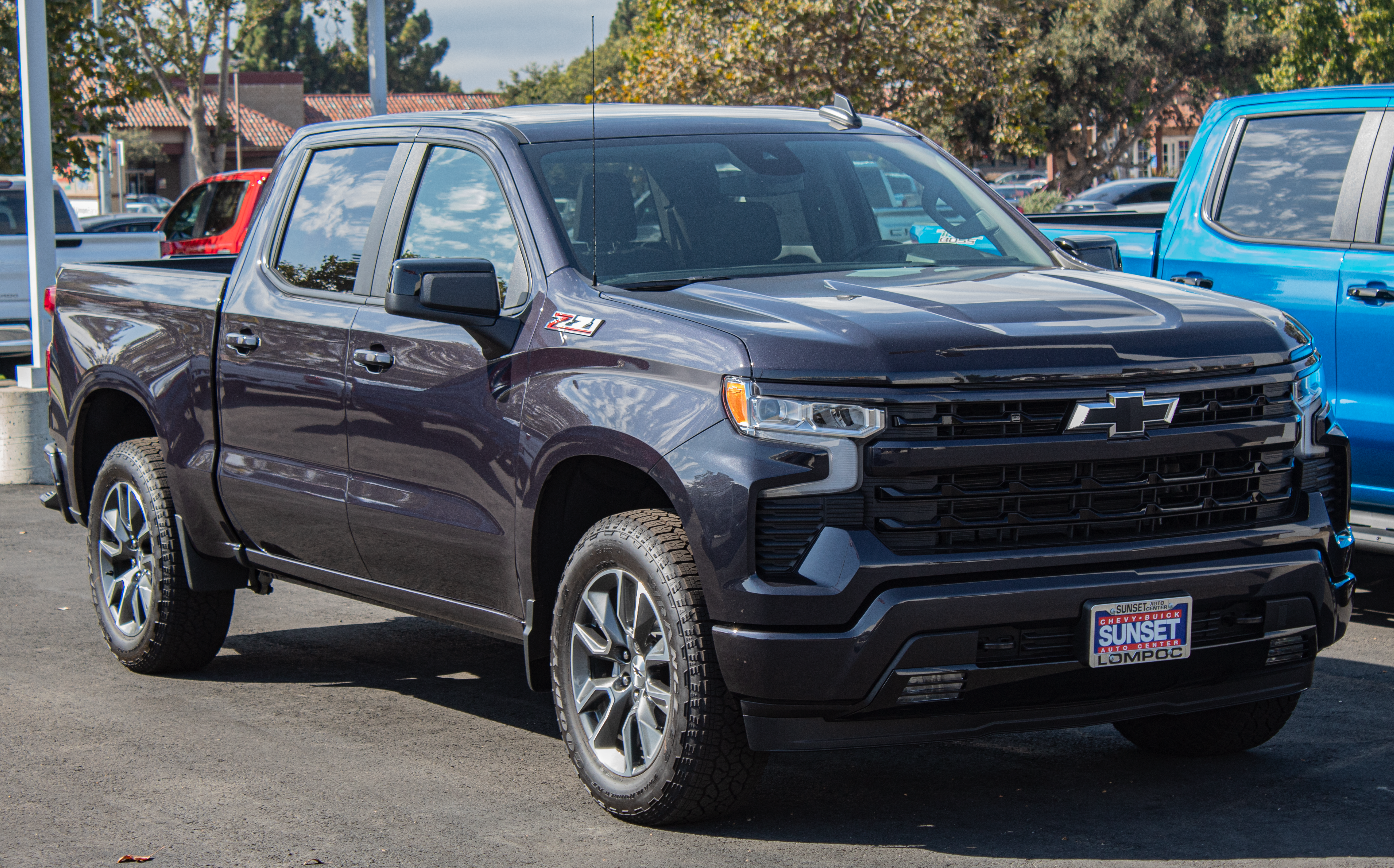
Chevrolet Silverado
"I've got a 00 Shub Silverado long box, OK, 2000 with a 4-3 V8. And yesterday I was driving over some bumps and I now have a gasoline smell coming in between the cab and the box on the pickup truck I can smell it."
The Chevrolet Silverado is a big truck that can carry a lot of stuff and is popular for work and personal use. The 2000 version has a strong engine that helps it drive well and tow things.
The Chevrolet Silverado is a full-size pickup truck known for its durability and versatility. The 2000 model features various engine options, including the 4.3L V8, which provides a balance of power and efficiency.
evap lines
"...have something like to get up in the air, look underneath, kind of trace those evap lines, the fuel lines, the filler tube..."
Evap lines are tubes in your car that carry fuel vapors from the gas tank to the engine. They help prevent harmful gases from escaping into the air.
Evap lines refer to the evaporative emissions control system lines in a vehicle. These lines transport fuel vapors from the fuel tank to the engine to be burned rather than released into the atmosphere, which helps reduce emissions.
fuel lines
"...kind of trace those evap lines, the fuel lines, the filler tube, figure out if there's a spot there or something to come damaged or loose..."
Fuel lines are tubes that carry fuel from the gas tank to the engine. If they leak, it can cause problems with how the car runs and can be dangerous.
Fuel lines are the pipes that transport gasoline or diesel from the fuel tank to the engine. They are crucial for the vehicle's operation, and any leaks can lead to performance issues or safety hazards.

Ford Anglia
"Do I recently bought a Ford Anglia 1950?"
The Ford Anglia is a small car made by Ford, especially known in the UK. The 1950 version has a distinct look and was quite popular during its time.
The Ford Anglia is a compact car that was produced by Ford from 1939 to 1967. The 1950 model is notable for its unique design and was popular in the UK.
roller cam
"It's got a 383 stoker motor with a roller cam. So what is the advantage of a roller cam over just a regular cam?"
A roller cam is a type of camshaft that has small wheels (rollers) to help it move more smoothly. This helps the engine work better and can make more power.
A roller cam uses rollers on the camshaft to reduce friction between the cam and the follower. This design allows for smoother operation and can improve engine performance by allowing higher RPMs and better power delivery.
catalytic converter
"...because they consider the catalyst damaging misfire, so there's something significantly wrong and by driving it you can create permanent damage."
The catalytic converter is a part of your car that helps clean up the exhaust gases before they leave the car. If something goes wrong with the engine, it can hurt this part and lead to expensive repairs.
The catalytic converter is an essential component of a vehicle's exhaust system that reduces harmful emissions by converting toxic gases into less harmful substances before they exit the exhaust. A misfire can damage the catalytic converter, leading to costly repairs.
E85
"So if you have a E85 vehicle or a flex fuel vehicle where you're allowed to use those higher ethanol levels, it's just fine."
E85 is a type of fuel that has a lot more ethanol in it than regular gas. Cars that can use E85 are called flex-fuel vehicles, and they can run on different mixes of gasoline and ethanol.
E85 is a fuel blend that contains 85% ethanol and 15% gasoline. Vehicles designed to run on E85 are known as flex-fuel vehicles and can operate on varying ethanol levels, providing more flexibility in fuel choice.
octane level
"You look in your owner's manual, have a recommendation on the octane level. So you should follow those recommendations."
Octane level tells you how strong the gas is against knocking when it burns in the engine. Some cars need higher octane gas to run well.
Octane level measures a fuel's ability to resist knocking during combustion. Higher octane fuels are typically used in high-performance engines that operate at higher compression ratios.
fluids
"...the linkage, the fluids, you know, whether it's something with the transmission or the drivetrain or the steering, you know."
Fluids in a car are liquids that help it run smoothly. They include oil for the engine, coolant to keep it from overheating, and transmission fluid to help change gears.
Fluids in a vehicle include oil, coolant, transmission fluid, and brake fluid, all of which are essential for proper operation. They help lubricate parts, regulate temperature, and transmit power.
drivetrain
"...whether it's something with the transmission or the drivetrain or the steering, you know."
The drivetrain is the part of the car that helps it move. It includes things like the transmission and driveshaft, which work together to get power from the engine to the wheels.
The drivetrain refers to the components that deliver power from the engine to the wheels, including the transmission, driveshafts, and differentials. It's crucial for the vehicle's movement and performance.
exhaust
"...let the exhaust breathe a little bit. Let those tires warm up. Let those brakes clean up..."
The exhaust system helps get rid of gases produced by the engine. Letting it breathe means making sure those gases can flow out easily, which can help the engine run better.
The exhaust system is responsible for directing combustion gases away from the engine and reducing harmful emissions. Allowing the exhaust to 'breathe' can enhance engine performance and efficiency.
tires
"...Let those tires warm up. Let those brakes clean up..."
Tires are the rubber parts that touch the road. Warming them up helps them grip better, which is important for safe driving and handling.
Tires are crucial for vehicle performance, providing traction, handling, and stability. Warming up tires improves grip and handling characteristics, especially in performance driving.
brakes
"...Let those tires warm up. Let those brakes clean up. So, you know, not saying you need to put yourself out..."
Brakes are what help your car slow down or stop. Keeping them clean and in good shape is important for safe driving.
Brakes are essential for slowing down or stopping a vehicle. Cleaning up brakes can refer to ensuring they are functioning properly and free of debris, which is vital for safety.
battery charging
"...As far as battery charging, I'm looking at a text that occasionally we get a question about this..."
Battery charging means putting energy back into the car's battery so it can start the engine and run electrical parts like lights and radio.
Battery charging refers to the process of replenishing the electrical energy in a vehicle's battery, which is essential for starting the engine and powering electrical systems.
brake rotor
"...there's a little corrosion built up on the brake rotor surface. Those brake pads are applying. That friction makes a little bit of noise. It cleans up, it's gone."
The brake rotor is a flat metal disc that helps your car stop when you press the brake pedal. Sometimes, if it gets rusty from wet weather, it can make a squeaking sound when you first use the brakes, but this is usually normal and goes away quickly.
The brake rotor is a crucial component of a vehicle's braking system, providing a surface for the brake pads to clamp down on to slow or stop the vehicle. Corrosion can build up on the rotor surface, especially in damp conditions, leading to temporary squeaking noises when brakes are applied.
brake pads
"...Those brake pads are applying. That friction makes a little bit of noise. It cleans up, it's gone."
Brake pads are the parts that push against the metal discs (brake rotors) to help your car stop. If they are a bit rusty or dirty, they can make noise when you first use them, but this is usually nothing to worry about.
Brake pads are the components that press against the brake rotors to create friction, which slows down or stops the vehicle. They can produce noise if there is corrosion or debris on the rotor surface when first used after being stationary.
all-wheel drive
"Good morning, Texter says, why don't automobile manufacturers make more all-wheel drive models in full-size pickup trucks rather than just four-wheel drive?"
All-wheel drive means that the car can send power to all four wheels at the same time. This helps the car grip the road better, especially when it's slippery or wet.
All-wheel drive (AWD) is a drivetrain system that provides power to all four wheels of a vehicle simultaneously, improving traction and stability, especially in adverse weather conditions. It's commonly found in cars and crossover SUVs.

Toyota Camry
"...e or two more. This listener says, I have a 2011 Camry. I need struts."
The Toyota Camry is a family-friendly car that is easy to drive and very dependable. Many people like it because it lasts a long time and doesn't usually have many problems.
The Toyota Camry is a midsize sedan known for its reliability, comfort, and fuel efficiency. It has been a popular choice among families and commuters for decades, often praised for its strong resale value and low maintenance costs.

Chevrolet Corvette
"...g what the annual cost would be to maintain a ZR1 Corvette. Now, I know you, this comes from a friend of yo..."
The Chevrolet Corvette is a fast and sporty car that many people dream of owning. The ZR1 version is even more powerful, but it can be expensive to take care of because it has special parts and needs regular maintenance.
The Chevrolet Corvette is a high-performance sports car that has become an American icon since its introduction in 1953. The ZR1 variant is particularly notable for its powerful engine and advanced technology, making it a favorite among car enthusiasts and collectors.
Request an Explanation
Heard something you'd like explained? We'll add it to this episode.
Sign in to request explanations for terms you heard.
Want to learn more?
Browse our glossary for plain-English explanations of automotive terms, jargon, and concepts.
Help improve this episode
See something that's not quite right? Our annotations are AI-generated and can sometimes miss the mark. Click the flag icon on any annotation to suggest a correction.