
Extreme Conditions Require Extreme Machines
About this episode
Arctic Trucks founder Chris joins from West Yellowstone to explain how the company builds extreme-conditions vehicles for snow, ice, and remote expeditions. The conversation digs into their signature low-center-of-gravity conversions, including an E-350 shuttle bus fitted with an F-350 front axle and 44-inch tires. They also cover the proprietary tire design, why it improves flotation and ride quality, and how the same concept can work in sand as well as snow. The episode blends engineering detail with stories from real-world testing and winter tourism use.
arctic trucks
"We're talking arctic trucks. Now, what comes to mind when you think of arctic trucks? ... When you think arctic trucks, you probably think something with tracks or take threads or, you know, wild beasts like that."
An “arctic truck” is a truck that’s been changed so it can work in freezing weather and rough ground. Instead of just driving like a normal truck, it’s built to keep running when it’s really cold and the roads are bad.
“Arctic trucks” are purpose-built or heavily modified trucks designed to operate reliably in extreme cold and harsh terrain. They’re often adapted with specialized driveline, suspension, and sometimes traction systems so they can handle conditions that normal trucks struggle with.
snow cat
"I'm like, what is that? Is that like a snow cat but different?"
A “snow cat” is a tracked vehicle designed for grooming or traveling over snow where normal tires can’t grip. The hosts mention it as a comparison point, highlighting that arctic trucks may be similar in purpose (cold/terrain capability) even if they’re not the same kind of tracked machine.
modified chassis
"You're talking modified chassis, suspension. They"
A truck’s chassis is basically its main frame. When it’s “modified,” builders change it so the truck can carry special parts and handle rough conditions better.
A “modified chassis” means the truck’s frame is altered to support the specific loads and components needed for extreme-duty use. In arctic-truck builds, that often goes hand-in-hand with changes to mounting points, weight distribution, and clearance.
suspension
"You're talking modified chassis, suspension. They"
Suspension is what helps the wheels stay in contact with the road over bumps. On extreme-condition trucks, it’s often upgraded so the truck doesn’t bounce around or lose grip.
Suspension is the system that connects the wheels to the chassis and controls how the truck rides over bumps and uneven ground. For arctic trucks, suspension is commonly upgraded or re-tuned to maintain traction and stability when surfaces are slippery or rutted.
center of gravity (CG)
"keep the CG low to the ground. Unlike some, some wheel and rigs. You want that CG a little bit higher for clearance issues, but they have tons of travel and suspension in it."
CG is basically where the car’s “weight balance point” is. A lower CG usually makes the vehicle feel steadier, while a higher CG can help it clear bumps and rocks. Expedition trucks often have to balance both.
They’re talking about lowering the vehicle’s center of gravity (CG) to improve stability and reduce body roll. For off-road or expedition builds, they may raise it slightly to gain ground clearance, balancing stability with the ability to clear obstacles.
ground clearance
"You want that CG a little bit higher for clearance issues, but they have tons of travel and suspension in it."
Ground clearance is how much space there is between the truck and the ground. More clearance helps you drive over rough stuff without hitting the undercarriage.
Ground clearance is the distance between the lowest part of the vehicle and the ground. Expedition and off-road trucks raise clearance so they can cross ruts, rocks, and uneven terrain without scraping or getting stuck.
Arctic truck expedition builds
"Well, think about all those expeditions up in the Arctic, the Antarctic, Greenland, Iceland, North Canada, like they got across some pretty gnarly terrain, man, like in the roughest and toughest, most hostile conditions. So there's got to be a lot going into these vehicles."
An Arctic expedition truck is specially built to survive in brutal conditions. It’s not just bigger tires—people upgrade the whole setup so it can handle rough ground and extreme cold.
They’re describing purpose-built expedition trucks for extreme environments like the Arctic and Antarctic. These builds typically involve upgrading the chassis, suspension, tires, and cab systems to handle cold temperatures, wind, and rough terrain reliably.
extreme winter shuttle conversions
"...guided tours during the wintertime through the national park... build a new shuttle bus and we want to do something different... for right the winter, right? Trucking around when there's no snow plows..."
They’re talking about turning normal shuttle vans into vehicles that can handle winter conditions. The goal is to keep transporting people safely even when roads aren’t maintained by snowplows.
This segment is about converting regular shuttle vehicles into extreme winter machines for areas where snowplows don’t operate. The concept combines guided-tour logistics with off-road engineering—big tires, wide stance, and custom suspension—to keep passenger transport reliable in deep snow and cold conditions.

F 350 front axle
"Well, we took one of those, we put a F 350 front axle under it, created our own custom suspension..."
They’re using a front axle from a Ford F 350 to make the shuttle bus tougher. An axle is a major part of the front suspension, and using a truck axle helps the vehicle handle bigger tires and rough winter roads.
They say they put an F 350 front axle under the shuttle bus. Swapping in a truck axle is a common way to gain stronger components, better steering geometry, and more appropriate suspension mounting points for oversized tires and off-road use.
44 inch tires
"...and put 44 inch tires under it. 44 inch tires on a shuttle van."
These are huge tires—44 inches tall. Bigger tires help the vehicle float over snow and rough ground, but they also require major suspension and drivetrain changes to work safely.
“44 inch tires” refers to extremely tall, wide tires that dramatically increase ground clearance and improve traction in deep snow and rutted roads. On a shuttle van, this is a major engineering challenge because it affects gearing, suspension travel, steering effort, and overall vehicle stability.

Volkswagen Bus
"... man. What a cool, what a cool concept. A shuttle bus with 44 inch tires on it and suspension that loo..."
The Volkswagen Bus is a classic van that’s known for carrying people and gear. The podcast describes a special version that’s set up like a shuttle with very big tires and a suspension designed to handle rough ground. It’s an example of how the van can be customized for off-road use.
The Volkswagen Bus is a classic van known for its roomy layout and distinctive design. In the podcast, it’s discussed as a shuttle-style concept vehicle with very large tires and a suspension setup built for off-road capability. That combination highlights how the Bus platform can be adapted for rugged, custom travel.
44 inches tall
"We built these using our proprietary Nokia and AT44 inch tire, which is 44 inches tall and about 18 and a half inches wide, which was a tire developed by the guys in Iceland, specifically, for traveling across snow."
A 44-inch-tall tire is extremely big. Bigger tires can help the vehicle ride higher and stay on top of snow instead of digging in, but they also change how the truck feels and performs.
A 44-inch-tall tire is an unusually large diameter for road vehicles, and it changes how the vehicle floats over snow and rough surfaces. Larger tires can improve ground clearance and help reduce the tendency to sink into soft snow, while also affecting ride comfort and gearing.
soft side ball
"Well, this tire is 100% developed by Arctic Trucks. It's designed specifically with a very soft side ball and a stiff tread so that when you tear it down, it acts kind of like a track, like a rolling belt."
This sounds like they’re talking about a softer sidewall on the tire. A softer sidewall can help the tire better match the surface, which can improve grip on snow.
“Soft side ball” appears to refer to a softer sidewall construction that allows the tire to deform and conform to the ground. Combined with a stiff tread, this can improve how the tire contacts snow while still preserving tread shape for traction.
stiff tread
"It's designed specifically with a very soft side ball and a stiff tread so that when you tear it down, it acts kind of like a track, like a rolling belt."
“Stiff tread” means the tire’s outer pattern is built to stay firm instead of squirming. That helps it keep traction and control when you’re driving over bumpy, slippery snow.
A stiff tread is designed to maintain shape and grip under load, especially when the tire is flexing over uneven snow or ice. The goal described here is to keep the tread “elongated” so it behaves more like a continuous traction surface.
rolling belt
"It's designed specifically with a very soft side ball and a stiff tread so that when you tear it down, it acts kind of like a track, like a rolling belt. So we want the side balls to lay down on the ground, but we want the side, we want the tread to stay elongated"
They’re saying the tire works a bit like a tracked vehicle. Instead of just rolling on top, the tire’s shape and tread help it keep traction over snow the way a belt or track would.
The hosts describe the tire’s behavior as acting like a “track” or “rolling belt,” meaning the tread and sidewall work together to create a more continuous traction surface. This concept is especially useful in snow travel because it can distribute load and maintain contact as the tire moves over uneven ground.
tread to stay elongated
"So we want the side balls to lay down on the ground, but we want the side, we want the tread to stay elongated"
They want the tire’s outer pattern to stay “stretched out” in a way that keeps more of it touching the snow. More consistent contact usually means better grip and less slipping.
Keeping the tread “elongated” suggests the tire is engineered to stretch or maintain a longer contact patch as it rolls. That can improve traction and stability on snow by maximizing how much of the tread is effectively contacting the ground.
flotation
"And you just said flotation. Like, is that enough tire to semi float the vehicle? ... when I say flotation, I mean on the snow."
Flotation is about whether the tires can “ride” on top of soft snow instead of getting bogged down. If the snow is powdery, you can sink—so the tire’s shape and size help you skim across the top.
Flotation in off-road tire talk means how well a vehicle can stay on top of a soft surface (like snow or powder) instead of sinking. The hosts connect it to “ice” and “cold water,” then clarify they mean flotation on snow—especially powder that you can sink into.
Nokia
"But yeah, we, we develop this tire. We have it manufactured by Nokia."
They say Nokia makes the tire. The point is that it’s a real tire manufacturer, but you can’t just buy it like a normal retail tire—you get it through the off-road specialists.
Nokia here is mentioned as the manufacturer of the tire used on Arctic Trucks-style extreme-condition builds. The key takeaway is that the tire is produced by a major tire brand, but distributed through a specialized off-road outfitter.
powder
"Yeah, yeah, especially like the powder where you could just sink down in it and okay. So you're skimming across the top."
Powder is loose, fluffy snow. It’s the kind of snow where a vehicle can sink down, so the tire needs to help you stay on top.
Powder refers to loose, dry snow that behaves like a soft medium—easy to sink into. The hosts describe how flotation works in powder: instead of digging in, the tires skim across the surface.
rock crawling
"Are these tires, it sounds like something that well, no one rock crawlers and the and what I would like to do is sound like a tire that would work for rock crawling..."
Rock crawling is off-roading over rocks at slow speeds where traction matters a lot. They’re basically asking if a tire built for snow would still be good for rocky trails.
Rock crawling is a slow, technical off-road style focused on traction at low speeds over rocks and uneven terrain. The hosts are questioning whether an extreme snow-focused tire (with huge diameter) would also work for rock crawling at places like Moab.
counter engineer
"I guess you know what doesn't work. So you counter engineer against it, right? You see some things that that do work, but maybe not quite as well as you want to."
“Counter engineer” here describes an engineering approach where you analyze what fails in real-world testing and then redesign to address those shortcomings. Instead of only guessing, they test, observe performance gaps, and iterate toward a better solution.
44 inch balloon tire
"Like, how do you take something like an E 350 and fit a 44 inch balloon tire under it? Like, what is the methodology for that?"
A “44 inch balloon tire” is a very large tire meant for rough terrain. It helps the vehicle float over soft ground, but it also requires a lot of space and clearance underneath.
A “44 inch balloon tire” is an extremely tall, wide tire designed to increase the tire’s contact patch and help the vehicle stay on top of soft surfaces like sand or snow. The bigger the tire, the more fitment challenges you face—clearance, suspension geometry, and body/underbody modifications become necessary.
minimal amount of lift
"Well, that is that is the route behind Arctic trucks is we keep it low with the minimal amount of lift. And so what that means is you got to you got to cut away and move everything that's in your way to get that tire in there."
“Minimal lift” means they raise the truck only a little to make room for bigger tires. Less lift usually helps keep the vehicle driving more normally and reduces side effects from big suspension changes.
“Minimal amount of lift” means raising the vehicle as little as possible to fit larger tires. This matters because excessive lift can change driveline angles, ride quality, and handling, while also increasing the amount of cutting/clearancing needed to prevent rubbing.
cut away
"And so what that means is you got to you got to cut away and move everything that's in your way to get that tire in there. So we do a lot of cutting."
“Cut away” means trimming or removing parts so the huge tire won’t hit the body or suspension. It’s a common step when you install tires that are much bigger than stock.
“Cut away” refers to physically removing or reshaping parts of the body, wheel wells, or underbody components to create clearance for oversized tires. When fitting very large tires, clearance work is often required even if the vehicle is kept low with minimal lift.
off camber situations
"you might be hitting, you know, some off camber situations where the trucks can be leaning over. And by having the center of gravity as low as possible, you keep the truck really stable."
“Off camber” means the ground is tilted sideways. That can make the truck lean to one side, so stability and traction become harder to manage.
Off-camber terrain means the surface slopes sideways relative to the vehicle, so one side is higher than the other. This increases lateral load and can cause the truck to lean significantly, making stability and tire contact more critical.

Lucid Gravity
"leaning over. And by having the center of gravity as low as possible, you keep the truck really st..."
The Lucid Gravity is an electric SUV. The podcast talks about keeping the center of gravity low, which helps the vehicle feel more stable when you drive. This is mainly about handling and control rather than engine power.
The Lucid Gravity is an electric SUV focused on efficiency and handling. The podcast mentions lowering the center of gravity to improve stability, which is a key design goal for a heavier electric vehicle. It’s discussed in terms of how the vehicle stays controlled during movement.

Ford Expedition
"really stable. When you're on an expedition, you you're going to have all sorts of gear, lug..."
The Ford Expedition is a large SUV made to carry passengers and gear. The podcast points out that it feels stable, especially when it’s loaded. That stability can make long trips with equipment easier to manage.
The Ford Expedition is a full-size SUV designed for carrying people and gear on longer trips. The podcast highlights its stability, which is important when you’re loaded down and driving with a lot of equipment. That’s why it comes up in conversations about expedition-style travel.
rollover
"Well, I figure if you, if you do a rollover, there isn't really a tree around a winch off."
A rollover is when the vehicle tips over onto its side or roof. It’s more likely when the ground is uneven or the truck is pushed sideways too hard.
A rollover happens when a vehicle tips onto its side or roof, usually due to excessive lateral force, uneven traction, or a high center of gravity. In extreme off-camber or uneven terrain, rollover risk rises quickly, which is why setups focus on stability and ride height control.
custom flatbeds
"We'll build, depending on the, the use case for the vehicle, we'll build custom flatbeds, we'll build custom utility beds that have racks on them with lots of tie down points."
A custom flatbed is a truck bed made for hauling gear. For expedition use, it’s built to fit the equipment and make it easier to secure everything.
A custom flatbed is a purpose-built cargo platform designed to carry gear and equipment efficiently. In expedition builds, flatbeds are often tailored for weight distribution, tie-down layout, and compatibility with recovery or storage needs.
custom utility beds
"We'll build custom flatbeds, we'll build custom utility beds that have racks on them with lots of tie down points."
A custom utility bed is a truck bed designed to carry tools and gear. Adding racks and tie-down points helps keep everything secured when driving on rough ground.
Custom utility beds are specialized truck cargo beds that can include racks and integrated storage. The key advantage for extreme conditions is organizing equipment and providing many secure tie-down points so loads stay put during vibration and side-loading.
ride height is adjustable
"We do custom four link suspensions with airbag suspension on them so that the ride height is adjustable."
Adjustable ride height means you can raise or lower the truck. Lowering can help it feel more stable, and raising helps it clear obstacles.
Adjustable ride height means the vehicle’s ground clearance can be changed electronically or pneumatically. Lowering can improve stability (less body roll and lower center of gravity), while raising can improve clearance and traction in deep snow or ruts.
air up the airbags
"air up the airbags on the left hand side only and deflate the ones on the right hand side to level that vehicle out and buy that little bit more before you roll over, man, all kinds of things to, to help with, you know, that particular roll over scenario and to keep you, you know, it's all about stability."
Some trucks use air-filled suspension bags. By adding air, you can raise the truck and help it sit level, which makes it easier to stay in control on rough or sloped ground.
“Air up the airbags” refers to using an air-suspension system (air springs) to raise or level the vehicle. Adjusting air pressure can help manage ride height and weight distribution, which matters when you’re trying to prevent rollover or keep traction when the ground is uneven.
stability
"So you got to be equipped to handle just about anything, whether it's a big drop off, a big hole, rocks, muds, ice, you know, and all the things that can hide under the snow. Uh, I'm imagining that's a crazy challenge in its own right. We're up against a break right now, but when we come back, can you explain a little bit as to some of the creature comforts?"
Stability just means the truck stays balanced and controllable. On snow, you can’t always tell what’s under the surface, so the truck needs to be set up to avoid sliding or rolling over.
In off-road and winter driving, “stability” is about keeping the vehicle’s balance so it doesn’t tip or slide out of control. When traction is unpredictable (like snow hiding obstacles), stability depends on how the tires grip and how the vehicle’s weight transfers during steering, braking, and bumps.
off grid
"What is he going to see inside the truck? Is he going to be able to stay off grid? If you will, what kind of, you know, creature comforts and amenities?"
Off grid means you’re not connected to normal services like home power or water. The truck would need its own supplies and power so you can live and function out in remote areas.
“Off grid” means operating away from normal utilities and services—no hookups for power, water, or communications. For expedition-style vehicles, it usually implies onboard power generation/storage, water/food planning, and systems that let you live in the vehicle for extended periods.
winch
"If you don't have a tree and a winch kind of thing, you know, like, all right, come back with some scoop for us, man. Some of us landlubbers that terra firma."
A winch is like a heavy-duty puller with a cable. If you get stuck, you can hook it to something solid and pull yourself out instead of spinning your tires.
A winch is a powered cable system used to pull a vehicle out of mud, snow, or ruts when it can’t move under its own power. In remote/off-road situations, it’s often paired with recovery points and proper rigging to avoid damaging the truck or getting the cable path wrong.
dead horse Alaska
"I mean, you were just telling us in the break there that you were in dead horse Alaska. The reason they call it dead horse Alaska because nothing survives up there."
Dead Horse, Alaska is a place with extremely harsh weather. The point is that it’s so cold that normal vehicles can’t reliably operate there, so the truck has to be built for that reality.
“Dead Horse, Alaska” is referenced as an example of an environment where conditions are so severe that vehicles and equipment must be engineered for survival. The hosts connect the name to the idea that “nothing survives up there,” emphasizing why extreme cold changes how you design and build trucks.
negative 44 degrees
"Yeah, man, it's, it's wild negative 44 degrees. Dude, how do you, how do you build a truck to withstand that on a regular basis, man?"
The segment cites “negative 44 degrees” to illustrate the extreme cold that drives engineering decisions. At these temperatures, materials and components behave differently than they do in normal climates, which is why builders focus on cold-rated materials and reliability.
special steel
"one of the main things you have to be careful of to build a reliable truck is... building the parts, the critical parts out of the right steels. Um, we use a special steel that is, uh, rated to negative 40 degrees."
They’re using a special type of steel that stays strong in extreme cold. Regular steel can get brittle when it’s very cold, which makes it more likely to crack.
The guest says they use a “special steel” rated to negative 40 degrees, specifically to maintain strength at low temperatures. This matters because many steels lose toughness in the cold and can become brittle, increasing the risk of cracking or failure.
steel becomes brittle in the cold
"at those temperatures, regular steel that you'd go buy at the welding shop will become brittle and can break because of the cold. Is that part of the Titanic?"
In very cold weather, some metals don’t bend the way they should—they get brittle. That means a part that would survive in normal temperatures might crack when it’s extremely cold.
The hosts explain that at extreme temperatures, “regular steel” can become brittle and break. This is a materials science concept: cold reduces ductility/toughness, so parts that would flex safely in warmer weather may crack under stress.
extreme cold conditions
"...learning curve on ships off of those Titanic that kind of learned the hard way that steels get brittle, certain steel allies get brutal in those crazy cold conditions."
Extreme cold can change material behavior, including making some steels more brittle and less tolerant of stress. The hosts connect this to real-world lessons learned from disasters and harsh environments, and then tie it to why trucks need to be built and equipped for survival and long-term use.
GPS
"...we can add mounts for GPS's so that you can keep those things handy."
GPS is a navigation system that tells you where you are. In places with few roads or landmarks, it helps you find the right way and stay oriented.
A GPS (Global Positioning System) receiver uses satellites to determine location and navigation. In remote areas like Alaska’s North Slope, GPS helps route planning and reduces the risk of getting lost when roads and landmarks are limited.
diesel heaters
"Well, we can add Lobasto heaters, you know, the diesel heaters, we can add those to heat up the cabs or like the trucks we have in Antarctica, they have one of them, a couple of them have a camper on the back and, you know, we'll heat that up."
A diesel heater is a small heater that uses diesel fuel to make heat. It can warm the inside of a truck or camper even when the engine isn’t running, which is great in extreme cold.
Diesel heaters are independent heating units that burn diesel to generate heat without needing the vehicle’s engine to be running. They’re commonly used in cold climates to warm cabins, cargo areas, or camper setups efficiently.
Lobasto heaters
"Well, we can add Lobasto heaters, you know, the diesel heaters, we can add those to heat up the cabs or like the trucks we have in Antarctica, they have one of them, a couple of them have a camper on the back and, you know, we'll heat that up."
This sounds like Webasto, a company that makes small diesel heaters. People use them in trucks and campers because they work well when it’s freezing outside.
“Lobasto” appears to be a transcription error for Webasto, a well-known maker of auxiliary diesel heaters used in trucks, RVs, and marine applications. These heaters are popular because they provide reliable cabin heat in very cold conditions.

F 550
"I believe that was maybe an F 550, it was a huge truck, maybe the F 550 you guys deal with. Yes, that was an F 550, six by, well, it was six wheels, but it was only full wheel drive."
They’re talking about a Ford F-550, which is a heavy-duty truck. It’s the kind of truck people choose when they want a strong platform to build an expedition or special-purpose vehicle.
The speaker is referring to a Ford F-550 as the base truck for an extreme-duty build. The F-550 is a heavy-duty chassis cab platform that’s often used for specialized conversions like expedition rigs and off-road work.
true six by six conversion
"That's, that's actually one of the things we've been working on this past year. We're actually going to take that very truck and we've developed our own axles with East Coast gear supply and dyna track. We're going to take the rear axles out of that truck and we're going to make it into a true six by six. Now we've developed our, our parts to do that."
They’re talking about turning a truck into a real 6x6, not just adding extra wheels. It takes more than fabrication—you need the drivetrain and gearing to be set up so the truck can actually drive all six wheels.
The segment describes converting an existing heavy truck into a “true” 6x6, meaning it’s not just six wheels but a properly engineered drivetrain that powers all wheels. This is a major fabrication and engineering effort involving axles, gearing, and driveline layout to make the vehicle work as intended.
East Coast gear supply
"We're actually going to take that very truck and we've developed our own axles with East Coast gear supply and dyna track. We're going to take the rear axles out of that truck and we're going to make it into a true six by six."
They mention East Coast Gear Supply as a supplier for parts used in the truck’s drivetrain. When you change a truck’s setup, the gearing has to be right so it drives properly.
East Coast Gear Supply is referenced as a partner supplying gearing components for the axle/drivetrain development. In builds like this, gear ratios and differential components are critical to matching torque and speed to the vehicle’s new 6x6 configuration.
dyna track
"We're actually going to take that very truck and we've developed our own axles with East Coast gear supply and dyna track. We're going to take the rear axles out of that truck and we're going to make it into a true six by six."
Dyna Track is mentioned as a collaborator in developing the axle package for the truck conversion. In off-road and extreme-condition builds, companies like this often provide specialized drivetrain or traction-related components that help the vehicle handle difficult terrain.
six wheels
"I just know it's huge, but when you drive in six wheels, man, there's not much you can't get over. It's, it's wild, but there's not much you're not going to get over, uh, and,"
When people say “six wheels,” they usually mean a truck with three axles. More wheels (and often more driven wheels) helps it grip the ground better in rough, slippery conditions.
“Six wheels” usually refers to a 6x6 truck configuration, meaning it has three axles with all six wheels driven. This kind of setup helps the truck keep traction and momentum in deep snow, mud, or uneven terrain where a normal 4x4 might struggle.
living quarters
"Uh, yeah, that truck was a beast, but had, it had like living quarters. It had a way for you to prep food and, uh, to sleep and to survive in, in the ugliest of environments."
“Living quarters” means the truck has space for people to sleep and stay warm, not just drive and haul. In places like Antarctica, that can be the difference between working safely and having to rely on tents.
“Living quarters” in a truck context means the vehicle is built like a mobile base—typically with insulated walls, bunks, and sometimes a small galley—so crews can work and sleep without relying on external shelters. In extreme climates, this shifts the problem from just vehicle mobility to also maintaining a livable interior temperature.
Antarctica expedition trucks
"And we have a couple of trucks very similar to that, um, that are hauling scientists and such in Antarctica right now. Um, and yeah, it's very, that's the same thing. It's got a living quarter so that the people that are doing the work down there, they'll have to sleep in tents."
Antarctica is so cold that normal vehicles and living setups don’t work well. Expedition trucks are built to handle the cold and often include heated, insulated spaces for people to sleep.
The segment describes specialized trucks used to support scientists in Antarctica, where vehicles must operate reliably in extreme cold, wind, and snow. These setups typically combine heavy-duty drivetrains, strong insulation, and onboard heating so crews can work and sleep safely.
thermal management
"I'd imagine is you got to have it, you got to have the walls thicker or more insulated, more just a robust, you know, insulation scenario or thermal management scenario. How do you guys get around that?"
Thermal management is basically how you keep the inside temperature under control. In a cold environment, it means using insulation and heating so the inside doesn’t freeze over.
Thermal management is the set of strategies used to control heat flow—keeping heat in when it’s freezing and preventing overheating when conditions are harsh. For insulated truck living spaces, it includes wall insulation, sealing, and heating system sizing so the interior stays stable despite extreme ambient temperatures.
extreme cold / minus 50 or 70
"That's, I mean, you know, you can man up, but like, would it freeze off in like a flash? ... I've never been in minus 50 or 70."
They’re talking about driving in super cold weather, like −50°F or colder. At those temps, car fluids don’t work normally and the battery struggles, so everything takes more effort and you have to move quickly.
The hosts are describing how vehicles and people behave in extreme subzero temperatures (around −50°F to −70°F). In these conditions, fluids thicken, batteries lose cranking power, and exposed metal/skin can freeze quickly, which changes how you operate and even how you handle short stops.
Dead Horse to Barrow, Alaska (no roads)
"I flew up to, uh, Dead Horse and I met two of the trucks ... traveled from Dead, Dead Horse to Barrow Alaska, which there are no roads there."
They’re talking about traveling between two remote places in Alaska where you can’t just take normal roads. When there aren’t roads, you need a vehicle and plan built for that environment.
Dead Horse and Barrow (Utqiagvik) are in Alaska’s far north, where the landscape and seasonal conditions can mean there are no year-round roads. The episode highlights how logistics and vehicle capability become the limiting factors when you’re crossing long distances off conventional road networks.
ice-road style driving (22 hours for 200 miles)
"It's a 200 mile journey... It took us 22 hours to make that drive."
They took a long trip—200 miles—in about a full day because the conditions are so rough. When traction is limited, you can’t drive fast, so you have to plan for extra time and wear.
Driving 200 miles in about 22 hours at roughly 30 mph average suggests harsh conditions and limited traction—typical of winter-only routes like tundra/ice roads. This affects planning: fuel range, tire wear, and time-on-road become critical, and you need to expect slow progress.
tundra freezes and they create a road
"They can only drive in the wintertime when the tundra freezes and they create a road, um, 200 miles."
They’re describing a winter-only route where the ground freezes hard enough for trucks to drive on. It’s not a normal paved road, so driving is slower and more dangerous.
They’re referencing “ice roads”/seasonal winter routes where the tundra surface freezes enough to support vehicles. This matters because traction, braking, and speed are limited, and the route can only be used during a narrow window when conditions are right.
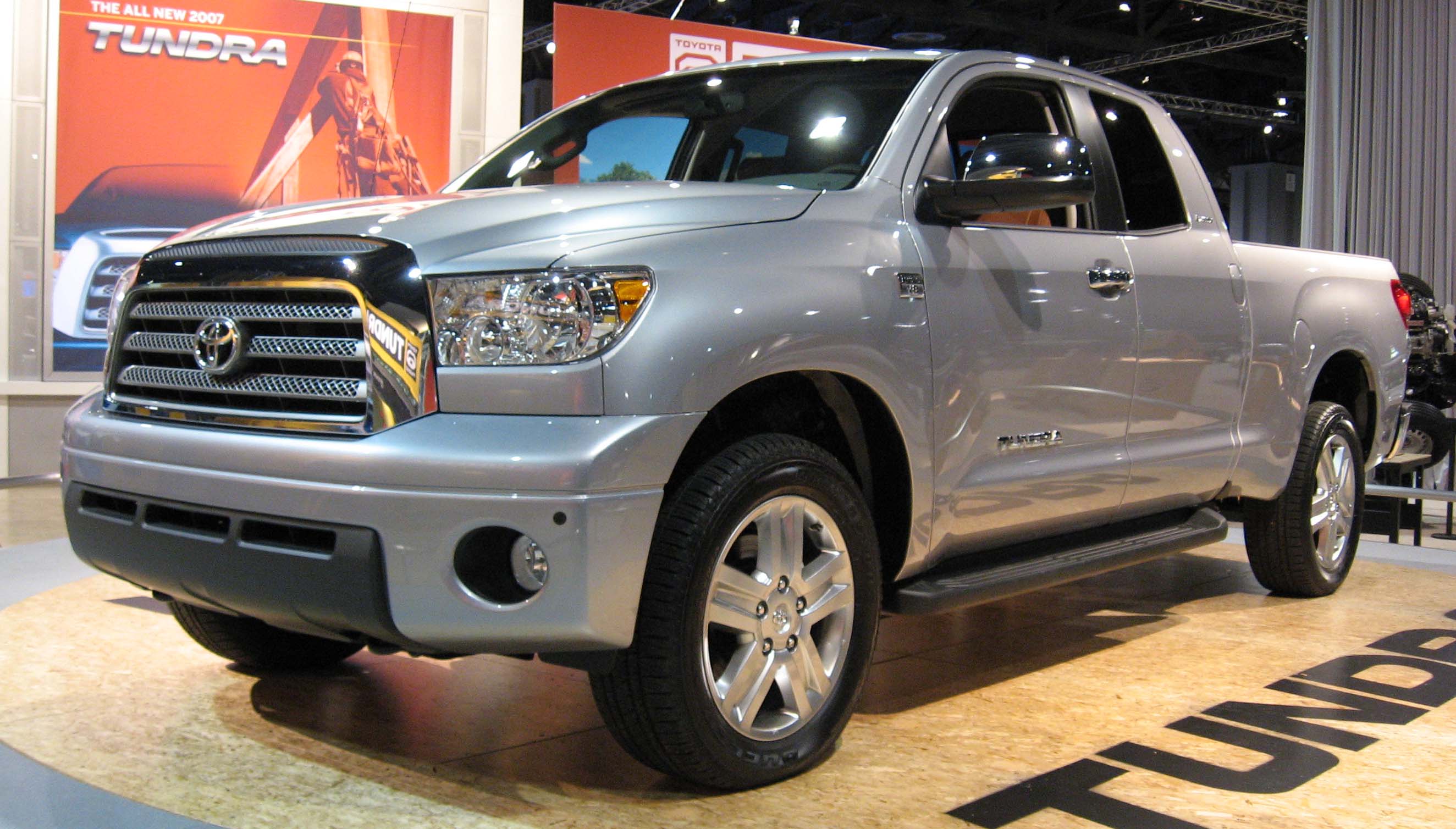
Toyota Tundra
".... They can only drive in the wintertime when the tundra freezes and they create a road, um, 200 miles."
The Toyota Tundra is a large pickup truck meant for work and tough conditions. The podcast mentions it being used in winter when the ground freezes and people can make a temporary road. That helps the truck get traction and move through areas that would be difficult otherwise.
The Toyota Tundra is a full-size pickup truck built for towing, hauling, and off-road or winter use. In the podcast context, it’s discussed as a vehicle that can operate in harsh winter conditions—specifically when the ground freezes and a temporary route is created. That makes it a practical choice for remote travel where traction and durability matter.
auger
"I assume maybe you, you bury an auger in the ground if you need to winch. Like what are the kind of stuff you run into that, you know, like, mm-hmm."
An auger is a screw-like drilling tool used to create an anchor point in the ground. For vehicle recovery, people may bury an auger or use it to secure a winch line so the pull is anchored safely rather than ripping out of soft snow or soil.
getting stuck in deep snow
"And, uh, we, we hit, we hit a soft patch in the snow and, and sank that thing, set it right down on the axles and the frame and all four tires were just spinning. And so we got out and we took our snow shovels..."
This describes a common off-road recovery scenario: the vehicle loses traction and sinks until the body, axles, or frame are supported by the snow instead of the tires. The key problem is that spinning tires don’t move the vehicle unless you restore traction by digging, creating a ramp, or using traction aids.
snow shovels
"And so we got out and we took our snow shovels and we, in front of the front axle, we just kind of dug out some snow, made a little bit of a ramp there."
They used snow shovels to clear snow around the tires. By digging a little ramp in front of the wheels, you give the tires something to grab so the truck can drive out.
Using snow shovels for recovery is a practical traction-restoration method: you dig away loose or packed snow in front of the tires and build a small ramp. This helps the tires regain contact with firmer ground so the vehicle can move under its own power.
aired the tires down to three PSI
"And then I locked in the lockers, aired the tires down to three PSI and just carefully, you know, kind of rocked it back and forth."
Letting air out of the tires makes them spread out more on the ground. That can help you move through snow because the tire can grip and “float” better.
Lowering tire pressure increases the tire’s contact patch and sidewall flexibility, which can improve traction and flotation in soft surfaces like snow. “Three PSI” is extremely low, so it’s typically only appropriate for very slow, controlled off-road use with the right tires and vehicle.
lockers
"And then I locked in the lockers, aired the tires down to three PSI and just carefully, you know, kind of rocked it back and forth."
Lockers are a traction feature that makes both wheels on an axle spin together. That way, if one wheel starts slipping, the other wheel still keeps pushing you forward.
“Lockers” refers to locking differentials (often selectable) that force the left and right wheels on an axle to rotate together. This reduces wheelspin and helps the vehicle maintain traction when one wheel loses grip, like in deep snow.
rocked it back and forth
"And then I locked in the lockers, aired the tires down to three PSI and just carefully, you know, kind of rocked it back and forth. And eventually it just started to crawl up out of the hole..."
If you get stuck, you can gently move the vehicle forward and backward to find grip. The goal is to avoid spinning the tires and digging a deeper hole.
“Rocking” a stuck vehicle back and forth is a recovery technique that uses alternating forward/reverse to build traction without digging deeper. It’s especially useful when traction is intermittent (like snow ruts), because it can help the tires find a path while keeping momentum controlled.
spare tire
"...yes, you, you bury stuff in the snow, spare tire, whatever it takes, um, usually you're traveling in pairs..."
Sometimes you can use what you have—like a spare tire—as a tool to help the stuck tires get traction. It’s basically about making the ground less slippery under the tires.
In extreme snow situations, the “spare tire” can be used as a traction aid or improvised recovery material (for example, placing it to help a tire climb out). The point is that in deep snow, you may need to create traction rather than rely on the vehicle alone.
traveling in pairs
"...usually you're traveling in pairs, so you're almost always got another vehicle that you could use. That would be smart. ...Always go out when you're wheeling... go with somebody else."
Going with another vehicle is safer because someone can help if you get stuck. If one car has trouble, the other can assist with recovery or supplies.
Traveling in pairs is a safety and recovery concept for off-road or extreme conditions: one vehicle can assist if the other gets stuck or damaged. It also improves communication and reduces risk when visibility and traction are poor.
Top Gear episode with the little red Toyota pickup trucks
"Well, if you remember the old Top Gear episode with the little red Toyota pickup trucks, they did have guns mounted on the bed of the truck. And then they drove to the North Pole..."
They’re referencing a Top Gear episode as a story example. The point is to set up a discussion about outfitting a truck for extreme situations.
This is a reference to a specific Top Gear episode used as a jumping-off point for discussing extreme-condition vehicle outfitting. It functions more as a story/segment marker than a technical deep dive.
E locker
"Most of the trucks will have, most of the four trucks will have a, the E locker in the back, which is a great thing. But we'll add like a torsion or an ARB in the front."
An “E locker” is a type of traction upgrade that locks the differential so both wheels can push together. It’s especially helpful when you’re climbing or driving on slippery ground.
“E locker” is a specific brand/model of locking differential used in many off-road builds. It’s typically chosen for its ability to improve traction under low-grip conditions, especially in the rear axle where climbing and pulling matter most.
ARB
"But we'll add like a torsion or an ARB in the front. You know, we've, we've got lights and light bars."
ARB usually means an off-road traction system that can lock parts of the drivetrain to help the truck grip better. It’s commonly used for tough trails where wheels can easily spin.
“ARB” here likely refers to ARB (Air Locker) style differential lockers or related off-road traction components. ARB products are popular because they’re designed for serious off-road use and can be engaged to improve traction when needed.
increase capacity for water, fuel, commodities like that
"or the rear so you can move it around either side. You increase capacity for water, fuel, you know, commodities like that."
They’re talking about adding space and mounts so the truck can carry more essentials like water and fuel. That helps you travel farther in remote places without running out.
This refers to expedition build planning: adding storage and mounting solutions so the truck can carry more supplies like water and fuel. More capacity extends range and reduces how often you need to resupply in remote areas.
diesel gelling
"And how to keep, how to keep the diesel from gelling, things like that. ... The diesel gelling, that's, that's always a, that's always a fight."
When it gets really cold, diesel fuel can turn thick and waxy. That can make it hard for the engine to pull fuel through the system. People manage it so the truck can still start and run in freezing weather.
Diesel gelling happens when cold temperatures cause diesel fuel to thicken and form waxy crystals, which can clog fuel filters and restrict flow. It’s a common winter issue for diesel engines, especially in very low temps.
additives
"Yeah. You know, additives are usually used. There's not much we can do. But to be honest, we haven't had many problems of diesel fuel gelling."
Additives are chemicals you mix into diesel to help it stay usable in cold weather. They help prevent the fuel from turning thick and causing starting or running problems.
Diesel fuel additives are used to prevent or delay gelling by improving how the fuel behaves in cold temperatures. They’re often carried as a contingency because extreme cold can exceed what the base fuel can handle.
fuel capacity
"What about capacity? You add to fuel capacity. Do you have water tanks on there? Do you increase that capacity for some of these longer runs?"
Fuel capacity is just how much fuel the truck can hold. More capacity means you can go farther before you have to stop for gas, which matters a lot when help or fuel stations are far away.
Fuel capacity is how much diesel a truck can carry, which directly affects how far it can travel between refueling stops. In extreme conditions (like long runs to remote areas), increasing capacity reduces downtime and risk.
water tanks
"Do you have water tanks on there? Do you increase that capacity for some of these longer runs? ... You forget about water. We don't."
Water tanks would be extra storage for water. But in this discussion, they’re saying they don’t use water tanks for their setup, likely because it’s not as useful (or can freeze) compared with carrying more fuel.
Water tanks are sometimes considered for extreme-environment operations, but this segment suggests they’re not part of their approach (“You forget about water. We don't.”). In cold-weather builds, water can also freeze, so it may be less practical than fuel capacity.
fuel tanks
"We can add, we can add fuel tanks if you want, like the, like when we do the six by six, we'll, we'll add like 120 gallons... on top of the factory 40 gallon tank."
Fuel tanks are where the diesel is stored. Adding extra tanks lets the truck carry more fuel, so it can keep going longer without stopping to refuel.
Adding auxiliary fuel tanks increases total onboard range by letting the truck carry more diesel than the factory setup. The segment also describes carrying extra tanks for operations in places like Alaska, where refueling opportunities can be limited.
coolant system
"Yeah. What are we don't do much with the coolant system? And trucks has been surviving very well up there."
Coolant is the fluid that helps your engine stay at a safe temperature. It moves through the engine and radiator to prevent overheating and also helps prevent freezing in winter.
The coolant system is how a vehicle keeps its engine at the right temperature. It circulates coolant through the engine and radiator so the engine doesn’t overheat in heat or freeze in cold.
winter front
"We put a winter front on the front because in those temperatures, the diesel engines, they just don't build any heat."
A winter front is basically a cover placed in front of the radiator area. It helps the engine warm up faster and stay warm in freezing weather.
A winter front is an aftermarket grille/cover used to block airflow to the radiator in very cold weather. By reducing airflow, it helps the engine and cooling system reach and maintain operating temperature.
diesel engines
"We put a winter front on the front because in those temperatures, the diesel engines, they just don't build any heat. Crazy, man. You guys think about it all, man."
Diesel engines can take longer to get warm in extreme cold. If it’s freezing outside, you may need extra measures to help the engine reach the right temperature.
Diesel engines can behave differently in extreme cold because they may not generate cabin and engine heat as quickly as many gasoline setups. In very low temperatures, they can struggle to reach operating temperature without help like airflow management.
cruise event
"Chris, man, always good catching up with you and hope to see you at another cruise event, a wheeling event, truck event, cruising event, man. It's always cool catching up with you guys, man."
A cruise event is basically a car meetup where people drive together as a group. It’s usually more about hanging out and showing cars than competing.
The hosts mention a “cruise event,” which is a casual gathering where drivers meet up and drive together, often highlighting cars and community rather than racing. These events can range from local car meets to organized routes with police coordination.
wheeling event
"Chris, man, always good catching up with you and hope to see you at another cruise event, a wheeling event, truck event, cruising event, man. It's always cool catching up with you guys, man."
A wheeling event is an off-road driving meetup. People take trucks/SUVs onto trails and obstacles, usually with help for recovery if something gets stuck.
A “wheeling event” refers to off-road driving where vehicles tackle trails, obstacles, and uneven terrain. It often involves 4x4 setups and recovery gear, and may include guided routes or obstacle courses.
truck event
"Chris, man, always good catching up with you and hope to see you at another cruise event, a wheeling event, truck event, cruising event, man. It's always cool catching up with you guys, man."
A truck event is a meetup centered on trucks. It might be a show, a hangout, or a group drive depending on the organizer.
A “truck event” is a gathering focused on trucks—often including meet-and-greets, displays, or organized drives. Depending on the community, it can include everything from street trucks to off-road builds.
shotgun
"And remember, if you ever need a bro to go shotgun, willing Yellowstone adventures or a polar bear hunting trip, man, I'm your Huckleberry. Got it."
“Go shotgun” means you sit in the front passenger seat. It’s just a casual way of offering someone the front seat.
“Go shotgun” is car-culture slang meaning to ride in the front passenger seat. It’s commonly used when someone offers a seat to a friend for a trip or event.
Request an Explanation
Heard something you'd like explained? We'll add it to this episode.
Sign in to request explanations for terms you heard.
Want to learn more?
Browse our glossary for plain-English explanations of automotive terms, jargon, and concepts.
Help improve this episode
See something that's not quite right? Our annotations are AI-generated and can sometimes miss the mark. Click the flag icon on any annotation to suggest a correction.