
Faster Slopes, Morning Motors, Beeline Open House and More - DWA! Podcast Ep. #939
About this episode
Stormy weather sets the tone before the hosts pivot to “morning motors” in Santa Cruz—talking turnout, hood-opening etiquette, and standout cars like a “pagoda” Mercedes. The conversation then shifts into shop and project-car updates: valve adjustments, ignition/tune-up plans, and even permission to paint headlight rings. Later, they debate tire sidewall looks versus function, critique aftermarket headlights, and get into community “greetings” and driver safety talk (roll bars/cages, helmets).
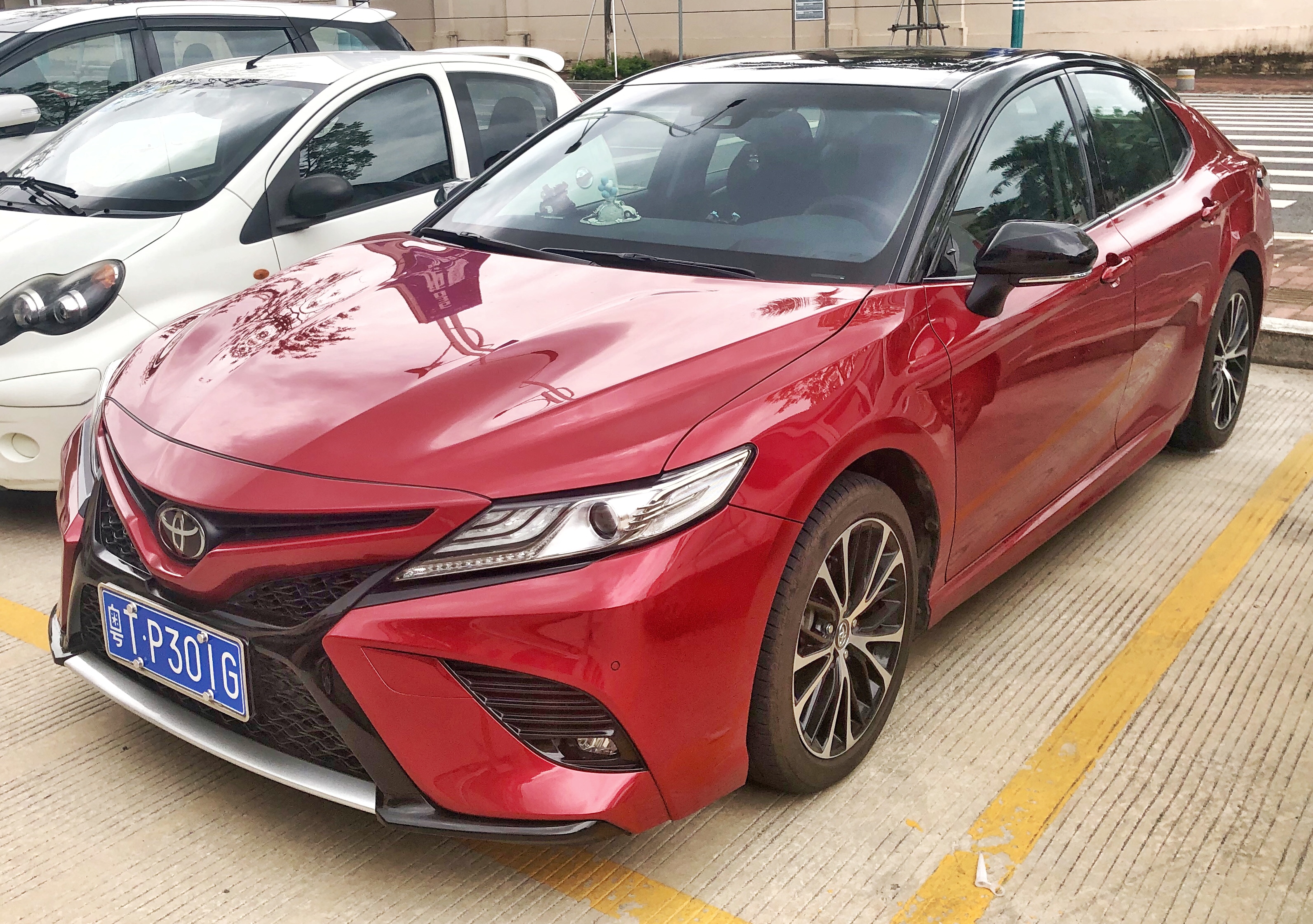
Toyota Camry
"...his I'd be inside his little white on gray Toyota Camry. Yeah."
The Toyota Camry is a regular family-style car, usually a sedan. People like it because it’s comfortable and simple to use for everyday driving. In the podcast, it’s just being used as a description of a car someone was in.
The Toyota Camry is a mid-size sedan known for being practical, comfortable, and easy to live with day to day. It often shows up in everyday driving stories because it’s common and reliable, so it can be a “background” car in conversations. In the podcast, it’s mentioned as a recognizable, ordinary-looking ride.

Chevrolet Corvette
"There's no doubt. Corvettes are fast. But I'm riding dirty right now."
The Chevrolet Corvette is a sports car designed to go fast. It’s known for quick acceleration and a sporty driving experience. The podcast is mentioning it because it’s associated with performance.
The Chevrolet Corvette is a performance sports car built by Chevrolet, famous for strong acceleration and a driver-focused feel. It’s often discussed because it can be very fast while still being a mainstream, recognizable American sports car. The podcast references Corvettes in the context of speed and driving behavior.

Hyundai Santa Cruz
"Sounds well. Wait, did you say Santa Cruz? Santa Cruz."
The Hyundai Santa Cruz is a small SUV-style vehicle with a cargo bed for hauling things. It’s meant to be practical for everyday use. The podcast is just confirming the name “Santa Cruz.”
The Hyundai Santa Cruz is a compact crossover with pickup-like utility features, designed to blend SUV comfort with a small bed for carrying items. It’s discussed because it’s a newer, practical twist on the “small truck” idea. In the podcast, it’s mentioned by name as part of the conversation.
valve adjustment
"So yeah, valve adjustment, and then I have that, I have a flat spot high in the RPM range."
Valve adjustment is maintenance where a mechanic checks and sets the small gaps in the engine’s valve system. If the gaps get off, the engine can run rough or lose power.
A valve adjustment is the periodic setting of the clearance between the camshaft and the valve train components. It helps keep valve timing accurate and prevents issues like rough idle or loss of power when clearances drift over time.
flat spot
"So yeah, valve adjustment, and then I have that, I have a flat spot high in the RPM range."
A “flat spot” is when the car feels like it hesitates or doesn’t pull strongly for a moment at certain engine speeds. It usually means something in the engine’s fueling or ignition isn’t working smoothly at that RPM.
A “flat spot” is a noticeable hesitation or lack of acceleration at a particular engine speed (RPM). It often points to ignition or fuel delivery issues, vacuum leaks, or worn ignition components—especially when it shows up consistently in a certain RPM band.
distributor
"So, and we did the distributor a while back. [555.0s] So we're going to do, we haven't done plugs since I bought the car or any of that."
The distributor is part of the ignition system that sends spark to the right spark plug at the right time. If it’s not working right, the engine can hesitate or feel flat when you accelerate.
A distributor is an ignition component used on many older/older-style engines to route high voltage from the ignition coil to the correct spark plug. If it wears out or is out of spec, you can get misfires, hesitation, or a “flat spot” in certain RPM ranges.
plugs
"So we're going to do, we haven't done plugs since I bought the car or any of that. [560.3s] So, so we're going to do plugs."
Spark plugs make the spark that lights the fuel in the engine. If they’re old or dirty, the engine can run poorly or feel like it’s not accelerating smoothly.
Spark plugs are the ignition parts that create the spark to ignite the air-fuel mixture in each cylinder. Worn or fouled plugs can cause misfires, rough running, and hesitation—especially under load or at certain RPMs.
wires
"We're going to do plugs. [562.0s] We're going to do wires. [562.9s] We're kind of doing full tune up as well."
Ignition wires (often called spark plug wires) deliver high voltage from the distributor/coil to the spark plugs. Over time they can degrade, leading to weak spark, misfires, and drivability issues.
full tune up
"We're going to do wires. [562.9s] We're kind of doing full tune up as well. [566.8s] Okay."
A “full tune up” is a service meant to refresh key engine parts that affect how smoothly the car runs. It often includes things like spark plugs and related ignition parts.
A “full tune up” is a bundled service that typically replaces or checks ignition components (like spark plugs and wires) and may include other adjustments to restore proper engine operation. The exact parts vary by engine, but the goal is to improve drivability and correct issues like hesitation or misfires.
spoiler
"While we're in there. [579.5s] We're going to paint the top surface of the spoiler. [582.7s] Oh boy."
A spoiler is an extra piece on the back of a car that helps air flow over it. In this case, they’re talking about painting it so it matches or looks better.
A spoiler is an aerodynamic add-on on the exterior of a car, usually designed to influence airflow and improve stability at speed. Painting the top surface suggests the spoiler is being refinished for appearance and/or to match the vehicle’s exterior finish.
headlight rings
"they're like, do you mind if we paint your headlight rings? And I'm like, slip."
Headlight rings are the decorative trim pieces around the headlights. Painting them is just a styling change to make the front end look different.
“Headlight rings” are the trim or bezel-style circular elements around a headlamp. Painting them is a common cosmetic mod because it changes the look of the front lighting without altering the headlight itself.
mating them together
"So it's just like mating them together, but he has another car there. So there's a Targa, a short wheelbase soft window Targa."
That phrase means they’re putting the big parts together so the car can actually run. In this case, they’ve already installed the engine and suspension, and now they’re connecting everything as one unit.
“Mating them together” describes the assembly step where major subassemblies are joined—here, the engine and suspension are already in place and now they’re being connected as a complete running car. It’s a common shop phrase for the final integration phase before testing.

BMW E30
"Yeah. I ran the Jajarro Redistines on my E30, which were great tires. They had a very cool tre..."
The BMW 3 Series is a smaller luxury car that’s meant to feel fun to drive. The E30 is one older version that many car fans still talk about. The podcast is mentioning it in connection with tires and setup choices.
The BMW 3 Series is a compact luxury sedan (and historically also offered as a wagon/other body styles) known for balanced handling and a driver-oriented layout. It’s frequently discussed because certain generations—like the E30—have strong enthusiast followings. In the podcast, the mention is tied to tires used on an E30, highlighting how people customize and maintain these cars.
tread block
"I ran the Jajarro Redistines on my E30, which were great tires. They had a very cool tread block and they were great tires, but they had an Aztec."
The tread block is one of the raised chunks on the tire’s outer surface. It helps the tire grip the road and can affect how it handles wet or rough surfaces. The host is saying these blocks looked and worked well.
A tread block is one of the individual raised sections on a tire’s tread pattern. Different block shapes and arrangements affect how the tire grips, channels water, and feels during driving. Here, the host praises the “very cool tread block” as part of why the tires were great.
Aztec style sidewall design
"They had a very cool tread block and they were great tires, but they had an Aztec. That's what I keep calling Aztec style sidewall design, which wasn't super obvious."
“Aztec style sidewall design” refers to a tire sidewall pattern that looks like geometric, decorative motifs—here described as not being obvious in photos. The host explains that when you see the tire in person, especially in sunlight, the pattern becomes clear. It’s essentially a visual design feature of the tire’s sidewall graphics.
Avon
"And, you know, what you want to get back to is like the classics, like Avon, you know, the old school, good year, like these very traditional simple, even like Yokohama had a good one for a while."
Avon is a tire brand. The host is saying they prefer the more traditional tire options—both in look and vibe—compared to the sidewall styling they didn’t love.
Avon is a tire brand known for producing performance and classic-style tires. In this conversation, the host brings it up as part of a list of “classics” they’d rather run than the more modern-looking tire sidewalls. It’s a shorthand for a traditional tire look and feel.
Good year
"And, you know, what you want to get back to is like the classics, like Avon, you know, the old school, good year, like these very traditional simple, even like Yokohama had a good one for a while."
Goodyear is a well-known tire brand. The host is just listing it among older-school tire options they like for their traditional style.
Goodyear is a major tire manufacturer with a long history of performance and classic tire models. Here it’s mentioned as an example of a traditional, simple tire look the host prefers. It’s part of a “classic tire” comparison rather than a specific model.
Yokohama
"the old school, good year, like these very traditional simple, even like Yokohama had a good one for a while. They're great, but I agree."
Yokohama makes tires. The host is saying they’ve had good traditional tire options from Yokohama that they liked running.
Yokohama is a tire brand that’s especially popular with enthusiasts for performance-oriented tires. In this segment, it’s referenced as having “a good one for a while,” meaning a traditional tire option the host liked. The context is mostly about sidewall styling and the overall tire character.
Pirelli's
"Like our friend Charles had a 911 that looked like mine. And he had these Pirelli's. I think they were and they had this like off road looking sidewall."
Pirelli is a tire brand. In this story, the important part is that the tires had a rugged-looking sidewall, which changed how the car looked.
Pirelli is a high-profile tire brand often associated with performance tires and motorsport heritage. The host says their friend Charles had a 911 with Pirellis that had an “off road looking sidewall,” highlighting how tire sidewall design can change the visual personality of a car. It’s a styling/fitment discussion more than a technical one.
headlights
"So I got to say also morning motors kind of underline this again for me, but headlights are number one for me when it comes to like bad choices. Yeah."
Headlights are one of the first things you notice on a car. The host is saying people often mess up the look when they change or upgrade them.
Headlights are a major visual and functional element of a car, and the host frames them as a common place where owners make “bad choices” with aftermarket or mismatched lighting. Changes to headlight style can strongly affect how the whole front end looks.

Honda Civic wagon
"There were such, there was a few really cool cars at morning motors. One was a Honda Civic wagon, like a 78 or whatever that thing was. The white one."
This is an older Honda Civic wagon. The point here is that someone put newer-looking headlight hardware on it, and the host thinks it looks wrong for the car’s original style.
The Honda Civic wagon is a late-1970s/early-1980s style Civic body that’s known for its boxy, practical shape. In this segment, the host calls out how the car’s lighting setup—modern-looking halogen/HID projector-style headlights—doesn’t match the era, which visually changes the whole look.
HID projector
"And it had modern, weird ass halogen or a HID projector things in it that looked so bad and there was a cool bug on the back row."
HID projector headlights are a brighter headlight setup that uses a special bulb and a lens to aim the light. The host thinks the look of that modern conversion doesn’t fit the car’s original vibe.
HID (high-intensity discharge) lights are much brighter than traditional halogen bulbs, and “projector” refers to the lens-and-bowl headlight design that shapes the beam. The host is criticizing how these modern HID projector-style lights can look mismatched on an older car.
halogen
"And it had modern, weird ass halogen or a HID projector things in it that looked so bad and there was a cool bug on the back row."
Halogen is a type of headlight bulb. It’s common on older cars, and changing to different-looking headlight setups can make a classic car look “off.”
Halogen headlights use a halogen gas inside the bulb to produce light. They’re common on older cars, but when modern halogen housings are swapped onto an older vehicle, the beam pattern and styling can look out of place.
six shooters
"It's killer sliding window, you know, like so good dude and it has those ones with like the six shooters in it and stuff, you know, with a chrome and like you're just like, oh man, way to throw off like, like nice patina on this car, like milk,"
“Six shooters” here just means the headlights have multiple little light elements grouped together. The host thinks that style looks wrong on this classic-looking car.
“Six shooters” is a slang description for a headlight/lighting arrangement that uses multiple small projector elements or bulbs in a cluster. The host is using it to describe a specific aftermarket look that they feel clashes with the car’s otherwise nice, aged appearance.
patina
"and stuff, you know, with a chrome and like you're just like, oh man, way to throw off like, like nice patina on this car, like milk,"
Patina is the worn-in, aged look a car gets over time. The host is saying the wrong-looking upgrades can ruin that cool “old car” vibe.
Patina is the natural wear and aging on a car’s surfaces—like faded paint, oxidation, or surface texture—that can look desirable on classics. The host argues that flashy or mismatched aftermarket lighting can “throw off” that patina look.
wheels
"Everything's ruined and wheels are obviously like this too. They're easier to swap out and like, you know, imagine the car with something better, but yeah, it's all these subtle things"
Here, “wheels” means the wheel and tire setup. Different wheel sizes and positions can change how the car looks and whether the tire fits properly.
In this context, “wheels” refers to the wheel-and-tire package that determines stance and fitment. Wheel choice (size, width, and offset) changes how much tire is visible and how close the tire sits to the body and suspension.
ride height
"They're easier to swap out and like, you know, imagine the car with something better, but yeah, it's all these subtle things, but like angry words talking about with the, the sidewall design and then, you know, then you get into like how, how much rubber are you working with? What's the ride height?"
Ride height is simply how high the car sits from the ground. If it’s too high or too low, the wheels and tires can look out of place and may even rub on parts of the car.
Ride height is how high the car sits relative to the ground. It affects tire-to-fender clearance, wheel/tire fitment, and the overall stance—so small changes can make a setup look “right” or look wrong.
offset of the wheel
"What's the ride height? Like how's the, like the offset of the wheel, like those are all such subtle things. They all come together and then headlights are like, dude, it's the face of the car"
Wheel offset is how far the wheel sits toward the inside or outside of the car. It affects whether the tire clears the fenders/suspension and it also changes the look of the car’s stance.
Wheel offset is the distance between the wheel’s mounting surface and its centerline. Changing offset moves the wheel inward or outward, which changes tire clearance, steering/suspension geometry, and how the car’s stance looks.
interior spill scenarios
"SF production Gabe says worse nightmare automotive interior, interior spill scenarios. All right. A is a two pack of milk gallons from Costco spilling in your car."
This is about what happens when something spills inside a car. Different spills can stain seats, soak in, and leave smells that are hard to get out.
“Interior spill scenarios” refers to how different liquids and foods behave once they end up in a car’s cabin. Some spills soak into upholstery, leave odors, or require special cleaning steps to fully remove stains and smells.
Grease trap
"[1144.8s] Okay. [1145.7s] Grease trap. [1146.4s] I mean, that's number one right now or the astray from outside a bowling alley that had"
A grease trap is a container in plumbing that catches greasy food waste so it doesn’t clog pipes. The hosts are basically saying grease is the worst mess and it’s tough to get rid of.
A grease trap is a plumbing device that captures fats, oils, and grease from wastewater before it can flow into drains and sewer lines. It’s relevant here because they’re discussing how messy and hard to clean grease can be.

Ferrari 512 TR
"It says he said, which one would you rather have dumped inside your cream interior cloud [1169.4s] Ferrari 512 TR?"
A Ferrari 512 TR is a famous older Ferrari supercar/grand tourer with a big V12 engine. Here, the hosts mention it to make a joke: they’re comparing how awful it would be to get grease on a high-end car’s interior.
The Ferrari 512 TR is a classic Ferrari grand tourer known for its V12 engine and 1990s-era performance focus. In this segment it’s used as a reference point for how bad a grease mess would be if it got into a luxury interior.

Ferrari 512
"...ther have dumped inside your cream interior cloud Ferrari 512 TR? Oh God."
The Ferrari 512 M is an older Ferrari supercar. It’s known for being a special, high-performance car from Ferrari’s history. The podcast is mentioning it while describing the car’s interior and overall vibe.
The Ferrari 512 M is a classic Ferrari race-bred supercar from the 1970s era, known for its performance heritage and distinctive styling. It’s often brought up by enthusiasts because it represents a specific period of Ferrari racing and engineering. The podcast mentions it in a dramatic, interior-focused way, tying it to the car’s overall presence.

Ferrari F40
"The only vanity plate I ever thought of, and I probably came up with this when I was in high school was F 404 W AM F 40 for Wham. And it would have to go on an F 40."
The Ferrari F40 is a famous, very high-performance sports car made by Ferrari. It’s known for being a special, no-nonsense kind of supercar. The podcast is talking about a vanity plate that would reference the F40.
The Ferrari F40 is a legendary supercar known for its raw, high-performance character and its place in Ferrari history. It’s often discussed because it’s iconic, visually distinctive, and strongly tied to the idea of a “driver’s” supercar. The podcast mentions it in the context of a vanity plate idea built around the F40 name.

Pontiac Fiero
"...'m not a vanity. That'd be cool if you get like a Fiero replica. Oh, if I went auto zam."
The Pontiac Fiero is a sports car that was made by Pontiac. It’s known for having the engine placed in the middle of the car. The podcast is mentioning it as a starting point for a replica-style project.
The Pontiac Fiero is a mid-engine sports car from Pontiac that became known for its unusual layout and for being a popular base for custom projects. It comes up in enthusiast conversations because people like to build replicas and modify them. In the podcast, it’s mentioned as a possible replica car idea.

Ford Mustang
"...and it's from like the 80s and it was like Barb's Mustang or something, you know, like, you know, it came w..."
The Ford Mustang is a classic American sports car. Different model years look different, but it’s known for being a popular car people customize and talk about. The podcast is referring to an older Mustang someone had or was describing.
The Ford Mustang is a long-running American muscle car/pony car known for its distinctive styling and huge enthusiast community. It’s often referenced in stories because many generations are recognizable and have strong aftermarket support. The podcast mention points to an older Mustang from around the 1980s era.

Volkswagen Rabbit
"What did Isaac at beeline? He got that rabbit pickup with a VR six and so our buddy John Jesse ..."
The Volkswagen Rabbit is a small car made by Volkswagen. In the podcast, it’s mentioned as a pickup-style project with a VR6 engine, meaning the engine was upgraded or swapped. The conversation is about that modified car setup.
The Volkswagen Rabbit is a compact car that became well-known as a practical, everyday vehicle with a strong enthusiast following. It’s mentioned in the podcast in the context of a “rabbit pickup” with a VR6 engine, which points to a custom or modified build. That kind of swap is often discussed because it changes performance and character significantly.
straight piped
"Now it is auto obscure garage says would you rather have all current and future [1506.3s] vehicles you own be straight piped or be able to own automatic only automatic cars. [1515.5s] Oh man."
“Straight piped” means the car’s exhaust is modified to be louder by removing the mufflers/restrictions. It can make the car sound aggressive, but it can also be annoying on long trips and may not be street-legal.
“Straight piped” means removing the exhaust mufflers (and sometimes other exhaust restrictions) so exhaust gases flow through a simpler, more direct pipe path. The result is usually much louder sound and can change backpressure, which may affect drivability and emissions compliance.
automatic cars
"Now it is auto obscure garage says would you rather have all current and future [1506.3s] vehicles you own be straight piped or be able to own automatic only automatic cars. [1515.5s] Oh man."
The discussion contrasts “straight piped” with owning “automatic only” cars, focusing on how transmission type affects driving feel. In enthusiast talk, automatics can range from traditional torque-converter setups to dual-clutch systems like PDK, which can feel much more immediate.
pdk
"Like are we talking like full pdkf one stuff or are we in slushbox territory? [1540.1s] I would say you can do pdk and all that bullshit too. [1543.1s] So that's I mean we can we consider those automatics."
PDK is Porsche’s type of automatic transmission that shifts quickly. It uses two clutches so the next gear is ready ahead of time, which usually makes the car feel more responsive than a typical automatic.
PDK is Porsche’s dual-clutch automatic transmission. Instead of a torque converter, it uses two clutches to pre-select the next gear, which typically makes shifts faster and more direct than many traditional automatics.
slushbox territory
"Like are we talking like full pdkf one stuff or are we in slushbox territory? [1540.1s] I would say you can do pdk and all that bullshit too."
“Slushbox” is a slang term for an automatic transmission that feels kind of lazy or not very responsive. People use it when the car doesn’t shift crisply or feels disconnected from your driving inputs.
“Slushbox” is a derogatory nickname for an automatic transmission that feels slow to respond and shifts in a vague, non-sporty way. It’s often used to criticize older or less performance-oriented automatics, especially those that hunt for gears or feel disconnected from throttle input.
four cylinder
"you could take an exhaust off the most benign four cylinder car and it sounds so bad like it is loud and obnoxious."
A four-cylinder engine is an engine with four “power” sections. Even if it’s not a big engine, changing the exhaust can make it sound loud and rough.
A four-cylinder engine has four combustion chambers, typically arranged in a straight line (inline) or a flat layout. Smaller engines can still sound aggressive if the exhaust is modified, because sound is heavily influenced by the exhaust and muffling, not just engine size.
exhaust
"for the listeners that may not know this you could take an exhaust off the most benign four cylinder car and it sounds so bad like it is loud and obnoxious."
The exhaust is the system that carries the engine’s fumes out of the car. If you remove parts of it, the car can get much louder, even if the engine isn’t very big.
In a car, the exhaust system routes engine gases out of the vehicle and includes parts like the muffler and resonator that shape the sound. Removing or changing parts can make even a small engine sound loud and unpleasant because the system no longer dampens noise.
chrome rims
"Yeah. Yeah. Hazmat surf says our chrome rims ever okay."
Chrome rims are wheels with a shiny, reflective finish. They look great, but the coating can get damaged or corrode if you don’t keep them clean and protected.
Chrome rims are wheels finished with a chrome-like plating or highly reflective coating. They’re visually flashy, but the finish can be sensitive to corrosion and damage, so owners often care about cleaning methods and protection.
polished
"So so the modern cars that I do like with that look are polished. They're not chromed."
Polished wheels are made very shiny by sanding and buffing the metal. They’re different from chrome-plated wheels, and they can look and wear differently over time.
Polished wheels are finished by smoothing and buffing the metal to a bright, reflective surface, but they’re not necessarily plated with chrome. That difference matters because polished finishes and chrome plating can age and react to weather differently.

Mercedes-Benz Sclass
"They're not chromed. So like an s-class Caddy or a Caddy. Yeah."
The Mercedes-Benz S-Class is a very high-end luxury car. It’s designed to be comfortable and feature-rich, especially compared to regular cars. The podcast is mentioning it because of how it looks and what kind of trim it can have.
The Mercedes-Benz S-Class is the brand’s flagship luxury sedan, built to deliver top-tier comfort, quietness, and high-end features. It’s often mentioned because it represents the “full luxury” end of the market. In the podcast, it’s brought up in a casual comparison about chrome and styling details.
chromed
"Right. They're not chromed. Yeah. Exactly."
Chromed means the wheel has a chrome plating, which usually looks like a very mirror-bright finish. The host is saying these wheels aren’t chrome-plated, so the shine looks different.
Chromed wheels are coated with a chrome plating process that creates a very mirror-like, high-gloss surface. In the segment, the host says the wheels on the newer Cadillacs are polished rather than chromed, implying the visual effect (brightness and reflection) is different.

Porsche 356
"Like a chrome hubcap on a 356 does work. It's great."
The Porsche 356 is an old-school Porsche from the 1950s/60s. The point here is that chrome hubcaps fit the car’s classic look, so they don’t feel out of place.
The Porsche 356 is a classic early Porsche sports car, and its styling is closely tied to period-correct details like chrome hubcaps. In this segment, the host argues that chrome wheels/hubcaps can look right on a 356 because the overall design language matches the era.
chrome hubcap
"Like a chrome hubcap on a 356 does work. It's great."
A chrome hubcap is a decorative cover for the wheel hub finished in chrome plating. The host uses it as an example of a classic styling element that can work on a Porsche 356, while arguing that similar chrome styling doesn’t translate well to newer 911s.
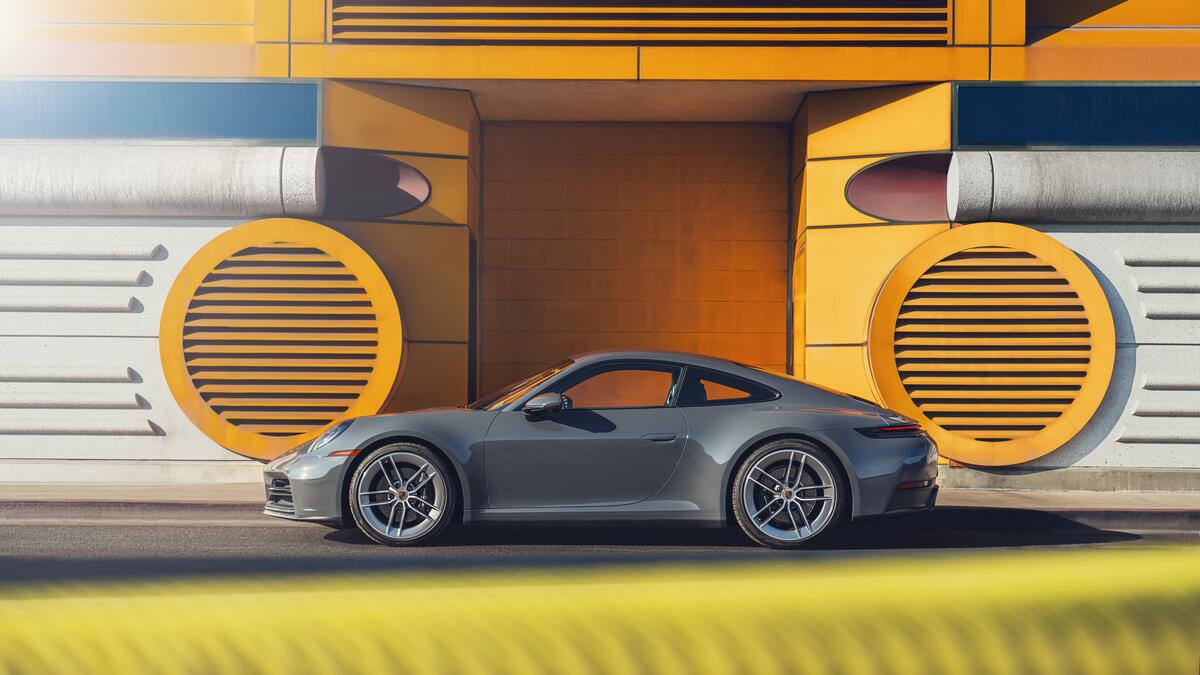
Porsche 911
"Yeah. But what I mean what new 911 could work with a chrome wheel like. No, no."
The Porsche 911 is a famous sports car from Porsche. People talk about it a lot because it’s known for performance and a recognizable design. In the podcast, it’s mentioned in relation to how a certain wheel style would look or fit.
The Porsche 911 is an iconic rear-engine sports car known for its distinctive shape and long-running engineering evolution. It’s a benchmark for handling and performance, which is why it comes up in discussions about wheels, fitment, and appearance details. The podcast reference is about how certain styling choices (like chrome wheels) might work on a 911.
wide body
"But even like who was it who built that wide body Porsche race car thing. They put like the finned wheels and they were they were polished and it's like okay."
“Wide body” means the car’s fenders are widened. That lets you run bigger tires, which can help the car stick better to the road.
“Wide body” refers to widening a car’s fenders and bodywork to allow larger tires and wheels. On race-focused builds, it’s often done to increase traction and improve tire fitment under cornering loads.
pre smog
"So classic pre smog you have an argument post even then usually chrome. It looks better without it."
“Pre-smog” means cars from before strict emissions rules were common. In this conversation, it’s basically a time period reference for what styles were typical back then.
“Pre-smog” refers to cars from before modern emissions regulations (“smog” rules) became widespread. The speaker is using it as a styling-era reference, implying chrome and wheel choices were more common or accepted on older cars.
wire wheel
"Those are wire wheel. Those are good."
A “wire wheel” is a wheel built from metal wires, like a lattice. It’s a classic look you often see on older sports cars and some race cars.
A “wire wheel” is a wheel made from multiple metal wires laced between hubs and rims, rather than a solid one-piece design. They’re strongly associated with classic European sports cars and some racing because they look distinctive and can be relatively light.
wave
"Automotive omnivores says Corvette and Jeep drivers historically give a wave to acknowledge each other on the road."
The speaker mentions a “wave” between drivers as a social behavior on the road, specifically calling out Corvette and Jeep drivers. This is more of a motoring culture observation than a technical automotive term.

Beetle Volkswagen Bugs
"Yeah, actually, I was going to say that Volkswagen bugs and vans and buses all give peace signs when possible."
Volkswagen has a few famous classic models like the Beetle and the bus/van. The hosts are talking about a fun driver-to-driver tradition where people acknowledge each other with hand signals.
The Volkswagen Beetle (“bug”) and Volkswagen vans/buses are classic air-cooled-era Volkswagens that became cultural icons with strong enthusiast communities. In this segment, the host is describing a playful “community signal” tradition—peace signs—among drivers.

Volkswagen Vanagon
"...ans and buses all give peace signs when possible. Vanagon to Vanagon 100% peace sign. And if you don't, you..."
The Volkswagen Vanagon is a camper-style van made by Volkswagen. People often use it for road trips and camping, and many get customized. The podcast is mentioning it as a recognizable type of van people decorate and identify with a certain vibe.
The Volkswagen Vanagon is a classic Volkswagen camper van known for its long-running popularity among road-trip and camping enthusiasts. It’s often discussed because it’s a recognizable platform for customization and community events. In the podcast, it’s referenced as a “peace sign” kind of vibe, emphasizing how people associate the Vanagon with that culture.
flash
"You see them and throw a little you throw the deuces up traditionally Porsche guys would give wave or in a flash. Oh yeah."
Here, “flash” means briefly turning your headlights on and off to signal another driver. The hosts are treating it like a friendly wave used by certain car communities.
In this context, “flash” means briefly using headlights as a signal to other drivers. The hosts describe it as part of a social greeting tradition among Porsche owners.

Porsche Cayenne
"Uh-huh. Now you see boxers and Caimans and Cayenne's of course like every day. Yeah, you're not going to do it to a Macan."
The Porsche Cayenne is an SUV made by Porsche. It’s meant for normal driving like errands and longer trips, but with a more performance-focused feel. The podcast is referencing it because it’s a common Porsche you might see every day.
The Porsche Cayenne is Porsche’s SUV, combining everyday usability with Porsche-style performance and handling. It’s often discussed because it’s a common sight and because Porsche’s lineup includes both sports cars and SUVs. In the podcast, it’s mentioned as something you see frequently in daily life.

Porsche Macan
"...e every day. Yeah, you're not going to do it to a Macan. Yeah, hilarious dude."
The Porsche Macan is a small luxury SUV from Porsche. It’s designed for normal driving but with a sportier feel than many other SUVs. The podcast is referencing it as something you see often.
The Porsche Macan is a compact luxury SUV that blends everyday practicality with Porsche-like performance and handling. It’s frequently mentioned because it’s a common Porsche SUV you see in daily life. The podcast uses it as a punchline reference, implying it’s a familiar, everyday presence.
community
"BMW Mini was really good about like marketing and creating a community around their cars. She'd get something in the mail like once a quarter..."
They mean a brand community—like a group of owners who feel connected to each other. The host says MINI helped create that feeling with marketing and fun owner perks.
The hosts are talking about an owner “community” built around a brand—where drivers recognize each other and participate in shared rituals, events, and perks. MINI is cited as an example of a brand that actively cultivates that kind of community through marketing.

Nissan R32
"...interested. But yeah, the pull in with your stock R32 Volkswagen or what have you or Civic and open you..."
The Nissan Skyline is a performance car model line. The R32 is one well-known version that many car fans talk about. The podcast is mentioning it in a casual comparison with other cars when describing driving or show-up moments.
The Nissan Skyline is a performance-focused Japanese car line that’s become famous among enthusiasts, especially for models like the R32. It’s often discussed because of its tuning potential and strong performance reputation. In the podcast, it’s referenced alongside other cars as part of a comparison about pulling in and opening up the experience.
open your hood
"But yeah, the pull in with your stock R32 Volkswagen or what have you or Civic and open your hood and leave it that way."
“Open your hood” means lifting the hood so people can look at the engine area. At car meets, it’s a way of showing your car off.
“Opening your hood” is a common car-show behavior where the engine bay is displayed for other people to look at. It’s often done to signal that the car is being shown off, even if the engine bay isn’t the main visual focus.
revving motor
"Was this the revving motor? Yeah. Yeah."
“Revving” is when you push the gas to make the engine spin faster, which makes it louder. People sometimes do it at meets to show off how the car sounds.
A “revving motor” means increasing engine speed (RPM) by pressing the accelerator, usually to make noise or demonstrate responsiveness. In car-meet contexts, it can be used to get attention or show off the sound of the engine.

BMW M5
"... we got to stop that outbreak. And by the way, an M5 with a V10 sounds great under load in fuck in thi..."
The BMW M5 is a powerful BMW that’s built for performance, not just everyday comfort. Some versions have a V10 engine, which is known for a distinctive sound when you accelerate. The podcast is bringing it up because of that driving experience.
The BMW M5 is a high-performance version of the BMW 5 Series, built for serious power and fast driving. It’s especially talked about when discussing engine sound and performance character. The podcast specifically mentions an M5 with a V10, emphasizing the thrill of its sound under load.
V10
"And by the way, an M5 with a V10 sounds great under load in fuck in third gear. [2090.3s] It is not even sound."
A V10 is an engine with 10 cylinders arranged in two sides that form a V shape. More cylinders like this usually mean a smoother, more dramatic sound when you rev it.
A V10 is an engine with 10 cylinders arranged in a “V” shape (two banks of five cylinders). Because of its cylinder count and firing order, it often produces a distinct sound and smooth power delivery compared with smaller or fewer-cylinder engines.
third gear
"And by the way, an M5 with a V10 sounds great under load in fuck in third gear. [2090.3s] It is not even sound."
Third gear is a mid-range gear in the transmission. The engine RPM and load in third gear can make the car sound and respond differently than in other gears.
Third gear is one of the intermediate ratios in a manual or automatic transmission. Mentioning it matters because engine load and RPM in third gear can change how an engine sounds and feels under acceleration.
red line
"Even that car does not sound good at red line sitting in a parking lot, dude. [2098.5s] Yeah."
The red line is the top safe rev range for an engine. If you push past it, you can risk damaging the engine.
The red line is the engine’s maximum recommended RPM range; going beyond it can risk engine damage. In performance driving discussions, “red line” is shorthand for revving the engine to its upper limit.
half cage
"Ask Klein says roll bar versus half cage. [2112.9s] What exactly is the difference? [2114.7s] And are either of them safe without a helmet for a classic car?"
A half cage is a stronger safety frame than just a roll bar. It uses more metal tubing to better protect the people inside, but how safe it is depends on the exact design and how it’s attached to the car.
A half cage is a partial roll-cage setup that adds more structural tubing than a simple roll bar, usually extending further around the driver/passenger area. The idea is to improve occupant protection in a rollover and during hard impacts, but the exact safety level depends heavily on the cage design and proper mounting points.
roll bar
"Ask Klein says roll bar versus half cage. [2112.9s] What exactly is the difference? [2114.7s] And are either of them safe without a helmet for a classic car?"
A roll bar is a metal safety frame meant to protect you if the car rolls over. It’s usually mounted behind the seats and helps keep the cabin from collapsing, but it’s often not as complete as a full cage.
A roll bar is a safety structure designed to protect occupants in a rollover by creating a protective “cage” around the cabin. It typically mounts behind the seats and is less extensive than a full roll cage, so it may offer less protection depending on how it’s built and where it’s anchored.
cross bars
"So like, yeah, cross bars in the back and you could even get door bars up front and it ties all together."
Cross bars are the horizontal pieces of the roll cage. They connect parts of the frame so it’s stronger and holds up better in a crash.
Cross bars are horizontal members in a roll cage that connect vertical bars and help triangulate the structure. They increase stiffness and help the cage distribute loads more effectively during a crash.
door bars
"So like, yeah, cross bars in the back and you could even get door bars up front and it ties all together."
Door bars are tubes in the roll cage placed near the doors. They help protect the side of the passenger area so it doesn’t get crushed as easily.
Door bars are roll-cage tubes placed near the driver/passenger doors to protect the side of the cabin. They can help prevent excessive intrusion and improve occupant protection in side impacts and rollovers.
NASCAR style padding
"It's like some people roll with padding, like the NASCAR style padding on the bars. And as like, I guess it's better than just hitting the bar with your head, but none of that's safe without a helmet."
NASCAR-style padding is foam added to the roll cage bars. It’s meant to make the bars less dangerous if your head hits them.
This refers to energy-absorbing foam/padding used on roll-cage bars to reduce head impact severity. The goal is to lower injury risk when a helmeted or unhelmeted occupant contacts the cage structure.
Blaine fabrication
"So there's, if you go down the rabbit hole, like our friend at Blaine fabrication that helped us build our lemons race cars and is a like stock car road course vehicle builder"
Blaine fabrication is a shop that builds race cars for road courses. In this discussion, they’re credited with focusing on safety and using proven NASCAR-style safety materials.
Blaine fabrication is described as a road-course vehicle builder that helped construct the hosts’ “lemons” race cars. The segment frames the company as safety-first, using modern NASCAR-derived materials and techniques for restraint/impact protection.
lemons race cars
"like our friend at Blaine fabrication that helped us build our lemons race cars and is a like stock car road course vehicle builder"
“Lemons” racing is a kind of grassroots race where people compete with cheap, imperfect cars. The point here is that even with those cars, you still need real safety gear.
“Lemons” refers to a grassroots racing format where teams compete with inexpensive, often beat-up cars (commonly known as “Cheap Car” racing). Even in that context, the speaker emphasizes that safety equipment like cages and padding still matters.
roll hoops
"And a lot of these like roll hoops and stuff aren't going to do much for you for the roll over. And then B, if you do get in like another minor crash, you can smash your head into it"
Roll hoops are upright bars meant to protect you if the car rolls over. The idea is that if they’re not part of a complete, well-connected cage, they may not help as much as people think.
Roll hoops are upright roll-cage elements (often behind the seats) intended to protect the occupant during a rollover. The speaker’s point is that some “hoop-only” setups may not provide much benefit for real rollover protection compared with a properly triangulated cage.
roll over
"And a lot of these like roll hoops and stuff aren't going to do much for you for the roll over. And then B, if you do get in like another minor crash, you can smash your head into it"
“Roll over” describes a rollover crash where the car rotates onto its side or roof. Safety hardware like a properly built roll cage is designed to protect the occupant’s space during this specific crash mode.
roll cage
"they go to track once a year and they're putting up like half cage on their car or a book. And it's like they're adding for one, they're adding weight into their car."
A roll cage is a metal safety frame inside the car. It’s meant to protect you if the car flips over by keeping the cabin from crushing. Because it’s metal inside the cabin, it usually needs padding in the right places.
A roll cage is a welded metal framework inside a car that’s designed to protect occupants during a rollover or hard impact. It adds structural strength and helps keep the cabin from collapsing, but it can also change how the interior is shaped and where padding is needed.
A pillars
"how they integrate the roll cage into headliners and A pillars and stuff and have padding and you know, it's all hidden."
A-pillars are the vertical metal supports at the front corners of the car, near the windshield. They help hold up the roof, so they matter a lot in a rollover, and roll-cage setups may be designed around them.
The A-pillars are the front vertical support structures of a car’s cabin, running from the roof down toward the windshield area. They’re critical in rollover protection because they help support the roof, and roll cages may be integrated with them using padding and trim.

Mini Coopers
"...t takes a ton of work. I also see like, you know, mini coopers and, uh, me otters. I mean, those are, there's to..."
The Mini Cooper is a small car made by Mini. It’s known for being fun to drive and for having owners who like to work on them. The podcast is mentioning it as part of a quick list of cars.
The Mini Cooper is a compact car known for its small size and go-kart-like feel, with a strong enthusiast community. It’s often discussed in terms of maintenance and customization because owners frequently do work to keep them running well or personalize them. In the podcast, it’s mentioned alongside other car names in a casual, playful way.
convertibles
"And that's also for like rigidity because they're convertibles, right? Like you're trying to solve for that as well."
A convertible is a car where the roof can open up. Since the roof is part of what makes the car stiff, convertibles often need extra bracing like roll hoops to stay strong and safer.
Convertibles are cars with a roof that can be removed or folded down. Because removing the roof reduces cabin rigidity, owners often add roll hoops or roll cages to restore structural strength and improve safety in rollovers.
helmet
"I've always thought like helmet or no cage, like it's not one, it's one or the other. You wear a helmet if you have a cage or don't have a cage and don't wear helmet."
In motorsport, a helmet is worn to protect the head and reduce the risk of serious injury during crashes. The discussion here is about whether helmets are required when a roll cage is present, since both are meant to manage different parts of crash risk.
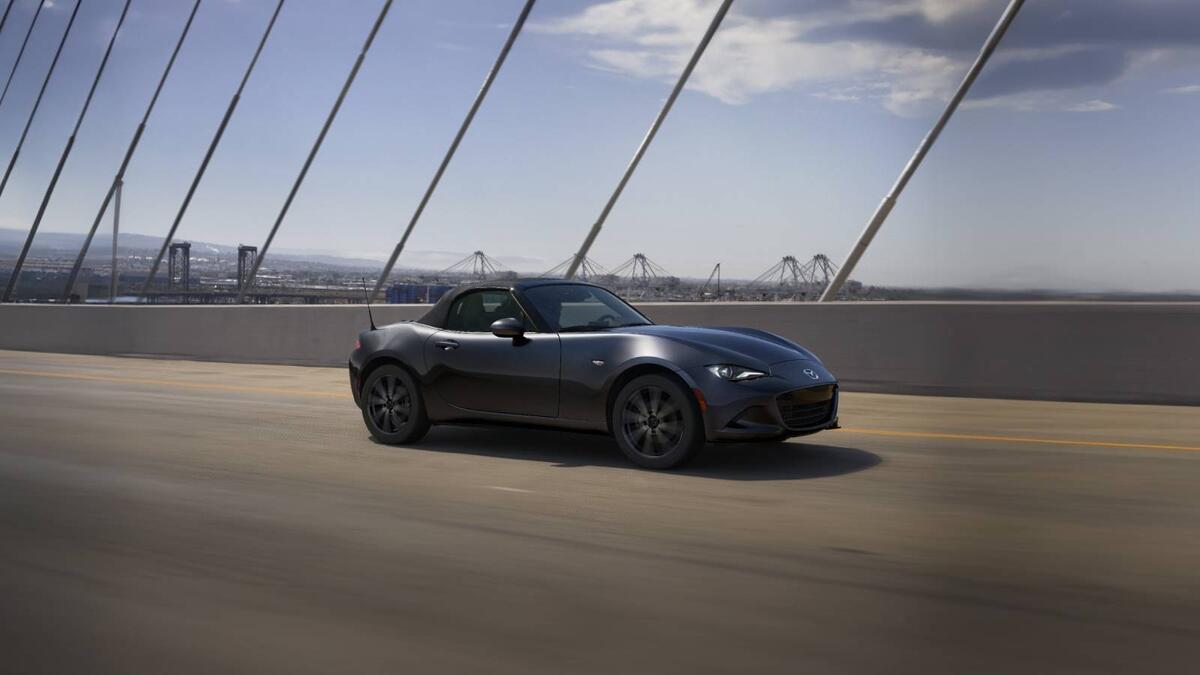
Mazda MX-5 / Miata
"Yeah. And then in the Miata, I understand having like the roll hoop and your ..."
The Mazda Miata is a small two-seat sports car that’s meant to be fun to drive. A roll hoop is a safety structure that helps protect occupants if the car tips over. The podcast is referencing that kind of setup on a Miata.
The Mazda MX-5, commonly called the Miata, is a lightweight two-seat roadster known for being fun, simple, and engaging to drive. It’s frequently discussed in enthusiast circles because it’s easy to enjoy and supports practical modifications. In the podcast, the mention includes a roll hoop, which is a common track or safety-related accessory.

Porsche Boxster
"...have pop up things like an SL or whatever, like a Boxster that has built in structure back there."
The Porsche Boxster is a two-seat sports car with the engine placed closer to the middle of the car. Some versions have special design features that are built into the body. The podcast is talking about how the car’s structure and features are arranged.
The Porsche Boxster is a mid-engine two-seat sports car designed to deliver Porsche driving dynamics in a more compact package than the 911. It’s often discussed because of its layout and because certain generations include distinctive features like pop-up headlight designs. The podcast reference is about structural design and how features are integrated into the car’s body.
SL
"I don't have pop up things like an SL or whatever, like a Boxster that has built [2339.5s] in structure back there."
Here, “SL” is mentioned as an example of a car that can have pop-up rollover protection. Instead of a fixed bar, it deploys when the car detects a rollover risk.
In this context, “SL” is being used as shorthand for a pop-up rollover protection system (commonly associated with Mercedes-Benz SL models). These systems deploy from behind the seats to create a protective structure during a rollover event.
aftermarket seats
"Um, the guy had like aftermarket seats in his car and the like, he got in a little car accident and what happened was he, the seat collapse when he crashed"
Aftermarket seats are seats you install that weren’t made by the car’s original manufacturer. They can be safer or less safe depending on how they’re mounted and how they behave in a crash.
Aftermarket seats are replacement seats made by companies other than the car’s original manufacturer. In motorsports or enthusiast builds, they’re often chosen for weight savings and better support, but they can change how crash forces are managed compared with the factory seat and mounting hardware.
seat collapse
"and what happened was he, the seat collapse when he crashed and when he, when the seat collapsed his, he, he went back and he hit his head on the roll bar"
Seat collapse means the seat (or how it’s bolted in) fails during a crash. If that happens, your body can move in a way that lets your head hit hard parts of the car.
Seat collapse in a crash means the seat structure or its mounting fails, allowing the occupant to move more than intended. That can increase head and neck injury risk, especially if the occupant’s head contacts nearby structures like a roll bar.
rear end accident
"Like you don't want to get into a 20 mile an hour rear end accident and your head, you know, whips back and smashes a bar that wasn't there from the factory."
A rear-end accident is a collision where another vehicle hits you from behind. Even at relatively low speeds, the occupant can be thrown backward and then rebound forward, which can contribute to head/neck injury risk if there are hard structures nearby.
fiberglass
"Like it was one of the 10 cars that they worked on and it was a fiberglass five 50 spider that had the body behind had like tonneau buttons all along the edge"
Fiberglass is a lightweight material used for some car body parts. How it’s built and mounted can influence the overall layout around the seats and safety structures.
Fiberglass is a composite material often used for lightweight body panels, especially in replicas and some race cars. Its shape and mounting can affect how the car’s interior and surrounding structures are packaged, which matters when discussing where the occupant’s head can contact in a crash.
tonneau buttons
"and it was a fiberglass five 50 spider that had the body behind had like tonneau buttons all along the edge and it was a hard surface behind the seat"
A tonneau is a cover panel, and “buttons” here likely means the little latches or fasteners that hold it in place. It’s mentioned as part of how the car is built around the seat area.
“Tonneau” refers to a cover over an open-top area (or storage/covering panel) on some cars, and “buttons” here likely means the latch/fastener style used to secure that cover. While not a safety device by itself, it’s part of the described interior/exterior packaging around the seat area.
racing bucket
"and it was a hard surface behind the seat, which was a small little racing bucket that had no headrest death trap dude."
A racing bucket seat is a special type of seat with deep sides that keep you from sliding around. In a crash, that shape can affect how your body moves and where your head ends up.
A racing bucket seat is a deep, contoured seat designed to hold the driver more firmly during aggressive driving and track use. Because it’s shaped differently than a typical street seat, it can change how your body moves in a crash and whether your head is protected by the seat’s geometry and padding.
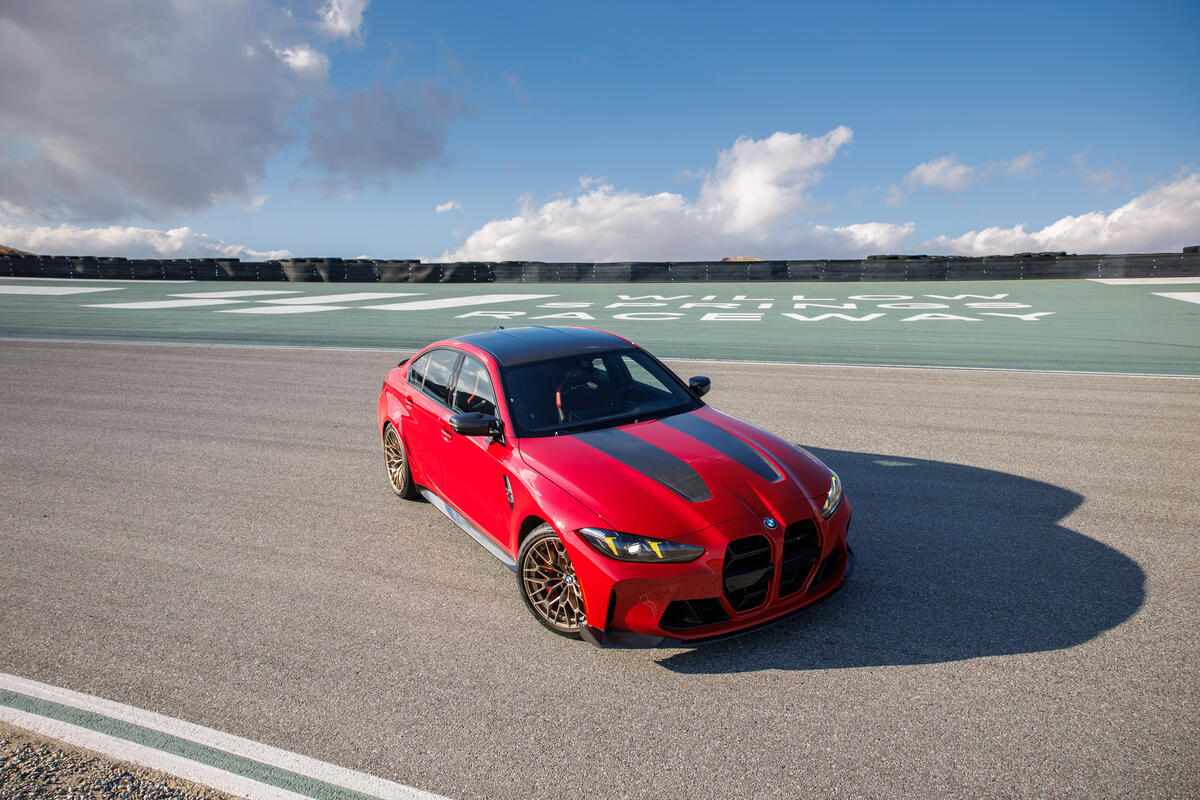
BMW M3
"... so sick dude. A small project car update for the M3 while you're doing that. The sea, sea pillar trim..."
The BMW M3 is a high-performance version of a BMW, made to drive more sportily than a normal car. People often work on them themselves or do upgrades and repairs. The podcast is mentioning a project update involving interior trim pieces.
The BMW M3 is a performance-focused BMW model known for its sporty handling and enthusiast appeal. In the podcast, it’s mentioned as a “small project car update,” which suggests hands-on work and maintenance/modification. The reference to interior trim indicates the kind of detail-oriented restoration or improvement people do on these cars.
manual car with a clutch pedal
"Oh man, I would love to say like, you know, a manual car with a clutch pedal, however, like I think I would have more fun not having to worry about"
A manual car has a clutch pedal you press to change gears. It’s extra work for the driver because you have to coordinate the pedal and the gear lever.
A manual transmission uses a clutch pedal to disconnect the engine from the gearbox so you can change gears. In a race car, the clutch and pedal feel can be extremely demanding because the controls are often set up for fast, precise inputs.
Ferrari Schumacher
"So mine would be like, I would probably want to try the 2000 or 2001 Ferrari Schumacher car. That's probably really good."
Schumacher was one of the most famous Formula 1 drivers ever. The hosts are referencing a Ferrari race car from the time he was winning championships.
Michael Schumacher is a legendary Formula 1 driver strongly associated with Ferrari’s dominance in the early 2000s. When the hosts say “Ferrari Schumacher car,” they’re tying the car choice to Schumacher-era championship-winning machinery.
non turbo
"They were still pretty basic cars like non turbo, just screaming very technical engine, but that's probably where I would go"
“Non turbo” means the engine doesn’t use a turbocharger to boost air. That changes how the power comes on and can make the car feel different when you accelerate.
“Non turbo” means the engine is naturally aspirated rather than using a turbocharger. In F1, the turbo vs naturally aspirated choice strongly affects throttle response, power delivery, and how the car feels to drive.
crazy suspension
"I mean, I think that probably is a good choice because that's also post like outlawing the like crazy suspension of like the Mansell like 92 Williams where "
They mean an unusual, very aggressive suspension setup. The suspension can help the tires grip better, but it can also make the car feel complicated and demanding to drive.
“Crazy suspension” is a reference to highly unusual or aggressive suspension designs used in certain F1 eras to maximize tire contact and control. These setups can be very effective but also make the car harder to drive consistently because the behavior can be less intuitive.
manual transmission
"we know how to drive manual transmission, so I don't know if it would be like once you're going, that's probably maybe it's better than I imagine it's just like driving a manual transmission."
A manual transmission is a car where you shift gears yourself. You usually use a clutch pedal to change gears, instead of letting the car do it automatically.
A manual transmission is a gearbox that the driver controls directly by using a clutch pedal and shifting gears. It’s different from an automatic because you choose the gear ratio yourself, which changes how the car accelerates and slows down.
pedal box
"I just picture in the pedal box being so frickin tight and yeah that yeah and yeah they're they're not turbo cars or anything, so they're pretty linear."
The pedal box is the space inside the car where the pedals are mounted. In a manual car, that area can feel cramped because you’re using the clutch pedal a lot while shifting.
The pedal box is the enclosed area in the cabin where the pedals (like the clutch, brake, and accelerator) are mounted. In a manual car, it can feel especially tight because you’re coordinating clutch travel and quick gear changes.
linear
"they're they're not turbo cars or anything, so they're pretty linear."
Here, “linear” means the car’s power comes in a steady, predictable way as you press the gas. It’s not a sudden hit like some turbo cars can feel.
In this context, “linear” describes how engine response changes smoothly with throttle input, rather than arriving in a sudden surge. It’s a common way enthusiasts compare naturally aspirated engines to turbocharged ones.
downshifting
"I imagine having to shift really quickly like downshifting in order to stop the car, so I don't know."
Downshifting means putting the car into a lower gear. People do it when slowing down or when they want the engine to pull harder, especially in a manual.
Downshifting is changing to a lower gear, usually to slow the car more effectively or to keep the engine in its power band. In a manual, it also helps match engine speed to the new gear so the car doesn’t feel jerky.

Jeep Wrangler
"Denim. It's not Levi's, but it's Lee or Wrangler. I don't know."
The Jeep Wrangler is a tough SUV designed for off-road driving. Many Wranglers can have the roof and doors removed, depending on the model. The podcast is just mentioning the name “Wrangler.”
The Jeep Wrangler is a rugged off-road SUV known for its removable roof and doors on many models, plus its strong four-wheel-drive capability. It’s commonly discussed because it’s built for trail use and casual everyday driving alike. In the podcast, it’s referenced through a wordplay/labeling moment around the name “Wrangler.”
Request an Explanation
Heard something you'd like explained? We'll add it to this episode.
Sign in to request explanations for terms you heard.
Want to learn more?
Browse our glossary for plain-English explanations of automotive terms, jargon, and concepts.
Help improve this episode
See something that's not quite right? Our annotations are AI-generated and can sometimes miss the mark. Click the flag icon on any annotation to suggest a correction.