
The Leno Law with Christian Robinson of SEMA - DWA! Ep. #941
About this episode
Jay Leno’s “Leno’s Law” push with SEMA gets unpacked from the shop floor to the statehouse. The hosts compare how older cars can pass emissions—sometimes after parts replacement and BAR 97 roller testing—with how California rules can still fail vehicles for visual/installed equipment reasons. Christian Robinson explains SEMA Action, the legislative steps for SB 1392, and the phased eligibility window (starting at 1981) plus collector insurance or low-mileage requirements. They also debate environmental arguments, costs, and even California’s tire rolling-resistance regulations.
On this episode of the DWA! Podcast, we are joined by Christian Robinson of SEMA to talk about the Leno Law, and what you can do to help get it passed.
Take action here: https://www.semahq.org/campaigns/lenos-law

Chevrolet Corvette
"...y Toyota Camry egasitl vehiculum there's no doubt Corvettes are fast but I'm riding dirty right now the croc ..."
The Chevrolet Corvette is a sports car made by Chevrolet. It’s designed to be fast and fun to drive, especially when you accelerate and take corners. People talk about it a lot because it’s a well-known way to get high performance from a production car.
The Chevrolet Corvette is a performance sports car known for strong acceleration and a driver-focused design. It’s often discussed in podcasts because it represents a mainstream, recognizable way to get serious speed and handling without going to an exotic supercar. In a conversation about fast cars, the Corvette is a common reference point for “how fast can a regular production car feel?”
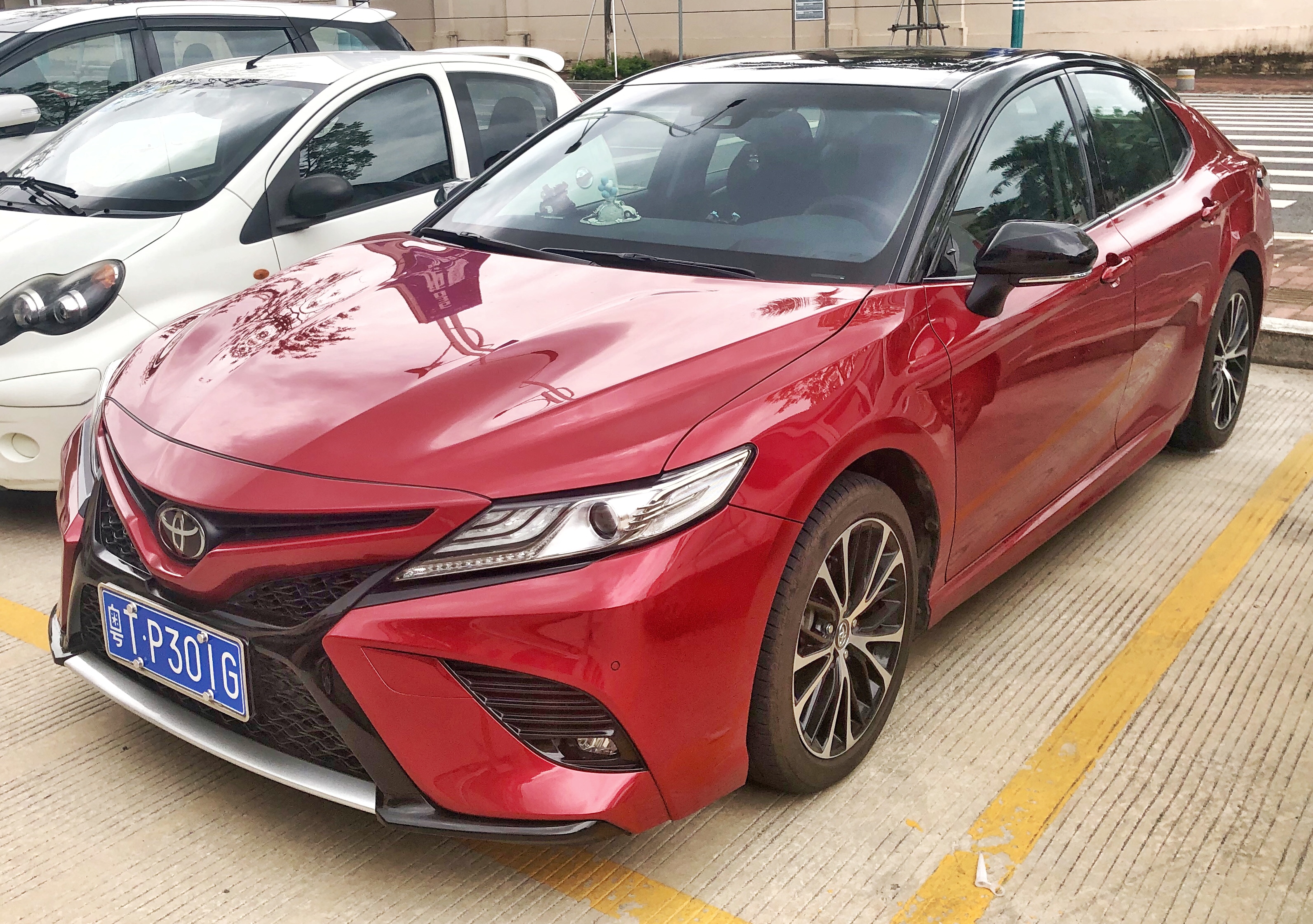
Toyota Camry
"white on gray Toyota Camry egasitl vehiculum there's no doubt Corvettes are fast but I'm"
The Toyota Camry is a common, everyday car that many people drive. In this segment it’s just being mentioned as a contrast to the performance cars being talked about.
The Toyota Camry is a mainstream midsize sedan known for being practical and widely used as a daily driver. It’s mentioned here as a contrast point against faster cars, highlighting how different vehicles can be in the same conversation about driving culture.

1995 BMW M3
"absolutely I have some news to share this is relevant I swear but also in relation to what we're gonna be talking about later I have a 1995 BMW M3 and it passed California smog yesterday yeah"
The BMW M3 is a high-performance BMW made by BMW’s performance team. This one is a 1995 model, and the big point is that it has to pass California emissions testing to be allowed on the road.
The BMW M3 is a performance-focused version of the 3 Series, built by BMW’s M division for high-revving, driver-focused handling. In 1995, the M3 is the E36-generation, and it’s notable here because the host is dealing with California emissions testing to keep it street-legal.
California smog
"later I have a 1995 BMW M3 and it passed California smog yesterday yeah bar 97 test it's an enhanced they put it on the roller and yeah so they"
“California smog” is California’s emissions test for cars. It’s meant to make sure your car isn’t polluting too much, and older cars can sometimes struggle unless everything is working correctly.
“California smog” refers to the state’s emissions testing program that checks whether a vehicle is producing acceptable levels of pollutants. For older cars, passing can require the engine and emissions equipment to be in very good working order, even if the car is otherwise stock.
bar 97 test
"yeah so they it's required a lot of steps along the way I'll just say that and it passed and he didn't have many notes from anybody said it was still on the ragged edge of almost failing so we'll get into this because I know there's there's maybe some relief coming in many years from now for a 95 but at the same rate like we"
The “BAR 97” test is a specific California Air Resources Board (CARB) emissions test procedure used for many vehicles. It typically involves running the car on a dynamometer (roller) and measuring exhaust emissions under controlled conditions.
roller
"bar 97 test it's an enhanced they put it on the roller and yeah so they it's a 95 so they have to do the roller and everything"
A “roller” is part of the emissions test where the car’s wheels are placed on rollers. The car stays put, but the wheels spin so they can measure exhaust emissions under controlled conditions.
In emissions testing, a “roller” usually means a dynamometer setup where the car’s wheels are driven while the vehicle remains stationary. This allows repeatable load and speed conditions so emissions can be measured consistently.
oxygen sensors
"totally stock totally stock car too by the way yeah new new cats new oxygen sensors full yeah injectors all the things but it's still barely able to get passed"
Oxygen sensors check the exhaust to see how much oxygen is left. The engine uses that info to adjust the fuel mixture, which matters a lot for passing emissions tests.
Oxygen sensors (often called O2 sensors) measure how much oxygen is left in the exhaust. That feedback helps the engine control fuel mixture (air-fuel ratio), which directly affects emissions and how easily a car can pass an emissions test.
new cats
"totally stock totally stock car too by the way yeah new new cats new oxygen sensors full yeah injectors all the things"
“Cats” are catalytic converters that clean up exhaust. If they’re not working right, the car can produce too much pollution and fail an emissions test.
“Cats” is shorthand for catalytic converters, which use chemical reactions to reduce harmful exhaust gases. If the catalytic converter isn’t working properly—or if the system isn’t calibrated correctly—emissions testing can fail even when the car otherwise runs well.
injectors
"new new cats new oxygen sensors full yeah injectors all the things but it's still barely able to get passed and this is a car that covers 5000 miles a year"
Fuel injectors are the parts that spray fuel into the engine. If they don’t spray the right amount, the engine can burn fuel inefficiently and pollute more, which can hurt emissions test results.
Fuel injectors deliver gasoline (or other fuel) into the engine in precise amounts and timing. If injectors are worn, clogged, or not delivering correctly, the air-fuel mixture can drift and emissions can rise—making emissions testing harder to pass.
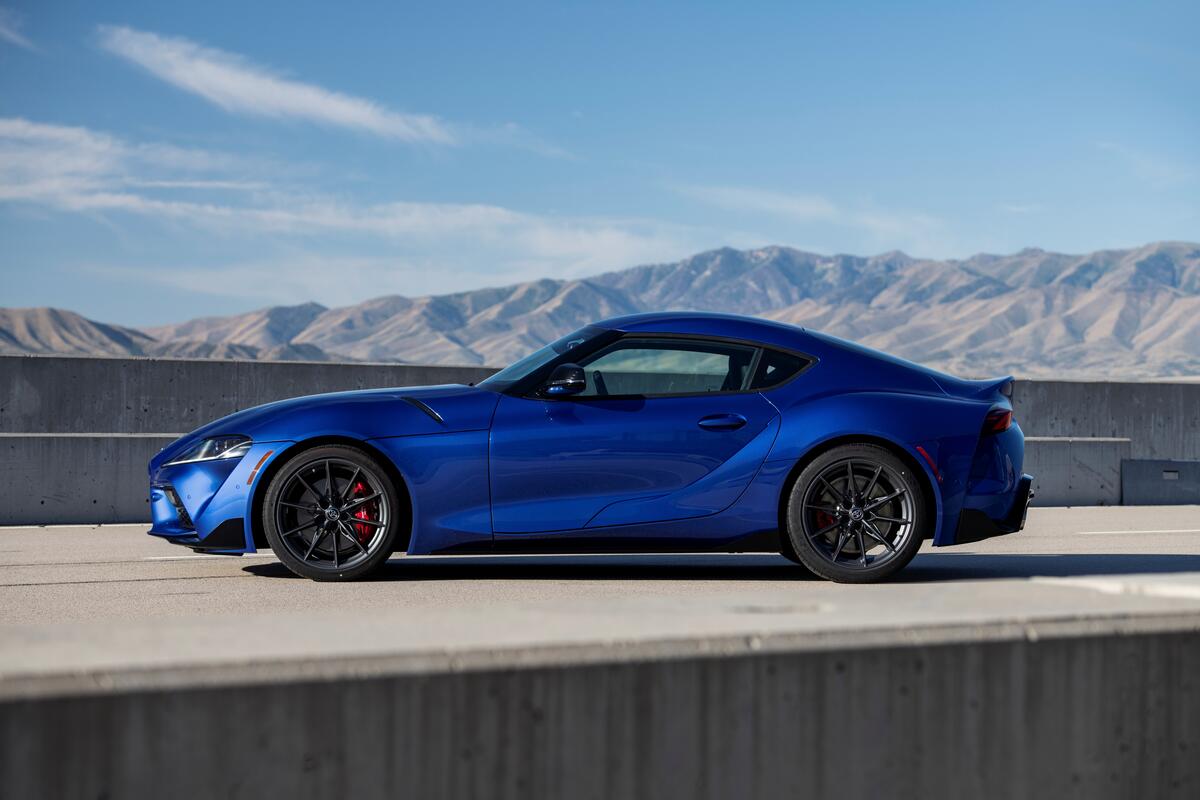
1997 Toyota Supra twin turbo
"they bought him a 1997 Toyota Supra twin turbo and yeah and this was in like 1999 2000 yeah and you know the story was that it belonged to a Miami heat player"
This is a 1997 Toyota Supra with a twin-turbo engine. “Twin turbo” means the engine gets extra air pressure from two turbochargers, which helps it make more power.
The 1997 Toyota Supra is a legendary late-90s performance coupe, and the “twin turbo” setup means it uses two turbochargers to boost power. That twin-turbo system is part of why the Supra became a motorsports and tuner icon in the 1990s.
blow off valve
"he'd be buying parts that I'd spend my time at his garage helping him install them on the weekends you know blow off valve and you know eight pillar gauges"
A blow-off valve is a turbo car part that releases extra pressure when you lift off the gas. It helps the turbo stay happy and often makes that loud “pssh” sound.
A blow-off valve is a turbo-related pressure-release valve that vents excess boost pressure when the throttle closes. On many turbo cars, it helps prevent compressor surge and can produce the characteristic “pssh” sound people associate with turbo setups.
eight pillar gauges
"you know blow off valve and you know eight pillar gauges so I was familiar with SEMA starting that yeah I bet nice"
This means adding a set of gauges mounted in the car’s pillar area. They let you watch important engine numbers while you drive, especially on turbo cars.
“Eight pillar gauges” refers to a gauge setup mounted in the A-pillar/B-pillar area (often via pods) to monitor multiple engine parameters at a glance. Enthusiasts commonly add gauges like boost, air-fuel ratio, and oil temperature/pressure to keep track of how a turbo car is performing under load.
SEMA
"head up our state government affairs operation for SEMA and if you're not familiar with SEMA we're the specialty equipment market association we're best known for that trade show in Las Vegas in November of every year"
SEMA is an organization for companies that make and sell aftermarket car parts. They also work with government and host a big car-parts trade show in Las Vegas.
SEMA (Specialty Equipment Market Association) is a trade association representing the specialty automotive parts industry. In the episode, it’s described as doing government affairs and advocacy for member companies, with its biggest annual event being a major trade show in Las Vegas.
trade show in Las Vegas in November
"we're best known for that trade show in Las Vegas in November of every year but you"
This is talking about SEMA’s big annual industry event. It’s when aftermarket companies show off products and meet other people in the business.
The “trade show in Las Vegas in November” refers to SEMA’s annual specialty-equipment industry event. It’s a key industry gathering where aftermarket brands and suppliers showcase products and network.
OBD2 port
"because you know like with your m3 if it's an older vehicle it takes a different kind of test yeah than than a modern vehicle where you just you know plug into the obd2 port and see if there's anything going on"
OBD2 is a built-in computer system in many cars that can report problems. The OBD2 port is the plug you connect a scanner to so you can read error codes without taking the car apart.
OBD2 (On-Board Diagnostics, second generation) is a standardized system that lets mechanics read a car’s stored fault codes and live sensor data. Plugging into the OBD2 port is a quick way to check modern cars, but older vehicles may need different testing methods.
comprehensive test
"because you know like with your m3 if it's an older vehicle it takes a different kind of test yeah than than a modern vehicle where you just you know plug into the obd2 port and see if there's anything going on you you got to do a more comprehensive test"
A comprehensive test is a more thorough check than a quick computer scan. Older cars may require extra steps and special equipment to test their emissions correctly.
A comprehensive test is a more involved emissions/diagnostic procedure than a quick scan, often required for older vehicles that don’t communicate the same way as modern cars. The idea here is that older cars may need harder-to-find test stations and more time to evaluate properly.
catalytic converters
"so people are trying to make them actually run better by putting better equipment on and catalytic converters rather you know like better catalytic converters and stuff like this to make them run better and that's actually illegal right so then you're going to small and they're they're not able to smog"
A catalytic converter is an emissions device in the exhaust that helps clean up the gases coming out of the engine. Smog rules often depend on having the right emissions equipment installed.
Catalytic converters are emissions-control devices that convert harmful exhaust gases into less harmful ones using catalysts. In the context of emissions testing, changing or upgrading catalytic converters can affect whether a vehicle passes smog requirements.
smog pump
"you know and and you look at it and go no you have to put the smog pump back on right that catalytic converter is not what didn't come with it"
A smog pump is an emissions device that helps clean up exhaust gases. If you change parts or swap an engine, you may need to keep the smog pump so the car still meets the rules.
A smog pump (often part of an emissions system) injects air into the exhaust to help oxidize pollutants, especially during warm-up. In older California emissions setups, the required hardware can be specific, so swapping engines or exhaust parts may require reinstalling the smog pump to pass inspection.
thermal reactors
"forget what about those thermal reactors yeah exactly yeah it is it is wild that you'll have a catalytic converter that's for california"
Thermal reactors are older emissions devices that helped clean exhaust by using heat. They matter in this discussion because older cars (and their emissions parts) can be hard to replace or swap while still passing inspection.
Thermal reactors are older emissions-control devices used on some vehicles to reduce pollutants by using heat to promote chemical reactions in the exhaust. They’re mentioned here as part of the historical emissions hardware that can complicate engine swaps and compliance.
emissions sheet
"we've also seen where on an emissions sheet the vehicle puts down numbers that are clean and passing but because it fails visually it's no good"
An emissions sheet is the paperwork that lists test results for how clean a car is. In some cases, the numbers look good, but the car can still fail if the required emissions parts aren’t installed correctly.
An emissions sheet is documentation showing a vehicle’s measured emissions results (often from certification testing). The episode notes a scenario where a car can be numerically “clean” on paper but still fail because it doesn’t meet required visual/installed equipment criteria.
rolling cutoff
"i mean almost every other state has a rolling cutoff rather than a hard and fast deadline"
A rolling cutoff is a moving “line” in the rules that changes as time goes on. It’s used to decide when older vehicles qualify for different emissions treatment, instead of using one fixed year forever.
A rolling cutoff is an emissions-rule exemption threshold that updates over time (for example, based on the vehicle’s age as the years pass). The hosts contrast it with a hard deadline, arguing that rolling cutoffs are more practical than fixed dates for determining which vehicles qualify for less strict rules.
historic vehicle cutoff
"even in i live i live in maryland right and they tried to sneak into the budget last year they actually did changing the historic vehicle cutoff from a rolling 20 to 1999"
A historic vehicle cutoff is the rule that decides when a car counts as “old enough” to get special treatment. Changing that cutoff can affect whether the car has to follow the strictest emissions rules.
A historic vehicle cutoff is the specific age/date threshold a state uses to classify a vehicle as “historic,” which can change how strictly it must meet emissions requirements. The segment describes Maryland trying to change this cutoff from a rolling 20 years to a fixed year (1999), and how that sparked controversy before being adjusted again.
Leno's law
"so sb 1392 i mean obviously it's it's better known as leno's law um how how did that how did leno j leno get involved"
“Leno’s Law” is the name people use for a California bill (SB 1392). In the episode, they explain how it became a big focus for car enthusiasts and the industry.
“Leno’s Law” is the nickname for California SB 1392, a piece of legislation discussed in the episode. The hosts frame it as an issue the SEMA community has been pushing for, and they describe how it gained attention through high-profile car people and legislative allies.
SB 1392
"so sb 1392 i mean obviously it's it's better known as leno's law um how how did that how did leno j leno get involved"
SB 1392 is the official number of a California law proposal (a bill). The episode is talking about how that bill—called “Leno’s Law”—got support and momentum.
SB 1392 is a specific California state bill number. In this episode it’s discussed as the legislation commonly referred to as “Leno’s Law,” and the hosts explain how it moved through the political process.
Jay Leno
"how how did leno j leno get involved was that from early on or was that something that he just was interested in getting it to pass uh and and kind of jumped in yeah no great question"
Jay Leno is a well-known car enthusiast and TV host who is described here as a key advocate for the legislation nicknamed “Leno’s Law.” The episode connects his involvement to SEMA’s efforts by explaining how he helped bring attention to the issue through relationships and advocacy.
Mike Spagnola
"he comes out to the semen show every year um and he's he's good friends with the r the head of our organization mike spagnola and you know jay um jay had a chance"
Mike Spagnola is identified as the head of the organization referenced in the episode (SEMA). The host explains that Jay Leno’s input was routed to Spagnola, helping SEMA “get off to the races” on the legislative push.
Senator Shannon Grove
"interact with senator shannon grove uh as a member of the legislature obviously and she visited his garage and you know he he put a bug in here her ear about this issue"
Senator Shannon Grove is the legislator described as interacting with Jay Leno and supporting the legislative effort behind “Leno’s Law.” The segment emphasizes her role as an author and her alignment with the passion driving the bill’s progress.
governor's desk
"um uh come together last year that you know we we made it's not a coincidence then that we made the most progress on the issue uh in over 20 years and you know while we were disappointed that we didn't get it to the governor's desk"
“The governor’s desk” is a legislative process reference meaning the bill has reached the final stage where the governor can sign it into law or veto it. The hosts say they were disappointed it didn’t reach that point, but they believe they’re in a stronger position.
bureau of automotive repair
"[1487.6s] like all the oversight that makes sure that stuff's working with a bureau of automotive repair right [1491.9s] like that's a whole other thing um so i wasn't sure if there was some other angle there that they"
The Bureau of Automotive Repair is a government office that regulates things like smog testing. They help make sure the testing program and equipment are set up correctly.
The “Bureau of Automotive Repair” (BAR) is a state agency that oversees vehicle emissions testing and related programs. In this segment, it’s mentioned as the authority that provides oversight to ensure smog equipment and processes are working properly.
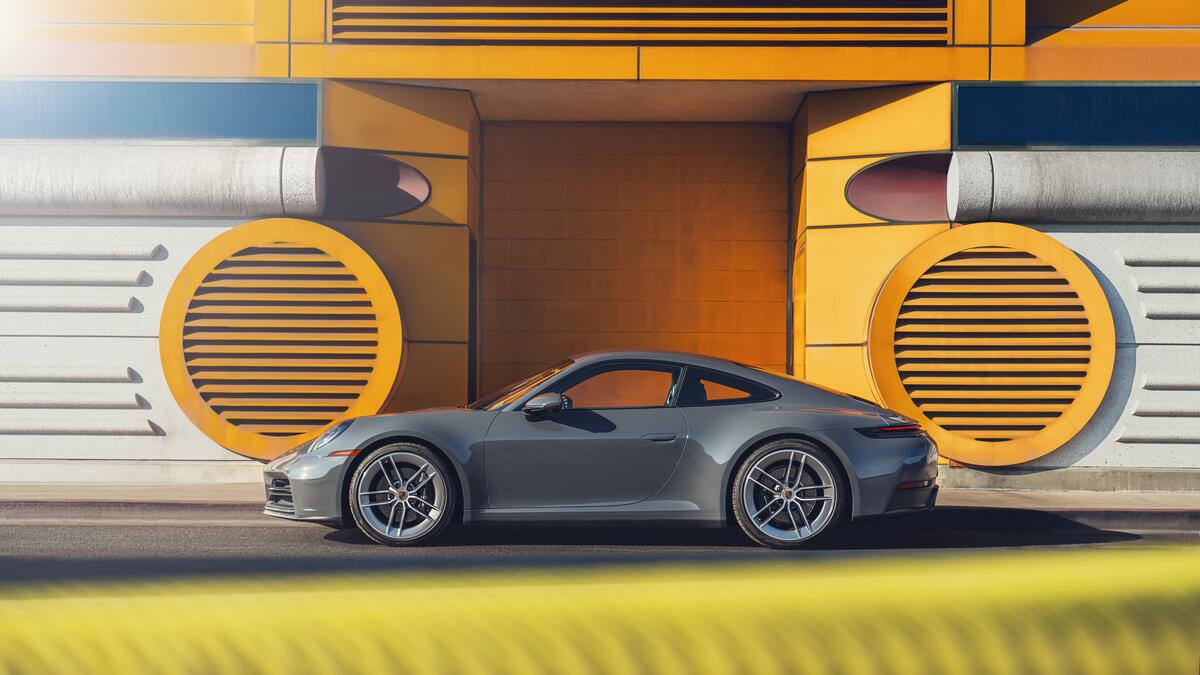
87 Carrera um 9 11
"before it's like how much would you pay to not have to smog your car it's like i have an 87 Carrera um 9 11 and it's like how much would you pay a year to not have to deal with it"
This is a Porsche 911, a famous sports car. The speaker is using an older 911 as an example of how annoying smog/emissions rules can be for owners of classic-ish cars.
The Porsche 911 is a long-running sports car line known for its rear-mounted flat-six engine and classic silhouette. In this segment, the host uses a late-1980s 911 ("87 Carrera") as an example of a car that would be affected by smog rules and emissions testing.
DMV
"give the dmv a thousand or you could give the government a thousand dollars a year"
DMV is the government office that deals with car paperwork like registration. The speaker is talking about paying fees through the DMV instead of dealing with emissions inspections.
DMV stands for Department of Motor Vehicles, the government agency that handles vehicle registration and licensing. In the context of emissions programs, the DMV is often the place where fees, exemptions, or compliance steps are processed.
trouble codes
"calpurn yeah so again they're not even looking at tailpipes they just plug it in to see if there's any trouble codes and i get that that's that makes sense"
Trouble codes are like the car’s “check engine” error messages stored in its computer. They help inspectors see whether the car has an emissions-related problem.
Diagnostic trouble codes are specific error identifiers stored by the car’s OBD-II system when it detects a fault. For emissions testing, the presence (or absence) of certain codes can indicate whether the car’s systems are functioning correctly.
tailpipes
"so again they're not even looking at tailpipes they just plug it in to see if there's any trouble codes"
Tailpipes are where the exhaust comes out of the car. Some emissions tests measure the exhaust gases directly from the tailpipe, while others just scan the car’s computer.
Tailpipes are the exhaust outlets of a vehicle. In emissions testing, “looking at tailpipes” usually means measuring exhaust gases directly, as opposed to using OBD-II scan results.
25 year rolling
"and i think the maryland ideas is perfect in my opinion i mean a 25 year rolling we do have more cars here in california i'll admit that are that survived and are used as daily transportation from the 90s"
This is a rule where cars gradually become exempt from emissions testing as they get older—about 25 years. Instead of a fixed cutoff year, the eligibility keeps moving forward each year.
A “25-year rolling” emissions policy means the exemption or reduced testing window advances each year so that cars become eligible once they reach about 25 years old. The idea is to treat older vehicles differently because they’re less likely to be driven frequently and may be maintained as collector or hobby cars.
rust
"like rust really isn't a thing so those cars survived right like an uh my neighbor's son bought a 87 Honda right as his first car"
Rust is when metal parts corrode and weaken over time. The speaker is saying some areas don’t rust cars as badly, so more older cars are still around.
Rust is corrosion of metal, and in car policy discussions it matters because it affects whether older cars survive and remain roadworthy. The speaker contrasts regions where rust is common versus places where older cars can last longer.
California tire law (passed in 2003) tying replacement tires to rolling resistance
"this is a law that was passed by california in 2003 okay okay the basic that says all right um replacement tires have to be as efficient have to have this the equivalent rolling resistance as um the tires that came with the vehicle"
They’re talking about a California rule (from 2003) that makes sure replacement tires don’t reduce fuel economy compared to the tires the car was originally set up with. It’s meant to keep efficiency testing assumptions valid.
The hosts discuss a California law from 2003 that requires replacement tires to match the rolling-resistance efficiency of the tires that came with the vehicle. The goal is to preserve the fuel-economy assumptions used when the vehicle was certified.
OEMs
"and you know the the oems when they certify vehicle um you know certain fuel efficiency the tires are part of that equation"
OEMs are the companies that make the car in the first place. They also choose the tires that the car is designed around for efficiency testing.
OEMs means “original equipment manufacturers”—the companies that build the vehicle and specify the parts it comes with. In this context, OEMs certify fuel-efficiency performance using the tires that are part of the vehicle’s setup.

Honda Civic
"about um you know for example as we all know here trim packages have different tires right so like if you have a whatever Honda Civic you know and if you get the sport package that's going to have a summer tire"
The Honda Civic is a common compact car. Different versions of it can come with different tires, which matters for things like fuel economy and grip.
The Honda Civic is a widely sold compact car that often comes in multiple trim packages, and those trims can be paired with different tire types. In this discussion, it’s used as an example of how tire choice can vary by configuration.
summer tire
"if you have a whatever Honda Civic you know and if you get the sport package that's going to have a summer tire so are they looking at the options that are associated with the car"
A summer tire is made for warm weather roads. In cold weather it usually doesn’t grip as well as winter or all-season tires.
A summer tire is designed to work best in warm weather, using rubber compounds and tread patterns optimized for dry and wet grip at higher temperatures. They generally lose traction in cold conditions compared with all-season or winter tires.
rolling resistance coefficient
"there would be a database the state would create a database that would have you know the rolling efficiency it's a rolling resistance coefficient i think is what uh for every tire"
It’s a way to measure how “hard” it is for a tire to roll down the road. Tires with lower rolling resistance typically help you get better fuel economy.
Rolling resistance coefficient is a number that describes how much energy a tire needs to keep rolling. Lower rolling resistance usually improves fuel economy, while higher rolling resistance can increase fuel use.

Mclaren F1
"well for some reason i think mclaren f1 because uh um he has talked about that car a lot and i know he's a really big fan of that car and it's one of his personal favorites from his collection from what i've seen but um i don't know it seems too obvious though it's got to be way more obscure but christian i'll just go with that christian and he guesses the mclaren f1"
The McLaren F1 is a famous supercar from the 1990s. It’s known for being built for the driver, including a unique three-seat setup where the driver sits in the middle.
The McLaren F1 is a landmark supercar known for its mid-engine layout and the fact that it was built around extreme driver-focused performance. It’s famous for its three-seat cockpit (driver in the center) and its reputation as one of the most iconic “supercars of the 1990s” ever made.

Mercedes Benz 600
"number one is lane guest stanley steamer oh that's right yeah number one is his 1972 Mercedes Benz 600 so that's that big oh pulmon limo thing um which he's i think he's done a lot"
The Mercedes-Benz 600 is an old-school luxury flagship. People often start with it when they want a big, high-status car—sometimes even turning it into a limo or custom build.
The Mercedes-Benz 600 is a luxury flagship from the 1960s/early 1970s era, known for its large, powerful V8 and high-end comfort. It’s also a common base for long-wheelbase and heavily modified “statement” builds, including limo-style conversions.
super 600 compressor
"which he's i think he's done a lot of work modifying it and making it sort of like a super 600 compressor yeah so uh that according"
In this context, “compressor” means a supercharger. It forces extra air into the engine so it can make more power than the original setup.
A “compressor” here refers to a supercharger—an engine-driven forced-induction system that increases air pressure going into the engine. Calling it a “super 600” suggests the Mercedes-Benz 600 has been modified to make it more powerful than stock using forced induction.
Request an Explanation
Heard something you'd like explained? We'll add it to this episode.
Sign in to request explanations for terms you heard.
Want to learn more?
Browse our glossary for plain-English explanations of automotive terms, jargon, and concepts.
Help improve this episode
See something that's not quite right? Our annotations are AI-generated and can sometimes miss the mark. Click the flag icon on any annotation to suggest a correction.