
Ferrari Luce, The DMV Fast Lane, Subliminal Wagons | Episode 1,047
About this episode
Ferrari Luce takes center stage as the hosts debate whether it’s a styling reset or a brand-risk driven by SUV competition. They connect Luce’s 360 Modena-inspired cues and “entirely new design language” to EV constraints like aerodynamics, then question who will buy a “$500,000” Ferrari. The conversation widens to EV sound and pricing logic, including authentic vibration capture versus fake engine noise. Between segments, they also tease upcoming track coverage and talk track insurance.

Hyundai Santa Cruz
"...t. Yep. Monterey. Perfect weather. We were in the Santa Cruz Mountains. California was California. Yes, we wer..."
The Santa Cruz is a small SUV from Hyundai that also has some truck-like usefulness. It’s designed to be practical for daily driving, but it can handle light hauling too. The podcast mentions it while talking about trips and everyday use.
The Hyundai Santa Cruz is a compact crossover with pickup-like utility features, designed to blend everyday driving with occasional hauling. The podcast mentions it in the context of travel and location, which fits its role as a practical “go anywhere” type of vehicle. It comes up because it’s a modern alternative for people who want some truck functionality without going full-size.
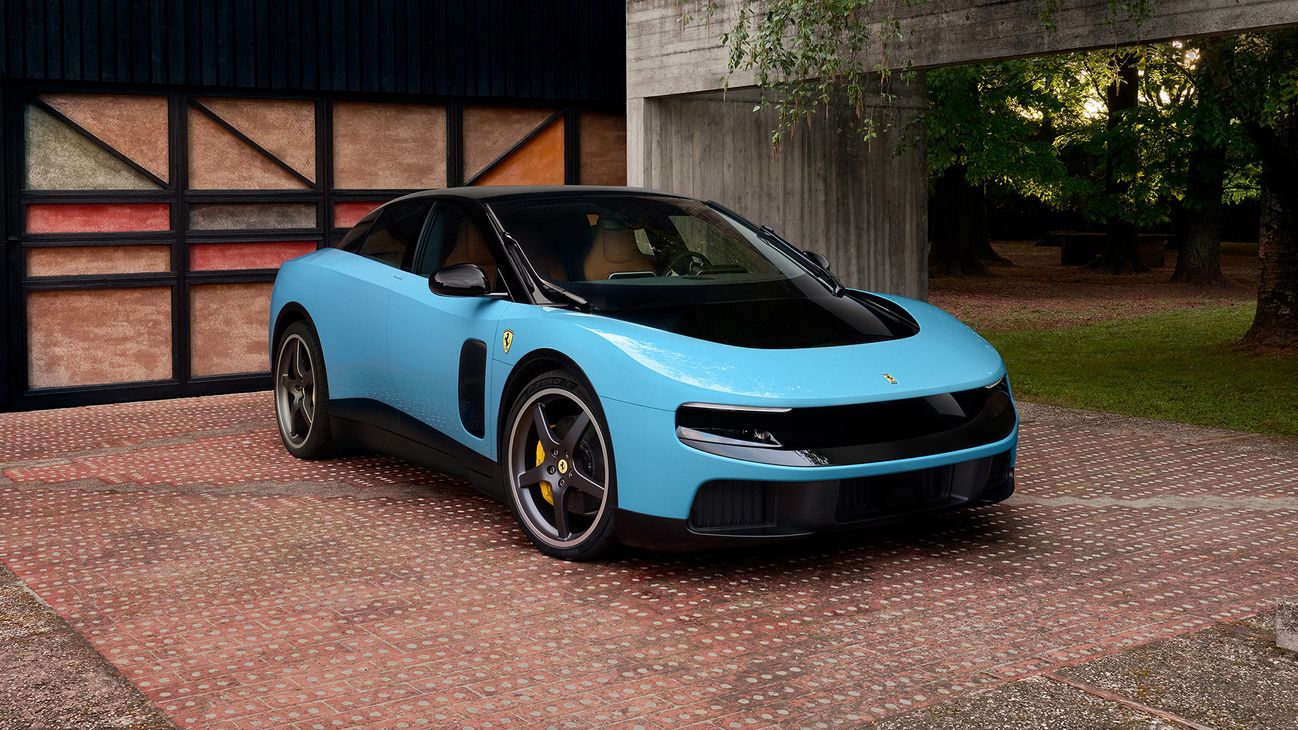
Ferrari Luce
"Okay, right up front, we have something we have to talk about. It's just been released. ... Ferrari has just released. L U C E."
Ferrari Luce is a new Ferrari reveal. The hosts are mainly talking about how the outside looks and how it compares to what people expect from Ferrari design.
Ferrari Luce is Ferrari’s newly released concept/production design called “Luce,” positioned as a light-themed design direction. In this segment, the hosts focus on its exterior styling and how it relates to Ferrari’s design identity, especially compared with earlier Ferrari shapes.
Johnny I
"Yeah, because it's Johnny I formerly of Apple. And a furniture design hero of yours come together."
Johnny Ive is a well-known designer from the tech world. The hosts are saying Ferrari brought in his design style for the Luce’s interior, which is why it has a different look than many traditional car cabins.
Johnny Ive (spoken here as “Johnny I”) is a famous industrial designer known for Apple products. In this segment, the hosts connect his design background to Ferrari commissioning him for the Luce interior, framing it as a cross-over between consumer-tech design and automotive design.
Apple
"Yeah, because it's Johnny I formerly of Apple. And a furniture design hero of yours come together."
Apple is the tech company the designer previously worked for. The hosts mention it to explain why the Ferrari Luce interior feels like it has a different design influence than typical car design.
Apple is referenced here as the company where Johnny Ive worked before moving into automotive design. The hosts are using that background to frame how a non-traditional design perspective influenced the Ferrari Luce interior and overall aesthetic direction.
pen and farina
"They haven't been doing pen and farina for a while. Yeah, hired a consulting firm that isn't Italian, isn't pen and farina."
This sounds like the name of a famous Italian design company that has worked on cars. The hosts are saying Ferrari used to rely on that kind of design influence more, and now they’re using something different.
“pen and farina” appears to refer to Pininfarina, the Italian design/coachbuilding firm strongly associated with many Ferrari-era designs. The hosts use it as a shorthand for Ferrari’s previous design influence before switching to a different (non-Italian) consulting approach.
design language
"They haven't been doing pen and farina for a while. Yeah, hired a consulting firm that isn't Italian, isn't pen and farina. So they they came up with an entirely new design language, which I appreciate."
“Design language” just means the recognizable style cues a brand uses. The hosts are saying Ferrari is trying a new overall look direction, so future cars will share a more consistent new style.
“Design language” is a set of consistent visual and styling cues—like shapes, proportions, and lighting signatures—that a brand uses across models. Here, the hosts argue Ferrari changed its design language by moving away from older Italian design influences and hiring a non-Italian consulting firm.

Tesla Cybertruck
"...t design language. So you could call it Ferrari's Cybertruck moment, where it's this outline model that doesn'..."
The Cybertruck is an electric pickup truck made by Tesla. It looks very different from most trucks, with sharp, geometric lines. People talk about it because the design is a big part of what makes it memorable.
The Tesla Cybertruck is an all-electric pickup designed with a distinctive, angular “futuristic” look. It’s often discussed because its shape and design language are so unusual that it stands out immediately. In the podcast, it’s referenced as a kind of “moment” where the outline design becomes the headline.
Ferrari's Cybertruck moment
"So you could call it Ferrari's Cybertruck moment, where it's this outline model that doesn't have anything to do with any of the current lineup."
The host is comparing Ferrari’s possible new look to Tesla’s Cybertruck—meaning a very different, bold design. The point is that it could change how Ferrari designs cars going forward.
This is a comparison framing: the host likens Ferrari’s potential design shift to Tesla’s Cybertruck, which was a major departure from conventional styling. It’s used to set up the idea that a bold, unfamiliar design could reset Ferrari’s future look.

Tesla Model Y
"...ight profile of this is not that far removed from Model Y. I'm not saying Ferrari made a Model Y. I'm not s..."
The Model Y is an electric SUV/crossover made by Tesla. It’s designed to be practical for daily driving and fits a lot of people and cargo for its size. The podcast mentions it because its general shape and design ideas show up in other Tesla models too.
The Tesla Model Y is an all-electric compact crossover built for everyday driving and family-friendly practicality. The podcast connects its overall shape to other Tesla models, noting that the design direction isn’t far removed across the lineup. It’s discussed because it’s a common reference point for what modern EV packaging and aerodynamics look like.
CUV
"It's five seat CUV and Ferrari's big conversation here is they've and they're obviously they've never made a five seater."
CUV means a crossover utility vehicle. It’s basically a car-SUV mix, and the host is saying that for a five-seat electric crossover, the need for efficiency affects the car’s shape.
CUV here means “crossover utility vehicle,” a body style that blends features of a sedan and an SUV. In this discussion, the CUV label matters because a five-seat electric CUV has to balance interior space with aerodynamic efficiency, which constrains the exterior shape.
aerodynamics
"Now once you worry about aerodynamics, you're starting to limit what it can be in just sheer profile shape."
Aerodynamics is how air moves around the car. The host is saying that for an all-electric five-seat car, designing for easier airflow limits what shapes you can choose, because the body has to be efficient.
Aerodynamics is the study of how air flows around a vehicle, and it strongly affects drag and efficiency. The host’s argument is that once you optimize for aerodynamics in an all-electric five-seat design, you end up with shape constraints that “box in” the possible profile.
rear hinge doors
"Now they've done crazy things like rear hinge doors"
Rear hinge doors are a door design where the door swings from the rear edge rather than the front (often associated with “suicide door” layouts, depending on how the latch is handled). The host mentions them as a styling/packaging trick that can help with access and proportions on a new EV platform.
five seater
"It's the first ever five seater. They're talking 1035 horsepower, 730 pound feet of torque, zero to 60 in the low two seconds, and around 300 miles of range."
A “five seater” is a car that can seat five people. The hosts are pointing out that this Ferrari idea is trying to be more practical than a typical two-seat supercar.
“Five seater” means the vehicle is designed to carry five people (typically two front seats plus a three-person rear bench). In this segment, it’s used to highlight how Ferrari’s rumored/mentioned model shifts from the brand’s usual two-seat sports-car layout toward a more practical family format.

Cayenne
"The sales of that, helping the company financially so much greater than selling any of the other two seat models that they're building. It wasn't a cayenne moment that revolutionized their books."
The Porsche Cayenne is Porsche’s SUV model. The host is using it as an example of how adding an SUV can make a company’s finances much stronger than relying only on sports cars.
The Porsche Cayenne is referenced as the example of an SUV that “revolutionized” Porsche’s financial results. In this segment, it’s used to argue that once a luxury automaker adds an SUV, it can dramatically boost sales and profits compared with sticking only to traditional sports-car models.
EV
"Okay, we need, as you said, a five seat EV to for what purpose? That is a commodity."
EV means electric vehicle. It’s a car that runs on electricity from a battery instead of using gasoline.
EV stands for electric vehicle, meaning the car is powered by one or more electric motors instead of a gasoline engine. The segment frames the “five-seat EV” as a market requirement because competitors already offer similar vehicles.
offset things
"I wonder, I wonder, and I don't know enough about the regulations to know because obviously the regulations are also changing. But I wonder, is this one of those offset things?"
The host is talking about rules and regulations that carmakers have to follow. They’re wondering if building this kind of car helps Ferrari meet those rules in a way that “counts” toward compliance.
“Offset things” is used as a vague reference to regulatory compliance mechanisms that can be satisfied by producing certain types of vehicles or meeting specific emissions/efficiency rules. The host suggests changing regulations might make it beneficial for Ferrari to build this kind of model.
body and white
"This is why body and white exists so you can evaluate the design without color because I'm not a big fan of this particular yellow color."
“Body and white” means the car is assembled but still unpainted. The point is to judge the design by its shape and lines, not by paint color.
“Body and white” refers to an early vehicle stage where the body panels are assembled but not yet painted. The hosts argue it helps evaluate the design shape and proportions without color influencing your perception.
CFD
"This is why body and white exists so you can evaluate the design without color... we can look at the aerodynamic the CFD for the aerodynamic function of the wheels all day long"
CFD is a computer simulation that helps engineers predict how air will move around a car. In this segment, they’re saying you can analyze the car’s aerodynamics with CFD, but that doesn’t automatically make every design element look great.
CFD (computational fluid dynamics) is computer simulation used to study how air flows around a vehicle. The hosts mention looking at CFD for aerodynamic function, contrasting that with their opinion that the wheel design itself isn’t especially impressive.
five spoke
"The five spoke, that is the most typical, unremarkable five spoke wheel ever."
A “five spoke” wheel is just a wheel design with five main spokes. Here, the hosts are basically saying it looks ordinary compared to more distinctive wheel designs.
A “five spoke” wheel design is a specific rim style where the wheel has five main spokes. The hosts use it as a critique, calling it a typical, unremarkable wheel design for the car.
fluid dynamics
"They have this this fluid dynamics, watch the airflow happen over the car. And it comes in out of what I can only describe as the front grill under and swoops up over the actual cab"
Fluid dynamics is about how air flows around the car. Designers use it to make the car cut through the air better and manage things like cooling.
Fluid dynamics is the study of how fluids (including air) move and interact with surfaces. In car design, it’s used to predict airflow over the body to improve aerodynamic efficiency and reduce drag while shaping cooling and downforce.
clean sheet
"Some of the way it makes the sounds is quite fascinating. I mean, the approach to everything was clean sheet. So that's very much Ferrari."
“Clean sheet” means the designers started over from the beginning instead of just tweaking an older design. They’re trying to build a fresh solution for how the car looks and works.
A “clean sheet” design approach means engineers start from scratch instead of evolving an existing platform or styling package. The hosts use it to describe Ferrari’s process for the Luce—aiming for a new aerodynamic and packaging solution rather than copying prior design cues.
regulations are changing
"Because, and I'm not coming down on any car maker Porsche, Ferrari, Mercedes, they're all struggling into this, the market is changing and regulations are changing with it, to be more friendly to the products they used to make."
They’re saying the rules for cars are changing. That forces car companies to redesign engines, powertrains, and tech so the cars can be sold legally.
When hosts say regulations are changing, they’re referring to new legal requirements that automakers must meet—often around emissions, fuel/energy use, and safety. The implication is that brands like Porsche, Ferrari, and Mercedes are adjusting their technology and product plans to stay compliant while still selling performance cars.
technology showcase
"So how much is this we need to finish our technological showcase and get it out there. Because the and I want to come back to because I want you to keep going. But the big lingering question for me is, who is going to buy this?"
A “technology showcase” is a car that’s mainly there to show off new tech. The hosts are wondering if that’s the real reason for the car, even if it’s not something many people will buy.
A “technology showcase” is a halo product meant to demonstrate what a brand can do technically, even if it’s not the most practical or highest-volume seller. The hosts question whether the Ferrari Luce (and similar moves) is primarily about proving tech and brand direction rather than mass-market demand.
EV range of 300 miles
"1000 horsepower, EV range of 300 miles. It's a great charging infrastructure."
EV range means how far an electric car can go before its battery runs low. When someone says “300 miles,” they’re talking about the approximate distance you can drive on one full charge.
“EV range” is the estimated distance an electric vehicle can drive on a full battery charge. The “300 miles” figure is a marketing-relevant metric because it affects real-world usability and how often you need to charge.
1000 horsepower
"1000 horsepower, EV range of 300 miles. It's a great charging infrastructure."
Horsepower is a way to describe how much power the car’s motor can produce. Higher numbers usually mean the car can accelerate more strongly, though how it feels also depends on other factors.
Horsepower is a measure of engine (or motor) power output, used to compare how strongly a vehicle can accelerate. In EV discussions, very high horsepower numbers are often used to signal rapid performance, even though actual feel also depends on torque delivery and traction.
charging infrastructure
"1000 horsepower, EV range of 300 miles. It's a great charging infrastructure."
Charging infrastructure is the system of places where you can plug in and charge an electric car. If there are more reliable chargers nearby, it’s easier to use the EV day to day and on trips.
Charging infrastructure refers to the network of charging stations available for electric cars, including how many there are and how reliable they are. Better infrastructure reduces “range anxiety” and makes long-distance driving more practical.

Tesla Model S
"If this were released 10 or 15 years ago, if it was model s and then this. Okay, we'd go. Okay. Whoa."
Tesla’s Model S is an electric car that became a benchmark for EVs with strong performance and lots of technology. Here it’s mentioned as an example of what would have seemed “wow” if a newer EV idea had arrived 10–15 years earlier.
The Tesla Model S is a battery-electric luxury sedan that helped define the modern EV performance-and-tech template. The host uses it as a comparison point for how an EV “iPhone moment” would have felt earlier in the EV timeline.
mid-engine car
"it looks out of the front cab like a mid-engine car where you're looking down to the road instantly."
A mid-engine car puts the engine more toward the middle of the vehicle. Here, they’re using it as a feeling/visibility comparison—like you’re looking down the road from a more driver-focused, centered position.
A “mid-engine” layout places the engine closer to the car’s center, typically behind the front seats and ahead of the rear axle. The host isn’t claiming the car is literally mid-engined; they’re describing the seating position and forward visibility that make it feel like a mid-engine car from the driver’s perspective.
Honda City car
"I hate to say it this way, but this is a Honda City car. Maybe the high-end version, but tell me I'm wrong. The Honda City car is a welcome. Please come in, sit down, let's have a nice day together."
The Honda City is a practical small car. The host is using it as a vibe comparison—saying the cabin feels warm and inviting instead of cold and clinical.
The Honda City is a small, city-focused car known for being easy to live with and comfortable in everyday driving. Here, the host uses “Honda City car” as a comparison to describe the Ferrari’s cabin vibe as friendly and welcoming rather than sterile.
rear subframe
"That's the Honda City car. A few stats and specs. First of all, the rear subframe. It's got an elastically mounted rear subframe maximizing acoustic comfort while maintaining the same level of handling."
A subframe is like a strong support frame inside the car. The “rear subframe” holds parts like the rear suspension, and mounting it with softer mounts can help reduce road noise and vibration.
A rear subframe is a structural framework that carries suspension and related components, then transfers loads into the vehicle body. The host says it’s “elastically mounted,” meaning it uses compliant mounts to reduce noise and vibration while trying to keep handling characteristics intact.
elastically mounted
"It's got an elastically mounted rear subframe maximizing acoustic comfort while maintaining the same level of handling."
It means the part is attached with soft, flexible mounts. That helps keep bumps and vibration from traveling into the cabin as much.
“Elastically mounted” means the component is attached using flexible mounts (rubber or similar materials) that allow controlled movement. In this context, it’s used to improve acoustic comfort by filtering vibration while still preserving the suspension’s ability to control the car.
amplified the vibrations
"So they have amplified the vibrations taken directly from the source, the sound the electric axles produce and transmit through the metal in the form of vibration is acquired in real time by an accelerometer."
They’re talking about a system that takes real vibrations the car makes and makes them louder or more noticeable. The idea is to avoid totally artificial “engine sound” and instead highlight the car’s natural EV noises.
This describes an audio/vibration strategy where the car captures real mechanical vibrations and then boosts them for the driver to hear. The host contrasts it with “fake” engine sound, implying the system is meant to be authentic to the EV’s real operating noises.
accelerometer
"the sound the electric axles produce and transmit through the metal in the form of vibration is acquired in real time by an accelerometer."
An accelerometer is a sensor that detects motion and vibration. In this car, it’s used to measure the EV’s real vibrations so the system can turn them into an audible experience.
An accelerometer is a sensor that measures acceleration—how quickly something’s speed or movement changes—often by detecting vibration. Here, it’s used to capture vibration in real time so the car can reproduce or process the EV’s mechanical “sound” from actual sources.
electric axles
"the sound the electric axles produce and transmit through the metal in the form of vibration is acquired in real time by an accelerometer."
Electric axles are the parts that use electric motors to turn the wheels. The host is saying the vibrations from those components are what the sound system is picking up.
“Electric axles” refers to the drivetrain components that use electric motors to drive the wheels, typically integrating motor and reduction gearing with the axle assembly. The host attributes the captured vibrations to these electric drive components as they operate.
fake V8 and V12 engine noises
"we need to celebrate Ferrari for not pumping in fake V8 and V12 engine noises. They're not."
Because EVs are quiet, some cars add artificial engine sounds to make them feel more like gas cars. The host says Ferrari isn’t doing that “fake V8/V12” approach here.
Some cars use “sound synthesis” to create an artificial engine note—often mimicking the character of V8 or V12 engines—because EVs are quieter. The host argues Ferrari is not using that kind of fully artificial sound, instead using real captured vibrations.

Ferrari
"It's [1328.2s] going to hopefully reset Ferrari styling. I mean, the proportions of two seaters will look better [1336.0s] with this aesthetic... Looks like Ferrari has made a successful vehicle."
Ferrari is the famous Italian supercar company. In this part of the show, they’re talking about whether Ferrari’s new EV is genuinely impressive or mostly just looks good and follows what other EVs already do.
Ferrari is the Italian supercar brand being discussed here, specifically in relation to a new EV product and how it might change the brand’s design direction. The hosts debate whether Ferrari’s new vehicle is truly a standout or just “successful” styling and familiar EV features.

Ford Mustang
"...ch how huge that side is. The trick done with the Mustang Machida. That lower rocker exists for real on my ..."
The Mustang is a sports car made by Ford. It’s known for its classic look and for being available in different performance versions. The podcast mentions it because people pay attention to its design details and how it drives.
The Ford Mustang is a long-running American sports coupe/pony car known for its styling and performance options. In the podcast, it’s mentioned in the context of specific body details and the “Machida” reference, highlighting how certain design elements show up on the car. It’s discussed because the Mustang is a frequent benchmark for what makes a fun commuter or weekend car.
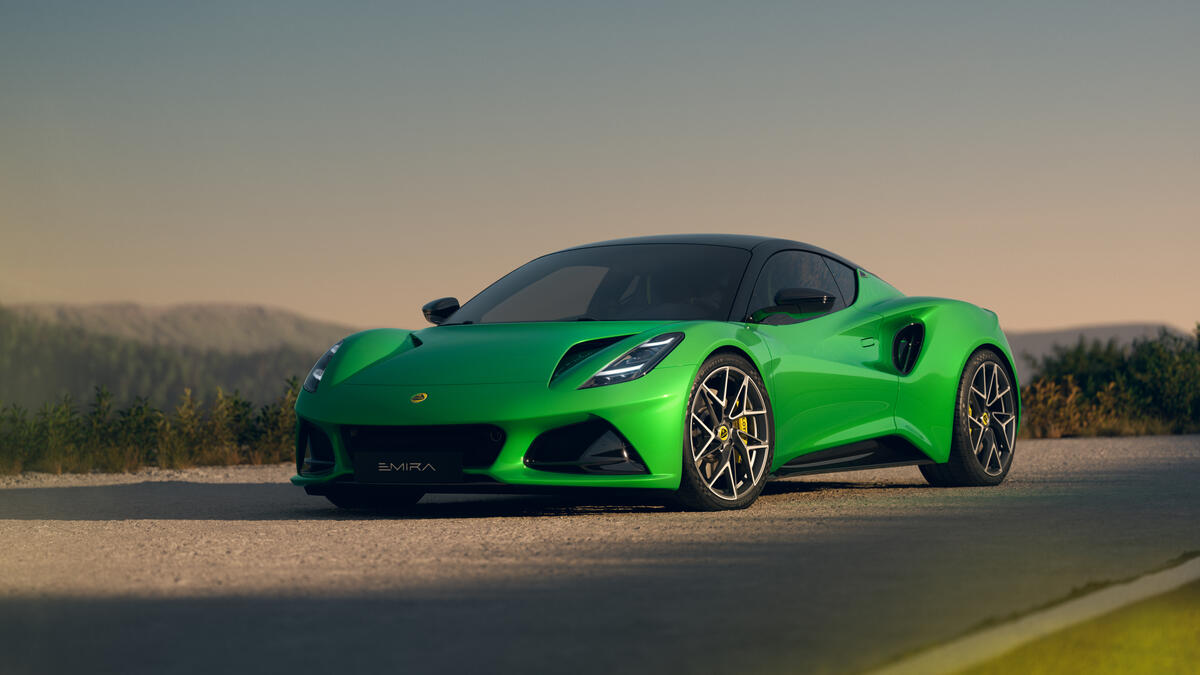
Lotus Amira
"... Machida. That lower rocker exists for real on my Amira, and they still paint it black because when it's ..."
The Emira is a sports car made by Lotus. It’s built to feel fun and connected to the road when you drive it. The podcast mentions it while talking about specific design details on the car.
The Lotus Emira is a sports car from Lotus designed to deliver a lightweight, engaging driving experience. The podcast mentions a specific body detail—the lower rocker—and notes that it’s still painted black, tying the car’s design to the enthusiast conversation. It comes up because the Emira represents Lotus’s modern approach to a driver-focused sports car.

Lucid Air
"I think it's a [1374.4s] Lucid Air, which is a success. Yes. Here's the thing... The loaded versions like a quarter million dollar [1385.1s] car... and it's technology everywhere... and a year later, most of them are worth half their value"
The Lucid Air is an electric luxury car that’s famous for going a long way on a charge. The hosts say that when it first came out, expensive versions impressed people, but a year later many cars were worth much less than buyers paid.
The Lucid Air is a luxury electric sedan known for high efficiency and long range, and it’s used here as the reference point for what a “good EV” should deliver. The hosts argue that even when early buyers paid around a quarter million dollars for top trims, many later saw steep value drops—suggesting the market didn’t reward the tech as much as the initial pricing implied.
value
"and a year later, most of them are worth half their value for the [1396.5s] people that did decide to buy them."
Here, “value” means what the car is worth after you’ve owned it for a while. They’re saying some expensive EVs lost a lot of money in a year.
In this segment, “value” is shorthand for how much the car is worth on the resale market after purchase. The hosts claim that Lucid Air buyers paid very high prices initially, but many cars later sold for about half that amount—highlighting depreciation risk.
four wheel drive
"They haven't revolutionized, but it's four wheel drive, all the [1420.1s] things that current EVs that are impressive do well."
Four-wheel drive means the car can send power to all four tires. That usually helps it grip better, and the hosts are saying this Ferrari EV will likely have that kind of capability like other modern EVs.
Four-wheel drive (4WD) means power can be sent to all four wheels, improving traction and stability—especially on slippery or uneven surfaces. In the context of EV comparisons, it’s being used as one of the “impressive” capabilities that current EVs already offer.
V12s
"Is it satisfying a regulation? Is it proving we should only make V12s a government? [1451.9s]"
A V12 is a type of engine with 12 cylinders arranged in a V shape. The host is basically asking if Ferrari should focus on making V12 cars rather than switching to EVs.
A V12 is an engine configuration with 12 cylinders arranged in a “V” shape, typically associated with smooth power delivery and high-performance character. The host’s question is whether Ferrari’s EV effort is really about meeting regulations or whether the brand should “only” build V12 cars instead.
entry point
"...and it would bring people to the brand and be the front door, the entry point more so than the Amalfi, the Portofino, the California could ever do to bring customers to the brand..."
An “entry point” here means the first Ferrari-like thing that gets people interested in the brand. The idea is that it should attract new buyers who then move up to more expensive Ferraris later.
In automotive branding, an “entry point” is the first product that brings new customers into a marque’s ecosystem. The hosts argue the Luce should have acted like that—drawing people in before they “aspire” to buy a higher-end Ferrari.

Ferrari Portofino
"...oor, the entry point more so than the Amalfi, the Portofino, the California could ever do to bring customers ..."
The Portofino is a high-end sports car made by Ferrari. It’s designed for comfortable long-distance driving while still being very fast. The podcast mentions it because it’s one of Ferrari’s models meant to bring in customers.
The Ferrari Portofino is a luxury grand touring sports car positioned as an entry point within Ferrari’s lineup. The podcast mentions it in the context of attracting customers and how Ferrari markets different models. It comes up because it’s a key example of how Ferrari balances exclusivity with a more accessible “starting” model.
used models
"...good news, all we have to do is wait for used models, and then that will, it will have that effect. So maybe it doesn't matter that it's so high priced to begin with..."
They mean buying the car second-hand later. The idea is that once more of them exist and prices drop, more people can afford a Ferrari like this.
“Used models” refers to buying the car after its initial release, when depreciation and supply can lower the price. The hosts suggest that even if the Luce is too expensive at launch, the used market could eventually make it attainable and create the same brand-entry effect.
six speed manual transmission
"The send off of the sixth generation M3 only offered with a six speed manual transmission and only for North America."
It means the car has a manual gearbox with six gears. You shift yourself using a clutch pedal, and the hosts are saying this special BMW M3 is only available that way.
A six-speed manual transmission is a gearbox where the driver selects gears using a clutch and gear lever. In this context, the hosts highlight that the BMW M3 CS “hand shelter edition” is only offered with this manual setup, which is a big deal for enthusiasts.
M servo tronic steering
"Additionally, the tuning of the M servo tronic steering, the electronic control settings with chassis engine gearbox are all specific to the hand shelter."
“M servo tronic steering” refers to BMW’s electronically assisted steering system used on M models. The hosts say its tuning is specific to the “hand shelter” edition, meaning the steering feel and response are calibrated to match the car’s overall chassis and drivetrain behavior.
electronic control settings
"Additionally, the tuning of the M servo tronic steering, the electronic control settings with chassis engine gearbox are all specific to the hand shelter."
This is the car’s computer tuning. It adjusts how different parts work together—like the engine and transmission—so the driving feel matches the car’s intended character.
“Electronic control settings” here means the software calibration that coordinates multiple systems—chassis, engine, and gearbox. The hosts are saying this special M3 CS edition has unique tuning so the car’s behavior is consistent as you accelerate, brake, and change gears.
carbon fiber
"New springs, lighter weight and more carbon fiber bits everywhere."
Carbon fiber is a very light, strong material. Putting more of it on a performance car can help reduce weight and make the car feel more responsive.
Carbon fiber is a lightweight composite material used in performance cars to reduce mass and sometimes improve stiffness. The hosts mention “more carbon fiber bits everywhere” on the BMW M3 CS edition, implying weight savings and a more performance-focused build.
beaver teeth
"Yeah, you're showing a good picture in spite of the fact that the picture you're showing has the beaver teeth right on display up front."
They’re using a nickname for a front-end design detail that looks like teeth. The hosts are basically saying the styling tries to make that feature less obvious, but it’s still there.
“Beaver teeth” is a nickname for the distinctive front grille/lighting design elements that resemble teeth. The hosts discuss how the grille design is meant to visually distract from or “mask” that feature while still keeping it present on the sixth-generation M3.
drifty sideways action
"But honestly, who cares? A little Drifty sideways action, plenty of power in this."
That phrase means the car’s rear end slides out a bit while you’re turning. It’s the kind of behavior people associate with fun, controllable handling when you drive aggressively.
“Drifty sideways action” refers to oversteer where the rear of the car steps out and the driver keeps it sliding while steering. It’s a common enthusiast description for how a car behaves when pushed hard on throttle and steering inputs.
rear wheel drive
"And you know, BMW sandbagging anyway, so plenty of power manual transmission rear wheel drive. This is all the things we want a BMW to be."
Rear-wheel drive means the back wheels do the work of moving the car. Many drivers like it because it can make the car feel more lively and easier to steer at the limit.
Rear-wheel drive (RWD) sends power to the back wheels, which often helps with balance and steering feel. In performance cars, RWD can also make it easier to induce controlled oversteer when you want a “drifty” feel.
carbon buckets
"I mean, the interior, I mean, it's got the carbon buckets. I have to have these buckets. I mean, I they are really great shirts."
These are performance-style seats made with carbon fiber, shaped to “hug” you. They’re designed to keep you from sliding around when the car turns hard, and they tend to cost a lot more than regular seats.
Carbon bucket seats are lightweight, high-support seats shaped like buckets to hold you in place during hard cornering. They’re often used in performance cars because they reduce movement and can improve driver control, though they’re usually expensive compared with standard seats.
strut brace
"check out the strut brace. It is art. It's sculpture. It is really great looking."
A strut brace is a metal bar that ties parts of the car’s front suspension together. The idea is to make the body less “wobbly,” so the wheels stay more aligned when you corner.
A strut brace is a structural component that connects suspension strut towers (or similar points) to reduce chassis flex. Less flex can help the suspension maintain alignment under load, which can improve steering response and consistency.
key fob
"I see where you're going. Same key fob for all of the cars. Buy an Ultima or you buy a GTR. The key fob is the same. The exact same."
A key fob is the remote you carry to unlock the car and sometimes start it. They’re saying the same style of fob is used across multiple cars.
A key fob is the handheld remote used for keyless entry and often for starting the car. The speaker is noting that BMW uses the same key fob design across different models, like an Ultima or a GTR, as a branding/parts-sharing detail.

Nissan Gtr
"...b for all of the cars. Buy an Ultima or you buy a GTR. The key fob is the same. The exact same. Yeah, I..."
The GT-R is a fast sports car made by Nissan. It’s built for strong performance and quick driving. The podcast mentions it because it’s a popular choice when someone is deciding between high-performance cars.
The Nissan GT-R is a high-performance sports car known for delivering very strong acceleration and track-capable capability. In the podcast, it’s mentioned as a “buy” decision compared to another performance car, and the conversation notes that the key fob is the same—suggesting shared ownership/experience details. It comes up because the GT-R is often considered a serious performance option for drivers who want speed and confidence.

AMG GT four-door coupé
"Stuttgart comes new product from Mercedes-Benz. It is the AMG GT four-door coupé with varying horsepower numbers anywhere from the lower end 816 horsepower to the upper end peak horsepower of 1169 horsepower at peak output."
This is a Mercedes-AMG model that’s meant to feel sporty like a coupe, but it has four doors. The hosts are talking about a new electric version with big power and a very recognizable Mercedes look.
The Mercedes-Benz AMG GT four-door coupé is a performance-focused “four-door coupe” built on a sporty, low-slung body style with AMG tuning. In this segment, it’s framed as an electric AMG model with very high power outputs and a distinctive Mercedes design language.
800 volt
"A new battery electric vehicle with an 800 volt f1 derived battery with directly cooled cylindrical cells 2.1 zero to 60 and 14 Mercedes logos on the exterior."
“800 volt” is the car’s electrical system voltage. Higher voltage can help the car charge faster and move power more efficiently.
“800 volt” refers to the vehicle’s high-voltage electrical system used in some battery-electric cars. Higher-voltage architectures can reduce charging and power-loss limitations, enabling faster charging and more efficient delivery of power to the drivetrain.
battery electric vehicle
"A new battery electric vehicle with an 800 volt f1 derived battery with directly cooled cylindrical cells 2.1 zero to 60 and 14 Mercedes logos on the exterior."
A battery electric vehicle runs on electricity stored in a battery. There’s no gas engine powering the car—charging the battery is the key.
A “battery electric vehicle” (BEV) is powered only by electric motors drawing energy from a rechargeable battery. Unlike hybrids, it doesn’t use a gasoline engine for propulsion, so the battery and electric drivetrain are the core of how it performs and charges.
directly cooled cylindrical cells
"A new battery electric vehicle with an 800 volt f1 derived battery with directly cooled cylindrical cells 2.1 zero to 60 and 14 Mercedes logos on the exterior."
This means the battery cells are cooled more directly, not just by air or indirect methods. Better cooling helps the battery handle hard driving and charging without overheating.
“Directly cooled cylindrical cells” describes how the battery’s individual cylindrical cells are cooled straight through contact with a cooling system. Direct cooling helps manage heat during high power use (like fast acceleration or repeated charging), which can support performance consistency and battery longevity.
zero to 60
"A new battery electric vehicle with an 800 volt f1 derived battery with directly cooled cylindrical cells 2.1 zero to 60 and 14 Mercedes logos on the exterior."
“Zero to 60” is how fast the car goes from standing still to 60 mph. It’s a quick way to compare acceleration between cars.
“Zero to 60” is shorthand for how quickly a car accelerates from 0 mph to 60 mph. It’s a common performance metric because it reflects how strong the drivetrain is at launching and how quickly traction and power are managed.
smoking all four tires
"videos back and forth about just smoking all four tires and blasting down the bridge. This is a very impressive tour de force of technology."
It means the driver spins the tires so hard that they smoke. It’s a dramatic way to show the car can put power down (or at least break traction) quickly.
“Smoking all four tires” describes a burnout where all four wheels spin faster than the car can move, producing lots of tire smoke. Enthusiasts usually associate it with aggressive launch/driving and high traction-limited behavior.
pedestrian crash standards
"I'll tell you pedestrian crash standards. Yes, that's why the hood is so bulbous."
These are safety rules meant to protect people walking near the car. They can force designers to shape the front (like a more rounded hood) so it crumples in a way that’s less harmful in a crash.
Pedestrian crash standards are regulations that require the front of a car to reduce injury risk to people outside the vehicle. One common design outcome is a “softer” front-end packaging—like a more bulbous hood shape—to absorb energy and manage how the hood deforms.

Aston Martin Vantage
"But even if you just took the bar out, I think this front end will be helped so much. And maybe the fish mouth could be more of an oval color than the, you know, down facing. This is the same problem that the current Aston Martin Vantage faced when it first came out."
The Aston Martin Vantage is a well-known British sports car. The hosts are comparing its front-end design choices to the new car’s hood/shape issues.
The Aston Martin Vantage is a performance sports coupe known for its distinctive front-end styling and V8/V12-era heritage. In this segment, it’s used as a comparison point for how regulations and packaging can affect the hood and overall nose shape.

AMG GT
"you understand this shape is a derivation of what was on the first generation AMG GT. And the GTR version of that is a very even larger, more aggressive version."
AMG GT is a Mercedes-AMG performance sports car. The host is saying the car’s design is based on the earlier AMG GT shape, and the GTR version is the more extreme, aggressive version.
The AMG GT is a performance sports car line from Mercedes-AMG, known for aggressive front-end styling and track-oriented character. The speaker says the current car’s shape is derived from the first-generation AMG GT, and that the GTR version pushes that look even further.
canards
"the wheels, the intake canards here, the rear end, it's a simple shape that is destroyed by an incredibly aggressive front end here."
Canards are little fins on a car that help control airflow. They’re often used to make the car feel more stable at speed.
Canards are small aerodynamic fins mounted near the front of the car, used to help manage airflow and improve stability. The speaker points to “intake canards” as part of the car’s rear/side aero package that still looks coherent even if the front is overly aggressive.

Ferrari F430
"Yeah, on the rear, you remember the Ferrari F430, the Scuderia, the very small rear tail lights."
The Ferrari F430 is a classic mid-engine Ferrari. They’re using it as a reference point for how the rear lights look—small and distinctive on that car.
The Ferrari F430 is a mid-engine V8 Ferrari from the late 2000s, famous for its compact proportions and distinctive rear styling. The speaker specifically compares the rear tail-light size and shape to what they remember from the F430 Scuderia variant.
Mercedes AMG GT four door coupe
"I do I have a lot of problem with the front of this car in AM Force s plus mode. The Mercedes AMG GT four door coupe delivers a highly authentic AMG signature V8 sounds spectacle coupled with a haptive immersive experience, including traction interruption during simulated gear changes."
This is a Mercedes-AMG performance four-door car that’s meant to feel sporty like a coupe. The discussion here is about how it tries to make the driving experience feel more exciting—especially the sound and the way it behaves during hard driving.
The Mercedes-AMG GT four-door coupe is a performance-oriented four-door version of Mercedes-AMG’s GT line, built around a V8 and aimed at buyers who want coupe-like styling with real daily usability. In this segment, the hosts focus on how its V8 sound is presented and how the car simulates “traction interruption” during gear changes, which is part of the overall sensory experience.
traction interruption
"including traction interruption during simulated gear changes. And that is a shirt. I want traction interrupted. That is the new name for burnouts, everybody. My traction was interrupted."
Traction interruption means the car briefly loses some grip at the tires on purpose. That can make the car feel more dramatic during launches or hard driving, even if it’s not doing a full burnout.
Traction interruption is when a car deliberately breaks or reduces grip at the driven wheels—often by momentarily cutting drive torque or triggering wheel slip—so the car can create a more dramatic effect. In this segment, it’s used as a way to simulate the sensation of aggressive launches and gear changes, similar to how some cars stage burnouts.
burnouts
"And that is a shirt. I want traction interrupted. That is the new name for burnouts, everybody. My traction was interrupted."
A burnout is when the tires spin while the car is stopped or barely moving, usually to make smoke and show off. Here, the hosts say carmakers are using different wording for that same idea.
Burnouts are when a driver spins the driven wheels while the car is stationary or moving slowly, using tire friction to generate smoke and dramatic wheel slip. The hosts note that “traction interruption” is being marketed as a more acceptable-sounding way to describe the same kind of staged behavior.
EVs
"However, I think it's amazing that Mercedes and so many others are acknowledging EVs don't sound cool enough. We're going to create a sound for it. Everybody's leaning into that."
EVs (electric vehicles) are cars powered primarily by electric motors instead of an internal-combustion engine. The hosts argue that EVs often don’t produce the same “cool” sound as traditional engines, so automakers are adding artificial sound or sound design to make them feel more exciting.
sound files
"If it's ugly, there's so many hurdles to get people to accept an EV here is Mercedes 1600 sound files that play depending upon what you're doing."
Some EVs play fake engine-like sounds through speakers. The sound changes depending on how you’re driving, so it feels less like a silent electric car.
The hosts are talking about synthesized “engine” or driving sounds played through the car’s audio system. In an EV, this is used to make the cabin experience feel more like a conventional car by changing what you hear based on driving conditions.
axial flux motors
"because they acquired a British company to now make high performance axial flux motors, and it has active aero kinetics venturi flow plates in the underbody and rear diffuser"
An axial flux motor is a type of electric motor. It’s designed so the magnetic forces work in a different direction than in many common EV motors, which can help it fit more power into a smaller package.
Axial flux motors are an electric motor design where the magnetic flux runs parallel to the motor’s axis, rather than radially like many conventional designs. This layout can enable high power density and compact packaging, which is why it’s often discussed in next-gen EV drivetrain development.
active aero kinetics venturi flow plates
"and it has active aero kinetics venturi flow plates in the underbody and rear diffuser based on your settings."
“Active aero” means aerodynamic parts that change based on conditions (like speed or driving mode) rather than being fixed. Venturi flow plates are shaped surfaces that manage airflow to create pressure differences, often to improve downforce or reduce drag; in this case they’re described as part of an underbody system.
rear diffuser
"and it has active aero kinetics venturi flow plates in the underbody and rear diffuser based on your settings."
A rear diffuser is a shape on the bottom back of the car that helps air flow smoothly as it leaves the underbody. Better airflow can help the car stick to the road more at speed.
A rear diffuser is an aerodynamic panel at the bottom rear of the car that helps guide airflow as it exits underbody surfaces. By shaping that airflow, it can increase downforce and improve stability, especially at higher speeds.
battery cooling
"The description of the motors themselves, the chemistry used for the batteries and the cooling involved, which is why it has a central tunnel."
Battery cooling is how an EV keeps its battery from getting too hot or too cold. Keeping the battery in the right temperature range helps it work well and last longer.
Battery cooling refers to the systems that keep an EV’s battery within an ideal temperature range. Cooling matters because battery performance and longevity depend heavily on temperature, and the host ties it to the car’s packaging (including a central tunnel).
airflow
"this is so massively defined by airflow. It's just try to get the shape as efficient as possible."
Airflow is how air flows over and around the car. Better airflow design can help the car move more efficiently and feel more stable at speed.
In car design, airflow refers to how air moves around the vehicle body. Aerodynamics and airflow management strongly influence drag and stability, so designers shape the body to be as efficient as possible.

Porsche Taycan
"I think this next to a Taycan would be a fascinating conversation because obviously Porsche had the Taycan out much earlier than this."
The Porsche Taycan is Porsche’s electric sports sedan. The hosts mention it because Porsche was doing EVs earlier than some other brands, so it’s a useful comparison point.
The Porsche Taycan is Porsche’s all-electric performance sedan, known for its early arrival in the modern EV performance era. In this segment, it’s used as a benchmark for how long Porsche has been building and refining EVs.
moonshot thinking
"But this on paper is moonshot thinking. And I like it when companies do that."
“Moonshot thinking” means trying something really ambitious instead of a safe, incremental upgrade. In cars, it usually points to a big technological leap.
“Moonshot thinking” describes an unusually bold, high-risk approach to innovation—aiming for a breakthrough rather than a small improvement. In automotive terms, it often means pushing new tech, packaging, or performance targets that are hard to execute.
Autobahn
"I'm glad you brought this. I'm glad you brought that up. Autobahn in Germany. But here's the thing, but here's the thing."
The Autobahn is Germany’s highway system. It’s known for being very fast, and in some areas there may not be a posted speed limit.
The Autobahn is Germany’s highway network, famous for long stretches where speed limits may not be enforced. The speaker brings it up to connect the idea of extreme performance with real-world driving contexts in Germany.
torque
"the Rumblebee 395. Well, it's the regular Rumblebee with 395 horsepower, 410 pound feet of torque from a 5.7 liter V8."
Torque is the force that helps a car get moving quickly, especially from a stop or at low speeds. The segment is using torque numbers to show these trucks have strong “pull.”
Torque is the twisting force the engine or motor produces, which strongly affects how quickly a vehicle accelerates from low speeds. The speaker lists torque figures alongside horsepower for the Ram Rumblebee lineup, emphasizing how “muscle truck” performance is about both pull and top-end power.
track pack
"Then there is the track pack added to the Rumblebee 392 with performance upgrades. And if it's called the track pack, the next obvious question is, will any of those show up at a hooked on driving track day?"
A “track pack” is an upgrade package meant to make a car handle better and cope with harder driving. In this case, it’s added to the Rumblebee 392 to make it more track-capable.
A “track pack” is a factory performance package that typically adds track-oriented upgrades—often things like improved cooling, brakes, tires, and suspension tuning. Here, it’s specifically attached to the Rumblebee 392 to suggest more aggressive hardware for faster driving.

Challenger Hellcat
"... of HOD. Then there is the Rumblebee SRT with the Hellcat V8 producing 777 horsepower, a 3.4 seconds, 0 to ..."
The Challenger is a muscle car made by Dodge. It’s known for having very powerful engines, depending on the version. The podcast mentions a specific high-performance Challenger variant to highlight how fast it can be.
The Dodge Challenger is a muscle car known for powerful V8 options and a classic, aggressive look. The podcast references the Rumblebee SRT with a Hellcat V8 and specific performance figures, showing how the Challenger lineup can be tuned for extreme speed. It comes up because it’s a major player in the conversation about high-horsepower daily-driver fantasies.
0 to 60 time
"Then there is the Rumblebee SRT with the Hellcat V8 producing 777 horsepower, a 3.4 seconds, 0 to 60 time, quarter mile 11.6 seconds and a top speed of 170 miles an hour."
“0 to 60 time” measures how fast a car can go from standing still to 60 mph. Lower time usually means quicker acceleration.
“0 to 60 time” is the elapsed time it takes a vehicle to accelerate from 0 mph to 60 mph. It’s a common performance metric for comparing how quickly cars and trucks feel responsive in everyday driving.

TRX
"to go 170 in a brick? Well, I'm not sure I do. This is the TRX I love so much without jump detection and slammed. That's what this is."
TRX is the name of Dodge’s super-power pickup truck. It’s famous for being loud and tough-looking, and the hosts are talking about how most owners actually drive it on regular roads rather than doing hardcore off-roading.
“TRX” here refers to the Dodge Ram TRX, a high-horsepower off-road–oriented pickup known for its supercharged V8 and aggressive stance. The hosts are discussing how people use it on the street and how the “street version” look (like flared fenders and a mini bed) changes the vibe from pure off-road use.
jump detection
"to go 170 in a brick? Well, I'm not sure I do. This is the TRX I love so much without jump detection and slammed. That's what this is."
Jump detection is a system that tries to notice when the truck is in the air over bumps or jumps. It can change how the truck controls traction and stability while you’re airborne.
“Jump detection” refers to driver-assistance or off-road sensing logic that recognizes when a vehicle is airborne (for example, over jumps) and adjusts stability/traction behavior accordingly. The host is saying they like the TRX “without jump detection,” implying they prefer the truck’s behavior without that intervention.
Stalantis
"it's actually a brilliant move on the part of Stalantis to make the street versions because that's all they were doing with the TRX anyways, driving around on the street."
Stalantis is the company behind brands like Dodge and Jeep. The hosts are saying the company is making versions of these trucks that fit how most people actually use them—mostly on regular streets.
Stalantis appears to be a mis-transcription of Stellantis, the multinational automaker formed from the merger of Fiat Chrysler and PSA. Here, the hosts credit Stellantis with pushing “street versions” of the TRX concept because that’s what most buyers actually do.
EV adoption
"fenders. And I, I say yes, we're talking about EV adoption. Yes. This is Dodge's reset."
EV adoption just means how many people are switching to electric cars and trucks. The conversation is using that idea to explain what buyers actually want.
“EV adoption” means how quickly and widely electric vehicles are being bought and used by everyday drivers. The hosts bring it up while discussing why a street-focused version of a truck (and a return to traditional power) may appeal more to mainstream buyers.

Dodge Charger
"Because [2917.5s] the charger EV, perfect name, by the way, for an EV is called the charger. The charger EV was [2923.8s] widely panned, hasn't sold, is enormous, by the way."
They’re talking about Dodge’s EV version of the Charger name. The hosts say people didn’t like it much and it didn’t sell well, even though they admit it had a good interior.
“Charger EV” is discussed as Dodge’s EV named after the Charger, but the hosts say it was widely panned and didn’t sell. They contrast its big size and decent interior with the idea that it didn’t deliver the buyer experience people wanted from Dodge.
NASCAR track
"Of course they show it at a track. Of course. A NASCAR track. Because of course, [2947.6s] because where do you show this? You put them on a NASCAR track."
A NASCAR track is the kind of race track used for NASCAR stock-car racing. The hosts are saying Dodge chooses that kind of venue because it fits the loud, high-energy image they’re selling.
A “NASCAR track” is an oval or oval-style circuit associated with NASCAR stock-car racing. The hosts point out the marketing logic: show a loud, V8-focused truck on a NASCAR venue to match the brand’s performance image.
Stellantis
"Continuing on with Stellantis news. Have you heard they are launching 60 new models and investing 60 billion in products and technology in their long term strategy to accelerate growth and profit."
Stellantis is a big car company that makes lots of different brands. Here, they’re talking about plans to launch many new cars and invest heavily to grow faster.
Stellantis is a major global automaker formed from the merger of Fiat Chrysler Automobiles (FCA) and PSA Group. In this segment, they’re discussed as planning major model expansion and investment as part of their growth strategy.
Leap Motor
"And also they are announcing a partnership with Leap Motor and other Chinese rivals, including Dong Feng and Tata and JLR, to develop vehicles in the US."
Leap Motor is a car brand from China. The hosts mention it because Stellantis is partnering with Chinese companies to build cars for the US market.
Leap Motor is a Chinese automaker mentioned here as a partner for developing vehicles in the US. The point is that Stellantis is looking to collaborate with Chinese brands to expand its product lineup.
Tata
"And also they are announcing a partnership with Leap Motor and other Chinese rivals, including Dong Feng and Tata and JLR, to develop vehicles in the US."
Tata is a large company that’s involved in vehicles as well as other industries. Here it’s mentioned because Stellantis is talking about partnerships to build cars for the US.
Tata is referenced as a partner in a cross-company effort to develop vehicles in the US. The mention is about collaboration between automakers rather than a specific vehicle or technology.
Dong Feng
"And also they are announcing a partnership with Leap Motor and other Chinese rivals, including Dong Feng and Tata and JLR, to develop vehicles in the US."
Dongfeng is a Chinese car company. In this segment, it’s listed as a potential partner for building cars in the US.
Dongfeng (spoken here as “Dong Feng”) is a Chinese automaker referenced as one of the companies Stellantis is partnering with. It’s mentioned in the context of developing vehicles in the US.
JLR
"And also they are announcing a partnership with Leap Motor and other Chinese rivals, including Dong Feng and Tata and JLR, to develop vehicles in the US."
JLR is short for Jaguar Land Rover, a car company that makes Jaguar and Land Rover vehicles. The hosts mention it because it’s part of the partnership list for US vehicle development.
JLR stands for Jaguar Land Rover, a UK-based automaker. It’s mentioned as part of the group Stellantis is partnering with to develop vehicles in the US.
Hellcat engines
"Let's share factories all over the world and data centers powered by Hellcat engines. The data center is going to be in space with an inexplicable Hellcat exhaust."
“Hellcat” is Dodge’s name for some very powerful engines. The hosts are joking that even a data center could be powered by that kind of performance engine theme.
“Hellcat” is a performance branding used by Dodge/Chrysler for high-output engines, most famously the supercharged V8 in models like the Dodge Charger and Challenger. In this segment it’s used as a playful example of how even non-car “infrastructure” (like data centers) could be themed around performance.
circuit of the Americas
"This is the week we go back to circuit of the Americas. We're there this weekend, the 30th and 31st."
Circuit of the Americas is a famous race track in Austin, Texas. The hosts are saying they’ll be there for an event and doing a live stream podcast.
Circuit of the Americas (COTA) is a motorsports road course in Austin, Texas, known for hosting major US racing events. The hosts mention it because they’re planning a live stream podcast from there.
live stream podcast
"May 30th, Saturday night, we are doing, I know we try to do a live stream podcast every 25 episodes."
A live stream podcast is a podcast that goes out live online while it’s being recorded. The hosts are saying they’re doing one for their track-weekend episode.
A live stream podcast is a podcast recorded and broadcast in real time over the internet. Here it’s mentioned as part of the show’s recurring event format.

Pontiac Solstice
"...under Hill Raceway is happening as well on Summer Solstice. We're having the longest weekend of the year. We..."
The Solstice is a small sports car made by Pontiac. It’s meant to be fun and sporty without being as expensive as high-end cars. The podcast mentions it as one of the cars people talk about for driving enjoyment.
The Pontiac Solstice is a compact sports car that was offered as an affordable entry into the “fun to drive” category. In the podcast, it’s mentioned alongside seasonal events, but the key point is that it’s part of the lineup of cars being discussed as potential enthusiast choices. It comes up because it represents a lighter, simpler sports-car option compared with more expensive performance cars.

2023 Mazda CX9
"They're in Michigan where the roads are mostly boring or snowy. His wife drives a 2023 Mazda CX9 daily to her job as a public school administrator."
The Mazda CX-9 is a family-friendly SUV with three rows of seats. Here, it’s mentioned as the daily car that handles a long commute in wintery Michigan.
The 2023 Mazda CX-9 is a three-row crossover designed to be a practical daily driver for families. In this segment, it’s used as the “boring/snowy commute” vehicle, highlighting how it fits real-life driving rather than enthusiast use.
Request an Explanation
Heard something you'd like explained? We'll add it to this episode.
Sign in to request explanations for terms you heard.
Want to learn more?
Browse our glossary for plain-English explanations of automotive terms, jargon, and concepts.
Help improve this episode
See something that's not quite right? Our annotations are AI-generated and can sometimes miss the mark. Click the flag icon on any annotation to suggest a correction.
1 community members have helped improve this episode.