Mercedes Fakery, Analog Matters, Manual Wagons | Episode 1,054
About this episode
Hosts kick off with event and road-trip planning, then pivot into a long debate about Mercedes “fakery” on EVs—simulated engine/gearbox behavior, seat vibration, and sound effects—plus whether that kind of entertainment immersion helps or distracts from what makes cars engaging. The discussion broadens into analog-vs-digital ownership, diagnostic/obsolescence concerns, and how weight and steering feel matter more than fake noise. Later, they field listener car-shopping questions, narrowing “manual wagons” and recommending specific used options and upcoming track events.
Axial flux motors
"Maybe the headlines are three axial flux motors delivering 680 horsepower for peak power, fully variable all wheel drive, adaptive suspension, active aerodynamics, AMG ride control, AMG force S plus, which is combustion engine in motion at the touch of a finger."
Axial flux motors are a type of electric motor used in some EVs. They’re designed to be compact and efficient, and they help the car deliver strong power in a controllable way.
Axial flux motors are an electric motor design where the magnetic forces act along the motor’s axis, often allowing a more compact, high-power layout. In an EV, motor type can influence packaging, efficiency, and how the car delivers torque.
fully variable all wheel drive
"Maybe the headlines are three axial flux motors delivering 680 horsepower for peak power, fully variable all wheel drive, adaptive suspension, active aerodynamics, AMG ride control, AMG force S plus, which is combustion engine in motion at the touch of a finger."
Fully variable AWD means the car can change how power is split to the front and rear wheels as conditions change. It’s meant to keep the car gripping better and feeling more stable.
Fully variable all-wheel drive (AWD) means the system can continuously adjust how much torque each axle (and sometimes each wheel) receives. That helps traction and stability across different surfaces and driving conditions.
adaptive suspension
"Maybe the headlines are three axial flux motors delivering 680 horsepower for peak power, fully variable all wheel drive, adaptive suspension, active aerodynamics, AMG ride control, AMG force S plus, which is combustion engine in motion at the touch of a finger."
Adaptive suspension is a suspension system that can adjust itself while you drive. It tries to make the ride smoother on rough roads and more controlled when you drive harder.
Adaptive suspension uses sensors and control logic to change damping characteristics in real time. The goal is to balance ride comfort with handling control depending on speed, road conditions, and driver inputs.
active aerodynamics
"Maybe the headlines are three axial flux motors delivering 680 horsepower for peak power, fully variable all wheel drive, adaptive suspension, active aerodynamics, AMG ride control, AMG force S plus, which is combustion engine in motion at the touch of a finger."
Active aerodynamics means the car can change its aerodynamic shape while driving. That can reduce wind resistance and sometimes improve grip at higher speeds.
Active aerodynamics uses moving aerodynamic elements—like shutters, flaps, or spoilers—to reduce drag or improve downforce depending on conditions. It helps efficiency at speed and can also support stability and handling.
AMG force S plus
"Maybe the headlines are three axial flux motors delivering 680 horsepower for peak power, fully variable all wheel drive, adaptive suspension, active aerodynamics, AMG ride control, AMG force S plus, which is combustion engine in motion at the touch of a finger."
AMG force S plus is a system that tries to make an electric car feel more like a gas AMG. It uses things like sound and touch/feedback so the driving experience feels more “engine-like.”
AMG force S plus is an AMG feature aimed at simulating a combustion-engine driving feel in an EV. The host describes it as “combustion engine in motion” triggered by controls, tying it to sound and haptic feedback during driving.
AMG Ride Control
"Maybe the headlines are three axial flux motors delivering 680 horsepower for peak power, fully variable all wheel drive, adaptive suspension, active aerodynamics, AMG ride control, AMG force S plus, which is combustion engine in motion at the touch of a finger."
AMG ride control is Mercedes-AMG’s way of adjusting how the suspension behaves. It helps the car feel more stable and controlled, especially when you change driving modes.
AMG ride control is Mercedes-AMG’s suspension control system, typically coordinating damping and chassis behavior to match driving mode and conditions. It’s meant to keep the car composed while still feeling responsive.
driving modes
"It's the driving modes that deliver an authentic AMG typical combustion engine experience with a characteristic sound of high performance AMG four cylinder engine coupled with haptic, which you love."
Driving modes are different settings you can choose in a car. They can change how the car feels and responds, like how it accelerates and what kind of feedback you get.
Driving modes are selectable settings that change how the car responds—often altering throttle mapping, steering weight, suspension behavior, and sound/feedback. In this segment, the host links modes to delivering an “AMG typical combustion engine experience.”
haptic
"experience with a characteristic sound of high performance AMG four cylinder engine coupled with haptic, which you love. I love it."
Haptic means the car uses touch sensations, like vibrations or feedback through controls, to make the experience feel more real. In this case, it’s used to help the EV feel more like a gas AMG.
Haptic feedback refers to touch-based sensations—like vibrations or force feedback—used to communicate information to the driver. Here, it’s described as part of the EV’s attempt to mimic the feel of a combustion engine.
traction
"Immersive experience, including interruption of traction during simulated gear changes that result as a driving experience, according to Mercedes AMG, that makes performance intensely tangible."
Traction is how well the tires grip the road. If traction is interrupted, the car may briefly reduce power to prevent wheelspin—something that can also be used to imitate how a manual or automatic gearbox feels.
Traction is the grip between tires and the road, which determines how much torque the car can apply without wheelspin. The host mentions “interruption of traction” during simulated gear changes, implying the system briefly reduces drive torque to manage stability and mimic gearbox behavior.

CLA 45
"The CLA 45, the GLA 45 have always and pretty much every AMG product has always been track focused."
This is a high-performance Mercedes-AMG version of the CLA. The point here is that AMG tends to set these cars up with track-style driving features, not just normal commuting.
The Mercedes-AMG CLA 45 is a performance version of the CLA compact car, known for its hot-hatch style and track-oriented tuning. In this segment, the hosts mention it alongside the GLA 45 to highlight AMG’s tendency to include track-focused features like dedicated driving modes.

GLA 45
"The CLA 45, the GLA 45 have always and pretty much every AMG product has always been track focused."
This is the AMG performance version of the GLA. In the conversation, it’s used as an example of AMG cars that are meant to be driven hard, not just used normally.
The Mercedes-AMG GLA 45 is the performance variant of the GLA compact crossover. The hosts pair it with the CLA 45 to argue that AMG’s lineup is generally designed with track-capable behavior and modes in mind.
track mode
"There's always a track mode and you think track worthy GLS 63."
Track mode is a special driving setting that makes the car act more “serious” for fast driving. It usually changes things like how the throttle feels and how the car manages grip when you’re pushing hard.
A track mode is a driving setting that changes how the car behaves for harder use—typically by sharpening throttle response, adjusting stability/traction control behavior, and managing drivetrain and cooling strategies. The hosts use it to support the idea that AMG cars are set up for track driving from the factory.

GLS 63
"you think track worthy GLS 63. Should I take that on the track?"
This is a powerful AMG version of the GLS SUV. The discussion is basically: can a big, heavy SUV really handle track driving like the smaller AMG cars?
The Mercedes-AMG GLS 63 is a high-performance version of the GLS three-row SUV. The hosts bring it up as a heavier, less obvious “track-worthy” candidate, questioning whether it’s practical to push such a large vehicle on track.
AMG dynamic plus package
"Your personal racing coach, the AMG dynamic plus package transforms every journey into an immediate performance experience."
This is an AMG option package that adds extra performance-focused features. Here, they’re saying it makes the car feel more like a performance car by enhancing things like sound and driving feel.
The AMG dynamic plus package is an option bundle that adds performance-oriented driving features to an AMG model. In this segment, it’s described as transforming the experience with simulated performance behavior and sound, implying a more “enthusiast” feel even when the underlying powertrain may not be the traditional setup.
simulated engine and gearbox
"this AMG force simulated engine and gearbox replicates the sound and power of the older 45 models, vibrating motors inside the front seats to mimic the gas engine rumble."
This is a system that fakes the feel and sounds of a normal gas engine and transmission. Instead of relying on real engine noise, it uses speakers and vibrations to make it seem like the car is doing the same things.
Simulated engine and gearbox refers to an artificial sound and feel system that imitates the behavior of a conventional combustion drivetrain. The hosts describe it as replicating the sound and power of older “45” models using vibration and audio cues so the cabin experience matches what you’d expect from a traditional AMG setup.
vibrating motors inside the front seats
"replicates the sound and power of the older 45 models, vibrating motors inside the front seats to mimic the gas engine rumble."
These are small motors in the seat that shake or vibrate to mimic things like engine rumble. The goal is to make the driving experience feel more like a traditional performance car.
Vibrating motors in the front seats are haptic actuators used to transmit engine-like rumble and other performance cues into the cabin. In this segment, they’re part of the simulated drivetrain experience, designed to make the car’s “sound” and “feel” more convincing.
pops, crackles and bangs
"complete with pops, crackles and bangs."
These are the “engine/exhaust” sound effects—like little pops and loud bangs—that you often hear when a gas car is decelerating or changing throttle. Here, they’re saying the car can generate those sounds artificially.
Pops, crackles and bangs are stylized exhaust-sound effects that mimic what you’d hear from a combustion engine during overrun and throttle transitions. The hosts are describing how the car’s audio system can reproduce those noises both inside and outside the vehicle.
shooting brake
"Here's the shooting break version of this. [282.7s] And, uh, I want to show you the interior."
A shooting break is like a mix of a coupe and a wagon. It usually looks sleeker than a normal wagon, but still has space in the back for luggage or passengers.
A shooting break is a car body style that blends the look of a coupe with the practicality of a wagon. It typically has a longer roofline than a traditional coupe and a rear cargo area suited for carrying people and gear.
giant screens
"So despite a lot of screen Mercedes claim that giant screens do not denote luxury. [290.5s] They continue on with giant screens and door to door screen."
“Giant screens” means the big digital displays inside the car. Instead of lots of physical buttons and gauges, the car shows most information on large screens.
“Giant screens” refers to large, tablet-like displays used for infotainment and driver information, replacing many physical buttons and gauges. In modern interiors, they’re often used to create a more digital, tech-forward cockpit layout.
door-to-door screen
"They continue on with giant screens and door to door screen. [294.2s] I'm amazed they're continuing down this road, but I guess this is the thing"
A “door to door screen” is when the car’s display stretches across a big part of the cabin, not just in the center. It can make the interior feel more like one unified digital dashboard.
A “door to door screen” describes an interior display layout where the screen spans across much of the cabin width, often visually extending from one door area to the other. It’s a design choice meant to make the cockpit feel more immersive and continuous.
track focused car
"It's track focused car, bakery based on mechanical, based on the mechanical stuff that we all love, that enthusiasts love on a track."
A “track focused car” is set up to drive hard on a racetrack. It’s usually tuned for grip, braking, and handling so it feels confident during repeated fast laps.
A “track focused car” is tuned and packaged to prioritize lap-time performance and driver feedback over everyday comfort. That often includes stiffer chassis tuning, stronger brakes, and power delivery meant to work well under repeated hard driving.
simulating almost everything
"So they're simulating almost everything that is the cool part about mechanical cars. [336.7s] There's there's so much here."
This phrase points to the idea of recreating the feel of “mechanical” driving in a different powertrain or platform. The goal is to mimic the sensations enthusiasts associate with traditional cars—like response, feedback, and controllability—rather than relying purely on raw tech features.
EV
"Mercedes made a bunch of EQ models that was their first round of EVs and the market"
EVs are cars that run on electricity stored in a battery. The conversation is about how many people are buying them and where adoption is growing fastest.
EVs are electric vehicles that use electric motors powered by batteries instead of a gasoline engine. The hosts discuss EV adoption trends and how EV market share is rising globally, but lagging in the US.
EQ models
"Mercedes made a bunch of EQ models that was their first round of EVs and the market"
“EQ” is Mercedes’ name for its electric cars. So “EQ models” means the Mercedes EVs they sell under that label.
“EQ” is Mercedes-Benz’s branding for its electric vehicles. When the hosts say “EQ models,” they mean Mercedes’ EV lineup marketed under that sub-brand, starting with early generations.
Mercedes
"Mercedes made a bunch of EQ models that was their first round of EVs and the market"
Mercedes is a major luxury car brand. Here they’re talking about Mercedes’ early electric-car lineup and how well it sold.
Mercedes-Benz is the luxury automaker being discussed here. In this segment, the hosts focus on how Mercedes launched early EVs under the EQ name and how those models performed in the market.
EV adoption
"EVs are selling well everywhere but the US. True. Now, don't get me wrong."
EV adoption refers to how widely electric vehicles are being purchased and used in different regions over time. In this segment, the hosts compare adoption patterns—especially that EVs are selling well globally but less so in the US.
market share
"if you look at the actual numbers, it's not like they're overwhelming. The percentage of the total cars being sold every year of EVs is going up everywhere but here."
Market share means “what fraction of all car sales” a type of car gets. They’re saying EVs are increasing, but they’re still a smaller part of the US market than in some other countries.
Market share is the portion of total car sales that a category (here, EVs) represents over a given period. The hosts use it to argue that EVs are growing, but still remain a smaller slice of the US market compared with places like China.

Hyundai Ioniq
"The other positive thing I want to talk about is we've driven the Ioniq five in. We drove it against a Ferrari for God six and we talked about engine note."
The Hyundai Ioniq 5 is an all-electric car. Electric cars can feel very fast right away, and this discussion is about how you can change the driving “feel” so it’s more engaging or more relaxed.
The Hyundai Ioniq 5 is a battery-electric vehicle (EV) known for its quick acceleration and “instant torque” feel. In this segment, the hosts focus on how its EV driving experience can be tuned to feel more or less like a traditional car, especially around gear-change sensations and driver feedback.
engine note
"We drove it against a Ferrari for God six and we talked about engine note. We talked about gear sensations."
Engine note just means how the engine sounds. It includes the pitch and tone, and it changes as you press the gas—so it’s a big part of how a car feels to drive.
Engine note is the sound character of an engine—its pitch, tone, and how it changes with throttle and load. The hosts bring it up because EVs don’t have the same combustion sound, so manufacturers often use other feedback (or tuning) to create a more engaging experience.
gear sensations
"We talked about engine note. We talked about gear sensations. We talked about the things with the Ferrari that create a four seat hatchback"
Gear sensations are the “feel” you get when the car shifts—like a change in pull, vibration, or timing. Electric cars don’t always shift the same way, so some systems try to simulate that feel.
Gear sensations are the physical and perceptual cues a driver gets when a car changes gears—such as shift timing, vibration, and how the car responds during the transition. In EVs, there may be fewer or no real gear changes, so manufacturers may simulate engagement to give drivers familiar feedback.
fake manual
"Clearly Mercedes has looked at it. Ferrari is now offering a fake manual on the on the 12 cylinder. It's a fake manual."
A “fake manual” is when a car pretends to be a manual. It may let you “shift” with paddles or simulate the feel of gear changes, even though the car isn’t actually using a traditional manual transmission.
A “fake manual” is a driving mode or transmission behavior that imitates manual gear shifting (often via paddle shifters or simulated shift logic) while using an automatic or EV drivetrain. The goal is to add driver engagement and feedback—like shift timing and “gear sensations”—without requiring a real manual gearbox.
12-cylinder
"Ferrari is now offering a fake manual on the on the 12 cylinder. It's a fake manual. Let's just go ahead and continue to call it that."
A “12 cylinder” usually means a V12 engine—an engine with twelve cylinders. It’s a rare, high-end setup, and this clip is saying Ferrari is adding a manual-like driving mode to that kind of engine.
A “12 cylinder” refers to a V12 engine configuration, which uses twelve cylinders arranged in a V shape. V12s are known for smoothness and distinctive sound/response, so the idea of adding a “fake manual” to a 12-cylinder model is about blending traditional V12 character with more driver-controlled shift feel.
DSG
"because they have their big, their big DSGs that are awesome. And it's a whole separate thing."
DSG is a type of automatic transmission used by Volkswagen. It uses two clutches so it can switch gears very quickly, often feeling smoother than older automatics.
DSG is Volkswagen Group’s dual-clutch transmission system. It uses two clutches to pre-select the next gear, enabling very fast, smooth shifts compared with a traditional automatic.

Chevrolet Corvette
"And it's a whole separate thing. Corvette could do the same thing with their DCT. That's ho..."
The Corvette is a sports car made by Chevrolet. It’s built for quick acceleration and sporty driving. The discussion mentions using a dual-clutch transmission to make shifting faster and smoother.
The Chevrolet Corvette is a performance sports car known for strong power and track-focused engineering. In the podcast, it comes up in the context of transmission technology—specifically how a Corvette could use a dual-clutch transmission (DCT) to deliver fast, precise shifts. That’s the kind of detail enthusiasts discuss when comparing how different cars feel and perform.
brake by wire
"They've already gone to break by wire. They have. I'm sorry."
Brake-by-wire means the brake pedal doesn’t directly push a mechanical brake system. Instead, sensors read what you’re asking for and the car controls the brakes electronically.
“Brake-by-wire” (the transcript’s phrase appears as “break by wire”) replaces a mechanical linkage between the brake pedal and brakes with electronic control. The pedal signal is interpreted by the vehicle computer, which commands hydraulic or electric actuators to apply braking.
DCT
"that many other manufacturers are going to go, well, we have a dual clutch transmission. Yeah, we could plop that on top of our dual clutch and make it operate."
A dual-clutch transmission is an automatic that uses two clutches to get the next gear ready ahead of time. That’s what allows it to shift fast and feel more responsive.
A dual clutch transmission (DCT) uses two clutches—one for odd gears and one for even gears—so the next gear is ready before you request it. That’s why DCTs can shift quickly and keep power flowing with minimal interruption.
manual vs automatic listing confusion
"How confused is something like the people posting on Auto Tempest [540.7s] going to be when they have to check manual or automatic [543.1s] when the it's a manual on top of the DSG."
They’re talking about how online car listings can be misleading. Sometimes a car has features that sound like a manual, but the transmission is actually automatic (or vice versa), so buyers get confused.
The hosts discuss how people shopping online can get tripped up by how cars are described—especially when a car has manual-like features but uses an automatic transmission. The segment focuses on the mismatch between “manual/automatic” labels and the underlying drivetrain/feature set.
rev match
"and somebody listed a manual [571.1s] because it had rev match as automatic. [574.1s] They're not really wrong."
Rev matching helps the engine speed up or slow down so downshifts feel smooth. Some cars can do this automatically, which is why a seller might describe it in a way that confuses buyers.
Rev matching is a feature that coordinates engine RPM with the transmission when downshifting. On some cars, it can be automated (or offered on automatics/dual-clutch systems), which can make a listing look like it’s “manual” behavior even when the car isn’t a manual gearbox.
AMG V8s
"Why didn't you do one of your really cool, [603.1s] amazing sounding AMG V8s [605.6s] that are the best sounding engines out there?"
AMG is Mercedes’ performance brand. An “AMG V8” is a Mercedes performance engine with eight cylinders, and the point here is that people love how those engines sound.
AMG is Mercedes-Benz’s performance division, and “AMG V8s” refers to its V8 engines. The speaker is arguing that if a car is going to be made to sound “fake,” it should at least imitate the kind of V8 sound AMG is known for.
fakes
"If you're going to fake it, fake the good stuff. [611.0s] Why did you do the fake? [612.5s] You can, you can reminisce on the four cylinder"
In this context, “fake” refers to artificial sound generation—making a car’s engine note imitate another engine’s character. The speaker is criticizing the idea of using audio tricks to make a four-cylinder sound like something more desirable, instead of using the real hardware.
G-Wagon
"As much as I think that the G-wagons are obnoxious, [625.2s] they sound amazing. [626.3s] They sound amazing. [627.0s] Let's make this sound like a G-wagon"
“G-wagons” refers to the Mercedes-Benz G-Class. It’s a very recognizable, boxy SUV, and the speaker is saying it sounds great even if they don’t like how it looks.
“G-wagons” is the enthusiast nickname for the Mercedes-Benz G-Class, known for its boxy design and distinctive exhaust note. Here, the speaker says that even if they dislike the G-Class style, the sound is genuinely impressive.

G-Class Gwagons
"Yes. As much as I think that the G-wagons are obnoxious, they sound amazing."
The G-Class is a luxury SUV with a very recognizable boxy shape. It’s designed to handle rough roads better than many regular SUVs. The podcast mentions it because it has a strong, impressive sound.
The G-Class is a boxy, rugged luxury SUV known for its distinctive styling and off-road capability. The podcast notes that while the speaker finds the G-wagons “obnoxious,” they still sound amazing, highlighting the vehicle’s presence and character. It’s discussed because the G-Class is as much about feel and sound as it is about utility.

E63 V8 twin turbo
"or the big E63 V8 twin turbo thing [633.5s] that is in the big wagon."
This is a Mercedes-AMG E-Class with a powerful V8 engine. “Twin turbo” means it has two turbochargers that help the engine make more power, especially when you accelerate.
The Mercedes-AMG E63 is known for its high-output V8 engine, and the “twin turbo” part means it uses two turbochargers to force more air into the engine for stronger acceleration. In this segment, they’re describing an E63 setup that’s installed in a larger “wagon” body style.

BMW E63
"Let's make this sound like a G-wagon or the big E63 V8 twin turbo thing that is in the big wagon."
The BMW 6 Series is a luxury BMW model line. It’s generally positioned as a more stylish, higher-end option than smaller BMWs. The podcast mentions it in terms of how it should sound when driving.
The BMW 6 Series is a luxury car line that’s typically associated with a more stylish, performance-oriented driving experience. In the podcast, it’s referenced in a sound-focused way—trying to make it “sound like a G-wagon” or like the E63 AMG V8 twin-turbo setup. That suggests the conversation is about how engine sound and character influence what people want from a car.
menus
"[635.9s] Well, it's in the menu. [637.1s] What are we doing? [637.8s] You can say, I want my car to sound like this. [649.2s] as you could have like the menu [652.0s] Today? Yeah, totally."
They’re talking about the car’s on-screen settings. You can pick different options, like choosing how the car sounds, without changing hardware.
In modern cars, a “menu” typically refers to the in-car infotainment or settings interface where you select different modes—here, likely including sound/engine-character options. The key point is that the driver can choose how the car sounds (and potentially how it behaves) through software settings.
sound like
"[637.8s] You can say, I want my car to sound like this. [640.7s] Of course it in the Antonelli's Ferrari."
They’re talking about making the car sound different on purpose. Some cars can simulate the sound of other engines, so you can pick a “vibe” for the exhaust/engine noise.
“Sound like” here points to adjustable or synthesized exhaust/engine sound—often called sound design or active sound—where the car can be made to imitate the character of other engines. Enthusiasts debate whether this is fun customization or a gimmick, especially when it can be turned on/off.
Ferrari
"Of course it in the Antonelli's Ferrari. [642.1s] You could do that too. [643.3s] His Mercedes Ferrari, well, he's Italian. [661.2s] And I think Mercedes and Ferrari, [662.9s] this is only the beginning."
Ferrari is a famous Italian sports-car brand. Here it’s mentioned because the speaker is talking about copying or referencing Ferrari-like sound/feel.
Ferrari is the Italian supercar brand being used as a reference point for engine/exhaust character. In this discussion, they’re comparing Mercedes and Ferrari approaches to offering selectable “sound” or driving character features.

Mercedes straight six from the Gullwing
"[652.0s] Today? Yeah, totally. [653.9s] The Mercedes straight six from the Gullwing [656.3s] or something like that."
They’re referencing the Mercedes 300 SL “Gullwing,” which is known for its classic inline-six engine. An inline-six means six cylinders arranged in a straight line, and it has a recognizable smooth sound and driving feel.
The “Gullwing” refers to the Mercedes-Benz 300 SL, famous for its distinctive doors and for its classic inline-six engine. An inline-six (“straight six”) is an engine with all six cylinders in one line, and it has a particular smooth, linear feel that people often try to emulate with sound/character settings.
immersion
"But that is blending entertainment with immersion. This is driving, which is supposed to be immersive because all of that information we're taking in helps inform us as a driver for what to do next."
Here, “immersion” means how much the driver feels involved and connected to what the car is doing. The host is saying real driving can be immersive, while some media-style effects don’t necessarily make the car itself more engaging.
In driving discussions, “immersion” refers to how connected and engaging the experience feels to the driver, often influenced by feedback, ergonomics, and how the car communicates what it’s doing. The host contrasts immersion from real driving with “entertainment” overlays that may not translate to actual vehicle feel.
add lightness
"Let me say this thing that I'm gonna keep beating on and I wore the shirt to go with it, add lightness."
“Add lightness” is basically the idea that making a car lighter makes it feel better to drive. Less weight can mean quicker response and more agile handling.
“Add lightness” is a shorthand enthusiast idea that reducing vehicle weight improves driving feel—acceleration, braking, and especially how the car responds to steering inputs. The host uses it as a recurring theme to criticize how EV “fakery” focuses on entertainment instead of fundamental dynamics.
direct steering
"But the key thing is what makes that car fun is direct steering, complete no assist steering, and low weight because it makes it,"
Direct steering means the car responds immediately when you turn the wheel. It feels more connected, like you’re directly controlling what the wheels are doing.
Direct steering describes a setup where the steering wheel input translates quickly and precisely into front-wheel movement, with minimal “dead” feel. The host links direct steering and low weight to the “street-legal go-kart” sensation—quick responses and strong driver feedback.
power assist steering
"But the key thing is what makes that car fun is direct steering, complete no assist steering, and low weight because it makes it,"
No assist steering means the steering isn’t powered by a motor or hydraulic system. You feel more of the effort and feedback through your hands, which can make the car feel more raw and connected.
No assist steering refers to steering that isn’t helped by power assistance (like hydraulic/electric power steering). With less assistance, steering effort and feedback come more directly from the mechanical system, which can make the car feel more “connected” at speed.
street legal go-kart
"and low weight because it makes it, and it's a cliche, but it makes it a street legal go-kart. The reason we like go-karts is because there's no extra"
A “street legal go-kart” is a car that feels small, light, and super responsive like a go-kart—just with road legality. The idea is that it’s easy to feel what the car is doing.
“Street legal go-kart” is a enthusiast phrase for a lightweight, simple-handling car that feels like a go-kart but can be driven on public roads. The host attributes the vibe to low weight and direct, unassisted steering feedback.
EV go-karts
"and she's like, yeah, it was kind of fun. Why? She's directly connected because it doesn't weigh anything and she's directly connected. And EV go-karts are still quite fun."
The host is talking about electric go-karts—go-karts powered by electricity. They can still be fun because the driving can feel immediate and simple, especially if steering is responsive.
This refers to the idea of an electric go-kart experience—quiet, instant torque, and no gear shifting. The host argues that even with the electric drivetrain, the “fun” can remain if the steering feel and lightweight responsiveness are preserved.
performance EV
"[905.6s] on top of EVs misses the number one thing [908.5s] I think that we get people involved again [910.2s] for performance EVs. [912.9s] An EV for seven seats, for luxury, it's gonna weigh a lot."
“Performance EVs” are electric cars built to drive like enthusiast cars, not just to be efficient. The host is saying that if you keep them light and make them feel connected to the driver, they can be fun.
“Performance EVs” are electric vehicles engineered for driving dynamics—quick response, strong acceleration, and engaging handling—rather than just commuting efficiency. The host’s argument is that EVs can be made exciting for enthusiasts if they prioritize lightweight packaging and steering/driver connection.
lightweight direct connection
"[917.5s] But I'm talking about, if we wanna get performance people [920.1s] in an EV, give it lightweight direct connection [923.5s] and then the actual drivetrain"
The host means two things: keep the car light, and make the controls feel immediate—like your inputs are directly affecting the car. The goal is to avoid a numb or delayed feel.
This phrase points to keeping the car light while also preserving a direct, immediate mechanical feel between the driver’s inputs and the vehicle’s response. In practice, it usually implies minimal “electronic mediation” (for example, avoiding heavy, slow-feeling systems) so steering and control inputs feel connected.
drivetrain
"[920.1s] in an EV, give it lightweight direct connection [923.5s] and then the actual drivetrain [925.3s] and the source of the power is irrelevant."
A drivetrain is the parts that take power from the motor and send it to the wheels. The host’s point is that the exact power setup is less important than the overall feel and weight.
A drivetrain is the set of components that deliver power from the engine (or motor) to the wheels. The host argues that for an EV to feel right, the drivetrain layout and how power is delivered matters less than keeping the car light and preserving the driver’s connection.
manual steering
"[928.9s] And I stand by an Elise at 2,000 pounds [933.2s] with manual steering and an EV engine [935.8s] I would like just as much as the one I have."
Manual steering means the driver does more of the work to turn the wheels, instead of the car doing most of it for you. People like it because it can feel more precise and more “in touch” with what the tires are doing.
Manual steering refers to steering systems that rely primarily on the driver’s effort, rather than using heavy power-assist. Enthusiasts often prefer it because it can provide more consistent feedback and a more “connected” feel, especially in lightweight cars.

Tesla Roadster
"Awesome, amazing points. Tesla Roadster, the first Tesla Roadster did this very thing and..."
The Tesla Roadster is an electric sports car. It was one of the early Tesla EVs that helped show what electric performance could look like. The podcast brings it up as an example of something the first Roadster did.
The Tesla Roadster is a high-performance electric sports car that’s known for early “first of its kind” impact in the modern EV era. The podcast specifically references the first Tesla Roadster and how it demonstrated certain ideas. That makes it a common reference point when people talk about what EVs can do and how the technology evolved.
Elise chassis electrified
"[959.5s] It was terrible, I don't like them, [961.8s] I don't like driving them [962.8s] and it's the Elise chassis electrified. [965.8s] It's everything you're talking about except for weight."
This is basically the idea of putting an electric powertrain into a lightweight sports-car platform. The host is saying the key is to keep the car’s original lightweight feel, not to add heavy EV hardware.
“Chassis electrified” is the idea of taking a proven lightweight, analog-feeling chassis and swapping in an electric powertrain while trying to keep the original driving character. In this segment, it’s used as a thought experiment: electrify the Elise, but don’t add the weight that ruined the Tesla Roadster’s fun factor.
gas cars
"The problem is how long from now because gas cars are still going to be the benchmark and the reference point for every manufacturer"
“Gas cars” are cars that burn gasoline in an engine. They’re the traditional baseline people compare against when talking about how cars sound and feel.
“Gas cars” refers to vehicles powered by gasoline internal-combustion engines. In enthusiast discussions, they’re often used as the baseline for things like sound, vibration, and how the car “feels” compared with electric power.
vibrating seats
"and then maybe none of these features exist. No more vibrating seats, no more rumbling, no more sound because it's light enough"
“Vibrating seats” are seats that shake or buzz on purpose. Some cars use this to make the ride feel more exciting, even if the engine isn’t physically creating that much vibration.
“Vibrating seats” are cabin features that use actuators to create tactile vibration feedback, often to simulate engine feel or enhance perceived performance. They’re more common in cars that use sound/vibration “enhancement” to make the driving experience more engaging.
rumbling
"No more vibrating seats, no more rumbling, no more sound because it's light enough that it can stand on its own merits. "
“Rumbling” is that deep, vibrating feeling you can get from a gas engine and exhaust. Some people don’t like it, especially if they’re used to the quieter feel of EVs.
“Rumbling” is the low-frequency vibration and noise sensation associated with traditional internal-combustion engines and exhaust systems. In EV comparisons, “rumble” is often discussed as something some drivers want to avoid because it can be fatiguing or unnecessary.
range
"They've overcome with the power. They've overcome now with range. 400 miles out of this."
Range is how far the car can go before the battery runs low. For electric cars, it’s one of the biggest things people worry about.
Range is how far an EV can drive on a full charge, usually expressed in miles. It’s a key metric because battery capacity and vehicle efficiency determine how often you need to recharge.
400 miles
"They've overcome now with range. 400 miles out of this. It's a lot more than my forerunner."
“400 miles” is the claimed distance the electric car can drive on one charge. In real life, it can be more or less depending on how you drive and the weather.
“400 miles” is being used as a stated EV range figure—how far the car is expected to go on a single charge. Real-world range can vary with speed, temperature, and driving style.

4Runner Forerunner
"400 miles out of this. It's a lot more than my forerunner. It's great."
The Toyota 4Runner is an SUV built for tough driving and long trips. The podcast mentions getting about 400 miles out of it, which points to how far it can go between fill-ups. It’s brought up as a practical, capable SUV.
The Toyota 4Runner is a body-on-frame SUV known for durability and off-road capability. The podcast mentions “400 miles out of this” and compares it to a Forerunner, using it to highlight real-world driving range and practicality. It’s discussed because the 4Runner is often chosen for long-distance, tough-use lifestyles.

Tesla Model S
"...ey're gonna be placeholders. Like the first Tesla Model S, great groundbreaking, amazing,"
The Tesla Model S is an electric car shaped like a sedan. It was one of the early Teslas that helped prove electric cars could be exciting and advanced. The podcast mentions it as an important starting point.
The Tesla Model S is a full-size electric sedan that helped establish Tesla’s reputation for high-performance EVs. The podcast calls it a “placeholder” and highlights it as a groundbreaking, early example. That framing suggests the conversation is about how earlier models set the foundation for later cars.

Tesla Model
"They're gonna be placeholders. Like the first Tesla Model S, great groundbreaking, amazing,"
The Tesla Model Y is an electric SUV-style car. It’s meant to be practical for everyday driving while still being powered by electricity. The podcast mentions it as an early example in Tesla’s lineup.
The Tesla Model Y is a compact electric crossover designed to be practical while still delivering Tesla-style performance and tech. In the podcast, it’s mentioned as a “placeholder,” similar to how the first Model S is described—meaning it represents an earlier step in a broader evolution. That’s why it comes up in discussions about how Tesla’s lineup and ideas developed over time.
holdover cars
"So I think manufacturers are gonna continue to build these holdover cars."
“Holdover cars” are basically the older style of cars that companies keep making for a while. Even if new tech is coming, they don’t stop the old stuff overnight.
“Holdover cars” are vehicles that remain on sale for a while even as the industry shifts toward newer technology (like electrification). The idea is that manufacturers keep selling familiar gas-powered platforms because they’re already developed, supply chains are in place, and customers still want them.
3,000 pounds
"at what point will somebody come out with, it's this and this properly weighs like 3,000 pounds."
They’re talking about how heavy the car is. Lighter cars often feel quicker and more fun to drive because they’re easier to change direction and speed.
This is a mass reference used to argue how vehicle weight affects driving feel. In general, reducing weight can improve responsiveness, braking, and acceleration, which is why enthusiasts often talk about “lighter is more fun.”
Goodwood Festival of Speed
"Speaking of gas powered cars, Goodwood Festival of Speed happened over the weekend"
Goodwood Festival of Speed is a famous car event in the UK. People bring lots of different race cars and cool street cars to drive up a hill for the crowd.
The Goodwood Festival of Speed is a major UK motorsport and car culture event held at the Goodwood hillclimb. It features everything from historic race cars to modern supercars, with many vehicles making public runs up the hill.
Formula One
"and they have all kinds of cars, all kinds of classes from rally cars, all the Formula One and Indy cars got driven up the hill,"
Formula One is the highest level of open-wheel racing. It’s the kind of racing you see on TV with teams and drivers competing at tracks around the world.
Formula One (F1) is the top tier of open-wheel racing, known for purpose-built race cars, strict technical rules, and global Grand Prix events. When F1 cars are shown at events like Goodwood, it’s usually as a demonstration run rather than a full race weekend.
Indy cars
"all the Formula One and Indy cars got driven up the hill,"
Indy cars are race cars from a major US open-wheel racing series. They’re built for speed and racing, similar in spirit to Formula One but in a different championship.
“Indy cars” refers to the IndyCar Series, which is a major US open-wheel racing championship. IndyCar cars are different from F1 cars in design and rules, but both are high-performance open-wheel machines.
Le Mans cars
"all the Le Mans cars and then of course all the street cars that are so desirable."
Le Mans refers to a famous long-distance race in France. “Le Mans cars” are the race cars built to handle hours of racing without failing.
“Le Mans cars” are race cars associated with the 24 Hours of Le Mans, one of the world’s most famous endurance races. The cars are typically built or adapted for long-duration racing, emphasizing reliability and efficiency as much as outright speed.

Maserati MC Xtrema
"the MC Xtrema Maserati here. This is blasting up the hill, which is so, so cool."
The Maserati MC Xtrema is a very hardcore, track-style Maserati. It’s meant to feel light and fast, not like a typical daily driver.
The Maserati MC Xtrema is a track-focused, lightweight Maserati built around a naturally aspirated V8 and a stripped-down, motorsport-style approach. In this segment, it’s the star car being driven “up the hill,” which highlights how extreme and special it feels compared with normal road cars.
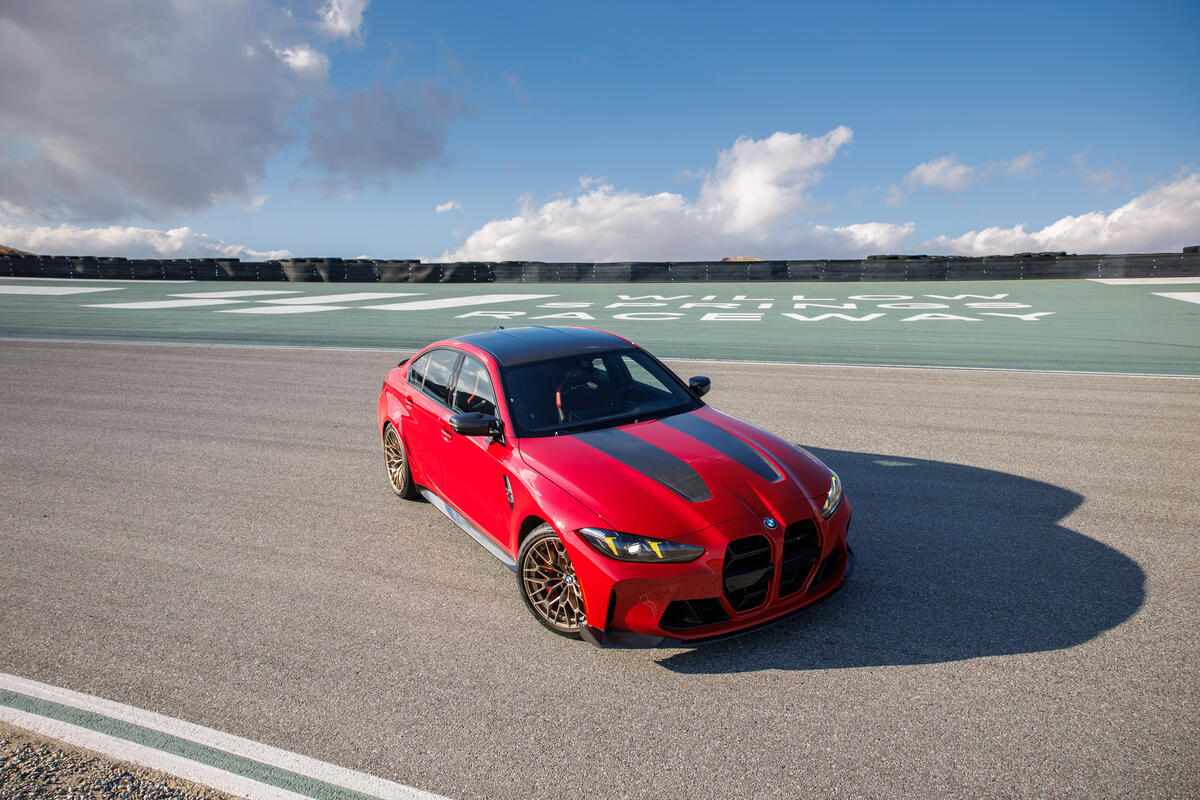
BMW M3
"...at this amounts to. So Maserati MC Xtrema Ferrari F80, which I am personally in love with."
The BMW M3 is a performance-focused BMW, made to drive more aggressively than a regular 3 Series. It’s designed for faster acceleration and sharper handling. The podcast brings it up as part of a performance-car comparison.
The BMW M3 is a high-performance version of the BMW 3 Series, built for sporty driving and strong track-capable performance. In the podcast, it’s referenced in a comparison context involving other performance cars and pricing/positioning. That’s why it appears—people often discuss the M3 when talking about what “serious performance” costs and how it stacks up.

Ferrari F80
"So Maserati MC Xtrema Ferrari F80, which I am personally in love with."
The Ferrari F80 is a very high-end Ferrari supercar. Bringing it up in the same breath as the Maserati suggests these are rare, serious performance cars.
The Ferrari F80 is a modern, high-performance Ferrari positioned as a flagship-style supercar. Mentioning it right after the Maserati MC Xtrema frames the comparison as “exotic, expensive, and extreme” rather than practical hill-climb machinery.

Maserati Mc
"It's what this amounts to. So Maserati MC Xtrema Ferrari F80, which I am personally in love..."
The Maserati MC12 is a very rare, high-performance supercar. It’s built for extreme driving performance rather than everyday use. The podcast brings it up as one of the exotic cars being talked about.
The Maserati MC12 is an ultra-rare, track-oriented supercar known for its dramatic performance and limited production. In the podcast, it’s mentioned as part of a lineup of exotic cars, including other special editions and high-performance machines. It’s discussed because the MC12 represents a very exclusive chapter of Maserati’s supercar history.

DLS Singer Dls
"...i Ascenza R 6.5 liter. Here is the Ferrari Amalfi Singer DLS Turbo 911 and a Singer Turbo as well."
DLS is mentioned as part of a special car build name in the podcast. In this context, it’s tied to a turbocharged 911-style car. The point is that it identifies a specific rare variant people are talking about.
DLS is referenced in the podcast as part of a Ferrari “Singer DLS Turbo 911” mention, tying it to a specific special car build. In this context, DLS is used to identify a particular model/variant associated with a turbocharged 911. It’s discussed because enthusiasts track these rare, customized combinations and what makes each one unique.

Ford Mustang GTD
"and a Singer Turbo as well. Mustang GTD and the Gordon Murray SV, Special Vehicles Le Man..."
The Ford Mustang GTD is a high-performance version of the Mustang. It’s meant to be faster and more track-capable than a regular Mustang. The podcast mentions it while comparing different extreme performance cars.
The Ford Mustang GTD is a performance-focused Mustang variant intended to deliver track-level capability. The podcast mentions it alongside other special, high-performance cars, suggesting it’s part of a conversation about extreme performance packages. It comes up because the GTD name signals a more serious, motorsport-inspired Mustang direction.
Gordon Murray T.50S
"And also the Gordon Murray T.50S. Ben Collins, the Stig,"
The Gordon Murray T.50S is a more track-focused version of the T.50. It’s designed to be light and fun to drive, not just fast in a straight line.
The Gordon Murray T.50S is a track-focused evolution of the T.50, built around Murray’s lightweight, driver-centric philosophy. In this segment, it’s part of the same lineup of extreme cars, reinforcing that the “hill” is being used like an impromptu performance test.

Gordon T50S
"Special Vehicles Le Mans GTR XP, which was delightful. And also the Gordon Murray T.50S. And then Ben Collins, the Stig,"
The Gordon Murray Automotive T.50 is a very high-end supercar made in small numbers. It’s built for performance and an engaging driving experience. The podcast brings it up as one of the special cars people are excited about.
The Gordon Murray Automotive T.50 is a boutique, high-performance supercar designed with a strong focus on driving feel and advanced engineering. The podcast mentions it in the context of other special Gordon Murray models and even references Ben Collins, tying it to motorsport and enthusiast interest. It’s discussed because the T.50 is known for being a purpose-built, limited-production performance machine.
Ben Collins
"And then Ben Collins, the Stig, drove a 200 horsepower Blitzen Benz and drifted this thing up the hill."
Ben Collins is a race driver and TV personality. He’s famous for being “The Stig” on Top Gear, and the segment credits him with drifting that car up the hill.
Ben Collins is a British racing driver and TV presenter who’s widely known for appearing as “The Stig” on Top Gear. Here, he’s referenced for driving a “Blitzen Benz” and drifting up the hill, which is a nod to his stunt-driving reputation.
go tires
"[1265.8s] The thin go tires, yeah. [1267.1s] He had this thing sideways the whole time"
This sounds like a tire brand being mentioned. Tires matter a lot because they’re what actually grip the road—especially when a car is sliding or being pushed hard.
“Go tires” is almost certainly a mis-transcription of “goodyear tires” (or another tire brand). Tires are the only contact patch between the car and the road, so tire choice and condition strongly affect grip and how controllable a car feels when it’s sliding or being driven hard.
sideways
"[1267.1s] He had this thing sideways the whole time [1269.7s] and the announcers were just going nuts [1272.2s] and it was just so cool to see these driven."
“Sideways” means the car is turned a bit more than you’d expect for the direction it’s moving. That usually happens when the tires lose some grip, so the driver has to manage throttle and steering carefully.
“Sideways” describes a car that’s rotated relative to its direction of travel—commonly during drifting or aggressive oversteer. In that state, the tires are working at the edge of grip, and steering/throttle balance becomes critical to keep the car under control.

Mclaren F1
"[1319.7s] you've probably heard the story [1321.2s] and it was famous story for a while, four or five years ago, [1323.5s] that the McLaren F1 continually thought up [1326.7s] as one of the best hypercars ever,"
The McLaren F1 is a famous supercar that many enthusiasts consider one of the greatest ever. It was designed like a race car, with a mid-engine layout and a driver-focused cockpit.
The McLaren F1 is a legendary hypercar known for its mid-engine layout and the driver-centric design that made it feel more like a race car than a typical supercar. It’s often cited as one of the best hypercars ever because it combined extreme performance with an unusually driver-focused package and long-term relevance.
interface
"that they actually figured out a way to get the interface to talk to something other than a mid 90s Toshiba laptop."
Here, “interface” means the way a computer tool connects to the car to read data or make changes. If the interface isn’t right, the tool can’t talk to the car’s systems.
In this context, an interface is the specific connection/protocol that lets a diagnostic or service tool communicate with the car’s electronics. The key point is that the original setup depended on a particular laptop and communication method, which later got replaced with a more accessible approach.
serial bus
"It was the bus in a serial bus. Whatever they had to do to convert it."
A serial bus is like a digital “chat line” inside the car. It lets the car’s computers talk to each other and also lets a service tool read and control what’s going on.
A serial bus is a communications system that lets electronic control units in a vehicle talk to each other over a shared data link. In practice, it’s how diagnostic tools and vehicle modules exchange information so the car can be serviced or configured.
early EV
"for every early EV and pretty much any modern car because there is so much data and digital and computerized reality going on to make it run at all."
“Early EV” means the first wave of electric cars. They were still figuring out things like charging and computer diagnostics, so servicing them could require special tools or connections.
“Early EV” refers to the first generation of electric vehicles, typically from the late 1990s through the 2010s, when charging, diagnostics, and control electronics were still maturing. These cars often had more bespoke service interfaces and less standardized tooling than later EVs.
digital and computerized reality
"for every early EV and pretty much any modern car because there is so much data and digital and computerized reality going on to make it run at all."
The speaker is saying today’s cars are run by computers and software. That means you can’t always just “turn it on” and go—sometimes you need the right computer connection to make everything work.
This phrase is describing how modern cars rely heavily on software, sensors, and electronic control units to function correctly. The takeaway is that servicing and even starting the car can require correct communication with those systems, not just mechanical checks.
right kind of electricity
"the right kind of electricity delivered through the right plug and talking to the right computer to go, I just, I found in the code and I resurrected it."
This refers to the correct electrical characteristics needed by the vehicle—such as voltage/current type and charging/distribution compatibility. For EVs and other electrified cars, the wrong electrical setup can prevent proper operation or charging.

BMW M240I
"... a second vehicle, he bought a nice pre-owned BMW M240i with a manual transmission."
The BMW 2 Series is a smaller luxury BMW. The podcast mentions an M240i, which is a more performance-oriented version, and notes it had a manual transmission. That matters because a manual can change how the car feels to drive.
The BMW 2 Series is a compact luxury car line that’s offered in performance-oriented trims. The podcast mentions a pre-owned BMW M240i with a manual transmission, which highlights how buyers sometimes prioritize driver engagement and specific transmission choices. It comes up because the 2 Series can be a smaller, more focused alternative within BMW’s lineup.

Acura Integra
"and replaced his daily driver with an Integra A-spec, [1707.1s] also manual, thinking that it would be a nice thing [1710.6s] to toss around on the weekend,"
This is an Acura Integra with the A-spec trim, which usually means it’s set up to feel more sporty than the standard version. The host is saying the owner bought it as a fun weekend manual, but it didn’t stick.
The Acura Integra A-spec is a sport-oriented trim of the Integra, typically tuned for a more aggressive look and feel than the base model. In this segment, it’s mentioned as a manual daily-driver replacement meant for weekend driving, which highlights how enthusiasts use trim levels to steer the car’s personality.

Bmw X3
"He reverted to a daily with zero sporting pretense, [1720.2s] BMW X3 with a four-banger in German rainbow shade. [1723.6s] Meaning gray."
The BMW X3 is a luxury SUV/crossover. The speaker is pointing out that this one is powered by a smaller 4-cylinder engine, and it doesn’t match what the owner wanted for himself.
The BMW X3 is a compact luxury crossover known for its driving dynamics compared with many mainstream crossovers. Here it’s specifically called out as having a “four-banger,” emphasizing the common enthusiast tradeoff: practicality and comfort versus the more engaging feel people expect from a “sporty” daily.
four banger
"BMW X3 with a four-banger in German rainbow shade. [1723.6s] Meaning gray."
“Four-banger” just means the engine has four cylinders. The host is using it to point out the X3 is powered by a smaller, simpler engine rather than something more performance-focused.
“Four-banger” is slang for a four-cylinder engine. In this context, it’s used to describe the BMW X3’s powerplant, contrasting it with the more enthusiast-leaning expectation of a “sporting” daily.
Porsche Platica
"The past weekend after he wrote to us, [1747.5s] he went to Porsche Platica. [1749.0s] It was the first show of any kind"
This sounds like a Porsche event where people bring their cars and hang out. The host is saying it was the first show the owner had ever experienced.
“Porsche Platica” appears to be the name of a Porsche-themed event or gathering. The host uses it to frame the owner’s first-ever show experience, contrasting it with the owner’s otherwise crossover-heavy driveway.
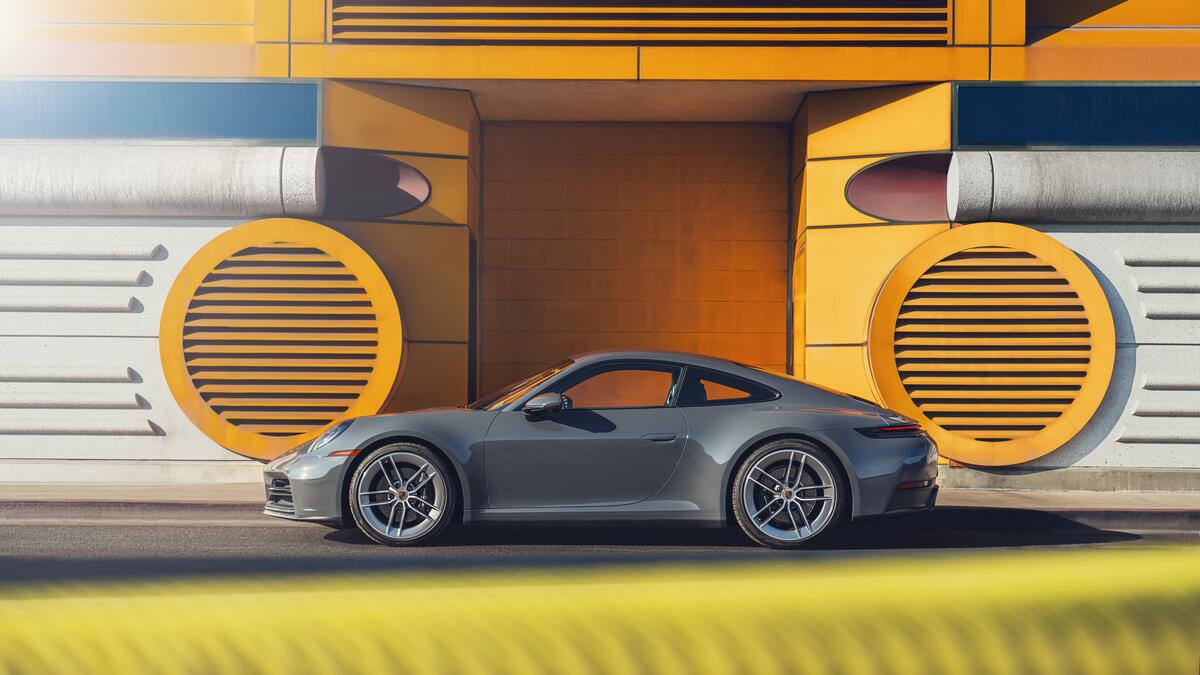
Porsche 911
"Unlike his driveway, the quarry was a sea of 911s [1754.6s] in every generation, names them all."
The Porsche 911 is Porsche’s most famous sports car. The host is saying the event was packed with 911s from many different model generations, which shows how popular and enduring the 911 is.
The Porsche 911 is the iconic rear-engine sports car line from Porsche, famous for its distinctive silhouette and long-running evolution across many generations. The segment mentions a show with “a sea of 911s in every generation,” underscoring how the 911 is a central enthusiast benchmark at car events.

Porsche 918S
"...ther's, Gunther Works, Singers, Roofs, Crere GTs, 918s, every version of 911 he could possibly imagine a..."
The Porsche 918 Spyder is a very expensive, high-performance sports car. It uses both electricity and a gasoline engine. The podcast brings it up as one of the rare, impressive cars people talk about.
The Porsche 918 Spyder is a high-end plug-in hybrid supercar known for combining electric drive with a powerful gasoline engine. In the podcast, it’s mentioned alongside other rare, special cars, emphasizing how many different 911-related or exotic variants the speaker admires. It’s discussed because the 918 Spyder represents a peak-performance, technology-forward era of Porsche.

Porsche 356
"he could possibly imagine and found himself just standing and staring at a 356. That's pre-911, for those of you who don't speak Porsche."
The Porsche 356 is an older Porsche sports car that was made before the 911 existed. It’s a big deal to enthusiasts because it’s part of Porsche’s early history, and the host is saying they were instantly drawn to it.
The Porsche 356 is the early model that came before the 911—it's the brand’s original sports car platform. In the segment, the host highlights it as a standout because it’s a classic, pre-911 design that still feels special even when surrounded by newer 911 variants.
pre-911
"That's pre-911, for those of you who don't speak Porsche. That is pre-911, old pre-911."
“Pre-911” just means “before the Porsche 911.” The host is using it to explain that the Porsche 356 is older than the 911, so it’s from Porsche’s earlier era.
“Pre-911” is shorthand for Porsche models made before the 911 became the brand’s defining modern platform. In this context, it’s used to contrast the Porsche 356 (early Porsche) with later 911 generations.
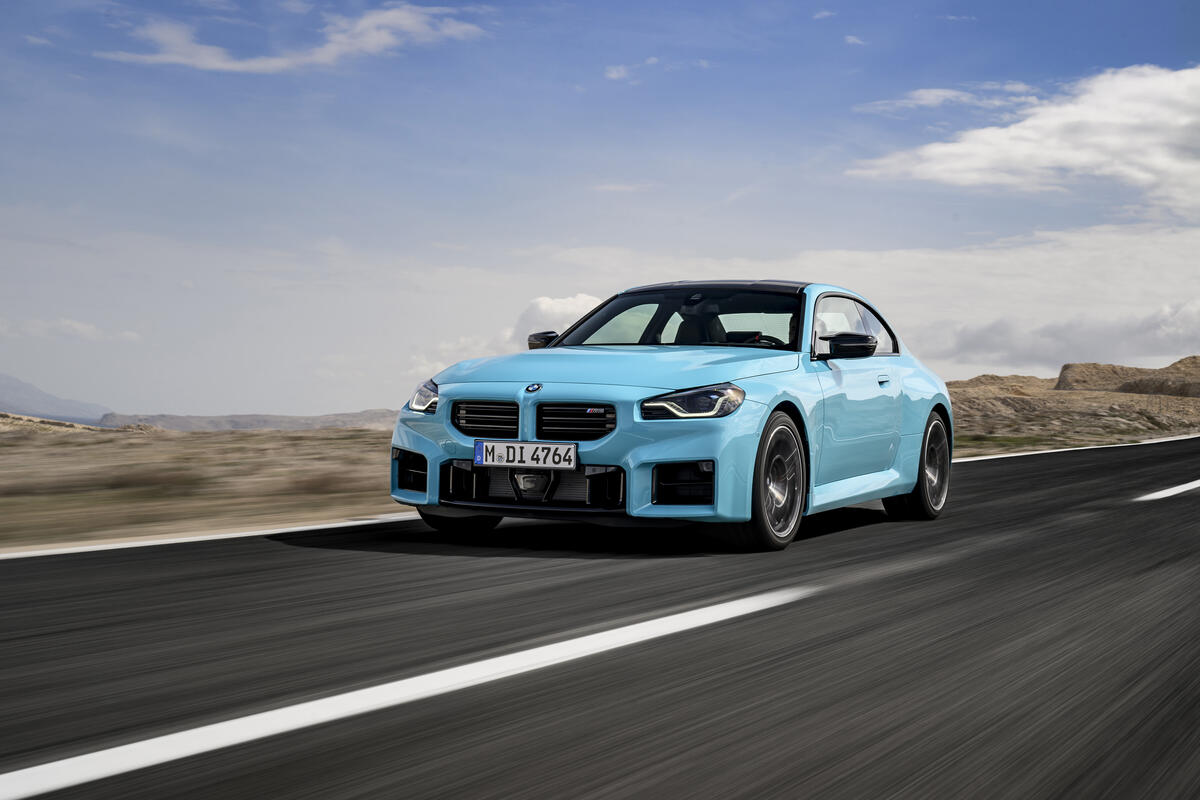
BMW M2
"He was wanting to buy an M2, bought an M240, ended up not liking it."
The BMW M2 is a small BMW that’s tuned to feel more like a sports car than a regular 3-series-sized car. Here, the point is that someone planned to buy it, but the car they ended up with didn’t satisfy them.
The BMW M2 is a compact, performance-focused BMW M car built for driver feel—typically with a sporty chassis and a high-output engine tuned for quick response. In this segment, it’s the “want” car that the buyer couldn’t quite make work out in real life.
Integra Type S
"ended up not liking it. Wanted to buy the Integra Type S, they were available. He had the money for it, we..."
The Integra is a compact car with a performance focus. The podcast mentions the Integra Type S, which is a sportier version. The speaker says they didn’t end up liking it after considering buying one.
The Honda Integra is a compact performance-oriented car, and the podcast specifically references wanting to buy an Integra Type S. The speaker says they ended up not liking it, even though they had the money and the car was available. It’s discussed because the Type S is a popular enthusiast trim, and real ownership impressions matter when deciding if it fits your preferences.
Auto Tempest
"Because there's that part of all of us. There's the irrational part of us that scans auto tempest and looks for crazy cars for sale"
Auto Tempest is a website/app that helps you search for cars across multiple listing sites at once. The host mentions it as the place where people get tempted by crazy cars they might not actually want to live with.
Auto Tempest is a car-shopping search tool that aggregates listings from multiple online marketplaces into one place. The speaker uses it to describe the “irrational” part of shopping that gets excited by unusual cars for sale.

M240
"He bought an M240 and not the M2. [2085.1s] This is rationality-winning, and for car-"
The BMW M240 is a sporty BMW 2 Series variant. In this conversation, it’s being compared to the M2, which is the more intense, more hardcore option.
The BMW M240 is the performance-oriented M model in the 2 Series lineup, but it’s positioned below the M2. The host’s comparison (“M240 and not the M2”) is about picking a less extreme option that still delivers the fun factor without paying for the most hardcore version.

Cadillac XT5
"...proached us, he was riding in his wife's Cadillac XT5 or Cadillac SUV or whatever it was."
The Cadillac XT5 is a midsize luxury SUV. It’s designed to be comfortable for everyday driving and family use. The podcast mentions it as a real-life example of a person’s SUV.
The Cadillac XT5 is a midsize luxury SUV designed for everyday comfort with a more upscale feel than typical mainstream SUVs. The podcast mentions someone riding in a wife’s Cadillac XT5, using it as an example of a practical family or daily driver. It comes up because it represents the kind of comfortable, usable SUV people actually live with.
low crash protection
"Those are 40 grand. It's still the unusable low crash protection. You know, not sure if it's gonna start and run."
Crash protection is how well a car protects you if you crash. “Low crash protection” means it probably doesn’t have the same safety features and strong structure as newer cars. So it may feel risky to drive.
“Crash protection” is how well a car’s structure and safety systems protect occupants in a crash. When the host says “low crash protection,” they mean the replica (or the underlying design) likely lacks modern safety engineering and restraint systems. That’s why it can feel “unusable” compared with a modern car like a Corolla.
Lotus
"there's a huge national Lotus event happening at the end of September in the Salt Lake area. And on Monday, September 28th,"
Lotus is a car brand that’s famous for making sporty cars that handle well. Here, they’re talking about an event specifically for Lotus fans and owners.
Lotus is a British sports-car brand known for lightweight designs and handling-focused engineering. In this segment, the hosts are talking about a Lotus-focused event and a “hooked on Lotus” day, implying a gathering centered on Lotus owners and cars.
Utah Motorsports campus
"we are doing a hooked on driving, ... at our local track, Utah Motorsports campus. But why this is extra special?"
This is a race track in the Salt Lake area. The hosts are saying it can be run in different layouts, and the “full” layout is long enough that you get the whole experience in one go.
Utah Motorsports Campus (UMC) is a road-racing venue in the Salt Lake area. The hosts are emphasizing that it has multiple track configurations, including a full layout that’s over four miles long, which lets drivers experience the entire course rather than just a shorter section.
lap
"It's like 25 corners or something. There's a lot to remember. A lap takes a while."
A lap means one full trip around the race track. If a lap takes a while, it usually means the track is long or has lots of turns that slow you down.
A lap is one complete circuit around the track, from a defined start/finish point back to the same point. The hosts note that at UMC the lap takes a while, which usually means a longer course and/or more corners that slow the average speed.
front straight
"It is a unique experience with a huge front straight. Whatever your top speed of your car is, you will find it on the front straight."
On a race track, the “front straight” is the long straightaway near the front of the course. It’s where cars build speed before slowing down for the next turn.
A front straight is the long straight section of a circuit where cars accelerate at full throttle before braking for the next corner. Because it’s so long at UMC, the hosts are saying it’s where you’ll reach your car’s top speed (or at least get very close).
top speed
"Whatever your top speed of your car is, you will find it on the front straight."
Top speed is the highest speed the car can reach. On a race track, you only get there if the straight is long enough before you have to slow down for the next turn.
Top speed is the maximum speed a car can reach under its current conditions (power, gearing, aerodynamic drag, and track length). On a circuit, whether you actually reach it depends heavily on how long the straight is and how quickly you have to brake for the next corner.
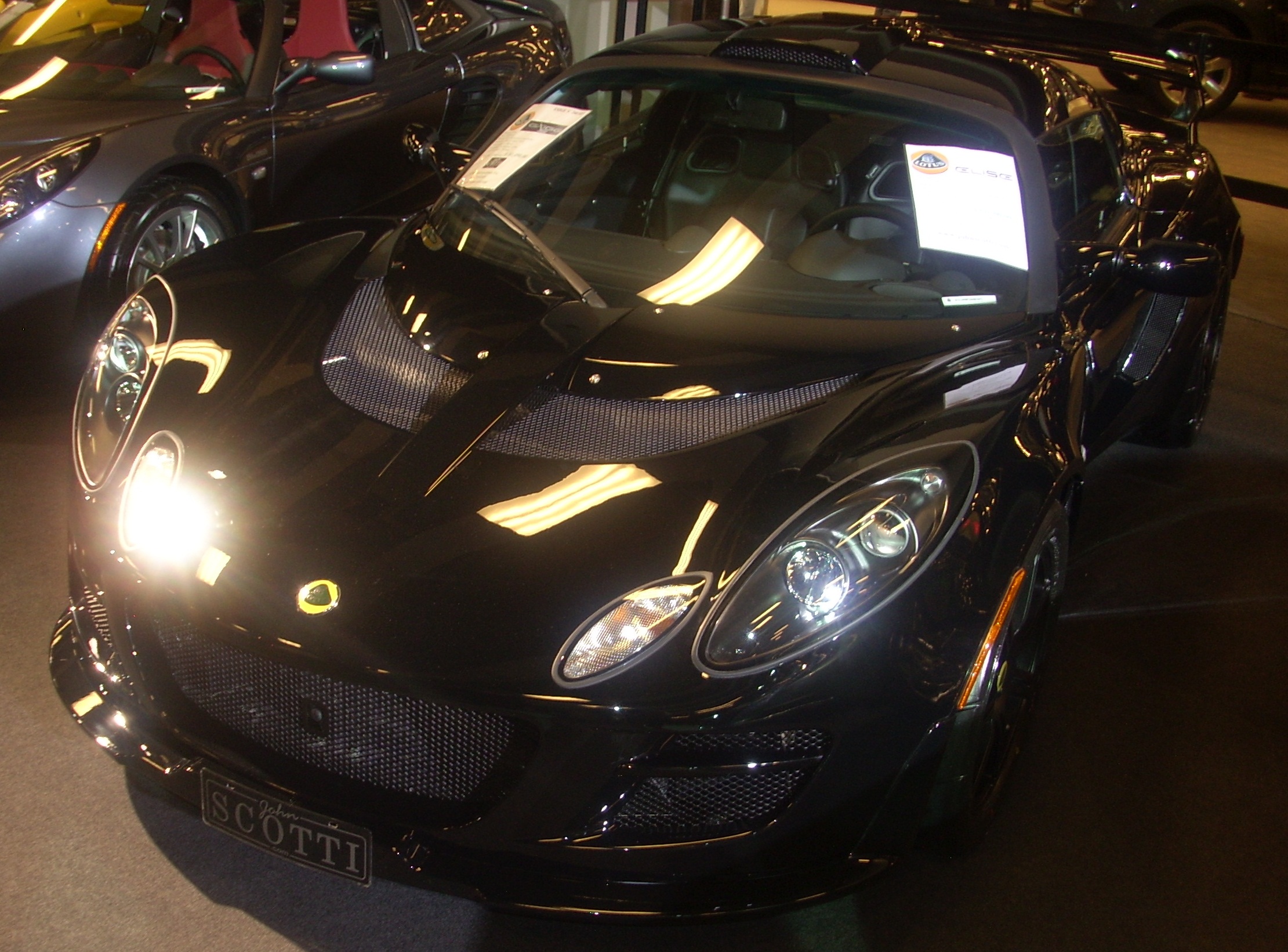
Lotus Elise
"Also, we heard Shenu, who built the 111 RS, [2604.1s] that was in our Elise comparison just recently."
The Lotus Elise is a small, lightweight sports car that’s built to feel very connected to the road. Here, they’re using it as a benchmark for how another car (“111 RS”) compares to it.
The Lotus Elise is a lightweight, mid-engine sports car known for its sharp handling and driver-focused feel. In this segment, it’s referenced as part of a comparison, implying the “111 RS” is being evaluated against Elise-style driving dynamics.
track day
"But if you are in the Utah area [2627.1s] or you have never driven UMC, full track experience. [2631.4s] We know that's a Monday, but hey, [2633.4s] extends the weekend and come out [2635.3s] for the full track experience, [2636.8s] hooked on driving.com for a track day near you."
A track day is when regular drivers bring their cars to a race track and drive them on the track in a controlled setting. This segment is inviting people to come out for that kind of event.
A track day is an organized event where drivers take their own cars onto a closed circuit for laps, usually with coaching and run groups. In this segment, it’s used to describe the “full track experience” promotion for the Utah-area event.
UMC
"But if you are in the Utah area [2627.1s] or you have never driven UMC, full track experience. [2631.4s] We know that's a Monday, but hey,"
UMC is referenced as a track venue (“full track experience”), and the segment is promoting a track day. The excerpt doesn’t expand the acronym, so listeners may need the show’s context to know which specific circuit it refers to.
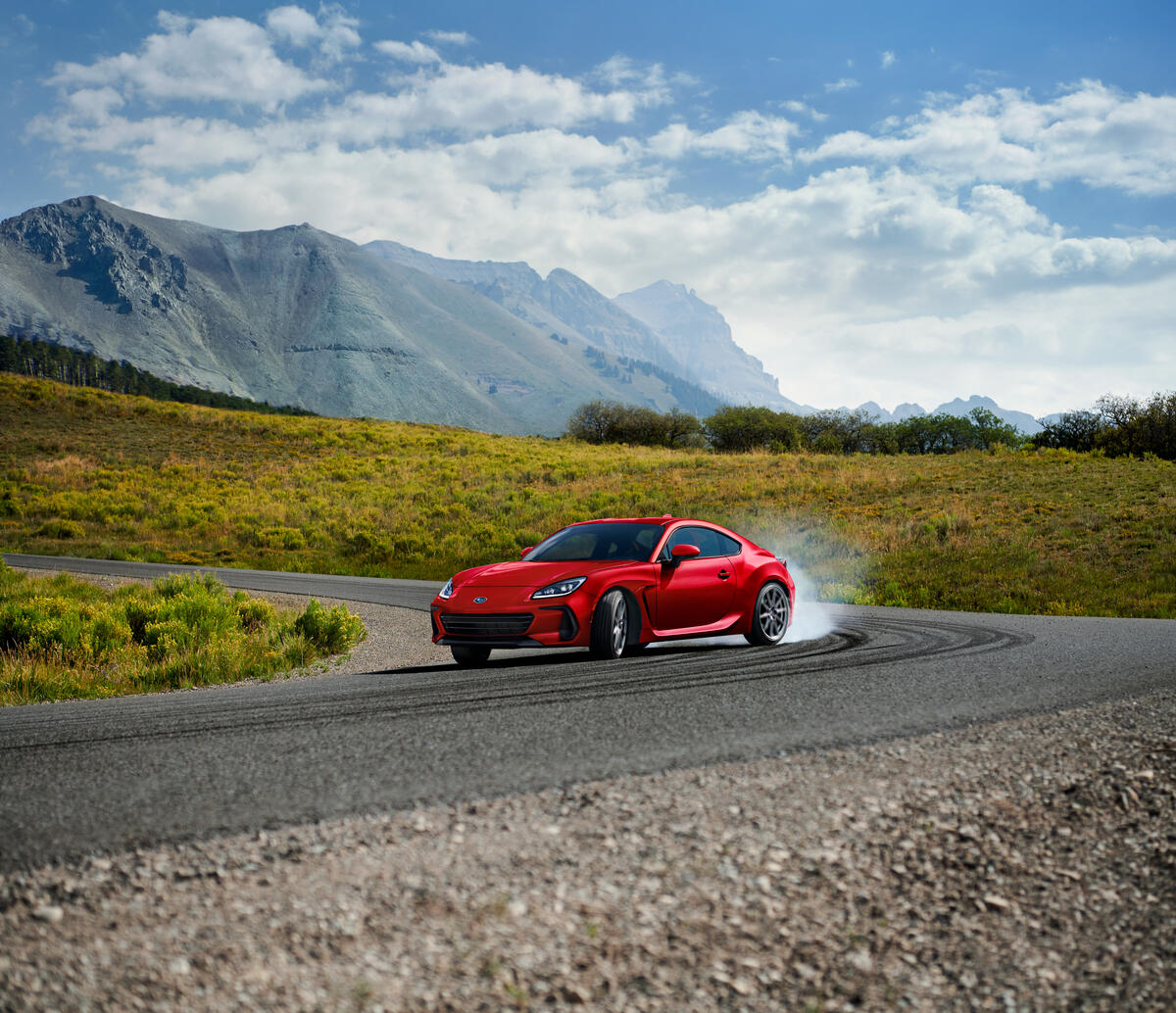
Subaru BRZ
"We are the primary influence on him getting a low miles 2023 BRZ last November."
The Subaru BRZ is a small sports car that’s built to handle really well, especially on twisty roads and track days. The 2023 BRZ is the newer version, and it’s popular with people who like driving feel over tech.
The Subaru BRZ is a lightweight, rear-wheel-drive sports coupe designed around balanced handling rather than raw power. A 2023 BRZ is notable because it’s part of the modern BRZ/86 generation that’s become a go-to “analog” track-day car for enthusiasts.

Porsche Mans Porsche
"and concluded only thing cooler than being a poor man driving a poor man's Porsche as a rich man driving the poor man's Porsche."
Volkswagen Sportwagon 4-motion
"He's now got the BRZ and his 2017 Volkswagen Sportwagon 4-motion has 135,000 miles on it. ...After owning a manual as his daily again, the Sportwagon is DSG and the only automatic he's ever had."
This is a Volkswagen wagon with all-wheel drive (4-motion). The owner treats it like a practical daily, but they don’t like the automatic transmission setup (DSG) compared with driving a manual.
The Volkswagen Sportwagon 4-motion is a wagon variant of the VW lineup paired with 4-motion all-wheel drive. In this segment, it’s used as the practical “garage” car, and the discussion centers on its DSG automatic gearbox and how the owner prefers a manual.
shocks
"I love it. Shocks, replaced turbo, tuned it from 170 horsepower to 270 horsepower, pretty cool."
Shocks are part of the suspension that help the car absorb bumps. If you replace them, the ride can feel more controlled and less bouncy.
Shocks (shock absorbers) control how the suspension moves over bumps and how quickly the car settles after hitting a disturbance. Replacing them is a common way to improve ride quality and handling balance.
tuned
"Shocks, replaced turbo, tuned it from 170 horsepower to 270 horsepower, pretty cool."
Tuning means changing the car’s computer settings to make it run differently. With a turbo car, that often means more boost and more power.
Tuning refers to adjusting the engine control settings (often via an ECU calibration) to change how the car delivers power and drivability. In turbo cars, tuning commonly coordinates fuel, ignition, and boost targets to reach a higher horsepower level.
normally aspirated engine
"And also after having a good normally aspirated engine, he's not into the turbo."
A normally aspirated engine is a gas engine that doesn’t use a turbo to force extra air in. It’s the “no turbo” setup, and some drivers like how it feels and responds.
A normally aspirated engine makes power without a turbocharger or supercharger, relying on atmospheric pressure and engine design to draw air in. The phrase is used here to contrast with turbocharging, implying a preference for the throttle response and character of non-turbo engines.

Mustang Mach-E
"His gal just replaced her absolute ripper, Audi A4 Avant with a Mustang Mach-E."
The Mustang Mach-E is Ford’s electric vehicle. It’s an EV that looks like a crossover, and it’s the kind of car people buy when they want to switch from gas to electric.
The Ford Mustang Mach-E is an all-electric crossover that uses the Mustang name but is not a traditional Mustang sports car. It’s brought up here as the EV replacement for an Audi wagon, highlighting the “analog vs electric” theme of the episode.

Audi A4 Avant
"Okay. His gal just replaced her absolute ripper, Audi A4 Avant with a Mustang Mach-E."
An Audi A4 Avant is a wagon version of the A4. “Avant” basically means it has a bigger cargo area than the sedan, and it’s the kind of car people use for everyday errands.
The Audi A4 Avant is Audi’s wagon (Avant) version of the A4, built around a practical, family-friendly body style. In this segment it’s mentioned as the previous car before switching to an EV, which is why the exact model matters.

Dodge Ram ProMaster 2500 camper van
"They also have their fully kitted Dodge Ram ProMaster 2500 camper van."
This is a big van (the Ram ProMaster 2500) that people often turn into a camper. The “2500” usually means it’s the larger/heavier version, better suited for carrying gear and living out of it.
A “ProMaster 2500 camper van” refers to the Ram ProMaster 2500, a heavy-duty cargo van commonly converted into a camper. The 2500 designation typically indicates the higher payload/size class within the ProMaster lineup, which matters for how it’s used as a road-trip platform.

Volvo 145 wagon
"Ooh, Volvo 145 wagon from 1972. He had a 1963 Volvo 122 sedan."
The Volvo 145 wagon is an older Volvo station wagon from the early 1970s. People like it because it’s a classic, practical car that’s also interesting to enthusiasts.
The Volvo 145 wagon is a classic Swedish estate/wagon from the 1970s era, known for its simple, durable design and “practical but cool” enthusiast appeal. Mentioning it by model and year (1972) signals a specific vintage Volvo ownership story rather than a generic “old wagon.”

Volvo 122 sedan
"Ooh, Volvo 145 wagon from 1972. He had a 1963 Volvo 122 sedan."
The Volvo 122 is an older Volvo sedan from the early 1960s. It’s the kind of classic car enthusiasts remember because it was built to last.
The Volvo 122 sedan is a classic Volvo model from the early 1960s, typically associated with the brand’s straightforward, long-lived engineering reputation. In this segment it’s part of a timeline of specific Volvos owned by the person being discussed.

Datsun 610 wagon
"Datsun 610 wagon, what a dog he says, but obviously fond enough memories that you wrote it here."
The Datsun 610 wagon is an older Japanese station wagon. The speaker says it wasn’t great (“a dog”), but they still have good memories of it.
The Datsun 610 wagon is a vintage Japanese wagon that’s being called out as a “dog” by the owner—meaning it likely wasn’t very impressive in day-to-day driving. The host also notes fond memories, which is why the exact model name is useful context.
IPD
"Yeah, you mentioned it, yeah. He was really into cars in his 20s... They had a Volvo specialist, IPD, down in Portland."
IPD is a company that specializes in parts for certain Volvo cars. The point here is that classic Volvos often need specialty parts and help from people who know them well.
IPD is an enthusiast-focused parts and service company known for supporting Volvo owners, especially for older Volvos. In this segment, it’s mentioned as a “Volvo specialist” in Portland, which signals the kind of aftermarket support these classic cars rely on.
Portland
"They had a Volvo specialist, IPD, down in Portland. Then he had kids and life, and life got crazy."
Portland is where the Volvo specialist shop (IPD) was located. It’s mentioned to show there was local help for maintaining those older cars.
Portland is referenced as the location of IPD, a Volvo specialist shop. For listeners, the key point is that there were local specialty resources for maintaining older Volvos, not just generic auto parts stores.
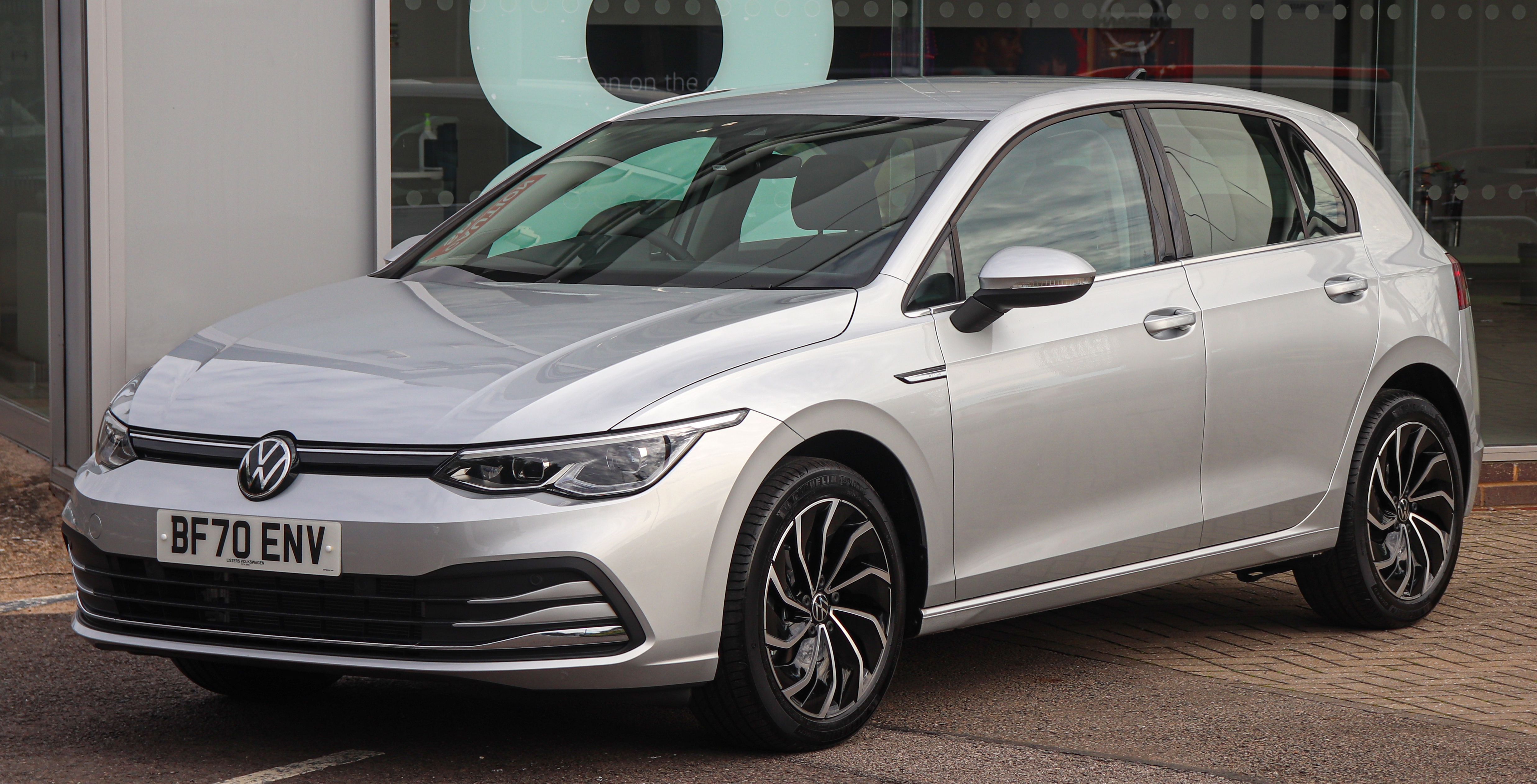
Volkswagen Gti
"Yeah. Then he found a 2000 GTI and let the kids drive the sport wagon and discov..."
The Volkswagen Golf is a compact car. The podcast mentions a 2000 GTI, which is a sportier version, and also a sport wagon style. It’s brought up because it can work for everyday life while still being enjoyable to drive.
The Volkswagen Golf is a compact car line known for practicality and a wide range of trims, including performance variants. The podcast references finding a 2000 GTI and letting the kids drive a sport wagon, which highlights the Golf’s role as a family-friendly platform that can still be fun. It’s discussed because the Golf has long been a go-to choice for people who want both everyday usability and driving enjoyment.
naturally aspirated engine
"and discovered he loved the little VR6 naturally aspirated engine, but he wanted rear wheel drive, something a bit newer"
VR6 refers to a special type of Volkswagen six-cylinder engine layout. “Naturally aspirated” means it doesn’t use a turbo or blower to force air in—it just breathes normally.
A VR6 is Volkswagen’s compact V-shaped six-cylinder design that fits in a smaller engine bay than a traditional wide V6. “Naturally aspirated” means it makes power without a turbocharger or supercharger, relying on engine airflow and tuning instead.
BRZ platform
"He finds himself why Subaru doesn't make more cars in the BRZ platform. Well, they've got another car company to consider in the market"
A “platform” is the car’s underlying design that other versions can be built from. So “BRZ platform” means the basic engineering that could support other BRZ-style cars.
A “platform” is the shared engineering foundation—chassis, mounting points, and major design architecture—that multiple models can use. When someone says “BRZ platform,” they’re talking about the underlying layout that could be adapted into other body styles or configurations.
rear wheel drive
"Small, light, rear-wheel drive four door, but nobody makes it."
Rear-wheel drive means the power goes to the back wheels. Many drivers like it because the car can feel more fun and predictable when you steer and accelerate.
Rear-wheel drive (RWD) sends engine power to the rear wheels, which typically helps with balance and steering feel. The segment’s shopping criteria lean toward RWD because it’s often associated with more engaging driving dynamics than front-wheel drive.
drive wheel
"He's flexible on drive wheels, and it needs to be a car he's confident jumping into and driving across country."
Drive wheels are the wheels that actually get the engine’s power. They’re saying the buyer doesn’t care as much whether it’s front, rear, or all-wheel drive—other requirements matter more.
Drive wheels are the wheels that receive power from the drivetrain (for example, front-wheel drive, rear-wheel drive, or all-wheel drive). The host says the buyer is flexible here, meaning they’ll consider different layouts as long as the other requirements are met.

F31 BMW 3 Series Touring
"he has been suggesting a lot about his next car and been sending us all the cars that he's found from the 2012 to 2018 F31 BMW 3 Series Touring."
The BMW 3 Series Touring is the wagon version of the BMW 3 Series. Here they’re pointing to the F31 generation as a possible replacement because it can be found with a manual, which is a big part of the shopping checklist.
The BMW 3 Series Touring (F31) is the wagon version of the 3 Series, built on BMW’s F30-generation platform. In this segment, it’s specifically mentioned as a candidate because it’s one of the few ways to get a practical wagon while still being compatible with the “manual transmission” requirement.
2006 to 2012 E91 BMW 328 Touring
"But this is the 2006 to 2012 E91 BMW 328 Touring with 141,000 miles."
This is a BMW 3 Series wagon from the E91 generation, sold as the “Touring.” The “328” is the model name, and the host is talking about finding one with a manual gearbox, which is harder to locate than the automatic.
The E91 is the wagon (Touring) body style of the BMW 3 Series generation from roughly 2006–2012, and the 328i is the engine/trim designation. This matters because the host is specifically hunting for the manual-transmission version, which is rarer than the automatic in many markets.
25 year old car
"But based on our initial discussion, our topic Tuesday and what we were discussing about Mercedes, imagine this is an 80 year old car. Interesting. Yeah."
They’re basically asking: if a car were really old—like something you’d expect to be around for 80 years—would people still want it and still drive it? The point is to test whether the appeal is still there after a lifetime of wear and repairs.
This is a thought experiment about long-term ownership: whether a car would still feel worth caring about and driving after decades of use. It frames the debate around “analog” values—like mechanical feel and driver engagement—versus the reality that many cars will have had major components replaced by then.

BMW 328 touring
"But if you don't mind having maybe a. Two or 300,000 mile BMW 328 touring in top shape that everybody's going to be like, oh, what a great sweet wagon."
This is a BMW 3 Series wagon (called “Touring”) with a 328 model name. The hosts are basically saying that even with very high miles, a clean, well-kept one can still be a great choice.
The BMW 328 touring refers to BMW’s 3 Series wagon (Touring) with a 328 badge, typically associated with a 2.0-liter inline-4 in many years. In this segment, it’s used as an example of a “sweet wagon” that’s still desirable even with high mileage if it’s in top shape.
four cylinder
"And I like these BMWs, but I think by this point, and I'm not sure, but I think by this point, BMW had to get into the 340s to get away from the four cylinder."
A “four cylinder” engine has four cylinders that do the work of making power. The speaker is saying BMW had to offer bigger engines (like the 340) if you wanted to avoid the smaller four-cylinder setup.
“Four cylinder” means an engine with four combustion cylinders, usually an inline-4 in BMW’s lineup. The host is implying that to move away from the four-cylinder choice, BMW would need to step up to higher-displacement models (the “340s” mentioned right after).

Lotus Evora
"that are above four cylinders. My supercharged Evora. I mean, I supercharged Amira, which was the Evor..."
The Lotus Evora is a sports car where the engine is placed toward the middle of the car. It’s designed to handle well and feel agile. The podcast talks about a supercharged Evora, meaning extra air pressure is added to make more power.
The Lotus Evora is a mid-engine sports car known for its compact size, lightweight construction, and driver-focused handling. The podcast mentions a supercharged Evora and connects it to the idea of the Evora platform. That’s relevant because Lotus owners and enthusiasts often discuss how adding forced induction changes performance while keeping the car’s character.
supercharged
"My supercharged Evora. So it's a 3.5 liter V6 supercharged."
Supercharged means there’s a device driven by the engine that pushes extra air into the cylinders. More air usually means more power, and it can feel responsive because boost comes quickly.
Supercharged engines use a belt-driven compressor (the supercharger) to force more air into the cylinders. Compared with turbocharging, a supercharger often delivers boost more immediately, which can make throttle response feel sharper.
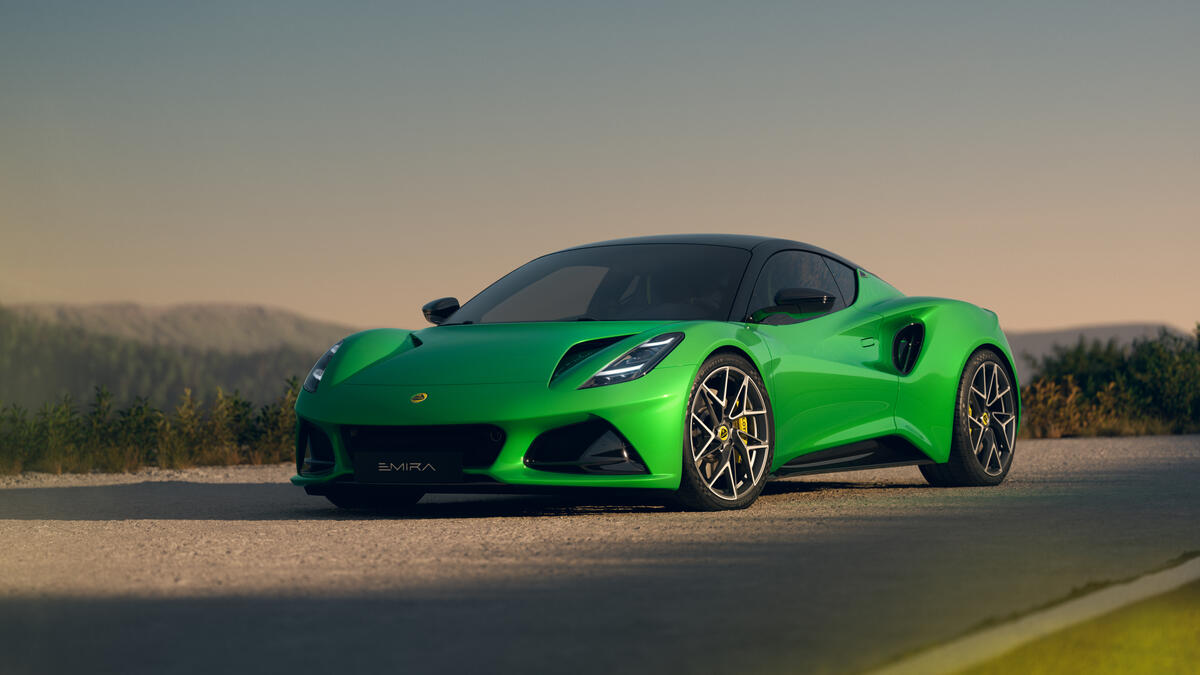
Lotus Amira
"My supercharged Evora. I mean, I supercharged Amira, which was the Evora platform. So it's a 3.5 lite..."
The Lotus Emira is a sports car made by Lotus. It’s built to feel light and fun when you drive it. The podcast mentions it in the context of how it can be set up with different power options like supercharging.
The Lotus Emira is a modern Lotus sports car designed to deliver lightweight, engaging driving with a more refined everyday feel than older models. The podcast references supercharging and connects it to the Evora platform, indicating how the Emira’s engineering lineage is discussed. It’s brought up because Lotus models often generate conversation around weight, balance, and powertrain setups.

Challenger Hellcat
"...ually, it's a great power plant. The supercharged Hellcat motor, not naturally aspirated, but nobody's argu..."
The Challenger is a muscle car built for strong acceleration. The podcast talks about the Hellcat engine, which uses a supercharger to make more power. That’s why it’s mentioned—because it’s a major performance feature.
The Dodge Challenger is a muscle car known for powerful engines and strong straight-line performance. The podcast references the supercharged Hellcat motor and notes it’s not naturally aspirated, emphasizing the engine’s forced-induction character. It’s discussed because the Hellcat setup is a key part of what makes the Challenger appealing to performance buyers.
B 58 motor
"The B 58 motor that is in the BMW three series products and the Supra phenomenal engine."
The BMW B58 is a turbo engine BMW uses in several cars. People like it because it makes strong power without feeling rough or laggy.
The BMW B58 is a turbocharged inline-six engine family used across multiple BMW models. It’s often praised for strong torque and smoothness, which is why it comes up in discussions about whether turbo engines feel “good” or “not worth it.”
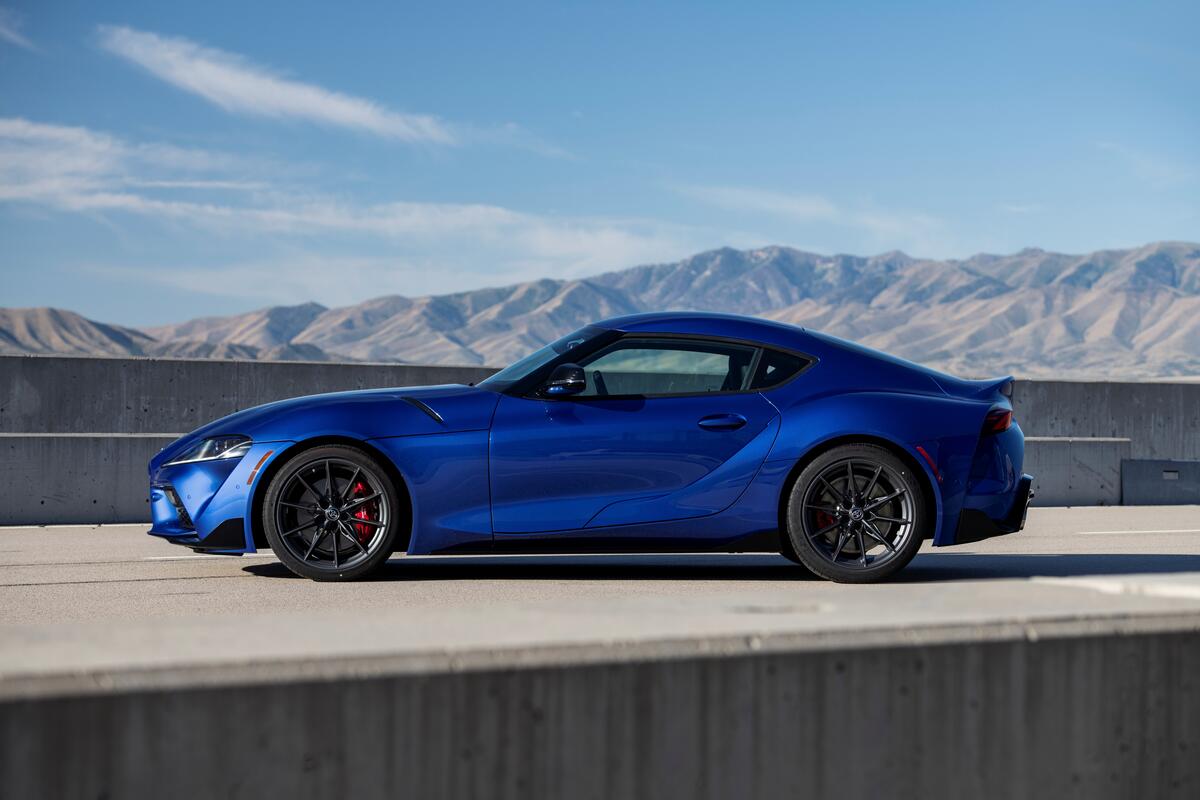
Supra
"and the Supra phenomenal engine. I don't think you're driving that and going, yeah, but it's turbo."
The Supra is Toyota’s sports car, and this conversation is about its engine. They’re saying it’s a great turbo setup, which supports the idea that not all turbo engines are disliked.
The Toyota GR Supra is known for its performance-focused engineering and its turbocharged inline-six layout. Here, the host calls out its engine as “phenomenal,” tying it to the broader debate about whether turbocharged engines are inherently less desirable.

2020 Kia Stinger GT2
"But let's start here. A 2020 Kia Stinger GT2 for $50,000 with 3,900 miles."
The 2020 Kia Stinger GT2 is a sporty Kia with a shape that’s more practical than a typical sedan. The host is pointing out that it has a rear hatch-style opening, which makes it easier to load stuff.
The 2020 Kia Stinger GT2 is a fastback-style sedan/coupe that’s often chosen as a “wagon-like” alternative because it has a practical rear opening. In this segment, the host highlights a specific GT2 trim and a “hidden hatch” feature that improves everyday cargo access.
hidden hatch
"They have that hidden hatch on them. Yeah, they drive great."
A “hidden hatch” means the back of the car opens like a hatchback, even if the car’s shape looks more like a regular sedan. That can make it easier to load groceries, bags, or gear.
A “hidden hatch” refers to a rear opening that’s integrated into the body styling so the car looks more like a sedan or fastback, but still opens like a hatchback. It’s a packaging trick that can make cargo access easier without the car looking like a traditional hatch.
turbocharged six-cylinder
"They drive better than you think. [3217.4s] This is a turbocharged six cylinder, [3219.3s] but I think like that V58 is not as good as the V58, [3221.8s] but it's still a solid engine."
A turbocharged six-cylinder engine is an engine with six cylinders plus a turbo that helps it make more power. The host is basically saying the turbo doesn’t automatically make it worse for normal driving.
A turbocharged six-cylinder engine uses a turbocharger to force more air into the cylinders, which can improve power and responsiveness compared with a naturally aspirated engine. In this segment, the host is discussing whether that turbocharged setup is “good enough” for an everyday driver.
Kia Stinger GT2
"OK, but I think this Kia Stinger GT2 [3234.8s] is a great option for you. [3235.9s] I'm going to stand by that in spite of the fact [3237.7s] that it's turbocharged."
The Kia Stinger GT2 is a sportier version of the Stinger. It uses a turbo engine, but the point here is that it can still be a good, easy-to-live-with choice.
The Kia Stinger GT2 is a performance-focused trim of the Kia Stinger, built around a turbocharged six-cylinder setup. In this segment, the hosts are weighing it as an everyday-friendly option even though it’s turbocharged.

Mercedes-Benz Eclass
"How about this? 2014 Mercedes-Benz E-Class E63 AMG. Formatic."
The Mercedes-Benz E-Class is a luxury sedan. The podcast mentions a 2014 E63 AMG, which is a much more powerful version, and it also notes it has all-wheel drive. It’s brought up because it’s a performance-focused Mercedes model.
The Mercedes-Benz E-Class is a mid-size luxury sedan that’s offered in many performance and equipment configurations. The podcast specifically calls out a 2014 E-Class E63 AMG with 4MATIC (Formatic), highlighting a high-performance, all-wheel-drive variant. That’s relevant because the E63 AMG is often discussed for its power and how it compares to other performance luxury cars.
E63 Amg
"How about this? 2014 Mercedes-Benz E-Class E63 AMG. Formatic."
The E 63 AMG is a very powerful version of the Mercedes E-Class. The podcast mentions a 2014 model with all-wheel drive. It’s brought up because it’s meant to deliver performance beyond a normal luxury sedan.
The E 63 AMG is a high-performance Mercedes-Benz E-Class variant, known for a powerful V8 and a more aggressive driving setup than standard E-Class models. The podcast mentions a 2014 E63 AMG with 4MATIC (Formatic), pointing to all-wheel-drive capability. It’s discussed because the E63 AMG is a flagship performance sedan within the E-Class family.
maintenance money
"[3262.1s] I can't decide if that's a deal or not. [3264.2s] I think it's probably a deal except for the fact [3267.3s] that you're going to be spending maintenance money on this."
“Maintenance money” just means the regular upkeep and repairs you’ll have to pay for. The host is saying the car may be priced well, but it could still cost a lot to keep running.
“Maintenance money” refers to the ongoing costs of keeping a car in good condition—things like scheduled service and wear-item replacements. The host is warning that even if the 2014 E63 AMG looks like a deal, you should expect to spend more over time.
off-roading
"Also, by the way, a part of you wants to make this wagon do your off-roading things, and then you have the ProMaster RAM."
Off-roading means taking a vehicle onto rough, unpaved paths like dirt trails or rocky ground. It’s harder on the car, so people look for things like traction and clearance.
Off-roading refers to driving on unpaved or uneven surfaces like dirt trails, rocks, mud, or sand. It usually pushes vehicles to rely on traction, ground clearance, and durable drivetrain components more than they would on normal roads.

ProMaster RAM
"Also, by the way, a part of you wants to make this wagon do your off-roading things, and then you have the ProMaster RAM."
They’re talking about the RAM ProMaster van. It’s a big, practical van that’s often used for work, and people also convert it for trips and outdoor gear.
The speaker is referring to the RAM ProMaster, a light-duty van from Stellantis’ RAM brand. It’s commonly used for work and can be adapted for adventure setups because of its cargo space and straightforward platform.

Cadillac Ctsv
"The 2012 Cadillac CTS-V wagon with a manual. [3325.9s] The 2012 Cadillac CTS-V wagon with a manual."
This is a supercharged-up Cadillac CTS-V, and the “V” means it’s the fast, performance version. The special part here is it’s a wagon and it has a manual transmission, which is uncommon—so it’s a rare find for people who want a practical car that’s still fun to drive.
The 2012 Cadillac CTS-V is a high-performance version of the CTS, known for its big V8 power and track-capable attitude. In wagon form with a manual transmission, it’s a rare enthusiast setup because most CTS-V wagons are automatic and manual cars are especially scarce.
V8
"But this, my friend Dave, is exactly what you want. [3342.2s] It's a big old V8. [3344.5s] It's manual transmission."
A V8 is an engine with eight cylinders. It usually means strong power and a characteristic “muscle car” sound.
A V8 is an engine with eight cylinders arranged in a V configuration. It’s commonly associated with strong low- to mid-range power and a distinctive sound, especially in performance trims like the CTS-V.
wagon shape
"It's manual transmission. [3346.3s] It's wagon shape. [3347.8s] Dynamics are very good."
A wagon is a car with extra cargo space that’s part of the main cabin area. It’s like a practical version of a sedan, and in this case it’s paired with a performance drivetrain.
“Wagon shape” refers to the body style where the rear cargo area extends from the passenger compartment, giving more practicality than a sedan. In performance cars, wagons are often sought for combining everyday space with enthusiast driving dynamics.

Renault Wind
"...d if I had to check every box of what you want, I wind up here and nowhere else. CTS-V wagon manual, the..."
The Renault Wind is a small car model. In the podcast, it’s mentioned as the one the speaker ended up choosing after checking off a list of requirements. The point is that it matched what they wanted.
The Renault Wind is a small, compact car model that the podcast mentions while discussing what vehicle best matches a list of requirements. The speaker says they “wind up here and nowhere else,” implying the Wind fit the checklist better than other options considered. It’s discussed as an example of a specific model that matched a particular set of needs.
lifted
"It's lifted, but his girl has a Mach-E already."
“Lifted” means the car sits higher than stock, usually to clear bumps and rough terrain. It’s often done with suspension changes or bigger tires.
In car talk, “lifted” means the vehicle has been raised—typically with suspension changes or larger tires—so it has more ground clearance. That usually helps with rough roads and gives a more off-road stance.

e-tron Audi Etron Gt
"Yeah, they're worth a lot more than the equivalent similar chassis Audi e-tron GT, but I like the Taycan quite a bit."
The Audi e-tron GT is an electric car designed for performance. The podcast compares it to another electric Audi model and talks about pricing/value. It’s mentioned because people consider it when choosing between similar electric Audis.
The Audi e-tron GT is an electric performance sedan that’s positioned as a sportier alternative within Audi’s electric lineup. The podcast notes it’s worth more than an equivalent similar-chassis Audi e-tron, while also saying the speaker likes the Taycan quite a bit. It comes up because shoppers compare electric Audi models based on value and how they drive.

Audi Etron
"Yeah, they're worth a lot more than the equivalent similar chassis Audi e-tron GT, but I like the Taycan quite a bit."
The Audi e-tron is an electric SUV. It’s meant for regular driving, not just short trips. The podcast compares it to another electric Audi model and talks about how their values differ.
The Audi e-tron is an electric SUV line focused on everyday usability with electric power. The podcast compares it to the e-tron GT and notes that the e-tron is worth more than an equivalent similar-chassis e-tron GT, while also mentioning a preference for the Taycan. It comes up because pricing and value between electric Audi models is a common topic for shoppers.

Porsche Taycan
"Yeah, they're worth a lot more than the equivalent similar chassis Audi e-tron GT, 3450.7s but I like the Taycan quite a bit. 3452.9s This is the Sport Turismo, which I prefer that back end."
The Porsche Taycan is Porsche’s electric performance car. It’s the kind of EV people buy for fast acceleration and sporty feel, and here they’re talking about how much cheaper it’s gotten.
The Porsche Taycan is Porsche’s all-electric sports sedan/wagon-style EV built around high-performance electric drive. In this segment, the host compares its pricing and desirability versus other EVs and discusses how far the Taycan’s cost has dropped.
electrics
"Anyway, it's pretty eye-catching. 3479.3s You're not going to ignore it. 3480.7s It's not for everyone, but it is. 3482.2s I mean, I still think this is a great looking car. 3484.0s They have come down like crazy. 3485.5s You can get these as low as like 50 grand now 3487.7s if you get like a base model Taycan, okay? 3490.0s So they're out there, they're well within your budget 3493.0s because we have an understanding of the range"
Here, “electric” means an all-electric car that runs on a battery instead of gas. The host is basically wondering if you should choose an EV.
In this context, “electric” refers to switching from a traditional gasoline/diesel powertrain to an all-electric vehicle. The host is asking whether you should “just go electric,” meaning choose an EV instead of an internal-combustion car.
turbo fours
"You get away from turbo fours. This is removing multiple things."
“Turbo fours” means a 4-cylinder engine with a turbocharger. The turbo helps the engine make stronger power, often earlier, compared with a non-turbo engine.
“Turbo fours” refers to four-cylinder engines that use a turbocharger to force more air into the cylinders. That typically changes how the engine delivers power (often more torque low in the rev range) compared with naturally aspirated engines.
manual transmission
"Let's be honest, there's no manual transmission here. There's no engine at all."
A manual transmission is the kind of car where you use a clutch and a gear stick to change gears yourself. It’s often considered more “hands-on” than an automatic.
A manual transmission is a gearbox that requires the driver to use a clutch pedal and shift lever to change gears. In enthusiast discussions, it’s often treated as the “analog” part of driving because it adds direct driver control over engine speed and gear selection.
CTSV Blackwing
"I think the answer is CTSV Blackwing. I mean, CTSV Wagon."
The Cadillac CT5-V Blackwing is a performance Cadillac that’s known for being fun to drive in a more traditional, hands-on way. In this discussion, it’s suggested as a good alternative if you don’t want to give up shifting.
The Cadillac CT5-V Blackwing is a high-performance sedan built around a driver-focused, analog experience—most notably with a manual-transmission option in some markets/years. Here, it’s brought up as the “answer” to the question of whether you can accept losing the ability to shift gears.
new parameters
"but set them aside because he gets them out of the BRZ and embrace new parameters that he might actually like."
They’re basically saying: don’t stick to the same checklist. Try thinking about what you actually want in a car now, even if it’s different from before.
“New parameters” here means changing the criteria you use to evaluate cars—what matters to you now versus what mattered before. It’s a decision framework for moving beyond a fixed checklist and considering different trade-offs.

Hyundai Genesis
"...ause certainly Cadillac executives have seen what Genesis did with the G90 wingback concept and how the int..."
Genesis is Hyundai’s luxury car brand. The podcast mentions a Genesis concept related to the G90, which is a luxury sedan. Concept cars are shown to preview possible future designs and features.
Genesis is Hyundai’s luxury brand, and the podcast references it in connection with a concept car and design ideas. The mention of a “G90 wingback concept” suggests the conversation is about how Genesis influences or inspires other luxury design directions. It’s discussed because concept vehicles often signal what a brand may build next.

Genesis G90 wingback concept
"have seen what Genesis did with the G90 wingback concept [3605.2s] and how the internet melted down."
Genesis is a luxury car brand. The G90 is their big, top-of-the-line sedan. Here they’re talking about a special “concept” version with unusual styling that got a lot of attention online.
Genesis is a luxury brand from Hyundai, and the G90 is its flagship sedan. In this segment, the “wingback concept” refers to a concept-car styling direction for the G90 that’s meant to spark attention and debate online. Concept cars like this often preview design themes that could influence future production models.
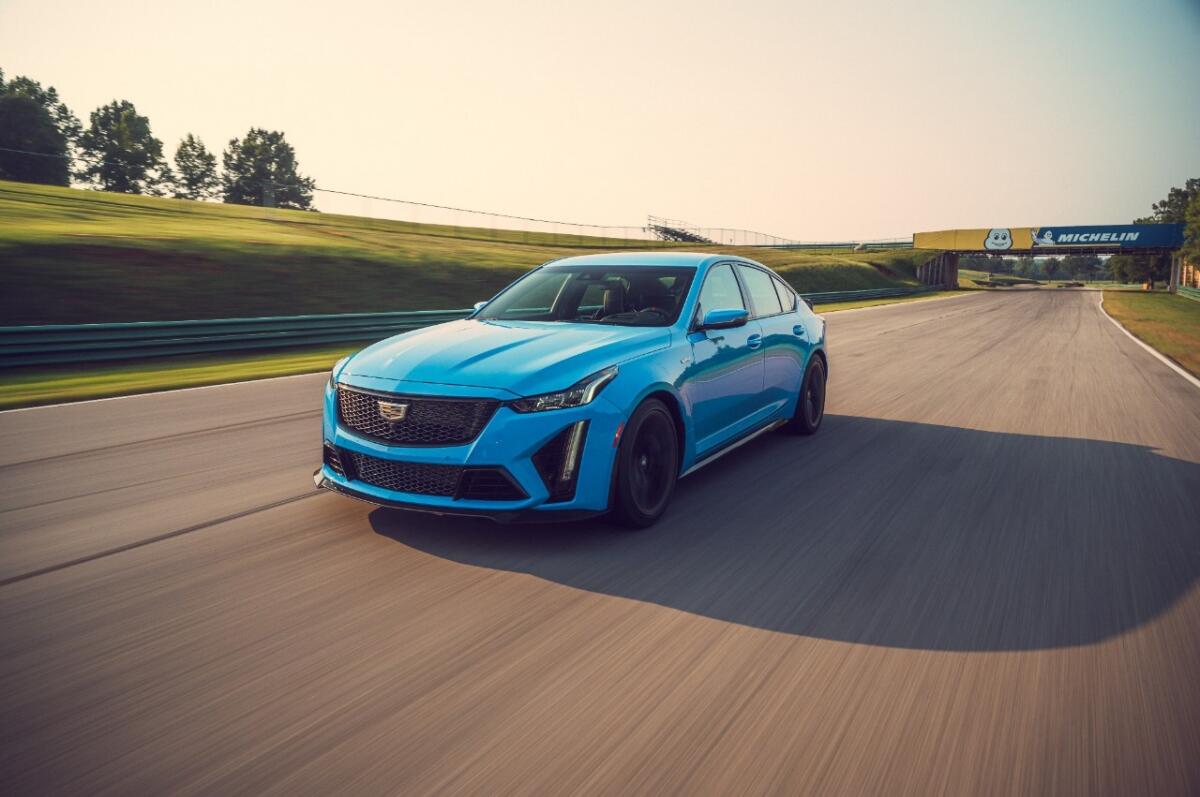
Cadillac CT5 blackwing
"I would say CT4 or CT5 blackwing all day long for you, Dave, [3629.6s] but the wagon thing takes those out."
The Cadillac CT5 is a mid-size luxury sedan. “Blackwing” is Cadillac’s performance version of the CT5, aimed at drivers who want something more exciting than a regular luxury trim. They’re saying it’s the better choice if you don’t want a wagon.
The Cadillac CT5 is a mid-size luxury sedan, and “Blackwing” is Cadillac’s performance trim line. Mentioning the CT5 Blackwing signals a more driver-focused, higher-output version than a typical CT5. In this segment, it’s used as the enthusiast pick if you don’t want a wagon.
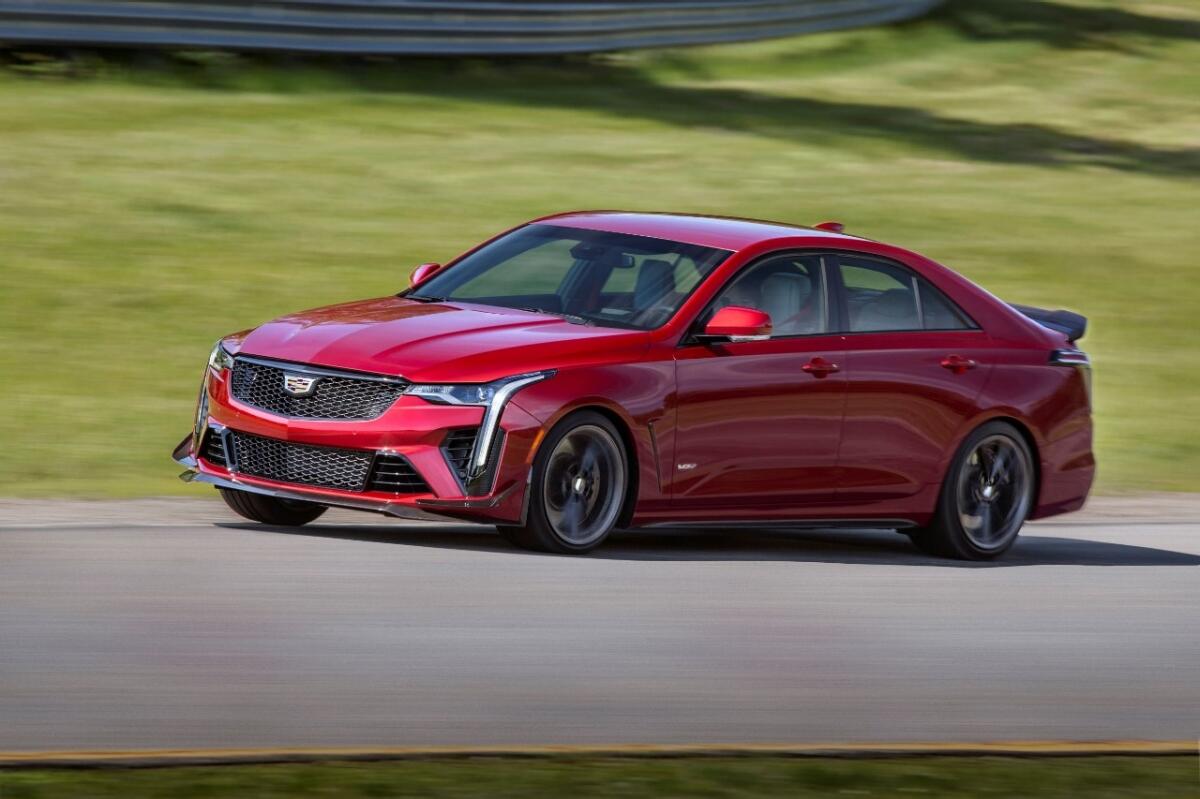
Cadillac CT4
"I would say CT4 or CT5 blackwing all day long for you, Dave, [3629.6s] but the wagon thing takes those out."
Cadillac’s CT4 is a smaller luxury sedan. They’re using it as a comparison point—basically saying there are other cars you could pick if you don’t want a wagon. It’s brought up because it can be had in more enthusiast-friendly forms.
The Cadillac CT4 is a compact luxury sedan positioned below the CT5. In this discussion, it’s mentioned as an alternative to a wagon, implying it fits the “manual + rear-wheel-drive” enthusiast vibe better than the wagon idea. The CT4 is also known for performance variants, which is why it comes up in an enthusiast debate.
FCP Euro
"If you own a European enthusiast car, [3646.3s] you need parts from FCP Euro."
FCP Euro is a company that sells car parts, especially for European brands. People who work on their own cars often use it to get the right parts. The host is mentioning it as a trusted source.
FCP Euro is a parts retailer known for supplying OEM-quality and performance parts for European cars. The segment frames it as a go-to source for enthusiasts who want to keep older European vehicles running with the right components. The host also highlights the company’s longevity and DIY-focused customer base.
ownership experience
"and remains focused on giving you a better ownership experience. Every part you buy from FCP Euro is guaranteed for the life of your car."
“Ownership experience” just means how convenient it is to have and maintain the car. Here, they’re saying their parts and help make it easier.
“Ownership experience” is a marketing term for how easy and hassle-free it feels to live with a car—especially around parts availability, support, and repair turnaround. In this segment it’s tied to FCP Euro’s warranty and advisor support.
pre-built kits
"With fulfillment centers nationwide and pre-built kits for common jobs, there's no better place for genuine OE parts for your European car..."
Pre-built kits are packages of parts that are already matched for a particular repair. It helps you avoid forgetting something important when you do the job.
Pre-built kits are bundled sets of parts put together for a specific repair job, so you don’t have to source every component individually. In this segment, they’re presented as making common maintenance/repair jobs easier to complete correctly.
OE parts
"there's no better place for genuine OE parts for your European car, even for your sob."
OE parts are the same kind of parts the car maker designed for the vehicle. They’re meant to fit and work the way the original parts do.
OE parts means “original equipment” parts—components made to match what the car’s manufacturer specifies for that model. The host is contrasting these with generic aftermarket parts, implying better fit and compatibility for the European car being discussed.

2017 Toyota Corolla
"He's 41 years old and he's got a dilemma because he drives currently at 2017 Toyota Corolla. 160,000 miles, it's still chugging along."
The 2017 Toyota Corolla is a common, sensible daily car. In this story, it’s being used because it has a lot of miles and still works well for a long commute.
The 2017 Toyota Corolla is a mainstream compact sedan known for being practical and durable as a daily driver. Here it’s used as the example of a high-mileage commuter car that’s still running well despite a long, traffic-heavy commute.
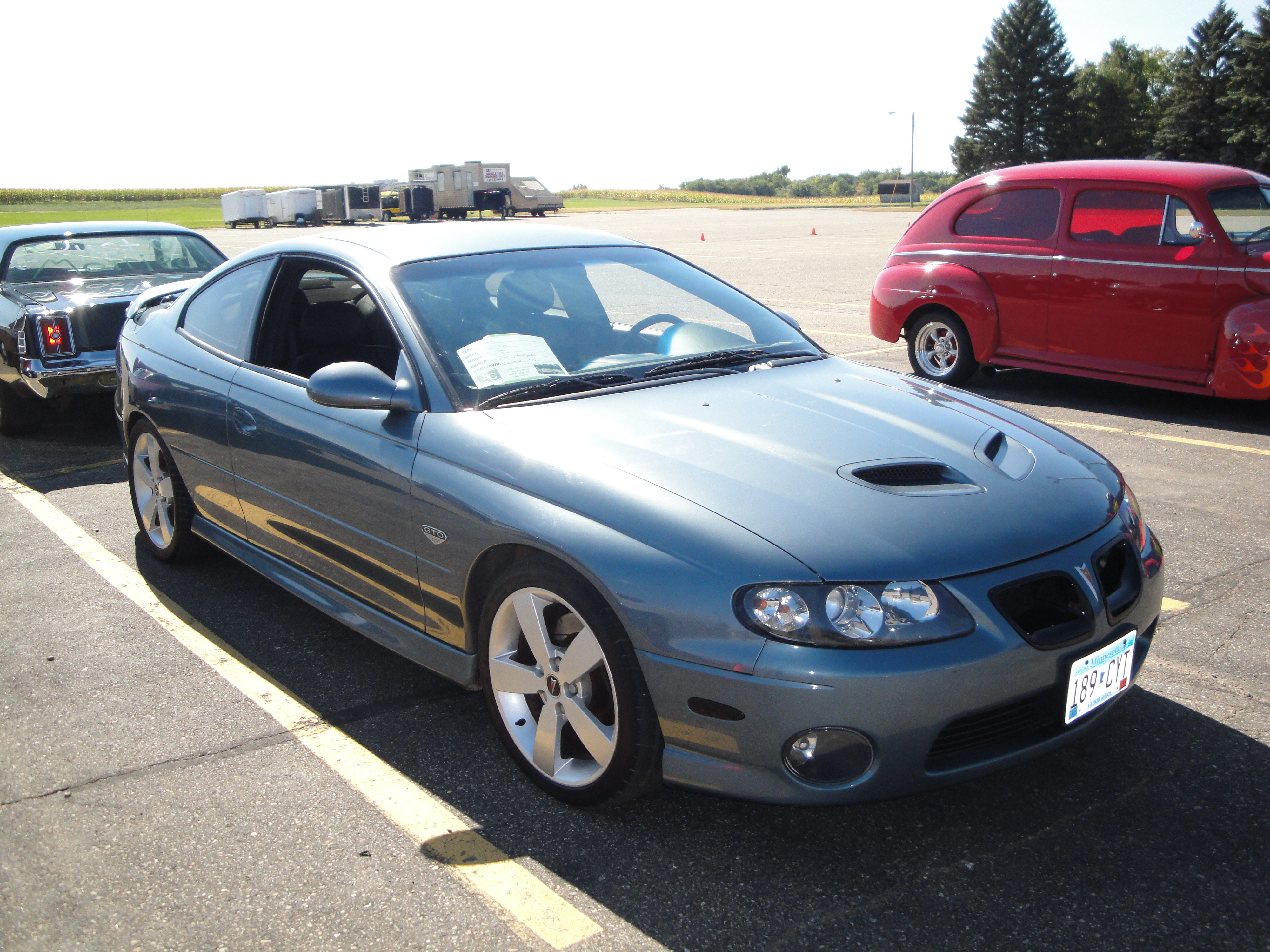
2006 Pontiac GTO
"the last one before the Corolla being a 2006 Pontiac GTO with the six liter LS2 that made around 450 horsepower. That's an awesome, fun car, not really a good commuter."
The 2006 Pontiac GTO is a V8-powered muscle car. It’s exciting to drive, but it can be expensive to run and not as practical for commuting every day.
The 2006 Pontiac GTO is a muscle-car-era sedan/coupe that’s powered by the LS2 V8, a modern GM engine family known for strong power and easy tuning. In this segment, they highlight its “six liter LS2” making roughly 450 horsepower, which explains why it’s fun—but also why it’s not ideal for a daily commute.
LS2
"with the six liter LS2 that made around 450 horsepower. That's an awesome, fun car, not really a good commuter."
LS2 is the name of a particular V8 engine from GM. It’s known for being a strong, popular engine in performance cars.
LS2 refers to a specific GM V8 engine used in the mid-2000s performance lineup. It’s part of the “LS” family, and it’s commonly discussed because it’s relatively straightforward to maintain and can make strong power with the right setup.
gas guzzler
"He doesn't want a gas guzzler V8 that's gonna be too expensive, but he also doesn't want to buy some other boring commuter or hybrid car"
A “gas guzzler V8” means a big V8 engine that usually uses more gas than smaller engines. They’re worried it would get expensive for commuting every day.
“Gas guzzler V8” is an enthusiast way of describing a large-displacement V8 engine that tends to consume more fuel than smaller engines. The key idea here is cost-of-ownership for commuting—fuel expense and practicality.
rational creep
"You don't want to let the rational creep in into your rational decision. We're gonna have to walk the line here on that one."
“Rational creep” is when you start with a fun idea, but then practical reasons slowly take over. It can make you end up buying the sensible option instead of the car you actually want.
“Rational creep” is a decision-making concept meaning practical, logical concerns slowly take over and push you toward the “safe” choice. In car shopping, it can lead people to talk themselves out of a more exciting car even when they originally wanted something fun.

Elantra N
"Okay, so you're thinking about commuting in an ND2 or an Elantra N. So let's just start there."
The Elantra N is the sporty version of the Hyundai Elantra. It’s meant to be a fun daily driver, not just a regular commuter car.
The Hyundai Elantra N is a performance-focused compact sedan built around a turbocharged engine and a driver-oriented chassis tune. It’s notable because it offers “hot hatch” style fun in a four-door package, making it a practical commuter that still feels sporty.
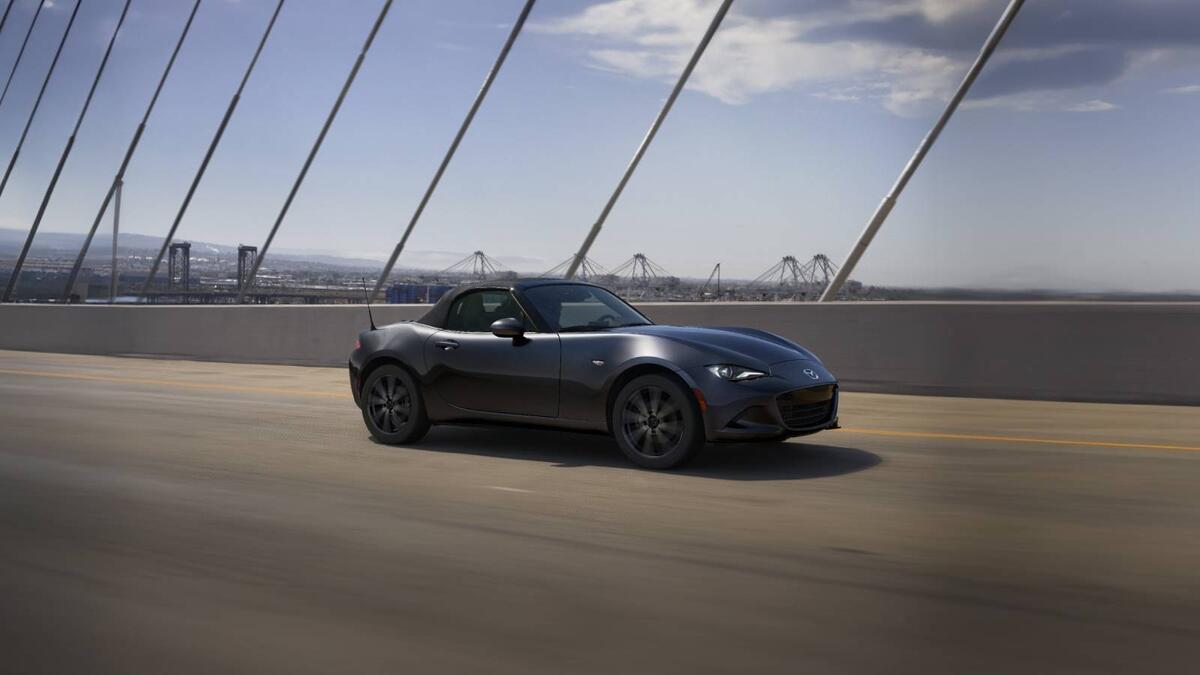
2024 MX-5 Miata RF Grand Touring
"Right now, in front of us, a 2024 MX-5 Miata RF Grand Touring in the proper color right inside your budget at 34.8 with, essentially, delivery miles, 320 miles on it."
This is a 2024 Mazda MX-5 Miata with a retractable hardtop, so it can feel like a coupe when closed and an open-top roadster when you want it. The Grand Touring version is the more feature-rich trim.
The 2024 Mazda MX-5 Miata RF Grand Touring is a lightweight, driver-focused roadster with a retractable hardtop (RF = Retractable Fastback). The “Grand Touring” trim typically adds comfort and convenience features, but the big point is the Miata’s low weight and engaging handling for commuting and weekend drives.
delivery miles
"in the proper color right inside your budget at 34.8 with, essentially, delivery miles, 320 miles on it."
“Delivery miles” are the few miles a new car racks up while it’s being transported to the dealership. It usually means the car hasn’t been driven much by an owner yet.
“Delivery miles” are low mileage accumulated when a new car is moved from the factory or port to the dealer (or between logistics points). They’re typically much lower than normal customer driving, so the car can feel “new” while still having a small odometer reading.
Elantra
"I'm gonna go to the Elantra. I think that would also be a fun commute car. That's pretty."
The Hyundai Elantra is a regular four-door sedan that many people use for everyday driving. They’re suggesting it could also be a fun commute car, not just the Miata.
The Hyundai Elantra is a compact four-door sedan that’s often chosen for practical commuting. Here, the host is comparing it as another fun, affordable commute option after discussing the MX-5’s passenger-space limitations.
front-wheel drive car
"It's got a good front-wheel drive chassis. We recently drove the sister car to this, the I-30N in Germany. All the driving we did for the day was, I need to go over here and now I need to go over there."
Front-wheel drive means the front wheels do the work of moving the car. The host is saying this particular car’s front-wheel-drive setup feels tight and fun, even when you’re just driving around town.
A front-wheel-drive chassis refers to the vehicle layout where the front wheels both steer and provide propulsion. The host is saying that, in this case, the chassis feels rigid and engaging at low speeds, which can make everyday driving feel more “event-like.”

I30N
"We recently drove the sister car to this, the I-30N in Germany. All the driving we did for the day was, I need to go over here and now I need to go over there."
This is a performance Hyundai hot hatch with the drive wheels up front. The host is saying it feels tight and fun to drive even during normal commuting, not just on a race track.
The Hyundai I-30N (spoken as “I-30N”) is a performance hot hatch built around a front-wheel-drive layout. The “N” line is Hyundai’s track-focused tuning, and the host is emphasizing how rigid the front-wheel-drive chassis feels even without track driving.

John Cooper works
"I happen to be showing a John Cooper works [4050.4s] right here for $30,900, so $31,000 [4053.7s] for a 14,000-mile 2023 mini hardtop."
John Cooper Works (JCW) is MINI’s performance version. It’s meant to feel more energetic and fun to drive than the regular MINI, and the host is discussing a JCW Hardtop deal based on mileage and price.
“John Cooper Works” (JCW) is MINI’s performance trim, typically tuned for sharper throttle response and more aggressive driving dynamics than the standard models. The host is talking about a specific JCW listing and comparing its real-world usability and fun factor to other small cars.

mini Cooper
"So mini Cooper, again, lightweight. I'm just below 3,000 pounds here."
A MINI Cooper is a small car that’s built to feel quick and easy to drive. Here, the point is that it’s light, so it can feel more fun and responsive, especially in everyday driving.
The MINI Cooper is a small, lightweight hatchback known for its go-kart-like feel and nimble handling. In this segment, the host highlights its low curb weight ("below 3,000 pounds") as a big part of why it would be fun at low speeds.

GTI
"And that is, just get yourself a GTI. And I'm actually on purpose showing an older one. A 2018 for $20,000 at 60,000 miles."
A GTI is a sporty Volkswagen hatchback that’s meant to be fun to drive but still practical. The host is saying an older GTI can be a smart deal—cheaper, but still gives you the normal, button-style controls.
The Volkswagen GTI is a hot-hatch that’s popular for balancing everyday usability with sporty driving. The host specifically compares a 2018 GTI priced at $20,000 with 60,000 miles against a newer GTI, emphasizing that older ones can save money while keeping the “land of buttons” (more traditional controls).
land of buttons
"The older ones, you save yourself money and you keep yourself in a land of buttons. That's why I'm showing older."
“Land of buttons” refers to a car’s physical, tactile controls (buttons and knobs) rather than relying heavily on touchscreens. The host uses it to argue that older GTIs can feel more straightforward and driver-friendly than newer, more screen-centric interiors.
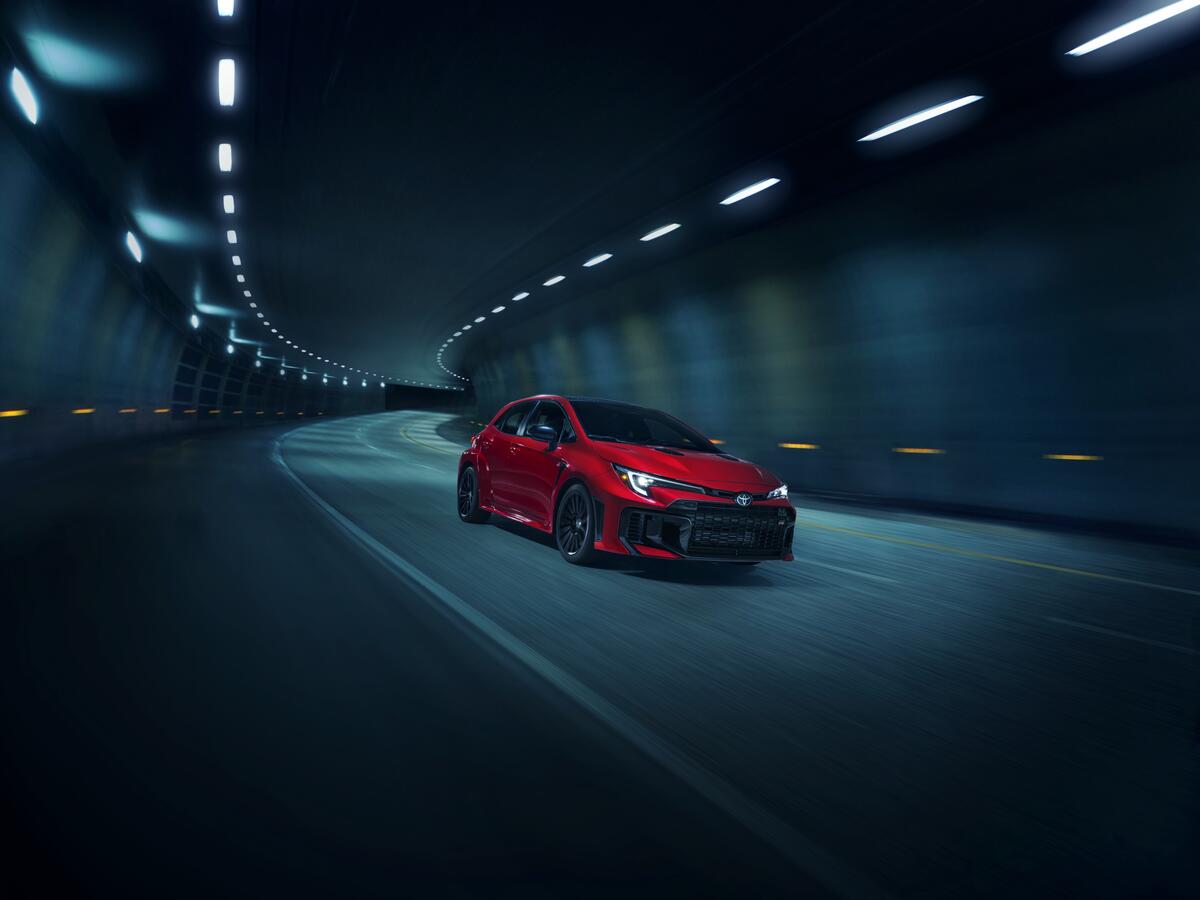
GR Corolla
"Because you might think I can't afford a GR Corolla with an automatic. Yeah, you can."
The GR Corolla is a sporty Toyota hatchback made for driving enthusiasts. Here they’re talking about the fact you can get it with an automatic, not only a manual.
The Toyota GR Corolla is a hot-hatch built by Toyota's Gazoo Racing division, known for rally-inspired all-wheel-drive and a performance-focused chassis. In this segment, the key point is that it can be had with an automatic (not just a manual), which changes how approachable it is for everyday driving.
Thunder Hill five mile
"And he brought it to a track day [4167.0s] and he took me around at Thunder Hill five mile. [4170.7s] It was Craig."
Thunderhill is a real race track in California. The “five mile” part means they were using a longer version of the track, which makes the car work harder through lots of turns.
Thunderhill Raceway Park is a well-known road-course venue in California, and the “five mile” refers to its longer track configuration. Track layouts like this are used to stress braking, traction, and stability over repeated corners.

Honda Civic
"[4202.7s] I also thought of Civic SI base. [4205.7s] And this was, it's in your budget."
The Civic Si is a sportier version of the Honda Civic. It’s meant for drivers who want something more fun than the standard model without going all the way to a full performance car.
The Honda Civic Si is a sport trim of the Civic, typically positioned as an enthusiast-friendly “step up” from the regular Civic. It’s known for being more driver-focused than the base model, usually with a more performance-oriented engine tune and chassis setup.

Kia K4 hatchback GT line turbo
"At the same time, I couldn't ignore the Kia K4 hatchback GT line turbo in automatic. There's some shortcomings with this car."
This is a Kia K4 hatchback with the GT Line package and a turbo engine. The host is saying the automatic version feels a little dull at first, and you have to turn on Sport mode to make the gas pedal feel more responsive.
This refers to a Kia K4 hatchback in GT Line trim with a turbocharged engine, and the key point here is how it behaves with the automatic transmission. The host says it has a noticeable “disconnected” feel at first unless you enable Sport mode, which affects throttle response.
gas pedal
"It'll feel like the gas pedal's not connected to anything. Like the light switch in your house that doesn't do anything."
The gas pedal is what you press to ask the car for more power. The host is saying that in the default mode it doesn’t feel like the car responds right away.
The gas pedal is the driver’s input used to command engine power. The host’s point is that, without Sport mode, the pedal feel suggests delayed or softened throttle response—like the input isn’t translating to immediate acceleration.
pops and cracks
"i5N, great fun. Your commute will be simulated with pops and cracks"
“Pops and cracks” are the little bang/pop sounds a car can make, usually when you lift off the throttle. Some cars do it naturally, and some use sound effects to create the same vibe.
“Pops and cracks” are the audible exhaust-like pops and crackles some cars produce during deceleration or specific drive modes. On many modern cars (including some EVs with sound synthesis), it’s a programmed effect meant to mimic the sound of a performance exhaust.
rally mode
"Sure, yeah. [4314.4s] You're doing rally mode while you're commuting [4316.3s] and it could be just a load of fun."
“Rally mode” is a special driving setting that changes how the car behaves. It usually makes the traction and stability systems less strict so the car can slide a bit more on loose or slippery roads.
“Rally mode” is a driving setting (common on performance cars) that changes how the car responds—typically by adjusting throttle mapping, traction control, stability control, and sometimes steering or drivetrain behavior. The goal is to make the car easier to manage on loose or slippery surfaces, where you want more wheel slip than on dry pavement.
lowest price
"[4332.9s] That's impressive. [4333.5s] On an auto tempest, set it to lowest price. [4335.5s] Type an i5N or any of these cars"
“Lowest price” means sorting the listings so the cheapest ones show up first. That helps you get a starting point for what the car might cost before looking at pricier options.
“Lowest price” here refers to filtering search results by the cheapest listings first, which helps you establish a baseline market price before moving up to higher-priced examples. It’s a practical way to avoid anchoring your expectations on a single expensive listing.
statement car
"but searching for some statement car or piece of automotive tech or art that just inspired him."
A “statement car” is a car you pick because it says something about you. It’s more about personality and style than just being the most sensible option.
A “statement car” is a car chosen primarily for what it communicates—style, identity, or personality—rather than just for practical needs. In enthusiast circles, it often means a distinctive design or brand/tech choice that stands out.

Alfa Romeo Milano
"... is really cool. So two days ago he bought a 2026 Milano White Alfa Romeo Giulio Veloce."
The Alfa Romeo Milano is a car model from Alfa Romeo. The podcast mentions someone buying a 2026 Milano in white with a “Giulio Veloce” trim. That means it’s a specific version and color choice of the Milano.
The Alfa Romeo Milano is an Alfa Romeo model mentioned in the podcast as a newly purchased vehicle—a 2026 Milano White Giulio Veloce. The discussion uses it to highlight a specific, current purchase and the excitement around that particular trim/color. It’s relevant because the Milano name and Giulio Veloce trim indicate a targeted configuration rather than a generic Alfa model.

Alfa Romeo Giulia
"He loves the refreshed Giulia since 2024, really did it for him."
They’re talking about the updated 2024 version of the Alfa Romeo Giulia. That usually means the car got some improvements and new features, not an entirely new model.
The speaker is referring to the 2024 refresh of the Alfa Romeo Giulia. A “refresh” typically means mid-cycle updates—often changes to styling, tech, and trim content—rather than a full redesign.
Italian statement
"You're making a statement. By the way, an Italian statement, you're on Italian bikes or an Italian car."
They mean the car choice is part of an “Italian vibe” or identity. It’s about picking an Italian brand because it matches the image they want.
“Italian statement” here is a shorthand for using an Italian brand as a personal or aesthetic identity marker. It’s not a technical term, but it frames the choice as a deliberate cultural/visual preference.

Porsche 928
"So, what I think this means is, the 928 has to go, which you're gonna take a loss on."
The Porsche 928 is a classic Porsche grand tourer with a V8 engine. Here, they’re talking about selling it and losing money on the sale before switching to a different car.
The Porsche 928 is a front-engine grand tourer known for its V8 power and long-distance comfort, and it’s famous for being one of Porsche’s early attempts at a more GT-focused flagship. In this segment, it’s discussed as the car that would need to be sold, implying a value hit when moving to something else.
hold its value
"The Ferrari will probably hold its value, but it's gonna hurt a lot to get into an old Ferrari."
“Hold its value” means the car doesn’t get much cheaper when you go to sell it later. They’re saying the Ferrari might keep its price, even though getting into it still costs a lot.
“Hold its value” refers to how well a car retains its resale price over time, often influenced by demand, rarity, and condition. The host contrasts this with the immediate loss you take when selling your current car to buy an older Ferrari.

Porsche Carrera T
"... most amazing transmission ever. And also the red Carrera T in our first price of fun film."

Volvo XC90
"Their family hauler 2016 XC90, which was bought new, is now gone after 165,000 miles."
The Volvo XC90 is a family SUV. Here, they’re saying their 2016 one was bought new and lasted 165,000 miles before they replaced it.
Volvo’s XC90 is a midsize family SUV known for comfort-focused design and a practical, “family hauler” layout. In this segment, the host mentions a 2016 XC90 that was bought new and ran to 165,000 miles, highlighting real-world ownership longevity.
adapter
"The one hiccup was a Rivian adapter it came with won't connect to their Rivian to a Rivian charger."
An EV charging adapter is a hardware piece that lets a vehicle connect to a charger that uses a different plug standard. Here, the family’s Rivian came with an adapter that wouldn’t connect to their Rivian charger setup, so they couldn’t charge when they needed to until they got the right one.
NACS charger
"which turns out to not be a great part for charging EVs, but they had just enough juice to reach a working NACS charger."
NACS is the common plug type used by many fast chargers in North America. They needed the right adapter so their Rivian could charge at a charger that uses that plug.
NACS (North American Charging Standard) is the dominant EV fast-charging plug standard in North America. The segment’s point is practical: they needed the correct adapter to use a working NACS charger and could only reach it with “just enough juice.”
2026 Cadillac CT4 V Blackwing
"The bigger news is they're the owners of a new 2026 Cadillac CT4 V Blackwing with a six P manual, replacing that vaunted E46 ZHP 186,000 miles on that,"
The Cadillac CT4-V Blackwing is a sporty Cadillac sedan. In this story, they got the 2026 version and it comes with a manual transmission, which is a big deal for enthusiasts.
The Cadillac CT4-V Blackwing is a performance sedan built to deliver a driver-focused experience, and it’s notable here because it’s paired with a manual gearbox. In this segment, the host frames it as a “bigger news” ownership detail, replacing a long-kept enthusiast BMW.
six P manual
"of a new 2026 Cadillac CT4 V Blackwing with a six P manual, replacing that vaunted E46 ZHP 186,000 miles on that,"
A “manual” transmission means the driver shifts gears themselves using a clutch and gear lever, rather than relying on an automatic. The “six” indicates a six-speed manual, which is often sought after by enthusiasts for more direct control and engagement.
E46
"“that car gets featured. It is an excellent version of an E46.”"
“E46” is the name for a BMW 3 Series from a specific generation (roughly the late ’90s/early 2000s). Enthusiasts like it because it drives well and there are lots of parts and upgrades available.
“E46” refers to the BMW 3 Series generation from the late 1990s to early 2000s. It’s a favorite among enthusiasts because it’s known for a balanced chassis and a huge aftermarket, and many people build them into track or street cars.
BMW gearbox
"“it’s the perfect BMW gearbox.”"
A gearbox is the transmission that changes gears so the engine can stay in the right power range. Saying a “BMW gearbox” is “perfect” usually means it shifts smoothly and feels good to drive.
A “gearbox” is the transmission system that selects different gear ratios to match engine speed to driving conditions. When someone calls a “BMW gearbox” “perfect,” they’re usually praising how smoothly it shifts and how well it matches the engine’s power delivery.

Ford Fiesta St
"Apparently I made a comment about the Fiesta ST versus Blackwing piece that I hope GM always deci..."
The Ford Fiesta is a small car. The podcast talks about the Fiesta ST, which is a sportier version. They’re comparing it to another performance car mentioned in the episode.
The Ford Fiesta is a compact car, and the podcast references the Fiesta ST in a comparison context. The speaker mentions a comment about Fiesta ST versus a Blackwing piece, implying a debate about which hot hatch or performance small car makes more sense. It’s discussed because the Fiesta ST is often remembered as a fun, performance-oriented compact.

Rivian R1S
"“That’s an interesting garage too. The Rivian R1S and that Cadillac.”"
The Rivian R1S is an electric SUV from Rivian with room for passengers and cargo. Because it’s electric, it has instant acceleration, and it’s designed to feel more outdoorsy than many EVs.
The Rivian R1S is an all-electric, three-row SUV built on Rivian’s electric platform. It’s notable for combining EV torque with a more adventure-oriented, SUV-like packaging compared with many electric crossovers.

Yaris
"[4789.0s] I mean, they have the Yaris. [4790.1s] They have the Yaris, but here's the thing. [4791.6s] The Yaris is small. [4792.7s] The Yaris is genuine and really small."
The Yaris is Toyota’s smaller city car. Here, the hosts are saying it’s so compact that it doesn’t work as well for people who want more space, especially in the back seats.
The Toyota Yaris is a small subcompact hatchback, and the hosts are contrasting its size with the GR Corolla’s more usable practicality. They argue the Yaris is “genuine and really small,” which limits it as a “backseat car” and makes it feel niche in Europe.
subcompact car
"[4811.0s] It's the Fiesta ST buyer. [4812.0s] Who are the people buying a subcompact car [4814.6s] with a lot of performance?"
A subcompact car is a small car—usually easier to park and drive in cities than bigger models. Here, they’re talking about a small car that still has sporty performance.
A subcompact car is a small passenger car category, typically smaller than a compact hatchback and designed for tight city driving. In this segment, it’s used to frame the GR Corolla as a “performance version” of a hatchback that’s still practical.
performance version
"[4818.2s] People that might buy, [4819.4s] especially that it's offered in auto, [4821.1s] a performance version of a usable hatchback. [4823.4s] That's the thing we saw all over Europe."
A “performance version” means the regular car, but tuned to feel faster and handle better. The point here is that people want a practical hatchback that’s also fun to drive.
A “performance version” refers to a factory-tuned variant of a regular model, typically with upgrades aimed at quicker acceleration, sharper handling, and more driver-focused tuning. The hosts connect this to the idea of offering a performance hatchback in Europe, including with an automatic option.

Ford Zodiac
"There were minis everywhere. Zodiac is. Yes."
The Ford Zodiac is a specific model of Ford car. In the podcast, it’s mentioned as part of a quick comment about what cars were around. There isn’t much detail in the snippet beyond the name.
The Ford Zodiac is a car model mentioned briefly in the context of “minis everywhere,” with the speaker saying “Zodiac is. Yes.” That suggests the Zodiac is being used as a quick reference point in a broader anecdote about what cars were present. It’s discussed here more as a detail in the story than a deep technical topic.

Dacia Duster
"And the Dacia's in every possible form you can imagine. [4834.4s] The Duster is practically handed out at the border [4836.3s] in some of these countries."
The Dacia Duster is a cheap, practical SUV sold in Europe. People like it because it’s not fancy, but it’s useful and usually costs less than most other SUVs.
The Dacia Duster is a budget-friendly compact SUV from Dacia (a Romanian brand owned by Renault). It’s known for being widely available in many European markets and for offering practical, no-frills ownership value compared with pricier rivals.
Request an Explanation
Heard something you'd like explained? We'll add it to this episode.
Sign in to request explanations for terms you heard.
Want to learn more?
Browse our glossary for plain-English explanations of automotive terms, jargon, and concepts.
Help improve this episode
See something that's not quite right? Our annotations are AI-generated and can sometimes miss the mark. Click the flag icon on any annotation to suggest a correction.
1 community members have helped improve this episode.