Ferrari is a famous Italian maker of very expensive, very fast sports cars. Even people who will never own one usually know the name because Ferrari is treated more like a dream or status symbol than ordinary transportation.
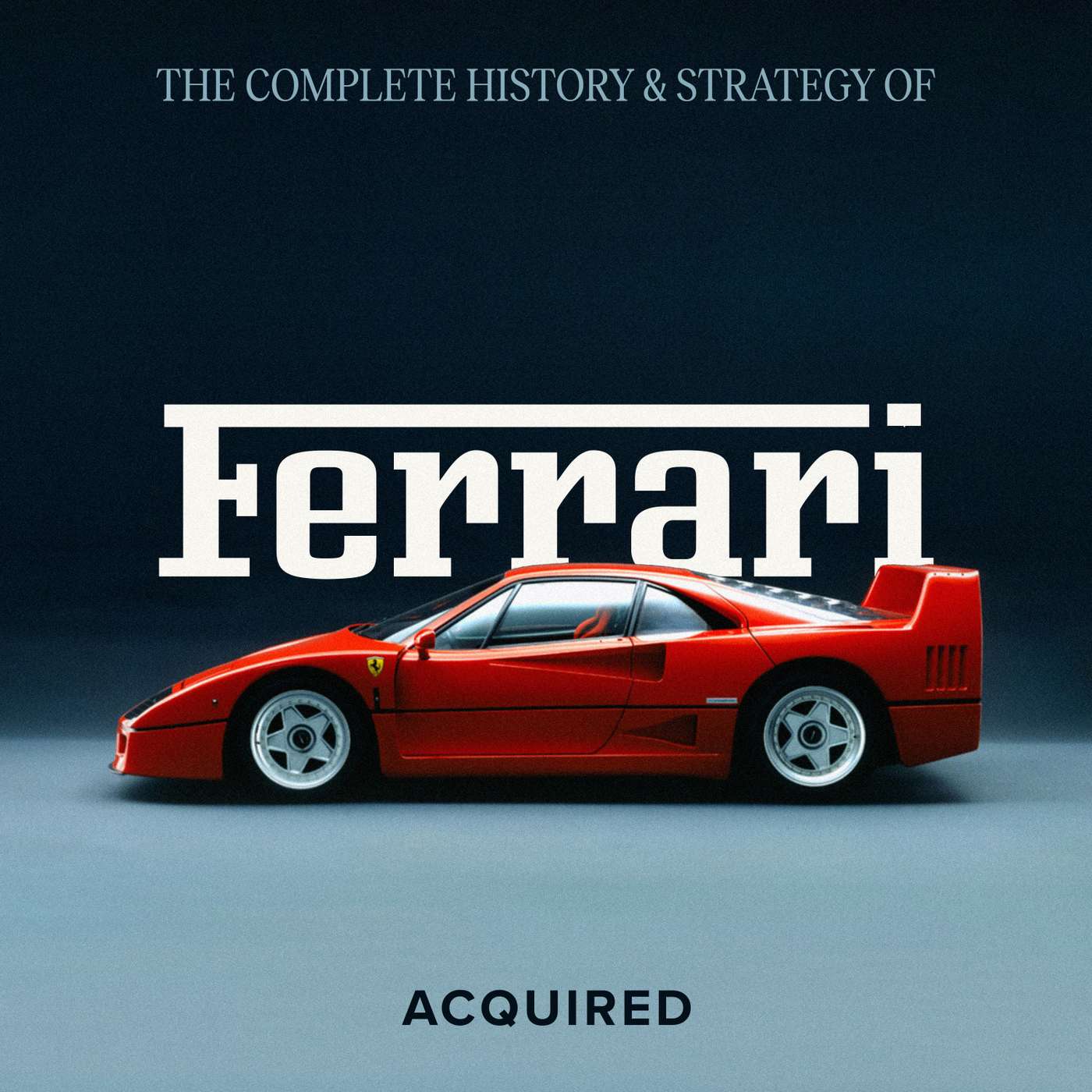
The Ferrari F40 is one of the most famous Ferraris ever made. People love it because it looks wild, goes extremely fast, and feels much more intense and less comfortable than a normal road car.
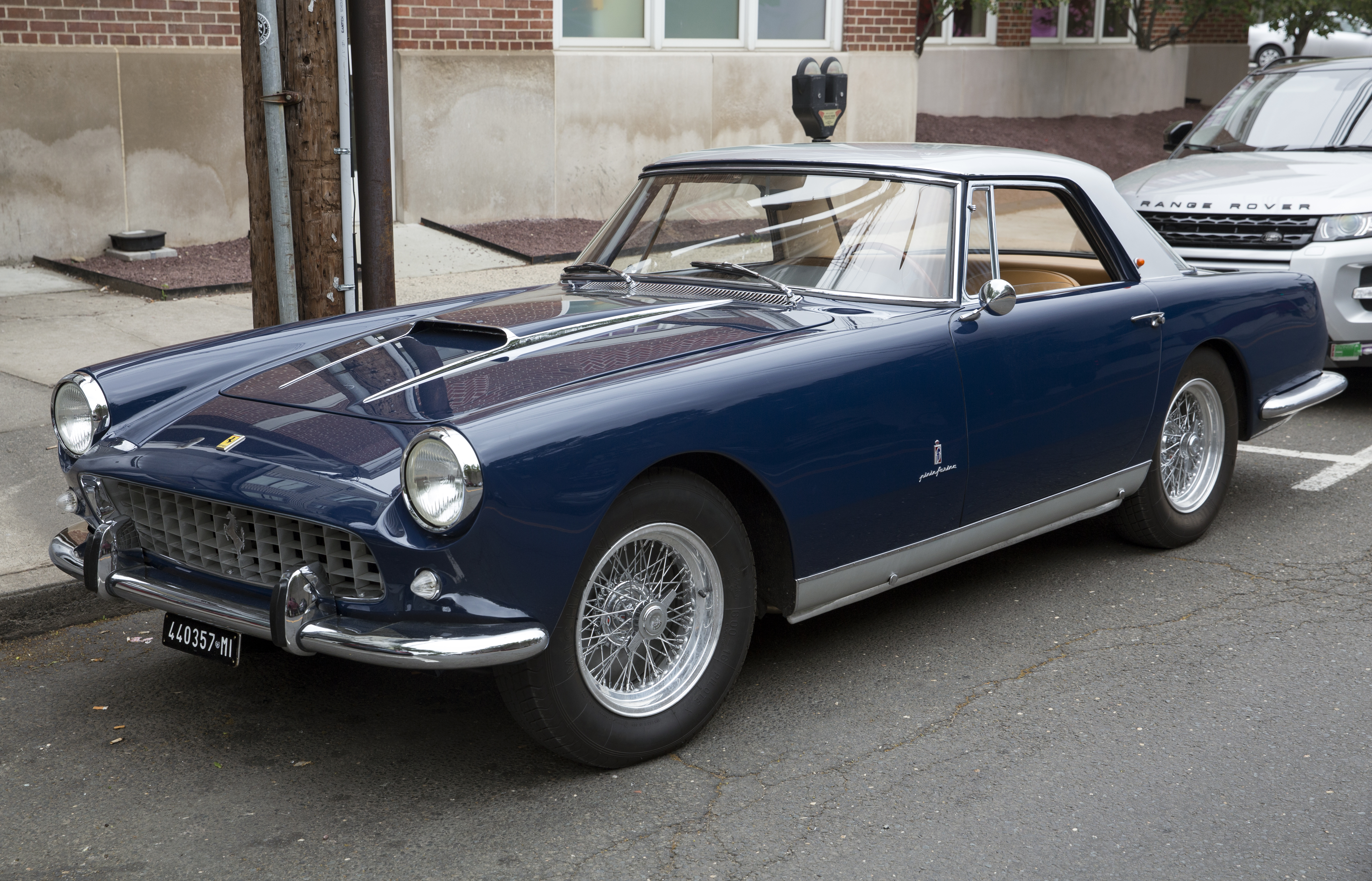
This is an old Ferrari race car from the 1950s, built to go very fast for long races. It is famous because it is beautiful, rare, and tied to Ferrari's golden racing years.
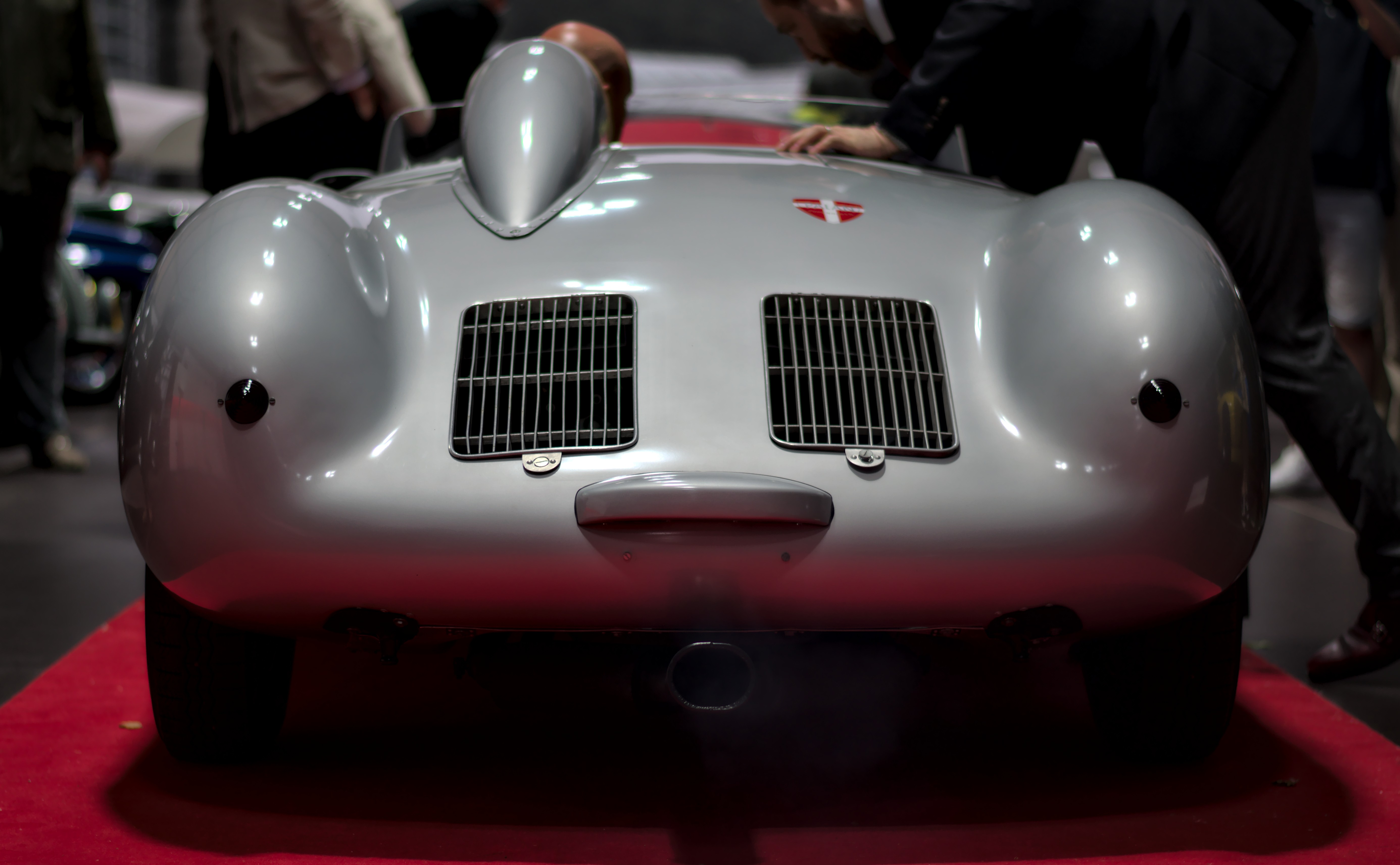
This was a Ferrari race car from the 1960s, built to compete in major long-distance races. People remember it because it looks stunning and comes from Ferrari's famous rivalry with Ford.
Charles Leclerc is a famous racing driver who competes for Ferrari. Mentioning him helps place Ferrari in today's racing world, not just its old history.
Brand recognition means how many people know what a brand is. Ferrari has a lot of it because even people who never plan to buy one still recognize the name and image.
Hermès is the famous French luxury brand known for its Birkin and Kelly bags. The hosts keep comparing Ferrari to Hermès because both use scarcity and craftsmanship to justify extreme prices and keep demand higher than supply.
Rolex is the famous Swiss watchmaker used as a reference point for luxury at scale. The hosts compare Ferrari to Rolex to help explain how both brands are exclusive without being totally out of reach, and how both become cultural status objects.
FUV is Ferrari's own name for its SUV-like vehicle. It's basically Ferrari trying to say, 'yes, this is practical by Ferrari standards, but it's still supposed to feel special and not ordinary.'
An SUV is a taller, roomier vehicle like the kinds many families buy today. It stands out here because Ferrari built its reputation on exotic sports cars, not practical family-shaped vehicles.
Ford Motor Company is the business that makes Ford vehicles. In this story, it matters because Ford was trying to buy Ferrari and use racing to make the company seem more exciting.
Market cap is the stock market's estimate of what a company is worth. When the hosts say Ferrari went from about $10 billion to around $90 billion, they mean investors started valuing Ferrari far more highly than before.
Stellantis is the giant car company created when Fiat Chrysler joined with Peugeot's group. It's basically the modern umbrella company that now owns many of these brands.
A one-off car is exactly what it sounds like: a car made only once for one customer. Instead of just picking colors and trim, the buyer can get a truly unique car.
Maranello is the town in Italy where Ferrari is based. Car people often mention it because it is closely tied to Ferrari's history, factory, and image.
Margins are how much money a company gets to keep from each sale after paying its costs. Ferrari's are unusually high because people will pay a lot for the badge, rarity, and experience.
Enzo Ferrari is the man who started Ferrari. He grew up in Italy, raced cars, then started his own racing team and eventually built cars that bore his name. He ran the company until near the end of his life in 1988.
Enzo's older brother (full name Alfredo, nicknamed Dino). The family's "golden child," he enlisted in the Italian army during WWI and died of pneumonia. Enzo later named his own son Dino in his honor.
A racing driver is someone who competes in organized car races, not just someone who drives fast on the street. Back then, it often meant you also had to help make the whole effort happen, not just show up and drive.
Turin-based Italian auto giant founded 1899. Rejected Enzo's first job application in 1918; later bought 50% of Ferrari in 1969 and 90% by 1988. Today part of Stellantis.
A gentleman racer is basically a rich hobbyist who races cars using his own money. Before modern professional racing took over, many competitors were people like that rather than paid team drivers.
Motorsport just means car racing as a formal sport. In the era they are discussing, it was much more deadly than modern racing, which is why the hosts keep connecting it to tragedy.
Alfa Romeo is a historic Italian car brand known for sporty cars and racing. It matters here because it is the bigger company that starts to notice Enzo after his early racing efforts.
A privateer is basically an independent racer who buys a race car and runs it themselves, instead of racing for the official factory team. Think of it as a customer race effort.
These were companies that made the visible shell of the car. The carmaker handled the mechanical parts, and the coachbuilder made the custom outside and interior structure.
The chassis is the main structure of the car underneath everything else. In racing, it matters because it affects how the car turns, grips, and works with the suspension and body.
"Stable of Ferrari." Enzo's racing team, founded 1929 as Alfa Romeo's outsourced factory squad. The SF on the shield logo. Today the oldest and most successful team in Formula 1.
Modena-based luxury/sports carmaker founded by the Maserati brothers in 1914. Ferrari's longtime crosstown rival; later positioned by Sergio Marchionne as the "Tudor to Ferrari's Rolex."
Italian WWI fighter ace who painted a prancing horse on his plane. After Baracca's death his mother, the Countess Paolina, suggested Enzo adopt the symbol for good luck — it became the Ferrari logo.
Rosso Corsa is the classic bright red linked with Italian race cars. Most people now think of it as 'Ferrari red,' even though it started as Italy's racing color in general.
Italian supercar brand founded 1963 by tractor magnate Ferruccio Lamborghini, supposedly after a dispute with Enzo Ferrari. Today owned by Volkswagen Group; ~60% of sales are the Urus SUV.
This was the highest level of major race-car competition in Europe before Formula 1 existed in its modern form. Winning there meant proving your cars and your country were the best.
Audi is an upscale car brand that belongs to a larger company family. The point here is that expensive-looking cars can still share a lot of their basic structure with other vehicles.
Mercedes is the luxury German car brand. In this part of history, it was also a very powerful racing name, backed heavily by the Nazi government in prewar Europe.
Auto Union was a group of German car companies that raced together in the 1930s. They were heavily funded by the German government and one of the main rivals Enzo Ferrari was up against. Today those brands make up Audi.
This was the business Enzo started when he wasn't allowed to use the Ferrari name yet. It was basically his workaround company before Ferrari could fully exist under his own name again.
Luigi Chinetti was Enzo Ferrari's old racing friend who became the first Ferrari dealer in America. He persuaded Enzo that rich Americans would love these cars — and he was right, which helped Ferrari survive its early years.
Longtime Car and Driver editor, creator of the Cannonball Run, and author of "Enzo Ferrari: The Man and the Machine" — the definitive English-language Enzo biography.
This is a legal agreement that says you can't go start a rival business right away. Here, it explains why Enzo Ferrari had to wait before putting the Ferrari name back on cars.
This is a very early Ferrari model closely tied to racing. It shows how Ferrari's first customer cars were not just luxury toys—they were built to carry racing prestige.
This was a big car show in Italy where companies revealed new models. For a young Ferrari, showing a car there was a way to tell the world, 'we're here.'
Patriarch of the Agnelli family that controlled Fiat for decades. One of Ferrari's first road-car customers; in 1969 he bought 50% of Ferrari from Enzo, with a secret agreement that took Fiat to 90% upon Enzo's death.
Town in western France whose Circuit de la Sarthe hosts the 24 Hours of Le Mans endurance race. Site of Ferrari's first major international victory (1949) and Ford's 1-2-3 revenge in 1966.
Le Mans is a very long race that lasts 24 hours straight. A car that wins there has to be fast, but also tough enough not to break while running hard for an entire day.
Aerodynamics is about how air moves around a car. In racing, good aerodynamics can make a car faster and help it grip the track better, even without a more powerful engine.
Mid-engine means the engine sits more toward the middle of the car instead of all the way in the front. That can make the car feel better balanced and more agile, especially when driving fast.
British gentleman racer whose privately-owned Ferrari 166 MM, driven by Luigi Chinetti, won the 1949 24 Hours of Le Mans — Ferrari's first Le Mans victory.
This means race-team ideas making their way into normal cars. Sometimes that's real engineering, and sometimes it's more about borrowing prestige and a few useful tricks.
Formula 1 is the highest-profile kind of global race car competition, with purpose-built cars and famous teams. Ferrari's reputation is tied closely to being there from the start and staying in it ever since.
Two-time F1 World Champion and son of Enzo's racing mentor Antonio Ascari. Enzo treated him as a surrogate son. Killed testing at Monza in 1955 at the same age his father had died.
A replica is basically a copy of a famous car, not the real thing. It may look similar, but it was built from other parts and is worth far less than an original.
This is a very famous old Ferrari convertible that collectors consider incredibly beautiful and valuable. It is the car people remember from Ferris Bueller's Day Off, even though the movie used a fake version instead of a real one.
Pininfarina is a famous Italian car design company. If Ferrari built the mechanical heart of many classic cars, Pininfarina often created the beautiful shape people fell in love with.
Founder of Pininfarina, the Turin coachbuilder that designed virtually every Ferrari road car for more than 60 years — from the 250 series through the LaFerrari. The "Jony Ive to Enzo's Steve Jobs."
A halo car is the showpiece car for a brand. It is the model meant to make the whole company look more exciting and advanced, even if very few people can actually buy one.
Storied F1 circuit north of Milan, host of the Italian Grand Prix since 1922. Site of Alberto Ascari's fatal 1955 crash and of Ferrari's emotional 1-2 finish in the race after Enzo's death in 1988.
Enzo Ferrari's illegitimate son with Lina Lardi. Italian law didn't recognize him as Enzo's heir until divorce was legalized in the 1970s. Today he owns ~10% of Ferrari and sits on the board.
The Mille Miglia was a very long and famous race across Italy, not on a closed modern track but on regular roads. People loved it because it was exciting and beautiful, but it was also incredibly dangerous and deadly.
Carroll Shelby was a famous American racing figure who helped Ford build cars that could beat Ferrari. He was known for making cars faster and more competitive.
The Porsche 550 Spyder was a very small, very fast sports race car from the 1950s. People still talk about it because it was exciting, rare, and became famous after James Dean's fatal crash.
The Carrera GT is a very powerful, very demanding Porsche supercar. It's famous partly because of Paul Walker's fatal crash in one — which unfortunately made it more iconic.
"The Deuce" — grandson of Henry Ford and head of Ford Motor Company in the 1960s. Tried to buy Ferrari for $10M in 1963; when Enzo walked away at the finish line, Ford launched the GT40 program to "beat his ass" at Le Mans.
The Miura was an early Lamborghini that looked wild and put its big engine behind the driver instead of in front. That setup helped make it one of the first cars people think of as a modern supercar.
A rally car is a race car for rougher roads like gravel, snow, or narrow pavement stages, not a normal racetrack. It has to handle jumps, slippery surfaces, and long events in changing conditions.
The oil crisis was a period in the 1970s when fuel became much more expensive and harder to get. That made powerful, fuel-hungry sports cars much harder to sell.
Lotus is a famous British car and racing brand. Here, it stands for a smarter, more advanced way of building race cars that Ferrari needed to catch up to.
Niki Lauda was a famous race driver who helped Ferrari start winning again. He was important because even a better car and team still need a great driver to get results.
This is the team title in Formula 1. Instead of rewarding one driver, it rewards the car maker and race team for how well their cars perform over the whole season.
Ferrari's private test track in Fiorano Modenese, built in 1972 around Enzo's farmhouse, immediately adjacent to the Maranello factory. Used for R&D, F1 development, and customer track experiences.
Homologation means a car company has to make some street versions of a race-focused car so racing officials will allow the race version to compete. That's why some rare road cars exist at all.
The 250 GTO is the most expensive car in the world. Ferrari built it in the early 1960s as a racing car, but its beauty and rarity made it one of the most sought-after objects on earth. One sold for $70 million.
The F80 is one of Ferrari's ultra-rare top-tier cars, built in very small numbers and sold for millions. It matters because a single model like this can make a huge amount of money even though almost nobody will ever see one in person.
The F50 is a rare Ferrari supercar from the 1990s. What makes it special is that Ferrari gave it technology and feel much closer to a race car than most road cars get.
A supercar is a very expensive, very fast, attention-grabbing car. The point here is that not every quick electric car automatically feels as special or prestigious as a Ferrari.
Carbon fiber is a very light, very strong material often used in expensive performance cars. Car makers use it to save weight, which helps a car go, stop, and turn better.
The Enzo is one of Ferrari's famous ultra-rare supercars, named after the founder. It was built to show off Ferrari's best technology and is now a prized collector's car.
This means the business idea that luxury brands stay special by not making too much stuff. If you flood the market, the product can stop feeling rare and people may want it less.
The Lamborghini Countach is one of the most famous old supercars, known for its wild shape and upward-opening doors. The hosts use it to show that Lamborghini kept its cars rarer than Ferrari did in that era.
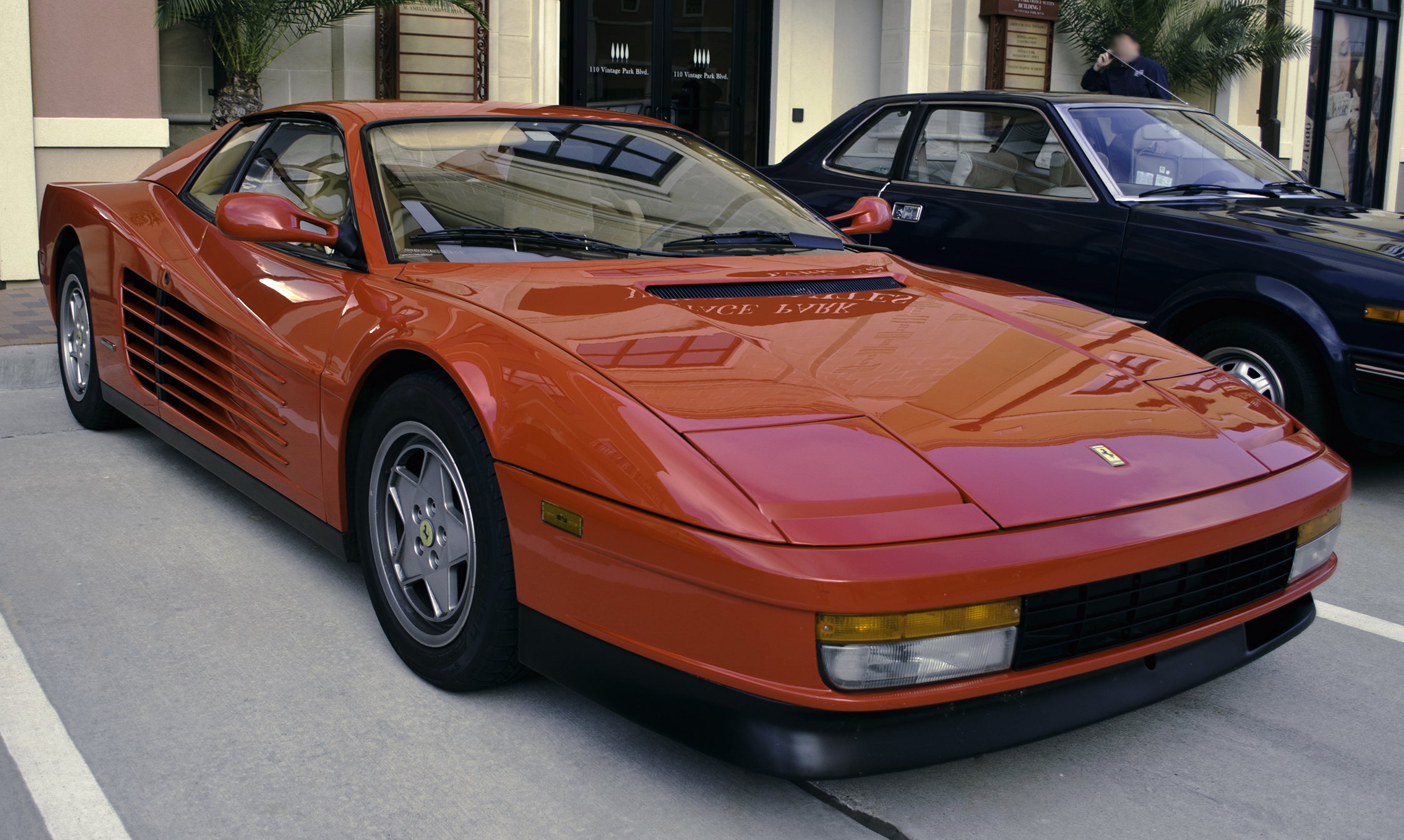
The Testarossa is one of Ferrari's most recognizable cars from the 1980s — the wide, straked side intakes made it instantly distinctive. It sold in large numbers for Ferrari standards.
The Ferrari 348 is a two-seat Ferrari sports car with the engine behind the seats. The hosts use it as proof of how bad Ferrari's road cars had become, because even Ferrari's own returning boss thought it was disappointing.
The Honda NSX was a very fast sports car that was easier to drive and live with than many exotic cars of its time. People were shocked because a Honda was beating Ferraris in the areas Ferrari was supposed to own.
Seven-time F1 World Champion and the number-one driver of the Todt/Brawn-era Ferrari dynasty. Won five straight Drivers' Championships with Ferrari from 2000–2004.
Legendary F1 technical director. Engineered Schumacher's dominant Ferrari cars 1997–2006. Later founded Brawn GP, which won both 2009 championships in its only season.
R&D means the work companies do to invent and develop new products before they sell them. Here, the hosts are saying Ferrari and Maserati stayed fairly separate in that behind-the-scenes engineering work.
The 355 was the Ferrari that fixed everything after a rough patch in the early '90s. It was more user-friendly, better built, and still felt exciting — exactly what Ferrari needed to sell again.
LIVE
Ben: Okay, David. So the question, do you have a favorite Ferrari? David: Ooh, that's a tough one. I would never actually want to get behind the wheel of it, but I think I gotta go with the F40. Ben: Of course.
David: I remember just being like a kid in elementary school and getting a model of one and thinking like, Oh my God, this is the most incredible machine that mankind has ever created. Ben: Yeah, it's the defining supercar.
David: Yes. Yes. How about you? Ben: I actually have two. One is the car from Charles Leclerc's wedding. David: Ooh. Ben: 1957 250 Testarossa and the car from Ford versus Ferrari. That 1966 330 P3 is just beautiful.
It's got these curves. It looks like a spaceship. It's gorgeous. David: Ah, beauty and power. Story of Ferrari. David: Yes. David: All right. Ben: Should we do it? David: Let's do it. *Intro*
Ben: Welcome to the Spring 2026 season of Acquired, the podcast about great companies and the stories and playbooks behind them.
I'm Ben Gilbert. David: I'm David Rosenthal. Ben: And we are your hosts. Almost everyone needs transportation. It is a giant market serving a huge human need, and it is one of the top 3 things that households spend money on, along with their housing and their food.
And the automobile has become the default way that humans move around the world. David: And that is not what we're talking about today. Ben: And this episode has absolutely nothing to do with any of that.
Today's episode, listeners, is about selling dreams. David: Oh, yes. Ben: We are talking about Ferrari, one of the most paradoxical companies that we have ever studied here on Acquired. Ferrari ships very, very few cars, around 14,000 per year.
That is approximately the number of Toyotas that are sold every 10 hours. But of course, we know Toyota and Ferrari are a silly comparison. So what about a company that we have covered in the past? Porsche.
Even Porsche ships 22 times the number of cars that Ferrari does. And yet, even though almost nobody owns a Ferrari, only about 180,000 people globally, they have among the highest brand recognition. I would argue that over a billion people know what a Ferrari is.
David: Easily. Ben: Which means, David, that Ferrari has the highest ratio of people who know about their products to people who actually own their products of any company in human history. David: I think we got to scope it to companies that make products that are nominally available for purchase by consumers, but yes.
Ben: Yes, like the space shuttle is a product, but you can't go, go buy a space shuttle. So I would say Ferrari is the only ultra-luxury brand that has reached mass cultural awareness. There's some fun numbers just to keep putting this in perspective.
There are 10 times more Birkin and Kelly bags made each year over at Hermès than there are Ferraris, and there are 70 times more Rolexes made each year than there are Ferraris. David: Yeah, it's wild.
Ben: The paradoxes continue. People are dying for their SUVs, and yet they limit them to just 20% of total volume. David: Wait, what is this SUV of which you speak? Ben: I'm sorry, Ferrari Utility Vehicle, because they would never—
David: Yes, the FUV, the Ferrari Utility Vehicle.
Ben: Ford, here's another good one, makes 160 times the number of cars that Ferrari does, yet Ferrari has a higher market capitalization. They're worth more than the Ford Motor Company and Volkswagen.
And Honda and Stellantis and Mercedes-Benz. This company is worth so much more than most giant manufacturers. Ferrari makes all of their cars mostly by hand, inefficiently and one-off in a single town, Maranello, Italy.
And they have the highest margins in the entire auto industry. Of the very few cars that they do make, this is my favorite one, David. About 80% of them are earmarked specifically for people who already own a Ferrari.
David: Right, right, right. Ben: So that means there's less than 3,000 new customers buying Ferraris in any given year. David: It's actually completely insane. Ben: Right. David: When you think about it.
Ben: This funnel narrows pretty tight. So how on earth did Ferrari manage to build this incredibly valuable business while selling their cars to almost nobody? Well, the answer is bloody. It is half a century of death and speed and love and feeling alive.
And of course, there are some of the most clever business model mechanics that we have ever studied here on Acquired. David: It really is very Italian, you might say. It's beautiful. It's tragic. It's romantic.
Ben: There's death, sex, betrayal, and very, very fast cars. Well, listeners, if you are interested in the big takeaways from each episode in writing, you should join our email list at acquired.fm/email.
You can also get past episode corrections, exclusive behind-the-scenes photos that we found during our research - we'll be sending some of those out for this episode. And you can vote on future episode topics.
Plus, we will give away a little hint about the next episode each time. That's acquired.fm/email. Come talk about this episode with us in Slack at acquired.fm/slack or by clicking the link in the show notes.
And before we dive in, we want to thank our presenting partner, J. P. Morgan Payments. David: Yes. Just like how we say every company has a story, every company's story is powered by payments. And J. P.
Morgan Payments is a part of so many of their journeys from seed to IPO and beyond. Ben: So with that, this show is not investment advice. David and I may have investments in the companies we discuss, and this show is for informational and entertainment purposes only.
David Rosenthal, take us to Italy. David: Ooh. All right. Well, we start in 1898 in the medieval Italian town of Modena. With the birth of our hero, Enzo Anselmo Giuseppe Maria Ferrari, better known, of course, either by the name of the company he would found that bears his last name, Ferrari, or to his hundreds of millions of fans around the world simply as Enzo.
So Enzo is born here in 1898 in Modena, the second of two sons, and his mother Adalgisa is a beautiful young woman. His father Alfredo is 12 years older than his mother, and his father runs a successful metalworking shop and is kind of like a fairly well-to-do middle-class entrepreneur about town.
And Enzo and his father are often at odds growing up. But part of his dad does rub off on him in this sort of entrepreneurial influence. His dad says something to him which sticks with Enzo for the rest of his life.
A company is perfect when the number of partners in it is odd and less than 3. I. E., don't take on partners. Always be self-sufficient. Ben: It's a great quote. David: We should say that much of this history, this whole episode, comes from the fantastic, really definitive biography of Enzo called Enzo Ferrari, written by Luca Dal Monte, who worked at Ferrari and Maserati for many years, and then after he retired, dedicated about a decade of his life to researching and writing this definitive biography.
It's really excellent. So anyway, his mother and his father are always fighting. They're always yelling, arguing, swearing. And this has a very different effect on each of their two children. For Enzo's older brother, who is named after his father—he's also named Alfredo, nicknamed Dino to tell them apart—he, Dino, becomes like the golden child.
He's the peacemaker, the pleaser, the striver, the smart and successful one. He's gonna make his parents proud, and he's gonna take over the family business. Enzo, on the other hand, as the younger brother, he just takes right after all the sorta less savory parts of mom and dad.
He's mischievous. He doesn't apply himself in school or paying any attention. And why should he? His family's got money for the place and time. His older brother Dino, the golden child, is gonna make them proud.
He's gonna take over the family business. Enzo can just kinda knock about town. He dreams of someday maybe becoming a journalist or an opera singer, mostly so that he can hang out with the showgirls. Ben: Oh, what could have been a very different Enzo Ferrari.
David: Ah, well, his life is an opera, as we shall see. So there's one thing, though, that really captivates Enzo's spirit, which is the new modern sporting and leisure pursuit of automobile racing. And one blissful night when Enzo is a teenager, he declares to his best friend his true intention in life.
I am going to be a racing driver. And that dream does indeed come true, but probably not in any way that Enzo expected that night, because very shortly thereafter, World War I breaks out and two tragedies happen to Enzo in quick succession.
First, his father Alfredo contracts pneumonia and dies. Unrelated to the war, he just got pneumonia and suddenly died shortly thereafter. His older brother Dino, the golden child, goes off, enlists in the Italian army, where he also contracts pneumonia and dies.
So Enzo is left alone with his mother that he needs to support. The family business is gone. And because Enzo has never applied himself, he has no discernible skills or ability to continue it or really do much else that would provide gainful employment for him here.
That was supposed to be Dino's role in the family. Now, before Enzo can stop to really think, he too gets drafted into the army where he also comes down with pneumonia and nearly dies, but he survives.
He's the one who survives. Ben: He has a quote later in life where he sort of acknowledged this emotional burden and his life's work that he would go on to create, where he said, "I feel alone after a life crowded by so many events and almost guilty of having survived."
David: Yeah, I mean, the title of his memoirs is My Terrible Joys.
Tells you everything you need to know right there about Enzo's life. David: Yep. David: So when he comes back home to Modena at the end of the war, he has no hope, but he does still have his dream of motor racing.
And remember, he's still like a teenager, basically, at this point, a late teenager, early 20-something. He starts making noise to his mom about selling the family house to finance buying a racing car and that he's gonna go out and race this car and win prize money to support them.
Ben: It's an audacious plan! Ben: It's an audacious plan. His mom is like, "Uh, no. How about instead, how about this? Why don't you go try to get a job at a car company and see where things go from there?" Enzo's like, "okay, okay, fair compromise." So his mom arranges for him to travel to Turin, a big city in the northeast of Italy, where he interviews for a job at Fiat.
And Fiat is the biggest Italian car company at the time and will come back up many, many times in this story. It is, as you all probably know, essentially the Ford Motor Company of Italy and the family behind it, the Agnellis, are the wealthiest and most important industrialists basically in the history of Italy.
And today they own and control both Stellantis, which is the merged result of Fiat Chrysler and Peugeot. And they also own and control Ferrari. Don't worry, we'll get there. Ben: We'll get there. But not for, I mean, the better part of a century here.
David: Yes. Yes. So back to Enzo here in 1918. Fiat, of course, rejects his job application because, again, he has no discernible skills. But Enzo is persistent, and in 1919, he lands a job at a new startup automobile company called CMN.
And there, he pledges his future salary, like the next several months of his salary, to purchase for himself one of the company's sports cars that he then goes off and takes racing. So he didn't have to sell his house to finance this dream.
But he did pledge his future salary. Now, this is an important point to land here. With very few exceptions, one of which we'll talk about in just a minute, motor racing at this point in time was a private individual sport.
Drivers generally bought and raced their own cars, either because they were independently wealthy and successful and could afford their own staffs and mechanics to maintain these cars. These were folks known as gentlemen racers.
Ben: That's right. I've heard that term. Ben: Yes, and this is the group of people that ultimately once Ferrari gets founded, become Enzo's core client base. Or the other group of drivers at this time are like Enzo.
They're these kinda like hustlers and dreamers who managed to glom on somewhere in the car industry and leverage that into entering races. But basically motorsport was this like passionate sort of privateer pursuit.
Ben: Not organized professional racers on highly paid teams. David: Yes. So Enzo enters into this world and he does pretty well. Well enough not only to send some prize money back home to mom, but also to attract the attention of Alfa Romeo, which is Italy's other large car company at the time, although much, much smaller than Fiat.
And Alfa has one of Italy and Europe's few, if not only, in-house racing teams. So even though most racing that is happening is privateers, Alfa has their own racing team, which is pretty unique for Europe at the time.
So they scoop up this young, hotshot, talented driver Enzo to come and race for them. Now, this is a huge coup for Enzo. Basically his whole dream as a teenager is coming true. He's racing, he's making money from prizes.
He's part of this Alfa Romeo team that's going to support him, provide him great vehicles to race, and also mechanics and everything he needs. So he hatches a plan. That he's gonna cash in on this newfound fame and notoriety by starting his own business.
He's gonna be an entrepreneur just like his dad. So at age 22, in 1920, Enzo starts his first company, a coach-building business in Modena called Carrozzeria Emilia. Now, what is a coach-building business?
This is another really important point to understand about the car business at this point in time. For most companies, and especially car companies that were making sports cars, the actual bodies or the coaches were built and designed by third-party coachbuilders.
The cars were just an engine and a chassis that the carmaker would deliver, and then the clients would go to a coachmaker like this one that Enzo is starting up and have them build the body to their taste and specifications that would go on top of, you know, the mechanics of the car.
Ben: Yeah, it reminds me of our Rolex episode where the movement makers were totally different than the case makers, which were totally different than the jewelry stores that sold them, not the sort of integrated way that we know it today of the movement maker is often the same as the case maker, and then you often just sell sort of pseudo-directly.
David: Yes, totally. In this case, it's actually a holdover from the horse-drawn carriage days where the coach builders built carriages, but they obviously didn't supply the horses. So the same thing starts to emerge here in the early automobile industry.
So Enzo's admittedly pretty half-baked plan here is that thanks to his sure-to-come, you know, new fame and fortune as an Alfa Romeo race car driver, customers, Alfa Romeo customers and customers of other car companies are gonna come banging down his door to build their car bodies, to build their coaches.
What the connection is between being a good race car driver and being a great coachbuilder? I'm not sure. And neither is the market because the business does not go well. It's a failure. And within 2 years, Enzo is bankrupt.
Now, perhaps relatedly, Enzo's sort of mettle as a professional race car driver also proves to be good. But he's not great. He has all the talent, all the skill, but he comes to realize he doesn't have the one final thing that separates the true motorsport champions from everyone else.
He's too afraid to die. He can't push himself and the car to the point that it's really, really, really on the edge. Ben: The limit, as they say. David: The limit. Yes. Part of this, of course, is his sort of haunted past.
You know, the deaths of his brother and father. Death has had this huge presence in his life. But also, it's very much his present. So once he joins the Alfa Romeo team, there's two sort of senior drivers on the team who really take him under his wing as mentors, and they become friends.
And Enzo watches them both die during races at the wheel, the first of which—Enzo was the first person to find him, and he actually literally died in Enzo's arms. And so after all these experiences, Enzo just—he can't push himself to do the same thing over and over like they did.
David: And that is the sick reality of racing, at least in this point in history, is it is the people who are absolutely willing to go right up to that line and maybe cross it. David: Often cross it. David: I mean, it kind of depends where you put the line.
Those who win are the ones who are absolutely willing to die. David: I mean, on our Formula 1 episode, we talked about through the '70s, right? There was an average of more than one death a year in Formula 1 out of a field of only like 20 drivers.
So yeah, that's the reality for a very long time in this business. And paradoxically, that's also part of the appeal. So in 1924, Enzo makes the decision to quit racing, cast off the coach-building business, and instead open an Alfa Romeo dealership in Modena.
Ben: Oh, I didn't know this. David: Yeah, he's now married. He wants to have a family. His son naturally named Dino, would be born a few years later. Dino after his father and brother. Basically, he's going down the time-honored path of retired ex-athlete with some degree of notoriety opens local car dealership.
Ben: Pioneering. Ben: Pioneering. Now, toward the end of his racing career, Enzo had also gotten more involved in the actual management of the team and gotten to know some of the managers of Alfa Romeo, the company itself.
So he still has these close connections to the company, which are certainly gonna help him in becoming a dealer. And then the very next year, the Alfa Romeo board of directors makes the inexplicable decision to drastically cut back on their racing activities.
And they're gonna keep the company team, but only gonna enter a few races and the budget is gonna be cut. And so Enzo's like, whoa, whoa, whoa, whoa, whoa, whoa. Hang on a sec here. I need the publicity from the Alfa Romeo racing team.
That's my only connection to fame here and why people would come to my dealership and buy my cars. I kind of need to have Alfas racing on a regular basis. So he goes to Alfa Romeo headquarters in Milan with a proposal.
I understand that you wanna cut the expense, you know, sorta day-to-day of running your own racing team. What if I take it over and all the races that you don't wanna run, you bless me, your dealer, Enzo Ferrari, as the official racing agent of Alfa Romeo, and I'll put together my own private team.
I'll hire the drivers, I'll hire the mechanics, I'll cover the costs. Ben: Right. It's like a fully outsourced racing team that's just kind of a contract relationship. You don't have to have this on your books.
This is sort of loose affiliation. David: And for Enzo, what better marketing activity could you imagine than to become the quasi-official racing agent, sort of second team of Alfa Romeo? Yep. And thus the first iteration of the Ferrari business is born.
Scuderia Ferrari, which is the name that he gives to his new racing team. Scuderia being stables in Italy. It's a stable of drivers and cars for Alfa Romeo. And the Ferrari racing team to this very day in Formula 1 and elsewhere is Scuderia Ferrari.
That is the SF that you see on the Ferrari shield everywhere. Yep. Ben: And for a team that would go on to adopt the prancing horse, I am loving the thick metaphor here with the stable and the—
David: Oh, Enzo, as we shall see, is a natural-born marketer.
So important to note a couple of things here. The Scuderia Ferrari is very much intended to be a junior partner to Alfa Romeo, or at least Alfa intends it that way. But Enzo does, in the back of his mind, have broader ambitions, as we alluded to with the whole coach-building thing.
Unless you're one of the few, you know, new at this point, really mass assembly line consumer car companies like Fiat or like the Ford Motor Company over in America. The line and the barrier to entry between being a, like, garage who develops and maintains racing cars and graduating to making your own cars that you sell to the privateers who go racing is pretty thin.
And Enzo's always got this in the back of his mind. And he's got some examples out there. So there are other garages, for lack of a better word, out there in Italy at the time that have made the jump from developing race car versions of other cars made by other manufacturers to selling their own cars.
The prime example being Maserati right there in Modena, right across town, the Maserati brothers. Ben: In the video game world, this is modding. David: Yes. Ben: You're sort of taking someone's kind of basic game and souping it up into something really special for you that you're customizing.
David: Yep. So for Enzo, in the back of his mind, he's like, okay, this is my opportunity to build my own team, hire my own engineers and mechanics, use hopefully my team's success combined with the Scuderia Ferrari brand that I'm building.
Maybe someday I too can launch my full-on car company like the Maserati brothers across town. So as he gets going with this grand master plan and, you know, developing the Scuderia, he knows that he needs to build up more than just his own operations.
He also does need to build a brand if he's gonna sell his own cars someday. And specifically, he needs a logo and he's got the perfect one. But before we tell the story of the legend of the Ferrari Prancing Horse, now is a great time to thank our presenting partner, J.
P. Morgan Payments. Ben: Yes. And one thing that kept coming up, listeners, in our research for Ferrari, is just how global they have been from their early days, of course, headquartered in Italy, but selling cars to the U.S.
and around the world, as we will soon get to from those early days. And behind any company operating at that scale, there is a massive engine orchestrating money movement behind the scenes. David: That's right.
It's an enormous amount of complexity, paying suppliers in one currency, collecting receivables in another, managing exchange risk, adding vendors and suppliers, and of course, staying compliant in all these regions.
When you're really early stage, moving money across 2 or 3 currencies, you can manage it yourself, but going from 3 to 20 is like a completely different situation. Ben: Yes. And the companies that get this right, that make those strategic investments in payments infrastructure early, those are the ones that scale.
That's what J. P. Morgan Payments cross-currency solutions are built for. They send payments in 120 currencies. They receive payments in 40, across more than 200 countries and territories. That means that you get seamless integration through their APIs that plug directly into your existing treasury workflow, and that gives you real-time visibility and control over your transactions.
David: The whole goal is to make global money movement invisible, and because there's so much complexity required behind the scenes to make it feel invisible, the stability and scale of J. P. Morgan's global payments network, plus local market infrastructure is really what makes it possible.
Ben: It is one of those things where the scale is the product. If you do the math, there are tens of thousands of combinations of currencies that you may need to switch in between. Not something you want to take on yourselves.
So listeners, if your business is moving money across borders, and you need cross-currency payment solutions that do the hard work for you, check out jpmorgan.com/acquired and just tell them that Ben and David sent you.
Okay, David, so where does the famous, infamous, prancing horse for Scuderia Ferrari come from? David: Yeah. How did all those Ferraris come to have a black prancing horse on them? Ben: And I gotta say, it is the strangest thing looking at some of these old pictures because the first thing that the prancing horse went on was these Alfa Romeo cars.
David: Yes. Yes! Ben: And so there's these old pictures of an Alfa Romeo badged car and the fender sort of in front of the door, there's a Scuderia Ferrari prancing horse. David: Yes. It's bizarre to look at today.
Ben: Yeah. Listeners, we'll send that out in the email. David: So back when Enzo was a promising young racing driver, one of his early fans and supporters was a noble Italian count and countess whose son, Francesco Baracca, had been Italy's number one ace fighter pilot during World War I, like World War I dogfighting.
And Baracca had won 34 aerial victories before he was tragically, you know, killed in combat right before the end of the war. And on his airplane, he had painted has his symbol and a good luck charm: the black prancing horse.
Now, he's like a national hero, and everybody in Italy knows about Count Baracca and his exploits during World War I. And his parents are fans of Enzo. And so one night after the war, the Countess tells Enzo, "Why don't you paint the black horse on your car?
It will bring you luck." And to symbolize this gift, she gives Enzo a photo of her son in front of his plane before he was killed with the horse and with an inscription from her below it that Enzo should use this symbol.
Ben: That's an official endorsement right there. David: Absolutely. Oh, absolutely. So here we are now. Enzo is launching his, his Scuderia, his stables, you know, his horses. And he knows that this is the moment to put the gift to use as the Scuderia's logo.
It's perfect. Stable horses. But it's more than that. This man had been a national hero. Everybody in Italy knows him and knows the symbol. And Enzo has had it bestowed upon him, not just with, you know, his mother's blessing, but with the explicit direction to put it on his race cars.
So Enzo takes the prancing horse. He places it within a yellow shield, yellow being the city color of Modena, with the three colors of the Italian flag. Above. This is just a genius marketing move. The prancing horse reflects both the Scuderia and links Enzo and the team to this national hero.
The shield reflects his intention to do battle on the racetrack, and the Italian colors reflect the ultimate ambition to establish this team, this company, and its future cars as the Italian national team, and sports car company.
So in our research, I spoke to Luca di Montezemolo, the legendary Ferrari chairman who would ultimately succeed Enzo, and really in many ways be his heir, as we will tell in this story. Ben: Important to note, different Luca, than the Luca who wrote the book, David, that most of this narrative is based on.
David: And I asked Montezemolo, you know, you knew Enzo probably as deeply and as well as just about anybody who's still alive today. And there's this kind of popular legend that Enzo was just a racer.
He only wanted to race. He didn't really care about business or road cars, and all the road cars only existed to fund his racing activities. Ben: Oh, this is the biggest thing about people today. When I say, oh, we're doing an episode on Ferrari, they say, oh my gosh, yeah, it's such a crazy story because, you know, Enzo really just wanted to race cars and he built this car company.
But really, that was just sort of to finance the racing. And he doesn't even care about those road cars. He's not really a business guy. He just wants to make great cars with great engines and send them racing.
David: Completely false. Montezemolo confirmed when I asked him. Enzo was a natural-born entrepreneur and marketer. He really was Italy's Steve Jobs in every aspect. I mean, think about it. What was Steve Jobs?
Steve Jobs was not an engineer. He was a marketer, the same as Enzo. Enzo is not an engineer. He's not a car mechanic. He can't build the cars himself. Ben: But they both had a sort of understanding and deep appreciation for the technical things that enabled their visions to be possible.
David: Yes. Enzo would say about himself when asked that, you know, he's not an engineer, he's not a car designer. He's no longer a driver, even though he runs this team. He is, quote, an agitator of men.
And that perfectly described Enzo. And I think, you know, perfectly describes Steve Jobs too. Yep. So if you think about it, what is Enzo doing here with the brand that he's building? There's the prancing horse.
And then what's the other famous, you know, visual symbol associated with Ferrari? The red Ferrari red, Rosso Corsa, that he adopts here. And sure, you know, Ferraris are red because red was the assigned national racing color of Italy.
But come on, Enzo is the one who embraced it and imbued this Rossa Corsa with so much more than just the national racing color of Italy. It's not Alfa Romeo's colors. It's Ferrari's colors. Ben: Right.
When you draw a picture of a race car today, let's say you're 10 years old, you're coloring it red and you're coloring it red because that is Ferrari red. David: Yes. And what does red represent? It's passion.
It's blood. It's desire. It's all of this that is all deeply wrapped up into a Ferrari. I mean, just look at Italy's other luxury supercar company today, Lamborghini. You know what their colors are? Not red.
In fact, their color is every color but red because Ferrari has co-opted it. So back to the Scuderia here. After a couple of years, in 1933, the golden opportunity arrives for Enzo. Alfa Romeo finally decides that it is going to disband its official racing team entirely and designate Scuderia Ferrari as its official racing operation in all races all across the globe.
So Enzo 'acquires', the entire Alfa operation—engineers, mechanics, everything. And his dream has come true. He is not only Alfa Romeo's official racing team. But by this point in time, Alfa had been nationalized by the fascist Italian state, by Mussolini.
So he is Italy's official national racing team. There's just one problem, though, which is that Alfa got out of the racing business for a reason, because Hitler is coming to power in Germany. And one of Hitler's most, you know, kinda important national agenda items is making sure that his German auto industry, is the best and that he proves it on the racetrack, just like, you know, the Olympics.
So throughout the rest of the 1930s, the German state is supporting Mercedes and Auto Union, which would go on to become Audi today. And their cars are just dominating European Grand Prix racing. So Enzo and Ferrari are like sent out there, you know, by Alfa and the Italians to compete.
But it's a fool's errand. And so in 1938, Alfa and Mussolini, kind of fed up with losing, they actually acquired the Scuderia Ferrari and remake it, you know, as part of Alfa Romeo into this official sort of government entity.
Ben: So they decide actually we do want to put resources behind this. And now you're kind of the only game left in town since we shut down the other operations. David: Yeah, I mean, at the end of the day, this is just rearranging deck chairs because the war is coming.
So the very next year, Hitler invades Poland and World War II begins. Needless to say, European automobile racing is on hold indefinitely. During this period, Enzo gets into a fight with Alfa Romeo management and manages to get himself fired.
Ben: Yeah, this is 1939. He cares about one thing and that's auto racing. It's just not the strategic priority for Alfa Romeo as a company or for the country. And so I think this, this friction kind of leads to it.
The crazy thing is his separation agreement. I think he got paid to, to leave. But yes, you know, he—it's a firing—forbids him for 4 years from a) building cars to race them and b) using the name Ferrari associated with a racing team or a car builder.
Like, he lost the rights to his own name for 4 years. David: Well, I mean, you know, he gave them up to the Italian government, essentially. So speaking of which, during the war, Enzo creates a new company to feed the Italian war effort that he names Auto Avio Costruzioni, Auto and Aviation Construction.
Which is funny, He sneaks that auto in there because-
Ben: -not really supposed to be building cars and racing them, but like, I'm doing other stuff too. It's not called 'Ferrari'. David: It's not called 'Ferrari'.
But this same company is better known today as Ferrari Società per Azioni, or Ferrari SPA, the Ferrari joint stock company that is publicly traded on the New York Stock Exchange under the ticker RACE.
Ben: Yes, best stock ticker ever. David: Best stock ticker ever. Indeed. So what is this company doing? They're not making cars, even though auto is in the name. They're making machine tools, in the workshops and, the essentially factory that Enzo has created there in Modena.
And on each tool, throughout the war effort that they make, Enzo has them stamp the prancing horse, and the word Scuderia Ferrari Modena, clearly signaling his intentions after the war of, you know, what he's going to do.
Ben: I bet those are some very valuable collector's items if you can find them. David: So anyway, Enzo and his factory are pretty good at making these machine tools and they become part of the war effort.
So as the war wears on and the Allies push into Europe, Enzo and the government start to worry about them bombing the factory in Modena. So in 1943, he decides that he's going to move all of his operations out to a small little town in the countryside to avoid the bombing.
He's going to go about 15 kilometers south of Modena to Maranello. And that's why Ferrari, to this very day, is in the small little hamlet of Maranello, not in the bigger city of Modena. David: Yep. David: So even despite the move to Maranello, the factory does get bombed twice during the last days of the war.
After the war, that leaves Enzo kinda at a crossroads. The factory's not quite in ruins, but it's in— you know, it's been bombed. Ben: Disarray. Significant disarray. David: Disarray. And he's just spent the last 4 or 5 years building machine tools and gotten pretty good at it.
And then Enzo gets a visit from an old racing pal, an Italian but one who spent the war not in Europe, but in exile in America. Luigi Chinetti, the man who brings Ferrari to America. So Luigi and Enzo met way back when Enzo joined the Alfa Romeo racing team as a driver, and Luigi was a mechanic on the team who also then became a driver, and he ends up in New York.
And when the war is over, Luigi goes back to Italy to visit Enzo, and he tells him about America. So this is a quote here from Brock Yates's biography of Enzo. Brock Yates was the longtime editor of Car and Driver magazine.
"Canetti described the miracle that was America, the aggressiveness of its people, their childlike acquisitiveness, and their bourgeois credulities. Yet there was a rich upper class whose tastes were European.
He had seen them, met them, gained their trust as he kept their aging European automobiles operating through the war years. He knew they would pay a king's ransom for Enzo's elite machines. And he, (Luigi Chinetti), meant to exploit that naive colonial lust."
Ben: What writing!
David: What writing! Enzo...agrees. Now, legends would say later, and Luigi, I think, would probably perpetuate this himself, that Luigi is the one who convinced Enzo to abandon the machine tools business and focus only on cars again after World War II.
That's false. Enzo was planning to anyway. There's no way that he really was gonna go into machine tools. Ben: I mean, by 1943, his non-compete is up and he's allowed to use the name again. And so, you know, the clock's ticking.
David: The clock's ticking. But it is true. Luigi definitely convinced Enzo about America. And America was critical for Ferrari. Ben: And you know what wealthy Americans are extremely interested in when they're considering if they're going to buy an extremely expensive, rare automobile?
They love that cold shoulder of an artist, creating the car mysteriously in some small town in Italy who's just interested in racing. He's not interested in mass market cars. You're just lucky to get one of these racing cars and he couldn't even care less about you.
David: Oh yeah. Oh yeah. Ben: That sells cars. David: And boy, does Enzo know it. Ben: Yeah, he totally leans into this. This is like part of the perpetrating of the myth. This is why everybody believes, oh, he wasn't really a businessman.
He just wanted to race cars. David: Yeah. I mean, oh, he, the whole persona of Enzo Ferrari, you know, the dark sunglasses. Ben: Oh yeah. What's the tidbit you got on the sunglasses? David: It was an act.
You know, we would wear the sunglasses in public and in, you know, press interviews and in meetings with clients or whomever. And then everybody else would leave the room and he'd just take them off and put them on the table.
He didn't wear sunglasses all the time, only when crafting his image. But yeah, he leaned into it. So one way or another, machine tool business is out the window, and Enzo is back in cars. 1947 is the first year that they get going with the newly renamed Auto Costruzioni Ferrari.
Now that he can use the Ferrari name. In 1947, they build 3 cars just for team racing, just for the Scuderia, in which during the year, they enter 14 races and win 7 of them. Pretty good. 50% win rate for, you know, the newly rebuilt Scuderia Ferrari.
They didn't sell any of those cars. Ben: Yes. Enzo Ferrari, to this point in history, has not sold a car yet. David: No. Ben: And how old is he, David? David: He is, in 1947, he's 49 years old. Ben: I mean, this is like this great classic sort of founder myth of the young hotshot who starts this thing.
Ferrari, yes, it's a racing team, but it is a car company who sells cars to consumers. And by age 49, Enzo had never done that. David: Yes. Now he has established the brand and the myth and put all the pieces in place to create Ferrari.
But yes, he did not sell a single car to a customer until 1948 when they introduced the Ferrari 166 Barchetta at the Turin Motor Show. And Luca Dal Monte in his biography writes, for Enzo Ferrari, the 166 MM Barchetta was a declaration of intent, a sports car with a sensual shape, as fast and powerful as it was beautiful and elegant.
It was the foundation on which from that moment on, he would build every road model. Cars capable of winning races on circuits and roads all over the world, and at the same time, being the protagonist of the most prestigious concours d'élégance in the four corners of the earth.
What a great description of what a Ferrari is. Ben: Absolutely. Enzo is really figuring out how to create desire here. David: Yes. Yes. These machines are beautiful. And they're deadly. That is the point.
You can enter them in a race. You can be competitive. You might even win, as we see in a second. And you can drive them around town and look beautiful and elegant when they work. Ben: Yeah. The Ferraris in this era in history that we're talking about here, you know, the late '40s, '50s, the '60s, these were not the most reliable machines, especially the road cars.
David: I think you could also lump in the '70s and the '80s, large chunk of the '90s. Ben: I mean, there's this fascinating thing about luxury that reliability is not actually a relevant part of the equation of how desirable, how much do I lust after this machine?
David: I think it's from the luxury strategy book, Anti-Law of Marketing number something or other, is ensure that your product has enough flaws. Ben: Yes! David: Boy, do Ferraris have a lot of flaws.
Ben: Yep. So this first Ferrari, the 166 Barchetta, they produce about a dozen of them that year in 1948, both to race themselves with their own team drivers and also sell them to wealthy private clients.
Two of the very first models are sold to American clients through Luigi Chinetti. One to Tommy Lee, who is a wealthy Cadillac dealer in Los Angeles. And one to Briggs Cunningham, who is one of the Procter Gamble heirs.
Ah, you get a sense of like, who are the customers in America. Ben: Right, they're setting the precedent. David: Others are sold to various European racers and nobility, including Italy's own most celebrated industrialist, Gianni Agnelli, the patriarch of the Agnelli family, which owns Fiat.
Some might say the Henry Ford of Italy. Ben: The founding family of Fiat. Not only the owners, but the founders. He was one of the first Ferrari customers? David: He was indeed. He bought a 166 Barchetta.
Ben: That's an amazing full circle. Poetic. We'll come back to that at the end of the story. David: Oh, yes, we will. So then the next year, Luigi Canetti, he's a real believer in the potential of these machines that Enzo is building to make a lot of money and generate a lot of desire.
So he takes one of the 166s and he enters it in the first running of the 24 Hours of Le Mans to be run after World War II, the first, you know, postwar running of Le Mans. And the car that he takes— Enzo doesn't think the 166 is ready for Le Mans.
He doesn't want to enter. But Kennedy says, no, no, I'm going to go do it. So he takes a privately owned car owned by the British nobleman and gentleman driver Lord Selsdon. And they win. They win Le Mans.
Ben: Oh, wow. David: Like the whole thing. Ben: Not endorsed by Ferrari the company, just a sort of gentleman driver. David: It is the first major international race victory for a Ferrari car, but it's not run by the Ferrari team.
So this is a big deal. This is the first time it's being run after the war. And here's this startup Italian— I mean, startup— everybody knows the heritage of Enzo Ferrari and who he is. But here's a Ferrari winning.
And it's like the perfect illustration of the business model and Enzo's entrepreneurial genius. You know, he's got the brand. It's the Ferrari that won, but it doesn't even have to be his own racing team.
Ben: Right, oh, that's interesting. It creates just as much consumer desire for those cars, whether it's him entering the competition or not. David: All anybody knows and all anybody in America definitely knows is a Ferrari just won Le Mans.
And man, I got to get my hands on one of those things. Ben: And it really validates the engine. I mean, this is famously Enzo Ferrari's reputation is he was an engine guy. He's got a few sort of great quotes on this.
His comment is, I sell engines and the car I throw in for free. David: Yes, such a great quote. Ben: Another great one. Aerodynamics are for people who can't build engines. David: That's like that one, the AMD guy, Real Men Build Fabs.
Ben: Yes. Yes. Eventually Ferrari would become very much about aerodynamics, in addition to engines. David: Yes. But we know where Enzo's heart always was. Ben: Yes. He also famously was a late adopter of new technology.
This is very, very different today. But in the early days, I mean, we're going to talk about Formula 1 here shortly, but in those early days of F1, other teams figured out, hey, you should probably move the engine to be a mid-engine, sort of above the rear axle.
Not in the front of the car. And Enzo is very, like, he's biding his time. He's like, well, wait and see. And he's got this idea that in a carriage, the horse pulls the carriage. David: Yeah, God put the horse in front of the carriage.
So the engine's going in front of the car. Ben: Surely the engine should be in the front. Yes. And it took years to adopt the sort of correct, most balanced way to do it, because he not only wanted to be a late adopter of technology to sort of let other people prove it out.
But also because he was in a position to do so as a very early sort of luxury pioneer here. He realized that it only helped build the Ferrari myth. To talk about the old ways of doing things. David: This is the point.
It's all about the myth building. Enzo knew exactly what he was doing. Ben: He even— there's funny entries in the historical record here where in the same month that Enzo is out there talking about how the engine belongs in the front of the car, In Maranello, there are teams who are constructing next year's mid-engine car.
So say one thing, do the other. David: Yes. Yes. Very Enzo. It's worth a moment here to talk about what actually is Ferrari at this point in time after Le Mans and when they're selling the 166, because it's pretty pioneering.
It's 3 separate things all under the same roof. It's its own professional racing team. It is a world-class racing car constructor that builds cars both for its own team and for private clients. And it's also all of the support infrastructure that you need to do both of those things.
So it's not like Canadian Lord Selsdon could just buy a 166 and drive it up to France and like enter Le Mans. You got to tune these things for the race. That you're driving, and Ferrari is providing that for his own team and for his clients.
This is pretty revolutionary. Nobody else had really created something like this before. You know, other car manufacturers, as we talked about with Alfa or Mercedes or even for a point in time, even Fiat had their own racing teams, but they were separate operations.
Like, think about the Mercedes racing team today. You know, it is a completely separate operation. Ben: Yes. Or most of the F1 operations today that carry the name of a constructor of a car brand. They're actually separate companies that happen to be owned by—
David: Yeah, separate locations.
Ben: Yes. David: The whole thing. Like, yes, there is some tech transfer, I'm sure, from the Mercedes F1 team to AMG performance cars, but like, it's a tenuous connection. Ben: Whereas in Maranello, they're sitting there on the same plot of land.
David: For many decades. The early history of Ferrari, it's the same people. Same people making the same cars under the same roof. Pinnacle of motorsports, road cars that you can buy, built and maintained and serviced by the very same people.
That is an incredible proposition as a client. I mean, and if you think about it, it's really not that different from any other luxury company heritage out there, like Thierry Hermès and his sons making saddles for the nobility and the new haute bourgeoisie on the boulevards in Paris, and also making saddles for the jockeys jumping and racing on the weekends.
They're the same people making the same saddles. Enzo and his team are the same people making the same cars. Ben: But I think you nailed this point that I think is a little bit lost today, which is even then in 1950-ish, you're not just going to go buy a Ferrari and then race it.
This is a highly maintained, serviced thing that is not just like a product that you own. It is a bundle of product and services that get it ready for any given situation. David: Yeah, we joked earlier about the, you know, you could drive these things on the street when they worked.
That was part of the point. Like, they were built to be racing machines. Right. And a lot of clients didn't race them, or, you know, if they did race them, race them not very well. But the point was you could.
This was a weapon. This is not a mode of transportation. Ben: That's a trade-off clients were intentionally willing to make. This is not the most practical car. It's gonna have all sorts of issues if I want to use it as my daily driver.
But it's an amazing race machine. And because I race, or maybe not because I race, I want to own a race machine. And so I'm buying it, trade-offs and all. David: Yes. Yes. So then in 1950, the pinnacle of motorsport arrives.
The new Formula 1 World Championship Series, as we talked about at great length on our Formula 1 episode. And Ferrari, of course, would become one of the founding teams and the only F1 team continuously operating from the beginning of the sport all the way through to today.
But of course they are participating in the pinnacle of motorsport, as we've just been talking about, is integral to what Ferrari is. And if you buy a Ferrari as a client, what you are buying is a direct connection to that ongoing heritage in a way that You are not with any other auto manufacturer
Ben: At least not at this point in history.
In 1950, there have been many others who have tried that strategy since, obviously less successfully than Ferrari, and we'll talk about why. But yes, this is the Ferrari formula that they uniquely execute well on.
David: Yep. So as we continue the operatic life of Enzo Ferrari here, the reentry into the racing business and the new pinnacle of motorsport in Formula 1 unfortunately comes with renewed tragedy. Enzo would hire the young Alberto Ascari, who is the son of one of his two mentors who died when Enzo was racing for Alfa Romeo.
And Enzo would take Alberto under his wing, treat him almost like a surrogate son. Until in 1955, Alberto is killed practicing in a Ferrari at Monza at exactly the same age that his father died. And Enzo vows that he will never become emotionally close to a driver again.
He's witnessed too many deaths in his life. But unfortunately for Enzo, death during this time was only just beginning to reenter his life and his company. Ben: And the next death is really the one that kinda defines the rest of his life going forward.
David: Yes. But before we continue this beautiful tragedy of Enzo Ferrari and his company-
Ben: Now is a great time to tell you about one of our favorite companies, Vercel. Vercel is building the defining developer infrastructure platform for the agentic era.
And importantly, just like Ferrari, the crucial part is that every part of the system is engineered to work together at the highest possible level. It's all about performance. And they're not just a deployment platform ,or just a framework builder, or just an AI cloud anymore.
They've become the agentic infrastructure company. David: And that title actually carries real meaning. It's infrastructure built for agents, where they are first-class users of the platform alongside human developers.
It's also optimized for human developers who integrate agents into their workflows. And most importantly, it's infrastructure that acts with agency. So zero config deploys, automatic scaling, self-optimizing performance.
The platform handles itself. Self-driving infrastructure, as, they like to call it. Ben: Yes. Which makes sense when you look at what's already running on Vercel: OpenAI, Polymarket, Stripe. Vercel built the modern platform for the web, which puts them in a really strong position for the agentic web.
David: Yep. Their AI Gateway sandbox, and AI SDK are trusted by everyone from solo founders to the largest global enterprises. And they just shipped something really exciting, Chat SDK, which lets you build agents across Slack, Teams, Google Chat, Discord, and more, all from a single codebase.
The AI SDK alone gets downloaded 10 million times a week, which is up from 7 million times a week when we recorded our last episode on F1 last month. Ben: Vercel really is the one-stop shop for everything you need to build in the agentic era— tools, frameworks, infrastructure, the whole system engineered to work together.
You can learn more at vercel.com/acquired. That's vercel.com/acquired. And just tell them that Ben and David sent you. David: All right. So here in the 1950s, the truly, truly beautiful and truly, truly tragic opera of Enzo and Ferrari continues.
First, let's talk about the beauty— the Ferrari 250 Series, which for some of you means a lot. For the rest of you, we're talking about the Ferris Bueller car. Undeniably one of the most beautiful automobiles ever manufactured.
Ben: But David, did you know it is the Ferris Bueller car, but the car you see on screen is actually not a Ferrari? David: Yes, it's a replica. And Ferrari sued the replica maker after the movie, right?
Ben: That's right. Believe it or not, it is essentially a retrofitted Ford. David: Yes. Deeply ironic given what we are going to talk about in a minute here. Ben: And then there's a second version of it that I think is even a less real drivable car that they used when it slid out the glass and fell down and smashed on the ground.
So they did not wreck a real Ferrari. In fact, there is not even a real Ferrari in camera in that entire movie, or at least in that shot. David: Yes, you don't need to worry. No 250s were actually harmed in the making of Ferris Bueller's Day Off.
Yep. So as we talked about, the first Ferrari that Enzo sold to clients was the 166, but less than 100 of them were ever made. Ben: Which must mean that there was demand for 101 because there's the famous Enzo Ferrari quote that is the business strategy today.
Ferrari will always deliver one car less than the market demand. David: I think that actually might be the strategy today. Back then with the 166, there was demand for a lot more than 101. But they could only make 100.
So in 1952, Ferrari comes out with the 250 series. And this is the first real production Ferrari. And over the next set of years throughout the '50s, Ferrari manufactures a few thousand of them. So, you know, still a very, very boutique, you know, essentially handmade sports car manufacturer, but a lot more scale than the 100 or so.
Ben: Yeah, real production volumes. David: Yeah. And as we were alluding to earlier, this car is just stunning. No matter which variant of it you're looking at it, the, the one in Ferris Bueller's Day Off is a 250 GT California.
It is truly, truly beautiful. And it was designed not by Enzo Ferrari, or even anybody who worked at Ferrari. It was designed by Battista Pinin— was his nickname— Farina and his Pininfarina coachbuilders.
So remember earlier when we talked about Enzo's first business venture was he was going to be a coachbuilder? Turns out that was not his calling in life, but that was the calling in life for Pininfarina.
He was basically the Michelangelo of car body coachbuilders, and Enzo totally realized it, totally glommed onto it, and built this beautiful partnership with Pininfarina— first Battista himself, and then his son Sergio, and then multiple generations— that lasted 61 years.
This was a multigenerational partnership that lasts all the way up until 2013. Ben: The LaFerrari? David: The LaFerrari Halo car was the first fully in-house designed Ferrari. And during those 61 years, I believe every single road-going production Ferrari except for one, I think, was designed by Pininfarina.
Ben: Wow. It's quite the run. David: It really is. So Luca Dal Monte in his book writes, Enzo was looking for someone who could complement the mechanics of his cars with their body designs. Body and engine, elegance and power had to go hand in hand and had to be born and grow together.
He said that he was not looking for a tailor, but for a coachbuilder who worked at his side and conveyed in the shape of the body the power and philosophy of his cars. The coachbuilder, he said, must be involved from the beginning of the project not merely called upon to dress a finished project.
It really was a partnership between Enzo and Pininfarina. Ben: As much as Enzo would kinda make noise about, oh, I just make engines and then, you know, we slap some aluminum on. I don't really care what the aluminum is.
No, these things were thoughtfully designed and built hand in hand. David: Yeah. Pininfarina was like the Jony Ive to the Enzo Steve Jobs. Ben: That's a great analogy. David: And in fact, Jony Ive is gonna come back into the story later, as we shall see.
It's probably also worth a quick moment here to talk about the sort of Italian nature of beauty and luxury versus the French nature of beauty and luxury that we've covered on Hermès or LVMH. In both cases, French luxury and Italian luxury, what you are buying when you are buying one of these products is a mixture of craftsmanship, and a dream that it represents.
But the sort of nature of those two ingredients are different between French and Italian luxury. The primary ingredient in French luxury is the dream, and specifically the dreamlike connection to French royalty and this like mostly imagined past that, you know, if you buy a Birkin bag or if you buy a Louis Vuitton trunk, you too can be like the bygone French royalty.
Ben: Of the nobility. Yeah. David: Yes. Exactly. Exactly. You can live that dream. You can live that life. And the beauty that's associated with that is, you know, very regal, very soft, very refined, very elegant.
Ben: And quiet. It's not yelling at you. Yes. There's no engines involved. David: There are no engines involved, that is for sure. There are French carmakers, but we're not going to make any episodes about them, shall we say?
Italy, though, doesn't have the same kind of history. As France. I mean, it's got like the Roman history and all that ancient history, but it doesn't have the same royal lineage and history. So with Italian luxury, the primary ingredient is the craftsmanship, and that's embodied in the design and the passion.
The myth, the dream that you're buying is about reinforcing that passion, that emotion that went into the product. And the best way I can think of to illustrate this is just the centrality of the designers.
Like, who are the designers at Hermès? If you really know the house, if you really know Hermès, you probably know who the designers are. But for most Hermès clients, it's just like, oh, this is Hermès.
Yeah. In Italy, it's totally different. You could have Gucci, but it's like, well, which Gucci is that? Is that Tom Ford Gucci or is that Gucci in the wilderness Gucci? Or name your other designer like Giorgio Armani or Donatella Versace or Valentino or Brunello Cucinelli today, like the actual people and the designers and their passion and their personality is much more central than in French luxury.
Ben: That's interesting. I'm not sure I totally agree with the distinction, but a thing that I will say is you go to Paris to absorb the history and look at the fine museums, and you go to Italy to feel something.
David: To live the good life. Ben: To let loose, to live your life in the fullest, to let your hair down. I mean, it's a whole different side of life they are asking you to embrace. When you are doing something distinctively Italian.
David: Yes, it is a very different kind of thing. And in this era, right after World War II, the greatest designers and the greatest innovators in Italy were the car designers. Ben: And these are death machines.
David: Totally. Ben: You're on the edge. You're living every ounce of life that you possibly could to the fullest. These are death machines and they are being designed by the era and the country's most esteemed designers.
David: Yes, yes. They are beautiful death machines beckoning to risk it all. That is exactly on point. And thus comes the yang to the yin of beauty, which is this tragedy and death that is such a part of Ferrari and motorsport.
So we talked about in 1955, Alberto Ascari, the sort of, you know, surrogate son, if you will, to Enzo, was killed at Monza. The very next year, in 1956, Enzo's own son Dino, who he's been grooming to take over the business—
Ben: He's the heir.
David: Continue the family lineage. His heir, his actual heir, dies at age 24 of muscular dystrophy. So not in a race car, but a horrible, tragic disease. Ben: I mean, and that's even more tragic. David: Yeah.
It's more romantic if he had died in a race car. Ben: And Enzo has spent 24 years since Dino's birth keeping him safe. I mean, doing everything that he can control in his worldly power to not be around race cars.
David: Yes. Yes. It's such a great point. Ben: I mean, he's not racing them. He's trying not to have Dino race them. He's not meeting the drivers anymore. He's trying not to get too wrapped up in the lives of the drivers.
And yet his son is still taken from him in this horrible illness that he cannot control and is pure randomness and awfulness. David: That's a great point. And it is truly shattering for Enzo. This is the shattering event among many shattering events in his life.
Because it's, of course, the grief for his lost son, but it's also the grief for his empire. Like, it's gone. He has no heir anymore. The line won't continue. So, after Dino's death, Enzo stops going to races.
It's sort of like a self-inflicted punishment that You know, if Dino can't be here with me to go to the races, then I will no longer travel to and go to the races, to my great, terrible joys. Ben: And it is both the end of his family line, or so he believes at this point in history, but also it's the end of sort of the inherited company that this is an old school era of capitalism where the company would be passed down through the male heir in the family.
I mean, today Ferrari is a publicly traded company with multiple families and owners and parent companies and holding companies involved. Enzo's assumption here is that none of that is gonna happen in the far future.
It is that Dino, my son, will own it and his descendants will own it. David: Well, if you know anything about the, the shareholding structure of Ferrari today or its board of directors, you might say, wait a minute.
Ben: There sure is a Ferrari who owns it. David: Yeah. Isn't there a current member of the Ferrari board of directors named Piero Ferrari who owns 10% of the company and is also the biological son of Enzo, who very much would have been alive at this time?
So Enzo had an affair. Enzo had many affairs, but one of his affairs with a woman named Lina Lardi produced a son, Piero. And the just devastatingly cruel reality of Italy in that time and place is that illegitimate children by law did not exist.
They were invisible. Piero was invisible at this point in time. So Enzo knows he has this other son whom he loves, but who will never inherit his empire. Ben: And when you say invisible, he certainly isn't a Ferrari.
Not taking that surname. Divorce was illegal at this point. David: Yes, divorce was not legal in Italy until the 1970s. Ben: So in the eyes of the law, like, not an heir. Not capable of being an heir.
David: A tragedy is the only word that I can think of to describe it. So that was 1956. And then in 1957, at the Mille Miglia race in Italy—
Ben: Which this race, this is this amazing, legendary race through Italy that ran 1,000 miles.
And it runs from 1927 to 1957. It is beautiful and bloody. Yeah. There is at least one death in every single year except 1927 and a small span, 1931 to 1934, and another 2-year span of '36 to '37. But basically, this was this race that everyone came out for and watched death.
Yeah. And Enzo has a quote on this. He loved the Mille Miglia. He said, "It is the race of the people. One may say that the whole of Italy leans forward with her eyes on the tarred strip of road somewhere along the course on Mille Miglia Day.
It is a day when I feel that my life is useful."
David: Hmm. Wow. I didn't realize that this 1957 race is the last one. Ben: It is the last one. David: It ends with this. Wow. So at this race in 1957, again, 2 years after the F1 crash that killed his driver protégé, one year after the death of Dino, a Ferrari flies off the road and into the crowd, killing the driver and 9 spectators, including 5 children.
And after the race, Enzo is charged by the Italian authorities with manslaughter. Ben: Was he even at the race? David: I don't believe he was at the race, no. Ben: But he's the owner of the company that made the car, and there's a high death count.
David: Right. Well, it's not just that he's the owner, it's that he is the architect of this slaughter, basically, which is exactly what the Catholic Church charges him with. So not only is the Italian state, the police, you know, charging him with manslaughter, the church, the Pope comes after him.
So the Vatican's official newspaper runs a story after the race with the headline of "Industrial Saturn." Saturn, of course, being the Roman god who devoured his own children. And it calls Enzo, quote, "A modern Saturn become industrial tycoon.
He continues to devour his sons, as in the myth, so unfortunately in reality." Ultimately, Enzo is acquitted after long process in the legal case, and he reaches a compromise with the Vatican that he can continue racing and Ferrari can continue to sort of exist as this sort of national champion within Italy.
Ben: Oh, is this as long as they're not Italian drivers? David: As long as he agrees to never hire Italian drivers, you know, basically like, you can kill young men as long as you don't kill our young men.
Ben: Brutal. David: Oh, man. But all of this, this whole era, this just weighs incredibly, incredibly heavily on Enzo. Ben: And you might be wondering, like, why do the drivers— why are they okay with the death?
Why is Enzo okay with the death? Enzo viewed this as a fundamental human expression of striving. His comment is that one drives at high speeds in order to transcend oneself. And many of the drivers would sort of echo this same thing.
Ken Miles, who is a very famous race car driver, actually on the Ford and Shelby, the US side that we'll talk about about here shortly. His quote on this is, I'd rather die in a racing car than get eaten up by cancer.
And it's this idea that, look, we're gonna die, but I get to feel like I live the most life by putting my life at risk and living right on the limit. David: I mean, it's kind of actually like a way of fighting back against death.
Yes. These cars are weapons to fight against death. You can come right up and you can like stare death in the face. And you can hopefully say not today or, or not. So again, paradoxically, all of this tragedy is just great for business.
This is part of the attraction. It only makes Enzo and his Ferraris more globally known, more romantic, more coveted. It's like for Porsche when James Dean died in the Porsche 550 Spyder, or in the modern era when Paul Walker died in the Carrera GT that made those cars legendary, that made people want them.
Yeah. And here is Ferrari. It's even more. His cars are being labeled by the Pope as forbidden fruit. If you're a young man or if you're a more accurately a middle-aged man having a crisis, like, you know, what more could you desire?
Ben: And yeah, if the Pope says you just can't do this one thing, what's the one thing you're going to be interested in doing? It's like, it's like a toddler. No, as long as you don't have candy, you can do anything you want.
David: Exactly. So throughout the late '50s, sales of Ferrari 250s are just ramping. You know, they are flying out of showrooms across the world and particularly in America. By 1960, production reaches 300 cars a year.
You know, they're making more or less one 250 every working day. And by 1962, it's 500 cars a year. And I believe at this point, Distribution is sort of roughly divided a third, a third, a third between local Italian clients, American clients, and then the rest of Europe.
And production just keeps growing by, call it, 50 to 100 cars a year throughout the early '60s, and there is plenty of demand. By 1963, though, Enzo's now getting older. He turns 65. He's had all this death.
He publishes his memoirs, which, you know, as we said before, are aptly titled My Terrible Joys. His plan by this point is that he'd be getting ready to hand the company to Dino, but Dino is dead. At a press conference that's held, one of the journalists asks Enzo, you know, you're older now, what will happen to Ferrari when you're gone?
And he replies with the famous quote from King Louis XV in France, après moi Le déluge. Chaos. You know, the French Revolution. It's all coming after me. It's all going to end with me. And of course, Piero at this point is already working in Ferrari.
He's an employee at Ferrari, but it's a secret that he's Enzo's son. And he knows he can never inherit. Ben: I didn't realize it was still a secret. David: Yeah. I mean, people within the company know, but it's like you don't talk about, hey, Piero is actually Enzo's son.
So the question that the journalist asked remains, though. What's gonna become of the company, right? Well, enter the Ford Motor Company and Ford versus Ferrari. Ben: Yes. So listeners, most of this is from the book Go Like Hell, which is the book that Ford versus Ferrari is based on.
David: The movie. Yep. Ben: So in 1963, Henry Ford II, which notably this is the grandson of Henry Ford I, there Henry Ford, then Edsel, then Henry Ford II. And he's, he's looking to make his mark. I mean, at this point, it's third-generation ownership.
Ford is this great American company. There's a lot of people that are sort of throwing barbs saying, well, I mean, this is your grandfather and then that was your father, but like, how much of this is really you?
That's starting to kind of weigh on him. He decides that Ford needs to be in the racing business to change their image and stimulate sales for the new generation. Now, over in the racing land of Ferrari, they're on a hot streak.
We've been talking about their production at this point in time, but they had just won Le Mans in 1958, and then all in a row, 1960, '61, '62, '63, '64, '65. So if you are interested in entering racing, either you gotta beat Ferrari or you gotta own Ferrari.
So the Deuce, as Henry Ford II was known-
David: What a great racing moniker, the Deuce. Ben: Right? Right? Oh, and Enzo's got some great ones too. David: Yeah. I mean, ultimately in his older age, he becomes the Grand Old Man.
But what was he before that? Ben: Il Comandatore. And the Drake. He's got some great ones. So the Deuce over in America gets word, weirdly through their German subsidiary, that a mysterious letter has arrived from the German consulate in Milan.
That an internationally known Italian automobile factory was interested in selling. So already you should kind of—
David: There's something going on here. Ben: Be a little suspicious of how this information comes to Ford.
But Ford is not— Ford just goes, oh, this is interesting. Let's try and figure out who's thinking about selling. Well, it doesn't take them long to figure out that it is Ferrari. It's Enzo Ferrari. Yes.
They begin sort of a process to try to buy it. And Ford at this point has basically no racing capability of its own. This is an entirely new muscle for them. So they make an offer to buy Ferrari. The asking price was originally $18 million, but somehow Ford manages to easily negotiate it down to $10 million.
So again, a little mysterious, a little suspicious, like maybe that was a little bit too easy. The agreement that is drafted and hits Enzo's desk. I mean, think about what could have been. This is the craziest pitch.
There are two companies that are formed. One is called Ford Ferrari. It is 90% owned by Ford and it would make road cars. There's a second called Ferrari Ford that's 90% owned by Ferrari. That's the racing, the racing team.
So this document is on Enzo's desk. He digs into it and he's looking through the fine print. And he kind of realizes, if I want to go racing and Ford does not want to go racing, who decides? And of course, Ford says, well, we're buying your company.
We have the final say. David: Ultimately, I control the budget. Ben: Right. So Enzo, of course, hates this. And in dramatic fashion, he blows up the deal right at the finish line, all while the papers had been reporting, you know, the information leaked that the Americans were about to buy this Italian national treasure.
Makes big headlines when the deal blows up. You can imagine why this is in Ferrari's public relations interest based on everything that we've been describing about their business strategy. Of course, then Henry Ford II is absolutely incensed and he has this great quote.
In May of 1963, he goes to his lieutenants and he says, we will go to Le Mans and beat his ass. We're going to race him. David: And Enzo is probably like thinking dumb Americans the whole time. There's this great quote in the Bracchietti book about Enzo and his opinion of the Americans, which is something like, he realized the fundamental truth to selling European luxury goods to Americans: treat an American like a hick and you'll own him for life.
Ben: Oof, that hurts, that hurts. So the whole Ford vs. Ferrari movie is what happens next, and it's, it's a great movie with Christian Bale and Matt Damon. And while it's of course dramatized, the bones of the story are actually pretty factually correct.
So I highly recommend it. So what happens is Ford, who at this point says, we got an unlimited budget, we just gotta go beat these guys, enlists the help of Carroll Shelby and the driver Ken Miles and sort of a real crack team of American mechanics and racers.
They actually do, after a few years, beat the Ferraris in the 1966 Le Mans race. Finishing with Fords in first, second, and third. It's this incredible story, but ultimately this is a complete sideshow.
David: Yeah. What's, what's really going on? What are Enzo's true intentions here? Ben: So this is done, of course, to market the exclusivity of Ferrari and how they're the mark to beat. And it's a great tactic to sell cars, but it's also to signal that Enzo is willing to do a deal.
He is willing to sell the company. That's why he wanted all the papers writing about the fact that he was. But it had to be on his terms with the right partner, and he had to be able to go racing. David: Yeah, it's kind of like Enzo and Ferrari got a dual benefit out of this whole saga.
One, as you said, like, this is only great for the myth and the legend of Ferrari of like, oh, we were going to sell to these big ugly Americans, but they wanted to take our racing from it. And we said, no, you'll have to kill us.
Must in order to take it. Ben: Exactly. And it is this Italian national treasure. I mean, that's real. That is the cultural export of Italy. David: Yep. And it was a way to signal to the market like, hey, I might be open to a deal.
Ben: Yes. So any last little misconceptions you have about Enzo Ferrari not being an excellent businessperson and negotiator, that should be completely dispelled at this point. So, David, what happens next?
David: So all the Ford versus Ferrari drama was going down between the years of 1963 and call it 1966, '67. Through all this, Enzo's doing great. He's in his late 60s at this point, but he's loving life as much as Enzo is capable of loving life.
He's healthy. He's reinvigorated by this battle. Everything's going great. And then after all the Ford drama in 1968, Enzo contracts kidney disease. And it's pretty bad. Like, he thinks this is probably actually going to be the end.
Ben: And statistically, he was right. David: Yeah. And it gets so bad, as we'll see in a moment, that shortly after this in 1970, he goes into organ failure and has to be hospitalized for months. Like, he really should have died at this point in time.
But as always for Enzo, fate has other plans. So once he comes down with the disease, he gets serious about actually selling the company. And he sniffs around, he talks to his old buddies at Alfa Romeo, and they sort of work on a deal not to Enzo's liking.
Really, at the end of the day though, there's only one correct buyer for Ferrari, and it's Gianni Agnelli. In the Fiat empire. So in 1969, Enzo strikes a deal with Gianni to sell 50% of Ferrari to Fiat immediately there in 1969 with a secret agreement that triggered upon Enzo's death, which again, he thinks is imminent, Fiat will acquire another 40% taking their stake to 90%, and 10% of the company will transfer to Piero.
Once Enzo dies, his plan is to, as much as he can, legitimize Piero, give him the Ferrari name, and give him a 10% stake in the company so that the bloodline, to some extent, as much as it possibly can in that time and place, will continue.
And part of the deal with Fiat, just like he wanted with Ford, is that Fiat, you can take control of the road car business, but I'm going to retain final authority over racing. You know, I know that my end is near and I want to spend my last days on this earth doing what I love, which is running the racing team.
Ben: The incredible irony was the end was nowhere near. Nowhere near. And actually, the world would change enough between this moment and when he would eventually pass that Piero is able to take over as Piero Ferrari, son of Enzo.
David: Yes, yes, yes. Ben: So how many years was it between— 1969 is when the 50% sale to Fiat. He doesn't pass away until-
David: He lives another 20 years. Ben: Yes! David: 19 years. Ben: 1988. Like he lives until I was born.
Is where's the sort of the end of his life? David: Well, he lives to launch the F40, which is the last car that Enzo launches. Ben: So there are two really interesting things about this deal. One, Enzo started his career by applying for a job at Fiat and was turned down.
So that's a total full circle moment there. The other full circle moment is that Gianni Agnelli was one of the very first Ferrari customers of their road cars. It's amazing. And when you look at the actual deal, this, this blew my mind, David.
If you do the lira to US dollar exchange rate in 1969, they ended up selling half the company for a little under $3.5 million, valuing all of Ferrari at $6.8 million. Wow. Oh my goodness. Enzo really wanted to do this deal, and I think he determined at this point in history— I've not seen this written anywhere, but I'm reading into this, you know, even Ford thought it was worth somewhere between $10 and $18 million earlier in the decade.
Enzo basically had one bidder and he thought, I have no exit path other than this. This needs to land with Fiat and whatever the price is, it is. And so I think Fiat basically got a steal on this because it needed to stay in Italy and it needed to go to a strong, thriving car company-
David: Car company and family in the Agnelli's.
Well, all of this just underscores the most critical point here. I think this is probably the moment in history where the false legend that Enzo only cared about racing and wasn't a real entrepreneur emerges from.
Because if you look at the fact pattern, it makes sense here. Like he wanted to spend his last days racing. He did this not great deal with Fiat. Yeah. The only reason this happened is because he truly thought he was about to die.
Yep. And he really did just want to spend his last days on Earth running the racing team. And he wanted to ensure continuity for the company. And a role for his son Piero going forward. That's what happened here.
Ben: The state of Ferrari is kind of grim at this point, too. The factory needed investment. The racing program was unbelievably expensive. They're starting to face very real competition from Lamborghini.
They were founded in 1963 specifically to challenge Ferrari, at least Lamborghini Motors, which we'll come back to. And there was manufacturing headaches happening because of Italian labor unrest. And so asking someone to take on Ferrari's operations was a tall order in addition to needing to sell.
David: Yes, I'm glad you brought up Lamborghini. Lamborghini had just launched the Miura, the Lamborghini Miura at this point in time, which was a truly excellent car. Yep. Like a better Ferrari than a Ferrari at the time.
So there was real headwinds in the business. And this is really why Fiat and Gianni Agnelli had to be the buyer to steward Ferrari through this period. Now, as we said earlier, fate had plans other than death for Enzo.
Right after the sale in 1970, Enzo does go into organ failure and is hospitalized. He's away from the business for many months, which really makes it incredibly fortuitous that he had already done the deal with Fiat.
So there was management to keep the company running while Enzo is away. Miraculously, though, he recovers. And in the spring of 1971, Enzo, the grand old man, is back in Maranello at the head of Ferrari.
But it's a Ferrari that he barely recognizes from when he left. Fiat has come And this is where he intersects with another young man who would go on to carry the legacy and the spirit of Ferrari for really the next 40 years and into the next generation and build Ferrari what it is today.
Ben: With a break in between. With a little break in between. David: Luca di Montezemolo. But before we tell Luca's story, now is a great time to thank our longtime friend of the show, ServiceNow. Ben: Yes.
A year ago, nobody was talking about AI agents. And now, if you are a large enterprise, you probably have AI everywhere. Copilots and models and agents all spread across every team. David: Which sounds great until you realize none of it is really connected.
Ben: Exactly. This actually reminds me of Ferrari on race day. It's not just about having the fastest car. It's about coordinating thousands of signals across tires and fuel and brakes and more, all in real time to make the right decision.
That is where companies are with AI right now. Tons of intelligence, but not a lot of control. David: And that's the shift. Intelligence is becoming a commodity. The hard part now is making all of that AI actually work together inside a real organization, securely, reliably, and in sync.
Ben: That's what ServiceNow has been building for over 20 years. Today, they run the workflows behind more than 85% of the Fortune 500, which amounts to over 80 billion workflows a year. So in a very real way, a big part of the world already works with ServiceNow.
David: And with their AI control tower, they're giving companies a single place to manage all of it, not just agents, but every AI system across the business. Ben: Yes, so listeners, it's not just about AI that thinks.
It's about AI that actually works. If you're thinking about how AI really operates at scale, go check out servicenow.com/acquired and just tell them that Ben and David sent you. Okay, so David, Luca di Montezemolo, at least the first act of Luca anyway.
David: Of Luca's story. Yes. So in 1971, when Enzo gets back to the office in Maranello after his hospitalization, he tunes in to a fateful talk radio show where he discovers a young man who will bring a breath of fresh air into his life.
Luca. So Montezemolo, to many of you listening, is already a living legend. I mean, as much as anyone in Ferrari history besides Enzo, Luca di Montezemolo is Ferrari. And as I mentioned, I was very lucky to get to speak with him for a few hours in research for this episode.
And I also got to watch this great movie about him that has just been made. It's called Seeing Red. It's with Chris Harris, the Top Gear presenter. Ben: Yeah. How did you get that? Because that's not out yet.
David: Yeah, it's not distributed outside of Italy yet, but I got a link to watch it. It's directed and produced by Manish Pandey, who wrote and produced Senna, the Senna movie. It's really, really excellent when it's available in whatever geography you live in.
Very, very, very much worth watching. So Luca was born in 1947, the same year that the modern Ferrari commenced operations. Ben: Very poetic. David: In Bologna, in Italy. But he moved to Rome as a child where his best friend growing up is Cristiano Ratazzi, who is the son of Susanna Agnelli, Gianna Agnelli's sister.
So Luca grows up almost like a member of the Agnelli family. His best friend is, you know, one of the Agnelli heirs. And Luca comes to develop a close relationship with Gianni. And he would say Gianni was like a combination of an older brother and a father for me.
So in 1970, young Luca moves to New York City to go off to study international law at Columbia Law School. Around the same time, though, he's also pursuing another career as a rally car driver. Ben: Really?
David: Like, a rally car driver, right? Yes, yes. I don't think I've ever seen a Ferrari rally car. Ben: I don't think these two things have ever intersected. These universes are about as far apart as you could possibly get.
David: But this is how Luca starts in motorsport. And so That one fateful day in 1971, Luca, the rally car driver, is a guest on this popular call-in talk radio show, and an audience member calls in to basically accost Luca and chastise and criticize the entire motorsport industry, kind of much like the Pope in 1957, starts just laying into Luca, caller talking about how motor racing is evil, it's dangerous, it's bad for the environment.
Like, this is a sport just for rich people. It has no value in society. And Luca, impassioned, rises to the occasion, and he gives this passionate defense of motor racing. He speaks eloquently, poetically.
He shuts down this caller and really gives this incredible response. And who happens to be listening to the program? But Enzo Ferrari. Unbelievable. You just can't make this stuff up. You really cannot make this up.
Ben: And he's kind of this perfect person, because if Enzo is going to take a liking to him here, I don't know what you're about to say, but if he's kind of Enzo's guy, but he's also a pseudo-family member of the Agnelli family, it's kind of this perfect candidate pool of one.
David: Yes. So Enzo calls up the radio station and he's like, I gotta know who this kid is. I want to get in touch with him. Who is this rally car driver? And literally the quote Luca told me that this is what Enzo told the radio station.
Enzo said, "This boy has big balls. I want to talk to him." Wow. So Luca and Enzo meet, and Enzo says to him, "I like you. You know, you've got big balls. I've been away from my business for too long, and I need some help.
What I really need—" I need an assistant, but I need a spy who can go throughout the organization and report back to me what is actually going on in my company. Hmm. You don't have to ask Luca twice here.
He takes the opportunity and goes to work for Enzo as his assistant here in the early '70s. Now, of course, at some point along the way here, Enzo also learns of Luca's connection to the Agnelli family.
Which only makes him even more attractive. He's like, oh, now I can have a spy at Fiat and the Agnelli family too. So, great. So the first thing that Enzo assigns him to do is go figure out what's going on with sales of the road car business.
Like, go spend some time with the distribution network, understand who the clients are, understand who the collectors are, who are the dealers. So Luca does. He comes back, he reports. It's not good, as you were alluding to, Ben.
This is a pretty tough time for Ferrari here in the '70s. The oil crisis is underway. Any car with an engine size over 2 liters was taxed at an incremental 40% in Italy and throughout much of Europe. The whole sports car industry is basically in the dumps.
So Luca reports all this back to Enzo, and Enzo's like, okay, great. You passed your first test. Things aren't good on the road car side of the business. But like, at the end of the day, that's Fiat's problem now.
Okay. My real assignment for you. I want you to go to the next Formula 1 race. Just go. Just observe. Just tell me what you think is going on with the team. Now, at this point here in like 1973, '74, things are really bad for the Ferrari F1 team.
They haven't won a driver's or constructor's championship for 10 years. A historic drought for Ferrari. So Luca goes, he observes a race, and he calls Enzo up and he says, hey, look, I advise that we just take the cars home and we don't race them.
We have no chance of winning. And Enzo's like, okay, okay, well, we're not going to take them home, but we need to get competitive again. What are we going to do? And Luca's like, the issue is that the sport has changed.
This isn't just an engine sport anymore, or power. We're now in the era of Colin Chapman and Lotus and aerodynamics. Aerodynamics and the chassis is way more important. And the Ferrari team is stuck focused 100% on the engine.
Like, we have no chance of winning. So Enzo says, okay, here's what I'm going to do. I'm going to make you, Luca, the team manager. Of the Ferrari Formula 1 team, and your mandate is to fix this. I can't fix— I'm Enzo.
I'm like the engine guy. You go in, you can be the new blood. You can fix this. Ben: And this is amazing because this is quite the quick promotion for Luca. I mean, it's like a guy he found that he brought in to be his assistant.
I mean, he was much more than an assistant, but that was his title. He's not even 30 years old yet. Then suddenly You're managing the Formula 1 team, which historically is the driver that creates all the lust that sells the cars.
Like, this needs to start working. David: Yes. Oh, Luca has this great, great quote on the nature of the connection between Ferrari's performance on the track and the business selling road cars. He says there is not a direct correlation between Ferrari victories on the track and the number of cars that you can sell.
But if for many years you do not win, it means that you do not add wood to the fire of the myth. The myth of Ferrari is based on competition, on cars. In the competition, you can win or you can lose, but you cannot only lose.
It's so perfect. Ben: It is perfect. David: So Luca comes in as team manager and he revamps the team. He brings in great chassis folks. He brings in great aerodynamics folks, and the most important thing, he goes out and recruits Niki Lauda to come in as their number one driver.
And in 1975, with the new team, the new approach, Luca as manager, Niki Lauda wins the Drivers' Championship for Ferrari, and Ferrari wins the Constructors' Championship, ending the 10-year drought. And there is great rejoicing.
Luca is now revered across Italy. He's not even 30 years old yet. As this young hero who has come in and saved essentially the national team of Italy from this despairing period. Ben: It's amazing. And the funniest thing is imagining, as you describe these conversations, that Luca's off doing stuff and he comes back and reports to Enzo.
Where is Enzo's house in all this when he's sort of, like, recovering from the illness It is around the corner from the Ferrari factory in Maranello. It's this farmhouse. And in this exact period, actually a couple of years before, in 1972, so after the illness, but before the Niki Lauda F1 victory, they actually build a full racetrack adjacent to Ferrari's headquarters that goes around Enzo's house.
So Enzo can walk out of his farmhouse and watch them testing the cars on this, I mean, truly unbelievable custom racetrack only for Ferrari's research and development. David: Yes, it's incredible. But he needs Luca, the young guy, to come in and change the culture.
Enzo can't do it. He's too bound. He's a prisoner of his own myth and his own legend. So all of this is great. Truly, truly great. There is rejoicing throughout the country. But there's just one problem, which is Enzo's pretty used to Enzo being the guy.
So he starts to get a little jealous. This of young Luca. Now, they always have a great relationship. There's not, like, personal animosity here. But a couple things happen. The next year in F1, there's the truly crazy tragedy of Niki Lauda catching on fire.
Ben: Horrific. David: Actually catching on fire at the Nürburgring. He's severely burned. He should have died. He does not die, and he wants to come back and race. He's in contention for the championship.
He ends up not winning the championship that year, even through this great act of bravery to try to come back. Ben: But almost does, remarkably. If you're interested in this, go watch the movie Rush. It's awesome.
David: Yes. So good. Enzo, though, remember, he's very experienced with these race car drivers and their brushes with death. Enzo, I think, kind of loses faith in Lauda as a driver after that. He's like, "Oh no, he fears death now." Mm-hmm.
Luca still believes in him though. So there's, you know, some conflict there. Again, it never gets personal. I think they truly do always kind of love and respect each other. But all of this combines.
Luca can't stay at Ferrari, so they ultimately decide it's better if Luca leaves the F1 team, leaves day-to-day at Ferrari, and goes to work for Fiat. In turn, he remains on the board of Ferrari. Luca does, but he goes day to day to Turin and kinda closer to the Agnelli empire.
And I think Enzo thinks that he's gonna still have a spy now in Fiat with Luca, which maybe he does, maybe he doesn't. But sadly, this is another tragedy. This is kinda the end of the glory for Ferrari in racing during Enzo's life.
They had this great moment together, and for the rest of Enzo's life, there's some ups and downs, but mostly the Ferrari glory on the racetrack is gone and doesn't return until Luca returns after Enzo's death.
Ben: Much later. And there's this glorious, amazing return of Luca, and there's this unbelievable run in Formula 1, and the Ferrari road car business becomes stronger than ever. But basically none of it in Enzo's lifetime.
In fact, the last 10+ years of his life is a real whimper in the history of Ferrari. The road car business falls on some real ugly times. David: Yeah, it's funny. I had written in my script here about the last days of Enzo Ferrari.
They do mostly end with a whimper, not a bang. But there is one little bang. There absolutely is. His last car, Ferrari's first official supercar halo car. There were unofficial GTO homologation versions of race cars.
And now those things sell at auction for like $40, $50 million or more. Ben: One of them sold for $70 million. David: Yeah. So those cars existed in Enzo's past, but there was never a model that was made just to be available for purchase by our best clients, but a true, true supercar.
Until the F40, which fittingly is the last car that Enzo makes before he dies in 1988. Ben: All right. So tell us about the F40. David: Oh, man. Talk about a death machine. The F40 was just this incredible raw beast.
If you look at pictures or video of the interior of the F40, this is not a luxurious vehicle. There's no leather. The door handle is a piece of string. This is the rawest racing machine in its purest form.
Ben: It is. Can we throw out everything that is not absolutely required so we can have the lightest weight vehicle possible? And it's crazy. We'll put a photo of the interior of this cabin in the email.
It is a lot of carbon fiber, but not like cool-looking carbon fiber. David: No, like raw carbon fiber. Ben: This is the absolute minimum that we could ship. And David, to your point, point, this thing, while it is a supercar the same way that the F50 and the LaFerrari and the Enzo and the F80 are supercars, this is not a luxury supercar.
When you're sitting in this car, you're not sitting in here thinking like, I'm a rich person. You're sitting in here thinking like-
David: This thing is trying to kill me at every angle. Ben: I'm in some sort of test harness.
Yes. David: Oh yeah. I mean, the video is online of people crashing Ferrari F40s. Tragic, of course, because they're amazing machines. But if you get in this car and you do not know exactly what you're doing, you're going to crash.
Ben: It's interesting. The F40 sort of punctuated the end of Enzo's life or the end of the Enzo era in this really interesting way, because it is a supercar the same way that the modern cars are about supercars.
They're these high-performance machines, but it had every flaw of the Enzo era of Ferrari. It wasn't practical. It was purely about being a race car and made every compromise possible to get there. David: Yep.
Ferrari will never make another one like it again. We should say also what F40 means. It was the 40th anniversary of the commencing of operations of the modern Ferrari. So from 1947 to 1987, when the F40 came out, So then the next year, at age 90, the grand old man does finally pass away.
Enzo Ferrari dies in the summer of 1988. Poetically, just after his death, Ferrari, in the next Formula 1 Grand Prix that is run after Enzo's death, finishes 1-2, wins at Monza. Ben: Oh my God. David: The Italian Grand Prix.
And that is the only race that Ferrari won that season. Either the gods were smiling upon Enzo in death. Ben: Or Bernie Ecclestone's fix was in. David: Yes, the fix was in. Either way, it was poetic. For the next couple of years, though, oh man, the sort of slow-motion disaster at Ferrari continues unabated on both sides of the business.
Ben: Real quick before that, though, it's worth highlighting. So the Agnelli family ends up getting the 40%. Piero ends up getting the 10%. But an interesting thing to note, the valuation is extremely different this time around.
David: Yeah. You found detail on this? I couldn't find it. Ben: So a good friend of the show, Arvind Navaratnam from Worldly Partners, scoured all of the old annual reports that he could find. And in the 1988 '88 annual report, it reports the amount of lira to acquire the remaining 40% of Ferrari.
Oh, I'm so curious. What was it? If you do the exchange rate at that time, it is $77 million, which valued the company at $192 million in 1988. Much different than the—What was it? David: $6, $7 million in 1969.
Yeah. I mean, two things are simultaneously crazy right here. One, how much the valuation increased from the first time. Second, that Fiat and the Agnelli family acquired 40% of Ferrari for a valuation of $192 million.
Unbelievable. Ben: Or that they acquired 90% of it for what, $72 million? David: Yeah. In aggregate. Yeah. Wow. Wow. Wow. Wow. Ben: Or that as recently as 1988, it was worth only $192 million. I mean, this is a company today that's worth recently over $90 billion, but today $55 billion.
In 1988, $192 million! David: Well, this really just highlights how different a company Ferrari was when Enzo died. And how much Luca di Montezemolo transformed it when he came back and became the chairman.
But for the moment, when Enzo dies, the sort of slow-motion disaster just continues unabated. Fiat's attempt, their best solution to fixing the problem of the road car business, is to produce more road cars, which is the cardinal sin of luxury strategy management.
Just as one example, Ferrari during these years before Luca comes back, Ferrari produced 7,000 Testarossas over the 7 years that the Testarossa was in production. Compare that to Lamborghini. Lamborghini only produced 2,000 Countaches during a period twice as long.
They made Countaches for 16 years. By any normal car company, we're talking tiny numbers no matter what. But when you're talking about something rare and exclusive and so special as what a Ferrari should be, and then you have a company that you don't even really consider your competitor over there making a more exclusive product and managing it better, that's not a good situation.
Ben: No, it is not. And another crazy frame on that, if you look at the production of total Ferrari cars, not just one model, but total cars in 1982, it was 2,200. If you look in 1991, that grew all the way up to 4,500.
They just kept ramping, ramping, ramping and making more cars. David: Yeah, not the right fix. Ben: Not the right fix. David: So you mentioned 1991. And that was the last year of this interregnum period before Luca comes back.
It's so bad. Demand has evaporated so much for Ferraris that for the first time in history, cars are going unsold. They have to furlough the factory workers and shut down the factory. And so when it comes to this, Gianni Agnelli, finally calls up Luca and says, it's time for you to return.
We need you to come back. We are, quote, putting Ferrari in your hands. And Luca di Montezemolo returns to become chairman of Ferrari. We should note it's going to be important here in a minute. In Italy, chairman of the company is actually the most important and powerful title, and the CEO reports to the chairman.
So at this point, when Gianni calls Luca back, he's been gone from the day-to-day of Ferrari for almost 15 years. After Ferrari, he did a short stint at Fiat and then he stayed in the Agnelli empire. He became CEO of the beverage company Cinzano, which is another Agnelli family company.
And so he had gained CEO experience. And then the reason that Luca couldn't come back to take over Ferrari as soon as Enzo died was he had become the organizer and president of the Italia '90 World Cup.
So the World Cup in 1990 was in Italy, and that's right, Luca organized the whole thing. And there's great stories associated with that. My favorite is that he convened for the sort of final the final evening ceremony of the World Cup for the first time, the Three Tenors.
The Three Tenors didn't exist until the World Cup. And the way he convinced Pavarotti to join, because he was the big star, he didn't want to join, was he gave him an F40. And thus the Three Tenors were born.
Ben: That is awesome. David: So once the World Cup is over, Gianni's like, okay, enough messing around. You got to come back, fix this. So the first thing Montezemolo does when he knows he's going to return to take over Ferrari after Enzo.
He goes and he buys a 348, the flagship Ferrari sports car at the time, just to sort of see the state of things. Like, how bad was it really? I'm gonna go buy my own 348 and test it out. And Luca's actual quote on this is, the Ferrari 348 was a shit car.
It was the worst car we ever made. Everything was missing. It had no personality. It had no technology. It wasn't state of the art in anything. It had no power. It was all missing. He talks about when he was driving it, he would pull up to stoplights and try and race the other cars off the line and see how it would perform, you know, kind of drag race at stoplights.
He was like, I was getting beaten off the line by Volkswagen Golfs in a Ferrari. Ben: Brutal. What do you attribute this to? What, like, Ferrari has deteriorated. It's fallen apart in this era. The cars have no personality, but they also have no performance and they're impractical and they're overmaking them and no one wants them.
What's wrong? Like, why have the wheels come off the bus here? David: It was Fiat. It was all they knew how to do. They came in of like, oh, the way we can fix this is we'll increase production, we'll cut costs.
So let's share some parts with Fiat cars, you know, Ferrari road cars went from being the same thing built by the same people as the racing cars, as the F1 cars and the Le Mans cars in the same factory, to in this period with Fiat control, they're really not the same thing.
You know, these are— it would be too far of a stretch to say they were repurposed Fiats, but they had lost that true connection. To race machines. Hmm. And so Luca comes back and says, we got to fix this.
So at the time, the Japanese sports car industry was on the rise and all the car enthusiasts were saying Ferrari's dead. The Italian carmakers are dead. The Japanese have taken over. Luca has the test drivers at Ferrari go out and buy a Honda NSX and do like his own version of the Pepsi Challenge.
Like, go out there, drive the NSX as hard as you can around the test track, drive our cars, drive the 348 as hard as you can around the test track. And they come back and they're like, yeah, I mean, there's no competition.
The NSX just blows us away. Ben: Wow. David: But how sad is that? It's a Honda, a Honda. Ben: That's completely lost to history today. You don't hear anyone talking about— Ferrari is this sort of like untouchable apex brand.
That it's hard to imagine that happening just, you know, as recently as the early '90s. David: Right. I mean, it's one thing if Lamborghini is beating them. I mean, that's bad. That's really bad. But if Honda is making a better sports car than Ferrari, there's a real, real problem.
So how's Luca going to turn this around? He comes up with 3 priorities: the team, the technology, and the myth. So number one, the team, the Formula 1 team. We have to fix the Formula 1 team. Going back to his great quote, you know, there's not a direct correlation between victories on the track and cars that you can sell, but the team feeds the myth.
If you don't add wood to the fire of victories on the track, the flame of the myth will die. You cannot only lose. Yep. So the team hadn't won a championship since 1979. Luca goes out and recruits the dream team.
I think the greatest set of F1 team members that had ever existed in history. Jean Todt, team principal. Ross Brawn, race engineer. Michael Schumacher, Ferrari number one driver. And it takes a couple of years for Luca and the team to turn this around.
But this is just absolute domination that they unleash on the field. Ben: By the end of the decade, there would be 5 straight years, 2000 to 2004, where Michael Schumacher won every single Drivers' Championship 5 years in a row, and Ferrari won every single Constructors' Championship 5 years in a row.
David: As we talked about on the F1 episode, it was a problem for Formula 1. The sport became too boring. Because Ferrari always won. In total, under Montezemolo's tenure, Ferrari wins 19 Drivers' and Constructors' Championships, which is more than Enzo.
That's amazing. It's incredible how he turned the team around, just like he did back as Enzo's assistant back in the day. Ben: All right, then the technology. David: The technology. The cars. We can't have a Honda NSX outclassing a Ferrari.
Ferraris are about our heritage and our myth, but they are also about looking ahead. We can't be selling 250s repainted for the modern era. Ben: Yeah. And this is really where the feelings about technology change, where Ferrari went from a late adopter of technology when it's sort of proven to really pushing the bleeding edge and And today Ferrari spends a good amount more on R&D as a percentage of their revenue than most other car companies.
It's become sort of a signature of the company. David: Yep. And this absolutely was a hallmark of Montezemolo's turnaround. Enzo didn't really care that much about technology. Ben: That's interesting.
Yeah. David: Yeah. So first thing they do, we got to fix the 348, the flagship sports car. So they revise it. They do some stopgaps. But ultimately, as soon as possible, they kill it and replace it with the 355, which was just a glorious car.
Ben: And this just checked every box. Amazingly, it was modestly priced, so it was $127,000. So modest by Ferrari's standards anyway. It was much more sort of user-friendly to drive. It actually made sense if you weren't a track car driver to drive this car.
Jaguar, it was really the workhorse of the turnaround. And by 1997, it accounted for 70% of sales. The 355, I would put it in the category of like a Rolex Submariner, of this thing that is a signature of the brand, is perfect product market fit, is priced perfectly, and just deeply understands why the customer is buying it.
The other thing to note before they launched the 355 is Luca massively cut production. So I mentioned that in 1991, Ferrari had made 4,500 cars, which is just this giant inflation. By 1993, just 2 years later, Luca brought this down to 2,300.
So cut it almost in half in those 2 years. And production would start climbing again. You know, as I mentioned, the 355 was really well received and they started really building up their backorder list again.
But interestingly, it would not eclipse that 1991 peak of 4,500 cars again until 2006, a full 15 years later. David: Yeah, we need to not just fix the myth of Ferrari, but we need to protect it. And this was Luca's third and most important priority.
The myth. Luca came from a very different background. And life experience than Enzo. Luca is the one who realized that Ferrari is a luxury company. To Enzo, Ferrari was a racing company that sold a connection to that to its clients.
And Enzo was a marketing genius, and he came up with the prancing horse and the red and the myth of Enzo. But you couldn't talk to Enzo about how Hermès was managing its business. You know, Enzo had no idea what Jean-Louis Dumas was doing over in Paris.
Luca knew exactly what Jean-Louis Dumas was doing over in Paris. Luca is the one who institutes wait lists. Luca is the one who institutes presentation ceremonies when your car is delivered. Luca is the one who institutes custom luxury leather luggage that comes perfectly fitted to your Ferrari.
Luca institutes the luxury strategy at Ferrari. Ben: Where did Luca come up with this strategy? Like, did he adopt the luxury strategy from somewhere else? Did he invent it from whole cloth? David: I think it's just he comes from such a different background and world experience than Enzo.
Enzo didn't know a Birkin from a Coach bag, right? Ben: He grew up in Modena. David: He grew up in Modena. And then after Dino's death, he never gets on an airplane again. He doesn't leave this one region of Italy.
Italy, whereas Luca has lived all over the world. He's run the Italian Cup. He's been CEO of an alcoholic beverages company. He knows all the luxury families. He knows all the luxury companies, and he studies what they do.
Ben: Yeah, it's interesting. That makes total sense. The other big piece of his strategy is anytime you see a Ferrari, it needs to scream Ferrari at you. And in a way that was really exemplified by the 355.
It looked like all the cool classic Ferraris and the race cars, but it was much easier to drive. So there should be sort of a unification between the stuff we're selling to people and the race cars. David: Yes, this was another key understanding of Luca's.
These cars needed to be drivable. In Enzo's day, you could get away with the excuse of, yeah, these cars aren't really going to function on the road because they truly are intended to be race cars. By the 1990s into the 2000s, that's not gonna fly anymore.
The people who are the clients who are buying these cars, they wanna be able to drive them on the streets. Ben: Yep. He does a handful of other tactics that I would say set the company up for success in the short term, but add risk in the long term.
And there's a big need to. I mean Ferrari was operating in the red when he came in. They generated Acquired losses, like real income statement losses from 1992 to 1994. And by '96, they were back to break even.
And by '97, they were profitable. But I would say all the ways to generate profits were not the best long-term solution. And that took them time and a lot of effort to dig out of that hole, one of which was licensing the brand for merchandise.
David: Yes. Now there's a pro and a con here, but yes, I thought that's where you were going to go with this. Ben: Yeah. So there were some smart things licensing the brand to put on luxury goods and some sportswear.
They even started licensing it for toys. And when you're licensing the brand, that's basically 100% margin. I mean, it drops straight to the bottom line. So when you're in dire straits, it's really good.
And so it has obvious allure, but They put the Prancing Horse on some real garbage over time. My favorite is by 2009. So, you know, this is a full 15 years later. They put the Prancing Horse on an Acer netbook.
David: Yes! Yes! David: Remember netbooks, David? David: Oh yeah. I was wondering if you were going to find this. Ben: Just so destructive to their brand. It's the apex luxury brand of cars, like one of the greatest brands in the entire world.
And they have licensed it to this like underclocked plastic little piece of crap computer. That is like the microcosm of brand destruction, like the reason to resist the heroin of brand licensing. David: Yes.
The Acer laptop was a real low point. Ben: But there's a lot of crap that it's on. David: There's a lot of crap that there's on. Now, there is some nuance here. If we were talking about Louis Vuitton or Hermès or Patek Philippe or Rolex, this would be all bad.
There would be no good reason besides easy profit dollars to do this. Ferrari is a different thing. Yes, it is an apex luxury brand, unquestionably, in the same way as all of those companies. But unlike those companies, it also has a couple hundred million rabid fans that it needs to serve.
And also, unlike those other companies, there's not actually a tension there. Ferrari clients and Ferrari collectors aren't upset by the fact that Ferrari has a couple hundred million, you know, commoner fans out there.
In fact, they're happy about it. Ben: Right. Ferrari is both a luxury brand and a giant international sports team. David: Yes, yes, exactly. Ben: They always talk about the Tifosi. Yes. You know, the hundreds of millions of people who are just fans of the brand and the spirit and the team.
David: Yep. Yeah. Hermès doesn't have a couple hundred million teenage girls around the globe that have posters of Birkins on their walls that they have to please. Ben: Right. Ferrari is Hermès and Manchester United smashed together.
And that makes it super different. So I guess to your point, that does validate the licensing their brand for merchandise strategy. Yeah, much more worth it. David: Hey, look, it doesn't validate the, uh, you know, Acer netbook, but, uh, there is like some actual justification to the activity.
So manufacturing, should we talk about how that changes under Luca's tenure? Ben: Yeah. So I know a lot about manufacturing today. Did Luca really bring Ferrari's current manufacturing to life? David: I think so.
Or at least he started it. It was really important to him that the factories be first rate. So he brought in great architects to redesign the factories. And this is when, if you look at video or photos of Ferrari factories today, they have trees in them.
He brought in the trees. Ben: Hmm. Yeah, they're absolutely beautiful. We'll link to some factory tours in the show notes. I think my favorite thing about Ferrari is the manufacturing process, and it's both because of how cool it is from a nerdy perspective, but also the business model that enables for them.
So after 1994, Ferrari does not have a stock of cars. They're not just sitting there at dealerships. They're not just sitting there at the factory. They don't manufacture them and then find buyers. It's the other way around.
So for every single car, they only start manufacturing it after you order and you customize it. And it's important to know that by this point in history, every Ferrari is unique. There's so much customization that starts happening that every one that rolls off the lineup is actually its own custom car.
I mean, maybe just a little detail here or there is different, but you will not find two that are identical. Yep. So Ferrari factories are vertically integrated to the nth degree. Most car manufacturers these days are systems integrators.
Kind of lame. They're just buying from a network of thousands of companies that make common parts that basically go in all of our cars as contracts to the big brands. And yes, the brands do some specification and then they take whatever it is, some long time frame, 5 to 10 years to actually build out the full supply chain, source the thousands of parts from all the suppliers, and then integrate them into a car.
Not Ferrari. They have trucks that roll up to the factory with raw ingots of aluminum and they are casting entire engines themselves right there in Maranello. Everything happens on one plot of land. They build engine molds out of sand.
They have 700-degree Celsius furnaces, and they operate an entire foundry right there on site. They do the same thing for body panel work and stitching the seats and more. David: Yes, it really reminds me of Rolex in this regard.
And there's another dimension that it that's different from just about every other car manufacturer out there. Most other car companies, even the Porsches and the Audis and the Lamborghinis, a lot of the models that they're making are based on shared platforms.
So like, we'll get into this more toward the end of the episode here, but the Lamborghini Urus, the Lamborghini SUV, that is the same platform as the Porsche Cayenne, which is the same platform as the Volkswagen Touareg.
Touareg. When you buy a Lamborghini Urus, you are buying a car that is essentially a Volkswagen Touareg. Ben: Or an Audi Q8? Is that right? One of the Qs. David: Yeah. No Ferrari shares a platform with any other car.
But you're right. Ben: When you're a big family of brands like this, you are looking for economies of scale and ways to share more across your line. And you're right, not Ferrari. It's the complete opposite.
David: And some of this was starting to creep in, in the last years of Enzo and the interregnum period when Fiat was taking control. There were some Fiat parts and switches that were making their way into Ferraris, and Luca stops all of this.
It's like, no, no, no, no. The only things that go into Ferraris are Ferraris. Ben: It's what makes us different. And because everything is so customizable, like we were talking about, every single one that rolls off the line is unique.
They have left their manufacturing process to be very flexible and manual. They can make any car on any line. There's humans doing manual work at every station except for one, and that one is where they affix the windshield, because you, for safety reasons, don't want to have people doing that.
But it is crazy and unheard of across the car industry to be able to make any car on any manufacturing line. Now, you might say, well, that's really inefficient. And it is. I mean, they don't invest in making an automated production line that can easily make lots of cars.
David: Efficiency is not the point for Ferrari. Right. Ben: They would make for a terrible scaled car company. Ferrari can operate on a much shorter timescale between design and actually getting a car out to customers since there's less overhead in getting started.
And it is— it's a double-edged sword. You would never want to do 100,000 cars a year with the Ferrari model. In fact, you barely want to be doing 14,000. But the pro is that they can be really iterative and really responsive to new ideas.
They could change their engine casting spec without involving a supplier and asking them to do a rebuild of something. And they can also get learnings from their F1 team quickly into cars since it's right across the street.
Yep. I think this is like one of the interesting nerdy business model characteristics of the pros that come from a manufacturing process that sort of doesn't invest in overhead and doesn't allow for the cheapest incremental marginal car to roll off the line.
It's more about how do we maintain sort of the most flexibility at any given point because we're selling expensive cars and we've got the margin to absorb it. David: Well, really, this is how bespoke handmade craftsmanship applies to a modern automobile company.
You know, it's the same dynamic as the other luxury companies, as Hermes, or, you know, you think Hermes is investing in efficiencies in their factories? Like, hell no. Ben: Right. And part of what you are buying, if you are interested in buying a Ferrari, especially, let's say you came into this, you didn't want a Ferrari, you leave this episode, you're like, actually, I do kind of want a Ferrari.
Part of what you are buying is the lore that I just shared. You kind of like the fact that this is a, yeah, there's robots, but like a pseudo-handmade bespoke, inefficient manufacturing process to make it.
It's wrapped up in the value proposition. David: There is a team of artisans and experts aided by technology that is making my Ferrari. Ben: Yes, that's exactly right. David: Yeah, it's super cool. So that's manufacturing.
We've talked about Luca's embracing of the luxury strategy for Ferrari. Let's talk about markets and growth. Yes. And international. Yes. Ben: So when we're talking about caps on the number of cars they create, it's not that you can't produce any more units without diluting your brand.
It's that you can't sell any more units into your current market without diluting your brand. New markets are perfectly allowed as long as it doesn't change the perception in the current markets that, oh no, there's suddenly lots of Ferraris zooming around the streets.
And geographic segmentation can be a great luxury strategy. So he goes to start selling in China meaningfully for the first time, and the timing couldn't have been better since in Europe it was becoming less fashionable to display your wealth.
China, it was perfectly—
David: Very fashionable! Extremely fashionable. Ben: And this is a strategy that they then continued to run. Anytime a new geography sort of came up in global wealth or disposable income or was okay with becoming flashier, then suddenly that there's a whole new area where you can sell your Ferraris without changing perception in existing markets.
David: Yes. And there's another subtle point here that applies very specifically to Ferrari. They make so few cars and sell so few cars to a given geography that it really is a special experience every time you even see one.
One on the road. And it's really important not to dilute that. Owning a Ferrari is a truly rare and special experience, but even just seeing one, even just being next to one, should be a rare experience.
The minute that that stops being rare, part of the myth dies. Ben: The funniest thing is, since a large number of Ferraris are owned by people with 10, 20, 30 Ferraris, they actually can soak up a lot of the units into garages that you never see anyway.
So Ferrari and you're trying to manage scarcity, you sort of have an incentive to continue selling to the same person over and over and over because it is a way to generate a sale without having the problem of a Ferrari out on the streets feeling commonplace.
David: Now, there is one other related thing that Ferrari takes on during this time, which is a lot of Ferrari clients particularly American clients, really want a family Ferrari. They've got more use cases in their life for automobiles than Ferraris give them opportunity to use it for.
Ben: You mean to tell me that a 45-year-old man who really, really wants to be out on the track or sort of envisions himself out on the actually has most of his time where he can't be on the track, but he wants to feel awesome and fast and risking his life and associate with a brand kind of like Ferrari.
But gosh, that's actually just not the reality of his life these days. David: Right, right. He might need to drive his kids to school, or he might need to be driven by your chauffeur to an important business meeting.
Really, you would like a 4-door Ferrari for that. Ben: Ugh, David, stop. David: Ugh, I know, I know. Disgusting. No, I'm saying, well, it is disgusting. And that is why during this era, Ferrari takes on the Maserati brand under its wing.
So the Maserati brothers that we referenced earlier in the episode, that company after their ownership had gone through a whole series of ownership changes and the brand had had its ups and downs over the years.
It ends up in the hands of Fiat. In the late '90s, Fiat says, why don't we give Maserati management over to Ferrari? And then we can, you know, have this connection between the Ferraris and the Maseratis, and we can have models that are Maseratis that are not Ferraris.
These are not Ferraris, but there is a connection. And, you know, we're happy to sell you a Quattroporte if you want it, or Gran Turismo if you want it. And that's what they do. And so this is when the Quattroporte, the Maserati Quattroporte launches in America, and to great demand.
Unfortunately, in the beginning it was not a very good car. It took them a few years to iron the kinks out, at least on the reliability front. But it's a brilliant brand strategy. It's almost like Rolex and Tudor.
A Tudor is never going to be a Rolex, but you can have a great use case for a Tudor. Ben: I was going to make that connection. I was thinking about it. It. But I don't think— I mean, Maseratis are not made in Maranello, right?
No, they're not. So Ferrari gets the sort of market intelligence of what happens when we launch a Maserati in a market and kind of learnings from customers. But it's not like there's manufacturing synergies or on-campus learnings from prototyping new things.
I think they're pretty separate and they're sort of R&D. So they showed great restraint in never launching a Fiat Ferrari car or standardizing on platforms the way that the Volkswagen Group does. Yeah, I think remarkably Ferrari has had the soul of a standalone company, even though it was for a very long period of time, 90% owned by Fiat.
David: Yep. And Luca is a huge part of that, as is Piero too. Him having the 10% ownership stake in place on the board keeps that continuity. To Enzo and the Ferrari family, even in a 10% minority ownership way in the company.
Well, speaking of Ferrari also being part of the Fiat and Agnelli empire, something pretty big is about to change here as we enter the early 2000s, which is Gianni Agnelli passes away. And all of a sudden, the Fiat empire is now in crisis.
But before we tell the story of what happens next there and how it incredibly ends up with the IPO of Ferrari, now is a great time to tell you about one of our favorite companies, Statsig. Ben: Yes. So listeners, as we've been talking about all episode, Ferrari builds cars designed for speed, and precision.
These are incredibly powerful machines, but every component is also engineered so the car performs predictably even when you're pushing it to the limit. David: And you know what? That is a great metaphor for modern software development.
Teams today can ship faster than ever, especially teams building with AI coding tools. But when you're moving so quickly, the challenge becomes knowing which changes actually improved the product. Because when you go faster, you also increase the risk of unintended consequences.
Ben: And that is especially true when AI is involved. LLMs, of course, introduce nondeterminism into the product experience. So the same input doesn't always produce the same output. Small changes to prompts or models or user experience can actually have surprisingly large downstream effects.
You can learn a bit from offline evals, but the real signal comes from real users. David: Yep. And that is where Statsig comes in. Statsig gives product teams the control systems for fast product development, experimentation, feature flags, and product analytics all in one place.
Teams can ship quickly, roll out changes safely, and measure how those changes actually impact users with a much tighter learning loop. Ben: Statsig lets you keep moving Ferrari-level fast while making sure that what you're doing actually does make the product better.
So if you want to ship fast and know what's actually working, go to statsig.com/acquired to get started. David: So in 2003, Gianni Agnelli dies. Tragically, the logical heirs to the Agnelli empire in the next generation had also already died young.
So when Gianni dies in 2003, his brother Umberto Marco takes over, but he only lives for another year and then he passes away in 2004. When this happens, the empire is in chaos. Meanwhile, the Fiat business is really struggling.
Sales have been falling off a cliff. The company has a mountain of debt and the share price is like trending towards scraping the bottom here. Hmm. So the last surviving Agnelli of Gianni and Umberto's generation is Susanna, mother of Luca's best friend growing up.
She calls Luca after Umberto dies and asks him to take over as Fiat chairman and replace Gianni and Umberto, in addition to Ferrari. So Luca will stay at Ferrari, but he will now come and serve the Agnellis as sort of a steward and a bridge to the next generation while they get the house in order and hopefully try to save Fiat along the way.
Ben: So he's chairman of the parent company. David: He's now chairman of Fiat and Ferrari, which they own 90% of. Yes. And at the same time, the chosen next heir in the generation below in the Agnelli family is a man named John Elkann, who you might have heard of today, is a celebrated investor and head of Exor, the publicly traded holding company, which is the Agnelli family holding company.
He's 27 years old at this point in time, though. He's a kid. He's like Luca back in the day when Enzo tapped him to take over Ferrari. So Luca and John Elkann have to work together to try to save Fiat.
So the first thing they do is they turn to Sergio Marchionne, who is a turnaround expert and financial engineer extraordinaire who has been CEO of SGS, which is a Swiss consumer products testing company that is also part of the Agnelli family investment empire.
And he's completely turned around SGS and saved the company there. And they tap him to come in and help them do the same thing with Fiat. So he joins as CEO in 2004. With Luca as chairman and John Elkann as the Agnelli family representative.
Ben: Which, it's interesting to note here, the Agnelli family empire is larger than just Fiat. David: Yes. And this is how they really differ from, like, Ford and the Ford family. The Ford family was always focused on the Ford Motor Company.
The Agnelli family—Fiat was the crown jewel, but they invested in and built many businesses over the years throughout the generations. Ben: They really diversified out just one company. David: Yeah. So the three of them together miraculously turn around Fiat and save it from the abyss through the combination of a couple of things.
First, they launch the smash-hit new Fiat 500, the mass-market platform, the city car for Europe. There was some precedent for this earlier. Volkswagen had relaunched the Beetle in 1997. And so that was some of the inspiration.
But the Fiat 500 truly was an amazing success. Ben: Yeah, you've seen this car many, many times. David: Yes. And especially in Europe, it was popular in the U. S., but if you live in Europe, you saw the Fiat 500 all over cities throughout Europe.
It sells a million units in 5 years. It wins the 2008 European Car of the Year award. It's truly, truly a special car that saves the company. Ben: I gotta say, it's so funny that we feel the need here on the Ferrari episode to extol the virtues of the Fiat 500, but it ends up becoming actually very important and path-dependent to Ferrari's trajectory from here and why a few things happen at Ferrari.
David: And it was designed by a man named Frank Stevenson, who had been Luca's in-house design guy at Ferrari. Ferrari when Luca was just at Ferrari. So there's a Ferrari connection and lineage there that gets pushed up to the FIA 500.
Now, the other thing that happens, and this is all Sergio's doing, he totally restructured the operations at Fiat. He was like an efficiency and cost-cutting specialist. And at a company like Fiat, that actually is like really, really important.
The other thing he did is Fiat had an ill-fated partnership with GM. Them with General Motors. Sergio gets them out of the partnership and engineers GM paying $2 billion to Fiat in order to end the partnership.
And I think without that $2 billion, the company almost certainly would have died. Wow. He is a magician. He really is a magician. So Sergio, Luca, and John Elkann come into Fiat in 2004. Within 2 years, They have returned the company to profitability.
They've got a handle on the debt. 2007, the Fiat 500 comes out. It's a massive success. 2008 hits, the financial crisis. All of the U. S. Car companies are in really bad shape. Ben: Man, it's crazy that Fiat just barely got their house in order in time.
Just barely. Otherwise they could have been down with the rest of the global economy. David: Well, Sergio says, we can play offense here. So he engineers a partnership with Chrysler, which had been quasi-nationalized, taken over by the US government at this point in time.
Ben: Right. They were in the worst of the positions of Ford, GM, and Chrysler. David: The big three automakers in the US. Yes. So they engineer a partnership in 2008. Sergio does with Chrysler and then fully acquires the company in 2014.
Ben: And that creates FCA, Fiat Chrysler Automobiles. David: FCA. And basically for free, Fiat paid either zero or almost zero in equity value for Chrysler. Wow. Yeah, it truly is amazing what they did and saved the company, too.
I mean, Chrysler and Dodge and Jeep and all of its brands are a thing today and part of Stellantis today because of what Fiat and Sergio did during the financial crisis. Ben: And Stellantis is the name for the merger between Fiat Chrysler Automobiles and Peugeot.
David: Peugeot. The French company. Yeah. One of those French car companies that, you know, we're not going to make an episode about. So as everything is stabilizing at Fiat and returning to success in 2010, Luca steps down from the Fiat chairmanship and returns solely full-time to Ferrari.
John Elkann assumes the Fiat chairmanship. Then he's now ready to, you know, be the steward and heir of the Agnelli family and work with Sergio in running the Fiat empire. But there is one cost to taking over Chrysler, which was that But in doing so, Fiat had to assume Chrysler's debt, including about $5.5 billion that it owed the US and Canadian governments for the bailout.
Hmm. So when this happens, the combined debt load for FCA, Fiat Chrysler Automobiles, balloons up to over $11 billion. Fiat announces to Wall Street as part of the merger, though, Sergio does, hey, we've got a plan.
And we are going to reduce that from over $11 billion to $1 billion or less over the next 4 years by 2018. Ben: So they are forecasting a lot of cash flow that, hey, this business is going to be great, super profitable.
We're going to eliminate $10 billion of debt. David: They are forecasting a lot of debt reduction. Some of that will come from cash flow. And some of that might come from other places. So Sergio needs, you know, a lot of cash to meet his promise to Wall Street and pay down the debt.
Where's an easy place to find it? He's going to IPO Ferrari and use the proceeds to help pay down the Fiat Chrysler debt. Now, we should note through all of this, if you couldn't already foresee it, there was a huge conflict and power struggle brewing between Luca and Sergio.
These two guys were both incredible auto company operators, but like cut from totally different cloths. Luca is the ultimate car guy. He's a great businessman and he's a great executor of the luxury strategy for Ferrari.
But in his mind, in his heart, the cars always have to come first. The great business decisions come out of the great car decisions. Sergio, on the other hand, is not a car guy. He came from a consumer products testing company.
He is a financial engineer and an empire builder. And actually, the great tragedy to this act of Ferrari is it could have been a beautiful partnership-
Ben: And was. David: And was between the two of them and was, truly was.
They saved Fiat together. But ultimately, Luca and Sergio are not going to be able to coexist and share power within the same structure. And for a while, Luca going back to just Ferrari makes it work.
Felt like it was— it was the solution that made sense. His passion was Ferrari. His history was there. He could go back to running it and be very happy, and Sergio could leave it alone and continue running the Fiat empire.
But once Sergio needs the cash, to pay down the Chrysler debt and turns to Ferrari, they're on a collision course because IPOing Ferrari is like completely anathema to Luca's way of being. Becoming a public company means you gotta deliver consistent, predictable growth, which means hitting a drumbeat of shipping more cars, making more models, adding more clients, raising prices.
It's not like Luca doesn't wanna do these things in a vacuum, but he wants to do these things very thoughtfully and over an extended period of time, not on a Wall Street calendar. Ben: And to have flexibility.
Not opposed to any of those things, just the way that you and I aren't opposed to doing things with Acquired, but we don't wanna be locked in and committed. You want some organic-ness to how you run the business.
You want the products to be these living, breathing things. You want to be able to rapidly change your mind in the face of new market conditions. David: Yep. I mean, hell, one of Luca's very first actions when he came back to Ferrari after Enzo's death was to cut production by half.
Ben: Right, right. Can you imagine doing that as a publicly traded company? David: Yeah. Making it announced to Wall Street like, oh, hey, we think the right thing to do next year is to cut our production by half.
Hope you're with us. Ben: Now, interestingly, at first, yes, they're publicly traded, but don't they only float vote 10% of Fiat's 90%? David: Yeah, well, so here's what happens. Thanks to the Chrysler acquisition, it's not an option not to pay down the debt.
The company, Fiat, the empire has to get the money. So the choice is kind of made for them. They have to side with Sergio
Ben: Because they have to go public, and he's kind of the guy to run it as a public company.
David: I mean, taking Ferrari public is part of the plan of how this whole thing is gonna work. Ben: Yeah. Do you think Luca was not a public company CEO? David: I think Luca probably had zero interest in taking Ferrari public, and I think he had even less than zero interest in using proceeds from the Ferrari IPO and the other financial engineering that we're about to talk about to save Chrysler and Fiat.
Luca did not care about any of that. Ben: Whereas on the other side, Sergio is kind of exactly the guy you would want to manage the street, to look for all the ways that the Ferrari business is quote unquote unoptimized, to realize the full value of the asset.
He's like the sort of leader that investors salivate over. David: Yes. Yes. So in September 2014, Sergio unceremoniously fires Luca as chairman of Ferrari. The pretext is that the Ferrari F1 team has performed poorly in recent years, but—
Ben: Which was true.
David: I mean, was true, but like, for God's sakes, just a few years earlier, Luca had engineered, you know, the greatest dynasty in Formula 1 history with Schumacher and Brawn and Todd. And like, you know, everybody knows what's really going on here.
Also, part of the reason that the Ferrari Formula 1 team wasn't performing well at this point in time was that Formula 1 had switched to hybrid powertrains And Fiat never developed hybrid technology, so Ferrari didn't have anywhere to turn to to get a head start like some of the other manufacturers that could turn to hybrid technology.
So it was going to take a while for Ferrari no matter what. At the end of the day, though, it's, it's sad. Like, this is not how Luca's time at Ferrari should have ended. So Bernie Ecclestone, you know, the Bernie F1 impresario who Luca did very much not always see eye to eye with, gives a quote to the press when Luca is fired that sums it up better than I can.
Bernie says, Luca leaving is for me the same as Mr. Enzo dying. He has become Ferrari. You see him, Luca, you see Ferrari, you don't see anything else. You don't see Luca. The context that you need to know for this quote that makes it even more impactful is if you listen to our F1 episode, you know that there was the FOCA breakaway attempt of the group of teams that just a few years before this had tried to bust Bernie's hold on F1 and break away and start a rival formula racing league that was led by Luca.
Luca was like Bernie's arch adversary just a few years earlier. Ben: And so for Bernie to be this cordial—
David: Here's Bernie paying tribute to him like this. Yeah. So with Luca gone, the path is cleared to IPO Ferrari.
And in 2015, Fiat and Sergio float, as you said, Ben, 10% of their 90% ownership stake in Ferrari on the New York Stock Exchange. LVMH for an initial total market cap of Ferrari of $9.8 billion, which raises just under $1 billion in cash that Fiat uses to pay down the debt.
Ben: So 2015, Ferrari publicly traded worth $10 billion. That is up from the $192 million figure that we had talked about back in 1988. David: Right. But still nowhere near the heights that it would reach in the years to come.
Ben: But that is Luca's legacy, that delta. David: That totally, that is turning Ferrari into a real business there. Yep. So a billion dollars in cash proceeds from the equity sale in the IPO. Ben: That helps.
That contributes to the total $10 billion that you need to reduce your debt by. David: But yeah, to go from $11 down to $1. You know, it helps, but it's not a lot. Well, Sergio had another, uh-
Ben: This one is ridiculous.
David: -bit of financial engineering coup up his sleeve. As part of the spinoff of Ferrari and the whole transaction, they effectively transfer another $3.2 billion in Fiat Chrysler debt to Ferrari. So in total, Fiat Chrysler out of this transaction gets almost $4 billion in debt reduction.
That'll make a dent. Ben: That'll make a dent. David: That'll make a real dent. Ben: The interesting thing is it was perfectly fine to do this because Ferrari turns into a great, great business that is perfectly capable of paying down all that debt that was just transferred to them.
David: Yes. Yes, absolutely. You know, we're sort of telling the story from Luca's side here. From Sergio's side, this all makes total sense. There was very little risk involved in this transaction. Ben: Right.
It's actually quite genius. Right. It helped Fiat Chrysler become a real going concern, successful company, one that exists today. And Ferrari is a great little engine to pay down debt. David: Yeah. And not just a little engine, like the value unlock that happens at Ferrari here, to use investor speak, is unprecedented.
The company IPOs at a $9.8 billion market cap in 2015. Within a few years, it's trading at, you know, what, $90 billion, flirting with $100 billion market cap? Ben: Yeah, as of a few years ago, they hit $90 billion.
David: Yeah, way, way, way higher than Stellantis market cap. Yes, if you're the Agnelli family, this was a great financial transaction for you. Ben: It is interesting when you often hear investors talk about unlocking value by spinning something off and getting rid of the conglomerate discount and isolating centers of value.
That totally happened here. Ferrari was not appreciated by investors when it was nestled inside of Fiat for the real gem that it was. And as a publicly traded company on its own, reporting its own financials, people piled in.
David: Sure attracted a lot of investor demand. And still does. Ben: Yep. David: So, man, like so much about this story. You can't script what happens next. All is going according to plan. The Fiat empire has never been better.
Fiat is saved. Chrysler is saved. Value is unlocked at Ferrari. And then in 2018, just 3 years later, just 3 years later, the same year that Sergio had promised to Wall Street that he would pay down all of the debt at Fiat Chrysler, he dies suddenly and unexpectedly.
Ben: This story— oh my God, again and again and again, those closest to Enzo himself, Ferrari the company— tragedy. David: Tragedy. Sergio unexpectedly dies of cardiac arrest following complications from shoulder surgery.
Nobody expected that he was gonna die. So once again, the whole empire is thrown into chaos. It's in a much better and more stable place than when Gianni died. But still, within Ferrari, there ends up being kind of a parade of CEOs over the next couple years.
Ben: Caretaker CEOs. Yes. David: Culminating in 2021 when the current CEO of Ferrari, Benedetto Vigna, is hired. And he's a new choice for the company. Ben: Complete outsider. David: A tech guy. Ben: A former, I believe, physicist.
Or at least physics undergrad who ended up going into semiconductors. And if my memory serves, he holds the patent for the accelerometer. Or at least one of the patents for the accelerometer in the original iPhone.
David: Yes. Uh, in the iPhone and, you know, basically all mobile phones today, the accelerometers that are used there, that's Benedetto. Ben: A semiconductor guy! David: Which actually makes a lot of sense for the direction that Ferrari and technology is heading.
So the question is, what happens at the company after the IPO? Well, on the one hand, a lot of the things that you would expect. Ferrari does increase production. They go even further into the luxury retail goods market.
Ben: And in particular on this luxury retail goods market, it's interesting. They sort of bifurcate the strategy. The first thing they do is they clean up all the old crappy merchandising and they kind of narrow it to this brand licensing in very specific categories with very specific partners.
So Luxottica for glasses, Montblanc for pens, Richard Mille for watches, and Puma for shoes. So there's this like sort of cohesive, yeah, we're gonna make stuff for the Tifosi, but like there's a luxury associated with our brand that, you know, we have to stay true to.
Then they go into a lifestyle category of their own of first-party products. David, what is this? David: This is essentially Ferrari runway fashion. Ben: That's one pillar of it anyway. But yeah, it's this acknowledgment of, hey, there's a lot of people that want to participate in the Ferrari brand who are very affluent and they don't want to go buy any of these things from our partners.
They want products from us that aren't cars. And traditionally, most of our customers, I don't know, 90% are men and men in their 50s. I think the average age is 52 of a Ferrari buyer. I believe 35% of people who are buying the lifestyle merchandise they're creating are women.
They're really opening up the aperture of Ferrari represents something. And can we give people more tokens to sort of adorn themselves in Ferrari and not just cars? David: Yep. Ben: It's an interesting strategy.
I'm not sure I would do it. I get why they're doing it. I'm not sure I would do it. David: Yes. All that to say, certainly there are initiatives that come about as a result of Ferrari now being a public company and needing to show predictable growth and new avenues of growth to Wall Street.
Ben: Including theme parks. David: Including theme parks. Yes. Ben: They've opened two very different style theme parks, one in Spain and one in Abu Dhabi, right next to the F1 racetrack there. From what I can tell, it's going well.
I think they're totally outsourced to third-party partners the same way that you would treat a licensing deal. But I'd like to go to one at some point. Yeah. When I first read that this is what they'd done in the last 10 years, it was a little bit of a head-scratcher, but I get it that people want to experience the brand in a more visceral way.
These products are so full of emotion and passion that merely seeing one drive by you once every few months on the street is not exactly the way to cultivate fandom. David: Yep. So that's sort of one side of the ledger.
On the other hand, a lot less than you'd expect actually changes. In fact, Ferrari becomes even more independent. You know, if you take as an axiom that the most important part of the soul of Ferrari is a Ferrari being a Ferrari and not being a rebranded Fiat 500 or Volkswagen Touareg, Ferrari today is even farther away from Fiat than it was before the IPO.
It really kind of reestablished Ferrari as its own separate entity. Ben: Yeah. So today it's still 10% owned by Piero Ferrari. A little over 20% is owned by the Agnelli family with their holding company Exor.
But that 20% was 90%-
David: Right. Ben: -before the IPO. And what, 81% right after the IPO. So they have really sold down that stake over time. 68% of it is now owned by public shareholders. I mean, that is an independent company.
However, the voting shares are a different story. So together, Exor and Piero have the right to vote about 49% of the voting shares. So it doesn't take much for them to control the vote on any given decision as long as they vote together.
They just need to go sway 1 or 2% of the public float to vote with them as a bloc. David: Yes, that's true. I think the really interesting thing to look at is how the Ferrari model range has evolved in the years since the IPO.
Ben: Yes. I'm so glad you took it here. So Ferrari effectively makes 4 types of cars that consumers can buy. 85% of units shipped fall into what they call the range. These cars are a few hundred thousand dollars each, of course, before any personalization or customization.
David: So this is the collection of sports cars and GT grand touring cars that have always been the core of Ferrari. Yep. You've got your mid-engine V8s and V6s. You've got your front-engine V12s. And you've got your hybrids that have been a relatively new addition.
Ben: Yep. This is your Amalfi, your Roma, your Testarossa, your 12-Cilindri, these sorts of models. So that's 85%. And actually sometimes it flexes up even higher if they are not shipping a supercar at the moment.
Because the supercar that we had talked about, the F40, the F50, the Enzo, the LaFerrari, and now the F80, these are not being made all the time. They just make them for, I don't know, 24 months, once a decade.
David: Special occasions, shall we say. So at the end of the Luca era, that was the product lineup. It was the core range and the occasional halo supercar. That was it. Ben: Now 10% are what they call the Special Series.
These will run you between $500,000 and $1 million, again, before customization. David, what are these? David: These are like the special versions of the range cars, the high performance. You know, if you take like BMW, you know, you've got your regular BMWs and then you've got your M Series or Mercedes.
You've got the regular Mercedes, then you've got the AMG. Ben: Ferrari people would scoff at you for making that comparison. David: Part of me is dying by making this analogy for Ferrari, but it's telling, right, that this was added.
This never existed before. And now there's, you know, essentially the M Series or the AMG Series of the Ferrari range. Ben: Yeah. And they're a little more racy than the typical models. They're not track only.
I mean, this isn't like the XX program or the Ferrari Challenge or any of these like cars that they make for racing in very specific competitions. But these are racier versions, higher-end versions in more limited production of the range cars, more or less.
David: Yep. And there's a lot of demand for them. Ben: Yes. And the way I just described that, someone at Ferrari is very mad. Fans of the brand are gonna jump all over me for all the nuance that I missed there.
But anyway, that's the Special Series. Then the remainder are the Icona series. Yep. That'll run you about $2.3 million for the current one, this V12 Daytona SP3. And of course the supercar, which depending on the year is only 1 to 5% of the units that they ship.
But it's extremely important to their profits given those supercars run $3.5 to $5 million. And we'll come back to just how important it is to their profits. David: Yes. Yes. So basically what they've done is they've added a second series to each aspect of the core lineup before the IPO.
They've kind of doubled the model range. Ben: The Icona exists for a very particular reason, and I will explain that in a minute when we get to financials. Oh, okay. I think they kind of backed into it.
The stated reason is that they pay homage to Ferraris from his, you know, the Daytona was this very famous one. David: Or the Monza, etc. Ben: But I'll hold my tongue for now on exactly how they backed into it.
David: Great. I think I know where you're going, but we'll see. Ben: It is also worth noting, clients who were invited to the supercar or the Icona class, these people own at least 10 new Ferraris, maybe 20+ Ferraris in a garage.
These people are tens of millions of dollars deep into buying Ferraris. David: Yes, these are the Birkins and the Kellys. You don't just walk in off the street and buy one. You need to buy a lot of scarves, etc., before you get invited to buy an Icona or a supercar.
Ben: Yes, I mentioned earlier that every car that they make is unique as a part of their manufacturing process. They do take that to the most extreme. There are models that are literally called one-off.
Yes, so they will make you and not just like you can change the seat color, they will make you a custom car with a custom body style for very, very, very special VIP customers. And they never disclose them.
David: Yep. Okay, Ben, one model that you didn't talk about is the FUV. Ben: Yes. And you are not speaking with a lisp there. That is, it is the Ferrari Utility Vehicle. David: The Purosangue. The pure-blooded.
Ben: Yes. So this is a delicious tidbit of Ferrari-ism. The market really wants an SUV. 60% of Porsches sold at this point are SUVs. They're expensive and beautiful soccer mom and soccer dad cars. And when you go upmarket from Porsche, even to Lamborghini, which looks a lot like Ferrari from a production volume standpoint, they only make 11,000 cars a year also.
David: And importantly is part of the VW, Volkswagen Group. Yes. Along with Audi. Ben: Yes. Astonishingly, over 60% of Lamborghinis now sold are their SUV. Yes. I mean, the classic idea of like guy driving a Lambo around the street, 60% of that brand's cars are soccer mom and soccer dad mobiles.
David: It's the exact same thing that happened with Porsche. Porsche was the 911 company, and now they're the Cayenne and Macan company. Ben: If I ever get a distastefully large amount of crypto winnings, I'm going to go buy a Lambo, but it's going to be an Urus just to —
David: Oh no!
Ben: -just for the irony. David: I hope in bright green. Ben: Yes, yes. Okay, so people really want one from Ferrari. So what does Ferrari do? They don't call it an SUV, they call it an FUV. They debut a low-top, 4-door, almost SUV called the Purosangue.
And as you mentioned, it translates to Pureblood or Thoroughbred. And it's almost as if they're saying, yes, this is still a Ferrari. In fact, we're almost even overcompensating with the name and saying, we really insist it is as thoroughbred of a Ferrari as you could possibly own by naming it that.
David: And it has a naturally aspirated V12 as its engine. Ben: Yep. I mean, it is. It's a, it's a real Ferrari under the hood. Yes. The really disciplined thing that they did though, they capped total production at 20%.
This ensures that when you see a Ferrari on the road, it will stay your classic idea of what a Ferrari is. It really protects the brand and it sacrifices a lot of short-term profits. And I got to say, I have immense reverence for the company for this sort of discipline.
David: And it keeps this core pillar of Ferrari that just seeing one should be a special event. They are not going to go sell 60,000 Purosangues. They're selling about 2,500 to 3,000 of them per year globally.
You are not going to see one on the streets tomorrow or the day after that or the day after that. Ben: Yes. I saw one this week, David, at an event that we were at, valet parked outside, and I thought, oh, I've actually never seen one of those before.
Yeah. Which is exactly how it should be every time you see a Ferrari. Yes. So the other thing about their model range is they have become very diligent about their waitlist too. They're essentially sold out these days for the next 2 years.
Most car companies could not tell you what their sales will look like next quarter. But as of today, Ferrari knows exactly what their sales will be and to who through the end of 2027, at least maybe into early '28.
And if you want one sooner, you're going to have to buy a used one. David: Yep. All right, Ben. So how much do these models cost? And what were you teasing earlier with the-
Ben: The Icona? David: -thoughts on the Icona series?
Ben: Okay, so the average selling price of a Ferrari is about $500,000, up from $350,000 in 2022. So they have taken price a lot in the last few years. Now, the models technically start at $280,000, such as the Roma Spider, but A, that's on a 2-year waitlist, and B, that's before you do any customization.
And customization adds anywhere from 20% to 100% of the price of the car. Even more importantly, in explaining that $500,000 number, that is an average. And averages hide the most interesting data. You know, you have to pull it apart and look at the distribution.
So as we consider the Range, the Special Series, the Icona, and then finally the supercar, let's look at the distribution. Ferrari is incredibly top-heavy as a business. And I mean this in two ways. One is the obvious way.
The most engaged customers obviously contribute an outsized amount to Ferrari's revenues. If you're a guy buying 20, you're a hugely, hugely important part of Ferrari's business. But two, more interestingly, the most expensive models provide a huge amount of the profits for the entire company.
So let's look at just the F80, their current supercar. And by the way, all of these were sold out before the car was even announced to the public. That is how sold out it is. There are reasonable estimates that the F80 average selling price is about $4 million.
They're making 799. So that is $3.2 billion of Ferraris just in that car. David: Wow. $3.2 billion of Ferraris in 799 examples. Ben: Yes. Now that's retail. So let's assume a 10% retail margin that goes to the dealership.
So $2.9 billion of F80 revenue to Ferrari. Let's assume those deliveries happen about over the course of 2.5 years, which means that give or take $1.25 billion of revenue in the first 12 months is going to Ferrari from that supercar.
That's 15% of revenues for the year just from that one car model. But that is not the whole story. Ferrari has disclosed that the Icona and the supercar models have higher margins than the rest of the line.
David: Of course they do. Ben: And I've seen lots of very credible estimates. They're way higher. Like, I've seen 80%, I've seen 90% gross margins for the supercar. And this is intuitive. You can imagine when Ferrari throws an extra $10,000 of something nice in the supercar, they mark it up a lot more since the buyers are wildly price sensitive.
So I think that it's not crazy to assume that while that car will contribute 15% to revenues in the first 12 months, it's more like 30% of Ferrari's annual profits just from that one supercar in its first year.
It could be even higher than 30%. David: Wow. Yeah. So it's critically important to the business. Ben: The business is in the supercars. I mean, this isn't quite true, but it is funny to think about this framing.
The Ferraris you see driving around occasionally, those are just peanuts for their business. And it's really all about the ones that are locked away in the garages that you don't see that actually make the money.
Ben: Right. Ben: If you think about the F40 and where Enzo was in his life and where the company was when they released that, I think they had no idea the business model they unlocked with this limited-run supercar.
David: Yeah, that's totally true. And where I imagine you were going with the Icona series is like, boy, wouldn't it be nice if we had a whole another series with maybe not quite as good dynamics as that, but like pretty good dynamics.
Ben: And gosh, it's a real shame we only have supercars once a decade. Wish we had something that was still pretty expensive and still pretty desirable and still close to as good of margins to smooth out that pesky seasonality.
David: Those down years when we don't have the supercars. Ben: Yeah, that's exactly right. So that is what you were looking at with the Icona. David: Yep. Yep. That makes sense to me. Ben: The other thing that you should know, listeners, when you're sort of thinking about Ferrari, because we've said a lot of model names here, and that is odd, right?
Most car companies, over the course of 30 years, have very few car models. They run them for a long time. When we did our Rolex episode, you heard us talk about the Submariner from, I don't know, 1965, and the Submariner from today.
It's one sort of continuous evolving line that maybe your grandpa had, and your dad had one, and you have one. Ferrari is the exact opposite. Over the next 5 years, they intend to launch 4 new models per year on average.
That's 20 new model names in the next 4 years. And they discontinue models very quickly after launching them. So every 4 to 5 years or so, to really enforce each one of these things is very unique, very exclusive.
Now, why doesn't everyone do that? Well, most people have to invest a huge amount up front in tooling, but Ferrari doesn't. They can bespokely spin up a brand new car that never existed because they can do their own really nimble manufacturing process.
David: Right. They have such a different manufacturing process than any other major or boutique super boutique auto manufacturer. And this is the thing that the super boutique hypercar companies like the Paganis or the Koenigseggs, etc.
Ben: But those are like way, way— I don't know, Pagani is probably 1/50th the manufacturer of Ferrari or something like that. David: Well, right. And those companies don't have all the tooling and manufacturing prowess that Ferrari does.
So they can only make their models once a decade, or maybe not quite that long, but they can't turn around and make new models and keep the momentum going year after year in the same way that Ferrari can.
Ben: 4 new models every year. And the really impressive thing about Ferrari is the cars are just different enough where they deserve different names. But a lot of the R&D and the components are carried over.
When you look at the internals from some of these cars to the next generation, which carry a different name and have a different body style, they are different, but you can see the manufacturing learnings.
I don't want to say they reuse components, but they're, they're heavily inspired by a lot of the fixed cost work that was done before. David: Yep. Very interesting. Okay. So you mentioned dealerships a minute ago and their margin.
How do dealerships work in Ferrari? Ben: Yeah. So in the past, dealerships worked a lot more like the traditional model where dealers would have clients and they would get to allocate cars. Now the allocation is done centrally by Ferrari, and the dealerships really serve more as distribution operations and service.
And I've been thinking about it less as a dealer network and more as a franchised service and delivery infrastructure with Ferrari owning the actual customer relationship. Yeah, it's like you get to own the local franchise in your city that takes care of this stuff.
But they're Ferrari customers and not really your customers. David: And Ferrari now centrally controls the waitlist. Ben: Yes. Dealers do, however, play a huge role in the secondary market, and Ferrari knows it's in their interest to have a thriving secondary market since, given how few new cars there are, the entry-level Ferrari is really a used Ferrari.
And so it's the way to sort of cultivate the next generation of owners. So they incentivize dealers to buy and sell by giving them 100% of the economics on a secondary market transaction rather than being involved in that in any way.
So dealers often exist as a way to source used Ferraris for buyers. David: And the secondary market for Ferraris is enormous. There's a crazy stat out there. Over 90% of all Ferraris ever made, going all the way back to 1947 and the 166 Barchetta, are still on the road.
That's right. Nobody scraps a Ferrari like an ordinary car. It depreciates down to zero because it will eventually be scrapped. Ferraris only go off the road if they're involved in a terrible crash and, you know, can't be restored.
Ben: There have been 330,000 Ferraris ever made, and almost 300,000 of them are drivable. David: Yes, still on the road, still owned, still operated. It's truly incredible. Ben: It is incredible. Now, if you're Ferrari, it would be nice to participate in this whole secondary market somehow in sort of a tertiary way.
David: Yeah. Tell us about Ferrari Classiche. Ben: So let's say you buy a used Ferrari or you're getting yours ready for sale. It sure would be nice if there was a certificate from Ferrari saying that they looked it over and they looked at every part and it's genuine.
Well, good news. There's a program for you called Ferrari Classiche, and for just $6,000 to $10,000, you can get it looked over and get just such a certificate. David: Now, it's interesting here. Ferrari is militant about what meets the bar for Ferrari Classiche certification.
Yep. It has to all truly be original with official Ferrari parts and specifications. Which also means, you know, a lot of these cars have been out there for a long time. Things happen, right? It means if you want to get it certified and you want to have it be officially blessed by Ferrari, you're going to have to pay Ferrari or your local dealer to restore it and return all the parts to official Ferrari parts.
Ben: And you really only ever get it serviced at a Ferrari authorized service center. I mean, you're not getting your oil changes at your local oil change place. If you're a Ferrari owner, you definitely intend to sell it at some point.
Like either you're going to trade it for another Ferrari, you're going to sell it so you can buy another one. You can add to your collection. Even if you're going to die with it and pass it on, you still want it to be this appreciating asset or asset that holds its value.
So you are going to get it maintained with meticulous records from Ferrari and from Ferrari service centers. So it's a nice little closed ecosystem that they have created. David: Yes, indeed. Ben: Okay, so why do they do all of this?
And why do they launch 4 new models every year and rapidly discontinue models and have all these clubs and events and track days and Classiche and a robustly tracked secondary market? And there's all this infrastructure.
Well, friend of the show Brian Lum from Baillie Gifford had a great insight on this. This is a great mental model. If you're going to create a brand that the whole world lusts after durably, you need to create a lot of infrastructure for fans to engage with, to sort of hang their Ferrari fandom on.
And so you need to have ever more rare models so that every member of the Ferrari owners and future owners has a place to go. In luxury, you never want a customer to feel like they've done it all. You want a place for them to graduate to, maybe that second Ferrari or going from your first used Ferrari to your first new Ferrari, or getting invited to buy an Icona or participate in a race or buy the car that just came out with that brand new name that honors the model from 30 years ago.
A lot of brands who wanna be like Ferrari don't make the investments to have that amount of infrastructure and models and programs. The illusion is, oh well, we'll just ship very few units and we'll have simplicity.
But in fact, the opposite is true. You need to have all this uniqueness and mobility for every client to build a brand like this. David: Yes. And this ultimately creates the Ferrari pyramid. Ben: Yes.
There always needs to be a place for you to sort of graduate up to in your Ferrari fandom. And there's all this stuff around it too. There's like a whole forest around the pyramid of different events that you interact with and community elements.
And it is just very, very impressive and very high cost to just operate Ferrari day to day. Whereas I think a lot of product companies, they make a product, they ship it. And then yeah, there's some servicing, but then there's maybe a lightweight customer touchpoint.
But operating the forest and pyramid and ecosystem that is the Ferrari universe is like a high-cost everyday thing. David: Yep. And pyramid is such a great analogy, right? Because if you want to grow the pyramid, grow the business, and you want to do so sustainably, or as sustainably as possible as it is to grow a luxury brand, you need to grow in dimensions.
You need to grow the base, you need to widen out the base, and you need to grow the height, the vertical. So you need to be adding the Icona series and the Special series, etc., etc., if you also want to be expanding out the base.
Everybody needs to have their place in the pyramid. Ben: That's right. And adding layers beneath. I mean, you could argue the entire Tifosi, all 400 million Ferrari sports fans, are sort of the base that you sort of enter and then graduate up from.
I mean, here's an example of the most absolutely insane top of pyramid experience. The most extreme clients can buy a former F1 car. David: Yes! Ben: Like an actual F1 car that was raced in prior seasons.
David: I was wondering if you were going to bring this up. Ben: But of course, you can't just go drive an F1 car. And let's say you even store it in your garage. How are you going to drive it out of your garage?
So what they do is they store it for you in Maranello. David: It's like a library wine. Ben: And they staff it with an engineering team and a set of mechanics and a whole events team. And then they build programs and say, hey, do you want to come race at our private racetrack on this day?
Do you want to come race your car? We'll get your team ready to drive it around. And maybe if you want to race it somewhere else, we'll fly the whole team and the car there. So you just roll up and then you can drive your F1 car around that special track.
I mean, the cost, the investment that I think most people don't realize to staff the full infrastructure is crazy. David: It's astounding. And that has always been the core of what Ferrari is and why it is unique, going all the way back to 1947 and Enzo, like we've been talking about all episode.
It is the combination of three things under one roof: a world-class racing team, a world-class racing car and racing car heritage construction company, and the suite of services and people needed to operate that available for hire to private clients.
No other car company has that. Ben: Yep, that's exactly right. And most traditional car companies actually can't do stuff like this. Their scale prevents them. So they can't have only limited edition cars and they can't have a super wide range that gets completely rebooted every couple of years.
So they're missing an important piece of the pyramid. It's very easy to own all of the cars from a big company because most big companies make very few cars. The thing that makes you successful at scale prevents you from being able to execute Ferrari's strategy.
Okay, so there is one car we have not talked about yet before we catch up to present day. David: Well, it doesn't exist yet. Well, as of recording. Ben: It's true. It's true. We are 6 weeks away from the unveil of the Ferrari Luce.
What is the Luce, David? David: Ferrari's first electric vehicle designed in collaboration with LoveFrom from Jony Ive and Marc Newson, based in San Francisco. Ben: And they unveiled this thing in a very unique way for Ferrari, clearly targeting a different demographic.
They unveiled just the internals, like just the buttons and dials and tactile feel of everything and the steering wheel at the top of the Transamerica Pyramid in San Francisco. They have not revealed the outside of the car yet.
David: Nope. Ben: They wanted the tip of the spear of excitement to be, look at what Sir Jony Ive would make with his hands in a workshop 20 years after he designed the iPhone. What would he do today with all that learning?
And what would he do if it were a Ferrari? And it's the exact opposite of the previous universe that they lived in, which is let's show the body. Let's show the shape of the car. Let's appeal to the motorheads.
Let's talk about the internal, the engine. What we are talking about here is the buttons and the clickiness of the buttons. I am so fascinated to watch what the rest of this car will look like in 6 weeks when they unveil it.
David: Yeah, this was incredibly daring because so many of the longtime Ferrari clients, the hardcore collectors, the petrolheads, the people who love the old-school small displacement V12s and worship at the altar of Enzo Ferrari.
This is anathema to them. Ben: Okay, so let's do a Bull/Bear analysis just on what the Luce could be. And I want to start with, is the job to be done by an electric vehicle compatible in any way with why people buy Ferraris?
So there's essentially zero interest in electric supercars. I mean, truly, you look around the industry. When Ferrari and others started preparing for it 10 years ago, everyone sort of thought that new internal combustion cars would be banned soon, at least in Europe.
David: There were EU regulations saying that ICE cars would have to be phased out by 2030, 2035, you know, at some point in time. Ben: But Ferrari has put all this work into building this car. David: They built a whole new factory, the E-building.
Ben: That's right. And they're going to go ahead with the launch. Lamborghini actually canceled theirs and has switched it to a plug-in hybrid electric vehicle instead. And I think the point I keep kicking around is, much like the quartz crisis in the world of watches, speed is no longer relevant.
Yep. I mean, the F80 goes 0 to 60 in 2.2 seconds. This is the supercar, this is the $3 to $5 million car. The Tesla Model S Plaid does it in 1.99 seconds. So the reason that people buy Ferraris, just like watches, has shifted to be about expressing yourself and having a unique driving experience.
In a sense, electric cars are incongruent with the reason that you buy a Ferrari, unless Ferrari can do something really cool and unique. David: Yep. Yep. And that is clearly what they're trying to do.
Ben: Yes. So the, the bull case is we haven't seen this outside yet, but I mean, the internal components have been absolutely awesome. I looked over at my wife and, you know, I thought I just want to touch every one of those tactile buttons and dials and play with it.
Ferrari could be expanding their audience here. I don't think it's a layer in the pyramid. I think it's a new pyramid. It's like a whole different— they're going to appeal to a set of people that would have no interest in owning a traditional Ferrari.
I mean, like me, I have no interest in owning a traditional Ferrari, but gosh, I was like, oh, could I ever- well, would they ever take me as a client. But depending what this car looks like, I could be very interested.
David: Yes. And I think that is the daring element of it. They're creating something that kind of by nature has to exist in a parallel universe to their core client base. Ben: Yeah. They have always appealed to the gearheads.
I mean, the engineering innovations have always appealed to a set of people, but this is a whole different universe of engineering. Here's one that I think is really cool. It's quad motor, one on each wheel, plus additional motors on each wheel that independently do steering and suspension.
And the effect that it has, apparently, I haven't driven one, is that it takes a super heavy battery-powered car and it makes it feel really lightweight and balanced. And so there's all these almost like illusions that they can do with technology to make the car just different than every other electric car that you've driven.
And for Ferrari being a company that stimulates emotion, that relates passion, that provides a unique experience, they may have figured out how to do that in an electric car. And we may look at all the other electric cars and say, yeah, they're fast, but gosh, they just don't feel the way that this car feels.
And we'll have to see. David: Yep. Yep. All right. Well, while we wait here for the Luce to come out in 6 weeks or so, give us Ferrari by the numbers today. Ben: All right. So last year they delivered 13,640 cars.
As we mentioned, 330,000 cars have ever been produced. Here's another way to frame that stat that is my favorite. This has been true all the way up until this year. This quote: Porsche delivers more cars each year than Ferrari has ever.
David: So for all the hand-wringing out there about increased production, etc., etc., Ferrari still is in a class of its own. Ben: Small batch. Last year, approximately 81% of new Ferraris were sold to existing clients and 48% were purchased by customers who already owned multiple Ferraris.
David: Adding to the collections. Ben: Yes, you should have the picture by now. Most Ferraris sit in garages because they sit among many other Ferraris, and occasionally some are driven on racetracks.
So largely, this is gonna sound hilarious, but for a company that is all about the driving experience, Ferraris mostly are not driven. David: Yes, yes, there's a deep irony here. Ben: I would bet they have the lowest hours of use per car of any manufacturer in the world who produces at least, I don't know, draw a hard cutoff, 5,000 cars a year.
Which makes for an interesting luxury good because there is zero way to subtly show off that you have a Ferrari. It's either silent because you have one in your garage and you're sitting there thinking, how can I bring up that I have a Ferrari?
Or if you show up in it, it is really loud. It is, I have a Ferrari. There is no quiet luxury in the universe of Ferrari. David: I actually think there's more nuance to that than it would appear on the surface.
And this is a good time to bring up a couple points. The first is car collector and Ferrari collector culture. By and large, at least with the current/older generation, car guys are very different than, you know, Hermès collectors or, you know, LV fans or something.
Ben: There's a nerdiness. David: There's a real nerdiness, and there's a real, community to it. Cars and coffee meetups are, a real thing, and you just go to them and you connect with other people there, and they accept anybody.
Ben: It's a way for adult males to make friends. David: Yes, yes, yes. So there sort of is this other way to show off your Ferraris as part of a community where you can celebrate and appreciate them together with the community.
And it's very opening and welcoming—this culture. If you're interested, even if you don't own any of these cars or have the means to, it's okay. You're still welcome in this community. Ben: It is different.
Like the watch world, when someone says, oh, what watch are you wearing? There's a little bit more ick to it. I ask people all the time because after the Rolex episode, I'm just infinitely fascinated by what's on your wrist, and I like hearing the stories.
But if you're not careful, it can sound like, how expensive is your watch? And car culture doesn't feel like that in the way that watch culture does, or luxury handbags. David: It's paradoxical in that these are the most expensive luxury objects out there, way, way, way more expensive than a watch.
And way rarer. And way rarer. And yet it's somehow sort of less exclusive. At least in the community aspect of it. So that's sort of one point. The other point is that yes, Ferraris are loud and yes, Ferraris are designed to convey passion and an experience of being maximally alive and, you know, battling against death if you so choose.
But they're not flashy, or at least traditionally they weren't flashy in the same way as, say, a Lamborghini. If you want to be a crypto bro, you buy a Lamborghini. Ben: Yeah, well, Lamborghinis are the most garish side of Ferrari minus the racing heritage.
David: Yes, yes, that's a good way to put it. Yeah, it's not— certainly plenty of Ferraris can be garish, but there is both a legitimate history and culture that you're buying into, right? And many of the models are actually quite restrained, at least in styling.
Ben: Okay, relatively, yes. The last point on this is Ferrari has taken price up a lot in recent years. And so if you were, let's say you're a 70-year-old dude and you have a couple of old Ferraris that you collect and you like bringing to shows, they weren't that expensive until recently.
I mean, they were always more expensive than other luxury cars. They were definitely ultra-luxury cars. But if you just look at how much the price has gone up in recent years, it stimulated the second market too.
So I was talking to someone who bought a car in the mid-'90s just from the sort of bottom of the range, and he was lamenting the fact that he sold it 3 years ago, 4 years ago, and it's doubled in price since then.
That sort of phenomena has happened all over the Ferrari universe, which adds to the mild ick of seeing one that I don't think you used to experience as much. David: Yep. That's a great point. Ben: Okay.
So back to the numbers. They did $8.2 billion in revenue in 2025. In terms of profits, they did $3.2 billion in EBITDA. So they've got a 38.8% EBITDA margin. Pretty good business. David: Pretty good for a car company.
Ben: It's not a car company. That is the answer here. David: Of course. Ben: So how are they so profitable? This is the exact comparison I was going to. Well, let's look at their cost to make each car versus how much they can sell each car for.
And we'll start by looking at other car companies to get a sense of what their gross margins are. Ford, 7%. That is 7% gross margin, not EBITDA, not net income, not cash flow margin. That is their gross margin when they create one unit of a car.
David: A new F-150, etc., etc. Ben: Yeah. They make 7% before they sell it. For having to pay their overhead and their R&D and their G&A and any of their fixed costs. Yeah. GM, 10%. BMW, 14%. Wow. Volkswagen, 14%.
Mercedes-Benz, 16 to 22%. Porsche, fricking Porsche, 15 to 25%. Toyota, that same kinda range, 18 to 21%. Toyota is exceptionally well run. Isn't that amazing that Toyota generates on the order of 3 times as much gross margin per car that rolls off the line compared to Ford?
David: Yeah, that is incredible. Ben: Ferrari has 50% gross margins. That is a luxury brand. David: And as you were pointing out earlier, that's average. Ben: Yes. David: The supercars and the iconic cars are way above 50% gross margins.
Ben: I get the sense the range is like 30-ish percent, maybe 35%, and then the supercars are in the 80 to 90% gross margin range. So it is worth pointing out here, this average 50% gross margin, you might say, oh, it's a luxury brand, which is the assertion I'm making.
They do have to make a bunch of complex, expensive, giant hunks of metal and safety and engineer the absolute crap out of them and truly innovate. So when you look at companies that don't have to do that, LVMH is 66% and Hermès is 71%.
So, there exists a category when you don't have to do all of that hard engineering work where, it's a good business just selling handbags. David: Yeah. Yep. And this is where the technology element of Ferrari comes in that doesn't apply to many of the other luxury companies.
Ben: Yep. But still, Ferrari is able to sell their cars for twice what it costs them to make. Whereas if BMW spent $100 to make a car, they only get to sell it for $115. So perhaps more interesting though than all of this, than the gross profit percent, is the gross profit absolute dollars.
The profit per car average exceeded $170,000. That is more than the entire retail price of your average luxury sedan. And even Porsche would need to sell 6 cars to equal the profit dollars that come from a single average Ferrari.
David: Wow. That is truly astonishing. Ben: There's so many different ways to slice this. It's fun. David: What other company or products can you think of that has a per-unit gross margin contribution of $170,000?
Ben: Well, this gets into how we opened the episode. That in terms of how people spend money in life, it's housing, food, and transportation. And if you are selling them something in the transportation category, one of their largest possible spends, and you're selling them the most expensive version of it, you've sort of spiked.
You kind of have to— it's real estate is the only other thing you can really meaningfully start to compare this to. David: Yep. Ben: All right. A little segment breakdown time. They've got three segments that they report.
There's cars and spare parts. That's 84% of their revenue. 11.5%, though, is sponsorship, commercial, and brand. David: The Formula 1 team. Ben: Yeah, I was going to say the commercial and brand. This is sort of where their, their lifestyle stuff is, the fashion.
But really the interesting bit here is sponsorship. Formula 1 for them is a profit-generating center that is also the single best marketing dollars they could ever spend. David: Yes. Thank you, Liberty Media and their stewardship of Formula 1.
Overnight, in the last 10 years, Formula 1 went from just a marketing spend for Ferrari to the best marketing activity they do and a real meaningful profit center. Ben: Yep. The HP deal alone, the title sponsor of the team, is rumored to be $100 million a year.
David: And the latest Forbes valuations of F1 teams, I think Ferrari, they have the value of the team at $6.5 billion. Is that right? Ben: Sounds right. Yeah, sounds right. Yeah. They don't produce the most profit, but they are the most valuable team because they're Ferrari and everyone pays a little extra premium for Ferrari and everything.
David: Right. So, of the current market cap, that's what, probably close to 10% of the current market cap is just the value of the team. Ben: Oh, that's crazy. You're right. Yep. David: And again, you can't really extricate one from the other.
No, these are one thing. Ferrari is Formula 1. Formula 1 is Ferrari, but it's now a meaningful value and profit driver. Ben: Yep. Then lastly, 4.5% of their revenue is financial services and some other random stuff, including selling engines to other Formula 1 teams.
Right. So this is the money that the Cadillac team is paying to Ferrari to put an engine in their car. All right. Multiples. For anyone who is not an investor, this is when you look at the current business, how many years of the current business would you have to pay them to buy to buy the whole company from them.
And there's a bunch of different ways to slice it. We're gonna look at the price-to-earnings ratio, or P/E. Ferrari trades at about 35 times their earnings. And until the luxury slump where LVMH and Hermès and all these other companies got hit too in the last couple years, it was trading around 50x for their last few years.
Now, for reference, most automakers trade at 8 to 10x. Hermès trades at 35 to 60x, again, big swing the last few years, and LVMH sort of around 25x. So essentially the market agrees with management that this is a luxury company, not a car company.
David: And one of the very, very best luxury companies, not just a luxury company, but an apex luxury company, valued on a multiple on par with the two very best luxury brands in the entire world. Ben: Yes.
The implication here with a very high price-to-earnings multiple is that investors believe that the profit streams are a lot more durable and certain compared to traditional automakers. Effectively, there's a high degree of certainty that all these profits will continue.
The only other option when you're looking at why is a P/E ratio so high is if you expect it's going to grow, right? But that is super duper not what is happening here. That's when you would have a high P/E multiple for a startup that's growing 300% year over year, revenue growth is actually experiencing a massive slowdown at Ferrari.
If there's a bear case at all for Ferrari investors, which, we've painted quite the bull case this whole episode, it's that Ferrari has reached the edge of their extreme pricing power and their ability to keep ratcheting that up at the number of units that they're selling.
Management said in their October 2025 Investor Day that the era of double-digit revenue growth is over. Over. And over the next five years, they expect revenue to grow just 5% each year. David: Yep. Which actually, for the long term, is probably healthy for the company and the brand.
They've expanded the pyramid so much in recent years that a period of slower growth probably is the right thing to do in terms of luxury strategy management here. But yeah, the stock really took a hit after that Investor Day last fall.
Ben: It's funny, it took a hit, and people still think Ferrari's current revenue streams are so durable that they're willing to pay the next 35 years' worth of profits to buy the business today. And that is after getting crushed.
The market cap went from $90 billion to $55 billion, and investors probably got a little bit excited about that 11% and 17% growth rates. And now that they're hearing 5%, that's why you're seeing this contraction, but a contraction to 35x price-to-earnings.
David: Yep. Well, one more thing before we get to analysis, powers, and quintessence. China. You mentioned it earlier, but what's going on for Ferrari in China? Ben: So what's going on in the auto industry in China?
It's probably the place to start. China's car market is being completely upended by inexpensive, high-quality electric cars. Domestic. EVs domestically from BYD, Xiaomi, and others. This is having a huge impact on brands that expanded into China in the last decade, as we talked a lot about on our Porsche episode.
But China is only 7% of Ferrari's sales, down from 10% at its peak. Now, Porsche, on the other hand, China was 33% of their deliveries a few years ago. Which has collapsed all the way to 15% and continues to fall.
So the question then is, is Ferrari any less desirable today in China than it was five years ago? And does it fill a different enough job to be done than the domestic supercars for them to weather that storm?
David: Hmm. Interesting. I don't know enough to say, but I would suspect it's probably about as healthy as you can be. Ben: Yeah, I think my answers on this are there are domestic supercars in China. They're still not Ferrari level in terms of desirability, certainly not brand heritage.
Yeah, they don't have the myth. Unless there's a sentiment change where people in China only want to buy domestic supercars. That's a risk to them. But I think the thing that you're buying, the signal you're trying to send when you buy a Ferrari is not really at risk.
The job to be done by an EV— I keep coming back to this— is completely different than the job to be done by owning a Ferrari. David: Yep, that's it. I'm glad we brought this up again here because I think this also is an important point of perspective to add to the Luce and why I really think it is bold and daring and important that they're doing it.
It's easy for us sitting here in the US to have a perspective of why are they continuing this EV thing? Clearly they should just stay with combustion engines. Ben: I'm not. It's the only one I want to buy.
David: Well, yes, good point. Okay. Easy for US-based collectors and petrolheads to, maybe be upset about this and not understand it. If you look, certainly in China, but also in Europe where Chinese EVs are, invading everywhere.
In America, EVs are in a bit of a slump. But in much of the rest of the world, Chinese EVs are dominating. And clearly showing what the future should be. So is Ferrari gonna say, yeah, we're just gonna abdicate all of that and let the next supercar brands be built around EVs and probably be built in China?
Or are they gonna step up and take their own swing? Ben: Yeah, it's a swing. All right. Should we move into analysis? David: Yes. And let's start with our traditional segment, 7 Powers. Borrowed from Hamilton Helmer's great book and framework.
What power does a company have? What are the things that give it a durable, sustainable, comparative profit advantage over its nearest competitors? And the 7 Powers are: scale economies, network economies, counterpositioning, switching costs, branding, cornered resource, and process power.
What you got for Ferrari? Ferrari. Ben: All right. Well, should we just start with brand? David: It's funny. Okay. I'm glad you started there because I think it's actually an interesting discussion. Go for it.
Ben: How much would you pay for a Ferrari that was badged as a Ford? David: Well, there's probably a pretty good data point on this, which is the Ford GT. And I don't know what they sold it for MSRP, but I suspect it was less than a Ferrari.
Ben: Yeah. I mean, this is so hard because a Roma is not that much more expensive as the highest-end Corvette that you could buy. But an F80 is $5 million, and there are not cars from normal car companies that anywhere near approach that.
So the question is kind of who is their direct competitor? Their direct competitor is probably Lamborghini. David: Yeah, that's the closest. Yeah. Ben: If you really want to go as apples to apples as possible.
Yep. So Lamborghini, as we mentioned, makes about 11,000 cars a year compared to Ferrari's 14,000. Lamborghini has meaningfully increased volume. If you look back at the Ferrari IPO year, back then the average selling price was about even.
It was about $300,000, whether you're buying a Lamborghini or a Ferrari. Today, Ferrari's average selling price, as we mentioned, is $500,000, whereas Lamborghini is about $340,000. So Ferrari has really flexed their sort of pricing power over Lamborghini, especially as Lamborghini has made more and more and more to kind of catch up to their volume.
David: And 60% of Lamborghinis are Uruses. Ben: Yes, there's that too. But the point that is useful for our powers exercise here is how much more would you pay for a Ferrari than a Lamborghini? David: Well, it's right there in the data.
Ben: Right. It's about a third more. David: Yep. I was going to take the counterpoint. On the one hand, yeah, brand is of course the strongest power that Ferrari has, as with any luxury company. On the other hand, I think it's not quite as powerful in terms of driving profit margins for Ferrari as it is for, say, a LVMH or an Hermès.
Because a Ferrari product, a Ferrari car-
Ben: Is really differentiated. David: Still has to be a Ferrari. Ben: Yes. David: Ferrari can't just stamp the prancing horse on a car and call it a Ferrari.
A Ferrari has to elicit emotion from you. Yes. And it has to be cutting edge and it has to be incredibly powerful. So it's sort of like there's more cost that has to go into it. Ben: Yes, there's a phrase they use called racing thrills.
Yeah. And it's engineered over decades to provide a very specific racing thrill when you drive it, which is not something that you can throw another badge on. So I think if you were asking management, they would insist this is a fruitless discussion because there is no way to re-badge something and call it a Ferrari.
That's not. It's intellectually impossible. David: It's tautological. A Ferrari is a Ferrari. Ben: Yes. Yes. But in reality, when they raise prices, people are willing to pay those higher prices because there is a shared myth that we all have, a belief in what the brand represents and means to us and the emotions that it gives us by owning and driving it that are quantifiable and worth something.
David: Yep. Yep. How does this compare to how you felt about watches at the end of the Rolex episode? Ben: Watches don't provide racing emotions. So what matters, because all the performance is effectively identical at the high end, is who you are saying that you are to the world when you look down at your wrist.
And when someone else sees your wrist. David: A watch says something about you, but it doesn't provide an experience for you. Ben: That's correct. And there's this interesting, perfect comparison here.
Porsche is Rolex. I mean, they make an absolute crap ton of them. Rolex is a million a year, and Porsche— I don't have the numbers in front of me, but it's 300—
David: 320,000 or so a year. Ben: Exactly.
David: And it's an incredible brand. Just like Rolex is an incredible brand. Ben: And I see them driving around my neighborhood all the time, and I think they are amazing polished pieces of engineering, and I respect them for the engineering.
And the same way that I'm wearing a Rolex Explorer on my wrist, I could easily see buying a Porsche. It feels reasonably me. Could I see going out and buying a Patek Philippe? Not really. The same way that I say not really about Ferrari.
If you're gonna make the analogy, the crude one, that Porsche is Rolex, I think you can make the analogy that Ferrari is Patek Philippe. It's much smaller production. It's an order of magnitude more expensive.
The big difference here being that Ferrari is much sort of flashier than Patek is as a brand, and they also have the Tifosi, which adds this whole different element to it. So to directly answer your question, I think branding shows up more in luxury watches than it does in luxury cars for the— almost like the lack of experienceable intrinsic product characteristics, that it's just hard to experience the product in a Porsche, but it's easy to experience the product differences in a car.
David: Yep, totally agree. Ben: So you rely more on brand in watches. David: Yep. Okay, let's step through some of these others because I think some of them are quite interesting. Keeping with the Patek Ferrari comparison, I do think Ferrari has this really interesting sweet spot of scale economies that I don't think we've ever seen before, where-
Ben: They can do things Pagani can't, but they can also do things that Toyota can't.
David: Yes, exactly. Exactly. Exactly. They have power because of their scale economies and because they're like Goldilocks. They're just right. They're big enough, but not too big. And they're small enough, but not too small.
Ben: Yes. If they were any bigger, they would be sort of handcuffed by their overhead. And if they were any smaller, then they couldn't do some of the innovations that they do and design all the programs they design and all that sort of thing.
David: Exactly. Ben: There's absolutely a scale economy to the community. I mean, the fact that they have all these racing programs and car meetups and factory tours, you need to be a certain scale to support all of those operations.
David: Yep. I totally agree with that. And that's part of being the minimum size. I thought you were going to go to network economies. Ferrari absolutely has network economies. Ben: For sure. David: 100% with the Tifosi and the community and the nature of the community and being so open.
And as you perfectly put it, it's a way for older men to make friends. Whether you're a member of the Tifosi or a Ferrari owner, a big part of what you were doing is making friends. Ben: Yes, it's a network economy is by having a robust, rich community around your product or almost this free defensibility because there's just so much more predisposition to want to buy something with a Ferrari logo on it because of the network economy you were just describing, David.
David: Yeah, I mean, it's astonishing calling back to our F1 episode. Ferrari is the most popular F1 team in the world. By a large margin. Ben: And hasn't really won much since Michael Schumacher. David: Yeah.
And sells the most expensive cars that the vast, vast, vast majority of their fans will never be able to buy. Ben: Absolutely exclusionary. David: I bet a lot of fans of the Mercedes racing team, one way or another, can find a way to buy a Mercedes.
Almost none of the fans of Ferrari can find a way to buy a Ferrari. Ben: All right. You just pulled forward my quintessence, so I'm just going to do it now. Great. Ferrari is both inclusive and exclusive.
It has the exclusivity of a luxury brand, but the inclusivity of a sports team. I mean, it's this amazing marriage that— this is going to sound so self-serving, but I was just sitting there nodding reading their financials because this is exactly Acquired strategy.
We are unbelievably exclusive about the companies that we are willing to do these editorial deep dives on. We're unbelievably exclusive about our sponsors, and yet we're as inclusive as possible for the community.
It should be the best deal on the internet. We want to make tickets cheap whenever we have big live events. You and I have always talked about it as . David: But really, we're just—
Ben: Ferrari figured this out first.
Yes, it's so smart. David: All right, well, we're gonna have to change how we talk about Acquired. Ben: If you can marry a luxury brand with a sports team, it is a business cheat code. David: Yes, yes, I love it.
Oh, that's such a great quintessence. Ben: All right, back to Powers? David: Ah, it feels anticlimactic to come back to Powers. Well, let's run through it quickly. All right, so we did scale economies, network economies, branding, counterpositioning?
Ben: Did this even ever exist in the first place? Because this almost never exists when you're an incumbent. But trying to think if they didn't— if they use counterpositioning in the takeoff phase. David: Yeah, I don't really think so.
I think they were just doing something different, as we talked about, by having the team, the constructor, and the services all in one house. Ben: Oh, they're counterpositioned against the houses of brands today.
They can do stuff that Lamborghini can't do because of the platform sharing. David: Yeah. Switching costs. There's no switching costs. Ben: In fact, I think most people who own Ferraris own other cars and want to keep adding other cars.
David: Yep. Cornered resource. Absolutely. They of Enzo and the history and the myth and the legend of Ferrari. And that is not going anywhere, obviously. Ben: And actually, for a while, their F1 team had an advantage because they have their own racetrack that no one else has.
I mean, they have their own wind tunnel and everything, but like, they also own-
David: A racetrack. Yes. Ben: Yes. Do they have process power? David: Process power? I don't think they have any obvious or specific process power.
Sure, there's institutional knowledge in the factories and they have their very unique way of building cars that is different than any other auto manufacturer. But I don't think that's quite process power.
I think their power lies mostly in the other categories. Ben: Yeah, I agree. So the question kind of becomes, what is the primary reason why imitators have failed to execute Ferrari's strategy as well as Ferrari?
And the most obvious is McLaren. They're trying to basically do the same thing. There's Lamborghini that we've talked about. There's Aston Martin. It's a much smaller production, but there's Bugatti. I mean, why are there no other Ferraris?
David: I think I would posit that there are no other Ferraris because of the continuity. Even through all the crazy ups and downs and the wild story and the journey that we told on this episode, episode, Ferrari has always been Ferrari.
The core myth has always remained intact, and the products, as up and down as they have been over the years, more or less have always delivered on what it is that you are buying when you buy a Ferrari.
And that has been unbroken all the way back to 1947. I mean, for God's sakes, they're the only F1 team that has been continuously operating. For all of F1. That's my answer. Ben: I think that is largely correct.
It is interesting for all the people who complain, oh, you know, that model was crappy or this strategy was crap. It's actually a pretty narrow window where more or less they were still being Ferrari, even if you have a particular gripe.
David: Yep. And certainly if you compare it to the ups and downs of any other car company, it's quite continuous. Ben: And my answer is different for each one of these. I mean, for example, Lamborghini, how do you build a company like this without racing heritage to tie it to.
If you're going to build a luxury brand, you need time and you need heritage where you tie it to an important emotional thing that people lust for connection over. And in cars, it's racing. I'm sorry, it's just, it's the, it's the obvious thing to tie the emotion of your brand to.
Aston Martin has fallen down because they've been terrible at running a business. McLaren, various changes in ownership and leadership and strategy So different for different reasons, but no one has over, what is it, 80 years been able to run the Ferrari playbook.
David: Yep. All right. Quintessence, you already gave yours, which I love. The marriage of a luxury brand and a sports team. What could be more quintessentially acquired than the marriage of a luxury brand and a sports team?
I think for me, as I was thinking about quintessence, I sort of took the question that you and I posed each other at the start of our research journey here on Ferrari, which is what are you buying when you buy a Ferrari?
And for me, it's two things that you're buying. You're buying one, passion. There's undeniable, purely quintessentially Italian and Enzo and Ferrari passion that goes into every one of these cars, from the Range to the Icona series, certainly to the supercars And I think probably even the Purosangue, even the FUVs.
Ben: Certainly. David: Certainly. Ben: It's funny, David, you know this, but I talked with the CEO Benedetto Vigna yesterday and he told me, we don't sell a car, we sell a dream. David: And I think that's an old Porsche line.
But yes, yes, it's true. It's true. You know, and compare that to other cars and it's just, you know, most cars, there's, there's zero passion in them. So one, I think it's passion. And two, I really do think there's something to the ability to feel maximally alive in a Ferrari.
And that comes right back to Enzo and his story and all the great tragedy and death that was part of it. Like, buying a Ferrari, you are buying a weapon that you can use to, you know, fight against death and scream into the void should you so choose.
Ben: And the one thing I will add to that, back on our Rolex episode, we threw out the idea of a functional alibi, a reason you could claim that you need such a watch. For Ferrari, they have lots of incredible alibis.
Most people do not experience the thing that you just described, feeling maximally alive and going right up to the edge, but that is one of several plausible alibis for why you can convince yourself that you are buying this thing.
For, for me, it's, it's the incredible engineering I think for some people it's the racing heritage. I also think their cool manufacturing and their craftsmanship. These are all tremendous assets that the brand has that are extremely plausible alibis that you can tell yourself why you are buying this.
David: Yep. That's a great point. Ben: Even if what you're really, really doing is social signaling. Or you have too much money and you truly don't know what to do with it and this seems fun. David: Or you view it as an investment.
Ben: That's right. David: Well, that is a great place to leave our story for today. We have a few fun things here before we wrap up the episode. Ben: I've got a couple bits of trivia for you, David. I don't know if you know them.
David: All right. I've got a couple. Ben: Is one of yours the Lamborghini story? David: Yes. Yes. All right. We got to tell the actual Lamborghini story here. Ben: Did you know? So the way that this story is out in the world, there is an issue of Thoroughbred and Classic Cars from January of 1991.
And it is a quote from Ferruccio Lamborghini that is in this print-only magazine. David: So this is the origin of the myth of the founding of Lamborghini is in this magazine. I did not find that. That's incredible.
All right. Well, do you want to tell it? Ben: You give your side of the story and then I'll give the quote. David: Okay. So the legend out there about the founding of Lamborghini is that Ferruccio Lamborghini was a wealthy Italian tractor magnate/manufacturer.
Ben: Yeah. David: Who was dissatisfied with the clutch in his Ferrari that he owned, and he went to Enzo to complain about it. Ben: And, and here's the quote: "The problem with the clutch was never cured, so I decided to talk to Enzo Ferrari.
I had to wait for him for a very long time. Ferrari, your cars are rubbish! I complained. Il Commendatore was furious. Lamborghini, you may be able to drive a tractor, but you will never be able to handle a Ferrari This was the point where I finally decided to make a perfect car."
David: Now, the reality is that was some— an intentional attempt at myth building on the part of Ferruccio.
That never happened. The real story is that one of his tractor mechanics was repairing one of Ferruccio's Ferraris and found that some of the parts that were used in the Ferraris were quite similar to the parts that they used in the tractors and said to Ferruccio, like, hey, we could try making cars too.
I bet we can be at least as good as this Enzo guy. Ben: I don't know. Everyone involved in these stories is long dead. It could be some of column A and some of column B. David: That's true. That's true.
That is the legend of the founding of Lamborghini. Ben: Yes. David: I love it. Ben: All right. My second bit of trivia is not a confirmed fact, but it's something that I've been kind of thinking through.
I had seen numbers floating around out there of the number of clients that Ferrari knows the name of. They say in their public reporting that they have 90,000 active owners and another 90,000 who currently own Ferraris but haven't bought in the last 5 years.
I don't think these are estimates. If there's only 180,000 rows that they need in a CRM. David: Yeah, it's completely reasonable that they know every owner of every Ferrari. Ben: I think they have a giant spreadsheet with names mapped to serial numbers and who owns every single car.
David: Yeah, that's crazy to think about, but completely reasonable. Ben: Because think about it, what are the ways in which they would not have your information? If you bought it new, they've got your information.
If you bought it used from a dealer, they've got your information. If you bought it in a private sale at auction, pretty sure they can get your information. But if not, you probably want to get one of those $6,000 to $10,000 certificates here pretty soon.
David: Right. The Classiche. Yep, exactly. Ben: Which is going to involve contacting the factory-
David: Getting their information. Ben: You know, track days. There's like all these community programs.
I think they know every single owner who owns every single car. David: I bet they do. I bet you're right. Ben: Isn't that awesome? David: We'll have to ask them next time we chat with them. Ben: That's right.
All right. David: My second and last one. I am so sure I'm going to get you with this one. The 1949 Le Mans that Luigi Canetti won started a first major victory for Ferrari, example of the business model, you know, private client car winning Le Mans, etc., etc..
There was another privately owned Ferrari 166 that was entered by another Ferrari client in that very same race, the 1949 Le Mans. Do you know who that other client was? Ben: Hmm. European or American?
David: European. French. Ben: Is it a member of the Hermès family? David: Good guess, but no. You're not going to get it. I don't know. Pierre-Louis Dreyfus of the—
Ben: Oh, Julia-Louis Dreyfus. David: Yes.
Yes. Of the famous Dreyfus family and Julia-Louis Dreyfus's grandfather, Elaine from Seinfeld, her grandfather was one of the first Ferrari clients and raced in Le Mans. Ben: Oh my God. That is awesome.
David: So awesome. Ben: So side note, I think that is so crazy that she's like of the Louis Dreyfus family and went on to be an incredibly successful self-made actress coming from a multibillion-dollar European generational wealth.
I mean, it's just a-
David: Yep. This is incredible stuff. Ben: It's just a crazy smash together of two worlds. David: Totally. All right. Carveouts. David: All right. Carveouts. Let's do it. Ben: Go watch the movie Ford versus Ferrari.
It's enormously fun. I have a few random shoutouts. Maison Wheat sweaters. I'm wearing one right now. I have a whole closet full and they have been the most pleasant. I can wear them to bed or to dinner.
I'm wearing them to recording. They feel like the most flexible item that I own and they're unbelievably comfortable. So I, I can't recommend Maison Wheat sweaters enough. David: Oh, nice. I'm in the market for some new sweaters.
I'll go check them out. Ben: Yeah, they're great. Uh, Craighill scissors. David: Okay, wow, this is a deep cut. Scissors. Ben: Sometimes I get tricked by Instagram, as my wife says, where I'm scrolling through and then I find like the perfect ad hitting me at the perfect moment for some product I didn't even know I needed.
This pair of scissors, the ad is great because it says, how come your scissors are like some flimsy sheet metal? And when you cut something that's hard, sometimes the scissors split sideways. And don't you hate that when it doesn't actually cut and the little screw is actually not positioned in the place to give you maximum leverage?
We've just gotten so cheap in how we make scissors. Don't you miss the scissors from your grandma's house when you were growing up from the '50s that were like metal and like really solid? Well, we have brought those back, but with the highest manufacturing quality, the best metals, this amazing grip.
And I'll tell you, oh, and this, the way it slides when you, when you squeeze them together to cut something is so unbelievably crisp, satisfying, smooth. And I bought them thinking like, we'll see. And they're expensive scissors.
It's like $50 scissors or something. And they show up and it is everything I could have hoped for. David: It is the Ferrari of scissors. Ben: I'm throwing away all my other scissors. I'm only using Craighill scissors forever.
It's a fantastic product. And after I bought it, I actually found out the founders are Acquired listeners. So thank you so much for making a delightful product. David: Wow. Okay. I don't think I could top that.
That's, that's great. That's an all-time carve-out right there. All right. Ben, Amazon grocery service has completely transformed groceries in my family. It launched in San Francisco a couple months ago.
Ben: Oh, like at the end of your shopping journey, you just randomly start clicking and adding things to your cart? David: Yes. People have been trying to crack online grocery forever, including Amazon, you know, in a variety of different ways.
And I've tried them all. Ben: We get Amazon Fresh every week. David: Yeah. You know, Amazon Fresh or Instacart, or there's Good Eggs here in San Francisco, and like they all have their pros and cons, but you know, at the end of the day, like I mostly still went to the grocery store.
Amazon has cracked it with Amazon Grocery. You just click and add stuff on whenever you're ordering Amazon. I mean, as a parent of two small children, I'm ordering from Amazon multiple times a week and I'm just clicking and adding on stuff for my daughter's lunches, whatever we need, milk, you just add it on.
There's no extra fees. There's no nothing. It just comes. Within a couple hours with your Amazon order. It's amazing. It is. I go to the grocery so much less now over the last couple months now that I can just click and add stuff.
It's life-changing. It's awesome. Ben: All right. I have, I have a funny story about this. It just provides you like a little grid of pictures, right? It's like a little interstitial inserted before you finally get to the checkout page.
Then you start tapping on the things that you want to just show up at your doorstep. I tapped the picture of a banana 5 times because I was like, oh, I need like 5 bananas, and I got 5 bushels of bananas.
David: Bunches of bananas. Good thing you have a toddler who, if he's like any other toddler, you know, I assume eats a lot of bananas. Ben: A banana a day. David: Yeah. My second carve-out is one that you mentioned a couple episodes ago.
Travelpro had reached out and sent you a bunch of, you know, great Travelpro luggage. Ben: I bought the luggage first, long before they sent it. And they sent it because I got a lot more luggage because we used it as a carve-out, right?
David: Well, they also asked if I wanted some, and I said sure. And they said, hey, we want to, you know, also send you this backpack. I'm like, okay, I love travel backpacks, but I don't know that I need another one.
I love this backpack, the Travelpro Altitude backpack. I've been using it a ton. I did a solo trip with my two girls while Jennie was away on a work trip for a weekend at Legoland, and I packed for all of us in my backpack.
It was incredible. I love this thing, the Travelpro Altitude backpack. I consider myself a connoisseur of travel backpacks. I've been through many in my life, and I've never found one so perfect as this.
So thank you, Travelpro. Ben: There you have it. Well, a huge list of thank-yous that we want to give to all the great folks who helped with this episode. First, to our partners this season, J. P. Morgan Payments, trusted, reliable payments infrastructure for your business, no matter the scale.
To Vercel, the developer tools and cloud infrastructure to build and scale fast, secure applications on the web, vercel.com/acquired. To ServiceNow, the platform that puts AI to work for people, servicenow.com/acquired.
To Statsig, bringing experimentation, feature flags, and product analytics into one unified system for product teams, statsig.com/acquired. You can click the link in the show notes to learn more. And as always, the sources, books, and everything that we did for research are linked in the show notes.
David: Yes. And speaking of, I owe just a huge, huge thank you to Luca Dal Monte, who authored the definitive biography of Enzo Ferrari and was super generous, spent many hours on Zoom with me talking through the nuances of all this history.
We are incredibly appreciative of his help. Second, most importantly, to the other Luca, Luca di Montezemolo, truly a living legend who embodies Ferrari as much as anybody alive today. Thank you for taking time with us.
To the also legendary Domenico De Sole-
Ben: Oh he's the best. David: -the former CEO of Gucci and business partner of Tom Ford's, who spent another good chunk of time with me helping me really understand the difference between French and Italian luxury.
To Stephen Wilmot, who covers European autos at The Wall Street Journal and wrote a great piece breaking down how the waitlists work at Ferrari, that we'll link to in the show notes. To our friend Doug DeMuro, and to Chip Connor, who is one of the foremost Ferrari collectors in the world and gave us great perspective on the Ferrari collector community.
Ben: For me, to Arvind Navaratnam at Worldly Partners for his great, great write-up on Ferrari linked in the show notes. Worldly Partners, for those who don't know, is a highly concentrated long-term investment firm focused on multi-decade compounding businesses, very in line with Acquired's ethos.
You can learn more at worldlypartners.com, and he's got the Ferrari write-up there. To my good friend Matt Shobe, Ferrari enthusiast and former Ferrari owner. To Brian Lum at Baillie Gifford, really, really thoughtful investor who helped me think through all of Ferrari and really woke me up to the idea of the pyramid of infrastructure.
So thank you, Brian. To Neil Konzen, one of the OG folks at Microsoft here in Seattle, who then would have a second career actually working for Ferrari. David: That's right. Ben: Moving to Maranello, experiencing it from the inside, working on the F1 side of the house on their technology, which was really fun to get his perspective on how the company evolved over the decades.
To Mike Miller, good friend of the show, former editor at the Wall Street Journal, who really helped us research and construct this episode. And to Benedetto Vigna, the CEO of Ferrari today. Thanks to Benedetto for taking some last-minute time yesterday to run through some final questions I had before recording.
To Eddy Cue, who is actually a Ferrari board member and a good friend of the show. Thank you for helping us contextualize. David: In addition to all of his work at, uh, you know, Apple, the fruit company.
Ben: Yes. And lastly, to Daloopa for their models. Much, much easier than digging through SEC filings. So thanks to Daloopa. If you liked this episode, go check out our episodes on Porsche, Rolex, Hermès, and LVMH.
You can join the email list at acquired.fm/email. That's where we will send our big takeaways from each episode, past episode corrections, exclusive behind-the-scenes photos we found in the research, and it's where you can vote on future episode topics.
Plus, we will give a little hint each time about what the next episode will be. David, I thought your little Ferris Bueller nod last time was quite clever. So nice work with that. David: A lot of people got it.
I thought that, man, this is going to be really obscure, but, uh-
Ben: You're gonna have to get more obscure in your hints going forward. Acquired.fm/email. And after you finish this episode, come talk about it with the other smart members of the Acquired community at acquired.fm/slack.
With that, listeners, we'll see you next time. David: We'll see you next time.
About this episode
Ferrari’s story is told as a mix of scarcity, racing mythology, and tightly managed brand identity. The episode opens with how few cars Ferrari ships—“around 14,000 per year”—and how “About 80% of them are earmarked specifically for people who already own a Ferrari.” It then traces Enzo Ferrari’s path from early racing and coachbuilding to Scuderia Ferrari, the prancing horse, and Rosso Corsa. Later chapters cover the Fiat era, Montezemolo’s turnaround, and modern luxury economics—“Ferrari has 50% gross margins.”
Ferrari is the pinnacle of luxury scarcity — across its entire 79-year history, the company has sold just 330,000 cars at an average price today of $500,000. For context, Hermès sells that many Birkins and Kellys roughly every 2 years, and Rolex moves that many watches every 3 months. And yet this ultimate luxury product also lives under the same roof with a widely beloved professional sports team… one with 400 million rabid fans from all walks of life who live and die by the Scuderia’s performance every F1 race weekend! How is it possible that these two seemingly contradictory customer bases can coexist within the same company? And far from destroying each other’s value, only reinforce it? The answer, it turns out, is a beautiful, bloody, tragic and romantic opera that spans two families and three generations — and just might be one of the best tales we’ve ever told on Acquired. Buckle up for the story of Ferrari.
Sponsors:
Many thanks to our fantastic Spring '26 Season partners:
00:00:00 Start 00:01:08 Intro 00:06:11 Enzo Ferrari's Early Life & Tragedies (1898-1919) 00:12:39 Scuderia Ferrari: Enzo's Racing Dream (1920-1933) 00:25:08 The Prancing Horse & Ferrari's Branding 00:35:41 First Ferrari Road Cars & Le Mans Victory (1947-1949) 00:51:31 F1 & The Tragedies of Enzo's Life (1950s) 01:14:03 Ford vs. Ferrari: The Le Mans Rivalry (1963-1966) 01:21:24 Enzo Sells 50% to Fiat (1969) 01:29:10 Luca di Montezemolo's Return to F1 Glory (1971-1976) 01:52:40 Ferrari's "Pepsi Challenge" and how Luca rescued the company (1991) 02:27:41 Post-IPO Ferrari: New Models & Growth (2015-Present) 02:48:24 The FUV Purosangue & Model Range 03:07:16 Ferrari Luce: The EV Future with Jony Ive 03:12:37 Ferrari Today by the Numbers 03:29:39 Analysis 03:50:04 Carve-Outs + Thank Yous
Note: Acquired hosts and guests may hold assets discussed in this episode. This podcast is not investment advice, and is intended for informational and entertainment purposes only. You should do your own research and make your own independent decisions when considering any financial transactions.