
Fixed Ops Friday w/ Matt Haiken, Damon Egan, & Luis Malespin | Daily Dealer Live
About this episode
Polestar’s U.S. rollout gets squeezed by federal policy, with Commerce restricting sales beyond 2026 and dealers describing how they’re winding down while still supporting warranty and service. The show connects those EV headlines to broader China-tech and national-security debates, then pivots to fixed-ops playbooks: repair-order growth, video MPIs, dynamic scheduling, and mobile service expansion. CarGurus also raises the bar on listing fee transparency, tying compliance to FTC warning letters.
Polestar
"The Department of Commerce has barred Polestar from selling vehicles in the U.S. beyond the 2026 model year, citing the automaker's majority ownership by China's geely holding and tighter restriction on Chinese connected vehicle technology."
Polestar is a car company that makes electric cars. Here, the U.S. government is limiting Polestar’s ability to sell new cars in the U.S., but they can keep selling some cars already in inventory.
Polestar is an automaker best known for its electric vehicles, including the Polestar 3 and Polestar 4. In this segment, the U.S. Department of Commerce restricts Polestar’s ability to sell vehicles in the U.S. due to ownership and connected-vehicle technology concerns.
connected vehicle technology
"The Department of Commerce has barred Polestar from selling vehicles in the U.S. beyond the 2026 model year, citing the automaker's majority ownership by China's geely holding and tighter restriction on Chinese connected vehicle technology."
Connected vehicle technology is what lets a modern car communicate with the internet or other systems. It can power features like remote app control and software updates, and the government is tightening rules around this area.
Connected vehicle technology refers to cars’ ability to communicate over networks (like cellular/Wi‑Fi) for features such as remote services, real-time data, and over-the-air updates. The segment says tighter restrictions on this technology are part of why Polestar’s U.S. sales are barred beyond the 2026 model year.

Polestar 3
"Polestar will continue selling existing Polestar 3 and Polestar 4 inventory and maintain its U.S. service network."
The Polestar 3 is one of Polestar’s electric SUVs. The hosts say existing Polestar 3 cars already in stock can still be sold in the U.S., even though new sales are restricted after 2026.
The Polestar 3 is a Polestar electric SUV, and it’s specifically named here as part of the inventory that can continue being sold in the U.S. despite the new Commerce restriction. That matters because it affects what dealers can still move immediately.

Polestar 4
"Polestar will continue selling existing Polestar 3 and Polestar 4 inventory and maintain its U.S. service network."
The Polestar 4 is another Polestar electric car. The segment says cars already in inventory—like the Polestar 4—can still be sold in the U.S. even though future sales are limited.
The Polestar 4 is a Polestar electric crossover, and it’s mentioned alongside the Polestar 3 as part of the U.S. inventory that can continue selling. The key point is that the restriction is framed around future model-year sales, not necessarily immediate sales of already-produced cars.
Lincoln Nautilus
"Ford is already seeking federal approval to continue selling the Lincoln Nautilus, which is built in China."
The Lincoln Nautilus is a Lincoln luxury SUV. The hosts say it’s built in China, and Ford is trying to get approval so it can keep being sold in the U.S.
The Lincoln Nautilus is a Lincoln-branded midsize luxury SUV, and it’s specifically called out as being built in China. The segment notes Ford is seeking federal approval to keep selling it in the U.S., which highlights how manufacturing location can intersect with import and technology rules.
Pirelli
"By 2027, tiremaker Pirelli has warned one of its products could face a similar ban."
Pirelli makes tires. The hosts say Pirelli warned that a tire product could be affected by the same kind of ban being discussed for vehicles and related technology.
Pirelli is a tiremaker, and the segment says it has warned that one of its products could face a similar ban. This is relevant because it shows the ripple effect of the Commerce decision beyond cars—into parts and components used across many brands.
Toyota
"All right, next up today, Toyota has expanded its overseas production, cuts to approximately 100,000 vehicles through February 2027."
Toyota is the automaker mentioned as expanding overseas production and revising its vehicle output targets. The segment frames the changes as being driven by supply-chain disruptions, showing how global events can quickly alter manufacturing plans.
disruptions tied to the Strait of Hormuz
"And that's up from an earlier target of roughly 83,000 units. This is the third time Toyota has revised its plans. And the decision is being driven by disruptions tied to the Strait of Hormuz"
The Strait of Hormuz is a major shipping route. If disruptions happen there, it can raise costs or slow deliveries of materials, which can force car companies to adjust production plans.
Disruptions tied to the Strait of Hormuz refers to supply-chain and energy-market disruptions caused by instability around one of the world’s most important shipping chokepoints. For automakers, that can affect costs and availability of materials and components, influencing production targets and revisions.
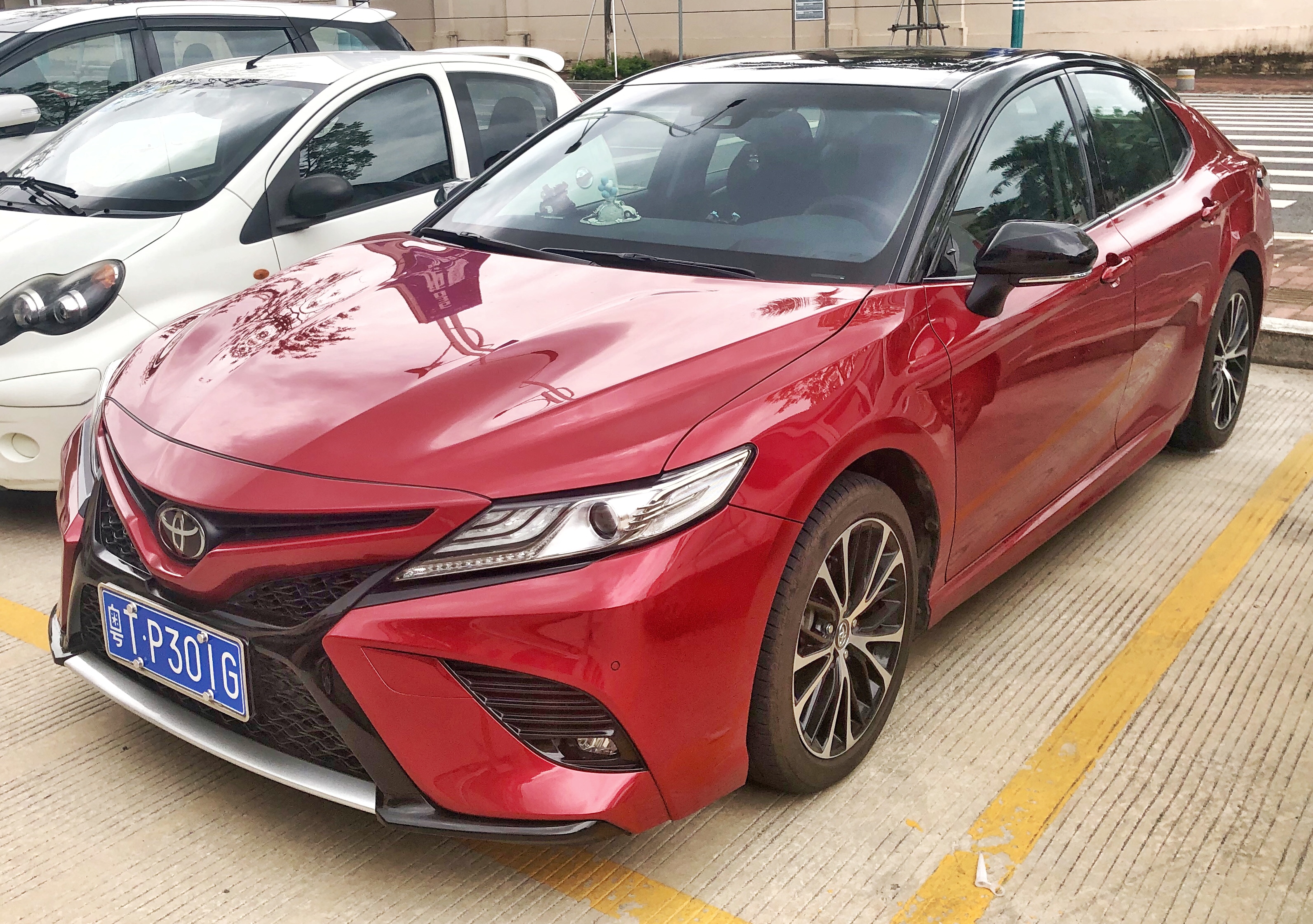
Toyota Camry
"...clude ICE versions of the RAV4 and Avalon and the Camry, built for the Chinese market."
The Toyota Camry is a car type called a mid-size sedan, meant for everyday driving. The podcast mentions it because some Camry versions are built for the Chinese market and can be affected by rules or sales requirements. That’s why it comes up in business and dealership discussions.
The Toyota Camry is a mid-size sedan known for being practical and widely sold in many markets. In the podcast context, it’s mentioned because certain Camry models (along with other Toyotas) are built for the Chinese market and are part of discussions around regulatory/advertising or sales changes. That makes it relevant when talking about how specific model availability and compliance can affect what dealers can sell.

Toyota RAV4
"...Asia. Affected models include ICE versions of the RAV4 and Avalon and the Camry, built for the Chinese m..."
The Toyota RAV4 is a compact SUV, a type of car that’s built for everyday driving with a bit more space. The podcast mentions the RAV4 because some versions made for the Chinese market are connected to rules or changes that affect sales. That’s why it shows up in a dealership-focused conversation.
The Toyota RAV4 is a compact SUV that’s commonly offered with different powertrains, including internal-combustion (ICE) versions. In the podcast context, the RAV4 is mentioned alongside other Toyota models because certain ICE versions built for the Chinese market are part of discussions around regulatory or sales-related changes. That’s why it’s relevant to dealership operations and what inventory can be offered.
Rav4 Hybrid
"in the country. Toyota has launched all new RAV4 hybrid production at its Georgetown Kentucky plant to he..."
The RAV4 is a compact SUV made by Toyota. The podcast mentions it because Toyota started producing the RAV4 hybrid at its plant in Georgetown, Kentucky. That can affect how many hybrids are available for dealers.
The RAV4 is Toyota’s compact SUV line, and the podcast specifically references the hybrid production shift to Toyota’s Georgetown, Kentucky plant. That matters because where a vehicle is built can influence supply, pricing, and how quickly dealers can get inventory. The discussion highlights production planning for the RAV4 hybrid rather than just the vehicle itself.

Lancia Trevi
"...vertising misrepresentations. CarGurus CEO, Jason Trevis, told CDG News that the change is, quote, the nat..."
The Lancia Trevi is a specific car model made by Lancia. The podcast mentions it because there were issues related to how it was described in advertising. That means the discussion is about whether the marketing matched what the car actually is.
The Lancia Trevi is a model from the Lancia lineup that the podcast brings up in the context of advertising misrepresentations and related changes. That kind of topic usually matters because it can involve how a vehicle’s features, specifications, or status are described to customers. It’s discussed as part of a broader story about compliance and how listings or marketing claims are handled.

Nissan Pulsar
"...g, and that has to do with foreign ownership. So, Pulsar wasn't the only brand that had to upgrade their s..."
The Nissan Pulsar is a compact car model made by Nissan. The podcast mentions it because it was part of a situation where certain brands had to make upgrades due to foreign ownership rules. Those upgrades can change how the car is offered or handled in that market.
The Nissan Pulsar is a compact car model that the podcast references in a story about foreign ownership and required upgrades. In that context, the Pulsar is mentioned as one of the brands that had to adjust to meet certain requirements. It’s relevant because those changes can impact how vehicles are marketed, sold, or supported in a specific market.

Polestar 2
"[856.2s] A customer just wrote me a few moments ago and said, [859.1s] I read your quotes in the press yesterday about Polestar news, [862.0s] and I just wanted you to know that you found me the best car I've ever owned with the Polestar 2,"
The Polestar 2 is an electric car made by Polestar. The customer is saying it’s the best car they’ve owned and that they genuinely enjoy driving it every day.
Polestar 2 is Polestar’s mainstream electric sedan, known for its minimalist interior and focus on everyday usability rather than just performance. In this segment, the host highlights it as the best car the customer has ever owned and emphasizes how much they enjoy commuting in it.
product cycle
"But using Polestar here as an example... the product cycle coming out in the next 24 months was amazing."
A “product cycle” is the schedule for when a company releases new cars or updates existing ones. Here, the host is saying Polestar had a strong plan for what was coming next.
A “product cycle” is the timeline of how a manufacturer plans new models, updates, and refreshes over time. The host is arguing that Polestar’s upcoming product timeline over the next 24 months was compelling and helped explain its momentum.
Tesla
"Polestar was a unique brand because, again, everyone's just trying to get a crumb of Tesla... And Tesla is amazing, and they have amazing range, and they have amazing tech."
Tesla is a major electric car company. In this discussion, Tesla represents the standard for EV tech and battery range, and other brands are compared against it.
Tesla is an electric-vehicle brand associated with strong battery range and advanced software/tech. The host frames Tesla as the benchmark that other EV brands try to compete with, then positions Polestar as taking Tesla-like EV fundamentals but focusing more on design and details.
range
"And Tesla is amazing, and they have amazing range, and they have amazing tech."
For electric cars, “range” is how many miles you can drive before the battery runs out. More range usually means fewer charging stops.
In EV discussions, “range” means how far the car can drive on a single battery charge. It’s a key performance metric because it affects real-world usability, especially for longer trips.
driving dynamics
"it took all the tech and range and driving dynamics of an electric vehicle, but really focused on details and design... and also gave you the amazing driving dynamics of an electric vehicle."
“Driving dynamics” is how the car handles and feels when you’re driving—how it steers, grips, and stays balanced. It’s basically the “driving feel” people notice.
“Driving dynamics” refers to how a car behaves and feels while driving—things like steering response, balance, traction, and overall control. The host uses it to describe the EV “feel” Polestar delivers, not just straight-line acceleration or tech features.
BYD
"I have friends all over the world and in markets like South America, Mexico, and Panama, and now in Canada, BYD, the Chinese, they're taking more than their fair share of business."
BYD is a company that makes electric cars (and batteries). The host is saying BYD is growing fast and selling a lot in other countries, not just the U.S.
BYD is a Chinese electric-vehicle and battery manufacturer that the host says is taking a large share of business in multiple markets. The mention is used to support the broader argument that global EV competition is shifting away from the U.S.
warranty
"There are laws and I don't know the laws of every state, but as far as we'll be here to service them, we have to take care of the warranty so long as we agree to it with the manufacturer."
A warranty is the agreement that helps pay for certain repairs for a limited time after you buy or lease the car. The dealership is saying they’ll still handle those covered repairs for Polestar cars they’re responsible for.
In automotive sales and service, a warranty is the manufacturer’s promise to cover certain repairs for a set period or mileage. Here, the dealership says it will perform warranty work on Polestar vehicles as long as the dealership and manufacturer agree to the servicing arrangement.
lease portfolio
"As far as I have a very healthy lease portfolio of cars because we've sold a lot of Polsters and people can't believe it."
A lease portfolio just means the set of cars that are currently being leased. The dealer is saying they have a lot of leased Polestar customers, and those customers will later choose whether to buy the car or return it.
A lease portfolio is the collection of active leased vehicles a dealer or lender manages at a given time. In this segment, the host uses it to explain why they still have many Polestar customers in the pipeline and how end-of-lease decisions (buy vs turn-in) could play out.
value proposition
"and hopefully we'll put together an attractive value proposition that customers will want to continue to buy and finance and lease these vehicles even though we won't be selling new ones."
A value proposition is the “why it’s worth it” for the customer. The speaker is saying they want a clear reason people will buy and finance these used electric cars.
A value proposition is the specific reason customers should choose a product—often framed as benefits versus cost or risk. Here, it’s used in a dealership/EV context to describe why buyers would want to purchase, finance, and lease pre-owned EVs.
Fisker
"Hey, I live in New York City and I don't know if you've driven around New York City, but it's inundated with Fisker and they all went and they went fast."
Fisker is a car company that makes electric vehicles. The speaker is saying you can spot a lot of them around New York City and that they tend to sell quickly.
Fisker is an automaker best known for electric vehicles like the Fisker Ocean. In this segment, the host mentions seeing many Fiskers in New York City, using it as an example of how quickly certain EVs can move through the market.
New York City
"Hey, I live in New York City and I don't know if you've driven around New York City, but it's inundated with Fisker and they all went and they went fast."
The speaker is using New York City as an example of what you can see in everyday driving. They’re saying you notice a lot of a certain EV brand there.
New York City is used here as a real-world observation point for EV adoption and brand visibility. The host claims the streets are “inundated” with Fisker cars, implying strong local demand and fast turnover.
Pulse
"So, you know, this isn't a Fisker, this is a Pulse, I think we have more private drive less Uber, ride share, but hey, at a certain number, a certain value, I think these cars will go and I think they're going to go faster than expected."
“Pulse” sounds like the name of a specific electric car model. The speaker is comparing it to Fisker to make a point about how fast these cars sell.
“Pulse” is referenced as a specific EV being discussed in contrast to Fisker. The context suggests it’s a model name tied to the speaker’s point about how quickly certain EVs move off lots.
supply parts
"…who will end up doing the warranty work? I know there's state requirements and you'll continue to supply parts as long as you're able."
Supplying parts means having replacement pieces available when something breaks or needs repair. If parts aren’t available, fixing cars—especially warranty repairs—becomes harder.
Supplying parts means ensuring replacement components are available for repairs over time. For EVs and newer brands, parts availability can determine whether independent shops or dealers can support warranty and out-of-warranty maintenance.
consideration
"…who will end up doing the warranty work? I know there's state requirements and you'll continue to supply parts as long as you're able. But that's a consideration."
Here, “consideration” means a real concern to plan for. They’re asking what happens years later—who fixes the cars and whether parts and support will still be available.
In this context, “consideration” is used to flag a practical planning issue: whether there will be enough support infrastructure (service capability, warranty coverage, and parts supply) as the vehicles age. It’s less about a general thought and more about operational readiness for long-term ownership.
national security
"…how would you do it to protect the national security? What is said to be the national security threat that's represented by Chinese in the US…"
They’re talking about “national security” as the reason the US might limit certain foreign cars. The idea is that the government would treat it as the most important factor when deciding what’s allowed.
“National security” is being used as the justification for restricting or controlling imports and market access for certain foreign-made vehicles. The host frames it as the top decision category that would drive how (or whether) Chinese brands could be allowed into the US.
subvented
"And if they came to the US so long as it wasn't subvented in a way that undercut the [1692.7s] market and bought the market because we can't compete if it's like that."
“Subvented” means the government is helping pay for something through subsidies. The concern is that those subsidies can let a company sell cars for less than competitors, which makes fair competition harder.
“Subvented” here means subsidized—i.e., supported by government money in a way that can lower prices below what the market would otherwise allow. The hosts argue that subsidized pricing can “undercut the market,” making it hard for dealers and automakers to compete on equal terms.
dealer system
"and obviously I'd love to see them come [1700.2s] through a dealer because I believe in the dealer system, then yeah, I think it would make us all [1713.4s] better."
The “dealer system” is the usual way cars are sold in the US—through local dealerships that sell to customers and support them after the sale. The discussion is about how policy changes could affect whether that system can survive.
The “dealer system” is the traditional US model where manufacturers sell vehicles through franchised dealerships that handle retail sales and customer service. The hosts connect this system to how import rules and pricing restrictions can either strengthen or damage dealer viability.
Charleston, South Africa
"And again, you mentioned China and we [1727.0s] talk about Polestar. Hey, the car's built in Charleston, South Africa."
They mention a specific place where the car is built. The point is that manufacturing location matters when people argue about import rules and competition.
Charleston, South Africa is referenced as the manufacturing location for the Polestar being discussed. The key point for listeners is that the conversation is about where vehicles are built and how that interacts with trade policy and import bans.
capacity
"And that's the [1731.8s] astounding part. It's built here. So Chinese tech built here and this ban is still going into a [1737.7s] fix. And there's much more capacity where it's built, where we could build future products here [1742.4s] if we choose to as well."
“Capacity” means how much a factory can produce. They’re saying there may be more production ability where the cars are made, which could help future cars be built closer to the US.
“Capacity” here means manufacturing ability—how many vehicles a plant or region can produce. The hosts argue that if more capacity exists where cars are built, future products could be produced in the US, affecting supply and competition.
Fixed Ops Friday
"But yeah, the 32 retailers have given their life for Polestar... Damon Egan next up today, Service Director at Sherwood Ford."
Fixed Ops Friday is a recurring podcast segment focused on the service side of dealership operations (fixed operations). This slice is part of that broader discussion with guests and dealership performance topics.
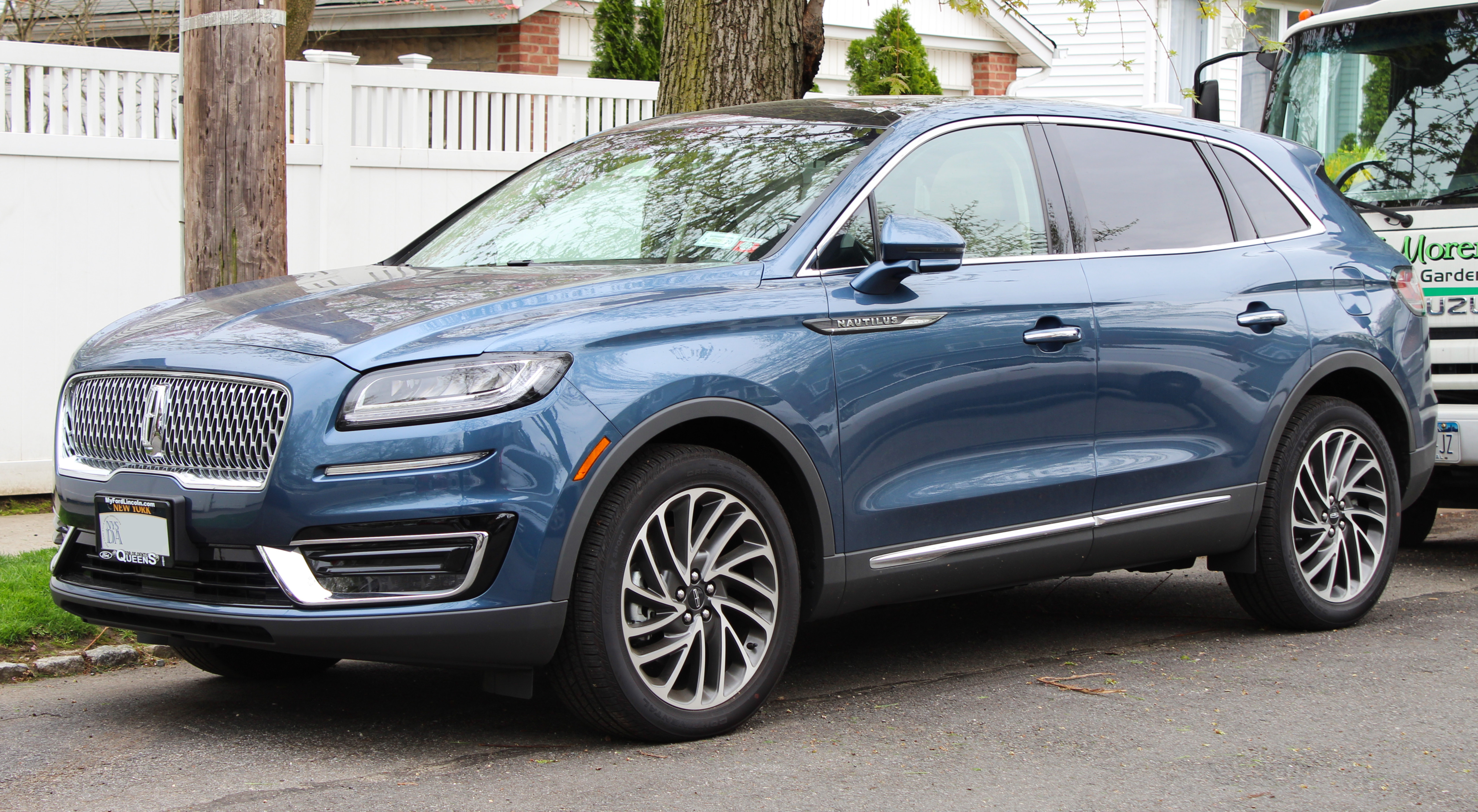
Lincoln Nautilus
"Automotive retired guy also Lincoln Nautilus. He's saying should be banned as well. It'll be interesting to see is it banned. Lincoln Nautilus is manufactured in China imported to the US."
The Lincoln Nautilus is a luxury SUV made by Lincoln. In this segment, they’re talking about it in the context of U.S. import rules and security worries tied to manufacturing location.
The Lincoln Nautilus is a midsize luxury SUV from Lincoln, positioned as a comfort-and-tech oriented alternative to other premium crossovers. Here, it’s brought up because the hosts discuss whether it will face restrictions or import hurdles due to where it’s manufactured and security concerns.
spy software
"And Igor Kay, they claim the software has spy software in it. So be interesting to look at that."
“Spy software” refers to malicious or covert software designed to collect information without the user’s informed consent. In automotive discussions, it often comes up in relation to concerns about connected-car systems, data access, or unauthorized monitoring.
Zurich Advisor IQ
"Zurich Advisor IQ uses actual deal activity and AI powered coaching to help teams uncover performance gaps, coach with more precision and build more consistent results across every rooftop."
Zurich Advisor IQ is a dealer-focused analytics and coaching product from Zurich that uses deal activity data to identify performance gaps. In this segment, it’s described as using AI-powered coaching to help dealership teams improve consistency.
AI powered coaching
"Zurich Advisor IQ uses actual deal activity and AI powered coaching to help teams uncover performance gaps, coach with more precision and build more consistent results across every rooftop."
AI-powered coaching means using artificial intelligence to analyze data and generate targeted guidance for people or teams. In a dealership context, it’s typically used to recommend actions based on observed performance patterns rather than generic advice.
Moneyball
"Alright, so you called your approach Moneyball to get the increase that you've had in fixed ops. Give us two or three specific steps that you've implemented to achieve and realize that."
Moneyball is a sports idea where you use data to make smarter decisions. Here, they’re using that same idea to improve how their service department hires and runs day-to-day work.
“Moneyball” is a strategy borrowed from baseball that uses data and targeted recruiting to outperform bigger-spending competitors. In this context, the host is applying that mindset to fixed-ops staffing and workflow—focusing on the right mix of talent and process rather than only chasing “home run” hires.
playing defense
"So what we've done, essentially, is we've gone from playing defense, which is being very reactive in most fixed ops departments, where we wait until somebody quits or we terminate them before we start looking for new talent."
“Playing defense” here means reacting after something goes wrong. They’re saying they used to wait until people left, instead of planning ahead.
“Playing defense” describes a reactive approach to managing a service department—waiting for problems (like turnover) before acting. The host contrasts this with a proactive hiring and training plan for fixed ops.
on base and singles hitters
"And where we weren't looking for necessarily all the home run hitters. And again, to use a baseball euphemism, we were looking for more on base and singles hitters."
They’re using baseball terms to explain what they look for in employees. Instead of only chasing the biggest stars, they want people who consistently get the work done.
This is a baseball metaphor used to describe hiring for consistent, repeatable productivity rather than only looking for rare “superstar” performers. In service operations, it implies selecting talent that reliably turns work into completed hours.
180 hours
"with with 54 bays and 47 technicians and not having one of them under 180 hours, now in a month."
“180 hours” is a productivity target for mechanics—basically how much work time they’re producing in a month. Higher, consistent hours usually means the shop is running at strong capacity.
“180 hours” refers to a monthly productivity target measured in labor hours for technicians. In dealership fixed ops, keeping technicians above a certain hours threshold helps ensure the shop stays productive and can support higher service volume.
bays
"And that has, you know, with with 54 bays and 47 technicians and not having one of them under 180 hours,"
“Bays” are the garage spots in a service shop where cars are brought in for work. More bays usually means more cars can be serviced at once.
In a dealership service department, “bays” are the physical service stalls where vehicles are parked and worked on. The host uses bay count to frame how staffing and scheduling translate into production volume.
technicians
"with with 54 bays and 47 technicians and not having one of them under 180 hours,"
Technicians are the mechanics who do the repairs and maintenance. Their workload and hours strongly affect how much the service department can produce.
“Technicians” are the shop-floor mechanics who perform diagnostic and repair work in a dealership. In fixed ops, their billed/available hours are a key driver of throughput and revenue.
video MPIs
"Do you have a process that supports that production in terms of parts delivery and setting up the customer in the bay? I assume video MPIs."
A “video MPI” is a checklist inspection where the shop records what they find on the car. It helps the customer understand what needs attention, because they can see it on video.
“Video MPIs” are video Multi-Point Inspections: a technician records a walkthrough of a vehicle’s condition across multiple check points. Dealerships use them to document findings, improve transparency, and help advisors explain recommended work to customers.
AI
"I assume video MPIs. Is there a process in any AI that helps to support that massive increase? We use a ton of AI and a ton of process."
“AI” means computer systems that can help with tasks that normally take people—like organizing information or supporting decisions. They’re saying they use a lot of it to help the service operation run smoothly.
“AI” here refers to using artificial intelligence to support dealership operations—likely in areas like communications, scheduling, parts workflows, or customer-facing processes. The host frames it as part of a broader process-driven system to handle a large production increase.
BTC team
"We run 10 o'clock at night up to 10 o'clock at night. So we've got our evening parts guys pulling parts for the next day. We partnered with Reynolds and Reynolds to incorporate a reload parts delivery robot."
“BTC team” is a dealership internal group that helps coordinate communication and next steps for customers. They’re saying the workflow starts with that team and then moves to the service advisors and mechanics.
“BTC team” is an internal dealership acronym used for a communications/appointment or customer-communication function that supports the service process. In this segment, the host says their process runs from the BTC team to advisors and technicians.
Reynolds and Reynolds
"We run two shifts. So we run 10 o'clock at night up to 10 o'clock at night. So we've got our evening parts guys pulling parts for the next day. We partnered with Reynolds and Reynolds to incorporate a reload parts delivery robot."
Reynolds and Reynolds is a company that provides tools for car dealerships. In this story, they helped set up an automated parts-delivery robot for the shop.
Reynolds and Reynolds is a company known for dealership software and related service-industry tools. Here, they’re mentioned as a partner that helped incorporate a “reload parts delivery robot” into the dealership’s parts workflow.
reload parts delivery robot
"We partnered with Reynolds and Reynolds to incorporate a reload parts delivery robot. We love that robot, by the way, I saw that at NADA."
This is a robot that helps bring car parts to the service area. The goal is to have the right parts ready faster so mechanics can keep working without delays.
A “reload parts delivery robot” is an automated system that retrieves and delivers parts to support the service department’s workflow. The host credits it with improving parts availability for the next day’s work, which helps maintain technician productivity.
NADA
"We love that robot, by the way, I saw that at NADA. It was near the stage where we did the show live and it was very cool."
NADA is a big auto-dealer industry show. The host is saying they saw the robot at that event.
NADA refers to the National Automobile Dealers Association’s annual event, where dealerships and vendors showcase products and technologies. The host says they saw the robot there, linking the tech to real dealership adoption.
RO
"Yeah. $1,100 per RO, 42% year-over-year growth without chasing more RO count."
In service departments, an “RO” is a repair order—basically the paperwork that starts and tracks the work done on a car. When they say “without chasing more RO count,” they mean they’re getting better results without needing more repair orders.
“RO” in a dealership service context typically means repair order, the document that authorizes and tracks work performed on a customer’s vehicle. The host uses it to describe growth “without chasing more RO count,” meaning they’re increasing output without increasing the number of repair orders.
parts pulling
"So robots in the shop, parts support, parts pulling the night before."
“Parts pulling” means the shop gathers the exact parts needed for a job ahead of time. Doing it earlier helps the repair go faster once the car is in the bay.
“Parts pulling” is the process of locating and retrieving the specific parts needed for an upcoming repair order before the vehicle is worked on. The host mentions it alongside robots, implying automation helps get parts ready faster and reduce downtime.
Q3
"And that's where we're going. And that's where we'll be heading into into Q3."
Q3 just means the third quarter of the year—roughly mid-year through early fall. They’re using it like a planning milestone for their operations.
Q3 is shorthand for the third quarter of the year (July–September). The speaker uses it to describe where their operational plan is heading in terms of staffing and vehicle logistics.

Bristol Bullet
"...mean, we're number one in Canada right now with a bullet. So I mean, there's always the room for expansion..."
The Bristol Bullet is a specific, more specialized car model. The podcast brings it up while discussing how the brand is doing in Canada and whether there’s room to grow. That’s mainly about sales and availability rather than everyday driving features.
The Bristol Bullet is a niche, performance-oriented vehicle that the podcast mentions while talking about market position and potential expansion. Because it’s a specialized model, it’s often discussed in terms of limited availability and brand growth rather than mass-market sales. That’s why it appears in a dealership/business conversation about “room for expansion.”
recall
"So for most recalled OEM here in the U.S., by the way, our recall is the same in Canada. So if there's a recall issued in the U.S., does it convert north of the border or is it a different set of parameters for recalls there?"
A recall is when a car problem is serious enough that the maker has to fix it. Dealers then schedule repairs for affected cars, and the episode talks about how that process is similar in the U.S. and Canada.
A recall is when an automaker (or regulator) requires a vehicle to be repaired because of a safety or compliance problem. In the segment, they discuss how recalls work similarly across the U.S. and Canada, and how dealers plan mobile service around them.
mobile service
"And because of the size of the dealership, we're able, I guess, to help out more people. And with mobile service, we're able to get on the road better than AAA and get there faster."
Mobile service means the mechanic comes to you instead of you bringing the car in. They’re saying it helps them get to customers faster than some roadside options.
Mobile service is when a dealership or service provider brings technicians and equipment to the customer’s location instead of requiring the vehicle to be towed or driven in. In this segment, they compare it to AAA and emphasize faster response for recall-related work.
car recon
"use car recon, and customer pay in 2026? How do you think about that balance? That's an absolutely great question."
“Car recon” is dealership reconditioning—basically getting a used car (or trade-in) cleaned up and fixed so it’s ready to sell. Think of it as the shop’s “make it ready” work.
“Car recon” is dealership shorthand for reconditioning work done on vehicles before they’re ready for sale or delivery. It typically includes fixing cosmetic issues, addressing minor mechanical items, and preparing the car to meet the dealer’s resale standards.
customer pay
"use car recon, and customer pay in 2026? How do you think about that balance? That's an absolutely great question."
“Customer pay” means the car owner is paying for the repair or service. It’s different from warranty work, where the manufacturer typically covers it.
Customer pay refers to service work billed directly to the vehicle owner, rather than covered by warranty or paid by the manufacturer. In fixed-ops planning, customer-pay jobs are often used to fill gaps when warranty and recon workloads shift.
dynamic scheduling
"right now is dynamic scheduling. Every dealer that I've talked to has it run the same way as we'll get to recon when we run out of work. We'll get to warranty hopefully at some point."
Dynamic scheduling means the shop changes the plan as the day goes on. If you’re ahead or behind, you open up or shift appointment times so more customers can be worked in.
Dynamic scheduling is a service-department planning approach where appointment slots and work intake are adjusted repeatedly as the shop’s workload changes. Instead of setting a fixed schedule, the system reallocates capacity (often hour by hour) to keep throughput high and reduce bottlenecks between tasks like recon and warranty work.
ROs
"Let's get as many customers in as possible, because that's what the dealer principal or the 20 group says, or the manufacturer says, we need more ROs. Here's the secret sauce."
“ROs” are repair orders. They’re the official work tickets that start a customer’s service job in the dealership system.
“ROs” means repair orders—paperwork that opens a specific service job for a customer’s vehicle. Dealership fixed-ops teams track ROs because they correlate with shop workload, technician utilization, and overall service throughput.
Karma
"Again, we're using Karma for our scheduling system. But we have, we have honed it to such minute degree that we're able to adjust capacities by the hour of what we do."
Karma is the software the dealership uses to plan service appointments. It helps the shop decide when work should be scheduled based on how much capacity they have.
Karma is the scheduling platform the speaker uses for dealership service scheduling. In this context, it’s the software that supports capacity planning and appointment slot management so the shop can adjust intake as work changes.
CSI
"I'm the GM of the ball club. And I have two assistant coaches, one that runs CSI and run one that runs shop production. Everybody's got their spot."
CSI is a score based on customer feedback after their service visit. It’s meant to measure how satisfied people are with the dealership’s work and communication.
CSI stands for Customer Satisfaction Index, a dealership metric based on customer feedback after service. It’s used to measure how well the dealership meets expectations (communication, timeliness, and overall experience), and it often drives process changes in the service department.
shop production
"And I have two assistant coaches, one that runs CSI and run one that runs shop production. Everybody's got their spot."
“Shop production” is how the service department runs day-to-day to get cars fixed and completed. It’s about keeping the work moving efficiently.
“Shop production” refers to managing the service department’s output—how work flows through technicians and bays to complete jobs efficiently. It’s essentially the operational side of fixed-ops scheduling, focused on throughput rather than customer-feedback metrics.
customer experience
"such that at the point where the recall is less and or we have less use car recon to do that customer isn't there anymore. And we need that customer for use car trade ins..."
Customer experience is how customers feel about the whole process at the dealership. It includes things like how long they wait and how smoothly everything goes.
Customer experience (in a dealership context) is how the service process feels to the customer—wait times, communication, convenience, and overall satisfaction. The speaker argues that if recon and recalls take priority, the dealership can accidentally make the customer experience worse.
use car trade ins
"and or we have less use car recon to do that customer isn't there anymore. And we need that customer for use car trade ins for that next purchase."
A trade-in is when you bring your current car to the dealer and use it as part of the deal to buy another car. The dealer then resells that traded-in car after it’s reconditioned.
A used-car trade-in is when a customer turns in their current vehicle as part of the payment for a new or used purchase. Dealerships rely on trade-ins to supply inventory, so preserving the customer base matters when service capacity is stretched by recalls and reconditioning.

Ford Fusion
"Dalen Progress says, Damon, tell Jim Farley to bring back my favorite sedan, the Ford Fusion."
The Ford Fusion is a regular, everyday Ford sedan that many people liked. Here it’s brought up because a listener wants that kind of car back, which connects to how customers choose what to trade in.
The Ford Fusion is a mid-size sedan that became popular as a mainstream family car with multiple powertrain options over its production run. In this segment it’s mentioned as a customer favorite, highlighting how specific nameplates can influence trade-in and loyalty behavior.

Jeep Recon
"...ada from Ford is not the same as it is in the US. Recon Average Nationally is now over $1,800 per unit ba..."
The Jeep Recon is a Jeep vehicle model. The podcast mentions it in connection with pricing, including how the average cost can be different depending on where you are. That’s important for understanding what buyers might actually pay in a specific market.
The Jeep Recon is a Jeep model mentioned in the podcast alongside pricing and market differences. The context suggests the podcast is comparing average pricing “nationally” and noting that pricing/availability can differ from what’s seen in other regions. That makes it relevant for dealership discussions about how the same model can perform differently depending on the market.
Hyundai
"Lewis Malspin, Parts Director of Premier Hyundai in Louisiana. Lewis, welcome to the show."
Hyundai is a car brand. In this episode, it matters because the parts manager runs parts operations for Hyundai as one of his dealership brands.
Hyundai is a major automaker whose dealership service and parts operations have their own model mix, warranty/recall workflows, and reconditioning needs. The speaker’s role is specifically split across Hyundai and another OEM, so Hyundai is part of the operational context.
Stellantis
"what does a typical day look like when you're managing that kind of split between Hyundai and Stellantis?"
Stellantis is a big car company that owns several brands. Here it’s mentioned because the parts director has to manage parts for those brands too.
Stellantis is the automaker company formed by the merger of Fiat Chrysler Automobiles and PSA Group. In dealership operations, it affects which vehicle brands and parts catalogs the service and parts teams must support.
Frozen assets
"Frozen assets is the worst thing that can hurt your operation. So what I do is when I come into a store that has a lot of obsolescence..."
Frozen assets means your money is stuck in stuff you can’t sell. If parts don’t move, you can’t use that money elsewhere, and you may eventually have to take a loss.
“Frozen assets” is a dealership operations term for money tied up in inventory that isn’t moving. When parts sit unsold, that capital can’t be used for other purchases or sales, and it increases the risk of write-offs.
obsolescence
"Frozen assets is the worst thing that can hurt your operation. So what I do is when I come into a store that has a lot of obsolescence, I got to print out my list..."
Obsolescence here means parts that don’t get sold anymore. If you keep them on the shelf too long, they become hard to get rid of and you may have to lose money on them.
In a dealership parts context, obsolescence means parts that stop being saleable because demand has dried up or the parts are no longer needed. It ties directly to cash flow because unsold inventory can’t be easily converted back into money.
write off
"Because at the end of the day, if I don't do that, it's going to be a tremendous right off for the company. We have to lose a lot of money..."
A write-off is when a business admits it won’t get its money back on inventory. For parts, that usually happens when the parts sit too long and can’t be sold.
A “write-off” is an accounting loss where the company reduces the value of inventory it no longer expects to sell. In parts departments, aging inventory can force write-offs when it becomes too obsolete to move.
inventory
"And we talking about thousands and thousands of dollars, even millions up to millions. Because when I look at my inventory, I don't just see parts on the shelf. I see I see money."
Inventory is the parts sitting in the warehouse or on shelves. If you have too much that doesn’t sell, it turns into money you can’t use.
Here, “inventory” refers to the dealership’s stock of parts on hand. The host emphasizes that inventory represents tied-up money, so managing it (especially aging stock) is crucial to avoiding losses.
special order parts
"I probably have little to no obsolescence. I can honestly say when it comes to special order parts, if the customer for whatever reason doesn't return..."
Special order parts are made or ordered just for one customer. If that customer doesn’t end up needing them, the dealer can be left with parts that are difficult to sell to someone else.
Special order parts are components ordered specifically for a customer rather than stocked as regular inventory. They’re riskier for obsolescence because if the customer doesn’t take delivery or the order doesn’t complete, the dealer may be stuck with parts that are hard to resell.
restocking fee
"I have a 45 day window to return those parts. There is a restocking fee. And I rather I rather pay the 15% than having to write off 100%."
A restocking fee is what you get charged when you send parts back. It’s usually a percentage, and it affects whether returning the parts saves money versus eating the full loss.
A restocking fee is a charge a parts supplier or manufacturer applies when a dealer returns parts. It’s often a percentage of the part cost, and it influences whether returning parts is cheaper than keeping them until they become a full write-off.
Request an Explanation
Heard something you'd like explained? We'll add it to this episode.
Sign in to request explanations for terms you heard.
Want to learn more?
Browse our glossary for plain-English explanations of automotive terms, jargon, and concepts.
Help improve this episode
See something that's not quite right? Our annotations are AI-generated and can sometimes miss the mark. Click the flag icon on any annotation to suggest a correction.