“FNI stack” is a dealership’s finance-and-add-ons game plan—things like warranties and other extras sold with the car. A review is basically checking whether the pricing and fees are clear and fair, and whether the store is doing it the right way.
An exit penalty is a fee you might have to pay if you end a financing or add-on agreement early. It matters because it can make the deal more expensive than you expected.
Term
proclaimed charges
“Proclaimed charges” are fees the dealership says are part of the deal. The discussion here is about making sure buyers understand them clearly and aren’t surprised later.
Hidden costs are additional charges that aren’t obvious at first glance—often buried in paperwork, add-on selections, or finance/insurance terms. In dealership discussions, they usually refer to fees that increase the total out-the-door cost beyond what the buyer expected.
Santander is a financial company. In this segment, they’re sharing a study about how car buyers are thinking about affordability and financing.
Concept
used vehicle vs stripped down new one
They’re saying many shoppers can’t justify the price of a new car, so they’re choosing used cars that already have more features. Instead of a basic new model, people want more stuff for the money.
Some shoppers are using AI tools to look up cars before they ever go to a dealership. That can make them more prepared and harder to upsell with vague pricing.
Financing rates are the interest rates on the car loan. The trend described is that buyers are coming in already knowing what rate they want, so dealers have to compete with that number.
They’re talking about a rule-following problem: brokers might advertise cars cheaper than the automaker allows, but dealers get punished more than brokers do. The hosts argue the rules should apply equally to brokers.
MAP is the lowest price an automaker allows dealers to advertise publicly. If someone advertises below that number, the dealer can lose money incentives or other benefits.
Co-op dollars are marketing funds an OEM shares with dealers to help pay for approved advertising. When dealers violate OEM rules (like MAP), those co-op contributions can be reduced or removed.
Wholesale auction sales are when cars are sold at auction to dealers and other buyers, not to the public. If auction sales are rising, it often means dealers are moving more inventory.
Off-rental units are cars that come out of rental fleets when the rental period is over. They’re then sold—often through auctions—and they can affect what kinds of cars show up in the market.
Term
commercial consignor volumes
Commercial consignor volumes means how many cars businesses are sending to auction. It helps show where the auction inventory is coming from.
In the automotive context, brokering is arranging vehicle sales between parties—often without the broker being the actual dealer of record. That matters because if the transaction is brokered through dealers, the OEM’s ability to control or influence the deal can be limited.
The Mercedes-Benz AMG GT is a sports car made by Mercedes-AMG for performance driving. The podcast mentions it in connection with Mercedes-AMG’s branding and leadership/service topics. It’s brought up because it’s a special, higher-performance model compared with everyday cars.
The Mercedes-Benz S-Class is Mercedes’ top luxury car. In this conversation, the host connects it to a specific “chassis” that was introduced around 1998.
Owner retention refers to keeping dealership owners (or franchise owners) from leaving after a corporate change like an acquisition. In dealership operations, retention is often tied to incentives, support, and how stable the business feels to the owner.
A “volume brand” is a car brand that sells a lot of cars. Their dealerships often run service with more standardized, cost-controlled setups than luxury brands.
Here, “customer experience” means how the dealership treats you from start to finish—how easy it is to get help and how well they communicate. They’re saying luxury brands may support that more than some mainstream brands.
In this conversation, “amenities” means the extra comforts a dealership offers while you wait or get service. They’re saying luxury brands need more of that to meet expectations.
Concept
entry level for the market
They mean the cheaper, more affordable part of the market. The idea is Mercedes-Benz tried to compete with smaller, lower-cost cars to bring in buyers who were new to the brand.
Video MPI is a “check everything” inspection that gets recorded on video. Instead of just telling you what’s wrong, the shop shows you the issues so you can decide on repairs more confidently.
A spiff payout is a bonus the dealership pays for hitting a specific sales goal. It’s meant to motivate advisors to do the extra steps that help the store make money.
Brand
Collins program
The Collins program sounds like the store’s internal bonus/incentive plan. It determines when advisors can earn spiff money.
Scoreboarding means tracking people’s performance with visible numbers or targets. The idea is to motivate the team by showing how they’re doing versus the goal.
The “90% or greater” threshold is a qualification rule tied to incentives—here, it determines whether advisors earn spiff payouts. It implies advisors must meet a minimum performance rate (likely around presenting/selling actions) to be eligible for the bonus.
A repair order is the paperwork that starts a service job. It lists what needs to be fixed and helps the shop track and bill the work.
Term
my karma
“My karma” is likely the app or system advisors use to send the video. The point is that some advisors don’t immediately connect the video step to the right place in the system.
“Shop efficiency” means how smoothly and quickly the service department can get work done. It depends on how the team is organized and how information (like inspection results) moves through the process.
A service advisor is the person at the dealership who talks to you about your car’s service. They take the technician’s findings and explain what should be done next.
CDK Global makes software that car dealerships use to run day-to-day operations. Here, it’s mentioned because it connects to how dealerships handle service and marketing workflows.
An affordability tracker is a way to watch whether cars are getting too expensive for typical buyers. Here, they’re using it to see how prices are changing on the most-sold vehicles.
A “K-shaped” economy means the economy isn’t moving in one direction for everyone. Some people or businesses do better, while others get squeezed—so car buying and pricing can split too.
The Chevrolet Tracker is a smaller SUV made for everyday driving. The podcast is mentioning it in the context of affordability and what kinds of vehicles sell well. It’s included because it’s the kind of car people look at when they want something reasonably priced.
The Toyota RAV4 is a very popular compact SUV. Here, they’re saying it’s one of the main reasons average prices are moving, because the lineup is shifting toward hybrid-only versions.
“Mass market vehicles” refers to high-volume, mainstream models that sell in large numbers to everyday buyers. Comparing them to what they cost 20 years ago helps illustrate whether affordability pressure is broad-based or concentrated in specific segments.
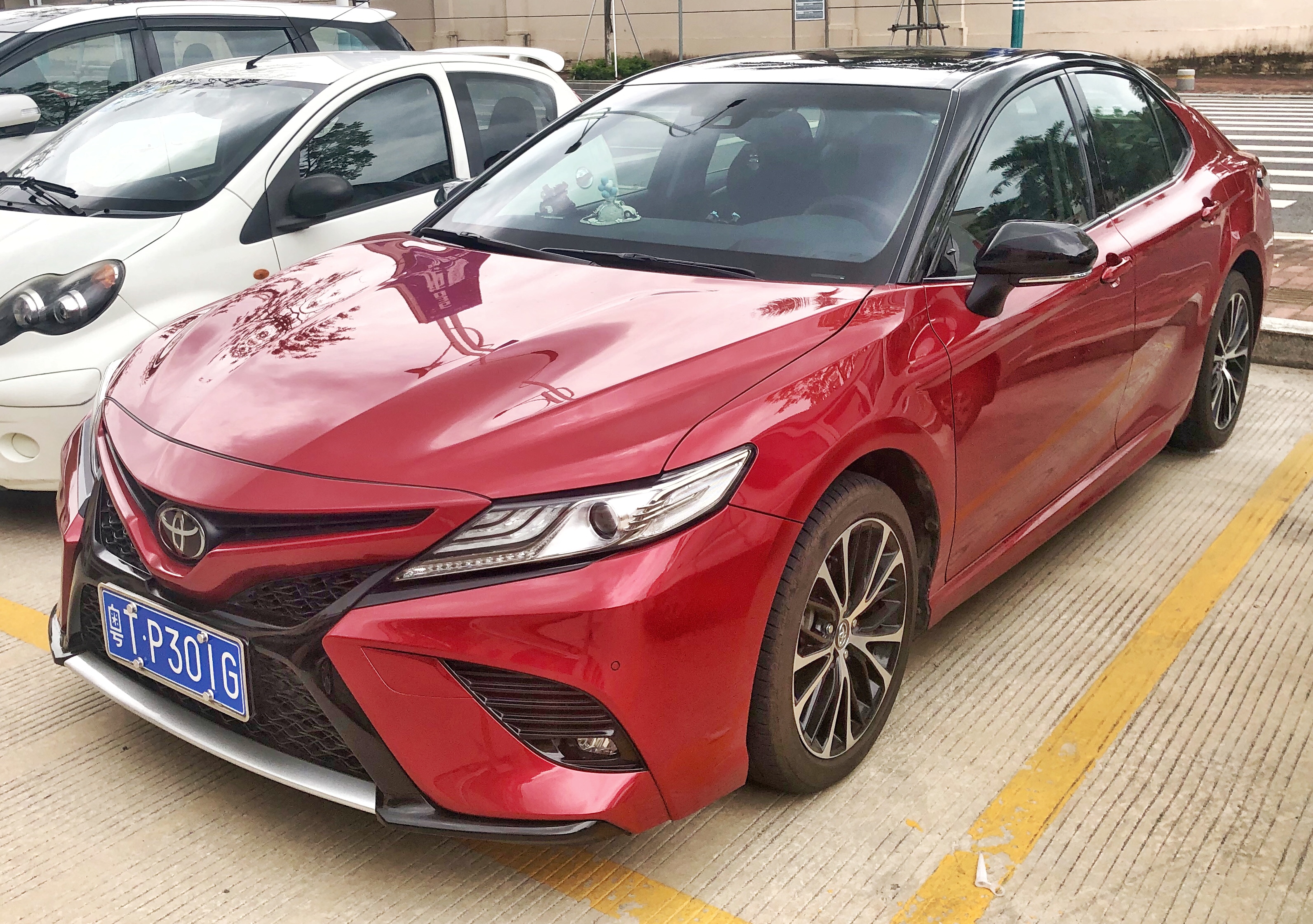
The Toyota Camry is a common, practical sedan that many people buy for daily driving. The podcast is pointing out that compared to about 20 years ago, today’s versions and pricing/availability can be different. It’s mentioned because it’s one of the most widely recognized cars in its category.
The Porsche 911 is a sports car made by Porsche that’s known for its performance and unique look. The podcast is saying that 911 prices have increased. It’s brought up because it’s a popular car where market pricing changes are easy to see.
The Mercedes-Benz G-Class is a luxury SUV that’s designed to handle rough roads while still feeling upscale. The podcast says its price has increased more than inflation. It’s mentioned because it’s one of the luxury models people are paying more for.
Concept
base model tech content
This is about what you actually get in the cheapest version of a car. The hosts’ point is that even the “base” trims often include modern tech, so dealers can market them as more than just a stripped-down option.
The Honda Civic is a popular compact car that many people buy new or used. The point here is that even the basic Civic comes with modern features, not just bare-bones equipment.
Apple CarPlay lets you connect your iPhone to the car so you can use apps on the car’s screen. It’s a big reason people feel today’s cars are more “tech-forward,” even in lower-priced trims.
The infotainment screen is the main touchscreen in the dashboard. The host is saying that the screens and tech features are what grab buyers’ attention today.
CPI is a government statistic that tracks how much prices are rising in general. They’re using it as a clue to confirm whether car pricing trends make sense compared to the overall economy.
This is a way to measure what people really pay for cars after discounts and incentives. It helps compare pricing trends more fairly than just looking at the advertised price.
The Ford F-150 is a very popular big pickup truck. The discussion here is about its prices going up, which can change how dealers price cars and how quickly they sell them.
“Hemi” is an engine design name that’s often used for powerful V8 engines. Here, they’re saying Ram’s prices are up partly because it has a newer Hemi engine option.
Ram is a brand of full-size pickup trucks. The podcast says Ram truck prices have increased, and it links that to a newer update. It’s mentioned because changes like that can affect how much trucks cost and how people buy them.
Service consultants are the customer-facing advisors in a dealership’s service department. They translate diagnostic findings into recommended work, coordinate approvals, and manage the service process—so their efficiency directly impacts throughput and customer experience.
“Reynolds” here appears to be the dealer software platform the service team uses to centralize workflows. The speaker describes integrating inspections, payments, messaging, and live equipment feeds so service consultants can work from one screen.
Alignment machines are tools shops use to check and adjust how the wheels point. Getting it right helps the car drive straight and can prevent uneven tire wear.
A brake lathe is a shop machine that “shaves” the brake rotor surface to make it smooth again. That helps the brake pads contact evenly for better braking.
This is the actual hourly price the shop effectively gets for labor work, not just the posted rate. Dealers watch it to make sure they’re not “selling more” while quietly earning less per hour.
This is a profitability metric. It looks at whether the shop is generating enough billable work to cover its “fixed” overhead costs, like salaries and building expenses.
Term
sublet markup
“Sublet markup” means the dealer sends some work out to another company and then charges the customer a higher amount for that outsourced job. It’s basically the dealer’s added profit on pass-through work.
Term
service packing
“Service packing” here means grouping or arranging service work in a way that makes the service department look busier or more profitable than it would be otherwise. They’re saying they don’t do that kind of number-inflating strategy.
A “North Star metric” is the main score a company focuses on to decide if it’s winning. They’re saying they have one top number they steer everything toward.
“RO count” is the number of repair jobs the service department creates/opens. More repair orders generally means the shop is busier and selling more labor and parts.
A “VIN” is the car’s unique ID number. “Unique VINs” here means they’re trying to bring in more different vehicles to the dealer’s service customer base, not just more visits from the same cars.
Spiffy is a software service that helps set up car service appointments. The hosts say it helps make mobile service easier by coordinating scheduling and logistics so customers can get service at home.
Mobile service means car service that happens outside the traditional shop. Instead of you going to the dealership, the service is coordinated to come to you.
“Driveway-to-driveway” means the car service comes to you. Instead of driving to a shop, the process is set up so the car is handled at your home and you don’t have to manage the trip.
Blink is referenced as an existing online scheduling provider the speakers used before Spiffy. The segment claims Blink improved online scheduling and that combining Blink and Spiffy produced a large increase in online appointments.
APIs are the “connections” between different software systems. The point is that they help scheduling and service tools talk to each other so customers have a smoother experience.
Apple Tree is the name of the organization Richard Lupo works for. In this part of the show, it’s mainly used to introduce his background.
Term
express
“Express” is the fast lane for common service work that doesn’t take long. It’s designed to get cars in and out quickly, so the shop can handle more vehicles each day.
Metaglasses are wearable glasses that help a technician record videos hands-free. Instead of holding a phone, they can show customers what they’re seeing while working on the car.
POV videos are recorded from the technician’s perspective. That way, the customer can see the exact problem areas instead of relying only on descriptions.
A Fixed Ops director is the person responsible for the dealership’s service and parts side. They help make sure the shop runs smoothly and customers get taken care of.
ELR is a number dealers track to judge how well their service department is doing. The speaker is basically saying it’s not helping because most people don’t really understand what it means.
A master technician is an expert mechanic. The point here is that real mastery comes from understanding what’s happening in the car, not just doing the steps.
LIVE
Hey everybody, welcome back to another episode of The Daily Dealer Live.
I'm your host, Sam Dark, and thanks for choosing to be here on this Friday, May 15th.
We have got a stacked lineup today post a so-new conference.
And by the way, I'm broadcasting live from an offsite studio.
I'm actually told Drake, Beyonce, a bunch of famous people have recorded here.
What is that bode for the future of Daily Dealer Live?
I don't know. We'll find out later today.
But for today, no Beyonce, no Drake.
We've got Scott Morrison, who's a fixed obstrector at Mercedes-Benz of Hampton,
on running a small team lateral sport model with screen on with daily scoreboarding.
And what happens when you put the numbers up where everyone can see them?
Plus, we've got Dave Thomas, who by the way, Beyonce has got nothing on Dave,
from CDK Global, their April affordability tracker just called the CPI read before it printed.
We'll get into what the data actually says and the 90% satisfaction gap fueling the industry's
reputation problem. And then back by popular demand, Richard Lupo at Appletree, Honda and Acura,
who I believe also is a so-to-con, with an update on his Reynolds
tech stack rollout advisor retraining and where fixed absorption is landing.
Plus, we close up with a roundtable Lupo and Morrison on pay plans,
mobile service and AI in the service lane.
Plus, we've got the headlines you need as a reminder.
We're streaming across all CDG social media platforms, post your comments in,
we'll bring them into today's show you every single week.
Monday, Wednesday, Friday, we're here to make this show better with your comments.
Eager K comes in early saying happy Friday, Sam and community.
So let's get into today's auto industry headlines.
Quick and exciting note before we get into the news,
CDG is launching a new free workshop series for dealers.
And the first one, it's this Tuesday, May 19th, beginning 1pm Eastern.
Jeremy Hale from Engine 1 Dealer Consultants will walk through a full FNI stack review,
specifically looking at fee structures, exit penalties, proclaimed charges,
and hidden costs many stores don't catch until it's too late.
Sessions are live free and include Q&A.
You can register at cdgcircles.com forward slash workshops.
Again, cdgcircles.com forward slash workshops.
This is the first of many.
So check it out as car dealership guy seeks to provide high value content in multiple different forms.
But today we're in this forum and next up Santander's Q1 Paths to Prosperity Study is out.
And the affordability story continues to define how buyers are approaching the market.
81% of recent car shoppers considered a used vehicle.
69% said they felt priced out of the new market.
And 76% they'd rather buy a used vehicle with more features than a stripped down new one.
Nearly half of respondents delayed a purchase due to cost.
And yet 90% of those who did buy said they were satisfied with the decision.
The other notable finding is how buyers are showing up.
52% are now using AI to research vehicles before visiting a dealership.
And that research increasingly includes financing rates.
Santander's auto lending president even told cdg that buyers aren't just asking dealers
what financing is available anymore.
They're walking in with a specific rate in mind and expecting dealers to match or beat it.
Not necessarily a new story, but it definitely is a significant and emerging trend.
Next up today, also worth flagging, cdg published an op-ed this week from Andrew Wright,
who's been on this show many times talking about many different topics.
We always enjoy having him on.
Andy, as you know, is managing partner of Venart dealerships
who raises a point of compliance concern about how brokers interact with OEM map pricing policies.
For those unfamiliar, MAP, M-A-A-P, that's minimum accepted advertising price,
governs what franchise dealers can advertise publicly.
With penalties, including loss of co-op dollars or performance bonuses,
sometimes worth hundreds of thousands of dollars per store.
Wright's argument is that brokers are effectively creating a loophole,
advertising vehicles below MAP on their own websites and platforms without facing the
same scrutiny that dealers would if they did the same on cars.com or their own site.
Andy Wright proposes a fix.
What should they do?
OEMs should require brokers to register, mandate disclosure when a dealer is working with one,
and hold broker advertising to the same MAP standards as dealer advertising.
It's a dealer submitted opinion piece, so the views are Andy's.
But given how active the broker conversation has been lately,
it's a perspective very much worth reading.
And it's a perspective that we've brought forth many times on this show here
as part of Daily Dealer Live.
Also, up this week, wholesale auction sales hit a new record in April,
using rising 2% month over month after a already strong March.
Off-rental units are leading the charge with commercial consignor volumes of 20% year over year.
The mix shift is notable.
Commercial consignors now hold 52% of wholesale share up from 47% a year ago,
while dealer shelf share fell from 53% to 48%.
Sales of one-year-old vehicles surged 70% year over year,
largely driven by off-rental supply and three-year-old vehicle sales jumped 30%.
Compact and mid-sized crossovers posted the strongest segment gains,
while luxury cars and sedans, well, they declined.
For dealers, the auction lanes are offering more inventory,
especially in high-demand SUV segments.
But as we've covered, the right sourcing strategy still matters
as competition in the lane intensifies.
And in many cases, that doesn't include the auction at all from what we're hearing.
And that, folks, is a wrap on today's auto industry headlines.
And welcome to Fixed Ops Friday, everybody.
Welcome back, Eager, by the way, to the chat.
Eager says Mercedes-Benz Group is unfortunately broke.
Mercedes just sold massive amounts of Mercedes-owned stores
in Germany to private investors from Canada,
and two factories in Germany pivoting into weapons making.
You know, that's an interesting trend in one of the big debates and arguments
for returning a lot of the manufacturing back to the US.
Lauren Klein comes in, says brokers are the rule breakers,
and are just going to find another rule breaker to do business with.
And by the way, at Asoducon had a great conversation with
Michael Wood, a group at the table that night about brokering.
And Michael pointed out, look, at the end of the day,
it's tough for some of these OEMs to put real teeth in,
because a lot of this brokering gets done through dealers.
So unless the dealer declines to transact the deal,
it's tough often for the OEMs to find it.
And I get that point.
Eager K says, just got back from auction,
Northeast Mannheim, and watch today.
2023 RX350s sell for as much as it was selling
when it was new, crazy.
And Lauren Klein says, it's why they're brokers and not legitimate dealers.
First up today is Fixed Ops Friday.
Welcome to the show, Scott Morrison,
Fixed Ops director at Mercedes-Benz of Hampton.
Scott, welcome to the show.
Hi, Sam. Thanks for the invite.
Thanks for being here.
Hey, before we dive into it, for the audience that doesn't know you,
share who you are, what you do, how long you've been there, Scott.
Been here about a year and a half.
Been with Mercedes-Benz as a franchise.
Fixed Ops the entire time for 36 years, about 40 years in the business.
Wow.
Yeah, connected to the brand.
It's the best brand to be connected to, in my opinion.
And the best or nothing is a focus we connect to each and every day.
And it's a privilege to be able to lead Mercedes-Benz teams.
Wait, Scott, so are you saying you've been in Mercedes-Benz in service for almost 40 years?
I started October in 1986 in Maslin, Ohio.
Tell us, in a few sentences, what has been some of the biggest evolution of Mercedes-Benz
as a brand over those many decades?
Oh, hey, like with any brand, they've been through a lot of good times.
And you've been into some eras where it's like, oh, we're going to make it through this.
Where does now rank in that?
Oh, shoot.
I can go back to when the 140 chassis came out in 1998.
Mercedes-Benz ended up, that was our S-Class.
That was the new chassis.
It was coming in off of the backside of Lexus and Infiniti and Acura rolling out and really
kicking them right in the teeth right around 1989.
Where does now rank with everywhere else?
Is it better than?
Is it average?
Where does today rank at Mercedes-Benz in the service world?
Oh, I think it's great.
I think it's a line and I'm still super pro Mercedes-Benz.
And I've been in regional roles where I've had 1920 stores.
I'm at that stage of my career where the organization had purchased this one.
It was struggling after the acquisition with owner retention, et cetera, et cetera.
And me, I like broke stuff.
I wanted to dive in and to see what magic we could make of it.
We went from there with it.
What's the biggest difference between the service experience at a Mercedes-Benz store
and a volume brand in 2026?
Well, we have the resources at our fingertips in order to provide
the ultimate customer experience.
You get some of your mainstream lines, your high volume lines,
and they want that level of service provided, but the resources aren't provided
from them who's wanting it.
They put that all on the dealer's shoulders and it's difficult.
But when you're dealing with luxury levels, you have to have the amenities to provide.
So you're getting a lot of attention online, Scott, as we're having this great conversation.
So Angelica, or Lauren Klein, I'm sorry, Angelica's price says happy fix stops Friday,
but Lauren Klein comes in and says 1986, EEC.
So that must not have truly been the best year.
Eager case says my first job with Mercedes-Benz was back in 97 as a salesperson.
Well, in 1986.
1986 was not the highlight year, it looks.
Well, that was the baby Benz, if you remember that car.
That's when they came out to compete at an entry level for the market.
And it didn't start too well for the first couple of years, let's say.
Yeah.
All right.
So you talk about small team lateral support.
What does that actually look like on the floor day to day?
And who's supporting who and how does that get defined?
What is small team lateral support?
Anything and everything I look after and I do, I try and simplify it and try and narrow it down.
And small team lateral support.
And hey, in every situation, small team lateral support might not be the situation.
For this particular store, as an example, small team lateral support is narrowing it down to
individual teams.
So we have an advisor with three technicians assigned to them.
And they primarily run their own little business.
But then they go support with another advisor and their three, et cetera, et cetera.
We still operate across all of them.
If there's a need to dispatch based off of technician skill levels, customer need, whatever,
we can dispatch across those.
But it really creates that small business environment.
We compete against each other.
We shop load.
We drive the performance.
But everybody's on the same common vision and same expectations.
So the technicians are broken up by three led by a service advisor and they act as a team in that.
And how many technicians do you have total?
We have 18.
OK.
And how long have you been running this small team lateral support method?
I've been running it for years, probably 25, 30 years.
Some environments it's good for.
Some it isn't.
There's electronic dispatching.
There's shop form and centralized dispatching.
This situation, this was a low proficiency shop and low vision, we'll call it.
And we had to get people dialed in and working together and moving.
And we've doubled the proficiency as a result of the one.
Oh, wow.
OK.
So the market pressure that caused you to do this small team lateral support was proficiency.
It wasn't quite where you wanted it to be.
No, not at all.
Underperforming when I walked in, running at about 50% of where they should be technically.
You would think by looking at the statements that we doubled the staff in order to get where we're at.
But we're running off the same amount of people.
A few changes on my part, you've got to get with the program.
So talk to us about, you've talked in your intake form, you shared with us that you've
got this daily scoreboarding system.
We're familiar with that with Toley, who's on the show often.
What metrics are you measuring on this board and who owns the metrics?
Everybody likes to measure outcomes.
And what you really got to measure is the task and activities that create the outcomes on a
daily basis.
For example, you cannot get CSI.
You can't get a strong effective labor rate.
You can't get hours per RO if you don't have appointments.
So we measure and scoreboard the appointments basically throughout the day and on a daily
basis and we have a pull ahead.
Hey, if we're not deep on the schedule, if today isn't set up for success and we're looking two
and three days out, if it's not set up for success, we're going to pull appointments ahead.
I'm going to call and I'm going to go, hey, Sam, great news.
I got you scheduled out on the 10th.
I can bring you in on the fifth.
I've got an opening and we load our day up to set ourselves up for that.
So many wait for appointments to fall from the sky and that doesn't happen.
So where is the scoreboard?
Who updates it?
How's it updated?
Is there an industry partner that provides the technology to drive the scoreboard?
Well, we pull our data from CDK.
We've got my karma for some of our data.
And I'm really the air traffic control behind it on key things that I want to drive.
We've got a chat channel that we've set up through the store.
And we've got individual ones like we've got one for fixed ops that covers our parts and
service department covers our team BDC all at one.
Then we got a technician one.
We got a service advisor one independent on what the driver is that we're focusing on.
Technicians have their proficiency in front of them first thing in the morning.
So they know where they're at.
We know where our appointments are at.
We know where our open RO's counts at.
What our opportunity is, you know, because it's that saying that which is measured is
improved, that which is measured and shared is improved exponentially.
That's what we do.
So who you mentioned, you mentioned these chat groups.
So it's interesting.
I was at the Sosoducon.
Brian Benstock was there.
We had a dinner with him the night before.
He has a chat group with his GMs.
He uses it at six o'clock in the morning to say let's go to work out.
He encourages that behavior even early.
He uses, I think they use.
They use the same thing that the cardio leadership guy uses in circles.
So Hannah or somebody will text me.
I just went from my mind for whatever reason.
So at five o'clock in the morning at a Sosoducon, I get a text from Brian Benstock saying it's
time to go.
Let's go.
And there is something cool like those messaging groups get through all the other
noise, email, and even text and stuff.
So is there a platform that you're using to create those?
We're using Google.
What is it?
The Gmail, the Google chat.
OK.
Google.
Yeah, yeah.
Super easy to set them up.
And bam, you're absolutely right.
It can set the tone to whatever they want.
They get the alert and leaves the window up until they address it.
Our receptionist goes back and forth.
And it's super effective.
Yeah.
All right.
I got to ask you about this.
Not in your intake, but you mentioned, I think, my karma.
Video MPI, that's something we in our group are really working on.
We're not to 100%.
I even admitted on the stage yesterday it's frustrating not to be at 100% when there's
such a correlation in video MPI quality video MPI with customer pay.
And the better you do, it just strengthens the relationship, the retention.
I believe that.
We've got a contest going.
We're going to give away two NASCAR VIP pit passes in our own group.
What is your video MPI strategy?
And how's it going?
I know Ben's puts a lot of focus on it.
Listen to these stats, Sam.
If we don't provide a video MPI, the average are those $458.
If we do the video, it's $1,185.
No.
Get out of here.
Really?
That's my stat.
I posted on my office.
How do you explain that difference?
That's a significant difference.
Well, it's transparent with transparency with the client.
They bring the car here because of the technician.
Their relationship maybe with the advisor.
But ultimately, what are they bringing their car in for?
They're bringing it in to be repaired and it's the person that's with that car.
So it's relationship building, it's transparency, it's ultimate trust.
And I've got gals, for example, on the drive that they'll tell you that they're technical
background.
And I bet guys that they're technical background.
I shouldn't even say that.
But isn't that strong to convey that message.
But when it's coming from the technician and they're going to walk around,
it's through the roof.
We're running our target minimum objective is 90%.
And if they're not there, then they're ineligible for our SPF board that we do.
That's awesome.
That's awesome.
So it's a monetary penalty if they do not hit their objective.
So I want to clarify one thing.
Ziggler, we have 41 stores.
Ben's, I think they're at 100 or better.
But there are stores among the 41 and we're not there yet and we're working towards it.
I think transparency, a little bit of vulnerability in the path,
is it helps us all get better and move towards it.
One of our OEMs reached out to me, not Ben's.
It was another one and said, one of the fixed ops guys who services multiple dealer groups
across the country for the OEM said, look, one of our biggest challenges isn't to get the text
to take the video.
It's getting the advisors to send it.
Something clicked in my head, Scott, when you're talking.
It's that relationship is with the technician.
Do you ever run into an issue where the advisors don't send the video?
Oh, this is the exact, biggest.
And how do you prevent that?
Yeah.
Well, they are ineligible for spiff payouts, which we've got the Collins program in the group
and they get a $5 spiff for each thing that they sell off of the menu.
They're still held accountable to presenting and selling,
but they don't get paid off of it if they're not at 90% or greater.
And I put that, speaking of scoreboarding, the techs get their numbers.
The techs are at 100% and they were, you know, the buy-in, when you tell them to get
22 and a half hours more of repair order by presenting the video, they're all in.
The advisors, there's some mental gap in connecting it to the my karma and sending it
to the customer, whatever.
So we put that in front of them and their eligibility depends on 90% or greater.
And I'll up it as we get better.
So Scott, what do you say to the dealer that says,
I don't need to pay for a video.
It's their job.
They're supposed to do it.
It's part of their requirement.
It's what we, it's part of their job.
I don't want to pay for an incentivizer, make it part of the pay plan, creating a video, Scott.
Well, I don't pay them to do it.
I hold them from getting paid if they don't do it.
Yeah, yeah, Dave, Dave Rogers comes into the chat says,
we have our techs send them directly.
The automotive tired guy says, look, video MPI, that should be mandatory,
which I agree 100% there.
And then there's some back and forth going on.
I can't catch up on the whole conversation.
Looks like some of it might be personal.
So I'm not going to bring that, but I love our listeners, Scott,
how engaged they get into the topics we're doing right now.
I'm going to come back to a comment Scott made online in between segments there.
So how long ago did you introduce or roll out video MPI
at your Mercedes-Benz of Hampton store there, Scott?
Oh, they've had it in place.
And I'll tell you, it wasn't one of my primary things to pay attention.
When I got here, I had other bigger fish to fry.
So, but I heard them reviewing them at the advisor desk.
So, you know, shame on me.
I thought we were better than what we were.
Then I found out that the techs were the ones like you've made comment.
They were the ones that were doing it more religiously than the advisor.
And for some reason, the advisor didn't see the need in sending it.
So why do you think that is, by the way?
Why do you think the advisor would stop it?
I have a theory based on what you said.
It clicked in my head.
I'm going to go attack this.
I wonder if the advisor wants the relationship outside the tech.
And maybe there's some filtering going on there.
Could that possibly be?
Or no.
And where they have to maybe explain or give further depth to what the technician is.
You know, if a technician says the thing needs breaks all around in Europe,
good news only service advisor.
You don't like that conversation with the customer.
Yeah, yeah, yeah.
All right.
Let's transition the last few minutes we've got to proficiency.
How do you measure proficiency today in 2026?
Is it a feeling?
Is it a set of KPIs observation?
What's your method, Scott?
Well, for years, the manufacturers on the statement had you put your productivity and efficiency.
And quite frankly, it was nothing but a fluff.
Because if you're not measuring the downtime at the parts counter,
the time in the restroom, the time smoke breaks, all that stuff, it's inactive.
It's completely inaccurate.
When the manufacturers start rolling to proficiency,
when they're simply saying in an eight-hour workday, for example,
how many hours did that technician produce?
And that became proficiency.
That was the hot ticket.
And I grasped it and ran from there with it and measuring it,
putting it in front of the technicians, setting minimum standards with them,
monthly one-on-ones with them.
And I find that the majority of any team, they don't like to be below average.
And they certainly care more than we probably give them credit for.
Scott Morrison, fixed ops director at Mercedes-Benz of Hampton.
We're going to have you back at the end of the show for our roundtable.
But thanks so much for joining this episode of Daily Deal Live.
Appreciate your perspectives on all things Mercedes-Benz.
The best or nothing.
One of my favorite brands.
Scott, thanks for being here.
We'll have you back on the roundtable.
My pleasure.
That was a fun segment.
And by the way, I'm going to go straight to Scott Simon says,
hey, Sam, I wasn't able to make it to a Soda Con this year.
How was it?
I'm going to tell you what, I was blown away.
The event those guys put on is beyond, it is awesome.
Like it competes with any other great event, I think, in automotive.
And I'd heard in the past, hey, there's more vendors than dealers.
I actually didn't get that sense.
There were a lot of really good dealers there willing to engage in conversations.
I was able to do a keynote on the stage yesterday.
And there were these massive screens behind me, lights all over the place.
The forum was pretty, was full.
I mean, roundtables all over the place, music, lights,
like everything you like to see that creates energy and excitement and movement.
I got to speak after Brian Benstock, which just blew my mind because he's a cool guy,
runs a very successful operation.
And listen, I was able to get up on stage and I was able to talk about you,
our audience here on Daily Dealer Live.
And Scott, I brought up your story.
It was one of the stories that has taught me a little bit of my theme was John Summit,
since I'm recording in the studio where so much music is created,
John Summit's song, new song.
Where do you go when the lights go out?
When lights dim in automotive, there are people that go to work and hustle to deliver.
And Scott, you're one of those.
And I brought your story up to this full room.
It was absolutely a heck of a lot of fun to be a part of.
And I hope that the entire crew at OsodoCon invites me back next year,
because not only would I like to do a presentation again there,
but it'd be cool to livestream there on the forum in that place.
I think there is a ton of value for every single dealer that walks into an event like that.
Very cool.
All right, let's talk Uber for Business.
Scott, thanks for the question, by the way.
Today's episode is brought to you by Uber for Business Dealers.
Your service department, it's one of the biggest touch points for customer retention.
And the transportation experience can make it or it can break it.
Uber for Business gives your service customers a comfortable, reliable ride
while their vehicle's being worked on.
No waiting around for a shuttle, no juggling loan or logistics.
Happy customers who come back, leave better reviews, and refer their friends.
It's a small upgrade that pays off big.
Right now, Uber for Business, they're offering lunch on them just for learning more.
By the way, that's fun, because Uber Business, I suppose, owns Uber Car Ride and Uber Eats.
So you can book a demo and they'll send you an Uber Eats gift card.
You can head to businesses.uber.com forward CDG to claim yours.
Or you can click the link in the show notes below.
Props to Uber for sponsoring and supporting the content including Scott Morrison's take on his.
I thought he had a very interesting and unique take on how to increase shop efficiency by
combining three technicians with an advisor and then his strategy on video MPIs.
And listen, I learned something.
And one of our OEMs came to us and they're like, Sam, I don't get it.
Techs are making the video, riders are stopping it.
So is it an overloaded service advisor that's stopping it because they can't review it?
Is it somebody wanting a higher touch relationship?
I don't know, but we're starting to pull apart a piece of that puzzle
and that is because of Fixedops Friday.
So let's see what our next guest thinks of that.
Dave Thomas, director of content marketing at CDK Global
and repeat return guest on Daily Deal Live.
Welcome to the show.
Great to be here, Sam.
Dave, it's always fun to have you.
We appreciate you coming back with us.
You know what?
You've been on so many times.
Let's start where you want to start.
What's on your mind today?
What's exciting to you and automotive on this May of 2026, Dave?
Well, I can't get over just the whole impact of inflation and affordability
that's impacting the market and it's a sore spot for me.
And I can't wait to talk about some of these numbers
because what people think about affordability
and what they see in certain headlines
and what some of our own people in our own industry say,
like the words they use, I think is actually damaging the possibility
of getting people off the sidelines from coming into dealers,
especially the mass market dealers.
Yeah.
All right.
The producer said reference a LinkedIn post.
I don't know what LinkedIn post we're referencing.
Dave, tell us about this LinkedIn post.
I didn't see it, so go ahead.
Oh, well, this is part of it.
This is the meat and potatoes of the argument
and we'll get into some of the numbers on the cars itself.
When you think of the actual inflation number
on new cars last month was 0.2 percent
and the numbers we'll go through show
for the best selling cars in the country is 0.1 percent
where ATP was up over $1,000, but for the best sellers was 30 bucks.
So what has gone up a lot
and what is an outrageous amount of money going up
are things like steak.
It's up 15 percent.
And so when I was talking to this European journalist,
he was a lovely man, but Americans,
there are certain things like a steak dinner to an American
is a big deal, right?
Like that's part of our culture and that's becoming unaffordable.
And if you think, I don't know if anyone else goes to Costco
and gets their steaks or that's what I usually do,
but you notice the prices now.
Two years ago, you would just pick them up and go, right?
But now you're looking and you're like, whoa.
But 20 bucks more for some steaks a week.
Think about what that would be on a monthly payment on a car.
Why is it going up that fast?
Oh, well, well, steaks is a, it's a, it's a whole bunch of things.
There is a supply and demand issue.
There's a lot more people eating steak.
There's a tariff issue.
We used to get a lot of beef from Mexico.
We don't, you know, there's tariffs on that.
And, and there is a, you wouldn't get into agriculture.
There is a damage to the size of the herds in the U.S.
is, is shrinking and they're trying to boost that back up.
So there's a whole bunch of factors driving it,
but all of that is being felt in a real way
in someone's house on their budget.
Wow.
So what does that mean for auto dealers in May of 2026,
the CDK of affordability tracker?
And you're tracking this data.
You talk a lot about the K shape economy as,
as we see these prices increase as a dealer.
How do I think about this?
How do I win in May, 2026 with this data?
Well, we, I think it's not just the dealer level.
It needs to be at the industry level because we track the 10 best
selling passenger vehicles and the affordability tracker
and the four best selling pickup trucks.
Those 14 models make up 26% of all cars sold in the country.
I like to say these are the cars that move America, right?
So those prices went up 30 bucks for the cars.
This is not, this is not an affordability harm.
You know, $30 is not, no, that is not a big deal, right?
So, no, and that's not the payment.
That's the total price of the vehicle.
And a lot of that just comes down to one vehicle,
the RAV4 going from a gas car,
gas and hybrid to hybrid only, right?
So, so when you look at all these vehicles,
they're really not getting that much more expensive.
Not only that, Sam, if you compare most of the mass market vehicles,
compare them to what they were 20 years ago,
almost all of them, Camry Accord, you name it,
are less today than they were 20 years ago.
Less. And would you rather drive a 06 or a 26, you know, Camry,
all that tech, all the stuff in it, all the safety equipment,
the power, the mileage, all better, right?
So, now what has gone up in price are a Porsche 911.
Now, I was just going to say, because average price of vehicles
just crested over $50,000.
The ATP is being influenced by the Porsche 911s,
the Mercedes G-Wagons, those are up with inflation,
15%, above inflation.
And, you know, that's the group that's not having to trouble buying cars right now.
So, April sales volumes weakened, I think in the first quarter,
G-Wagons sales were up 16%, right?
So, and that's great, you know, we want the Mercedes,
we just had a Mercedes dealer on.
We want Mercedes to sell as many G-Wagons as they can.
But when you think of the overall economy and the headline, Sam,
I mean, the headlines are just so negative about the price of cars,
that it's going to stop the person that just wants to get
point A to point B type vehicle transportation.
It's really dissuading them.
And those cars aren't getting that much more expensive.
So, I think that's what really needs to be put out there.
And, you know, that even goes to the China conversation of cheap cars.
It's like, we don't really have, it's like one segment of the,
they want to get a sub $20,000 car.
And that's one item that's not really going to change the market.
So, how should dealers, like should we message that better?
Should we provide more clarity that some of those mass market,
more common vehicles have stayed the same,
which actually means they've probably gone back.
They're more affordable today than they've been in the past fair.
How should a dealer message that, Dave?
I think just like that, just, you know, talk about the value
and how much is packed into these vehicles.
I don't think if you take a compact car,
which sometimes people get, you know, dissuaded from,
they think it's a less than vehicle.
When you talk about what's in a base center or base Civic,
or, you know, even the base models, they've got a ton of stuff in it, right?
For most people coming off a car five or six years old,
even into a compact, it's loaded in a way.
You know, the tech, it's all of them have Apple CarPlay,
all that kind of stuff.
So, that's the stuff, especially Apple CarPlay.
And the type of screens they have, that's,
those are the things that kind of trigger a consumer today,
is that technology, and to talk about that,
and that you're going to get a great commute car,
a great family car at a price that's not really that much different.
Now, I don't want to sugarcoat everything, interest rates are high.
And in a weird way, I did some math recently,
you should see my day, Sam.
Sometimes I just go off on a tangent.
For millennial buyers, this is the first time in their adult lives
that there hasn't been readily available 0% financing.
They've never bought a car before today,
where there weren't a lot of 0% deals, if not many, many.
So, are they shocked?
Yeah, because they've never experienced it before.
And that's the biggest group of buyers today, are the millennials.
So, there's that, there's gas prices,
insurance is up quite a bit.
This last month, it didn't go up hardly at all, insurance,
but okay, it went up, it's got up a lot over the past year.
So, it's nice that it's cooling down, but it's still quite high.
It's interesting, because you did publish this on a Friday,
and then the CPI numbers dropped, and you were right on target.
And that must have felt like vindication.
What did that feel like?
Yeah, I mean, that's why we do it, Sam.
We know the ATP, it's a great industry number, we get it, we understand.
But it's not the affordability number,
and that's why we came out with the tracker,
is like, this is what is really driving,
and the vehicles in that tracker include the Explorer, right?
That's one of the best-selling vehicles in the country.
It's not cheap, but it's still not going up, right?
So, you know, we think it's the right way to look at the market,
and to see the CPI kind of validate that is really good to see.
So, part of the formula that goes into your tracker
is its average sales price minus incentives dealer and automaker,
which is interesting, because how do you measure dealer incentives?
Because those are typically at point of sale.
Our formula is as close to what ATP uses as you can get.
It's a real number, it's what they're going for.
We can't account for single everything,
but we think it's as close as you can get to the ATP.
It's just that we're tracking these 10 as well as the trucks,
which finally have kind of subsided a little bit as well in terms of pricing.
So, of those vehicles that are sitting on that 14 list,
you shared one on the bottom side of the K, what's one on the top side?
Well, I guess you shared some on both.
Any interesting movements on that list aside from the ones you've already shared, Dave?
Yeah, I mean, if you want to look at the truck side,
I think this is a pretty big deal to Ford dealers.
You know, the price of the F-150 is going up.
It's, you know, I think it was 4% year over year.
Ram also up quite a bit, 8% because they got that new Hemi,
or the return of the Hemi, which made the truck more expensive,
but it's also selling better.
So, I think on the truck side, it's a half and half where the GM trucks are a little less,
but they're still tight.
Those are much tighter in terms of the pricing than the cars.
So, I think on the truck side, you're looking at a tighter,
you know, not as much leeway on the incentives, all that kind of stuff,
and I think that's going to continue right now.
Let's transition a little bit to the salesperson performance series.
So, Senator Moreno talks about how this FTC letter that went out to 97 dealers,
it's targeting 5% of bad actors.
What prompted this salesperson performance series,
and how does it relate to those two things?
Yeah, it was interesting.
What prompted it was, I was looking through all our data,
and our research team does a tremendous job, you know, doing surveys every month.
We have something called the ease of purchase score card,
which talks about the process of buying the car,
but we never really dug into the questions we asked on the salesperson,
what people thought of the salesperson in a big way.
So, we've been doing this for three years.
We've surveyed over 14,000 car buyers,
and each year from 23, 24, 25,
what they say about salespeople keeps getting better.
We ask five questions.
I won't go through all of them.
You can go to cdk.com slash insights and read it.
But, you know, these numbers are now in the high 80s,
and Q1, one of the questions hit 90.
And so, when Senator Moreno was on, he mentions that 5%,
you know, bad actor type number in terms of pricing.
But if you just think of the, let's say it's at 10%,
it's probably closer to 15.
Let's say it's 10% of buyers have a bad experience with the salesperson,
or bad experience overall.
It's like, we sell over a million cars a month.
That's 100,000 people a month that aren't happy.
And so, what we're doing, I mean, these numbers are great.
I mean, if you're thinking of the performance of your staff
and you have numbers in the 80s and 90s, that's great, right?
But there's still 100,000 ticked off people,
and they're the loudest people.
Yeah, yeah.
So, how do you solve for that?
Does your salesperson survey give any tips
for solving that friction point?
Well, I think it comes down to the training,
and it comes down to that atmosphere, the dealership.
You know, the efficient use of time question is a big deal.
So, there's a number of ways of, in a way, Sam,
it's like, we've got to get these numbers way into the 90s
to get that negative impression of car dealers
to move a little bit more than it is now.
I do think the pricing transparency stuff
that we're seeing with the FTC is going to help greatly.
But, well, you can control with the salesperson
and to make sure they're doing what they're supposed to be doing.
Monitoring these five areas, I think, will help.
But yeah, it's a tough road, Sam.
Do you study the difference between metro areas, rural areas,
certain geographic, more competitive, less competitive,
and what the impact is on that satisfaction
or friction overall?
No, we don't break down.
We don't get that granular.
We could.
We could start looking at it.
But generally, yeah, we try and look at the whole industry
overall.
So, speaking of the friction point,
90%, 10% dissatisfaction with sales folks,
let's transition to the service department,
where there's a statistic that I've often quoted,
and I love it.
I always talk about this nine-minute thing,
and it's astonishing to me that anybody would wait nine minutes.
And the other part of that stat is when the customer
is put on hold in service.
And your stat shows 25% of calls into the service department
get put on hold.
And of those 25%, the average hold time is nine minutes,
which is astonishing.
So, I'm going to include the 25%.
Here, go forward.
But regardless, it's a shocking stat
because nobody waits that long for anybody.
Yeah, it's still a big number.
25% is not great, right?
And let's say 25% was a good number to be put on hold.
When you team that to a nine-minute,
it's no longer a good number.
So, we have to get both those numbers in check, right?
We don't want to get 25% on hold,
and we don't want them there for nine minutes.
And so, I'm really eager to see this year's study,
which will be out in a few months,
to see if either number improves my fingers are crossed.
Yeah, that's awesome.
Well, you know what?
I have another, and I get this question a lot
as we started to quote your stats here on Daily Deal Alive.
I get people saying,
look, I get Cox, they're in the data area.
This emergence from CDK of real hardcore actionable data
that dealers can take back into the business
and do something with,
which we've appreciated at Ziggler,
and we've used at Ziggler for this nine-minute stat and others.
When did CDK go all in on this data sharing?
And what's your overall big picture?
And why does a DMS provider get into the data scene, Dave?
We've had a research team for many years,
and they communicated a lot of this data directly
to our dealer customers.
And so, when I came on four years ago,
that was part of my goal,
is to get this information out in a broad way, right?
And I've been in content for a long time,
and the number one thing you focus on is your audience.
Who is your audience?
For CDK, our audience are car dealers.
The other people putting industry numbers out there
for a long time do a tremendous job.
I am not a chief economist.
They have chief economists.
I'm not one of those.
But we try and find those spaces
that aren't being answered that we can find data on.
We think dealers are interested in,
and that we can answer it and offer something new, right?
Offer something different.
We don't want to do the same thing that they're doing.
And again, do a great job.
But we are trying to do it a little differently.
Well, as we wrap up, Dave Thomas,
what's your next project?
What's your next dataset you'll release here
next time you come back?
Yeah, I think the big one,
the next one that you'll see will be the RFNI study.
I believe we do the best job on RFNI,
our research team and RFNI team.
And so, that one has some great numbers,
some great findings.
It was so much, it was hard to put it all
in the one white paper,
so we'll have a lot of different blogs and things over time.
But that'll be a great one next month.
Before the release, is there one shocking stat
you can preview, or should we just tease it
and say it's coming out next month,
and we'll come back?
I just put it to bed, and it's all left my brain.
All right, that's fair.
That's fair.
All right, next month.
What you're supposed to say is the information in it
is so surprising we can't preview it in advance
because it would be unfair to today's content.
The affordability survey and the salesperson performance.
Dave Thomas, CDK Global,
always great to have you on Daily Dealer Live.
Thanks for coming back,
and we look forward to catching up on your RFNI study
here in the coming months.
Thank you.
You got it.
Thanks, Sam.
All right.
That's fun.
And actually, our own Cole Short puts into Slack.
I'm going to read this, Cole.
You're going to hate me for it.
Sam, making a John Summit reference,
was not on my bingo card.
By the way, I'm culturally well-rounded, man.
Come on.
They were at a Sotucon,
so I had my keynote at a Sotucon,
and I was teed up to play the beginning of that song
as I walked on stage, and it didn't come on.
And it was the edited version
because there is four-letter words in it,
and it was a family-friendly audience.
But you got to love a little bit of Chicago-based John Summit.
All right, let's go next guest up.
Rod, Richard Lupo,
fixed operations director at Apple Tree,
Honda, and Acura.
Welcome back to the show, Richard.
Thanks for having us, Sam.
By the way, again, I got to tell you,
I love your mic.
Every time you're on here, you sound like butter.
So, you just got a great sound to you,
you got a great thing.
So, you were at a Sotucon as well.
Give us, before we get started here today,
you're a return guest.
What's one big takeaway from the week that you experienced?
When you contrast NADA with a Sotucon,
it's just two different animals.
It's so much more intimate setting,
one-on-one with the vendors.
You're the human.
It's very human-centric and you can't,
when they're giving away the cars and bidding on guitars,
and you can't help but get up in your emotions a little bit
and have to maybe wipe a little tear.
All right, they play the emotional deal.
So, one of my theories is the Tony Robbins quote,
which is the quality of our conversations
determines the quality of our relationships,
our ability to overcome problems.
The conversations that were going on this week,
I was at a dinner that's hosted by CDGJ Law.
We had dealers, vendors.
We sat there for four hours having a conversation.
And normally, I'm going to tell you, Richard,
I can't talk to somebody for four hours.
I just don't have the attention span.
But it was awesome.
The things we talked about,
the things we kind of came to a realization of together,
it's shocking.
It is more intimate, Richard.
Yeah, I had the same exact experience.
We were at a restaurant having a dinner
with actually with Spiffy, the mobile van provider.
Heard about that?
Yeah, yeah.
We were there, unbeknownst to any of us,
the restaurant had cleared out.
They turned the lights on.
And we were like, oh, I guess it's time to go.
Where do you go when the lights go out?
Where do you go when the lights go out?
Right?
Yeah.
Anyway, yeah, it was a great experience.
Second time I've gone, and yeah, just the grind
and the scope and the hugeness of any NADA versus
the more intimate feel and the closer connections
and the quality of the conversations that happen,
much just a much different experience.
And you got to experience both, I think.
Yeah.
And they both have their high points.
But I do prefer my time at EsotoCon.
Props to the crew who put it together.
Again, thanks for the invite and having us.
Let's transition to, and this is a bit ironic, right?
CDK is in the DMS field.
We love having Dave Thomas on the show.
I have to follow up.
Last show, you talked about how you were switching
to the Reynolds Unified stack.
You were going live on phone systems and the entire platform.
How's that going?
What's the update there?
How's the phone system rollout going?
So the pairing down of all of the vendors
has been probably a two-year process.
But we are 99.9% fully integrated with Reynolds.
It's opened up some opportunities,
do some beta testing with some of their developments.
It's certainly helped us a ton.
We have switched over our CRM,
which I'm learning to have my own dedicated CRM
in the fixed side of it, which is something different.
And certainly some heartburn for some guys
that have been on that older CRM for quite a number of years.
But the phone system is actually being rolled out right now.
None of this stuff comes without any hiccups.
And we're expecting to have the phone system in by now.
But there's some technical issues
that we're overcoming right now.
So going all in with any one provider,
I think sometimes gives dealers a little bit of pause
and concern, whoever it is.
Has any issues emerged as you've gone down this road
or has it been smooth sailing so far?
Can't be perfect.
Nothing's perfect, but I know the one of the things that drive
one of the main drivers of it is just an efficiency productivity
driver for our service consultants.
If they're not having to go 13 different screens open,
27 different passwords, and you've got to go over here
to send a text and over here to get a payment
and over here to do video MPI, all those kinds of things,
it all goes right into Reynolds.
So they never have to leave that screen.
We've got all of our hunter equipment connected
and live feeds from alignment machines and brake lathes
and wheel balancers.
All that stuff is live and connected and integrated in.
So it's been a great upgrade for a simplification
for the daily experience of the people that we count on
to be the most productive face of our dealer
are service consultants.
Yeah.
All right.
So last time you were on the show,
you were talking about service advisor retraining.
Remind us what you're training on,
and then has there been a measurable lift
in the short few months, a couple of months?
Our customer pay mechanical, when you filter out
the express stuff and you just look at the mechanical stuff,
we have seen a lift in the average hours per repair order
and with no drop in the effective labor rate.
So there's a measurable lift there.
It's all of these initiatives come a little bit of heartburn.
We started with a full evaluation of where each consultant was
and it certainly uncovered some opportunities
for improvement with a couple of members of the staff.
Fixed stops absorption, where'd you land?
And what's the target for 26?
Where'd you wrap up 25 and where's 26 headed?
Sam, you're catching one of my favorite topics.
Let's go.
So fixed absorption, we finished in the 80s, lower 80s,
which is a choice and it's a choice in that we back out,
being a smaller dealer, family owned,
we don't have some of the pressures.
We haven't taken 10 billion in private equity.
We don't have anybody along those lines to answer for it.
So I have a longtime friend that works for a major group
and they're putting a $1,000 pack in service on every car.
We don't do those kinds of things.
And so when we land it in the 80s in absorption, there's no fluff in those numbers.
We're not charging in sublets at 150% sublet markup.
We're not service packing the cars and we could easily,
if we employed some of those strategies, we'd probably be at 120%.
But well over 100.
And so it's a choice for us to land there and not have those artificial lift in absorption.
So we feel really interesting.
So an intentional land at that absorption, so you're where you want to be,
is there another metric that you're guiding North Star and fixed ops today in May of 26,
is that retention?
What's your big North Star metric?
We consistently, our Acura store is crazy retention.
I mean in the 80s, going 78 model years deeper, they're in the 80% retention.
So it's amazing, very, very brand loyal Honda.
This past month, we surpassed Honda's expectations by about 10%.
So if they expected us to have 2,000 cars, we landed in 2,200 cars.
And so and that's over a 10-year model deal.
So we're good on that metric.
Our guiding star, our guiding principle, or what our North Star right now is
actual new unique vins to grow RO count.
And we can certainly make repair orders and grow RO count.
But much of saying that we look at fixed absorption that way,
with not any smoke in the numbers and that kind of stuff like that,
we're really free to get actual numbers and manage the business that way.
And so bringing new vins, new unique vins in for visits is where we really,
really have drilled down and that's our focus.
You dropped out on me, Sam.
What's one thing you're doing to bring in those unique vins?
Is there anything in particular you're doing there?
Well, part of the strategy is advertising.
We've overhauled some of that.
But our biggest initiative is mobile service this year.
No problem.
So how many mobile service units do you have?
Where are you in the growth side?
So we are, we've got one unit on the street every day right now.
And we are quickly realizing that we're going to need more.
And that was expected.
What's your goal by the end of the year?
Do you have a goal?
Have that first van maxed out and have two more on order?
Love it.
Love it.
Love it.
Love it.
Yeah, that is, we are reaching customers that are 30, 40 miles from our dealer.
That people that purchase here, but don't service here.
And we're reaching out, we're servicing those customers.
And you know, you're talking about brand defection, dealer defection,
and you're capturing and recapturing those customers,
bringing dealer level service to their driveways.
So as you have engaged in mobile service,
has there anything, has anything surprised you as you started to kick this off and gone there?
The last question before you go into our end table.
Just how strong the signal is.
Yeah.
Without advertising it, without any outward initiative,
the scheduling has just started filling up.
And that's due to some, some pretty unique initiatives and partnerships between companies.
Do you wish you'd done it sooner?
Absolutely.
And who are the companies, partnership-wise?
So Spiffy does our vans and they provide a logistics software, scheduling a logistics software.
And one of the challenges that we had, trying to do it not on the fleet level,
but on a customer-to-customer driveway-to-driveway basis,
was connecting with customers.
And so we partnered with Blink AI, who does our scheduling.
And so I got some people from Spiffy and some people from Blink together,
and they formed a partnership.
And they have integrated the AI scheduling component that's part and parcel to our website
with the Spiffy scheduler and their logistics software.
And it has made the transition to mobile service seamless.
Did that integration exist before you or did they have that pre-boxed, pre-figured out?
No, it was a conversation like, in trying to figure out how to get driveway-to-driveway
customer-to-customer on a retail basis, the one thing that we, you know,
the one thing we were trying to solve is how to make that connection with a customer.
So Spiffy does a great job with the vans and their logistics software is fantastic.
They have a full suite of software that goes with the vans.
Really good, but actually making that connection.
We were customers of Blink and they made a huge impact on our online scheduling.
10Xed our online appointments.
So I got the two of them together and they knocked out of the park.
I'll tell you what, I love, and then we'll go into the round table.
I think it's really cool in 2026.
We started to see it emerge as a trend in automotive in 25 as approaching different
companies with different tools and not asking them to stay inside their box,
but asking them to innovate and create connections and APIs and ways of working that
help to contribute to reducing friction, delivering better to our customers.
And we're starting to see that as an industry trend among companies and
props to those companies, those two Spiffy you mentioned as well,
that are out trying to do that in the industry to help work together to create those solutions.
So Richard Lupo, Fixed Operations Director, Apple Tree, Honda, and Acura.
Thank you so much for returning to the show to give us an update on
some of the projects you're working on.
We'll have you back in moments on our round table.
Richard, thank you.
Thanks, Ian.
Great show today as we wrap out this mid part of month here in May.
We're going to go back to Scott Morrison and Richard Lupo for our wrapping round table.
Both of you, welcome back.
Welcome to Daily Deal Alive.
So tell me this, what's the biggest difference?
Let's have this round table conversation between running Fixed Ops at a luxury import
versus a mainstream import.
So we've got Benz and we've got Acura.
What is the difference between Benz and Acura in May of 2026?
And those are fighting words, I'm sure.
So let's go.
I would say probably the size of a loan or car fleet.
Okay, fair.
All right.
Do you agree?
Yeah, I think so.
All right.
I don't think there's a huge, I mean, obviously, much different metrics.
But at the end of the day, you've got to have quality people, quality team,
and you got to take care of customers.
All right, what's one KPI in May of 2026 you'd depend on?
And then what's one you'd kill?
And we'll start with you, Scott.
Your biggest KPI and one that you think needs to die in automotive in the United States 2020?
Number one would be retention.
Yeah, number one retention.
Number one would be retention.
Richard?
Retention is the name of the game.
All right.
You know, it's so competitive out there, 100%.
And then Scott, Scott, what do you kill?
I think there's too much focus on volume and not quality.
So we're head counting versus foremost and not focused on being brilliant in the basics with
what we have in front of us.
And to me, to me, I've been involved with too worried about getting volume in,
but they're really not very good at the basics.
So they're leaving money on the table, being too busy.
Richard?
I kill ELR.
Yeah.
So quality and ELR.
All right.
Advisor pay plans in 2026.
Broken fine or should we rebuild them from scratch?
And Scott, you've got a component for video MPI.
Let's start with you, Richard.
My advisor pay plan is two components, super simple, gross profit and customer satisfaction.
That's it.
Okay.
And do you get video MPIs done?
Oh, yeah.
Yeah.
What's your rate?
Uh, I'd have to pull report.
We're above 80, I think, and we focus in mainly on our express, our mainline text do it,
but we're almost 100% in express.
That's where the rubber meets the road for us as a Honda dealer.
There's so many, so much of maintenance done every day.
Yeah.
And I cut you off.
You were going to say, I heard you talking about you.
I cut you off there.
So one of the things that we're doing, I heard you just talk about giving away NASCAR tickets.
Yes, we are.
Ziggler, you got to join us though, if you're going to get those, but go ahead.
We're doing metaglasses so that the text can do point of view videos instead of holding their
phones.
And so we're beta testing those metaglasses right now to see if that's a roll out.
And then those are going to be some prizes that we're going to roll out.
I love that idea.
So we have a motor sports store.
We get a deal on motor metaglasses through that.
So we've made those available to technicians.
Scott, have you done anything with metaglasses?
That's a cool technology to help implement.
Yeah, that's a great idea.
You always feed off your peers there.
So make it rich.
Yeah.
All right.
Mobile service, feature, fad or future?
And actually, let's start with you, Richard.
You've just got your first one.
Actually, we've already got your opinion on that.
Scott, your Ben, your growing mobile service, feature, fad or future?
It is definitely future for us.
I fully agree with the need and the ability to expand your market by having it.
All right.
Let's talk AI in the service lane.
And I know this is rapid fire, but this is the rapid fire daily dealer roundtable.
AI in the service lane.
Give me one area where AI actually helps in 2026.
Richard.
Scheduling.
Scheduling.
What's your tool?
Blink AI.
And it's beyond measurable the difference.
Beyond measurable?
You've got to measure it.
Give us the measurement.
That's a big statement.
We went from 80 online appointments a month to over 800 online appointments a month.
Get out of here.
Taking all of the friction out of it.
Wow.
Wait, what is it about that tool that takes the friction out?
Just the fact that it automates it makes it online or what is it?
If you, a traditional online scheduling takes 25, in some instances, 28 clicks
and typing to make an appointment, that is now down to a new customer five clicks
and a returning customer is a little less three if three to four clicks and you have an appointment.
Very cool.
Scott, AI, service lane.
We are so far behind on that at the moment.
That is the next agenda.
Right now we're working with CDK and Ava platform with corporate.
And I'm hoping to have that launch soon.
Yeah.
Now Ava, that's the impel bulletin, I think, right?
Yeah.
Yeah, that's very cool.
All right.
One piece of advice from you both as we wrap up today and again,
thank you so much for participating in this Friday's Fixed Ops Friday daily dealer live
roundtable.
What's one piece of advice you'd give to a new Fixed Ops director starting this month
in automotive?
I will start with you Richard and round out with you, Scott.
Take some advice from the old guy.
Yep.
Become a master, you know, kill ELR because nobody's educated enough
to understand the metric.
That's why I would kill it.
Yeah.
Become a master at what you're doing.
Oh, I like that.
Yeah.
Yeah.
How?
Actually, I got to follow up with that.
You can't just drop that.
How do I become a master?
That's the trick, Richard.
Well, I started life in this business as a technician and I was a master technician.
And I took the time to really fully understand what I was working on, how it worked.
Oh, you literally mean be a master technician.
Got it.
And so you take that, when I became a service manager, I took that same tech and I read
all of the crazy, you know, service operations manuals and I still to this day read the white
papers that come out from OEMs and third parties and all that stuff.
I still get down into details.
Love it.
Love it.
Scott.
I'll follow suit on that.
Continue to focus in your industry each and every day.
Study those that are getting it done and be a big work on your communication.
That's the biggest gaps I see in the industry as a whole.
You can't execute at a high level if you don't have clarity, training and accountability.
And on that, Scott Morrison, Fixed Ops Director, Mercedes-Benz, Hampton, Richard Lupo,
Fixed Ops Director at Appletree, Honda, and Acura.
Thank you both for being on Fixed Ops Friday, Dealer Live.
Thanks for having us.
Chatting with you in the future.
Thanks for being here.
Thanks, Sam.
Thank you.
Great show today, everybody.
It was a heck of a lot of fun.
I learned some new things.
Always appreciate Dave Thomas coming on sharing nuggets and a vigorous debate going on in the
chat.
I need to catch up on it.
I kept seeing, hey, let's take this offline.
Let's have a conversation.
We appreciate Scott Simons coming in the chat anytime he does.
Wish him continued success in his operations.
And to you, our Daily Deal Live listening audience, we appreciate you being here with
us for Fixed Ops Friday.
We'll be back Monday, 1 p.m. Eastern.
Thank you for watching Daily Deal Live, where we break down the biggest moves in the car
business as they happen.
Don't forget we're here live every Monday, Wednesday, Friday.
So if this is your world, hit Like, hit Subscribe, turn on those notifications so you never,
ever, ever miss a beat.
We'll see you next Monday.
Thanks, everybody, for being here.
About this episode
Fixed Ops Friday brings Scott Morrison, Dave Thomas, and Richard Lupo to break down service-lane operations and dealer performance. The roundtable covers pay-plan tie-ins, mobile service, and “AI in the service lane,” plus how video MPIs and technician/advisor workflows drive customer-pay results. Outside fixed ops, the show also touches dealer finance and used-car demand, MAP compliance disputes, and wholesale auction trends. The pricing and affordability conversation includes CPI timing and a tracker built around ATP.
Today's show features:
- Scott Morrison, Fixed Operations Director at Mercedes Benz of Hampton
- Dave Thomas, Director, Content Marketing at CDK Global
- Richard Lupo, Fixed Operations Director at Apple Tree Honda and Acura
This episode is brought to you by:
Uber For Business – Not every service customer needs a loaner. Uber for Business gives your dealership a lower-cost courtesy ride option for customers whose vehicles are in the shop. Same convenience, less overhead. Book a demo and they’ll buy you lunch with an Uber Eats gift card. Visit https://businesses.uber.com/CDG to get started.
CDK Global – CDK Global empowers dealers with the tools and technology they need to build deeper relationships with customers and sell and service more cars. Visit https://www.cdkglobal.com/
Check out Car Dealership Guy’s stuff:
CDG Circles ➤ https://cdgcircles.com/
CDG News ➤ https://news.dealershipguy.com/
CDG Jobs ➤ https://jobs.dealershipguy.com/
CDG Recruiting ➤ https://www.cdgrecruiting.com/
My Socials:
X ➤ https://www.twitter.com/GuyDealership
Instagram ➤ https://www.instagram.com/cardealershipguy/
TikTok ➤ https://www.tiktok.com/@guydealership
LinkedIn ➤ https://www.linkedin.com/company/cardealershipguy/
Threads ➤ https://www.threads.net/@cardealershipguy
Facebook ➤ https://www.facebook.com/profile.php?id=100077402857683
Everything else ➤ dealershipguy.com