A conversation with David Pritano from Mass Bay Community College highlights a new hands-on automotive education program aimed at addressing the technician shortage in the industry. The program offers students a chance to earn credentials alongside their associate degrees, emphasizing practical skills in various automotive fields. The episode also features a review of the Kia K4, a compact sedan that competes well with traditional favorites like the Honda Civic and Toyota Corolla, offering good value, technology, and performance.
In this episode we talk with David Protano Dean of Automotive Technology & Interim Dean of STEM at Massachusetts Bay Community College (www.massbay.edu) about the new certification program for students, free community college for Massachusetts residents and the various programs offered at Mass Bay. We also review the Kia K4 and very nice sedan. We chat with our listener family about cars and car repair.
"Now, Mass Bay has a variety of different programs, the Toyota program, the GM program."
GM stands for General Motors, a big car company in the United States that makes cars like Chevrolet and Cadillac.
General Motors (GM) is an American multinational corporation that produces vehicles under various brands, including Chevrolet, GMC, Cadillac, and Buick.
"Currently, we have Toyota Lexus, BMW, which is many."
BMW is a car company from Germany that makes luxury cars known for being fun to drive and high-quality.
BMW is a German automobile manufacturer known for its performance-oriented vehicles and luxury cars, often featuring rear-wheel drive and sporty handling.
"...ny. Also, we have our Mopar or Chrysler, which is Dodge Ram and Jeep. And then we have our GM Aset program."
The Dodge Ram is a big truck that can do a lot of heavy work and is built to last. It's popular for people who need a tough vehicle for jobs or for fun.
The Dodge Ram, now known as the Ram Truck, is a full-size pickup known for its powerful performance and rugged design. It has a strong reputation for durability and is often used for both work and leisure.
"They realize that there's money to be made in repairs. So now, you know, they're a big cog in the wheel as far as auto repairs."
Auto repairs are the services that fix cars when they break down or need maintenance. This can include simple tasks like changing the oil or more complicated work like fixing the engine.
Auto repairs refer to the maintenance and repair services provided for vehicles to ensure they operate safely and efficiently. This can include everything from oil changes to more complex engine repairs.
"Yeah, I remember, you know, a bunch of years ago, talking to a service director, a big dealership."
A dealership is a place where you can buy cars and get them repaired. They usually sell cars from a specific brand and also have a shop to fix them if they break down.
A dealership is a business that sells and services vehicles, often representing a specific manufacturer. Dealerships typically have a service department that handles repairs and maintenance for the vehicles they sell.
"You know, I remember talking to a guy years ago who brought a race car into an auto shop."
A race car is a type of car made specifically for racing. They are built to go very fast and handle well on tracks, unlike regular cars that you drive on the street.
A race car is a specially designed vehicle built for competitive racing. These cars are engineered for high performance, speed, and handling, often featuring modifications not found in standard road cars.
"And somebody said, what are you doing that? And he said, racing is STEM. And because you're looking at trying to make the car go fast..."
STEM is a way of learning that focuses on science, technology, engineering, and math. It's important for understanding how things work, like cars.
STEM stands for Science, Technology, Engineering, and Mathematics. It's a framework that emphasizes the importance of these fields in various applications, including automotive engineering.
"...those students graduate with about 80% of their manufacturer certifications. So something that would take maybe five to seven years if you just say you're right out of a vocational high school..."
Manufacturer certifications show that a technician has been trained by a car company to work on their vehicles. It helps them get better jobs because it proves they know what they're doing.
Manufacturer certifications are credentials awarded to technicians by automotive manufacturers, indicating that they have completed specific training and are qualified to work on that brand's vehicles. These certifications often enhance a technician's job prospects and credibility in the industry.
"...there was probably somebody that had $25,000 worth of Snap-on tools in, you know, a used, pretty well used Snap-on tool box. They wanted like $1,900 for it..."
Snap-on makes really good tools that mechanics use to fix cars. They are known for being strong and reliable, but they can cost a lot of money.
Snap-on is a well-known manufacturer of high-quality tools and equipment used in the automotive and other industries. Their products are popular among professional technicians for their durability and precision, but they can be quite expensive.
"...a guy goes by the name of the Humboldt Mechanic, and he's a Volkswagen Audi specialist."
Audi is a brand that makes luxury cars, known for being stylish and having lots of high-tech features.
Audi is a premium automobile manufacturer that is part of the Volkswagen Group. They are known for their luxury vehicles that combine performance with advanced technology.
"...a guy goes by the name of the Humboldt Mechanic, and he's a Volkswagen Audi specialist."
Volkswagen is a car company from Germany that makes many different types of cars, including some very popular ones.
Volkswagen is a German automotive manufacturer known for producing a wide range of vehicles, including the iconic Beetle and the Golf. They are recognized for their engineering and reliability.
"...y morning to join us on the car doctor program in 959 WATD. All right, thank you so much for having me."
The Porsche 959 is a super-fast sports car from the 1980s that had some really cool technology for its time. It's famous for being one of the best cars made back then.
The Porsche 959 is a high-performance sports car that was revolutionary for its time, featuring advanced technology such as all-wheel drive and a turbocharged engine. It is considered one of the most iconic supercars of the 1980s.
"...Doctor Program on 959WATD. We'll be reviewing the Kia K4 coming up. I want to mention I had the opportunit..."
The Kia K4 is a small car that's easy to drive and doesn't cost too much. It's a good choice for people who want something practical for city driving.
The Kia K4 is a compact sedan that offers a blend of style, comfort, and affordability. It is designed to cater to urban drivers looking for a practical and efficient vehicle.
"...some cars, you know, Mercedes, Volkswagen's Audi, some of those..."
Mercedes is a well-known car brand that makes luxury vehicles. They are famous for their stylish designs and high performance.
Mercedes-Benz is a luxury automotive brand known for its high-quality vehicles and advanced engineering. They offer a range of cars from sedans to SUVs, often featuring cutting-edge technology and performance.
"the simpler ones with the 1.8 engines, you know, they were a one year oil change kind of thing, you know, but still, you know, some of them one year, the Volkswagen,"
An oil change is when you take out the old oil from your car's engine and put in new oil. It's important to do this regularly to keep the engine running smoothly.
An oil change is the process of replacing the old engine oil in a vehicle with new oil. Regular oil changes are crucial for maintaining engine health and performance.
"And, you know, I remember looking at different oil and doing oil analysis. I remember sending some oil out to have it tested."
Oil analysis is when you send a sample of your car's oil to a lab to check how good it is. This can help you know if you need to change the oil or if it's still okay to use.
Oil analysis is a process where a sample of engine oil is tested to determine its condition and the presence of contaminants. This helps in assessing the health of the engine and deciding when to change the oil.
"she said my oil light was flashing, he brought the car into his driveway, pulled the dipstick, didn't see anything out of the quart of oil"
The oil light is a warning light on your car's dashboard that tells you if there's a problem with the oil. If it comes on, it means you might need to add oil or check for leaks.
The oil light is a warning indicator on the dashboard that alerts the driver when the oil pressure is low or when the oil level is insufficient. Ignoring this warning can lead to severe engine damage.
"pulled the dipstick, didn't see anything out of the quart of oil, didn't see anything, finally added four quarts of oil before it got up to the safe zone"
A dipstick is a long, thin tool that you pull out of the engine to check how much oil is inside. It helps you know if you need to add more oil.
A dipstick is a tool used to measure the level and condition of engine oil in a vehicle. It helps ensure that the engine has enough oil for proper lubrication and operation.
"...they burned oil, they leaked oil, yeah, the North Star engines,"
North Star engines are a type of engine made by Cadillac. They are powerful but have had some problems with using too much oil.
The North Star engine is a V8 engine produced by Cadillac, known for its performance and use in various Cadillac models. However, it has a reputation for oil consumption issues and other reliability concerns.
"if somebody came in with the cheapest Corolla and complained that it had three drops of oil leak in a minute, you guys would put a new engine in it."
The Toyota Corolla is a small car that many people buy because it's dependable and gets good gas mileage. It's very popular around the world.
The Toyota Corolla is a compact car known for its reliability and fuel efficiency. It's one of the best-selling cars worldwide and is often praised for its practicality.
"might use 12 or 14 quarts of oil, you know, in the crankcase."
The crankcase is a part of the engine that holds oil and helps keep the engine running smoothly. It’s important for making sure everything inside the engine is well-lubricated.
The crankcase is the part of an engine that houses the crankshaft and is where oil is stored. It plays a crucial role in lubricating engine components and maintaining proper function.
"...Everybody's an SUV nowadays. What qualifies to be an SUV?"
An SUV is a type of car that is bigger and can drive on rougher roads. They usually have more space inside for passengers and cargo.
An SUV, or Sport Utility Vehicle, is a type of vehicle that combines elements of road-going passenger cars with off-road vehicles. They are typically characterized by higher ground clearance, larger wheels, and a more rugged build.
"...ht have been, you know, it might have been a Jeep Grand Wagoneer or Wagoneer or something. And then anything that ..."
The Jeep Grand Wagoneer is a big, fancy SUV that can handle rough roads and has a lot of nice features inside. It's important because it was one of the first SUVs that offered both luxury and the ability to go off-road.
The Jeep Grand Wagoneer is a full-size luxury SUV that combines rugged off-road capability with upscale features and comfort. It holds historical significance as one of the first luxury SUVs, making it a notable mention in discussions about family vehicles and outdoor adventures.
"... even if you looked at something small like a Kia Soul, you know, they kind of consider an SUV as front-..."
The Kia Soul is a small car that looks a bit different because of its boxy shape. It's popular because it's roomy inside and easy to drive.
The Kia Soul is a compact crossover known for its unique boxy design and spacious interior. It appeals to a wide range of drivers, especially those looking for a fun and practical vehicle.
"...vic, compared to a Corolla, compared to a Hyundai Elantra, Mazda 3, I don't know, I like it."
The Hyundai Elantra is a small car that doesn't cost too much and is good on gas. It's a solid choice for anyone looking for a reliable vehicle.
The Hyundai Elantra is a compact sedan known for its affordability, fuel efficiency, and modern features. It has gained popularity for providing a good balance of value and performance in its class.
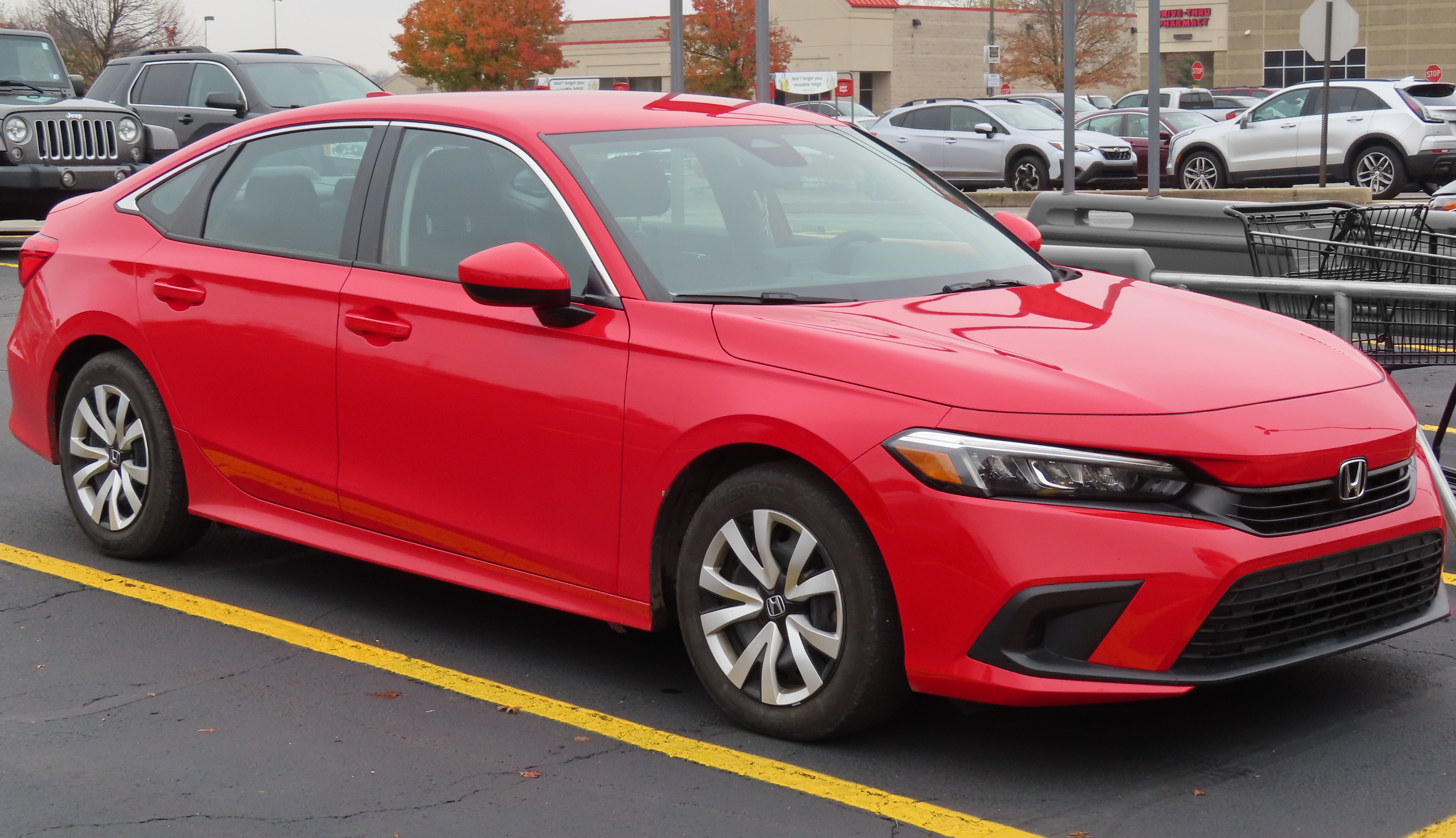
"when you think about compact sedan, Corolla Civic jump right to the top, no question. And I think w..."
The Honda Civic is a small car that many people like because it's dependable and saves on gas. It's often recommended for anyone looking for a good, everyday vehicle.
The Honda Civic is a compact car known for its reliability, fuel efficiency, and practicality. It has been a popular choice among drivers for decades, often praised for its value and performance in the compact sedan category.
"The K4 reminds me a little bit of the Kia Stinger, sort of in an economy version. I really like the Stinger. That was, I'm not even sure they still make the Stinger..."
The Kia Stinger is a car that looks sporty and is fun to drive. It has a powerful engine that makes it faster and more exciting on the road.
The Kia Stinger is a sporty sedan known for its performance and design. It offers a range of engines, including a twin-turbo V6, which enhances its driving dynamics and appeal.
"...two liter with a CVT, makes about 150 horsepower, or a turbocharged engine with an 8-speed automatic..."
A CVT is a special kind of automatic transmission that helps the car use fuel more efficiently by changing gears smoothly without any noticeable shifts.
CVT stands for Continuously Variable Transmission, a type of automatic transmission that can change seamlessly through a continuous range of effective gear ratios. This allows for smoother acceleration and better fuel efficiency compared to traditional automatic transmissions.
"My question involves four-wheel drive versus all-wheel drive. I had an F-150 for many years with four-wheel drive."
Four-wheel drive means that power goes to all four wheels of the vehicle, which helps it grip the road better, especially in rough or slippery conditions. It's often found in trucks and SUVs.
Four-wheel drive (4WD) is a system that allows all four wheels of a vehicle to receive power from the engine simultaneously, providing better traction in off-road or slippery conditions. It is typically used in trucks and SUVs designed for rugged terrain.
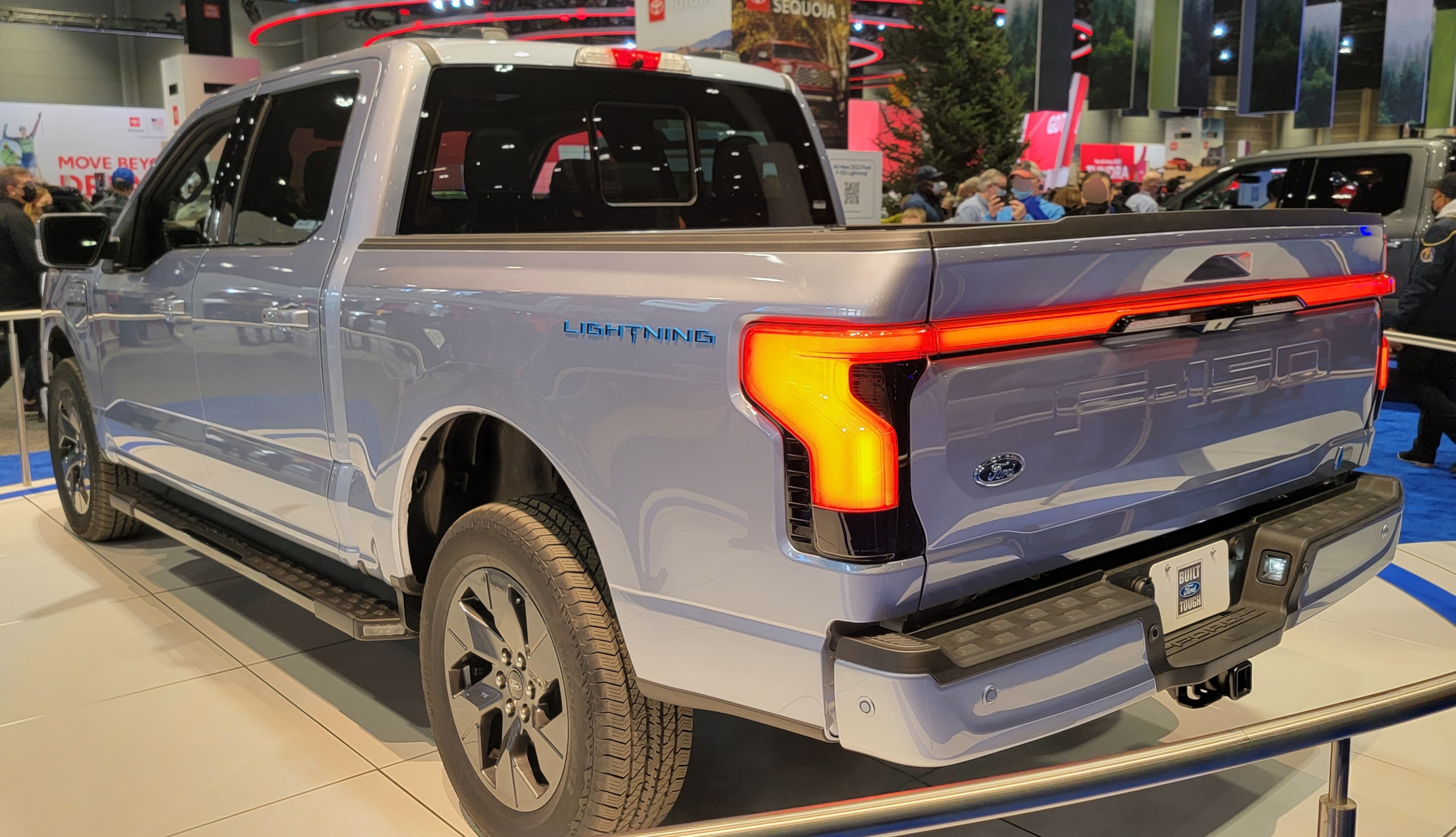
"versus all-wheel drive. I had an F-150 for many years with four-wheel drive. I could drive on Duxbury Beach with little or no problems."
The Ford F-150 is a big truck that people use for work and play. It's really strong and can carry a lot of stuff, which makes it very popular.
The Ford F-150 is a full-size pickup truck that has been one of the best-selling vehicles in the United States for many years. Known for its toughness, versatility, and range of configurations, it is a favorite among both work and recreational users.
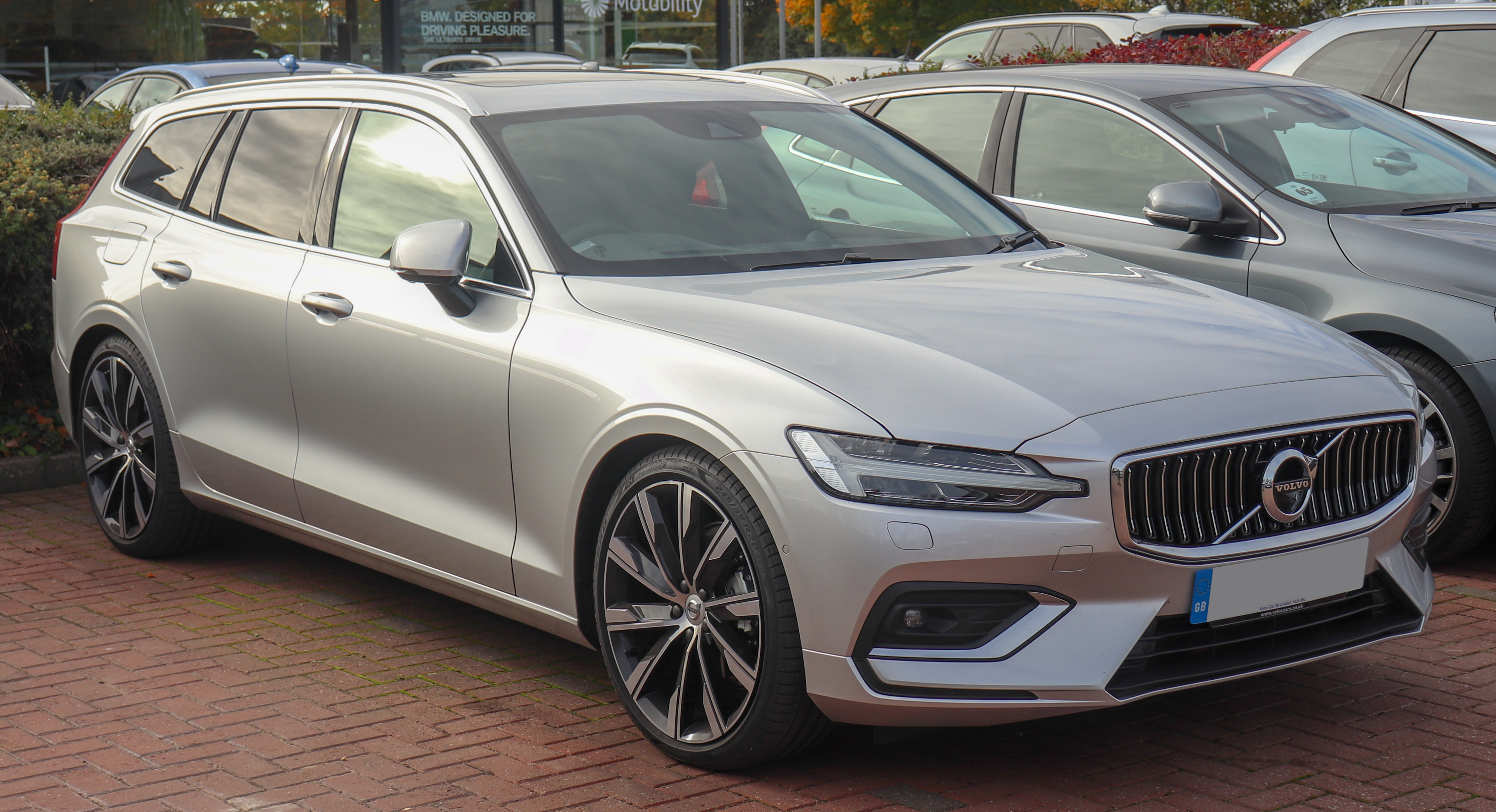
"I'm well into retirement. We're driving our wife's car, a V-60 Volvo. It's low to the ground."
The Volvo V60 is a stylish car that has a lot of space and is very safe. It's a great option for families who want something nice and practical.
The Volvo V60 is a luxury wagon that combines practicality with safety and comfort. It is known for its stylish design and advanced safety features, appealing to families and those who prioritize safety.
"...ll, is it? You know, even something exotic like a Range Rover, which they'll say, you know, this is, you know,"
The Range Rover is a fancy SUV that can go off-road and is very comfortable inside. It's often seen as a luxury vehicle that people love to show off.
The Land Rover Range Rover is a luxury SUV known for its off-road capabilities and high-end features. It represents a blend of ruggedness and sophistication, making it a status symbol among luxury vehicles.
"...hanks for being there. So we've got a 2019 Subaru Outback. Yeah."
The Subaru Outback is a car that can handle different types of roads and is great for people who like to go on adventures. It's known for being safe and reliable.
The Subaru Outback is a crossover SUV that is well-regarded for its all-wheel drive and practicality for outdoor activities. It is often chosen by those who enjoy adventure and need a reliable vehicle for various terrains.
Select text to request an explanation
WATD presents John Paul, The Car Doctor, All Things Automotive.
Have questions?
Call or text 781-837-4900.
Now, here's John Paul, The Car Doctor.
And good Sunday morning, everyone.
Welcome to another edition of the Car Doctor program on 959WATD.
My name's John Paul, The Car Doctor here to help you with your car problems, car questions,
car stories, car repairs, whatever you have on your mind about your vehicle.
We'll try to help you with that.
This morning, we are talking with David Pritano.
He is, well, he's a big wheel at Mass Bay Community College.
And their campus is actually in Ashland, Mass.
But you may know them from Wellesley.
David, good morning, and welcome back to the Car Doctor program.
Good morning, John.
How are you?
Thank you for having me this morning.
I'm doing just fine.
Mass Bay's got a new program they're piloting.
It's got a big acronym, Advanced Vehicle Technology Education and Credentialing Coalition.
I don't know who made that up, but...
It's a multiple.
Yeah, can you tell us about it?
Sure, sure.
So what this is, this was co-founded by a few people that have been in the industry for many years as technicians, as instructors,
and what it is, you know, the only type of licensure we've had throughout our industry was ASC, on Motor Service Excellence.
So, and that, as everyone knows, that was a, you know, like paper-pencil testing.
It wasn't really any hands-on.
What Avtech does is it's creative.
I mean, they've done a lot of work.
They have a long way to go.
They're not looking to take the place of ASC.
They want to work along with ASC.
And what it is, it's hands-on accrediting.
So if our students finish a course, they'll go on and they'll take the time, a time test, hands-on test to be accredited
and get their credentials.
So what this does is, so when we send a student out to a co-op, you know, we can say that this student has sufficiently passed this portion of their education.
They're able to do this, this or this, whether it's in steering and suspension, electrical, engine performance, whatever that may be.
And, of course, it could be, you know, heavy and electrical now with all the technology and electric vehicles.
Yeah, this actually sounds reminiscent of, I don't know, how many dozens of years ago I thought about becoming a teacher and to get certified,
I actually went up to Worcester area somewhere and did this like all day hands-on test where, you know, besides the 100 question written test,
you went out to the shop and you measured crankshaft journals and put U-joints in and, you know, diagnosed a no-start issue.
It sounds kind of reminiscent of that.
Yeah, it's very similar.
So as you mentioned, that's what, to be able to teach in the high school, at the high school level, you had to do that.
You had the written test and then you had to go for the day and do that hands-on and go to different stations and complete those tasks.
So it is similar to that.
Now the pilot, it is starting with four different post-secondary schools across the country in four different regions.
So, you know, because there's different needs, you know, and this is what they're trying to drill down.
You know, there's different needs in New England and it would be different in Florida or Texas, you know, because our winters are different.
So they're really taking their time to establish this accreditation process.
And like I said, it's starting with the students, with the pilot for the students, testing them, see how it goes.
And eventually, you know, it's going to go to the dealerships.
We have presented this to our advisory board.
Many of the dealerships in our independent shops are on board.
They love the idea.
I think it's going to be great once it gets off the ground.
But like I said, I mean, it's in the early stages.
There's been a lot of work done. There's a lot more to go.
But they're on the right track.
Now, Mass Bay has a variety of different programs, the Toyota program, the GM program.
You guys also have an all-brand program, right?
Correct. That's our non-manufacturer program.
And that's actually what the program that we're piloting, piloting this app tech, this accreditation, is with the all-brand, which is a general program.
It's not manufacturer-specific.
You kind of get the foundation on all makes and models.
It allows those students that go to all-brand to either enter a fleet repair facility for their co-op or independent shop, or a dealership that doesn't cover one of our other manufacturer programs.
So which manufacturers do you cover these days?
Currently, we have Toyota Lexus, BMW, which is many.
Also, we have our Mopar or Chrysler, which is Dodge Ram and Jeep.
And then we have our GM Aset program.
So you have a lot, but you also have this kind of more generic program.
Now, are all of the programs two-year associate degree programs, or is this all-brand program just like a certificate-style program?
No. The all-brand program has a certificate, but it also has a two-year associate's degree.
We have two certificate options, either through all-brand or through Toyota.
But you can get in all five programs, you'll get a two-year associate's degree.
I'm curious, and maybe this is a question you don't have any answer for.
But what percentage of the students just do the certificate program versus the associate's degree?
It's not the percentage that completes the certificate.
It's not that high, really.
We're somewhere around 15% that don't do the certificate.
And one of the reasons is, the certificate still runs the two years.
It just doesn't have the general education courses in it.
But they're interwoven within the associate's degree students.
So they take all their automotive classes with the associate's degree students, so it goes two years.
They just don't have to do the gen ed classes.
One of the guys who fills in for our producer from time to time went to Massachusetts Community College
and for a broadcasting degree.
And he went at the start of when Community College turned into a free program.
And that's the same thing at MassMed, right?
Yeah. So all community college right now in the state of Massachusetts is free.
As long as you meet the credentials, you have to have lived in Massachusetts for at least a year.
You can't hold a bachelor's degree.
But yeah, I mean, it's a great opportunity for anybody who would like to come back and get their degree.
And especially in the automotive industry, you get that training.
I mean, it's free training.
It works well for our independent shops and our dealerships that want to send employees that they already have to get some additional training.
Yeah, it really sounds great.
And the idea of, like you said, you get this additional training and the program, you know, essentially is free, although you have to pay for some books or whatever.
But the idea you can go, I mean, I was this week kind of fascinated.
Jim Farley, the president of Ford came out and said, you know, I think they said they have 6,000 bays without technicians in them.
There's a base, there's a technician shortage.
And, you know, they need to try to grow their own technicians.
And then I was watching one of the comments and somebody said, well, there's the whole 30-30-30 problem.
And so that was kind of curious what that meant.
And they said, well, it's, you know, somebody who spends $30,000 to go to school, $30,000 for tools,
and they end up making $30,000, you know, their first couple of years working.
If any of that's true, and I don't believe much of that is true,
but any of it's true, going to Mass Bay eliminates that first chunk of that.
That's correct. That's correct.
And even before we had the free community college, our students for automotive anyway would enter into their co-op, which was a paid co-op.
So they would actually be working as they were going to school and make up most of their tuition.
But now that it's free, I mean, now they're not paying for their education, except those few costs that you mentioned.
So there really isn't that many fees. And now they're getting paid on top of that.
So I mean, it's great for the automotive students. I mean, it's great overall for all the students that can take advantage of this.
You know, and you mentioned the last piece being the salary, which is a little bit a struggle at times.
I will say this, the industry is recognizing the need to increase the salary from entry level all the way up to massive technicians.
So I see a difference in the last three to five years with salary, which is great for the industry.
Because there was a time there where the salary was a little bit on the low side.
I don't believe the 30, but I'll just say it has been growing over the last three to five years.
And it's getting to a point where it is competitive.
Yeah, I mean, I know that, you know, some of the folks were saying, you know, prior to what Jim Farley was saying,
you know, for every five people that leave the automotive industry, really they only get replaced by about three.
And if that number is somewhere near true, it makes those three that replace the five and the ones that are still in the industry more valuable in my mind.
Oh, absolutely. Absolutely. It's definitely, you know, a great market for the employee right now because of the need.
I mean, a lot of the big dealerships, I mean, they might have 30 bays, but only half of those bays are filled with technicians right now.
So, I mean, there's a huge demand. It's not easy work. You know, you have to stay up with technology.
You're always learning year after year, even when you're out of, say you're out of Mass Bay, you still have to maintain that knowledge.
Because technology is changing so rapidly. But I mean, you can make a lot of money. I mean, after you, you know, get through all that, get your degree, get into the position.
I mean, but really for the technician, the sky is the limit. I mean, because there is such a need, I mean, the opportunities are just crazy.
I mean, I was a technician for many years and I wish I could do it all over again. I mean, because it's a great industry and I see where it's going and it's just tremendous.
Yeah, and you know, some of it is, you know, somebody might start off as a technician and end up, you know, running a parts department or we had a guy on the program that I bumped into somewhere who started off as a technician at one of the mastery dealerships
and he's like, well, I really enjoy doing it. It was fun. But I kind of looked at how they did their marketing. I ended up working for the marketing guy.
Now I run all the mastery dealerships marketing department. So I have this sort of innate, you know, repair background, but I'm also in the marketing of the dealership.
And he said, it's the only job I've ever had. You know, I started off, you know, 16 or 17. I'm still there, you know, 20 years later, and I'm still sort of in the automotive program.
So he said I couldn't have done that if it wasn't for, you know, for him, I think it was Bristol Plymouth Votek.
Yeah, and having that background, I mean, it proves it there, you know, that knowledge is transferable.
I mean, we see students, graduates that, you know, they thought they wanted to be a technician, but they're more of a fit marketing parts sales, you know, and sales.
It's great. I mean, you have a salesman that actually understands how the car functions, you know, and knows the mechanical, you know, all the systems of the vehicle.
I mean, they can sell it. I mean, it's good for customer relations.
So it's really great, you know, to see that where that knowledge is transferable. You know, because not everyone's cut out to be a tech, right?
Especially as they get a little bit older sometimes.
No, and I know, you know, that I'm old. So I remember years ago, I applied for a job at a local Chevy dealer.
And, you know, back then dealerships weren't that busy. There was a lot going on at the time, kind of in the world.
And literally, you know, technicians were sitting in lawn chairs, sitting in their empty bay waiting for the next job to come in.
And today, at least the dealerships that I go to, if I happen to stop by one, they're pretty busy.
Yeah, yeah, absolutely. You know, I don't know how old you are, but I remember years ago, same thing, you know, the dealerships,
they didn't put their heart and soul into repairs. You know, they made their money with sales.
And once they realize that there is money to be made in the repairs, I mean, I mean, they always had repairs, right?
Because they had to do the warranty work and everything like that. But now, you know, they're doing a lot more.
They realize that there's money to be made in repairs. So now, you know, they're a big cog in the wheel as far as auto repairs.
Yeah, I remember, you know, a bunch of years ago, talking to a service director, a big dealership.
And he said, you know, when he originally started, the shop supported about 70% of the expenses of the dealership.
And now it's more like 120% because there's parts of the dealership that just don't make money.
And it's all made in the shop these days.
Right, right.
Yeah, so it can make a big difference. I noticed on your title, it said interim STEM manager or something like that.
Interim dean of STEM.
Yeah, how does STEM, which is what, science, technology, engineering, math, is that what it is?
You know, I remember talking to a guy years ago who brought a race car into an auto shop.
And somebody said, what are you doing that? And he said, racing is STEM.
And because you're looking at trying to make the car go fast, you're looking at trying to make the car, you know, lighter is faster,
lighter can handle better.
He said, that's STEM.
And how does STEM work into the whole kind of automotive program? Does it work like that?
It does. You know, there's definitely a lot of parts for automotive.
I mean, you know, engineering, of course, I mean, there is math, you know, you have engine displacement for easy things.
I mean, you know, ohm's law, I mean, so there's so many formulas, those are just some of the basic ones I mentioned.
So, you know, there's, you know, all the technology, I mean, there is science behind it.
I mean, we have a few mixtures, right? So, you know, as far as automotive, it all, you know, rolls in, you know, you take your HVAC system in the car,
you know, you have, you know, you have liquid as one pressure and then when it's, you know, condensed, it's different.
So, there's a lot that science and technology and engineering math have in the auto industry.
You know, our STEMCUB is a lot more than that, you know, we have engineering technologies and we have biotech and cyber security and computer science.
So we have a lot in our STEM division.
But yeah, automotive is closely related, has a lot of the same moving parts that you find in STEM.
A lot of schools, their automotive programs are under the STEM division.
Math Bay, it's different, it's separate.
So there's a lot of crossover between both.
No, it's an amazing school that Math Bay has with the idea that you can get, you know, you can, you can, whether you want to take this kind of all brand program,
whether you want to take a two year program that is more hands on, whether you want to take a two year program and end up with an associate's degree.
And it really sounds like for the student who's really, who's really motivated, this is a, Math Bay is a really phenomenal place to start,
to be able to get started and to be able to, you know, take advantage of this and the idea that, you know, whether you just got out of high school
and you don't quite know what you want to do, or maybe you, you know, worked at the local, you know, quick loop place and you go,
you know, I'm not getting anywhere doing this, maybe I'll go to Math Bay to one of the, you know, one of the automotive brand programs,
maybe I'll go to, you know, the Toyota Lexus program, I like Toyota vehicles, maybe I'll go to the GM program.
And the idea that you can come out of that and, you know, have this knowledge, and especially in this day and age where there is a technician shortage,
you're going to have that much more value in your life, so.
Oh yeah, absolutely. I mean, you know, as far as coming and getting a degree from Math Bay and automotive technology,
I mean, you always have that degree, you know, no matter what goes on in your life,
you always will have that degree if you don't want to be in the automotive industry any longer.
You know, you can transfer to another job, but you have that degree.
But, you know, you mentioned the opportunities at Math Bay, and it's not just automotive.
I mean, we have a very large health science, you know, campus, which is in Framingham, our business and professional studies division.
So there's a lot going on at Math Bay. There's a lot of opportunities.
So it is a great time for students right now to take advantage of that free community college, or just community college in general.
You know, whatever it is to get that degree.
And even before community college was free, Math Bay averaged for our associate's degree somewhere around 20,000,
which is not, you know, a huge amount of money.
So, but now, of course, free is even more affordable.
Yeah, yeah. You know, and compared to, you know, some of the, you know, and I'll say automotive, you know, compared to some of the private automotive programs,
those were 25, 30, 35, 40,000.
And the idea that you're going to a program that is, in some cases, manufactured, sponsored, sounds like a wind all the way around.
Oh, yeah, yeah. You know, our manufacturer sponsored programs, those students graduate with about 80% of their manufacturer certifications.
So something that would take maybe five to seven years if you just say you're right out of a vocational high school, you went right to a GM dealership to get that 80%.
You're looking at somewhere around five to seven years to get those credentials when you get, if you would come to Math Bay, you get those credentials in the two years.
Yeah, no, absolutely. And you don't, you know, unlike the guy who was talking about the 30, 30, 30, you don't need to spend $30,000 on hand tools.
You know, the smart new technician out there is, you know, I was just, I think I was looking through Facebook Marketplace or something this weekend,
killing some time. And, you know, there was probably somebody that had $25,000 worth of Snap-on tools in, you know, a used, pretty well used Snap-on tool box.
They wanted like $1,900 for it. You know, so a little bit of, you know, staying off the tool truck and, you know, a little bit of planning.
You can be a fully equipped technician for, you know, still expensive. You know, if you're going to spend $3,000, $4,000, $5,000 on tools, there's still a lot of money.
But still, you don't need to go and spend $30,000 to start work.
Right, you know, you're very accurate with that. You know, Snap-on Snap, in my opinion, Snap-on is the best out there, right?
They're the best tool out there. I mean, but they're the most expensive.
But I'll tell you, there's a lot of companies that have come out with tools, you know, with a pretty good warranty that are very competitive and less expensive to Snap-on.
Of course, my Snap-on rep probably wouldn't want me to say that. But it's the truth. It's the truth. You know, there's new companies.
No. Yeah.
You know, I never heard of, I think it's Tecton or something like that. I've never heard of those tools before.
You look at them and they look good and you look at the premium line even at Harbor Freight and they look, you know, they're quality tools.
You know, we had a pretty popular YouTuber on the program, a month or so ago, a guy goes by the name of the Humboldt Mechanic, and he's a Volkswagen Audi specialist.
And he actually did a video of, he put together about $1,500, $2,000 worth of tools in a Harbor Freight tool cart.
And he said, you can do pretty much everything as a B level tech with everything in this cart.
And most of it came from, I think most of it came from either Home Depot or Harbor Freight.
And he goes, you know, if you find you break it several times, then go to the Snap-on truck and buy the, you know, buy theirs that maybe it will last a little bit longer.
But he said, you don't need to go out and spend tens of thousands of dollars on tools. You can get it done.
And, you know, the idea of being able to be responsible, go out there, do your job, you know, show up every day, you can make a good living.
Yeah, I agree. I agree. And, you know, Harbor Freight, that's another product that has come a long way.
I mean, when they first hit the market, you know, I'd be very hesitant to buy a tool from them.
But now, you know, they're competitive and you said, you know, they're top-of-the-line level brand, it's a good tool.
And I like that idea, you know, if you found that you broke it two or three times, okay, well now, you know, maybe you got to look for something different.
So, yeah. I mean, everybody looks at the, and this is totally off-base, but everybody looks at the, you know, snap-on needle-nose pliers.
You can pick up a nickel by the edge and it goes, oh, look how good they are.
Well, you know, now you can, you know, spend $17 and buy this, something that looks exactly the same at Harbor Freight.
And you can pick up the same nickel by the edge if you want. You know, so, you know, you can, you know, and the idea, you know, the idea it's there.
There is, you know, there is some ways that you can, again, I talked to some of these young technicians and, you know, they're into the tool truck for way too much money because sometimes it's just too easy.
I know somebody who kind of works up in the woods of Maine and he says, you know, the thing about the tool truck is the guys there are every couple of weeks, anything I break, he comes back.
He says, I know I'm paying too much money, but it's the convenience that makes it work for me, so I'm fine with it.
So there is, there is something for everybody.
If David, if people want more information, MassPay.edu, is that easy to find you?
Yep, yep, you can go MassPay.edu and you get right to our website.
I mean, it gets started, you know, bringing to all our programs and you'll find automotive technology in there.
Yeah, and automotive technology isn't what you're looking for.
There's all kinds of stuff and all kinds of ways to become a student.
And like you said, if you're, you know, if you're somebody who, you know, maybe did something else the past five years and you're like, you know what?
I think maybe I will go to community college. Take advantage of it.
Yeah, now's the time. Now's the time.
I wish I was this smart a million years ago.
Me too.
Dave, thanks for taking some time out of your Sunday morning to join us on the car doctor program in 959 WATD.
All right, thank you so much for having me.
All right, take care.
Bye bye.
We need to take a break, pay some bills.
My name's John Paul.
This is the car doctor program that was Dave Pertano.
He is the Dean at MassPay Community College.
We'll be right back after these messages.
Even car geeks and do-it-yourselfers rely on AAA to give them extra peace of mind on the road.
AAA offers 24-7 roadside assistance, whether you're in your own vehicle, a friend's car, or even a rental.
Combine that with great rates of insurance, hotel, gas and buying savings.
And discounts on 8,700 brands.
And you're covered on and off the road.
Get a special membership offer today at AAA.com slash join.
That's AAA.com slash join.
We're not happy unless you're happy.
Hi, I'm Sheldon Stewart of Stewart Painting.
And that's been our promise for over 35 years.
If we paint your home, it's going to be a great experience.
We do every job right, on time, and we stand behind our work.
We have thousands of lifetime customers.
That's because we are committed to delivering a top-notch job every time.
There are not many sure things in life, but hiring Stewart Painting to paint your home is a sure thing.
That's because we live by the Stewart Painting promise.
We're not happy unless you're happy.
To schedule your free estimate, call either of our Hingham or Hyenas offices.
Or to receive a virtual quote, visit us online at stewartpaint.com.
Send us a video of your project and receive your estimate within 24 hours.
That's stewartpaint.com.
And remember, Stewart Painting, expect the best.
And welcome back to the Car Doctor Program on 959WATD.
We'll be reviewing the Kia K4 coming up.
I want to mention I had the opportunity to go to lunch with Rob Hackler this week.
I don't get up to the station hardly at all because it's like 50 miles away.
And while I was there, I met a few of the other people at the station.
And I ran into Francesca Luca, who's hysterical, by the way.
And if you happen to see her, I think her birthday was just past Friday,
so wish her a happy belated birthday.
Let's talk to Tom. Good morning, Tom.
Good morning, sir. How are you?
I'm all right. How about you?
Good. Thank you. I want you to help me do the math.
All right.
There we go. I have a car, and I usually drive an average of 8 to 10,000 miles a year.
Okay. It seems like I'm going to need to write stuff down now. Okay.
Yeah. Okay. Now, I saw an advertisement for motor oil.
I don't have to change my motor oil for 25,000 miles.
So is that roughly, if I do the math, like two and a half years before I change my way?
Yeah, sure. Yeah, you just have to buy an engine every four years.
Yeah. In theory, if you're, I suppose, if your engine is spotlessly clean.
Yeah.
If you change the filter periodically and you have the engine analyzed,
engine oil analyzed to make sure that there's nothing bad going on,
you probably could leave oil in there for 25,000 miles.
Wow.
But that's not most people.
Yeah.
Yeah. I mean, I guess I've seen, you know, the bottle that says that.
Yeah. And, you know, when I look at stuff like that,
I'm, you know, some cars, you know, Mercedes, Volkswagen's Audi,
some of those, you know, once a year oil changes, a lot of Toyota products,
the simpler ones with the 1.8 engines, you know, they were a one year oil change kind of thing,
you know, but still, you know, some of them one year, the Volkswagen,
the Volkswagen's, I guess, that we own, they're a one year 10,000 mile oil change vehicle.
And, you know, I remember, you know, I remember looking at different oil and doing oil analysis.
I remember sending some oil out to have it tested.
And, you know, getting the oil sample back after about 5,000 miles of use.
And it said the oil was still good, no need to rush out and change it.
Still, I would want to change oil every year at the most, typically every six months,
mostly depending on your driving.
The idea of going 24,000 miles with the same oil.
And here's the problem.
If somebody said, I'm going to put this oil in my car and I don't have to worry about it
because I only drive 8,000 miles a year, I can go three years without changing my oil.
Not opening the hood for three years, pretty much guarantees you're going to be out of oil
by the time you get the hood open.
Wow.
You know, so, I mean, think about it, you know, if a good engine goes through
half a quart of oil in 2,000 miles.
You know, if you went 24,000 miles, you're going to go through six quarts of oil.
You're going to have no oil in your car.
I got an email from somebody the other day who has a 2019 Hyundai something or other.
And the woman said, and her father's the one who wrote to me,
she said my oil light was flashing, he brought the car into his driveway,
pulled the dipstick, didn't see anything out of the quart of oil,
didn't see anything, finally added four quarts of oil before it got up to the safe zone.
So the first question was, how do you drive around with, you know,
a quart of oil in the car and not have the engine explode?
Luck is what that was.
And, you know, the second thing is, you know, how come I didn't know about this?
Well, you know, come to find out.
It had been like 10,000 miles since the thing had the oil changed.
So, you know, so, you know, like I said, even a good running car
and some claim to be good running when I think they use more oil than they should.
But, you know, there's some cars that say, you know,
a quart of oil in 1,500 miles is perfectly acceptable.
Well, if you're going 6,000 miles between oil changes and you never open the hood,
all of a sudden, you know, all of a sudden now, you know,
that five quarts of oil is only two in there.
And when you start to run low on oil, even down a quart,
the engine starts to run hotter, starts to run hotter,
it tends to burn the oil in there a little bit faster because it breaks down.
So, you know, there's kind of the answer.
I mean, you know, this guy's daughter was lucky that the engine didn't explode.
It should have, really, with only a quart of oil in there.
I'm old enough to remember the days that when Junior used to be on the radio
and yourself, at the same time, you're saying that it was normal for a Cadillac.
Remember the Cadillacs? I forget where he is.
Oh, yeah, yeah, yeah.
Burn that oil that quickly or leaks oil, whatever, and they say, oh, that's normal.
Well, they, yeah, they did, they did all of those things.
So they burned oil, they leaked oil, yeah, the North Star engines,
you know, you look under those cars and they were covered with oil
because they seemed to seep out of everywhere.
But I still go back to, you know, telling the goofy story about the Rolls-Royce
that leaked oil and the customer of the car complained about it.
He said, you know, I'm getting oil drops on my driveway.
And the Rolls-Royce rep put the car up in the air, started it up
and counted the amount of drops and said, no, it's fine.
It's only dripping like three drops a minute.
We don't fix it till it hits, till it hits 10.
And the answer was, we believe that seals should breathe
and when they breathe, they're going to leak a little bit.
And it was kind of funny, I was standing there with a Toyota rep
and I looked at the Toyota rep and I said,
if somebody came in with the cheapest Corolla
and complained that it had three drops of oil leak in a minute,
you guys would put a new engine in it.
And he goes, yeah, we wouldn't.
He said, not this.
And, you know, I guess part of the reason is a Rolls-Royce
might use 12 or 14 quarts of oil, you know, in the crankcase.
So, you know, so maybe they figure out it's got so much oil in it.
If it drips a little bit, it's not a big deal.
Everything I was watching motor week on TV there.
And I noticed just about every car from like a Toyota Corolla
all the way up to the big boys is considered an SUV.
Everybody's an SUV nowadays.
What qualifies to be an SUV?
You know, it used to be an SUV.
The first SUVs were actually built on kind of truck platforms.
You know, and it might have been, you know,
it might have been a Jeep Grand Wagoneer or Wagoneer or something.
And then anything that had all-wheel drive is considered an SUV.
And, you know, and some of these like, you know,
Toyota calls the Toyota Crown Signo an SUV.
I call it a station wagon.
It happens to be an all-wheel drive station wagon.
It looks more like a station wagon than an SUV.
But SUVs appeal to people, sort of like the Kia Carnival,
which is, you know, is a minivan.
And if you told somebody that bought one,
hey, that's a really good looking minivan, they'd be mad at you.
They'd be like, it's not a minivan, it's an SUV.
And I'm like, no, it's really a minivan.
I had to tell you.
But, you know, people, you know, people don't want minivans.
You know, when they want, you know, people think, you know,
SUV, and I mean, even if you looked at something small
like a Kia Soul, you know, they kind of consider an SUV
as front-wheel drive.
It's not all-wheel drive.
And for me, to be an SUV, it's got to at least be all-wheel drive.
But now it really has to do with the design.
And, you know, the designs are all boxy,
and that's what they are, so.
Yeah.
As usual, good talking to you.
All right, good talking to you as well.
You as well.
Take care.
All right.
I promise we would talk about the Kia K4,
which is not an SUV, by the way.
It is a sedan.
And this is kind of interesting.
The last time I drove one of these was it was the last car
I drove before I headed north for the summertime.
And this may be the last car I drive before I head south
for the wintertime.
We'll see.
But anyway, first off, I want to thank John Lawler
and his entire staff at Auto Motion
for delivering some great press cars to me.
You know, I'm sort of where I sort of split my time
north and south now.
You know, all the little bit of the inside here.
You know, press cars get delivered to me
or I pick them up either way.
Sometimes I do it just to get out of the house
and I go pick them up.
But they are delivered through the manufacturer
to an independent company, in this case Auto Motion.
And Auto Motion is sort of the host
that has the different cars that are out there.
And years ago, there was tons and tons and tons of cars.
Now there's not as many as there used to be.
And when I'm in Florida, when that time comes,
I deal with a company called Prestige.
And they do the same thing with not quite...
They handle more, well, way more area,
but they don't have every make and model like Auto Motion does.
Auto Motion has most every make and model.
So that's kind of the inside about how all this works.
And so this week, we're driving the 2025 Kia K4.
And it's a really nice compact sedan.
I really like driving it.
You know, they price anywhere from about $23,000, $24,000.
This is top of the line, fancy heated seats,
remote start, all that sort of stuff.
It's right up around $31,000, something like that,
$31,000 in change.
I don't know, you know, look at, you know,
compared to a Civic, compared to a Corolla,
compared to a Hyundai Elantra, Mazda 3,
I don't know, I like it.
It does everything it's supposed to, it looks good.
It's got good tech.
It should at least make those, you know,
when you think about compact sedan,
Corolla Civic jump right to the top, no question.
And I think with this one,
it should make those guys nervous a little bit.
It's a good looking car.
It's got kind of a fastback silhouette,
sharp vertical LED headlights.
It's got these kind of slick, hidden rear door handles,
which I'm not a big fan of.
They just look awkward.
I mean, they're fine, but they're, it's just,
car companies have tried that in the past,
and I don't know what the reason is,
whether they're quieter, less wind,
but I don't know, it's just different.
The K4 reminds me a little bit of the Kia Stinger,
sort of in an economy version.
I really like the Stinger.
That was, I'm not even sure they still make the Stinger,
but the Stinger was one of those cars that,
it was really well designed,
and especially at the twin-turbo V6,
it handled good, it rode good.
It was a good vehicle.
It rode firm, I'll say that,
but it handled really well.
Get inside, any of the complaints about the outside are gone,
the weird door handles, yeah, you get inside.
It feels spacious inside,
great legroom, front and rear.
The trunk is over 14 cubic feet,
which is better than some mid-sized vehicles.
Big, clear dash display, all the normal stuff,
Apple CarPlay, Android Auto,
and I just read GM is discontinuing Apple CarPlay
and some of their new vehicles,
which makes no sense to me.
Heated and ventilated, front seats,
soft touch surfaces all over the place.
It's a pretty premium-looking car inside.
Other than that, it's pretty hard not to like anything.
Yeah, there's a little, maybe the way I sit,
the steering wheel blocks some of the climate control buttons.
I like the idea there's redundant buttons,
so you can hit the display,
or you can hit some buttons, which is nice.
Under the hood, you get a choice of two engines,
two liter with a CVT,
makes about 150 horsepower,
or a turbocharged engine with an 8-speed automatic,
and that's a 1.6-liter.
It actually makes closer to 200 horsepower.
I think it's actually 190 or so.
Manual shift mode, which I take a leave on any car,
not to pick on this one at all.
Is it quick?
0 to 60 from what I read online,
about seven seconds, so pretty quick.
Multi-leak suspension smooths out the rough ride.
I think it's good.
I mean, we're driving, we're not racing.
I think it does a good job.
Fuel economy, 26 city, 36 miles per gallon.
I've been averaging up over 34 in my tests.
And again, this one had all the bells and whistles,
adaptive cruise control, blind spot monitoring,
lane keeping assistant, surround view camera,
highway assist, and a whole bunch of stuff.
Overall, I think the K4 delivers a really good value
of money in a world where sedans are
slightly more common than, you know,
I don't know, station wagons.
I think the K4 does a good job.
If you're somebody who says,
I don't want an SUV, I want a sedan.
Well, K4, bigger brother K5.
Kia did a really good job with these.
And then there's the 10-year,
100,000-mile drivetrain warranty,
the five-year, 60,000-mile bumper-to-bumper warranty.
So, you know, if you're looking for a sedan,
that's one you might want to look at.
There we go.
Why don't we take another break, pay some bills
if you would like to join us and, you know,
get Jesse answering the phone.
Give us a call at 7-8-1-837-4900.
7-8-1-837-4900 is how you get through.
Phone lines are open.
If you were calling in last week
and you couldn't get through,
this would be a great time to call in.
My name's John Paul.
This is a car doctor program.
You're listening on 959-WATD.
We'll be right back.
Even car geeks and do-it-yourselfers
rely on AAA to give them extra peace of mind on the road.
AAA offers 24-7 roadside assistance.
Whether you're in your own vehicle, a friend's car,
or even a rental,
combine that with great rates of insurance,
hotel, gas and buying savings,
and discounts on 8,700 brands,
and you're covered on and off the road.
Get a special membership offer today
at aaa.com slash join.
That's aaa.com slash join.
Visit the James Library and Center for the Arts
on Tuesday, October 28
for a free toddler Halloween morning.
Bring your toddler down in costume
and enjoy story time,
goodie bags, and Halloween themed games
and art activities.
This event is free to attend,
but requires online registration.
To register your child today,
visit jameslibrary.org.
It's the James Library's Toddler Halloween Morning
Tuesday, October 28th, beginning at 10 a.m.
Visit the James Library and Center for the Arts
24 West Street in Norwell.
For more information, visit jameslibrary.org.
Keep your car in tip-top shape at Joseph's Garage.
Have your oil changed,
tires checked, get an inspection sticker,
or just gas at Joseph's Garage.
Write down the street from the James in Norwell.
Joseph's Garage now offers golf pay at their pumps.
This is a live episode of the James in Norwell High School
High School Action as well as a relatable voice
on all things Boston Pro Sports.
We've got you covered live at 5 every Sunday night.
Have a question for our host, Miss Last Week's Show,
or just want to share a great sports story
you can find us on Twitter, at Essie, on WATD.
But remember, mark your calendar folks
and we'll see you Sunday night at 5
for the Sports Exchange on 959 WATD.
Honored with a Lifetime Achievement Award
from the National Highway Traffic Safety Administration.
Call, but car doctor on 959 WATD.
Welcome back to the car doctor program on 959 WATD.
Our phone number 7818374900 is how you get through
and talk to us about your car and your car problems
just like Wayne from Duxbury.
Wayne, good morning.
My question involves four-wheel drive
versus all-wheel drive.
I had an F-150 for many years with four-wheel drive.
I could drive on Duxbury Beach with little or no problems.
I'm well into retirement.
We're driving our wife's car, a V-60 Volvo.
It's low to the ground.
I feel it's probably not wise to drive on Duxbury Beach.
I'm wondering what you think.
And if you could just explain, you know, I've read some things,
but in everyday language,
the difference between four-wheel and all-wheel drive.
And it becomes more complicated every day, it seems like.
But yeah.
First off, I probably wouldn't take the Volvo on Duxbury Beach
for all the reasons you said.
It's low to the ground.
The tires really aren't made for it.
And as I remember, Duxbury Beach has a lot of rocks
and probably wouldn't be a good idea.
You know, something like, you know, a more, you know,
if you think a more car related, something like a, you know,
Subaru would actually be a little bit better
because it's a little bit lighter.
You know, half inches or 8.9 inches of ground clearance.
So it actually has a little bit better ground clearance.
So what's the difference between all-wheel drive and four-wheel drive?
Years ago, four-wheel drive was very mechanical, you know,
and we'll use an F-150 as an example.
What happened was there was a, it was a rear-wheel drive vehicle
with a transfer case box sort of in the middle.
And when power came out of the back of the transmission,
it would go to this transfer case
and it would send the power to the rear wheels.
You would then shift into four-wheel drive,
mechanically move a lever into four-wheel drive.
It would engage the front driveshaft.
And depending on the model, it would either engage the front driveshaft
and you had to get out and you had to lock the hubs
or they were automatic locking and that would, you know,
they'd lock up and be the way they were supposed to.
Then somewhere along the line, they came up with four-wheel drive
that was more electronic.
So what would happen is the wheels would detect something was spinning.
It would turn on a switch in the transfer case
and in a blink of an eye, it would turn it into,
no, and four-wheel drive is kind of a misnomer.
It's not really four-wheel drive.
It's sort of one rear wheel and one front wheel that are turning.
Occasionally you'll have a two-wheel drive,
you'll have a posi-traction style.
So both wheels turn in the back and when you put it into four-wheel drive,
one front wheel will turn, but that's what gets you moving
and it's opposite corners and that's why it works.
Then companies like Subaru came up with a pretty simple little mechanical system
and once one wheel slipped, there was a fluid style clutch
and the fluid style clutch would spin, lock up,
and it would lock up the front wheel.
So it's kind of funny, Honda still calls their vehicle
super handling four-wheel drive and you're like,
well, is it four-wheel drive or is it all-wheel drive?
Well, it's really all-wheel drive because you don't do anything.
Kind of in my head, all-wheel drive is something
you don't need to think about.
It just does it on its own.
Where true four-wheel drive, you need to move something
to turn it into four-wheel drive.
So you need to move a lever to get it out of two-wheel drive
and put it into four-wheel drive.
That to me is kind of the difference if that helps.
I just turned a button on the dash.
Yep.
And I thought that I could do it while I was moving.
Right, right.
And that is sort of four-wheel drive.
Back in the old days it looked like a shift lever
that you had to move and the new ones.
But that's more four-wheel drive versus the electronic version
which either a wheel sensor starts to detect spin,
tells the system to turn on the other end of the vehicle
or some kind of fluid coupling that works
and it turns on the front-wheel drive portion.
And just the opposite, like I happen to drive a little SUV
that's primarily front-wheel drive,
but if the front-wheel starts to slip,
it automatically engages the rear-wheel drive,
but it also has a button that I can push
that locks up both the front and rear wheels
so I know that there's going to be no slipping
before the rear wheels kick in.
Again, it's referred to as all-wheel drive
and it is more all-wheel drive
than traditional old-style four-wheel drive.
Again, the terminology is kind of melded together
over the past dozen years, so.
Does that help at all?
Well, it does.
And here from what I gather,
there's no real difference today
between all-wheel and four-wheel drive.
Not really.
I mean, if you can find, you know,
something that, you know, if you went up
and got a Jeep, you know, CJA style Jeep,
you know, they're probably as close
to real four-wheel drive as possible,
but they're still four-wheel drive all the time,
you know, unless you put the transfer case in neutral.
But they are, you know, there's four-wheel high,
four-wheel low, but it's four-wheel.
It's not two-wheel.
So even those that you consider a true,
you know, a Jeep is a true four-wheel drive vehicle.
Well, is it?
You know, even something exotic like a Range Rover,
which they'll say, you know, this is, you know,
a fancy four-wheel drive, is it?
You don't do anything.
You just, it just sits there until it's needed.
So that's kind of, I mean, in my mind,
that's the difference.
The difference is one just does it on its own.
You don't have to do anything.
And one, you turn a knob, push a button,
move a lever, that to me is more four-wheel drive.
Okay.
All right.
All right.
Thanks.
Take care.
Bye-bye.
Our phone number again, 781-837-4900.
Let's talk to David and Plymouth.
David, good morning.
Hey, good morning.
Thanks for taking my call.
Thanks for being there.
So we've got a 2019 Subaru Outback.
Yeah.
And there's an issue that when we go away
for an extended period of time, say,
10 to 14 days and the car does not get started
during that time.
Yeah.
When we come back, typically the battery is dead.
Yep.
So in this situation, I jumped the vehicle,
started right up.
Yep.
But we had two issues after getting that restarted.
The passenger side window would not operate
using the controls on the driver's side door.
It wouldn't go up or down.
Okay.
So we got online, figured out through Google searches
how to remedy that.
And we did a YouTube video on it.
Yeah.
So we got that figured out.
The second issue that happened at the same time
was that the air conditioning stopped working.
And we haven't been able to resolve that issue.
We've gone online, Googled YouTube,
and have not found a solution.
We've tried a bunch of different suggestions
off of YouTube, but nothing seems to work.
And we feel like there's something silly to do.
So for the window, we had to go to the passenger seat,
use the controller on the passenger side,
roll the window up.
And when it got all the way up,
hold the button for an extended period of like five seconds.
Yep.
And then set it down to its bottom.
We set that for five seconds.
Then everything worked fine.
So we're feeling like there might be some sort of similar trick
for the air conditioning, but we haven't found it.
Yeah.
I haven't seen something for that.
I guess first off, how many times has this battery gone dead?
Only twice that we've been away for an extended period.
So twice, I'd say.
Yeah.
Because there's a bunch of Subaru issues with batteries
and warranties and warranty extensions
and charging system issues.
And there's been a bunch of problems with Subaru's
if they sit for any period of time,
the batteries will get dead.
And what Subaru did to try to fix the problem is,
first off, they put a little bit bigger battery in.
They put the battery in that would be the same battery
that the six-cylinder engine would use.
And then they also changed the way the charging system
charged because there are times with this car
that to maximize fuel economy,
it doesn't actually charge the battery.
What it does is the alternator sort of shuts off
to get better fuel economy.
And if you drive a certain way,
the battery doesn't have enough reserve capacity.
So first thing I want to check is that,
and we're just about out of time,
first thing I want to check is make sure that
in your jump-starting, you didn't pop a fuse
for the air conditioner.
So check all the fuses, make sure everything looks good.
And you might want to try disconnecting the battery,
holding the two cables together for two minutes,
and then hook everything back up.
That's what it does.
That does what basically is a reboot to the car's computer.
And that may solve the issue.
Maybe try that.
We're out of time.
Thanks, David, for calling in.
And until next week, make sure you wear your seatbelt.
Drive safely.
Be good to your car.
And if you do see an emergency vehicle
by the side of the road,
slow down or move over.
It saves lives.
Talk to you all next week.
Bye-bye.
Request an explanation for:
15 cars
Scroll for more
15 cars featured
Request an Explanation
Heard something you'd like explained? We'll add it to this episode.
Sign in to request explanations for terms you heard.
Want to learn more?
Browse our glossary for plain-English explanations of automotive terms, jargon, and concepts.
See something that's not quite right? Our annotations are AI-generated and can sometimes miss the mark.
Click the flag icon on any annotation to suggest a correction.