
From Selling Hot Dogs to Hypercars
About this episode
From a live Smoking Tire collab event in Irvine to stories from Bedford Hills at HK Motor Cars, the conversation bounces between early go-kart days and the origins of their hot-dog-cart hustle. They share unusual ownership tales—like a Range Rover running on “fry oil”—and how Lime Rock bought the hot-dog-cart equipment. Later, the focus shifts to hypercar practicality: remote diagnostics, hybrid hiccups, and drivetrain/build details, plus track-venue favorites and high-mileage realities.
Nat is a serial entrepreneur. He went to school with Farah and then ran a series of hot dog carts before opening GPNY, a premiere indoor karting business in NY. He then started HK to sell race cars at Monticello Motor Club but now sells the cool and weird in his own store. The Kimera, the Fifteen Eleven, Gunther Werks. If you want something from these famous boutique builders, Nat is your guy.
Recorded July 16, 2026
Tickets to our LIVE show at the Irvine Improv are going quick! https://improv.com/irvine/event/the+smoking+tire+live+feat.+smith+and+sniff+with+matt+farah%2C+zack+klapman%2C+richard+porter%2C+and+jonny+smith/14213624/
Show Notes
Factor
Head to https://Factormeals.com/tire50off and use code tire50off to get 50 percent off and free daily greens per box, with new subscription only, while supplies last until 09/27/2026. (See website for more details).
Quince
Make your summer wardrobe easier. Go to https://Quince.com/tire for free shipping on your order and 365-day returns. Now available in Canada, too.
Avants
Go to Avants use code TST for 10% off your membership!
Use Off The Record! and ALWAYS fight your tickets! For a 10% discount on your first case go to https://www.offtherecord.com/TST
Want your question answered? Want to watch the live stream, get ad-free podcasts, or exclusive podcasts? Join our Patreon: https://www.patreon.com/thesmokingtirepodcast
Instagram:
https://www.Instagram.com/thesmokingtire
https://www.Instagram.com/therealzackklapman
Enter to WIN our AMAZING 2025 Porsche 911 Turbo S!! https://www.dreamgiveaway.com/tickets/porsche?promo=SMOKINGTIRE
Promo Code Offer: Get 4X bonus tickets with any donation of $25 or more. With every donation you are helping benefit some wonderful veterans' and children's charities.
Podcast Promo Code: SMOKINGTIRE
Want your question answered? Want to watch the live stream, get ad-free podcasts, or exclusive podcasts? Join our Patreon: https://www.patreon.com/thesmokingtirepodcast
Use Off The Record! and ALWAYS fight your tickets! Enter code TST10 for a 10% discount on your first case on the Off The Record app, or go to http://www.offtherecord.com/TST.
Watch our car reviews: https://www.youtube.com/thesmokingtire
Tweet at us!
https://www.Twitter.com/thesmokingtire
https://www.Twitter.com/zackklapman
Instagram:
https://www.Instagram.com/thesmokingtire
https://www.Instagram.com/therealzackklapman

Porsche 914
"it was a sweaty afternoon with the Chimera and the 1511 914 all right [174.5s] this is radio so I've known this fucking guy for 21 years now right yeah 21"
The Porsche 914 is an older Porsche sports car with the engine mounted near the middle. People like it because it drives in a very “Porsche-like” way without costing as much as some other classics.
The Porsche 914 is a mid-engine sports car from Porsche, known for its compact size and balanced handling. It’s especially notable in enthusiast culture because it’s a relatively affordable entry point into classic Porsche driving dynamics.
Grand Prix New York
"oh five yeah and we met over some car thing and you had just opened Grand [181.9s] Prix New York we were raising money for it still had you not actually open I [193.7s] know it's out of construction okay all right so it's before we met before it"
“Grand Prix New York” is a motorsport event name the hosts reference while talking about meeting and fundraising. It’s the kind of local racing/track event that can bring together car people and sponsors.
Tom Morningstar
"you wanted to make a [212.0s] television commercial correct local cable and you hired me and Tom Morningstar to [217.2s] make your commercial and instead of paying with money you pay us with free"
Tom Morningstar is a person mentioned as helping create a TV ad. The hosts are talking about who they hired for the commercial.
Tom Morningstar is named as one of the people hired to help make a television commercial. In this context, he’s part of the hosts’ local media/production team rather than a car-industry figure.
go-karting
"correct local cable and you hired me and Tom Morningstar to [217.2s] make your commercial and instead of paying with money you pay us with free [223.1s] lifetime unlimited go-karting yeah that's you want on that"
Go-karting is racing small cars on a track. It’s a popular hobby and a stepping stone for people who want to get into motorsports.
Go-karting is driving small, lightweight racing karts—often used as a fun entry point to motorsport. It’s also a common way for people to build driving skills and compete locally.
men's league
"I don't say I abused it but I went karting every day yeah for like a year and a [254.6s] half correct and I won the men's league which was pretty fun and you had great [258.8s] commercials for us made a commercial we do use for a while we did probably five"
“Men’s league” is a local amateur competition group. It’s like a regular league where people race and keep score over time.
“Men’s league” refers to an organized amateur competition class. In motorsport-adjacent activities like go-karting, it usually means a recurring local series with standings and rules.
fry oil
"yeah I still I still have that Range Rover and it runs on fry oil or [487.0s] you know yeah the one in the back warehouse here is got a Corvette [490.1s] Callaway engine as you do yeah yeah"
“Fry oil” means used cooking oil. Some people run cars on it as an alternative fuel, usually after filtering it and sometimes modifying the fuel setup.
“Fry oil” here refers to using used cooking oil as an alternative fuel. It’s a common grassroots approach for converting vehicles to run on waste vegetable oil, typically requiring filtration and sometimes fuel-system changes to handle viscosity and contaminants.

Chevrolet Corvette
"... yeah the one in the back warehouse here is got a Corvette Callaway engine as you do yeah yeah so it's like ..."
The Corvette is a sports car from Chevrolet. It’s built for fast driving and usually has a powerful engine. In the podcast, they mention a Corvette that has a Callaway performance engine, meaning it’s been upgraded for more power.
The Chevrolet Corvette is a performance sports car built by Chevrolet, typically known for strong power and a driver-focused layout. The podcast references a Corvette with a Callaway engine, which points to a factory-supported or professionally built performance upgrade. That’s the kind of detail that matters because it changes how the car makes power and how it’s maintained.
forced induction
"so it's like forced induction or it's one [497.5s] of two that no it's not forced induction it's one of two Callaway maids of vet [502.1s] Ranger and I have the Road and Track article with it"
Forced induction is any method of pushing more air into an engine than it would naturally draw, usually with a turbocharger or supercharger. The host is debating whether the Callaway setup uses forced induction, which matters because it changes how power is made and how the engine is stressed.

Ford Ranger
"...d induction it's one of two Callaway maids of vet Ranger and I have the Road and Track article with it and..."
The Ranger is a pickup truck made by Ford. It’s meant for hauling and everyday driving, and it can also handle rougher roads. The podcast brings it up because this particular Ranger is tied to a performance-focused build and coverage in a car magazine.
The Ford Ranger is a midsize pickup truck that’s popular for work use and off-road capability. In the podcast, it’s discussed in connection with Callaway and a Road & Track article, suggesting a performance or special build rather than a standard truck. That makes it noteworthy because it’s unusual to see a Ranger treated like a high-performance project.
Callaway
"so that engine was installed new by Callaway [512.7s] wow and it was it was one of two built it was then purchased by Mark Star oh yeah"
Callaway is a performance brand/tuner famous for building high-output upgrades for certain Chevrolet models, especially Corvettes. In this segment, the important detail is that the engine was installed new by Callaway, and only a couple were built.
Lime Rock
"the best part is the exit strategy on that one was lime rock bought all the equipment from oh really they were like well we like what you're doing can we buy it wow so all at once one customer still get a money dog dirty dirty Monday dog a bit like a bit lime rock and they've really fixed up"
Lime Rock is a well-known race track in Connecticut. It’s the kind of place where people go to drive cars hard on a closed course, not on public roads.
Lime Rock is a famous road course in Connecticut known for its short, twisty layout and high driver focus. In the episode, it’s referenced as the track where the business’s equipment ended up and where the host now runs road-and-track experiences.
road and track experiences
"okay my my my product line wouldn't fit in today's lime rocks we're going back we're going the road and track experiences the the Hudson 400 Hudson Quattro Cento"
Road-and-track experiences are organized driving events that typically combine public-road driving with time on a closed circuit. The phrase is used here to contrast with the host’s earlier “product line” and to describe what Lime Rock is offering now.

Audi Quattro
"...d and track experiences the the Hudson 400 Hudson Quattro Cento yeah lime rock is the the track we use okay..."
The Audi Quattro is a performance car from Audi. It’s known for having all-wheel drive, which helps the car grip the road better. The podcast mentions it because they’re talking about driving it on track and using it for driving experiences.
The Audi Quattro is a rally-bred performance car best known for popularizing Audi’s all-wheel-drive approach in motorsport. In the podcast, it’s mentioned in the context of track experiences and a specific event or location, which highlights its role as a capable driving platform. It comes up because the Quattro is historically significant for how it changed traction and handling expectations.
go-kart track
"when I moved to LA and you you wisely I think converted half of the go-kart track into a bowling alley"
A go-kart track is a place built for racing small cars called go-karts. Here, the speaker says part of that track was turned into a bowling alley instead.
A go-kart track is a dedicated circuit designed for small, low-speed racing karts. In this segment, it’s mentioned as being converted into a bowling alley, highlighting how the original karting business footprint was repurposed.

Aston Martin Vanquish
"...ere I hucked the the accessory drive belt off the vanquish trying to do a donut got it this is where it happ..."
The Vanquish is a luxury sports car from Aston Martin. It’s built for fast driving but still feels like a comfortable road car. In the podcast, they mention a belt issue that happened while the car was being driven hard.
The Aston Martin Vanquish is a grand touring sports car that blends high performance with a luxury feel. The podcast mentions the speaker hucking an accessory drive belt off the Vanquish while trying to do a donut, which points to a real-world mechanical failure during aggressive driving. That’s the kind of story that comes up because it reveals how the car behaves under stress and what can go wrong.
Monticello
"dude I'm gonna go up to Monticello to sell race cars yeah we would I went up there consulted for them for nine years was an executive for three of them it"
They’re talking about a specific place they go to for racing. Track venues like this are where people drive cars on a closed course and often take instruction.
Monticello is being referenced as a racing venue/track area the speaker travels to. In car culture, these “track complexes” are where private clubs, instruction, and track-day events happen—so the name matters as a destination, not just a town.
autobahn
"were there any open private track clubs that were built for that maybe Autobahn Autobahn and and I was being built and spring mountain because the radical program was between Monticello and there I think spring mountain might"
They’re naming a track venue. Places like this let car people drive on a real racing surface instead of public roads.
“Autobahn” here refers to a well-known motorsports facility/track complex associated with track-day culture. The speaker groups it with other private track clubs, implying it’s a place where enthusiasts can drive on organized circuits.
Spring Mountain
"Autobahn Autobahn and and I was being built and spring mountain because the radical program was between Monticello and there I think spring mountain might be my favorite racetrack that I've seen oh yeah well it's got the most track"
Spring Mountain is a racing track complex they really like. They’re saying it has a lot of track surface and different ways to run the course, so you can drive it in more than one configuration.
Spring Mountain is a motorsports track complex the speaker calls out as a favorite. They emphasize it has “the most tarmac” and many configurations, which is a big deal for drivers because it means more usable track layouts and more variety in driving sessions.
Concourse Club
"sorry yeah maybe not but same Aaron Weiss at Concourse has always been very nice to me yeah I would love it but Florida we've got a very sticky we spent a lot of time at Concourse Club we've got our Miami location is there"
Concourse Club is referenced as a track-adjacent club the speaker spends a lot of time at. In enthusiast circles, these clubs often combine social membership with access to events, instruction, and car-focused networking.

Pontiac Chieftain
"...ram and I even bought them a tank the tank yeah I chieftain I and then an APC 432 it does what do you do with..."
The Pontiac Chieftain is an older, classic car made by Pontiac. It was designed as a big, comfortable vehicle for its time. The podcast mentions it because the speaker bought one and talks about using it alongside another vehicle or equipment.
The Pontiac Chieftain is a classic full-size car from Pontiac’s lineup, known for its mid-century styling and traditional American V8-era character. The podcast context includes talk about buying one and pairing it with an APC 432, suggesting a personal collection or unusual project. It’s discussed because older cars like this often become part of hobby builds or storage/transport stories.
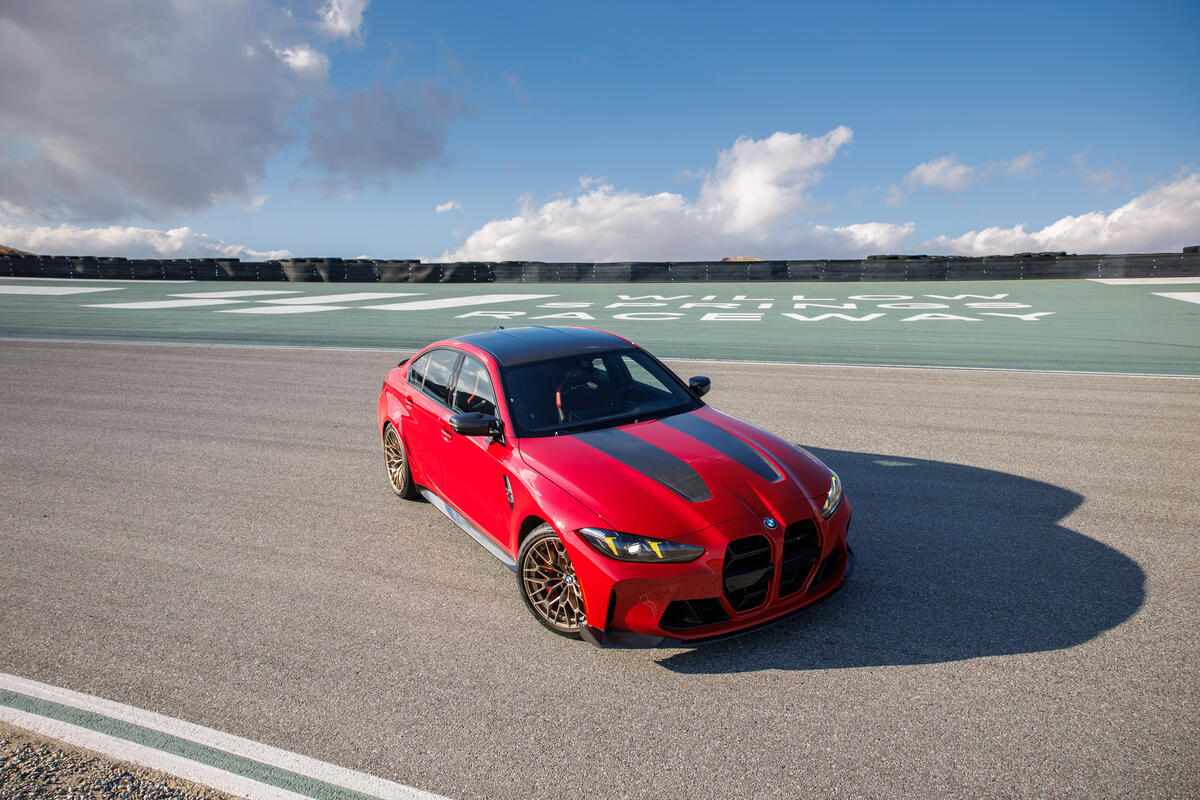
BMW M3
"I can tell you right now that I don't miss the commute I mean it was two hours that sucks there [1189.0s] was no if and so you ended up with 240,000 miles on a f80 or was it at 30 [1196.2s] whatever that so I just destroyed the 2004 s4 in about a year sure that car"
“F80” is BMW’s internal name for the M3 generation. It’s the M3 that many enthusiasts associate with being a very capable, sporty daily/track car.
“F80” refers to the BMW M3 generation code (the F80 M3). It’s a performance-focused 3 Series–based model known for its track-capable chassis and high-revving turbo-era M-car character.

2004 s4
"whatever that so I just destroyed the [1198.0s] 2004 s4 in about a year sure that car [1202.2s] cost me $47,000 to drive 147,000 miles okay out of warranty service well that"
“2004 S4” means an Audi S4 from 2004. It’s the sportier, faster version of the A4, and it’s known for strong traction and everyday usability.
“2004 S4” is an Audi S4, a performance version of the Audi A4. In that era, the S4 is typically known for its turbocharged setup and all-wheel-drive traction, making it a popular enthusiast “do-it-all” sedan.
consumables
"well that little diesel BMW has cost around 7,000 that's in [1212.0s] consumables if you're [1216.5s] racking up miles that is the car yeah oh for sure"
“Consumables” are the parts that wear out and need replacing regularly. If you drive a lot, you’ll spend more on these than you might expect.
“Consumables” are wear-and-replace items that get used up over time—things like brake pads/rotors, tires, fluids, and other maintenance parts. The point here is that high mileage turns these into a major part of ownership cost.
wide open throttle
"thing will get retired to Florida will be down there is like to get around the [1253.6s] wide open throttle guys have the gas powered like 328 eyes and they use them"
Wide open throttle means the gas pedal is basically all the way down. It tells you the engine is getting the maximum airflow, so the car is being pushed hard.
Wide open throttle (WOT) means the driver has fully opened the throttle plate, allowing the engine to receive maximum air and fuel. It’s commonly used when describing how hard a car is being driven, especially on tracks or in endurance-style use.
TDI cup
"and like they're fine and they just be just where they run them for eight [1267.0s] hours a day and fucking I think I remember the [1270.0s] TDI cup with Volkswagen did"
The TDI Cup was a racing series built around Volkswagen diesel engines. The idea is that these cars can be run hard for long periods and still make strong pulling power.
The TDI Cup refers to a motorsport/competition series built around Volkswagen’s TDI diesel engines. It’s notable because diesel racing emphasizes durability and torque rather than just high-rev horsepower.
Nurburgring
"yeah I think Volvo [1288.9s] and BMW just did that at the [1290.0s] Nurburgring with a crazy the m3 toy yeah what"
The Nürburgring is a legendary race track in Germany. Car companies use it to test cars hard because it’s tough on brakes, tires, and cooling.
The Nürburgring is Germany’s famous motorsport complex, best known for the Nordschleife, a long and demanding circuit with big elevation changes and many corners. Automakers use it as a proving ground because it quickly reveals real-world weaknesses in cooling, brakes, and durability.
endurance race
"what [1293.2s] about converting one converting that one with the high miles into like the [1296.2s] pickup truck that you've seen with the m3 oh yeah the one that they did at the"
An endurance race car is designed for long races where the car has to keep working for hours. It’s set up to stay reliable and predictable, not just go fast for a few laps.
An endurance race car is built to survive long stints—often hours at a time—while staying consistent and safe. That usually means durability-focused cooling, brakes, tires, and a setup that can handle repeated heat cycles.
crew cab
"it's great it's crew cab there you go be kind of cool yeah it would [1306.6s] be cool and plate it"
A crew cab is a pickup with four doors, so there’s room for people in the back seat too. It’s the more passenger-friendly cab style.
A crew cab is a pickup truck body style with four full-size doors, allowing rear-seat passengers to sit comfortably. It’s mentioned here because the speaker is describing a hypothetical conversion of a car into a pickup-like vehicle.
plate it
"it's crew cab there you go be kind of cool yeah it would [1306.6s] be cool and plate it you also just you know I'm just gonna driving into the ground that folks one more quick break"
“Plate it” means making the car legal to drive by getting it registered and putting on license plates. It’s the paperwork-and-plates step for a custom build.
“Plate it” means registering the vehicle for legal road use and installing license plates. In custom builds, it’s the step that turns a one-off project into something you can drive on public roads.
set of pilot sports
"so if you were gonna spend $1,500 on a set of pilot sports you're gonna save $300 just because you're an Avance member"
“Pilot Sport” is a brand/model of performance tires made by Michelin. A “set” means you’re buying tires for all the wheels, not just one.
“Pilot Sport” refers to Michelin’s performance tire line, aimed at sporty cars that need strong grip and steering response. When the host says “set of pilot sports,” they mean buying a full set of those tires for the car.
BF Goodrich
"gets a 10% off discount at discount tire plus an additional 10% if you buy Michelin or BF Goodrich so if you were gonna spend $1,500 on a set of pilot sports"
BF Goodrich is a tire brand. In this part of the episode, it’s mentioned because the discount applies if you buy BF Goodrich tires.
BF Goodrich (often written BFGoodrich) is a long-running tire brand with a strong presence in performance and off-road tires. The host mentions it as another eligible tire brand for the discount.
Michelin
"gets a 10% off discount at discount tire plus an additional 10% if you buy Michelin or BF Goodrich so if you were gonna spend $1,500 on a set of pilot sports"
Michelin is a well-known tire company. Here, it’s just one of the tire brands you can get cheaper through the membership deal.
Michelin is a major tire manufacturer known for performance and high-quality street tires. In this segment, it’s mentioned as one of the tire brands you can buy with the discount program.
stock OEM
"they were like well what do you want to replace it with this is your chance to put in like Bilstein's like a stock OEM whatever did the 230,000 miles"
“OEM” parts are the same type of parts your car originally came with from the factory. “Stock OEM” means you’re replacing the suspension with factory-style parts instead of custom aftermarket ones.
“OEM” means Original Equipment Manufacturer—parts made to match what the car came with from the factory. “Stock OEM” here means replacing worn suspension components with factory-spec equivalents rather than aftermarket upgrades.
Bilsteins
"they were like well what do you want to replace it with this is your chance to put in like Bilstein's like a stock OEM whatever did the 230,000 miles"
Bilstein makes suspension parts, especially shocks and struts. Here it’s mentioned as a better replacement option when the car’s suspension is worn out.
Bilstein is a suspension brand best known for shock absorbers and struts. The host brings it up as an option when replacing worn suspension components after high mileage.
cargo box
"Vinny got rear-ended at like 50 miles an hour that's why he didn't have anymore yep the cargo box survives though it went flying over huh like because it flew off the car"
A cargo box is a storage container you mount on the roof to carry extra luggage. It’s the kind of thing that can fly off if it isn’t secured well or if there’s a crash.
A cargo box is an external roof-mounted storage container used to carry luggage or gear on road trips. The host notes that it survived a crash and ended up on the other vehicle/truck area.
Le Mans
"we were working with Glickenhouse and we had bought a couple cars and we had commissioned their 7-on-9 Le Mans car"
Le Mans is a world-famous endurance race. Cars have to keep running for about 24 hours, so it’s not just about being fast once.
Le Mans refers to the famous 24-hour endurance race in France. It’s a benchmark for race engineering because cars must balance speed with durability over a full day of racing.

Porsche 928
"...s Gunther works Kimera Nardone what's Nardone the 928 rest oh the 928 thing right yeah the soap bar loo..."
The Porsche 928 is a sports car made by Porsche. It’s a long-distance, comfortable type of car that’s powered by a V8 engine. The podcast mentions it because someone is talking about a 928-related project or build.
The Porsche 928 is a grand touring (GT) sports car that’s known for its distinctive design and V8-powered character. The podcast references the 928 in the context of a specific project/build, which highlights how it can be a popular platform for custom or restomod-style work. It’s often discussed because it has a unique place in Porsche history compared with more common models.
rest oh the 928 thing
"what's Nardone the 928 rest oh the 928 thing right yeah the soap bar looking kind of"
They’re talking about a “restomod” idea. That means taking an older classic car and updating it so it’s more usable and drives better now.
The host is describing a “rest” as shorthand for a restomod-style build based on the Porsche 928. Restomods are about modernizing older cars—often with updated engines, electronics, and suspension—while retaining the original body and vibe.

Lamborghini Diablo
"...ited about that one we have Echentrica that's the Diablo yeah driven which is the evoluto yeah which is th..."
The Lamborghini Diablo is a supercar made by Lamborghini. It’s known for being very fast and having a strong, high-revving engine. The podcast brings it up because they’re talking about a particular Diablo car and how it’s been driven or set up.
The Lamborghini Diablo is a high-performance supercar known for its aggressive styling and powerful V12 engine. In the podcast, it’s referenced in connection with an “Echentrica” and an “evoluto” drive, implying a specific Diablo variant or a notable example being discussed. That kind of mention usually matters because different Diablo builds can have different performance and ownership stories.
donor car
"as their four products I drove the escort everything that requires a donor car we essentially offer except for maybe singer sure"
A donor car is basically a “parts car.” People buy one car just to take usable parts from it to build or repair another car.
A donor car is a vehicle used as a source of parts or a base for a build. In this segment, the speaker is describing how their program relies on donor cars for the components needed to create the final cars they offer.

Ferrari F40
"...o say that like Kimera was a search for a crashed F40 that we could repaint and make a custom color and..."
The Ferrari F40 is a very famous supercar made by Ferrari. It’s known for being fast and for having a more raw, no-frills feel than many other cars. The podcast mentions it because someone was looking for a damaged F40 to restore and repaint with a custom color.
The Ferrari F40 is a legendary, high-performance supercar known for its raw, track-focused character and limited production. The podcast mentions a project that involved searching for a crashed F40 to repaint and customize, which underscores how significant and valuable the F40 is as a base for restoration or personalization. It’s discussed because the F40 is one of the most recognizable icons in the supercar world.
Verde Abitone green
"and ended up with it with a 037 in Verde Abitone green and just absolutely love it"
Verde Abitone green is just a named paint color. Here, it matters because they’re describing a custom repaint on a Ferrari F40, not a random color choice.
Verde Abitone green is a specific paint color name used to describe an automotive factory-style shade. The speaker uses it to explain the customization outcome—repainting the F40 to a particular green tone they chose for the collection.
investment grade
"it's not because like the Khmer is so new that it hasn't become investment grade yet or not not investment determined by low ever they've done so well though on the resale secondary markets"
“Investment grade” means the car is treated like a good money asset, not just something to drive. The idea is that these cars tend to keep their value, so small issues like mileage or minor cosmetic damage matter less to buyers.
“Investment grade” refers to whether a car is considered a financially solid asset—typically meaning it holds value well and is likely to appreciate. The speaker contrasts this with the idea that mileage and minor blemishes might matter less for these cars because they’re already performing strongly in resale markets.
secondary market
"or not not investment determined by low ever they've done so well though on the resale secondary markets virtually double from the original MSRP and where"
Secondary markets are the “used car market” for cars after they’ve already been sold once. They’re saying these special cars sell for much more later, not just at the original price.
Secondary markets are where used or previously owned cars trade after the original sale. The speaker claims these cars have strong resale performance there, even saying it can “virtually double” versus the original MSRP.

SF 90
"I think people are fed up of all the tech in these cars I mean we have an SF SF 90 we have a 296 both of them have had some hiccups you know with the hybrid system"
The Ferrari SF90 is a high-performance Ferrari that uses both gas power and electric power. The point here is that the hybrid system can sometimes act up, and that can make it more annoying to fix than older cars.
The Ferrari SF90 is a modern supercar built around a hybrid powertrain, combining an internal-combustion engine with electric motors for extra acceleration. In this segment, the hosts mention it having “hiccups” with the hybrid system, which is a common enthusiast concern: complex electronics can be harder to diagnose and repair than older, simpler drivetrains.

296
"I think people are fed up of all the tech in these cars I mean we have an SF SF 90 we have a 296 both of them have had some hiccups you know with the hybrid system"
The Ferrari 296 is a fast Ferrari that uses a gas engine plus electric power. They’re saying even cars like this can have problems with the hybrid system, and that affects how easily a normal shop can help.
The Ferrari 296 is a plug-in hybrid supercar that uses a turbocharged V6 plus electric assistance. The hosts are contrasting how even these top-tier modern cars can have “hiccups” in the hybrid system, and they’re arguing that simpler diagnosis and serviceability matter to owners.
hybrid system
"I think people are fed up of all the tech in these cars I mean we have an SF SF 90 we have a 296 both of them have had some hiccups you know with the hybrid system all cars seem to have problems here and there"
A hybrid system is how a car blends gas power and electric power. If something in that system has issues, it can be harder to diagnose than a simple gas-only car.
A hybrid system is the combined setup of an internal-combustion engine and one or more electric motors, along with batteries and control electronics. When the hosts say the SF90 and 296 have “hiccups” with the hybrid system, they’re pointing to how software and power-electronics complexity can create troubleshooting challenges.
Gunther Works
"but it's nice to know like the simple diagnosis of things the key mirrors and the Gunther works etc can be worked on by a normal shop"
“Gunther works” sounds like a specific specialized part or setup on the car. The hosts are saying that kind of component can be serviced without needing only the dealer.
“Gunther works” appears to refer to a specific aftermarket or specialist component/service brand or system used on these cars. In context, it’s grouped with other items that can be handled by a normal shop, implying it’s a modular, serviceable subsystem rather than a dealer-only proprietary part.
simple diagnosis
"but it's nice to know like the simple diagnosis of things the key mirrors and the Gunther works etc can be worked on by a normal shop"
They’re talking about how easy it is to figure out what’s broken. If a car is designed so a regular mechanic can spot the problem, it’s less stressful than needing a specialist every time.
“Simple diagnosis” here means being able to identify what’s wrong without specialized tools or deep dealer-only procedures. The hosts argue that some modern supercars still have serviceable, understandable subsystems—so a normal shop can handle issues instead of requiring constant dealer involvement.
remotely via someone's wireless
"every car comes to the laptop if we log into it remotely via someone's wireless and there's some major component we send in a flying doctor"
They’re describing a way to connect to the car over the internet/wireless. Instead of waiting for someone to show up, they can check what’s going on and guide the fix remotely.
This describes remote connectivity for vehicle troubleshooting, where the car can be accessed over a wireless connection. The hosts say they “log into it remotely,” then either send instructions or dispatch help, which is essentially remote diagnostics and triage.
flying doctor
"every car comes to the laptop if we log into it remotely via someone's wireless and there's some major component we send in a flying doctor otherwise we give instructions"
A “flying doctor” is a quick-response mechanic/tech that can travel to fix the car when it can’t be solved remotely. It’s like emergency help for a breakdown.
A “flying doctor” is a service concept: a specialized technician or parts-and-tools response that travels to the car when something major fails. In this segment, it’s contrasted with remote instructions for smaller issues, emphasizing rapid, modular support like you’d see in motorsport operations.
change the oil
"otherwise we give instructions and they change the oil and or change the alternator I mean it's it's it's very modular like a race car"
Changing the oil is routine maintenance where old engine oil is replaced with fresh oil. They’re saying their process can handle that kind of task quickly as part of keeping the car running.
“Change the oil” refers to scheduled engine lubrication service, which is one of the most common maintenance tasks. Here it’s mentioned as part of the modular, race-car-like service workflow the hosts describe.
change the alternator
"otherwise we give instructions and they change the oil and or change the alternator I mean it's it's it's very modular like a race car"
The alternator is what keeps the car’s battery charged and runs the car’s electrical stuff. They’re saying that even a bigger electrical component like this can be swapped as part of their service approach.
An alternator is the generator that charges the battery and powers electrical systems while the engine is running. The hosts mention “change the alternator” as an example of a repair that can be handled via their instructions, reinforcing the idea of modular, serviceable systems.

Range Rover
"what I realized about Land Rover was that the typical Land Rover Range Rover customer just like recycles that they just come back in they just get the next one it's the next one like literally the time the oil changes do you'll see it just like dropped off and the new one comes back in"
Range Rover is Land Rover’s top luxury SUV model line. The host is saying many customers buy one, then later trade it in and buy the next Range Rover again—almost like clockwork.
The Range Rover is Land Rover’s flagship luxury SUV line, built around comfort, status, and long-term ownership. The host describes a “recycle” customer pattern where Range Rover buyers trade in and come back for the next one, even around routine service intervals like oil changes.
oil changes
"it's the next one like literally the time the oil changes do you'll see it just like dropped off and the new one comes back in"
An oil change is when you replace the engine’s oil. The host is using it as a “when people come in” schedule to explain the customer trade-in pattern.
An oil change is routine maintenance where the engine oil is drained and replaced to keep the engine lubricated and protected. The host uses it as a timing reference to describe how quickly Range Rover customers cycle into the next vehicle.
Roush
"and that car is now at Roush where Glickenhouse is producing the cars getting brought up to a crash tested spec"
Roush is a company that helps build and improve high-performance cars. Here, they’re working on making these hypercars meet crash-test requirements.
Roush is an American performance and engineering company that builds and develops high-performance vehicles and powertrain components. In this segment, they’re described as the shop producing the cars to a crash-tested specification.
Glickenhouse
"and that car is now at Roush where Glickenhouse is producing the cars getting brought up to a crash tested spec"
Glickenhaus is a car company that builds special, very high-end performance vehicles. In this segment, they’re involved in producing the cars before delivery.
Glickenhaus is an automotive company known for building and developing specialty, high-performance vehicles. In this discussion, they’re tied to producing the cars that Roush is bringing up to a crash-tested spec.
LT4
"but Roush motors are they using LT4 that's the supercharged supercharged 650 horse yeah from the 06 correct"
LT4 is the name of a particular high-performance engine from GM. They’re saying it’s a supercharged V8 that can make a lot of power, which matters because the rest of the car has to survive it.
LT4 is a specific GM V8 engine designation used in performance applications. Here it’s described as a supercharged 650-horsepower engine (referencing the 2006-era LT4), and it’s being used so the drivetrain can handle far more power than a naturally aspirated setup.
sequential no it's a gated manual
"so it's got some it's got proven to like take a ton of abuse and we're not worried about the transmission they do they did it was something out of a helicopter in SSC use that we drove a car that used the helicopter I think that"
This is describing how the shifter works. “Gated manual” means the lever moves into defined gear slots, and “sequential” means you go to the next gear one step at a time rather than selecting any gear directly.
A gated manual uses a traditional shift pattern with a physical gate that guides the lever into specific gear positions. A sequential gearbox lets you move through gears in order (typically up/down one at a time), and the speaker is describing a setup that behaves sequentially while still being “gated” in how the shifter is controlled.
six-speed transaxle
"and three-seater the same the same six speed transaxle as Pagani uses in the utopia I believe so"
A transaxle is a combined gearbox-and-differential unit. Saying “six speed transaxle” means it’s a six-gear setup designed to fit the car’s layout and handle the power efficiently.
A transaxle combines the transmission and differential into one integrated unit, often mounted to help with weight distribution and drivetrain packaging. A “six speed transaxle” means it has six forward gears, and in this segment it’s compared to the transaxle used in the Pagani Utopia.

Pagani Utopia
"and three-seater the same the same six speed transaxle as Pagani uses in the utopia I believe so"
The Pagani Utopia is one of Pagani’s top hypercars. They mention it because it uses a similar kind of gearbox/differential setup, which helps these cars handle extreme power.
The Pagani Utopia is a modern Pagani hypercar known for its advanced mid-engine layout and high-end carbon-fiber engineering. In this segment, it’s referenced because Pagani uses a similar six-speed transaxle concept, tying the discussion to how these cars package and strengthen their drivetrains.
helicopter transmission
"it's the it's originally a helicopter transmission of some sort yeah it is yeah"
They’re using “helicopter transmission” as a way to say the gearbox design comes from aircraft technology. The point is that aircraft gearboxes are built to handle heavy, demanding use.
“Helicopter transmission” here is a nickname for a transmission design lineage associated with aircraft gearboxes, typically chosen for durability and ability to handle sustained high loads. The speaker says the transaxle concept originated from helicopter transmission technology, implying it’s proven to survive harsh operating conditions.
robotized transmission
"oh it's doing the SSC is a robotized transmission I think it is the same train might be Cima it that sound that's where I heard helicopter the term helicopter transmission doesn't go in a lot"
A robotized transmission is basically a manual gearbox, but computers do the clutch and shifting for you. It’s not the same as a traditional automatic that uses a torque converter.
A robotized transmission is a manual gearbox that’s controlled by actuators/electronics instead of a human operating the clutch and shift linkage. The speaker is contrasting it with “fully automatic,” emphasizing that the car still uses a gearbox architecture that’s shifted by robotics rather than a conventional torque-converter automatic.
naturally aspirated engine
"and that is not it that is too much I love my speedster I have to say like I'm a you know I had my Targa that I've had forever 77 Targa and the speedster you know the top off never bothered me we live in an area where we know about rain weighing in advance not Miami and that thing for a naturally aspirated engine it's quite"
A naturally aspirated engine doesn’t use a turbo or supercharger. It gets its air just by the engine pulling it in normally.
A naturally aspirated engine makes power without a turbocharger or supercharger; it relies on atmospheric pressure and engine design to draw air in. The speaker is contrasting how that power delivery and overall behavior can feel in the speedster versus other setups.
power balance
"roll through some stuff with the increased traffic here we had you know a lot of stop and go so that might be a problem but I think the power balance of this of the speedster is really good"
“Power balance” is about how the car delivers power—whether it feels smooth and controllable or too aggressive. They’re saying this one feels well matched to the car.
“Power balance” refers to how an engine’s output and the car’s drivetrain/traction characteristics work together—often meaning how evenly the car delivers acceleration and grip. In this context, it’s being used to say the speedster’s feel is well-matched rather than overwhelming.
suspension
"and then like the dynamics of the suspension that Gunther works does is also really impressive"
Suspension is what helps the tires stay in contact with the road and controls how the car rides over bumps. Better suspension tuning can make the car feel more stable and composed.
Suspension is the system that connects the wheels to the car and controls ride quality and handling by managing how the car moves over bumps and during cornering. The speaker credits “Gunther works” suspension work for the speedster’s impressive dynamics.
dynamics
"and then like the dynamics of the suspension that Gunther works does is also really impressive"
“Dynamics” is how the car feels when you drive it—how it handles turns and bumps. They’re saying the suspension makes the car behave really well.
In car talk, “dynamics” refers to how the vehicle behaves—handling, stability, and how it responds to steering, braking, and bumps. Here it’s tied to suspension tuning, implying the car feels especially controlled and impressive.
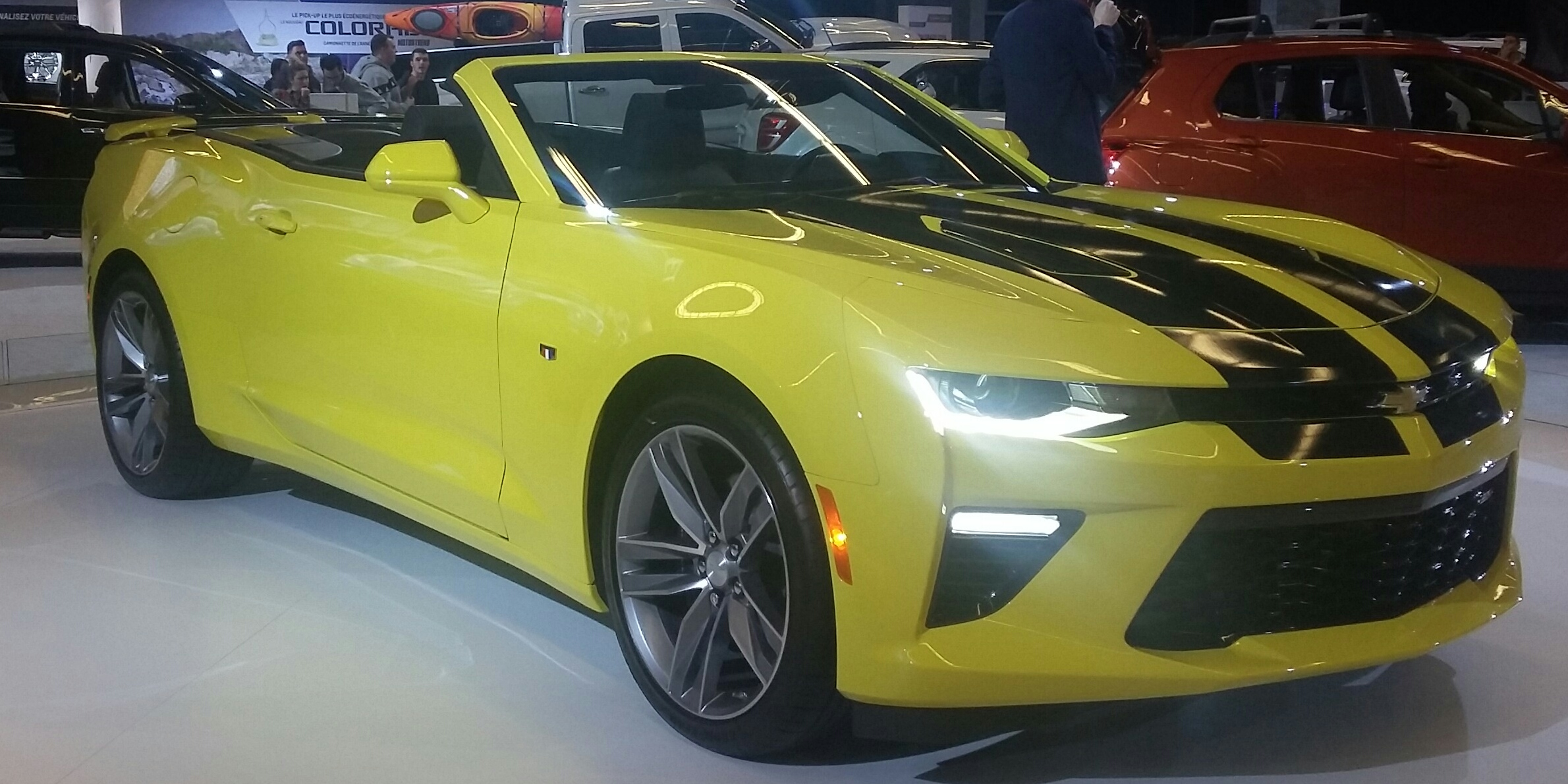
Chevrolet Camaro
"...er works does is also really impressive which the Camaro also had like I'm pretty nice the Camaro has a ni..."
The Camaro is a sports car made by Chevrolet. It’s known for having a powerful engine and a performance-focused design. The podcast brings it up because this Camaro has some kind of impressive setup or upgrade.
The Chevrolet Camaro is a classic American muscle car and performance coupe known for its power and strong aftermarket support. In the podcast, it’s mentioned alongside other performance builds, suggesting the Camaro being discussed has notable upgrades or a special configuration. That’s why it comes up—Camaro projects are often used to show how far the platform can be pushed.
gears feel really short
"it actually felt you know the gears feel really short in that car but I think that's actually just because it's so loud"
“Short gears” means the transmission is geared to get the engine revving faster. That can make the car feel punchier, but it often sounds louder.
When someone says the “gears feel really short,” they mean the transmission ratios are spaced so the engine reaches higher RPM quickly. That typically makes acceleration feel more immediate, but it can also keep the engine louder and closer to its redline more often.
red line
"and you you almost never get near red line because it feels like the thing's gonna eat itself but it's not"
The “red line” is the engine’s maximum safe rev range. Going past it can risk engine damage, so they’re saying this car doesn’t push the RPM that high.
The “red line” (redline) is the maximum safe engine RPM range, beyond which the engine can be damaged. The speaker says they “almost never get near red line,” meaning the car’s behavior discourages high-RPM operation even under spirited driving.
integrated rigidity structure
"gun thuring a 914 effectively it's it's got a sort of integrated rigidity [2226.3s] structure it's not a roll cage but it's like some kind of structure that makes [2233.6s] it tight"
This means the car is built to be stiff and solid, so it doesn’t flex as much when you drive hard. They’re saying it’s reinforced like a safety structure, but not as extreme as a full roll cage.
An integrated rigidity structure is a chassis/body approach where stiffness is built into the car’s main structure rather than relying only on add-on safety equipment. The host contrasts it with a roll cage, implying the car uses reinforcement to keep the body “tight” while remaining more street-friendly.
roll cage
"it's it's got a sort of integrated rigidity [2226.3s] structure it's not a roll cage but it's like some kind of structure that makes [2233.6s] it tight"
A roll cage is a strong metal frame inside the car meant to protect you in a crash, especially if the car rolls. It can also make the car feel more rigid when driving.
A roll cage is a reinforced metal framework installed in a car to protect occupants during a rollover or heavy impact. It also increases chassis stiffness, but it’s typically more extreme and intrusive than lighter reinforcement strategies.
four liter water cooled engine
"it's got a four liter water cooled engine it's a pretty nasty little [2244.9s] thing"
This is an engine that’s about 4.0 liters in size, and it uses liquid coolant to keep it from overheating. That helps the engine run more consistently.
A four-liter water-cooled engine uses a displacement of about 4.0 liters and relies on liquid coolant to manage operating temperature. Water cooling helps keep engine temperatures stable, which supports consistent performance and durability.
carbon fiber
"how much of that car is carbon fiber or new panels everything [2283.8s] is carbon fiber on that car even the door skins okay because you can see the [2288.1s] weave through the collect the paint"
Carbon fiber is a strong, lightweight material used to make cars lighter without losing strength. They’re saying this car uses it almost everywhere, which helps it feel tight and responsive.
Carbon fiber is a lightweight, high-strength composite material used to reduce mass and improve stiffness. Here, they emphasize that the car uses carbon fiber extensively—including door skins—while still retaining key structural elements underneath.
unibody
"but do they keep [2291.8s] like the original unibody at all and then all the body panels that go on under [2295.2s] carbon fiber"
A unibody means the car’s body and frame are basically one combined structure. They’re checking whether the original base structure is kept or if it’s mostly replaced.
A unibody is a vehicle construction where the body and frame are integrated into one structure. The host is asking whether the original unibody remains, which matters because it determines how much of the car’s stiffness and crash structure is retained versus replaced with carbon-fiber panels and reinforcements.
target bar
"the body panels on our carbon fiber but the except the [2299.3s] target bar obviously right target bar is still still structure"
They’re saying most of the outside is carbon fiber, but one important structural bar is still made differently. That bar is part of what keeps the car strong.
A “target bar” here appears to refer to a specific structural bar that remains conventional rather than being replaced by carbon-fiber bodywork. Because the transcript is unclear on the exact name, the key takeaway is that not everything is carbon fiber—some parts are still structural metal.
added rigidity and structure
"also the sills are much beef well the sills [2313.1s] have like a low almost what you see like a low bar on a cage but like inside that"
They’re talking about extra reinforcement inside the car to make it stiffer and stronger. That helps the car handle better because the body doesn’t twist as much.
“Added rigidity and structure” refers to reinforcement measures that increase the car’s stiffness and strengthen load paths. The host ties it to what you can see when you open the hood/trunk, implying internal bracing is part of the carbon-fiber conversion.
sills
"also the sills are much beef well the sills [2313.1s] have like a low almost what you see like a low bar on a cage"
Sills are the lower parts of the car along the sides, near where the doors meet the floor. They’re important because they help the car stay strong and resist bending.
Sills are the lower side members of a car’s body, running along the rocker area. They’re often reinforced because they help resist bending and provide a strong mounting point for structural bracing.
buttressed and reinforced the wheel wells
"inside that the front hood is it's really nicely shaped the way they've I guess buttressed [2321.7s] and reinforced the wheel wells and that thing handled great"
They’re saying the area around the wheel openings is strengthened with extra support. That can help the car handle better because that part of the body stays more solid.
Buttressing and reinforcement around the wheel wells means adding extra material or internal bracing in the areas that see high loads from suspension movement and impacts. Reinforcing wheel-well structures can improve stiffness and help the car maintain alignment under cornering forces.
power booster
"I don't like the manual brakes I [2333.5s] think it needs to have power booster so we make a carbon ceramic for that"
A power booster helps you brake with less pedal pressure. They’re saying the car would feel better if it had that kind of assist.
A power booster (typically a brake booster) multiplies the driver’s pedal force so braking requires less effort. The host’s point is that adding a booster would make the braking feel more usable, especially for everyday driving or repeated stops.
carbon ceramic
"I don't like the manual brakes I [2333.5s] think it needs to have power booster so we make a carbon ceramic for that"
Carbon-ceramic brakes are a high-end brake type that can handle hard use without getting weak as fast. They’re talking about offering that kind of brake upgrade for this car.
Carbon-ceramic brakes use ceramic brake rotors (often marketed as carbon-ceramic) designed to resist fade and provide strong stopping performance. The host mentions making a carbon-ceramic setup for the car’s boosted-brake configuration, implying an upgrade path from the current braking feel.
brake booster
"has a boosted yeah I would want a brake booster I even though the car is light I [2344.0s] I've never driven a car that had any kind of power whatsoever that had manual [2349.1s] brakes and I thought was a good idea I'm glad you can get power brakes as some"
A brake booster helps you press the brake pedal with less effort. Without it, you have to push harder to get the same stopping power, which can feel tiring or harder to control.
A brake booster is a device that uses engine vacuum (or another assist) to multiply the force your foot applies to the brake pedal. It’s what turns a “manual” brake pedal into a lighter, easier-to-modulate “power brake” feel, especially helpful when the car is light or when you want consistent pedal effort.
manual brakes
"I've never driven a car that had any kind of power whatsoever that had manual [2349.1s] brakes and I thought was a good idea I'm glad you can get power brakes as some"
Manual brakes don’t get extra help from the car. You have to push the brake pedal harder yourself to slow the car down.
Manual brakes are brakes without power assist, meaning the driver’s leg force is doing the work of creating hydraulic pressure. Compared to power brakes, manual brakes typically require more pedal effort and can feel less forgiving for quick, repeated stops.
drive-by-wire
"the the fuel pedal you're dealing with is all canvas soft drive by wire that's [2373.7s] tunable out the I particularly I like the main feel of a non-boosted"
Instead of a cable connecting your gas pedal to the engine, the car uses sensors and computers. That lets engineers adjust how the throttle responds, but sometimes it can feel a little jerky if the settings aren’t perfect.
Drive-by-wire replaces direct mechanical linkages (like a cable from the pedal to the throttle) with electronic sensors and actuators. It allows the car to “tune” throttle response, but some drivers notice odd transitions if the mapping isn’t smooth—like the “hiccuping” feeling mentioned here.

gray 912
"I particularly I like the main feel of a non-boosted [2380.8s] brake if you remember I had a gray 912 the three liter in it back in the day [2385.0s] yeah this is kind of that next generation for me of that"
The Porsche 912 is an older Porsche that’s famous for feeling very “mechanical” and straightforward to drive. The host is basically saying he likes that older, more analog feel compared to newer tech.
The Porsche 912 is an early-1960s Porsche 911-era model that’s known for its classic, analog driving feel. Mentioning a “gray 912” highlights the host’s preference for a more mechanical, less computer-mediated throttle/brake experience compared with newer cars.
Brembo six piston front
"the one that's in Colorado with the carbon ceramics we just delivered to a [2396.0s] customer that is I think the better choice and now I was just surprised it's [2400.4s] got what Brembo six piston front for rear like these are strong brakes"
Brembo makes high-performance brakes. A “six-piston” front caliper means more pistons squeeze the brake pads, which can help the brakes feel stronger and stay consistent when you brake hard.
Brembo is a performance brake brand, and “six-piston” refers to a multi-piston caliper design that can clamp the brake pads more firmly and evenly. A “six-piston front” setup is typically used to improve braking bite and fade resistance, especially on lighter, track-oriented cars.
spider at 60 60% scale
"it's kind of like your spider at 60 60% scale [2423.4s] you know you shrink it a ton but the seats are good positions good"
He’s comparing the car to a “spider” roadster feel, just in a smaller package. The point is that it should feel light, nimble, and fun like a classic open-top sports car.
This is a comparison describing a smaller car as a scaled-down “spider” experience—i.e., the open-top, lightweight, driver-focused feel associated with classic Italian-style roadsters. It’s not a technical term by itself, but it’s a named, enthusiast shorthand for that kind of chassis/seat/steering character.
flat engine
"always say even our Myers makes like anything that's got a flat engine in it if some sort seems to be so usable"
A flat engine is an engine where the cylinders are laid out sideways, like two banks of cylinders spread left and right. They’re saying that this kind of engine can make the car feel easy to live with, not just for car shows.
A flat engine (also called a boxer engine) is an engine layout where cylinders sit horizontally on opposite sides of the crankshaft. The hosts connect this layout to everyday usability, arguing that a flat engine makes the car feel practical rather than just a showpiece.
torquey
"it will just creep forward so you can in traffic or whatever it's it's pretty nice nice little torquey car yeah yeah it is a blast"
“Torquey” means the car has good pulling power. They’re saying it feels lively and easy to drive, especially when you’re creeping around in traffic.
“Torquey” is enthusiast shorthand for an engine that produces strong torque, especially at lower engine speeds. The point here is that the car feels responsive and easy to move around in traffic without needing constant revs.
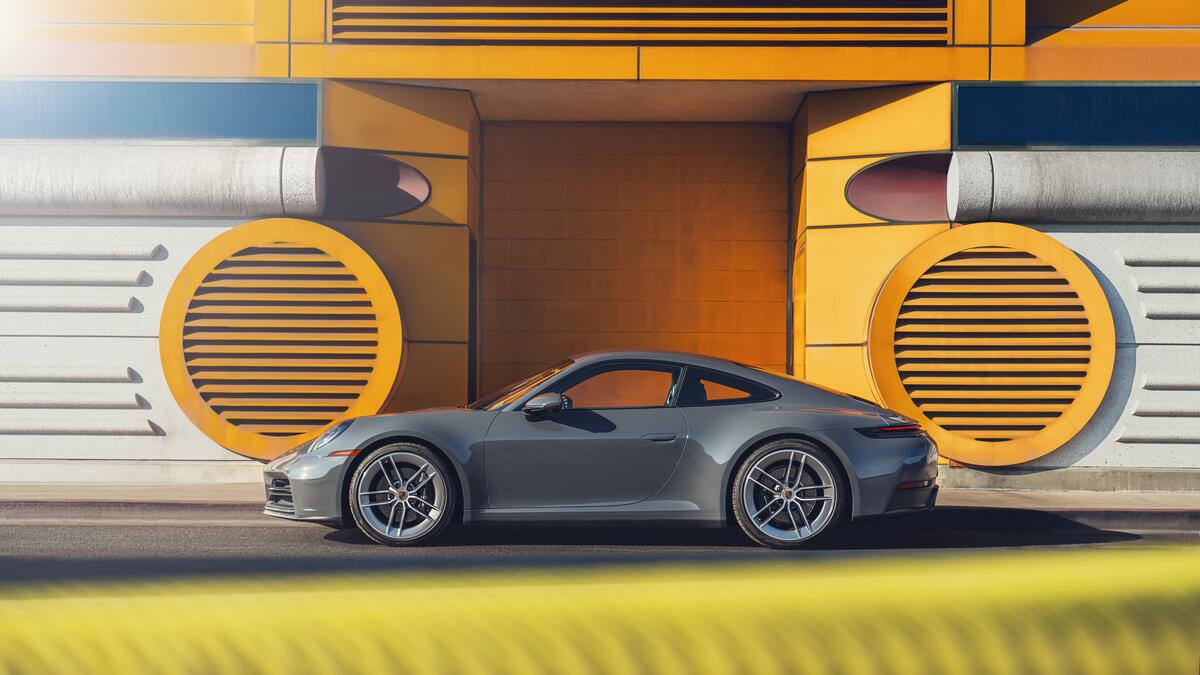
Porsche 911
"you're not gonna impress somebody by telling them that you've spent half a million bucks on a 914 but if you look at 914 history and pedigree it beat 911's in the moth no but you have to explain that to me right it's I guess they don't"
The Porsche 911 is a famous sports car model made by Porsche. It’s known for its recognizable shape and performance. In the podcast, it’s mentioned because people are talking about car history and how the 911 compares to other models.
The Porsche 911 is Porsche’s iconic sports car line, known for its long history and distinctive rear-engine layout. The podcast context is about how certain other cars’ histories can compare to 911 pedigree, emphasizing the 911’s reputation and why it’s often used as a benchmark. That makes it a frequent topic when discussing automotive history and value.
lift-couples events
"they haven't had that moment I think they're starting to they've had a good showing at the lift-couples events like that section's been growing a lot"
They’re talking about a specific car event series where enthusiasts show up and the community gets more attention. The point is that the 914 is starting to get more recognition at these kinds of gatherings.
“Lift-couples events” appears to refer to a specific Porsche/enthusiast gathering series or event name. In this context, it’s used to argue that the 914 community has been getting more visibility and better showings over time.
carbureted
"and if you look at the the drivability of that car because of it and it's not carbureted getting heat soaked in all the things that you have"
A carbureted engine mixes fuel and air using a carburetor. If a car isn’t carbureted, it uses a different fuel system, which can affect how heat and air end up inside the cabin.
A carbureted engine uses a carburetor to mix fuel and air before it enters the engine. The host is contrasting that with a non-carbureted setup, which changes how heat and airflow behave around the cabin.
radiator
"although the heat is coming out of the radiators and right into the cabin is it right then it vents out of the side"
Radiators help cool the engine by moving heat out of the coolant. They’re part of the cooling system, and the host is saying some of that heat can still affect the cabin.
Radiators are heat exchangers that remove heat from the engine coolant and reject it to the air. The host is explaining how heat can still end up soaking into the cabin even when it’s being expelled from the radiator area.
AC
"actually your legs get cooled because when you show the AC on the only event that seems to emit cold air is aimed at the blows at your feet"
AC means the car’s air conditioning. They’re talking about how the cold air is aimed—especially toward your feet—and how that changes how comfortable the cabin feels.
AC here means the car’s air conditioning system. The discussion is about where the cold air is directed (like footwell vents) and how that affects cabin comfort and perceived cooling.
nose lift
"are better buying these the true Porsche customers can you get a nose lift on it so this one's grapey a little bit"
A nose lift raises the front of the car to help it clear obstacles. It’s useful for steep driveways, ramps, or speed bumps so you don’t scrape the front.
A nose lift is a suspension/ride-height feature that raises the front of the car to clear obstacles like steep driveways or speed bumps. The host is asking whether the specific car can be equipped with that function.
full-up mode
"and then and the Kimera when I picked it up from you guys it was in full-up mode it was in full-up mode yeah yeah well we we were"
Full-up mode means the car raises to its highest ride height. They’re talking about using the control to lift it up and down for clearance.
Full-up mode is a ride-height setting where the car raises itself to the maximum level. The host is describing using it by operating the system up/down, likely to improve clearance.
comfort seats
"those are the comfort seats and where that came into play was for a shorter guy it's the only way to get a seat that comes up"
Comfort seats are seats made to help you sit more comfortably for longer. Here they’re talking about how the seat position can be adjusted so a shorter person can fit better.
“Comfort seats” are aftermarket or upgraded seats designed to reduce fatigue by improving padding, support, and sometimes seat height/position. In this segment, they’re being discussed in relation to fitting a shorter driver properly.
seat actually lower
"otherwise you're all with pan and on the 1511 we've made the seat actually lower [2695.7s] I thought the shape of the seat was good it could always go lower yeah what's up"
Making the seat lower changes how you sit in the car. It can help you reach the controls comfortably and see better, especially if you’re shorter.
Lowering a seat changes the driver’s seating position relative to the steering wheel, pedals, and roofline. That can improve ergonomics and visibility, especially for shorter drivers who otherwise can’t get the right “fit.”
Stafford Motor Speedway
"we're gonna go raise yeah we're gonna go race with Cletus tomorrow at Stafford Motor Speedway that's awesome crazy you guys are all different"
Stafford Motor Speedway is a real race track where cars run laps on an oval. The hosts mention it’s a half-mile oval, which affects how the race feels and how the cars handle.
Stafford Motor Speedway is a race track in the U.S. known for oval racing. In this segment it’s described as “old-school” and specifically as a half-mile oval, which matters because oval geometry drives how cars are set up and driven.
lemon's race
"the last time I raced there was in my was in a lemons race and my insurance broker came with us as one of the teammates and crashed our car wow so it's like that was the last time I was there"
A “lemons race” is a kind of race where people intentionally bring cheap, imperfect cars. In this story, it’s the event where the speaker previously crashed and had to replace parts afterward.
A “lemons race” refers to endurance-style racing where teams compete with inexpensive, often beat-up cars (commonly known as “Racing for the Money/ChumpCar-style” events). The segment uses it as context for how the speaker’s last visit to Stafford ended in a crash and a drivetrain swap.
Request an Explanation
Heard something you'd like explained? We'll add it to this episode.
Sign in to request explanations for terms you heard.
Want to learn more?
Browse our glossary for plain-English explanations of automotive terms, jargon, and concepts.
Help improve this episode
See something that's not quite right? Our annotations are AI-generated and can sometimes miss the mark. Click the flag icon on any annotation to suggest a correction.