
Reviews: C8 Grand Sport and Lambo Temerario; Flock returns!
About this episode
After a quick sponsor/legal read, the hosts kick off with reviews of the 2027 Corvette Grand Sport and the Lamborghini Temerario, plus a giveaway and a correction to a prior “Flock” story. The conversation then turns into a deep critique of camera/AI plate-alert workflows—where human input, missing context, and text-only evidence can lead to bad outcomes. The show also mixes in practical ownership talk: drive modes, interior glare, and privacy/data-broker cleanup services.
Matt Farah reviews the all new C8 Corvette Grand Sport and compares is to the Z06 as well as the new base model; he also tells of his week in the blistering Lamborghini Temerario (the good, bad, the mud flaps); Zack Klapman discusses Flock's PR nightmare regarding its inability to read license plates; and Q&A answers questions including:
Do economy cars look TOO edgy?
Are used car salespeople STILL sus?
Which of these 3 dreams cars to sell?
M Roadster vs 2008 Vantage Roadster automatic
Does this make fancy cars look cheap or vice versa?
Soft road build: RX300 or Rav4?
Pivotal childhood road trips?
Why did Polestar leave but Waymo's Zeeker stays?
How to Road America
Choose: a car with a steering wheel on the ceiling or pedals all mixed up
The perfect car for long Utah trips is...
Why are restomods so expensive?
And more!
Recorded July 23, 2026
The TST hoodie jackets: https://www.thegrottomenswear.com/thesmokingtire/
Tickets to our LIVE show at the Irvine Improv are going quick! https://improv.com/irvine/event/the+smoking+tire+live+feat.+smith+and+sniff+with+matt+farah%2C+zack+klapman%2C+richard+porter%2C+and+jonny+smith/14213624/
DeleteMe
Get 20% off your DeleteMe plan when you go to www.joindeleteme.com/TIRE and use promo code TIRE at checkout.
Avants
Go to https://www.Avants.com and use code TST for 10% off your membership!
Use Off The Record! and ALWAYS fight your tickets! For a 10% discount on your first case go to https://www.offtherecord.com/TST
Want your question answered? Want to watch the live stream, get ad-free podcasts, or exclusive podcasts? Join our Patreon: https://www.patreon.com/thesmokingtirepodcast
Instagram:
https://www.Instagram.com/thesmokingtire
https://www.Instagram.com/therealzackklapman
Enter to WIN our AMAZING 2025 Porsche 911 Turbo S!! https://www.dreamgiveaway.com/tickets/porsche?promo=SMOKINGTIRE
Promo Code Offer: Get 4X bonus tickets with any donation of $25 or more. With every donation you are helping benefit some wonderful veterans' and children's charities.
Podcast Promo Code: SMOKINGTIRE
Want your question answered? Want to watch the live stream, get ad-free podcasts, or exclusive podcasts? Join our Patreon: https://www.patreon.com/thesmokingtirepodcast
Use Off The Record! and ALWAYS fight your tickets! Enter code TST10 for a 10% discount on your first case on the Off The Record app, or go to http://www.offtherecord.com/TST.
Watch our car reviews: https://www.youtube.com/thesmokingtire
Tweet at us!
https://www.Twitter.com/thesmokingtire
https://www.Twitter.com/zackklapman
Instagram:
https://www.Instagram.com/thesmokingtire
https://www.Instagram.com/therealzackklapman
moving violation
"But if you get pulled over for any kind of a moving violation, big or small, don't plead guilty."
A moving violation is a traffic ticket for something you did while driving, like speeding or ignoring a signal. It can lead to points on your record and may raise your insurance costs.
A moving violation is a traffic offense that happens while the vehicle is in motion, such as speeding or running a red light. These tickets often come with points and can affect insurance and employment depending on local rules.
points off your record
"In almost any jurisdiction in the United States, they will fight that ticket on your behalf and get those points off your record."
In many places, traffic tickets add “points” to your driving record. Too many points can cause problems like higher insurance, so removing them can help.
“Points” are a scoring system used by many states to track driving violations. Accumulating points can trigger penalties like higher insurance premiums or other consequences, while getting them removed can reduce risk.
more flock
"In-depth reviews of both of those cars, plus I have an amazing story with a life lesson, and we're going to start with more flock."
They’re talking about a recurring story segment called “Flock.” The host says there’s an update coming, so it’s more of a follow-up than a car review.
The host is referring to “Flock,” a recurring segment/storyline from earlier episodes, and says there’s an update to it. This sets up a follow-up discussion rather than a technical car topic.
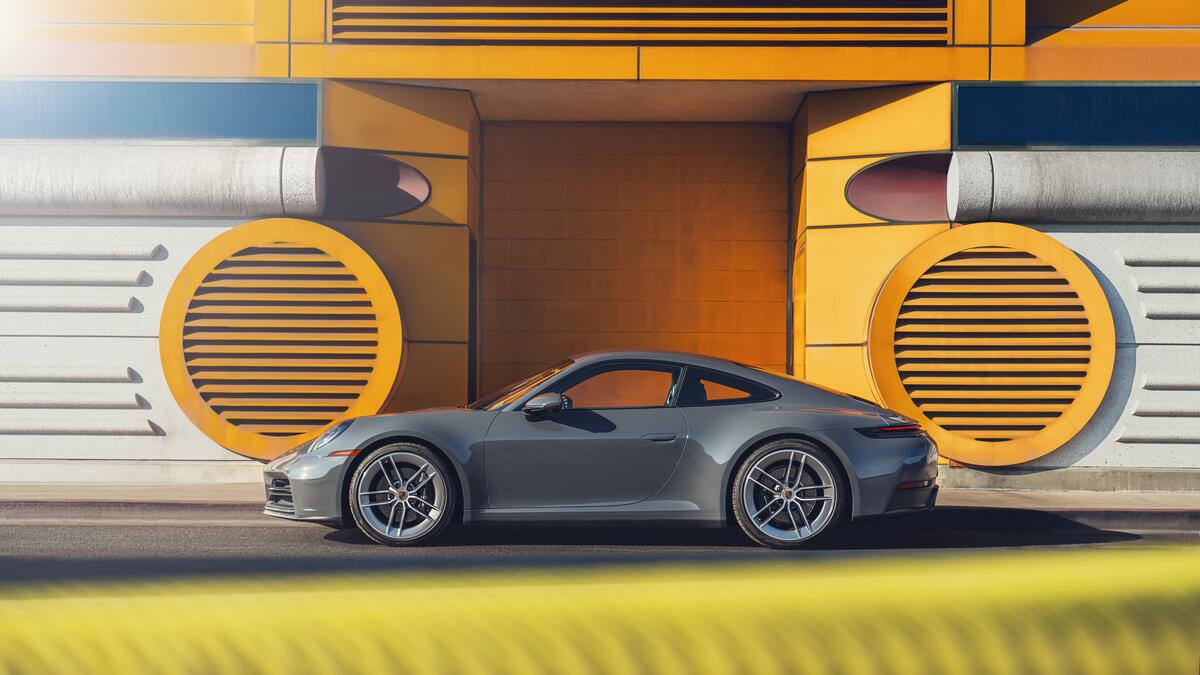
992.1 Turbo S
"Guys, the Smoking Tire is giving away a 992.1 Turbo S in partnership with Dream Giveaways."
This is a Porsche 911 Turbo S, and “992.1” is a specific version of the 911 generation after the main redesign. Turbo S is the top, high-performance version of the Turbo model.
“992.1” refers to the early production update of the Porsche 911 (the 992 generation’s first facelift). “Turbo S” is the high-output, all-wheel-drive 911 variant built for maximum acceleration and high-speed stability.
license plate frame
"Also, representatives were talking about how complicated it is, all these different license plate formats and all that. Nobody ever brought up that given the fact that there were so many different license plate formats that there should be maybe extra training,"
License plate formats are how license plates are designed in different places. Some places use different layouts or styles, and that can make it harder for cameras or software to read them correctly.
License plate formats are the different layouts and styles used by jurisdictions—such as font, spacing, and character arrangement. In automated or semi-automated systems, variations in format can make the plate harder to recognize and can increase the chance of misreads.

Land Rover Range Rover
"...the way, another journalist was stopped driving a Range Rover. So the exact same thing they said was going to h..."
A Range Rover is a large luxury SUV made by Land Rover. It’s designed to be comfortable and capable for everyday driving and longer trips. The podcast brings it up because it was involved in a real situation while being driven.
The Range Rover is a luxury SUV that’s built for comfort and capability, often associated with long-distance driving and upscale features. The podcast mentions a journalist being stopped while driving one, which suggests the car came up in a real-world context rather than a technical review. It’s discussed because it’s a recognizable, high-profile vehicle on the road.
machine learning
"So he said, quote, the way the machine learning works is it correctly read what it was supposed to read."
Machine learning is a way for computers to learn from examples. Instead of being programmed with exact rules, it figures out patterns from data—like recognizing characters in an image.
Machine learning is a type of AI where a system learns patterns from data instead of following fixed, hand-written rules. In this context, it’s being used to recognize or extract information (like license-plate characters) from inputs.
dealer tag
"And if Flock didn't say this might be a dealer tag, and if they don't know it's a dealer tag, then no one has the information until they're literally looking at it."
A dealer tag is a special plate used for cars connected to a dealership. If someone (or a system) doesn’t realize it’s a dealer tag, they might treat it like a normal plate and miss the context.
A dealer tag is a license plate assigned for dealership use, which can look similar to regular plates but may indicate the vehicle is associated with a dealer. The point here is that if the system doesn’t recognize it as a dealer tag, it may fail to interpret the plate correctly.
flock cameras
"Now, the last line of defense would have been, if they see this car in the flock camera in their area and then the police pull up behind it and they go, wait, that says 3, 4, but there's some extra letters in the middle."
A Flock camera is a system that reads license plates automatically. If it only gets part of the plate information (or misses characters), it can match the wrong thing or miss the right context.
A Flock camera refers to an automated license-plate recognition (ALPR) system that reads plates and matches them against watchlists. The segment argues that if the system only receives partial text or misses characters, it can produce an incomplete or misleading match.
photo evidence
"if there's no photo evidence given to the officers, it was just text, which seems like it was also given to the flock camera, which is bad."
Photo evidence is a picture that can prove what a system saw. The speaker is saying that if officers only get text and no photo, it’s easier for details to be wrong or incomplete.
Photo evidence is visual documentation used to verify what was seen, such as a clear image of a vehicle or its plate. The speaker contrasts this with relying on text-only information, arguing that lack of photos creates gaps in how confidently officers can act.
ticket cameras
"You know, the ticket cameras use it like the fucking, you know, fast track, they use it."
Ticket cameras are automated cameras used to issue traffic tickets. They’re supposed to capture clear evidence—especially the license plate—so the system can decide whether a violation happened.
Ticket cameras are automated enforcement cameras used to capture evidence for traffic violations, typically including vehicle images and license plate data. The hosts are arguing that the system should be able to distinguish different plate formats and not misclassify them.
dealer plate
"Look, as someone who has received a ticket in the city of Los Angeles with a dealer plate that is formatted just like this, trust me, the camera can read it."
A dealer plate is a special kind of license plate used by car dealerships. The speaker is saying cameras should be able to recognize that plate type and read it accurately.
A dealer plate is a special license plate issued to car dealerships, typically used for dealer-related vehicles and activities. The discussion implies that dealer plate formatting should be recognized correctly by plate-reading enforcement cameras.
Los Angeles
"Look, as someone who has received a ticket in the city of Los Angeles with a dealer plate that is formatted just like this, trust me, the camera can read it."
Los Angeles is where the speaker says they personally got a ticket. They’re using that experience to argue that the cameras should be able to read license plates correctly.
Los Angeles is referenced as the city where the speaker received a ticket involving a dealer plate. It’s used to ground the argument that camera systems can read plate text and formatting in real-world conditions.
license plate refers to up to 100 plates
"And if not a fucking human should have been able to look at the plate and go, guys, this format of license plate refers to up to 100 plates."
The speaker is saying the software could use a simple rule: there are only a limited number of plate formats it should recognize. If it knows those formats, it should be able to tell what kind of plate it’s looking at instead of confusing it with others.
This refers to a recognition rule the software could use: mapping a limited set of plate formats to known categories. The point being made is that if the system can handle a defined range of plate patterns, it should be able to avoid false positives for special plate types.
license plate number
"Think about how important license plate numbers are to a cop. [1127.5s] Yeah, they run here anytime they're behind you."
Police use license plate numbers like a vehicle’s ID. They can type the plate into a system to find the car’s details and related records.
In traffic enforcement, license plate numbers are the key identifier used to match a vehicle to records. Police use them to look up ownership/registration and to confirm whether a car is associated with a call, warrant, or violation.

2027 Corvette Grand Sport
"And so I went to explore a few dams in the 2027 Corvette Grand Sport. This has the new engine, 6.7 liters."
This is a high-performance version of the Chevrolet Corvette. In this part of the episode, they’re talking about the 2027 Corvette Grand Sport and what’s new under the hood.
The Chevrolet Corvette Grand Sport is a performance-focused Corvette variant known for track-oriented handling and a more aggressive setup than the base model. In this segment, the host specifically discusses the 2027 Corvette Grand Sport and its updated powerplant.
6.7 liter
"This has the new engine, 6.7 liters. It's got an extra 500 cc's."
“6.7 liters” is how big the engine is, based on the total cylinder volume. Bigger numbers usually mean the engine can make strong power, but it’s not the only factor.
“6.7 liters” is the engine displacement, meaning the total volume of all cylinders combined. Higher displacement often correlates with more potential for torque and power, though real-world output still depends on the engine’s design and tuning.
500cc's
"It's got an extra 500 cc's. They don't like to say cc's because it's America."
“500 cc’s” is another way of saying the engine got bigger by 500 cubic centimeters. It’s basically a displacement comparison number.
“500 cc’s” refers to an increase in engine displacement measured in cubic centimeters (cc). It’s a way to quantify how much larger the engine is compared to the previous version.
409
"Right. This is a 409 is what they want. That's what they want you talking about."
“409” is a nickname for a big engine size measured in cubic inches. The point here is that people like hearing the old-school “409” number when talking about performance engines.
“409” is shorthand for a 409 cubic-inch V8 displacement, a classic American engine size associated with big-displacement muscle-era performance. In this segment, the host is contrasting how the marketing talks about displacement versus what enthusiasts want to hear.
displacement
"It says there's no replacement for displacement in the fucking marketing for this thing. It's a big beefy fucking V8."
Displacement is basically how much “engine volume” the cylinders have. Bigger displacement often helps an engine make stronger power, though design and tuning matter too.
Displacement is the total volume swept by an engine’s pistons, usually expressed in liters or cubic inches. It’s a key spec that affects how much air/fuel the engine can move, which can influence torque and power potential.
V8
"It's a big beefy fucking V8. I'm pretty sure it is the largest displacement gasoline V8 on sale right now, I think."
A V8 is an engine with eight cylinders arranged in a V shape. It’s known for making strong power and having a recognizable sound.
A V8 is an engine with eight cylinders arranged in a “V” shape. It’s commonly associated with strong low- to mid-range torque and a distinctive exhaust note, especially in American performance cars.

Chevrolet Impala
"I'm pretty sure it is the largest displacement gasoline V8 on sale right now, I think. I think 409 was a song and I think it was about a beefy engine that was in Impala's. Something like that."
The Impala is a large Chevrolet car that’s known for having powerful engines. The podcast is talking about the older versions with a very big V8, especially the famous 409 engine. It comes up because that engine is a well-known part of Impala history.
The Chevrolet Impala is a full-size American car that has been known for big engines and a classic, comfortable ride. The podcast context talks about its large displacement V8 and references a “409” connection, pointing to the famous high-output 409 engine era. It’s discussed because it represents a specific, performance-focused chapter of Impala history.
boomer color scheme
"Well, this one was a very boomer color scheme with the white with the blue interior and the black wheels and the red stripes. The interior was extremely blue."
“Boomer color scheme” is slang for a classic-looking color combo that feels old-school. In this case, they’re talking about the white exterior, blue interior, and other contrasting details.
“Boomer color scheme” is a slang description for a traditional, older-generation styling palette—here, specifically a white body with a blue interior and contrasting accents. It’s used to characterize the car’s visual theme rather than a technical feature.
C8 Corvette
"But this photo illustrates really well why if you get a C8 Corvette, you under no circumstances should you get a light colored dash. Because the windshield in this motherfucker is super reflective."
The C8 Corvette is a Corvette generation with the engine behind the driver. Here they’re saying that if you choose a light-colored dashboard, the windshield reflects a lot of light, which can make it harder to see clearly.
The C8 Corvette is Chevrolet’s mid-engine Corvette generation, and it’s known for a driver-focused cockpit. In this segment, the hosts point out that the C8’s windshield can be extremely reflective, so a light-colored dashboard can make glare worse and reduce visibility.
light colored dash
"But this photo illustrates really well why if you get a C8 Corvette, you under no circumstances should you get a light colored dash."
This means a dashboard in a light color. Light colors can reflect more sunlight and glare off the windshield, making the view inside the car look washed out.
A “light colored dash” refers to a dashboard finished in a pale color. The hosts connect it to glare: with the C8 Corvette’s highly reflective windshield, light interior surfaces can create a “softbox” effect that washes out visibility.
softbox
"And I was just truly shocked that nobody stopped them from selling this because the entire dashboard is like driving into a softbox."
A softbox is a studio lighting setup that makes light look smooth and even. They’re comparing the car’s light interior to that effect—basically, the dashboard reflects light in a way that can be distracting or reduce clarity.
A “softbox” is a photography lighting modifier that creates very even, diffused light. The hosts use it as a metaphor for how a white dashboard and interior can reflect light uniformly into the cabin, making the whole dash area look like it’s being lit by a studio light.
widescreen touchscreen
"But the new interior, which is across, you know, all the C8s with a bunch of buttons for things like the climate control and then the better, the better widescreen touchscreen."
A widescreen touchscreen is the big display in the dashboard you tap to control things like media and settings. They’re saying the newer C8 interior uses a bigger, more modern screen.
A “widescreen touchscreen” is a large, horizontally oriented infotainment display used to control vehicle functions. The hosts contrast the newer C8 interior’s screen with older layouts, emphasizing that the updated system uses more modern, larger display hardware.
climate control
"But the new interior, which is across, you know, all the C8s with a bunch of buttons for things like the climate control and then the better, the better widescreen touchscreen."
Climate control is what keeps the cabin at the temperature you want. It usually includes heating/AC and fan settings, and this car has buttons for it.
Climate control is the system that manages cabin temperature and airflow, typically through a combination of heating, air conditioning, and fan speed. In the C8’s newer interior layout, the hosts mention dedicated buttons for climate control alongside the touchscreen.
Hazis
"There's a guy who comes on our road and track events at Hazis, has had a series of Corvettes..."
They’re talking about road and track events at a place called “Hazis.” It’s the location for where this Corvette-related story happened.
“Hazis” is mentioned as the location for road and track events. It’s likely a shorthand or mis-transcription for a specific venue where the hosts run or attend driving events.
Z06 chassis
"But so the story, you know, the Grand Sport is a, it's a Z06 chassis, right? So it's a wide body chassis."
A “Z06 chassis” means the Corvette is built on the same basic platform as the Z06, which is the more track-focused version. That usually comes with stronger, wider, more performance-oriented setup.
“Z06 chassis” refers to the Corvette’s track-oriented platform used by the Z06 model. It typically implies wider bodywork and more performance hardware compared with a more basic Corvette chassis.
wide body chassis
"So it's a wide body chassis. It's got the better shocks."
“Wide body” means the car is wider than usual. That helps it fit wider tires, which can improve grip when you’re driving hard.
A “wide body chassis” means the car’s body and track width are widened compared with a standard configuration. That typically allows for wider tires and more stable grip during hard cornering.
steel brakes
"It's got, this one has the, it's steel brakes, but it's the upgraded steel brakes that you would get with a Z06."
“Steel brakes” are the normal kind of brake rotors made from steel. They work great, but ceramic brakes are often chosen for track use because they can handle heat better.
“Steel brakes” here refers to conventional steel brake rotors. They’re contrasted with ceramic brakes later, which are typically lighter and can resist fade better under repeated hard use.
ceramics
"You could also get ceramics if you want. And it's, but with this new engine, the 6.7, 535 horsepower."
“Ceramics” means ceramic brake rotors. They’re often used on performance cars because they can stay effective even when the brakes get very hot.
“Ceramics” refers to ceramic brake rotors. Compared with steel rotors, ceramic brakes are usually lighter and can maintain braking performance at higher temperatures, which helps reduce brake fade on track.
6.7
"but with this new engine, the 6.7, 535 horsepower. And that engine is now the base engine."
“6.7” is the engine size—how big the engine is. They’re saying this 6.7-liter engine is the standard one now, and it makes 535 horsepower.
“6.7” is the engine displacement being discussed for this Corvette Grand Sport setup. In context, they’re saying the 6.7-liter engine is now the base engine and produces 535 horsepower.
center exit exhaust
"Also, if you show a rear view of the Karzac, you can get a center exit exhaust now. It's optional, but it's like under 2000 bucks."
“Center exit exhaust” means the exhaust tips come out from the middle of the back. It also changes the sound compared with exhaust tips on the sides.
A “center exit exhaust” routes the exhaust outlet out the middle of the rear bumper rather than to the sides. They’re discussing it as an option and comparing its sound character to a dual-exit setup.
dual exhaust
"I don't have the 6.7 with the, with the dual and then with the center. So I don't have a direct comparison, but I compared to that e-ray recently."
“Dual exhaust” means there are two exhaust outlets, usually one on each side. They’re saying it sounds different from a center-exit exhaust.
“Dual exhaust” means two exhaust outlets, typically one on each side of the rear. The host contrasts its tone with the center-exit exhaust, saying dual sounds more like a “truckie” tone.
power top
"I also am a big fan now of these cars as convertibles with the power top. I just think you put it up and down a lot more."
A power top is a convertible roof that opens and closes automatically with a button. It’s easier to use than a manual roof, so you’re more likely to put it down often.
A power top is a convertible roof that moves automatically using electric/hydraulic motors. It lets you raise and lower the roof at the push of a button, which changes how often you’ll actually use the open-air setup.
hard top convertible
"And I was like, I'm not a convertible person, but if I can do hard top convertible with tiny compromise and then I use, then I can just use it at my whim."
A hard top convertible uses a solid roof that can fold away, instead of a cloth roof. It can feel more solid and quieter than a soft-top while still letting you drive with the top down.
A hard top convertible is a convertible that uses a rigid roof panel (not fabric) that retracts or folds away. Because it’s a solid roof, it often provides better noise isolation and security than a soft-top, while still giving open-air driving.
mid engine supercar
"Like I'm a fan, especially with mid-engine supercars all day. And it's also super nice to drive with the side windows down..."
Mid-engine means the engine sits near the middle of the car, not in the front. That can help the car feel more balanced and easier to drive fast.
Mid-engine supercars place the engine near the center of the car, typically behind the driver and ahead of the rear axle. That layout helps balance weight distribution and can improve handling, which is why the host links it to the “all day” driving experience.
Irvine Improv August 18th, 8pm
"Smith and sniff is joining TST for a live collab podcast at the Irvine Improv August 18th, 8pm. It's a big room."
They’re advertising a live event at Irvine Improv on August 18th at 8pm with special guests.
The hosts promote a live show at the Irvine Improv on August 18th at 8pm, featuring a collaboration with Richard Porter and Johnny Smith.
aluminum structure
"And also the aluminum structure of the C8 Corvette and the aluminum strut. I think the C8 was a little more rigid than the Ferrari 849."
An aluminum structure means the car’s body/chassis uses aluminum components to reduce weight compared with traditional steel. Lower weight can improve acceleration, braking, and how the car feels over bumps, while also affecting stiffness.
magnetic ride
"Honestly, just by seat of pants, jiggle or lack thereof, the magnetic ride in this car is fabulous. Huge amount of variable from soft to stiff. It had radar cruise control that works really nicely."
Magnetic ride is a suspension system that can change how stiff the car feels while you drive. It can make the ride softer for comfort and firmer when you want more control.
Magnetic ride control is an adaptive suspension system that uses electronically controlled dampers to quickly change ride stiffness. The goal is to let the car feel soft over bumps and firm during spirited driving, often with a wide soft-to-stiff range.
radar cruise control
"Huge amount of variable from soft to stiff. It had radar cruise control that works really nicely."
Radar cruise control is like regular cruise control, but it also watches the traffic in front of you. It can automatically adjust your speed to help keep a safe distance.
Radar cruise control is an adaptive driver-assistance feature that uses radar to maintain a set distance from the car ahead. Unlike basic cruise control, it can automatically slow down and speed back up to keep spacing.
flat plane crank
"Now the Z06 with the 5.5 liter flat plane crank, 670 horsepower, 460 torque."
A flat-plane crank is a specific crankshaft shape inside the engine. It affects how the engine runs and how it feels—often making it rev more freely and sound more “high-strung.”
A flat-plane crank is a crankshaft design used in some V8 engines where the crankpins are arranged to create a “flat” plane. It changes the engine’s firing order and vibration characteristics, often giving a sharper, higher-revving feel compared with a cross-plane crank.
peak horsepower
"But the peak horsepower, 535 of the Grand Sport is 6,100 RPM ... The Z06, peak torque, 6,300 RPM. ... The peak torque and peak horsepower of these two cars don't overlap."
Peak horsepower is the engine’s maximum “speed-making” power at a certain RPM. They’re pointing out that each car’s best power shows up at different engine speeds.
Peak horsepower is the maximum power output the engine reaches, also tied to a specific RPM. Horsepower and torque don’t peak at the same time, so the host is highlighting how the two Corvettes’ power bands don’t overlap.
red line
"...the red line is 6,200 RPM and the red line is 6,500 RPM. ... The Z06 red line is 8,600 RPM, so you've got 2,300 RPM of revs..."
The red line is the top safe engine speed on the tachometer. They’re comparing how high each car can rev before you hit that limit.
The red line is the engine’s maximum recommended RPM, beyond which you risk damage. The host compares red-line RPMs between the Grand Sport and Z06 to explain how much usable rev range each car has.
power band
"So as soon as the Grand Sport's big block fucking motor gives up, that's when the Z06 just gets going. There's no overlap in power band."
A power band is the range of engine speeds where the car feels strongest. They’re saying one car is strong at one set of RPMs, and the other car is strong at a different set.
A power band is the RPM range where an engine makes strong power and torque. The host says there’s “no overlap in power band,” meaning each car’s strongest performance happens in different parts of the rev range.
torque spread
"But this huge torque spread, I would be very interested to see how they do in a little quarter mile race between the two of them. Somebody just ran a Grand Sport. It might have been Savage Geese, I think, did a Grand Sport in the quarter mile."
“Torque spread” means how the engine’s pulling power changes as the RPMs go up. If the engine makes strong torque earlier, the car can feel faster even before the highest power shows up.
“Torque spread” refers to how much the engine’s torque output varies across the rev range—both the size of the change and where peak torque arrives. In acceleration, a wider or earlier torque spread can make a car feel like it starts pulling sooner, even if peak horsepower isn’t the whole story.
quarter mile track
"But this huge torque spread, I would be very interested to see how they do in a little quarter mile race between the two of them. Somebody just ran a Grand Sport. It might have been Savage Geese, I think, did a Grand Sport in the quarter mile."
A quarter-mile race is a drag-racing format where cars accelerate over 1/4 mile (about 402 meters). It heavily rewards strong launch and mid-range acceleration, so differences in torque delivery and tire grip show up quickly in times like “10s” or “middle 11s.”
better tires
"I don't know, Z06 maybe has better tires. Also, there's a ton, because I was talking to Alex at GM to get pricing and stuff like that."
Tires affect how well the car can grip the road. If the tires are better, the car can put more power down instead of just spinning, which helps it run faster.
Tire grip is crucial for acceleration because it determines how much of the engine’s torque can be turned into forward motion without spinning the wheels. The host suggests the Z06 may be quicker partly because it likely has better tires for traction.
price delta
"And this is 144,000. It's almost maxed out. So you really would have to work to make one of these more expensive. The price delta is $30,000 between this and an identically specced Z06."
“Price delta” just means how much more (or less) one thing costs compared to another. They’re comparing the price difference between the two Corvette versions.
“Price delta” means the difference in price between two options or trims. The host uses it to compare the cost gap between the loaded Grand Sport they drove and an identically specced Z06.
turbocharged
"But in the real world, a turbocharged 911 will actually be a quicker car."
Turbocharged means the engine uses a turbo to force more air into the cylinders. That usually helps it make stronger power, which can make the car feel faster.
Turbocharged describes an engine that uses a turbocharger to compress incoming air, allowing more power from the same displacement. In this comparison, the host credits turbocharging as a reason the 911 can be quicker in real-world driving.
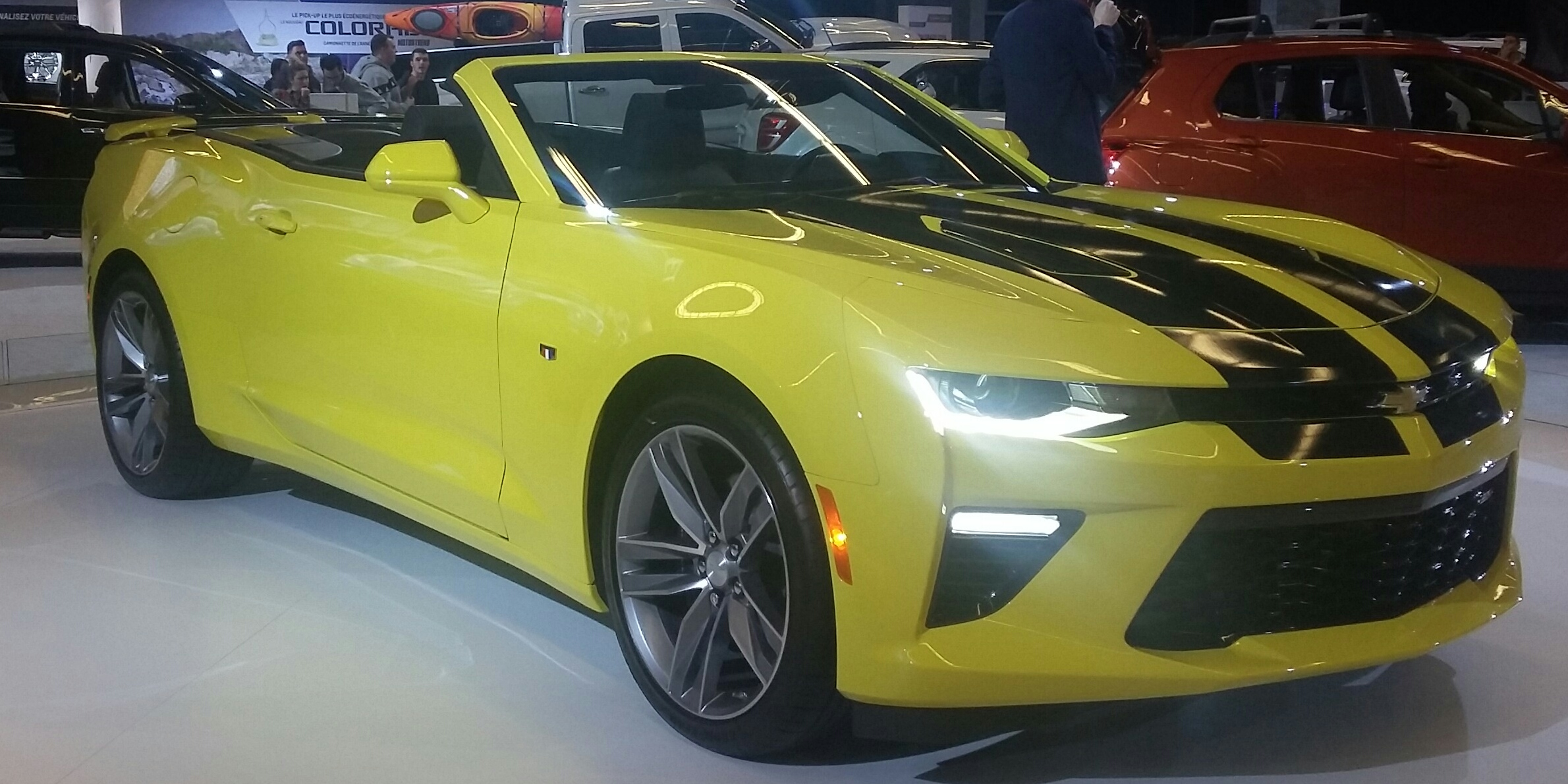
Chevrolet Camaro
"... And it separates it, you know, acoustically from Camaro, previous Corvettes, all, you know, basically tru..."
The Camaro is a performance car from Chevrolet, usually with a sporty coupe body. It’s known for having a strong engine and a distinctive exhaust sound. The podcast mentions it in the context of how it sounds compared with other cars.
The Chevrolet Camaro is a muscle-car-style sports coupe known for its strong engine options and classic American performance identity. The podcast context mentions how the car’s sound is separated acoustically from previous Corvettes, implying discussion around exhaust note and character. It’s brought up because it’s part of the broader sports-car and muscle-car sound/feel conversation.
exhaust pulsing
"They can play so much with the exhaust pulsing with muffler designs and stuff, you know."
As the engine runs, it sends exhaust out in bursts. Those bursts create a pulsing sound, and the muffler design can make it sound more aggressive or more refined.
Exhaust pulsing is the rhythmic pressure waves created as the engine fires and sends exhaust through the exhaust system. How strong and how “musical” those pulses are depends on the muffler design and any exhaust valves.
valves
"The valves do a lot of different stuff. It makes a whole bunch of different sounds at different throttle loads and different RPM and stuff like that."
Exhaust valves are like adjustable doors in the exhaust. They open and close to change how loud the car is and how the engine “feels” at different speeds.
In an exhaust context, exhaust valves are electronically controlled flaps that change exhaust flow. By opening and closing at different throttle and RPM conditions, they alter sound and sometimes throttle response by changing backpressure.
CarPlay
"If you're like, especially because I drove this right after the Ferrari, this is such a user-friendly car. The phone just, boom, car play right there."
CarPlay lets you connect your iPhone to the car’s screen. You can use navigation, music, and calls through the car’s display.
CarPlay is Apple’s in-car interface that mirrors supported iPhone apps onto the vehicle’s infotainment screen. It’s commonly used for navigation, music, calls, and messaging while keeping the driver focused on the road.
Z51 package
"Pretty talkative. I mean, I drove, it was Z51 package. But like, you know, normal engine and I came out of that going, this is such a great track car performance car."
The Z51 package is a Corvette option that makes it more performance-focused. It’s meant to improve how the car handles and how it feels when you drive it hard, especially on track.
The Z51 package is a performance option package for the Chevrolet Corvette that typically adds track-focused hardware and tuning. In this context, the host contrasts it with the Z06’s characteristics and discusses how the car behaves as a track-oriented performance car.
mag ride
"Also really comfortable on the highway with the MagRide and everything."
MagRide is an adaptive suspension that can change how stiff or soft the shocks feel. It helps the car ride comfortably on the highway but still handle well when you drive hard.
MagRide is GM’s magnetorheological adaptive suspension system. It uses electronically controlled fluid to change damping quickly, which is why the host calls it comfortable on the highway while still supporting strong cornering grip.
traction control
"It really, you know, if you used like race one traction control, you could just get it just a tiny bit a little, little bit of wheel spin coming out of some corners if you found yourself wanting to have a little fun."
Traction control helps prevent the tires from spinning too much when you accelerate. In a “race” mode, it’s often less intrusive so you can get a little slip without losing control.
Traction control is an electronic system that limits wheel slip by reducing engine torque and/or applying brake force to the spinning wheel(s). The host mentions using a “race” traction control setting to allow a small amount of wheel spin for fun while maintaining control.
camber
"When the camber and the road changed, it responded to that really nicely."
Camber is how much the wheels tilt inward or outward. When camber and the road change, it changes how well the tires “bite,” which affects cornering feel.
Camber is the tilt angle of the wheels relative to vertical. As camber and road surface change, the tire’s contact patch changes too, which affects grip and how the car responds through corners.
digital rearview mirror
"The design of the rear wing with this particular, I didn't even have to use the digital rear view mirror. [2305.1s] I used the regular rear view mirror, the glass mirror, and I could see out the back, which I thought was nice."
Instead of looking at a mirror, you look at a small screen that shows what’s behind you. It uses a camera mounted on the car to give you a clearer view.
A digital rear-view mirror replaces the traditional reflective mirror with a camera and a screen. It can improve visibility in some situations because the camera image can be adjusted and may reduce blind spots.
torque band
"I mean, this is a very fast car that it still has a beautiful wide torque band, but a naturally aspirated engine profile. [2331.3s] You know, especially coming down and I just, I don't want to crap on Ferrari more than I have to because the A49 is an amazing thing to drive."
Torque band is the range of engine speeds where the engine feels strongest. If it’s wide, the car pulls well even if you’re not keeping the RPMs in a narrow sweet spot.
The torque band is the engine speed range where the engine produces strong torque. A “wide” torque band usually makes the car feel flexible and easier to drive because it delivers usable pull across more RPMs.
naturally aspirated V8
"I mean, I really, this is a regular, it's a naturally aspirated V8. [2360.1s] And it's got so much power already that it just, you really can't go any faster down the road."
Naturally aspirated means the engine pulls in air without a turbo or supercharger. A V8 is an engine with eight cylinders arranged in a V shape.
A naturally aspirated engine doesn’t use a turbocharger or supercharger to force air into the cylinders. In a V8, that means eight cylinders arranged in a V shape, typically producing power through airflow and engine speed rather than boost.
floor it
"And the only time you'll notice these hypercars is like from corner to corner, if you floored it, that's when all the systems would wake and you'd get to the next corner 0.05 faster than you would in the Corvette."
“Floor it” means you press the gas pedal all the way down. It’s the most aggressive throttle input, where the car’s performance systems really kick in.
“Floor it” means pushing the accelerator pedal fully to the floor. In performance-car talk, it’s often used to describe when the car’s traction control, stability systems, and power delivery strategies fully activate.
RPM
"there's a cadence to Canyon driving, there's an RPM you tend to stay in with, there's only a certain amount of room between corners. [2392.6s] And I think torquey stuff is more beneficial for that."
RPM tells you how fast the engine is spinning. Drivers often try to keep it in a range where the car responds best when you’re approaching and exiting corners.
RPM (revolutions per minute) is how fast the engine’s crankshaft spins. In driving, staying in a certain RPM range can help keep the engine in its most useful power/torque area for corner-to-corner speed.
tire grip
"And that's the cadence you get is really up to tire grip. [2399.5s] Mm-hmm."
Tire grip is how well the tires can hold the road. More grip usually means you can brake, turn, and accelerate harder without slipping.
Tire grip is how much traction the tires can generate against the road surface. In cornering, grip largely determines how fast you can go and how much you can accelerate without losing control.
ZR1s
"And since then, it's been Z06s and ZR1s and stuff. So if I even attempted, I'd be lying or making it up."
ZR1 is the very high-performance Corvette trim—think of it as the “biggest” version. The host is using it as a comparison because they haven’t been driving the base car much lately.
The Corvette ZR1 is the top, supercar-level performance trim in the Corvette family. In this segment, the host uses ZR1s as a reference point for how their recent driving experience has been dominated by the most extreme Corvettes.
Imperfection Tarmac
"And when you really start to put, these cars are great when the road's not perfect. Imperfect Tarmac Corvette is a really good tool to have."
“Tarmac” just means the paved road. The host is saying these cars feel especially good on rougher, imperfect pavement.
“Tarmac” is a slang term for paved road surface, and “imperfect tarmac” means the pavement isn’t smooth or consistent. The host is claiming the Corvette performs especially well when the road surface is less than ideal.
dampers in soft
"You set the springs in soft, set the dampers in soft, and you can just take a really, really, really good pace over bumpy roads really nicely."
“Soft” dampers make the shocks less stiff. The car will soak up bumps more comfortably, instead of bouncing or feeling jiggly.
“Soft” damper settings (shock absorbers) reduce the resistance to suspension movement. That helps the car stay composed over bumps, but it can also reduce how quickly the car settles after body motion.
springs in soft
"You set the springs in soft, set the dampers in soft, and you can just take a really, really, really good pace over bumpy roads really nicely."
Setting the suspension “soft” means the car rides more smoothly over bumps. It lets the wheels move more easily instead of feeling every crack in the road.
“Soft” spring settings make the suspension more compliant, so it absorbs bumps with less harshness. This typically improves ride quality on rough roads by allowing more suspension travel.
sweet spot
"It was for C7, it was in C6 really, it became sort of the sweet spot, right? Particularly C7 because the Z06s were overheating and the ZR1s were psychotic."
“Sweet spot” here means the specific operating range where the car’s balance is best—where handling, power delivery, and driver confidence overlap. The host ties it to Corvette generations and trims that behave especially well in that shared performance window.
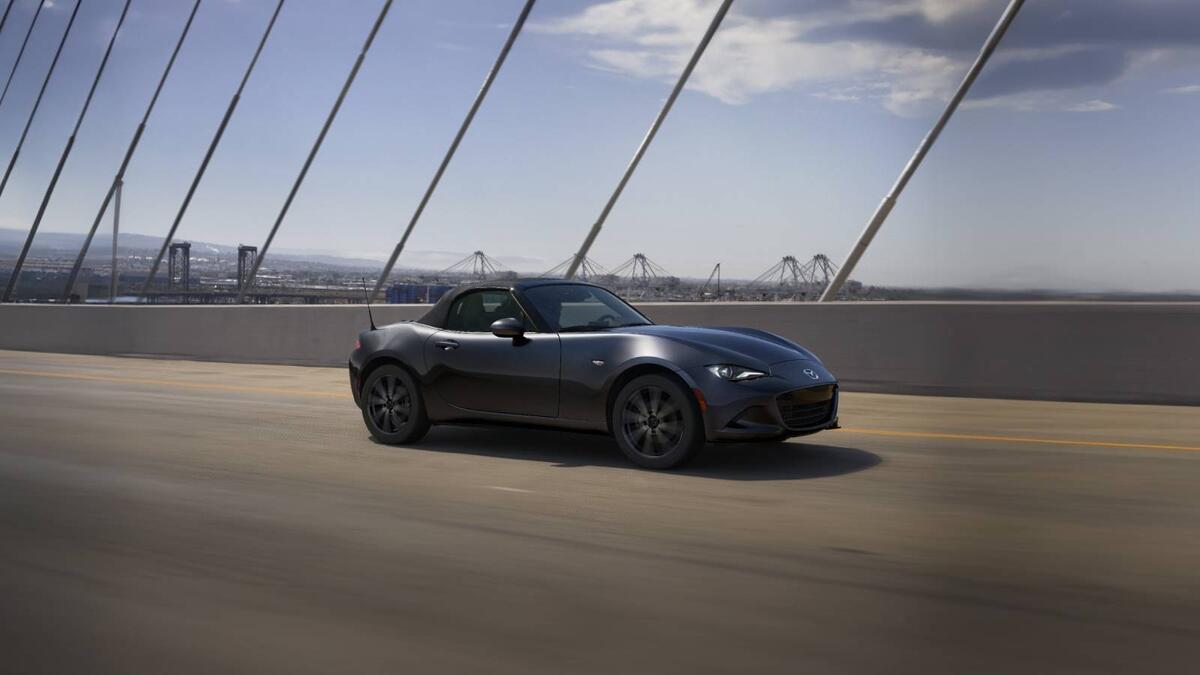
Mazda MX-5 / Miata
"...e ZR1s were psychotic. And it was almost like the Miata of Corvettes. It was like beautiful handling and ..."
The Miata is a small two-seat roadster made by Mazda. It’s built to feel light and easy to steer, so it’s fun even without extreme power. The podcast brings it up as a way to describe handling that feels great.
The Mazda MX-5 Miata is a lightweight, driver-focused roadster known for responsive handling and an engaging feel at everyday speeds. In the podcast context, it’s used as a comparison point—described as “the Miata of Corvettes”—to highlight beautiful handling and balance. It’s discussed because it represents a benchmark for fun, nimble sports-car behavior.
engine power profile
"Choose your engine power profile. Both are well within the limits of what the chassis could do, no problem."
An “engine power profile” is how the car decides to deliver power. Depending on the mode, it can feel calmer or more aggressive when you press the gas.
An “engine power profile” is the programmed character of how the engine delivers torque—often influenced by modes that change throttle mapping, shift logic, and sometimes traction control behavior. The host is saying you can choose a power delivery setup that matches the chassis capability.
carbon wheels
"And all the options you can get on a Z06, really, carbon wheels or whatever, [2632.8s] you can get on a Grand Sport too."
Carbon wheels are wheels made from carbon-fiber material. They can be lighter than traditional wheels, which helps the car’s suspension respond more quickly for better handling.
Carbon wheels are wheel designs made primarily from carbon-fiber composite. They’re popular in performance cars because they can reduce unsprung weight, which helps the suspension react faster and can improve handling feel.

Lamborghini Temerario
"“Shall we talk a Lamborghini?” “Yes.” “Temarario.” “What a good color.” “Looks great in this matte.” “I think it’s Mauritius Matte Blue is the color.” “This is the replacement for the Huracan.”"
The Lamborghini Temerario is a new Lamborghini supercar meant to replace the Huracán. The hosts are talking about how it looks in a matte blue color and that they drove it on a race track as part of a comparison test.
The Lamborghini Temerario is a modern Lamborghini supercar positioned as the Huracán’s replacement. In this segment, the hosts also point out its distinctive matte paint color and that they’ve driven it recently in a track-focused comparison test.
matte
"“What a good color.” “Looks great in this matte.” “I think it’s Mauritius Matte Blue is the color.”"
“Matte” means the paint looks more flat and non-shiny than normal car paint. The hosts are pointing out that this Lamborghini looks especially good in that non-gloss finish.
“Matte” refers to a paint finish that doesn’t have the glossy, reflective look of standard clearcoat. Matte finishes are popular on exotics because they emphasize shape and color without glare, which is why the hosts call out the car’s matte appearance.

Lamborghini Huracan
"“I think it’s Mauritius Matte Blue is the color.” “Really awesome.” “This is the replacement for the Huracan.” “I drove it last year at Performance Car of the Year.”"
The Lamborghini Huracán is the Lamborghini supercar that came before the Temerario. The hosts mention it so you know the Temerario is the newer replacement model.
The Lamborghini Huracán is the previous-generation Lamborghini supercar that the Temerario is replacing. Mentioning it here helps listeners understand where the Temerario fits in Lamborghini’s lineup and why it matters as a “next step.”
comparison test with a race track
"“I drove it last year at Performance Car of the Year.” “And it’s a comparison test with a race track and a whole bunch of cars.”"
A comparison test is when multiple cars are evaluated side-by-side, usually on the same route and conditions, to see how they differ in real driving. Here, the hosts specifically mention doing it with a race track and a “whole bunch of cars,” implying a structured, performance-focused evaluation.

Huracan
"40% even more powerful than even the most powerful variant of the Huracan. This car is so fucking fast."
The Huracán is Lamborghini’s supercar model that comes in different versions. Here they’re using it as a comparison point to show how much stronger the Temerario is.
The Lamborghini Huracán is Lamborghini’s mainstream supercar line, with multiple performance variants. In this segment, the hosts use Huracán as a benchmark, saying the Temerario is even more powerful than the most powerful Huracán variant.

McLaren 750s
"McLaren 750s are great for me because they're psychotic. You can cruise around and they're very comfortable, but then you can ride a bull."
The McLaren 750S is a very fast, track-oriented supercar from McLaren. The host is saying it feels calm when cruising, but becomes extremely intense the moment you push it.
The McLaren 750S is a track-focused supercar built around McLaren’s lightweight, high-revving performance formula. In this segment, the host emphasizes how quickly it can accelerate and how intense it feels once you’re on the throttle.
spin the tires
"It'll do what you tell it, but also you can spin the tires up to 100 miles an hour so you best know what you're doing because it will."
“Spin the tires up” means the wheels start turning faster than the car can move. It usually happens when there isn’t enough grip, like on a slippery surface or when you accelerate too hard.
“Spin the tires up” means the tires lose traction and start rotating faster than the car is actually moving forward. That’s typically felt as wheelspin, and it usually happens when torque exceeds what the tires can grip.
wheel spin
"This is that, but no wheel spin. Just forward and good."
Wheel spin is when the tires slip and spin instead of gripping the road. It usually means you’re asking for more power than the tires can safely handle.
Wheel spin is when the driven wheels rotate without enough traction to move the car forward effectively. It’s a sign that the tires are slipping, often due to high torque, low grip, or both.
fourth or fifth gear
"And in fourth or fifth gear, six to 10 is like four or five seconds. And they are a long four or five seconds."
Gears are the transmission settings that change how the engine’s power reaches the wheels. Fourth and fifth gear are mid-to-higher gears, where the car can accelerate hard without the engine being at its lowest speeds.
“Fourth or fifth gear” refers to the transmission ratio the car is using at that moment. Gear choice matters because it determines engine speed (RPM) and how quickly the car can build speed under acceleration.
crash speed discussion
"Wait until you see the speed at which people crash these things. When someone has a crash in one of these, it's going to be at like 160 miles an hour."
The host talks about how dangerous it is to drive these cars hard, because crashes can happen at very high speeds. The point is that mistakes at that speed are especially serious.
The host shifts to how fast people are crashing these cars, citing an approximate speed. This is a safety-focused takeaway about the consequences of pushing supercars at high velocity.
peak torque
"Sorry, I'm looking up like peak torque, peak power, all that stuff. [3088.4s] It's up there. [3112.1s] The engine's peak torque of 538 pound-feet happens from 4,000 to 7,000 RPM."
Peak torque is the engine’s strongest “twisting pull” at its best moment. More peak torque usually means the car can accelerate harder, especially when you’re not at the very top of the rev range.
Peak torque is the highest twisting force an engine produces, measured in pound-feet (lb-ft). It matters because torque is what creates strong acceleration feel, especially in the midrange where the engine is making its best “pull.”
Tri-Motor Hybrid
"So you've got a tri-motor hybrid. [3091.4s] You've got a V8, flat-plane V8 that revs to 10,000 RPM. [3098.4s] That's all very cool shit, right?"
A tri-motor hybrid is a hybrid car that uses three electric motors to help drive the wheels. That can make the car feel quicker and smoother because the electric motors can add extra push when you need it.
A tri-motor hybrid uses three electric motors in addition to (or integrated with) an internal-combustion engine to provide propulsion and torque. More motors can improve how the car delivers power—like stronger launches, better midrange response, and more efficient operation.
flat plane V8
"So you've got a tri-motor hybrid. [3091.4s] You've got a V8, flat-plane V8 that revs to 10,000 RPM. [3098.4s] That's all very cool shit, right?"
A flat-plane V8 is a specific way of arranging the engine’s crankshaft in a V8. It usually helps the engine rev high and can give the car a sharper, more high-performance character.
A flat-plane V8 is a V8 engine design where the crankshaft firing order is arranged like a “flat” plane, producing a different balance and sound than the more common cross-plane V8. Flat-plane V8s typically rev freely and are often tuned for high-RPM performance.
peak power
"And then peak power, you know, I want to look at that handoff. [3123.3s] Peak power is probably like nine. [3124.7s] Right, so you have this crazy punch at four grand."
Peak power is the engine’s maximum “strength” for making the car go fast, usually measured in horsepower. It often shows up at higher engine speeds than peak torque.
Peak power is the maximum rate at which the engine can do work, typically measured in horsepower. Power is what ultimately drives top-end speed and sustained acceleration, and it often peaks at higher RPM than torque.
handoff
"And then peak power, you know, I want to look at that handoff. [3123.3s] Peak power is probably like nine. [3124.7s] Right, so you have this crazy punch at four grand."
“Handoff” is the feel of the engine switching from pulling hard at one RPM range to making more speed at a higher RPM range. You notice it as the acceleration keeps building instead of fading.
In performance-engine talk, “handoff” usually refers to the transition where the engine’s character shifts from one part of the power curve to another—often from torque-dominant pull to power-dominant acceleration as RPM rises. It’s the moment you feel the car keep accelerating harder as you climb the rev range.
drag race
"[3264.3s] I'd love to line one up in a drag race with a, with a new turbo S hybrid, this and a ZR1X. [3271.1s] But this thing is, this is a fucking missile."
A drag race is a straight-line race focused on who gets up to speed fastest. The host is talking about lining up cars to compare their launch and acceleration.
A “drag race” is a straight-line acceleration contest where cars compete over a short distance to see which one launches and accelerates faster. The host brings it up to compare how hard different high-performance cars accelerate from a stop.
weight transfer
"[3280.6s] You have very little feeling of the, through the steering, but you can feel the road and [3284.9s] what's happening with weight transfer through your ass. [3287.4s] And the, the ride is beautiful."
Weight transfer is when the car shifts its weight toward the front/back or left/right as you drive hard. The host is saying you can feel that shift through the way the car moves.
Weight transfer is how a car’s load shifts between tires when accelerating, braking, or cornering. The host says you can feel it “through your ass,” meaning the seat-of-the-pants sensation of the car shifting weight during dynamic driving.
high voltage shock controllers
"[3287.4s] And the, the ride is beautiful. [3290.7s] It's got fucking high voltage shock controllers. [3293.7s] Like the 911 Turbo S hybrid does."
These are electronic controls for the shocks/suspension. The host is saying the car uses high-voltage electronics to manage how the suspension reacts, which helps the ride feel smooth and controlled.
“High voltage shock controllers” refers to electronically controlled suspension dampers that use high-voltage electrical systems to manage ride and handling. In practice, these controllers can adjust damping behavior quickly so the car stays composed while still feeling responsive.
front mechanical differential
"And then because it doesn't have a front prop shaft, it doesn't have a front mechanical differential. It's EV."
A differential is a gear system that lets the wheels on the same axle turn at different speeds when you turn. If the car doesn’t have a front mechanical differential, it’s not using the usual front-axle mechanical setup to drive the wheels.
A mechanical differential splits torque between wheels on the same axle so they can rotate at different speeds while cornering. A “front mechanical differential” being absent suggests the car doesn’t use a conventional front axle drive setup—consistent with an EV drivetrain that can use different motor/axle arrangements.
front prop shaft
"And then because it doesn't have a front prop shaft, it doesn't have a front mechanical differential. It's EV."
A prop shaft is a spinning driveshaft that sends power to another axle or differential. If a car doesn’t have a front prop shaft, it means the power isn’t being delivered to the front that way—usually because of how the drivetrain is laid out.
A prop shaft (driveshaft) is the rotating shaft that transfers power from one part of the drivetrain to another. Saying there’s no front prop shaft implies the car’s power is packaged without a front driveshaft, which often goes along with an EV layout or a different drivetrain architecture.
EV
"It's EV. You have a cabin that is extremely comfortable."
EV means the car runs on electricity from a battery and electric motors. It often doesn’t need the same engine-and-driveshaft parts that gas cars use.
EV stands for electric vehicle, meaning the car is powered by one or more electric motors instead of an internal-combustion engine. In this context, the speaker ties EV architecture to the absence of traditional mechanical drivetrain components like a front prop shaft and differential.

Audi R8
"...e new Temurario has more room inside than the old R8. That's, that's the amount of improvement that we..."
The Audi R8 is a high-performance supercar. The podcast is comparing interior space, saying a newer model has more room than the older R8. It comes up because cabin space is one of the practical differences people notice in supercars.
The Audi R8 is a mid-engine supercar known for its performance and distinctive design. The podcast context mentions that a newer Temurario has more room inside than the old R8, using the R8 as a reference point for cabin space. It’s discussed because the R8 is a benchmark for how supercars fit and feel day-to-day.
Porsche
"And you can adjust it for like red bull cans, regular soda cans, one of the smartest dimensions. Porsche got rid of it. Lamborghini brought it back."
Porsche is mentioned because the host says Porsche removed a cup-holder design. Then Lamborghini brought it back, and the host likes it.
Porsche is referenced as the brand that “got rid of” the cup-holder design the host later praises on Lamborghini. It’s mainly used to set up a before/after comparison of cup-holder ergonomics.
rear tires
"So, and then also, you know, your rear tires are mostly uncovered. [3372.5s] Yeah. [3373.1s] I would have, you know, when we drove for Peacody and we smashed all the windshields from cars"
“Rear tires” are the tires on the back of the car. If they’re not covered well, they can throw more dirt and small debris backward onto the road and other vehicles.
“Rear tires” refers to the tires on the back axle, which are especially important for how much debris they throw up onto the road and cars behind. In this context, the host is pointing out that the rear tires are mostly uncovered, which can increase spray and rock impact without mudflaps.
mud flaps
"when we drove for Peacody and we smashed all the windshields from cars [3377.5s] driving behind it, I was like, they got to put mudflaps or something on this. [3381.7s] They're not just going to sell that like that, but they are. [3384.8s] And it looks crazy."
Mudflaps are little panels behind the tires. They help stop dirt and small rocks from getting kicked up and hitting the cars behind you, including their windshields.
Mudflaps are panels mounted behind the wheels to reduce how much road spray, mud, and debris the tires kick up. They can also help protect other cars’ windshields by keeping rocks and grit from being thrown backward.
California
"Can I just tell you real quick about the California laws for mudflaps? [3434.1s] Yeah."
California is mentioned because the rules there can require certain car parts. In this case, the host is talking about laws that affect whether mudflaps are needed.
California is being referenced here because it has specific vehicle equipment rules—like requirements or restrictions related to mudflaps. The host is setting up that the car’s lack of mudflaps may conflict with local regulations.
Request an Explanation
Heard something you'd like explained? We'll add it to this episode.
Sign in to request explanations for terms you heard.
Want to learn more?
Browse our glossary for plain-English explanations of automotive terms, jargon, and concepts.
Help improve this episode
See something that's not quite right? Our annotations are AI-generated and can sometimes miss the mark. Click the flag icon on any annotation to suggest a correction.