
Gage Goldberg gets a Ford Bronco Raptor and Bill starts to modify it.
About this episode
Gage Goldberg lands a Ford Bronco Raptor, and the CarCast crew walks through how it all came together—dealer pressure, quick sourcing, and the logistics of getting it home with dealer plates while the tag wasn’t ready. The discussion shifts to Bill’s modification plans: PPF/stealth finish, satin wrap, and parts like Eibach leveling, upper control arms, and an exhaust. They also compare Bronco Raptor capability to the regular Bronco and talk about how sponsored builds often follow an event-driven timeline.
Follow @motorator
Follow @goldbergsgarage
Follow Bravago Beverages
Hosted by Simplecast, an AdsWizz company. See pcm.adswizz.com for information about our collection and use of personal data for advertising.

Toyota RAV4
"...nner. Next, we're heading to the hot springs in a RAV4. And finally, park your tundras and Tacomas"
The Toyota RAV4 is a compact SUV. It’s a common choice for road trips because it’s comfortable and has enough space for people and luggage.
The Toyota RAV4 is a compact SUV that’s designed to be practical for daily driving while still handling light adventures. It’s mentioned in the context of heading to hot springs, which fits its role as an easy-to-drive vehicle for road trips and carrying a small group and gear. The hosts also contrast it with larger trucks, reinforcing the idea of different vehicle sizes for different plans.
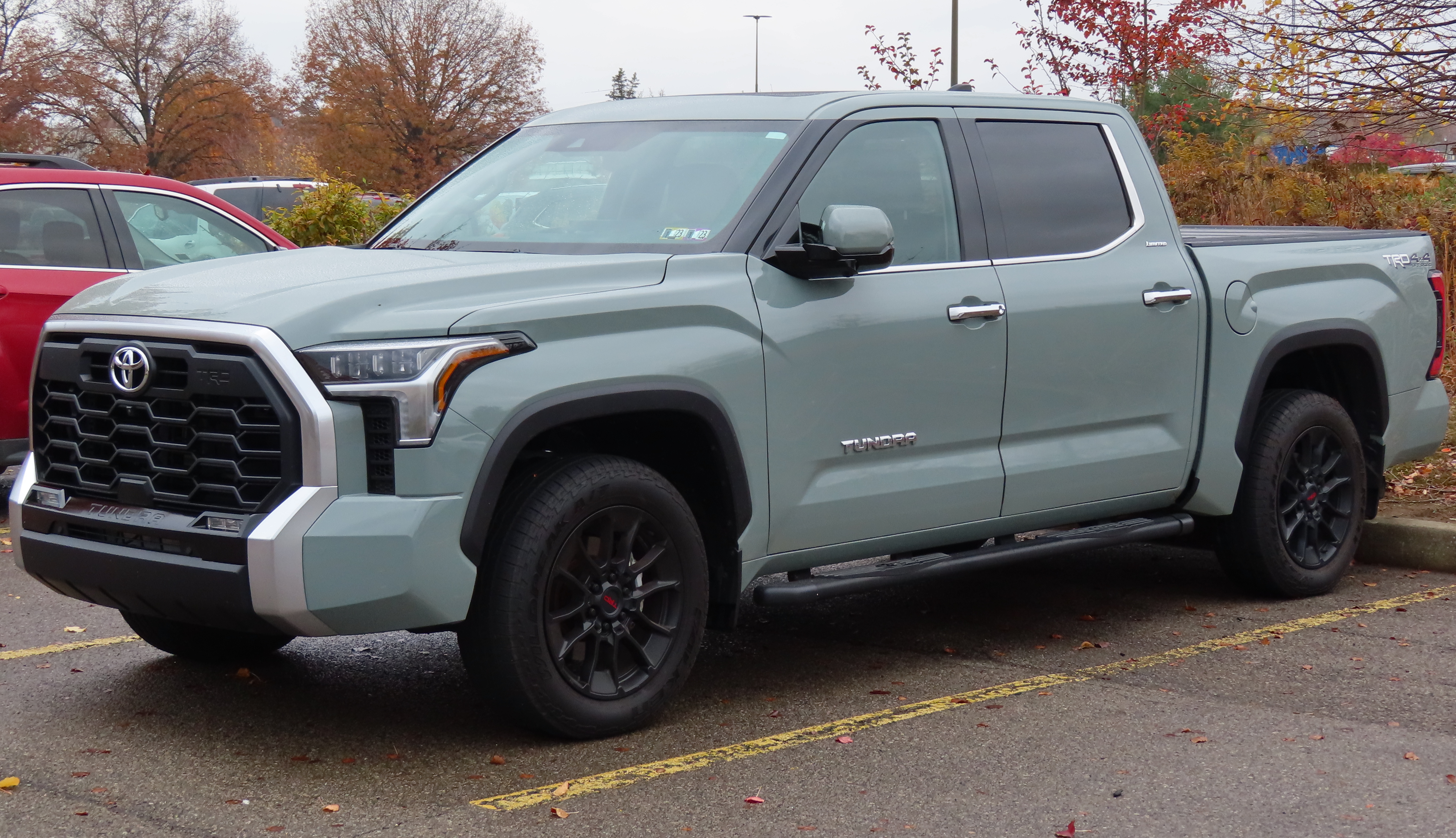
Toyota Tundra
"...the hot springs in a RAV4. And finally, park your tundras and Tacomas around the campfire because we're roa..."
The Toyota Tundra is a large pickup truck. People use it for carrying gear and towing, and it’s also used for road trips and camping because it has a lot of space in the back.
The Toyota Tundra is a full-size pickup truck built for hauling, towing, and everyday driving. It comes up in podcast travel talk because it’s a common choice for road trips and camping setups where you might want cargo space and a capable truck platform. The mention alongside Tacomas suggests the hosts are discussing parking trucks around a campsite.
teaching responsibility as a vehicle owner
"It's more about teaching responsibility as a vehicle owner. I was just about to say. Yeah, you have. As cool as he wants it to be, it's all about safety in the beginning, no matter what."
They’re saying the point of giving a kid a vehicle isn’t just to have fun—it’s to learn how to drive safely and take care of the responsibility that comes with owning a car.
The hosts frame the early ownership experience as a responsibility lesson rather than a pure performance goal. That’s why they emphasize safety first—especially for a powerful off-road vehicle where driver inputs can quickly lead to loss of traction or unsafe situations.
Magnaflow
"Throughout the years, we've done a number of things, whether it's Richard Weydus and Magnaflow hooking us up with the exhaust or the wheels and tires"
Magnaflow makes aftermarket exhaust parts. In plain terms, they’re helping with an exhaust upgrade, usually to change the sound and how the exhaust system works.
Magnaflow is an aftermarket exhaust brand known for performance and sound-focused mufflers and exhaust systems. When the hosts mention Magnaflow “hooking us up with the exhaust,” they’re talking about replacing or upgrading the Bronco’s factory exhaust to change sound and potentially flow characteristics.
wheels and tires
"whether it's Richard Weydus and Magnaflow hooking us up with the exhaust or the wheels and tires"
Wheels and tires are the parts that actually touch the road. For off-roading, the tire type matters a lot for grip and control.
“Wheels and tires” refers to the tire-and-rim package that strongly affects off-road grip, ride comfort, and how easily the vehicle can accelerate or brake. On an off-road truck like the Bronco, tire choice (tread pattern and compound) is often as important as engine power for traction.
trade it in
"So they always try, hey, see your Bronco there. We'll give me a great deal if you trade it in and we'll hook you up with NIL."
“Trade it in” means you turn in your current car to the dealer to help pay for the next one. It usually lowers the amount you have to pay.
“Trade it in” is when you give your current vehicle to the dealer as part of the purchase of a new one. The dealer applies a trade-in value to reduce what you pay out of pocket.
upgrade to the Raptor
"they don't realize quite obviously, it's been a, it's been a fun journey, but it's been a struggle as you can see on me. So Gage had the Bronco, they're tempting him with an NIL deal, and, you know, we'll fill in the blanks and you pay us X amount to upgrade to the, to the Raptor."
Here, “upgrade to the Raptor” means switching to the higher-end Bronco model. It’s not just a small add-on—it’s a bigger purchase that changes the truck’s off-road capability.
In this context, “upgrade to the Raptor” means moving from a standard Bronco to the higher-spec Raptor model rather than just adding a few accessories. It’s a major change in vehicle capability and price, typically involving a dealer deal or financing.

F-150 Raptor
"...and you pay us X amount to upgrade to the, to the Raptor. Well, you know how I am about wasting money, rig..."
The F-150 is a Ford pickup truck model. The podcast is talking about upgrading it to a more performance-focused version, and whether that extra cost is worth it.
The F-150 refers to the Ford F-150 pickup line, which is known for offering many trim levels and options. In the podcast, it’s brought up in the context of paying to upgrade to a Raptor, which highlights how people weigh cost versus performance features. That makes it relevant to discussions about how much extra capability is worth the price.
place performance off road
"And a buddy of mine, a kid named Cody, owns a place performance off road here in town."
This sounds like a local off-road shop that Cody owns. Places like that usually help with upgrades for off-road driving.
“Place Performance Off Road” appears to be a local off-road shop in town that Cody owns. Shops like this typically specialize in suspension, tires, wheels, and other off-road modifications for trucks and SUVs.
Eibach leveling
"[365.0s] And I mean, it's the, it's got the, the Eibach, you know, leveling. [368.4s] I mean, the thing is completely over the top, but it's awesome, right?"
Eibach is a company that makes suspension parts. “Leveling” means adjusting the suspension so the truck sits more evenly (not nose-down or nose-up), which can also help with ground clearance.
Eibach is an aftermarket suspension brand, and “leveling” refers to raising the front of a truck/SUV to match the rear ride height. That changes stance and can improve clearance, but it may also affect alignment and tire wear if not set up correctly.
Raptor killer
"because the plan was for me to ship the TRX, for me to get his 21 or 22 [399.2s] and build that sum bitch up to a Raptor killer, right? [403.8s] Like a Raptor on juice, man."
“Raptor killer” is enthusiast slang for a vehicle build intended to outperform the Ford Raptor/Raptor-family trucks in performance and/or off-road capability. It’s not a specific part—it’s a goal or bragging phrase used in modification culture.
juice
"[403.8s] Like a Raptor on juice, man. [406.4s] So, and I thought that was a great idea and it would be fun and be great to content."
“Juice” is slang for extra power. In this context, it means the truck will be modified to make a lot more horsepower than stock.
In car talk, “juice” is slang for added power—often via performance tuning, forced induction, or nitrous. Here it’s paired with “Like a Raptor on juice,” implying the TRX build will be boosted to make it dramatically quicker.

Bronco Raptor Bronco
"...nd when I land, there's a fricking black on black Raptor Bronco right there at the Acura dealership."
The Bronco is an SUV made for off-road driving. The podcast is pointing out a specific Bronco that looks very dark and is described as a high-performance version.
The Bronco is Ford’s rugged SUV line, built for off-road capability and outdoor use. The podcast mentions a “black on black Raptor Bronco,” which suggests a high-performance or heavily equipped Bronco variant being spotted at a dealership. That’s why it’s included—it's a notable example of a Bronco setup.
dealer
"So long story short, I'm talking to him on the flight down about trying to work some kind of a deal because he's a dealer. He owns four or five dealerships."
In this context, a dealer is a retail car seller (often a franchise) that can buy, sell, and arrange financing or vehicle swaps. The host mentions the person owns multiple dealerships, implying they have flexibility to structure deals and move inventory.
Ford Bronco Raptor
"So it was ironic that when we landed, there's one Bronco there, a Raptor, exactly like what I wanted... So OK. 4,000 miles on it... So we do the signing. They prep the Raptor."
The Ford Bronco Raptor is a tougher, off-road-ready version of the Bronco. It’s the kind of Bronco you’d buy if you want it to handle rough trails, not just regular roads.
The Ford Bronco Raptor is a high-performance off-road version of the Bronco, built for serious trail use with upgraded suspension and off-road-focused tuning. In this segment, the hosts are talking about acquiring one through a dealer deal and then driving it back, which is why it’s the centerpiece car mention.
trade in
"It was like a trade in or something at the Acura dealers. So OK. 4,000 miles on it."
A trade-in is when you give your current car to the dealer and use it to lower the price of the car you’re buying. The dealer decides what they’ll credit you for your old car.
A trade-in is when you turn in your current vehicle to the dealer as part of the purchase price for a new or different car. The dealer credits the trade-in value, which can reduce the amount you pay out of pocket (though the exact numbers depend on the deal).
key fob
"And on top of that, I put the key fob and on top of the key fob was the little tag that said 2026 white raptor."
A key fob is the little remote you carry to control your car. It can lock/unlock the doors and sometimes start the car without using a separate key.
A key fob is the small remote you use to lock/unlock the car and often start it without inserting a traditional key. Many modern vehicles also use it for passive entry—when you’re close enough, the car can detect the fob.
PPF
"we took it down to, uh, uh, [958.1s] expel and dropped it off for three, for, for two weeks to get, uh, [962.5s] PPF gets stealth on it. So it's going to be flat white."
PPF is a clear protective film that you put on a car’s paint. It helps protect the paint from scratches and rock chips, especially if you drive off-road or on rough roads.
PPF (paint protection film) is a clear protective layer applied to a vehicle’s paint to help prevent chips, scratches, and light abrasions. It’s commonly used on off-road and daily-driven trucks because road debris and brush can damage paint quickly.
stealth
"expel and dropped it off for three, for, for two weeks to get, uh, [962.5s] PPF gets stealth on it. So it's going to be flat white. [966.2s] Okay. Cause I saw you put it up there."
In the context of PPF, “stealth” usually refers to a matte or satin-finish film that changes the look of the paint. Instead of glossy paint, the surface appears more muted and “flat,” which can also help reduce visible glare and minor surface imperfections.

Ram TRX
"you know, Clint followed me in my TRX and on the way back, I'm like, you know what, man, I gotta be honest, that was a great truck. I really like it. It's a definite upgrade from what Gage had"
The Ram TRX is a very powerful pickup truck known for big performance and off-road ability. They’re comparing it to the Bronco Raptor experience and saying it impressed them.
The Ram TRX is a supercharged, high-horsepower pickup built for extreme off-road and straight-line performance. Here, it’s used as a comparison point—Clint follows in a TRX, and the host says it was a great truck and a definite upgrade from what Gage had.
satin wrap
"so expel, they're going to, they're going to do the, a satin wrap on it to give it kind of a satin white finish. I maybe tint the windows and stuff."
A satin wrap is a vinyl film applied over a vehicle’s paint to change the surface finish from glossy to a lower-sheen “satin” look. It’s often used to refresh the appearance, protect the original paint, or achieve a specific color/texture without repainting.
tint the windows
"a satin wrap on it to give it kind of a satin white finish. I maybe tint the windows and stuff."
Window tint is a dark (or tinted) film added to the glass. It helps with glare and heat and can make the truck look more finished.
Window tint is a film applied to glass to reduce visible light and heat entering the cabin. Enthusiasts often do it for comfort, glare reduction, and privacy, and it can also change the overall look of the vehicle.
Rigid
"the bumpers, the lights, you know, uh, Jesus rigid. I mean, there's five grand worth of lighting on that thing."
“Rigid” is a brand that makes aftermarket off-road lights. The host is saying the truck has a lot of upgraded lighting equipment.
“Rigid” here refers to Rigid Industries, a well-known brand of aftermarket off-road lighting. The host says the Bronco has significant lighting value, which is a common upgrade for night driving and trail visibility.
kicker
"And then kicker came in and put a $5,000 or $4,500 stereo system in it."
Kicker is a company that makes car audio equipment. They’re credited here with adding a high-end stereo system to the Bronco.
Kicker is an aftermarket audio brand known for car stereos and speakers. The host mentions Kicker installing a several-thousand-dollar stereo system, highlighting a major value-add modification beyond just cosmetics.
expel
"And I mean, it's got the rat, the, uh, wrap from expel."
Expel makes clear protective film that goes on a car’s paint. It helps prevent rock chips and scratches, so the truck stays looking newer.
Expel is a brand associated with paint protection film (PPF), a clear protective layer that helps guard against chips, scratches, and road debris. The host says the Bronco has the wrap from Expel, implying it’s been protected from everyday damage.
NIL deal
"…because he just got that $4,500 deal from kicker and that's an NIL deal. …"
NIL means athletes can get paid for using their name and image to promote companies. Here, they’re saying the truck arrangement is tied to that kind of sponsorship deal.
NIL stands for “Name, Image, and Likeness,” which refers to athletes being paid to promote brands. An NIL deal in this context means the Bronco/Raptor-related arrangement is part of a sponsorship/advertising agreement rather than a normal purchase or rental.
stereo system
"…because I gave his stereo system away, [1270.5s] but I'm not going to tell my buddy, yeah, let me be yank the stereo system [1274.1s] out of the whole thing…"
The stereo system is the car’s audio setup—things like speakers and the main audio unit. They’re saying they removed/gave away the stereo, which affected the deal.
A stereo system in a car refers to the audio setup—typically including head unit, speakers, and often a subwoofer/amp. The hosts mention giving away the stereo system, which implies the audio components were part of the sponsored build and needed to be handled carefully.
Raptor suspension
"you get the Raptor suspension and the fender flares and stuff"
“Raptor suspension” means the Bronco Raptor’s off-road suspension setup. It’s designed to soak up rough terrain so the tires can keep traction instead of bouncing around.
“Raptor suspension” refers to the Bronco Raptor’s off-road suspension system, tuned for bigger impacts and more wheel travel than a standard Bronco. Suspension upgrades matter because they control how the tires stay in contact with the ground over bumps and uneven terrain.
fender flares
"you get the Raptor suspension and the fender flares and stuff"
Fender flares are the extra “wings” around the wheel wells. They help cover wider tires and reduce how much mud and rocks get kicked up toward the truck.
Fender flares are extended body panels over the wheel openings. On off-road trucks like the Bronco Raptor, they help cover wider tires and suspension movement so debris and water are less likely to get thrown into the body.
frame and mounting points
"there are lots of things on just like frame and mounting points and increased a gauge of steel"
Mounting points are the spots on the truck where parts like the suspension attach. The hosts are saying the Raptor has stronger/changed attachment locations, not just extra parts added on top.
“Frame and mounting points” are the structural areas where suspension and other components attach. The segment emphasizes that the Bronco Raptor’s upgrades aren’t just bolt-on parts—its frame/mounting points are modified so heavier-duty suspension pieces can be installed safely and effectively.
increased a gauge of steel
"increased a gauge of steel, like a thicker steel components and stuff"
“Gauge” here refers to the thickness of steel used in structural components. Increasing steel gauge (thicker material) improves strength and stiffness, which is important when you’re upgrading an off-road truck to handle higher loads.
bolt on
"things that you can bolt on all sorts of suspension pieces and kind of beef things up"
“Bolt on” means you can install a part with bolts and brackets, without cutting and welding the truck. They’re saying the Raptor needs more than just bolt-on upgrades.
“Bolt on” describes parts that can be installed using existing mounting locations and hardware, rather than requiring major fabrication or structural changes. The hosts contrast this with the Raptor’s deeper modifications to the base structure.
twin turbo V six
"I guess it's a twin turbo V six in the Raptor with 415 horsepower."
A twin-turbo V6 is a V6 engine that uses two turbochargers to make more power. The turbos help the engine feel stronger when you accelerate, which is useful both on-road and off-road.
A twin-turbo V6 uses two turbochargers to force more air into the engine, allowing it to make more power than a naturally aspirated V6 of the same size. Turbocharging also helps deliver stronger torque (pulling power) across a wider range of speeds, which matters for off-road acceleration and passing.
ground clearance
"It's safety wise. It's much, but even though it's, it's up in the air a little bit more, it's got 12.5s on it or 12.50s on it."
Ground clearance is how much space there is between the ground and the bottom of the vehicle. More clearance helps the truck avoid scraping its underside on bumps and rough trails.
Ground clearance is the distance between the road surface and the lowest part of the vehicle. Higher ground clearance helps prevent the undercarriage from hitting rocks or ruts, which is a key advantage for off-road driving.

Fso 125
"It's safety wise. It's much, but even though it's, it's up in the air a little bit more, it's got 12.5s on it or 12.50s on it."
“Fso 125” is a vehicle model being discussed for its performance and safety. The podcast mentions it sits a bit higher than some others and gives a number around 12.5 seconds, which is likely a timing result related to how fast it can do something.
“Fso 125” appears to be a specific model reference mentioned in the podcast, likely tied to performance and safety discussion. The host notes it’s “up in the air a little bit more” and mentions a time around 12.5 seconds, which sounds like a performance measurement (often acceleration). It’s discussed as a vehicle that balances safety/ride height with measurable speed.
off-roading
"That was just great because if you're going to go any sort of off-roading, let alone just on the street, because he's going to take it back to Colorado,"
Off-roading means driving on rough ground like dirt trails or rocky paths. Cars need extra capability to handle that kind of terrain.
Off-roading refers to driving on unpaved or uneven surfaces like trails, rocks, mud, and sand. It typically demands suspension travel, traction, and durability beyond what’s needed for normal street driving.
upper control arms
"So we got upper control red up front, upper control arms. We know immediately that they have for that vehicle."
Upper control arms are parts that help hold the front wheels in the right position. If you upgrade them, the truck can handle bumps and rough roads more confidently.
Upper control arms are suspension links that locate the front wheels and control how they move through bumps and steering. Upgrading them on an off-road truck can improve alignment control and ride quality when the suspension is stressed by trails or larger tires.
exhaust
"We know immediately that they have for that vehicle. Magnet flows to get an exhaust for it. I'm going to be putting that on."
The exhaust is the system that carries engine fumes out of the car. People upgrade it for sound and sometimes for better airflow.
An exhaust system routes engine gases out of the vehicle and can be tuned for sound and flow characteristics. In this segment, they’re discussing getting an exhaust for the Bronco Raptor as part of the build.
Camberg
"So Cam, Camberg, the suspension company was purchased by Magnaflow a little while ago. Jerry, who is the Camber guy, is a Camber guy."
Camberg is a company that makes suspension parts. The hosts say it was bought by Magnaflow and that it’s part of their Bronco Raptor upgrade plan.
Camberg (as referenced by the hosts) is discussed as a suspension company, and the segment suggests it’s involved in the Bronco Raptor’s suspension parts. The mention also connects Camberg to Magnaflow via an acquisition.
suspension components
"So taking the suspension components from Camberg, which is under the Magnaflow umbrella, along with the Magnaflow exhaust."
Suspension components are the parts that connect the wheels to the truck and help it absorb bumps. Changing them can make the truck handle rough trails better.
Suspension components are the parts that control how a vehicle’s wheels move relative to the body. In off-road builds, swapping these parts can change ride height, wheel travel, and how the truck handles bumps and traction.
geometry
"I think the control arms that you're talking about does kind of change the geometry a little bit."
Here, “geometry” means the suspension’s angles and setup. If you change it, the tires can sit and move differently, which changes how the truck drives off-road.
In suspension context, “geometry” refers to the measured angles and relationships between suspension parts and the wheel. When geometry changes, it can affect tire contact, steering feel, and how the truck handles under articulation and bumps.
travel
"It's got a little bit more travel allows for, you know, the larger tires that you're talking about."
“Travel” is how far the suspension can move up and down. More travel usually helps the tires stay on the ground over rocks and ruts.
“Travel” is how much the suspension can move—typically measured as wheel travel from full extension to full compression. More travel generally helps off-road vehicles keep tires in contact with uneven ground and fit larger tires without rubbing as easily.
37s
"I mean, I guess you're still going to run the 37s, but it should be a nice, a nice little addition to it, especially when you're, when you're going off road."
“37s” means 37-inch tires. Bigger tires can help the truck clear obstacles, but they often require suspension changes so they fit properly.
“37s” is shorthand for 37-inch off-road tires. Larger tire diameter increases ground clearance and can improve obstacle clearance, but it also requires suspension and clearance work to avoid rubbing.
Ford F-150
"The, you know, when you think of sort of the Raptor lineup, the F-150, which kind of started it all, and then the Bronco Raptor was kind of designed as like you're saying, it's not going to win any real drag races out there, but it was meant to be more of the rock crawler type of thing."
The Ford F-150 is mentioned as the first truck that kicked off the Raptor idea. The hosts are using it as a reference point for how the Raptor lineup developed.
The Ford F-150 is referenced as the starting point for the Raptor lineup. In this context, it’s used to explain the evolution of Ford’s off-road “Raptor” concept across different truck platforms.
rock crawler type of thing
"and then the Bronco Raptor was kind of designed as like you're saying, it's not going to win any real drag races out there, but it was meant to be more of the rock crawler type of thing."
A “rock crawler” setup is meant for slow, technical trails where you need the wheels to move and grip over rocks. It’s different from setups tuned for faster desert driving.
A “rock crawler” setup prioritizes slow-speed control, traction, and suspension articulation for climbing over rocks. The segment contrasts this with other Raptor models that are tuned for higher-speed desert-style driving.
Baja racer type of suspension
"Whereas the Ranger Raptor was that suspension tuned to be more of like, like sort of a wide open, like Baja racer type of suspension, different than the Bronco."
“Baja racer type of suspension” means suspension tuned for desert racing—going fast over rough ground. It focuses on staying stable when you hit bumps at speed.
“Baja racer type of suspension” refers to off-road race tuning associated with desert racing, where the vehicle needs to stay stable over repeated high-speed bumps. Compared with rock-crawling setups, this typically emphasizes control at speed and managing large, fast impacts.

Ford Ranger Raptor
"Whereas the Ranger Raptor was that suspension tuned to be more of like, like sort of a wide open, like Baja racer type of suspension, different than the Bronco."
The Ford Ranger Raptor is also an off-road truck, but it’s tuned for going fast over rough ground. Think “race-style” suspension for open desert driving, not just slow rock crawling.
The Ford Ranger Raptor is another Raptor-badged off-road truck, but its suspension tuning is aimed at faster, open-terrain driving. Here, it’s described as being set up like a Baja-style race suspension—more about speed and stability over long stretches than slow rock crawling.
four inch lift
"that's got the Eibach leveling or the, the Eibach, I think it's a four inch lift [1786.6s] and it's riding on 40s."
A four inch lift means the truck is raised higher off the ground. People do it so the tires fit better and the vehicle can handle rough terrain more easily.
A four inch lift is a suspension modification that raises the vehicle’s ride height by about four inches. It’s commonly done on off-road trucks to fit larger tires and improve ground clearance.
40s
"and it's riding on 40s. [1789.0s] Look at that. [1790.6s] And yes, if that was, if this white Raptor was mine, that's more of what"
“40s” is shorthand for 40-inch off-road tires. Bigger tires help with obstacle clearance and traction in mud/sand, but they also affect steering feel, gearing, and ride quality.
Arctic
"It's kind of the white with like shades of light gray. [1816.4s] Yeah. [1817.1s] It's called Arctic. [1819.3s] Yeah."
“Arctic” sounds like the name of a specific color/style for the truck’s wrap. It’s basically describing a white look with light gray tones.
“Arctic” here appears to be the name of a specific wrap or paint color scheme—white with light gray shades. Color names like this are common in wrap/finish catalogs to describe exact tones and patterns.
X-Vel wrap
"I've seen it. [1821.7s] It'd be cool. [1822.6s] I just, I'd be super stating the X-Vel wrap. [1827.9s] Yeah."
An X-Vel wrap is a vinyl film that you put on the outside of a vehicle to change its look. It’s like a customizable skin for the truck.
An X-Vel wrap refers to a branded vehicle wrap product used to change a car’s appearance. Vehicle wraps are typically vinyl films applied over the body panels for color/graphics and can be removed later.
bronze wheels
"This looks good with the kind of the bronze wheels on it too. [1834.2s] Yeah."
“Bronze wheels” just means the rims are a bronze color. It’s a style choice that changes how the truck looks, especially with bigger off-road tires.
“Bronze wheels” refers to aftermarket alloy wheels finished in a bronze color. Wheel color can strongly affect the overall look of a lifted off-road truck, especially when paired with larger tires.
bigger tires
"I'm curious though, like with the lift and the bigger tires, does it, does it really just change the on-road dynamics of it?"
Bigger tires are larger than stock tires. They can help off-road, but they can also make the truck feel different on pavement—like steering and braking.
Bigger tires typically mean increasing tire diameter and/or width to improve off-road traction and obstacle clearance. They can also alter on-road dynamics by changing gearing feel, steering response, ride comfort, and the vehicle’s overall grip characteristics.
on-road dynamics
"I'm curious though, like with the lift and the bigger tires, does it, does it really just change the on-road dynamics of it?"
On-road dynamics is just how the vehicle drives on regular roads. It includes how it steers, how stable it feels, and how it brakes.
On-road dynamics refers to how a vehicle behaves on pavement—things like steering response, ride stability, braking feel, and how it handles during cornering. Suspension lifts and larger tires can noticeably change these characteristics compared with stock setup.
off-roader
"Is this strictly an off-roader? You know, like. Oh, that's his daily."
An off-roader is a vehicle built for rough, unpaved roads. They’re wondering if the Bronco Raptor is only meant for trails, or if it still makes sense for everyday driving.
An off-roader is a vehicle designed primarily for uneven terrain like dirt, rocks, mud, and sand. The key point here is whether the Bronco Raptor’s modifications (lift and bigger tires) make it only good off-road—or whether it still works well as a daily driver on pavement.
off-road events
"Ford has those Bronco off-road events... You speak to some of the engineers... they walk you through the vehicles... then they kind of take you off-road."
Off-road events are organized driving experiences where owners are taken through controlled trails and obstacles. They often include instruction from engineers or instructors, plus demonstrations of how the vehicle behaves in different off-road conditions.
goat modes
"You speak to some of the engineers, they walk you through the vehicles, they explain the different goat modes of it and then they kind of take you off-road."
“Goat modes” is a nickname for different settings that change how the truck drives off-road. You pick the mode that matches the terrain so the truck grips and responds the way you need.
"Goat modes" refers to selectable driving modes on off-road vehicles that change how systems like throttle response, traction control, and drivetrain behavior react on different surfaces. The idea is to tailor the truck’s control strategy for crawling, sand, rocks, or higher-speed dirt driving.
rock climbing section
"they're like, hey, we're going to get to this section and we're going to show you, we're going to do some rock climbing in this section."
A rock-climbing section is a part of the off-road course where the route goes over rocks and steep, uneven ground. It’s meant to show how the vehicle handles traction and control at low speeds.
A “rock climbing” section is an off-road obstacle course segment designed to test low-speed traction and vehicle control over uneven, high-friction surfaces. It typically emphasizes careful throttle use, suspension articulation, and stability management rather than straight-line speed.
off-road driving school
"because they do the Raptors, part of the program is a little like high-speed, like ultra-four off-road, like you go downhill and you hit the turn and it kind of banks ... So you go, we're going to do some off-roading and then you can switch drivers."
An off-road driving school is a class where you learn how to drive on dirt and rough terrain. They often provide a truck already set up for it, so you can practice without damaging your own car.
An off-road driving school is a structured program where you learn and practice off-road techniques on prepared vehicles and terrain. This segment highlights that the vehicles are staged and prepped, and participants can switch drivers to increase drive time and reduce wear on their own cars.
prepped vehicles
"If you bought a Bronco or a Bronco Raptor, you get the invitation or you can just pay to go to it and the vehicles are there, they're prepped, so you use their vehicles. ... You don't have to thrash on your own vehicle."
“Prepped” means the vehicles are prepared in advance for the event. In this case, they’re ready for off-road driving, so you don’t have to beat up your own truck.
“Prepped” vehicles are cars or trucks that have been set up ahead of time for a specific activity—here, off-road driving. The point is that the vehicles are ready to be driven hard, so you don’t have to thrash your own Bronco or Bronco Raptor.

Dodge Challenger
"...vehicle, for sure. Yeah, it'd be like taking your Challenger and a Raptor. Right, right, like why do that?"
The Dodge Challenger is a sports car designed for fast driving. In the podcast, it’s mentioned to show that it’s a different kind of vehicle than a rugged off-road truck.
The Dodge Challenger is a performance-focused muscle car built for straight-line speed and a dramatic driving experience. The podcast compares it to a Raptor-style vehicle to make a point about mismatched vehicle purposes—using a Challenger as an example of a car that doesn’t fit the “off-road truck” idea. That’s why it comes up in a conversation about choosing the right tool for the job.
Bronco Afrodio
"I'd meet at the Bronco Afrodio, do the whole thing and then fly home. So we got sort of a mini version... He's like, dude, we just did the Bronco Afrodio, but we did the Vegas one first so we can do the high speed Raptor version of it."
“Bronco Afrodio” sounds like a Ford Bronco event or driving experience. They’re comparing different versions/locations of it and how long each one takes.
“Bronco Afrodio” appears to be a branded event/experience tied to the Ford Bronco, likely involving driving demos or media-style sessions in different locations. In this segment, it’s used as a reference point for how they did a condensed version first and then a longer one later.
Monterey Car Week
"and then I think eight months later or something, we went to Monterey Car Week and we were talking with Ford CEO Jim Farley and he was like, after Monterey, I'm grabbing my son and we're doing like a road trip."
Monterey Car Week is a big yearly car event in California. Here, it’s mentioned as the place where they met Ford executives before doing another driving trip.
Monterey Car Week is a major annual automotive event in California that brings together car launches, auctions, and enthusiast activities. In this segment, it’s the backdrop for a conversation with Ford leadership and a subsequent road-trip plan.
high speed Raptor version
"He's like, dude, we just did the Bronco Afrodio, but we did the Vegas one first so we can do the high speed Raptor version of it."
They’re talking about driving the off-road truck faster than usual. The “Raptor version” means the truck is set up to stay stable and controlled when the road gets bumpy and you’re going quicker.
“High speed” here is about off-road driving at higher velocities, which changes how the vehicle’s suspension and tires behave over washboard, jumps, and uneven surfaces. The “Raptor version” implies a more capable setup than a standard off-road ride, tuned for stability and control when you’re moving fast over rough terrain.
twin turbo charger
"they took in the twin turbo charger a week ago and they kicked that one out of the space and put Gage's Bronco in."
A twin turbocharger setup uses two turbochargers to increase engine airflow and help produce more power. In practice, it can improve responsiveness across different engine speeds compared with a single turbo, but it also means more complex parts and shop time when components are replaced or installed.
rat rod style
"You'll look at it and go, not my style, but you'll appreciate what Aaron has done just as an artist, just like welding and and and making it look sort of rat rod style kind of thing, but with Kicker's involvement."
“Rat rod” is a style where a car looks intentionally rough and worn, like it has character. People do it on purpose to create a gritty, custom look rather than making it look brand new.
A rat rod style is an intentionally rough, worn, and “unfinished” look—often with visible patina, mismatched parts, and a general DIY vibe. It’s more about aesthetic attitude and craftsmanship than restoring a car to factory-new condition.
patina
"like the patina areas, like it's because that's what Aaron is."
Patina refers to the natural aging and surface changes a vehicle gets over time—like discoloration, oxidation, and wear. In custom builds, patina can also be intentionally created to give a “lived-in” look.
hiding the pipe
"And, you know, Clint came up with a great idea about hiding the pipe... You're right, because of the the garage and you kind of want to hide it a bit"
“Hiding the pipe” means they routed a modified tube so it’s not sticking out where it could get hit. They’re also trying to make it look cleaner and fit better in the garage.
“Hiding the pipe” refers to routing an aftermarket pipe (commonly an intake, exhaust, or related plumbing) so it’s less visually obvious and protected from damage. Off-road builds often route these components higher or along safer paths to reduce the chance of hitting obstacles and to keep the engine bay/underbody looking clean.
held pressure
"It held held pressure all night... And it's it's as of right now, man."
“Held pressure” means the setup didn’t leak. They’re basically confirming the install is sealed well before using it more.
“Held pressure” means the system maintained the applied pressure without leaks over time, which is a quick way to validate a plumbing or vacuum/boost-related install. For car modifications, pressure-holding is often used as a leak check before driving or running the system under load.
garage
"You're right, because of the the garage and you kind of want to hide it a bit... you can do it eight foot high... you can do it even along the along the walls."
They’re talking about garage space—how tall it is and where things can be routed. The modification has to fit without hitting the ceiling or walls.
In this context, the garage height and layout determine how high the modified component can be routed. The hosts discuss fitting the setup into a typical garage clearance, including doing it at around an eight-foot height or along the walls.
lever rack
"By the way, the garage is looking good... I can see you got your lever rack back there."
A “lever rack” here appears to be a garage storage/organization setup (likely a rack system) that the speaker can see in the background. While not a specific car part, it’s part of the described garage environment where the modification work is being done.
Request an Explanation
Heard something you'd like explained? We'll add it to this episode.
Sign in to request explanations for terms you heard.
Want to learn more?
Browse our glossary for plain-English explanations of automotive terms, jargon, and concepts.
Help improve this episode
See something that's not quite right? Our annotations are AI-generated and can sometimes miss the mark. Click the flag icon on any annotation to suggest a correction.