
Gas is Stupid Expensive. So Why Aren't Electric Cars More Popular? Ep 124
About this episode
Rising gas prices haven’t translated into faster EV adoption, and JD Power data points to why. Interest is up, but buyers get stuck on affordability, confusing charging perceptions, and uncertainty about public charger availability and reliability. Home charging helps—especially when electrical upgrades aren’t needed—but older homes can add upfront costs. Range anxiety lingers as a fear even as owners say it’s often not limiting. The show also highlights how destination and fast charging are evolving, plus education and used-EV supply as catalysts.
EV adoption
"We speak to JD power about why EV adoption is slower than it probably should be in the product review [84.7s] But today we're specifically going to talk about something that's been coming up a whole lot lately last couple months with [91.2s] fuel prices that are getting"
EV adoption is how many people are actually switching to electric cars. The discussion is about why that switch isn’t happening as fast as you’d think.
EV adoption means how quickly electric vehicles are being purchased and used by consumers. The segment frames it as slower than expected despite high fuel prices, which should make EVs more attractive on cost.
JD power
"We speak to JD power about why EV adoption is slower than it probably should be in the product review [46.5s] I get my hands on the Garmin catalyst driving optimizer and there's no mailbag this week [51.8s] But I do talk about a super car."
JD Power is a company that studies cars and customer experiences. Here, they’re sharing insights about why fewer people are buying electric cars than you’d expect.
JD Power is a well-known automotive research and consumer insights company. In this segment, the host is speaking to JD Power about what customer feedback and sentiment data say about electric-vehicle adoption.
Garmin catalyst driving optimizer
"I get my hands on the Garmin catalyst driving optimizer and there's no mailbag this week [51.8s] But I do talk about a super car. [58.2s] Hello, and welcome we have a special guest from JD power if you could just introduce yourself"
Garmin is a consumer electronics brand best known for navigation and vehicle-related devices. The “catalyst driving optimizer” is a Garmin product name mentioned here, likely tied to coaching or optimizing driving behavior using vehicle data.
fuel prices
"But today we're specifically going to talk about something that's been coming up a whole lot lately last couple months with [91.2s] fuel prices that are getting [93.2s] Pretty high."
Fuel prices are what it costs to buy gas at the pump. The episode uses higher gas prices as a reason electric cars should be more popular—yet they aren’t.
Fuel prices refer to the cost of gasoline (and sometimes diesel) at the pump. The host uses rising fuel prices as a key reason EVs should be selling better, but notes that EV adoption is still lagging.

Subaru Outback
"Specifically the Subaru trail seeker and the outback turbo are almost priced the same and with the trail seeker"
This is a Subaru Outback wagon version that uses a turbo engine. The host brings it up to compare it against an EV option that’s close in purchase price but may be cheaper to operate.
The Subaru Outback Turbo refers to the Outback wagon with a turbocharged engine. Here it’s mentioned as the gas-powered comparison point to the Subaru TrailSeeker, with the host arguing the EV can deliver similar day-to-day capability while potentially costing less to run.

Subaru Trail Seeker
"...ink off top my head is in the US Specifically the Subaru trail seeker and the outback turbo are almost priced the same ..."
The Subaru Trailseeker is a Subaru vehicle model. In the podcast, it’s mentioned because its price is close to another Subaru model, so it becomes a choice point for shoppers. The comparison helps people decide which one fits what they want for the money.
The Subaru Trailseeker is a Subaru model that’s being compared on price to another Subaru option (the Outback Turbo) in the discussion. That kind of comparison usually matters because it helps buyers decide which trim or model best matches their budget while still offering similar capabilities. Podcasts often bring up the Trailseeker when talking about value and how closely it overlaps with other Subaru choices.
home charger
"Well, you probably want to get a home charger because that is the huge benefit"
A home charger is a device you install at your house so you can plug in your EV overnight. It matters because it makes charging easy and predictable, instead of relying on public chargers.
A home charger is an EV charging unit installed at or near your house, letting you charge overnight. The host frames it as the biggest advantage because it turns charging into a routine, low-effort habit rather than a trip to a public station.
off peak hours
"Like I charge at home off peak hours and I'm paying"
Off-peak hours are times when electricity rates are lower, typically overnight or during periods of lower demand. Charging during off-peak hours can significantly reduce the cost per mile compared with charging at higher-rate times.
fuse panel
"But once they started considering that they have an older home and they got to do their fuse panel"
A fuse panel (more commonly called an electrical panel/breaker box) is the part of a home’s electrical system that distributes power to circuits. EV charging can require upgrades if the panel can’t support the added load or if the wiring isn’t set up for a dedicated charger.
cost of convenience
"But there's also what I like to call the cost of convenience"
“Cost of convenience” is the idea that EV ownership isn’t just about the sticker price or fuel cost—it also includes the value of easier daily charging and routines. The host contrasts this convenience with upfront and infrastructure-related expenses that some buyers may not anticipate.
internal combustion power vehicle
"So when you talk about the differences between the cost of an electric vehicle And you know, maybe an internal combustion power vehicle"
An internal combustion power vehicle is a car that generates power by burning fuel in an engine (gasoline or diesel). In this segment, it’s the comparison category for EVs when discussing price premiums and operating-cost differences.
federal tax credit
"And we've seen that increase since the federal tax credit went away that that gap has widened"
The federal tax credit is a government incentive that can reduce the effective purchase cost of qualifying electric vehicles. The host says that when this credit went away, the price gap between EVs and internal-combustion vehicles widened.
range anxiety
"But I think there's that underlying Range anxiety fear still even though we've come so far"
Range anxiety is the worry that your electric car’s battery won’t last long enough to get where you’re going. The hosts say that once people actually drive EVs in their normal routine, the worry often doesn’t match reality.
Range anxiety is the fear that an EV won’t have enough battery to reach the destination (or a charging station). The hosts argue that, even though EVs have improved, this fear persists as a perception problem rather than a real-world limitation for many drivers.
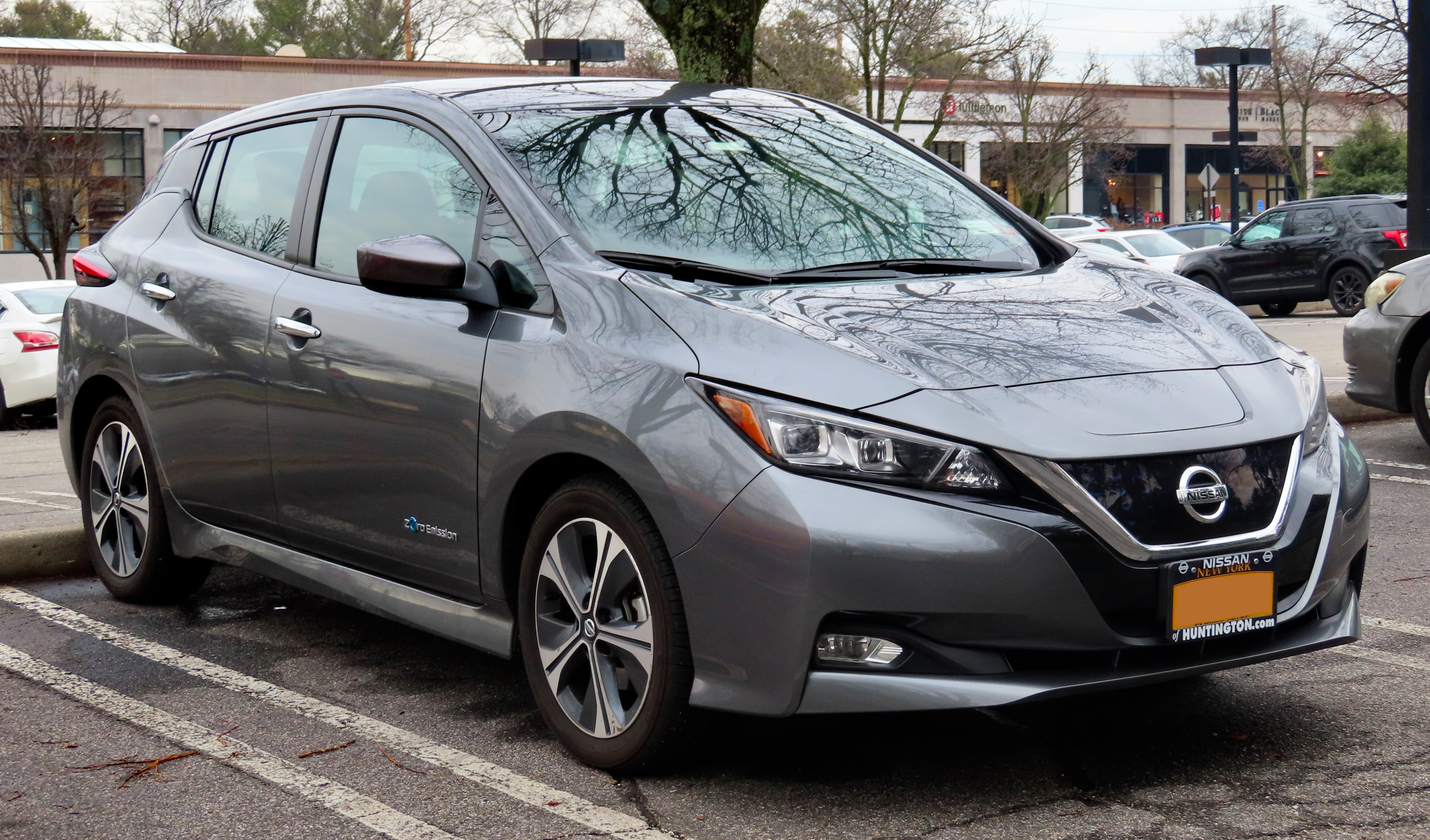
Nissan Leaf
"Compared to those early, you know, Nissan leaf first gen type vehicles and Mitsubishi i-means and whatnot"
The Nissan Leaf is one of the first widely sold electric cars. The point here is that early Leafs were often seen as having limited range, which made people worry about running out of battery.
The Nissan Leaf is an early mass-market electric car that helped popularize EVs in the U.S. The hosts mention the Leaf “first gen” to illustrate how early EVs were associated with shorter real-world range and stronger range-anxiety concerns.
learning curve
"Shows that there's a learning curve that goes along with owning an electric vehicle"
A learning curve means it takes time to get used to how an EV fits into your routine. The hosts are saying that after people learn how to use the car and charge it, the range concerns often shrink.
In EV ownership, a learning curve refers to the adjustment period where drivers learn how to plan trips, estimate usable range, and integrate charging into daily life. The hosts connect it to why some buyers initially expect range to be a problem, but later find it manageable in real-world use.
public charging
"Yep, exactly. Yeah, and for those who do want to use an electric vehicle for a road trip [536.1s] Um, you know public charging is readily available"
Public charging means you can charge an EV at chargers that anyone can use, not just at home. It’s a big deal for road trips because it affects whether you can find power when you’re away from home.
Public charging is charging an electric vehicle using chargers that are available to the general public, typically at places like highway corridors, shopping centers, and parking lots. It matters because it determines whether EV road trips are practical without relying on home charging.
charging networks
"But that's just the way we are as consumers. We don't buy that way [531.6s] Yep, exactly. Yeah, and for those who do want to use an electric vehicle for a road trip [536.1s] Um, you know public charging is readily available [546.7s] But electric vehicle chargers are really prevalent much more so than even most EV owners [553.0s] realize [554.3s] And there's there's a reason for that unfortunately you have situations where [558.4s] vehicle manufacturers will partner with certain charging networks or [564.2s] Select apps will work with certain charging networks"
Charging networks are groups of EV charging stations run by a company. If your EV or charging app only works with certain networks, you might not be able to easily find or use all chargers.
Charging networks are companies or platforms that operate and manage groups of EV chargers, often with their own payment systems and app access. Partnerships between automakers and specific networks can affect what chargers drivers can see or use in practice.
public domain
"And so you may not see the full availability of chargers [573.1s] That are out there in the public domain just simply because there are partnerships that limit what you can see in those situations"
“Public domain” here means chargers that exist in the general public charging ecosystem, not private or restricted locations. The point is that drivers may not see the full set of public chargers due to app/network partnerships, creating a false impression of scarcity.
perception that charging may not be readily available
"And so what that results in is this perception that charging may not be readily available [587.0s] But it is and you know, you don't see chargers like you see a gas station, right?"
It’s about how people can think EV charging is hard to find even when it’s actually available. If chargers aren’t as obvious as gas stations, people may not realize how easy it is to charge.
This is the idea that EV charging can seem scarce even when it isn’t, largely because of visibility and information gaps. If drivers don’t see chargers the way they see gas stations, they may assume charging isn’t convenient or common.
north american charging standard
"Almost every major manufacturer has switched to the north american charging standard So the tesla supercharger network and once you get access to that there's chargers everywhere."
This is the common plug/charging system EVs use in the U.S. and Canada. When it’s standardized, you’re more likely to find chargers your car can use without special adapters.
The North American charging standard refers to the common connector/protocol used for EV charging in the U.S. and Canada, which helps reduce “will my car fit this charger?” confusion. When most automakers align to the same standard, it becomes easier to use chargers across many brands and locations.
tesla supercharger network
"So the tesla supercharger network and once you get access to that there's chargers everywhere. Do you think it's"
Tesla’s Supercharger Network is Tesla’s network of fast charging stations. If you can use it, it’s easier to find quick chargers when you’re driving longer distances.
Tesla’s Supercharger Network is Tesla’s fast-charging system, known for dense station placement and generally consistent user experience. Access to it can make EV ownership feel more “gas-station-like,” especially for drivers who worry about finding chargers on trips.
fundamental lack of education in the ev space right now
"There's a fundamental lack of education in the ev space right now And just to highlight this disconnect"
The show is saying many people don’t fully understand how EV charging works in real life. If they think chargers are too rare, they may avoid buying an EV even if that fear isn’t accurate.
The “education” gap refers to how many EV shoppers misunderstand practical charging realities—like how often public chargers appear and how accessible different charging networks are. This can directly affect purchase decisions even when charging infrastructure is improving.
electric vehicle consideration study
"In that study that we do that we just released our electric vehicle consideration study We talked to consumers who were in market to purchase a new vehicle"
This is a survey/research project about what makes people think about buying an EV. Here, it’s being used to show that many people reject EVs because they worry they can’t find chargers often enough.
An electric vehicle consideration study is a consumer research effort that measures how likely people are to consider buying an EV and why they might reject them. In this segment, it’s used to quantify the role of charging-frequency concerns in EV rejection.
ev rejecters
"for those people who Um rejected evs we call those ev rejecters. We asked them why they rejected an ev"
“EV rejecters” are people who were considering buying a new car but chose not to buy an EV. In the study, many of them said it’s because they think charging stations aren’t available often enough.
“EV rejecters” is a category from the study for consumers who were shopping for a new vehicle but decided against EVs. The segment highlights that a common reason is the belief that public charging isn’t frequent enough.
public charger
"Okay, how frequent would you need to see a public charger to feel comfortable enough to consider purchasing an electric vehicle?"
A public charger is a charging station other people can use, usually in places like parking lots or along highways. How often you can find them affects how confident people feel about owning an EV.
A public charger is an EV charging station available for general use outside your home or workplace. The episode frames “public charger frequency” as a key factor in whether shoppers feel comfortable buying an EV.
Stage two charger
"So I spent years reviewing electric vehicles and relying on public charging because I had nothing at home and then last year I got my own Stage two charger in my house"
This means a faster home charger for an electric car. Instead of charging slowly from a regular outlet, it uses a dedicated setup so you can top up the battery much quicker—often overnight.
A “Stage two” charger is a higher-power Level 2 home charging setup for electric vehicles. It’s faster than most standard outlets and is typically installed at a residence so you can recharge overnight and start each day with a fuller battery.
charging reliability
"But that's improved. We've seen a significant increase in charging reliability We focus very heavily on the public charging space at jd power"
Charging reliability means how often charging stations work as expected. If chargers break or don’t start charging, it can make EV road trips harder and more stressful.
Charging reliability is how consistently EV chargers work when drivers arrive and how often charging actually succeeds. It’s a key factor in real-world EV adoption because broken chargers or frequent failures can turn a simple trip into a stressful backup plan.
charging success for consumers
"And the reliability or charging success for consumers has improved dramatically over the past year or so"
This is a measure of whether people can successfully charge their EV at public stations. If a charger is unreliable, the “success” rate drops because drivers can’t get charging to start or finish.
“Charging success for consumers” is a performance metric describing whether EV drivers can actually get power when they plug in. It’s closely tied to reliability and can be influenced by charger uptime, software/communication issues, and maintenance quality.
co-locate
"“But now we're looking at this very differently and saying, okay / How can we co-locate these things where there are amenities that consumers want”"
Here, “co-locate” just means put the EV chargers in the same place as things people want to access—like restaurants or restrooms. That way, charging doesn’t feel like wasted time.
In this context, “co-locate” means placing EV chargers in the same area as other useful businesses and facilities. The speaker’s point is that charger placement should be planned around amenities so drivers can use the time productively.
convenience charging
"“How can we co-locate these things where there are amenities that consumers want because you need to be able to support / What I call convenience charging, which is you know, sort of that level two charging”"
Convenience charging means you charge your EV while you’re already doing something else, like shopping or eating dinner. Instead of planning a special stop just to charge, you plug in during your normal routine.
“Convenience charging” is the idea of charging during everyday errands and activities rather than treating charging as a separate trip. The speaker frames it as charging while you’re already stopped—like at a grocery store or restaurant—so the charging experience feels integrated into normal life.
level two charging
"“What I call convenience charging, which is you know, sort of that level two charging / I happen to be at the grocery store. So I'm going to charge up or I'm at the restaurant for dinner”"
Level 2 charging is a faster kind of EV charging than plugging into a basic outlet. It’s meant for when you’ll be parked for a while—like at a grocery store or restaurant—so the car can add a lot of battery while you’re busy.
“Level 2 charging” refers to a common public and home EV charging setup that uses alternating current (AC) and typically delivers more power than a standard outlet. It’s designed for longer stops—like at home, work, or while you’re shopping—so your car can add meaningful range during that time.
destination type charging experience
"“And I'm going to charge while I'm there versus that road trip stop / And that road trip stop is is a little bit more of a destination type charging experience”"
This means charging at a place you’d actually want to stop for—like a destination—rather than just pulling in briefly to add a little battery. The idea is that the charging stop should feel like part of the trip, not an interruption.
A “destination type charging experience” describes charging stops that are meant to be part of a trip or an outing—often at places people want to visit—rather than quick, utilitarian stops. The speaker contrasts this with “road trip stop” charging, implying different expectations for time, amenities, and overall experience.
stage three chargers
"We're seeing huge banks of stage three chargers going up at grocery stores is a great point They're showing up everywhere because it's perfect."
They’re talking about the fastest type of public EV charger. The idea is you can plug in and get enough charge in a short time while you’re doing something else nearby.
“Stage three chargers” is likely referring to a high-power fast-charging level (often discussed as Level 3 DC fast charging). These chargers can refill an EV much quicker than standard home or slower public chargers, which is why they’re often placed at places people already visit for a while.
destination chargers
"But I think the destination chargers are Such a better idea and it seems to be taking off a little more Yeah, absolutely, you know the the average fast charging session"
Destination chargers are chargers at places you’d stop anyway, like a restaurant or a movie theater. You plug in and charge while you’re there, so it doesn’t feel like a separate chore.
Destination chargers are EV charging stations placed at locations where drivers naturally spend time—like restaurants, hotels, or movie theaters. The strategy is to match charging to “dwell time,” making charging feel less disruptive than charging while you’re just passing through.
fast charging
"the average fast charging session right now typically takes around 30 minutes um, and that's usually for Someone to charge their battery from about 20 to 80 percent"
Fast charging is how you charge an electric car quickly at public stations. Instead of waiting hours, you can usually add a useful amount of battery in about half an hour.
Fast charging is a method of charging an EV at high power so the battery can gain charge quickly. In the segment, they describe typical fast-charging sessions as taking about 30 minutes to move from roughly 20% to 80%, which is a common planning window for charging stops.
20 to 80 percent
"and that's usually for Someone to charge their battery from about 20 to 80 percent And that 30 minute time frame"
They’re using a typical charging target: start around 20% and stop around 80%. Charging is usually quicker in that middle range, and topping up closer to 100% often takes longer.
Charging from about 20% to 80% is a common EV fast-charging planning range because it balances speed and battery protection. Many EVs charge quickly in the middle of the state-of-charge window, then slow down as the battery approaches full.
infrastructure education
"What do you think is The biggest one that's probably the easiest over to overcome in the future just with probably their infrastructure education Availability, whatever. Yeah. Well, I think there's actually two."
They mean teaching people how EV charging really works. If people don’t understand things like how long charging takes or where chargers are, they may assume EVs won’t fit their life.
“Infrastructure education” here means helping consumers understand how EV charging works and what to expect from charging networks and station types. The host argues that misconceptions about EV capabilities and charging can slow adoption even when the hardware is improving.
misconceptions
"There are so many misconceptions out there of what EVs are or aren't what they can or cannot do what charging is or isn't Um, and proper education would really go a long way"
They’re talking about wrong ideas people have about electric cars. If those fears are based on misunderstandings, better information can help people feel more confident.
In this context, “misconceptions” refers to incorrect beliefs about EVs—such as what they can do, how charging works, and whether charging is practical. Addressing these misunderstandings is framed as a key lever for increasing EV adoption.
affordability component
"this the second one and I think this is also very very important is the affordability component"
This is about whether electric cars are priced low enough for regular buyers. The host’s point is that if EVs cost too much at the start, fewer people will choose them.
The affordability component is the idea that EVs often cost more upfront than comparable internal-combustion (gas) cars, which suppresses demand. The speaker argues that lowering EV prices is crucial to expanding the customer base.
ice vehicle
"we talked a little bit about that where you know, these electric vehicles oftentimes are more expensive than an ice vehicle"
ICE vehicle just means a normal gas-powered car (gasoline or diesel). The host is comparing those cars to electric cars when talking about price.
ICE vehicle is shorthand for an internal-combustion-engine vehicle, meaning a car powered by gasoline or diesel. The speaker contrasts ICE vehicles with electric vehicles to explain why EVs are perceived as more expensive overall.

Chevy bolt
"General motors brought back the Chevy bolt, right an affordable EV option"
The Chevrolet Bolt is an electric car made by General Motors. In this episode, it’s brought up as an example of an EV that’s meant to be cheaper so more people can afford one.
The Chevrolet Bolt is an all-electric compact car from General Motors, known for being one of the more affordable EV options in the U.S. Mentioning it here highlights how automakers are trying to bring EV pricing down to reach more mainstream buyers.
19 percent overlap
"There's only about a 19 percent overlap meaning there's 19 percent of the consumer audience That fits in that sweet spot of interest in electric vehicles and has the income To afford one of those vehicles"
The host is saying only a small group of people both really want an EV and also have enough money to buy one. That’s why lowering EV prices is so important for growth.
The speaker uses a “19 percent overlap” to describe the small portion of consumers who both want EVs and can afford them. It’s a market segmentation argument: interest alone isn’t enough—buyers also need the budget.
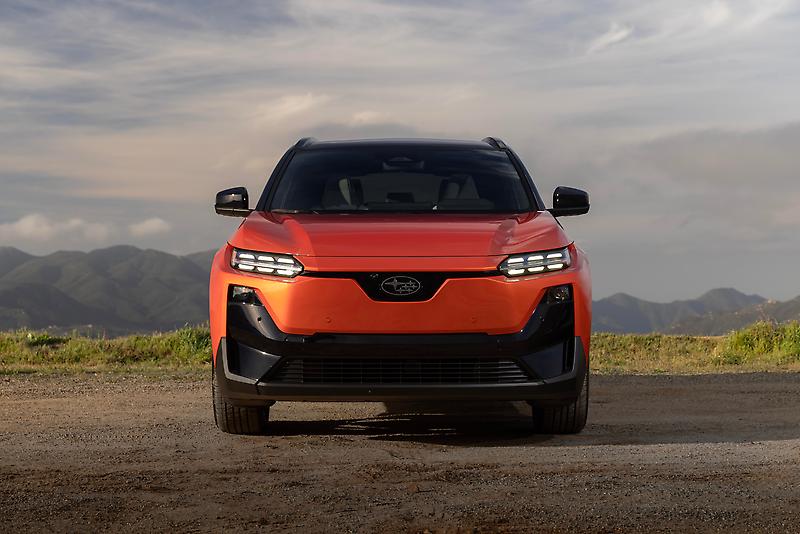
Subaru Uncharted
"...called the ev4 from kia and then there's also the uncharted the new entry Subaru and toyed as the chr equival..."
The Subaru Uncharted is a Subaru vehicle model that’s being introduced or talked about as a new option. It’s meant to be a specific kind of Subaru for buyers who want that model. The podcast mentions it when comparing different vehicles people can choose from.
The Subaru Uncharted is a newer Subaru model that’s being referenced alongside other EV and crossover-style options in the conversation. It’s likely brought up as a “new entry” in Subaru’s lineup, meaning it’s intended to attract buyers looking for a specific type of vehicle. In a podcast, it’s commonly mentioned when hosts compare what’s available and how models are positioned by name and purpose.

Kia EV4
"...ples you had and in Canada We have one called the ev4 from kia and then there's also the uncharted the ..."
The Kia EV4 is an electric car made by Kia. Instead of using gasoline, it runs on electricity from a battery. It’s mentioned because it’s one of the EV options people can buy, including in Canada.
The Kia EV4 is an electric vehicle (EV) model from Kia, discussed in the context of EV options available in Canada. It’s the kind of car that shows up when people compare EV models by name, pricing, and availability. Podcasts often mention it to help listeners understand what EVs are on the market and how they fit different needs.
used electric vehicles
"Yeah, I think one thing that's going to help our cause is the influx of used electric vehicles that will be coming back [1270.6s] So the us and canadian market had these incentives that were available to consumers purchasing those electric vehicles"
The idea here is that more people will be able to buy EVs once lots of them show up on the used market. The host links that to earlier government incentives that encouraged leasing, so those leased EVs will later become used cars.
The host argues that used electric vehicles will expand EV adoption by lowering the purchase price barrier. They connect this to earlier incentives that drove leasing, meaning many EVs will soon return to the used market.
incentives
"So the us and canadian market had these incentives that were available to consumers purchasing those electric vehicles [1276.4s] And that drove a lot of leasing so lease rates skyrocketed for electric vehicles"
Here, “incentives” means programs that make EVs cheaper to buy or lease. The host’s point is that these incentives pushed more people toward leasing EVs.
In this context, “incentives” refers to government or policy programs that reduce the effective cost of buying an electric vehicle. The host says these incentives encouraged leasing, which then increased lease volumes for EVs.
leasing
"And that drove a lot of leasing so lease rates skyrocketed for electric vehicles [1281.8s] Those lease vehicles are now going to be coming back off lease [1285.5s] And we're seeing some pretty affordable rates on the used purchase prices for those electric vehicles"
Leasing is like renting a car for a few years with monthly payments, usually with an option at the end. The host says incentives made more people lease EVs, and those cars will later come back as used cars.
Leasing is a financing structure where you pay to use a vehicle for a set period rather than buying it outright. The host claims EV incentives led to more leasing, which later increases the supply of off-lease EVs available for used purchase.
electric vehicle affordability
"And so when we talk about things like electric vehicle affordability [1297.1s] Just you know for your listeners know that there's a lot of really great [1301.3s] Used electric vehicles that will be coming available newer used vehicles that are really great products for them to consider purchasing"
This phrase means whether EVs are priced low enough for regular people to buy. The host’s point is that used EVs can be much more affordable than buying new.
“Electric vehicle affordability” is the idea that EVs need to be priced within reach for mainstream buyers, not just early adopters. The host argues that the used EV market is improving affordability by offering “newer used” EVs at better prices.
batteries
"Up to four or five years old the batteries aren't what they used to be these batteries are probably still at 90 Plus of their life."
Electric cars use a big rechargeable battery. Over time it doesn’t hold as much energy as when it was new, but a newer used EV can still have most of its battery life left.
In an electric car, the battery’s usable capacity slowly declines with age and charging cycles. The host is saying that off-lease EVs that are only four or five years old may still have around 90% of their original capacity, so range and performance can remain relatively strong compared to older “bad battery” stories.
battery those days
"I know there was those stories in like 2015 of oh this car is five years old And it's only got 60 battery those days are long gone"
They’re talking about older stories that EV batteries used to wear out much faster. The point is that newer EV batteries tend to last better than people expected back then.
The host is referencing early EV-era battery degradation concerns—specifically stories from around 2015 where people claimed a few-year-old EV had “only got 60 battery.” The key idea is that battery technology and thermal management improved, so modern EVs generally degrade more slowly than early-generation fears suggested.
driving performance optimizer
"Garments known for its gps units, you know the handheld ones and the ones you could put to your car And what they're doing with this driving performance optimizer Is they are using their experience to help you get quicker like I said at the track"
This is a gadget that records what you’re doing while driving on a track. It helps you review your laps so you can spot where you’re losing time and improve.
A driving performance optimizer is a device or software system that helps drivers improve lap times by collecting vehicle and track data. In this segment, it’s described as using a large in-car screen plus an external camera to log performance metrics while you drive.
GPS units
"Garments known for its gps units, you know the handheld ones and the ones you could put to your car And what they're doing with this driving performance optimizer"
GPS is how a device figures out where you are using satellites. On a track, it can help the system know your position so it can measure lap times and where you’re going faster or slower.
GPS units use satellite positioning to determine a vehicle’s location and movement in real time. For track driving, that location data can be used to map where you are on the circuit and correlate it with speed and lap timing.
Toronto Motorsports Park
"The track I was at is actually a pretty small one called Toronto Motorsports Park It was in there and the great thing is is as you lap"
Toronto Motorsports Park is a racing venue used for track-day style driving and lap-time analysis. The host uses it as an example of a “small” track where the device can still help drivers review lines, corner entry/exit, and speed.
lines
"As you lap You can go back and look at your lines and your speed entering and exiting corners Analyze it it itself can tell you where or show you where you could probably make up some time"
A “line” is the route your car follows through a turn. The system can show you how your route compares to better laps so you can try to drive the corner more efficiently.
In track driving, “lines” refers to the path the car takes through a corner—where you enter, how you arc through, and where you exit. The optimizer uses recorded data so you can compare your line choices lap to lap and see where you might gain time.
lap times
"As you're lapping it will Record lap times because it knows where the start finishes wherever you set it And it can actually call out your lap times"
Lap time is how long it takes you to complete one full circuit of the track. The device tracks it and shows your best lap versus what you’re doing now.
Lap times are the measured duration for one full circuit around a track. The segment describes the device recording lap times and displaying your best time compared with the current lap so you can see improvement in real time.
Head up display
"[1426.3s] Head up display in real life on your car [1429.0s] So those who are serious about lapping"
A head-up display is a screen that shows driving info on the windshield. It helps you keep your eyes on the road instead of looking down at the dashboard.
A head-up display (HUD) projects key driving information onto the windshield so you can see it without looking down at the instrument cluster. On track-focused devices, it can show guidance like speed, lap timing, or performance deltas in your line of sight.
plug-in hybrid
"[1565.0s] As much as I did in say the ergon [1568.8s] And when you're driving the vehicle because it's a plug-in hybrid if you drive in one of the more sedate like hybrid modes"
A plug-in hybrid is a car that uses both gas and electricity. You can charge it by plugging it in, and it can drive on electric power for a short distance before it switches to gas.
A plug-in hybrid (PHEV) is a hybrid car with a battery you can charge from an external power source. That lets it run on electricity alone for short distances, then switch to the gas engine (and/or combine both) when the battery is depleted or when more power is needed.
dual clutch transmission
"[1573.1s] it's really [1576.9s] smooth even with the dual clutch transmission and stop and go traffic and that's because the electric motor powering the front wheels"
A dual-clutch transmission is a type of automatic gearbox that shifts very fast. It uses two clutches so it can change gears smoothly, and in this car it works together with the electric motor to make stop-and-go driving feel less jerky.
A dual clutch transmission (DCT) uses two separate clutches—one for odd gears and one for even gears—so it can shift quickly with minimal interruption. In a plug-in hybrid, the DCT’s behavior during low-speed driving and transitions can feel especially smooth because the electric motor can handle the “in-between” moments.
electric motor powering the front wheels
"[1576.9s] smooth even with the dual clutch transmission and stop and go traffic and that's because the electric motor powering the front wheels [1582.2s] Can take over at lower speeds or during the transition from stop to when the dual clutch engages"
Here, the electric motor drives the front wheels. That helps the car move smoothly at low speeds and makes stop-and-go traffic feel easier because the electric power comes on right away.
When an electric motor powers the front wheels, the car can use electric torque to move the vehicle at low speeds and during clutch/gear transitions. That reduces lag and helps the drivetrain feel smoother in stop-and-go traffic because the electric system can respond instantly.
EV mode
"[1582.2s] Can take over at lower speeds or during the transition from stop to when the dual clutch engages [1587.4s] In fact, you can even put it in just ev mode and just silently cruise and stop and go traffic"
EV mode means the car runs on electricity only. The host says it only lasts for a short distance, so it’s mainly for local driving before the battery runs down.
EV mode is the driving setting that prioritizes electric-only operation. In this segment, the host says the car can run in EV mode for a limited distance, which is typical for plug-in hybrids: enough for local commuting, but not meant to replace full gas driving for long trips.
0 to 60
"[1621.6s] And there the car is just so fantastic. I can't obviously exploit anywhere near its full capabilities [1627.5s] I mean it goes well over 210 miles an hour to 0 to 60 in 2.5 seconds"
“0 to 60” is how fast the car goes from standing still to 60 miles per hour. It’s a simple way to compare acceleration between cars.
0–60 mph (or 0–60 time) is a common performance metric measuring how quickly a car accelerates from a standstill to 60 mph. It’s useful for comparing how quickly different cars deliver power, especially when a hybrid’s electric assist can improve launch feel.
twin turbo v8
"And the sound that twin turbo v8 makes behind your ears is so nice Anything over 6000 rpm is so loud and up at red line."
This is a V8 engine with two turbochargers. Turbos cram extra air into the engine so it makes more power, often with a more dramatic sound and stronger acceleration.
A twin-turbo V8 uses two turbochargers to force more air into a V8 engine, which boosts power and can improve throttle response. The “twin” part means there are two turbos working to spool up and support higher boost across the rev range.
red line
"Anything over 6000 rpm is so loud and up at red line. It makes us sound like nothing else Now on the downside when you're cruising below 4000 rpm"
The red line is the top safe RPM limit for the engine. If you go past it, you risk damaging the engine, so it’s something drivers try not to stay at.
The red line is the engine’s maximum safe operating RPM range. Past that point, the engine can be damaged, so drivers typically avoid sustained operation at or above it.
rear end wants to step out
"It's so well worth it and the rear end wants to step out because a lot of that power is sent to the rear wheels There's no mechanical all-wheel drive system."
This means the back of the car starts to slide outward instead of following the front. It usually happens when the tires don’t have enough grip for the power being applied.
“Stepping out” describes oversteer behavior where the rear of the car loses grip and moves outward relative to the front. It often happens when torque is applied and traction at the rear tires can’t keep up.
mechanical all-wheel drive system
"There's no mechanical all-wheel drive system. So the front motors are separate from the rear Engine motor combination, but when it does start to step out and kick its tail out"
Traditional all-wheel drive uses mechanical parts to send power to both the front and rear wheels. Here, the point is that the car doesn’t use that kind of mechanical system—power is handled differently.
A mechanical all-wheel drive system typically uses a drivetrain (like a transfer case and driveshafts) to send power to both axles. The speaker contrasts this with an electric setup where front and rear motors can be controlled independently rather than by a single mechanical coupling.
sportier settings
"but when it does start to step out and kick its tail out It's wholly controllable even in some of the sportier settings. It's just A vehicle that has 907 horsepower combined"
Sportier settings are driving modes that make the car respond more sharply. They can also loosen the traction/stability help a bit so the car feels more lively, but the speaker says it’s still manageable.
“Sportier settings” refers to driving modes that change how the car responds—commonly throttle mapping, steering feel, stability/traction intervention levels, and sometimes regenerative braking behavior. The speaker implies the car remains controllable even when these systems are made more aggressive.
907 horsepower combined
"It's wholly controllable even in some of the sportier settings. It's just A vehicle that has 907 horsepower combined But it's kind of docile in a sense of you never feel like you can't get on top of the car"
Combined horsepower means the total power from all the car’s power sources working together. In a hybrid, that usually includes both the gas engine and the electric motors.
“Combined horsepower” is the total output when multiple power sources are added together—such as an internal-combustion engine plus electric motors in a hybrid. It’s a way to express the overall peak power the car can deliver.
aerodynamic bits and pieces
"I mean the car looks wild. There are so many aerodynamic bits and pieces to the vehicle that just"
These are shape features on the car meant to control airflow. They can help the car stick better to the road and feel more stable, especially at higher speeds.
Aerodynamic “bits and pieces” are body features designed to manage airflow—like wings, splitters, diffusers, and vents. They can reduce drag, increase downforce, and improve stability at speed.
Lamborghini
"What's a Lamborghini which is not easy to do to make something look different and new but still familiar And of course the driving sensation is fantastic. So yeah, temerario"
Lamborghini is a famous Italian company that makes high-end supercars. Here, the host is saying Lamborghini can make new models that look different but still feel like a Lamborghini.
Lamborghini is an Italian supercar brand known for bold, easily recognizable styling and high-performance driving dynamics. In this segment, the host uses Lamborghini as an example of how a new model can look different while still feeling “familiar.”
Request an Explanation
Heard something you'd like explained? We'll add it to this episode.
Sign in to request explanations for terms you heard.
Want to learn more?
Browse our glossary for plain-English explanations of automotive terms, jargon, and concepts.
Help improve this episode
See something that's not quite right? Our annotations are AI-generated and can sometimes miss the mark. Click the flag icon on any annotation to suggest a correction.