
'Ghost car' finance fraud uncovered, Blue Motor Finance rumoured to be exiting, and Nissan to adjust Sunderland production – with Andrew Edmiston, episode 257
Dealers and brokers get a detailed look at “ghost car” finance fraud—how it’s uncovered only after consumers complain, why brokers can be left holding the losses, and how investigators have escalated it to the Met. The conversation then shifts to industry pressure: reports that Blue Motor Finance is “teetering on the brink of collapse,” plus the rumoured knock-on effects of redress on lender funding. Nissan’s Sunderland output is also in focus, with plans to close a line and merge production.
"No, I've been on a, I went on a Polestar launch, which was quite exciting.
[228.8s] Which one?
[230.0s] It was the Polestar 5, which is their big..."
The Polestar 5 is Polestar’s top, more premium electric car. It’s designed to be a comfortable “big trip” kind of EV, not just a smaller sporty model.
Polestar 5 is Polestar’s flagship, positioned as a high-end electric grand tourer. It’s notable because Polestar is building a lineup that moves upmarket from earlier models, and the 5 is meant to feel like a premium, long-distance cruiser.
"you're sat in the back of this, of like 100 grand GT four-door, [291.3s] kind of, I don't know, Mercedes S-Class type car really. [294.0s] And all you're staring at is this bit of text on the back of the leather seat"
The Mercedes S-Class is a top-tier luxury car. The host is saying the back-seat experience feels similar to that kind of high-end comfort.
The Mercedes S-Class is Mercedes-Benz’s flagship luxury sedan, known for a very comfortable rear-seat experience and high-end materials. Here, the host uses it as a reference point for the “back seat” vibe of the car they’re describing.
"And all you're staring at is this bit of text on the back of the leather seat that says, [299.6s] in 100% traceable leather, animal welfare secured, [303.7s] like written in Helvetica on the back of this seat."
“Traceable leather” means the leather’s sourcing is tracked through the supply chain so the brand can claim where it came from. In this segment, it’s paired with animal-welfare messaging, and the host jokes that the label is distracting when you’re trying to enjoy the car.
"that says, [299.6s] in 100% traceable leather, animal welfare secured, [303.7s] like written in Helvetica on the back of this seat."
It’s a claim that the leather is sourced using animal-welfare rules. The host is pointing out the message is printed on the seat.
“Animal welfare secured” is a marketing claim that the materials (here, leather) come from suppliers following animal-welfare standards. It’s not a single technical automotive term, but it’s a specific certification-style phrase that implies a sourcing standard.
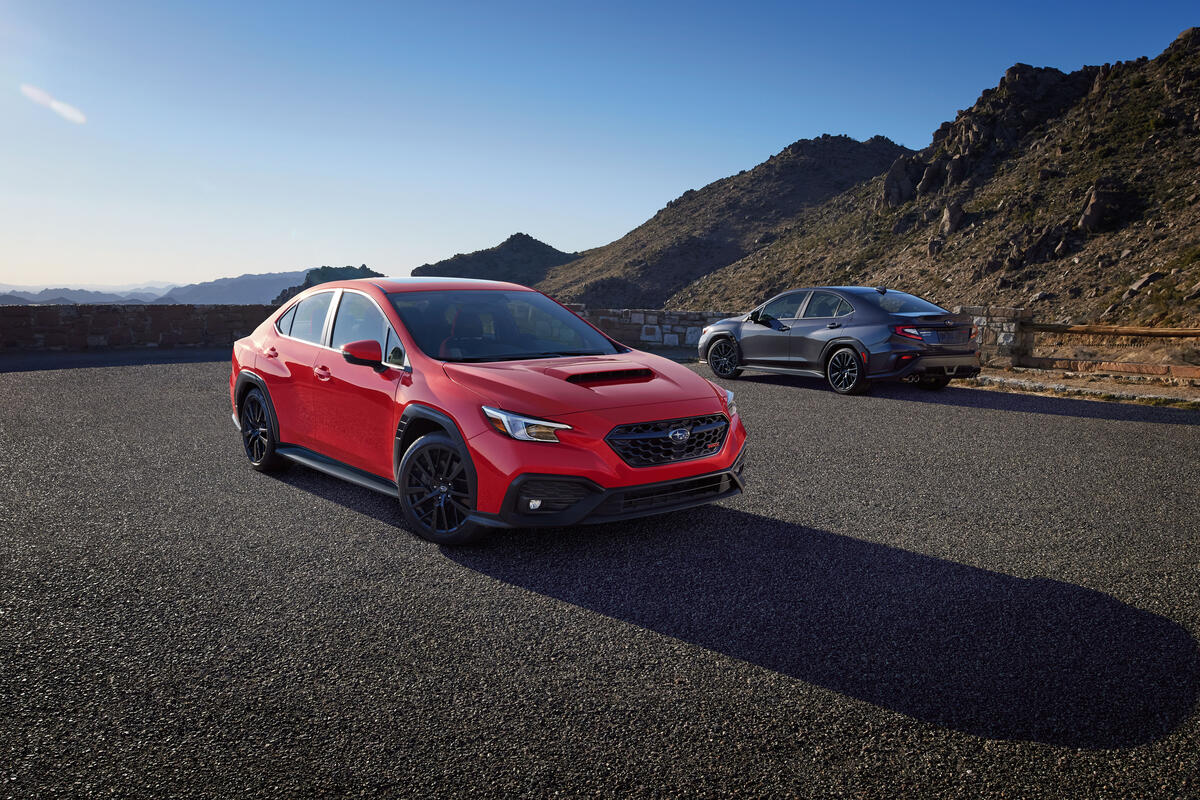
"...n that I'm assured can tell us when the Impressor WRX is coming back to the UK. It's of course, managin..."
The Subaru WRX is a sporty Subaru with a turbo engine and all-wheel drive. That combination helps it grip the road better and feel more exciting than a normal family car. It’s often mentioned because people look forward to when new versions are available in certain markets.
The Subaru WRX is a performance-focused compact sedan/wagon from Subaru, best known for its turbocharged engine and all-wheel-drive traction. It’s frequently discussed in enthusiast and dealer circles because it has a strong following and a reputation for being fun to drive year-round. In the podcast context, it’s mentioned around timing and availability in the UK.
"driving a car from the IM Group, I'm pretty sure it was a Great Wall, wasn't it? ... Oh, a Steed. ... it was about 3,000 Steeds that we imported."
Great Wall is a Chinese car maker, and the Steed is a pickup truck. They’re saying they imported a lot of these trucks a few years back.
Great Wall is a Chinese automaker, and the Steed is one of its pickup models. In this segment, the hosts mention importing thousands of Steeds around 2012–2013, which is notable because it reflects early UK/European exposure to Chinese commercial vehicles.
"the way the Europeans and the European manufacturers were defending against that was through emissions legislation. ... the emissions legislation was getting ever more stringent"
Emissions legislation is the set of rules governments use to limit pollution from cars. The idea here is that stricter rules pushed European makers to improve petrol/diesel engines for a while.
Emissions legislation is government regulation that limits what pollutants a vehicle can produce. The hosts connect it to European automakers’ strategy: improving combustion engines to meet tightening rules before the industry shifts toward battery-electric vehicles.
"there would be this temptation to go for zero emissions with battery technology."
Zero emissions means the car doesn’t produce exhaust pollution while it’s running. They’re saying stricter pollution rules can make electric cars more attractive.
Zero emissions refers to a vehicle producing no tailpipe pollutants during operation. In the discussion, it’s framed as the endgame of increasingly strict emissions rules, creating a “temptation” to switch to battery technology.
"temptation to go for zero emissions with battery technology. ... the Chinese had a fantastic battery industry ... batteries are all made in China"
Battery technology is how electric-car batteries are designed and built. They’re saying China had a big lead in making these batteries in huge quantities.
Battery technology is the set of engineering and manufacturing advances behind rechargeable batteries used in electric vehicles. The hosts argue that Chinese firms had a major advantage—especially in battery production scale—because batteries are made in China and supplied globally.
"So I think the initial response from manufacturers with the ZEV mandate
[1821.4s] was, oh, no, we need this,"
A ZEV mandate is a rule from the government that requires car companies to sell more zero-emission cars. It’s meant to speed up the shift toward electric vehicles.
A ZEV mandate is a government requirement that pushes automakers to sell a minimum share of zero-emission vehicles (like battery-electric cars) within a set timeframe. In practice, it can force manufacturers to accelerate EV investment and planning, even if they’d rather phase it in more slowly.
"it's that if you're forcing supply above demand,
[1849.3s] price goes down."
This is the idea that if there are more cars available than people want to buy, prices usually drop. That can make it harder for sellers to make as much money.
“Forcing supply above demand” describes a market situation where too many vehicles (or other goods) are available compared to what buyers want at that time. When supply outpaces demand, prices tend to fall, which can change profitability and pricing strategies across the industry.
"If you don't like CO2, stick fuel duty on and get rid of every other tax, basically."
Fuel duty is a tax added to petrol and diesel prices. Higher or lower fuel duty can change what it costs to drive and can affect buying decisions.
Fuel duty is a government tax charged on fuel (like petrol and diesel) at the point of sale. It directly affects the price consumers pay at the pump and can influence how much people drive and what they choose to buy.
"If you don't like CO2, stick fuel duty on and get rid of every other tax, basically."
CO2 is a gas that comes out when you burn fuel. Car rules sometimes focus on reducing CO2 to cut pollution and climate impact.
CO2 (carbon dioxide) is the main greenhouse gas produced by burning fuel in a car’s engine. In policy discussions, CO2 targets are often used to push automakers toward lower-emission vehicles and fuels.
"Do you think it will happen? Do you think the 2030 ban will happen?"
The “2030 ban” is a planned cutoff date for selling certain types of cars. It would force the market to move toward cleaner vehicles before then.
The “2030 ban” refers to a policy target that would prohibit the sale of certain non-zero-emission vehicles by 2030. In practice, it pressures manufacturers and dealers to shift inventory and product plans toward electric and other zero-emission options.
Concept
ghost car
"So, there are some question marks over whether all of the consumers were complicit... until the consumer calls the lender and says, you've been taking money out of my bank account."
A “ghost car” is a scam where someone arranges car finance for a car that isn’t actually delivered (or doesn’t really exist). The problem usually comes to light when the customer notices money being taken and asks the lender what’s going on.
A “ghost car” is a fraudulent vehicle transaction where the car is effectively not real or not delivered as claimed, but finance is still arranged. The lender only discovers the issue after the consumer contacts the lender about unexpected withdrawals or payments tied to a car that doesn’t exist or wasn’t delivered.
"But what's happened is once these criminals have got one through these rogue dealers, they hit them with many more."
“Rogue dealers” here means dishonest car sellers. They use the finance system to get money approved, then the lender later finds out something doesn’t match what was promised.
In this context, “rogue dealers” are car sellers acting outside the normal, legitimate process—often by misrepresenting the deal or the vehicle involved. The scam relies on the dealer getting the finance paperwork approved before the lender realizes the car/transaction doesn’t check out.
"That money's disappeared. The dealer goes pop and the broker is unfortunately the one left holding the can because they indemnify the lender for that money they've lent."
“Indemnify the lender” means the broker has to pay back the lender if the lender loses money. So if the scam collapses, the broker may be the one stuck paying.
To “indemnify the lender” means the broker promises to cover the lender’s losses if the deal goes wrong. In these scams, once the lender realizes the money was sent based on a fraudulent transaction, the broker can end up financially responsible.
"Now, one of those brokers that I spoke to, DSG, Rob Woolen told me that they had been hit for a million pounds as part of the scam at the end of last year."
DSG is mentioned as one of the brokers affected by the fraud. The point is that brokers can get hit financially when scams break down.
DSG is referenced as a broker involved in the scam’s fallout, with a reported loss figure. In the episode’s context, it represents the broker side of the finance chain being targeted or impacted by fraudulent dealer activity.
"I mean, this is not dissimilar to Motonovo, although Motonovo feels like, so Motonovo, of course, pulled out of the UK."
Motonovo is a company that helps people finance car purchases. The discussion suggests that when its funding source pulled back, Motonovo couldn’t keep operating in the UK.
Motonovo is a UK motor finance provider. In the segment, the host links Motonovo’s UK exit to funding backing from a bank, illustrating how lender funding can directly affect availability of car finance.
"and it looks like a similar sort of thing here, supposedly, as a bank called Shawbrook, which cancelled a forward flow funding agreement earlier in the year"
Shawbrook is a financial company that provides funding to other lenders. If it cancels funding agreements, the car-finance companies that rely on that money may have to slow down or stop lending.
Shawbrook is referenced as the bank behind Motonovo’s funding structure and, in this case, behind the forward flow funding agreement. The segment suggests Shawbrook cancelled that funding, which can restrict how motor finance companies fund new lending.
"which cancelled a forward flow funding agreement earlier in the year, probably as a result of the motor finance redress scheme"
It’s basically a pre-arranged deal where a bank promises money for future car loans. If that promise gets cancelled, the lender may run out of money to fund new car purchases.
A forward flow funding agreement is a contract where a bank commits to provide funding for future car-loan originations (new lending) over an agreed period. Cancelling it can quickly reduce a motor finance provider’s ability to keep approving and funding new deals.
"probably as a result of the motor finance redress scheme, I would imagine, unless it's a big coincidence."
The motor finance redress scheme refers to a UK process for compensating customers affected by past issues in motor finance sales and lending practices. The host implies it may have increased costs or risk for lenders, contributing to funding being withdrawn.
Term
finance market
"just given the finance market at the moment. They said, didn't they, when they put this scheme together, a lot of the banks and lenders were saying, it's going to really hurt the finance market."
They’re talking about how the car-loan industry is doing overall. If lenders pull back, there are fewer companies competing to offer finance to buyers.
“Finance market” here means the overall environment for car lending—how easily lenders can raise money, compete for customers, and offer credit. The host argues that regulatory or redress-related pressure can reduce competition and leave fewer providers.
"So, this is a compensation scheme that's supposed to be helping consumers out, but might absolutely do the opposite."
A compensation scheme is a plan to pay back people who were treated unfairly. In this episode, they’re talking about a scheme meant to help car finance customers, but it might cause other problems too.
A compensation scheme is a structured process where a financial firm (or regulator-backed arrangement) pays money to customers affected by wrongdoing or mis-selling. In car finance cases, these schemes are often used to address consumer harm after investigations. The discussion here highlights that the intended consumer help can still have unintended consequences for the market or businesses.
"We do have a third business based at a different location called Specialist Motor Finance."
Specialist Motor Finance is the name of a finance business the speaker runs. It’s part of the car-buying process—helping arrange financing for vehicles. They mention it to give context for their opinion.
Specialist Motor Finance is described as a third business line run by the speaker, focused on car finance. In the car-dealer world, specialist finance arms often handle arranging loans and add-on products for vehicle purchases. The mention is mainly to explain the speaker’s experience with the finance side of the industry.
"What's been challenging about this particular thing is obviously hot on the heels of PPI, which was expensive for everybody."
PPI is an extra product that some car buyers were sold when arranging finance. The episode is saying that it ended up being expensive and later became a big consumer problem. They’re using it as an example of how these schemes can affect customers.
PPI in car finance usually means a “pre-purchase inspection” add-on or related product sold around the time of buying a vehicle. In the context of finance fraud and compensation schemes, it’s often discussed as a mis-sold or overpriced add-on that consumers paid for. The key listener takeaway is that PPI is being used as an example of a past consumer-cost issue that regulators later scrutinized.
"The problem with all this is you're looking with hindsight. You're looking through today's lenses about business that was conducted five or 10 years ago, and things were different then."
Hindsight means looking back and judging what happened using facts you only know now. The point here is that the rules and business situation were different years ago, so it’s not always fair to judge the past by today’s knowledge.
“Hindsight” means judging past actions using information that wasn’t known at the time. In regulatory or legal reviews of old car finance practices, hindsight can make earlier business decisions look worse than they did when they were made. The speaker argues that conditions and incentives were different years earlier.
Term
rate
"but in those days, you would sacrifice rate because you could make some profit on the PPI."
Here, “rate” means the interest rate on the car loan. The speaker is saying that companies could lower the interest rate but still make money in other ways. That can matter when people later question whether add-ons were fairly priced.
In car finance, “rate” refers to the interest rate charged on the loan. The speaker says that, at the time, firms could “sacrifice rate” (accept a lower interest rate) to make profit elsewhere, such as through add-on products. That’s an important idea in mis-selling discussions because it explains how incentives can shift where the money is made.
"Most unreliable used cars
You've got Land Rover Discovery at number one."
The Land Rover Discovery is a popular SUV. Here, the hosts are saying it ranks as one of the least reliable used cars.
The Land Rover Discovery is a midsize SUV known for its family-friendly practicality and off-road capability. In this segment it’s singled out as the most unreliable used car, which is why it’s worth calling out.
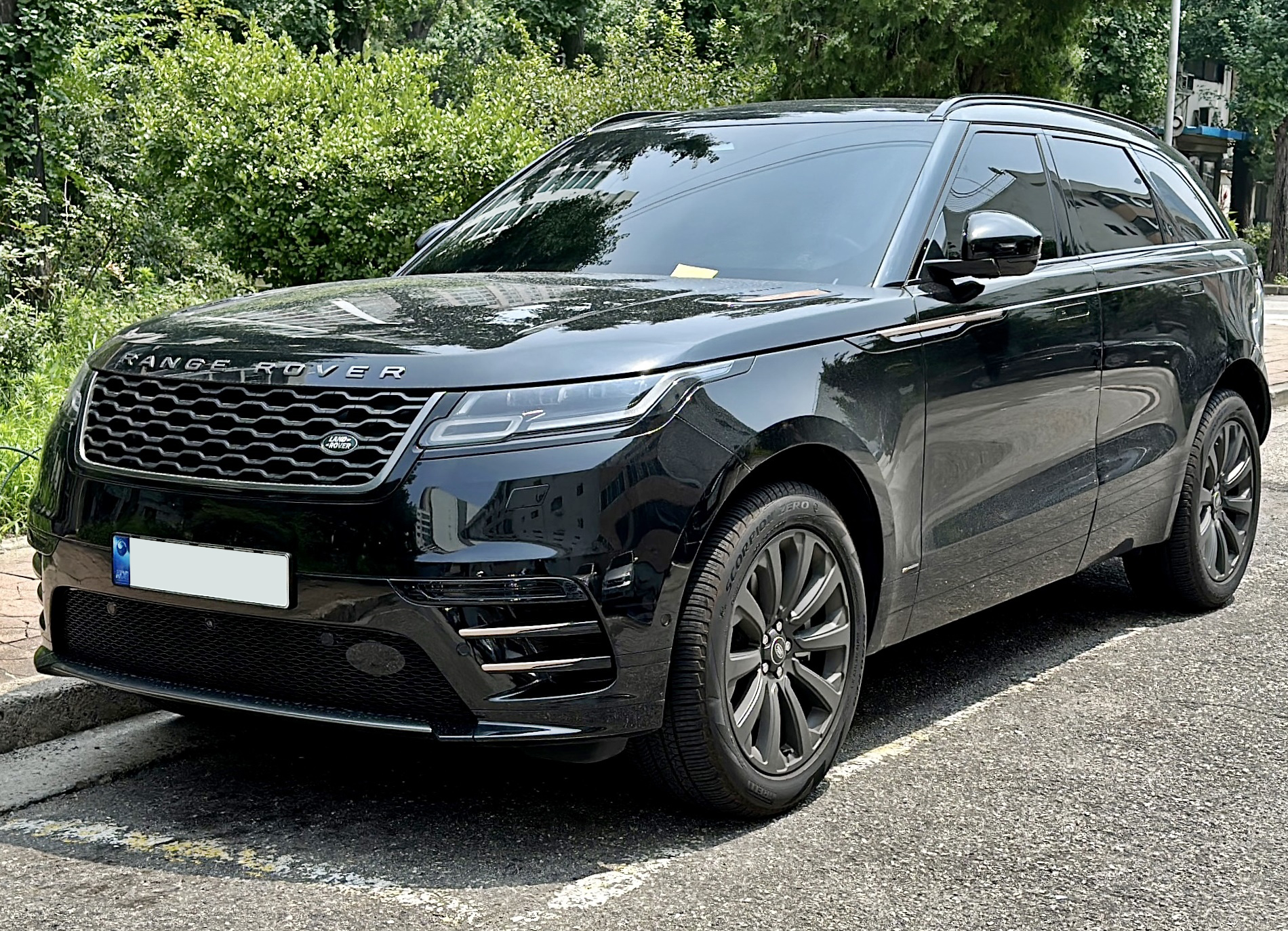
"Also on the list, Range Rover Velar and 5th.
Range Rover Sport in 6th."
The Range Rover Velar is a luxury SUV/crossover. In this episode it’s mentioned as being among the less reliable used cars.
The Range Rover Velar is a luxury crossover built on the Range Rover platform, positioned between the Evoque and Sport. The hosts mention it as part of a list of unreliable used cars, implying common ownership issues that affect reliability.
"Range Rover Sport in 6th.
Land Rover Discovery Sport in 8th."
The Range Rover Sport is a luxury SUV. The hosts are saying it shows up on their list of unreliable used cars.
The Range Rover Sport is a performance-leaning, luxury SUV in the Range Rover family, typically aimed at buyers who want more driving feel than a standard Discovery. Here it’s listed as unreliable in the used-car rankings.
"Land Rover Discovery Sport in 8th.
And the Land Rover Defender in 10th."
The Discovery Sport is a Land Rover SUV. The hosts mention it as one of the less reliable used cars.
The Land Rover Discovery Sport is a smaller, more urban-focused Land Rover SUV compared with the larger Discovery. In this segment it’s included in a ranking of the most unreliable used cars, making it relevant to buyers thinking about long-term ownership.
"Land Rover Discovery Sport in 8th. And the Land Rover Defender in 10th. I mean, that's five."
The Land Rover Defender is a tough SUV made for driving on rough roads and off-road trails. It’s built to handle difficult conditions, but it can still be used like a normal car. The podcast mentions it because it’s on a list of cars being discussed.
The Land Rover Defender is a rugged, off-road-capable SUV designed for serious terrain use while still being a modern daily driver. It’s a common topic because it has a strong identity and a wide range of buyers, from practical off-road users to those wanting a premium, capable SUV. In the podcast, it’s referenced as part of a ranking/list discussion, which is why it comes up in a dealer setting.
"Actually, the 10th one is the Defender 110.
There's no mention of the 90."
The Defender 110 is the longer version of the Land Rover Defender. They’re saying the reliability ranking is for the 110 specifically, not the shorter 90.
The Land Rover Defender 110 is the longer-wheelbase Defender variant, typically chosen for extra rear space compared with the 90. The hosts specifically clarify that the unreliable-car list refers to the 110, not the 90, which matters because different variants can have different reliability histories.
The Toyota Yaris is a small car that’s meant for everyday driving. Here, they’re saying it’s a dependable choice when buying used.
The Toyota Yaris is a small, city-focused hatchback known for being easy to live with and generally low-cost to run. In this segment, it’s cited as one of the “most reliable used cars,” which is the kind of reputation that matters when you’re shopping pre-owned.
"Number two, our favourite, the Kia Picanto. ... Kia Picanto in two."
The Kia Picanto is a tiny city car. They’re saying it’s a reliable used-car pick and one of their favorites.
The Kia Picanto is a compact city car (a small hatchback) aimed at low running costs and easy parking. The hosts call it one of their favorite “most reliable used cars,” and they also mention it again in the ranked list, making it a key example in this segment.
The Toyota RAV4 is a small SUV. In this discussion, it’s being mentioned as a reliable used-car choice.
The Toyota RAV4 is a compact SUV that’s popular for being practical and versatile. Here it’s included in a list of “most reliable used cars,” which frames it as a safer bet than many other used options.
"And the Peugeot 108. ... The Peugeot 108, James, is basically a Toyota."
The Peugeot 108 is a small city car. They’re suggesting it’s closely related to a Toyota, meaning it may share the same basic engineering, which can affect how reliable it is.
The Peugeot 108 is a small city hatchback. The hosts say it’s “basically a Toyota,” which points to the idea that some small cars share platforms/engineering with other brands—so reliability expectations can carry over when the underlying design is similar.
"Yeah, that explains why the Citroen C1 is on the list.
Exactly."
The Citroën C1 is a small car made for city driving. Here it’s brought up because the hosts are talking about which cars dealers think are reliable enough to buy and stock.
The Citroën C1 is a small city car known for being easy to park and economical for everyday driving. In this episode, it’s mentioned in the context of dealer “lists” about which models are considered reliable or risky to stock.
"none of them before now would have said the Discovery
or the Range Rover was unreliable.
And none of them would have said the Yaris was reliable either."
The Range Rover is a luxury SUV from Land Rover. In this episode, it’s referenced because the hosts are talking about whether dealers think certain models are reliable enough to buy.
The Range Rover is Land Rover’s flagship luxury SUV line, typically associated with higher-end comfort and more complex systems than many mainstream SUVs. Here, it’s mentioned alongside the Discovery in a discussion about dealer perceptions of reliability and which cars are “safe” to stock.
"on that list, one of them was the Ingenium engine
from JLR.
Most dealers said they wouldn't actually touch it."
“Ingenium” is Jaguar Land Rover’s name for a set of engines used in their cars. The point here is that some dealers were hesitant to buy cars with that engine because they didn’t want the hassle or uncertainty.
The “Ingenium” engine is Jaguar Land Rover’s family of modern modular engines (used across multiple JLR models). In this episode, it’s brought up because the hosts say many dealers were reluctant to buy cars with it, implying concerns about perceived risk or service/repair experience.
"one of them was the Ingenium engine
from JLR.
Most dealers said they wouldn't actually touch it."
JLR stands for Jaguar Land Rover. Here it’s mentioned because the hosts are talking about an engine family used in JLR cars.
JLR is the industry abbreviation for Jaguar Land Rover, the automaker behind brands like Jaguar and Land Rover. In this segment, JLR is tied to the “Ingenium engine” discussion, linking the engine family to the manufacturer.
"[3392.1s] I don't know if it's the electric car versus combustion engine thing.
[3395.8s] Who knows?"
An electric car runs on electricity stored in a battery. They’re wondering whether electric cars might be more reliable than gas engines, but they’re not sure.
An electric car uses an electric motor powered by a battery instead of a gasoline or diesel engine. The hosts bring it up as a possible reason for reliability differences compared with combustion engines, though they admit it’s uncertain.
"[3388.4s] The ones we're dealing with, we don't really have issues with them.
[3392.1s] I don't know if it's the electric car versus combustion engine thing."
A combustion engine is the traditional type that burns fuel to make power. They’re comparing it to electric cars to guess whether one is generally more reliable.
A combustion engine produces power by burning fuel (like petrol or diesel) inside the engine. In this segment, it’s contrasted with electric cars as the hosts speculate about whether the powertrain type affects reliability.
"but I'm going to briefly talk about the Nissan news that's been going on this week, ... Nissan is to close a production line at Sunderland as part of their Europe-wide restructure."
Nissan is the car company making the decision here. They’re talking about changing where they build cars in Europe, including Sunderland in the UK.
Nissan is the automaker behind the production changes being discussed. In this segment, the hosts say Nissan plans to close a production line at Sunderland as part of a Europe-wide restructure.
"Nissan is to close a production line at Sunderland as part of their Europe-wide restructure."
“Restructure” here means Nissan is reorganizing parts of its business across Europe. That can include closing or changing factories and adjusting what cars they sell where.
A Europe-wide restructure means Nissan is reorganizing its operations across multiple European markets. It typically involves changing factories, product planning, and staffing to reduce costs and improve profitability.
"closed some factories that were underperforming, rationalizing the product lineup, because it's a big car company, lots of products across the globe,"
This means Nissan is trying to simplify its range of cars. Instead of making lots of different versions, they focus on fewer models that make more sense for sales and costs.
Rationalizing the product lineup means reducing complexity by cutting or consolidating car models and variants. Automakers do this to lower development and manufacturing costs and to focus on the most profitable vehicles for each market.
"closed some factories that were underperforming, rationalizing the product lineup,"
An underperforming factory is one that isn’t doing well financially or efficiently. If it keeps losing money, the company may reduce or stop production there.
Underperforming factories are plants that aren’t meeting targets like output, efficiency, or profitability. When factories are underperforming, companies may close lines or shift production to reduce losses.
"[3490.3s] But it is under capacity, much as most car plants are, to be honest,"
Under capacity means the factory isn’t running at full output. If they’re not making enough cars to use the plant fully, they may adjust shifts or production lines to make better use of it.
Under capacity means a plant isn’t using all of its production capability—so equipment and labor may be idle or not fully utilized. The host frames it as common across car plants, implying Nissan’s changes are partly about improving utilization.
"[3490.3s] But it is under capacity, much as most car plants are, to be honest,
[3495.4s] probably not the ones in China.
...
[3497.3s] But they've decided they've got two lines running at the minute,
[3501.0s] and they've decided to merge them into one,"
Merging two production lines into one is a manufacturing efficiency move: instead of running separate lines, the plant consolidates work onto a single line. This can help when a factory is under capacity, because it reduces idle time and can simplify scheduling.
"[3501.0s] and they've decided to merge them into one,
[3503.3s] and extend the shifts later into the evening instead,"
They’re planning to work later in the day. That increases how many hours the factory can produce cars, which can help if they’re not currently using the plant enough.
Extending shifts later into the evening is a way to increase effective production capacity without necessarily adding new equipment. In practice, it’s often used to absorb demand changes or to keep a plant productive when it’s currently running below ideal utilization.
"[3529.8s] in order to skirt any tariffs that we might have in the UK,
[3534.3s] not that we particularly do,"
Tariffs are taxes a government charges on imported goods. The segment suggests manufacturers may shift or add production to different partners or locations to reduce tariff exposure and make it cheaper to bring cars into the UK.
"[3534.3s] not that we particularly do,
[3536.0s] or just to get the cars here a bit quicker than the enormous lead time they currently have."
Lead time is how long it takes from starting the process to getting the product. Here, they’re saying the wait time for cars is currently long, so changing production could speed things up.
Lead time is the time between placing an order (or starting production planning) and receiving the finished cars. The host implies current lead times are long, so producing locally or adjusting production schedules could get cars to market faster.
Select text to request an explanation
The Cardiola podcast is sponsored by AutoTrader.
John, have I mentioned that we sell more cars from adverts on AutoTrader than anywhere else?
Yes, I think I read that somewhere.
Well, with over 84 million consumer visits per month, they connect retailers like us
with more potential buyers than any other platform.
But it's not just about the numbers, is it?
Is that what you say to your accountant?
Because the support and the value we get from AutoTrader is, well, invaluable.
We now get AI-powered insight on every online inquiry about the level of buying intent from
each customer, incredible amounts of data about the cars that we'll sell in our local area,
and around-the-clock service support from our account manager.
It sounds like AutoTrader is basically doing all the work for you, James.
No, John, I still do some things, like take out the bins.
Anyway, to find out more about how AutoTrader can help you, visit autotrader.co.uk
slash partners slash retailer.
Welcome back to the Cardiola podcast, where we pick our favorite stories of the week
and ask an industry guest to choose which were the best.
I'm John Ray, and joining me this week, I think I'm right in saying it's the Kings Gardener.
James Maggart, James, how are you?
Did I get that right?
I mean, as usual, John, good morning to you. How are you? Nice to see you.
I'm good. How are his tulips? Just going over, or are they still, you know?
He had a very nice, very nice garden.
Shall we just get this out of the way?
Because I know you want to take the mickey out of me for this.
I was very lucky to go to the garden party this week.
Humble brag over.
It was an incredible day, yeah, and it was nothing to do with this business.
It was more to do with my voluntary services at the lifeboat, John, which you know all about.
So it was a very, very nice day and very enjoyable.
But back to reality and the podcast with you.
I don't know which is more important.
Well, it's difficult to say, but I will say I was very polite.
I mean, this will make no sense to anyone that lives outside of Hampshire.
But it's nice to see you appear on the legendary local Facebook page that is Gosport Aware,
which even if you're not a Gosport resident, I would urge every listener of this podcast
to go and join because it's just very entertaining.
It's normally reserved for shoplifters.
People are stealing parcels from front porches, etc.
Isn't it?
Or lost cats, etc.
And then you popped up on there in your finery, which I thought was hilarious.
But you've also made it into Ladd Bible this week.
I thought was quite bizarre, bizarre as well, wasn't it?
Yeah, we did a story, didn't we?
No, a video last week with the help of many YouTube in car dealers
about the cars that they would not buy, the cars they're scared of buying,
which has been reasonably popular for one of our videos, John, I must say.
And it ended up getting picked up by the Sun and Ladd Bible,
which I was shocked, still exists, still out there.
Did they describe you as an automotive industry expert?
I can't quite remember.
Probably not.
Factually inaccurate if they did.
Anyway, give us a quick state of the market in the very specific market that you're in.
Very quiet this week, mostly because we haven't been there.
But yeah, I think we've sold one car and one car trade.
And we had four appointments booked for the last two days and all of them cancelled.
Maybe they saw me a gospel wear, John.
Yeah, so it's been a little bit quiet, so I'm hoping for a good weekend.
Fingers crossed, fingers crossed.
I've been up to James, but that's...
Well, sorry, John, sorry, John, what have you been up to?
Oh, well, thank you, James, not much.
No, I've been on a, I went on a Polestar launch, which was quite exciting.
Which one?
It was the Polestar 5, which is their big...
I mean, it's quite hard to tell what size Polestar is based on the number,
because they just, it seems to be the order in which they introduced them.
So presumably in 50 years time, the Polestar 99 will be driving around like everything.
But it was like a strange road trip thing from Sweden to the Sahara,
but I only did a tiny leg a bit.
Was it through the Souther France?
It was through the Souther France.
How did you end up getting that leg, John?
They offered me James, to be honest.
But yeah, very impressive bit of care.
And I haven't really spent a lot of time in Polestar, I must admit.
And it's very...
Very nice materials in a Polestar, like they actually, you know,
they've got this thing about doing all the plastic,
so they just want to put fabric everywhere.
So it's fabric all up the windows and really comfortable Volvo-like seats.
Probably shouldn't say Volvo-like, they probably don't like that very much.
A little bit holier than now though, I have to say, in some ways.
So you're sat in the back of this, of like 100 grand GT four-door,
kind of, I don't know, Mercedes S-Class type car really.
And all you're staring at is this bit of text on the back of the leather seat that says,
in 100% traceable leather, animal welfare secured,
like written in Helvetica on the back of this seat.
I'm thinking if I've spent 100 grand on this,
I don't think I want to be looking at that necessarily.
I don't know, it's a little bit like,
if you've ordered some wine in a restaurant that arrived in the glass
and it said 100% organic, like grapes, totally traceable and whatever.
I just want to enjoy the grapes.
I don't want to read this information.
Anyway, apart from that, it was very interesting.
Excellent, excellent job.
Well, I'm glad you enjoyed it.
Shall we put our guest out there, Misery?
Yes, yes, sorry about that.
So joining us this week, I'm thrilled to say,
is a man that I'm assured can tell us
when the Impressor WRX is coming back to the UK.
It's of course, managing director of IM Group, Andrew Edmiston.
Andrew, thanks for joining us.
No problem, good morning to you guys.
Sounds like you've had an interesting week.
Yeah, busy week, very interesting week.
I'm sure yours has been incredibly busy too.
And let's start with, give those people listening to this
and watching this a little bit of an introduction to yourself
before we get into the company.
How long have you been in the motor trade?
Kind of on my life really.
My father, when I was seven years of age,
he actually joined Jensen Motors
and pretty much as soon as he arrived realized he was the FD.
So probably maybe not the greatest FD at the time
because he arrived and realized straight away basically this business is broke.
So he was the guy who had to sort of take it into receivership
and close everything.
And the owner of the business, who was an American guy,
he actually married somebody in the car business.
He was an American car dealer, a guy called Shel Kivali.
He said to him, look, Bob, you know,
feel really badly about the customers.
Won't you keep making some spare parts, take a few people
and just sort of rescue a bit of a Phoenix out of the ashes really.
So my father said to him, well, two conditions.
He said, you know, I'd like to stake in the business
and I'd like to be able to grow the business.
And so he realized that, you know,
he's got a business with selling spare parts
to very exclusive car customers,
but it would be a dying business.
So he just needed a car to sell
and he sort of traveled the world basically.
And found himself in Japan at the time that Subaru
were looking to export cars into the UK.
And so, you know, that's kind of how it worked out.
All the stars aligned.
And I was about seven years of age when that happened.
And my dad was my hero really.
So I kind of always knew I wanted to be involved
in the car business and I wanted to follow in his footsteps.
So I first started actually working for Peugeot.
Then it was PTMC, Peugeot Albert Motor Company.
And they kind of gave me a real education.
I became an accountant with them.
Then I moved to Myra Motor Industry Research Association.
And about 1992, so I was kind of 23.
My father said, look, you know,
quit messing around basically
and come and work for the business.
So I've been in this business since then.
Incredible.
So, I mean, IAM Group has been massively involved
in the motor trade for quite some time
and changed quite a lot over that time.
Give us an idea of what the business looks like now.
So this kind of progression of our business
was first of all, we were Subaru UK.
Then we launched Hyundai in 1981.
So Subaru, we started in 77.
And Hyundai in 81.
And of course, you can't just be Subaru UK
if you're selling Hyundai.
So we became international motors.
Not very complicated the way we manage our business
to be absolutely honest with you.
And then my father owned the whole of the business.
He managed to buy out from Shell Cavali in 1988.
He decided that it would actually be quite good
to put a property business alongside a car business
as a few reasons for that.
Car businesses turn over their sort of high ticket,
high volume.
So you're turning over cash a lot.
But if you make profit,
then you pay quite a lot of that away in tax
and property is quite a good way to store the profit
that you make.
And actually we found over the years
that the car business and the property business,
they kind of move in and out with each other,
typically on interest rates.
So if we're an importer, if interest rates go up
like they have been over the last number of years,
that tends to help a little bit an importer
because your currency gets stronger.
So it's cheaper to buy the product that you're importing.
On the other hand, it's bad for the property business.
So in the period where we had between about 2010 and 2022,
we had low interest rates.
That was great for our property business,
but much harder for our car business.
So we're basically property and car group at the moment.
We build houses and we build offices,
like the one that we're in,
and we build warehouses and sheds.
And we're a land, strategic land bank as well.
In terms of in your time,
where do you spend most of yours in the business?
I came through the car business.
And so we have quite, I guess,
sophisticated structures to manage
all of the different businesses that we have.
Most of my knowledge is about the car business.
I guess I could consider myself a car business professional.
Sounds a little bit lofty,
but anyhow, that is my history.
But probably the last I've been running the group
for about the last 15 to 20 years.
And so I've learned quite a lot about property also.
So I'd say 60, 40, something like that
in favor of the car business.
Over those years, you've worked with many different brands,
haven't you?
I mean, I'm talking about the group as it were.
Where's the real success been?
Where was the moment where you kind of like,
that's the one that's really made us.
I think, my dad would say to you, it was Subaru, really,
because when Subaru was launched, that was a big deal for us.
Can you imagine coming out of gensomotors,
the whole thing's just collapsed.
It was based in West Bromwich,
and anybody who knows the black country knows that
these are just salt of the earth people.
By their own admission,
they might say we're not the most sophisticated,
but they got great values and real sort of family values.
So that was a blow.
It was a blow to these people.
And we managed to rescue some.
And these guys were like David against Goliath.
They had no business being in business, really.
There was about 40 of them down from about 1500.
And so when we got the Subaru business,
I've heard that many of them tell the story,
it was the first interviews in the company went,
my father came home from Japan and he sort of said,
well, look, we've got this business.
And we need someone to basically be in charge of sales.
And a guy put his hand up and said, well,
I've done purchasing, I don't know what that,
but I think I can sell.
Okay, you've got the job.
And it was basically like that.
So these guys had really no business being in business.
And so it was a remarkable moment.
And actually, we've launched many brands since.
Typically the pattern is you lose money for a while
before you begin to make money,
but it didn't happen that way with Subaru.
Yeah, Subaru's an incredible brand.
You're still partnering with them today?
Yeah, 50 years.
We're actually 50 years old this month.
We have a celebration and kind of a milestone moment
happening next week with all of our staff
where we're sort of reflecting on the last 50 years,
but also thinking forward about what has,
we've arrived here at 50 years old,
what about the next 50 years?
So that's coming up very shortly.
Incredible achievement.
Congratulations on that.
Thank you.
It really is something to be massively proud of.
And especially so when you're an importer.
I mean, when you're dealing with a brand
and you are the brand representative in the UK,
but don't have as much of a say as a wholly owned subsidiary,
it must be tougher times.
Yeah, of course.
You can't be in business 50 years and not have your moments.
That's definitely true.
You know, some brands have obviously Hyundai.
We launched Hyundai in 81.
We actually sold it to Lex in 93,
but we kind of realized the business had grown.
We could see what the future was going to be.
And we're a private distributor.
We know what we're good at.
We know what we're not good at.
So there's a certain, you know,
we're very, very good at niche brands.
We're good at larger brands in niche and smaller markets.
We have a number of markets where we represent Subaru
and the Suzu and other brands in Scandinavia.
And so that's a business we've had since the early 1990s.
And so, yeah, I mean, you just,
I guess the key is finding out what you're really good at,
trying to stay and stick into your lane.
It could be true.
I've often thought about this.
It could be true that maybe it's certainly in Europe,
maybe even in the world,
we might be the company that's launched
the most new brands into the most new markets.
More than anybody else.
It's something like 30 to 40.
So it's something we know extremely well,
but it brings its challenges.
That's certainly for sure.
Yeah, and I bet it does.
Give me an idea then of the brands
you've got in the portfolio now
for those people who don't know who you represent.
Yeah, so we are Subaru and the Suzu,
and Subaru has been, you know, since 1977.
We've been in Suzu since late 1986.
We had Hyundai and then that went from our portfolio.
We launched San Yong in 93.
That was an interesting story in itself
because it was, San Yong eventually was bought out by Daewoo
and maybe people who remember as a man called Chairman Kim.
I think he ended up in prison actually in Korea,
but he basically just said,
right, that's it.
We're Daewoo.
All the distributor contracts across Europe,
we just tear them up.
So then we had a court case there in Korea.
I don't think we got our just rewards,
but anyhow, so we lost that franchise.
We've had Dahatsu along the way,
took over Dahatsu in about year 2000 from Inchcape.
Then Toyota owned half of Dahatsu
and decided that Dahatsu should exit the European market.
And of course, more lastly, the Chinese.
We've had a business in China since about the mid-1990s.
So 30-odd years we've been working in China.
Got to know Chinese extremely well.
So currently we have Great Wall Motors.
We have X-Peng, which is the momentum behind X-Peng
is just really beginning to take off at the moment.
And there are a number of other brands that are due to arrive
over the next two or three years that we'll be handling.
I think it's been in the press already.
One of them is a brand called Photon,
which is an LCV manufacturer.
I think the biggest LCV manufacturer in China.
So yeah, we're very interested in LCVs.
We love them.
As soon as it's been fantastic for us,
it's a great product.
It's a great business.
They're great to work with.
And we're obviously hoping for more of the same from Photon.
I'll come on to the Chinese brands in a moment
because I'll be fascinated to get your take on that.
But the other one I'm really interested in is Mitsubishi.
I mean, that's obviously you pulled that one out of the ashes.
What was it that...
Well, firstly, how did that opportunity come about?
It's kind of an interesting story.
Obviously, we've known Mitsubishi for many, many years.
We're kind of like sparring partners.
In fact, right back to the beginning of our business.
I think Colt Car Company, so they had Mitsubishi at that time.
I think they'd also applied for the Subaru business.
And obviously, they didn't get it.
Now, why they appointed us?
Because Subaru is a very cautious company.
So I don't actually know why they appointed my father, really.
And he asked them many years later,
and they sort of said,
well, there's something about you that we liked.
If you look at the infrastructure that Mitsubishi had in those days,
perhaps that business should have gone to them,
but then we would have never existed.
So, and then we launched the trooper with the Suzu,
and they had the Shogun.
And we kind of became friendly enemies, really,
because we like country sports.
They like country sports.
I suppose the product that we were selling leads you into that.
And so we got to know people like Peter Beaumont
really well over the years, and many others.
And so at the point that they announced
that Mitsubishi was coming out of the market,
probably about a month later,
I was kicking myself, really,
because there was another distributor who had sort of got in there
and thought, well, actually, we'll buy the parts business.
I thought, you idiot, what did you think about that?
I was kind of irritated with myself, frankly,
because we have a quite large parts warehouse,
and we had the capacity to kind of do it straight away, really.
And I thought we'd be the perfect people
to run off the Mitsubishi parts business.
We'd done that with Daihatsu,
that had exited the market in about 2005, 2006.
So we knew what that looked like.
We knew how to cost that properly.
And so we were really, I felt we were an absolute ideal partner for them.
Anyhow, what happened was, the other distributor,
it just didn't somehow work out.
So we heard, as soon as I saw the news article that said
those talks had finished, we were straight in there and said,
hey, I think we could be a great partner for you.
And once we'd taken over the business,
we still have some of their,
we sort of rent some of their space
that they were previously in in Sirencesta,
kept the team together in Sirencesta for continuity.
Because what we were always really interested in
was the possibility that Mitsubishi would come back into the market.
And we always believed that would be the case.
So we've been working in the background with Mitsubishi,
constantly talking to them, looking for opportunities
and looking for ways to bring their products back to the UK.
Yeah, it's a fascinating one, because I'm a big fan of Mitsubishi.
I think it's a great brand.
They've got some great, they've had some great products over the years.
So it's just, I find it amazing that they decided to call it a day
and then had to wind down that whole dealer network.
And then five years later, here we are, winding it all back up again.
And I see you very rapidly signed up dealers off the back of it.
They didn't go very far, did they?
No, well, happily we were still selling them parts.
You know, the parts business was something like 400,000 units in operation.
So that gives you a pretty big parts business.
In fact, it was quite surprising to Mitsubishi,
because you often go and report how it's going.
And we talk about how many dealers we've got.
We actually appointed more dealers than we were handed,
basically, when the business finished.
So they were quite surprised by that.
So we had a ready-made dealer network with the Mitsubishi dealer network.
But also there were a number of our own,
Subaru, Isuzu, and other of our brands.
So we're kind of like a house of brands, really.
And I think from a dealer's perspective,
that's something we've really begun to leverage,
because I think everyone knows the difficulty that the car business is in,
the industry's in at the moment.
This move to EVs is proving very problematic, I think.
And so I think through turmoil,
we don't get to control so many things that affect us.
Can't control government legislation.
I wish I could, but I definitely can't.
Can't control our competitors and our customers and the economic environment.
So the things that we can control, we should control that extremely well.
And so I think for dealers dealing with us,
we're able to offer them product,
because that's something we really focus on.
We see them as partners.
We know that our dealers are our strength.
Without our dealers, we don't sell anything.
We do nothing direct to customer.
It must be a bit of a challenge, though, having all of those brands.
I mean, it must be hard to keep all those plates spinning.
Yeah, it's kind of quite a current issue that we've got,
because essentially, if you go back sort of five years or so,
we've been Subaru and Asuzu for many, many years.
We've been working with these Chinese brands
and knew that they were coming or would have their day.
And all of a sudden, it just happened quickly.
So imagine we've been doing this for 30 years,
but probably within about two or three years,
you had the entrance of about five to 10 new brands into the market
after a really quiet period for the previous 20 years.
So getting your head around that, it's not easy to do.
And of course, each of the manufacturers that deals with us,
they have a right to expect that they've got our focus.
So we need to make sure that without letting costs get out of control,
we're able to give the necessary focus to each of the brands
that allows them to grow and develop.
It's been fascinating to watch the surge of these Chinese brands.
I mean, it is the story of 2026, without doubt,
just the way that they're carving up the market
and taking so much share.
What's your take on it?
Are you surprised at how quickly they've managed to do what they've done?
I guess yes and no.
I mean, I think surprised in the sense that,
you know, if you've been in the industry
as long as I've been in the industry, it sets a pace, doesn't it?
You know, the pace of new entrants has been not that fast.
And then all of a sudden...
So even though I knew China has the capacity to do this,
when it actually happens,
you don't exactly know how it's going to feel, do you?
So the changes that it's brought everybody,
I think those are the things that, you know, the speed of that,
that's probably been quite surprising.
But you've got to go back to understand the Chinese,
to understand, you know, this part, I guess we did know.
So from working in China for so many years,
the Chinese...
You know, I would have said probably very naively years ago
that if you look at the Japanese, the Koreans and the Chinese,
I could have...
What it might have said that the Japanese most sophisticated,
closely followed by the Koreans,
and then, you know, the Chinese a long way behind.
But that's actually not how they see themselves as nations.
So I think all of these people would acknowledge this.
China is 5,000 years old.
You know, they talk about, you know, we invented wisdom.
This kind of thing.
Maybe that's a bit of a lofty claim,
but you can understand that their own self-identity
is like the world superpower.
500 years ago, they were the world superpower.
America wasn't even invented really at that point.
So their self-identity is of a major superpower.
And what happened through the communist period?
They always used to come across this expression
that China is a sleeping giant.
So their mentality as people is bred into them is,
we are sleeping giant and now we're waking up.
So in their mind, their feeling is we're taking our rightful place.
And I kind of always have this feeling with our staff in China
that, you know, we have a lot of loyalty within our business
from our staff, including our staff in China.
But I think their loyalty is to us,
but they probably have a first loyalty to their country.
Which I don't object to.
Sorry to interrupt you.
But what would you say that those people in China,
what are they saying about the UK market?
I mean, why has it, why now?
Why are they suddenly all tugged at us now?
Well, I think the American market is not as easy to get into
as the European market.
And I think that China has had a strong relationship
with European manufacturers over many years.
You've had, there's been a Volkswagen joint venture
for many years, Peugeot joint venture, Mercedes have been over there.
Americans too.
But I mean, I would say that the predominance has been the Europeans.
So they feel quite comfortable with the Europeans
or more comfortable, let's say, with the European market.
And I think that obviously when the tariffs, the Europeans,
the European Union has been much quicker to think about,
well, actually we should probably defend ourselves
against the onslaught of these Chinese companies.
And so those tariffs have had some impact.
And I guess in some ways naively, the Chinese just basically look
at the UK and say, well, it's quite a big market.
There are no barriers and tariffs for us.
And EV sales are growing and effectively being incentivised to grow.
We're going to go there and make a load of money.
That's actually not how it always turns out.
And so it's been very difficult for us.
But also, we know BYD very well, we've known them for years.
We actually helped them effectively start their business here
and we were stocking vehicles and things for them, providing some services.
But I remember talking to one of the guys from BYD,
they were sending us cars into our compound
and we were saying, look, you haven't even got any dealers.
We've got 2,000 cars.
And we're worried about your kind of thing.
You're spending money with us here and you don't have dealers.
And they sort of said, look, we're making so much money in China.
We have decided that we'll be here in the UK.
So don't worry about it.
And it was a very different, I mean, I'm used to balance sheets
and P&Ls.
But you run a business from the P&L in terms of on a calendarised basis.
I think they're running the business from the balance sheet.
What do you think it is about the time we're in at the minute
that's meant all these Chinese brands, or most of them,
are succeeding very well in the UK?
Because I'm guessing you all have been looking as an importer
at Chinese brands for the last 20 years,
thinking it's now the time, time.
What's changed at the moment that's making people go through them?
Just to add to that, because I remember, early on,
driving a car from the IM Group, I'm pretty sure it was a Great Wall, wasn't it?
Oh, a Steed.
Steed.
Yeah, you did do that, yeah.
You were sort of first, weren't you, really?
We were, correct.
Yeah, it was around about 2012, 2013.
Yes.
It was about 3,000 Steeds that we imported.
I guess the two points are part of the same answer, really,
because what happened, we could see that the Chinese were developing.
But the way the Europeans and the European manufacturers
were defending against that was through emissions legislation.
So the Europeans had the best combustion engine engineers,
much better than the Chinese at that time.
But we could see what was coming.
What was coming was that the emissions legislation
was getting ever more stringent, that in the end,
there would be this temptation to go for zero emissions with battery technology.
And we knew, probably as much as 10 to 15 years ago,
that the Chinese had a fantastic battery industry,
like the best in the world, these things.
They all come from China.
And the batteries are all made in China,
and we're buying them by the millions.
So Europe didn't have a battery industry.
So you can't build a battery industry in five minutes
or five years or probably even 10 years.
It takes 20 to 30 years to do that.
And we realized that there would come a moment when
this barrier to entry, the fact that emissions legislation was increasing,
would suddenly become a threat to the European industry.
And it's exactly how it turned out.
I can't really understand why they couldn't see that.
Why did they not see that?
Because the whole European industry, in my view,
is threatened by the Chinese.
And the fact is, the amount of products
that we've launched over the years, when we launched Hyundai,
these cars were the old original 1981 pony
was designed by people who couldn't drive.
I mean, that was the fact of it.
So your kind of message to the customer is,
look, this is actually a good car.
We'll keep it on the road,
but you're going to get a whole lot more for your money.
You know, it's a cheaper car.
Launching the Chinese, the product was ahead.
You know, many of these battery Chinese cars,
the product is ahead of the Europeans.
So it makes for a very compelling purchase.
It's crowded though, isn't it out there?
Can everyone survive this?
Good question.
I mean, I don't know, I can't remember exactly
what the current Chinese volume is,
but it will be 1200000
It'll be 25% in the market very quickly.
So where's those 500000 units
going to come from out of 2000000
You know, there's not going to be more cars sold, really.
So who's going to make way?
I think, you know, you can see already
that Japanese are being affected,
but the Europeans also and Americans,
it's everybody really.
You would worry for some, yeah, some manufacturers.
Do you think it's going to end up being good
for the consumer though?
Because I mean, the Chinese have certainly
brought the price of monthly payments down,
haven't they?
And the entry into new cars has been,
is now more affordable, thanks to them.
Yeah, I wonder if that's temporary though.
I mean, I know that it's much more expensive
to build an electric car.
That still is the case.
As I said, some of these brands are selling
from the balance sheet.
In other words, they're not making profit.
They just decided, okay, it's a strategic decision.
We want to take some of this territory.
Once, you know, the fight is over
and they've got what they want,
prices will start to go up.
That's my belief.
Where do you think the big challenges
are for the industry at the moment then?
Yeah, for the UK, I think, I mean,
there's been quite a lot of government intervention.
The ZEV mandate has been, again,
the moment we saw it, we knew straight away
that it was going to be difficult.
We spoke to government quite a lot about it.
We're in a unique position.
I don't say that we're smarter or clever
than other people.
We definitely are not.
But we are probably the largest private distributor.
So we are not a manufacturer.
We're focused on what we buy, what we sell,
and the selling.
If you're a manufacturer,
you've got a whole world of other problems to consider.
In other words, what am I going to build?
How am I going to manage my supply chain?
All of those things become really quite difficult.
So I think the initial response
from manufacturers with the ZEV mandate
was, oh, no, we need this,
because they wanted to make sure
that the government wasn't going to say,
well, okay, we're going to help.
We want everyone or force everyone, really,
to go to electric vehicles.
I think manufacturers were saying,
well, we're investing in this, so don't quit.
The bit that we could see is just really simple.
First thing you learn in an economics class
when you're about 12,
it's that if you're forcing supply above demand,
price goes down.
And the bit that we were worried about
was that just the moment that you're wanting
an industry to become healthy
in selling a new kind of product,
what you're doing is you're tanking the price.
So the government thinks, well, that's great.
We're happy we want the price to be lower.
And the industry then says, well, look,
this is killing us.
And so the government says, well, look,
you've had it great for 100 years.
So, okay, we now need to change
for the sake of the planet and the environment.
So you've got a bit of pain, just get over it.
So I don't really think, these are only my beliefs.
I don't really believe the government
actually cares that much about the industry.
They care about jobs, they certainly do,
because that means votes.
But I think that the government think very clearly
that we're doing a great job, EV volume is increasing,
prices are coming down, big tick in the box.
But I think there's a whole world of pain
that the industry is experiencing,
which they will not be able to avoid the effects of that.
See something that's not quite right? Our annotations are AI-generated and can sometimes miss the mark.
Click the flag icon on any annotation to suggest a correction.