Guest fill-in: Knights of the round kids table
About this episode
A loose, funny fill-in chat that starts with self-deprecating hosting jokes and quickly turns into a deep dive on car media, collaboration, and why the guests built their channel around used cars instead of press-car politics. From there it moves through reliability horror stories, EV charging frustrations, driver-assist tech that feels intrusive, and plenty of strong opinions on everything from supercars to the Ineos Grenadier, Land Rover, Polestar, and the Suzuki Jimny.
Two fill-in guests in this episode, Alex Dalrymple from YouTube channel Four Wheels and a Seat, and motoring journalist/YouTuber Adam Morris from ReDriven.
It’s a great chat as we talk all things cars, the joys of older cars and the new stuff on the horizon that’s changing the automotive landscape.
It's a fun episode, please share, like and review.
If you haven't done so - subscribe to the show on your favourite podcast platform and hit us up at [email protected] if you have any questions you want us to read out on the show!
See omnystudio.com/listener for privacy information.

Ford Mustang
"What yep? Crazy man? I would have said, Mustang Personal Chimney. No pay trucks, that's the other..."
The Ford Mustang is a sports car made by Ford. People talk about it a lot because it’s known for being fun to drive and it has had many versions over the years. In the episode, it’s used as a familiar reference to a “Ford performance” type of car.
The Ford Mustang is a long-running American sports coupe/convertible known for its strong engine options and classic styling. It often comes up in discussions because it’s a widely recognized performance car and a common reference point for “muscle” driving feel. In the podcast, it’s mentioned in a playful way as a recognizable Ford name.
collaboration between car channels
"[304.2s] would be a good idea, because I just think the collabse stuff we're talking about this off air right... [368.7s] I don't understand why Drive wouldn't collab with the Driver show... [372.4s] I think it was something to do with the court case and some legal letters back and forth"
They’re talking about why different car YouTube shows don’t team up together much, even though it seems like it should be good for everyone. They also mention that legal or business issues might be getting in the way.
The hosts discuss why car media brands and YouTube/podcast channels don’t collaborate as often as they’d like. They compare examples of crossovers in the UK and US versus Australia, and connect it to business/legal friction.
Chris Harris on the Throttlehouse Boys Show
"[312.0s] it's such a it's so exciting, like as a as a car fan when I see someone like say Chris Harris on the Throttlehouse Boys Show or something like that, I love that sort of stuff."
They’re bringing up a famous car personality (Chris Harris) showing up on another car show. It’s an example of the kind of crossover they want more of.
Chris Harris is a well-known automotive journalist, and the hosts are referencing his appearance on a Throttle House–related show. The point here is the appeal of high-profile car personalities crossing over between channels.
Auto Expert
"[329.3s] We've got some stuff coming up with cars hors, We've got some stuff coming up with chasing cars. John Cadogan from [333.8s] Auto Expert. We're doing things at the moment."
They mention Auto Expert as another car show/channel they’re planning to work with. It’s part of the conversation about doing more crossovers.
Auto Expert is referenced as an Australian automotive media outlet the hosts are working with. It’s mentioned in the context of planned collaborations and content partnerships.
Donut Media
"[341.0s] If you look at the UK... [348.6s] the Speed channel that will collaborate with Donut Media..."
They mention Donut Media as an example of a car channel that does collaborations with other car shows. It’s part of their argument that crossovers should be more common.
Donut Media is referenced as a US-based automotive media brand that collaborates with other channels. The hosts cite it as an example of crossovers that do happen, unlike in Australia.
Chasing Cars
"[358.6s] don't know why the Australian channel. I don't understand why, [363.0s] you know, say Drive won't collaborate with Chasing Cars."
They name Chasing Cars as one of the car channels in Australia that they think should team up with other shows. It’s used to illustrate the “why don’t they collaborate?” theme.
Chasing Cars is mentioned as an Australian car media channel that the hosts expect to collaborate more. The discussion uses it as a contrast to other regions where collaborations happen more frequently.
Drive
"[363.0s] you know, say Drive won't collaborate with Chasing Cars. [368.7s] It makes no sense to me."
They bring up Drive as an Australian car show/channel that they think should do more collaborations. It’s mentioned to highlight the lack of crossovers.
Drive is referenced as an Australian automotive channel that the hosts say doesn’t collaborate with the Driver Show. It’s used as a specific example in their broader discussion about collaboration barriers.
court case
"[372.4s] I think it was something to do with the court case and some legal letters back and forth..."
They’re saying there may have been a legal dispute that makes some shows avoid working together. It’s not about car tech—just why collaborations might be blocked.
The hosts suggest a court case and legal correspondence may be the reason certain channels won’t collaborate. In this context, it’s about how legal disputes can affect media partnerships.
Piggerio sport video
"[402.5s] You know, if you're going to watch [407.8s] a Piggerio sport video, on one channel, You're probably gonna watch three or four other Pagiro sport channels..."
They’re talking about how if you watch one car video/channel, you’ll often end up watching a few other similar ones too. The exact channel name in the transcript is a bit unclear.
The transcript appears to mention a specific car-video brand or channel name (likely mis-transcribed) in the context of watching one channel leading to watching several similar ones. Because the name is unclear, it’s treated as a low-confidence brand reference.
car journalists
"Oh my god. What. Yeah, it's such a bitchy, Like I thought radio was bitchy. But since I've met Paul right and he'll let me in on a few bits and pieces, I'm like, my god, your industry so caddy. You car journalists, it's so high school."
They’re talking about people who make their living covering cars in the media. The point here is how that community can act socially, not a technical car topic.
The episode discusses car journalists—people who cover cars for magazines, websites, and broadcast media. The hosts are contrasting the social dynamics and culture within that media world.
old boys club
"Yeah, it's funny because like it's one of the reasons why Paul and I started this was that old school, old boys kind of car journalist where it would be like take the cash and call it car of the year, right, And I was just like when I kind of got that that was where car journalism was, I was like, fuck that... That shit's gone now, you know."
They’re using “old boys club” to mean a closed-in group that runs things the same way for years. Here, they’re saying some traditional car journalism felt like that—exclusive and a bit outdated.
“Old boys club” describes an insular, status-driven culture where access and influence are controlled by a long-established group. In this context, the hosts criticize a traditional, gatekept style of car journalism.
used cars
"[595.0s] I want to make them entertaining and not have to be you know, politically correct because of the car companies. [600.6s] We'll just do used cars. And I don't give a [603.1s] shit what the car companies think."
They’re talking about reviewing cars that have already been owned. Used cars are different from new ones because you have to think about what happened to the car before you buy it.
The hosts pivot from reviewing brand-new vehicles to focusing on used cars. Used-car reviews matter because the buying decision is heavily influenced by prior ownership, maintenance history, and real-world wear rather than factory freshness.
press junkets
"[628.1s] I miss I missed going [628.1s] on the press junkets. I miss the fabulous food and [630.4s] the wonderful accommodation."
A press junket is a sponsored trip for media people to check out new cars. It usually comes with perks, so it can feel more like a vacation than a tough test.
Press junkets are organized trips where car companies invite journalists or influencers to drive and review new models. They often include curated experiences like events, hotels, and meals, which can create a more polished (and sometimes less critical) review environment.
warranties
"[664.1s] Well, I think the secret of the car industry that nobody wants to say is that all new cars are pretty bloody good. Even the less good ones have giant [672.2s] warranties on them."
A warranty is the guarantee that the company will pay for certain repairs for a while. The host is saying new cars often come with big warranty coverage, which makes them easier to buy.
A warranty is a manufacturer-backed promise to cover certain repairs for a set period or mileage. The host’s point is that many new cars feel safer to buy because warranty coverage reduces the financial risk of early problems.
depreciation
"[679.3s] maybe pitstick with Toyota if depreciation is an issue for you."
Depreciation means the car loses value as time goes on. It matters because it changes how expensive the car really is to own.
Depreciation is how much a car’s value drops over time. The host mentions it because it affects the cost of ownership—especially when deciding whether to buy new versus used.
Toyota
"[679.3s] maybe pitstick with Toyota if depreciation is an issue for you."
Toyota is a well-known car brand. Here it’s brought up as an example when talking about how much cars lose value over time.
Toyota is a major car brand known for high-volume models and a reputation for strong resale value in many markets. In this segment, it’s mentioned as an example in a discussion about depreciation and buying decisions.
out of warranty
"The minute it's out of warranty, that's when things can really start adding up. You know, we know of European cars that might start having engine failures just out of warranty..."
Warranty is like a repair promise for a set time. Once it’s over, if something breaks, you usually have to pay for the repair yourself.
“Out of warranty” means the car is past the period where the manufacturer (or dealer) covers repairs under the warranty terms. After that, expensive failures—like major engine problems—become the owner’s responsibility, which is why costs can “add up” quickly.
catastrophic engine failure
"...knew with a warranty that is a fantastic jewel cabut at the time, out of warranty catastrophic engine failure. I took out the gearbox twenty five thousand dollars worth of damage."
This means the engine breaks in a major way, not just a small problem. Often it can’t be fixed cheaply and may need a full replacement.
Catastrophic engine failure is when an engine suffers a severe internal breakdown that often requires a full engine replacement rather than a simple repair. The hosts use it to illustrate how expensive out-of-warranty failures can be, especially when parts or replacement engines are costly.
gearbox
"I took out the gearbox twenty five thousand dollars worth of damage. Oh my god, on a ute."
A gearbox is the part that helps the engine’s power work at different speeds. If it gets damaged during a bigger failure, repairs get much more expensive.
A gearbox is the transmission assembly that changes gear ratios so the engine can deliver power across different speeds. In the segment, they’re saying a catastrophic engine failure led to major gearbox damage, which dramatically increases repair cost.
complexity leading to more failure points
"The more complexity you put into something, the more problems you're probably going to have. And it's an interesting one."
They’re saying that the more complicated a car gets, the more things there are that could break. And when lots of computers are involved, they all have to work together correctly.
The hosts argue that adding more systems—like emissions equipment and safety tech—raises the number of components that can fail. More electronics and modules also increase the chance of communication or sensor-related problems.
modules that have to talk to each other
"...the more computers and modules that have to talk to each other, the more things that can go wrong."
Cars today have computers that send messages to each other. If one computer or message link has a problem, other parts of the car can act weird too.
Modern cars use multiple electronic control modules (ECUs) that communicate over vehicle networks. If one module or sensor fails—or if communication is disrupted—systems can malfunction in ways that are more expensive to diagnose and repair.
headlight goes out
"...we've got an issue now where certain cars of a headlight goes out, you can't just replace it with another headlight. That headlight has"
They’re saying if a headlight stops working, you may not be able to just replace it like a simple bulb. The car’s electronics can require extra steps to get the new light working properly.
The segment describes a situation where a headlight failure can’t be fixed by simply swapping the bulb or unit. That implies the headlight system is integrated with electronics that may require matching, coding, or calibration to work correctly.
ECU
"to be coded into the car's ECU and body control module."
An ECU is the car’s main computer for the engine. It controls things like how much fuel gets injected and when the engine sparks, and it has to talk to other car computers.
ECU stands for Engine Control Unit. It’s the car’s computer that manages engine functions like fuel injection and ignition timing, and it often needs to communicate with other modules to run properly.
body control module
"to be coded into the car's ECU and body control module. [831.4s] If they don't talk to each other, the car's charactors."
The body control module is another car computer, but it handles the “body” stuff like lights and power accessories. If it can’t communicate properly with the rest of the car, weird electrical problems can happen.
The body control module (BCM) is a computer that manages non-engine electrical systems—things like lighting, locks, windows, and other body functions. Modern cars rely on multiple modules working together, so communication issues can cause faults.
modules not communicating
"[831.4s] If they don't talk to each other, the car's charactors. Yeah, [834.1s] or you've got cars that can be written off over a minor accident."
Modern cars have multiple computers that need to “talk” to each other. If they don’t, the car can act up in ways that are hard to fix, even if the original damage was minor.
When the car’s electronic modules (like the ECU and BCM) can’t communicate, the car may behave incorrectly or fail to operate certain systems. This can turn a relatively small accident-related issue into a much bigger repair—or even a write-off—because diagnosing and fixing the networked electronics is harder.

Porsche Cayman
"...der car. I'm thirty five grand I'll use a Porsche Cayman as a as a reference point, but the Jaku would kil..."
The Porsche Cayman is a sports car made by Porsche. It’s designed to handle well, with the engine placed toward the middle of the car. The podcast brings it up as a reference point for what a certain budget can get you.
The Porsche Cayman is a mid-engine sports car from Porsche, built for handling and driver-focused performance. It’s frequently used as a benchmark because it’s compact, balanced, and designed to feel precise on the road. The podcast references it as a price/performance comparison point.
EV
"...most new cars aren't sexy, especially EV's, Like EV's a great appliance, but it's one degree of separation away from buying a fridge."
EV just means an electric car. In this segment, they’re talking about how EVs can feel more like a convenient gadget than a traditional car you connect with.
EV stands for electric vehicle, meaning the car is powered primarily by an electric motor and a battery. The hosts discuss how EVs can feel like appliances to some buyers, and how performance EVs still differ from traditional “driver feel.”
tire wear
"...it doesn't weigh two and a half tons... or there's that you go through tires... Physics are gonna win... you'll cook those tires by the end of the day..."
Tire wear is how fast your tires get used up. The idea here is that heavier, harder-driven cars can chew through tires faster.
Tire wear is how quickly tires degrade due to friction, heat, and load. The hosts link heavier EV weight and aggressive driving (including track use) to faster tire consumption.
suspension geometry tweak
"...Whereas an n C MX five third generation m X five with a bit of a subtle suspension geometry tweak that will never get tied."
This means making small setup changes to how the suspension is positioned. Those changes can make the car handle better and feel more precise when you drive it.
A suspension geometry tweak means adjusting the angles and mounting relationships of suspension components (like camber, toe, and caster) to change how the car turns and grips. Small changes can noticeably improve steering feel and tire contact during cornering.

BMW X5
"What's interesting about the X the m X five is you could buy one now, and you're probably not gonna get one that's much different from fifteen years ago. You'll get some slight tech stuff..."
The BMW X5 is a luxury SUV. The point here is that even after many years, it can still feel pretty similar to older versions, with only small tech changes.
The BMW X5 is a midsize luxury SUV known for strong driving dynamics for its class. In this segment, the hosts talk about how the X5’s feel and ownership experience haven’t changed drastically over a long period, with only incremental tech updates.
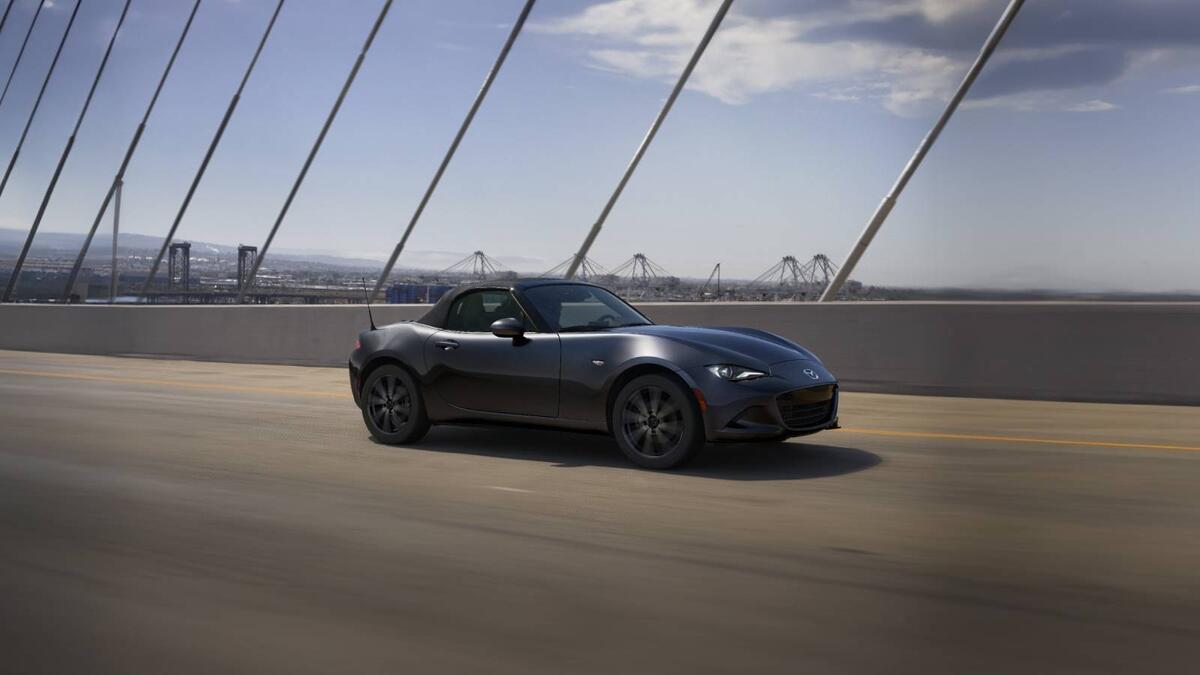
Mazda MX-5
"But you look at the prices of the first three generations of m X five NA n B n C... You could get one for eight grand. You won't get one for less than eighteen grand..."
The Mazda MX-5 is a small, lightweight roadster (Miata). They’re basically saying older MX-5s cost a lot more now than they used to.
The Mazda MX-5 (Miata) is a lightweight, affordable roadster famous for being fun to drive rather than for raw power. Here, the hosts compare pricing across early generations, noting how older MX-5s have become more expensive over time.
electrification
"do you think we're now at a tipping point where we could see electrification sort of being justifiably forced upon us..."
Electrification means switching cars from gas engines to electric cars. They’re debating whether it could be pushed faster than the charging setup can handle.
Electrification is the shift from internal-combustion vehicles to electric vehicles (EVs) powered by electricity. The hosts discuss whether current-world pressures could force electrification faster than charging infrastructure can support.
charging infrastructure
"The problem is the infrastructure will never keep up if you start going through... if you hypothetically you could flick a switch and we all drove electric cars, well none of us will be able to charge them."
Charging infrastructure means the places and power systems needed to charge electric cars. The point is that there may not be enough charging capacity for everyone at once.
Charging infrastructure is the network of charging stations and the electrical capacity needed to support electric vehicles. The hosts argue that even if everyone switched to electric cars instantly, the grid and charging availability wouldn’t be able to handle it.
trickle charges
"Well, they were literally just plugged into wall sockets, so they're just trickle charges and you can't use them all at the same time..."
Trickle charging is slow charging for an electric car. They’re saying that if it’s just slow charging, you can’t realistically charge a lot of cars at the same time.
Trickle charging refers to very low-power charging that tops up a battery slowly. In the segment, the hosts use it to explain why many chargers in an apartment setting can still be impractical—because they don’t deliver enough power simultaneously.
EV charging stations
"...getting the Sutton Forest and I just need a little splash and dash... This is since... it was like five charging stations at Sutton's Forest. Four were out of order and the fifth was shaped down..."
These are the places you plug an electric car into to charge it. If the chargers aren’t working, you can’t top up when you need to, and your trip can turn into a long wait.
EV charging stations are the public (or semi-public) places where an electric vehicle replenishes its battery. The episode highlights how reliability and availability of chargers can make a trip take much longer than expected when multiple stations are out of service.
Tesla
"...And that's like credit to say someone like Tesla, who just I think they handle their charging stations brilliantly most of the time..."
Tesla is an EV maker, and they also run a lot of charging infrastructure. The point here is that the speaker feels Tesla chargers tend to work more reliably than some other brands’ chargers.
Tesla is the electric-vehicle brand known for operating and managing its own charging network in many regions. In the segment, the host contrasts Tesla’s charging reliability with other manufacturers’ stations that were out of order.
infrastructure reliability
"But why is it that they're not working? I mean, people vandalizing them or. Is it just it's just bad. I think it's just it's just badly it's infrastructure..."
This is about whether the charging system is dependable. If the chargers keep failing, it makes EV driving harder even if the cars themselves are good.
Infrastructure reliability refers to how consistently the charging network works when drivers need it. The discussion suggests the main cause of failures is the charging infrastructure itself (not vandalism), which directly affects real-world EV usability.

Tesla Model
"...top, like you're going, Okay, well, what like the Tesla Model three from a year ago, what's that going to be wo..."
The Tesla Model Y is an electric SUV, meaning it runs on electricity instead of gasoline. It’s made for regular daily driving and it’s a popular Tesla model. The podcast brings it up when talking about what performance or features you might get.
The Tesla Model Y is a compact electric SUV designed for everyday driving with an all-electric powertrain. It’s commonly referenced because it’s a high-volume model and people compare its performance and tech to other Teslas. The podcast mentions it in the context of comparing what to expect from a Tesla at a certain time or price point.
BYD
"So it's like buying an old laptop, like you're going, Okay, well, what like the Tesla Model three from a year ago, what's that going to be worth in another eighteen months or two years when the latest BYD battery tech comes out."
BYD is a company that makes batteries and electric vehicles. The hosts are saying that when BYD improves battery technology, newer EVs can be much better than older ones.
BYD is a major battery and EV manufacturer, and the hosts mention its “latest BYD battery tech” as a driver of rapid EV capability improvements. In this context, it’s about how newer battery designs can make earlier EVs less competitive.
battery capacity
"I mean you're not going to have it might be say a five year old Tesla is not going to have the same battery capacity as a brand new e Do you know what I mean, it's not going to have the same health."
Battery capacity is basically how much energy the battery can hold. Less capacity usually means less driving range over time.
Battery capacity is the amount of energy a battery can store, which directly affects how far an EV can drive. The hosts discuss how a five-year-old Tesla may not have the same capacity (and “health”) as a brand-new one.
battery health
"it's not going to have the same battery capacity as a brand new e Do you know what I mean, it's not going to have the same health."
Battery health is how “good” the battery still is after years of use. If health drops, the car may not go as far as it used to.
Battery health describes the battery’s condition over time, including how much usable capacity remains and how well it performs. The hosts connect battery health to resale value and to why older EVs may not match the performance of newer models.

Tesla Model S
"...t, we're already seen this with some of the Tesla Model S and x's, where the computer hardware in those car..."
The Tesla Model S is an electric car with a sedan body. Because it’s electric, it depends a lot on computers and electronics to run properly. The episode mentions it when talking about problems or differences related to the car’s computer hardware.
The Tesla Model S is a full-size electric sedan known for strong performance and advanced onboard computing. It comes up in reliability discussions because its systems rely heavily on software and electronics. The podcast references the Model S (and Model X) in relation to computer hardware changes or issues.
software update
"where the computer hardware in those cars can't accept the latest software updates. My mate has a Model Less and he has this problem. So there's times where the new software updates can break certain things in his car."
A software update is like installing new computer instructions for the car. The concern they’re raising is that an update can sometimes cause problems if the car’s hardware isn’t compatible.
A software update is a change to the car’s operating software that can add features or fix bugs. The hosts highlight a risk for EVs and modern cars: if the vehicle’s computer hardware can’t handle the update, it can cause regressions like losing climate control.
infotainment
"with the technology in cars like center console screen software that does control so much of what goes on in cars."
Infotainment is the car’s integrated system for screens and functions like navigation, media, and many vehicle settings. The hosts say center-console screen software can control a lot of what happens in the car, so software problems can affect more than just entertainment.
hybrid
"you should buy a used hybrid ideally... a Toyota... And even that, I think it's hard because again, if we're kind of going EV for the environment..."
A hybrid uses both gas and electricity. It can switch between them depending on driving conditions.
A hybrid vehicle uses two power sources—typically a gasoline engine plus an electric motor/battery. In this segment, the host argues that a used hybrid can be a more environmentally efficient choice than buying a brand-new EV because it avoids new battery manufacturing.
lease
"So what happens to it once you get rid of it? Because your leases up because financially sometimes a lot of the time, financially it doesn't make sense to keep an EV for any more than five years."
A lease is like renting a car for a few years. After that, you usually give it back or decide whether to buy it.
A lease is a financing arrangement where you pay to use a vehicle for a set period, then return it or buy it at the end. The speaker connects leasing cycles (often a few years) to higher turnover, which they argue is worse for the environment.
Group B
"It's a Renau five Turbo, basically a Group B rallied. That's also a three hundred thousand dollars car."
Group B was a rally racing class known for wild, high-powered race cars. The comparison is basically saying the car feels rally-bred.
Group B was a high-performance rally racing category (1970s–1980s) famous for very powerful, lightweight cars and intense competition. The speaker uses it as a comparison to describe the Renault 5 Turbo’s rally-like character.
touch screen
"There's no touch actually in that HIV. There's now a touch screen as we put Apple car Play in it. But the air conditioning, it's actual physical knobs."
A touch screen is a display you interact with directly using your fingers instead of buttons or knobs. In cars, it often replaces physical controls for functions like media and sometimes climate, which changes how quickly you can operate them while driving.
Apple CarPlay
"There's now a touch screen as we put Apple car Play in it. But the air conditioning, it's actual physical knobs."
Apple CarPlay lets you connect your iPhone to the car’s screen. Then you can use apps like maps and music while driving.
Apple CarPlay is a smartphone-integration system that lets you use certain iPhone apps through a car’s infotainment screen. It typically provides navigation, music, calls, and messaging in a standardized interface.
pre-collision warning systems
"Possibly that's a tough one because crash safety standards now aren't necessarily based around crash results. They're based around pre collision warning systems."
These are safety features that try to spot a crash risk early and warn you (and sometimes help slow the car) before you actually hit something.
Pre-collision warning systems are driver-assistance technologies that detect an impending crash and alert the driver before impact. They can include alerts for forward collision risk and may trigger braking or other safety actions depending on the system.
5-star crash safety rating
"Like a five cent in cap safety rating from ten years ago still not too bout thirty years one hundred percent..."
A “5-star” rating is a high safety score from crash tests. It’s meant to indicate the car does a lot to protect people in crashes.
A “5-star” crash safety rating refers to a top score from major vehicle safety testing programs that evaluate how well a car protects occupants in crashes. The discussion suggests that modern ratings increasingly reflect how well a car performs with advanced safety tech, not just outcomes after a crash.
automatic emergency braking
"[1735.1s] ...constantly slamming on the brakes at parked cars and pedestrians... [1752.8s] the life out of me when it suddenly slams the brakes on."
Automatic emergency braking is a car feature that can brake by itself if it thinks you’re about to hit something. If it activates at the wrong time, it can be scary and distracting.
Automatic emergency braking (AEB) is a system that can apply the brakes on its own when it thinks a collision is imminent. The host describes AEB triggering hard braking for parked cars and pedestrians that aren’t actually in the vehicle’s path, which can feel unsafe and distracting.
pre-crash warning
"[1735.1s] week and it had the most overly sensitive pre crash warning I've ever encountered in any car, to the point where it was just constantly slamming on the brakes..."
This is a safety system that tries to spot an accident before it happens and warns you. If it’s too sensitive, it can start braking or yelling at you even when there’s no real danger.
Pre-crash warning is an advanced driver-assistance feature that detects a potential collision and alerts the driver (and sometimes prepares braking) before impact. In this segment, the host complains it’s overly sensitive and triggers emergency braking in situations that don’t actually require it.
ANCAP
"[1767.9s] ...it's one thing for cars to have these features where they need to be calibrated, and that's again an an cap thing, where and Caper saying to the manufacturers..."
ANCAP is a group that tests cars for safety and sets standards for what counts as “safe.” The host’s point is that companies might focus on passing the tests rather than making the safety tech work smoothly in everyday driving.
ANCAP is an automotive safety organization that runs crash tests and sets requirements for how vehicles are evaluated and marketed for safety. The host argues that manufacturers may spend the minimum needed to meet requirements, including calibration of driver-assistance systems, which can lead to features that aren’t tuned well for real-world use.
lane keeping assist
"[1787.4s] There are certain cars that we drive. We did hind A [1789.8s] I thirty today and the lane keeperssist in that is just horrifically aggressive."
Lane keeping assist tries to keep the car from drifting out of its lane. If it grabs the steering too aggressively, it can feel like the car is fighting you instead of helping.
Lane keeping assist is a driver-assistance system that helps keep the car centered in its lane, typically by steering corrections. The host says the lane-keeping behavior is “horrifically aggressive,” to the point it feels dangerous, implying the system’s intervention is too forceful or poorly matched to real-world driving.

Suzuki Jimney
"... that much of a difference. Well, you look at the Suzuki Jimney and the Forward Musting Chimney. They still can't..."
The Suzuki Jimny is a small SUV that’s made to handle rough roads better than many normal cars. It’s compact, but it’s designed for off-road use. The podcast brings it up as a recognizable small off-road option.
The Suzuki Jimny is a small, off-road-capable SUV known for its compact size and simple, rugged design. The podcast compares it to a “Forward Musting Chimney” (a joking reference), but the underlying idea is that the Jimny is still distinct and recognizable. It’s mentioned as another example of a small, capable vehicle.
Sydney Motorsport Park off-road course
"I did a track day with Suzuki last week and we did the off road course at Sydney Motorsport Park... The track was a bit wet because it's been raining a lot the night before..."
Sydney Motorsport Park is a racing venue. They’re talking about an off-road section there to show how the car handles rough, wet conditions.
Sydney Motorsport Park is a motorsport venue, and the off-road course is a specific driving area used for testing vehicle capability on uneven surfaces. The hosts use it to demonstrate how well the Suzuki Jimny performs when the track is wet and slippery.
getting seriously sideways
"But still, you know, just go over anything, and I'm just going to look at this. It's tiny."
“Getting sideways” means the tires lose grip and the car starts to slide. They’re saying the car can still handle that kind of slippery situation.
“Getting sideways” describes a loss of traction where the vehicle’s direction of travel and the direction the car is pointed diverge, often seen on wet or low-grip surfaces. In this segment it’s used to emphasize how the Jimny can still be controlled and capable even when the track is slippery.
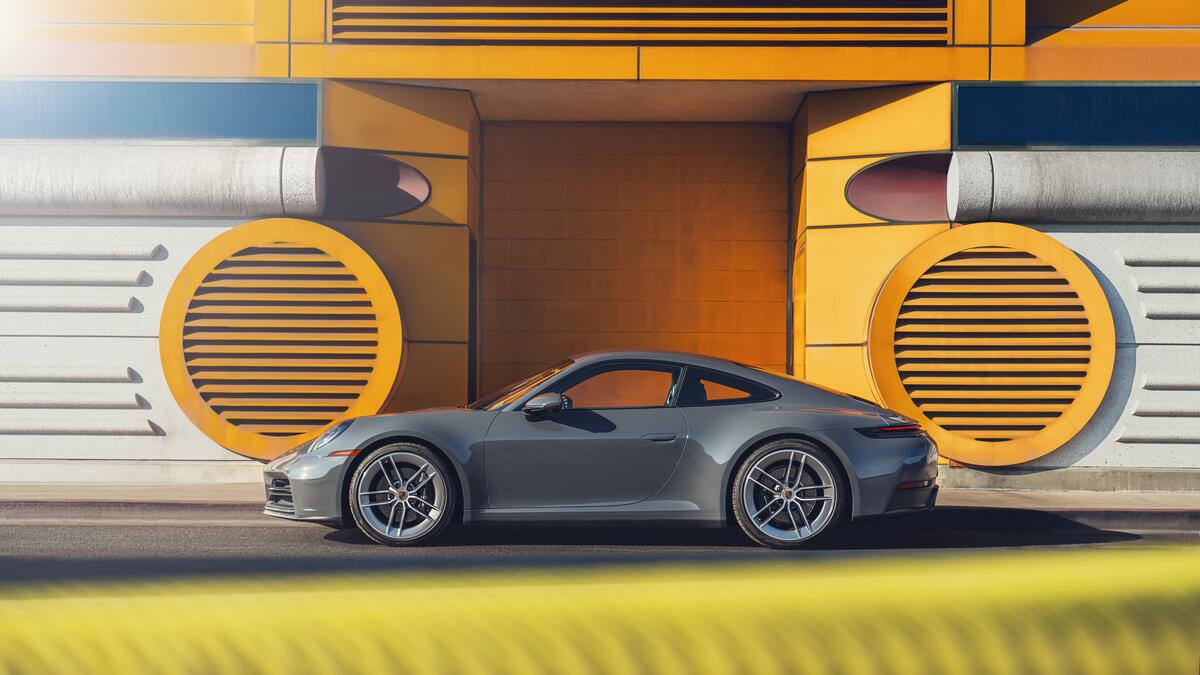
Porsche 911
"Honestly, it's but you drive like an old nine eleven, like an air called nine to eleven... "
The Porsche 911 is one of the most famous sports cars ever made. The host is using it as a reference for the kind of car it is and how people talk about it.
The Porsche 911 is a long-running sports car famous for its rear-mounted flat-six engine and classic silhouette. Here, the host compares driving a Porsche 911 to an “old” 911 vibe, using it as a reference point for how the car feels and how it’s perceived.

Aston Martin DB5
"The car that did it the most was an aston Martin dB five. Oh yeah, so slow, like a current Yaris is faster..."
The Aston Martin DB5 is a famous classic car, especially because it’s associated with James Bond. The host is saying it gets attention even if it isn’t the quickest by today’s standards.
The Aston Martin DB5 is a classic British grand tourer best known for its role in James Bond films and its elegant, period-correct performance. In the segment, the host uses the DB5 as the car that “did it the most,” then jokes about how it’s not actually the fastest compared to modern cars.

DB4 Aston Martin Db
"...ility easily. The car that did it the most was an aston Martin dB five. Oh yeah, so slow, like a current Yaris is f..."
The DB4 is a classic sports car made by Aston Martin. The podcast mentions it to make a point about how it performs compared to what someone might expect. It’s used as an example from the past.
The DB4 refers to the Aston Martin DB4, a classic grand touring sports car. The podcast mentions it in a performance context, noting it as “slow” compared to expectations, and contrasts it with other cars. It’s brought up because it’s a well-known classic model that people still discuss for how it drives.

Toyota Yaris
"Oh yeah, so slow, like a current Yaris is faster, not a gr standard bottom range Yerrais is kicker than a Martin dB five."
The Toyota Yaris is a normal, everyday small car. The host is using it to make a joke that modern regular cars can outperform older famous cars.
The Toyota Yaris is a compact economy car line known for being practical and efficient rather than exotic. Here it’s used as a comparison point to argue that a modern mainstream car can be faster than a classic supercar like the Aston Martin DB5.
all-terrain tires
"I think the three door with some all terrains and a little lift, I think that will you will be swatting."
All-terrain tires are tires meant for both regular roads and rough off-road trails. They help the car grip better when the surface isn’t smooth.
All-terrain tires are designed to work on both pavement and rough surfaces like gravel, mud, and dirt. They’re a common choice for off-road SUVs because they balance everyday drivability with extra traction.
lift
"I think the three door with some all terrains and a little lift, I think that will you will be swatting."
A lift means raising the car higher off the ground. That helps it clear rocks and ruts when you go off-road.
A lift (in off-road context) means raising the vehicle’s suspension to increase ground clearance. More clearance helps the tires and underbody avoid obstacles when driving on trails.
kei-car regulations
"[2115.3s] the other one K truck. No, okay, you need you [2117.8s] need to leave no man K trucks. Go drive a [2121.9s] K truck. Will not drive a fucking K truck."
Kei-car regulations are Japanese rules that make certain small cars stay within strict size and engine limits. That’s why kei cars and kei trucks are usually tiny and easy to maneuver.
Kei-car regulations are Japanese rules that cap engine size, vehicle dimensions, and power output to keep these cars affordable and practical. Because of those limits, kei cars (including kei trucks) tend to be very small and light, which shapes how they drive and why they’re common in dense cities.
Yamaha
"We're in a Mini, a sixties Mini was a seventy one actually, and it had a Yamaha R one motorbike engine and reaped a fifteen thousand rpm. And that thing again."
Yamaha makes motorcycles, and they’re referencing a Yamaha R1 engine. Putting that engine into a car is a way to get a high-revving, bike-like feel.
Yamaha is the motorcycle brand behind the R1 engine mentioned here. Using a Yamaha R1 powerplant in a Mini is a well-known kind of enthusiast swap because the bike engine is designed to rev very high.
15,000 rpm
"We're in a Mini, a sixties Mini was a seventy one actually, and it had a Yamaha R one motorbike engine and reaped a fifteen thousand rpm. And that thing again."
RPM means how many times the engine spins each minute. 15,000 rpm is extremely high and usually points to a motorcycle-style engine that’s meant to rev fast.
RPM (revolutions per minute) is how fast an engine spins. A figure like 15,000 rpm signals a motorcycle-derived engine tune, since bike engines are built to rev much higher than most traditional car engines.
bogged
"I drove it to a wedding across New South Wales and I nearly got it bogged and I drove across the I did a donut on the main lawn just because I was It was a mate's wedding."
“Bogged” means the vehicle loses momentum and traction and can’t keep moving, often because the wheels can’t generate enough grip. In a supercar context, it usually points to low-speed traction issues or getting stuck in soft ground.

Honda Civic
"... gone, you know what, I'm going to drive my Honda Civic instead, because this is a pain. It has this weir..."
The Honda Civic is a common everyday car that’s made for commuting and daily driving. People often choose it because it’s practical and straightforward. The podcast mentions it as the car someone would drive instead because the other option is troublesome.
The Honda Civic is a mainstream compact car known for practical everyday use, efficient operation, and broad availability of trims. It’s often mentioned when someone wants a simpler, more reliable daily driver. In the podcast, it’s brought up as the alternative choice because the current situation “is a pain.”
lane keep assist
"...It has this weird lane keep assist where... it'll actually slow down the outer wheel to force you to... And it is the worst feeling in the world."
Lane keep assist is a feature that tries to keep you in your lane. Instead of gently steering you back, it can slow one side of the car to pull you toward the lane, and they hated how it felt.
Lane keep assist is a driver-assistance system that helps keep the car centered in its lane. In this case, the speaker says it doesn’t just steer you back—it can slow a wheel to force the car to correct its position, which they found unsettling.

Chevrolet Corvette
"...omething controversial. If you put that next to a Corvette Stingray, I'd go a sting Ray every day. Oh yeah, ..."
The Chevrolet Corvette is a sports car made by Chevrolet. It’s known for being fast and for having a recognizable design. In the episode, it’s mentioned as the car someone would choose over another controversial option.
The Chevrolet Corvette is an American sports car known for its performance and iconic styling. It’s frequently compared in conversations about “what’s the better choice” among sports cars, and the Stingray name is often used as a shorthand for a specific Corvette generation. The podcast references it directly as a preferred option.
sticky buttons
"...you don't feel like you're gonna like that thing had sticky buttons, stuff that I knew needed replacing."
They’re complaining that some of the car’s interior buttons felt tacky or sticky. It’s basically a “quality” issue, not a performance one.
“Sticky buttons” is a subjective description of interior switchgear that feels tacky or unresponsive, often caused by worn coatings or degraded plastics. It’s not a specific mechanical system, but it’s a quality/fit-and-finish complaint that affects daily usability.
battery kept disconnecting
"...sticky buttons... The battery kept disconnecting. It was just an absolute fucking punish of a car."
They’re saying the car’s battery connection kept acting up. That can cause weird electrical behavior, so it’s not something you’d want to ignore.
A battery that “kept disconnecting” suggests an electrical reliability problem—either a loose connection, failing battery, or intermittent power/ground issue. In a loaner or used supercar, this kind of symptom is a red flag for troubleshooting before trusting the car.
manual
"[2407.1s] Mercielligo manual. That's the car. Yeah, if you want, if you've got invented door money or Ravelt money, whatever, LAMBORGHINNI want. Now forget that, Buy a manual Mercielligo."
“Manual” means you shift gears yourself instead of the car doing it for you. The host is saying that this makes the supercar more difficult and more skill-dependent to drive.
A manual transmission requires the driver to use a clutch and shift gears themselves, rather than relying on an automatic gearbox. In this segment, the host highlights that the manual setup makes the supercar harder to drive and more demanding at low speed and when pulling away.
tactility
"But then there's this tactility the way it does everything. There's no computers doing anything for you, Like, if you stuff up, you're you're done."
“Tactility” is how “connected” a car feels to your hands and feet. The idea is that the car gives you clear feedback, instead of computers taking over when you make a mistake.
In car talk, “tactility” means how directly and clearly the car communicates through the controls—steering, pedals, and chassis response. The speaker contrasts older, more mechanically connected driving with newer cars that rely more on computers to manage behavior, especially when something goes wrong.
computers doing anything for you
"there's this tactility the way it does everything. There's no computers doing anything for you, Like, if you stuff up, you're you're done."
This refers to modern electronic driver-assistance and vehicle control systems that intervene to stabilize the car, manage traction, and limit certain behaviors. The speaker’s point is that earlier cars felt more “mechanical,” so driver mistakes were less masked by electronic safety nets.
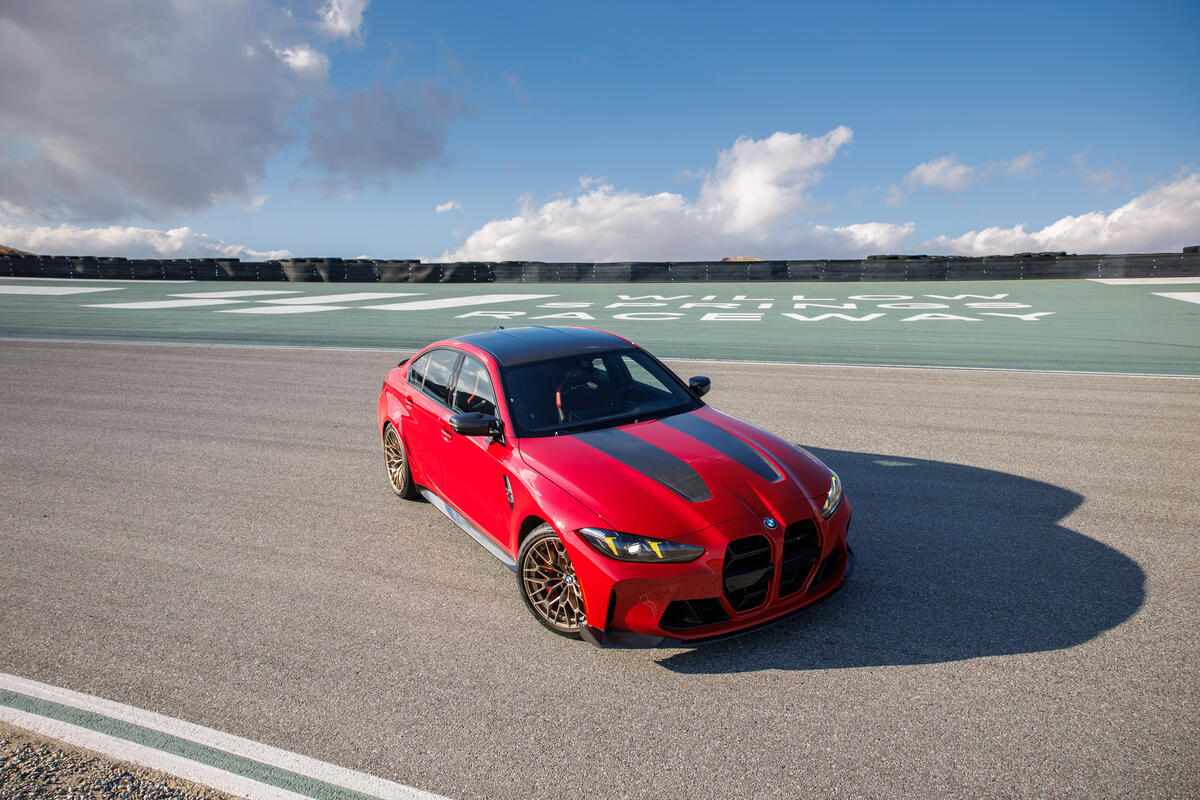
BMW M3
"BMW are one of the major sponsors of this theme, and they had a whole bunch of influencers there and they had M three's it. I think it's the fortieth or fiftieth anniversary of M three coming up."
The BMW M3 is BMW’s “serious performance” version of the 3 Series. It’s the kind of car enthusiasts talk about because it’s built to feel engaging to drive, not just to be fast.
The BMW M3 is BMW’s performance-focused 3 Series, known for its driver-focused chassis and high-revving, enthusiast-oriented character. In this segment, the hosts mention BMW’s M3 anniversary and that the event featured multiple M3 generations, highlighting how the model evolved over time.

BMW E30
"So they had everything from the E thirty all the way through to G eight's nice and it was really interesting. All these influencers, and you've got some influencers that have some steering shops and others that have no steering tops, right,"
The BMW E30 is an older BMW 3 Series generation that many car fans love. It’s remembered for being more “hands-on” and less dependent on computers than newer cars.
The BMW E30 is the 3 Series generation from the 1980s into the early 1990s, and it’s especially famous among enthusiasts for its simple, mechanical feel. Here it’s mentioned as part of a lineup spanning multiple 3 Series eras, reinforcing the “tactility” and driver connection people associate with older BMWs.
kidney grill
"As everyone was about the big kidney grill that they put on the M three, the and the four series."
A “kidney grille” is the distinctive BMW front grille shape. People notice it a lot because BMW has been making it bigger on newer cars.
“Kidney grille” is BMW’s distinctive front grille shape, named for its kidney-like outline. In recent years BMW has made it much larger on many models, which is why it’s become a talking point when discussing new BMW design language.
full EV
"Nine hundred k's range, that's huge on the three. That is unbelievable full ev. Yeah, yeah, they're getting it's getting better."
“Full EV” means the car is powered only by electricity from a battery. The hosts are excited because they think the electric range is getting better.
“Full EV” means a battery-electric vehicle that runs entirely on electricity, rather than using a gasoline engine. The hosts contrast this with the idea of EV range being “huge,” implying improvements in battery capacity and efficiency.
generator
"It's yeah, yeah, but it's genius because the engine is not attached to the wheels at all. It's just a generator."
They’re describing a setup where the engine doesn’t directly push the wheels. Instead, it spins a generator to make electricity that powers the car.
The speaker says the engine “is not attached to the wheels at all” and is “just a generator.” That means the engine produces electricity, which is then used to power the drivetrain—similar to how many range-extender hybrids work.

Ineos Grenadier
"[3105.0s] We filmed an inios Grenadier recently which was so incredibly impressive. [3109.6s] Is it always it's not just a restriped No, this thing. [3116.4s] It's been a long time since I've gone Holy shit, this is epic. Like every button I've never driven a"
The Ineos Grenadier is a tough off-road SUV from the company Ineos. People talk about it because it’s built to handle rough terrain and feel more rugged than most modern cars.
The Ineos Grenadier is a modern, off-road-focused SUV built with a traditional, rugged approach—aimed at people who want “go-anywhere” capability without the usual crossover compromises. It’s known for its boxy design and strong emphasis on durability and mechanical simplicity compared with many newer SUVs.
ladder frame chassis
"The whole frame is built too, like three times levels of any other ladder frame chasy vehicle. The suspension chin on it is absolutely wonderful."
It’s a truck-style frame where the car’s body sits on a rigid “ladder” of metal beams. That design is popular for off-road vehicles because it can handle rough terrain and heavy loads.
A ladder frame chassis is a body-on-frame design where two long rails run along the length of the vehicle, connected by crossmembers like a ladder. It’s common on off-road-oriented trucks because it’s strong and easier to build for heavy-duty use.
off-road comfort tradeoff
"The fact it can do what it can do off road but then be so comfortable on road. The insulation level is a spot on."
Off-road vehicles are often bouncy or noisy on regular roads. This is about getting the best of both worlds—good control off-road and a nicer ride on-road.
The speaker is describing a common challenge: making an off-road-capable vehicle comfortable on paved roads. Achieving both usually requires careful tuning of suspension, chassis stiffness, and noise/comfort measures.
insulation level
"The insulation level is a spot on. As a company, they are on the front foot to try to fix any issue with that thing."
Insulation is the material that helps keep outside noise and vibration from getting into the cabin. More insulation usually means a quieter, smoother ride.
Insulation level refers to how much sound and vibration material is used to reduce cabin noise and harshness. Higher insulation can make a vehicle feel more refined, especially at highway speeds or over rough surfaces.
owners groups
"...I go, hey, we're doing this video as the owners group, giving me some feedback, what should we mention? What do you love? What do you hate?"
Owners groups are places where people who already have the car talk about what it’s like to live with. They’re a way to learn common problems and what owners really enjoy.
Owners groups are communities—often online forums or social groups—where current owners share real-world experiences. The host describes using these groups to gather feedback on what people like and dislike about the vehicle.
backup service
"...I spoke to a couple of them and went through some engineering stuff and I asked about, you know, the backup service and what happens with parts was a brand new company..."
By “backup service,” the host means what help you can expect later—like repairs and getting replacement parts. They’re asking whether support stays available after the initial excitement fades.
Backup service here refers to ongoing support after purchase—how the company handles service needs and parts availability over time. The host is specifically asking about what happens with parts and service long-term.
Borg Warner diffs
"I think it runs Borg Warner diffs. It could be wrong about that, but everything in that drive line is designed to to deal with insane conditions."
A differential is the part that lets the wheels turn at different speeds, which helps the car grip and turn properly. The host is mentioning BorgWarner as the likely supplier of those differential parts.
“Borg Warner diffs” refers to differential units made by BorgWarner. Differentials are critical driveline components that allow the wheels on an axle to rotate at different speeds—especially important for traction and off-road maneuvering.
Ineos Chemicals
"Sir Jim Ratcliffe is his name. He made his money in Ineos Chemicals, which was a massive chemical company, and he basically went to land Rover..."
Ineos Chemicals is the company Sir Jim Ratcliffe made his money from. The story is that his business success helped fund his interest in the Defender licensing.
Ineos Chemicals is the chemical business that Sir Jim Ratcliffe built his wealth in, according to the segment. The hosts connect that background to Ratcliffe’s later move to pursue licensing to produce Defenders.
warranty coverage
"There was a guy in northern Queensland that had lifted his grenadier to a point that it shouldn't have been warranted anymore... broke a drive shaft... They shouldn't have warranted find me."
Warranty coverage is when the manufacturer agrees to pay for certain repairs. Here, they’re saying the modifications should have made the repair not covered, but the company still helped.
Warranty coverage is the manufacturer’s promise to pay for repairs under defined conditions. In this segment, the host contrasts what should have happened under warranty rules (given modifications) versus what actually happened when a drive shaft failed.

Toyota Land Cruiser 70 series
"...versus a seventy series land Cruiser, which is the market leader in that part, the Ineos comes with more standard kit than the seventy series, to the point that if you you'd have to modify a seventy series to match the Inos..."
The Toyota Land Cruiser 70 series is a classic, very capable off-road truck. The hosts are basically saying that if you try to upgrade a 70 series to match what the Ineos includes by default, it can cost a lot.
The Toyota Land Cruiser 70 series is a long-running, body-on-frame-style off-road platform known for durability and aftermarket support. Here it’s used as a benchmark for what you’d have to modify to match the Ineos Grenadier’s factory equipment, with the implication that the “mod it yourself” route gets expensive quickly.

Land Rover Defender
"...you can sort of see it. Yeah, but I can see what you're saying because you can see that with the new Defender as well..."
The Land Rover Defender is a famous off-road SUV. The hosts are saying newer Defenders can feel more like a stylish, expensive vehicle people don’t want to use hard—especially off-road.
The Land Rover Defender is an iconic off-road SUV whose modern versions are often praised for looks and road manners. The hosts argue that it’s becoming more of a “status” or lifestyle vehicle—something people are afraid to scratch—rather than a tool you actually use off-road.

Porsche Cayenne
"...the Defender is now like a Porsche Cayenne thing because it's like an off roady car but you're too afraid to put a scratch on it."
The Porsche Cayenne is a luxury SUV. The hosts are comparing the Defender’s current image to the Cayenne—something that looks capable but is often treated more like a status vehicle than a real off-road tool.
The Porsche Cayenne is a luxury SUV known for combining everyday comfort with performance and optional off-road capability. Here it’s used as an analogy for how the Defender is perceived—an off-road-looking vehicle that many owners treat more like a prestige car than a true trail machine.
Gordon Ramsey
"...it's kind of like going to a Gordon Ramsey restaurant ordering the best, like taking a photo of it and not eating it."
They use a restaurant story as a metaphor: it’s like paying for the best meal but just taking a photo instead of eating it. The point is that people buy rugged cars but don’t really use them.
Gordon Ramsey is referenced as a metaphor for “buying the best but not using it.” In the segment, it’s used to criticize the idea of owning an off-road-capable vehicle while avoiding actually taking it off-road.
JLR
"...I also have [3821.9s] to apologize to JLRS, sorry I couldn't get my mother out of the car. [3826.1s] It's one of those things, the thing that really shocks me every time we do any JLR product."
JLR is short for Jaguar Land Rover, the company that makes Land Rover cars. They’re talking about what owners say goes wrong and how that affects the brand’s reputation.
JLR refers to Jaguar Land Rover, the company behind Land Rover vehicles like the Defender. The discussion centers on owner-reported issues and how those experiences can shape perceptions of the brand’s reliability.
owners scripts
"[3826.1s] It's one of those things, the thing that really shocks me every time we do any JLR product. You get [3831.4s] through the owners scripts, right and you and you're seeing people going, oh, you know, they don't deserve the terrible reputation title at all."
They mean the typical stories people repeat in owner groups—like “I’ve had problems, but not as bad as people say.” It’s about how owners talk, not a specific car part.
“Owners scripts” here means the recurring pattern of what owners say when they post about their cars—often acknowledging issues but arguing the reputation is exaggerated. It’s essentially a social pattern in owner communities rather than a technical term.
lucky dip
"[3870.0s] You know, I still think with the land Rover example, it is a bit of a lucky dip. I mean, look, [3875.1s] I haven't done the research like you've done your research, but it might feel like a bit of a lucky dip."
They’re using “lucky dip” to say you might get a good experience or a bad one, kind of randomly. It’s not a technical feature—just how unpredictable ownership feels.
“Lucky dip” is used as a metaphor for inconsistent ownership outcomes—some cars or owners get fewer issues, while others experience more. In automotive terms, it suggests variability in reliability or how often problems show up.
restomod scene
"The old SEUs great and and there's a really great resto mod scene there. Like you if you rip the engine out and put like an LS out of a Commodore in it, then fantastic."
A restomod is an older car that’s been restored but also updated with newer parts. Here, the host is talking about fans doing engine swaps to make older off-roaders more usable today.
A restomod is a restyled and modernized vehicle—typically restoring the original body while upgrading key mechanical components for better drivability or reliability. The host mentions a restomod scene for older SUVs, including engine swaps, as a way enthusiasts keep these cars relevant.
engine swap
"Like you if you rip the engine out and put like an LS out of a Commodore in it, then fantastic."
An engine swap means putting a different engine into a car than it originally came with. The host is using it as an example of how people modify older cars in the restomod community.
An engine swap is replacing a vehicle’s original engine with a different engine, often from another model or even a different brand. The host cites swapping in an LS V8 as an example of the restomod approach to improve performance and/or simplicity.
LS V8
"Like you if you rip the engine out and put like an LS out of a Commodore in it, then fantastic."
An “LS V8” is a modern GM V8 engine family that’s popular for engine swaps. The host is saying it’s a great engine to put into an older car because it’s a proven, swap-friendly choice.
The LS V8 refers to General Motors’ LS-series small-block V8 engines, widely used in swaps because they’re compact, modern, and have strong aftermarket support. In this segment, the host treats the LS swap as a “fantastic” upgrade path for older vehicles.
Request an Explanation
Heard something you'd like explained? We'll add it to this episode.
Sign in to request explanations for terms you heard.
Want to learn more?
Browse our glossary for plain-English explanations of automotive terms, jargon, and concepts.
Help improve this episode
See something that's not quite right? Our annotations are AI-generated and can sometimes miss the mark. Click the flag icon on any annotation to suggest a correction.