
Gumpert Apollo and Apollo IE review! Plus £22k used practical performance cars and the one that got away
About this episode
Gumpert Apollo IE gets the spotlight: its shooting-break practicality, screen-heavy cockpit, and extreme aero—plus a Ferrari-derived 6.3-litre V12 with active rear wing and a 3D-printed titanium exhaust option. The hosts compare it to the older twin-turbo Apollo, talk rarity and pricing, and then pivot to used-performance shopping: a £22k practical pick, carbon-ceramic brake scares, and the “one that got away” (a modified 2004 Volvo S60 D5).
We drive two of the wildest hypercars ever built: the original Gumpert Apollo and the outrageous Apollo Intensa Emozione. From GT1-inspired aero and twin-turbo V8 power to a naturally aspirated Ferrari-derived V12, we compare two very different takes on the Apollo name — and ask what other hypercars £3 million could buy.
We also discuss life with the new Mercedes CLA Shooting Brake EV, tackle a practical performance car buying challenge, and share stories of the cars that got away. Which sale do you still regret?
🏎️ Sell your car on PistonHeads auctions: https://www.pistonheads.com/sell/auctions
🎟️ Get your Annual Service 2026 tickets: https://www.pistonheads.com/events/annual-service
Chapters:
0:00 Intro
0:37 Mercedes CLA electric
9:28 Gumpert Apollo vs Apollo IE
28:55 £22k practical performance cars
47:41 cars you regret selling
TOPICS:
Apollo drives: https://www.pistonheads.com/news/ph-driven/apollo-intensa-emozione-vs-gumpert-apollo/51203
Practical performance car for £22k: https://www.pistonheads.com/gassing/topic.asp?h=0&f=255&t=2140711
The one that got away: https://www.pistonheads.com/gassing/topic.asp?h=0&f=23&t=2139413
CARS:
Sam’s Mercedes CLS 63: https://www.pistonheads.com/buy/listing/19625888
Cam’s BMW 340i Touring: https://www.pistonheads.com/buy/listing/20392260
FOLLOW US:
🗣 Facebook: https://www.facebook.com/pistonheads
📸 Instagram: https://www.instagram.com/pistonheads
🐦 X: https://twitter.com/pistonheads
range
"“And that is range because my God, does it have a lot of range? … You can get almost 500 miles between charges… … it’s got about 440 ish miles of range… call it 400 miles.”"
For an electric car, “range” is how far it can drive before the battery runs low. Real-world range is usually a bit less than the best-case number the manufacturer quotes.
In EV context, “range” means how many miles (or kilometers) the car can drive on a full battery charge. It’s strongly affected by driving style, speed, temperature, and route, so the hosts compare optimistic “between charges” figures to a more realistic estimate.
19 inch wheels
"“It's got all the kit, 19 inch wheels, like you said, looks remain divisive…”"
“19 inch wheels” refers to the wheel diameter, which affects ride comfort and how the car feels over bumps. Larger wheels often look sportier, but they can also change tire sidewall height, which can influence grip and impact harshness.
motorway miles
"I've done a fair amount of suburban and rural usage, which obviously includes motorway miles as well. And I haven't charged it once and I've still got some off the top of my head. I think it's 160 miles left."
Motorway miles are highway driving. For EVs, highway speeds usually use more energy, so range can drop compared with slower city driving.
“Motorway miles” refers to driving on high-speed highways (motorways), which usually increases energy consumption for EVs compared with slower city driving. That’s why range estimates can vary a lot depending on whether you’re doing mostly motorway versus stop-and-go driving.
eco-focused version
"Yeah. I mean, that's for the most eco-focused version. So smaller wheels, smaller wheel, less equipment inside, et cetera, et cetera. I see."
This is a version of the EV set up to use less energy. The car may have things like smaller wheels and fewer “extras” so it can go farther on a charge.
An “eco-focused version” of an EV is tuned to maximize efficiency and reduce energy use. That often means smaller wheels/tires, less aerodynamic drag, and sometimes fewer comfort features to keep the battery from being drained as quickly.
smaller wheels
"I mean, that's for the most eco-focused version. So smaller wheels, smaller wheel, less equipment inside, et cetera, et cetera. I see. So if you actually want it looking good, you're only getting north of 400."
Smaller wheels can help an EV go farther because they can reduce the energy lost as the tires roll. That means less battery drain for the same distance.
Smaller wheels can improve EV efficiency because they typically reduce rolling resistance and can allow more tire sidewall compliance. In practice, that can help the car travel farther per charge, especially at highway speeds where energy use matters.
Skoda
"I think when an electric car becomes tempting, or like, oh, I really want one of those, is when it's almost like the Skoda approach. You know, everyone loves the Skoda or a Dacia of where it's like, I just get as much value as freaking possible."
Skoda is a car brand that’s often seen as good value for money. Here, the host is using it as an example of buying a car mainly for practicality and cost, not for status.
Skoda is a car brand known for offering practical, value-oriented models—often with a focus on features per pound rather than luxury or image. In the segment, the host uses “the Skoda approach” as shorthand for buying what gives the most everyday value without overthinking it.
Dacia
"You know, everyone loves the Skoda or a Dacia of where it's like, I just get as much value as freaking possible. I don't really need to worry about the car or the image. It's just cheap motoring."
Dacia is a budget car brand. The host is saying some people want an EV mainly because it feels like good value, not because they care about the car’s image.
Dacia is a budget-focused car brand associated with low purchase prices and “just get you there” practicality. The host contrasts that mindset with EVs that are expensive, implying the appeal is maximizing value and minimizing fuss.
charging speed
"[206.9s] I mean, what's the charging speed? [209.1s] Well, it's up to 320 kilowatts. [211.2s] So I mean, the classic stat, 10 to 80% in 22 minutes."
Charging speed is how quickly your EV can refill its battery. Faster charging usually means you spend less time at the charger.
Charging speed is how fast an EV can add energy to its battery, usually measured in kilowatts (kW). Higher charging speed generally means shorter stops, though the car may slow down as the battery fills.
320 kilowatts
"[209.1s] Well, it's up to 320 kilowatts. [211.2s] So I mean, the classic stat, 10 to 80% in 22 minutes. [214.0s] Call it half an hour on a UK charger to go from to 80%."
320 kilowatts is how powerful the charger is. More power generally lets the battery fill faster.
320 kilowatts is the maximum power level of the charger they’re discussing. In practical terms, it’s what enables fast charging times like going from 10% to 80% relatively quickly.
10 to 80% in 22 minutes
"[211.2s] So I mean, the classic stat, 10 to 80% in 22 minutes. [214.0s] Call it half an hour on a UK charger to go from to 80%. [217.9s] But you know, 80% of four, 500 miles is, you know, over 300 miles."
This is a typical EV charging comparison: how long it takes to go from low battery to a fairly full battery. Charging tends to be fastest before you get near 100%.
“10 to 80% in 22 minutes” is a common EV fast-charging benchmark because charging is usually quickest in the lower-to-mid state of charge. The last 20% often takes longer as the battery management system reduces charging power to protect the cells.
80% of four, 500 miles
"[217.9s] But you know, 80% of four, 500 miles is, you know, over 300 miles. [223.4s] So it's still good, good range. [224.6s] In fact, I did the sums."
They’re estimating how far you can drive based on the battery percentage. If the car says it can do about 500 miles on a full charge, then 80% is roughly 80% of that distance.
This is using EV “range” as a planning tool: if the car’s rated range is around 500 miles, then 80% of that is treated as the usable distance before you need to charge again. It highlights how people estimate real-world trip legs rather than charging to 100%.
EV
"Okay. So that, that is seriously impressive for an EV. And I think that the, the, the, the range anxiety kind of thing is now becoming less and less of an issue."
EV means electric vehicle. It’s a car that runs on electricity stored in a battery, not gasoline.
EV stands for electric vehicle, meaning the car is powered primarily by an electric motor and battery rather than a gasoline engine. In this segment, the hosts are evaluating EV usability and real-world range.
Mercedes
"The only thing is, is that Mercedes in recent years have had, or kind of be known for potentially slightly questionable quality in the interiors."
Mercedes is the car brand being talked about. The host is saying that in the past, some people felt Mercedes interiors weren’t as high-quality as you’d expect.
Mercedes is the luxury car brand being discussed here, specifically in relation to how its interiors have been perceived in “recent years.” The hosts are contrasting EV usability/range with brand-specific concerns about cabin build quality and materials.
shooting break
"[405.4s] I don't think the looks are brilliant. [406.6s] The shooting break is a bit better because at the rear, [408.4s] I like that it's got the slight, [409.4s] it sacrifices a bit of boot space because it's quite a slanty rear roofline,"
A “shooting break” is like a sporty car with a longer, more practical rear—kind of a coupe-wagon mix. Because the roof slopes down toward the back, it can reduce how much cargo space you get.
“Shooting break” is a car body style that blends a coupe’s sloping roofline with the practicality of a wagon. The hosts mention it affects boot space because the rear roofline is more slanted, which is typical of this style.
digital displays
"[419.0s] You mentioned totally agree. [421.6s] The digital displays, if you don't get the third optional passenger display, [426.7s] instead of that, you'll get a blanking plastic plate on what is clearly a space [431.1s] for a screen, but there's no screen in it."
“Digital displays” means the car’s dashboard and controls are shown on screens instead of dials. They’re saying the Apollo IE’s setup depends on options—without the extra passenger screen, you might see an empty-looking panel where a screen would be.
“Digital displays” refers to dashboard and infotainment screens replacing traditional analog gauges. Here, the hosts say the Apollo IE’s cabin uses configurable screen options, and if you don’t choose a specific optional passenger screen, you may get a blank panel instead.
Merck
"[441.2s] I won't go into detail about them, but they work quick. [443.5s] They're intuitive. [444.3s] Merck does do pretty decent screens."
They mention “Merck” when talking about the screens in the car, basically saying the display quality is good. The clip doesn’t explain who Merck is here, so it’s unclear which exact screen supplier they mean.
“Merck” is mentioned in the context of screens, implying the display supplier or screen technology brand. The hosts say the screens are “pretty decent,” but the transcript doesn’t provide enough detail to confirm the exact supplier or model.
augmented reality
"You've got augmented reality for your sat-nav and stuff. Nothing new on the CLA, but it's all carried over onto this and it looks really good."
Augmented reality means the navigation system adds helpful graphics on top of what you’re already seeing. So instead of just reading arrows on a screen, it can show guidance in a more “in-the-moment” way.
Augmented reality (AR) overlays computer-generated graphics—like arrows or labels—on top of the live camera view or map view. In a sat-nav context, it can make turn guidance easier to interpret in complex or confusing road situations.
sat-nav
"You've got augmented reality for your sat-nav and stuff. Nothing new on the CLA, but it's all carried over onto this and it looks really good."
Sat-nav is the car’s GPS navigation. It tells you where you are and where to turn, and the host says the system can help more when roads get confusing.
Sat-nav is short for satellite navigation, using GPS to show your position and provide route guidance. The speaker is specifically talking about how AR-enhanced sat-nav can be more helpful when you’re in a tricky driving situation.
Volkswagen
"It's got that thing that even Volkswagen has stopped doing, which is where you've only got the two window switches and then you have to press the rear button to tweak the rear ones."
Volkswagen is a car brand. The host is using it as an example of a company that has stopped doing a certain “cheap-feeling” button layout, which they don’t like.
Volkswagen is a major car brand known for mainstream, mass-market interior design choices. Here it’s mentioned as an example of a manufacturer that has moved away from certain window-switch layouts, implying the speaker dislikes the cost-cutting feel.
infotainment system
"The buttons and also the climate control, there are no physical buttons for that. It's all in the infotainment system."
The infotainment system is the car’s main screen and controls for things like music and phone features. Here, the host is saying even climate settings are controlled through that screen, which can feel less convenient.
An infotainment system is the car’s integrated touchscreen/controls for media, phone connectivity, and many vehicle settings. In this segment, the host criticizes using the infotainment screen for climate control instead of having dedicated physical buttons.
climate control
"The buttons and also the climate control, there are no physical buttons for that. It's all in the infotainment system."
Climate control is what controls the cabin heating/AC. The host doesn’t like that you have to use the screen to change things like fan speed instead of having real buttons.
Climate control is the system that manages cabin temperature and airflow (often including fan speed and temperature setpoints). The speaker complains that, unlike older cars, this car doesn’t use physical buttons for it, forcing you to tap through the infotainment screen.
physical buttons
"The buttons and also the climate control, there are no physical buttons for that. It's all in the infotainment system."
Physical buttons are real knobs/buttons you can press by feel. The host is saying the car uses screens instead, which can be more annoying and less “premium.”
Physical buttons are dedicated, tactile controls you can operate without looking. The host’s point is that removing them for climate functions and relying on screen taps can feel cheaper and less intuitive, especially while driving or when kids are using the car.

Mercedes-Benz CLS
"... in this episode, I know that someone could get a CLS with a big V8 in it for half the price. Exactly."
The Mercedes-Benz CLS is a four-door car that looks more like a sports coupe than a typical sedan. Some versions can come with a big V8 engine. The podcast mentions it because someone thinks you can get one with a V8 for a relatively good price.
The Mercedes-Benz CLS is a four-door “coupe-style” sedan that blends a sporty look with real everyday usability. It’s discussed in this episode because the speaker references finding a CLS with a large V8 for a lower price than expected. That makes it relevant to buyers comparing value and performance within the CLS lineup.
financial crash
"It was post financial crash. [604.5s] It survived a few years after that. [606.7s] So it's nearly 20 year old car."
They’re talking about the big economic downturn that happened around 2008. The point is that the Apollo story continued for a while after that crash, which helps explain the car’s era. It’s more about timing than a technical car detail.
The “financial crash” here refers to the post-2008 global financial crisis era. The hosts use it to explain the timeline of Gumpert’s Apollo program and how the brand/company persisted for a few years after the crash. That context matters because it helps explain why these cars are tied to a specific mid-to-late-2000s period.
driving both cars
"So what's the deal? [627.5s] Well, I was sent out by editor Nick to go and drive both the Gumput Apollo. [634.0s] Oh, it's a hard life."
They’re explaining how they tested the cars. The editor sent the host to drive both the older Apollo and the newer Apollo IE so they can compare them. The next part should be about driving feel and differences.
This segment sets up the review logistics: editor Nick sent the host to drive both the Gumpert Apollo and the Apollo IE. It’s a structural setup for the episode’s comparison and impressions. Listeners can expect the next part to focus on how each car drives.

Apollo Intensa Emozione
"That's called IE. Apollo IE, which is actually how they've referred to it. You see it in all the press releases as well."
Mr. Hammond
"Basically, the OG Gumput Apollo, the one that was famous, you know, I think Mr. Hammond drove it on that famous television show."
“Mr. Hammond” is Richard Hammond from Top Gear. The host is saying he drove the original Gumpert Apollo on TV, which helped make the car famous.
“Mr. Hammond” refers to Jeremy Clarkson’s Top Gear co-host Richard Hammond, who is mentioned as having driven the original Gumpert Apollo on a famous TV segment. That kind of mainstream exposure is part of why the Apollo became widely known among enthusiasts.

Gumpert Apollo
"So just to kind of refresh some people's memories, the Gumput Apollo, again, 20 years old, this was, it's quite, what's the best way I could describe it? I was going to say agricultural, but that's not quite, it's almost like an industrial looking car because it's just a pure downforce monster from that inspired track day car."
downforce
"because it's just a pure downforce monster from that inspired track day car. So it was never a race car, but yeah, it was a full, it was very, very much track-leaning,"
Downforce is the force from the car’s shape that pushes it down onto the road. More downforce usually means better grip when you’re cornering fast.
Downforce is the downward aerodynamic force that pushes a car toward the road at speed. More downforce improves grip for cornering, which is why the host calls the Gumpert Apollo a “pure downforce monster” and describes it as track-leaning.
twin-turbo V8
"Yeah, so very much track-leaning, that was a twin-turbo V8. 4.2-litre Audi V8 with twin turbos added by Gumput."
A twin-turbo V8 is a V8 engine with two turbochargers. The turbos cram extra air into the engine so it can make more power.
A twin-turbo V8 uses two turbochargers to force more air into a V8 engine, allowing it to make more power than a naturally aspirated version. Here, the host ties the “twin-turbo V8” directly to the Gumpert Apollo’s character as a very track-leaning, high-output machine.

Audi V8
"...rack-leaning, that was a twin-turbo V8. 4.2-litre Audi V8 with twin turbos added by Gumput. It's not, it wa..."
The Audi V8 mentioned here is an engine that’s 4.2 liters and uses two turbochargers. A turbo helps the engine make more power. The podcast talks about it mainly because of how it feels and sounds.
The Audi V8 referenced in the episode is a 4.2-liter twin-turbo V8 setup, described as being modified with twin turbos. It’s brought up in the context of how it sounds and performs, including a comparison to other engines discussed on the show. The key point is that it’s an Audi V8 configuration with forced induction.

Noble M400
"It's not, it wasn't the prettiest looking thing, but the best way, I mean, every time I saw it, I thought, if Noble ever made the most extreme M400 ever, it would probably look like a Gumput Apollo."
The Noble M400 is a sports car known for being very track-focused. The host is basically saying the Gumpert Apollo looks even more extreme than an already hardcore M400.
The Noble M400 is a British track-oriented sports car, and the host uses it as a visual/character comparison point. By saying it would be the “most extreme M400 ever” if Noble made one, they’re emphasizing how aggressive and aero-focused the Gumpert Apollo looks compared with typical supercars.
aero
"It was tuned for aero, like you say, and it was inspired by GT1 of the 90s."
“Aero” means aerodynamics—how the car moves through air. If it’s tuned for aero, the shape and wings are designed to help it stick to the road (especially at speed).
“Aero” is short for aerodynamics: how air flows around a car. When a car is “tuned for aero,” it usually means the body shape and wings are designed to create downforce and stability at speed, often at the expense of road comfort.
GT1
"It was tuned for aero, like you say, and it was inspired by GT1 of the 90s."
GT1 was a racing category in the 1990s for very high-performance sports cars. Saying the design is inspired by GT1 means it takes cues from cars built to be fast and stable on race tracks.
GT1 refers to a top-level grand touring race class that existed in the 1990s, where manufacturers built very fast, aero-heavy cars for endurance racing. Mentioning “inspired by GT1 of the 90s” signals that the design philosophy borrows from that era’s track-focused, downforce-driven approach.
Apollo Intenza Immozione
"Then, fast-forward, say, a decade, then the Apollo Intenza Immozione comes along. [816.4s] Hang on."
The Apollo Intenza Immozione is a very extreme Apollo supercar. The key point here is that it’s designed more for the track than for normal road use, and it looks unlike anything most people have seen.
The Apollo Intenza Immozione is a track-focused supercar from Apollo, built around extreme styling and aero-inspired design cues. In this segment, the hosts contrast it with earlier Apollo models and emphasize how visually aggressive it is, even before discussing its legality.

Ferrari LaFerrari
"...... You know, a Chiron is a striking car, as is a LaFerrari. This thing is like, oh my God, I've never seen s..."
The Ferrari LaFerrari is a very rare, very expensive supercar made by Ferrari. It’s designed to be extremely fast and uses a hybrid system. The podcast mentions it because it’s visually and mechanically impressive.
The Ferrari LaFerrari is a limited-production, high-performance hybrid supercar built for extreme performance and advanced technology. It’s often discussed because it represents Ferrari’s top-tier engineering and is rare enough to be a major talking point when it appears. In the episode, it’s compared to another striking supercar and described as something the speaker hasn’t seen before.
not road legal
"By the way, it's not road legal. [880.9s] So it's a track car, so it's different."
“Not road legal” means you can’t legally drive it on normal public roads. It’s meant for closed circuits, where the rules are different.
“Not road legal” means the car isn’t approved for public-road driving under the relevant regulations. Track-only cars often lack required equipment for road use (like certain lighting, emissions compliance, and safety features), which is why the hosts frame it as a track car rather than a street car.
side air intakes
"Even the kind of the side air intakes have a layer separating the shroud of the intake with the actual bodywork."
Side air intakes are openings that bring air into the car. On a track car, they’re often there to help cool important parts, and the shape can also affect airflow around the body.
Side air intakes are openings in the bodywork that pull air in for cooling (commonly for radiators, brakes, or other heat exchangers). The mention of a “layer separating the shroud of the intake with the actual bodywork” points to how the Apollo’s intake design is integrated into its aero package, not just functional vents.
canards
"There's canards on top of the canards. We heard you like canards, so we add canards to your canards."
Canards are little fins on the outside of a race car. They help the car “stick” to the road by improving how air moves around the front.
Canards are small aerodynamic fins mounted on the body (often near the front) to help manage airflow. On a track-focused car like the Gumpert Apollo, they’re used to generate downforce and improve stability by shaping how air flows around the front end.
barge board
"There's not barge boards, but there's a barge board in front of the... in a barge board."
A barge board is a shaped panel on the side of a race car. Its job is to help direct air so the car stays more stable and grips better.
A barge board is an aerodynamic panel (often seen along the sides near the front wheels) designed to guide airflow and reduce turbulence. The hosts’ “barge board in front of the… in a barge board” comment highlights how the Apollo’s bodywork uses multiple layers of aero surfaces to control airflow.
Goodwood
"My polite view is it's very spec dependent, because I've seen the one I saw, which was at Goodwood... It must have been about six or seven years ago."
Goodwood is a famous UK motorsport venue/event where people show cars. The hosts are saying they saw an Apollo there and it looked different from another one they’re looking at now.
Goodwood is a well-known British motorsport and car event venue where manufacturers and owners often display cars. In this segment, the hosts use a Goodwood car they saw as a reference point for how different Apollo examples can look.
pneumatics
"I love the sound of like click bang, like all the aero hydraulics or whatever it is, pneumatics are just so mechanical sounding."
Pneumatics are machines that use compressed air to make parts move. The “click bang” sound they mention is the aero system’s moving parts being powered by that air pressure.
Pneumatics are systems that use compressed air to move mechanisms. The hosts hear “click bang” sounds from the Apollo IE’s aero actuation hardware, suggesting the wing and related components are driven by pneumatic/hydraulic-style actuators rather than purely electric motors.
Ferrari-derived V12
"And of course, under the engine cover is a Ferrari-derived V12, a 6.3-litre. It's shared with, or taken from the F12, but has been modified by the guys at Apollo."
A Ferrari-derived V12 means the Apollo IE’s engine is based on Ferrari’s V12 design. It’s a 12-cylinder engine (6.3 liters here) that’s been reworked by Apollo so it fits their car and feel.
A Ferrari-derived V12 means the Apollo IE’s 12-cylinder engine is based on Ferrari’s V12 architecture, but adapted and modified for the Apollo by Gumpert. In this segment, they also tie it to the Ferrari F12’s 6.3-liter displacement, emphasizing how the engine’s character and packaging carry over.
780 horsepower
"And so you've got, what do you have, 780 horsepower? Yeah, that was it, 780 horsepower."
Horsepower is a number that tells you how much power the engine can make. They’re using 780 horsepower as a comparison point between two Gumpert cars.
“Horsepower” is an engineering measure of how much power an engine can produce. The hosts use 780 horsepower to compare the Apollo IE’s output to the Gumpert Apollo’s twin-turbo power, even though they argue the driving experience differs more than the raw number.
twin turbos
"Now, that's not actually a lot more than what you got in the Gumpa, because the Gumpa had twin turbos."
Twin turbos are two turbochargers that help the engine make more power by pushing extra air into it. More boost usually means a more dramatic, louder feel and sound.
Twin turbos means the engine uses two turbochargers to force more air into the cylinders, which boosts power. The hosts mention the Gumpert Apollo’s twin-turbo setup to explain why it sounds loud and “thunderous,” and why it feels different from the Apollo IE’s naturally aspirated-style V12 character.
9000 revs
"Not necessarily in pitch, because it revs to 9000 revs instead of 19000 revs."
Revs are how fast the engine is spinning (RPM). They’re saying the car feels like an old race car when it starts, but it tops out around 9,000 RPM rather than the extremely high RPM you’d see in older Formula 1 cars.
“Revs” (RPM) is how fast the engine spins, and higher redline-style numbers usually correlate with a more aggressive, high-strung character. The hosts compare the Apollo IE’s startup sound vibe to old Formula One, but note it revs to about 9000 RPM instead of the much higher RPM typical of classic F1 engines.
titanium
"I think it's, was it titanium? I think it was titanium."
Titanium is a lightweight, corrosion-resistant metal often used in performance exhausts. Compared with steel, it can help reduce weight and resist rust, though it’s more expensive and can require careful fabrication to avoid cracking or fitment issues.
lizard skin texture
"Maybe a little bit more, actually, is a 3D printed titanium exhaust system that has a lizard skin texture to the outside."
That “lizard skin” look is basically the visible surface pattern you can get from 3D printing. It’s a sign the part was made with an additive process rather than a smooth, traditional finish.
The “lizard skin texture” is a visual cue that the exhaust’s surface is shaped by 3D printing. Additive manufacturing often leaves a distinctive, patterned surface that looks like scales.
silencers
"And you can see it coming off the back of the block of the engine through to the rear, because there are no silencers, so it just comes off straight off the back."
Silencers are the parts in the exhaust that tone down the noise. If the exhaust has no silencers, it usually sounds louder because the gases come out more directly.
Silencers (mufflers) are components inside an exhaust system that reduce noise. If there are no silencers, exhaust gases exit more directly, which typically makes the car much louder and changes the sound character.
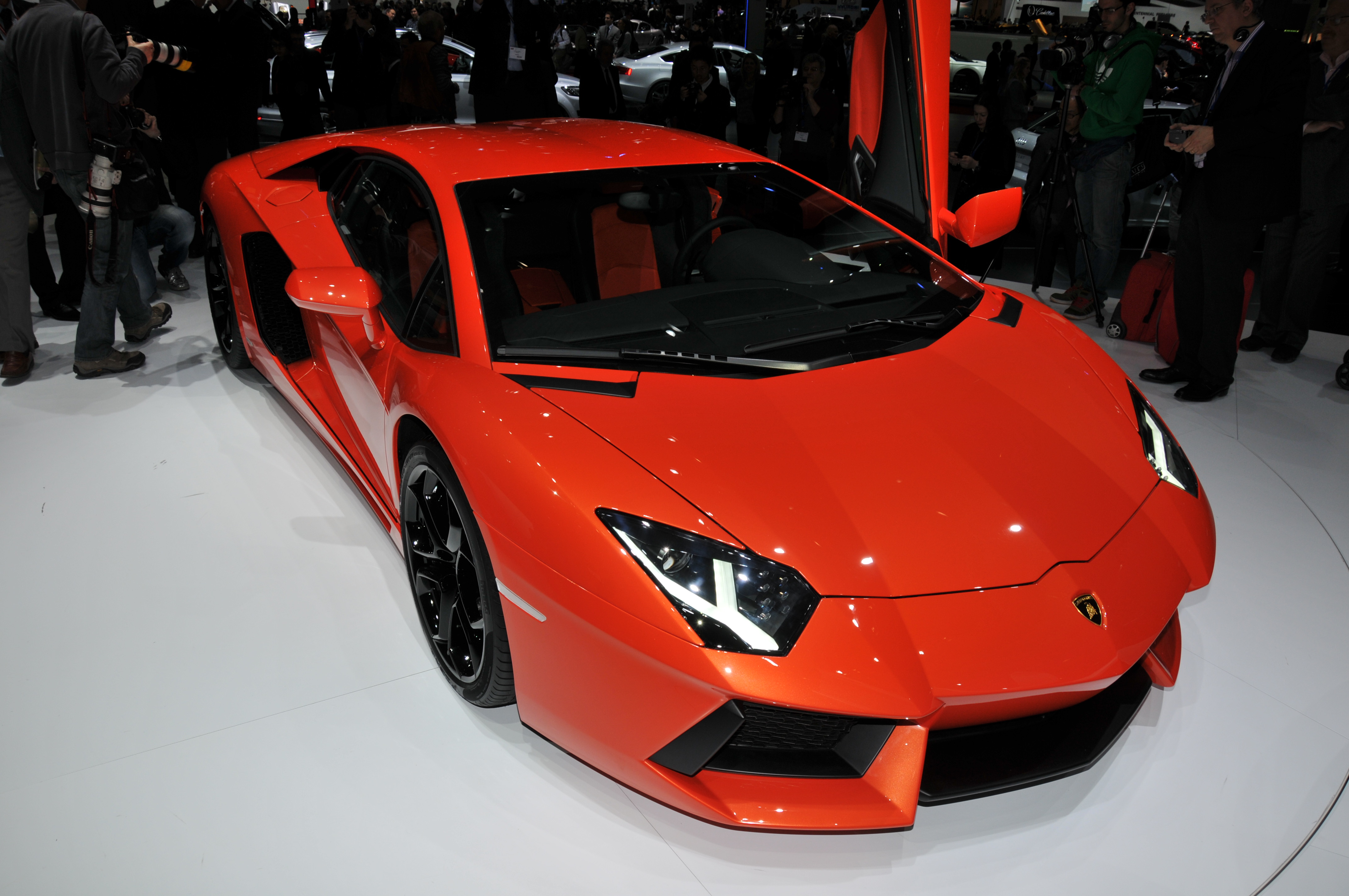
Lamborghini Aventador
"... edges. It reminded me a little bit of, is it the Aventador that has the, that has some always all shapes, do..."
The Lamborghini Aventador is a very high-end supercar made by Lamborghini. It’s known for its sharp, bold design and for being extremely powerful. The podcast brings it up because the speaker thinks it looks or feels similar to another car.
The Lamborghini Aventador is a flagship, high-revving supercar known for its aggressive styling and dramatic performance. It’s mentioned because the speaker is comparing its shape and presence to another car they’ve seen. That kind of comparison usually comes up when discussing what makes certain supercars stand out visually and audibly.

Fxxk
"But the way this thing sounded, obviously, was just completely different. It was proper, it was more comparable to a Ferrari FXX-K EVO track car. You know, a properly amazing sounding motor."
The Ferrari FXX K is a very rare Ferrari made for track use. It’s designed to be extremely loud and exciting when you drive it. The podcast mentions it because the engine sound is described as uniquely intense.
The Ferrari FXX K is a track-focused, limited-run supercar derived from Ferrari’s performance technology, built to deliver extreme speed and sound on the circuit. In the episode, it’s highlighted for how different and intense its engine note is compared with other cars mentioned. The speaker compares it to an FXX-K EVO track car experience.
digital screen
"You've got, you know, you've got a digital screen in the middle, [1189.8s] flanked by two digital screens for your mirrors,"
A digital screen setup means the car uses electronic displays for information (like speed/controls) instead of classic dials. Here they’re pointing out that the cockpit is very screen-focused, including displays used for mirror viewing.
A digital screen setup refers to a modern, electronic instrument cluster and display system instead of traditional analog gauges. In this Apollo IE description, the host also mentions additional digital displays for mirrors, emphasizing a cockpit designed around screens and driver sightlines.
carbon fibre
"and then the mirrors, [1197.8s] which, by the way, are held on by carbon fibre, [1199.6s]"
Carbon fibre is a strong but lightweight material used a lot in performance cars. Saying the mirrors are held on with carbon fibre suggests the car is built to be light and rigid, not just for looks.
Carbon fibre is a lightweight, high-strength composite material commonly used in performance cars to reduce weight and improve stiffness. The host notes the mirrors are held on by carbon fibre, which fits the Apollo IE’s track-focused, lightweight construction theme.
wobble
"and when you go at speed, like going around corners, they sort of wobble a bit, [1202.2s] like proper track, race car stuff, I love it."
Here “wobble” means the mirrors shake a bit when the car is moving fast and turning. They’re joking that it’s a race-car trait—more about how the car behaves than about having perfectly steady mirrors.
In this context, “wobble” describes mirror movement at speed while cornering, which can happen when components flex or mounts aren’t perfectly rigid. The host frames it as “proper track, race car stuff,” implying the car prioritizes lightweight construction and dynamic behavior over perfect stability of every visible element.
shift paddles
"Gearbox is really quick as well, you've got shift paddles on the back of the wheel. [1224.9s] It had a cool start-up procedure, where you had to press some buttons on the top of the..."
Shift paddles are the little levers behind the steering wheel that let you change gears. They help you keep control of the car while still shifting quickly.
Shift paddles are steering-wheel-mounted controls that let you change gears without using a traditional gear lever. They’re common on performance cars because they keep your hands on the wheel and can make gear changes feel quicker and more precise.
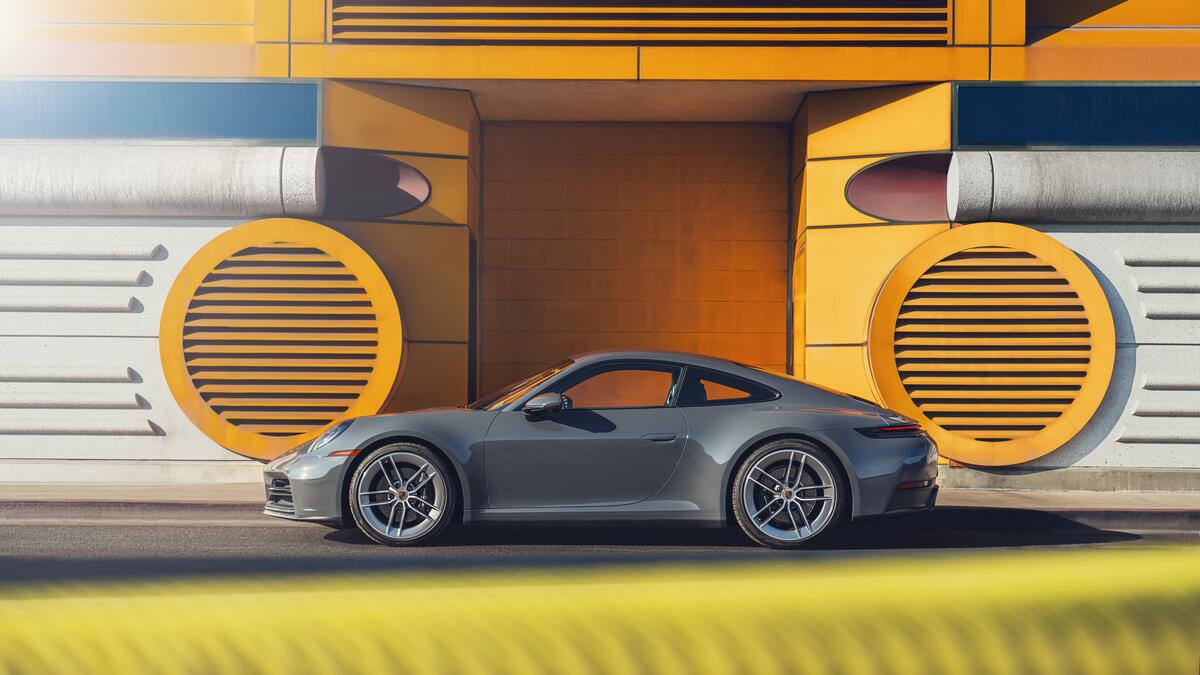
911 GT3 RS
"So they're both comparable with a 911 GT3 RS in terms of weight, [1264.4s] and they're mid-engine, so both optimised in a balance sense."
The Porsche 911 GT3 RS is one of Porsche’s most track-focused 911s. The host compares the Gumpert’s weight and handling feel to it because both are set up for balance and track driving.
The Porsche 911 GT3 RS is a track-focused version of the 911, known for its lightweight construction and high-performance setup. Here it’s used as a benchmark for weight and overall “balance” because the Gumpert cars are also mid-engine layouts.
mid-engine
"So they're both comparable with a 911 GT3 RS in terms of weight, [1264.4s] and they're mid-engine, so both optimised in a balance sense."
Mid-engine means the engine sits near the middle of the car, not up front. That usually makes the car feel more balanced and easier to handle when you’re driving hard.
A mid-engine layout places the engine near the center of the car, typically behind the driver and ahead of the rear axle. That helps with weight distribution and steering balance, which is why the host says both cars are “optimised in a balance sense.”
torque
"But my God, that engine, the thump of torque from two turbochargers,"
Torque is the engine’s twisting force that makes the car feel like it pulls hard. It’s what you notice when the car “hits” and accelerates quickly.
Torque is the engine’s twisting force that accelerates the car, especially noticeable at low-to-mid engine speeds. When the host says “thump of torque,” they’re describing how the twin-turbo setup delivers strong shove rather than just high peak power.
two turbochargers
"But my God, that engine, the thump of torque from two turbochargers,"
Turbochargers are like an air-boost system. They use exhaust to spin a turbine and cram more air into the engine so it makes more power and feels punchier.
Turbochargers are forced-induction devices that use exhaust gas to spin a turbine, compressing more air into the engine for more power. “Two turbochargers” implies a twin-turbo arrangement, which can help deliver stronger, quicker torque response compared with a single turbo.
sequential gearbox
"and having, it was a sequential gearbox, a pull and push sequential gearbox,"
A sequential gearbox is a transmission where you shift one gear at a time, usually with paddles or a lever. It’s designed to make shifting quicker and more consistent.
A sequential gearbox lets you shift in order (up or down one gear at a time) rather than using an H-pattern. It’s often paired with paddle shifters or a shift mechanism and is used to make fast, repeatable gear changes.

Lotus Exige
"It was Lotus Exige as well, in balance."
The Lotus Exige is a lightweight, track-focused sports car from Lotus, built around sharp handling and driver engagement. Here it’s used as a comparison point for “old-school” versus “high-tech” driving feel, emphasizing how some cars are designed to thrill through pure dynamics.
vaporware supercars
"but the amount of vaporware supercars that come around, and it's just like, okay, it is another company that says it's making X-Men, 1000 horsepower, whatever car that's got 280 cylinders."
“Vaporware” is hype that sounds real, but you can’t actually buy or see it yet. The host is saying they don’t believe the claims until real cars exist.
“Vaporware” means something that’s heavily marketed but not actually available or proven in real life yet. Here, the host uses it to describe supercars that are announced with wild specs, but only become believable once real customer cars show up.
1000 horsepower
"it's just like, okay, it is another company that says it's making X-Men, 1000 horsepower, whatever car that's got 280 cylinders. It's like, I will believe it when I see it"
Horsepower is how much power the engine can make. “1000 horsepower” is an extreme number people use to sell very fast cars.
Horsepower is a measure of engine power, and “1000 horsepower” is an attention-grabbing target often used in supercar marketing. The host is contrasting these headline numbers with whether the car is real and actually delivered to customers.
280 cylinders
"X-Men, 1000 horsepower, whatever car that's got 280 cylinders. It's like, I will believe it when I see it, and then you see it in person, you go,"
Cylinders are the engine’s combustion chambers. More cylinders can help an engine make more power, but here it’s clearly part of the exaggeration the host is skeptical about.
“Cylinders” are the individual combustion chambers in an engine; more cylinders can mean smoother operation and the ability to make very high power. In this context, the host is mocking exaggerated spec claims that sound unrealistic.
Vision Gran Turismo car
"I'm looking at the interior, and it is so futuristic. It's a bit like a Vision Gran Turismo car. You know those concepts that they put in the Gran Turismo game"
They’re comparing the interior to futuristic concept cars from a video game. The point is that the cabin looks like something designed for the far future.
The host compares the car’s interior styling to a “Vision Gran Turismo” concept, which are futuristic design studies created for the Gran Turismo video game. It’s a reference point for how radical and future-looking the cabin appears.
financial difficulties
"Yeah, before they obviously had their financial difficulties. They've only sold, and they only intended to sell 10 of the IEs, and they made 11..."
“Financial difficulties” is used here to frame Gumpert’s production and sales strategy for the Apollo IE. When a manufacturer is struggling financially, limited production runs and small allocations can become even more important to understand—because the cars may be the last ones built or the only ones that reach customers.
extreme
"which is obviously harder and to do nowadays, because everything is extreme."
In car talk, “extreme” usually means the car is engineered to be far more intense than normal—more aggressive throttle/response, sharper handling, and higher performance focus. The hosts use it to argue that it’s harder to make something feel truly “otherworldly” today because modern cars already push boundaries.
rotation
"The gun put was really begging to be chucked around. It felt to me in steering feel and rotation, and even a little bit the size,"
“Rotation” is how quickly the car seems to “turn into” a corner. If it rotates well, it feels eager and responsive when you steer in.
In driving terms, “rotation” describes how readily a car pivots around its center when you turn in—how quickly the nose and body angle change relative to your steering input. It’s a key part of perceived handling balance because it affects how the car transitions into a corner.
boost
"All thousand the boost came on, and it was just like, bang, I'm down the straight, [1592.9s] and I'm already like, I need to brake."
Boost is extra pressure from a turbocharger that helps the engine make more power. When the boost kicks in, the car can feel like it suddenly lunges forward. That’s the “hit” you feel during acceleration.
Boost is the extra air pressure a turbocharger (or supercharger) forces into the engine. When boost “comes on,” the engine suddenly gets more air (and fuel), so torque rises quickly and acceleration feels like a sharp surge. That’s why the hosts describe it as “bang” when the boost arrives.

Bugatti EB110 SS prototype
"Unfortunately, the EB110SS prototype that we've got here is out for each, [1617.0s] three and a half million, as is the Veyron Supersport that we covered the other week."
The Bugatti EB110 SS is a famous old-school supercar, and this sounds like a very rare prototype version. The hosts are basically saying you can’t easily buy one because they’re so expensive and hard to find. It’s a “collector dream” car.
The Bugatti EB110 SS is a legendary 1990s supercar, and the “prototype” wording here suggests a special, rare example. The hosts mention it as being out of their budget range, which highlights how scarce and expensive certain collector-grade hypercars can be. The EB110 SS is often remembered for its high-performance, turbocharged-era engineering.

Bugatti Veyron Supersport
"Unfortunately, the EB110SS prototype that we've got here is out for each, [1617.0s] three and a half million, as is the Veyron Supersport that we covered the other week."
The Bugatti Veyron Supersport is a super-rare, very extreme version of the Veyron. The hosts mention it to show that even the “big name” hypercars are still priced in the millions. It’s basically another example of a car you can’t casually buy.
The Bugatti Veyron Supersport is a high-output variant of the Veyron, known for pushing the limits of performance during the Veyron era. In this segment, it’s mentioned as also being out of the budget, alongside other million-pound hypercars. That positions the Veyron Supersport as a benchmark for extreme, collector-level supercar pricing.
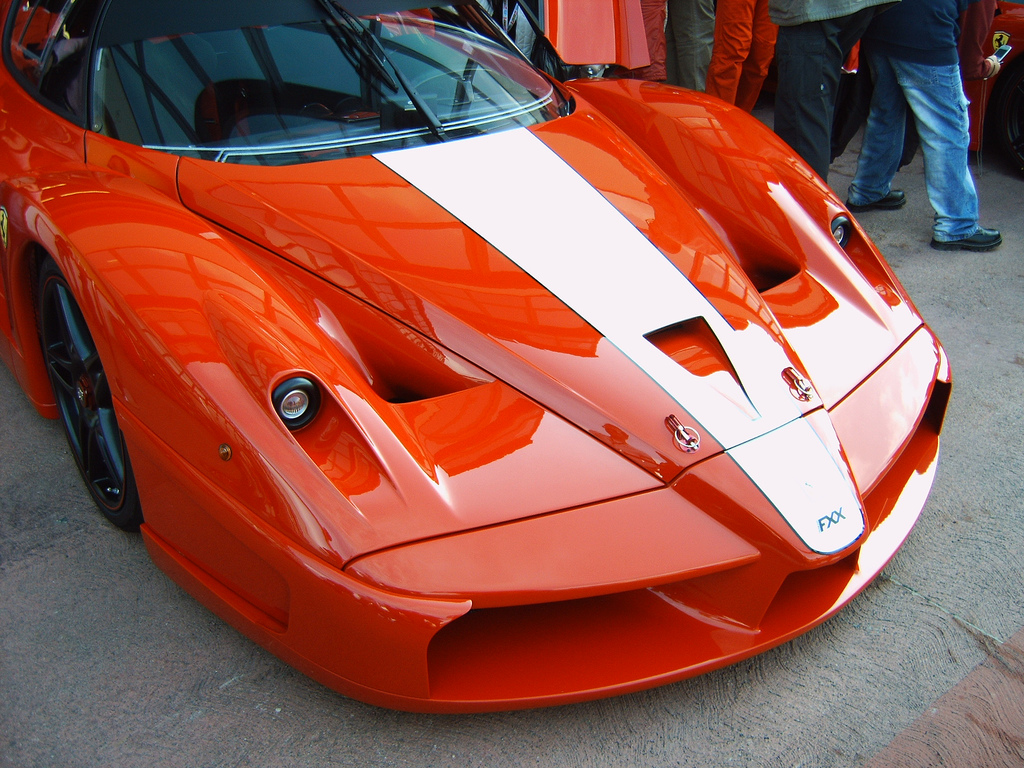
Ferrari FXX Evoluzione
"I've also got an FXX EVO. [1623.4s] Oh, I love that. [1624.6s] That's the EVO version of the Enzo track only car, 4.88 million,"

Ferrari Enzo
"That's the EVO version of the Enzo track only car, 4.88 million, [1631.4s] and that one I know for a fact is in Hong Kong as well, which is a little bit tricky to get a hold of."
The Ferrari Enzo is one of Ferrari’s most famous supercars. In this segment, it’s used as a reference point for what “track-only” means, since the FXX EVO is described as its track-only evolution. It’s basically the starting point for that special track-focused family.
The Ferrari Enzo is Ferrari’s famous halo supercar from the early 2000s, and it’s referenced here as the base for the “track only” concept. The hosts specifically describe the FXX EVO as the Enzo’s track-only evolution, which helps listeners understand the lineage. It’s a key name in Ferrari’s modern supercar history.
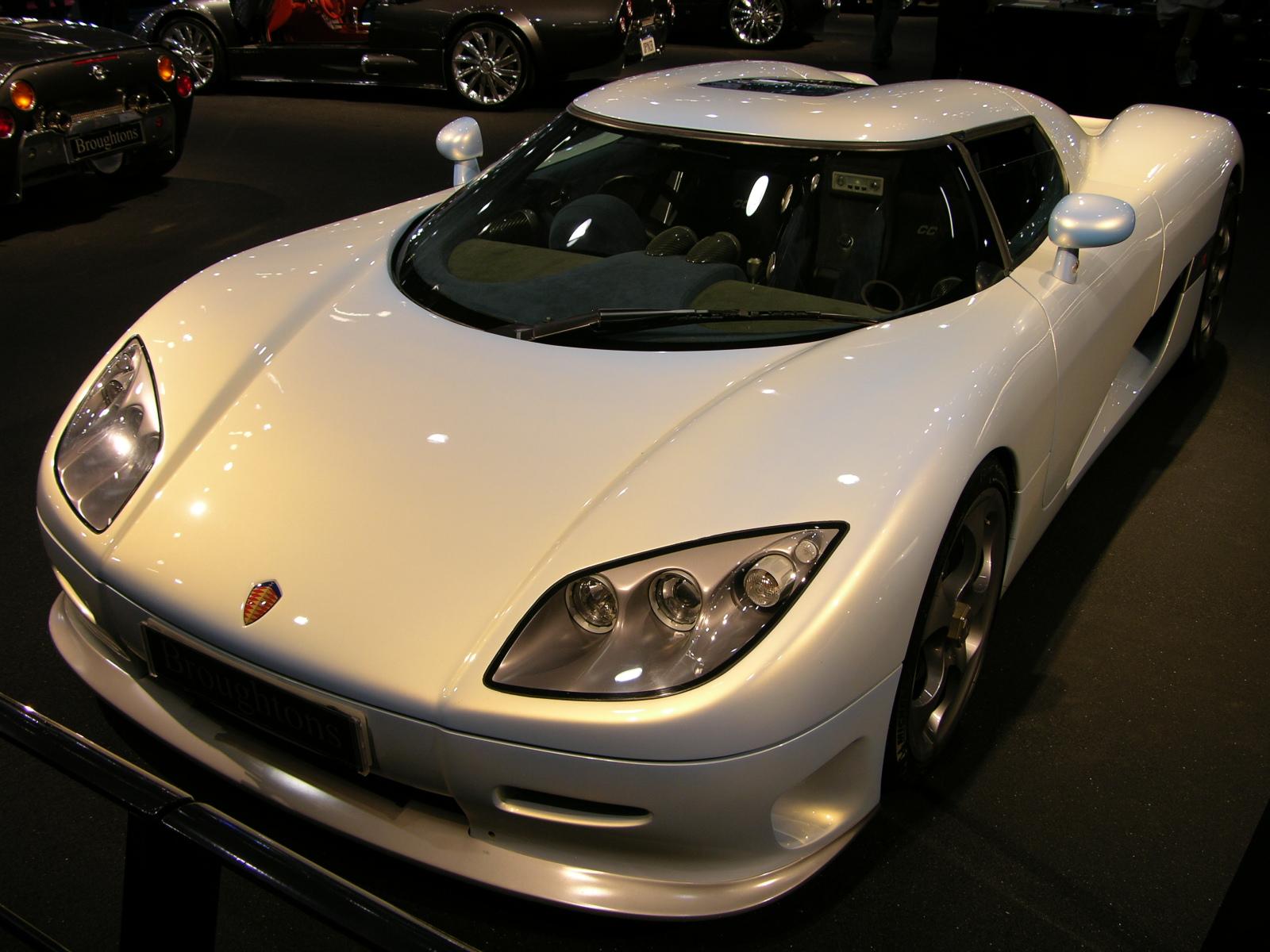
Koenigsegg Ccx
"However, you've got in budget just about a Koenigsegg CCX. [1641.5s] Yeah."
The Koenigsegg CCX is a rare, very high-performance hypercar. The hosts bring it up to show how much money you’re talking about when you’re shopping in this supercar tier. It’s basically a benchmark for “seriously expensive.”
The Koenigsegg CCX is a Swedish hypercar famous for its extreme performance and advanced engineering for its era. Here, it’s mentioned as a budget reference point (“just about a Koenigsegg CCX”), implying how expensive these supercars are compared with more practical performance cars. It’s also part of the segment’s lineup of rare, high-end cars.

Nissan Gtrs
"Yeah. It's P1 GTRs, the Koenigsegg Regera. Yeah."
The Nissan GT-R is a fast sports car made by Nissan. It’s known for quick acceleration and overall performance. The podcast brings it up while talking about other extremely fast cars.
The Nissan GT-R is a performance sports car known for strong acceleration and a reputation for being a “serious” track-capable machine. In this episode, it’s referenced alongside other very high-end cars, suggesting the speaker is grouping it with top-tier performance icons. The mention is likely about how it stacks up in terms of excitement and capability.

Regera Koenigsegg Regera
"Yeah. It's P1 GTRs, the Koenigsegg Regera. Yeah."
The Koenigsegg Regera is an ultra-rare, extremely fast car made by Koenigsegg. It’s in the same category as other top hypercars. The podcast mentions it as part of a list of cars that are meant to impress.
The Koenigsegg Regera is a high-performance hypercar known for its advanced powertrain approach and very high output. In the episode, it’s mentioned in the same breath as other extreme cars, indicating the discussion is about top-level performance and wow-factor. The key takeaway is that it’s treated as one of the standout “super/hypercar” machines.

Lamborghini Centenario
"Yeah. You've got, I mean, Centenario here. That was also in Hong Kong, so it's going t..."
The Lamborghini Centenario is a limited-run Lamborghini supercar made to celebrate the brand’s 100th anniversary. Because it’s rare, it’s a car people notice when they see it. The podcast mentions it because the speaker saw one in Hong Kong.
The Lamborghini Centenario is a limited-edition supercar created to celebrate Lamborghini’s 100th anniversary. It’s discussed here as a standout car the speaker saw in Hong Kong, emphasizing its rarity and presence. That kind of mention usually highlights how special and memorable the car is when it appears in real life.
importing
"That was also in Hong Kong, so it's going to require importing. [1652.8s] Or the final Aston Martin Valor. [1656.1s] Oh, that's cool."
Importing is when you buy a car from another country and bring it home. That usually costs more and takes extra paperwork. The speaker is saying the Hong Kong location makes it harder to get.
Importing means bringing a car into a country from elsewhere, which can add cost and complexity beyond the purchase price. It often involves shipping, taxes/duties, and making sure the car meets local regulations. In this segment, it’s mentioned as a practical hurdle for a Centenario located in Hong Kong.
Aston Martin Valor
"Or the final Aston Martin Valor. [1656.1s] Oh, that's cool. [1656.8s] And that's way under budget. [1658.4s] Did any of those appeal to you?"
manual gearbox
"The Aston, however, does have a manual gearbox. [1685.7s] So let's try that again. [1686.8s] A manual Aston Martin V12 or Apollo."
A manual gearbox means you shift gears yourself using a clutch and a gear stick. It’s usually more engaging because you control when the car changes gears. Here, it’s part of why the Aston Martin Valor sounds appealing.
A manual gearbox is a transmission controlled by a driver using a clutch pedal and gear lever, rather than automatic shifting. Enthusiasts often prefer it because it gives more direct control over engine speed and shift timing. In this segment, it’s used as a deciding factor when comparing the Aston Martin Valor against the Apollo IE.
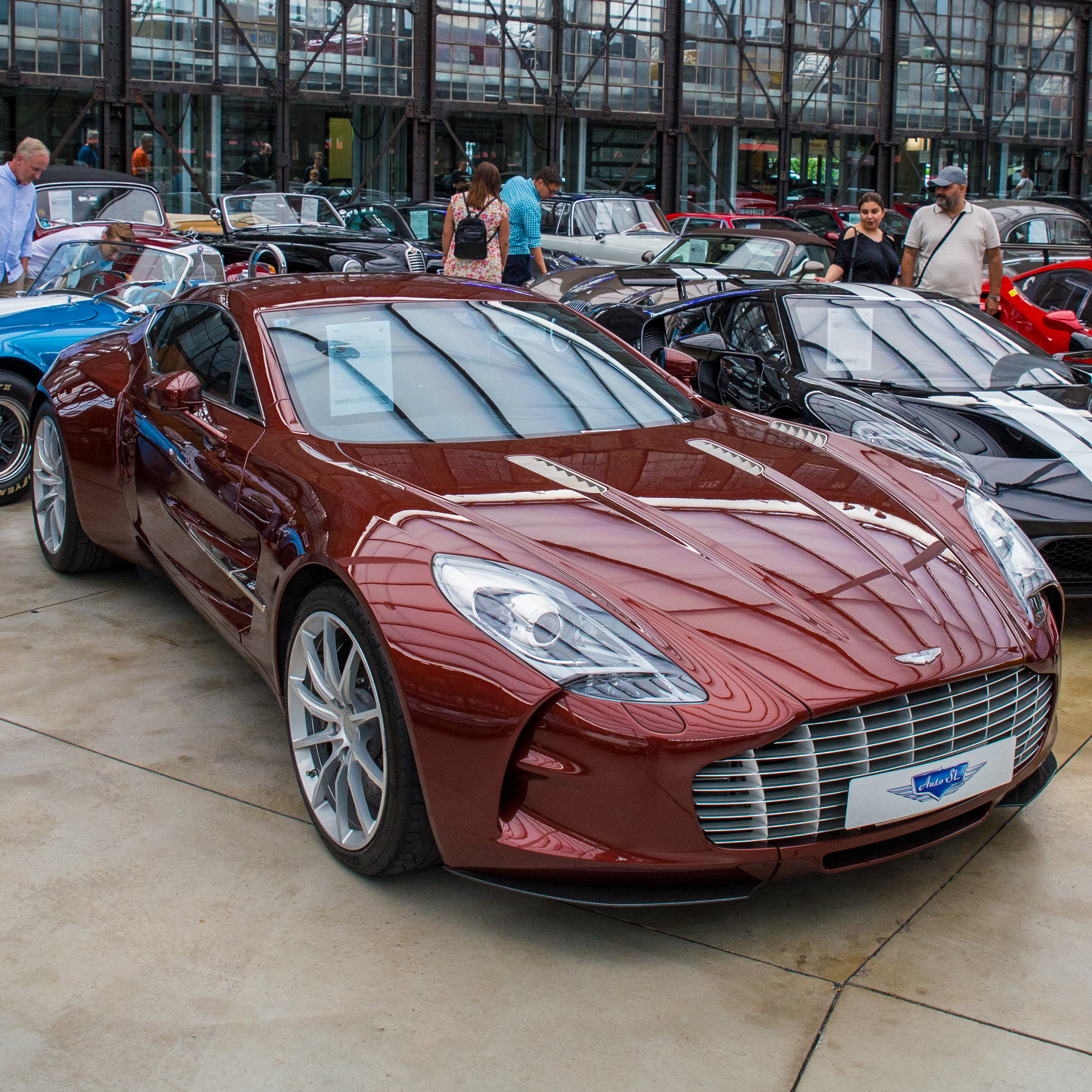
Aston Martin V12
"So let's try that again. A manual Aston Martin V12 or Apollo. Oh, God, yeah, no."
The Aston Martin V12 Vantage is a sporty Aston Martin with a V12 engine. It’s designed to feel exciting to drive, not just look good. The podcast mentions it because someone tried one with a manual setup.
The Aston Martin V12 Vantage is a performance-focused version of the Vantage line, powered by a V12 engine for a distinctive character and strong power. In the episode, it’s brought up in the context of trying a manual car and comparing it to another high-performance option. The mention suggests the speaker is talking about driving feel and how the car behaves.
use market
"And also, GMAT 50, you can't buy anymore. And on the use market, I think they are about double that."
“Used market” just means buying cars that someone else already owned. They’re saying that, for these rare cars, prices are much higher when you shop used.
The “used market” refers to buying cars that are already owned, typically through dealers or private sales rather than directly from the manufacturer. Here, the host says Apollo-related cars trade for about double on the used market, highlighting how rarity and demand can inflate prices.
track car
"Well, it's a track car. So that was, you know, there's no road issues there."
A “track car” is built mainly for racing circuits, not for normal street driving. That’s why the host says there aren’t the usual road-legal problems.
A “track car” is a vehicle set up primarily for circuit driving rather than everyday road use. The speaker connects this to “no road issues,” implying it’s not constrained by normal road-legal requirements and can be more focused on performance and noise.
GPF
"I'd like something with an interesting engine and it'd be pre-GPF before they, so that's the particulate filter stuff, before they all get too old to be able to daily."
GPF means a filter that traps tiny soot particles from a petrol engine. The speaker wants a car made before GPFs were common, because they’re worried about how that extra emissions equipment might behave as the car gets older.
GPF stands for Gasoline Particulate Filter, a device added to many modern petrol cars to trap soot particles. The speaker specifically wants a car “pre-GPF,” meaning they’re trying to buy before this emissions hardware became common, because they expect it to age and potentially become more expensive to maintain.
particulate filter
"I'd like something with an interesting engine and it'd be pre-GPF before they, so that's the particulate filter stuff, before they all get too old to be able to daily."
A particulate filter is an emissions device that catches soot from the exhaust. Here they’re referring to the petrol version (GPF) and saying they want to avoid cars where that filter is likely to be old and expensive to deal with.
A particulate filter is an emissions-control component that captures fine soot particles from the exhaust. In this context, the host is talking about the particulate filter used on petrol cars (GPF), and why they prefer a car before that system becomes widespread and potentially troublesome with age.
2006 Mercedes-Benz CLS AMG
"I've got a 2006 Mercedes. It's about when it was Mercedes-Benz CLS AMG. It's a CLS 63, which obviously has a 6.2-litre V8."
This is a Mercedes-Benz CLS AMG—basically a sporty, higher-performance CLS. The CLS 63 version uses a large 6.2-liter V8 engine, which is why it feels so punchy.
The Mercedes-Benz CLS AMG is a performance-focused version of the CLS “four-door coupe” concept, built around a big V8. In this case, the speaker specifies the CLS 63, which is known for its 6.2-liter V8 engine and strong performance character.

Mercedes-Benz Mercedesbenz Cls Amg
"I've got a 2006 Mercedes. It's about when it was Mercedes-Benz CLS AMG. It's a CLS 63, which obviously has a 6.2-litre V8."
The Mercedes-Benz SLS AMG is a high-performance sports car made by Mercedes’ AMG division. It’s designed to be fast and exciting to drive. The podcast brings it up while discussing AMG cars and V8 engines.
The Mercedes-Benz SLS AMG is a performance-oriented Mercedes sports car known for its AMG branding and V8 power in many versions. In the episode, it’s mentioned in the context of a car the speaker owns and compares to a CLS AMG, specifically referencing a 6.2-liter V8 in the CLS 63. That ties the SLS AMG into a broader conversation about AMG V8 models and ownership experience.
6.2-litre V8
"It's a CLS 63, which obviously has a 6.2-litre V8. This is a car I really like."
This means the engine is a V8 with a total size of 6.2 liters. More engine size usually helps with strong acceleration and a louder, more characterful sound.
A 6.2-liter V8 describes an engine with eight cylinders and a “V” layout, displacing 6.2 liters total. Larger displacement V8s typically produce strong low- to mid-range power and a distinctive sound, which is a big part of why cars like the CLS 63 feel special.
four-door coupe
"for some reason I like a four-door coupe. But I think it looks absolutely spectacular."
A four-door coupe is basically a car that looks sporty like a two-door coupe, but it has four doors. It’s meant to combine coupe styling with more practical everyday access.
A “four-door coupe” is a styling and packaging idea where a car has the long-hood, sloping-roof look of a coupe, but with four doors for easier access. The Mercedes-Benz CLS popularized this shape, and it’s part of why people describe it as a coupe-like sedan.
carbon ceramic brakes
"One of the things that made me go, oh, I might struggle with that, weirdly, is I believe these came with carbon ceramic brakes as standard. Oh my God, that is an expensive bill."
These are high-end brakes made from a special ceramic material. They can handle hard driving without losing stopping power, but if they need replacement, it can cost a lot of money.
Carbon-ceramic brakes use a composite ceramic material (often carbon-fiber reinforced) for the brake rotors. They can resist heat fade better than traditional iron rotors, but replacement pads/rotors are typically very expensive.
thirsty
"Noise is going to be incredible. It's going to be thirsty. The brakes terrify me."
When someone says a car is “thirsty,” they mean it drinks a lot of fuel. It usually happens more when you drive it aggressively.
In car talk, “thirsty” means the engine consumes a lot of fuel, especially when driven hard. It’s a practical way enthusiasts describe real-world fuel economy without quoting exact figures.
500 horsepower
"This one's in great nick. Over 500 horsepower. That's a really, really good buy."
“500 horsepower” is a measure of how strong the engine is. Higher horsepower usually means the car can accelerate harder and feel more intense.
“500 horsepower” is an engine output figure (power) used to describe how much work the engine can do. In performance-car discussions, it’s a quick shorthand for how fast and forceful the car feels, especially when paired with lightweight bodywork and aggressive gearing.
mileage is low
"If it was in a worse state, I imagine there'd be a few thousand pounds to chop off that over the next few years, but this is in such good condition and the mileage is low. Also, they're a massive tangent, but I miss it when Mercedes had AMG at the end of the"
“Low mileage” means the car hasn’t been driven much. Less driving usually means less wear, so it can be a good sign when you’re buying used.
“Low mileage” generally means the car has been driven fewer miles than average, which can reduce wear on consumables and reduce the chance of hidden abuse. Enthusiasts often treat mileage as a proxy for how much life is left in the car’s mechanicals.

C63 AMG
"I always love like C63 AMG. Yeah, me too. It just sounds right when it's finished off of the AMG."
The C63 AMG is a sporty, high-performance Mercedes. The host is mentioning it because they like the way “AMG” used to be placed at the end of the model name.
The Mercedes-AMG C63 is a performance version of the Mercedes C-Class, famous for its aggressive sound and strong V8-era reputation. Here it’s used as an example of the “AMG at the end of the name” naming style the host prefers.

FK8 Civic Type R
"But yeah, although we're trying to emphasize that. Now, this is quite contrasting my next choice because I've gone from like crazy, big, exciting engine to very fast and capable car, but of course the engine by comparison will seem fairly, let's just say normal, I guess, and that's because it's an FK8 Civic Type R. ... And I know it's a four cylinder, but it's turbocharged heavily and it really does pack some punch."
This is Honda’s performance version of the Civic hatchback. Even though it’s a four-cylinder, it’s turbocharged, so it can feel really quick. It’s also a practical four-door car, so it can be a fun family car too.
The FK8 Civic Type R is a hot hatch from Honda built around a turbocharged four-cylinder engine, tuned for strong acceleration and sharp handling. In this segment, the hosts focus on how it feels “fast and capable” despite the smaller engine size, and how the car’s practical four-door layout still works for families.
turbocharged heavily
"And I know it's a four cylinder, but it's turbocharged heavily and it really does pack some punch."
A turbocharger helps the engine make more power by pushing extra air into it. That’s why a smaller engine can still feel strong and quick—like the host says here.
“Turbocharged heavily” refers to using a turbocharger to force more air into the engine, allowing it to make much more power than a naturally aspirated engine of the same size. On a performance four-cylinder like the Civic Type R, that boost is what gives it the “punch” the host mentions.
911 Porsche Gt
"...ood reason why they were called front wheel drive Porsche GT cars, just like the FL5, because they are in so m..."
The Porsche 911 is a famous sports car model known for being fast and well engineered. The podcast mentions it while talking about how different versions are set up for driving. It’s used as a reference point for performance discussions.
The Porsche 911 is an iconic sports car known for its long-running design and performance-focused engineering. In the episode, it’s referenced in a discussion about drivetrain layout and how certain “GT” versions are described, connecting to the idea of front-wheel-drive labeling in the conversation. It’s mentioned as a benchmark name that people use when talking about Porsche performance cars.
four pot
"It's just whether your kids are going to get as excited over a punchy four pot as they [2108.6s] would do a big V8."
A “four pot” means the engine has four cylinders. The hosts are saying it can be quick and fun, but it may not sound as exciting as a larger V8.
“Four pot” is enthusiast slang for a four-cylinder engine. The hosts are contrasting the character of a punchy four-cylinder with the more dramatic sound and feel of a big V8, which affects how “evocative” the car feels to listeners.
four seater
"It's a four seater, so it's not the end of the world. [2112.1s] No."
A “four seater” just means there are seats for four people. It’s a practical point—more usable for normal life than a two-seat-only car.
“Four seater” is a practical packaging note: it means the car has seating for four people, which affects everyday usability. The hosts mention it to reassure that the car isn’t a strict two-seat-only toy.
sound generator
"The only thing is, is that they do sound pretty lackluster, because they've got a sound generator [2117.0s] in them, which sounds nothing like an engine."
A sound generator is a device that makes fake engine noise. It’s meant to make the car feel more exciting, but sometimes it can sound unrealistic compared to a real engine.
A sound generator is an artificial engine-sound system used to create more “engine-like” noise inside or outside the car. The hosts say it “sounds nothing like an engine,” which is a common complaint on modern performance cars that use electronics to replace or supplement real exhaust/engine sound.
Request an Explanation
Heard something you'd like explained? We'll add it to this episode.
Sign in to request explanations for terms you heard.
Want to learn more?
Browse our glossary for plain-English explanations of automotive terms, jargon, and concepts.
Help improve this episode
See something that's not quite right? Our annotations are AI-generated and can sometimes miss the mark. Click the flag icon on any annotation to suggest a correction.
3 community members have helped improve this episode.