
Haggerty on Dealing with Product Gap, Massimilla on Digital Handoff | Daily Dealer Live
About this episode
Dealership leaders break down how to keep sales and service moving through product and lead gaps. Pat Hagerty discusses handling scarcity with disciplined inventory and throughput, plus tradeoffs like protecting CSI/SSI and service retention. The conversation then shifts to digital handoffs: incomplete subprime lead data, AI chatbot workflows, and why human connection still matters. They also cover operational tactics—training leaders ahead of time, using video MPI for revenue, and choosing phone for inbound vs text for outbound—while debating how to measure AI’s impact.
Carvana
"The Dallas store is the second of seven Carvana franchise locations... Financing runs through Carvana for now and every purchase closes online with a seven day return window."
Carvana is a company that sells used cars mostly online. In this story, they’re also testing a physical store concept in Dallas.
Carvana is an online used-car retailer that sells cars through a mostly digital buying flow. In this segment, it’s tied to a physical “franchise location” concept and an online purchase process with a return window.
Stellanus
"all carrying Stellanus brands. Tiara says Carvana chose Stellanus specifically because the four brands, Chrysler, Dodge, Jeep, Ram..."
Stellanus is the name used here for the brand group being carried at the store. The idea is that multiple car brands are offered in one place.
Stellanus is referenced as the brand group Carvana’s franchise locations carry. The segment frames it as a multi-brand setup intended to cover a wide range of shoppers under one roof.
Chrysler
"Tiara says Carvana chose Stellanus specifically because the four brands, Chrysler, Dodge, Jeep, Ram, cover every major segment..."
Chrysler is a car brand. Here it’s mentioned as one of several brands offered through the same store concept.
Chrysler is one of the four automotive brands listed as being covered by the Stellanus setup. The segment uses it to illustrate how the store concept spans different market segments.
Dodge
"the four brands, Chrysler, Dodge, Jeep, Ram, cover every major segment from entry level to luxury..."
Dodge is a car brand. In this segment it’s listed as part of the set of brands the store carries.
Dodge is named as one of the four brands included in the Stellanus multi-brand coverage. The point in the segment is breadth—covering different buyer needs and price points.
Ram
"the four brands, Chrysler, Dodge, Jeep, Ram, cover every major segment from entry level to luxury..."
Ram is a car brand, especially known for pickup trucks. It’s mentioned here as one of the brands offered in the store concept.
Ram is named as one of the four brands covered by the Stellanus setup. In context, it’s part of the claim that the combined brands span entry-level through luxury segments.
Jeep
"Tiara says Carvana chose Stellanus specifically because the four brands, Chrysler, Dodge, Jeep, Ram..."
Jeep is a car brand known for SUVs and off-road vehicles. Here it’s mentioned as one of the brands offered in the same store concept.
Jeep is included in the four-brand list used to explain the Stellanus “under one roof” strategy. The segment implies this helps match shoppers to the right brand within a single retail experience.
seven day return window
"Financing runs through Carvana for now and every purchase closes online with a seven day return window."
A seven day return window means you can return the car within a week after buying it. It’s meant to protect you if the car isn’t what you expected.
A seven day return window is a defined period after purchase during which the buyer can return the vehicle for a refund or reversal of the transaction. It’s a key part of how some online retailers reduce buyer risk without requiring a traditional in-person negotiation.
No haggle pricing
"No haggle pricing applies. Financing runs through Carvana for now and every purchase closes online..."
No haggle pricing means the price is fixed and you don’t bargain for a lower one. It’s different from the usual dealership back-and-forth.
No haggle pricing means the price is set and not meant to be negotiated down through bargaining. The segment contrasts this with traditional dealership practices where negotiation is often expected.
VIN check
"The bumper.com study of approximately 2000 buyers found that 62% skipped a VIN check before purchasing."
A VIN check is a way to look up a car’s history using its unique ID number. If you skip it, you might miss problems the seller doesn’t mention.
A VIN check means looking up a vehicle’s VIN (Vehicle Identification Number) in records to verify details like ownership history, accidents, and whether the car matches its listing. Skipping it can increase the odds of buying a car with undisclosed issues.
delaying routine maintenance
"a separate G law group survey of 2000 adults adds another layer 27% of car owners are currently delaying routine maintenance like brakes and tires all due to rising gas prices..."
Delaying routine maintenance means putting off regular car services. The segment says some people are doing it because they’re trying to save money, but it can lead to bigger problems later.
Delaying routine maintenance means postponing scheduled upkeep that helps prevent failures and expensive repairs. In this segment, it’s discussed as a behavior driven by rising gas prices, including delaying items like brakes and tires.
VIN report
"advocate Aaron Kemp says dealers have a real opening here. Walking buyers through a VIN report and being upfront about inspection findings can turn transparency into a selling point rather than a liability."
A VIN report is a vehicle history report generated from a car’s Vehicle Identification Number (VIN). Dealers use it to document things like prior ownership, accidents, and service/registration history so buyers can make decisions with more complete information.
delayed maintenance
"Seems like the meshing of two ideas or stories. The delayed maintenance is an aside. That's a fascinating piece to me."
Delayed maintenance is when routine car upkeep gets put off. Instead of fixing small issues on schedule, they can turn into bigger, more expensive problems later.
Delayed maintenance means postponing scheduled service (like fluid changes, inspections, or wear-item replacements) until problems become more serious. On a used car, it can increase the chance of additional repairs and can also affect how dealers should explain inspection findings to customers.
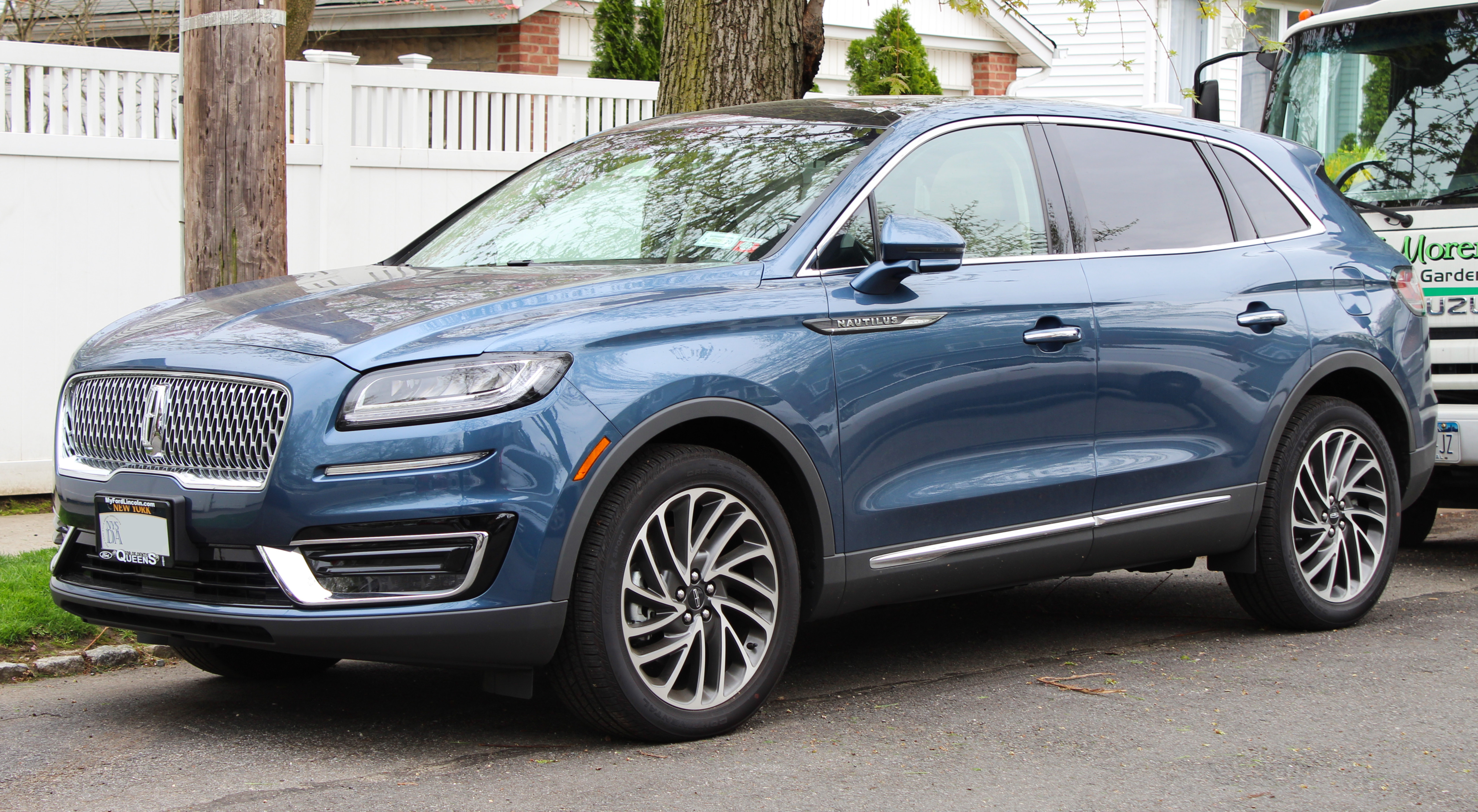
Lincoln Nautilus
"Back at it, a story to monitor Ford is asking the federal government for authorization to keep selling the Lincoln Nautilus in the United States. Yes, they're asking the feds. Can we continue to sell the Nautilus?"
The Lincoln Nautilus is a luxury SUV. This episode segment is about whether Ford can legally keep selling it in the U.S. because of U.S. rules about certain connected-vehicle software coming from China.
The Lincoln Nautilus is a mid-size luxury SUV made by Lincoln (Ford’s luxury brand). In this segment, it matters because Ford is seeking federal authorization to keep selling it in the U.S. despite rules affecting connected-vehicle software tied to its China-built production and software installation.
connected vehicle software
"while its software is developed domestically, it's installed in China, which puts it in conflict with the Commerce Department's ban on Chinese connected vehicle software."
Connected vehicle software is the part of the car’s computer that lets it connect to the internet or networks for services. The segment is saying U.S. rules may limit certain connected features depending on where the software is installed.
Connected vehicle software is the onboard software that enables a car to communicate with networks and services (for example, telematics, remote functions, and data connectivity). This segment highlights that U.S. rules can restrict connected-vehicle software when it’s installed in certain ways or sourced from certain countries.

Buick 27 Model
"...hicle software. The restriction kicks in with the 27 model year. Ford expects to begin importing 2027 Nautil..."
“Buick Model 27” sounds like a specific model year or version of a Buick. The podcast says a software restriction starts with that 27 model year. That means the car’s software behavior changes for vehicles built in that timeframe.
“Buick Model 27” in the podcast appears to refer to a specific model-year or software-related change tied to vehicle software restrictions. The key point is that the “restriction kicks in” with the 27 model year, meaning owners of that model year are affected by the updated behavior. It’s discussed because software policies can impact how features work or how the vehicle operates.
fixed ops
"Back to the story shifting gears to the service lane dealers running high volume fixed ops need to be watching closely."
“Fixed ops” is dealership shorthand for the service side of the business—repairs and maintenance. If key supplies like motor oil are hard to get, it can slow down service work.
In dealership language, “fixed ops” refers to the service department operations (maintenance, repairs, and related customer work). The segment ties this to parts availability—specifically motor oil—because service volume depends on being able to complete routine jobs.
motor oil shortage
"There's a motor oil shortage and it's tied to Middle East supply disruptions which may or may not be done specifically the fallout from an attack on a shell plant and Qatar and the closure of the Strait of Hormuz is squeezing lubricant supplies in the US"
A motor oil shortage means there isn’t enough engine oil available for car services. If oil shipments get disrupted, dealerships may struggle to keep up with routine maintenance.
A motor oil shortage means insufficient supply of engine lubricants needed for routine service and repairs. This segment links it to Middle East supply disruptions and shipping chokepoints, which can affect how quickly U.S. dealers can source oil for scheduled maintenance.
Strait of Hormuz
"and the closure of the Strait of Hormuz is squeezing lubricant supplies in the US"
The Strait of Hormuz is a major shipping route for energy-related goods. If it’s closed or disrupted, it can make it harder to get supplies like oil and lubricants.
The Strait of Hormuz is a critical shipping chokepoint near Iran and the Arabian Peninsula. Because so much energy and related cargo moves through it, disruptions can ripple into global supply chains—including lubricants like motor oil.
Toyota
"Toyota and Nissan have issued guidance to their dealers. Toyota has directed dealers to substitute OW8 vehicles with OW16 in 20% of cases."
Toyota is mentioned because it’s telling its dealers what to do when certain vehicles or parts are in short supply. In this case, it’s about substituting one vehicle type for another.
Toyota is referenced here as issuing dealer guidance during a supply chain disruption. The segment specifically mentions Toyota directing dealers to substitute OW8 vehicles with OW16 in a portion of cases.
Nissan
"Toyota and Nissan have issued guidance to their dealers. Toyota has directed dealers to substitute OW8 vehicles with OW16 in 20% of cases. Nissan has capped allocations of genuine oil including mobile mobile and mobile one variants at 55% of prior year volumes."
Nissan is mentioned because it’s setting limits on what dealers can get during a shortage. Here, it’s about limiting oil supply compared to last year.
Nissan is referenced as issuing dealer guidance during supply constraints. The segment says Nissan capped allocations of genuine oil (including Mobile variants) at 55% of prior-year volumes.
OW8 vehicles
"Toyota has directed dealers to substitute OW8 vehicles with OW16 in 20% of cases."
“OW8” and “OW16” sound like code names for different versions of a vehicle. The important part is that Toyota is allowing dealers to swap one version for another when supply is tight.
“OW8” and “OW16” appear to be internal shorthand codes for specific vehicle configurations or variants used by the automaker/dealer network. The key point is that Toyota is instructing dealers to substitute OW8 with OW16 in some cases due to shortages.
OW16
"Toyota has directed dealers to substitute OW8 vehicles with OW16 in 20% of cases."
“OW16” is the alternative vehicle version Toyota is telling dealers they can use instead of “OW8” when supplies are limited.
“OW16” is paired with “OW8” as a substitution target in Toyota’s dealer guidance. In this context, it functions as a coded vehicle variant/configuration that dealers may deliver instead of the originally requested one.
allocations
"Nissan has capped allocations of genuine oil including mobile mobile and mobile one variants at 55% of prior year volumes."
“Allocations” are the limited amounts a company allows each dealer to get. Here, it’s about limiting how much of a specific product (oil) dealers can receive.
“Allocations” are the limited quantities of parts or vehicles that a manufacturer assigns to each dealer or region. In this segment, Nissan is described as capping allocations of genuine oil to control supply.
genuine oil
"Nissan has capped allocations of genuine oil including mobile mobile and mobile one variants at 55% of prior year volumes."
“Genuine oil” is the brand’s recommended oil for the vehicle. If there isn’t enough of it, the shop may have to delay or substitute service work.
“Genuine oil” means manufacturer-specified lubricants sold through the brand’s supply chain, typically matched to the engine’s requirements. The point here is that even service consumables can be supply-constrained, affecting dealer service timelines.
service timelines
"The practical message for dealers shore up supplier relationships now revisit allocation strategies and get ahead of customer communication before service timelines start slipping."
“Service timelines” means how long customers have to wait for maintenance or repairs. If parts are delayed, those wait times get longer.
“Service timelines” are the expected schedules for maintenance and repairs at the dealership. When parts or supplies are constrained, these timelines slip, which can create customer dissatisfaction and backlog.
ClearShift
"And closing out today we go to the M&A tracker, the CDG Bicell tracker, ClearShift. We love our tracker. ClearShift the Colorado based youth car operation founded by Jeff Vanderwall in 2016 has made its first franchise dealership acquisition."
ClearShift is a company that buys and grows dealership locations. In this segment, they’re doing their first dealership acquisition and planning more.
ClearShift is described as a Colorado-based youth car operation that makes franchise dealership acquisitions. The segment treats it like an active buyer in the dealership M&A market.
Jeff Vanderwall
"ClearShift the Colorado based youth car operation founded by Jeff Vanderwall in 2016 has made its first franchise dealership acquisition."
Jeff Vanderwall is the person who started ClearShift, the company mentioned in the dealership acquisition news.
Jeff Vanderwall is identified as the founder of ClearShift, a Colorado-based dealership acquisition operation. The segment uses him to establish the company’s origin story and credibility.
Gunnison, Utah
"ClearShift the Colorado based youth car operation founded by Jeff Vanderwall in 2016 has made its first franchise dealership acquisition. Purchasing Freedom Ford in Gunnison, Utah from husband and wife team JL and Sarah Larson..."
Gunnison, Utah is where the dealership being discussed is located.
Gunnison, Utah is the location of the dealership ClearShift acquired: Purchasing Freedom Ford. It’s included because the segment is mapping dealership acquisitions across specific regions.
Ed Morse automotive group
"Also out this week Ed Morse automotive group has signed a definitive agreement to acquire Mercedes Benz of Billings in Montana from DMN auto holdings with the deal expected to close in July."
Ed Morse automotive group is buying another dealership. Deals like this can change who runs the store and how it operates.
Ed Morse automotive group is mentioned as signing a definitive agreement to acquire a dealership. This is part of the dealership M&A news cycle that affects local inventory and service capacity.
CDJR
"He says, Map Hours made some commentary about Carvana buying another CDJR franchise in Texas... Eager K, Sam Carvanas talking to Central CDJR"
CDJR is a group of car brands—Chrysler, Dodge, Jeep, and Ram. A “CDJR franchise” is a dealership that’s allowed to sell those brands.
CDJR is the industry shorthand for Chrysler, Dodge, Jeep, and Ram—brands under the Stellantis umbrella. In dealership talk, “CDJR franchise” usually means a dealer authorized to sell one or more of those brands.
Faulkner Infinity of Willow Grove
"Pat Hagerty, President General Manager at Faulkner Infinity of Willow Grove."
This is the Infiniti dealership where the guest works as the top manager. It helps explain why he’s talking about how dealerships run.
This is the specific Infiniti dealership location where Pat Hagerty is President/General Manager. For listeners, it signals the guest’s perspective is grounded in day-to-day luxury franchise dealership operations.
Faulkner Organization
"I've been with the Faulkner Organization for 20 years and I've been with Infinity since 2016."
Faulkner Organization is the dealership company that runs multiple car stores. Pat says he’s worked there for a long time.
The Faulkner Organization is the dealership group Pat Hagerty works for. In dealership conversations, “organization” usually means a multi-store company that owns and operates multiple franchises in a region.
fixed operations
"I would say that business right now is below average. I would say our fixed operations are covering the dealership right now and we hope to have a strong close with Newcar the next two weeks or so here."
In a dealership, “fixed operations” usually refers to the service and parts business. It often makes steadier money than selling new cars, so it can help keep the dealership afloat when sales are slow.
“Fixed operations” in dealership talk usually means the service and parts side (and sometimes body shop), which is more stable than new-car sales. When the guest says fixed operations are covering the dealership, he’s saying the service/parts revenue is helping offset weaker new-vehicle sales.
Newcar
"I would say our fixed operations are covering the dealership right now and we hope to have a strong close with Newcar the next two weeks or so here."
“Newcar” means selling brand-new vehicles. He’s saying they’re hoping new-car sales pick up in the next couple of weeks.
“Newcar” here is shorthand for new-vehicle sales, as opposed to service/parts revenue. The guest is implying that new-car sales are expected to improve soon (“strong close”) to balance a below-average period.
product gap
"There's a product gap in the brand. We've had executive leadership from Nissan and Infinity ... But how are you dealing with that product gap?"
A “product gap” means the brand doesn’t have enough new or appealing cars available to sell. That makes it harder for a dealership to meet customer demand and hit sales goals.
A “product gap” is a period when a brand doesn’t have enough competitive, current models available to meet customer demand. For dealerships, it can reduce sales volume because shoppers can’t find the trims and vehicles they want.
throughput
"So for us, the biggest decision for me that hasn't changed or wavered is throughput. We have to continue to put units in operation ... ultimately units in operation drive Infinity dealerships."
Here, “throughput” basically means how many cars the dealership can get sold and into customers’ hands. The more cars they move, the more money the dealership tends to make.
In dealership operations, “throughput” means the rate at which vehicles move through the sales process—getting units sold and delivered so inventory turns over. The speaker ties throughput directly to profitability because more units in operation generally means more revenue.

QX-60
"So for most of the year, we've had the QX-80 and the QX-60 as our only products. Fortunately, we just added the QX-65 ..."
The Infiniti QX-60 is a mid-size luxury SUV. The speaker is using it as an example of the dealership having only a couple models available to sell.
The Infiniti QX-60 is a midsize luxury crossover/SUV positioned below the QX-80. Here, it’s mentioned as one of the dealership’s only products for most of the year, illustrating how a limited model lineup can create a “product gap.”

QX-80
"So for most of the year, we've had the QX-80 and the QX-60 as our only products. Fortunately, we just added the QX-65 ..."
The Infiniti QX-80 is a big luxury SUV. The speaker says their dealership relied on it (and another model) because they didn’t have many other cars to sell.
The Infiniti QX-80 is a full-size luxury SUV in Infiniti’s lineup, known for being a large, family-oriented flagship model. In this segment, it’s one of the dealership’s main products during a period when the brand has limited offerings.
QX-65
"Fortunately, we just added the QX-65 which brings some excitement and freshness to our employees. So we're hoping that that can kind of hold us a little bit."
The Infiniti QX-65 is a newer SUV model the dealership recently started selling. The speaker thinks it will help keep both employees and customers interested when there aren’t many other options.
The Infiniti QX-65 is a newer Infiniti model the dealership just added to its lineup. The speaker frames it as bringing “excitement and freshness,” which matters operationally when the brand’s product lineup is thin.
units in operation
"But for us, our decision is we have to stay aggressive ... because ultimately units in operation drive Infinity dealerships. That's what drives profitability ..."
“Units in operation” means cars that are actually being driven by customers. The speaker is saying that having more of those cars helps the dealership make money over time.
“Units in operation” refers to vehicles that are actively in customers’ hands and being used, which supports ongoing dealership revenue streams (like service and repeat business) beyond just the initial sale. The speaker uses it to explain why selling enough vehicles matters financially.
inventory calculator
"Yeah, so we have an inventory calculator that we look at"
An “inventory calculator” is a planning tool that helps a dealership figure out how many cars it should have on hand. The goal is to avoid running out when customers want to buy.
An “inventory calculator” is a tool used to estimate how much inventory a dealership needs to maintain sales momentum. In this context, it’s part of how they plan to protect throughput when product availability is constrained.
CSI
"we are surrendering front-end gross to win the below-the-line money at the end of the month or end of the quarter by maintaining CSI, SSI, improving service retention"
CSI is a score that measures how happy customers are after they get service at a dealership. Dealers track it because it often affects incentives and how well the store is judged.
CSI usually means Customer Satisfaction Index, a dealership KPI that measures how satisfied customers are with their service experience. It’s commonly tracked via surveys and used to influence bonuses and performance evaluations.
front-end gross
"we are surrendering front-end gross to win the below-the-line money at the end of the month or end of the quarter"
Front-end gross is the profit the dealer makes on the car when it’s sold. The idea here is they’ll accept smaller profit on the car sale if it helps them make more money later.
Front-end gross is the profit (gross margin) a dealership earns on the vehicle sale itself—typically from the difference between what the dealer pays and what it sells for. The speaker contrasts it with “below-the-line” money, implying they’re willing to earn less on the car sale to make more elsewhere.
below-the-line money
"we are surrendering front-end gross to win the below-the-line money at the end of the month or end of the quarter"
“Below-the-line money” means the dealership makes money from things like service work and parts, not just the car sale. It’s often where the bigger long-term profit comes from.
“Below-the-line money” is dealership profit that comes from sources other than the initial vehicle sale margin—commonly service and parts. It’s called “below the line” because it’s often reflected after the main vehicle gross on financial statements.
service retention
"by maintaining CSI, SSI, improving service retention and hitting 110% of our sales objective every month and every quarter."
Service retention means getting customers to return for future maintenance and repairs. It’s basically how well the dealership keeps people coming back.
Service retention is the ability of a dealership to keep customers coming back for future service work. In practice, it’s influenced by follow-up, appointment experience, and how well the service department builds trust.
SSI
"by maintaining CSI, SSI, improving service retention and hitting 110% of our sales objective every month and every quarter."
SSI is another customer-satisfaction score, focused on the service department. Dealers use it to see whether customers feel the service experience was good.
SSI typically refers to Service Satisfaction Index (or a closely related service customer satisfaction metric) used by dealerships to track service department performance. Like CSI, it’s usually tied to customer survey results and incentive programs.
fixed absorption
"our fixed absorption is 98%, which is about 25% above everybody else. And that stems from the decisions we made three years ago"
Fixed absorption is a way to judge whether the dealership is covering its overhead costs with its sales and service volume. Higher usually means the store is running more efficiently.
Fixed absorption is a dealership accounting metric that measures how effectively fixed costs are covered by revenue-generating activity. Higher fixed absorption generally means the store is using its capacity efficiently and spreading overhead across more billable work.
stair step
"stair step's been a big debate on the show. Some dealers love it. Some dealers don't. You've gone all in on it."
A “stair step” is a tiered incentive or pricing plan that changes once you hit certain sales targets. Some dealers like it because it pushes volume; others worry it makes pricing feel inconsistent or harms the brand.
A “stair step” program is a tiered pricing/volume incentive structure where the dealer’s required performance (or pricing terms) changes as sales milestones are reached. Dealers debate it because it can affect brand perception and pricing consistency across stores.

Lincoln Navigator
"...say affordability comparing to the escalator, the navigator. I think the QX60 is an incredible mid-size SUV. ..."
The Lincoln Navigator is a big luxury SUV. It’s designed to be comfortable and roomy, especially for families or long trips. If someone brings it up in a pricing conversation, they’re usually comparing what you get for the money.
The Lincoln Navigator is a large, luxury SUV built for comfort, space, and a premium driving experience. It’s frequently discussed in the context of pricing and “affordability” because buyers compare it to other large SUVs when shopping for features and size. The podcast’s mention ties it to how dealership offers and market positioning can influence interest.
Hyundai
"I see Hyundai, there's Hyundai advertising, Hyundai's all in on the World Cup, it seems right now."
Hyundai is a car brand. The host is pointing out that Hyundai is advertising during the World Cup and wondering if that helps car shoppers buy online.
Hyundai is a major automaker whose marketing spend can influence consumer attention and lead flow. Here, it’s mentioned as being heavily tied to World Cup advertising, which the host wonders could boost internet sales activity.

Dodge Ram
"an increase in Instagram and activity and a little bit more activity from ..."
The Dodge Ram is a large pickup truck. People use it for towing, hauling, and everyday driving. When a podcast talks about more online activity for it, it usually means more people are looking at or shopping for it.
The Dodge Ram is a full-size pickup truck known for hauling capability and widespread use as a work and family vehicle. It often comes up in dealership and sales discussions because it’s a high-volume model where inventory, incentives, and customer interest can shift quickly. The podcast’s mention of increased social media activity suggests it’s drawing attention from buyers online.

Challenger Hellcat
"...our marketing department put together a brilliant Hellcat Durango video that's so unbelievable, very Transf..."
The Challenger is a performance car. It’s built for strong acceleration and a sporty driving feel. When it comes up in marketing talk, it’s usually because it’s a well-known model that helps attract attention.
The Dodge Challenger is a performance-focused muscle car known for its powerful engines and track-inspired styling. The podcast references a “Hellcat Durango video,” which suggests the Challenger is part of a broader marketing push around high-performance vehicles and attention-grabbing content. It’s likely mentioned because it’s a recognizable nameplate that draws interest when dealerships or marketing teams run campaigns.
digital experience
"They're trying to create this more digital experience, give buyers another option rather than talking to humans."
A “digital experience” here means buying a car with more steps happening online instead of in person. The hosts are discussing whether that’s becoming what customers want.
In dealership terms, a “digital experience” means moving parts of the buying journey online—like browsing inventory, submitting info, and completing steps without in-person conversations. The segment treats it as a strategic shift that could change how leads are generated and how customers choose between dealerships and online retailers.
internet sales department
"You run an internet sales department at a CDJR store. Presumably, you could be competing against Carvana one day."
An “internet sales department” is the part of a car dealership that handles people who contact them online. They’re basically the online sales team, and the show is asking whether that model might face competition from Carvana.
An internet sales department is the dealership team responsible for handling online leads—responding to inquiries, qualifying shoppers, and moving them toward a sale. In this segment, it’s positioned as something that could be disrupted by Carvana’s more automated, less human-driven approach.
subprime
"So two problems you bring up. Number one is incomplete information, particularly in subprime. And then the second is putting life back into what AI may have taken away."
“Subprime” means the customer’s credit isn’t as strong, so getting a car loan can be tougher. Dealers may need more details to figure out what they can actually qualify for and what car makes sense.
In auto retail, “subprime” refers to customers with weaker credit profiles, which can make financing approvals and terms harder. Dealerships often need more complete information up front because these shoppers may have more variables affecting eligibility and the right product fit.
BDC process
"Are there any tech-driven tools that you're implementing into your BDC process that are helping do that as well? Or are you more manual and more human?"
BDC is a dealership’s lead-follow-up team. They contact people who show interest and try to get them to come in and talk to a salesperson.
BDC stands for “Business Development Center,” a dealership team/process that handles inbound leads and follow-up (calls, texts, emails) to set appointments and move shoppers toward a showroom visit. The “BDC process” is where lead-handling quality and speed directly affect conversion rates.
AI chatbots
"Well, no, I've implemented a couple of AI chatbots through Cloudbot and through ChatGPT where I can feed it as much information as I can handle, you know, there's no amount of data that can, you know, really choke an AI,"
AI chatbots are computer programs that talk to people through chat or messages. Dealers use them to respond fast and help gather the information needed to move a customer forward.
AI chatbots are automated messaging tools that can answer questions and guide a lead through a conversation. In a dealership context, they’re often used to collect missing details, respond quickly, and keep engagement from going cold.
Cloudbot
"Well, no, I've implemented a couple of AI chatbots through Cloudbot and through ChatGPT where I can feed it as much information as I can handle,"
Cloudbot is a software tool for running chatbot conversations. The dealer is using it to help automate parts of how they talk to leads.
Cloudbot is referenced as the platform used to deploy AI chatbot functionality in the dealership’s lead process. In practice, tools like this typically connect to messaging channels (web chat, text, email) and route conversations to the right next step.
ChatGPT
"Well, no, I've implemented a couple of AI chatbots through Cloudbot and through ChatGPT where I can feed it as much information as I can handle,"
ChatGPT is an AI tool that can write and answer questions like a conversational assistant. In this episode, it’s being used to help a dealership respond to shoppers and collect details.
ChatGPT is a general-purpose AI language model that can generate responses in natural language. Here it’s being used as part of a dealership lead workflow so the system can answer questions and help fill gaps in the information collected from shoppers.
word track
"a normal word track is usually something that comes off the top of the head and then it stays there in a pre-written form"
A word track is basically a prepared script. Instead of improvising, staff follow the same lines until something changes.
A “word track” is a pre-written script or set of phrases agents use to respond to customers. The speaker contrasts it with AI-assisted prompts that can adapt the response to the customer’s name and stated needs.
CRM
"What's your CRM that you use at your store? We use E-leads."
CRM is the dealership’s customer-tracking software. It helps the team keep notes on leads and manage follow-ups so customers get answered faster.
CRM stands for Customer Relationship Management. In a dealership, it’s the software system used to track leads, customer contact history, follow-ups, and sometimes sales pipeline steps so staff can respond consistently and quickly.
E-leads
"What's your CRM that you use at your store? We use E-leads."
E-leads is a software system dealerships use to manage leads and customer follow-ups.
E-leads is a dealership-focused CRM platform. In this segment, it’s mentioned as the system the store uses to manage internet leads and follow-up workflows.
bolt-ons
"Are you using those as kind of bolt-ons or do you have an AI-driven tool like, I know, Impel's an option in the E-lead world?"
A bolt-on is an add-on feature. Instead of changing everything, you attach extra tools to what you already use.
In this context, “bolt-ons” means adding an AI/chatbot feature to an existing system rather than replacing the whole CRM workflow. It’s a way to extend functionality while keeping the core process intact.
Impel
"or do you have an AI-driven tool like, I know, Impel's an option in the E-lead world?"
Impel is a software tool mentioned as an option for adding AI help to dealership follow-ups.
Impel is referenced as an AI-driven option that integrates with the E-leads ecosystem. Here it’s positioned as a tool for helping with follow-up inside the CRM workflow.
lead providers
"So one of the big debates we have on this show quite often is who are the best lead providers? Where are you as a internet manager getting your best leads?"
Lead providers are services that bring dealerships potential customers who are already looking for a car. The dealership’s job is to contact those people and turn the interest into a sale.
Lead providers are companies or platforms that generate and sell customer inquiries (leads) to dealerships. The dealership then follows up to convert those leads into test drives and sales.
CarGurus
"Give us your top three. CarGurus is number one. CarGurus, Stellantis Prime leads we get direct."
CarGurus is a website where people shop for cars online. Dealerships use it to get leads—meaning potential buyers who are actively looking.
CarGurus is an online automotive marketplace that helps shoppers find cars and contact sellers, and it also supplies leads to dealerships. Dealerships often compare lead quality between CarGurus and other sources to see which converts better.
Stellantis Prime
"Give us your top three. CarGurus is number one. CarGurus, Stellantis Prime leads we get direct. Those are amazing more often than not."
Stellantis Prime is a program connected to Stellantis that helps generate leads for dealerships. The idea is that the dealership gets customer inquiries more directly from the automaker ecosystem.
Stellantis Prime refers to a lead program tied to Stellantis, the automaker group behind brands like Jeep, Dodge, and Chrysler. In the transcript, it’s described as a direct source of leads dealerships receive.
Facebook Marketplace
"And then believe it or not, Facebook Marketplace puts out really good lead sources coming to us because they push our ads."
Facebook Marketplace is where people can browse listings on Facebook. Dealerships can advertise there, and some shoppers click through to the dealer’s site to contact them.
Facebook Marketplace is a social-media-driven listing platform where users can browse items, including cars, and where dealerships can run ads. The host describes it as producing leads because ads can move shoppers from Facebook to the dealership website.
BDC is getting compressed
"So are you are you part of the trend? There's a trend, I think, in automotive today where the BDC is getting compressed and using AI and technology..."
This means dealerships are using fewer people specifically for lead follow-up. Instead, technology helps handle some of the work, and sales staff may do more of it themselves.
“BDC is getting compressed” refers to dealerships shrinking the size of their dedicated Business Development Center team. The idea is that technology and AI can automate or streamline parts of lead handling, so fewer specialists are needed and salespeople may handle more of the early outreach.
using AI and technology
"There's a trend... where the BDC is getting compressed and using AI and technology, sales people are encouraged to act in that BDC function."
They’re talking about software that helps the dealership respond to interested buyers faster—sometimes automatically. The goal is quicker contact so the customer doesn’t cool off.
In dealership lead management, “AI and technology” typically means tools that help route leads, automate responses, and speed up follow-up so customers get contacted quickly. The segment frames this as a way to connect with shoppers faster and improve the handoff from marketing to sales.
digital handoff
"Haggerty on Dealing with Product Gap, Massimilla on Digital Handoff | Daily Dealer Live"
“Digital handoff” means moving a customer from the online part of the buying process to a real person who can help them. If it’s done well, the customer gets contacted quickly and keeps moving toward a sale.
“Digital handoff” is the process of transferring a shopper’s online activity (like a lead from a website or ad) to a salesperson or sales system so the customer gets contacted and guided. In modern retail, the quality of that handoff affects response time and conversion rates.

Ford F-150 Lightning
"... car gurus. Yeah. Yeah. Yeah. All right. Let's do lightning round here. New or used? Where's the better deal ..."
The Ford F-150 Lightning is an electric pickup truck. Instead of using gasoline, it runs on electricity from a battery. The podcast is talking about whether it’s smarter to buy it new or used, which affects price and overall value.
The Ford F-150 Lightning is an all-electric version of the F-150 pickup, combining the practicality of a truck with an electric powertrain. The podcast’s “lightning round” mention focuses on whether new or used is the better deal, which is a common shopping question for EVs due to pricing, incentives, and depreciation. It’s discussed because buyers weigh cost and value when choosing between purchase options.
ownership cycle
"we've talked a lot on this show about reducing the ownership cycle as a way of increasing UIO units and operation"
The “ownership cycle” is the length of time customers keep a vehicle before replacing it. Dealerships talk about shortening it (for example, through leasing or trade-in incentives) because it can increase how often customers return to buy again.
UIO
"we've talked a lot on this show about reducing the ownership cycle as a way of increasing UIO units and operation, Pat."
UIO is likely a dealership scorecard number they track to measure sales/volume. They’re saying leasing helps raise that metric.
UIO appears to be an internal dealership metric acronym tied to sales volume and operations. In this context, they’re saying leasing can help increase UIO units, implying it’s a KPI used to track how well the dealership is doing.
residuals
"We want to see OEMs come up with great leases and then protect the residuals so they can keep doing great leases by not flooding the market."
A lease ends with the car having an estimated value. That estimated value is called the residual, and it affects the monthly lease price—protecting it helps keep leases attractive.
In auto leasing, residual value (often shortened to “residuals”) is the estimated worth of the vehicle at the end of the lease term. Higher residuals can help keep monthly lease payments lower, which is why OEMs try to protect residuals instead of discounting too aggressively.
OEMs
"We want to see OEMs come up with great leases and then protect the residuals so they can keep doing great leases by not flooding the market."
OEMs are the carmakers themselves. They’re the ones that decide things like lease deals and incentives that dealers then offer to customers.
OEMs means “original equipment manufacturers”—the companies that build the vehicles and set factory-backed programs like leases and incentives. In dealer conversations, OEMs are the ones who can adjust lease terms and incentive strategy to influence demand.

Jeep Grand Cherokee Limited
"best performing vehicle on your lot this month, Peter. New. Grand Cherokee Limited. 2026. Chief Grand Cherokee Limited. The best thing coming right now."
The Jeep Grand Cherokee Limited is a popular Jeep SUV trim. They’re saying it’s the top-selling new vehicle on their lot right now because it fits what most buyers want.
The Jeep Grand Cherokee Limited is a mainstream three-row-capable Jeep SUV trim that’s often positioned as a “checks all the boxes” option for a wide range of buyers. In this segment, it’s called out as the best-performing new vehicle on the dealer’s lot for the month, highlighting its current sales momentum.
video MPIs
"Pat, you're doing video MPIs and service. Do you do them in sales as well? Yes, we do. We do them for new and used."
“MPI” typically means Multi-Point Inspection, where a technician checks multiple areas of a vehicle and documents findings. “Video MPIs” are inspections recorded and shared with customers, helping them understand issues visually rather than relying only on a checklist or photos.
enterprise report
"My only challenge is I don't have an enterprise report yet. So on top of 41 stores, I can't send out a ranking report."
It’s a summary report that combines data from all your dealership locations into one place. Instead of looking at each store separately, you can compare them.
An enterprise report is a consolidated, company-wide view of performance across multiple locations (stores). In dealership software, it’s often used to rank or compare stores using consistent metrics.
CDK
"So if anybody from CDK is listening, give me my enterprise report. I need it... don't hate me, CDK, because we're on you guys."
CDK is a company that makes software dealerships use to run their day-to-day operations. Here, they’re talking about the tools CDK provides for leads and reporting.
CDK is a major dealership software provider used for managing sales, service, and marketing workflows. In this segment, it’s referenced as the platform behind the dealership’s lead and reporting tools.
AI quarterback
"We like to have a term. We need somebody to quarterback our AI platform. So we have Auto Hub and we have Alpha Drive..."
They’re saying you need a person to manage the AI—checking that it’s working and making sure customers get the right follow-up. The AI can help, but someone has to steer the process.
“Quarterback” here means assigning a dedicated person to oversee the AI tools—setting expectations, monitoring results, and ensuring the messaging matches the dealership’s approach. It’s a workflow concept: AI can automate outreach, but humans still guide the customer journey.
Auto Hub
"We need somebody to quarterback our AI platform. So we have Auto Hub and we have Alpha Drive, and we use it to be more efficient..."
Auto Hub is referenced as a dealership software platform used to run or manage AI-driven processes. The host frames it as part of a system that improves efficiency, but still requires human oversight.
Alpha Drive
"So we have Auto Hub and we have Alpha Drive, and we use it to be more efficient, consolidate time, but at the end of the day, we still need somebody to quarterback those programs..."
Alpha Drive is another software system dealerships use to automate or speed up parts of their workflow. The hosts emphasize that it doesn’t replace people handling customer conversations.
Alpha Drive is presented as another dealership platform used alongside Auto Hub to support AI workflows. The key point is that these tools can streamline tasks, but dealerships still need staff to manage customer communication.
Alpha AI outbound tool
"I just seen with the Alpha AI outbound tool that it has increased our appointments. We can't say because of reporting if it's directly increasing our revenue..."
This is an AI tool that helps the dealership reach out to customers. They say it seems to get more people to book appointments, even if they can’t fully prove it’s boosting revenue yet.
The “Alpha AI outbound tool” is described as an AI-driven outreach system used by the dealership. The hosts connect it to increased appointments, while noting they can’t yet prove revenue impact through reporting.
Day supply
"All right, Peter or Pat, let's do you the most underrated metric in automotive today. Day supply. Day supply, Peter."
Day supply is a way to estimate how long your current inventory will last. If you have a lot of parts sitting around, day supply is high; if you sell through them quickly, day supply is low.
Day supply is an inventory metric that estimates how many days the current stock will last based on average sales or usage. In a dealership context, it helps balance having enough parts (or vehicles) on hand without tying up too much cash in inventory.
parts department
"I think the best hire I ever made was a gentleman named Raul. Back in 2017, hired him as a lot guy, and he is now running a parts department at a Hyundai dealership."
The parts department is the dealership team that finds and sells replacement parts. They also help make sure the service shop can get what it needs to fix cars.
A parts department is the dealership area responsible for ordering, stocking, and selling replacement parts to support service work and retail customers. Its performance is closely tied to inventory planning and how quickly parts can be sourced and installed.
EV
"as we wrap up just a curiosity on EV, we reported in the news segment that many OEMs are having to pivot in the service department as a result of supply constraints in oil."
EV means electric vehicle—cars that run on electricity instead of gasoline. The hosts are discussing how dealership service and parts demand may shift as more EVs show up.
EV stands for electric vehicle. The discussion is about how dealerships and OEMs may need to adjust service operations as EV adoption grows, including changes in demand patterns and staffing/parts planning.
pivot in the service department
"we reported in the news segment that many OEMs are having to pivot in the service department as a result of supply constraints in oil."
A pivot in the service department means changing how the dealership’s service operation is run—often in response to supply issues, shifting customer demand, or new vehicle technology. Here, it’s framed as a response to constraints affecting service workflows and parts availability.
hybrid than all electric
"it's going to be more hybrid than all electric. It's just going to keep expanding on the hybrid side of things."
They’re saying that hybrids will probably grow more than fully electric cars for a while. A hybrid uses both a gas engine and an electric motor, so it can be easier to live with than an all-electric car.
The hosts are discussing the idea that, in the near term, many automakers will expand hybrid powertrains more than fully electric ones. A hybrid uses both an internal-combustion engine and an electric motor/battery, which can ease the transition when charging infrastructure and supply chains are still evolving.
Request an Explanation
Heard something you'd like explained? We'll add it to this episode.
Sign in to request explanations for terms you heard.
Want to learn more?
Browse our glossary for plain-English explanations of automotive terms, jargon, and concepts.
Help improve this episode
See something that's not quite right? Our annotations are AI-generated and can sometimes miss the mark. Click the flag icon on any annotation to suggest a correction.