
Honda Dealers Are DESPERATE Right Now As SALES PLUNGE (CRAZY UPDATE) | Episode 1030
About this episode
Honda is facing significant financial challenges, including canceling three EV models for the U.S. market and anticipating up to $16 billion in losses related to their EV strategy. Unlike Toyota’s cautious approach to electrification, Honda aggressively pursued battery electric vehicles, which has backfired amid shifting regulations and market conditions. Dealers are frustrated by limited incentives despite flat sales, and Honda struggles with low-margin small cars dominating their home market. The podcast also touches on broader industry struggles, including BMW’s profit declines and challenges in China, highlighting a tough environment for automakers globally.
electric vehicles (EVs)
"Honda cancels three EVs for the United States and is warning of up to a almost $16 billion loss as EV pain deepens."
Electric vehicles are cars that run on electricity from batteries instead of gas. They are better for the environment and are becoming more popular.
Electric vehicles (EVs) are cars powered entirely or primarily by electric motors using energy stored in batteries, instead of internal combustion engines. They are becoming more common as automakers shift toward cleaner transportation.
tariffs
"And, you know, the tariffs are costing us money. And so, you know, we might actually lose a little money this year."
Tariffs are extra taxes that countries put on things they buy from other countries. This makes those things more expensive. Honda says these taxes are making their cars cost more.
Tariffs are taxes imposed on imported goods, which can increase the cost of manufacturing or selling products internationally. Honda mentions tariffs as a factor increasing their costs.
write down
"they announced they have write down for some EV losses back then. And then three weeks later, they come out, oh my God, you'll never guess what we just discovered."
A write down means a company says something they own is worth less than they thought, so they lower its value in their records. Honda is doing this because their electric cars are costing more than expected.
A write down is an accounting term where a company reduces the book value of an asset because it is overvalued compared to its market value. In this case, Honda is acknowledging losses on its EV investments.
M&A (Mergers and Acquisitions)
"...makes me wonder if all those Nissan M&A conversations actually fell through because Honda realized they couldn't afford or it didn't make sense..."
M&A means when companies join together or one company buys another. Car companies do this to grow or fix problems.
Mergers and Acquisitions (M&A) refer to the process where companies combine (merge) or one company buys another (acquisition). In the automotive industry, this can reshape market competition and company strategies.
battery electric vehicles
"...the reason they are, is none of the Japanese automakers bought into battery electric EVs quite as heavily as Honda did."
Battery electric vehicles run only on electricity stored in big batteries, so they don't use gas or make smoke. You charge them like a phone, and they help keep the air cleaner.
Battery electric vehicles (BEVs) are cars powered entirely by electricity stored in batteries, with no internal combustion engine. They produce zero tailpipe emissions and rely on charging from external power sources.
hybrids
"...the future for the time being is hybrids, not necessarily battery electric vehicles. And maybe it'll be battery electric vehicles when we finally are able to produce the type of solid state batteries..."
Hybrids use both gas engines and electric motors to help save fuel and pollute less. They can use one or both to move the car depending on what's best.
Hybrid vehicles combine an internal combustion engine with an electric motor to improve fuel efficiency and reduce emissions. They can switch between or combine power sources depending on driving conditions.
solid state batteries
"...maybe it'll be battery electric vehicles when we finally are able to produce the type of solid state batteries that we think would be necessary for EVs to be successful."
Solid state batteries are a new kind of battery that use solid materials inside instead of liquids. They could let electric cars go farther and charge faster without getting too hot or catching fire.
Solid state batteries use solid electrolytes instead of liquid ones found in traditional lithium-ion batteries. They promise higher energy density, faster charging, and improved safety, which could make electric vehicles more practical.

Honda Crv
"...nd they say, okay, I was thinking about getting a CRV, a hybrid, maybe a hybrid, you know, a cord? Lik..."
The Honda CR-V is a small SUV made by Honda. It is designed to carry people and cargo comfortably and has a hybrid version that uses both gas and electricity to save fuel. Many people like it because it is easy to drive and good on gas.
The Honda CR-V is a compact crossover SUV known for its practicality, reliability, and efficient use of space. By 2026, the CR-V hybrid variant offers improved fuel economy and a smooth driving experience, making it a popular choice for those seeking an eco-friendly yet versatile vehicle. It is often discussed for its balance of comfort, technology, and value in the compact SUV segment.

Honda Passport TrailSport
"That's one of the reasons that they're going to be importing the Passport Trail Sport from the States to Japan..."
The Honda Passport TrailSport is a type of SUV made for people who like to go off-road and explore.
The Honda Passport TrailSport is a rugged trim of the Passport midsize SUV, designed with off-road styling and features to appeal to adventure-oriented customers.

Acura Rsx
"That's one of the reasons that they're going to be importing the Passport Trail Sport from the States to Japan and why they're going to import the RS, the Acura RSX or Acura Integra Type S."
The Acura RSX is a small sporty car made by Honda's luxury brand, good for people who like fun driving.
The Acura RSX is a sporty compact coupe sold by Honda's luxury brand Acura, known for its performance and handling. It was succeeded by the Acura Integra Type S in some markets.

Acura Integra
"That's one of the reasons that they're going to be importing the Passport Trail Sport from the States to Japan and why they're going to import the RS, the Acura RSX or Acura Integra Type S."
The Acura Integra Type S is a sportier version of a small car made by Honda's luxury brand, built for people who enjoy driving fast and sharp.
The Acura Integra Type S is a performance-oriented version of the Integra compact car, featuring enhancements for sportier driving and handling, popular among enthusiasts.
K cars
"I think 57% of everything they sell are those tiny little K cars that have tiny little profits built into them. And you can't sustain a large independent company like Honda if all you're pushing is stuff that has very little margin in it."
K cars are tiny cars mostly sold in Japan that are small and cheap to run. Because they're so small, companies don't make much money from selling them.
K cars are a category of small, lightweight vehicles popular in Japan, designed to meet specific regulations for size, engine displacement, and power output. They typically have lower profit margins due to their small size and economical design.
incentives
"Subaru is going to give incentives, incentives, incentives. Honda, the other is going to pull incentives away, away, away. I think if Subaru's playbook starts to work... then maybe Honda has to step up to the plate and bring some of those big incentives to the table as well."
Incentives are special deals or discounts that car companies or dealers give to help sell more cars.
Incentives are discounts, rebates, or special offers that automakers or dealerships provide to encourage customers to buy vehicles. They can include cash back, low-interest financing, or lease deals.

Subaru Forester
"I think if Subaru's playbook starts to work, which for what it's worth, it seems like maybe in the month of February it did for the Forester, then maybe Honda has to step up to the plate and bring some of those big incentives to the table as well."
The Subaru Forester is a small SUV that is good for driving in all kinds of weather because it has all-wheel drive. It's popular and sometimes gets special deals to help sell more.
The Subaru Forester is a compact crossover SUV known for its all-wheel drive system, practicality, and reliability. It is a popular model in the United States and often receives incentives to boost sales.
BMW
"about to talk here for a second about BMW. And if I may, dad, BMW sales are plunging, but in China."
BMW is a company that makes fancy cars that many people like because they are fun to drive and have cool features. They sell cars all over the world, including in China and the U.S.
BMW is a German luxury automotive brand known for producing premium cars and SUVs with a focus on driving dynamics and technology. It is a major player in the global automotive market, including China and the United States.
global market impact
"So yes, if your second largest market is suddenly in decline mode, and has been for, I don't know, the last 18 to 24 months, and that seems to be the case for most manufacturers at the moment, because VW is struggling in China, BMW is struggling in China, Honda's struggling, everybody's struggling in China."
If a car company sells fewer cars in a big country like China, it can hurt how much money they make everywhere else too, because China is a very important place for selling cars.
The global market impact refers to how sales trends in one major region, like China, can affect automotive manufacturers' overall business worldwide. Declines in key markets can lead to reduced profits and strategic shifts globally.
profit margin preservation
"Will they look to try and preserve more profit margin in the US? So to your point, maybe it's less incentives because they can't afford"
Car companies want to keep making money when they sell cars, so if things get harder, they might stop giving discounts or change prices to earn more on each car.
Profit margin preservation refers to automakers' efforts to maintain their earnings per vehicle sold, often by reducing incentives or adjusting pricing strategies when facing market challenges or increased costs.
Subaru strategy
"affectionately refer to as the Subaru strategy, make it up in volume, sell more cars, make less per car but sell more cars. BMW yet another automaker caught up in all this."
The Subaru strategy means selling more cars even if the company makes less money on each one. They try to make up for smaller profits per car by selling lots more cars.
The 'Subaru strategy' refers to focusing on selling a higher volume of vehicles with lower profit margins per unit, rather than maximizing profit per car. This approach aims to maintain overall profitability through increased sales volume.
Mercedes-Benz
"BMW yet another automaker caught up in all this. They are, and it's like every one of the major manufacturers is caught up in this. Mercedes is caught up in it."
Mercedes-Benz is a fancy car company from Germany that makes expensive and comfortable cars.
Mercedes-Benz is a German luxury car manufacturer known for high-end vehicles that combine luxury, technology, and performance.
Audi
"Mercedes is caught up in it. Audi's quite, they're all caught up in it. It is this bet that didn't play out quite as well as all the manufacturers had hoped it would."
Audi is a car company from Germany that makes nice cars with good technology and all-wheel drive.
Audi is a German luxury car brand known for its advanced technology, quattro all-wheel drive system, and a range of premium vehicles.
cash conscious
"So, so you have a certain point, every one of these manufacturers is going to become cash conscious. And what do I mean by that? They're going to want to keep cash you on hand,"
If a company is cash conscious, it means they are careful with their money and want to save it for important things.
Being 'cash conscious' means a company is careful about managing its cash reserves, often to prepare for financial challenges or investments.
EV
"Now, having said all that, okay, with the price of oil going up again dramatically today, how is that, and here, how is that going to impact hybrid and EV sales? If, if the cost of gasoline continues to go up dramatically, will people suddenly turn to more hybrids and EVs?"
An EV is a car that runs only on electricity instead of gas, so it doesn't pollute the air.
EV stands for electric vehicle, which is powered entirely by electricity stored in batteries and produces no tailpipe emissions.
Toyota
"And maybe Toyota ends up behind the eight ball. You know where that data is going to manifest itself that?"
Toyota is a big car company from Japan that makes many popular and reliable cars, including hybrids that use both gas and electricity.
Toyota is a leading Japanese automaker known for pioneering hybrid technology and producing a wide range of reliable vehicles.
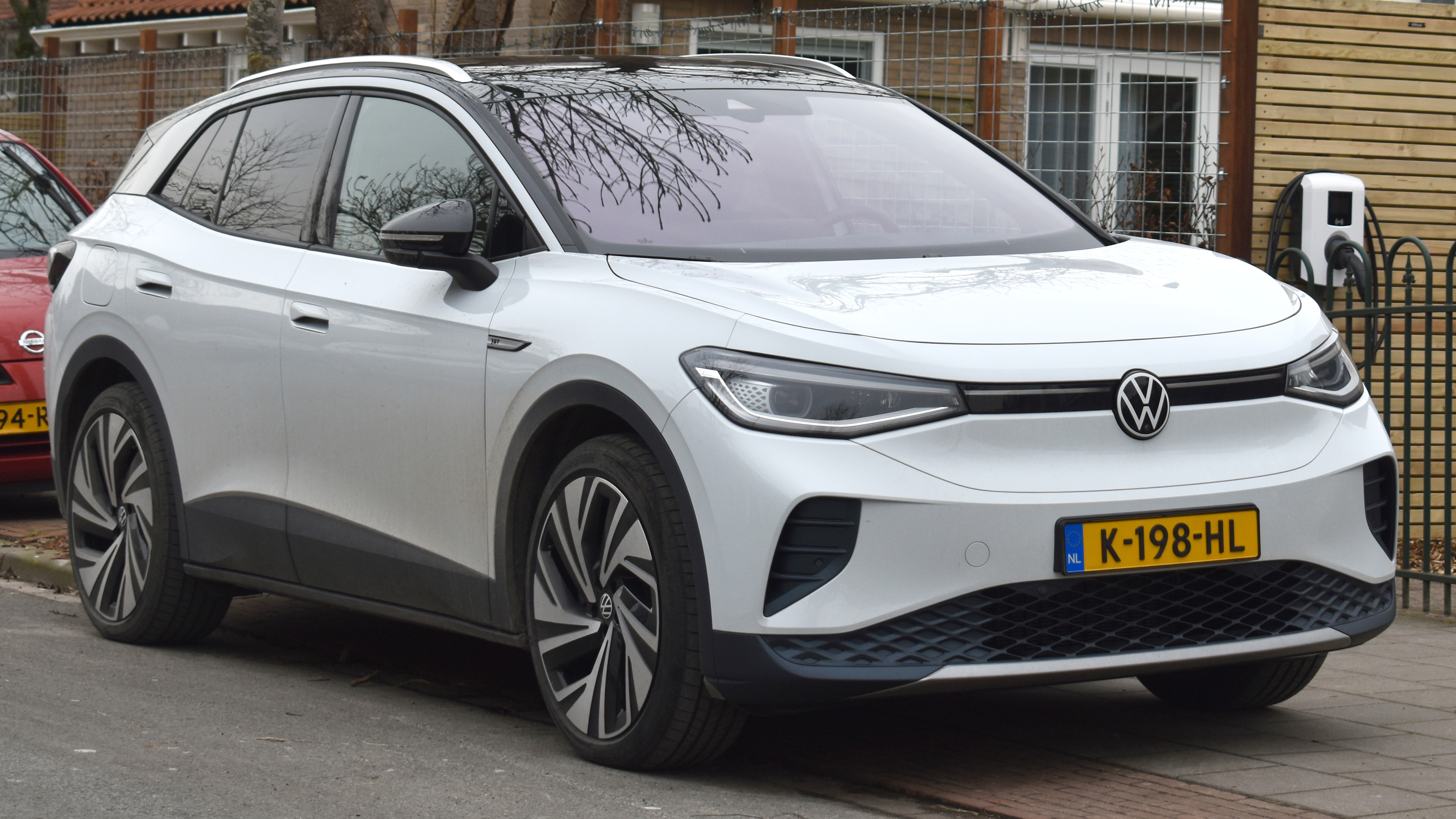
Volkswagen Id4S
"And our fastest and slowest selling cars list. I will be so curious if some of the EVs like Volkswagen ID4s, Ford Mustang Machis, if they are no longer on our slowest selling list next month,"
The Volkswagen ID.4 is a small electric SUV that runs on batteries instead of gas.
The Volkswagen ID.4 is an all-electric compact SUV from Volkswagen, part of their ID series focused on electric mobility.

Ford Mustang
"I will be so curious if some of the EVs like Volkswagen ID4s, Ford Mustang Machis, if they are no longer on our slowest selling list next month... I wouldn't be surprised that people see a Ford Mustang Mach-E with $10,000 off, $15,000 off. That might become a really attractive option as well."
The Ford Mustang Mach-E is an electric SUV that looks like a Mustang and runs on batteries instead of gas.
The Ford Mustang Mach-E is an all-electric SUV inspired by the Mustang sports car, combining electric performance with SUV practicality.
gas crisis of the 1970s
"...I remember in the 70s when there was a real gas crisis where the days you were allowed to fill up your car were based on the last number of your license plate. If the last number was an even day, you were allowed to get gas on even days. If it was an odd number, you were allowed to get gas on odd number days."
In the 1970s, there was a big problem where there wasn't enough gas for cars, so people had to take turns buying gas depending on their license plate numbers. This made people want cars that used less gas.
The gas crisis of the 1970s was a period marked by fuel shortages and high gasoline prices, leading to government-imposed rationing such as limiting fuel purchases based on license plate numbers. This event significantly influenced automotive design and consumer behavior toward fuel efficiency.
Request an Explanation
Heard something you'd like explained? We'll add it to this episode.
Sign in to request explanations for terms you heard.
Want to learn more?
Browse our glossary for plain-English explanations of automotive terms, jargon, and concepts.
Help improve this episode
See something that's not quite right? Our annotations are AI-generated and can sometimes miss the mark. Click the flag icon on any annotation to suggest a correction.