
Hoovie is Here! What is Mercedes Thinking? New Manual BMW M3! Gullwing Issues!
About this episode
The panel jumps between big debuts and real-world ownership headaches: Mercedes’ all-electric AMG GT four-door gets debated alongside Brabus’ twin-turbo V12. BMW’s manual-only, lightweight M3 CS sparks talk about collectability and pricing. Hoovie then ties a Gullwing restoration and engine woes to Mercedes Classic Center costs and “tax time” car sales, while also covering Car Wizard’s move to Los Cruces. The conversation rounds out with Hoovie’s V12 Cadillac partition sale, plus Q&A on auctions, sponsorships, and why short-form changed the game.

Mercedes AMG GT four door coupe
"The first big news story is this, which is the new Mercedes AMG GT four door coupe. I'm gonna just make this clear. There's a Mercedes AMG GT coupe. There's a Mercedes AMG GT four door. And now there's a Mercedes AMG GT four door coupe."
AMG is Mercedes’ performance brand. This “four door coupe” is basically a sportier-looking car with four doors, using a coupe-style sloped roof shape. The host is highlighting that it’s a new way to package the AMG GT name.
The Mercedes-AMG GT is a performance-focused model line from Mercedes’ AMG division, known for V8-powered sport-car character. In this segment, the host is talking about a new Mercedes-AMG GT variant with a four-door “coupe” body style, which is a marketing term for a sloped-roof sedan/hatch-like silhouette. The key point is that it’s a GT model but packaged in a larger, four-door format.
all electric
"I think the big thing here is it's all electric, right? So we were all hoping for V8s"
“All electric” means the car runs on electricity from a battery. There’s no gasoline engine doing the main work. The host is saying this new version might be going that direction instead of using a gas engine.
“All electric” means the vehicle uses an electric motor (or motors) and is powered by a battery, rather than relying on a gasoline engine. In the context of a performance model like the AMG GT, the host is implying the new variant may be moving away from traditional internal-combustion powertrains. That’s a major change because it affects everything from power delivery to how the car is packaged and serviced.
V8s
"I think the big thing here is it's all electric, right? So we were all hoping for V8s"
A V8 is a gasoline engine with eight cylinders arranged in a V shape. People like V8s because they usually feel strong and sound exciting. The host is saying fans were hoping for that, but the direction might be electric instead.
A V8 is an internal-combustion engine with eight cylinders arranged in a “V” shape. V8s are often associated with strong low-end torque and a distinctive exhaust sound, which is why enthusiasts commonly “hope for V8s” when a performance car is rumored to be changing powertrains. The host is contrasting that expectation with the idea that the new model may be all-electric.
horsepower
"[131.8s] It's a 1,153 horsepower, which sounds good, [134.8s] but it's all EV."
Horsepower is a number that describes how much power the car has. More horsepower usually helps the car accelerate harder, but it’s not the only thing that matters.
Horsepower is a measure of engine (or motor) power—how quickly it can do work. Higher horsepower generally helps with acceleration, but EVs can also deliver strong torque instantly, so real-world feel depends on more than just peak horsepower.
light bar
"[139.8s] I don't love the light bar across. [141.0s] The side to me looks Audi RS e-tron or Taycan,"
A light bar is a long strip of lights across the front or back of the car. It’s mainly for visibility and style, and some people like it while others don’t.
A light bar is a continuous strip of lighting—often spanning the width of the front or rear fascia. Automakers use it for a distinctive look and to improve visibility, but it can also be polarizing stylistically, which is why the host says they don’t love it.
circle lights
"[149.2s] The rear is weird with the circle lights. [152.2s] Who is cars 1,153 horsepower?"
Circle lights refers to round headlamp or taillamp elements used in the rear lighting design. The host calls the rear “weird” specifically because the circular lighting treatment doesn’t match their expectations for the car’s overall shape.
sub two-second category
"So I assume in the sub two-second category [158.7s] with like the Taycan Turbo S and everything else."
“Sub two-second” means the car can accelerate extremely fast—usually measured by how quickly it reaches a speed like 60 mph. They’re saying it might be in the same league as the fastest EVs.
“Sub two-second” is shorthand for extremely rapid acceleration, typically referring to 0–60 mph or a similar benchmark. The hosts are framing the discussed EV as potentially matching the quickest modern EVs.

Porsche Taycan
"You ever think about getting a Taycan? [174.0s] They're pretty cheap use."
The Porsche Taycan is Porsche’s electric car. They’re talking about how, as used cars, it might start to feel like a better deal.
The Porsche Taycan is Porsche’s all-electric performance sedan, known for its fast acceleration and high-tech electric drivetrain. In this segment, it’s brought up as a potentially “cheap used” option, which is a common shopping angle for EVs as they age.

Porsche Panamera 4S
"So like Panamera 4S I just sold. [181.4s] So, you know, that's to be in that under 20 junkie range."
The Panamera 4S is a higher-trim Panamera from Porsche. They’re referencing it as a car they owned and sold.
The Porsche Panamera 4S is a performance-oriented version of the Panamera, Porsche’s luxury sports sedan. The “4S” indicates a higher-spec trim and typically all-wheel-drive, and here it’s mentioned as the speaker’s recently sold car.
Amg Gts
"Yeah. But my newest car, I think the 2016 AMG GTS. Love the thing."
The AMG GT is a sports car made by Mercedes-AMG. It’s designed to be fun to drive and quick. The podcast is talking about a specific AMG GT model year they liked.
The AMG GT is a performance sports car from Mercedes-AMG, built for a more driver-focused, sporty driving experience. The podcast specifically mentions a 2016 AMG GTS and says they love it, which suggests the conversation is about personal ownership impressions. It’s a common topic among enthusiasts because it’s positioned as a true sports car rather than a luxury cruiser.

Mercedes-Benz AMG GTS
"But my newest car, I think the 2016 AMG GTS. [190.7s] Love the thing. [191.7s] I thought those cars wouldn't hold up. [193.7s] And they're actually pretty solid motors. [201.0s] It's the rear main leak is the big problem"
The Mercedes-Benz AMG GTS is a fast AMG V8 sports car. They’re talking about what can go wrong with it, like an oil leak near the engine’s rear, and what problems are less common than people fear.
The Mercedes-Benz AMG GTS is a high-performance AMG grand tourer built around a powerful twin-turbo V8. In this segment, the host discusses known ownership concerns—especially a rear main leak—and contrasts those issues with other potential problems like cylinder scoring and head-bolt failures.
rear main leak
"It's the rear main leak is the big problem [202.5s] because they're big boosted engines."
A rear main leak is an oil leak near the back of the engine. It’s a specific seal area, and fixing it can be more work than a simple gasket.
A “rear main leak” usually means oil leaking from the rear of the engine where the crankshaft exits the block. It’s often associated with the rear main seal, and it can be a messy, expensive fix because it may require significant disassembly to access the seal.
torque tube
"So it just pours out the back to drop the torque tube [205.5s] and all that stuff."
A torque tube is a structural driveline component that helps transmit torque while also controlling alignment of the drivetrain. In cars with certain layouts, a leak can be described as “pours out… to drop the torque tube,” meaning oil can end up near or onto that driveline structure.
head bolts
"None of the like a big like the head bolts [210.4s] of the older ones, you know, that kind of stuff."
Head bolts hold the cylinder head onto the engine block. If there’s a known issue with them, it can cause problems with sealing and engine health.
“Head bolts” are the fasteners that clamp the engine’s cylinder head to the engine block. The speaker references “head bolts of the older ones,” implying a known failure mode where those bolts can be a weak point on earlier engines, potentially leading to sealing problems.
title wash
"Part of the deal is we were going to title wash this. We were going to rewrite history, take a page from the Vin Wickey playbook here."
“Title washing” means trying to change a car’s paperwork so it looks like it doesn’t have a serious past problem. It’s basically a way to hide damage history from the next buyer.
“Title washing” is the practice of trying to hide a car’s bad history (like salvage or flood damage) by moving it through paperwork channels so the title no longer clearly reflects the issue. It’s often discussed as fraud because it can mislead buyers about the vehicle’s true condition.
rewrite history
"Part of the deal is we were going to title wash this. We were going to rewrite history, take a page from the Vin Wickey playbook here."
Here, “rewrite history” means changing the story the car’s records tell—so it doesn’t look as bad as it really was. It’s connected to the idea of “title washing.”
In this context, “rewrite history” is a metaphor for altering or obscuring a vehicle’s documented past—most likely via paperwork or title handling. It’s tied directly to the preceding “title wash” discussion.

Tesla Model S
"...Taycan, the RSU Tron, literally, I mean, even the Model S. The EQS."
The Tesla Model S is an electric car (it runs on batteries instead of gasoline). It’s a larger sedan that’s designed to go fast and travel farther than many older EVs. People talk about it when comparing it to other expensive electric cars.
The Tesla Model S is a full-size electric sedan known for strong performance and long-distance driving capability. It comes up in discussions alongside other high-end electric cars because it helped define what buyers expect from premium EVs. It’s often mentioned when comparing how different brands approach power, tech, and driving feel.

Mercedes-Benz EQS
"There's no official number. Because the EQS that I had was $120,000 new and I got it three or..."
The Mercedes-Benz EQS is an electric luxury sedan. It’s meant to be comfortable and high-tech, like a top-end Mercedes. The podcast is talking about pricing and how much one cost in a specific situation.
The Mercedes-Benz EQS is a full-size electric luxury sedan designed to emphasize comfort and technology. The podcast mentions the lack of an “official number” and references a specific purchase price, which suggests discussion about real-world cost and ownership history. It’s brought up alongside other premium EVs because the EQS is a key benchmark for luxury EVs.
Brabus
"oh yeah, this, this is the new, [356.3s] it's Brabis has their own vehicle now. [382.2s] It is, so Brabis is known for mostly tuning Mercedes."
Brabus is an aftermarket tuner brand best known for heavily modifying Mercedes-Benz cars. In this segment, the host highlights that Brabus is now building its own vehicle and that it’s traditionally been focused on Mercedes models like the G-Class and SL, but this one is based on an Aston Martin V12.
twin turbo V12
"Okay. [362.6s] It's a twin turbo V12 and it's like a long tail."
A twin-turbo V12 is a big 12-cylinder engine with two turbochargers. The turbos cram more air into the engine, which usually makes it feel stronger and more exciting.
A twin-turbo V12 is a V12 engine (12 cylinders arranged in a V shape) that uses two turbochargers to force more air into the engine. That typically boosts power and helps the engine feel more responsive than a naturally aspirated V12.

G-Class G Wagons
"...r mostly tuning Mercedes. They do everything from G wagons to SLs, but this is actually based on the Aston M..."
The G-Class is a luxury SUV from Mercedes. It’s known for being tough and capable on rough roads, while still feeling upscale inside. The podcast brings it up as part of a discussion about different vehicles and projects.
The Mercedes-Benz G-Class (often called the G-Wagen) is a rugged luxury SUV known for its boxy styling and off-road capability. The podcast mentions tuning and references that the conversation is about something based on an Aston Martin, which is likely about a specific project or comparison rather than the standard G-Class itself. Still, the G-Class is a frequent reference point because it’s a highly recognizable platform in the luxury SUV world.

Ford Mustang
"...win turbo V12. I saw in the front a little bit of Mustang, a little bit of a BMW eight series."
The Ford Mustang is a popular sports car from Ford. It’s known for a sporty look and for being fun to drive. People often mention it when talking about performance cars and design.
The Ford Mustang is a long-running American sports coupe/pony car built around affordable performance and style. It’s significant because it’s one of the most recognizable performance nameplates, and it often shows up in conversations about what “classic” muscle looks like in modern contexts. In the podcast context, it’s referenced as part of a visual comparison.

BMW 8 Series
"[412.2s] I saw in the front a little bit of Mustang, [414.4s] a little bit of a BMW eight series. [416.3s] The back is, is beautiful."
The BMW 8 Series is BMW’s luxury grand-touring coupe/GT line. Here it’s mentioned just to compare the look of the front end.
The BMW 8 Series is a grand touring-style BMW known for its long-hood, fastback proportions and upscale interior. In this segment, it’s used as a visual reference for the car’s front styling.
Pinifarina
"[418.8s] But whenever these tuning companies [420.9s] and silent companies start making their own cars, [423.5s] it usually runs off all the OEMs. [425.3s] So like pin and farina that used to style all the cars."
Pininfarina is an Italian company famous for designing car bodies. The discussion here is about how it changed after being bought and moved away from being a purely Italian family design firm.
Pininfarina is an Italian design and coachbuilding brand best known for styling many famous cars. In the segment, the host discusses how ownership changes affected its identity and business model.
EVBS
"This is cool. Yeah, I would say. This is a EVBS. [444.0s] This is a, this is a twin turbo V12."
“EVBS” sounds like a shorthand the hosts used, but it’s not a common, standard car term. The important takeaway from the conversation is that the car they’re talking about is not electric—it’s described right after as a twin-turbo V12.
“EVBS” appears to be a mis-transcription or shorthand for an EV-related trim/variant the hosts are debating. In context, they’re contrasting it with “twin turbo V12,” so the point is that this car is not an EV. If you hear “EVBS” in the episode, it likely refers to a specific naming convention for an electric or EV-focused version.
heavily depreciated
"this thing, can you see yourself owning this heavily depreciated? Sure. 77 will be made for the whole world."
“Heavily depreciated” means the car is expected to lose a lot of its value over time. The host is basically asking if it’s still worth owning if the resale value drops a lot.
“Heavily depreciated” refers to a car losing value quickly after purchase. Supercars and limited-run models can depreciate especially fast if demand is weaker than expected or if the market shifts toward different powertrains. The host is asking whether someone would want to own this car knowing it likely won’t hold value.
77 will be made for the whole world
"Sure. 77 will be made for the whole world. Probably none coming to America."
Saying “77 will be made” means only a tiny number of cars exist worldwide. That can make it more special, but it still doesn’t automatically mean it will be a good investment.
A production run of “77” means the car is extremely limited, which can affect both pricing and long-term desirability. Limited numbers can create collector interest, but they don’t guarantee value if the broader market doesn’t want that specific model or configuration. The host is tying this scarcity to expectations about availability (and where it’s sold).
KW coilover system
"And it's got KW coilover system, much like your Carrera GT."
A KW coilover system is an upgraded suspension setup. It lets you adjust how the car sits and how stiff it feels when driving, which can make handling better.
A KW coilover system replaces the factory suspension with adjustable shocks and springs. That lets the car’s ride height and damping be tuned for handling and comfort, often improving cornering response compared with stock suspension.

Porsche Carrera GT
"And it's got KW coilover system, much like your Carrera GT. Damn."
The Porsche Carrera GT is a very rare, very high-performance supercar. It uses suspension components that help control how it rides and handles. The podcast is calling out a specific suspension setup as part of what makes it notable.
The Porsche Carrera GT (commonly referred to as the Carrera GT) is a rare, high-performance supercar known for its extreme driving experience. The podcast specifically mentions a KW coilover system, which points to suspension hardware that affects ride and handling. It’s discussed because details like suspension setup are part of what makes these cars special.
special tires
"They did also get special tires made specifically for this, that have like the Brabis logo on them, which I assume no one's going to, like that's,"
“Special tires” here refers to tires made specifically for a particular car, including branding or unique sidewall markings. The hosts argue that this kind of customization can hurt resale value because it’s harder to source replacements and can make the car less appealing to future buyers.

Bugatti Veyron
"...o, but it's, it's a fairly standard size. All the Veyron for 60 grand. Yeah."
The Bugatti Veyron is a very expensive, extremely fast supercar. People talk about it because it’s rare and built for top-level performance. The podcast is also mentioning what it costs in the market.
The Bugatti Veyron is a flagship hypercar known for extreme performance and its place as one of the most talked-about cars of its era. The podcast references its “standard size” and pricing, which points to how it’s perceived in the market and among collectors. It’s often discussed because it represents a peak of engineering and exclusivity.
resale
"It's like, haven't we learned, do never do a special tire for a car. It just kills the resale."
Resale means what the car is worth when you sell it. If the car has parts that are hard to replace, future buyers may pay less.
Resale value is what a car is worth when you sell it later. The hosts’ point is that using highly specific, hard-to-replace parts (like special branded tires) can reduce buyer interest and therefore lower resale value.
coach building
"“I’m glad coach building is back and I’m glad it’s not EVs anymore.” ... “EVs is what makes coach building possible…”"
Coach building means making a car’s body in a custom way, instead of using a one-size-fits-all factory design. The hosts are saying that the way EVs are built can make this kind of customization harder, so they’re glad it’s happening again.
Coach building is the practice of creating custom or semi-custom vehicle bodies—often on an existing chassis—so the exterior design and proportions can be tailored to a specific buyer or style. In the modern era, it’s closely tied to how manufacturers and suppliers handle flexible platforms; the hosts are arguing that current EV packaging constraints (and the lack of them) influence whether coachbuilding is feasible.
rear wheel drive
"BMW has announced that they are going to make a lightweight rear wheel drive M3 CS that is manual only."
Rear-wheel drive means the power goes to the back wheels. That can make the car feel different when you accelerate and turn compared to cars that drive the front wheels.
Rear-wheel drive (RWD) means the engine sends power to the rear wheels. It typically changes how the car accelerates and handles compared with front-wheel drive, often making it feel more “balanced” for driving dynamics.
manual only
"BMW has announced that they are going to make a lightweight rear wheel drive M3 CS that is manual only. Whoa."
“Manual only” means you can only get the car with a stick shift. Some drivers prefer it because it gives you more direct control over gears.
“Manual only” means the car will be offered exclusively with a manual transmission, with no automatic option. For enthusiasts, that matters because manual gearboxes change driving feel and control, especially on track or spirited drives.
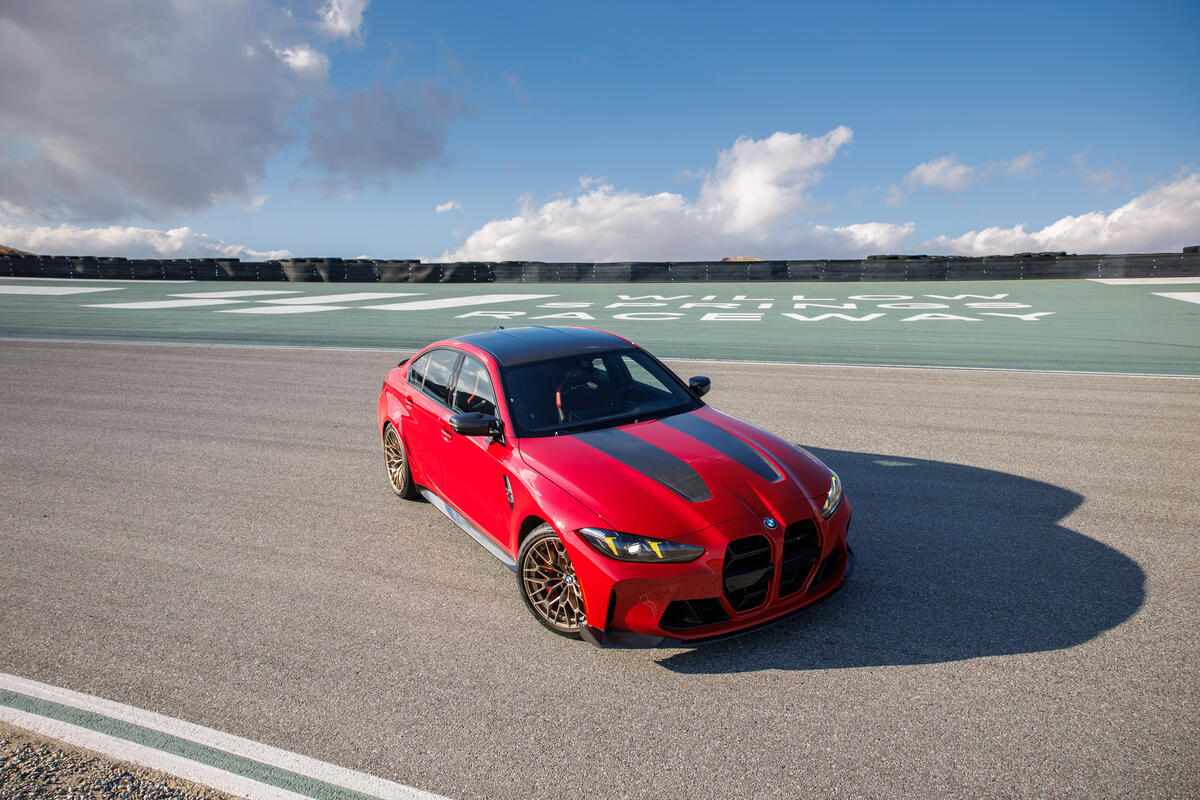
BMW M3 CS
"BMW has announced that they are going to make a lightweight rear wheel drive M3 CS that is manual only. Whoa. Which is a big deal because in the past, the CS cars were automatic only."
The BMW M3 CS is a more focused, lighter version of the BMW M3. Here, the big point is that BMW is planning to sell it with a manual transmission only, not the usual automatic setup.
The BMW M3 CS is a special, lighter, track-focused variant of the BMW M3. In this segment, the key news is that BMW is making it lightweight rear-wheel drive and offering it as a manual-only car, which is a major shift from prior CS versions.
CS cars were automatic only
"Which is a big deal because in the past, the CS cars were automatic only. It was all about like track performance, the manual only, and I think limited specifically to the United States, not offered overseas."
They’re saying that earlier M3 CS models were only available with an automatic transmission. This new plan is different because it’s going to be manual-only instead.
The segment contrasts the new M3 CS manual-only plan with prior CS versions that were automatic-only. That shift is notable because it changes who the model is aimed at and how it delivers performance and driver engagement.

Maserati Quattroporte
"So the Italians get away with naming a car the Quattroporte. It just means four door."
The Maserati Quattroporte is a Maserati sedan with four doors. The name is basically telling you it’s a four-door car. The podcast is explaining the meaning of the name.
The Maserati Quattroporte is Maserati’s four-door performance sedan, and the podcast points out that the name literally means “four door.” It’s discussed because naming and branding can reflect what the car is meant to be—an everyday-use Maserati with real seating practicality. The Quattroporte is typically brought up when talking about luxury and performance in a sedan format.
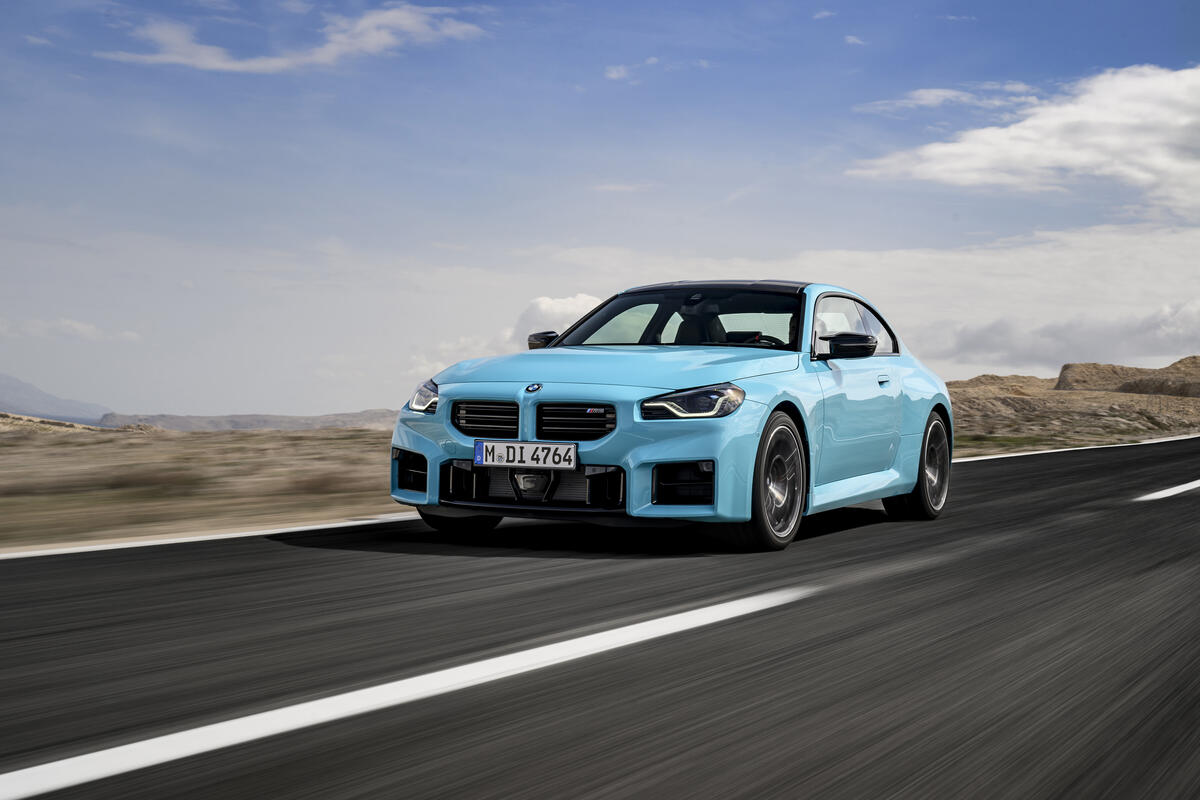
BMW M2
"...ke a goodbye to this generation of M3. And is the M2 CS holding, is it as far as like the last equival..."
The BMW M2 is a smaller BMW performance car. It’s built to feel sporty and quick without being as large as some other performance BMWs. The podcast is comparing different versions of BMW’s performance cars.
The BMW M2 is a compact performance coupe designed to deliver a smaller, more agile alternative to larger M models. The podcast references the M2 CS and compares it to the “last” M3 generation, which suggests a discussion about how these cars differ in feel and value. It’s relevant because the M2 line is often chosen by buyers who want track-capable performance in a smaller package.

BMW E90
"...bly well, but like a really well preserved manual E90. Okay."
The BMW 3 Series is a smaller luxury car that’s meant to feel sporty to drive. Some versions can be ordered with a manual transmission. In the podcast, it’s being praised for being in good, well-kept condition.
The BMW 3 Series is a compact luxury sports sedan that’s especially known for offering driver-focused handling, including manual-transmission versions in some years. It’s discussed here in the context of a well-preserved example, which matters because condition and maintenance history strongly affect how these cars feel and perform. The 3 Series is a common benchmark for “everyday” performance in BMW’s lineup.

BMW 1M
"A 1M is desirable for its own reasons separate from that, [684.1s] but like, oh, you know, like a regular E90 M3"
The BMW 1M is a rare, special BMW built for people who want a smaller, more fun-to-drive performance car. It’s known for being engaging rather than just fast on paper.
The BMW 1M is a limited-production, track-leaning version of the 1 Series built to be a fun, compact performance car. It’s often discussed as a “driver’s car” because it’s smaller and more analog than many modern turbo performance cars.

BMW E39
"There will be a cannon in the future that's obsessed with this as the E39. And honestly, E39 and five upgrade."
The E39 is the BMW 5 Series generation that’s widely loved for its classic driving feel and enthusiast-friendly character. In this segment, the hosts reference it as a benchmark (“obsessed with this as the E39”), implying they see similarities between the older 5 Series and the newer car being discussed.
MagRide
"Black wing and the MagRide seats. Yes. I love the G80."
MagRide is a system that lets the car adjust how stiff the suspension feels. It tries to balance a smooth ride with better handling when you push the car.
MagRide is a brand name for adaptive suspension damping that uses magnetorheological fluid to change shock stiffness quickly. The goal is to keep the ride comfortable while still improving control when you drive harder.

BMW XM
"And we get BMW a really hard time for like the XM [771.8s] and some of their cars that are just like awful. [774.1s] But then they're doing stuff like this."
The BMW XM is BMW’s big, sporty SUV. It’s meant to feel special and powerful, but the speaker is saying it doesn’t live up to what BMW is known for.
The BMW XM is BMW’s high-performance SUV, built around a powerful hybrid powertrain and aimed at buyers who want luxury plus big, aggressive styling. In this segment, it’s used as an example of a BMW model the host thinks misses the mark compared with BMW’s more traditional “driver-focused” identity.
Skunkworks project
"It feels like a Skunkwork project they would do [801.1s] in a strip mall in Huntington Beach. [802.7s] You know what I mean?"
A “skunkworks project” is basically a small, experimental project that gets made somewhat outside the usual rules. The speaker means BMW sometimes still does weird, enthusiast-minded stuff like that.
A “skunkworks project” refers to an unofficial, experimental effort—often small-team and somewhat secret—built outside the normal corporate process. Here, it’s used to describe how the speaker feels BMW’s niche, enthusiast-focused ideas still show up, even if the brand is mostly operating as a luxury company.

Dodge Road Runner
"like all those other things. The road runner with the big wing. All the stuff that, oh, it was..."
The Dodge Road Runner is a classic American muscle car. It’s known for being built for performance and for having a distinctive look. The podcast is talking about a version with a large rear spoiler/wing.
The Dodge Road Runner is a muscle car known for its bold styling and performance focus. The podcast references the Road Runner with a big rear wing, which is a common visual cue for certain enthusiast-preferred setups. It’s mentioned as part of a broader discussion about classic performance cars and their standout features.
Bangle butts
"And then time goes on and people are like, you know. Bangle butts. It was kind of emblem."
“Bangle butts” is a nickname for a BMW design style that makes the back end look more sculpted and rounded. The speakers are saying some of that styling didn’t age well.
“Bangle butts” is a nickname for the distinctive rear-end styling associated with BMW design chief Chris Bangle. Enthusiasts often use it to describe the pronounced, sculpted “bulge” look on certain BMW generations, and they’re debating whether that styling aged well.
Tyra Rack
"That's where Tyra Rack shines. [902.3s] You punch in your year, make and model,"
Tyra Rack is a tire-shopping platform that lets you enter your vehicle’s year, make, and model to show tires that fit. The host highlights that it includes filters (like wet traction and tread life) and also shows customer reviews plus its own test results.
wet traction
"You can filter by what matters to you. [913.0s] Wet traction, tread life, comfort, noise, price."
Wet traction means how well the tire can grip when the road is wet. Better wet traction helps you brake and turn more safely in the rain.
Wet traction is how well a tire grips the road when it’s raining or the surface is slick with water. It matters because tire compounds and tread patterns affect hydroplaning resistance and braking/turning grip in wet conditions.
tread life
"You can filter by what matters to you. [913.0s] Wet traction, tread life, comfort, noise, price."
Tread life is how many miles you can expect a tire to last before the tread wears out. Longer tread life usually means you replace the tire less often.
Tread life is how long a tire’s tread compound and pattern are expected to last before the tread wears down too far. It’s a practical metric because it affects replacement frequency and overall cost per mile.

Ford Sierra
"Not some random listicle from 2014. For the Ford Sierra RS500, I'd pick the Cotton Edel Extreme Contacts ..."
The Ford Sierra 3 Doors is a version of the Ford Sierra with a three-door body style. In the podcast, it’s connected to a special performance model called the RS500. The discussion includes details like tires, which affect how the car grips the road.
The Ford Sierra 3 Doors refers to a three-door version of the Sierra model line, and the podcast context specifically points toward the RS500. That matters because special editions like the RS500 are often discussed for their performance and collectability. The mention of tire choice also suggests the conversation is about how these cars are set up to drive.
road hazard protection
"Every tire purchase comes with two years [937.5s] of free road hazard protection. [939.7s] Nails, potholes, rocks, all covered."
Road hazard protection is coverage that helps if your tire gets damaged by things like nails or potholes. It can reduce the cost of fixing or replacing the tire.
Road hazard protection is a tire coverage program that helps pay for repairs or replacement if the tire is damaged by common hazards like nails, potholes, or debris. In this segment, it’s described as included with the purchase for a set period.
fuel filter
"And things like the fuel filter gets clogged [977.9s] or the PCV is all gunked up"
The fuel filter is like a screen for gasoline. If it gets clogged, the engine doesn’t get the right amount of fuel and can start running badly.
A fuel filter is a service part that traps dirt and debris before fuel reaches the engine. If it gets clogged, fuel flow can drop and the engine may run poorly or stall.
PCV
"And things like the fuel filter gets clogged [977.9s] or the PCV is all gunked up"
PCV is a valve system that helps keep the engine’s internal gases from building up. If it gets clogged with gunk, the engine can run worse and may start leaking.
PCV stands for Positive Crankcase Ventilation. It routes crankcase vapors back into the intake to reduce emissions and prevent pressure buildup; when it’s clogged with oil sludge, it can cause rough running and leaks.

Ferrari Off Ferrari
"I sure did. It's a one off Ferrari meant for a wealthy customer in Austin, Texas."
The Ferrari FF is a Ferrari designed for long-distance driving while still being very fast. It’s known for having all-wheel drive to help with traction. The podcast is mentioning a particular special car that was made for a specific customer.
The Ferrari FF is a grand touring Ferrari built for high-speed comfort and versatility, including all-wheel-drive for traction. The podcast mentions a specific one-off car meant for a wealthy customer in Austin, Texas, which highlights how some FFs were customized or delivered uniquely. It’s discussed because limited or special-order cars are especially interesting to collectors.
non hybrid
"It's going to be another one that the future Ryan from 20 years ago is lusting after saying this is the swan song of non hybrid V eight Ferraris. You know, all of the modern Ferraris are hybrid now. All."
“Non-hybrid” means the car doesn’t have an electric motor working alongside the gas engine. In this discussion, they’re saying this kind of non-hybrid Ferrari V8 is becoming the last of its kind.
“Non-hybrid” means the car does not use a hybrid system that combines an internal-combustion engine with an electric motor. The hosts frame this as a “swan song” because Ferrari is increasingly using hybrid powertrains in its newer cars.
swan song
"It's going to be another one that the future Ryan from 20 years ago is lusting after saying this is the swan song of non hybrid V eight Ferraris. I wonder if this goes down as like the last non-hybrid Ferrari ever."
“Swan song” just means “the last one.” In this context, they’re implying this could be one of the final non-hybrid Ferrari V8s before the brand moves on to hybrid-only cars.
“Swan song” is a phrase used to describe the final appearance of something before it’s replaced or discontinued. Here, it’s used to suggest this Ferrari V8 non-hybrid setup may be the last of its kind as Ferrari shifts toward hybrid technology.
Land Rover
"Land Rover and Jeep are doing something. JLR and Stalantis are, it's so it's an MOU memorandum of understanding"
Land Rover is the SUV brand. Here it’s mentioned because the company is trying to work with others and build cars in the U.S. to deal with tariffs.
Land Rover is the SUV-focused brand within Jaguar Land Rover (JLR). In the segment, Land Rover is portrayed as seeking collaboration and U.S. production partly to manage tariff risk.
Jeep
"Land Rover and Jeep are doing something. I hear."
Jeep is a popular SUV brand. The hosts mention it as part of the news about automakers working together.
Jeep is a major SUV and off-road brand. In this transcript, it’s named as part of the broader news about automakers discussing collaboration and production decisions.
JLR
"JLR and Stalantis are, it's so it's an MOU memorandum of understanding and it is non-binding."
JLR is Jaguar Land Rover, the company behind Land Rover and Jaguar. They’re being discussed because they’re looking at tariffs and how to build cars in the U.S.
JLR stands for Jaguar Land Rover, the British automaker group behind brands like Jaguar and Land Rover. The transcript ties JLR to discussions about tariffs and potential U.S. production, which is a common driver of partnerships and sourcing decisions in the auto industry.
Stalantis
"JLR and Stalantis are, it's so it's an MOU memorandum of understanding and it is non-binding."
Stellantis is a big car company that makes lots of different brands. Here, they’re mentioned because they’re talking with Jaguar Land Rover about working together.
Stellantis is a major global automaker formed from a merger of Fiat Chrysler Automobiles and PSA Group. In the transcript, it’s discussed in the context of a collaboration with JLR (Jaguar Land Rover), which is relevant because it affects how cars and supply chains might be coordinated across brands and regions.
MOU memorandum of understanding
"it's so it's an MOU memorandum of understanding and it is non-binding. So like basically there's no formal commitment here"
An MOU is basically a “we’re thinking about working together” agreement. If it’s non-binding, it doesn’t legally lock anyone into doing it.
An MOU (memorandum of understanding) is a document that records an agreement in principle between parties. In this case it’s described as non-binding, meaning it signals intent to cooperate but doesn’t legally force either side to follow through.
tariffs
"Land Rover goes looking to avoid tariffs. Land Rover goes looking to help build some cars in the States and who do they find Chrysler?"
Tariffs are taxes on imported products. If tariffs change, car companies may decide to build more locally to avoid paying those extra taxes.
Tariffs are taxes a government places on imported goods. In automotive deals, tariffs can strongly influence where cars and parts are built, because companies may shift production to avoid extra import costs.
Chrysler
"Land Rover goes looking to help build some cars in the States and who do they find Chrysler?"
Chrysler is a car brand/company from the U.S. The hosts mention it because Land Rover is looking for a partner in America.
Chrysler is a well-known American automaker brand historically associated with Fiat Chrysler Automobiles. The transcript uses it as the “U.S. equivalent” partner Land Rover ends up talking to, which matters because brand and corporate relationships can shape production and supply-chain decisions.

Type 00
"...is problems. Well, maybe they'll help produce the type 00 Jaguar that no one wants."
The podcast mentions the “Type 00” as a Jaguar model that may have trouble getting people interested. It’s being discussed in the context of potential problems and low demand. The key point is that it’s not expected to be a big hit.
The “Type 00” in the podcast context appears to refer to a Jaguar project or model name that’s being discussed as something people may not want. The mention is tied to “problems” and the idea that it might be hard to sell, which is why it comes up in a conversation about market acceptance. It’s referenced as a potential future product that could face challenges.

Jeep Wrangler
"The four cylinders that are so bad in those Wranglers, are they going to end up in the, oh, oof."
The Jeep Wrangler is a popular off-road SUV, and this segment references a known reliability concern tied to certain four-cylinder versions. The hosts are using it as a comparison point for how a different brand’s new strategy could lead to similar “problems.”

Land Rover Defender
"Like Land Rovers are still British, even though they're building the defenders in Slovakia. They don't talk about that."
The Land Rover Defender is a tough, off-road SUV that’s been around for a long time. The hosts point out that even though it’s a “British” brand, some Defenders are built in another country, which can affect how people think about the car.
The Land Rover Defender is a long-running off-road SUV known for its rugged, boxy design and traditional 4x4 capability. In this segment, the hosts mention it being built in Slovakia, which matters because it ties production location to brand identity and supply-chain realities.
VIN
"Like Land Rovers are still British, even though they're building the defenders in Slovakia. They don't talk about that. The VIN still starts with S, they're still British."
VIN means Vehicle Identification Number. It’s like a car’s unique ID number, and parts of it can hint at where and how the car was made.
VIN stands for Vehicle Identification Number, a unique code assigned to each car. The first characters can indicate things like the manufacturer and country/region of origin, which is why the hosts mention that the VIN “still starts with S” to argue the cars are still treated as “British” in identity.
tariff workaround
"That's a pretty good theory actually, [1304.0s] that it's a tariff workaround. [1305.6s] Maybe they're going to bring back the NAS Defender 90."
A tariff workaround is a way companies try to avoid paying extra taxes on imported goods. Here, the hosts are guessing a company could adjust how it brings vehicles to market to reduce tariff costs.
A tariff workaround is a strategy companies use to reduce the cost impact of import taxes (tariffs). In this context, the hosts speculate that a manufacturer might change sourcing, assembly, or logistics to avoid or lessen tariff charges.
Land Rover Defender 90
"Maybe they're going to bring back the NAS Defender 90. [1307.9s] I doubt it."
The Land Rover Defender 90 is a smaller, shorter version of the Defender. People like it because it keeps the classic, rugged off-road vibe, and the hosts are debating whether Land Rover would reintroduce that style.
The Land Rover Defender 90 is the shorter-wheelbase version of the Defender, known for its classic off-road look and rugged, body-on-frame roots. In the context of this episode, it’s being discussed as a potential model Land Rover might “bring back,” implying a return to the traditional lineup rather than newer variants.
JD Power Vehicle Dependability Study
"Boy, these three cars are like, [1340.7s] JD Power Vehicle Dependability Study, the bottom three. [1345.5s] It's like literally a picture of the podium [1348.4s] of the low three finish of VDS."
The JD Power Vehicle Dependability Study (VDS) is an industry survey that measures how dependable vehicles are based on reported problems over a set ownership period. In the episode, the hosts reference it to argue that certain models rank at the bottom for dependability.

VW ID buzz
"The VW ID buzz. ID buzz took 26 model year off because they needed a clear inventory. It's back for 27. But they've got a genius fix to solve that sales lump. The genius fix is they're adding a pop top bed situation..."
The Volkswagen ID. Buzz is an electric van from VW. Here they’re talking about VW changing the van’s setup—adding a camper-style bed idea—to help it sell better. It’s basically VW trying to make the van more appealing to people who want a road-trip/camping vehicle.
The Volkswagen ID. Buzz is an electric van built on VW’s ID electric platform, designed to feel like a modern take on the classic Microbus. In this segment, they discuss how VW is adjusting the ID Buzz lineup and packaging to address inventory and sales timing. The “pop-top bed”/camper idea is a key part of how VW is trying to broaden the ID Buzz’s appeal.
clear inventory
"ID buzz took 26 model year off because they needed a clear inventory. It's back for 27."
“Clear inventory” means getting rid of existing cars already sitting at dealerships. Companies sometimes do this before bringing a model back or changing the lineup. The speaker is saying VW paused the ID Buzz to sell through what they already had.
“Clear inventory” is a sales strategy where a manufacturer reduces or sells off existing stock before introducing or continuing a model. In practice, it can mean pausing a model’s production or limiting availability so dealers aren’t stuck with unsold units. The speaker uses it to explain why the ID Buzz was delayed for multiple model years.
pop top bed situation
"But they've got a genius fix to solve that sales lump. The genius fix is they're adding a pop top bed situation or maybe it's not a pop top, just a bed situation. The roof doesn't come up."
A “pop-top” refers to a camper roof section that lifts up to create extra headroom or sleeping space. When paired with a bed setup, it turns a van into a more practical weekend-camping vehicle without needing a full hard-sided camper shell. The speaker is describing VW’s camper-style packaging idea for the ID Buzz.
Westphalia
"Let's do a Westphalia version. Let's do a camper version. This is that all over again."
Westfalia is a company known for converting Volkswagen vans into camper versions. When someone says “Westfalia,” they usually mean that classic VW camper style with a built-in setup for camping. The speaker is saying VW is aiming for that same vibe with the ID Buzz.
Westfalia (often misspoken as “Westphalia”) is a camper conversion brand best known for transforming Volkswagen vans into factory-style campers. The name is strongly associated with classic VW camper setups, so referencing it signals the speaker’s idea of bringing back that “vanlife” concept for the ID Buzz. In this segment, they’re comparing the ID Buzz’s camper direction to the earlier Euro-van era.

Tesla Model X
"because I have the old Model X that's before the battery heating and all that stuff, [...] And in the winter, without this heating, it is atrocious."
The Tesla Model X is an electric SUV. The big point here is that in winter, the battery doesn’t perform as well unless the car uses extra heating, so the usable driving range can get much worse.
The Tesla Model X is an all-electric SUV known for its large battery pack and real-world range that can drop sharply in cold weather. In this segment, the hosts discuss how battery heating affects winter range, making the car feel impractical when temperatures are low.
battery heating
"that's before the battery heating and all that stuff, [...] And in the winter, without this heating, it is atrocious."
Battery heating is what warms the battery in cold weather. If the battery stays too cold, it can’t provide energy as effectively, so you can’t drive as far.
Battery heating is the system that warms an electric vehicle’s battery pack so it can deliver power efficiently. Without it, cold temperatures increase internal resistance and reduce available range, which is why winter range can be dramatically lower.
range
"It's the same battery size, about the same range as the old Model X. [...] Really, it's 100 miles in the winter."
Range means how far the car can go on one charge. In winter, the range often drops because the car uses more energy and the battery works less efficiently.
Range is how far an electric vehicle can drive on a full charge under specific conditions. The segment highlights that range changes with temperature—especially in winter—because battery performance and energy use (like heating) vary a lot.

Volkswagen Bus
"He lives in Ensenada. It's the Volkswagen bus capital of the world. [...] The only place they're selling these things."
The Volkswagen bus is a famous type of van from Volkswagen. In this segment, they’re using it as a local identity marker for Ensenada, where these vans are especially common.
The Volkswagen bus (often called the VW Bus/Transporter) is a classic van associated with the brand’s laid-back, people-moving heritage. Here, it’s referenced as a cultural touchstone for Ensenada, described as the “Volkswagen bus capital of the world,” implying a local market for these vehicles.
EV
"I don't know if we're ready for an EV [1495.2s] and all this plugging things in."
EV means electric car. It runs on electricity from a battery, so you have to think about how far it can go before you need to charge.
EV stands for electric vehicle, meaning the car is powered by an electric motor and a battery instead of a gasoline engine. The big day-to-day question is whether the battery has enough range for your typical trips.
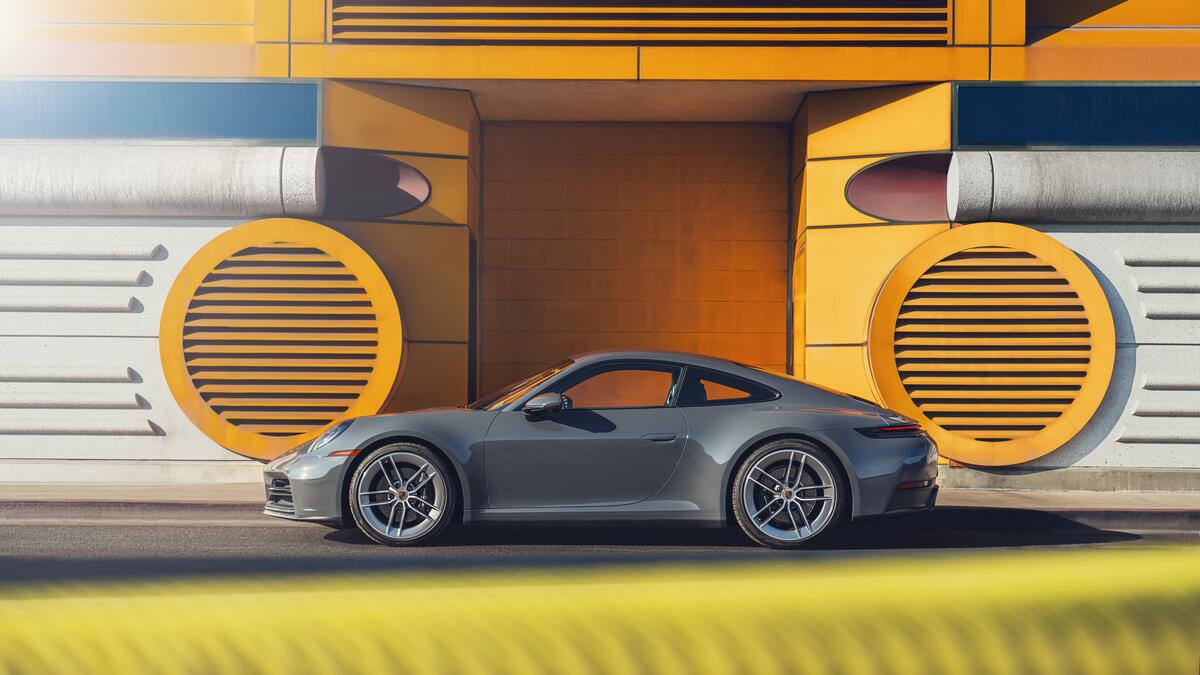
911 A911 Carrera
"We got some sort of old car, no one knows. We got a 911 Carrera. Yes."
The Porsche 911 Carrera is a classic Porsche sports car. It’s famous for its rear-engine design and for being a “do-it-all” 911 variant.
The Porsche 911 Carrera is the mainstream performance model in the 911 lineup, built around Porsche’s rear-engine layout and iconic handling balance. “Carrera” typically denotes a naturally aspirated or non-turbo 911 variant, depending on generation.

Rolls-Royce Phantom
"...nd of an FU also. Like I've chosen not to be in a Phantom and have that. Instead, I've got this sort of mor..."
The Rolls-Royce Phantom is a top-of-the-line luxury car. It’s designed to feel extremely comfortable and refined. The podcast is mentioning it as a luxury option someone considered but didn’t choose.
The Rolls-Royce Phantom is a flagship luxury sedan focused on maximum comfort, quietness, and high-end presence. The podcast mentions choosing not to be in a Phantom and instead having something else, which highlights how Phantom ownership is often about the top tier of luxury. It’s discussed because it represents the extreme end of “luxury first” motoring.

Mercedes-Benz S-Class
"And the S-Class got redesigned... So you had these two sitting next to each other... the new S-Class, so cool looking... This looks like the older S-Class... Basically had the wheels from the old S-Class... And then same with the electronics on the inside"
The Mercedes-Benz S-Class is Mercedes’ top luxury sedan. It’s famous for having the newest features and a very high-end interior, and here they’re talking about how different versions looked and felt to buyers.
The Mercedes-Benz S-Class is the brand’s flagship luxury sedan, known for being a technology showcase as much as a comfort car. In this segment, the hosts compare an older S-Class look to a redesigned one, and discuss how styling and interior tech affected what buyers chose.
O7 update
"And then same with the electronics on the inside, the O7 update was what, this had all the older, older pixels and like the cluster. Look at that interior."
They’re talking about an update to the car’s interior electronics—basically the software and screen/interface. The point is that newer updates can change how the screens and the dashboard look.
An “O7 update” here appears to refer to a software/infotainment generation update that changes the interior electronics. The host contrasts older “pixels” and the instrument cluster look versus a newer update, implying a noticeable UI/graphics refresh rather than a mechanical change.
Alcantara
"So look at the Alcantara on the side of the seat. Why?"
Alcantara is a soft, suede-like material used inside cars. It’s used to make the interior feel and look more premium.
Alcantara is a synthetic suede-like material used in car interiors for a soft, premium look and feel. It’s often used on seat inserts, headliners, and trim because it looks upscale and can be more visually distinctive than standard fabric or leather.
S partition
"There are some big money, 62. If it's an S partition, it can be a quarter million dollar car. Really? If in low mileage, there's been some 10,000 mile cars that have sold for that much."
An “S partition” is a divider inside the Mercedes-Benz S-Class that separates the front seats from the rear seats. It makes the back feel more like a private, chauffeur-driven space, which can raise the car’s price.
An “S partition” refers to the rear cabin separation in certain Mercedes-Benz S-Class variants—typically a divider between the front and rear seats. That feature is associated with a more chauffeur-style, limousine-like experience, and it can significantly affect value.
low mileage
"There are some big money, 62. If it's an S partition, it can be a quarter million dollar car. Really? If in low mileage, there's been some 10,000 mile cars that have sold for that much."
“Low mileage” means the car hasn’t been driven much. Cars with fewer miles are usually worth more because they’re seen as having less wear.
“Low mileage” means the car has been driven relatively little, which usually makes it more desirable to buyers. In the segment, the hosts connect low mileage to higher resale prices for expensive luxury cars.
clean car fax
"So full disclosure, this thing has a clean car fax, which is crazy."
A “clean Carfax” means the vehicle history report doesn’t show any big red flags. People use it to feel better about a used car before buying.
A “clean Carfax” means the vehicle’s vehicle-history report shows no major reported problems like accidents, salvage/rebuilt titles, or other serious events. It’s often used as a quick screening tool when shopping for used cars.
Massachusetts license plate
"Is that a Massachusetts license plate? Yes, it came from Massachusetts."
This just means the car was registered in Massachusetts. People sometimes mention the state because weather and road conditions can affect how a car ages (especially rust).
A Massachusetts license plate indicates the car was registered in that state, which can matter because different regions have different driving conditions and corrosion exposure. In used-car stories, the state of origin is often used to infer how the car may have been treated.
You never titled it
"Okay. You never titled it. I got an email from a fan."
A car title is the official ownership document. If someone “never titled it,” it means the paperwork for owning the car may not have been completed, which can make buying or transferring it harder.
Not having a car “titled” means the ownership paperwork hasn’t been properly completed through the state’s title system. That can complicate legal ownership transfer and sometimes signals the car’s history or handling wasn’t straightforward.
Cylinder scored
"It is billowing smoke on the back. Cylinder scored, it's 30 grand."
If a cylinder is “scored,” the inside surface of the engine’s cylinder has been damaged. That can hurt engine compression and power, and it often means costly repairs.
“Cylinder scored” means the inner wall of an engine cylinder has been scratched/scored, usually from metal contact or severe wear. It’s a serious mechanical issue because it can reduce compression and often requires expensive repair (like re-boring or replacing parts).
rebuilt motor
"56, a new motor. [2630.2s] A rebuilt motor is about 30 grand on these things."
A “rebuilt motor” is an engine that’s been repaired and put back together, usually with worn parts replaced. They’re talking about how expensive that is compared to other options.
A “rebuilt motor” is an engine that’s been taken apart and restored—typically with new or refurbished internal parts—then reassembled to run again. In the context of this segment, the host is comparing rebuild costs to the cost of a replacement engine.
no-hit car
"You're selling it as a project, isn't it? [2639.7s] No, no, that's the thing. [2641.6s] This is, because it's a no-hit car. [2644.0s] It can be somebody's track beater."
A “no-hit car” means the car hasn’t had a serious crash. People use that to describe a cleaner history, which can make it easier to sell and less risky to buy.
A “no-hit car” is a car that hasn’t been in a major crash or collision—so it’s not considered accident-damaged in the usual way. That matters because it can affect how buyers value the car and whether it’s likely to have hidden structural or electrical issues.
track beater
"This is, because it's a no-hit car. [2644.0s] It can be somebody's track beater."
A “track beater” is a car meant for track days. You don’t baby it—you expect it to get used hard and worn in.
A “track beater” is a car you use on track days where you expect more wear and possibly minor damage. The idea is to keep the car’s costs manageable by not treating it like a pristine street car.
LS swap
"They can do the LS swap thing. There's all the case swaps, those all these things."
An “LS swap” is when someone replaces the original engine with a GM LS V8 engine. It’s popular because those engines are common and there are lots of parts and guides for them.
An LS swap means replacing a car’s original engine with a GM LS-series V8 (often from a Camaro/Corvette). It’s popular because the LS engines are relatively affordable, plentiful, and have strong aftermarket support for wiring, cooling, and performance parts.
case swaps
"There's all the case swaps, those all these things. But they could make, because it's not a hit car, it could be a really good track car."
“Case swaps” here sounds like swapping big drivetrain housings (like transmission parts) to make a custom build work. Enthusiasts do it when they’re trying to fit or upgrade the drivetrain for a project car.
“Case swaps” in this context refers to swapping major drivetrain components—most likely transmission/transaxle “cases” or related housing parts—into a different setup. People do it to solve fitment, strengthen a drivetrain, or adapt a different gearbox/engine combination for a build.
Porsche 997
"Or if somebody wants to be the first person to restore 997, you know, take it in their garage. And Porsche people are so nuts. Like, I've seen, they're still underscored 997s."
“997” is a Porsche 911 generation from the 2000s. People like it a lot, and it’s often restored or turned into a track car.
The Porsche 997 is the internal generation name for the 911 produced in the mid-to-late 2000s. It’s a popular target for enthusiasts because it’s seen as a sweet spot of classic 911 feel with modern usability, and it’s also a common platform for restoration and track builds.
cylinder scoring
"And it sold for 44,000 with cylinder scoring, needing a 30 grand engine refill."
Cylinder scoring means the inside of the engine cylinders got scratched or worn. That can hurt engine health and may require major, costly repairs.
Cylinder scoring is damage to the inside surface of an engine’s cylinders, usually from metal-to-metal contact or lubrication problems. It can reduce compression and oil control, often requiring expensive engine teardown and repair.
water pump
"Good luck with that. Water pump goes out. So, what's it at right now?"
The water pump moves coolant through the engine to keep it from overheating. If it fails, the engine can run too hot and get damaged.
The water pump is the component that circulates engine coolant through the cooling system. When it fails, the engine can overheat, and the repair can be more involved depending on how the pump is packaged in that specific car.
butt for every seat
"In the industry, we say there's a... Butt for every seat. There's a butt for every seat. Someone will want it for the exact purposes that you described."
They’re using a saying to mean that there’s probably someone out there who will want this car, even if it’s not ideal for everyone. In other words, the right person will buy it for the right reasons.
“Butt for every seat” is a car-market saying meaning there’s a buyer for almost any vehicle, even one with flaws. The hosts use it to argue that a niche buyer will want the car for the exact reasons they described.
Request an Explanation
Heard something you'd like explained? We'll add it to this episode.
Sign in to request explanations for terms you heard.
Want to learn more?
Browse our glossary for plain-English explanations of automotive terms, jargon, and concepts.
Help improve this episode
See something that's not quite right? Our annotations are AI-generated and can sometimes miss the mark. Click the flag icon on any annotation to suggest a correction.
2 community members have helped improve this episode.