
How Richard - This 'Normal' Guy Built a £10,000,000 Car Collection From Nothing
About this episode
Richard Groves tells a rags-to-hypercar story built on discipline, cash flow, and “going back to go forward.” Starting with £300 at 19 in mobile phones, he scaled Active Digital, then lost everything in his early 20s due to liability and bankruptcy. A near-fatal crash at 26 became a turning point. He explains how he buys undervalued cars (P1, Aventador, Ferrari 509 GTO) and lakes, using low-deposit financing and asset growth, while staying grounded and focused on helping people. The episode blends business strategy, risk management, and obsession with fishing and cars.
Check out Tweak: https://www.tweakuk.com/What does it really take to rebuild your life… when you’ve lost everything?In this episode, Richard opens up about the moments most people never see — from going bankrupt at just 22, to nearly losing his life in a devastating car crash, to building success from nothing more than £300.But this isn’t just a story about money.It’s about pressure. Identity. Obsession. And what happens when you finally achieve everything you thought you wanted… and it still doesn’t feel enough.Don’t forget to subscribe to our channel for more exciting content about your favourite shows and celebrities. Hit the bell icon to stay updated on all our latest episodes👍 Like, Comment, and Share this episode. Join our discussion in the comments sectionCheck out Tweak: https://www.tweakuk.com/🔗 Follow Us:Instagram: @Roadtosuccessofficialpodcast@benedictfowler
seatbelt
"...my head being outside the car and I'd snap the seatbelt and my head went out the side window."
A seatbelt is what keeps you from flying forward during an accident. In a crash, it can be the difference between staying in the car and being thrown out.
A seatbelt is the primary restraint system that keeps occupants secured during a crash. In high-impact incidents, proper belt use can prevent ejection and reduce serious injury risk.
rally cars had gone up in value
"And then this one come about because I've done quite well and some of the rally cars had gone up in value."
They’re saying rally cars became more valuable. Cars with a racing background can be especially interesting to collectors, which can push prices up.
The speaker attributes part of the opportunity to rally cars appreciating in value. Rally-bred cars often gain collector interest due to motorsport heritage, limited production, and documented performance history.
maximise the money from investing in a car
"and I had a chat with Dan at VVS and I said, I really want to try and see if I can really make this work and maximise the money from investing in a car."
They’re talking about treating a car like an investment. With rare cars, value can go up if the right people want them and the car is kept in great condition.
This frames the car as an investment rather than just transportation. In the collector market, returns depend on rarity, demand, condition, provenance, and how the market values specific models over time.
undervalued
"I was on the plane and I thought, I think these are undervalued and I'm going to try and get one"
They believed the cars were priced too low compared to what they should be worth. The idea is that if more people want them later, the price can jump.
The speaker says they believed certain cars were “undervalued,” implying they expected the market price to rise. This is a common collector-investing thesis: buy when demand is temporarily low or when pricing doesn’t yet reflect future scarcity.
bankruptcy
"But you did lose pretty much everything in your twenties, but it wasn't your doing. You went bankrupt, but it wasn't you, right?"
Bankruptcy is what happens when you can’t pay your debts. It’s a legal way to deal with money problems, and it can wipe out a lot of what you have.
Bankruptcy is a legal process used when someone can’t repay debts. In the context of the story, it explains why the speaker lost most of their money in their twenties, even though they say it wasn’t their fault.
liability
"And that obviously, because I signed the back, I was liable, then they come to me and then I just didn't have enough money to pay that..."
Liability means you’re legally responsible. In this case, signing the card made the speaker responsible for the spending, so the debt came back to them.
Liability means legal responsibility for a debt or obligation. Here, because the speaker signed the back of a card, they became responsible for the charges, which then led to the debt being pursued.
breaking in
"And unfortunately the mobile phone business, they kept breaking in and they broke in and they took the phones and destroyed the office."
“Breaking in” means someone illegally entered the office or property. It’s a serious situation that can cause a lot of stress and disruption.
“Breaking in” refers to forced entry—criminal intrusion into a business or property. For listeners, it’s relevant because it explains why the speaker’s car purchase story is tied to a stressful period and why they were rushing to the office.
rolled
"[952.3s] And that was because I'd gone off the road [956.0s] and rolled and I'd snap the seat belt [958.9s] on my head when out the side window. [962.3s] Finished there, luckily on all four wheels [965.8s] in that car and I thought, well, that's it."
“Rolled” here describes a rollover crash, where the vehicle rotates and ends up on its side or roof before coming to rest. The speaker notes they finished “on all four wheels,” which is a common outcome in some rollovers where the vehicle rights itself. Rollover events are especially dangerous because occupants can be exposed to intrusion and ejection risks, making restraint systems critical.
self-funded
"And still even now, the business could probably be bigger, but we were always trying to be self-funded."
“Self-funded” means the business (or a build) is financed using its own cash flow rather than relying on outside investors or loans. In the context of car projects, this often affects how quickly you can buy parts, pay for labor, or complete upgrades.
minimize stress
"There's no business owner out there who's not going to be losing their health through stress because 100% no stress is the biggest killer of everyone, of everything. And if you can try and minimize that down..."
They’re basically saying stress is dangerous, and the way to handle it is to stay patient and manage your time better. The goal is to keep stress from taking over your life and decisions.
The speaker frames stress as a major health risk and suggests minimizing it through patience and better time management. In a performance context, reducing stress can improve decision-making and consistency, especially for business owners under constant pressure.
efficient with your time
"you've got to be patient, you've got to be really efficient with your time because you've only got so much time."
They’re saying you should use your time efficiently because you only have so much of it. That helps you stay calmer and more in control.
The speaker connects efficiency with time management to reducing stress and improving outcomes. For listeners, this is a mindset concept: treating time as a limited resource and planning actions to avoid overwhelm.
driving in thinking
"Every day, driving in today is the same thing. Actually driving in thinking, I feel like I've got nothing."
“Driving in thinking” is used as a metaphor for how the mind can feel like it has “nothing” even when reality is different. It ties into the earlier point about internal stress and perception rather than external circumstances.
cash flow
"So my skill is cash flow. So we have in the accounts team, all I'm interested in is cash flow, cash flow, and cash flow. I want money up front to make money."
Cash flow is basically whether a business has money coming in regularly. If you focus on cash flow, you want the business to make money quickly so you can keep funding what you’re doing.
Cash flow is the movement of money in and out of a business over time. When someone says they focus on cash flow, they mean they prioritize businesses that generate money quickly (often “money up front”) so they can reinvest and grow.
Saracens
"which we just created, which was with Saracens in 2011. They said to me, can you build a sports app?"
Saracens is a rugby team in England. They’re mentioned because the speaker worked with them to create a sports app.
Saracens is a well-known English rugby club. Mentioning Saracens in the context of creating a “sports app” highlights a partnership/branding angle that likely helped drive adoption and revenue.
offers of $1.5 million
"And then that's, I've had offers of $1.5 million for that car. The P1, again, was a million."
They’re saying people have offered around $1.5 million for the car. That’s a sign the car is extremely valuable to collectors.
Mentioning offers at $1.5 million highlights how certain cars can become high-value assets, not just transportation. It also implies strong market demand and scarcity, which are key drivers of collector-car pricing.
£10,000 deposit
"What was the story of the £10,000 deposit? Yeah, so the Focus RS."
A deposit is money you pay upfront to reserve a car before you fully buy it. Collectors use deposits to make sure they don’t lose the car to someone else.
A deposit is an upfront payment to secure a purchase, often used when buying limited or desirable cars. In car collecting, deposits can be a way to lock in a deal quickly—especially when the buyer expects competition or future price appreciation.
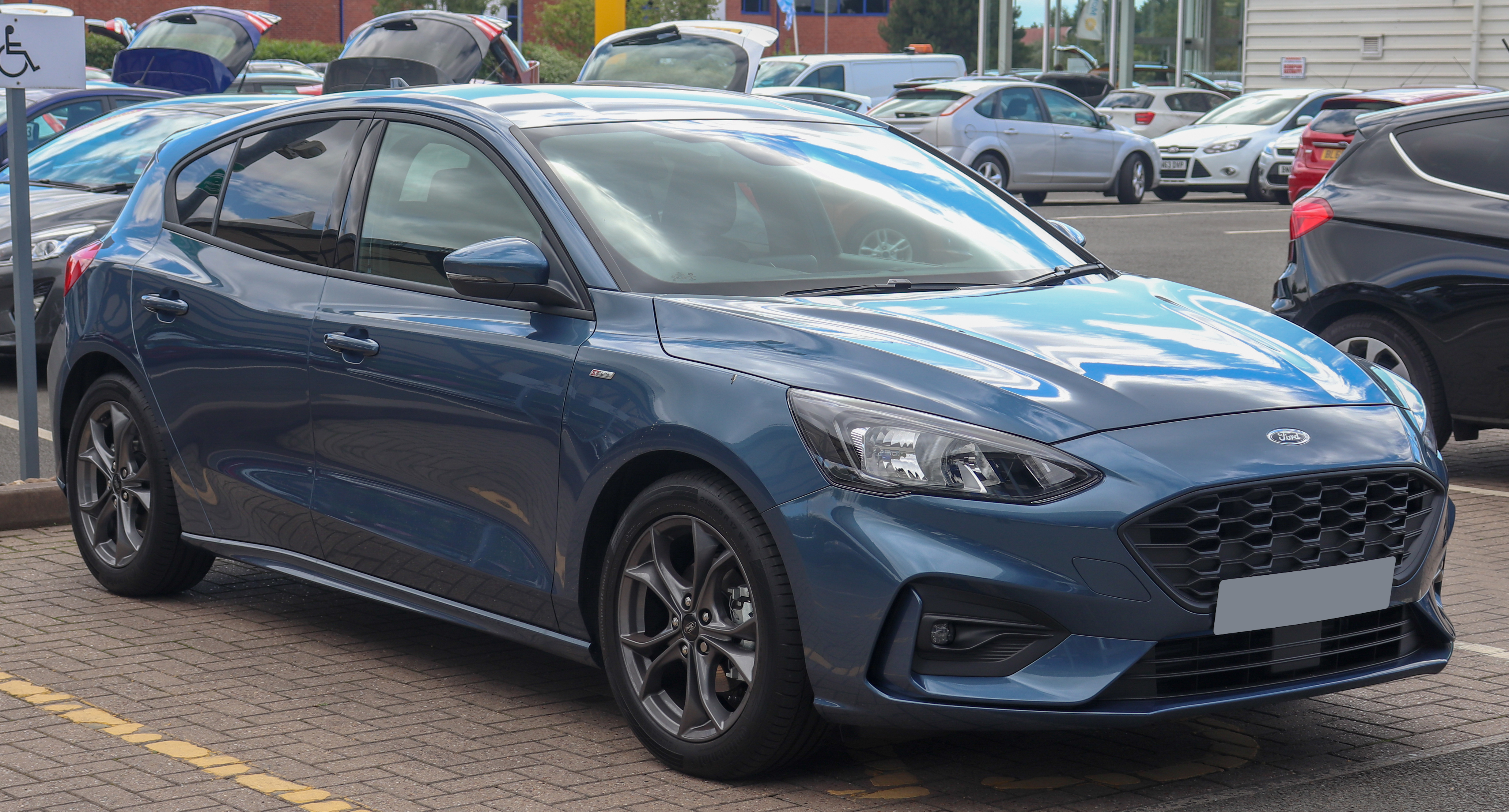
Focus RS
"Yeah, so the £10,000 deposit? Yeah, so the Focus RS. So it was one evening, I was on my phone and I really wanted to buy more rally cars..."
The Ford Focus RS is a special, fast version of the Ford Focus. It’s popular with car people because it’s built for grip and performance, and here it’s one of the key cars Richard wanted for his collection.
The Ford Focus RS is a high-performance hot hatch known for rally-inspired all-wheel-drive and aggressive tuning. In this segment, it’s the specific car Richard wanted to buy alongside other rally-focused vehicles, showing how his collection strategy centers on motorsport heritage.
rare car
"But it'll be more than that because that car is so rare and people aren't buying new cars."
If a car is rare, there aren’t many of them for sale. That usually makes it more valuable because collectors have fewer choices.
When a car is described as “so rare,” its market value is often driven by scarcity rather than just performance. Limited supply can keep prices high, especially if buyers are competing for the same few examples.
lockdowns
"[2180.7s] I'd never show anything. [2182.2s] And then in 2020, [2183.2s] when we had the lockdowns, [2184.5s] I thought, I need to show what I've done."
Lockdowns were the COVID-era rules that kept people at home and limited events. Here, the speaker is saying that during that time they decided to be more open about their success.
“Lockdowns” refers to government restrictions during the COVID-19 pandemic that limited normal social life and business operations. In this context, the speaker says the lockdown period changed their mindset and pushed them to publicly show what they’d built.
cars and coffee
"I am doing deals with people at cars and coffee and different things."
“Cars and coffee” is a casual car meet where people show up to talk about cars—usually in the morning. It’s also a good place to meet other car people and make business connections.
“Cars and coffee” is an informal car meet-up format where enthusiasts gather in the morning to talk about cars, share builds, and network. In this context, it’s being used as a place where the speaker makes connections and does deals.
track days
"And then I try and think, how can I enjoy myself to the maximum when that's like the track days? So I'll work hard track day, track day, track day."
A track day is when you drive your car on a race track with other enthusiasts. It’s meant for learning and having fun, not street driving.
Track days are events where drivers take their own cars to a closed circuit for practice and fun. They’re a common way to build real driving skills and test a car’s setup (tires, brakes, suspension) in a safe environment.
Shopify
"So it's very easy to set up a Shopify, do things like that, but there's a lot of regulation on stuff now."
Shopify is a website tool for selling things online. People use it to start an online shop faster than building a site manually.
Shopify is an e-commerce platform that lets people set up an online store quickly. In automotive-related businesses, it’s often used to sell parts, merchandise, or services without building a custom website from scratch.
only funding up to 80,000
"But actually in the world we're in with banks only funding up to 80,000 and the war's going on and all these different things. I want them behind me."
They’re saying the bank will only lend up to a certain limit. If the car costs more than that, you have to pay the rest another way.
This describes a lending cap—banks only financing up to a certain amount (here, 80,000). For expensive cars, that forces the buyer to cover the rest with cash, additional financing products, or different lenders.
limited availability / other people can't have
"...I like owning things that other people can't have..."
The speaker is describing a key collector psychology: exclusivity. Owning a car that others can’t access (due to rarity, allocation, or price) can be more motivating than financial return.
buy it quickly before the price goes up
"I knew that 599 UTO was going to go up. I knew it. I had to go in there now, bought the car the next day."
They’re basically saying: if you think a car will get more valuable, you should buy it sooner rather than later. Waiting can mean paying more once more people want it.
The speaker is describing a “timing” strategy: buying a car while you believe demand (and resale value) is about to rise. In enthusiast and collectible markets, this often means acting before the broader buyer base catches on.
Going back to go forward
"Going back to go forward, that's a really interesting concept. I don't think people really think like that. They always think about going forward, going forward, going forward."
They’re saying sometimes you have to take a step backward—like selling things or simplifying—so you can move forward later. It’s about using what you have now to fund the next goal.
The speaker frames success as a cycle: you may need to “go back” (sell assets, reduce commitments, liquidate) to create resources for the next step. In car-collector terms, this often means selling or downsizing vehicles to fund the next purchase or long-term plan.
Downsizing from three cars to one car
"I've been thinking of pulling some money out, some cars to buy some lakes recently to go forward and it's like I want to go down from three cars to one car kind of is a really difficult concept but that's something"
The speaker highlights the tradeoff in reducing a car collection: selling multiple vehicles to consolidate into one can free up capital, storage, and maintenance burden. It’s “difficult” because collectors often value variety and emotional attachment, not just financial efficiency.
car value appreciation
"Do you ever when you're taking a large amount of money out to do something, do you think you have to justify it with cars that always go up in value rather than the ones you want to drive"
They’re basically wondering: if you spend a lot of money, do you feel better if the car is the kind that will be worth more later? Or is it okay to buy a car just because you want to drive it?
The speaker is asking whether spending big money on cars needs to be justified by choosing cars that are likely to increase in value. This is about “investment” thinking versus buying cars primarily to enjoy driving.
Request an Explanation
Heard something you'd like explained? We'll add it to this episode.
Sign in to request explanations for terms you heard.
Want to learn more?
Browse our glossary for plain-English explanations of automotive terms, jargon, and concepts.
Help improve this episode
See something that's not quite right? Our annotations are AI-generated and can sometimes miss the mark. Click the flag icon on any annotation to suggest a correction.