The Chevrolet Equinox is a popular Chevrolet SUV. Here it’s mentioned as the kind of car a buyer might walk in asking for, so the dealer needs to suggest comparable options.
A “four door sedan” is a car with four doors and a normal trunk. The point here is that the buyer asked for that exact type of car, so the dealer shouldn’t just swap in something totally different.
“EV market” just means the world of electric cars. The host’s point is that a dealer shouldn’t ignore what the customer asked for and just push an electric option instead.
The Ford Mustang Mach-E is Ford’s electric SUV. In this conversation, it’s used as an example of a dealer trying to steer someone away from what they asked for and toward something different—an EV.
Chevy is short for Chevrolet, a well-known car brand. They’re saying if the customer wants to look at Chevy too, it’s easy to send them to the next store.
MINI is a car brand that makes small cars. In this part, the speaker is basically arguing about whether that kind of product should be offered, not explaining how it works.
“High gross” means the dealer makes more profit on the car deal. If someone is rewarded for that, they may push for a higher price or better financing.
Term
ejectors
“Ejectors” here sounds like a specific part that helps a system work. The speaker’s point is that it broke a few months after the sale, and the dealership paid to replace it.
“Delivered” usually means the price includes getting the car to you (or to the dealership) instead of just the car itself. It helps you compare offers because some dealers may list extra delivery-related charges separately.
A dock fee is a dealer-added charge for moving the car from where it arrives (like a port) to the dealership. It can add to the final price, so it’s worth asking about and comparing across dealers.
The finance office is where the dealership handles the final paperwork and tries to sell extra add-ons. That’s where you might hear offers for extended coverage or other extras.
A warranty is extra coverage that can pay for certain repairs. At dealerships, they may try to sell an extended warranty, and you should check exactly what it covers and what it doesn’t.
Colluded pricing means dealers are acting together instead of trying to undercut each other. The host’s claim is that this keeps prices artificially high.
Direct-to-consumer means buying more directly from the manufacturer instead of going through a dealer. The host is saying that can limit dealer markups.
A monopoly means one group has so much control that it can influence prices. The host is arguing a small set of dealers has enough power to keep prices high.
The Nissan 100 NX is a smaller, sporty Nissan that was sold in some markets as a compact hatchback/coupe-style car. It’s not as common as many other Nissan models, so dealers may see different demand for it. That can affect how easy it is to find and what kind of deal you might get.
A market adjustment is an extra fee the dealer adds to the car’s price because that car is selling for more than usual. It’s basically the dealer charging more than the standard sticker price.
Toyota is the car brand being talked about. The dealer is saying some Toyota models sell so well that dealers may price them differently depending on the area.
A markup is extra money a dealer charges above the normal price. The host is saying markups are unfair when the car is common and you could get it for less by shopping around.
The Toyota Sienna is a family minivan. Here, the host is saying they can negotiate a much better deal by buying it outside California instead of paying extra markup in California.
The Toyota Supra is a sporty, performance car. The host is using it to show that you might be able to buy one close to the sticker price (MSRP) instead of paying extra dealer markup.
Window tint is a film put on the windows to reduce sun glare and heat. The host is saying that if a dealer is adding something like tint, the customer may feel the extra cost is fair.
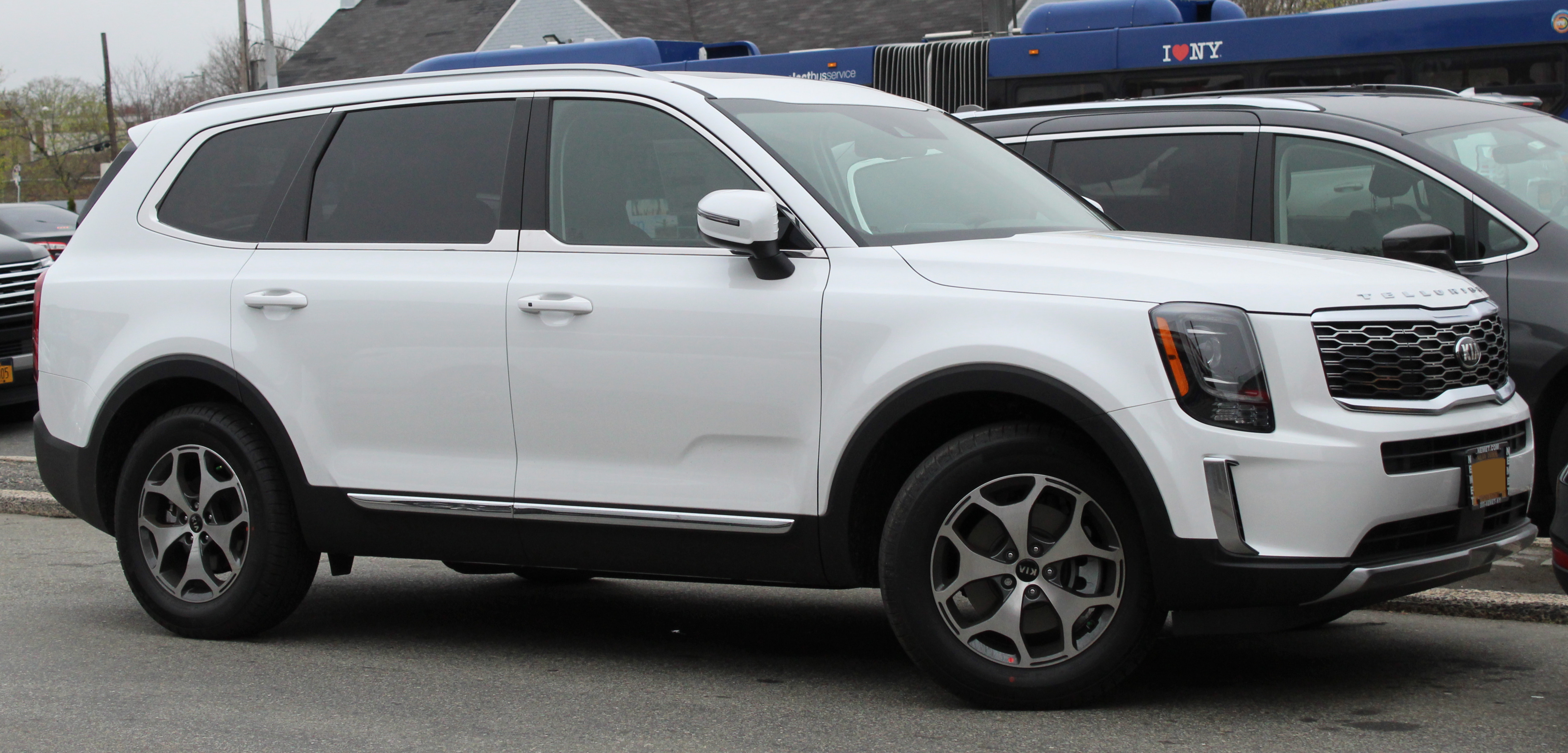
The Kia Telluride is a family SUV. The host is using it as an example of dealers adding big extra charges on top of the normal price.
Concept
federally mandated to not have competition
The host is claiming the rules make it harder for other businesses to compete with dealerships. If there’s less competition, dealers can often charge more.
“Out the door” means the final total you’ll pay when you drive the car off the lot. It includes the car price plus the extra fees and taxes, not just the base price.
A loan is money you borrow to buy the car, and you pay it back over time. The speaker is saying loans can involve financing more of the car’s cost than a lease does.
This means the dealer may charge you a higher interest rate than they could have gotten. A higher rate makes your monthly payment bigger, even if the car price looks similar.
The speaker is saying don’t just haggle about the interest rate. You want to make sure the whole deal is fair, not just one number that can be adjusted to make the payment look okay.
This means negotiating based only on what the monthly payment will be. Dealers can sometimes adjust other parts of the deal to reach that payment, even if the overall deal is worse.
Here, “deal” means the whole agreement—price, financing terms, and fees—not just one number like the monthly payment. The speaker warns that chasing the wrong number can cost you more overall.
The Toyota RAV4 is a compact SUV, meaning it’s a family-friendly car with a higher driving position than a sedan. It’s popular and commonly sold, so dealers often have deals to attract buyers. That’s why you might hear about negotiating a few hundred dollars off its price.
The host is talking about a sales style where the goal is to get the most money out of you. Instead of helping you pay a fair price, it focuses on squeezing the deal for profit.
Here, “flat” means the salesperson’s pay is more fixed and predictable, not changing a lot based on the exact deal details. The host is saying that can shape how they approach selling.
Market-based pricing means the car’s price is set mostly by what’s happening in the market right now—how many cars are available and how badly people want them. That can limit how much a dealer is willing to discount.
A pay plan is how a car salesperson gets paid. If their commission is set up in a way that rewards higher profits, they may push harder for a more expensive deal.
Franchise laws are rules that control the relationship between car makers and car dealers. They often make it harder for a company to sell cars directly to customers without using traditional dealer partners.
NADA is a dealer trade group in the U.S. that represents car dealerships. Here, they’re mentioned as taking legal action against companies trying to sell cars in a different way.
Scout is mentioned as a new company trying to set up a dealership-based sales effort. The host’s point is that it has faced major legal pressure from dealer groups before it could sell cars.
Rivian is an EV company. The point in this discussion is that it tried a sales approach that doesn’t rely on the usual dealer system, and that can trigger legal conflicts.
Lucid is an EV brand. The host is mentioning it as another company that tried to sell cars differently than traditional dealerships, but ran into legal obstacles.
LIVE
You know, we have an 899 doffy.
We don't have height.
899, brother.
899?
Yeah.
899, brother.
What happens when a customer says that?
They just keep calling the next one,
the next one.
Beautiful.
It's a beautiful business model.
I just say now.
That's it.
But a lot of people come in and, you know,
they watch TikTok, right?
They negotiate out the doors.
I'm vehicles that they can't afford,
but they just saw it on TikTok, right?
Guys, I'm going to basically do like an open debate,
right, on people that don't like me.
I want to genuinely hear what you don't like,
what do you think I do?
What do you diso...
Most importantly, what do you disagree with?
I have a lot of opinions.
If you guys don't know who I am, hi, my name's Tommy.
I negotiate car deals for a living.
My goal is to save you time, energy, and anxiety.
I save you money, but that's a byproduct.
I charge a flat fee of a thousand bucks.
I handle everything for you.
So if you are that person,
and you want to call in and talk to the stream,
there's some rules.
First off, you have to Instagram DM me.
I'm sorry.
That's going to be the way you're going to do that.
You're going to DM me proof that you work at a dealership
and your dealership name.
I'm doing this because you're calling into my stream.
There could be some crazy things that are said,
and I need ammunition.
I need, and we will audit to make sure you actually work
at that dealership.
We might call your dealership.
I have a team working behind the scenes before we actually call in.
So just know your job's probably on the line
if you do something.
So if you do something stupid on my stream,
I will do something stupid in myself.
Let's get some topic points,
some things that I believe right off the bat.
I'll give you some debate points right off the bat.
Direct to consumers should be an option.
Boom.
I think it's going to be better for the customer experience
and it'll make dealerships more money.
Secondly, I believe finance shouldn't be able to mark up product
or the very least needs to disclose
that they have to mark up that product.
Three, I think that dealership
should have to advertise the price they're paying.
Four, I believe that the majority of dealerships
naturally have their self-interest more
than they do their consumer's interest.
I believe that if you go to a dealership
over 75% of the time,
it will be a situation where you will pay more by thousands
because you're trusting that person.
Dealerships are not entitled to a profit.
I'm going to give you all the crazy things that I believe.
You guys ready?
We'll make sure it's working.
We'll get an introduction.
Everybody be nice.
That's the rule.
It's the first time it's happened.
An incoming call.
I'm going to call this person back.
Let's go.
Rock and roll.
Hey, Dwayne.
How's it going?
This is Tommy.
Tommy, how are you doing, man?
I'm glad we could finally get together and do this.
Yeah, absolutely, man.
If I'm remembering correctly,
you made a video pretty angry about what I was doing.
I think you called me a scam in that video.
Correct me if I'm wrong.
And I invited you to check out what delivered was
and you wanted to be on this debate
and here we are.
That's kind of where we're at, right?
Yeah, absolutely.
What's your title of the dealership?
What do you do?
How long have you been in the industry?
I'm a salesperson.
I've worked here for two years,
but I've been in sales for probably eight.
Okay, perfect.
Awesome, man.
Well, I'm going to give you the floor as yours here.
I'm made pretty open here.
There's a certain thing you disagree with me on.
If there's something you want to have a conversation
if you believe I'm a scam artist,
whatever you want to voice your opinion on,
I'm more than want to talk about.
Yeah, absolutely.
Well, scam artists might be a stretch.
So let's kind of clear that up real quick.
But let me ask you this, Tommy.
Just kind of, you know, you used to sell cars, correct?
You were in the sales business?
Sales and finance was the majority of my career.
So I did finance for five and a half years,
sold cars for a little over a year.
Okay.
So what do you think of many should be on a vehicle?
So what do you think that a dealership
should charge a mini for?
Like, are sorry, pay a consumer or pay a salesperson?
As a salesperson, what should be the minimum
that they can make per vehicle on a new car?
I mean, if you want my honest opinion,
I think the answer is you pay about $120,000 a year salary
and that's enough to get really highly qualified people.
And you can maybe do a bonus
based on the company's performance.
But I think anytime you're doing a commission-based
sales pay, you start having priorities shift
of what you're actually working for.
But I believe a high salary,
you get really quality people that are trained.
You get people that are willing to stay longer than,
hey, you know, I think 80% of the industry
quits in the first year.
And I think, you know, some people quit at $120,000,
but I think you get a lot of really quality people there.
Okay. So that kind of throws me for a loop.
I did not expect you to say that.
And the reason I didn't expect you to say that
is because you just said that you believe
that salespeople should make,
let's say 100,000 a year even, right?
80, 90, $100,000 a year.
And I would say that most salespeople
probably make less than 60.
Correct. But that's, in my opinion,
that's a conversation like people get very mad at me.
You're gonna, I'm taking money from your pocket.
There is somebody that you could be talking to
that is making all of the money that is very happy,
that probably drove whatever they did to work
and they probably aren't in their office.
And that's your owner, right?
Your owner is making money, your business model.
And this is what I think the problem is right now
is new car sales, the entire business model
is reliant to actually lose money
to be its most successful model.
Okay. But Tommy, you're throwing me for a loop here
because yesterday you were talking about how,
you know, car salesmen, they lie to cheat and steal
to do anything off of a, for a commission.
And they'll, you know, they'll withhold truths
and, and bin gray areas and all this.
And now you're saying like, no salespeople
do put in the work. They, you know,
they do spend the four or five hours with the client
to make sure that they know how to use the vehicle
and that the vehicle is the correct vehicle
for that person. You see what I'm saying?
No, first off, I don't think there's any moment in time
where I said all car salespeople lie, cheat and steal.
Now, just because the current business model,
it rewards that I have to tell consumers
as of right now, the current business model rewards salespeople
telling you whatever they can to sell you a car.
That's not good. If I was to reinvent the model,
I'd reinvent the model. So that wasn't.
So you wouldn't be afraid to say, Hey, you want to talk to you.
You care about reliability. You don't really need a truck.
I think you need a rat for dude.
Like let's be, let me call a spade a spade.
And you're still getting paid the same.
I mean, that's what I truly believe
it makes more sense. But no, I've never said any all dealership
should lie, cheat and steal.
They do have a conflict of interest
when you're a commissioned salesperson,
you have a conflict of you want to sell
and have the customer pay the most amount of money
while also trying to get the sale.
So it's a balance and you don't know what side they're on.
Right. I can tell you this time,
I work at a Ford store because I love Ford, right?
So there's, there's never an instance where someone comes in
and the, you know, they say, Hey, I'm looking at a,
I'm looking at an equinox.
What do you have that would compare to an equinox?
And of course I'm going to lead them to the explore, right?
And I'm going to go over the whole explore line with them.
Yeah, but that's fair. Okay. Okay.
So let's just say, Hey, I want a 55
a four door sedan. I would love a V8.
I would love something that's high luxury, high end.
What do you got for me?
Well, we don't have a sedan.
And I'm assuming that's why you hit it at, you know, sedan.
But as far as a sedan, if you wanted to go four door sedan,
I guess I could bring you over to the EV market
and show you the Mach-E, you know, electric Mustang.
But that's not luxury.
The idea behind it is you're not actually solving my problem.
Instead, you're going to try to find something on your lot
that makes sense. It does that.
And that's not really what I feel like a serve in the customer, right?
In reality, what makes the most sense
is probably to go German at that point.
The budget's not a concern. You go that, you go German.
That's what that solves.
General rule of thumb is that that's going to sway
what you can and can't offer.
You can love Ford. I love BMW.
But in reality, BMW doesn't make sense
for every client walking through the door.
Right. But tell me, if they came on my lot,
they're there for a reason, brother.
Maybe they're just looking.
They want to see what Ford has to offer, right?
So it's my job to make sure that I show them
what Ford offers in that category.
And if they say, hey, I still want to go check out Chevy,
I can just say, hey, there's a Chevy store right next door.
Walk over, have a conversation with them, come back.
Let's see which one works better for you.
What makes the most sense?
Yeah. Yeah. And I'm fine with that.
That's your current job, right?
Like I'm not saying that you're current.
You just asked me in a perfect world, what is a mini, right?
And I'm saying in a perfect world,
I don't believe many should exist.
If you're talking about like in current,
I'm not going to give you a solution
that's going to put makeup on a problem
and fix the current issue.
Nothing fixes.
There's no mini that makes the most sense.
You know, I don't even believe a salesperson
should be a commissioned salesperson.
If you want to pay per vehicle, that makes more sense.
You pay a $500 per vehicle, that can make logic.
I don't like the idea of a commissioned salesperson
because it rewards a customer or rewards a salesperson
to convince somebody to spend more money
for you to make more money.
And that's just not how it works
because it doesn't actually help the business model
because in reality, the more units you sell,
you actually are making the owner more money
if they can hit stair step programs.
So that's where I think the issues lie.
As of right now, you have a lot of salespeople,
correct me if I'm wrong, your store,
that, and again, I don't know how your commission worked,
but there's plenty of salespeople that I know
that make 10 to sell 10 to 15 cars a month.
They high gross everybody.
They don't work crazy amount of hours,
but everybody, they basically get everything on
and they're happy with it.
But that doesn't help the business model, right?
That 10 to 15% is really only helping themselves.
They aren't getting that manager
or the owner to the stair step program,
which is why I think the stairship program
should be more available.
Right. How often do we have a stair step program?
I mean, it depends on what your owner's
telling you what they're not.
I mean, we're probably the most transparent dealer
that I have ever been to,
and I've bought well over 50 cars, right?
But also too, man, everybody's on a budget,
so trying to solve a problem while earning a living
is also a tactic too, right?
Sure. Okay. So let's just say,
if I paid you $120,000 today to sell car or salary,
you never had to worry,
but how many, I mean, obviously you have a quota
you got to hit because you got to keep your job.
You're only taking care of it,
making the best experience possible for the customer.
You paid 120,000. Is that not enough for you?
So, well, we don't make nowhere near 120,000,
and we also don't have a quota.
So I know where you're headed with that,
but this dealership isn't like that.
No, no, but I'm saying, so let's just say hypothetically,
I bought your entire dealership. Boom.
I pay you $120,000 to be the best damn car salesman you are.
I want you to go through and know your product inside and out.
I want you to be better than everybody else,
and I'll be 120 grand for that.
You're not making that right now.
Would I imagine you would work harder
because that wage would be really good and guaranteed, right?
Sure. Yeah, I would say so. Sure.
And that's my entire point,
is the idea behind if you pay somebody a good wage
and you give them a good work-life balance
and you treat them with fair equity and respect,
they are going to, in turn,
make sure they are an expert at their field.
I think the idea, commission rewards, one thing,
commission rewards, if I convince the customer
to spend more money, I make more money.
If I give somebody a really good salary and say,
for you to keep this job of this awesome place you work,
where we have all of these benefits and all of these things,
all you have to do is be an expert at your field
and take care of every client that walks through that damn door.
You're going to take care of every client to work through the door.
And now this entire model changes on its head
because people aren't working to try to extract every dollar they can.
Instead, they're working to actually take care of consumers
and make them feel well-known.
I mean, it's not crazy to believe
that most car salesmen are very new in the industry
because they don't survive.
Your dealership might be different because you're a mom and pop,
but most dealerships quit in the first,
I think 80% of people quit in their first year.
Training is at an all-time low.
Most people don't know their product.
I mean, you've probably heard the phrase,
correct me if I'm wrong,
that customers know that our car is better than we do sometimes.
I think it's a crazy statement.
Well, that's not true here at all.
I mean, but at one point I want to bring up, right?
Because you talk about doing $100,000, you know,
pretty much a salary, which would be amazing.
But that's not real life.
But how would a dealership pay that $100,000
when I'm looking at an invoice right here?
And I was hoping you'd pull me on the live stream
because I have a ton of paperwork
because I did my homework for this very event.
You know, how can they survive
when the MSRP of this vehicle is $34,525
and invoice is $33,8356
with a profit margin of $693.44?
And then people like yourself,
you know, I'm not trying to be toxic,
but people like yourself call me
and they have with me all these prices.
I mean, there's already nothing there, Tommy.
What am I supposed to cut?
I mean, even if I were to sell that car to MSRP
with 300 pack on top of invoice,
if they were to pay me a straight percentage
without a mini, I would make $98.36.
So how can a dealership survive
when there's not enough profit margin
between Ford and the dealership?
Let me ask you a question.
If you're at a restaurant, right,
and you eat a delicious meal,
best steak you've ever had,
how much do you think the dishwasher makes?
The dishwasher probably makes $12 an hour.
Well, and do you think the dishwasher
is the reason people go to the restaurant?
Well, probably not, you know, in the forefront.
But I mean, he has to do his job
to make sure everything is, you know,
clean and moving right along and sanitary.
And, you know, I mean,
he's got his role in the position for sure,
whether he's overlooked or not,
it's a different discussion.
Yeah, absolutely.
They're not the moneymaker at all.
But by all means, they're a vital part of the business.
I believe new car sales is that way.
The reason why new car sales exist is they're a loss leader.
They do lose money on a lot of cars.
It's how the manufacturer has built
their entire business model for you to lose money.
Now you make that money up
in stair step programs, service parts,
and your owner gets all of that money, right?
Your owner is getting all of that money.
And again, your owner, your dealership might be a little smaller,
but it's still the same concept.
Your dealership is making money
in other parts of the business.
And in my opinion, that's why a salary makes sense, right?
I have somebody that literally their only job
is to ensure my client has a good experience.
They don't call dealerships.
They don't do this.
They only ensure the phone gets answered.
They are not bringing me money necessarily,
but they're enhancing my customer experience
and they're a vital part of my business.
They get paid the same as the person
who's actually negotiating deals.
For being honest about it,
the way that car sales would make money
is on the use side of the house.
Are we on the same page there?
I mean, every dealership is a little bit different
on where they're making their money.
Some people argue they got bigger lots.
A used car doesn't make as much.
But I mean, general rule of thumb
is use makes more than new, yes.
But here's the problem, right?
You were talking about it yesterday.
The admin fees and the hiking rate,
like how that's horrible and no one should do it, right?
Well, I mean, that's literally the only way
to make money on the front end anymore.
It's hiking rate and some kind of admin fee.
And I'll tell you what,
used to probably what, four or five years ago,
you could have a trade in, right?
Let's say the trade is worth 15.
We're going to offer them 13.
We're going to hold $2,000 on that.
We're going to put probably two grand in the car,
getting it all shined up, brakes, tires, whatever it needs.
Roll it out to the lot.
We're going to mark it up 2,500 bucks.
There's a profit margin, right?
We got a little room to play,
a little room to get beat up,
and we're still going to turn a profit, right?
Well, that's not the way it works anymore, Tommy,
because everybody comes in
with a car max or a car monocoque,
and they are $300 on the backside of retail.
And what do we do with it?
We can't even take it through the shot
because we'll be over our profit margin.
The profit margin will be negative
by the time we get it to the lot.
How do you combat that?
If it's so horrible and horrendous
for an owner to owe to dealership,
but they make no money,
they don't get anything,
and everybody hates them, why did they do it?
Well, I think at one time, Tommy,
this used to be a money printing machine.
I think we could both agree on that, right?
And I bet you they could sell that dealership
for millions upon millions of dollars
if you want to do it today.
Right, but here's the thing
that you may not know, Tommy.
Like I said, I work for a b***h, right?
So we get, not only do we get heckled
by big corporate stores willing
to take a net deal or even a loss, right?
But on top of that, Tommy,
we have to sit there, we have to combat Ford.
Ford s***, our allocation dropped 50%,
even though we're 125% of stair step.
We hit our sales goal, our regional goals,
our nation's goals.
I mean, and we still get hammered by Ford.
So maybe it's a corporate versus family-owned
dealership problem.
And if that's true,
then maybe the American dream is dead, Tommy.
I mean, the American dream isn't dead.
I mean, all of the things that you've said,
if you just look at me, I've proven wrong.
Everybody in this room knows
how much profit I make per cardio.
They're all okay with it.
What you have to do is,
instead of thinking that way,
is consumers have problems.
They don't like carbine.
They don't like it at all.
So how do I solve problems
to make it easier, faster, more transparent for carbine?
And consumers will happily pay that.
Consumers will happily pay you.
And there's gonna be some consumers
that still are gonna be,
oh, damn, you know what?
I don't wanna do it.
I wanna, Ryan and Ryan,
they're not your customers, dude.
That's okay.
That's let somebody else have that customer
that wants to get 20% off the car
and take the people that do value,
hey, I'm gonna get you out in 10 minutes.
You can buy this car and 10 clicks on your phone,
and they get super easy.
I'm gonna spend five hours with you.
You pay a premium to deal with me,
but guess what?
You're gonna get the best experience,
and that's what you own.
That's what you sell.
And you can make more profit.
Don't try to compete with the big dogs.
Own your own lane.
So what's really the difference
between you and us then?
I mean, truthfully here,
I haven't talked about how much money I'm making
and I need to make a profit.
So everybody needs to charge or pay me
X amount of money.
I solve consumers problems.
They pay me.
They literally, they pay you $1,000, Tommy,
to negotiate a deal that won't give them.
Yesterday, I did a deal on a crazy deal
that you said there was no way it's possible
to get that deal.
So the deal that you think is good,
I don't agree is good.
And that was $4,000 in difference
that you said the deal was impossible.
I remember that conversation.
You said that's impossible.
My client's driving that car right now.
I literally have a printed out invoice
to show you exactly why I said that, right?
The only thing that makes sense
is that they have a regional discount in that area.
I don't remember what the area was,
but that is literally the only way that it's possible.
You lost $4,000 to do it.
That's what you did.
You lost $4,000.
He's the number 11 Ford store trying to be in the top 10.
And that's why.
It's a different game, but again,
that my clients are going out to try to get the best deal.
So the mom and pop doesn't make as much sense.
They don't deal with the car salesman.
So they don't see the benefit.
They deal with us.
So because of that, this is what this is all about.
We're going to get the best deal for our client,
where that is.
And yeah, the dealership was,
but this is exactly what I'm saying.
Your situation, your dealership can't always guarantee
I could pay you a thousand bucks and say,
hey, give me the best deal possible.
And your best deal possible
might not even be the best deal in the market.
It might be $4,000 off compared to what is
because you haven't gone and done the research.
And that is why people pay us
because I have no bias for you to shop here, here, here, here.
I'm going to do the research,
give you all the information to say you pick.
I understand what you're saying,
but I'm telling you from a small town dealer, bro,
not a major corporate store.
And sorry, I'm under the weather.
I'm a little congested.
You're good.
But from a small town Ford store,
it is impossible for us to be able to compete.
I mean, you're talking about taking a $4,000 loser.
Was it a 25 or a 26?
It's 26, but here's the thing is what I'm saying for.
Stop competing.
Like this is the thing that I understand right now.
My client base, I target people who value their time
more than they do their money.
The amount of people that call me say, Tommy,
I don't really care about the time part.
If you pay me a thousand bucks,
I have a deal for $4,000 off.
If you can save me $6,500, I'll be happy.
I decline that client every day
because they care more about money.
They're not my client.
You will make more money
if you stop trying to chase the person
that is going for that deal.
But instead say, hey, guess what?
When you deal with my dealership,
we are by far the best experts
when actually helping you out.
We don't charge on the fees.
We don't do this.
And I know my product better than anybody else
and I can prove it.
Talk to your consumers that are actually paying money
and say, why would you pay money?
And for the people who aren't asked them the question,
give them a fair deal that makes sense.
Don't charge a $5,000 fee for that.
But by all means, give a deal that makes sense
and compete with that market.
So many people want a million different customers.
That's not the answer.
The answer is find people that will happily pay your prices
because they see the value in what you do.
Yeah, but Tommy, that's what we already do, brother.
We don't have a dentist.
We don't hike rape.
We don't do the scammy nonsense in the back end.
We are the literally, we are literally
the most transparent dealer with easy going people.
We don't, there's not a single person in this dealership
that does high pressure closes.
And I saw a timeshare for a little while.
So I get the high pressure closes.
We take care of our people.
We go above and beyond.
Like in that video that I kind of, you know,
ranted on you a little bit, you know,
I literally had a customer that I sold a CRV.
We're not a Honda dealer, right?
How to CRV?
Like three months later, the ejectors went bad.
We replaced those ejectors for free out of our pockets, right?
Like we, I worked for one of the best dealerships
on the East coast and we can back problems left and right,
dude, over pricing.
I promise you when you leave this line,
I'm going to give you the best breakdown
of how this vehicle operate and what each and every button
and each and every feature does.
And look, I'm in the retirement community.
These people come back to me 34567 times
because they forget or they got a new phone
and they can't get it paired up.
I mean, Tommy, I'm telling you, bro, like
we are putting in the work and we're watching the sales decline.
Why?
I'll tell you, I'll tell you one of the reasons why.
And I'll like just be true for a second.
I appreciate you doing all these things to be transparent.
That's one step forward.
But just for a moment here, even if it was a moment of weakness,
you saw what I was doing, you saw my video.
And instead of you stopping and saying,
why in the world are people paying this guy?
You made a video saying that I was a scam,
that I was horrible and that I worked so much harder
and this guy spends 30 minutes of work
without doing any research on what I do.
There are plenty of clients out there that do value
the idea of a great customer experience
and somebody just being honest with them.
You need to target those people.
Sales are declining because you're not solving people's problems.
That is the answer.
If I go to your website now,
can I buy a car without ever talking to you?
Do I have that option?
No, you can't.
Why not?
You guys are already the most transparent dealership possible.
Why can't I just go through
and buy in 10 clicks?
Why isn't your owner invested money
that in 10 clicks I can buy a car from your dealership?
And if I want, I can talk to nobody,
but for $400, I can add on a package
where I'll deliver the car right to your house
and I'll go through the entire car from you.
No sales pitch, no nothing.
That's just something that a dealership could do
to find a way to add profit.
Make a 10-click option.
If you want a salesperson, it costs 400 bucks.
When that person comes back, they saw the 400 bucks
and they know, okay, cool.
I want an expert to walk through the car.
It's gonna be 400 bucks.
But that guy knows this car better than anything else.
These are ways, the dealership model
needs to think of new ways to make money
that are transparent, make sense,
and the consumer sees value.
And if they don't see value, don't charge them.
We know that we're a little behind the time
with DocuSign and all these new things that have came out.
And I get it, right?
Like if you want to do a transaction online 100%,
it's not possible at this dealership, right?
Why not?
And I get it, because we're old fashioned.
That's your way of sales and declining.
Like that's, I'm gonna cut you off,
but you're talking about DocuSign right now,
we have people that are using AI
to like basically do an entire cardio for you.
But like this is where we're like,
your business needs to advance,
otherwise you were doomed to fail.
Like your business needs to go out with the times.
But I mean, that's not gonna change.
Then you'll go out of business, you'll lose your job,
and you'll be asking for a new one.
And we'll probably be hiring in a few months if you need one.
We deliver an experience that I think is second to none.
I don't think anybody can compete.
You know, you're talking to somebody that drives Ford.
My wife drives a Ford.
We've owned almost every variation of Ford you can think of.
So like product knowledge and knowing what we're doing
and what we're selling is not the problem.
But you know, we are transparent.
You know, we have an $899 doc fee.
We don't have-
$899, brother.
$899?
Yeah, $899, brother.
$8.99, you can't say it's transparent.
It does not cost you $900 into a doc fee.
What are we doing?
Yeah.
The transparent, I'm charging a $900.
But Tommy, you're charging $1,000 for your fee,
but I charge an $900.
Dude, what are we doing?
Well, I don't know what that $1,000 is.
I haven't done a tour, but I do look forward to doing a tour.
I mean, you can just go through all of our reviews
or online and you can go find, I mean, there's, I mean,
or you can just watch, watch.
If you watch the videos, you see what we deal with
and you don't have to deal with that.
But I mean, Tommy, they can come negotiate their own deal
and walk out and not have to pay you $1,000.
I mean, they're literally just wasting $1,000.
So have you ever gone out to eat before?
Yeah.
Was that, was that a waste, waste of money
because you could have cooked your own dinner?
Well, it depends.
You know, you pay for convenience, right?
Thank you.
Now you understand delivered.
I mean, that's exactly, I don't advertise.
This is the money saving service.
I'm not advertising that I'll save you more money
than you can on your own,
but you're also talking about a $900 dock fee
and you're saying that somebody could do this on their own.
You could also find a dealer that's willing to charge
an $85 dock fee.
Well, I'm telling you, like there's nothing pushed
in our finance office.
So he's not going to offer me a warranty at all.
No.
Your finance manager, okay, that's why,
that's another reason why your dealership is failing.
They're not even offering a warranty.
What are we doing?
But I thought that was bad.
You're allowed to offer a,
okay, let me give you my warranty pitch.
When I was in finance, I sold a lot of warranties.
Hey, you know, when we talk about a warranty,
realistically, you're going to buy a product
that you really probably are never going to use.
People don't buy insurance for,
because they hope to get T-boned, right?
They buy insurance for the what if.
People that value peace of mind,
like the idea of a warranty,
when it comes down to it,
it's much easier to manage a $3,000,
or sorry, a $30 a month on your payment
that it is to manage a $3,000 pair out of nowhere.
Again, you're probably going to buy this and never use it,
but the peace of mind is why people buy it.
So here's the problem.
Here's the problem is you can't go and say that you have,
that there's caveat enter,
and then also say that you're helping client,
because I imagine your finance office, 99.9%
where somebody in your sales office says,
hey, we have the best finance office in the world.
They have a plethora of lenders they work for,
they're going to shop and get you the best rate.
Is your, do you guys say something along those lines?
Yeah, we do, and I believe that is true.
So here's the problem.
When you say that, you are acting as if you have
the best interest, or you have a fiduciary duty
to the client to do that exact thing.
So when you're telling somebody to do that,
they inherently should trust you,
because that's how financials work.
You can't say I have your best interest at heart,
but in reality, I'm going to mark up your rate to your point
and say, hey, it's buyers beware.
Hopefully they didn't notice.
That gets you away from caveat enter.
Instead, you have to go through and do a fiduciary duty
and give the client the option,
and you have to give them the same level fill.
They have to know that this is happening.
Problem with finance is that the level,
the playing field is not level.
You have all the information, the client doesn't.
I want to make sure that people understand,
you have three people negotiating your deal
in the background that you don't ever see.
I want people to see the value they're getting for delivery.
So when you talk to one person and three days later,
you got a dealer, you're like, where'd all the work go?
We have a CRM that shows you every single,
every single part of that deal that's being done.
Every dealer we call, every dealer that's given us numbers,
who we're talking to, a SWAT analysis.
We have an entire CRM that a client gets to see
to get real action, right?
We don't have to do this, but we want the client
to see the value they're getting for the $1,000.
That's something that we built on our own.
That's where this comes.
You have to show the value by showing,
being more transparent about what you're doing,
or you have to go through and add more value.
Yeah, I'm tracking what you're saying,
and I promise you that my customers love me.
So I got two things working against me.
One, I'm saying 300 pounds,
and the second thing is I'm a sales guy, right?
So I got two barriers I got to break through
prior to even try to establish any kind of report.
So, I mean, when I talk about certain instances,
these are people that have not bought from me.
I assure you that my customers come back
every time they want to buy a vehicle,
even if we don't have something that works for them,
they still come by and see if I can make something
that happened for them.
Yeah, but it's not an excuse.
Sorry, it's not an excuse though.
I'm a 5'7 individual that people think I'm wearing lipstick
because my lips are too red,
and I'm having people trust me on the internet
that have never met me, never saw me,
and the internet is full of scams and evil people,
that they should pay me $1,000 upfront to work with me
because I'm going to take care of them.
That is the barrier that I have to go through.
You just have to get a barrier to just to get you in the door.
Every business has a barrier that they have to go through
and have to go through, and in reality, that's it.
Like, people have to, I have to build the barrier
that people need to trust me,
that I'm some random dude on the internet,
that all of a sudden that I can go through
and get you a deal and I'm not a scam.
Not all business is good business.
That's for damn sure.
Right, right.
Okay, I got the next person that I'm going to jump on,
but it was good talking to you.
Thank you so much for bringing up your points.
Absolutely.
Okay, have a great day, man.
So he gets $1,000, even if his success rate is 50%.
No, just to be clear,
we decline 50% of the people who want to work with us.
So they email us and say,
hey, I want to work with you.
We decline 50% of that business.
So we say, no, you're not a good fit for our client base.
Prove me wrong.
Oh, did we get somebody else calling in?
Bernie, it's Tommy.
How's it going?
Hey, good. How are you, man?
Man, I'm doing well, doing well.
So I think you heard before,
but disagree with me.
Don't like me.
Call me a liar, scammer, anything horrible,
whatever you want to do.
This is your moment.
This is your time.
Anything you disagree that I want to do
or any questions you have for me?
Let's rock and roll.
Right on.
First one, I got a couple things.
First one would be,
how much should a dealership make?
Are relevant for a consumer or relevant for me?
I don't ask any business what they should make.
Realistically, if you solve problems,
you'll make a profit.
If you're not solving problems,
you won't make any money.
Then the current state dealerships don't make much
because they're not solving many problems
and they're resistant to that.
But I think it's silly.
Like there's no business in the world
where we say this is the amount consumers should pay.
That's not how the free market works.
It comes down to,
are you adding value to consumers?
Feel like you're solving their problem.
Okay. So with that being said,
yesterday on your last live,
you were talking to a gentleman and you said
if a dealership was making 550 bucks,
they would more than likely have to close up shop.
Which I agree.
And then you went into,
hey, they have to sell other products
and to try to make up for it.
At what point do we say these do have value,
don't have value?
Just like you mentioned for free market,
who's to say what a dealership should make
or shouldn't make if we're adding value or a service?
No different than earlier today.
I was helped by a lady that purchased a vehicle somewhere else.
But it was in our brand.
She came in, couldn't get her connected services to work.
So I sat with her for about 30 to 45 minutes.
We got it figured out.
We do that out of, you know, to help.
No one paid me to do that.
The race to the bottom, you know,
that every dealer has, you know, faced with,
if you've been in the industry,
obviously with the auto, you know,
the founder of that in 2023, I believe, or 2022,
walked his statement back and said,
we should have not been a race to the bottom.
So it sucks that we're in it.
But being a race to the bottom,
the consumer wants the lowest price.
How do we then continue that service of after the sale?
Yeah, I mean, two different pieces.
So first off, let's touch on the free work you've done.
Congratulations. You did free work.
You've done what most people would.
I might shock you that I personally answer
anywhere between 100 to 200,
either emails or DMs on a daily basis
that are people that are never going to pay me a dime
that are asking.
Yeah, that's part of it.
When it comes down to a race from the bottom,
that's why I said with the last manager,
like when it came down to it,
if we have a direct to consumer and a dealership route,
the dealership would be,
people would be willing to pay that
because their lane is,
we offer this premium experience
that nobody else to offer.
The dealer, you're in a bike car from the manufacturer
and you're not going to get that experience.
And what I believe dealerships need to rethink this
for a moment is I believe to work,
if you have both of those models,
if I was a dealership today,
I would charge an upfront fee to talk to me.
I would say, Hey, you know what?
We are really good at what we do.
We're going to go through that full process.
You bought that car elsewhere.
We do charge a fee for us to go through the car for you.
I'm sorry.
Like if they say no,
then they bought the car elsewhere.
That's on them, right?
Yeah, that makes sense.
And then my other question,
and like I said, I follow your stuff.
I'm obviously in sales.
How do we keep up with everything else?
How do we, as far as just, if we're at a race to a price,
what are we supposed to do as far as,
that's why there is add-ons or things to sell
to supplement that given one way to capture a deal.
How are those things?
It seemed to be that they're lighted as a negative fashion
when the manufacturers only cover 36,000 mile on a,
we call it a basic warranty now,
bumper to bumper for electronics.
For someone that does add value,
how do we then not be looked at as we're preying on someone
to suggest a warranty that extends that?
Yeah, I don't think, I've talked about it in multiple videos.
I don't think suggesting a warranty is a bad play.
Now I do believe that that price of that warranty
should stay the same where it's at.
That price shouldn't go up or down,
depending on their education level.
But you know, Florida has pretty decent laws on that,
where you charge one price for the warranty,
you say yes, you say no, or you don't buy it, call it a day.
I believe that should be a one price thing,
not a negotiable thing.
That should be very, very simple there.
But I think somebody needs to go through
and reinvent the entire industry.
I need somebody to go through and say,
this is a new way to buy a car,
and it's completely different
than anything we've ever thought of.
And it's not just talk to a salesperson, go to find,
I think it needs to be completely revamped.
Okay, and as far as like buying online,
you know, a 10 step process to be able to just purchase it,
who do they negotiate with?
You wanna do a role play?
Yeah.
Okay, cool.
I charge $1,000 for my fee, try to negotiate with me.
Okay, what's that $1,000 consist of?
What do I get with that?
Yeah, we negotiate the entire deal,
price the car, trade out on accessories,
we handle it for you.
I don't advertise as a money-saving service,
but a time, energy, and anxiety-saving service.
Oh, okay.
I thought you would save me money.
You're just saving me the time and the hassle.
Yeah, we absolutely save money,
but when it comes down to it,
you can do this on your own.
I don't got a magic wand.
I don't got a secret sauce.
Realistically, if you value your money
more than you do your time, my service makes sense.
Hey, could you do that for like 800 bucks?
No.
Okay, and then, okay, sorry, we'll end the role play there.
What happens when a customer says that?
They just keep calling the next one,
the next one, the next one.
Beautiful.
It's a beautiful business model.
Just say no.
That's it.
Okay.
And then next one, I won't take up much of your time.
You're good.
I have fun.
Okay, here's my next one,
is out of state buyers with market adjustment.
So it's a two-part.
You said, okay, MSRP is suggested,
but the market is actually what dictates price.
I guess the only thing through videos and stuff
that is caught is market adjustment is crazy.
This is absurd.
They're charging you more.
If you have a certain amount of supply
and the demand is greater,
is that a negative thing to raise the price?
My general rule of thumb is dealerships
can't be trusted with adjusting the market value
so that everything should just be at a fair market price.
That is below MSRP.
This would also get solved if the direct-to-consumer
would exist, because if a dealership,
if you couldn't buy the car from direct-to-consumer
and the dealership is the only one that has the option,
now they can make an argument on why that car
is an adjusted value.
But when you control the supply
and there's no other way to buy it,
I don't think it's fair for you to be able
to charge a market premium on a car
that nobody else can buy.
If you control the supply, but as a dealership,
they don't control supply, the manufacturer does.
Yeah, but they control supply,
meaning that I cannot buy a new car
from anything but a new car dealership.
I can't go to the manufacturer to do that.
I have no alternative.
I have to play the game.
So if you go look at a Type R in LA,
you'll see that there's 42 of them on the ground ready to go.
Every dealership is charging $5,000 to $10,000 above MSRP.
It's not because they're rare.
There's so many of them.
Market supply doesn't work.
It's because everybody's colluded together
to say, hey, we're going to charge this price
and nobody's going to move and we're going to call it a day.
That is the idea is when you have them decide that,
they are now dictating that the markup exists.
So if you have a direct-to-consumer route,
by all means, dealership can charge out a markup
because I have an alternative.
I have an alternative to not deal with you.
I can go to the manufacturer and do this.
But when you have the dealerships, right now dealerships,
it's like 26% of them are owned by what five people.
It becomes this monopoly in a lot of different ways
because even though it's only 26%,
they do own the largest dealerships.
So they do have the biggest market share,
can lose the most money or make the most money
and really control and dictate the market.
Mm-hmm. How do you feel of out-of-state market adjustments?
So we're in a very rural area.
We're in a town of like 16,000 people.
We're two and a half hours from Chicago,
two and a half hours from Indianapolis.
We're pretty rural, but we sell 100 plus a month
at a Nissan store.
So we do well with what we're doing.
I don't know.
How do we stop?
I don't see how it's not bad.
Yeah, for a small, you know,
there's 16,000 people in our town.
How do we then, I guess, not shy away,
but prevent people from the Chicago area,
the Indianapolis area, the Ohio,
you know, Columbus, Cincinnati,
from coming and cherry picking our inventory
just to go do the same thing
or knowing that they can't buy it in their local area.
So they're coming to us and then our local consumer,
now we have less inventory of certain things.
So I just want to be super clear.
I just want to make a safe page.
You are mad that people are coming to you
to buy cars that are in different markets?
No, no, no, no, no.
I'm saying if they're in different markets coming to us,
yeah.
Would it be fair to say they're not buying it locally
because of those market adjustments
or, you know, those forced add-ons?
We don't have that.
But then our local consumers, you know, get the leftovers.
Why aren't your local consumers buying them first?
Well, I'm just not saying they don't.
They do.
I'm just saying in certain aspects, you know,
if something's for sale, right?
And I am like, sure, you can just save it
for your locals if you want.
But like, you can just refuse business.
But the idea that you're charging a premium
because somebody's out of the area is weird or not mad.
But you're questioning people are outside your market.
Their dealerships are charging all these crazy fees.
You guys aren't.
So they're coming to you to buy a car.
Yeah, we love it.
Yeah, yeah, we're selling them.
I'm confused.
You're selling cars.
You're selling over 100 Nissan's a month.
You're rocking and rolling.
People outside the market are coming to you to do this.
Why is this a bad thing at all?
But just because you don't have enough cars?
No, no, no.
We have plenty of inventory.
It's not a bad thing.
I was just out of my curiosity is it's not a negative statement
or negative question.
I'm not no one's upset about it.
You can take it all.
Yeah, like I don't care.
Like sell as many cars to human they can.
Cool.
Like I don't care if they're servicing or not.
I mean, ideally they want to service with me,
but people are trying to buy a car for me.
Yeah, sell them a car.
Call it a day.
Mm-hmm.
Yeah.
No, I'm sorry if that sounded like it was a complaint
or something or a negative thing.
No, no, we're happy about it.
I just was more curious as to, you know,
if there's someone down the street that is doing that,
we obviously aren't.
So we enjoy it.
We see more traffic.
We're more internet inquiries, you know, closing more deals.
If there is something that's a little more rare,
do you have the right to ask, hey, out of state,
it has to pay a $500 premium?
No.
Because it's taken away from our local?
No.
No.
OK.
That was just, yeah, that was pretty much.
I don't think you should charge a premium on something
just because they're out of the area.
But if you want to say,
I'm fine with you saying, no, I don't want to sell you a car.
We're saving this for local.
That's a valid answer.
That makes sense.
But you can't go through and try to charge that markup
to somebody just because they're out of the area.
If you don't want that, I mean, you're opening yourself up
for, like, probably discrimination.
But, like, it's just a weird rabbit hole to go down.
If you have that much demand, if you want to buy the car,
by all means, but it seems to me you have so much inventory,
you're going to just sell the car cold a day, right?
Like, why try to make an extra thing out of the pot
because somebody likes you more?
Right on.
And then I think that was it.
Yeah, I won't take up any more of your time.
I think that was the only thing was 123
Yeah.
I love it.
Thank you.
Thank you so much for having on me.
I appreciate the confidence and good luck selling some cars.
How do you sign some months?
Nothing to laugh about.
Right on, man.
Thank you.
No problem.
Bye.
Okay, guys, I love this.
I'm having a blast.
I want to know if you guys are enjoying this.
This is a completely new thing that I wanted to do.
If you guys don't know right now,
I'm just having conversations.
I'm debating.
I'm going through and having a conversation
with people that don't like me,
that people that think, if you think I'm a scam,
you think I'm evil, allowing you, you have to,
we do vet you.
You can see I don't leak who you are,
but I do vet you to make sure you're real, right?
Like I want to make sure you're not somebody
that's going to do something crazy.
Okay, wait, we have somebody calling.
Okay, I'm going to call him back.
Okay, I'm going to call.
I don't know who I'm talking to.
Hello?
Hello?
You there, Tommy?
I'm here.
Are you there?
Yes, I am here.
How are you doing, man?
Hey, doing well, doing well.
Just have people know what is your name
and what is your position at the dealership?
My name's Nick and I'm a salesman.
Awesome. So this is your moment.
Tell me anything you disagree with me,
anything you want to have a conversation on,
anything along those lines, the floor is yours.
Okay, so we've done a few, deal together.
So I don't hate you at all.
There's just a few things that I don't like that you do.
One of it being the market adjustment.
I know you're totally against it.
However, I think on certain, I work for Toyota.
So I feel like there's certain Toyotas
that 100% do deserve to have a mark upon them.
We had like Supra, things like that.
Obviously based off of region, right?
So I just kind of want to know your input on that
or where you stand on it being in specific regions
more than anything.
In the current model, it's a market price, right?
It's where it's at.
Now I disagree that I think any Toyota deserves a markup.
I just don't think there's any that's worth, I couldn't.
Like it's really hard for me to say that
I can get $3,000 off of Sienna if I just go to Texas.
But it's more and I'll pay a thousand bucks to ship it
versus paying five grand a markup in California.
Supra, one to $2,000 off and get, I can get one in MSRP.
I don't think there's a Toyota in the book that makes sense.
There's no limited edition rare car.
I think any mass produced car should never have a markup.
Okay, so something like, like you do a lot of deals
in SoCal, a lot of Toyota deals, right?
I know who you do your deals with, right?
So something like a TRD Pro, like in a specific color,
like a wave maker, right?
Where you know there's not a lot of them
on the ground in California, right?
Now, if I charge two grand over with window tent
or something like that, right?
I don't feel like a customer is getting a bad deal
because of that, right?
I feel like, Randy, now if we're just charging a markup
for air, yes, 100%, right?
But if I'm throwing a window tent on there
and I don't know, let's say, you know,
storage or something, right?
Just as an example, I feel like I'm not doing something
terrible to a customer versus like COVID days
where it's 10 grand over just in terms, you know what I mean?
And I think the market definitely plays a factor
in where you're buying like, SoCal,
we sell 600 cars a month at my payable, right?
So I'm going to sell 34 grand off the family
because I have 20 of them, right?
Which, Randy, that's fair to ask for that, right?
But it's also, I feel like it all seems to be fair
when I have one of them in the next three months
passed a little above MSRP, right?
It's just the balls in my court,
the balls in the customer's court,
and back and forth, right?
Not that we're trying to be, you know, dirty or anything,
but I feel like if it's okay to ask for four grand
off to that 20 of them, I can go to ask for
one or two grand over MSRP when I have one of them.
Yeah, I mean, I think the argument would be made
is that I think the current dealership model is broken
and I think a direct-to-consumer would solve this problem
if I could buy the car at a market rate from the MSRP
or from the manufacturer just by pushing 10 clicks.
I don't think it's worth it.
I think the problem is when you have dealerships
self-regulate markup, you have some dealerships that are
honest and a lot of dealerships that abuse it.
We see that with the Telluride,
where dealerships are charging $5,000, $10,000, $15,000 a markup.
We sell it during COVID.
The dealership has not proven that they have earned the right
to be able to self-regulate.
And honestly, I don't think any business has the right
to self-regulate.
You have to have competition,
and dealerships don't have competition,
and they're federally mandated to not have competition.
So because of that, and they get that privilege
that no other business does,
I don't believe they'd be able to markup
because your business is protected where nobody else would.
The dealership model would be abandoned
if franchise laws didn't exist.
They just wouldn't be here.
So that was one of my big complaints.
The other one, you don't do videos on,
but I would appreciate if you could help
just the car dealerships in general.
Videos on used cars.
A lot of people have this misunderstanding
that used cars have so much profit in them,
and you know they don't, right?
You guys do what used to do used cars.
That's another thing that just drives me nuts.
I know you don't control that,
but maybe because you've done so many used cars
where there's just not thousands of dollars
to discount on a used car.
I agree on bigger dealerships.
There's less markup than there is at smaller dealerships.
But the idea behind it,
and there's some dealerships that do try
to make their back on a used car.
I think with used cars, it comes down to market rate.
It comes down to doing your research.
I will tell people, and if you find some of my used car videos,
that if sometimes I negotiate hundreds of dollars,
sometimes thousands of dollars on a used car,
that doesn't determine a good deal, what the market does.
But I won't make any videos on it,
simply because we're not doing them,
and you know, I use social media.
Yeah, I'm not doing them anymore, but.
Yeah, so it doesn't make sense if we make a used car video,
get a used car clientele, watching my videos,
and then all of a sudden, like, we'll do them again here soon,
but we're not, right now we're at a point
where we can't handle the demand.
So we're gonna stop that, just do new cars,
and then get there too.
You have a very large audience.
I watch every day.
So more so your reach.
Another thing that people tend to do is,
and this is more so on the buyer more than it is you,
but a lot of people come in and, you know,
they watch TikTok, right?
They negotiate out the doors.
On vehicles that they can't afford,
but they just saw it on TikTok, right?
And a lot of people are payment buyers, right?
Which I know is not a great thing
when you're an educated buyer,
you're supposed to be out the door.
But a lot of people come in on, you know,
they negotiate payments, or out the doors,
on cars that they have no business,
you know what I mean, that they can't afford.
So I think a lot of people,
the whole wave of negotiate out the door,
out the door, that's fine.
But I think people just need to realize
what they're negotiating, right?
Because I can negotiate the out the door on a Ferrari.
Doesn't mean I can't afford it, you know what I mean?
So I've done countless of deals
where people come in and negotiate out the door,
they get to the box, right?
And then they're hit with their payment
and they're like, oh my God, right?
And now I'm trying to negotiate their payment with them
because they can't, you know what I mean?
They can't afford the out the door.
So a lot of people negotiate because they see it,
that that's the only way to get a deal,
a good deal is to negotiate at the out the door,
which is not always true.
Most of the time it is, but not always, right?
Because maybe I can achieve your payment on a lease,
more so than a finance,
just because people don't realize, you know what I mean?
They're taking a whole loan out
versus 40% or 50% of the loan on the lease, right?
So just being able to work that angle of it
and not feel like we're just trying
to take advantage of them, right?
But truly just trying to educate them,
like you can't afford this car on a finance,
but you can afford it on the lease, you know what I mean?
Like that payment is obtainable on the lease,
just not on the finance.
So what tools and dealerships had to help educate consumers?
As of right now, dealerships can draw all the cards.
Most dealerships, even the calculators on there
are a little bit rough on the website.
Yeah, I think there's,
and they're normally marking up the rates as 7, 8, 9%,
just so when they go in there for that rate,
I think a general rule of thumb is negotiating off rate
or off payment is a really bad idea.
I think you're going to lose deal.
I do think consumers should be educated
and know roughly, you know, what their payment should be.
They should come in before they do that.
I advocate for that.
It's in my car buying checklist
that you can get for free on my website.
But like it's, it's one of those things where like,
I'm never going to advertise on a negotiate payment.
It's a silly way to negotiate.
You're almost always going to get screwed.
And it just doesn't make sense.
On a lease, you can make the argument
if you've reversed the engineer, the math and done that.
But dealerships just need to educate, right?
Like that's, that's something where you can go through
and have that conversation.
But it's, it's such a lack of trust for dealerships.
Dealerships have to earn that trust back
because people don't trust what you're going to say.
Like dealerships have an incentive to convince you
to spend more.
If you spend more, they make more.
And there's really no disclosure on that.
And because they're the only ones that you can buy a car from,
people do go in thinking that they can trust them.
And when you do trust them, naturally,
you're going to spend more and get a worse deal
than somebody that didn't trust them.
So, okay, dude, I'm all for doing deals all the time, man.
It was good talking to you. Appreciate it.
Yeah, it was good talking to you Tommy.
I'll shoot you a deal right now.
Okay, sounds good. Bye.
Wait, I had an incoming call.
I'm going to call this person back.
Let's go rock and roll.
Hello?
Hey, this is Tommy.
Hey, what's up Tommy?
Hey, is this calling?
Yeah, man.
Hey, man. Awesome.
So tell everybody, what's your position?
What's your position?
Sales.
Sales. Awesome. Okay, cool, man.
Well, I'm going to give you the open floor.
You can tell me you hate me, you disagree me,
you don't like me, something you disagree that I said,
whatever it is, the floor is yours.
To be honest with you, I don't think we have too many disagreements.
I actually think what you do is pretty novel.
Here's where it gets into a gray area with the dealerships.
I consider what you do, and you can correct me if I'm wrong,
is you're pretty much an auto broker, right?
I don't consider myself an auto broker,
but there are similarities.
Okay. I personally, again, this is me,
I would consider you somewhat of an auto broker,
but you don't collect the bird dog you charge a fee for your service.
Which is supposed to be fine.
I mean, if that's the point you want to,
if you're not the point that we don't have to go,
if that is the point, I'm going to admit that.
No, I know where you're getting at.
Where you're getting at is you're not looking to,
you're doing a service for somebody for a set price.
You're not trying to make money on people.
Yeah, I mean, I think there's a few different,
but if that's not your debate point,
then I'm all foregoing with that.
If you want to go with that debate,
I'm willing to have that debate.
If that's not your debate point,
and you're just making a comment, then that's fine.
No, that's not my debate point.
That's not my debate point.
All right, so let me get to the point.
Many dealerships use auto brokers,
which is obviously frowned upon by the manufacturers
to increase allocations.
For those reasons is,
is really the only reason it makes sense.
Yes, they're separate programs and allocations, yeah.
Right. So my question to you is this,
if a dealership is doing that, that's one thing,
and I disagree with that.
What you're doing, I don't really disagree with.
However, you're charging people $1,000 to buy a car, right?
And I'm not going to blow up everybody's spot,
but in this day and age, a lot of cars that are sold
don't even have $1,000 with a markup in them.
So first off, I don't advertise this as a money-saving service.
I advertise this as a time-energy-anxiety-saving service.
Secondly, our average savings is $6,000.
I'm in sales, bro.
One of my closes is I hate doing this.
Like, I hate buying a car.
I'd rather sit at the dentist all day than buy a car.
Like, I get that, but, you know.
And that's why they're willing to pay over a list to work with me
because it's easy to buy a car with me.
No, no. Like I said, I get it.
Like, that's why I didn't...
I wouldn't want to call really to debate
because I kind of agree with what you do at the end of the day.
And there's tons of services that are similar, I'm sure.
It just, from a dealership aspect,
it violates some of the franchise agreements.
But I'll get into that.
We'll go into that. But what I will say here is...
Certain stores, they will take part of your hold back away.
They will not.
If you get in trouble for that.
And that...
Yes, they will because certain brands,
you're supposed to deliver at the dealership.
Please, you do deliver at the dealership.
And we're willing to have...
Now, this is a fun debate.
I'm willing to have that debate.
I'm willing to bring something up here in just a second.
But I want to have that.
So, first off, I want to be super clear.
One of the reasons why somebody's willing to pay me $1,000
versus go to the dealership to pay above is that I make...
They know for a fact that they got guided the right way
because no matter what they pay,
they understand they got a good deal,
and I don't make more money because you spent more money.
They understand that I have no benefit
other than trying to get their dollars done faster
to convince them to spend more money.
So, I have a motive.
But I'm going to read this.
Every manufacturer is almost identical.
I just have Toyota's pulled up.
The definition of a broker to them.
Toyota just rereleased this recently.
Correct.
This is the one they released.
Kia has the same exact verbiage,
which is Toyota dealers will receive retail credit
for allocation purposes,
for all vehicles sold or leased to ultimate consumers
in a qualifying transaction,
what timely or accurately reported.
And they list what an ultimate consumer and a broker is.
In ultimate...
I'll read broker first.
Actually, I'll read ultimate consumer first.
Ultimate consumer are individuals who purchase
or lease a vehicle for an individual use,
not for resale rental or subsequent lease.
A qualifying sale or lease
must involve the transfer of ownership title
or possession of the motor vehicle
from the dealer to the ultimate consumer
of the ultimate consumer's leasing company.
A broker is considered an individual or entity
that the vehicle purchases from dealers
for the purpose of resale,
and is not for the ultimate consumer use.
When a vehicle is sold to a broker,
it is typically titled in the broker entity's name
and not in the ultimate consumer's name,
or I'm a lead source just like cars.com.
They have no idea.
They can't track it anyway,
but I'm not on the title.
I'm not doing this.
Manufacturers don't consider me a broker.
Uh, yeah, I guess.
I mean, that's what you're telling me.
I mean, go, I mean, if you're at a dealership,
go pull up, go pull up your, your retails.
I'm not, I'm not calling you a liar.
My customers are,
my customers will tell you almost every single time
if you save me $0, I'm excited.
In reality, I'm going for a market price,
whatever that is.
Sometimes I'm like a RAV4 recently,
getting somebody $500, $800 off,
they spent $1,000, they spent $500 above MSRP.
It's a win because getting one's an accomplishment.
What they know is they have somebody they know
and trust that is working for them,
not working to extract as much value as possible.
You have to understand,
half the cars that are sold by salespeople right now,
if it's a new car and it's not a high-end, you know, store,
it's a flat.
The salesperson doesn't really care.
If it's a new car, I'm saying, not about a used car.
And used cars are mostly market-based price right now anyway.
I mean, if you have a problem with your pay plan,
you should talk to your owner.
I mean, that's like a genuine, like the most,
I will tell you the highest pay,
but no, but I'm saying if that's your,
like the highest paid car sale,
there's a car salesman in this country
that makes a million dollars a year.
And all he does is, and there's other ones
that make $450,000 a year, they all make flat, right?
The people that are making this kind of money
are all figured out how to sell a lot of cars
in a most efficient, effective way and gone through that.
That most of the time the salesperson
is on the consumer side.
They're trying to sell a car more than make money.
Sell a car first, make money second is what I'm saying.
Yeah, I mean, you can make that argument,
but that's not every car salesman in every situation.
And again, you have to go through,
and this is just the general rule.
If it isn't every car salesman in every situation,
they shouldn't be in the auto business.
I mean, I don't know, that's like-
I mean, so the amount of comments I get from car salesmen
that say every dealership deserves a profit,
I'm stealing from them, I'm taking money from their pocket.
I don't, I'm not saying-
No, I know, but I'm saying a large portion of the industry,
a very large portion of the industry believes
that they are entitled to a profit
and you should pay their prices
because otherwise they'll go under.
That is what people believe.
And when it comes down to it,
maybe this is you where you are on the car person side,
but also, frankly, you don't control the price either.
You even said your manager does.
So even though you might be on my side,
you have somebody you're working with,
you are the middle man,
but you're trying to work for me
while trying to work with them.
The problem with me versus you
is the only person that you can work with is your manager.
For me, when your manager won't give me a deal,
I now just go to the next dealership,
the next dealership, the next dealership
till I find the deal that makes sense.
Personally, I'm all for kind of the way Tesla
and Lucid and Rivian do their thing.
I think they kind of figured it out,
but I'm just sticking up for the sales people, man.
We got to earn a living too.
But that's, again, this is a,
I hate this argument that you have to,
like if you have an issue
with the amount of money you make,
stop blaming consumers and talk to your boss.
Like that is like-
No one's blaming consumers.
But like-
It's the dealerships.
I'm not saying it's the consumer's fault.
They're fault for wanting a good deal
or I'm not blaming them.
Where you're trying to go with this, right?
You're not entitled to a commission.
You're not entitled to this.
If you're making $200 per deal
and you're not happy with that,
go talk to your boss.
Like that's-
I never said that.
But I'm confused you're saying you're-
I literally never said that.
But what are you standing up-
I said I'm standing up for sales people.
It was kind of being sarcastic,
but it was more like, you know,
we're just normal working people too, man.
I think nationwide now that people are buying cars,
more cars out of state than they are ever before, right?
I'm sure you sell cars to people in tons of different states.
So I think it should be a federally regulated thing
that they need to come up with and that'll be that.
I think the argument that would be made
that one bad dealership ruins it for 30 people,
I agree, but I don't think it's one bad dealership
ruining it for 30 people.
I think it's about 60 to 70% of dealerships
that do not have a good process
that aren't built for the-
And I think about 95% of consumer dealerships
aren't built for the consumer.
I think that's just the business model as a whole.
So like this idea that like one bad dealership
is ruining it for everybody.
No, it's the dealership model as a whole
that hasn't been optimized, hasn't been figured out,
and it's built in a way
to extract the most amount of money from the consumer.
There's some dealerships that do one price,
that do it this a different way,
but the majority of dealerships don't.
The idea of opening a business is to not extract money at it,
but it is to extract money out of people.
That's why you open a business.
No, I disagree.
Why is profit a bad word?
Profit's not a bad word,
but the idea of profit should be the result
that you did a good job, not because you opened anything.
So when I've opened a company for three years,
we're gonna probably make $3 to $5 million this year in profit.
I've never once asked the question, answered the question,
or had a question with anybody on my team
is how do we make more profit?
How do we make a profit?
I asked the question is,
how do I solve consumers problems
and people will naturally pay me money?
I think it's one of the biggest industry
the issues with the car industry.
The car industry can ask this question and say this
because they have zero competition,
but every other business in the world
does not ask the question of profit's not a dirty word.
People deserve to pay me.
This is where it's at.
People say, how do I solve problems?
And if I'm not making enough money,
how do I add more value to the consumer?
Or how do I solve more problems
so they're willing to pay me more?
Tommy, on most dealerships' websites,
you can buy a car on the website.
There's not a single dealership website
that I can go through and in 10 clicks,
not talk to anybody.
I don't even know if they're still in business,
but have you never heard of the company Roadster?
Roadster's not a new car.
We're talking new cars.
Yeah.
Roadster.
You're saying at Roadster,
I can go to Roadster and buy a car without talking to anybody.
No, no, no.
I've been in the business a long time.
On websites, there was always a thing
where you could buy the car right online
without talking to somebody.
You go to the dealership, pick it up, and it's done.
No, you're talking about a lead gen source.
So like if you're talking about Toyota,
Toyota has a smart path.
Like that's not buying the car online.
That's putting a lot.
It's a similar to what Amazon's doing, right?
It's not a true buy car online process.
I want to be able to buy the car in 10 clicks,
not talk to anybody, have it delivered to my house.
The idea that dealerships-
Then your argument needs to be with the manufacturer
because the manufacturers all want dealer groups.
No, I disagree.
I mean, I disagree wholeheartedly.
If we agree on that, franchise laws wouldn't exist.
Franchise laws exist and NADA is suing the hell
of anybody who try-
Look at Scout.
Scout is trying to make a dealership
and they've spent $2 billion
and haven't even sold a car
and they're getting sued up the Wazoo by NADA.
If dealerships truly believe that manufacturers
didn't want to sell cars, franchise laws wouldn't exist.
There'd be no reason for them.
Right, but obviously they've never changed it
because to them it's working.
No, because they've tried.
Like, and we've seen that Tesla tried, Rivian tried,
Lucid tried.
Multiple manufacturers have not been able to be created
because of these, but NADA is forced it
due to franchise laws and made it so it's impossible to do.
Like, that's, it's lobbying from NADA
is the reason why direct-to-consumer doesn't exist.
I promise you, if you've deleted direct-to-consumer
or if you deleted franchise laws tomorrow,
multiple manufacturers, look at Ford.
Ford, you said you sold, I think you said you sold Ford.
If you don't, you saw something.
But Ford in 2022 said that they were gonna
start selling all their EVs online.
What happened?
NADA sued the hell out of them, said you can't do that.
So they no longer did it.
Ford literally said they want to do this.
They made no offense to Ford, but they made
the EVs as well.
Yeah, but they couldn't sell them.
They said they want to skip the dealership.
Even if they weren't doing that, Tommy.
But that's not, that's not the argument we're making.
We're saying that Ford wanted to do this.
They were not allowed.
Mercedes-Benz has said they want to be able to do this.
They're not allowed.
Volkswagen try to create scout.
They're not allowed.
They look at Saturn.
Saturn was shut down because there were beings.
It's another avenue for them to sell more cars.
They wouldn't shut down their dealer groups,
is what I'm saying.
But again, this is the yard.
Would be able to choose.
I think a thousand percent direct-to-consumer
should work side-by-side.
Which is bad for you.
Correct.
And my goal is not to forever profit off this industry.
Yeah, my goal is to fix this industry.
And I believe one of the best ways I can do that
is lobby for direct-to-consumer to exist.
I believe franchise laws are outdated.
They become too powerful.
They made sense 30 years ago.
They don't make sense today.
Yeah, that's fine.
That's up to you.
That's agreeable somewhat.
I agree.
There's parts of it I do agree with.
And there's parts I don't.
But you know, you'd cost a lot of people their jobs
if that were to happen.
But I don't think I'm not saying you personally.
I would disagree.
Like I said, I think direct-to-consumer
works side-by-side.
I'm just saying that probably not good
as a whole for the economy.
I think it's better for the economy
because it helps.
It's going to make it easier to buy a car
means that consumers can buy more.
In the long run, yes, I agree with you.
Yeah.
I mean, the idea that we're holding an industry up
just to keep people employed, I think, is insane.
I don't believe in bailouts either.
Like, you know, like business make bad decisions.
They just deserve to fail.
Yeah, yeah, yeah.
I hear you.
All right, brother.
Pleasure.
Hey, pleasure.
Talk to you later, man.
Be well.
Bye, bye, bye.
And that's where we're going to end this, guys.
Bada boom, bada bing.
Make sure you guys follow, like, follow, subscribe.
Thank you guys so much.
Peace out.
About this episode
The host kicks off by calling out how social-media shoppers “negotiate out the doors,” then invites a dealership salesperson into a live debate. The conversation turns into competing rules for pricing and transparency: direct-to-consumer options, finance markups, doc fees, and how incentives shape honesty. They argue over commission vs salary, loss-leader new-car models, and whether markups (including out-of-state “market adjustment”) are fair. The episode ends with a broader critique of dealer franchise barriers and what a better, more transparent process could look like.
In this video I invited car salespeople and dealership insiders who called me a scam to debate me live. One by one they called in, made their case, and I walked through every argument they had.What started as a challenge turned into one of the most honest conversations about the car industry I have ever had on camera.