The host kicks off by calling out how social-media shoppers “negotiate out the doors,” then invites a dealership salesperson into a live debate. The conversation turns into competing rules for pricing and transparency: direct-to-consumer options, finance markups, doc fees, and how incentives shape honesty. They argue over commission vs salary, loss-leader new-car models, and whether markups (including out-of-state “market adjustment”) are fair. The episode ends with a broader critique of dealer franchise barriers and what a better, more transparent process could look like.
In this video I invited car salespeople and dealership insiders who called me a scam to debate me live. One by one they called in, made their case, and I walked through every argument they had.What started as a challenge turned into one of the most honest conversations about the car industry I have ever had on camera.
"they say, Hey, I'm looking at a, you know, they say, Hey, I'm looking at an equinox. What do you have that would compare to an equinox?"
The Chevrolet Equinox is a popular Chevrolet SUV. Here it’s mentioned as the kind of car a buyer might walk in asking for, so the dealer needs to suggest comparable options.
The Chevrolet Equinox is a compact crossover SUV from Chevrolet. In this segment, it’s used as an example of a shopper’s specific target vehicle that a dealer should be able to compare against alternatives.
"So let's just say, Hey, I want a 55 a four door sedan. I would love a V8. I would love something that's high luxury, high end."
A “four door sedan” is a car with four doors and a normal trunk. The point here is that the buyer asked for that exact type of car, so the dealer shouldn’t just swap in something totally different.
A “four door sedan” is a specific body style: a passenger car with a separate trunk and four doors. It matters because buyers often have a precise layout and use-case in mind, and the dealer is expected to match that rather than switching categories.
"So let's just say, Hey, I want a 55 a four door sedan. I would love a V8. I would love something that's high luxury, high end."
A V8 is an engine with eight cylinders. Here it’s mentioned because the buyer wants that specific engine type, not just any car that looks similar.
A V8 is an engine with eight cylinders arranged in a “V” shape. In car shopping, it’s a shorthand for a certain kind of power and smoothness, which is why the host treats it as a key requirement the dealer should try to satisfy.
"I guess I could bring you over to the EV market and show you the Mach-E, you know, electric Mustang. But that's not luxury."
“EV market” just means the world of electric cars. The host’s point is that a dealer shouldn’t ignore what the customer asked for and just push an electric option instead.
“EV market” refers to the segment of the automotive market focused on electric vehicles. The host criticizes the dealer for using that category as a workaround—offering an EV (Mach-E) instead of solving the buyer’s original request.
"I guess I could bring you over to the EV market and show you the Mach-E, you know, electric Mustang. But that's not luxury."
The Ford Mustang Mach-E is Ford’s electric SUV. In this conversation, it’s used as an example of a dealer trying to steer someone away from what they asked for and toward something different—an EV.
The Ford Mustang Mach-E is an all-electric crossover SUV built by Ford. The host brings it up as an example of a dealer redirecting a buyer from a traditional “luxury” sedan request into an EV option that may not match the buyer’s intent.
"You can love Ford. I love BMW. But in reality, BMW doesn't make sense for every client walking through the door."
BMW is a car brand from Germany. In this conversation, it’s used as an example of a brand that won’t make sense for every shopper.
BMW is a German automaker known for performance-focused cars and a strong dealer sales model. The speaker uses BMW as an example of a brand that may not fit every customer’s needs.
"And if they say, hey, I still want to go check out Chevy, I can just say, hey, there's a Chevy store right next door."
Chevy is short for Chevrolet, a well-known car brand. They’re saying if the customer wants to look at Chevy too, it’s easy to send them to the next store.
Chevy is the common shorthand for Chevrolet, another major American automaker. The segment describes a sales approach where a customer can compare brands on nearby lots.
"You just asked me in a perfect world, what is a mini, right? And I'm saying in a perfect world, I don't believe many should exist."
MINI is a car brand that makes small cars. In this part, the speaker is basically arguing about whether that kind of product should be offered, not explaining how it works.
MINI is a distinct car brand (owned by BMW) known for small, characterful vehicles. Here, the speaker is debating whether MINI should exist in a “perfect world,” which is more of a sales/philosophy comment than a technical discussion.
"I'm not going to give you a solution that's going to put makeup on a problem"
It’s a metaphor meaning “don’t just cover up the real issue.” The idea is to solve the actual mismatch, not just make it look better for a moment.
“Makeup on a problem” is a metaphor for applying superficial fixes instead of addressing the root cause. In a dealer context, it implies you shouldn’t try to cover up a mismatch between the customer’s needs and the available inventory with marketing or negotiation tactics.
"You know, I don't even believe a salesperson
[440.6s] should be a commissioned salesperson.
[441.8s] If you want to pay per vehicle, that makes more sense."
Some car salespeople get paid a commission, meaning they earn more when they sell cars. That can change how they try to persuade you during the deal.
A commissioned salesperson is paid based on how many vehicles they sell or how much profit they generate. In dealerships, that incentive can affect how aggressively they push pricing, add-ons, or higher-priced trims.
"If you want to pay per vehicle, that makes more sense.
[444.3s] You pay a $500 per vehicle, that can make logic."
“Per vehicle” pay means the salesperson earns money for each car they sell. It can encourage them to focus on getting cars sold.
Paying someone “per vehicle” means their compensation is tied to each car sold rather than salary or hourly pay. This can create incentives to focus on closing deals quickly and consistently moving inventory.
"because in reality, the more units you sell,
[460.3s] you actually are making the owner more money
[462.1s] if they can hit stair step programs."
“Stair step programs” are bonus plans with levels. When you reach certain sales numbers, the bonus gets bigger.
“Stair step programs” are tiered dealership incentive plans where earnings increase once sales targets are hit (e.g., a certain number of units sold). They can reward higher volume and/or higher profit performance rather than just selling one car.
"but there's plenty of salespeople that I know
[472.7s] that make 10 to sell 10 to 15 cars a month.
[475.2s] They high gross everybody."
“High gross” means the dealer makes more profit on the car deal. If someone is rewarded for that, they may push for a higher price or better financing.
“Gross” refers to the profit margin on a vehicle deal, and “high gross” means selling cars with higher profit per unit. Deal structures that reward high gross can influence how a salesperson negotiates price and financing terms.
Term
ejectors
"Like three months later, the ejectors went bad. We replaced those ejectors for free out of our pockets, right?"
“Ejectors” here sounds like a specific part that helps a system work. The speaker’s point is that it broke a few months after the sale, and the dealership paid to replace it.
“Ejectors” isn’t a standard, universally used automotive term by itself, so in this context it likely refers to a specific component related to ejecting/dispensing something (or a dealership-internal shorthand). The key point for listeners is that the speaker claims the part failed a few months later and the dealership replaced it at no cost.
"Now you understand delivered.
I mean, that's exactly, I don't advertise."
“Delivered” usually means the price includes getting the car to you (or to the dealership) instead of just the car itself. It helps you compare offers because some dealers may list extra delivery-related charges separately.
“Delivered” pricing means the quoted price includes getting the car to the buyer’s location (or to the dealer) rather than just the vehicle’s base price. In negotiations, delivered pricing is often compared against separate line items like dock fees and transport charges to see what’s truly included.
"but you're also talking about a $900 dock fee and you're saying that somebody could do this on their own.
You could also find a dealer that's willing to charge an $85 dock fee."
A dock fee is a dealer-added charge for moving the car from where it arrives (like a port) to the dealership. It can add to the final price, so it’s worth asking about and comparing across dealers.
A dock fee is a charge dealers add to cover the cost of getting a new car from the port (or rail yard) to the dealership. It’s often bundled into the dealer’s “out-the-door” pricing, so shoppers should ask whether it’s negotiable and what it covers.
"like there's nothing pushed in our finance office.
So he's not going to offer me a warranty at all."
The finance office is where the dealership handles the final paperwork and tries to sell extra add-ons. That’s where you might hear offers for extended coverage or other extras.
The finance office (often called “F&I”) is where a dealership finalizes paperwork and sells add-ons like vehicle service contracts and warranties. It’s also where the sales process can shift from negotiating the car price to negotiating financing terms and optional products.
"So he's not going to offer me a warranty at all.
No."
A warranty is extra coverage that can pay for certain repairs. At dealerships, they may try to sell an extended warranty, and you should check exactly what it covers and what it doesn’t.
In dealership negotiations, “warranty” usually refers to optional coverage sold by the dealer beyond the factory warranty—commonly an extended vehicle service contract. These can vary a lot in cost, coverage terms, and exclusions, so shoppers should compare the exact contract details.
"Every dealership is charging $5,000 to $10,000 above MSRP.
[1974.2s] It's not because they're rare."
MSRP is the “suggested” price the manufacturer puts on the car. The point here is that dealers are selling for more than that sticker price.
MSRP (Manufacturer’s Suggested Retail Price) is the sticker price a carmaker recommends dealers sell the car for. The host is arguing dealers are charging a large premium above MSRP.
"It's not because they're rare.
[1975.0s] There's so many of them.
[1975.9s] Market supply doesn't work."
Normally, if there are lots of cars available, prices should drop. The host is saying that in this case, prices don’t behave that way.
The host is describing a breakdown of normal supply-and-demand pricing: even with many cars available, prices stay elevated. In car retail, this can happen when dealers don’t compete on price the way you’d expect.
"It's because everybody's colluded together
[1978.2s] to say, hey, we're going to charge this price
[1979.7s] and nobody's going to move and we're going to call it a day."
Colluded pricing means dealers are acting together instead of trying to undercut each other. The host’s claim is that this keeps prices artificially high.
“Colluded together” means multiple dealers coordinate pricing rather than competing independently. The host claims this coordination is why markups persist even when inventory is plentiful.
"So if you have a direct-to-consumer route,
[1988.3s] by all means, dealership can charge out a markup
[1990.1s] because I have an alternative."
Direct-to-consumer means buying more directly from the manufacturer instead of going through a dealer. The host is saying that can limit dealer markups.
A “direct-to-consumer route” is a sales model where the manufacturer sells to buyers with less reliance on the traditional dealer network. The host argues that this can reduce the ability for dealers to impose markups.
"It becomes this monopoly in a lot of different ways
[2002.1s] because even though it's only 26%,
[2004.5s] they do own the largest dealerships."
A monopoly means one group has so much control that it can influence prices. The host is arguing a small set of dealers has enough power to keep prices high.
The host uses “monopoly” to describe dealer market power—when a small group controls a large share of sales and inventory. The claim is that this concentration reduces price competition and enables sustained markups.
"You're selling cars. You're selling over 100 Nissan's a month. You're rocking and rolling."
The Nissan 100 NX is a smaller, sporty Nissan that was sold in some markets as a compact hatchback/coupe-style car. It’s not as common as many other Nissan models, so dealers may see different demand for it. That can affect how easy it is to find and what kind of deal you might get.
The Nissan 100 NX is a compact, sporty hatchback/coupe-style model that was sold in limited markets compared with more mainstream Nissan models. It’s mentioned in the context of selling volume, which highlights how niche models can still move steadily depending on local demand. In a negotiation podcast, it’s relevant because less common cars can have different pricing dynamics than high-volume vehicles.
"There's just a few things that I don't like that you do. One of it being the market adjustment. I know you're totally against it."
A market adjustment is an extra fee the dealer adds to the car’s price because that car is selling for more than usual. It’s basically the dealer charging more than the standard sticker price.
A market adjustment is an extra dealer markup added on top of the vehicle’s base price (often above MSRP) because the car is in high demand. It’s commonly used for in-demand models or during shortages, and it can vary by region and time.
"However, I think on certain, I work for Toyota. So I feel like there's certain Toyotas"
Toyota is the car brand being talked about. The dealer is saying some Toyota models sell so well that dealers may price them differently depending on the area.
Toyota is the automaker being referenced here as the speaker’s employer and as the brand whose models can be subject to region-specific pricing. In dealer discussions, brand demand and supply can influence whether a market adjustment is applied.
"Now I disagree that I think any Toyota deserves a markup... versus paying five grand a markup in California... now if we're just charging a markup for air, yes, 100%, right?"
A markup is extra money a dealer charges above the normal price. The host is saying markups are unfair when the car is common and you could get it for less by shopping around.
A markup is the amount a dealer adds on top of the car’s base price (often above MSRP). In this segment, the host argues that markups are unjustified for mass-produced cars, especially when the same model can be found cheaper elsewhere.
"Like it's really hard for me to say that I can get $3,000 off of Sienna if I just go to Texas. But it's more and I'll pay a thousand bucks to ship it versus paying five grand a markup in California."
The Toyota Sienna is a family minivan. Here, the host is saying they can negotiate a much better deal by buying it outside California instead of paying extra markup in California.
The Toyota Sienna is a minivan, and in this segment the host is talking about negotiating its price. They’re comparing how much they could save by traveling to Texas versus paying a larger markup in California.
"Supra, one to $2,000 off and get, I can get one in MSRP. I don't think there's a Toyota in the book that makes sense."
The Toyota Supra is a sporty, performance car. The host is using it to show that you might be able to buy one close to the sticker price (MSRP) instead of paying extra dealer markup.
The Toyota Supra is a performance sports car, and the host uses it as another example of how pricing can be negotiated. They mention getting one for $1,000–$2,000 off and potentially at MSRP, contrasting it with dealer markups elsewhere.
"Now, if I charge two grand over with window tent or something like that, right? I don't feel like a customer is getting a bad deal because of that..."
Window tint is a film put on the windows to reduce sun glare and heat. The host is saying that if a dealer is adding something like tint, the customer may feel the extra cost is fair.
Window tent (window tint) is an aftermarket film applied to car glass for heat reduction, glare control, and privacy. Here it’s mentioned as an example of a dealer add-on that could justify a small price difference versus charging a markup with no real value.
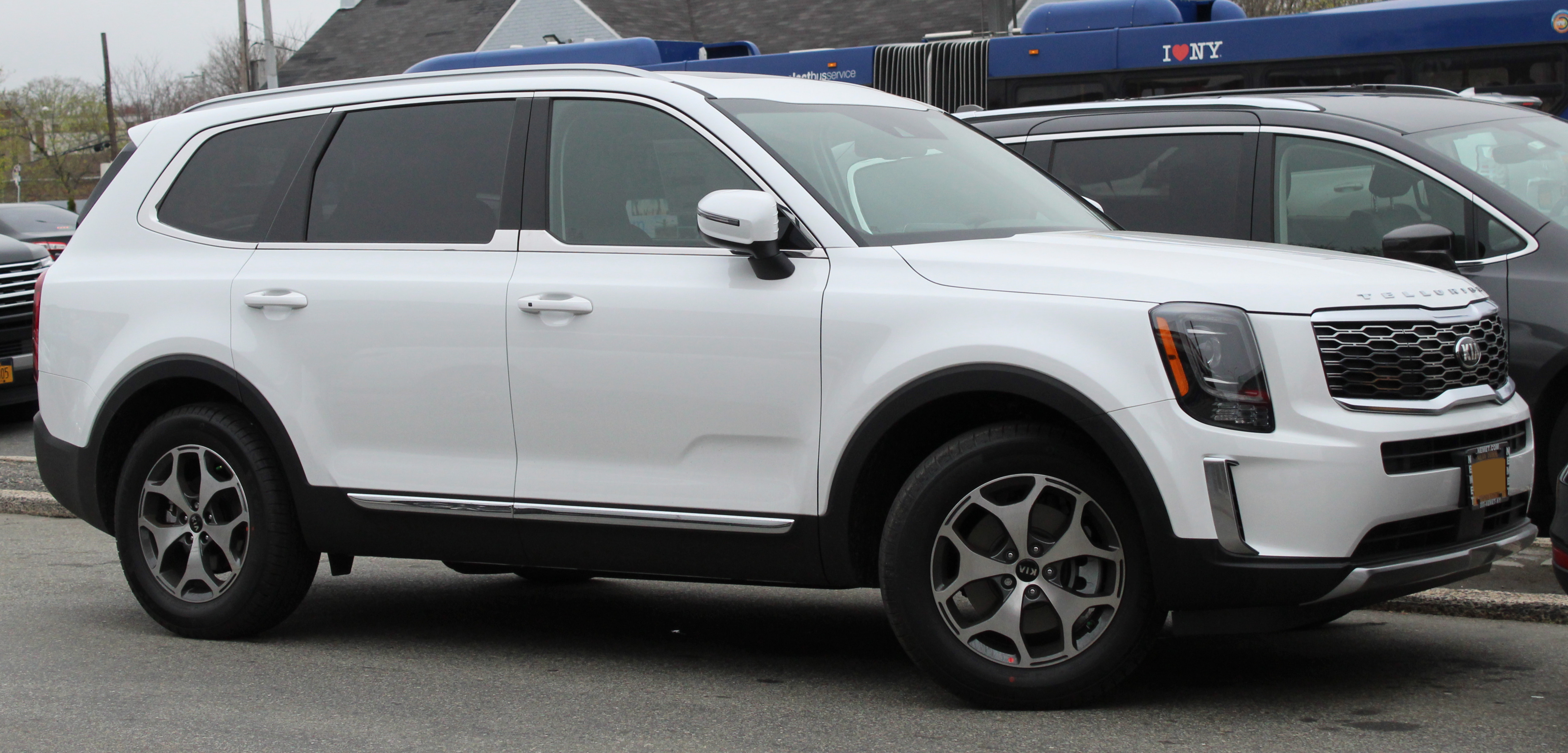
"We see that with the Telluride, where dealerships are charging $5,000, $10,000, $15,000 a markup."
The Kia Telluride is a family SUV. The host is using it as an example of dealers adding big extra charges on top of the normal price.
The Kia Telluride is a three-row SUV that became especially popular during the COVID-era demand surge. In this segment, it’s used as an example of dealers charging large markups above the vehicle’s baseline price.
Concept
federally mandated to not have competition
"and dealerships don't have competition, and they're federally mandated to not have competition."
The host is claiming the rules make it harder for other businesses to compete with dealerships. If there’s less competition, dealers can often charge more.
This refers to the idea that dealer franchise rules and related regulations limit how freely competing sellers can enter the market. In practice, the host is arguing that reduced competition lets dealers keep higher pricing power.
"the whole wave of negotiate out the door, out the door, that's fine. But I think people just need to realize what they're negotiating, right?"
“Out the door” means the final total you’ll pay when you drive the car off the lot. It includes the car price plus the extra fees and taxes, not just the base price.
“Out the door” (OTD) is the total price you pay to take the car home, including the vehicle price plus fees like taxes, registration, and dealer charges. When people negotiate only the OTD number, they’re trying to control the final amount rather than just the sticker price.
"They're taking a whole loan out versus 40% or 50% of the loan on the lease, right?"
A loan is money you borrow to buy the car, and you pay it back over time. The speaker is saying loans can involve financing more of the car’s cost than a lease does.
A loan is the amount borrowed to purchase the car, repaid over time with interest. The speaker contrasts taking out “a whole loan” versus a lease structure where you may only be paying for a portion of the car’s value over the term.
"like you can't afford this car on a finance, but you can afford it on the lease, you know what I mean? Like that payment is obtainable on the lease, just not on the finance."
A lease is like renting the car for a few years. You pay a monthly amount to drive it, then you give it back at the end (unless you choose to buy it).
A lease is a contract where you pay to use the car for a set period and mileage limit, then return it (or sometimes buy it at the end). Because you’re paying for depreciation and fees rather than the full purchase price, the monthly payment can be lower than financing for the same vehicle.
"and they're normally marking up the rates as 7, 8, 9% just so when they go in there for that rate, I think a general rule of thumb is negotiating off rate"
This means the dealer may charge you a higher interest rate than they could have gotten. A higher rate makes your monthly payment bigger, even if the car price looks similar.
“Marking up the rates” means the dealer increases the interest rate above what the lender would otherwise offer, which raises the customer’s monthly payment. Even a few percentage points can noticeably change affordability, which is why the speaker calls out 7–9% as a common range.
"I think a general rule of thumb is negotiating off rate or off payment is a really bad idea."
The speaker is saying don’t just haggle about the interest rate. You want to make sure the whole deal is fair, not just one number that can be adjusted to make the payment look okay.
“Negotiating off rate” means focusing the deal discussion on the interest rate rather than the total deal structure (like the vehicle price, down payment, term, and fees). The speaker argues this is a bad strategy because dealers can steer the conversation toward payment/rate levers that still leave the buyer with a worse overall deal.
"I think a general rule of thumb is negotiating off rate or off payment is a really bad idea. I think you're going to lose deal."
This means negotiating based only on what the monthly payment will be. Dealers can sometimes adjust other parts of the deal to reach that payment, even if the overall deal is worse.
“Negotiating off payment” means trying to lock in a target monthly number without fully controlling the underlying deal terms. Because dealers can change the loan term, interest rate, fees, and down payment to hit a monthly figure, a “good” payment can still hide an expensive total cost.
"I think a general rule of thumb is negotiating off rate or off payment is a really bad idea. I think you're going to lose deal."
Here, “deal” means the whole agreement—price, financing terms, and fees—not just one number like the monthly payment. The speaker warns that chasing the wrong number can cost you more overall.
In this context, “deal” refers to the full package of terms that determine the true cost of the car transaction, not just the sticker price or a single monthly payment. The speaker’s point is that focusing on the wrong lever (rate/payment) can cause consumers to accept a worse overall deal.
"I would consider you somewhat of an auto broker, but you don't collect the bird dog you charge a fee for your service."
An auto broker is a middleman who helps you get a car. They usually charge a fee for finding the car or arranging the deal.
An auto broker is an intermediary who helps a buyer find or source a vehicle, often for a fee. In dealer discussions, the term can imply the broker is steering inventory or deals in a way that affects how cars are distributed.
Term
bird dog
"I would consider you somewhat of an auto broker, but you don't collect the bird dog you charge a fee for your service."
A “bird dog” is someone who finds car leads for a dealer. They get paid for sending customers their way.
In car-dealer slang, a “bird dog” is a person who identifies leads (buyers) and gets paid for referring them. It’s often discussed as a way to route customers toward a specific dealer or deal, which can raise ethical or manufacturer-policy concerns.
"Many dealerships use auto brokers, which is obviously frowned upon by the manufacturers to increase allocations."
Allocations are how many cars a brand sends to a dealership. “Increase allocations” means trying to get the dealer more cars than they normally would.
“Allocations” are the limited number of vehicles a manufacturer assigns to each dealership. When someone tries to “increase allocations,” they’re trying to influence how many cars that dealer gets—often by using intermediaries or deal tactics that manufacturers may discourage.
"whatever that is. Sometimes I'm like a RAV4 recently, getting somebody $500, $800 off,"
The Toyota RAV4 is a compact SUV, meaning it’s a family-friendly car with a higher driving position than a sedan. It’s popular and commonly sold, so dealers often have deals to attract buyers. That’s why you might hear about negotiating a few hundred dollars off its price.
The Toyota RAV4 is a compact SUV that’s widely popular for its practicality and everyday usability. Because it’s a high-volume model, it often shows up in discount discussions—like examples of getting several hundred dollars off—since dealers may compete for buyers. In a negotiation-focused episode, it’s a straightforward case study for how discounts can be negotiated on mainstream vehicles.
"What they know is they have somebody they know and trust that is working for them, [2969.1s] not working to extract as much value as possible."
The host is talking about a sales style where the goal is to get the most money out of you. Instead of helping you pay a fair price, it focuses on squeezing the deal for profit.
This is a negotiation concept describing a sales approach focused on maximizing profit from the buyer rather than optimizing the buyer’s outcome. In car retail, that can show up as pushing for higher pricing, add-ons, or less favorable terms.
"The salesperson doesn't really care. [2981.4s] If it's a new car, I'm saying, not about a used car. [2983.3s] And used cars are mostly market-based price right now anyway. [2986.1s] I mean, if you have a problem with your pay plan,"
Here, “flat” means the salesperson’s pay is more fixed and predictable, not changing a lot based on the exact deal details. The host is saying that can shape how they approach selling.
In dealer sales compensation, “flat” typically refers to a fixed commission amount or a non-variable structure rather than a percentage that scales with the deal. The host uses it to argue that many salespeople earn a consistent payout per sale, which can influence their behavior in negotiations.
"And used cars are mostly market-based price right now anyway. [2986.1s] I mean, if you have a problem with your pay plan,"
Market-based pricing means the car’s price is set mostly by what’s happening in the market right now—how many cars are available and how badly people want them. That can limit how much a dealer is willing to discount.
A market-based price means the vehicle’s selling price is driven by current supply and demand in the broader market, not just the dealer’s internal pricing. When pricing is market-based, discounts can be smaller or less consistent because many dealers are adjusting to the same market signals.
"I mean, if you have a problem with your pay plan, [2987.4s] you should talk to your owner."
A pay plan is how a car salesperson gets paid. If their commission is set up in a way that rewards higher profits, they may push harder for a more expensive deal.
A pay plan is the compensation structure a dealership uses for sales staff, often including base pay plus commissions tied to sales performance. The host implies that if a salesperson’s pay plan is misaligned with the buyer’s interests, it can affect how aggressively they negotiate or how much they try to maximize profit.
"If we agree on that, franchise laws wouldn't exist. Franchise laws exist and NADA is suing the hell of anybody who try-"
Franchise laws are rules that control the relationship between car makers and car dealers. They often make it harder for a company to sell cars directly to customers without using traditional dealer partners.
Franchise laws are state-level rules that govern how car manufacturers can sell through franchised dealer networks. They typically restrict manufacturers from cutting dealers out directly, which is why new direct-to-consumer brands often end up in legal fights.
"The idea that dealerships- ... Franchise laws exist and NADA is suing the hell of anybody who try- Look at Scout."
NADA is a dealer trade group in the U.S. that represents car dealerships. Here, they’re mentioned as taking legal action against companies trying to sell cars in a different way.
NADA stands for the National Automobile Dealers Association, a U.S. trade group that represents franchised car dealers. In this segment, it’s described as suing companies that try to operate dealerships outside the traditional franchise model.
"Franchise laws exist and NADA is suing the hell of anybody who try- Look at Scout. Scout is trying to make a dealership and they've spent $2 billion and haven't even sold a car"
Scout is mentioned as a new company trying to set up a dealership-based sales effort. The host’s point is that it has faced major legal pressure from dealer groups before it could sell cars.
Scout is referenced as a company trying to create a dealership presence, described as spending $2 billion without selling a car yet. It’s brought up to illustrate how dealer-franchise rules and dealer-group lawsuits can slow down new entrants.
"Like, and we've seen that Tesla tried, Rivian tried, Lucid tried."
Rivian is an EV company. The point in this discussion is that it tried a sales approach that doesn’t rely on the usual dealer system, and that can trigger legal conflicts.
Rivian is an electric-vehicle brand that has also attempted to sell vehicles using a more direct model than traditional franchised dealerships. Here it’s mentioned alongside Tesla and Lucid as another example of a manufacturer that struggled to create a dealership-free sales setup due to franchise-law pressure.
"Like, and we've seen that Tesla tried, Rivian tried, Lucid tried."
Lucid is an EV brand. The host is mentioning it as another company that tried to sell cars differently than traditional dealerships, but ran into legal obstacles.
Lucid is an electric-car brand that, like other EV startups, has tried to sell cars in ways that can bypass the traditional dealership network. In this segment, it’s used as another example of a manufacturer that couldn’t fully build the new sales model because of franchise-law and dealer-group resistance.
See something that's not quite right? Our annotations are AI-generated and can sometimes miss the mark.
Click the flag icon on any annotation to suggest a correction.
Report incorrect info
Suggest better explanations
Flag missing cars
More from The Price Isn’t Right: Car Negotiations w/ Delivrd