
Biggest Discounts REVEALED - The TOP 5 Cars We Are Negotiating MOST in 2026!
About this episode
Negotiation “discounts” get unpacked using Delivered’s deal data—“We negotiate over 400 deals on a monthly basis.”—and the idea that big numbers don’t automatically mean a better outcome. The hosts connect discount size to inventory, markups, and even EV incentive changes (“This is $7,500 EV tax credits gone, guys.”). They then reveal their top negotiated cars for 2026, from the Toyota RAV4 (fully redesigned) to the Lexus GX550, plus real-world examples like “the worst deal we did… was $1,000 off MSRP.”
In this video I am breaking down the real car market right now using actual data from the 400 plus deals Delivrd negotiates every single month. I go through the top five most requested cars we are negotiating, which brands are giving the biggest discounts, and what tariffs have actually done to the average price of a car this year.
EV tax credits
"[212.4s] and I wanna buy an EV. [213.9s] This is $7,500 EV tax credits gone, guys. [216.3s] Spoiler shocker."
EV tax credits are money the government gives (as a tax break) to help you pay less for an electric car. If they’re no longer available, the car can cost more than you expected.
EV tax credits are government incentives that can reduce the effective cost of buying an electric vehicle. In practice, they’re time- and eligibility-dependent, so when they’re “gone,” some buyers may lose a major part of the deal math.
lease credits
"[217.2s] Some manufacturers are still doing some lease credits [219.0s] on those, but that is just incentives from the manufacturer. [222.1s] Those are not actually these credits."
Lease credits are discounts a car maker offers to make a lease cheaper. They’re not the same as government EV tax credits, so you might still get a deal even if the tax credit is gone.
Lease credits are manufacturer-provided incentives that reduce the cost of leasing, often applied through the lease deal structure. They’re different from government EV tax credits, so you can still see discounts even when the federal credit is unavailable.

Lexus GX550
"[237.8s] The number five most common car that we are negotiating [239.9s] is a Lexus GX550. [243.0s] This is one of the most highly requested luxury SUVs"
The Lexus GX550 is a premium SUV from Lexus. Here, the hosts say it’s one of the most requested cars they’re negotiating deals on, partly because it’s hard for people to find.
The Lexus GX550 is a modern, body-on-frame-style luxury SUV from Lexus, positioned as a highly requested alternative to other premium midsize/large SUVs. In this segment, it’s highlighted as one of the most negotiated vehicles because demand is high and availability is constrained.
market is bare
"[247.3s] One of the reasons being is people just can't [249.0s] get ahold of them. [249.9s] Now the market is bare on this car."
When they say the market is “bare,” they mean there aren’t many cars available. If cars are hard to find, it’s often harder to get a big discount.
Saying the market is “bare” means supply is tight—there aren’t many units available relative to demand. In a negotiation context, that usually reduces bargaining power because fewer cars are sitting on lots.
waiting list
"Dealer ships are actually starting to restrict the people on waiting list on these cars. So it's been a very hot commodity for us to negotiate."
A waiting list is when you can’t just buy the car right away, so you get put in line for an allocation. If supply is tight, it often means fewer discounts and longer waits.
A waiting list is a dealer or manufacturer practice where customers are queued for limited allocations of a specific model. When dealers restrict who can buy from the list (or limit allocations), it increases scarcity and reduces a buyer’s negotiating power.
MSRP
"Realistically, MSRP is a great deal on this car and you're probably only gonna find it in your local market."
MSRP is the official sticker price the manufacturer lists for the car. If the host says MSRP is already a great deal, it usually means the car is hard to get and dealers aren’t discounting much.
MSRP (Manufacturer’s Suggested Retail Price) is the sticker price a manufacturer sets for a vehicle. In a hot-demand situation like the Lexus GX550, the host notes that MSRP may be “a great deal,” meaning discounts are smaller because supply is constrained.

Lexus Land Cruiser
"I would really consider a Land Cruiser or a TX. TX, you can get great deals on. Land Cruiser, you can get great deals on. And I've said it from day one, you can find previous videos. I think the Land Cruiser is a better dollar"
The Lexus Land Cruiser is a rugged SUV that’s famous for lasting a long time. In this segment, the host suggests it can be a smarter buy than the GX550 if you’re focused on getting a good deal.
The Lexus Land Cruiser is a Toyota-derived, long-running off-road SUV known for durability and strong resale demand. The host frames it as a better “dollar” alternative to the Lexus GX550, implying you may find more favorable pricing or deal structure depending on availability.

Toyota Land Cruiser
"...ne I'm gonna say it on, I would really consider a Land Cruiser or a TX. TX, you can get great deals on."
The Toyota Land Cruiser is a large SUV made for both everyday driving and rough roads. People talk about it a lot because it’s designed to last and handle tough conditions. In the podcast, it’s suggested as a good option if you’re shopping for a deal.
The Toyota Land Cruiser is a full-size, body-on-frame SUV known for long-distance comfort and serious off-road capability. It often comes up in discussions because it’s built for durability and tends to hold value well, which can make it a focus during pricing and negotiation talk. In this episode, it’s mentioned as a strong alternative worth considering alongside other deal-friendly options.

Toyota Sienna
"Number four is the Toyota Sienna. [313.8s] Toyota's done a great job with this minivan. [315.5s] People love it to death."
The Toyota Sienna is a family minivan. The big reasons people want it are that it’s dependable and it’s available with a hybrid setup.
The Toyota Sienna is a minivan built around practicality for families, with a strong focus on hybrid efficiency. In this segment, the hosts emphasize that buyers still want it for long-term dependability and the option of hybrid powertrains.
hybrid motor
"People who are buying minivans want reliability [325.5s] and they love the idea of the hybrid motor that just lasts [328.9s] and they get the option for front wheel drive"
A hybrid motor means the car uses both gas power and electric power. That often helps with fuel economy and makes everyday driving feel smoother.
A hybrid motor is part of a hybrid powertrain that combines an internal-combustion engine with an electric motor. The point is usually better fuel economy and smoother low-speed driving, while still using the gasoline engine when needed.
Pacific Northwest
"Like you can pay five grand above MSRP [342.9s] in the Pacific Northwest. [344.3s] Realistically, the worst deal we did at delivered this month"
The Pacific Northwest is a part of the U.S. on the West Coast. The hosts mention it because car pricing and availability there can be different, affecting what people pay.
The Pacific Northwest is a U.S. region (commonly referring to states like Washington and Oregon) where demand and supply for certain vehicles can differ from other parts of the country. Here, it’s used to explain why some buyers might pay above MSRP.
limited all wheel drive
"I want a heavy metal limited all wheel drive [375.9s] with the macadamia interior."
All-wheel drive means the car can send power to multiple wheels for better grip. In this context, the host is saying the buyer is being picky about the exact AWD setup they want.
“All wheel drive” (AWD) means power is sent to more than just the front or rear axle, improving traction in slippery conditions. Here, “limited all wheel drive” is being used as a specific shopper constraint, implying a particular AWD-equipped configuration rather than any AWD Sienna/vehicle.
rear entertainment package
"I will not take the rear entertainment package [379.6s] and X, Y and Z."
A rear entertainment package is extra stuff for passengers in the back seat, like screens or media controls. If you won’t accept a car without it, you may have fewer choices and smaller discounts.
A “rear entertainment package” is an option bundle that typically adds screens and media controls for passengers in the back row. The host is using it to illustrate that refusing certain option packages can reduce how much discount you can realistically get.

Toyota 4Runner
"The number three car on the list [399.6s] is the Toyota 4Runner. [402.1s] Now, the Toyota 4Runner is obviously TRD pros"
The Toyota 4Runner is a rugged SUV built for rough roads and off-roading. The host is saying it’s one of the cars where deals/discounts are easier to find compared with other models.
The Toyota 4Runner is a body-on-frame SUV known for rugged off-road capability and a traditional, truck-like layout. In this segment, the host highlights it as the #3 car on their negotiation list and contrasts its typical discount versus other vehicles.
TRD pros
"Now, the Toyota 4Runner is obviously TRD pros [405.2s] you're gonna get for $1,000 to MSRP,"
TRD Pro is a Toyota trim level aimed at off-road use. The host is saying those versions usually don’t get discounted as much as other 4Runner versions.
TRD Pro is Toyota’s performance/off-road trim line (TRD stands for Toyota Racing Development). The host is implying that TRD Pro versions of the Toyota 4Runner tend to have smaller discounts than other trims.
inventory
"Plenty of inventory on this car. Great deals to be had, definitely there to be there."
In car shopping, inventory is how many vehicles are available for sale at dealerships (or in the market). The host connects “plenty of inventory” to better negotiation odds and more discounting.
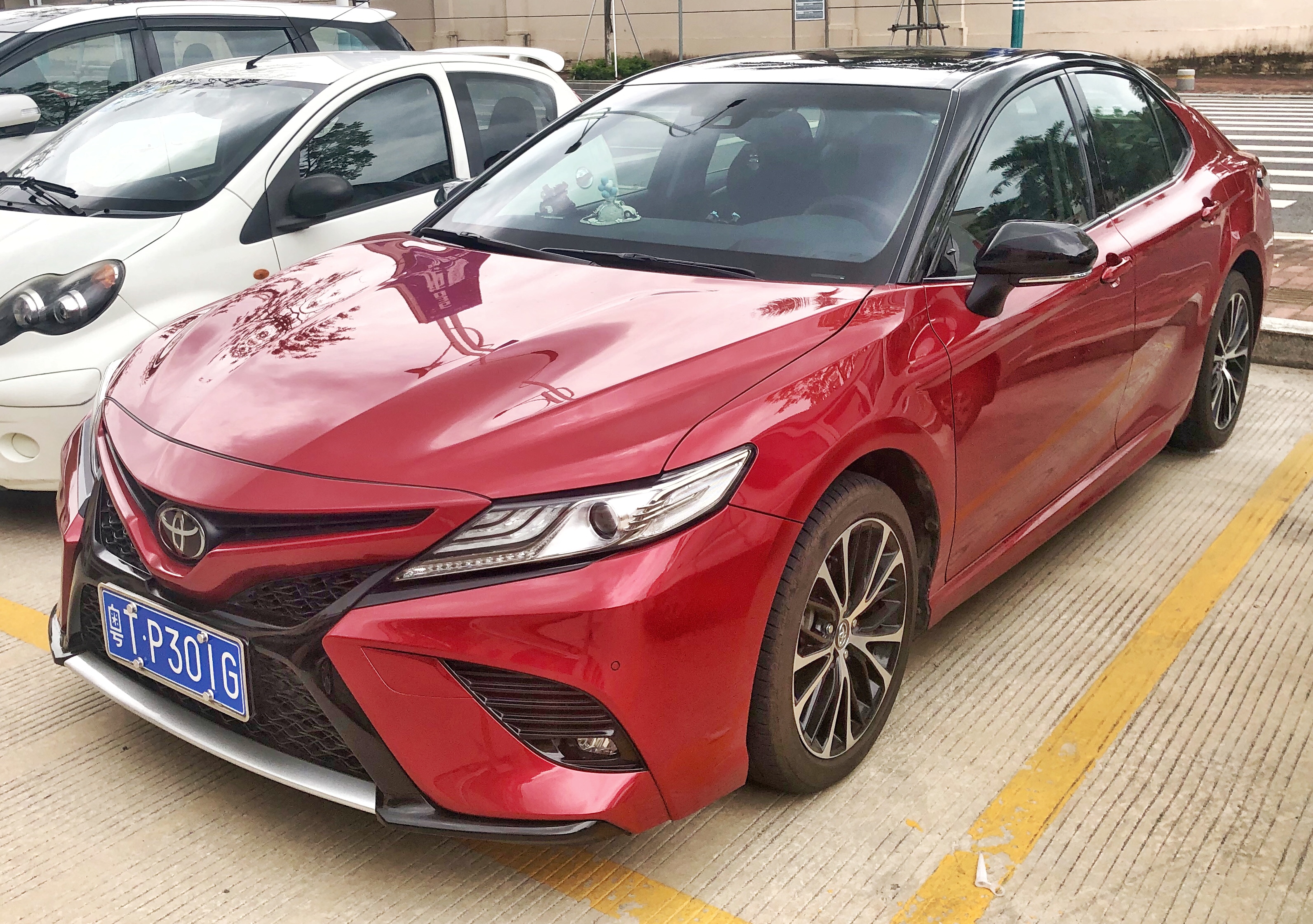
Toyota Camry
"Number two car. The number two car negotiated for us right now is a Toyota Camry. The sedan, is it dead? It blows my mind that so many manufacturers gave up on the sedan."
The Toyota Camry is a popular everyday sedan. The host is saying it’s getting a lot of attention because it can be very efficient at the pump.
The Toyota Camry is a mainstream midsize sedan known for being an easy-to-live-with commuter car. In this segment, the host highlights its fuel economy—“50 miles per gallon”—and positions it as a top negotiation target in 2026.
front wheel drive
"Front wheel drive, all wheel drive, does not matter. There are phenomenal deals to be had."
Front-wheel drive means the front wheels do the work of moving the car. The host is saying that the biggest sales discounts tend to show up more often on all-wheel drive versions than on front-wheel drive ones.
Front-wheel drive (FWD) means the engine’s power is sent to the front wheels. In this segment, the host argues that you’re less likely to see the biggest discounts on FWD models compared with all-wheel drive models.
expand the radius
"If your market is struggling with the car, make sure you expand the radius. All wheel drive does have a higher burden than all wheel drive."
“Expand the radius” refers to widening the geographic search area for inventory when negotiating. The idea is that if your local market isn’t moving a specific model, nearby markets may have more supply and stronger incentives, leading to better discounts.
rumors from people at Toyota
"Now, rumors from what I've talked to with people at Toyota that worked at Toyota, not dealerships for people at Toyota, is that manufacturing has been low due to, as they've said, global issues."
The host is talking about what they heard from Toyota workers about why cars aren’t being made as much. That helps explain why discounts might be different than usual.
This segment is built around the host relaying what they heard from Toyota employees (not dealership staff) about manufacturing constraints. It’s used to explain why certain cars might not be discounted as aggressively.
oil crisis
"There was an oil crisis. There is obviously the gas prices."
An oil crisis is when oil prices or supply get disrupted. The host is using it as an example of big world events that can affect car production and the overall market.
An oil crisis is a period when oil supply or pricing becomes unstable, which can ripple into fuel costs and broader economic conditions. In the context of this segment, it’s mentioned as one of the “global issues” that can disrupt manufacturing and consumer demand.
production on a car
"Whatever Toyota is saying, this is one of the cars that they have not been able to max up a production on."
This is about how many cars the factory can actually make. If the factory can’t build as many as people want, the car can be harder to find and pricing can change.
“Production on a car” refers to how many units a manufacturer can build and deliver over time. When production is constrained, supply tightens, which can affect pricing and availability—one reason the host says Toyota couldn’t “max up” production on this particular model.
dealer add-ons
"you might be a good deal at MSRP with no dealer add-ons. I know that's crazy."
Dealer add-ons are extras the dealership tries to add to the sale price after the car is already priced. The host is saying you want a deal where the dealer doesn’t tack on extra charges.
Dealer add-ons are extra items or fees a dealership may bundle onto a car sale beyond the base price—often things like accessories, protection packages, or administrative charges. The host specifically highlights “no dealer add-ons” as a way to keep the deal close to MSRP.
plug-in
"If it's a plug-in or it's a Woodland, they're not moving too much."
A plug-in car can be charged from a plug, like at home or at a public charger. They’re saying plug-in versions usually don’t get as big discounts.
A “plug-in” vehicle is one that can be charged from an external power source (like a home outlet or charging station), typically offering more electric driving capability than a standard hybrid. The hosts imply plug-in versions of the cars they’re negotiating are discounted less because demand and supply are tighter.
window sticker
"Now, anytime we're talking about Toyotas, understand that dealers can add to the window sticker. They'll be a little careful."
The window sticker is the paper/label on the car that shows the price and options. They’re saying dealers can add extra charges that raise the sticker total.
The window sticker is the official label on a car that lists MSRP and itemized pricing details. The hosts note dealers can add charges that effectively increase what’s shown there, which can make “discounts” look smaller than they really are.
negotiated off highly
"Normally the rule of thumb [626.3s] is that things are negotiated off highly [630.6s] because nobody's buying them. [632.2s] Like the RAV4, dealers are charging five grand above MSRP."
“Negotiated off highly” refers to the idea that dealers will discount a car more aggressively when demand is weak or inventory is sitting. The hosts contrast that with situations where popular models are priced above MSRP, meaning there may be less room to negotiate downward.

Ford F150
"So when you see, for example, [641.7s] we did an F-150 XLT, $13,000 off in South Dakota. [648.4s] Crazy market, crazy deal."
The Ford F-150 XLT is a popular pickup truck version. The hosts are saying they got a very big discount on it, but you still have to check whether the final price is actually a good deal.
The Ford F-150 XLT is a mainstream full-size pickup trim that’s often heavily negotiated because it’s one of the most common trucks on the road. In this segment, the hosts use it as an example of how discounts can be large even when the market is “crazy,” like in South Dakota.

Ford Expedition Platinum
"Second vehicle we have here is the Ford Expedition. [663.2s] We did $8,623 off an Expedition Platinum [668.4s] for an Ford Explorer ST, $10,500 off Ford Bronco Raptor,"
The Ford Expedition Platinum is a top-level version of Ford’s big family SUV. They’re using it to show that some versions can get large discounts, but you still need to compare the final deal to MSRP.
The Ford Expedition Platinum is a high-trim version of Ford’s full-size three-row SUV. The hosts mention a specific negotiated discount on the Expedition Platinum, illustrating how certain trims can be discounted heavily depending on local inventory and demand.
F-150 Raptor
"... for an Ford Explorer ST, $10,500 off Ford Bronco Raptor, $9,217 off Ford Bronco Badlands Sasquatch,"

Ford Explorer ST
"[668.4s] for an Ford Explorer ST, $10,500 off Ford Bronco Raptor, [675.4s] $9,217 off Ford Bronco Badlands Sasquatch,"
The Ford Explorer ST is a sportier version of the Explorer SUV. They’re talking about how much they were able to take off the price for that specific trim.
The Ford Explorer ST is a performance-oriented trim of the Explorer, positioned above the standard trims. In this segment, it’s included in the list of negotiated discounts, showing how even popular nameplates can have different discount levels by trim.

Ford Bronco Raptor
"[668.4s] for an Ford Explorer ST, $10,500 off Ford Bronco Raptor, [675.4s] $9,217 off Ford Bronco Badlands Sasquatch,"
The Ford Bronco Raptor is the more extreme, off-road-ready version of the Bronco. The hosts are saying they negotiated a big discount on it too.
The Ford Bronco Raptor is a high-performance off-road-focused Bronco variant known for its suspension and powertrain tuning aimed at rough terrain. Here, it’s part of the negotiation examples, highlighting that even premium off-road trims can be discounted substantially.
Ford Bronco Badlands Sasquatch
"[675.4s] $9,217 off Ford Bronco Badlands Sasquatch, [680.4s] $8,750, a GMC Sierra, $1,580,"
This is a Bronco setup meant for off-roading: Badlands plus the Sasquatch package. They’re listing it as another example where they got a large discount.
The Ford Bronco Badlands Sasquatch is a Bronco trim combination geared toward off-road capability, pairing the Badlands package with the Sasquatch off-road equipment. The hosts cite a specific negotiated discount, using it to show how discounting varies across Bronco configurations.

Gmc Sierra
"...217 off Ford Bronco Badlands Sasquatch, $8,750, a GMC Sierra, $1,580, for X, $8,000 off a Yukon XL Denali Rese..."
The GMC Sierra EV is a pickup truck that runs on electricity instead of gasoline. It’s brought up because you may be able to get a discount that lowers the purchase price. The podcast is pointing to a specific amount off the price to show what’s possible.
The GMC Sierra EV is an all-electric pickup truck designed to deliver the utility of a traditional truck with electric power. It’s discussed in the episode because incentives and discounts can significantly affect the final price of EV trucks. The mention highlights a specific dollar-off figure as part of the negotiation strategy.

GMC Yukon
"for X, $8,000 off a Yukon XL Denali Reserve."
This is a big, family-sized SUV from GMC. “Denali Reserve” is the nicer, more expensive trim level, and the host is talking about how much money you can knock off the price when negotiating.
The GMC Yukon XL is a full-size three-row SUV, and the Denali Reserve trim is positioned as a top, luxury-focused version. In this segment, the host is using it as an example of a large negotiated discount off the sticker price.
out-the-door price
"Well, I say $7,300 is a good deal off, or $6,900 off, which is on two sides... Remember that video we just did recently where the dealer said that MSRP was a good deal?"
The out-the-door price is what you actually pay at the end of the deal. It includes the car price plus the extra government and dealer charges, so it’s the number you should compare between offers.
“Out-the-door price” is the total amount you pay to drive the car home, including taxes, registration, and dealer fees—not just the vehicle’s base price. This segment is about negotiating discounts relative to MSRP, which is often only part of the final out-the-door number.

Ram Rebel
"Now if you're looking for a Ram Rebel, there's some dealers that are, I saw a dealer that was trying to charge above him"
This is a version of a Ram pickup truck. The host is saying some dealers try to charge more than others, so you may need to shop around to get a good deal.
The Ram Rebel is a trim level of the Ram pickup line, typically aimed at off-road styling and capability. Here it’s mentioned in the context of dealer pricing behavior and how discounts can vary by location.

Lincoln Navigator Reserve
"$11,655 off, and then a Lincoln Navigator Reserve, $10,763 off."
This is a big luxury SUV from Lincoln. “Reserve” is a higher trim, and the host is talking about how much you can negotiate off the price and whether it’s worth it compared to alternatives.
The Lincoln Navigator is a large luxury SUV, and the Reserve trim is one of its higher-end configurations. The host compares its discount level and value against another similarly priced luxury option.

Bmw X3
"Now I do wanna go into the German luxury market. German luxury, BMW X3, we did $8,111 off a BMW X3, just a little old X3."
This is a BMW SUV that sits in the smaller “luxury SUV” category. The host is saying you can often negotiate a surprisingly large discount on it.
The BMW X3 is BMW’s compact luxury SUV, known for its sporty driving feel relative to many competitors. The host cites a specific negotiated discount amount to illustrate how aggressive the deals can be in the German luxury market.

BMW X5
"The BMW X5, $7,877 off, plus bigger discounts to be seen, the X5 deals are all over the place, you can get 10 to 13% off pretty consistently"
This is a larger BMW luxury SUV than the X3. The host is saying the discounts on the X5 are so big that you can often get around 10–13% off with the right shopping and negotiation.
The BMW X5 is BMW’s midsize luxury SUV, typically positioned as a more spacious and powerful step up from the X3. The host emphasizes consistent discount ranges (10–13%) and frames it as a strong negotiation target.

BMW X1M Sport
"A BMW X1M Sport, $6,759 off, a BMW M340i, 9.4% off, another BMW X5 for 13% off."
This is a BMW compact crossover (the X1) in a sportier trim. The host is using it as an example of a real-world discount you might be able to negotiate.
The BMW X1M Sport is a performance-oriented trim of the BMW X1, aimed at making the compact crossover feel more “sporty” than a standard X1. In this segment it’s notable because the host is quoting a specific negotiated discount amount off the sticker price.

BMW M340I
"A BMW X1M Sport, $6,759 off, a BMW M340i, 9.4% off, another BMW X5 for 13% off."
The BMW 3 Series is a luxury car that’s designed to feel sporty while still being comfortable for daily driving. The episode brings it up because there may be discounts available that reduce the sticker price. The main takeaway is the potential savings mentioned for that model.
The BMW 3 Series is a compact luxury sedan known for a balance of everyday comfort and sporty driving dynamics. It’s mentioned in the episode because BMWs can sometimes have notable discounts relative to MSRP, which can make negotiation worthwhile. The podcast references specific discount percentages to illustrate how pricing can shift on these models.

Mercedes Benz GLE 450
"Don't worry, BMW's not the only one giving away their cars, we got a Mercedes Benz GLE 450, realistically getting $5,500 off MSRP."
The Mercedes-Benz GLE 450 is a Mercedes luxury SUV. The host is saying you can sometimes negotiate thousands off the sticker price.
The Mercedes-Benz GLE 450 is a luxury midsize SUV in Mercedes’ GLE lineup, known for combining comfort with a more powerful “450” powertrain. The host uses it to illustrate how negotiated deals can land at a specific dollar amount off MSRP.

Audi Rs3
"you can get on Audi's right now, but Audi RS3, $5,700 off MSRP, a Porsche Macan S at $5,650 off..."
The Audi RS 3 is a fast, sporty Audi built for performance driving. It’s more expensive than a regular Audi model, so the podcast mentions it in the context of how much you might be able to save. The key point is the stated discount off the sticker price.
The Audi RS 3 is a high-performance compact sedan/hatchback (depending on market) built for quick acceleration and sharp handling. It’s significant in a negotiation context because it’s a premium performance model where discounts off MSRP can be meaningful. The episode calls out a specific discount amount to illustrate how pricing can move on these cars.

Porsche Macan S
"Audi RS3, $5,700 off MSRP, a Porsche Macan S at $5,650 off, and a Genesis GV70 at $6,753 off."
The Porsche Macan S is a sporty Porsche SUV. The host is listing it as one of the cars where you may be able to negotiate thousands off the sticker price.
The Porsche Macan S is a performance-oriented version of the Macan compact luxury SUV, positioned below the top-tier Macan Turbo models. Here it’s included in a list of current negotiation targets with a quoted dollar discount off MSRP.

Genesis GV70
"a Porsche Macan S at $5,650 off, and a Genesis GV70 at $6,753 off. Now remember, not every market has these deals,"
The Genesis GV70 is a luxury SUV from Genesis. The host is saying you can sometimes negotiate a big discount off the sticker price.
The Genesis GV70 is a luxury compact SUV from Genesis, aimed at competing with the premium European small-SUV segment. In this segment it’s used as another example of a negotiated discount off MSRP.
ceiling
"I can't even always guarantee these cars and these discounts, that's not the point, the idea behind it is I'm giving you the ceiling, understand that as real deals,"
A “ceiling” here means the highest limit of what you should expect to get in a deal. The host is basically telling you the top end of what’s realistic to negotiate for.
In negotiation terms, a “ceiling” is the maximum number (or best offer) someone is willing to accept or that you should treat as the upper bound of a realistic deal. The host says they’re giving listeners the ceiling so they understand what the “real deals” can look like.

RAV4
"If you get $1,000 off a RAV4 [848.0s] versus getting $10,000 off a Rebel,"
The Toyota RAV4 is a popular SUV. The host is using it to show that a smaller discount on one car can be a better negotiation than a bigger discount on another car.
The Toyota RAV4 is a mainstream compact SUV, and the host uses it as an example of a smaller discount ($1,000 off) versus a larger discount on a different model. The point is that you should judge the deal against what’s typical for that specific vehicle in the market.
Request an Explanation
Heard something you'd like explained? We'll add it to this episode.
Sign in to request explanations for terms you heard.
Want to learn more?
Browse our glossary for plain-English explanations of automotive terms, jargon, and concepts.
Help improve this episode
See something that's not quite right? Our annotations are AI-generated and can sometimes miss the mark. Click the flag icon on any annotation to suggest a correction.