
I'm role playing the perfect car buying and car servicing experience for you...this is how it's done
About this episode
Lenny Lawson dives into the intricacies of the car buying and servicing experience through engaging role-playing scenarios. He emphasizes the importance of understanding the sales process, recognizing red flags with salespeople, and negotiating effectively. Lenny shares insights on how to maintain control during the buying process, the significance of independent negotiations for pricing and trade-ins, and the pitfalls of unnecessary service recommendations. This episode is packed with practical advice for anyone looking to navigate the often confusing world of car dealerships with confidence.
Email Lennie at [email protected]
monthly payment
"...to where you don't know what you're paying for the car. They train their salespeople to get the customer to commit to a monthly payment."
A monthly payment is how much you pay every month for a car loan. It usually covers the cost of borrowing money to buy the car, plus any extra fees.
The monthly payment is the amount a buyer pays each month when financing a vehicle. It typically includes the loan principal, interest, and sometimes additional costs like taxes and fees.
trade-in
"...Are you going to trade anything? Eee, those are the sounds of breaks..."
A trade-in is when you give your old car to the dealership to help pay for a new one. They will give you money off the price of the new car based on how much your old car is worth.
A trade-in is when a buyer offers their current vehicle as part of the payment for a new vehicle. The value of the trade-in is deducted from the purchase price of the new car.
XLT
"So, if they land you on a Platinum F-150 and really your budget allows for an XLT, then don't go test driving a Platinum or a King Ranch F-150 because you'll want it."
XLT is a version of the Ford F-150 that has a nice mix of features without being too expensive. It's a popular choice for many buyers.
XLT is a trim level for the Ford F-150 that typically includes a good balance of features and value. It is often seen as a mid-range option compared to higher-end trims like Platinum and King Ranch.
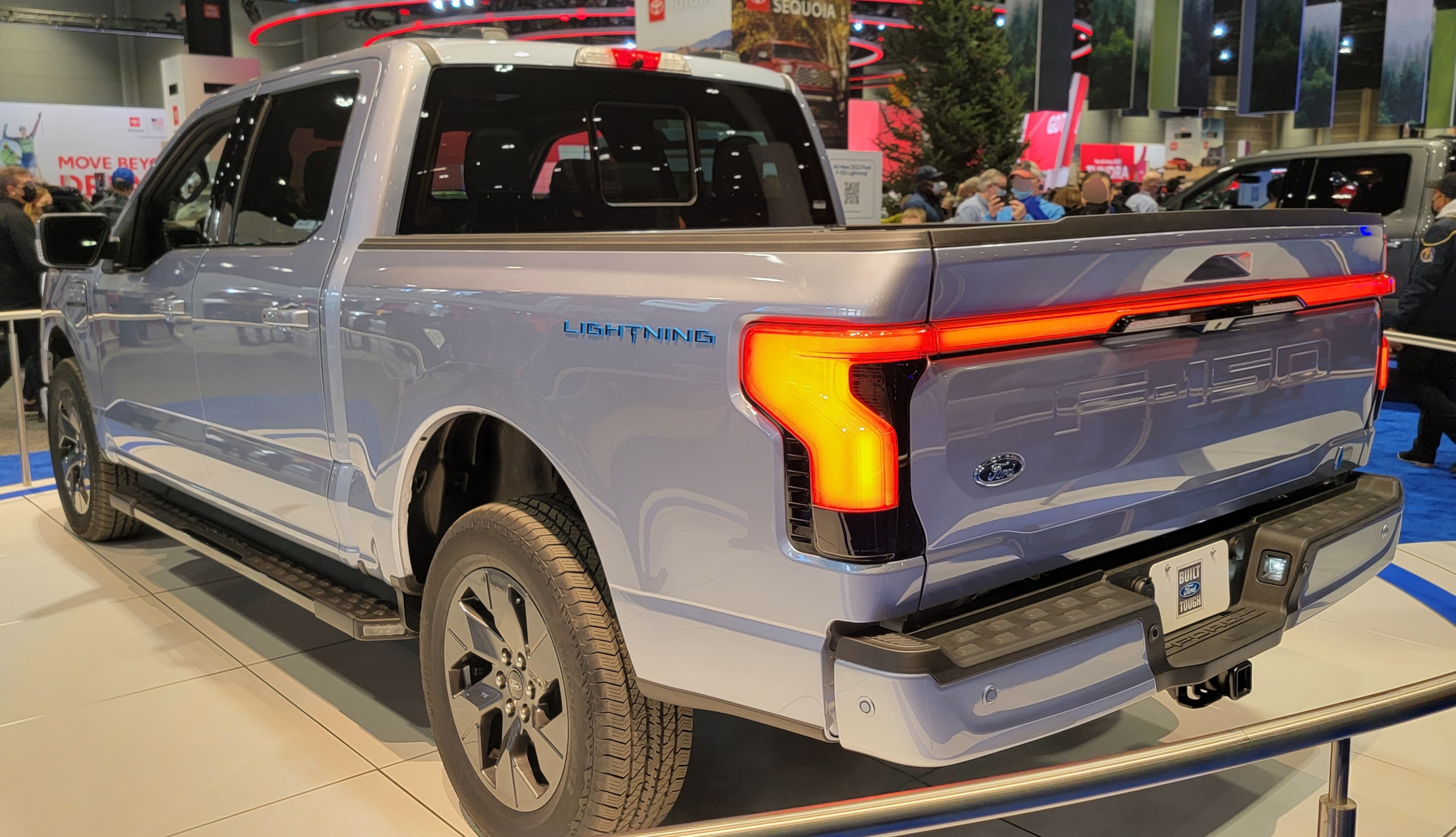
Ford F150
"So, if they land you on a Platinum F-150 and really your budget allows for an XLT, then don't go test driving a Platinum or a King Ranch F-150 because you'll want it."
The Ford F-150 is a popular truck that can be used for work or personal use. It has different versions, like the Platinum and King Ranch, which are fancier and have more features.
The Ford F-150 is a full-size pickup truck that is known for its versatility, performance, and capability. It comes in various trims, including the Platinum and King Ranch, which offer different features and luxury options.
MSRP
"...and that was off of the MSRP. And by the way, what's that extra sticker you have beside the sticker that says an additional..."
MSRP is the price that the car maker suggests dealers sell the car for. It's a good reference point when you're shopping for a car.
MSRP stands for Manufacturer's Suggested Retail Price, which is the price that the manufacturer recommends a dealer sell a vehicle for. It's often used as a starting point for negotiations between buyers and sellers.
dealer markup
"...that adds like $4,000 or $5,000 on top of the sticker of every car. And the salesperson will actually go up to the customer and say, we're not knocking..."
Dealer markup is when a car dealer adds extra money to the price of a car above what the manufacturer suggests. This can happen if they think the car is in high demand.
Dealer markup refers to the additional amount a dealership adds to the MSRP of a vehicle. This can be due to demand, limited availability, or other factors, and it's often a point of negotiation for buyers.
deal sheet
"then put it in writing, sign, sign me a little deal sheet or whatever you call it. And I'll go home and think about it."
A deal sheet is a paper that shows the details of the car deal, like how much you will pay and any extra costs. It helps both the buyer and seller keep track of what was agreed upon.
A deal sheet is a document that outlines the terms of a car purchase agreement, including the price, financing options, and any additional fees. It serves as a formal record of the deal between the buyer and the dealership.
negotiate
"...That's why you have to negotiate these things independently and separately. And then the next target are the terms of the loan."
Negotiating means talking with the seller to try to lower the price or get better terms when buying a car. It's a way to make sure you don't pay more than you need to.
Negotiating in the context of car buying involves discussing the price and terms of the sale to reach a mutually agreeable deal. It's an important skill for buyers to ensure they get the best possible price.
terms of the loan
"...And then the next target are the terms of the loan. What's the length of the loan?"
The terms of the loan are the details about how you will pay back the money you borrow to buy a car, like how long you have to pay it back and what interest you will pay.
The terms of the loan refer to the conditions under which a loan is provided, including the interest rate, duration, and repayment schedule. Understanding these terms is crucial for managing the overall cost of financing a vehicle.
interest rate
"What's the interest rate on the loan? What are the details as far as between you and the bank of the credit union, you know, how this vehicle is being financed?"
The interest rate is how much extra money you pay back to the bank or credit union when you borrow money to buy a car. It's usually shown as a percentage of the total loan amount.
The interest rate is the percentage of a loan charged as interest to the borrower, typically expressed as an annual percentage of the loan amount. In automotive financing, it determines how much extra you will pay over the life of the loan.
aftermarket products
"...the aftermarket products that are sold in the finance office because you can get a great deal on the front end..."
Aftermarket products are car parts or accessories that are made by other companies, not the car maker. They can be added to your car to improve performance or change its look.
Aftermarket products are parts or accessories that are made by companies other than the original manufacturer of the vehicle. These can include anything from performance upgrades to aesthetic enhancements and are often sold in finance offices or dealerships.
extended warranty
"...but then they sell you an extended warranty and charge you $5,000 for it when you should be able to buy it anywhere for $2,500."
An extended warranty is like extra insurance for your car that you can buy to cover repairs after the regular warranty runs out. It can save you money if something goes wrong, but you should check if it's a good deal.
An extended warranty is a service contract that provides coverage for vehicle repairs after the manufacturer's warranty expires. It can help cover unexpected repair costs, but it's important to evaluate if it's worth the price being charged.

Ford Fusion
"I think it was a 2016 Ford Fusion."
The Ford Fusion is a car made by Ford that is designed for everyday use. It's known for being comfortable and efficient, making it a popular choice for families.
The Ford Fusion is a mid-size sedan that was produced by Ford from 2005 to 2020. It is known for its comfortable ride, spacious interior, and good fuel efficiency.
check engine light
"...the check engine light would come on, and the car would get hot, it would start to overheat..."
The check engine light is a light on your dashboard that tells you something might be wrong with your car. It could be a small issue or something more serious.
The check engine light is a warning indicator on a car's dashboard that signals a potential issue with the vehicle's engine or emissions system. It can indicate anything from a loose gas cap to more serious engine problems.
overheating
"...the car would get hot, it would start to overheat. He could drive around town..."
Overheating happens when your car's engine gets too hot, which can be dangerous and cause damage. It can happen for several reasons, like not having enough coolant.
Overheating occurs when an engine's temperature exceeds the normal operating range, which can lead to severe engine damage if not addressed. Common causes include low coolant levels, a faulty thermostat, or a malfunctioning water pump.
major service
"What major services should be done to your vehicle, the ones that are listed in the owner's manual?"
A major service is a big maintenance check for your car that includes a lot of important tasks to keep it running well. It's usually based on how long you've had the car and how many miles you've driven.
A major service typically refers to a comprehensive maintenance check and replacement of key components as outlined in the owner's manual. This can include tasks such as changing the oil, replacing filters, inspecting brakes, and more, depending on the vehicle's mileage and age.
owner's manual
"What major services should be done to your vehicle, the ones that are listed in the owner's manual?"
The owner's manual is a guide that comes with your car. It tells you how to take care of your car and what services it needs at different times.
The owner's manual is a book provided by the vehicle manufacturer that contains important information about the car, including maintenance schedules, specifications, and operational guidelines. It serves as a reference for owners to understand how to care for their vehicle properly.
flushes
"You know, a lot of service advisors, a lot of dealerships now charge for flushes, all different kinds of flushes."
Flushes are services where old fluids in your car are cleaned out and replaced with new ones. This helps keep your car's systems running smoothly and prevents problems.
Flushes refer to the process of cleaning out fluids from various systems in the vehicle, such as the engine oil, transmission fluid, or coolant. This is done to remove contaminants and ensure that the systems operate efficiently. Different types of flushes may be recommended based on the vehicle's maintenance schedule.
brake fluid flush
"I've heard of brake fluid flushes. What they mean is that they're going to use some type of a pressure or a chemical to push out all the existing fluid that's in that component."
A brake fluid flush is when mechanics take out the old brake fluid and put in new fluid. This is important for keeping your brakes working well and preventing problems.
A brake fluid flush is a maintenance procedure that involves removing old brake fluid from the braking system and replacing it with new fluid. This helps to ensure that the braking system functions properly and prevents moisture buildup that can lead to corrosion.
Porsche
"I talked to a guy that works at a Porsche dealership in Knoxville, and I said, why do they, why do you guys recommend doing a brake fluid flush?"
Porsche is a famous car brand from Germany that makes fast and luxury cars. They are well-known for their sports cars like the 911.
Porsche is a German automotive manufacturer known for its high-performance sports cars, SUVs, and sedans. The brand is renowned for models like the Porsche 911 and the Porsche Cayenne, and it has a strong motorsport heritage.
transmission flush
"...you flush it and you put new fluid in it. It's very possible, almost likely, that if it has over 100,000 miles on it, that transmission will never shift the same."
A transmission flush is when all the old fluid in your car's transmission is removed and replaced with new fluid. If your car has a lot of miles, this can sometimes cause problems instead of fixing them.
A transmission flush is a service that involves draining all the old transmission fluid from a vehicle's transmission and replacing it with new fluid. This process is often recommended to maintain the health of the transmission, but it can be risky if done on a high-mileage vehicle, as it may lead to shifting issues.
timing belt
"...you weren't aware that you needed to change your timing belt at 60,000. That's one of those things that you better do because if you don't, you could easily destroy your engine if that belt breaks."
The timing belt is a rubber belt in your car's engine that helps keep everything working together. If it breaks, it can cause big problems and may ruin your engine, so it's important to replace it regularly.
A timing belt is a critical component in an engine that synchronizes the rotation of the crankshaft and camshaft. If it breaks, it can cause severe engine damage, making timely replacement essential, typically every 60,000 miles.
cooling system flush
"...but a cooling system flush, you know, a cooling system flush, I guess it's the only one that really makes sense to me because I don't know, if you've seen..."
A cooling system flush is when you clean out the liquid that cools your engine. It's important to do this to keep your engine from getting too hot and to help it run better.
A cooling system flush is a maintenance procedure that removes old coolant and contaminants from the engine's cooling system. This helps maintain optimal engine temperature and prevents overheating.
coolant
"...a lot of the coolant that comes out of people's cars after it's been in there for four or five years and 60,000, 70,000 miles, it looks like..."
Coolant is a liquid that helps keep your car's engine from getting too hot. It moves around the engine and radiator to keep everything at the right temperature.
Coolant is a fluid used in vehicles to regulate engine temperature and prevent overheating. It circulates through the engine and radiator, absorbing heat and dissipating it to maintain optimal operating temperatures.
Request an Explanation
Heard something you'd like explained? We'll add it to this episode.
Sign in to request explanations for terms you heard.
Want to learn more?
Browse our glossary for plain-English explanations of automotive terms, jargon, and concepts.
Help improve this episode
See something that's not quite right? Our annotations are AI-generated and can sometimes miss the mark. Click the flag icon on any annotation to suggest a correction.