
About this episode
Joe Costello’s WFO Radio Ignition blends NHRA and NASCAR talk with plenty of off-track banter as Charlotte Week ramps up. The crew checks in on Super Street plans, fantasy NASCAR standings, and debates pro stock “parity” rules—especially hood scoops and the push toward more body-style matching. AI, streaming tech glitches, and camera/gear tips pop up too, along with an Australia report covering Supercars (Ford dominance) and Nitro Champs entry numbers. A first-time listener, Arvin, joins for a quick intro, plus the usual sponsors, giveaways, and racing-weekend updates.
NASCAR
"NASCAR, IndyCar, Formula One, sports cars, and NHRA drag racing."
NASCAR is a U.S. stock-car racing series known for oval tracks and close, door-to-door competition. Mentioning NASCAR alongside other motorsports signals the show’s broad coverage across different racing disciplines.
IndyCar
"NASCAR, IndyCar, Formula One, sports cars, and NHRA drag racing."
IndyCar is a type of race series in the U.S. The cars have open wheels, and races happen on different kinds of tracks like ovals and road courses.
IndyCar is a U.S. open-wheel racing series that competes on road courses, ovals, and street circuits. It’s distinct from NASCAR because the cars are open-wheel and the racing format varies widely by track type.
Formula One
"NASCAR, IndyCar, Formula One, sports cars, and NHRA drag racing."
Formula One is a world-famous racing series. The cars are very high-tech and race on tracks around the world.
Formula One (F1) is the top tier of international open-wheel racing, known for advanced aerodynamics and highly engineered race cars. Its inclusion here highlights the podcast’s motorsports-wide scope beyond just U.S. series.
sports cars
"NASCAR, IndyCar, Formula One, sports cars, and NHRA drag racing."
Sports cars are performance cars built for driving fast and handling well. In racing talk, it usually refers to road-racing style competitions.
“Sports cars” is a broad category of performance-oriented vehicles, often associated with road racing and endurance events. In a motorsports context, it usually means racing series and cars designed for handling and speed rather than stock-car or drag formats.
drop the hammer
"Fasten your seatbelts, fire up the ignition, and drop the hammer."
“Drop the hammer” means you floor it—like pressing the gas pedal all the way down. It’s a way of saying “go full speed.”
“Drop the hammer” is a slang phrase meaning to apply full throttle or accelerate aggressively. In racing culture, it implies committing to maximum power rather than easing into speed.
NHRA drag racing
"I'm going to be talking a little NHRA drag racing, a little NASCAR, a little whatever is on the docket with the WFO patrons and everybody else out there in the audio-only world listening to ignition."
NHRA is a big organization that runs drag races in the U.S. It’s the kind of racing where cars accelerate hard over a short straight track to see who’s fastest.
NHRA (National Hot Rod Association) is a major U.S. drag racing organization. When hosts say they’ll talk about NHRA drag racing, they’re usually referring to the specific classes, rules, and culture of quarter-mile racing events.
Charlotte
"Like the hot topics in the Giovanni Miami and the lessons from the Bug Barn and Sue Morris and everybody's getting ready for Charlotte this weekend."
Charlotte is a place that hosts big auto races. When they say “this weekend,” they’re likely talking about an upcoming NASCAR event there.
Charlotte refers to the Charlotte-area motorsports scene, most commonly Charlotte Motor Speedway, which hosts major NASCAR events. The mention “this weekend” suggests a current race schedule topic for the show.
piston rings
"And I'll just tell you the people that are great to me like Larisse Motorsports Insurance and Total Seal piston rings and FTI performance and Jesse Converters."
Piston rings are part of the engine’s moving seal system. They help keep engine pressure from leaking past the piston and they also help manage oil so the engine doesn’t burn or leak it.
Piston rings are the thin metal rings mounted on the pistons that seal the combustion chamber. They control how much pressure stays in the cylinder and how much oil is scraped back down, which affects power, smoke, and oil consumption.
Jesse Converters
"And I'll just tell you the people that are great to me like Larisse Motorsports Insurance and Total Seal piston rings and FTI performance and Jesse Converters."
A torque converter is an automatic-transmission component that helps the car get moving and accelerate. A “converter” from a performance shop is usually chosen to make the engine rev into its power band more effectively.
Jesse Converters refers to an aftermarket torque-converter supplier. Torque converters are critical in automatic transmissions because they influence how the engine’s RPM rises under load and how efficiently power transfers to the drivetrain.
FTI performance
"And I'll just tell you the people that are great to me like Larisse Motorsports Insurance and Total Seal piston rings and FTI performance and Jesse Converters."
FTI Performance is a company that makes performance parts for cars. Their products are often used to help the car accelerate harder by matching the drivetrain to the engine’s power.
FTI Performance is an aftermarket performance company commonly associated with torque-converter and transmission-related upgrades. In drag and street-performance builds, these parts are selected to match engine power and vehicle gearing for better acceleration.
Red Line Synthetic Oil
"[134.0s] Red Line Synthetic Oil, Bernie's Speed Shop, HussiePerformance.net, Frank Hollies and my main man, Marvin Rodak, who I spoke with the other day."
Red Line is a brand of synthetic engine oil. Using a performance-focused oil can help protect the engine, particularly if you drive hard or have a modified engine.
Red Line Synthetic Oil is a lubricant brand known for high-performance synthetic fluids. Oil choice matters for engine protection, especially in builds that see higher heat and stress than stock.
Marvin Rodak
"[134.0s] Red Line Synthetic Oil, Bernie's Speed Shop, HussiePerformance.net, Frank Hollies and my main man, Marvin Rodak, who I spoke with the other day. [144.0s] Briefly, I spoke with Marvin at a nice little conversation with Marvin."
Marvin Rodak is a person the host knows and talked to recently. In this segment, the focus is more on the conversation and his coffee than on car tech.
Marvin Rodak is mentioned as a key person the host spoke with, including details about his coffee roasting. While not an automotive company by itself in this excerpt, he’s presented as part of the show’s network and support ecosystem.
HussiePerformance.net
"[134.0s] Red Line Synthetic Oil, Bernie's Speed Shop, HussiePerformance.net, Frank Hollies and my main man, Marvin Rodak, who I spoke with the other day."
HussiePerformance.net is likely a performance parts or service website. It’s being mentioned as someone who supports the show, similar to a shop or brand.
HussiePerformance.net is referenced as a performance-related website/sponsor. Performance sites like this usually sell or promote aftermarket parts and services for specific builds.
Bernie's Speed Shop
"[134.0s] Red Line Synthetic Oil, Bernie's Speed Shop, HussiePerformance.net, Frank Hollies and my main man, Marvin Rodak, who I spoke with the other day."
Bernie’s Speed Shop sounds like a local performance shop that supports the show. Shops like this often help with upgrades and getting cars set up to run well.
Bernie's Speed Shop is mentioned as a supporting shop/brand in the show’s sponsor list. Speed shops typically provide parts, fabrication, and tuning support for performance builds.
Z-Max
"[235.0s] It's Charlotte Week, baby. [237.0s] Woo. [238.0s] And the Z-Max. [239.0s] And the Z-Max. [241.0s] Okay. Super street in action."
“Z-Max” is a drag racing track near Charlotte. When they say it like this, they’re usually talking about an event happening at that track.
“Z-Max” is shorthand for ZMAX Dragway, a well-known drag racing venue in the Charlotte area. When hosts mention it in the context of “Super street,” they’re typically talking about drag-racing events and classes held there.
Super street
"[239.0s] And the Z-Max. [241.0s] Okay. Super street in action. [243.0s] And my friend Corey is going and Rick,"
“Super street” is a racing category where cars are modified to run quicker, but they’re not as extreme as full race cars. Think “serious street car” racing rules rather than a totally stripped-down race build.
“Super street” is a drag-racing class/category that generally sits between true street cars and full-on race cars. Rules vary by series/track, but the idea is that cars are still relatively street-capable while being modified for faster, more consistent performance.
South Georgia Motorsports Park
"[243.0s] And my friend Corey is going and Rick, [245.0s] who won South Georgia Motorsports Park. [247.0s] Yeah, everybody's going."
South Georgia Motorsports Park is a race track in Georgia. If someone won there, it means they did really well at that track recently.
South Georgia Motorsports Park is a racing facility in Georgia where local and regional competitors race. Mentioning that someone “won” there signals a recent performance milestone and helps listeners gauge the credibility of the driver going to the Charlotte-area events.
one national event opportunity a year in the Southeastern division
"This is your one national event opportunity a year in the Southeastern division to run super street."
They’re talking about how the racing schedule is split by region (like a Southeastern division). You only get a single yearly chance to go to a national event from that region, so people plan around that.
The phrase describes a structured motorsports calendar where competitors have limited chances to qualify or compete at a national level, tied to regional divisions. This kind of format affects strategy—drivers may prioritize certain events because they’re the only realistic path to national competition.
12 hour tow
"Yes. It's a 12 hour tow. You got to do it. Absolutely."
A “12 hour tow” implies the car is transported for about half a day, usually because the event is far away or logistics require moving the vehicle rather than driving it. For racers, long tow times can affect planning, fatigue, and how quickly the car can be inspected and prepped on arrival.
super gas car
"Seeing his diamond lollies talking about his car that's for sale too. The car that's for sale that if you are looking for a really high quality super gas car for a, what I think to be a pretty reasonable number, he's told me the number."
“Super Gas” is a type of drag-racing category. It’s not just a brand or model—it’s a set of rules for what the car is allowed to be, so a “super gas car” is typically set up to compete in that class.
“Super Gas” is a drag-racing class that groups cars by rules and performance potential rather than by a single specific model. When someone says they’re selling a “super gas car,” they usually mean a purpose-built or prepared drag car that fits that class’s constraints and is ready to race.
turnkey
"The car that's for sale that if you are looking for a really high quality super gas car for a, what I think to be a pretty reasonable number, he's told me the number. And I think it's pretty reasonable for a turnkey"
“Turnkey” means you can buy it and use it right away. It’s usually already set up, so you don’t have to do a bunch of extra fixing or building before it’s ready.
“Turnkey” means the car is ready to use with minimal additional work required. In a racing or enthusiast context, that often implies it’s already set up, sorted, and equipped so the buyer can drive or race it soon after purchase.
caution coming out
"...catching some lucky breaks with Danny leading and a caution coming out, but that's part of racing. You got to be in position."
A “caution” means something happened on the track, so everyone slows down. It can help or hurt drivers because the pack gets closer and teams may change their plans.
In NASCAR, a caution (yellow flag) is triggered when there’s an incident on track. The race slows down under controlled conditions, which can bunch up the field and dramatically change strategy and track position.
crunching the numbers
"I think we already started crunching the numbers. Before the show started and we decided to bring it onto the air in that."
They’re talking about doing math on the season—like how many races are left and what results are likely. It’s basically a forecast based on past performance.
“Crunching the numbers” here refers to analyzing season performance—wins, remaining races, and probabilities—to forecast outcomes. In motorsports coverage, it often means projecting how many wins a driver needs to reach a target (like playoff positioning).
road course win
"You don't want at least three. There's going to be at least a road course win out there. I think there's three more wins in him at least."
A road course is a track with lots of turns, more like a traditional race track than an oval. Winning there usually takes good driving through corners, not just speed on straights.
A road course win means winning on a track layout that includes turns similar to road racing (not just oval banking). NASCAR road courses often reward drivers with strong braking, turn-in, and car setup for traction and stability.
torque calibration
"[1073.0s] Whatever it is. [1074.0s] Matt, I'm take, I'll take torque calibration off the flyer [1077.0s] in a heartbeat."
Torque calibration is basically tuning how the car decides to deliver power. It can change how smooth and responsive the car feels when you press the gas.
Torque calibration is the process of setting or tuning how a vehicle’s powertrain delivers torque—often by adjusting control parameters in the engine and transmission management systems. It can affect how quickly the car responds to the throttle and how consistently it delivers power under different conditions.
positive torque wrenches
"[1081.0s] Whoa. [1086.0s] So now I'll be positive torque wrenches instead of negative. [1090.0s] Yeah."
This sounds like a reference to torque being applied in the “tightening” direction, not the “loosening” direction. In plain terms: it’s about setting things so the car or parts behave in the intended torque direction.
“Positive torque wrenches” likely refers to using torque tools or settings that apply torque in a positive direction (tightening) rather than loosening. In a performance or tuning context, it can also be shorthand for aiming for positive torque delivery rather than negative torque behavior.
overhaul this winner
"[1181.0s] I had just standard rings and standard piston rings. [1185.0s] And we didn't overhaul this winner and we're throwing some [1189.0s] gas ported total seals in it and we're up in the compression [1193.0s] ratio and we're headed for nine eighties."
The phrase “overhaul this winner” suggests they’re avoiding a full engine rebuild and instead doing a targeted refresh. In performance circles, that often means addressing specific wear items (like piston rings) rather than tearing the whole engine down.
compression ratio
"[1185.0s] And we didn't overhaul this winner and we're throwing some [1189.0s] gas ported total seals in it and we're up in the compression [1193.0s] ratio and we're headed for nine eighties."
Compression ratio is how much the engine squeezes the air-fuel mixture before it ignites. Higher compression can make more power, but it can also cause knocking if the fuel or tune isn’t right.
Compression ratio is the relationship between the cylinder’s volume when the piston is at the bottom versus at the top. Raising it generally increases thermal efficiency and potential power, but it also makes the engine more knock-prone and can require better fuel and careful tuning.
Mega 4 75 box
"I got a mega four seventy five box ready to plug in. Oh my God."
A “box” here likely means an aftermarket computer/module that helps the engine run better for racing. It can adjust things like fuel and ignition so the car makes more power.
A “box” in this context usually refers to an aftermarket engine management or fuel/ignition control module used to tune performance. These devices are often used to optimize fueling and timing for the car’s specific setup.
0-60 time
"This thing is going to run quicker than nine eighties, man. You're going to be down. You're going to be running nine sixties."
They’re referencing how fast the car will run using racing time numbers. In drag racing, these times are a standard way to compare performance between cars.
The hosts are talking about acceleration performance using elapsed-time style shorthand (e.g., “9.8s,” “9.6s”), which is commonly tied to quarter-mile or similar drag metrics. In drag racing, these numbers are used to compare how quickly cars reach a target speed or distance.
elapsed-time (ET) drag racing numbers
"This thing is going to run quicker than nine eighties, man. You're going to be down. You're going to be running nine sixties."
Those “nine-something” numbers are drag-racing performance times. Faster cars post smaller ET numbers, and things like tire grip and weight can change the result.
The “nine eighties” and “nine sixties” language is typical of drag-racing elapsed time (ET), where lower seconds generally means faster acceleration. ET is influenced by traction, gearing, engine output, and vehicle weight.
3500 pounds
"Well, it still weighs 3500 pounds. Mine weighs 3400 pounds."
They’re talking about how much the car weighs. In racing, extra weight usually makes it harder to accelerate quickly, so lighter cars often run faster.
Vehicle weight is a major factor in drag racing because it affects how quickly the car can accelerate and how much power is required to achieve a given ET. Two cars with similar power can run very differently if one is significantly heavier.
3400 pounds
"Well, it still weighs 3500 pounds. Mine weighs 3400 pounds. You'll be right there, man."
They’re comparing the weight of their cars. A lighter car can often get up to speed faster and may run quicker in drag racing.
Comparing curb/ready-to-run weight (here, 3400 vs 3500 pounds) helps explain why two cars with similar setups might have different ETs. Even a few hundred pounds can change traction and acceleration.
season standing
"Well, he's up to 20th place in the season standing. So it helps it helps."
Season standing is where someone ranks overall in the championship. It’s based on how they’ve finished in past races, not just one event.
Season standing refers to a driver’s rank in the overall points table across the entire racing season. The segment implies that improving your finish in a given race can move you up the standings, while poor results can drop you down.
gaining spots
"It's easier to gain a lot of spots when you have a good week? Well, this is true. Down eight spots."
“Gaining spots” means you move up in the race results compared to other drivers. If you do well that week, you can climb the rankings.
“Gaining spots” means moving up positions relative to other drivers, usually because you finish higher than they do in a race. The hosts connect it to having a “good week,” suggesting weekly performance affects your points and ranking.
Gator Nationals
"Both on the Gator Nationals both getting ready for Charlotte. We're going for wide racing and be kind of interesting."
The Gator Nationals is a drag racing meet. Racers show up and compete in different categories, and it’s part of the bigger NHRA drag racing world.
The Gator Nationals is a drag racing event, typically associated with the NHRA (National Hot Rod Association) schedule. It’s a place where racers compete in multiple classes, from entry-level categories up through the professional ranks.
divisional stuff
"I've been following the divisional stuff more closely than than anything right now. There's been a bunch of it."
Divisional racing means regional events in different parts of the country. Racers compete locally and build results that can lead to bigger opportunities.
“Divisional” refers to NHRA regional competition organized by geographic divisions. These events help determine standings and give racers a path to higher-level competition.
sportsman classes
"I found myself favoring the sportsman classes more and more and more and paying attention to the pros less and less and less. I think it's awesome."
“Sportsman classes” are drag racing categories below the top professional levels, often focused on bracket-style competition and regional participation. They’re popular with fans because the racing is competitive and accessible, and the cars/bikes can be closer to what enthusiasts actually build and drive.
AI
"If you watch any news program, if you watch any financial program, if you watch anything, it's all about this AI."
AI is software that can learn patterns from data and then help make decisions or generate content. The hosts are basically saying AI is everywhere in the media right now.
The hosts are discussing artificial intelligence (AI) and how it’s showing up across news and financial programming. In automotive contexts, AI is often used for things like image recognition, data analysis, and even vehicle-related automation.
hidden horsepower show
"We did a hidden horsepower show earlier today with a gentleman named Dan Binks who designed and built his own three cylinder engine to run at the Chile Bowl."
“Hidden horsepower” means there’s more power in the car than you’d guess just by looking at it. It usually comes from smart engineering or tuning that makes the engine perform better than expected.
“Hidden horsepower” is a phrase used to describe performance that isn’t obvious at first glance—often referring to engines that make power in unexpected ways or builds that unlock extra output. In enthusiast circles, it can also imply tuning, engineering, or testing that reveals what’s really going on under the hood.
Chile Bowl
"...designed and built his own three cylinder engine to run at the Chile Bowl. It's a one off all CNC deal."
The Chile Bowl is a racing event. Saying the engine was built to run there means it was designed for competition conditions, not just everyday driving.
The Chile Bowl refers to a motorsport event where competitors race purpose-built cars and engines. Mentioning that the engine was designed to run at the Chile Bowl signals a track-focused, competition-oriented build rather than a street setup.
CNC deal
"...to run at the Chile Bowl. It's a one off all CNC deal."
CNC is a way of making parts with machines that follow computer instructions. It helps produce very precise components, which is useful when building a high-performance engine.
CNC (computer numerical control) machining is a manufacturing process where computer-controlled tools cut parts to precise dimensions. An “all CNC” build usually implies tight tolerances and custom fabrication, which can matter a lot for performance engines.
tune an engine
"And he was talking about, you know, going to a track and having to tune an engine."
Engine tuning is changing settings so the engine makes power more efficiently. On a track, people do it to get better acceleration and smoother running for that day’s conditions.
“Tuning an engine” means adjusting how the engine runs—most commonly fuel delivery and ignition timing—to improve performance or drivability. On a track, tuning is often done to match conditions like temperature, altitude, and fuel quality.
track
"And he was talking about, you know, going to a track and having to tune an engine."
A track context implies repeated high-load driving where engine temperatures and combustion conditions change quickly. That’s why tuning decisions (like ignition timing) matter more on track than in normal street driving.
timing
"And they told me, you can go up two more degrees of timing. And so I did."
Timing is when the spark plug fires during the engine cycle. If it’s set earlier (advanced) it can make more power, but if it’s too early the engine can start knocking and get damaged.
In an engine, “timing” usually refers to ignition timing—when the spark happens relative to piston position. Advancing timing can increase power, but too much can cause knock/detonation, which can damage the engine.
Claude AI
"So like I use Claude AI at work a lot, which that's the one that they say is the one so far."
Claude AI is an AI assistant used for tasks like technical writing and summarizing information. In this segment, it’s mentioned as a tool the speaker uses at work, setting up the broader idea of using AI to help with technical decisions.
Notebook LM
"I also use this one from Google called Notebook LM. The cool thing about Notebook is that it won't even do"
Notebook LM is a Google AI tool. The speaker is saying it has certain limits on what it will do, which matters when you’re relying on AI for technical help.
Notebook LM is a Google AI product mentioned as another tool the speaker uses. The comment that it “won’t even do…” suggests it has guardrails or limitations, which is relevant when people try to use AI for technical workflows.
Top Sportsman
"I feel like here in the next three years, top sportsman is going to be top Camaro because people are going to switch to the new pro stock cars"
“Top Sportsman” is a drag-racing class level for non-pro cars. The hosts are basically saying that more people will move into that class and buy certain kinds of race cars.
“Top Sportsman” refers to a high-level bracket of drag racing cars that compete in the Sportsman categories. In this context, the hosts are predicting how the popularity and car choices in that class will shift as other classes evolve.
scoopless cars
"and there's going to be a whole bunch of scoopless cars for cheap that top sportsmen folks are going to buy."
A “scoopless” car is one without the hood scoop you often see on race cars. In racing, that scoop can be tied to how the engine breathes and what the rules allow.
“Scoopless cars” likely refers to drag cars without a functional hood scoop, which can be part of how teams meet class rules or manage airflow and packaging. In drag racing, small visual/packaging differences often correlate with specific rule compliance and performance setups.
Pro stock trucks
"So one of those pro stock trucks is on sale right now on Facebook for twenty five grand rolling and it is beautiful."
“Pro stock trucks” are drag-racing trucks that are built to compete at a high level. The point here is that even these serious race trucks can sometimes show up for sale at surprising prices.
“Pro stock trucks” refers to drag racing trucks built to compete in a Pro Stock-style category. The hosts treat them as a serious, rule-driven class, and they mention one being sold for a relatively low price compared to typical race-car costs.
Jerry Haas
"Well, all those Jerry Haas every. You got to have a brand new Jerry Haas car if you're going to do be successful in pro stock."
They mention Jerry Haas as a name associated with winning in Pro Stock drag racing. The takeaway is that his cars/program are seen as top-tier, so people chase that level of equipment.
Jerry Haas is referenced as a benchmark for success in Pro Stock racing. The hosts imply that to do well in Pro Stock, you need a “brand new Jerry Haas car,” suggesting a connection to a specific team/program and its competitive hardware.
rolling
"So one of those pro stock trucks is on sale right now on Facebook for twenty five grand rolling and it is beautiful."
“Rolling” in a car sale usually means it can move under its own power and has the key parts mounted, like wheels and basic running gear. It may still need additional work to be race-ready.
In race-car listings, “rolling” usually means the car is sold as a complete rolling chassis—often with wheels/tires and drivetrain components installed—but not necessarily fully set up for competition. It’s a common marketplace term that affects what you still need to finish or tune.
power plants competing
"I don't know like the motor parody thing. Like are we really going to see other power plants competing and how we'll see. But it's a step in the right direction."
“Power plant” just means the car’s engine or how it makes power. When they say different power plants are competing, they mean different engine setups are racing under the same rules.
The hosts are talking about different “power plants” (engines or propulsion systems) competing against each other. In motorsports, this usually means rules that allow multiple engine types to race, which changes how teams build and tune cars.
Ford
"Where are the blocks coming from? Where are the heads coming from? Are we just making these now on our own? ... Where are they coming from? Is Ford interested at all?"
They bring up Ford because they’re wondering whether Ford is involved and where the parts come from. It’s basically about who’s building/supplying the hardware.
Ford is mentioned in the context of sourcing parts—specifically where “Ford parts” are coming from. That implies the discussion is about which manufacturer supplies components for the competing cars.
parody class
"You do lose something when you make it a parody class. You do lose something. And that rule has already been changed. We've lost it."
The hosts say “parody class” and that you “lose something” when you make it a parody class. In racing contexts, this usually means the rules or format become more of a staged/imitative version of the real thing, which can reduce authenticity or engineering freedom.
Chevy
"So now they want to lower the Chevy to ten two. And they want to give the dodge in the Ford eleven one."
They say “Chevy” because the rules are changing for the Chevrolet side of the competition. The “ten two” part sounds like a limit or target number the rules are using.
“Chevy” (short for Chevrolet) is referenced alongside a rule change that would “lower the Chevy to ten two.” That suggests the competition rules are being adjusted to affect Chevrolet’s allowed configuration or performance.
Dodge
"So now they want to lower the Chevy to ten two. And they want to give the dodge in the Ford eleven one."
They mention Dodge because the rules are giving Dodge a different allowance than Chevrolet. It’s a way to keep the competition closer.
Dodge is mentioned as receiving a different allowance under the rule changes (“give the dodge in the Ford eleven one”). This points to balancing between manufacturers so one brand doesn’t dominate.
weight breaks
"They used to have weight breaks. They used to be small blocks with weight breaks. And we decided that that sucked."
In racing, organizers sometimes let a faster car carry less weight. That helps keep the competition closer so one team doesn’t just run away with it.
“Weight breaks” are rules that allow certain race cars to run with less weight (or different ballast) to balance performance. In practice, they’re used to prevent one car or engine package from dominating by compensating for speed advantages.
small blocks
"They used to be small blocks with weight breaks. And we decided that that sucked."
“Small blocks” usually means a smaller V8 engine compared to a bigger one. Racing series sometimes adjust weight or other rules so different engine sizes can compete more evenly.
“Small blocks” is a common racing shorthand for smaller-displacement V8 engine families (as opposed to larger “big block” engines). In rule contexts, pairing small blocks with weight breaks suggests the series was trying to equalize performance between different engine sizes.
pro Camaro
"being called pro Camaro. To me the only thing they have to do is introduce the new or the other body styles."
“Pro Camaro” sounds like a racing class name that’s tied to the Camaro. The point being made is that the class name/rules are changing, which can affect how people perceive the competition.
“Pro Camaro” appears to be a class/category nickname or naming convention tied to Pro Stock rules. The speaker is implying that the class identity has shifted (or is being branded) around the Camaro platform.
wind tunnels
"what supercars did is they put all the cars in wind tunnels or the cars in wind tunnels in North Carolina. At Chevy."
A wind tunnel is like a giant airflow test chamber. Engineers use it to see how air moves around the car so they can make it faster and more stable.
A wind tunnel is a controlled facility where engineers test how air flows around a car. Teams use it to reduce aerodynamic drag and improve downforce, which can significantly affect lap times and stability at speed.

Toyota Supra
"And they got the Supra. The Supra, the Mustang and the Camaro"
The Toyota Supra is a well-known sports car. When people mention it in racing development, they’re usually talking about how its shape and aerodynamics help it go faster.
The Toyota Supra is a sports coupe that’s often used as a benchmark in aerodynamic and performance discussions. In motorsport and development contexts, it’s typically referenced for how its body shape and aero package perform at speed.

Chevrolet Camaro
"The Supra, the Mustang and the Camaro"
The Chevrolet Camaro is another well-known sports car. Here it’s mentioned because its shape was tested in a wind tunnel to see how air affects performance.
The Chevrolet Camaro is mentioned alongside the Supra and Mustang as a car that was put into wind-tunnel testing. That kind of testing helps teams understand how the Camaro’s aero affects speed and stability.
aerodynamic results
"all with the same aerodynamic results. So that side of it was parity if you will."
Aerodynamics is how the car cuts through the air. Better aerodynamics can help the car stick to the road and go faster, especially in corners, even if the engine is the same.
Aerodynamic results refer to how a car’s shape affects airflow—things like downforce, drag, and stability. In racing, teams often chase specific aerodynamic targets because they can improve lap times without necessarily changing the engine.
parity classes
"So that side of it was parity if you will. ... All the classes are parity classes though. ... And you know all classes are parity classes in some way. They just use a different mechanism to create it."
In racing, “parity” means the rules try to make different cars perform closer to each other. That way, one brand or engine type doesn’t automatically win just because it’s more powerful or more advanced.
“Parity” in motorsport means rule sets are designed to make different cars—often with different engines or manufacturers—perform similarly. “Parity classes” typically use balancing measures (like power limits, weight targets, or aerodynamic restrictions) so competition comes down more to driving and setup than to one team having a huge tech advantage.
overdrive under drive on blowers
"[2280.6s] Whether it's overdrive under drive on blowers. [2284.8s] It doesn't matter that every class they accept comp."
A “blower” is a forced-induction device. Overdrive/underdrive means you spin it faster or slower than the engine, which changes how much extra air it pushes in.
This refers to changing how fast a supercharger (“blower”) spins relative to engine speed. Running the blower faster (overdrive) or slower (underdrive) changes boost pressure and power, and teams tune it for traction, heat, and class rules.
Top Fuel funny car and pro stock
"[2295.2s] Not top fuel funny car and pro stock [2296.8s] which is what made them the professional categories. [2299.2s] Well except they've aren't."
They’re talking about different kinds of drag racing classes. Each class has its own rules, so the cars and engines are built and tuned differently.
The hosts mention major NHRA-style drag racing categories: Top Fuel, Funny Car, and Pro Stock. These classes differ in engine rules, vehicle bodies, and how power is made, which is why the same “framework” of rules can affect them differently.
500 cubic inches
"[2300.1s] They've limited them to 500. [2301.6s] If it wasn't a parody class [2302.8s] you wouldn't be limited to 500 cubic inches. [2304.8s] No."
500 cubic inches is a limit on how big the engine is. A smaller allowed engine size usually means less power, which helps keep the racing fair.
“500 cubic inches” refers to a displacement limit used in certain drag racing classes. Cubic inches is the engine’s total volume, and capping it is a way to control power potential and keep competition closer.
aerodynamically equal
"...making the A Dodge body, Mustang body and a GM body all equal aerodynamically and then just run the DRCE engine in all of them."
This means the cars are made to “look and shape” similarly so they don’t have a big advantage just from aerodynamics. Then races are more about skill and tuning instead of one car being naturally faster in the air.
“Aerodynamically equal” means the competing cars are shaped and configured so they produce similar aerodynamic drag and downforce. When rules aim for this, performance differences come more from the engine, setup, and driving rather than one body being inherently slippery or generating more grip.
Mustang body
"...making the A Dodge body, Mustang body and a GM body all equal aerodynamically..."
They mention the Mustang shape used for racing. The goal is to avoid one brand having an aerodynamic advantage just because of its body design.
“Mustang body” points to the Ford Mustang body style being compared in the same aerodynamics-balancing discussion. The speaker’s argument is that rules could equalize aero performance across brands.
GM body
"...and a GM body all equal aerodynamically and then just run the DRCE engine in all of them."
They’re talking about a General Motors car body used in racing. The point is to make the different brands’ cars behave similarly in airflow.
“GM body” refers to a General Motors–branded body style used in the comparison. In this context, it’s part of the idea of making different manufacturers’ cars produce similar aerodynamic results.
DRCE engine
"...and then just run the DRCE engine in all of them. Then you've got control of that."
This sounds like a rule that forces different cars to use the same engine. That helps keep costs down and makes the racing more about setup and driving than who has the best engine.
“DRCE engine” appears to refer to a specific standardized engine used under a racing rule set, where multiple car bodies share the same powerplant. Standardizing engines is a common way to reduce cost and keep competition closer by limiting expensive development.
reduce costs
"...The whole idea of that when Freeman and Greg Anderson got together was to reduce costs and bring the level playing field..."
This is about making racing cheaper to compete in. If the rules limit expensive upgrades, more teams can afford to race and be competitive.
“Reduce costs” describes a common motorsport governance goal: limiting how much teams must spend to be competitive. Standardizing parts or constraining development (like using shared engines or controlled aero) can lower spending on R&D and testing.
level playing field
"...The whole idea of that when Freeman and Greg Anderson got together was to reduce costs and bring the level playing field..."
In racing, a “level playing field” means the rules try to prevent one team from having a huge advantage just because they can spend more money. The goal is closer competition for everyone.
A “level playing field” in motorsport means rules are designed so teams start from a similar performance baseline. That typically involves balancing technology (like aerodynamics and engines) to reduce the advantage of bigger budgets.
aerodynamic difference
"So there's no aerodynamic difference. And away you go. Go racing."
In racing, shape matters because it changes how air moves around the car. If they say there’s “no aerodynamic difference,” they mean the change doesn’t really make the car faster or stickier to the track. It’s basically saying the scoop isn’t giving a big advantage.
Aerodynamics in racing is about how air flows around the car and affects drag and downforce. When the hosts say there’s “no aerodynamic difference,” they’re arguing that the added hood scoop doesn’t meaningfully change airflow compared to other bodies. That’s important because racing rules often try to balance performance so one design doesn’t dominate.
hood scoops
"really with the hood scoops, if it makes the other bodies work better, then why wouldn't we have all the brands out there?"
A hood scoop is an opening on the hood that helps bring air in. In drag racing, that air can help the engine run better. The hosts are debating whether scoops give one body style an unfair advantage.
A hood scoop is an intake opening on the hood that can feed air to the engine or help manage under-hood airflow. In drag racing, hood scoops are often discussed because they can affect engine breathing and sometimes cooling. The segment is connecting hood scoops to whether different body styles can perform differently under the rules.
Nitro
"[2452.1s] And they have their framework [2457.1s] like they do with the Nitro. [2459.6s] Same thing."
“Nitro” is shorthand for a nitromethane-fueled style of drag racing. The speaker is comparing how that racing world handles different car brands and bodies.
“Nitro” here refers to nitro-fueled drag racing (commonly associated with nitromethane-fueled engines). The comparison suggests that pro stock has a similar approach to using multiple car “bodies” or manufacturer representation, like how nitro racing features different brands and platforms.
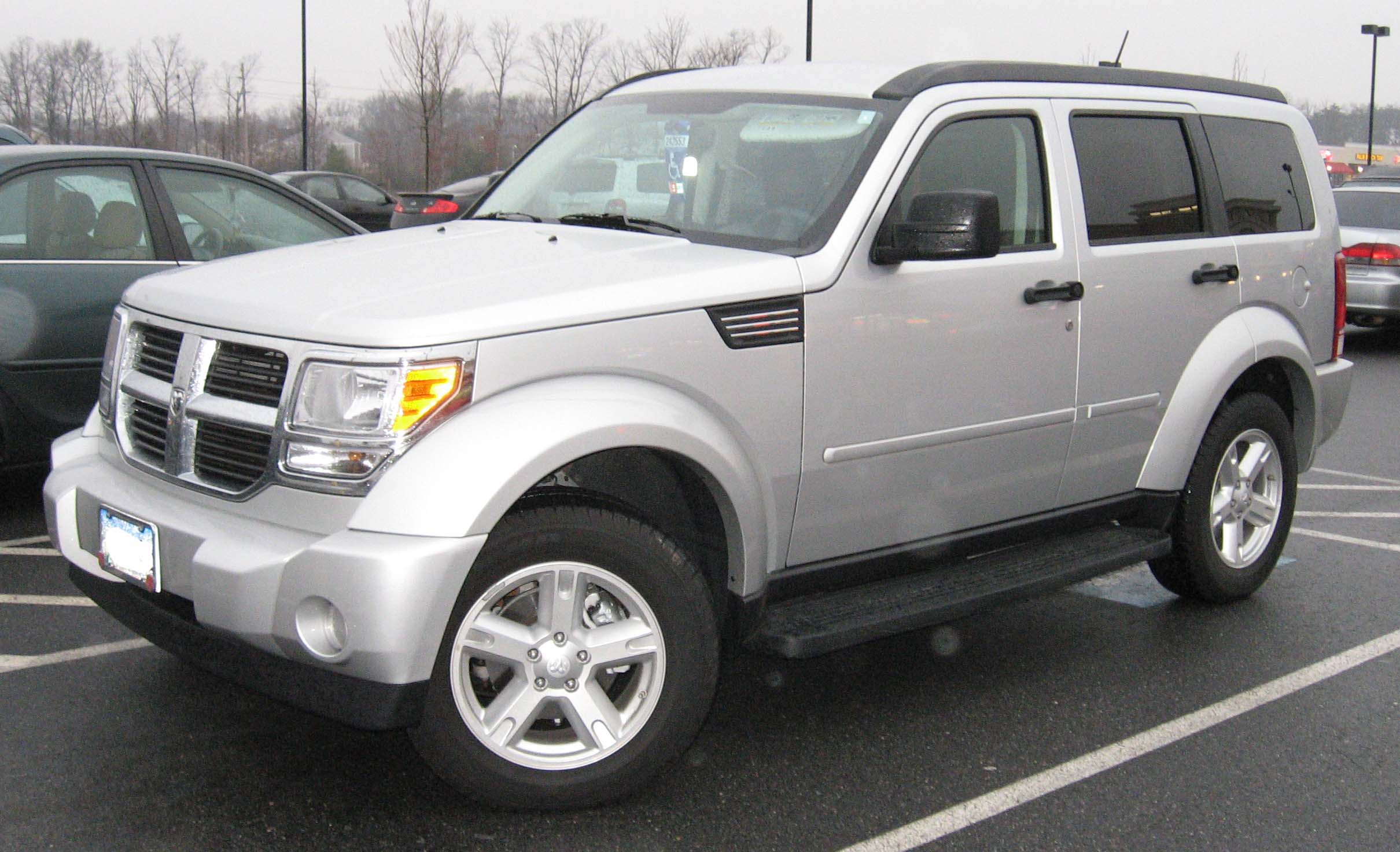
Dodge Nitro
"...d they have their framework like they do with the Nitro. Same thing."
The Dodge Nitro is a Dodge SUV-style vehicle. The podcast is saying its basic design and structure are similar to another model, meaning some parts and layout ideas carry over. That helps explain why two different cars might feel or work similarly underneath.
The Dodge Nitro is a compact SUV/crossover-style vehicle built by Dodge, known for sharing engineering and platform design elements across related models. The podcast context suggests the Nitro is being discussed in terms of its underlying “framework” being similar to another vehicle, which matters for how parts, layout, and mechanical components can carry over. That’s why it comes up when comparing how different models are built.

Dodge Dart
"[2475.1s] It can't be the Dart. [2476.0s] Heiner told me it's going to be the Dart."
The Dodge Dart is a Dodge model name. In racing, people talk about which car brand/model should represent Dodge, even though the race car is heavily modified to meet pro-stock rules.
The Dodge Dart is a compact car nameplate that has been used in pro-stock racing discussions as a potential Dodge entry. In pro stock, the “body” and brand identity matter, but the rules typically allow teams to build purpose-built race cars that share only certain exterior cues with the production model.

Ford Mustang
"[2483.6s] Someone tell me. [2484.9s] And then Mustang is out there. [2486.5s] That's that's legit."
The Ford Mustang is a very well-known Ford model. Here, the hosts are basically saying it makes sense for Ford to race with a Mustang in pro stock.
The Ford Mustang is being discussed as a “legit” pro-stock option for Ford. In pro stock drag racing, the Mustang’s appeal is partly about recognizable styling and partly about how teams can work within the class rules to build competitive cars.

Dodge Challenger
"[2487.9s] And I think they had the Challenger [2491.0s] and they switched to the Electric, [2498.6s] They still have the special edition Challenger. [2503.8s] Pro stock Challenger would look pretty cool"
The Dodge Challenger is a Dodge muscle car. The hosts are talking about whether Dodge should use it in pro stock racing and how the car’s look—like an angular body—could make it stand out.
The Dodge Challenger is mentioned as a current/previous pro-stock-style platform for Dodge, including talk about switching to an “Electric” while keeping the same underlying framework. The discussion also references a “special edition Challenger,” and imagines a pro-stock Challenger with an angular body—highlighting how exterior design cues can be part of the racing identity.
Electric (switching to Electric)
"[2487.9s] And I think they had the Challenger [2491.0s] and they switched to the Electric, [2493.2s] but they still kept the same framework."
They’re talking about switching to electric power in racing. The idea is that even if the drivetrain changes, the race car can still keep the same overall platform and look.
The transcript suggests a shift toward electric power while keeping the same “framework,” implying that the racing platform/rules may allow electrified drivetrains without changing the car’s overall identity. This is part of a broader motorsports trend: adapting existing racing categories to new propulsion technologies while maintaining continuity in competition rules and appearance.
stock trim
"They're going 185 in stock trim. So maybe they can't go to 10, but it'd be fun to see them go fast with a big tire under the back there."
“Stock trim” means the car is in its factory configuration, without performance modifications. When someone says it’s going “185 in stock trim,” they’re implying that number is achieved without aftermarket upgrades. This is useful because it sets a baseline for what the car can do as-built.
big tire under the back there
"So maybe they can't go to 10, but it'd be fun to see them go fast with a big tire under the back there."
A “big tire under the back” usually means a wider rear tire. That gives the car more grip when you accelerate hard. More grip can help the car go faster because the wheels are less likely to spin.
Adding a larger or wider rear tire increases the tire’s contact patch, which can improve traction during hard launches and acceleration. In drag-racing terms, better traction can help the car put power to the ground instead of spinning the wheels. It’s a common way to chase faster times without changing the engine.
NHRE tech
"And I'm going to see what NHRE tech and Lonnie and everybody has to say about it."
“NHRE tech” sounds like the technical experts the host wants to talk to. They’re likely the people who know the engineering side of what will work and what won’t. The host is trying to get a clearer understanding from them before moving on.
“NHRE tech” refers to technical people or a technical group associated with NHRE, who are being asked for their input on the car’s performance. In motorsports contexts, “tech” usually means engineers or specialists who evaluate setups, data, and likely outcomes. The hosts are treating their feedback as an important reality check.

Chevrolet Nova
"for the very first time with Murder Nova and Scott Taylor"
The Chevrolet Nova is an older American performance car. In this podcast, it’s mentioned as part of a themed segment name, so it’s being used as a recognizable car reference. The discussion isn’t about a specific new feature—more about the Nova being the topic.
The Chevrolet Nova is a classic American muscle car platform that’s often associated with older performance eras and enthusiast culture. In the podcast, it’s referenced as part of a segment name (“Murder Nova”), indicating it’s being used as a theme or focal point rather than a technical deep dive. That kind of mention typically points to the Nova’s recognition among fans of performance cars.
Outlaw Street
"...going to be out there for Outlaw Street the first time at Zmax Dragway. This is kind of an interesting deal."
“Outlaw Street” sounds like a racing category or event style. The hosts are saying it’s new to this venue, so it’s worth knowing what kind of competition it is.
“Outlaw Street” appears to be a specific drag/street-style competition class or event format. The hosts are discussing how it’s being staged for the first time at a particular venue, which makes it useful context for listeners who may not know the rules or intent of the class.
Discovery Channel
"You know, they were very popular when they were on Discovery Channel. They did not really have a place to race."
The hosts mention the group being “very popular” when they were on Discovery Channel, framing the event’s current momentum and audience familiarity. This is relevant as a media-to-motorsports crossover that can affect fan expectations and event turnout.
pro stock motorcycle
"...Are there any races that don't have pro stock and pro stock motorcycle at the same event? Or is there always one or the other?"
Pro Stock Motorcycle is the drag-racing class for bikes, similar in spirit to Pro Stock cars. The hosts are wondering if events usually include one or the other (cars or bikes) at the same time.
Pro Stock Motorcycle is the motorcycle counterpart to Pro Stock in NHRA-style drag racing. It’s run as its own class with bikes built and tuned for straight-line acceleration under class rules.
10 five class
"...if if NHRA had a 10 five class with that was just shy of outlaw 10 five. Right. It would be huge, right?"
In drag racing, classes are often organized by how fast the car or bike runs, measured in elapsed time (like 10.5 seconds). They’re talking about creating a new class for that kind of performance level.
The “10 five class” refers to a drag racing class defined around achieving performance in the 10.5-second range (commonly shorthand for elapsed time). The hosts are imagining an NHRA class just shy of “outlaw 10 five,” implying a structured bracket for that performance tier.
outlaw 10 five
"...NHRA had a 10 five class with that was just shy of outlaw 10 five. Right. It would be huge, right?"
“Outlaw 10.5” is a drag racing category name used to describe a performance tier (again tied to elapsed time around the 10.5s) with looser or different rules than more standardized classes. The hosts compare a proposed NHRA class to being “just shy of outlaw 10 five,” suggesting a boundary between rule sets or competitiveness.
bracket racing
"And it's an index class anyway. That's bracket racing. I don't care what those guys say."
Bracket racing is drag racing where you’re aiming for a specific time instead of racing for the absolute fastest run. You set a target time, then your goal is to be as close as possible to it with each run.
Bracket racing is a drag-racing format where competitors try to hit a pre-set target time (the “dial-in”) rather than just run the fastest pass. The winner is typically the car that gets closest to its dial-in without going faster than the target, making reaction time and consistency crucial.
index class
"And it's an index class anyway. That's bracket racing. I don't care what those guys say. It's 550 index class."
In an index class, the rules set a target performance number for everyone. Drivers are judged on how closely they hit that target, so setup and consistency matter a lot.
An index class is a drag-racing category where cars are assigned a target performance level (the “index”), and competitors are judged by how closely they match it. It’s designed to level the playing field across different vehicles by rewarding consistency and tuning rather than raw horsepower alone.
NHRA events
"Outlaw 10 five or like semi outlaw 10 five would be super sick at NHRA events. People would love it."
NHRA events are official drag races run under the NHRA organization. It’s one of the biggest drag-racing organizations in the U.S., so “NHRA events” usually means a well-known, structured race weekend.
NHRA stands for the National Hot Rod Association, which is one of the major governing bodies for drag racing in the U.S. When someone says “NHRA events,” they’re talking about races run under NHRA rules and class structures, typically with a large spectator and participant base.
Pro Mod
"Feed into the success of pro mod and all the buzz that pro mod has these days. If you had outlaw 10 five and pro mod at the same events, it would be bonkers."
Pro Mod is a drag racing class for extremely fast, highly modified cars. It’s popular and gets a lot of attention, so adding another class at the same events could make the show even more exciting.
Pro Mod (short for “Pro Modified”) is a high-performance drag racing class known for purpose-built, lightweight cars with very strong engines and advanced fuel/induction setups. It’s a major modern category that often draws attention and media coverage, which is why the host connects it to “buzz.”
factory stock showdown
"You got to get rid of nobody wants to watch factory stock showdown or factory X like nobody even as cool as those cars are. I think they're cool. But I don't want to watch that junk."
“Factory stock showdown” is basically a competition where cars are supposed to be near-stock, not heavily modified. The speakers are saying it’s less fun to watch than more extreme builds.
“Factory stock showdown” describes a racing/show format where cars are meant to stay close to factory configuration. The hosts are arguing that this kind of event isn’t as entertaining because the cars may not be as extreme or competitive as purpose-built drag cars.
Mustang Fox Body
"Yeah, and five stuff. Fox body mustangs. Oh, all kinds of stuff."
Here, “Mustang” means the Fox-body Ford Mustang generation. These are older Mustangs that many people modify for faster driving or racing. The podcast is basically saying there are lots of different Fox-body Mustang setups and topics people talk about.
In this podcast, “Mustang” specifically refers to the Fox-body generation, which is a well-known era of the Ford Mustang. Fox-body Mustangs are frequently discussed because they’re popular for modifications and motorsport builds, and they have a strong enthusiast following. The mention of “all kinds of stuff” suggests a wide range of Mustang-related topics or builds within that generation.
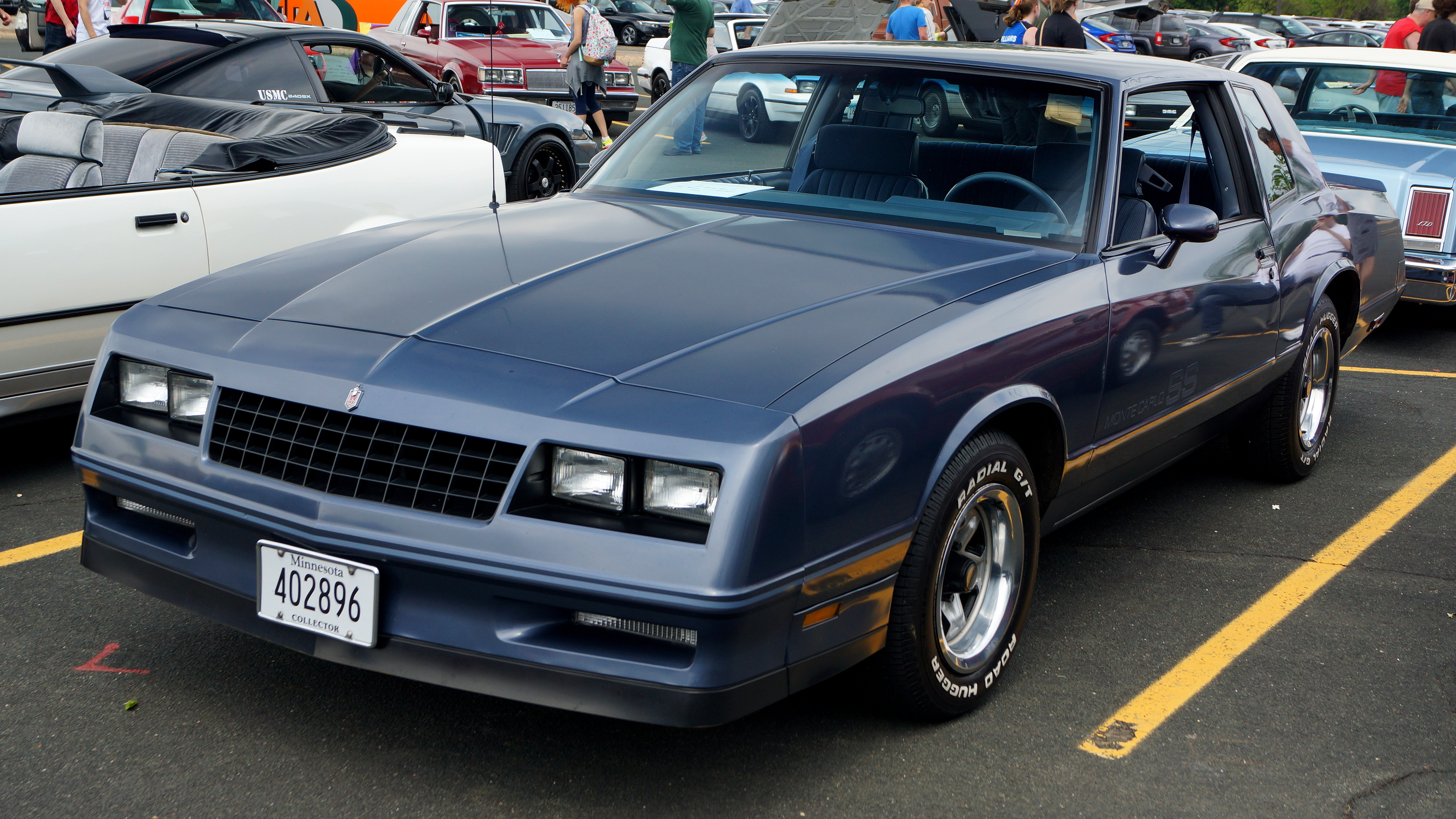
Chevrolet Monte Carlo
"Oh, all kinds of stuff. Sixty nine Camaros, whatever, whatever they want. Old Monte Carlo's cool stuff, man."
They mean an older Chevrolet Monte Carlo. It’s a classic model that enthusiasts often modify for racing or shows.
“Old Monte Carlo’s” refers to Chevrolet’s Monte Carlo, a personal-luxury/muscle-era coupe that also shows up in drag racing circles. The exact year isn’t specified here, but the name signals the classic generations people build and race.
10 fives
"As soon as you're literally putting 10 fives on pro mod cars and going in like pro mods on 10 fives. I mean, yeah, it's awesome."
In drag racing, “10 fives” means the car is running around the 10-second mark in elapsed time. It’s a quick, brag-worthy number in that world.
“10 fives” is drag-racing shorthand for running in the 10-second range (typically elapsed time, ET). The speaker uses it to emphasize how quickly the cars are performing, especially in the context of pro mod builds.
run in the seven
"They're real cars. They run in the seven. There's like four of them, though."
“Run in the seven” refers to elapsed times in the 7-second range, which is extremely fast for a drag car. The speaker is using it to argue that certain cars are genuinely capable, even if the event format isn’t their favorite to watch.
Request an Explanation
Heard something you'd like explained? We'll add it to this episode.
Sign in to request explanations for terms you heard.
Want to learn more?
Browse our glossary for plain-English explanations of automotive terms, jargon, and concepts.
Help improve this episode
See something that's not quite right? Our annotations are AI-generated and can sometimes miss the mark. Click the flag icon on any annotation to suggest a correction.