
About this episode
The hosts bounce from a jaw-dropping Lexus LFA auction result to a Lamborghini-shaped watercraft, then into a string of collector-car debates about sequential VIN Porsches, modified NSXs, Shelby authenticity, and Cobra replicas. Along the way they weigh originality versus use, compare dealer buying experiences, and even drift into road trips, map-reading, Vegas, and upcoming Bring a Trailer events. The throughline is how enthusiasts assign value, spot real from fake, and decide whether to preserve a car or actually drive it.
This week Alex and Beck jump right in with nothing much on the agenda, but overcome that hurdle to cover how the LFA has evolved in the market; peeling out and peeling tires; waterborne Lambos; viewers vs. watchers; a study in twins; sedentary Hondas; two very different takes on the modern dealer experience; whether a GT350 is truly necessary; the Mount Rushmore of "is it real?"; a practical argument against divorce; a practical argument for driving the wheels off the nicest car you can find; letting people abuse your precious; an impressive performance by Beck's kids; taking fake places at face value; and, most importantly, instilling the road trip spirit and a love of maps in one's offspring;
Follow along! Links for the listings discussed in this episode:
4:46 2025 Watersports Car Series L 16′
9:22 Sequential-VIN 1965 Porsche 911 Coupes
11:41 3k-Mile Supercharged 2005 Acura NSX-T 6-Speed
16:33 BaT Auctions Presents: The Fox-Body Collection – Six 1980s Ford Mustangs
19:11 1964 Chevrolet Chevy II Nova SS L77 4-Speed
22:24 1967 Shelby Mustang GT350 Fastback 4-Speed
22:49 1966 Ford Mustang GT Fastback K-Code 4-Speed
36:18 Event Coverage: BaT Alumni Gathering at the Sonoma Speed Festival
49:35 Delaware BaT Meet-Up—May 16 with McQueen Classics!
Got suggestions for our next guest from the BaT community or an idea for our next game episode? Let us know at [email protected]!
Bring a Trailer Podcast
"we drive various collection of older used Honda's and Acura's, and I always have, because I'm such a fanboy for Honda."
This is from the Bring a Trailer Podcast. In this part, the host talks about how dealers keep and present older cars.
This segment is part of the Bring a Trailer Podcast, which focuses on enthusiast car culture and auction-style buying/selling discussions. The host’s comments here relate to how sellers and dealers present cars for sale.

Porsche Carrera GT
"It would have been incredible. [36.1s] It would have been incredible. [37.0s] It definitely would be like sort of Carrera GT territory, except today."
They’re comparing the idea to a Porsche supercar that fans really respect. The point is: a manual version of the Lexus LFA would have felt like that kind of “real driver” car.
“Carrera GT” is a reference to the Porsche Carrera GT, a supercar that’s famous for being a true enthusiast machine. In the conversation, it’s used as a benchmark for how great a manual Lexus LFA could have been.
vaporware
"[48.5s] a long time. [49.0s] A little bit of vaporware. [49.6s] Yes, correct."
“Vaporware” means something that sounds real and gets talked about, but it doesn’t show up as promised. It’s basically hype that takes forever to become a real product.
“Vaporware” describes a product that’s announced or heavily rumored but doesn’t actually arrive when expected—or may never arrive. In this context, they’re saying the idea of a future version (like a manual or next-gen concept) felt promised but not real for a long time.
Carrera GT money
"But then today, it hit Carrera GT money. [50.7s] But then today, it hit Carrera GT money."
“Carrera GT money” is a shorthand comparison for pricing that reaches the level of the Porsche Carrera GT, a very expensive and highly sought-after supercar. The hosts mean that the Lexus LFA has become so desirable that its market price now resembles that rarefied tier.
Nürburgring
"It's a sub-1,000-mile example, but it's not a Nurburgring or anything. Not a Nurburgring, not a particularly interesting color."
The Nürburgring is a legendary race track in Germany. Saying a car isn’t a “Nürburgring” example usually means it’s not a car with well-known track/racing credentials.
The Nürburgring is a famous German race track (often called “the Ring”) known for testing cars hard. When someone says a car isn’t a “Nürburgring” example, they usually mean it’s not a track-focused or track-proven car with notable racing history.
sub-1,000-mile
"It's a sub-1,000-mile example, but it's not a Nurburgring or anything. Not a Nurburgring, not a particularly interesting color."
“Sub-1,000-mile” means the car has less than 1,000 miles on it. Low mileage usually makes a car more appealing to collectors because it likely has less wear.
“Sub-1,000-mile” means the car has been driven less than 1,000 miles since new or since a specific restoration. Low mileage like this often boosts collector interest because it suggests less wear and fewer used-car variables.
preservation
"It also wasn't a no-mile car. It wasn't like a true preservation. It's got a couple hundred miles, but yeah, $1.8 million."
In car collecting, “preservation” usually means the car has been kept mostly original and not changed much. People value “true preservation” because it can mean fewer modifications and more original parts.
In collector-car talk, “preservation” usually means the car has been kept in original or near-original condition rather than heavily modified or restored. A “true preservation” is often valued because it retains period-correct components and history.
reserve
"I thought it disclosed what the reserve was, but it wasn't $1.8 million. We knew it was going to sell. We didn't know it was going to clear a reserve by that much."
A reserve is the lowest price the seller will accept. If the bidding doesn’t hit that number, the car might not be sold.
In auction terms, a reserve is the minimum price the seller is willing to accept. If bidding doesn’t reach the reserve, the car may not sell even if bids are high.
manual transmission
"It doesn't have a manual transmission, but NA engine, and at the time, what felt like very complicated esoteric styling, but now I actually think it's not that crazy compared to what cars look like now."
A manual transmission is the kind where you use a clutch pedal and a stick to choose gears. Many car fans like it because it feels more connected and gives you more control.
A manual transmission is a gearbox controlled by the driver using a clutch pedal and gear lever. Enthusiasts often prefer it because it gives more direct control over engine speed and gear selection.
NA engine
"It doesn't have a manual transmission, but NA engine, and at the time, what felt like very complicated esoteric styling, but now I actually think it's not that crazy compared to what cars look like now."
“NA” means naturally aspirated, so the engine doesn’t use a turbo or supercharger to force air in. It usually makes power by revving and breathing normally.
“NA” means naturally aspirated, referring to an engine that makes power without a turbocharger or supercharger. Naturally aspirated engines typically rely on engine speed and airflow rather than forced induction.
DCT
"It's not DCT. Right. It's still single-clutch."
DCT means a transmission with two clutches. It helps the car shift gears quickly and smoothly.
DCT stands for dual-clutch transmission. It uses two clutches—one for odd gears and one for even gears—so shifts can be very fast and smooth with less interruption of power.
single-clutch
"Right. It's still single-clutch. Not a manual, obviously."
Single-clutch means the car uses one clutch to change gears, but it does it automatically. It can feel a bit less smooth than transmissions with two clutches.
A single-clutch automated transmission uses one clutch, but the car’s computer controls it automatically. Compared with dual-clutch systems, it can feel less smooth because power delivery may be interrupted more during shifts.
automated transmissions
"...the huge backlash against single-clutch automated transmissions, but I remember when they came out, people thought it was cool."
Automated transmissions shift gears for you. You don’t have to press a clutch pedal yourself.
Automated transmissions are gearboxes where the driver doesn’t manually operate the clutch; actuators and electronics handle clutch engagement and shifting. They’re often described as “automated manual” designs when they use a conventional clutch and gear layout.
dual-clutches
"...in the shadow of dual-clutches coming out and being so much smoother and so much easier to live with."
Dual-clutch transmissions use two clutches to set up the next gear ahead of time. That usually makes shifting feel quicker and smoother.
Dual-clutch transmissions use two clutches to pre-select the next gear, which can make shifts faster and smoother than single-clutch automated setups. That’s why they’re often perceived as “easier to live with.”
SMGs
"Maybe that'll happen with single-clutch transmissions. Maybe not. SMGs and F1s, SMGs, I could imagine people maybe get to a point where they're not always converting them to six-speed..."
SMG is BMW’s name for an automated manual-style transmission. It shifts like a manual, but the car handles the clutch and gear changes for you.
SMG is BMW’s Sequential Manual Gearbox branding. It’s an automated manual concept where a computer controls a conventional manual-style gearbox and clutch, aiming for quicker shifts than a traditional automatic.
six-speed
"...converting them to six-speed just because they're relatively simple to work on."
Six-speed means the car has six forward gears. Here, they’re talking about swapping to a regular manual gearbox with six gears.
A six-speed transmission has six forward gear ratios, which can help keep the engine in a favorable RPM range for acceleration and efficiency. In this context, it refers to converting an automated/manual-automated setup to a conventional manual with six gears.
paddles
"Yeah, I drove one SMG and I drove one Gallardo with paddles. Well, we were just talking about sport-o-matics like crazy yesterday."
Paddle shifters are small levers behind the steering wheel. Pull one to shift up or down without using a clutch pedal.
Paddle shifters are steering-wheel-mounted controls that let you change gears electronically without using a clutch pedal. They’re common on performance cars because they make gear changes faster and more consistent than using a traditional shifter.

Lamborghini Gallardo
"Yeah, I drove one SMG and I drove one Gallardo with paddles."
The Lamborghini Gallardo is a V10 supercar known for its sharp throttle response and driver-focused controls. In this context, it’s mentioned with paddle shifters, which let the driver command gear changes without using a clutch pedal.
sport-o-matics
"Well, we were just talking about sport-o-matics like crazy yesterday."
“Sport-o-matics” means an automatic transmission that tries to feel more exciting, like a manual. Some versions let you control shifts with paddles or special shift positions.
“Sport-o-matics” is a casual way to refer to sport-oriented automated transmissions—gearboxes that shift automatically but are designed to feel more responsive and “manual-like.” The key idea is that the driver can often influence shifting using paddles or shift gates.
Tiptronic
"Have you ever driven any of the old Volkswagen Tiptronic things where you can slide it into the separate little gate and you can ratchet shift it back and forth?"
Tiptronic is an automatic transmission mode that lets you choose gears yourself. You move the shifter into a manual-like position and then shift up or down in order.
Tiptronic is Volkswagen/Audi’s name for a manual-control mode on an automatic transmission. It typically uses a shift gate or lever position that lets you select gears in sequence (up/down) like a manual, even though the transmission is still automatic.
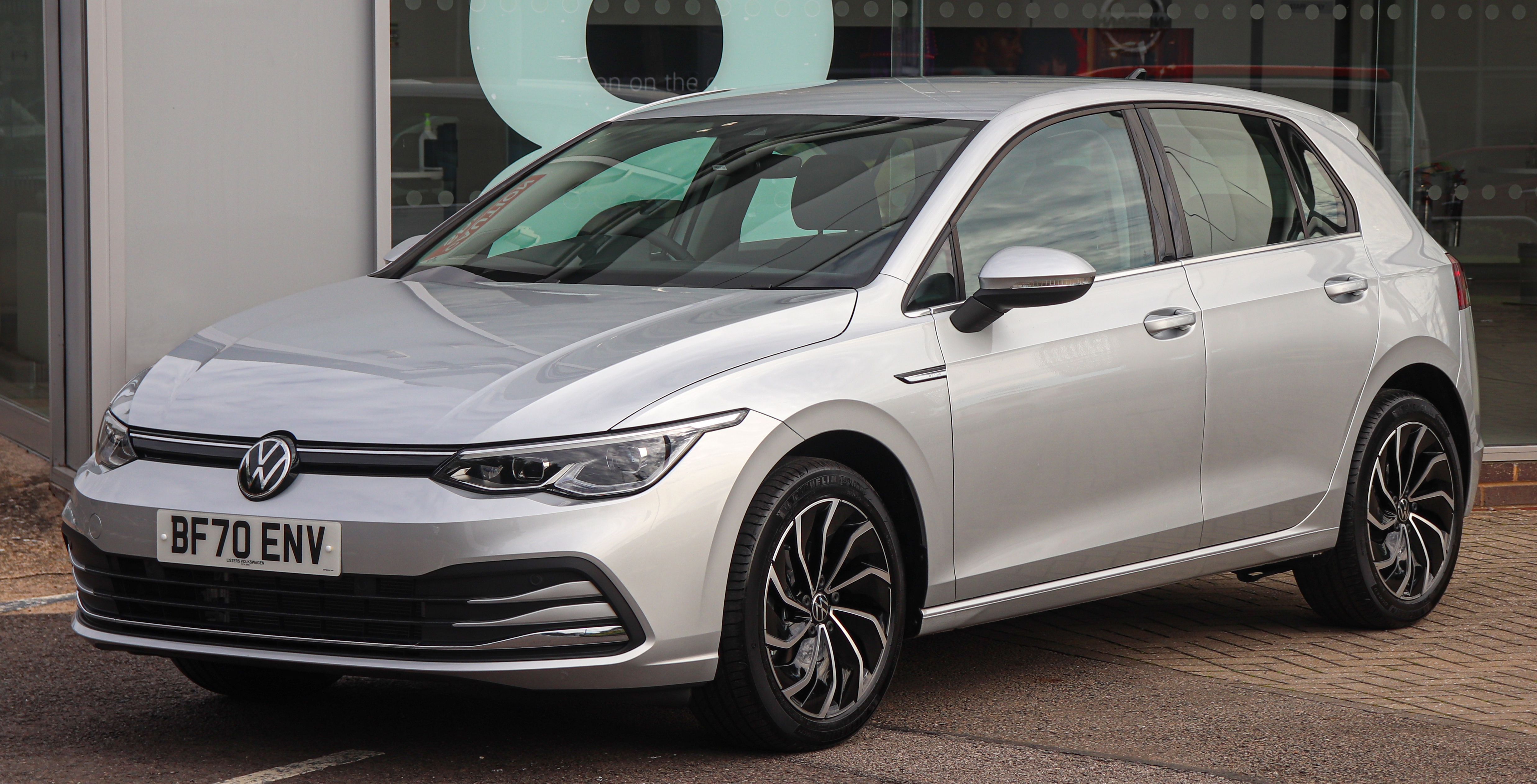
Volkswagen Golf
"Yeah, I mean, our 2015 Volkswagen Golf that we have, Base Golf, is our little daily that sits at home and parked on the street for pretty much all the time."
The 2015 Volkswagen Golf is their everyday car. They’re using it as an example of an automatic that can be shifted like a manual when you put it into the manual-style mode.
The 2015 Volkswagen Golf is mentioned as the speaker’s daily driver with an older-style automated/manual-shift behavior. The point is that some automatics let you move the shifter into a manual gate to “ratchet” through gears.
treads
"I went to go check them and the treads literally falling off. Oh, dude. Peeling off."
Tread is the part of the tire that touches the road. If it’s coming apart or peeling off, the tire can lose grip and become dangerous.
Tread refers to the rubber on a tire’s contact surface that provides grip. When the tread is “falling off” or peeling, it can indicate severe tire wear, damage, or delamination—making the tire unsafe, especially in wet or high-speed conditions.
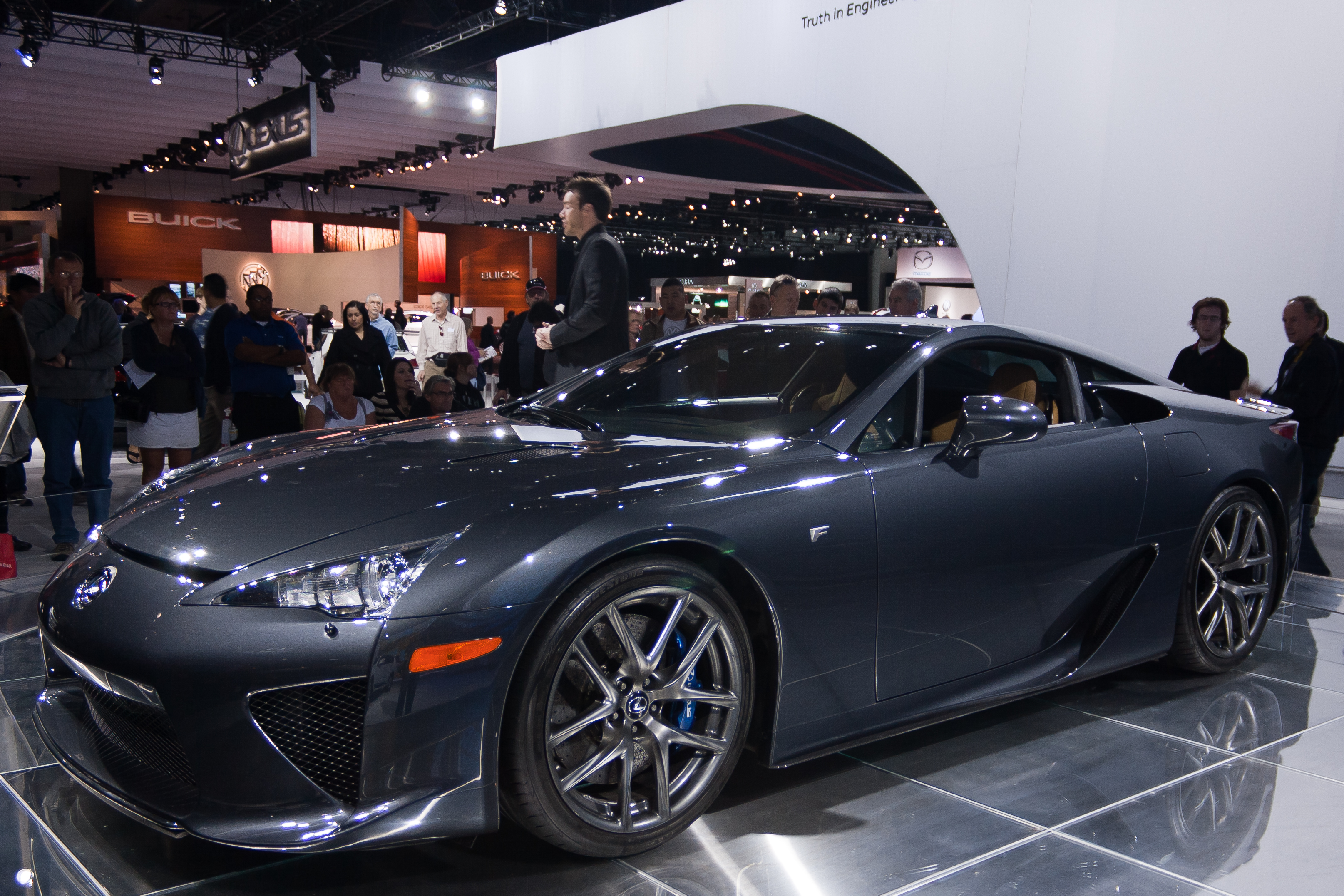
Lexus LFA
"[250.8s] Okay. [250.8s] Lexus LFA's, we covered that. [252.1s] Should we talk other cool results after that?"
The Lexus LFA is a rare, high-end supercar made by Lexus. It’s special because it was built in small numbers and is known for a very exciting engine and driving feel.
The Lexus LFA is Lexus’s halo supercar from the late 2000s, known for its high-revving V10 and lightweight construction. It’s become a modern collectible because production was limited and the car is famous for its sound and engineering.
white glove
"[277.5s] Oh, okay. [278.2s] There's a lot of drop. [279.2s] Two out of the four of these came out of white glove. [282.0s] So I'm like, talking about them."
“White glove” is a shorthand for a high-touch, concierge-style service level—typically meaning extra handling, vetting, and presentation compared with standard listings or sales. In auction/listing contexts, it usually implies a more curated process and better buyer experience.
converted into a boat
"Roadster Spider that has been somehow converted into a boat. But it has the wheels and everything. Has the wheels and the brake calipers. So it looks like it got plopped down on a hull."
They’re describing a car-body conversion where the Lamborghini-looking body is put on a boat hull. So it looks like a car, but it’s actually meant to ride on water.
This describes a vehicle conversion where a roadster-style Lamborghini body is mounted onto a hull so it can float and move like a boat. The hosts emphasize that it still has visible car hardware like wheels and brake calipers, but the “base” is a watercraft hull.
brake calipers
"But it has the wheels and everything. Has the wheels and the brake calipers. So it looks like it got plopped down on a hull."
Brake calipers are the parts that squeeze the brake pads to stop the wheels on a car. They mention them because the watercraft still has car-like hardware visible.
Brake calipers are the clamping components in a disc-brake system that squeeze brake pads against a rotor to slow the vehicle. Here, the hosts point them out to show the craft still has recognizable car braking hardware, even though it’s mounted on a hull.
side by side jet ski
"It is essentially, really it is a side by side jet ski is what it really is. Oh, okay. It is a fully... Are these series produced?"
They’re saying it’s basically a jet ski setup, just with a Lamborghini-looking shell. Instead of being driven like a car, it’s meant to work like a personal watercraft.
A “side-by-side jet ski” refers to a personal watercraft layout where two riders sit next to each other. The hosts use this to explain the underlying function of the craft: it behaves more like a jet ski than a traditional car.
series produced
"It is a fully... Are these series produced? This is not a one-off."
They’re asking if this is a one-of-a-kind custom project or if multiple copies are made. “Series produced” means it’s made repeatedly, not just once.
“Series produced” means the item is manufactured in an ongoing production run rather than being a one-off custom build. The hosts are asking whether this water-converted Lamborghini-style craft is made as a repeatable product.
tow
"You can't tow anything with them. You can't take more than two people, essentially."
“Towing” means pulling something behind the vehicle, like a person on a tube. If they say you can’t tow with it, it’s basically not meant for that.
In boating terms, “towing” means pulling something behind the craft, like a tube or another boat. If the speaker says you can’t tow with it, they’re pointing out it’s not set up for that kind of load or towing hardware.
water jet
"It's got a 250 horsepower motor and a water jet, right? Or does that have a prop? It's a water jet."
A water jet pushes the boat forward by shooting a stream of water out the back. It’s different from a propeller, and it can make the craft handle differently.
A water jet is a propulsion system that accelerates water to create thrust, usually through a pump and nozzle. Compared with a propeller, it can offer strong maneuverability and reduced risk of prop strikes, but it changes how the craft handles and how it’s maintained.
250 horsepower
"It's got a 250 horsepower motor and a water jet, right? Or does that have a prop? It's a water jet."
Horsepower is how strong the engine is. “250 horsepower” is a way of saying this craft has a pretty powerful motor for the water.
Horsepower is a measure of engine power output, and “250 horsepower” indicates the approximate strength of the motor. In a watercraft context, it helps estimate how fast and how aggressively it can run.
prop
"Or does that have a prop? It's a water jet. You can see on the rear end of the boat, you can see the little exit point for it."
A “prop” is the boat’s propeller—the spinning part that pushes it through the water. They’re saying this one uses a water jet instead of a prop.
A “prop” is short for propeller, the spinning blades that push a boat through the water. The speaker is contrasting a propeller setup with a water-jet setup, which affects thrust delivery and handling.
Yamaha 1.8 liter
"Like a four-cylinder jet ski, it's running off a Yamaha 1.8 liter. And this thing's just sort of wild."
“1.8 liter” tells you the engine size—how much space the cylinders take up. Yamaha is the company that makes that engine used in the jet-ski-style setup.
“1.8 liter” refers to engine displacement, a measure of the total volume of the engine’s cylinders. Yamaha is the engine/jet-ski brand here, and the speaker is tying the craft’s powertrain to a Yamaha-sourced 1.8L setup.
return on investment
"It sold for 50K. And I feel like that's a pretty good return on investment on a boat. Oh, 100%, especially something so outrageous."
“Return on investment” just means: did you make money (or get good value) compared to what you paid? Here, they’re saying selling it for $50K seems like a good deal for a silly boat.
“Return on investment” (ROI) is a way to judge whether spending money on something was worth it. In this segment, they’re talking about how selling the item for $50K compares to what it cost, even though it’s a boat purchase.
lot number 239125
"It is lot number 239125. Look for the Lamborghini-shaped boat. It's a hot pink."
An auction “lot number” is like a listing ID. It tells you exactly which item the auction is talking about.
A “lot number” is the auction listing identifier used to track a specific item in an auction catalog. It helps bidders and viewers find the exact vehicle or object being discussed.
Lamborghini-shaped boat
"Look for the Lamborghini-shaped boat. It's a hot pink. You don't need that lot number."
The hosts describe the boat as “Lamborghini-shaped,” using Lamborghini as a recognizable design reference. That implies the boat’s styling is meant to look like the brand’s supercar aesthetic, even though it’s not actually a Lamborghini vehicle.
facetiousness
"Yeah, 127 comments on it too. I presume facetiousness."
“Facetiousness” means making a joke or acting like you’re not being totally serious. They’re suggesting the listing was meant to be funny.
“Facetiousness” means joking or being intentionally unserious. In auction/listing context, they’re implying the listing’s humor or exaggeration is part of why people engaged with it.
BET listing
"So average BET listing probably does anywhere from 10,000 to 15,000 views at this point. It probably maybe peaked 2022, 2023, but a lot of that was because we had less inventory."
“BET listing” sounds like a specific kind of auction/listing on the site. They’re using it to talk about typical early traffic numbers for that category.
“BET” appears to be the platform’s shorthand for a listing type or auction format. In this segment, they use it to describe typical view ranges for an average auction listing.
dilute it
"how many listings can you have on the site, like when you dilute it? And one of the health signs that we're always watching is,"
They’re talking about what happens when there are more cars listed at once. If there are too many options, each one might get less attention even if the site is still busy.
“Dilute it” here means spreading attention across more listings so each individual auction may get fewer views or watchers. It’s a marketplace dynamics concept: more inventory can reduce per-listing engagement even if total traffic grows.
watcher count
"do you still get healthy view count, comment count, and watcher count? And it's been remarkable as the volume has grown that that tends to grow along with it."
A watcher count is how many people are following the auction closely. It’s a better sign of real interest than just getting clicks.
Watcher count is the number of users who add a listing to their watch list during an auction. It’s a stronger signal of buyer intent than raw views because watchers are actively tracking the car.
comment count
"do you still get healthy view count, comment count, and watcher count? And it's been remarkable as the volume has grown that that tends to grow along with it."
Comment count is how many people are talking about the car in the listing. More comments usually means more people are interested and asking questions.
Comment count refers to how many messages users post on a listing. In auction communities, comments often reflect active discussion and buyer questions, which can correlate with engagement.
day one of your auction
"I tell them, well, you got 4,000 views and like, well, is that good or bad? I'm like, well, it's day one of your auction, so that's very good."
They’re saying that on the first day, it’s normal for numbers to be smaller. If you already have decent views early, that’s a good sign.
They’re using timing as context for performance metrics: early in an auction, view and watcher numbers are expected to be lower than later stages. “Day one” is treated as a baseline for judging whether early engagement is healthy.
premium listings
"I'm not talking about premium listings. And it also depends how obscure your car is."
Premium listings are auctions that get extra promotion or visibility. They can attract more watchers than a normal listing, so you can’t compare numbers directly.
Premium listings are higher-tier placements that typically get more visibility than standard listings. The hosts distinguish watcher numbers for regular auctions versus those boosted by premium exposure.
obscure your car is
"And it also depends how obscure your car is. Well, you could have a really popular car."
If a car is unusual or not many people know it, fewer people may follow the auction. That can lower the number of watchers even if the listing still gets views.
“Obscure” means the car is less well-known or harder for typical buyers to recognize. Less mainstream demand can reduce watcher counts even if the listing gets plenty of views.
sequential VIN
"was the sequential VIN 65 Porsche 911s. [564.5s] This was a study."
A VIN is like a car’s serial number. “Sequential VIN” means the numbers are next to each other, which can make the cars feel more special to collectors.
A sequential VIN means the cars’ vehicle identification numbers are consecutive or part of a run. Collectors often treat sequential VINs as a sign of a coordinated production batch, which can make the cars more interesting for provenance and rarity.
Paired VINs
"[574.2s] Paired VINs, yeah. [575.1s] Every day."
“Paired VINs” means the seller is grouping cars by their VIN numbers as if they belong together. The hosts are basically asking whether that kind of pitch actually convinces buyers to bid.
“Paired VINs” refers to a marketing or sales approach where VINs are treated as linked sets—often implying a planned relationship between cars (like matching production runs or coordinated provenance). The hosts frame it as something that gets “pitched” to them to see if it actually moves bids.
VIN matched
"should I be listing my VIN matched demons, my sequential VIN this, all this kind of stuff. And we virtually always say no."
“VIN-matched” means the seller is claiming the car’s details can be traced back to that exact VIN. It’s basically a way to prove the parts or history really belong to the car being sold.
“VIN-matched” is a provenance/verification claim used in listings to indicate that certain components or documentation are confirmed to correspond to the specific car identified by its VIN. It’s often used to support authenticity and reduce the chance of mixing parts from similar cars.
lead image
"And at least you'll have that lead image to go with him forever, which is freaking sick. It was a pretty good one."
A “lead image” is the main picture that shows up first for a listing. People often decide whether to click based on that first photo, so it can be important for how the listing performs.
A “lead image” is the primary photo shown first in a listing. In auction-style marketplaces, that image strongly influences first impressions and click-through, so it can matter even if the final price is disappointing.

Acura NSX
"Another listing from Sam is this 3000 mile NSX Silver. Oh, with the Supercharger on it. The Supercharger on it."
The Acura NSX is a high-end sports car. Here they’re talking about a specific NSX listing that’s been modified with a supercharger, so it’s not the factory version.
The Acura NSX is a mid-engine sports car known for its performance and collectible status. In this segment, the hosts discuss a low-mileage example that has been modified with a supercharger, which can significantly change how it drives compared to stock.
Comtech
"Is it a Comtech? Because some of them are actually... It is a Comtech. Okay. So some of those are like carb certified."
Comtech is mentioned as the “brand to use” for modifications that are allowed on the road. The key idea is that some setups are certified to meet emissions rules, so they’re easier to register and drive legally.
Comtech (as referenced here) appears to be a certification/approval program or brand associated with making certain modifications “legal” for street use. The hosts imply that some Comtech-related setups are “carb certified,” meaning they meet emissions requirements in applicable jurisdictions.
carb certified
"So some of those are like carb certified. They're legal for... Right."
“CARB certified” means the modification meets emissions rules set by California. If it’s certified, it’s usually easier to legally register and pass emissions checks.
“CARB certified” refers to approval by California’s Air Resources Board (CARB) that a modification meets emissions standards. When a part is CARB-certified, it’s generally easier to keep the vehicle compliant for registration and inspections in CARB-influenced areas.

Supercharged NSX
"Have you ever driven a Supercharged NSX? Nope. Did you say that? Yes, Zayman Supercharged is."
An NSX is a Honda sports car. If it’s “supercharged,” someone added a device that pushes extra air into the engine so it can make more power. That can make the car feel stronger and more responsive.
The Honda NSX is a mid-engine sports car, and “supercharged” means it’s been modified to use a supercharger to force more air into the engine. That typically increases power and changes how the car feels under acceleration and load.
Supercharger
"Shout out to our colleague, Brian Zayman, who put a Supercharger on his and has offered to let me drive it."
A supercharger is a device that helps the engine breathe better. It forces extra air in, so the engine can make more power. It’s like giving the engine a boost.
A supercharger is an engine-mounted forced-induction device that uses a belt-driven compressor to push more air into the engine. More air generally allows more fuel to be burned, which increases power—especially at lower engine speeds.
chassis
"The chassis obviously feels like it can handle a ton more power than it has."
The chassis is the car’s main “frame” that everything is mounted to. If it’s strong and rigid, the car can handle more power and rougher driving more consistently. It helps the car feel solid instead of wobbly.
In car talk, the chassis is the car’s main structural foundation—everything that supports the body and drivetrain and helps the car stay rigid. A stiffer, well-designed chassis can better handle higher power and harder driving without flexing too much.
all aluminum
"Those cars, despite being all aluminum, I mean, I guess 3000 pounds isn't that heavy, but they're heavier than you might think."
“All aluminum” means the car uses aluminum materials in its structure. Aluminum is lighter than many other metals, which can help the car feel more nimble. But the car can still end up heavier than you’d guess depending on design.
“All aluminum” refers to using aluminum extensively in the car’s structure and body panels to reduce weight. Aluminum is lighter than steel, but it can still be engineered to be strong and stiff.
aftermarket wheels
"Oh, this is a fixed light. Very end has aftermarket wheels. It's really pretty."
Aftermarket wheels are wheels you buy from a company other than the one that made the car. They can make the car look different, and the wheel/tire setup can also affect how the car drives. Fitment matters so they don’t rub or cause issues.
Aftermarket wheels are wheel designs sold by companies other than the original manufacturer. They can change the car’s appearance and sometimes its handling characteristics depending on wheel weight, tire choice, and fitment.
comparable research
"And when we do our comparable research, part of the challenge is variables such as the modifications."
Comparable research means figuring out a car’s value by comparing it to similar cars. If the cars have different mods or different condition, the comparison can be off.
“Comparable research” is the process of estimating a vehicle’s value by looking at similar cars sold or listed around the same time. The hosts emphasize that modifications and condition variables can make comparisons misleading unless you account for them.
modifications
"And when we do our comparable research, part of the challenge is variables such as the modifications. We can find NSXs that have four-digit odometers."
In collector-car valuation, “modifications” are changes made to a car from its original factory configuration. The hosts note that it’s hard to find truly comparable examples when one car has been modified and another hasn’t.
four-digit odometers
"We can find NSXs that have four-digit odometers. We can't necessarily find them that also have these changes, because usually low mileage in stock is mean stock."
A four-digit odometer reading means the car has only a few thousand miles. People often assume that’s better, but mileage alone doesn’t guarantee the car is truly in original condition.
A “four-digit odometer” reading means the car’s mileage is in the thousands rather than tens of thousands. The hosts use it as an example of how low mileage can suggest a car is more original, but they caution that it still may not reflect true condition or stock parts.
stock parts
"So this is an 05 NSX. It was done in 05, and all the stock parts are there. Kind of beautifully laid out at the bottom."
Stock parts are the original parts the car had when it was new. Collectors often prefer them because they help the car stay “as it was,” which can affect value.
“Stock parts” are the original components that came on the car from the factory. The hosts point out that even if a car has been worked on, having all stock parts can matter a lot for collector value and authenticity.
lot 240117
"They probably modified it at the dealer, right? If you find this listing on the site, lot 240117, when I first heard what this car was, I was like,"
A “lot” number is the auction’s way of labeling a specific car for sale. “Lot 240117” points to the exact listing they’re talking about.
“Lot 240117” refers to a specific auction listing number used to identify a particular vehicle in an auction catalog. It’s a way to precisely reference the exact car being discussed rather than a general model.
dappled lighting
"because it's got what we would call dappled lighting, like if it was under a tree, and it's got direct sunlight and shadows all over it."
Dappled lighting is when sunlight comes through something like tree leaves, creating broken patches of light and shadow. For car photos, it can make the car look more interesting, but it can also make it harder to see the exact shape of the paint and body lines.
Dappled lighting is a pattern of light and shadow that looks “speckled,” often caused by sunlight filtering through leaves or other irregular surfaces. In car photography, it can make body lines and reflections look more natural, but it can also hide details if the pattern is too busy.

Honda S600
"... sometimes that means, like in San Luis Vospo, a S600 Roadster and a CVCC and an interesting 60s motorc..."
The Honda S600 is an older Honda sports car from the 1960s. It’s known for being small and fun, and people still talk about it today. In the episode, it’s mentioned as part of a group of interesting old Honda vehicles and engines.
The Honda S600 is a small, classic Japanese sports car from the 1960s known for its compact size and enthusiast appeal. The podcast context mentions it alongside other interesting 1960s-era Honda topics, including a roadster and a CVCC engine reference, highlighting how these models are part of a broader “cool old tech” conversation. It’s brought up because the S600 is a recognizable piece of that era’s automotive history.
fixed headlight
"I think it's an O3, but it's a fixed headlight black NSX, very similar to this, no miles. It's the dealer's car. It's still got the window sticker on the thing, and it sits there."
A “fixed headlight” just means the headlight stays in one position instead of moving. The host uses it to describe which NSX version they saw.
“Fixed headlight” describes a headlight design where the lights do not move or pop up; they’re permanently mounted in place. On the early Acura NSX, this is a key visual identifier compared with later headlight styles.
window sticker
"It's the dealer's car. It's still got the window sticker on the thing, and it sits there. I do find that interesting."
A window sticker is the original paper label that shows the car’s price and options. If it’s still on the car, it often means the car was kept as a display and hasn’t been driven much.
A window sticker (often called a Monroney sticker) is the original manufacturer’s pricing and equipment label that’s placed on a new car’s window. Finding one still on a dealer car usually suggests it’s been kept as an unsold display or has very low mileage.
O3
"Right, so they bought like an O3 or an O5 or whatever and let it sit."
They’re using “O3” as shorthand for “03,” meaning a car from the 2003 model year. It’s just a quick way to say which year the car is.
“O3” here is shorthand for an “03” model year car. In collector/dealer talk, people often abbreviate model years to quickly refer to a specific vintage without saying the full year.
collector
"I've got a collector and Ford dealer in Pennsylvania who I've worked with a few times."
Here, “collector” means a person who keeps cars because they’re special—like rare models or important history—rather than just using them every day. Collectors can make certain cars more desirable.
In this context, “collector” means someone who buys and keeps cars (often rare or historically significant ones) for ownership and preservation rather than daily use. Collector culture often drives demand for specific models and can affect how dealerships display cars.

Ford Mustang
"He did the Fox body Mustang collections years ago. Oh, I loved that one."
A “Fox body Mustang” is a Mustang from Ford’s Fox-era design (mostly late 1970s through early 1990s). Enthusiasts like them because there are lots of parts and different versions to choose from.
“Fox body Mustang” refers to the Ford Mustang built on the Fox platform (roughly the 1979–1993 era). It’s a popular collector category because of its huge aftermarket support and the variety of trims and engines that were offered.
Shelby
"He has a collection of Shelby's and Mustangs, and he's found his father's old Mustang, just like hunted them down and now owns it..."
“Shelby” refers to Shelby-branded Mustangs—cars associated with Carroll Shelby and the Shelby American performance brand. In collector circles, Shelby models are treated as a distinct tier because of their performance heritage and limited production.
clear coats
"to be dealt with and to be sold clear coats and everything that were already on the car, because it was used, there was a new Integra Type S, and that's a car I'm interested in."
Clear coat is the shiny protective top layer on a car’s paint. They’re saying the dealer tried to sell extra clear-coat-related stuff as an add-on.
“Clear coat” is the transparent protective layer applied over a car’s paint. The speaker is referring to being sold additional clear-coat-related add-ons on a used car, which is typically a dealer upsell rather than a core requirement.

Acura Integra
"there was a new Integra Type S, and that's a car I'm interested in. So poking around, that was fun."
They bring up the Acura Integra Type S, which is a sportier version of the Integra. It’s the kind of model people look at when they want something more fun to drive.
The Acura Integra Type S is a performance-focused trim of Acura’s Integra hatchback. In enthusiast circles it’s discussed as a more driver-oriented version compared with the standard Integra.
Caravana
"I mean, do you not want to be eaten up by Caravana and all of these shops that are willing to just do it all online and ship you a car?"
Carvana is an online used-car retailer that sells vehicles through a digital buying process and delivers the car to the buyer. The speaker contrasts traditional dealership time and paperwork with Carvana-style online purchasing and shipping.

Chevrolet Nova
"Let's do it. There's a, I can't remember where you stand on Nova's. I know you're kind of a Mustang guy."
The Chevrolet Nova is an older Chevrolet model that was known for being a compact car. Some versions were made to be more performance-focused, which is why enthusiasts still talk about it. The episode is comparing opinions about Novas and other cars.
The Chevrolet Nova is a classic American compact car that became especially popular in the muscle-car era. It’s often discussed alongside other performance icons because it has a strong enthusiast following and many different configurations. In the podcast, it’s brought up in a conversation about what the host thinks of Novas versus Mustangs.
Chevrolet 283 SS
"I didn't even know this existed. It's a 283 SS. So it's still the 283 with a four speed,"
“283” is the engine size—about 283 cubic inches—on this Chevy II. The “SS” part means it’s the sport/performance version, and the point here is that it still has that 283 engine.
“283” refers to a 283 cubic-inch V8 engine used in early Chevy models, and “SS” ties that engine to the performance trim. In this context, the speaker is highlighting that the car is still powered by the original 283 V8.
four speed
"It's a 283 SS. So it's still the 283 with a four speed,"
A “four speed” means the transmission has four forward gears. That can affect how the car accelerates and how often you shift while driving.
“Four speed” means the car uses a transmission with four forward gears. Older muscle-era cars often used manual “four-speed” setups, which can make shifting feel more engaging than modern multi-speed automatics.
four barrel
"but with a four barrel on. It's like 220 horse, posy rear end."
“Four barrel” usually means the engine uses a carburetor with four openings to mix fuel and air. More airflow can help the engine make more power, especially on older muscle cars.
A “four-barrel” refers to a four-barrel carburetor (or throttle body) used to feed air and fuel to the engine. It’s commonly associated with older American V8s and is often mentioned because it can support strong airflow for performance.
V8
"How's attraction with a small V8? That's interesting."
A V8 is an engine with eight cylinders. The “V” shape helps fit the cylinders in the engine bay and it’s often used in cars that want strong acceleration.
A V8 is an engine with eight cylinders arranged in a “V” shape. It’s a common layout in American performance cars because it can make strong torque and power with relatively simple designs.

Dodge Charger
"Bill Noon's Charger, Hemi 426, four speed is back. I think we talked about this on an earlier time."
“Hemi 426” is a nickname for a big Dodge V8 engine. “Hemi” means the engine’s combustion chambers are shaped in a way that can help it make more power.
“Hemi 426” points to the famous 426 HEMI V8 used in certain Dodge muscle cars. The “Hemi” name refers to the hemispherical combustion-chamber shape, which helped the engine breathe and make strong power.
C pillars
"Actually, this is, you know, this is the- This is the C pillars incredible. I believe that's first year only of the Chargers, 60th anniversary of the Chargers this year."
The C-pillar is the structural support behind the front seats, forming the “C” shape around the rear side window area. On cars like the Charger, changes to the C-pillar shape and surrounding sheet metal can be a major visual identifier between model years.
bid up
"“That's already bid up to 101,000.” “I know.”"
When people keep bidding, the price goes up. “Bid up to” means the car ended up costing that amount because bidders pushed it higher.
“Bid up” means the auction price has been driven higher by competing bids. In car auctions, this often reflects strong demand for the specific color, condition, or options.
four-place seating
"“It's got four-place seating.” “Oh, weird.”"
It means the car is set up to comfortably seat four people. Instead of a normal five-seat arrangement, the rear area is designed for two seats.
“Four-place seating” indicates the car is configured for four passengers rather than a typical five-seat layout. This is often achieved with two front seats plus two rear seats, sometimes with a more substantial center console.
center console
"“The center console. Those are fold-downs.” “But it goes full center console.”"
The center console is the big area between the seats. It often includes storage and controls, and in some cars it stretches farther back than you’d expect.
The center console is the built-in structure between the front seats that can house storage, cupholders, controls, and sometimes a gear selector. A “full” center console usually means it extends farther back and can affect how the rear seats fold or access storage.
fold-downs
"“The center console. Those are fold-downs.” “Yeah, yeah, yeah, yeah.”"
“Fold-downs” are parts in the back of the car that you can flip down. They’re usually there to make the space more useful, like armrests or extra surfaces.
“Fold-downs” here refers to rear-seat or console sections that can be flipped down for use—commonly armrests or additional seating surfaces. These features can change how usable the back seats are and how the cabin is configured.

Porsche 928
"I think it's quite a bit more room than a 928. I did used to sit in the back of my high school buddies, 944, but I don't think I've ever been in the back seat of a 928."
The Porsche 928 is a classic Porsche grand touring coupe. Here, they’re just comparing how much room it has to another Porsche.
The Porsche 928 is a grand touring (GT) coupe from Porsche that’s known for its long-distance comfort and V8 power. In this segment, it’s used as a reference point for interior space compared to another Porsche.

Porsche 944
"I did used to sit in the back of my high school buddies, 944, but I don't think I've ever been in the back seat of a 928."
The Porsche 944 is a classic Porsche sports car. In this conversation, it’s being used as an example of a car where the back seat is something the speaker has experienced.
The Porsche 944 is a front-engine, rear-transaxle sports coupe that’s often discussed for its handling balance and classic 1980s–1990s styling. Here, it’s mentioned as a car the speaker sat in the back of, and it sets up the discussion about cramped rear seating.
transmission's back there
"The problem with those, you know, the transmission's back there. Sure. Transaction, of course."
They’re talking about where the car’s gearbox sits. If it’s placed toward the back, it can make the back seat area tighter.
When people say the transmission is “back there,” they’re usually referring to a layout where the gearbox is positioned toward the rear of the car rather than right behind the engine. That can affect packaging—especially rear-seat space—because the drivetrain components take up room.
GT350 early car
"As you know, and as anybody who listens to this podcast knows, I badly want a GT350 early car. I've drifted into 67 and 68s as long as they have a four-speed, 350, not a 500."
The Ford Mustang Shelby GT350 is a performance-focused version of the Mustang, and “early car” implies the buyer is specifically targeting an earlier production year. In this segment, the speaker is emphasizing a preference for the smaller-displacement, lower-numbered engine variant rather than the later, larger one.
500
"I've drifted into 67 and 68s as long as they have a four-speed, 350, not a 500."
“500” is used as shorthand for a larger-displacement engine compared to the “350” mentioned just before it. The speaker’s preference suggests they’re targeting a specific engine/transmission combination for authenticity or driving feel.
Dearborn versus-
"You don't care about Dearborn versus- No, I got schooled, but shout out to Adam Lucassell."
This appears to be the start of a comparison about origin or production details (Dearborn is strongly associated with Ford’s operations). The speaker then says they don’t care about that distinction, implying it’s not a deciding factor for their wishlist.
muscle cars
"[1356.0s] I've kind of missed the boat there. [1357.7s] It's interesting. [1358.2s] A lot of muscle cars are not awkwardly mobile, but those are."
“Muscle cars” are older American performance cars that were built for power. Here they’re saying most muscle cars don’t feel awkward to drive, but this one does.
“Muscle cars” are typically American cars from the 1960s–1970s era known for big engines and strong straight-line performance. The host is using the term to contrast how different muscle cars feel in everyday use—specifically whether they’re “awkwardly mobile” (hard to maneuver/drive comfortably).
hypo
"K code four-speed, you know, hypo, four-speed, fastback."
“Hypo” is slang collectors use to mean the car has a higher-performance setup. It’s basically a way of saying “this isn’t the plain version.” The exact details depend on the specific car and options.
In classic Ford Mustang/GT context, “hypo” is shorthand for “high performance” (often referring to a higher-output engine variant). It’s collector slang used to describe cars that are more than just basic trims. The exact meaning can vary by era and speaker, but it generally points to a performance-focused specification.
14-inch styled wheels
"red line tires had the 14-inch styled wheels. Springtime yellow, which is like a cream, almost like a cigarette cream color."
These are wheels that are 14 inches across, with a particular “styled” design. The wheel design and size matter because they can change how the car looks and what tires fit. Restorations that keep the right look are usually more valued.
“Styled wheels” refers to a specific wheel design/appearance package, and the “14-inch” part is the wheel diameter. Wheel size affects tire options and ride/handling feel, while the design can be part of what makes a restored car look period-correct. Collectors often care about matching the original wheel style and size.
red line tires
"red line tires had the 14-inch styled wheels. Springtime yellow, which is like a cream, almost like a cigarette cream color."
Red line tires are tires that have a red stripe around the sidewall. They’re mostly about the classic look, not necessarily extra speed. People like them because they make the car feel more period-correct.
“Red line tires” are tires with a red stripe on the sidewall, a look that was popular on classic performance cars. They’re often associated with period-correct styling and can be a sign the restoration aimed for an authentic factory-era appearance. They don’t automatically mean the car is faster, but they do affect the visual “correctness.”
Springtime yellow
"Springtime yellow, which is like a cream, almost like a cigarette cream color. It's not really white at all anymore."
“Springtime yellow” is the name of a specific paint color used on some classic Mustangs. Collectors care because the right color can make a restored car feel more authentic. It’s described here as a creamy, off-white kind of yellow.
“Springtime yellow” is a specific paint color name used on classic Ford Mustangs. Color names like this matter to collectors because they can indicate whether the restoration is using the correct factory hue. The speaker also describes it as a cream-like shade rather than a pure white.

GT350s
"Did not expect to sell for $108,000. So I've missed the boat on GT350s and on sick K code fastbacks, I guess."
“GT350s” are Shelby’s classic performance Mustangs. They’re well-known and often expensive because they’re tied to racing history and are hard to find in great condition. The hosts are saying they missed out on those cars.
“GT350s” refers to the Shelby GT350, a high-performance variant of the Ford Mustang produced by Shelby American. The speaker is comparing the fastback’s K-code connection to the original GT350s and discussing collector desirability. GT350s are especially famous for their motorsport heritage and strong collector demand.
Numbers matching
"Did not expect to sell for $108,000. So I've missed the boat on GT350s and on sick K code fastbacks, I guess. Numbers matching, super clean, very nice."
“Numbers matching” means the major components (commonly the engine and sometimes transmission/body tags) have identification numbers that match the car’s original records. In collector car culture, it’s a strong indicator of originality and can significantly affect value. It’s especially important when comparing cars that have been restored with correct parts versus swapped components.
body in white
"However, this is with a base spec, right? This is the body in white, if you will, that they were taking from it and then applying their own VIN to it,"
“Body in white” (BIW) is the stage where the car’s body shell is fully welded and structurally complete, but before paint and final assembly. Here, the hosts are describing how a base BIW was used as the starting point, then Shelby-specific work was applied.
vetting is important
"So we reset the bidding and it's now bid up to 150 again, even when missing that, right? The vetting is important. Yeah, but this K code, you're not wrong."
“Vetting” here refers to the process of verifying a car’s authenticity and history—especially whether it matches the claimed Shelby specifications. The hosts emphasize that missing or altered identification details can change how confident buyers should be, even if the overall “Shelby status” seems plausible.
K code
"The vetting is important. Yeah, but this K code, you're not wrong."
“K code” is a label Ford used to identify which specific engine version a Mustang has. The hosts are saying that, based on the K code, the car’s details are likely correct.
“K code” is a Ford engine-code designation used on certain Mustangs to identify the specific engine variant. In this context, the hosts are using it to argue about whether the car’s engine/identity details line up with what it should be.
is it real
"No one's ever, ever going to ask, is it real? It's real. ... Whereas it doesn't matter how real your 350 is. People are always going to..."
This is about authenticity in the collector-car world—whether a car is an original, correctly built example versus a replica/clone. The hosts are contrasting how often people question authenticity for famous models (like Shelby GT350s) versus less scrutinized cars that still look convincing.


Request an Explanation
Heard something you'd like explained? We'll add it to this episode.
Sign in to request explanations for terms you heard.
Want to learn more?
Browse our glossary for plain-English explanations of automotive terms, jargon, and concepts.
Help improve this episode
See something that's not quite right? Our annotations are AI-generated and can sometimes miss the mark. Click the flag icon on any annotation to suggest a correction.
1 community members have helped improve this episode.