
Is The Longbow Speedster The Future Of British Roadsters? — Carmudgeon w/ Cammisa & DTS — Ep 236
About this episode
Longbow’s founders make the case for a British electric roadster that leans hard into lightness, simplicity, and driver involvement. They discuss a sub-900 kg target, a 3.5-second 0-60 claim, and a deliberately stripped-back interior with physical controls and a real shifter. The conversation also covers pricing, battery and drivetrain choices, 3D-printed development, customer feedback that pushed the car toward less complexity, and the company’s ambition to define a new kind of electric sports car.
British roadsters
"Well, a woman later we start talking about Longboat ... So tell us about the name Longbow. ... So we're British ... manufactured in the UK."
“British roadsters” are sporty open-top cars that people associate with the UK. They’re usually talked about as a classic style of fun, simple driving.
“British roadsters” refers to a style of lightweight, open-top sports cars associated with the UK. In enthusiast circles, the term often implies a classic heritage and a particular approach to driving feel and design.
Longbow
"We have special guests here today from Longbow, which is a new electric sports car manufacturer, and we're going to torment the shit out of them for ruining the sports car world."
Longbow is the company making the electric sports car the hosts are talking about. They’re basically here to question the company about what they’re building.
Longbow is described as a new electric sports car manufacturer. In this episode, the hosts are treating Longbow as the company behind a new British roadster-style EV concept.
V12
"That should have a V12 in it with a six-speed goddamn manual, manual steering and all that or not."
A V12 is a type of engine with 12 cylinders. People like it because it can sound great and deliver strong power, especially in performance cars.
A V12 is an engine with 12 cylinders arranged in a “V” shape (two banks of six). It’s often associated with smoothness and high power potential, and it’s a key part of the traditional “big engine” sports-car identity the host is referencing.
six-speed manual
"That should have a V12 in it with a six-speed goddamn manual, manual steering and all that or not."
A six-speed manual means you use a clutch and shift through six gears yourself. It usually gives the driver more control and a more involved driving experience.
A six-speed manual transmission uses a clutch and a gear lever, with six selectable gear ratios. Compared with automatics, manuals typically give the driver more direct control over engine speed and can be part of the “old-school” driving feel the host is demanding.
manual steering
"That should have a V12 in it with a six-speed goddamn manual, manual steering and all that or not."
Manual steering means you’re doing more of the work yourself to turn the wheel. It can feel more connected to the road, but it’s usually heavier than power steering.
Manual steering means the steering effort is not heavily assisted by an electric or hydraulic power system (or is assisted much less). Many modern cars use power steering for ease, so “manual steering” is a nod to a more direct, old-school feel.
elongated hood
"So your company's called Longbow, [329.8s] which I thought was a reference to the elongated hood [333.7s] and or your genitalia."
An elongated hood just means the front hood looks longer than usual. Designers do this to make the car’s shape look more dramatic or balanced.
An elongated hood is a styling choice where the front hood is stretched longer than typical. It can change the car’s proportions and how the engine bay and front-end lines visually “flow” toward the windshield.
symbiosis of man and machine
"But it's nothing without a driver and the skill of the driver. So it's that kind of symbiosis of man and machine almost. That's where Longbow comes from."
This phrase describes the idea that driving feel and performance come from the interaction between the driver and the vehicle. In enthusiast terms, it’s about how the car’s design supports skilled input rather than replacing it.
lightweight car
"So you needed to have a lightweight car because if it was heavy, it couldn't go anywhere. Right."
They’re saying the car is designed to be light. A lighter car is easier to speed up and steer, even if the engine isn’t making huge power.
The idea is that older roadsters and sports cars were built with low mass so they could accelerate and change direction effectively. When a car is lighter, the same engine output can feel quicker and the car can be more responsive in real driving.
energy density
"So I think that increase in democratization and energy density has meant that people"
Energy density means “how much energy you can pack into something.” If it’s higher, you can get more useful energy from the same space or weight, which helps cars make power more efficiently.
Energy density is how much energy you can store in a given amount of fuel or battery. In automotive terms, higher energy density can make it easier to produce more usable power without adding as much weight or packaging.
first principles
"So actually, first principles, if you want something to be better on the road, remove the weight."
“First principles” means starting from the most basic idea and working upward. Here, the basic idea is that less weight usually makes a car easier to drive quickly and safely.
“First principles” means reasoning from the most basic, fundamental facts instead of relying on rules of thumb. In this context, they’re saying the simplest way to improve road behavior is to reduce mass, then build from there.
remove the weight
"if you want something to be better on the road, remove the weight. We don't have two turns trying to get out the corner when we're trying to go into the corner."
Taking weight out of a car makes it easier to accelerate, brake, and turn. That usually helps the car feel more responsive and stable when driving hard.
Reducing vehicle mass improves performance and handling because it lowers inertia—so the car changes speed and direction more easily. Less weight also reduces the load on tires and brakes, which can help the car stay composed through corners.
cubic centimeters
"That's the same number of cubic centimeters as a series one Lotus Esprit also, if you're curious, which no one probably was."
Cubic centimeters (cc) tell you how big the engine is inside—how much space the cylinders have. Bigger usually means more potential power, but it doesn’t guarantee it by itself.
“Cubic centimeters” (cc) is a measure of engine displacement, basically the total volume of all the cylinders. Higher displacement often correlates with potential power, but it’s not the whole story—modern engines can make similar power with different displacement.

Lotus Esprit
"That's the same number of cubic centimeters as a series one Lotus Esprit also, if you're curious, which no one probably was."
The Lotus Esprit is a famous British sports car. They’re using it as a comparison so you can picture the engine size they’re talking about.
The Lotus Esprit is a classic British sports car known for its lightweight, driver-focused design. In the segment, they compare the “cubic centimeters” (engine displacement) of the Longbow Speedster to a Series 1 Esprit to give listeners a familiar reference point.
EV
"So it weighs under 2,000 pounds. It is an EV making how many horsepower?"
EV means electric vehicle. Instead of a gas engine, it uses an electric motor powered by a battery.
EV stands for electric vehicle, meaning the car is powered primarily by an electric motor and a battery. The discussion ties EV power to sports-car goals like acceleration and handling.
weighs under 2,000 pounds
"So it weighs under 2,000 pounds. It is an EV making how many horsepower?"
This is the car’s weight. A lighter car usually feels quicker and handles better because there’s less mass to move around.
Curb weight (here, “under 2,000 pounds”) is how heavy the vehicle is when it’s ready to drive. Lower weight generally helps handling and acceleration, especially for a lightweight sports-car concept.
horsepower
"It is an EV making how many horsepower? So we've... We haven't announced horsepower."
Horsepower is a way to describe how much power the car’s motor can make. More horsepower often helps acceleration, but the car’s weight and tires matter too.
Horsepower is a measure of engine (or motor) power output. In performance discussions, it’s often used as a shorthand for how strongly the powertrain can accelerate the car, though real-world results also depend on weight and traction.
0 to 60 in 3.5 seconds
"More than adequate to give the figures we've said, which is 0 to 60 in 3.5 seconds and a top speed of 125 miles per hour."
“0 to 60” means how fast the car goes from stopped to 60 miles per hour. It’s a simple way to compare acceleration between cars.
“0 to 60” is a common performance metric measuring how quickly a car accelerates from a standstill to 60 mph. The number is used to communicate straight-line acceleration capability.
top speed of 125 miles per hour
"More than adequate to give the figures we've said, which is 0 to 60 in 3.5 seconds and a top speed of 125 miles per hour."
Top speed is the highest speed the car can reach. It’s usually limited by design choices like aerodynamics and how the power system is set up.
Top speed is the maximum speed a vehicle can reach under its own power. For EVs and sports cars, it’s often limited by gearing, aerodynamics, and how the manufacturer calibrates the powertrain.
electrification
"So it is philosophically an old fashioned British sports car brought into the modern age, the electrification. Because of electrification almost."
Electrification just means the car uses electricity instead of a gas engine. Here, they’re saying an electric drivetrain can still make a lightweight sports car handle well.
Electrification is the shift from gasoline power to electric power (typically an EV). In this context, the hosts are arguing that making a British roadster electric can still deliver the feel and handling people want from a sports car.
automation
"...you think the batteries all being where they are, and then you think big screens, automation. And that's absolutely not what this car is all about."
Automation here means the car using sensors and computers to help drive—like holding a lane or controlling speed. The hosts are saying you can have an electric sports car without relying on those features.
In car discussions, automation usually refers to driver-assist or automated driving features that take over some tasks like steering, speed control, or lane keeping. The hosts’ argument is that electrification doesn’t require these systems to be bundled together with the car’s design.
batteries
"...you think electrification, you think heavy, first of all, you think the batteries all being where they are..."
The battery is what stores the electricity for an electric car. The discussion is about the idea that batteries make cars heavy, and how that doesn’t have to be the case.
In electrified vehicles, batteries are the energy storage units that supply electricity to the electric drivetrain. The hosts mention “batteries all being where they are” to address the common assumption that batteries force cars to become heavy and bulky.
electric drivetrain
"Because the drivetrain, electric drivetrain, doesn't actually mean any of those other things."
An electric drivetrain is the car’s power system for moving the wheels using an electric motor. They’re saying the electric parts don’t automatically force the car to be packed with other tech.
An electric drivetrain is the set of components that deliver power from the battery to the wheels, centered around one or more electric motors. In this segment, they’re using it to separate “what makes it electric” from other unrelated trends like screens or driver automation.
autonomous driving aids
"...the car industry has bundled together electrification with screens and autonomous driving aids, and they don't need to be."
These are the “helping” driving features—systems that can assist with things like staying in the lane or adjusting speed. The hosts’ point is that an electric car doesn’t have to include these aids to be a good sports car.
Autonomous driving aids are advanced driver-assistance systems (ADAS) that help with tasks such as adaptive cruise control, lane centering, or automated emergency interventions. The segment frames these as something the industry often pairs with electrification, even though they’re not technically required to make an electric car.
ADAS
"at the same time as we have ADAS and all sort of self-driving stuff."
ADAS is a set of safety and convenience features that help you drive. It can include things like keeping you in your lane or braking automatically if it thinks you’re about to hit something.
ADAS stands for Advanced Driver-Assistance Systems. These are technologies like lane keeping, adaptive cruise control, and automatic emergency braking that help the driver and can partially automate certain tasks.
self-driving stuff
"and all sort of self-driving stuff. But I think it's a brilliant observation to say, let's decouple those and go back to the experience of the car."
This is the umbrella idea of cars that can drive themselves to some extent. Some systems help a lot, but you still may need to pay attention depending on the level.
“Self-driving stuff” refers to higher levels of vehicle automation, where the car can steer, accelerate, and/or brake with varying degrees of driver involvement. The hosts are contrasting these tech features with the raw driving experience.
combustion car
"can an EV give you the same driving pleasure as a combustion car through lightweight and handling"
A combustion car is a normal gas or diesel car. It makes power by burning fuel inside the engine. They’re asking if an electric car can feel just as good to drive.
A combustion car is powered by an internal combustion engine that burns fuel (typically gasoline or diesel) to make power. The discussion is about whether an EV can match the driving feel that people associate with combustion engines, especially through weight and handling.
Sacrilege Motors
"So it was an old Porsche 911 converted to EV. And they aptly named the company Sacrilege Motors, knowing that people were going to shit all over it."
Sacrilege Motors is the company that built the EV-converted Porsche 911 they’re talking about. They chose the name because some people get upset when you replace a classic car’s original gas setup with electricity.
Sacrilege Motors is the company behind the EV conversion of a Porsche 911 mentioned in the episode. The name is used as a tongue-in-cheek reference to how people often react negatively to EV swaps of classic cars.
electric car
"just because it's electric doesn't mean it can't be light and it can't be analog. It's not going to be the same, right?"
They’re talking about electric cars. The idea is that EVs can still be light and fun, but they don’t naturally make the same engine sounds and vibrations, so designers have to compensate.
The segment is about electric cars and how their driving experience differs from ICE vehicles. The speaker argues that “electric” doesn’t automatically mean “heavy” or “non-analog,” but it does change what needs to be added to preserve an engaging feel.
internal combustion engine
"hey, we're going to build an electric car that's exactly the same as an internal combustion engine, it's just not the case. But it also doesn't need to be, right?"
An internal combustion engine is the classic engine that burns gasoline or diesel to make power. The point here is that electric cars don’t work the same way, so they won’t naturally produce the same sounds and feel.
An internal combustion engine (ICE) is the traditional type of powertrain that burns fuel inside the engine to create motion. The discussion contrasts ICE cars with electric cars, emphasizing that EVs can’t replicate the same experience “exactly,” because the source of sound and vibration is fundamentally different.
theater
"So we're always talking about theater, we call it. We have to add theaters. We have to work even harder to add something more in so that you are really experiencing driving."
They’re talking about the “feel” of driving. With electric cars, you don’t get the usual engine sounds and vibrations, so designers try to add other sensory cues to make it still feel exciting.
Here, “theater” refers to the sensory experience of driving—sound, vibration, and other feedback that makes an electric car feel engaging. Since EVs don’t have the same engine noise and mechanical feel as internal-combustion cars, designers often add artificial or engineered feedback to recreate that experience.
unbundling
"When you talk about theater, what sort of arsenal of tools do you actually have? Is it acoustic? I think there's, you know, the thing about unbundling is, we're actually not necessarily unbundling"
They’re using “unbundling” to mean breaking the car experience into separate pieces. Instead of getting everything automatically from a traditional engine, you may have to redesign or add the missing pieces one by one.
“Unbundling” in this context means separating features or functions that used to come together in a traditional car experience, then rethinking how each part is delivered. The speaker implies that EVs may require different “bundles” of sensory and driving elements to achieve the same overall impression.

Tesla Roadster
"[828.0s] So no one's built an electric sports car. [830.0s] Tesla did with the Roadster. [831.4s] No one's done it since."
The Tesla Roadster was an early electric sports car from Tesla. It was meant to show that an electric car could still feel exciting and fast like a sports car, not just like a normal commuter EV.
The Tesla Roadster is Tesla’s early electric sports car, built to prove that an EV could deliver supercar-style performance and driving feel. In this episode, it’s used as the main example of a “real” electric sports car—something the hosts say no one has replicated since.
gear shift
"[842.0s] You know, like, when they've defined, [843.6s] okay, this is how a gear shift works, [844.6s] and here's brake, you know, clutch,"
A gear shift is what changes the car’s gearing—how the power is delivered to the wheels. EVs often don’t shift like gas cars, so designers have to decide what the driver should feel.
A gear shift is the mechanism that selects different gear ratios so the engine/motor can operate in its most efficient or powerful range. For EV sports cars, the “feel” of shifting is a design challenge because many EVs don’t use traditional multi-gear transmissions.
clutch
"[843.6s] okay, this is how a gear shift works, [844.6s] and here's brake, you know, clutch, [847.4s] and we have the same idea to almost set the standard"
A clutch is a pedal (in many manual cars) that helps you smoothly start moving and change gears. EVs usually don’t need a clutch the same way, so the hosts are talking about whether EVs should copy that feel.
A clutch is a mechanical device that connects and disconnects the engine’s power from the transmission, allowing the driver to change gears smoothly. Many EVs don’t use a traditional clutch, so discussions about “authentic” driving often focus on whether EVs should mimic manual-gas-car behaviors.
introduced noise
"[856.0s] and it shouldn't have, you know, introduced noise, [859.0s] like the sound of a UFO flying around."
“Introduced noise” means the car adds sounds on purpose, like an artificial engine noise. The hosts are saying that kind of fake sound can feel gimmicky instead of genuine.
“Introduced noise” here points to artificial sound design—adding engine-like or other audio cues through speakers or sound generators. The hosts criticize it as inauthentic, especially for an electric sports car where the real driving experience should be the focus.
Lucid
"and then worked at Lucid, so launching the European, Middle East markets for Lucid as well."
Lucid is an electric-car company. The speaker is talking about helping launch the brand in new regions like Europe and the Middle East.
Lucid is an electric-vehicle company referenced here in the context of launching sales and distribution in Europe and the Middle East. The speaker’s role is tied to market expansion rather than vehicle engineering details.

Hyundai Genesis
"...nd that's the thing, that was almost kind of the genesis, the coolest time at Tesla,"
Genesis is Hyundai’s luxury-car brand. The podcast mentions it as part of a broader conversation about what was happening in the car world at the time. It’s not one specific car in this context, but the luxury lineup under the Genesis name.
Genesis is Hyundai’s luxury brand, and the “Genesis” name in the podcast refers to that luxury lineup rather than a single model. The comment ties it to a discussion about a period when Tesla was changing quickly, using Genesis as a reference point for what people were paying attention to. It’s brought up because it represents a luxury push and brand identity shift in the market.
David versus Goliath
"Startup, you know, David versus Goliath, you mentioned earlier. No one knew what the fuck you were doing."
This is an expression meaning a smaller underdog trying to beat a much bigger rival. Here it’s used to describe Tesla’s early Roadster effort as a tough fight against established automakers.
“David versus Goliath” is a metaphor for a smaller underdog taking on a much larger, more established opponent. In automotive terms, it’s used to describe the Roadster’s early challenge against bigger, established players in performance cars.
65, 45 weight distribution
"it turned heads as transformational, and that was despite the fact it had a 65, 45 weight distribution."
Weight distribution means how a car’s weight is split between the front and back wheels. If more weight is toward the front, it can change how the car turns and grips in corners.
“Weight distribution” describes how much of a car’s mass sits over the front versus the rear axle. A “65/45” split (as stated) implies the car is front-heavy, which can influence steering feel, traction, and how the car behaves when cornering.
gear train
"You could hear the gear train. And that is something sadly very absent from most EVs to this day."
A gear train is the set of gears that transfers power through the car. They’re saying you can hear those gears working, which makes the drive feel more alive.
A “gear train” is the set of gears and related components that transmit power from the engine to the drivetrain. The speaker is pointing out that you can hear the mechanical gear action in a traditional car, which contributes to the visceral feel.
EVs
"And that is something sadly very absent from most EVs to this day. But it did give you quite."
EVs are electric cars that run on batteries instead of gasoline. The host is saying they often don’t make the same engine-and-gear noises as gas cars.
“EVs” means electric vehicles. The speaker claims that most EVs lack the audible mechanical sounds (like engine and gear-train noise) that many drivers associate with traditional cars.
head gaskets
"I've replaced untold head gaskets on the K series,"
A head gasket is a critical seal inside the engine. If it fails, the engine can start mixing fluids or losing compression, and it often requires major repairs.
A head gasket is the seal between the engine block and the cylinder head that keeps combustion gases and coolant/oil from mixing. Replacing “head gaskets” implies a recurring sealing problem, which the speaker associates with the K-series engine.
to market
"So your, your roadster will beat Tesla's roadster to market. Why not?"
“To market” just means when the car is actually available for people to buy. It’s about launch timing, not just when it’s announced.
“To market” means the point when a product is commercially available for customers—typically when deliveries begin and sales are open. In automotive talk, it usually refers to launch timing and production readiness rather than just announcements or prototypes.
Windscreen
"[1105.1s] A roof. [1105.5s] A roof. [1106.4s] Yeah. [1106.8s] Windscreen turns out when you're selling sports cars in England"
A windscreen (windshield) is the front glass panel that helps deflect airflow away from occupants. The hosts mention it in the context of selling sports cars in England, where weather and customer expectations can affect how important roof and wind protection features are.
roof is important to move volume
"[1106.8s] Windscreen turns out when you're selling sports cars in England [1110.5s] and everywhere other than California, not today, [1113.2s] a roof is important to move volume."
“Move volume” here is sales/market language: the idea is that adding a roof (or roof options) increases customer appeal and sales numbers. The hosts argue that in England (and generally outside California), buyers value weather protection more, so roof-equipped variants sell better.
emergency type roof
"So you will have one with a windscreen and a sort of emergency type roof or something like that."
This sounds like a small safety roof or roll-over protection piece. It’s meant to help in an emergency, not to fully replace a normal hardtop.
An “emergency type roof” suggests a minimal protective structure—often a roll-over protection frame or deployable/limited roof element—intended for safety rather than full weather protection. It’s a compromise between open-air driving and occupant protection.
wind in your hair
"Right. Having the wind in your hair is important, but also if you don't connect your front and rear subframe..."
This phrase just means the car is open to the air, so you feel the wind while driving. It’s part of the appeal of a roadster.
“Wind in your hair” is a shorthand for the open-air driving experience you get from a roadster without a full roof. It’s a key part of why some drivers accept tradeoffs (like added structure or weight) to keep the car feeling exposed and fun.
torsional stiffness
"...if you don't connect your front and rear subframe, you miss a whole opportunity on torsional stiffness."
Torsional stiffness is how well the car’s frame resists twisting. If it twists too much, the wheels don’t stay in the best alignment, and the car can feel less precise in corners.
Torsional stiffness is how resistant a car’s body/chassis is to twisting when forces act on it—like when one wheel hits a bump. Higher torsional stiffness helps the suspension work more predictably, improving handling feel and consistency.
front and rear subframe
"...if you don't connect your front and rear subframe, you miss a whole opportunity on torsional stiffness."
A subframe is like a strong inner frame that holds parts such as the suspension. If the front and rear aren’t properly tied together, the car can flex and lose some handling precision.
A subframe is a structural mounting frame that carries components like the suspension and engine, then bolts to the main body. Connecting the front and rear subframes (through the right structure) can improve overall rigidity and reduce unwanted flex.
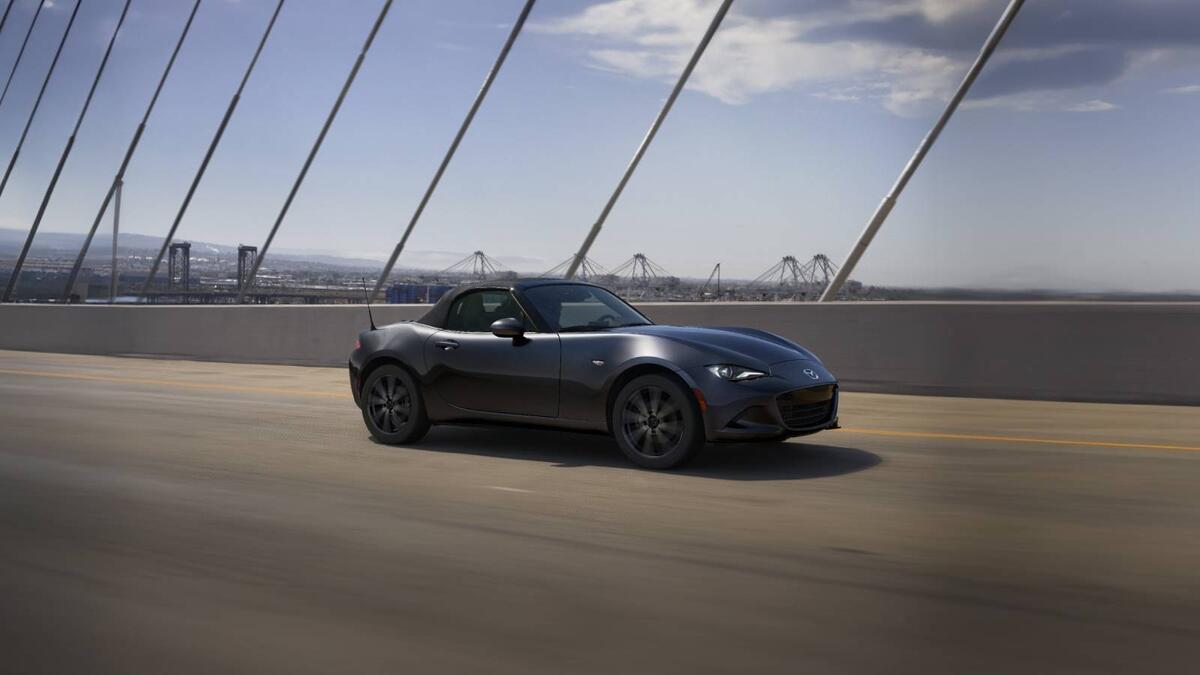
Mazda MX-5 / Miata
"...ffee the other day and someone said to us, Monza Miata, the Monza Miata. Oh yeah."
The Mazda MX-5 (Miata) is a small two-seat roadster. It’s made to be light and fun to drive. The podcast mentions a “Monza Miata,” which is a special version or build based on the Miata.
The Mazda MX-5, commonly called the Miata, is a popular lightweight roadster built around simple, engaging driving dynamics. The podcast’s “Monza Miata” mention points to a specific themed or modified version, showing how the Miata platform is often used for enthusiast projects. It’s discussed because it’s a go-to car for drivers who want fun without excessive complexity.

Alpine A110
"...that are going to be competitive set, Alpine A110 kind of came up really, really high on that list."
The Alpine A110 is a small, lightweight sports car from France. People bring it up because it has a similar “fun, tossable” vibe to classic European roadsters, but it’s a modern design.
The Alpine A110 is a lightweight, mid-engine sports car from the French brand Alpine. It’s often discussed as a modern take on classic European roadster/coupe proportions, which is why it comes up when people talk about “British roadsters” and what could compete with them.
Renault
"Renault has not been present in the United States since probably 1991 or something like that."
Renault is a major French car company. The hosts are basically saying that Renault (and by extension its sports-car efforts like Alpine) hasn’t been sold in the U.S. for a long time.
Renault is the French automaker that has been involved with Alpine’s ownership and engineering direction over the years. When the hosts say Renault hasn’t been present in the U.S. since around 1991, they’re referring to the brand’s limited U.S. sales/availability during that period.
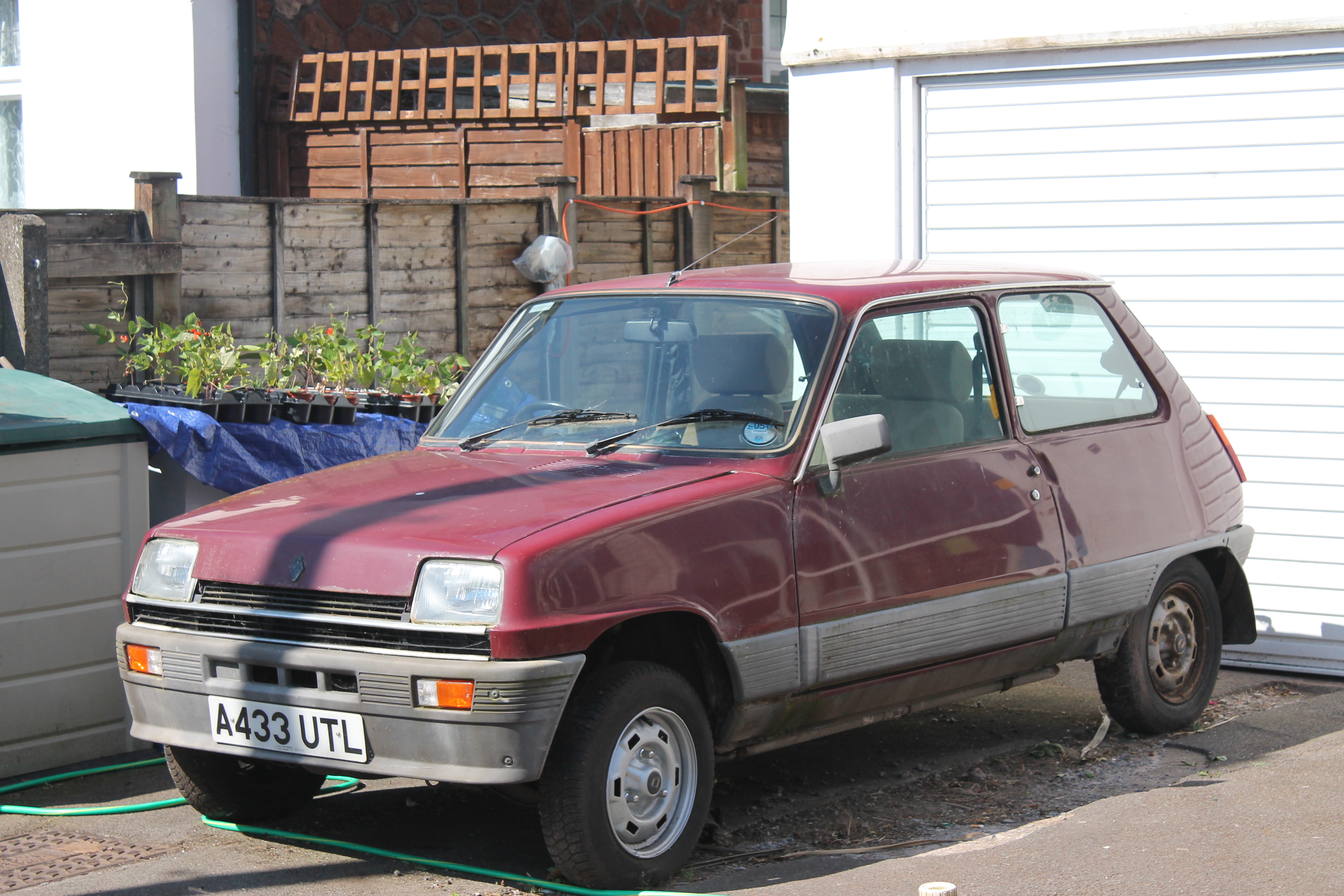
Renault 5
"[1235.9s] We had the Renault 5. [1237.1s] And then the Alliance. [1239.0s] Le Carr."
The Renault 5 is a small, popular hatchback made by Renault. Here, the hosts are talking about how it was marketed under a confusing nickname in some places.
The Renault 5 is a compact hatchback from Renault that became well known in Europe. In this segment, the hosts are discussing how a marketing name (“Le Carr”) was used for it in a specific market.

Ferrari La Ferrari
"And people would call it the Le Carr, which is like the Ferrari, Ferrari, La Ferrari. Ferrari, La Ferrari."
The Ferrari LaFerrari is a very special, high-performance Ferrari supercar. The podcast talks about how some people mispronounce or nickname it, and it also explains where the name idea came from. That’s why it’s part of the conversation.
The Ferrari LaFerrari is a flagship supercar from Ferrari, known for being a special, high-performance halo model. The podcast mentions how people sometimes call it “Le Carr” and explains that Ferrari’s name choice was inspired by “Le Carr” from Renault. It’s discussed because the car’s identity and naming history are part of its story.
5 Renault Le Carr
"...La Ferrari. Ferrari ripped off its name from the Renault Le Carr. Then there was the Renault Alliance, which was ..."
I can’t tell which car “5” refers to from the podcast snippet you provided. The text looks like it’s continuing a discussion about the LaFerrari name, but the car name itself isn’t clear. If you share the full line, I can explain the correct car.
The podcast line appears to be incomplete: it ends with “- 5 ( ... La Ferrari. Ferrari ripped off its name from the Renault Le Carr. Then there was the Renault Alliance, which was ...”. Because the car key is just “5,” there isn’t enough information to identify a specific vehicle. I can’t reliably describe a particular car from that fragment alone.

Renault Fuego
"[1260.7s] And the Fuego was available here. [1262.4s] Oh, I forgot about that. [1264.1s] It was fire."
The Renault Fuego is a Renault coupe. They mention it as another example of Renault model names that sound like something else—here, they joke that it’s “fire.”
The Renault Fuego is a Renault coupe that was sold in Europe and other markets. In the segment, it’s mentioned as another Renault model that was “available here,” with the hosts joking about the name sounding like “fire.”
50 kWh
"So what size of a battery is in there? [1295.9s] 50 kWh. [1297.5s] Yeah, so we haven't gone for a large battery."
kWh is how much energy the car’s battery can store. “50 kWh” means the battery holds a moderate amount of electricity, which affects how far the car can go.
kWh (kilowatt-hours) is a unit of energy storage, and in an EV it corresponds to the battery’s usable capacity. A “50 kWh” battery generally means the car can store a moderate amount of energy—often chosen to balance range with weight and cost.
light weighting
"So for us, again, light weighting is important, [1301.4s] but if it's lighter, you need less battery."
Light weighting means making the car lighter. A lighter car usually needs less energy to move, which can help an electric car go farther without a bigger battery.
Light weighting is the strategy of reducing vehicle mass to improve efficiency and performance. For EVs, less weight typically means the car needs less energy to accelerate and climb hills, so you can often use a smaller battery.
watt-hours per kilometre
"So from a watt-hours per kilometre, [1307.2s] you're approaching kind of best in class, [1309.9s] as in, not electric sports car,"
This is a way to measure how efficiently an EV uses electricity. It tells you how much battery energy it spends to drive a certain distance.
“Watt-hours per kilometer” is an efficiency metric for EVs: it tells you how much electrical energy the car uses to travel one kilometer. Lower numbers mean better efficiency, which helps maximize range without increasing battery size.
drag coefficient
"What are you, do you have to be obsessive [1322.5s] about drag coefficient? [1324.6s] Or do you even care about range on a car like this?"
Drag coefficient is a number that describes how much the car “fights” the air as it moves. Less air resistance usually means the car uses less energy at highway speeds.
Drag coefficient (Cd) quantifies how aerodynamically “slippery” a car is—how much air resistance it creates at speed. A lower Cd generally reduces energy use on highways, which improves efficiency and range for EVs.
windshield
"I mean, a car like this without a windscreen, [1328.4s] I'm guessing long highway slogs down I-5, [1332.1s] which you guys just have done,"
A windshield (or windscreen) affects airflow around the vehicle, which can change aerodynamic drag and reduce wind buffeting. For open-top or low-aero cars, adding a windscreen can noticeably improve highway efficiency and comfort.
range
"But it's range, do your customers, [1340.7s] I should say, care about range in a car like this?"
“Range” is how far the car can go before it needs more power. For electric cars, it’s the distance you can drive on a full charge.
In EV and hybrid discussions, “range” means how far the car can travel before it needs to be recharged or refueled. It’s a key buying factor because it affects day-to-day usability, especially for longer trips.
price
"[1364.4s] Should we talk about price when you mentioned price? [1366.5s] I think that people probably must be very curious [1368.5s] about what it costs."
They’re talking about cost—how much these cars cost and whether people will want them at that price. It’s part of the bigger question of whether roadsters can be both good-looking and not outrageously expensive.
The hosts pivot to “price” as a central part of the conversation—how much the Longbow Speedster (and comparable roadsters) cost and whether buyers care about that tradeoff. This frames the episode’s question about whether the future of British roadsters can be both beautiful and attainable.

Porsche Boxster
"and what is a Boxster? 70 something maybe? The Boxster, of course, cylinder doesn't exist in my mind, so I thought I'd look that up."
They bring up the Porsche Boxster, another roadster model. It’s part of the pricing comparison, but they don’t get into which exact Boxster version.
“Boxster” is the speaker’s reference to the Porsche Boxster (the mid-engine roadster). They’re discussing typical pricing and comparing it to the roadster being debated, but the clip doesn’t specify a generation or year.
50 kilowatt hour battery
"Okay, so you start with roughly 50 kilowatt hour battery, it's rear drive for one motor, single speed transmission, I'm guessing."
They’re talking about the size of the battery, measured in kilowatt-hours (kWh). A bigger number usually means the car can store more energy for driving.
A “50 kilowatt hour battery” refers to the battery capacity measured in kilowatt-hours (kWh). Higher kWh generally means more stored energy, which can translate to longer driving range, depending on efficiency and power use.
rear drive for one motor
"it's about 50 kilowatt hour battery, it's rear drive for one motor, single speed transmission, I'm guessing."
They’re describing where the electric power goes. “Rear drive” means the rear wheels get the power, and “one motor” suggests it’s not a dual-motor setup.
“Rear drive for one motor” describes an electric drivetrain layout where the motor(s) drive the rear wheels. Using one motor also implies a simpler setup than dual-motor all-wheel-drive systems.
single speed transmission
"it's rear drive for one motor, single speed transmission, I'm guessing. And you guys went into some detail"
Electric cars often don’t use a multi-gear gearbox. A “single speed transmission” means there’s basically one gear ratio between the motor and the wheels.
An electric “single speed transmission” (often called a single-speed reduction gear) uses one fixed gear ratio instead of multiple gears like a traditional automatic. Electric motors can operate efficiently across a wide speed range, so fewer gear steps are needed.
off-the-shelf
"So we take an off-the-shelf, mass produced 10,000, 20,000 a year motor company, we then have a McLaren applied, or motion applied, inverter"
“Off-the-shelf” means they’re using parts that already exist in the market. The point here is that they don’t have to invent every component themselves.
“Off-the-shelf” means using commercially available components rather than designing and developing everything from scratch. In this context, the speaker is arguing that the hyperdrive system can be assembled from existing parts, reducing development time and cost.
silicon carbide inverter
"we then have a McLaren applied, or motion applied, inverter, silicon carbide inverter, and then a transmission from a supplier"
An inverter is the device that turns battery power into the right kind of electricity for the electric motor. Using silicon carbide helps it work more efficiently, so the car can use its battery power better.
An inverter is the electronics that convert the battery’s DC power into AC power for the electric motor. A silicon-carbide (SiC) inverter uses SiC semiconductor materials, which can switch faster and run more efficiently than older designs, helping electric drivetrains deliver power more effectively.
800 volt system
"What's really important, that whole part, is that we can have the latest 800 volt system in this car doing what it needs to do"
This is about how the car’s battery and electronics are wired electrically. A higher-voltage system (like 800 volts) can move the same power with less current, which can improve efficiency and charging speed.
An 800-volt electrical system is a high-voltage architecture for electric vehicles. Higher voltage can reduce current for the same power, which allows smaller/lighter cables and can enable faster charging and more efficient power delivery.
power and torque
"providing all that power and torque. And we don't have to invest in a huge factory"
Torque is the “push” that gets you moving, and power is how strongly the car can keep pulling. Together they describe how fast and how hard the car accelerates.
Torque is the twisting force that produces acceleration, especially at low speeds, while power is how quickly the engine/motor can do work. Electric drivetrains often emphasize torque delivery because it’s available instantly, and the overall system design targets both torque and sustained power.
BMW
"with Mercedes, with BMW, these other partners, and we bring those components together to build a really reliable car"
BMW is another major car brand. In this context, they’re being used as an example of a source for proven parts so a smaller company doesn’t have to invent everything from scratch.
BMW is referenced as another partner brand providing components. Using established BMW parts can reduce engineering risk because those components have already been developed and validated.
Mercedes
"with Mercedes, with BMW, these other partners, and we bring those components together to build a really reliable car"
Mercedes is a car brand that can also provide parts. The idea here is that using proven parts from big brands helps a smaller sports-car maker build faster and with fewer unknowns.
Mercedes is mentioned as a partner supplying components. In automotive terms, that usually means using parts from an established supplier/brand to speed development and improve reliability.
Toyota
"It would be, you would look at Lotus using components from Toyota and Rover Group, and if you were looking at TVR"
Toyota is a big mainstream automaker. Here it’s being used as an example of where British sports cars can borrow proven parts to keep development simpler.
Toyota is mentioned as a component supplier used by Lotus-style low-volume British sports cars. The underlying theme is sourcing reliable, mass-produced parts from major manufacturers.
Rover Group
"you would look at Lotus using components from Toyota and Rover Group, and if you were looking at TVR, then it's going to be also from the Rover Group"
Rover Group is a company that made cars and also supplied parts. The idea is that smaller British sports-car makers could use Rover-sourced engines/components instead of starting from zero.
Rover Group is cited as a source of components for British sports-car manufacturers. Historically, Rover supplied engines and other parts that smaller brands could adapt, which helped them build cars without fully developing new powertrains.
V8s
"in the form of the V8s that they would use until they started doing their own motors"
A V8 is an engine with eight cylinders arranged in a V shape. They’re talking about which engine type these small British sports cars used from other suppliers.
“V8s” refers to V8 engines, which use eight cylinders arranged in a V shape. The segment is about how some British manufacturers used Rover Group V8 engines before moving to their own in-house designs.
case series
"For the record, we never got the case series. And for the record, when we talk about case series, we're not talking about Honda case series."
They’re talking about a naming mix-up: in the U.S., people hear “case series” and assume it’s Honda’s K-series engines. The point is that the term is being used incorrectly in casual conversation.
“Case series” is being used as a misheard or shorthand reference to Honda’s K-series engines in the U.S. context. The speakers clarify they’re not talking about “Honda case series,” but rather the K-series naming confusion.
Rover K
"The Rover case series was probably not the best four-cylinder ever made. ... but you'd have to be a special kind of breed of fucked up to take a Rover K and put it where a Honda K was."
“Rover K” means the Rover version of that four-cylinder engine family. They’re basically debating whether it makes sense to swap that engine into a car that would otherwise use a Honda K.
“Rover K” refers to the Rover K-series engine. The hosts are contrasting it with Honda’s K-series engines and discussing the idea of swapping a Rover K into a car originally associated with Honda K engines (or vice versa).
K series
"we swap out the Honda K28 with the K series, ... Back into the Elise S1 and S2s that had the K series."
“K series” here means a specific family of four-cylinder engines. They’re arguing about how good the Rover version is compared with the Honda version, and how people swap them.
“K series” refers to the Rover K-series inline-four engine family used in some British cars. In this discussion, they’re comparing Honda’s K-series engine reputation versus the Rover K-series, and talking about engine swaps between setups.
Honda K28
"we swap out the Honda K28 with the K series, ... You add the Honda motor, you remove the Honda..."
Honda K28 is the name people use for a Honda four-cylinder engine with about a 2.8-liter size. They’re using it as the engine that gets swapped into (or out of) these cars.
Honda K28 is shorthand for Honda’s K-series 2.8-liter four-cylinder engine (commonly associated with the K24/K20 family, with “28” indicating a larger displacement variant). The hosts use it as the “Honda engine” in the context of swapping powertrains into British roadsters.
K-trum
"The K-trum as well, right? So I think K-trum have a Ford Ecotec, right?"
“K-trum” sounds like a nickname or shorthand for a particular K-series-based setup. They’re trying to say what engine it uses, but the exact meaning isn’t fully spelled out here.
“K-trum” appears to be a slang or shorthand reference in the transcript, likely pointing to a specific engine swap or setup involving a K-series engine. The context suggests they’re discussing what engine a “K-trum” uses, but the exact reference isn’t fully clear from this excerpt.
Ford Ecotec
"So I think K-trum have a Ford Ecotec, right?"
Ford Ecotec is a name for Ford’s four-cylinder engine family. They’re comparing it to other engine options people swap into roadsters.
Ford Ecotec refers to Ford’s family of modern inline-four engines used across many models and platforms. In this segment, it’s mentioned as the engine that a “K-trum” setup supposedly uses, contrasting different swap options (Honda K, Rover K, and Ecotec).
powertrain
"But also a powertrain off the shelf isn't necessarily how it's going to then manifest in the car that you built."
A powertrain is everything that makes the car move and sends power to the wheels. The discussion is basically saying that the “personality” of a car isn’t only about how strong the engine is.
A powertrain is the full set of components that generate and deliver motion—typically the engine (or motor), transmission, driveshaft(s), differential, and related control systems. The hosts argue that a car’s character comes from more than just the powertrain’s raw output.
acoustically
"...could tell the difference between a Lucid powertrain and a Tesla powertrain and a Rivian powertrain, just acoustically or response"
Here “acoustically” means “by sound.” They’re saying EVs don’t always give you the same engine noises that make gas cars feel distinct, so sound alone may not tell you much.
In this context, “acoustically” refers to how the powertrain sounds (noise/vibration/tonal character). The hosts argue that EVs can mask or reduce the audible differences that combustion engines provide, making it harder to identify a car’s personality by sound alone.
programmed
"...and solve probably programmed in anyway."
This means the car’s computer software decides how it responds to your inputs. The idea is that programming can shape the driving feel so much that it can blur differences between brands.
“Programmed” here points to how EV control software maps driver inputs to motor output and vehicle behavior. The hosts imply that software can make different powertrains feel similar, even if the hardware differs.
Rivian
"...and a Rivian powertrain, just acoustically or response"
Rivian makes electric vehicles. The hosts are saying that, for many drivers, it’s hard to tell which EV brand you’re in just from sound or basic response because the car’s behavior is largely software-controlled.
Rivian is an EV brand mentioned as part of a comparison between different manufacturers’ powertrains. The hosts suggest that most people can’t reliably tell them apart by acoustics or response, because EV behavior is often programmed and tuned.
electric sports car
"which I think is probably on the mind of a lot of car enthusiasts, which is why has no one built an electric sports car yet? Is it because the market isn't there..."
This means a sports car that runs on electricity instead of gas. The hosts are asking why we haven’t seen one that feels truly exciting to sports-car fans yet.
An electric sports car is a performance-focused car powered primarily by electric motors instead of a gasoline engine. The question here is why the market and engineering challenges haven’t produced a widely accepted “electric sports car” category yet.
electric vehicles
"The only reason why there are so many electric vehicles on the road at the moment is because Tesla came along..."
Electric vehicles are cars that run on electricity stored in batteries. The host’s point is that EVs didn’t spread quickly until Tesla made them more convincing to buyers and other companies.
Electric vehicles (EVs) are cars powered primarily by electric motors and rechargeable batteries, rather than gasoline engines. The speaker argues EV adoption accelerated once a major player (Tesla) demonstrated EVs could succeed commercially.

Tesla Model 3
"...because Tesla came along and punched everyone in the nose with the Model 3, with the Model S."
The Tesla Model 3 is an electric car made by Tesla. The hosts mention it because it helped make electric cars feel more “real” to regular buyers.
The Tesla Model 3 is an electric sedan that became a mainstream entry point for Tesla’s EV strategy. In the episode, it’s used as an example of how Tesla accelerated adoption by proving EVs could be mass-market cars.

Tesla Model S
"...with the Model 3, with the Model S. If people, a car company, a traditional car company is not going to change..."
The Tesla Model S is Tesla’s bigger, more premium electric sedan. The point here is that even major car companies once said EVs like this wouldn’t work.
The Tesla Model S is Tesla’s flagship electric sedan, known for showing that EVs could deliver high performance and long-range capability. The speaker references it as part of a “revelations” story and as evidence that major automakers underestimated EVs.
panel gaps
"at the build quality, the panel gaps, and then ultimately have adopted all of Tesla's..."
Panel gaps are the small spaces between the car’s body panels. If they’re even and consistent, it usually means the car was built carefully; if they’re uneven, it can suggest poorer fit and assembly.
Panel gaps are the visible spaces between body panels (like doors, fenders, and hoods). Tight, consistent panel gaps are a sign of good body manufacturing and assembly quality, and they’re commonly used as a quick visual check for fit-and-finish.
Lotus Engineering
"Even major car companies use engineering service providers. So they'll go to... Lotus Engineering, for example. What's the one in the powertrain one in Austria?"
Lotus Engineering is an engineering firm tied to Lotus. Other car companies hire them to help with tricky parts of a car, like the drivetrain, instead of doing everything in-house.
Lotus Engineering is a specialized engineering company associated with the Lotus brand. In automotive terms, they’re often brought in to help design or validate parts of a car—commonly powertrain and systems integration—rather than building the whole vehicle themselves.
AOB
"What's the one in the powertrain one in Austria? AOB? Anyway, I thought..."
AOB is being mentioned as another company that does specialized engineering work. The host is saying big car makers may hire firms like this—especially for the powertrain—rather than handling it all internally.
AOB is mentioned as an engineering service provider in Austria, specifically in the context of powertrain work. The transcript doesn’t fully clarify what AOB stands for, but it’s being used as an example of a specialist company major automakers outsource to.
engineering services providers
"And we went to one of these large engineering services providers, one of the largest in the world, and we said, we'd like to work with you to build this car."
An engineering services provider is a specialized company that helps other companies design and develop a product. In car projects, they often help translate a wish list/specs into something that can actually be engineered and built.
An engineering services provider is a company that helps other firms design and develop products—often by providing specialized teams, tools, and project management. In automotive terms, they may handle engineering work like packaging, systems integration, and validation to turn specs into a buildable car.

Dodge Journey
"..., and this was like 2020 when we started on this journey. We gave them the specs of a 2008 Tesla Roadster..."
The Dodge Journey is a midsize SUV/crossover meant for everyday driving and families. In the podcast, it’s mentioned as part of a timeline for a project or discussion. It’s not being described in detail there—more like it’s part of the story.
The Dodge Journey is a midsize crossover/SUV that was popular as a family-oriented vehicle. In the podcast, it’s mentioned during a “journey” timeline that includes giving specs for a 2008 Tesla Roadster, suggesting the conversation is about planning, development, or a project timeline rather than the Journey’s performance. That makes it a reference point in the story of how the discussion evolved.
supply chain
"We know it has legitimately been done 15 years ago before the supply chain. And what they're saying is,"
A supply chain is how all the parts and materials get made and delivered to build something. They’re saying that doing this 15 years ago was harder because getting the right parts wasn’t as straightforward.
The supply chain is the network of suppliers and logistics that provide parts and materials needed to build a product. The hosts mention “before the supply chain” to emphasize that building to those specs was harder earlier because sourcing components was more difficult.
electric vehicle platform
"How would you then make this sympathetic to an electric vehicle platform? It turns out it's just a sports car with a slightly different powertrain."
Think of an EV platform as the “car layout” that’s designed for electric parts. If you build a sports car on that layout, the battery and electric motor fit more easily without redesigning everything from scratch.
An electric vehicle platform is the underlying vehicle architecture designed around an electric powertrain (battery, electric motors, and related packaging). When a sports car is adapted to an EV platform, the chassis layout and component placement are planned to fit the battery and motor hardware efficiently.
lower center of gravity
"and you'll get some benefit from that lower center of gravity [1945.8s] and all that."
Center of gravity is basically how high the car’s weight “sits.” If it’s lower, the car tends to feel steadier and less wobbly in turns.
Lower center of gravity means the car’s mass is positioned closer to the ground. That generally helps reduce body roll and makes the car feel more stable when cornering or changing direction.
skateboard format
"having the batteries [1956.3s] that all sit in the skateboard format, [1958.9s] which is what most of the cars on the road are."
A skateboard format is how some electric cars are built: the battery and key parts are placed low in a flat “platform” under the floor. That helps designers shape the car and keep the weight low for better handling.
A “skateboard format” is an EV design where the battery pack and electric drive components are packaged into a flat platform underneath the car. This allows more flexible body shapes above it and can improve weight distribution and interior space.
rear axle
"it kind of just sits between the rear axle. [1972.1s] It's about 70 to 90 kilos,"
The rear axle is the part that the rear wheels are connected to. It’s part of the structure that lets the wheels spin, and here it’s mentioned because of where the motor is placed.
The rear axle is the assembly that connects the rear wheels and supports them while allowing them to rotate. In this description, placing the motor near the rear axle helps achieve the desired balance and packaging for the sports car.
Request an Explanation
Heard something you'd like explained? We'll add it to this episode.
Sign in to request explanations for terms you heard.
Want to learn more?
Browse our glossary for plain-English explanations of automotive terms, jargon, and concepts.
Help improve this episode
See something that's not quite right? Our annotations are AI-generated and can sometimes miss the mark. Click the flag icon on any annotation to suggest a correction.