
Jan. 16, 2026 | Canada opens door to Chinese EVs; insurance at dealerships
About this episode
Canada has reached a significant agreement with China, allowing the import of Chinese electric vehicles (EVs) into its market, which previously faced a 100% tariff. This deal, which permits 49,000 EVs annually at a 6.1% tariff, reflects a shift in trade dynamics influenced by agricultural interests. Meanwhile, Ford is negotiating battery supply deals with BYD, sparking political controversy. The episode also explores how integrating auto insurance into the car buying process is becoming essential for dealerships, especially for younger buyers navigating affordability challenges.
Canada strikes a deal with China allowing up to 49,000 Chinese EVs annually in exchange for agricultural concessions, marking a dramatic policy shift. Ford explores battery deals with BYD for international hybrids. Plus, Polly’s Chris Pres explains how integrating auto insurance into the car-buying process is helping dealerships close deals amid affordability pressures.
EV
"Canada strikes a landmark deal allowing Chinese EVs into its market."
An EV, or electric vehicle, is a car that runs on electricity instead of gas, making it more environmentally friendly.
EV stands for electric vehicle, which is a type of vehicle that is powered entirely or partially by electricity instead of gasoline or diesel.
BYD
"Ford explores battery deals with China's BYD triggering political backlash"
BYD is a Chinese company that makes electric cars and batteries, and it's becoming very important in the car industry.
BYD is a Chinese company that specializes in electric vehicles and batteries, playing a significant role in the global EV market.
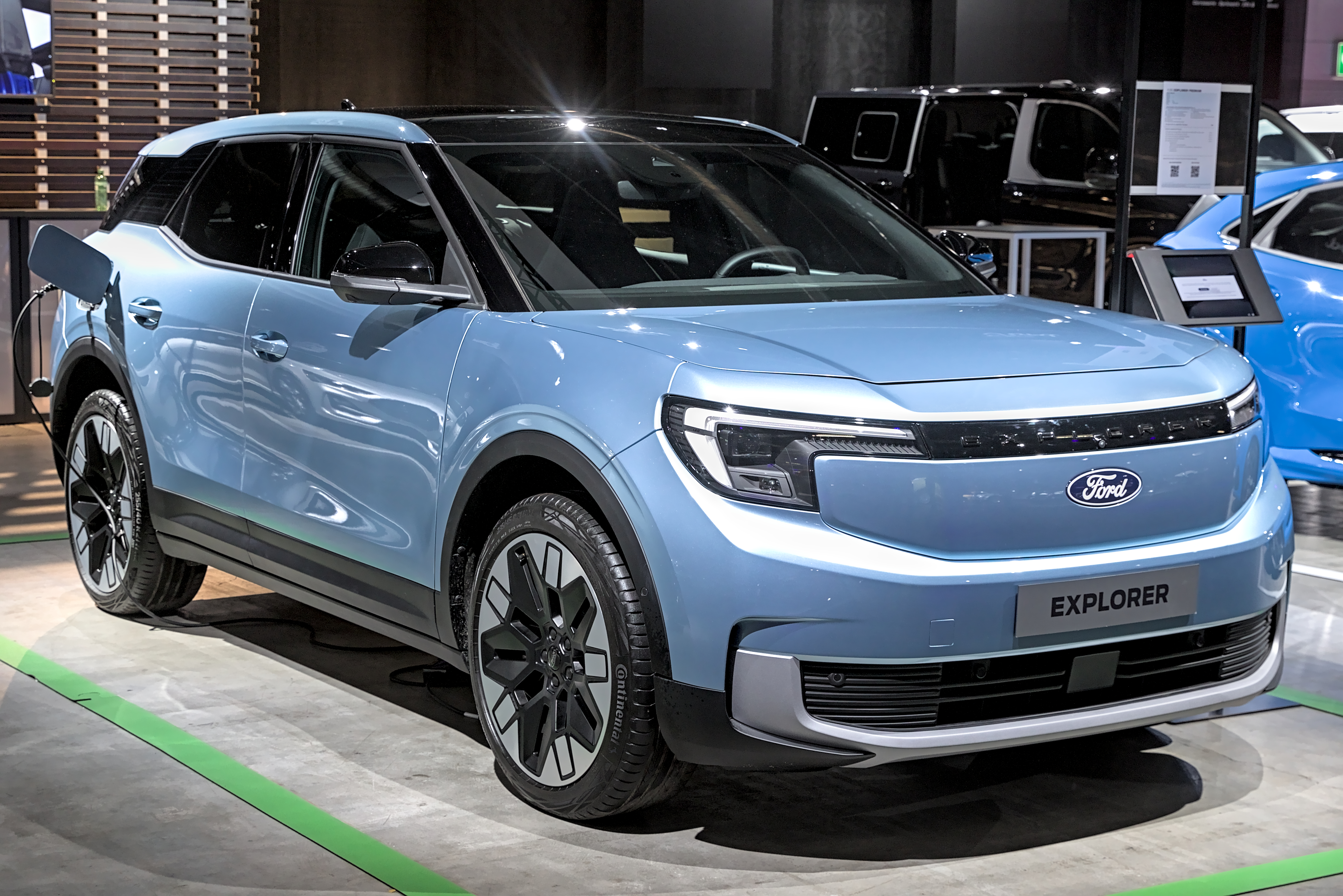
Ford Explores
"...dmark deal allowing Chinese EVs into its market. Ford explores battery deals with China's BYD triggering politic..."
The Ford Explorer is a large family-friendly vehicle that can carry many passengers and their belongings. It's popular for its roomy design and has been around for a long time, making it a common choice for people looking for an SUV.
The Ford Explorer is a mid-size SUV that has been a staple in Ford's lineup since its introduction in 1990. Known for its spacious interior and versatility, the Explorer has evolved over the years to include various powertrains, including hybrid options, making it a significant player in the SUV market, especially as automakers explore electric vehicle partnerships.
tax credits
"US EV registrations plunge 49% after tax credits end."
Tax credits are money the government gives back to you when you buy certain things, like electric cars, to help you save money.
Tax credits are financial incentives provided by the government to encourage the purchase of electric vehicles, which can significantly reduce the overall cost for consumers.
auto insurance
"how integrating auto insurance into the car buying process is helping dealerships close deals."
Auto insurance is a way to protect yourself financially if your car gets damaged or stolen, helping you pay for repairs or replacements.
Auto insurance is a type of insurance policy that protects vehicle owners against financial loss in the event of an accident or theft.
hybrid
"...the automakers expanding hybrid lineup. Those overseas hybrids would be exported worldwide..."
A hybrid car uses both a regular gasoline engine and an electric motor to run. This helps the car use less fuel and produce fewer harmful emissions than cars that only use gasoline.
A hybrid vehicle is one that uses two or more types of power, typically combining a gasoline engine with an electric motor. This setup allows for improved fuel efficiency and reduced emissions compared to traditional gasoline-only vehicles.
CATL
"...and has a separate deal with China's CATL. There's no guarantee an agreement will actually happen."
CATL is a Chinese company that makes batteries for electric cars and is one of the largest battery producers in the world.
CATL (Contemporary Amperex Technology Co., Limited) is a Chinese battery manufacturer that supplies batteries for electric vehicles globally.
electric vehicle (EV)
"And US electric vehicle registrations dropped 49% in November."
An electric vehicle (EV) is a type of car that runs on electricity instead of gasoline, which helps reduce pollution.
An electric vehicle (EV) is a car that is powered entirely or partially by electricity, using electric motors instead of internal combustion engines.
market share
"...actually growing its market share to over 53%."
Market share is how much of the total sales in a market are made by one company, showing how popular they are compared to others.
Market share refers to the percentage of an industry's sales that a particular company or product controls, indicating its competitiveness in the market.
Tesla
"What you might see early on is Tesla and maybe Polestar capitalized on the 6.1 tariff that they..."
Tesla is a car company that makes electric cars, which run on batteries instead of gasoline.
Tesla is an American electric vehicle manufacturer known for its innovative technology and high-performance electric cars.
Polestar
"What you might see early on is Tesla and maybe Polestar capitalized on the 6.1 tariff that they..."
Polestar is a brand that makes electric cars, focusing on high performance and sustainability.
Polestar is a Swedish automotive brand that specializes in electric performance vehicles, originally a performance division of Volvo.
tariff
"What you might see early on is Tesla and maybe Polestar capitalized on the 6.1 tariff that they..."
A tariff is a fee that countries charge on products brought in from other countries, which can make those products more expensive.
A tariff is a tax imposed on imported goods, which can affect the pricing and competitiveness of products in the market.
sticker price
"...high sticker prices because of interest rates may be a little bit high. But also insurance is going up too..."
The sticker price is the price you see on a car when you go to buy it. It's the amount the car maker suggests the dealer should sell it for, but it can be higher when you add other costs.
The sticker price refers to the manufacturer's suggested retail price (MSRP) displayed on a vehicle's window. It represents the price that the manufacturer recommends dealers sell the vehicle for, not including any additional fees or dealer markups.
interest rates
"...interest rates may be a little bit high. But also insurance is going up too..."
Interest rates are what you pay extra when you borrow money to buy something, like a car. If the rates are high, you end up paying more money back over time.
Interest rates are the cost of borrowing money, expressed as a percentage. When buying a car, higher interest rates can significantly increase the total amount paid over the life of a loan, affecting affordability for consumers.
average new car purchase
"...the average new car purchase is about $50,000. Interest rates have come down slightly..."
The average new car purchase is the typical amount people spend when they buy a new car. Right now, that amount is about $50,000.
The average new car purchase refers to the typical price consumers pay for a new vehicle, which can vary based on market conditions, vehicle types, and consumer preferences. In this context, it's mentioned as being around $50,000.
loan term
"...the dealership has to find a way to make sure the car fits into their budget. And there's only so many things you can do. You can try to extend the length of a loan..."
The loan term is how long you have to pay back the money you borrowed to buy a car. If you make the term longer, your monthly payments can be smaller, but you might pay more in interest overall.
The loan term is the length of time over which a loan is repaid. In the context of car loans, extending the loan term can lower monthly payments but may increase the total interest paid over the life of the loan.
electric vehicles (EVs)
"...because of EVs, electric vehicles, being more expensive to fix."
Electric vehicles are cars that run on electricity instead of gasoline. They can be more expensive to fix because they have different parts and technology compared to regular cars.
Electric vehicles (EVs) are cars that are powered entirely or partially by electricity instead of traditional gasoline or diesel. They often have different repair costs compared to conventional vehicles due to their unique components and technology.
insurance premiums
"...insurance has gotten to a very high level. Now,..."
Insurance premiums are the money you pay to an insurance company to protect your car. If repairs and accidents cost more, your insurance might cost more too.
Insurance premiums are the amounts paid periodically to an insurance company for coverage. These costs can vary based on factors such as the type of vehicle, driving history, and market conditions like inflation.
Request an Explanation
Heard something you'd like explained? We'll add it to this episode.
Sign in to request explanations for terms you heard.
Want to learn more?
Browse our glossary for plain-English explanations of automotive terms, jargon, and concepts.
Help improve this episode
See something that's not quite right? Our annotations are AI-generated and can sometimes miss the mark. Click the flag icon on any annotation to suggest a correction.