Jay Leno’s Garage Secrets: Tesla Semi, Corvette ZR1X & American Cars Dominating
The InEVitable
Jay Leno’s Garage Secrets: Tesla Semi, Corvette ZR1X & American Cars DominatingThe InEVitable · May 8, 2026
Annotations will appear as you listen
0:00
78:17
Concept
Leno's Law version 2.0
“Leno’s Law version 2.0” is Jay Leno’s idea for helping classic cars stay legal to own and drive. It’s basically about making the rules less difficult for older cars.
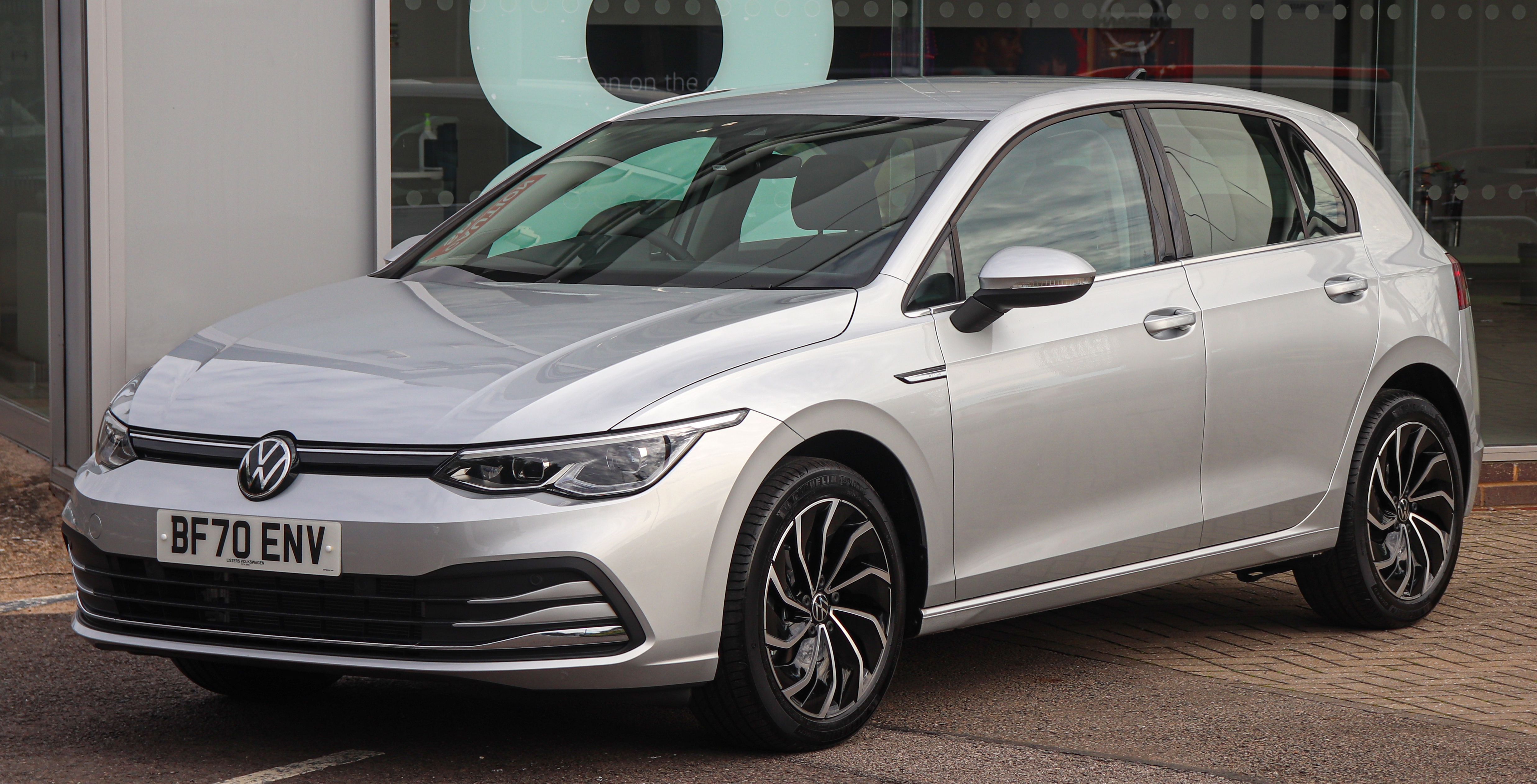
The Golf is a compact car model that’s usually meant for everyday driving. The podcast mentions it alongside performance cars, suggesting there are versions that can be more sporty. It’s being used as an example of a smaller car that can still be fun.
Modern cars have computers that watch how key systems are running. If there’s a problem, they save a code that a mechanic can read with a plug-in tool. Older cars may not support that kind of easy “plug in and find the issue” diagnosis.
A rolling road (dyno) is a test setup where the car’s wheels are driven on rollers while the engine and emissions can be measured under controlled load. The host is saying older cars often needed this kind of specialized testing equipment to diagnose or verify issues, because the newer plug-in diagnostic approach wasn’t available. It’s also commonly used for emissions and drivability checks.
Here, smog means dirty air from pollution. The host is talking about rules meant to reduce pollution from cars, and how enforcement works as the number of older, more polluting cars changes over time.
This is a reference to a past U.S. rule that limited highway driving to 55 miles per hour. The point in the conversation is that the speaker thinks it didn’t make sense and affected how people and businesses operated.
The Tesla Semi is a large electric truck meant for hauling goods. The podcast talks about it because someone got to drive it, showing it’s a real vehicle being tested and used. It’s important because it’s aimed at replacing diesel trucks with electric ones.
A “mega charger” is a fast electric-vehicle charger. It can add a lot of battery energy in a short time, which is why they’re talking about charging for around 30 minutes.
The Dodge Charger is a car that’s built to feel sporty and powerful. The podcast mentions it in connection with charging quickly, meaning it’s being discussed as a fast-recharge option. That’s useful if you care about how long you spend plugged in.
The Tesla Cybertruck is an electric pickup. Here they’re talking about how much it weighs compared with a Hummer, and they say the battery design helps keep the Cybertruck lighter.
“Battery technology” means how the battery is designed and built. They’re saying better battery design can let a vehicle carry energy while staying lighter.
Torque is the force that makes the car pull. “Instant torque” means an electric motor can give you that pulling force right away, without waiting for the engine to rev up.
Here, hydrogen means using hydrogen fuel for vehicles. The key issues are making hydrogen in a way that isn’t wasteful, and having places to refill it.
The Chevrolet Corvair is an older Chevrolet car. In the podcast, someone is asking about whether it has a reputation for being unsafe or unreliable. The point is that people remember it for a certain story or concern.
Car
Honda Clarity hydrogen car
The Honda Clarity hydrogen car runs on hydrogen instead of gasoline. It makes electricity from hydrogen using a fuel cell, and then drives like an electric car.
Unsprung mass is the weight of parts that the suspension doesn’t directly support—like the wheels. If those parts are lighter, the car can react to bumps more quickly and feel smoother.
Carbon Revolution makes carbon-fiber wheels. Lighter wheels can help the car feel more responsive, and the host says you can feel the change after installing them.
They’re saying the cost of designing the car’s main structure gets spread out over lots of cars. So each individual Corvette doesn’t have to “pay” the full development cost by itself.
The Corvette ZR1 is the strongest, fastest version of the Corvette. Here they’re talking about what kind of engine it uses—specifically a twin-turbo setup.
A flat-plane crank is a specific way the engine’s crankshaft is shaped. It’s often used in performance engines that are meant to rev higher and feel more “sporty.”
Term
four cam
“Four cam” means the engine uses four camshafts to control the valves. That can help the engine time valve opening more precisely for better performance.
“Four-valve” means each cylinder has more than one intake and exhaust valve. That can help the engine move air in and out more efficiently, especially when revving.
Term
off the e-ray
“E-Ray” is the Corvette’s electrified setup. They’re saying the electric part is based on that system.
A bell housing is the housing at the back of an engine that connects to the transmission. Using cast iron for the bell housing is often about strength and vibration control, since cast iron can be very rigid and helps keep drivetrain noise and harshness down.
Term
heating and air conditioning
Heating and air conditioning (HVAC) is what keeps the car’s cabin comfortable. Heating warms the cabin, and air conditioning cools it down.
The Ford Mustang GTD is a more track-oriented version of the Mustang. The speaker brings it up to make a point about how some performance cars don’t prioritize comfort features as much.
The Porsche Cayenne is a luxury SUV, meaning it’s a bigger family-style vehicle with a premium feel. It’s made by Porsche and is meant to drive more like a performance car than a typical SUV. The podcast mentions it as a high-cost option.
The Rolls-Royce Cullinan is a luxury SUV made by Rolls-Royce. It’s designed to be extremely comfortable and upscale. The podcast mentions it to show how much money some luxury SUVs can cost.
A transmission is what helps send power from the engine to the wheels. They’re saying that particular car had a more complicated drivetrain than you’d expect.
“Multi-matic” is a fancy suspension setup. It helps the car control how the wheels move over bumps and during hard driving, which is part of why the race car costs so much.
The Nürburgring is a famous, very challenging race track in Germany. Getting “under seven minutes” means the car is extremely fast there, and the host is saying that reaching that goal is very expensive.
A purpose-built vehicle is made for one main job. The idea here is that if a car is engineered for a specific goal, it usually costs more because it’s not just a generic design.
The Aston Martin Valhalla is a very high-performance supercar made by Aston Martin. The podcast mentions it as a car people are looking forward to. It’s being discussed in terms of advanced performance engineering.
The Aston Martin Valkyrie is a very high-end supercar. It’s brought up here to illustrate the level of specialized, expensive performance cars that the speaker groups together.
Brand
Aston Martin 4GT
The Aston Martin 4GT is a special, limited hypercar project. The host mentions it as an example of the expensive, specialized cars made by companies that focus on racing-level hardware.
Traction issues are when the tires don’t grip the road and start spinning. They’re saying this car can handle its power without constantly breaking traction.
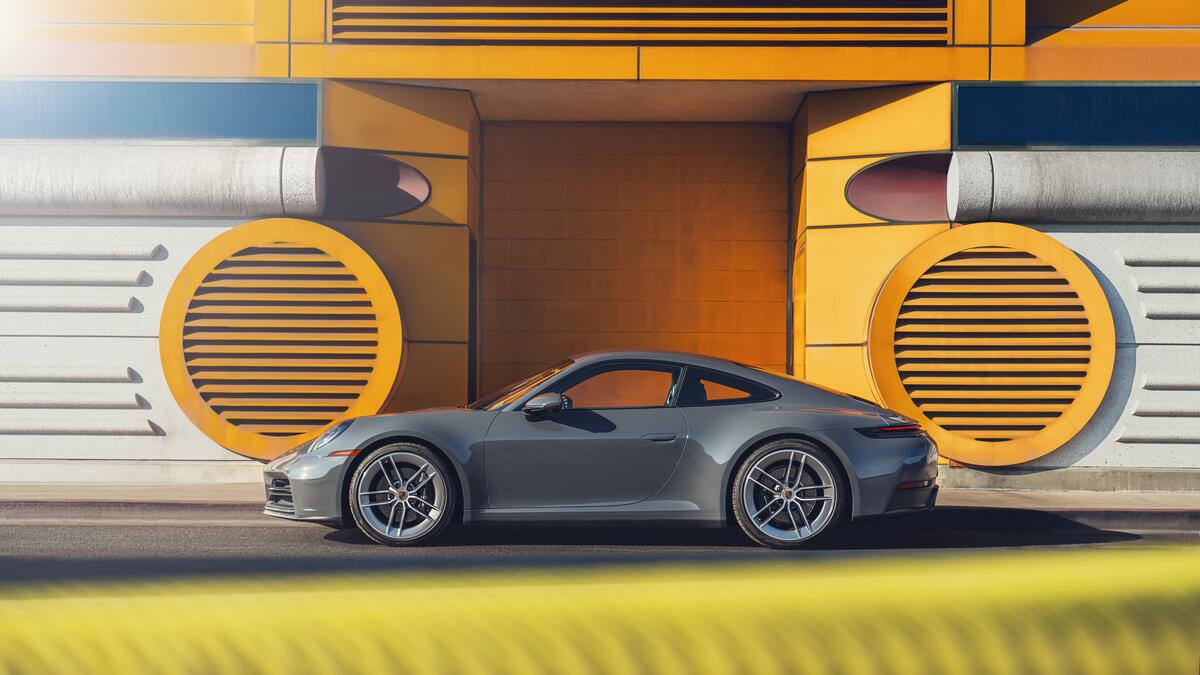
The Porsche 911 is a famous sports car model. The podcast is talking about how it feels to drive, including that it can be quite firm. It’s mentioned because it’s a well-known benchmark for sports-car driving.
Term
best handling
When people say a car has “best handling,” they mean it turns in cleanly and stays stable when you push it. It should feel predictable so you can drive it hard without it getting sketchy.
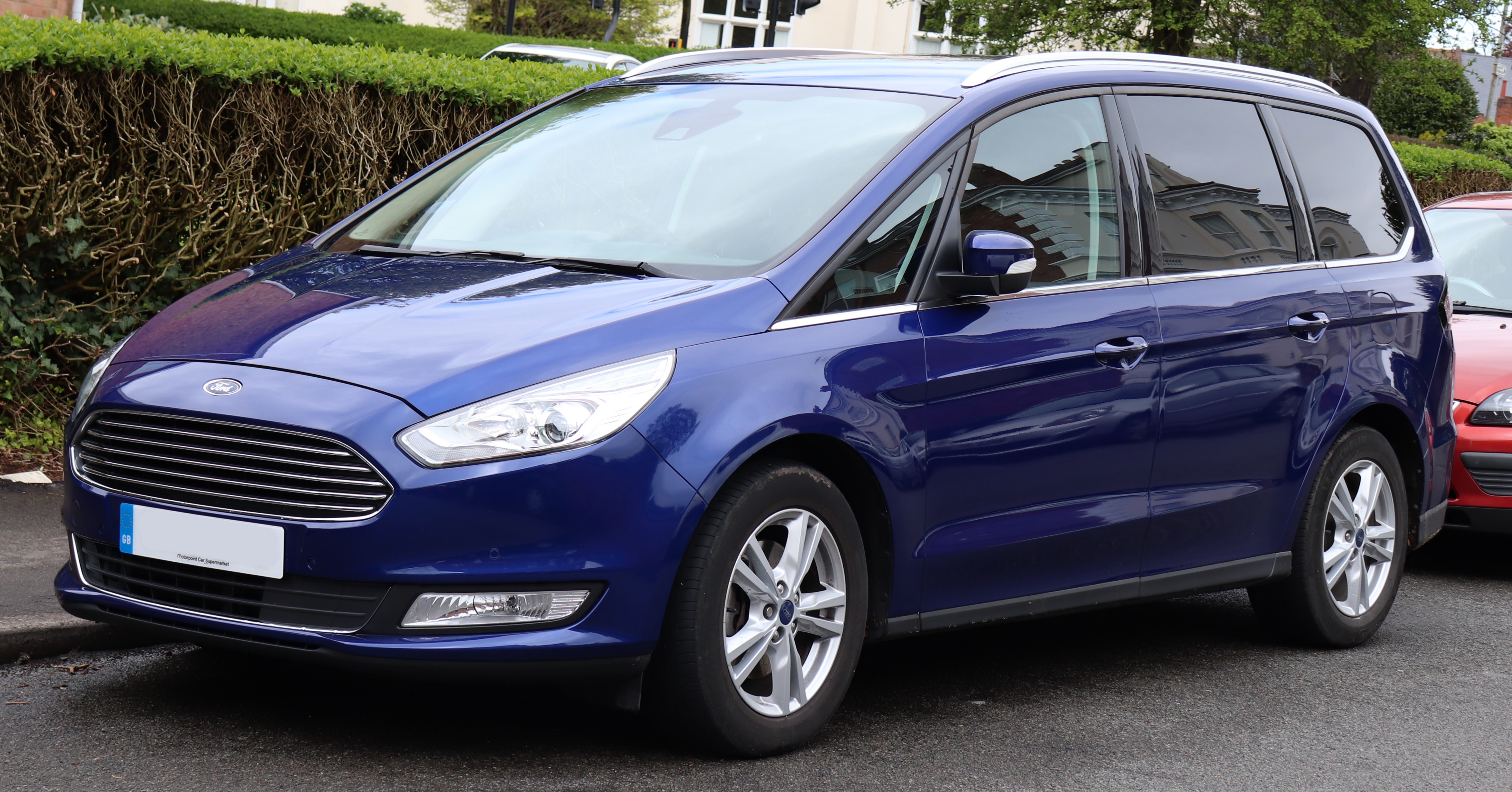
The Ford Galaxy is a Ford vehicle model that’s typically meant for family or everyday use. In the podcast, it’s mentioned because someone’s family had one. It’s being used as a reference point in the conversation.
The Ford Falcon is a model of car made by Ford. In the podcast, it’s mentioned as a car someone’s family owned. It’s being used as an example of classic cars people remember.
A lap record is the fastest officially measured time to complete one circuit lap. When the hosts say a car “beat the GT3 RS’s record,” they mean it set a quicker benchmark lap time under the conditions of that record attempt.
The Plymouth Barracuda is an older American muscle car. It was made to be fast, and it came with different engine choices. The podcast mentions it while talking about classic performance cars and their power options.
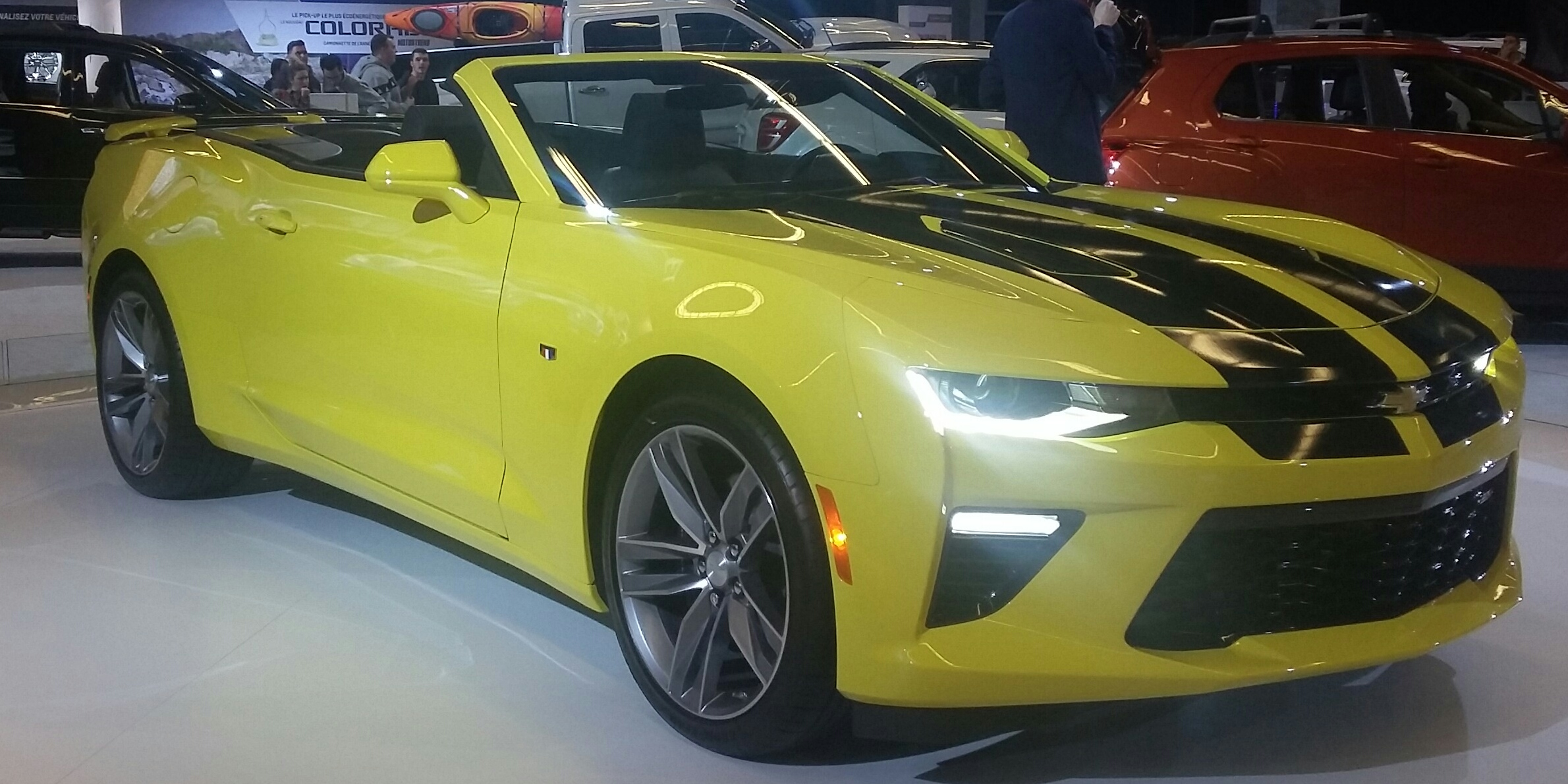
The Chevrolet Camaro is a sporty car, usually a coupe, made for performance and style. People often talk about it because it has had different engine options over the years. The podcast is referencing it as part of that muscle-car era.
“GT cars” refers to grand touring–style race cars built to compete in GT categories. They’re typically based on production models but heavily modified for track use, with emphasis on balance, braking, and tire management rather than just raw power.
Forced induction means the engine gets extra air pushed into it. That extra air helps the engine burn more fuel and make more power, usually using a turbocharger or supercharger.
Downforce is the “suction” effect from the car’s shape and wings that pushes the tires harder onto the road. That helps the car grip better in turns and stay stable at speed. It’s a big reason race cars can go faster in corners.
Horsepower is a way to describe how strong the engine is. More horsepower usually helps the car accelerate harder, but it doesn’t guarantee the fastest lap by itself. Tire grip and aerodynamics also matter a lot.
NASCAR is a type of car racing, mostly on big oval tracks. The host is saying that when the cars are too similar—like sharing the same engine—races can feel less exciting or less different from one another. They’re contrasting that with other kinds of racing.
Pontiac was a well-known American car brand, including some performance cars. Here, the host brings it up to make a point about racing—different brands competing, but with similar parts. It’s about who was involved, not a specific car model.
F1 (Formula 1) is the top tier of open-wheel motorsport, with teams developing highly advanced cars and technologies. It’s known for intense engineering focus where tiny efficiency gains can matter a lot.
GT3 racing is a type of race where teams use cars based on real production models. The rules are designed so different brands can race each other more fairly.
Here, “certification” means the car has to be approved by regulators before it can be sold in California. That approval usually checks things like emissions and safety.
The Gordon Murray Automotive T.50 is a supercar made for performance. The podcast mentions it because it’s a notable car in the supercar category. It’s the kind of vehicle built to feel special when you drive it.
Cosworth is a company that makes performance engines. In this conversation, they’re pointing out that the engine used here was already well-proven.
Term
engine built in Torrance, California
They’re emphasizing where the engine is made (Torrance, California) and how it moves through the production process. The point is that it’s built and then tested/approved successfully.
A cold start is when you start the car after it’s been parked and cooled off. The car runs differently at first, and it can put out more pollution until it warms up.
The catalytic converter is the part that cleans exhaust. Preheating it means it warms up faster so it can start cleaning right away instead of waiting.
The idea is that the car cleans its exhaust right after you start it. Preheating helps the emissions system start working immediately instead of after a warm-up period.
Octane is a measure of a fuel’s resistance to knocking (uncontrolled combustion) in an engine. Higher-octane fuel generally allows more aggressive tuning—like higher boost or ignition timing—without knock, which can increase power.
Tandem seating means the driver and passenger sit one behind the other. It can make the vehicle narrower and sometimes helps it cut through the air better.
Full throttle means the accelerator is fully opened, commanding maximum engine power (or maximum motor output in an EV). In practice, it can make a vehicle surge quickly, which is why the speaker mentions needing to brake immediately after going all the way down.
A center driving position means the driver sits and steers so the car tracks near the middle of the lane. In performance driving, that can reduce the need for large steering corrections and helps manage where the tires sit relative to road edges.
Your driving line is the route your car follows through a turn or over a bump. Where you place the car can change how much grip you have and how close you get to the lane lines.
“V-Max” sounds like the name of a particular version of the car they’re talking about. In this segment, it’s linked to the car’s special aero setup (wing and long tail).
“Only making 80” indicates a limited-production run, which usually means the car is rare and targeted at a niche audience. Limited numbers can also affect pricing, availability of parts, and how the car is valued by collectors.
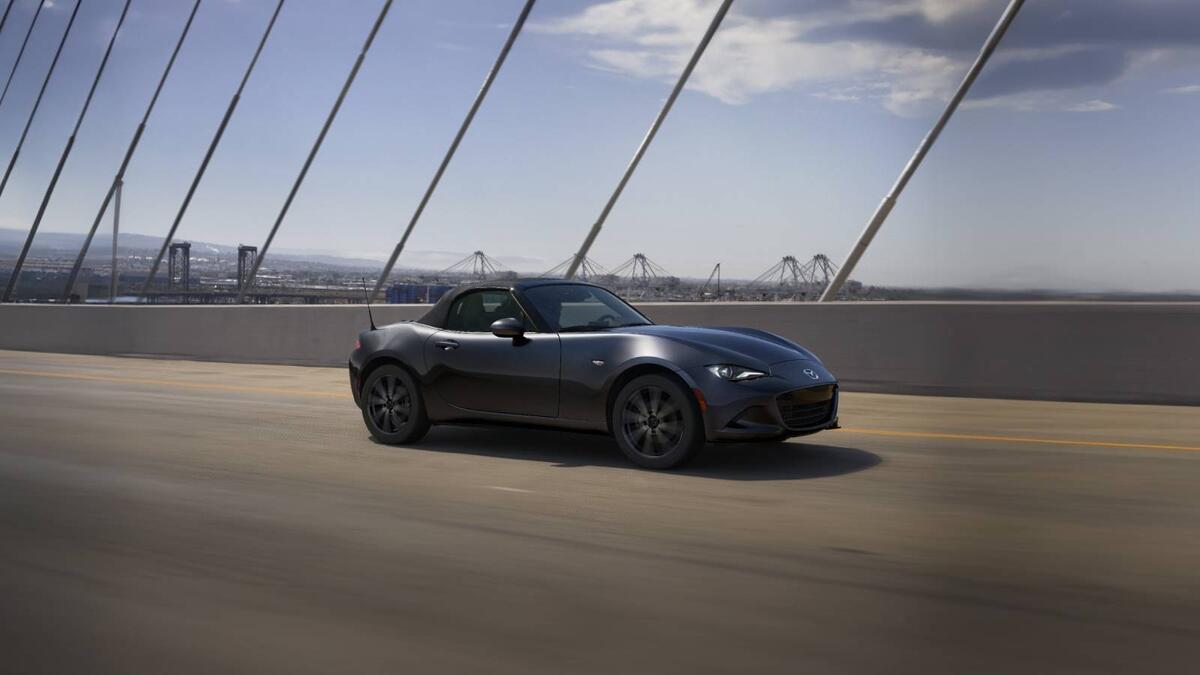
The Mazda Miata (MX-5) is a small two-seat sports car made to be fun to drive. It’s known for being light and easy to handle. The podcast mentions it as a good option if you want to drive hard without needing a huge, complicated car.
3D printing is a way to make a part by building it up in thin layers. Instead of machining it out of metal, you “print” the shape, which can help engineers make parts faster and with complex geometry.
The chassis is the car’s main frame/structure. It’s what everything else mounts to, like the suspension, and it helps the car stay strong when you drive.
Corrosive describes something that chemically attacks and degrades materials over time. In this context, the speaker is saying steam and heat can accelerate material wear by attacking the metal surfaces.
Additive manufacturing means making a part by building it up in layers, like 3D printing. It lets engineers create shapes that are hard to make with normal metalworking methods.
The Fisker Karma is a plug-in hybrid—so it can run on electricity, but it also has a gas engine to help when needed. Here, they’re talking about modifying it by putting in a different engine (an LS7) instead of the original setup.
LS7 is a powerful V8 engine used in some high-performance GM cars. Here, they’re talking about putting that engine into a different car (the Fisker Karma), which is a big change from the original design.
Term
electric car that's powered by a gas engine
This is describing a car that mostly drives like an electric vehicle, but it also has a gas engine to help when the battery isn’t enough. You can often charge it from a plug, then use gas only as backup or for extra range.
The BMW 3 Series is a luxury sedan, meaning it’s a comfortable car with a premium feel. The podcast mentions it as an electric car, so it’s being discussed in terms of electric power. That matters if you’re comparing how different luxury cars handle electrification.
The Chevy Volt is a plug-in hybrid that can drive on electricity most of the time. When the battery needs help, it can use the gas engine too—sometimes alongside the electric system depending on the mode.
Sustain mode is a setting that helps keep the battery from running out. The car uses the gas engine and the electric system together to maintain the battery level while you drive.
LIVE
My dad used to say the Cadillacs of Rolls-Royce are automobiles.
I go, Pop, it can't be the Rolls-Royce of all of them.
He goes, no, it is.
I go, no, it's not.
The one thing I never talk about is when I backed my orange mirror into my yellow mirror.
OK, you can't talk about that.
You know what you get good?
I think a pickup truck.
I don't know which one.
Good pickup truck.
F-100, perhaps?
I didn't say an F-150.
An F-150 is the most popular vehicle sold in America.
The most popular car is not a car.
It's a truck.
I'm going to write a book one day about you knocking on strangers' doors.
I've written a lot of good stories.
I've got a lot of good stories.
Didn't you buy a house in Rhode Island that way?
Yeah, that's pretty true.
Welcome to The Inevitable, a podcast by Motor Trend.
Hi there, and welcome to The Inevitable.
This is Motor Trend's podcast.
It's our podcast about the future of cars, mobility, where we go, and
how are we going to get there, and what are we doing in Jay Leno's garage?
Great question.
We will answer that in just a second, but before we get to Jay, Ed's got something to say.
Yeah, which is we're still not sponsored.
But please, if you want to sponsor a fine episode, maybe one we do special like this
in beautiful Burbank, hit me up, edward.loh at Hearst, h-e-a-r-s-t.com, or slide into our
DMs and shoot us a note.
But yes, today we are revisiting one of our very special friends, good friend, friend
of the house, friend of Motor Trend, a very generous, a very familiar face if you love
cars, the one, the only Jay Leno national treasure, a fantastic car collector.
He's also the number one episode we've done on this podcast by a huge margin.
We're going to talk about a lot of interesting topics, very near and dear to his heart, including
collecting cars, things he's trying to do to facilitate the ownership of classic and vintage cars,
including Leno's Law version 2.0, also his love of American performance vehicles.
So we're going to cover Mustang GTD, we're going to cover Corvette ZR1X, vehicles like
the new Zinger supercar and made in Torrance, talk about a wide range of products including
Tesla Semi to the slight pickup truck, Rolls Royce Spectre in there.
Can't forget the Rolls Royce Spectre.
A few others, all sorts of wide ranging topics.
We go along with this one, so why don't we bring them on?
Mr. Jay Leno.
Jay, thanks for having us in your home, New Garage.
Thanks, thanks for coming to Culver City.
In terms of commuting.
For those of you who have been following the podcast, the first Jay Leno episode is our
number one most viewed episode by a long shot, Frans von Holthausen, your buddy at Tesla.
It's a close second, but tremendous.
Well, we'll try to keep it going.
Let's go.
Beat Frans again, that's the important thing.
Let's get some of the business stuff out of the way, which is Leno's Law version 2.0.
The first one, California State Bill 712, did not pass last year, but it went farther.
It got through everything.
I only had one more committee to go through and as the last minute they called something
and we voted.
All right, so it didn't work.
That's okay.
But you think politics is sleazy.
I mean show business is sleazy.
Oh my God.
Yeah.
But you know it's interesting because I'm the more fly some honey guy with honey kind
of thing in the sense that when I went up there and they had all these car people ready
to testify against us.
And carb is on a wonderful job in California.
Yeah.
When I first came here, there were 160 days in the year, they told you not to even go
outside.
Right.
And you couldn't see the mountains from here, now you can see them, but you just couldn't
because it was just a hazy smog, you know.
So they had a wonderful job of cleaning up.
But to me, see any car post-76, especially onboard diagnostics came in in 98, 96.
That's where you just plug in and they tell you right away and you get out.
The older you got to get on a rolling road, you got to do all that.
And the equipment does not exist anymore to fix old cars.
And where it does exist, sometimes you have to go to San Diego, you got to go 50, 60 miles.
You know, I read one article that Leno didn't want to drive the extra two miles to go to
the other station.
Well, no, there wasn't two miles.
You really couldn't get.
And to me, to make a criminal out of someone who's driving a car they bought new.
Right.
It seems to me environmentally you're better off with the same car for a long period of time.
But that's that.
But I tried to equate it to drinking.
You know, they banned alcohol.
It didn't work.
But then they came out with .08.
Okay.
So above that, you're drunk, you lose your license.
Same thing with smog.
I mean, there's not enough cars in that window to make people criminals.
And every year there's fewer and fewer and fewer.
That's right.
There's more and more EVs all the time.
That's right.
But you are making people break the law.
Right.
Because, you know, if you're a guy and you've got a car you inherited from a dead relative,
you know, oh, this is kind of cool.
Well, what are you supposed to do?
You drive into the border and selling somebody in Nevada or Wyoming or, oh, it just seems
silly.
Right.
Right.
It doesn't seem like it's, it's like .01 percent of people are affected by it.
So it's nothing.
Yeah.
So we'll keep our fingers crossed.
I think it may pass this time.
They seem to be pretty reasonable.
It's bipartisan.
It's bipartisan this time.
You got, so the first time it was Shannon Grove.
Right, right.
Republican out of Bakersfield.
Right, right.
And now you got a co-signer.
Oh, good.
Court, courtness, courtness.
Yeah, yeah.
Out of.
A Democrat, yeah.
Democrat out of, I think the San Jose area.
And it's amazing how many of these guys, these men and women are car people, you know?
Sure.
And plus they like the idea of the car culture.
And, you know, we keep driving businesses out of California.
You know, it's like, you know, you're in the video business.
Well, here you need a permit for every street you go on.
You go to some place.
You get a permit.
You just shoot anywhere.
Oh, no.
You can only go down.
You have to go left.
You can't go right.
You can't go down.
So people go to Atlanta.
Right.
And what did I do then?
Since somebody even left, they raised the fees for the people already here to make up for
the people that left.
I mean, it seems crazy to me.
So, yeah, we drove Tesla out of California.
We drove Toyota out of California.
Okay.
There's two sides to that story.
There are two sides to this story.
But trouble is, it's not an advantageous place for business to be.
No, we want more business in California.
Yeah.
Yeah, I really think so.
And I think there's a happy meeting we can work out somewhere.
No, it's like, you know, like there are, I think everyone would agree, like there are
bad laws, like, you know, the 55-mile-an-hour speed limit, national limit, the entire country
is a criminal, suddenly.
Right, right.
You know, for decades.
It made no sense.
That's it.
Well, let's pivot then.
Let's talk a little bit about Tesla.
I got caught up in a bunch of your videos, and recently you were the first person outside
of Tesla to drive the Tesla Semi.
I mean, you looked like you drove it quite a lot.
I was quite impressed with that.
It's as fast as a Tesla, but it's like driving an office building.
It's just a huge thing that moves like right now.
Right, right.
And it's meant to be, you know, unloaded to Port of San Pedro there, and then you go to
Vegas, you go 500 miles, and you can get a 60-80% charge in like 30 minutes, you know,
with a mega charger.
I mean, it's pretty interesting, and you're saving on fuel costs again.
I mean, it seems quite good, you know.
It's so funny because business is, well, it's like show business.
Everybody know, not everybody, but a number of people, they don't fail because they're
bad at their job.
They're too greedy, too drunk, too high, too jealous, too prideful, too envious.
There's also some other reason why, you know, why you fail.
And when I see like a situation with Tesla, management gets involved in politics, and
now electricity is a democratic thing against the republic.
When did electricity become democratic?
It's electricity.
Right, right.
But this is what happens.
You know, you just stick to your core, core business, and you'll do fine.
I mean, Tesla has amazing tech.
I mean, I know a lot of people, not fans of the Cybertruck, but just the interesting,
the Cybertruck is two tons lighter than the Hummer.
Did you know that?
Yeah.
It's 4,000 pounds lighter just through battery technology.
About 3,000.
Yeah, yeah, yeah.
I was just saying the size of the battery.
Yeah, yeah.
Hummer's just a giant battery.
It's a 240-kilometer battery.
Right, right.
But the fact that it's 4,000 pounds heavier, 3,000, whatever.
Yeah, yeah.
What's it like, how does it compare as a single-seater semi to your McLaren F1?
It's like same, like driving it in the Tesla semi?
Well, I mean, it accelerates very quickly.
I mean, it does.
It's like a steam car.
It's like a hand of God.
You just got instant torque right now.
Well, we drove the, sadly, bankrupt, the Nicolae, Nicolae, Nicolae, the hydrogen semi-truck.
Oh, okay.
And around West Hollywood, around Beverly Hills.
You know what's interesting?
I drove the hydrogen car 25 years ago.
BMW had the liquid hydrogen one.
Oh, yeah, yeah, yeah.
Seven series.
And there was, over on Lake Street, there was a place you could fill up.
Yeah.
You brought a book.
It took about half an hour.
But it wasn't bad.
It was okay.
But hydrogen has that, you know, people go back to the Hindenburg.
The Hindenburg burn because of cellulose paint.
Right.
Had nothing to do.
It's like, is that a Corvair?
The guy says to me, those blow up, right?
I go, no, they don't blow up.
Yeah, they explode.
No, they don't explode.
Ralph Nader didn't like it.
It was in a, you know, there's also, nobody ever gets the facts straight.
No, I drove the 2007 or 2008 Honda, the Clarity hydrogen car, which was great.
But the fundamental problem is like, where do you get the hydrogen?
And then also like, how do you produce the hydrogen?
If you're burning coal to make hydrogen, that's really stupid.
But if it's, you know, another way to do it.
Right, right, right.
But eventually that will become popular.
I think, yeah, I think for like, for like semi trucks, I think hydrogen is a good solution.
Yeah.
And for like ports and like boats.
Right, right, yeah.
Cars and batteries work pretty well.
Another car you recently purchased and driven, and it's now a video on your channel on Leno's garage.
And it's quite popular, 1.5 million views, Corvette ZR1X.
Boy, that's an amazing vehicle.
Okay.
You know, it really is.
I mean, I always say this.
It's built in America in a union shop at an extremely reasonable price.
You know, people, yeah, I made the mistake of saying this is the car anybody can aspire to own.
Not necessarily the ZR1X.
That's the top of the line.
Sure.
$250,000.
But you can get a Corvette for under $100,000.
Well under, well, well under.
Yeah, and the unions weren't even cheaper.
Yeah.
And it's the performance bargain.
You know, I always tell the story about a company called Carbon Revolution came here with a wheel.
Sure.
They had developed.
This is maybe 20 years ago.
Oh, it's from Lamborghini in Porsche.
So we put it on at 9-11 and went through a little spring.
And boy, you can feel the difference.
13 pounds of wheel lighters.
So you say, okay.
I said, where are you going to go with this?
Well, we have some manufacturers interested.
We can't really talk about it.
Okay.
Now the wheel was $20,000 a wheel.
Okay.
So it's $80,000 to put it on your Ferrari.
They were Australian, right?
Australian, yeah.
And then the next thing I know, they're on the new Mustang for 2015, the 350R.
Right, the Shelby, yeah.
And the whole car was less than the price of the wheels.
Right.
I think the car was $62,000 at the time.
It was.
And it had these four wheels, which were $80,000.
But through manufacturing, they were able to keep the cost.
And that's the brilliant thing about GM.
They've got all the OEMs and they just produce everything they need and sell it at a reasonable price.
Yeah.
And like with the Corvette specifically, like, okay, the same chassis for all Corvettes.
Right.
It's amortized.
That engine is also in the ZR1.
And it's a twin-turbo version of the ZO6 motor.
And an exotic motor.
Oh, absolutely.
It's not the usual cam and block.
Yeah, no.
I mean, four-valve, four cam, exotic, you know, flat-plane crank.
I mean, it's exotic as any Porsche motor or Ferrari motor.
Yeah, but then the electric stuff is off the e-ray.
Right.
It's kind of a parts-bin assembly.
They just put, like, you know, all the peanut butter with all the chocolate and you get the X.
Well, yeah, yeah.
But they're using really good peanut butter and really good chocolate.
Yeah, yeah, yeah.
I'm not saying they're not.
Reese's made a mistake.
They cut the quality of it.
You heard about that.
Of course.
Of course.
The grandson or something said, we're going to make better peanut butter.
Right.
That's what I'm saying.
Yeah, yeah, yeah.
But you know what I mean?
That's, you know, when the Corvette came out to C8, I said, okay, it's probably got, you
know, a cast-iron bell housing.
No, I don't see any place where they skimp to save money.
Right.
They were able to build it efficiently.
Right.
I mean, it's got as much carbon and magnesium and exotic metals as anything.
And it has, you know, the one place where America excels, heating and air conditioning,
all that kind of stuff.
You get it.
Yeah, it's great.
You know, I've got an F1 McLaren.
The thing is, the 20 minutes after the air conditioning, I mean, it's like, it's nothing.
It's like hilariously bad.
I was in the Gordon Murray, the new one, the 250, same.
The same air conditioning.
The same weight.
They don't need it.
They don't need it over there.
They just open a window.
Well, see, that's what I love.
They just don't care.
It's like with the Mustang GTD.
Ford Motor Company makes a million of these, whatever the electronic unit is for the radio.
So you get in and my phone, everything sinks right in.
Sure.
That sinks right in instantly, you know.
That's where we're really good.
I was running around with Andreas Prunger all weekend from the father of Porsche GT cars.
And his second in command, this guy, Henry, had rented a F150.
And that's what they were talking about.
It was like, every time the phone is paired, our cars, the phones don't pair.
That's what I mean.
But I mean, that's the R1-X.
I think it is now the fastest production car.
Quickest, no straight line, maybe.
Yeah, fastest is like, yeah.
Well, what I mean, I mean, in terms of, I mean, it's right up there with multi-million-dollar supercars.
Oh, there's no doubt.
We tested one, right?
And the numbers are stupid.
Yeah, and you've got that wonderful system, that Lyft system, that's GPS.
Yeah.
You just, anywhere there's a pothole, you just press the button and it will list, it lists,
and it's fantastic, it lists the front end.
It's really impressive.
And you've got the convertible, right?
Right, yeah.
So that's like the best of both.
Yeah, it's fun to see America leading.
Because, you know, I grew up in the era of, you know, paint wheel, stripe package, you know.
Yeah.
It's the GT.
Stickers, not paint.
Yeah, yeah, yeah.
And so it's, you know, the best thing that ever happened to the American Carogy was going bankrupt.
Because you got rid of all the marketing guys from Whirlpool and Zenith, and now you've got,
now you've got real car guy, you got real car guy.
Yeah.
You know, Mark Royce is an engineer, he's CEO of General Motors, and he's at Nürburgring,
and he's driving 233 miles an hour, you know.
I mean, it's pretty impressive.
I don't know any company to let their CEO live a dangerous lifestyle.
A couple, I mean, Farley's out there.
Farley goes racing.
Well, that's what I mean.
But it's that uniquely American, I mean, they realize, okay, we learned our lesson.
You can't get, I remember back in the 80s, Chrysler just produced cars, piled them up,
and Kmart parking lots all around the country.
You know, just unbelievable, you know.
I remember we used to do jokes about the K cars.
Some assembly required, you know, all those kind of gags, you know.
That doesn't exist anymore.
Right.
I think American stuff, I think, if not leading the world is certainly right there in front.
I mean, the one I marvel at is Cadillac, like how they were able to have five or six SUVs,
or EVs, I should say, that are all incredible.
Well, and at the same time, they're doing the black wing stuff,
which is as good as anything anyone else's doing.
And the fact that they lowered their demo.
I mean, if there's anything everybody aspires to is to get that younger demo.
Sure.
You know, and the fact that Cadillac was able to go from like age 65 to like 41,
it's pretty amazing.
And that black wing is unbelievable.
I mean, the only stick shift sedan you can buy in America is the Cadillac now.
Yeah.
Well, the last stick shift was 1949.
That was the last time you had a manual transmission of the Cadillac.
I mean, it's a fabulous car.
It's a four-seater Corvette.
You know, it's crazy though, you're talking about lowering the demo.
I'm going to bring up another car you got recently.
But Rolls Royce now has the youngest demographic in the automobile industry.
And it's like, and I think it's because a lot of young, you know,
billionaires are buying them, but it's like 31 years old.
Yeah.
It's the average age of a Rolls Royce.
Yeah, that's funny, isn't it?
And it was like 131.
And Rolls Royce used to be so expensive.
Yeah.
Now they're like, oh, stop that.
Well, they're so pretty expensive.
No, no, but I mean, compared to McLaren's and Ferrari's and, I mean,
a good European SUV is pretty damn close to...
No, you're right.
I mean, yeah.
So, you know, you can get a portion of Cayenne for 200 grand
or a Rolls Cullinan for 400.
So it's not like crazy money.
I mean, I used to work for Rolls Royce when I was a kid.
And it was funny.
You used to have that.
Oh, the loudest thing you hear at 60 mile an hour is the ticking of the clock.
That's because it has a loud clock.
That's why.
It was nothing.
It was a V8 with General Motors.
Yeah.
Three transmissions.
Yeah.
Yeah.
Frigidaire air conditioning.
You know, it was all a parts bin.
Now even they've narrowed it down.
And they're, you know, getting back to the core business.
That's really, you know, it's a bit like the restaurant business.
If you don't have an A in the window, nobody is ever going to eat there.
Nobody goes into a restaurant that says B minus.
Right.
I mean, if I saw a C, I might go in there.
For that.
It's not how hungry you are.
Well, so I want to stay on 01 X and GTD a little bit.
Come back to the specter.
Come back to the specter.
So you have, you have a GTD.
Right.
And again, if you haven't seen the videos on Leno's garage, please go back and watch
Mustang GTD, which you did a ride along with Jim Farley.
Right.
You're driving president of Ford is sitting next to him talking about the car.
Right.
You had Mark Royce in to talk about the 01 X.
Right.
And then he couldn't stay.
He went, you went and drove.
I have to say, I watched them both.
You were really effusive, really like excited.
I felt like about the 01 X and not as much about the GTD, but also the guy was sitting
next to you.
I don't know.
Like which is there.
Well, no, I think he's excited.
I mean, one is it is a race shop race.
I mean, the Mustang is extremely expensive.
Yeah.
It's almost twice the price of the Corvette.
Right.
But it's a specialized race car.
It's built to be.
I remember when they first debuted, I went, oh, it's just, it's a Mustang.
And then I saw the chassis.
Yeah.
I went, oh my God.
It's multi-matic.
Yeah.
This is really, this is very, very impressive.
And, you know, I was when people complained about the price.
I say, you know, take your Mustang to a home in Moody or a race shop.
Say, how much will it cost me to do Nurburgring under seven minutes?
And it's going to be two or 3000000 dollars.
Especially at home in Moody.
Yeah.
So, I mean, the fact that the Mustang, the Mustang is expensive because it's a purpose-built
vehicle meant to do one thing.
Look, if you think about it as a multi-matic product, not a Ford product, it's by far the
cheapest multi-matic vehicle you can buy.
Like the, you know, I think like the Valhalla is the next one.
Multi-matic makes a lot of race cars.
And a lot of super high performance.
Like Aston Martin, you know, Valkyrie, the 4GT.
The 4GT.
They did the explosive, the door hinges on the Aston Martin's 177.
Yeah.
That was like, they do a lot of specialized parts.
Yeah.
They did the 177, by the way.
It's a fabulous company.
Amazing.
And you get to know all the guys when you get one.
And I mean, it's a different.
So it's a bit more specialized.
Yeah.
I mean, I think the Mustang GTD is kind of out of reach for the average consumer, where
Corvette is still attainable.
Yeah.
Yeah.
And I mean, look, I've not driven the X, but I've driven the ZR1, which is, you know,
1,064 horsepower.
I know, it's great.
In the rear wheels, just from the engine.
Yeah.
And I forget the exact number, but it's like over 500 pound-feet of torque to each wheel.
Right.
And like a Bugatti, you know, Veyron was like 250 pound-feet of torque to each wheel.
This is 500.
And it has no traction issues.
And you can drive it every day.
Every day, everywhere.
And nobody begrudges you a Corvette.
Right.
You drive Ferrari.
Would your daddy buy that?
What is that?
Like some kind of trust fund baby?
Would you get that cat?
You know, you get those kind of guys.
What do they say if you drive an F1?
Well, that's nobody sees you driving.
Oh, okay.
Well, most people don't know what it is.
They have no idea what it is.
Well, I'll tell you a funny story about my F1.
I got it when it came out.
And nobody really knew what it was.
Right.
So I drive it home.
And I go up my street.
And I see another one parked a house three doors down from me.
I go, what?
You know, so I park, you know.
I ring the bell.
And just like in a movie, this some kind of beautiful supermodel answers the door.
She's got a towel on.
She got out of the shower to answer.
Yes.
I said, oh, whose car is that?
It's my boyfriend's car.
I said, you know, I got one just like it.
And she goes, so?
Well, so you have a car like my boyfriend.
What do you want?
Well, obviously, you see, it's a very rare car.
You see, there's only 64 of them in the world.
She goes, what are you talking about?
I said, oh, look, I'm sorry.
Just so stupid.
So I had to wait the lady with a boyfriend to come home and find out what.
And that guy, the guy named Dan Kennedy, nice guy, he bought the car.
And then he had it like a short time and somebody offered him a 3
Right, which is like 500 more than it costs.
Yeah, yeah.
And he was like, well, I'll never got to see this.
I never got to see this kind of return.
I don't want to sell it, but I have to.
And of course now one just over 25 million.
Actually, one sold for more than that.
Yeah, yeah.
Yeah, it's pretty crazy.
I'm going to write a book one day about you knocking on strangers' doors.
I've heard a lot of good stories.
A lot of good stories.
Didn't you buy a house in Rhode Island that way?
Yeah, that's pretty true.
So, I mean, I do.
Do you have a preference between the Zero 1x and GTT in terms of driving?
Which one do you prefer to drive?
Well, they're both really fun.
I mean, you know, it's interesting.
I drove the Corvette and I took the GTT.
Oh, this is pretty good.
I mean, this sounds like heresy, but it really is a 993 Porsche.
I mean, it feels like that.
The GTT.
The GTT.
Oh, the GT3 Porsche.
Yeah, I mean, it's stiff.
It's so nicely balanced.
I mean, it really is the best handling Mustang anyone has ever built.
And Farley's been very transparent about that.
He says, we're chasing the Porsche GT3 RS.
That's our wrap.
And that's another thing I find I love about America.
Like in 66, you have a $10 billion company ford against a $5 billion company,
a $5 million company, which Ferrari was at that time.
Right.
And we're the underdogs.
Yeah.
I mean, we're flying in.
I think Henry Ford II, Hank Taduse, he was bringing windshields in on 747,
the next spare windshields because they kept cracking.
And he's flying.
It just made me.
Every time I tell you my story about Henry Ford II.
I used to work at a place called Wilmington Ford.
And I was the lot boy.
One of those deals where every night you have to go out and take all the hubcaps off
because kids would steal it.
And then the morning you put on like 60 set of hubcaps every day, you know.
So I'm coming out of the corner.
I bump into the used car man, all the hubcaps.
So he goes, you can't treat it.
You're fired.
He goes, you bumped into me.
So I got fired, you know.
So I saw a shame about being fired at 16.
I didn't tell my parents.
I just pretended to go to work every day, you know.
So I wrote a letter to Henry Ford.
You know, my dad has a galaxy.
My mom's got a falcon.
I'm saving for a Mustang.
I got fired.
And I sent the letter to everybody I could find on the board of directors.
About two weeks go by.
Ben Roussous, your owner calls me and he goes, who do you know at Ford?
I said, I don't know.
Well, you must know somebody.
You want your job back?
You're going to.
Okay.
So Hank the Deuce wrote a letter.
I said, why does this kid get fired?
He sounds like a real Ford man.
So, yeah.
Did you ever see the letter?
It's around here somewhere.
That's incredible.
That's great.
Okay.
Well, I'm glad you brought up the 911 GT3 RS.
And you also just said it a couple of minutes ago.
Like, you love that America is out there chasing the Germans and the Nurburgring, right?
So let me ask you.
Because, yes.
You know, when Mark came on and you guys talked about the Zero 1X, he was very, like,
he was a typical Mark, talked a lot about the car, the performance, the goals.
Jim comes on the GTD and you just, like, you mentioned a lot about how Porsche, you know,
were after the GT3 RS, you know, not everybody, the Germans shouldn't have all the fun.
Right.
And this car was built and you just said it handles exactly like a GT3 RS.
And then a couple of years ago, now three years ago now, you had Patrick Long come on
here with a GT3 RS and you guys went for a drive.
I watched that video, too.
And he seemed to have a pretty good time in that one.
And, yeah, Ford and General Motors recently have now beaten the GT3 RS's record around
the Nurburgring.
Right.
And actually, about two weeks ago, or three weeks ago now, Ford has this new GTD competition
that took it down even more.
Like, in insane, like, 11 seconds off of this previous record.
Which is like, where'd you find that?
Andy Proger was like, uh-huh.
Like, that's production, sure.
But we're talking about, first of all, this car, the GT3 RS has had this record six minutes,
47 seconds or something.
645, yeah.
645 with 520 horsepower, naturally aspirated, rear drive.
And then, Corvette, it's like, hey, we got a 1250 all-wheel drive twin-turbo V8.
And Porsche's over here like, guys, we're now like 300 to what, 800 horsepower or 700
horsepower down and naturally aspirated with a four-liter 5.6.
Right.
Like, when you talk about, and interestingly enough, you don't own a GT3 RS.
No.
But you bought two of these cars.
Right.
Well, you know something, I was never a sports guy.
I don't really have a favorite team.
I'm from New England, but I'm not really a football guy.
But I do root for American business, and I find it fascinating.
You know, the history of Mustang, the reason they're that way is when the Mustang came
out, Learacoke was greatest fear that we would be seen as a secretary's car.
Because it had the smallest V8.
Chrysler had the, you know, the 340 to 383 and the Barracuda, even the 440 if you wanted,
you know, Pontiac and Camaro.
We had a 289.
Right.
And Learacoke called the Carroll Shelby and said, look, make this thing some kind of race
car.
Just do it.
Get some street cred.
And it worked.
Okay.
Go forward.
Now the Mach-E comes out.
An electric Mustang.
No!
I'm not buying it.
It's not a Mustang.
I just hear people moaning.
Sure.
I mean, I get why they did it.
Sure.
It's a marketing thing because people, oh, it's a Mustang.
Well, not really.
But in true Mustang owner's eyes, that was not a Mustang.
That was just an EV that had the Mustang name on it.
You know, it's like Corvette.
That guy said, tail light's not round.
I'm never buying another one.
That's not a real Corvette.
Yeah, not a real Corvette.
So you have that.
So they come out with the GTD and they get all the street.
I don't think they did one bit of advertising on the GT.
I mean, it sold itself through YouTube, through enthusiast publications.
I mean, it did a hell of a job and it brought the street cred.
Every guy with a Boss 302 or any kind of bullet Mustang, ooh, it's not.
Well, you know, Mustang, it's a fastest around the world.
I mean, it's very clever marketing.
Yeah.
It's a real halo car, right?
That's what I'm saying.
So to me, that's what I root for.
I get a kick at it.
That was even part of the original question.
Yeah, probably.
I was just curious what your take on it.
Like, just the performance, like, you know, Porsche has been at it for a long time with
the 911 in building GT cars and tackling the Nurburgring.
The Americans come in with a very American approach, right?
Like, massive horsepower, forced induction, in the case of the Corvette, all-wheel drive,
electronic, trickery, high technology.
And because we had Andy Poyniger on the podcast, like really four days ago, talking about how
are you going to respond?
How is Porsche, how is the GT3 in particular, or do you go to GT2?
They're going to go to the GT2.
Yeah.
Because it's very clear to beat now the GTD in 11 seconds off their time.
It's going to have to be the horsepower.
It's going to have to be in the straights, right?
That's the only place.
Because they're still probably quicker than the Corvette in the corners.
Well, Porsche has always won with less horsepower.
Yeah.
It's never been about horsepower.
It's been about handling.
But the last GT2 was 690 horsepower.
Right, right.
And, you know, like, maybe a couple hundred pounds of downforce.
So you take the GT3 RS, which has a ton, literally a ton of downforce.
And I think Andy said at least 800 horsepower.
Like, you know, goodbye GTD.
Right.
We'll see.
I mean, that's a huge hill.
It's a huge hill to climb.
No.
They've got to get off.
Well, I think it's great.
I mean, it's the kind of competition people like.
You know, the reason I lost interest in NASCAR was everybody had the same motor.
Yeah.
I like Pontiac ran this.
Same chassis.
Same chassis.
Yeah.
I mean, it's all the same car.
And then I got to roof my favorite driver as opposed to.
Or tie it.
Yeah.
You want to see Ford be Chevy or Chevy be Ford or whatever it might be.
You know, so, yeah.
Yeah.
Okay.
Yeah.
A little bit like that in F1, I find too.
You know, that's why I find like, like GT3 racing is more exciting is because like,
I recognize that's a 911.
Yeah.
And that's, it's like, I'm not really sure who has the McLaren versus the Honda.
The greatest thing that ever happened to F1 was drive to survive.
Of course.
Yeah.
I mean, because I used to think, you know, $1,500 lug nuts and, you know, aerodynamic
were going for a hundredth of a millionth of a second off by using this little oil.
It was out of my purview, I guess.
Purview, yeah.
You know, it just, but when I watch it and I'd see that, boy, these are really young
guys, you know, like when I was a kid, I was like, my friend's son is that age.
You know, like you identified with her.
And then I really got interested in it.
And now I really enjoy F1.
Now I enjoy the technology because I wasn't, you know, there was a show called, what was
that robot show?
Maybe you built robots and the robots for each other.
Battlebots.
Battlebots, yeah.
And I thought, well, this is going to be a huge hit.
And then I realized, well, it wasn't because there's no people involved.
Right.
You couldn't root for a metal box.
It's punching another metal box, you know.
You want to see the Puerto Rican kid beat the guy from Colombia or whatever it might be,
you know.
And yes, I think that's what was wrong with that.
I mean, it's really humanized.
To me, I thought Drives to Survive was better than the F1 movie.
Yeah.
Oh, it was also better than the races.
I mean, frankly.
Yeah, because you really get involved in the personal struggles and everything.
Well, are you watching this season and all the technology changes?
Do you have an opinion on the order?
You know, I take them all.
And when I got on a plane, I just watch them all.
So I haven't seen the seats.
But I was going to say, talk about a halo effect.
Like I just heard Long Beach Grand Prix, highest attendance ever.
I know a couple of years ago, I was at Daytona 24-hour, highest attendance ever.
So everybody now, because of this F1 Drives to Survive effect, like all other races are
getting eyeballs.
Because F1 is still kind of cost prohibitive.
Like if you don't happen to live, even if you live near Las Vegas.
I went down to Austin with the McLaren team.
And you walk through the pits.
There's not a paper cup on the ground.
Mostly it's like that carnival.
Hot dogs have a grill.
They smell horrible.
I walk by.
There's a guy making pasta from Italy.
You're like, it's pasta.
There's no no charge.
Okay.
It was free to everybody.
And it was really good.
It was so good.
I thought, well, this is like the best restaurant I've ever been at.
I remember, this was 2014.
I went to Monza back when Vettel was leading.
And I met the F1 DJ.
And there's a guy that he flies to every F1 race as the DJ.
It's a traveling circus.
The catering.
It's all the same everywhere.
Yeah.
I mean, it was very impressive road show.
Let's bring it back to the American performance.
Because I understand you've gone to drive the Zinger.
You know something?
I'll tell you what impressed me about the Zinger.
And everybody seems to overlook this.
We have every supercar here.
Is this going to be sold in California?
We're waiting for certification.
We should have our certification any day now.
It never comes.
I mean, Gordon Murray couldn't do with the 250.
Right.
The T-50.
Right.
It was Cosworth.
It was a pretty established engine.
Cosworth.
I mean, and I love it.
I don't mean anything.
No.
It's just not.
I mean, this is an engine built in Torrance, California in a shop.
Yeah.
It goes from the shop to carb.
And it passes everything.
Yeah.
Crash tests.
Yeah.
I mean, I would say when you buy one, you don't have to go show on display.
You're going to have a DMV.
Well, I'm 2500 miles a year, but you can't take it out.
And show on display is one of those rules.
All you need is that one politician.
If I can save just one life by getting one of these cars off the road.
Well, you know, they always have that thing.
And then now suddenly you can't drive your car anymore.
Whereas Zinger, they build a car right there.
You can go watch them being built by Americans.
You can talk to the drivers.
They speak the same language.
Yeah.
You know?
And yeah, I just found it fascinating that it passes all every test.
I expected, but are you still waiting for a knock?
No.
Yeah.
You know how they do it?
I have no idea how they do it.
Okay.
Yeah.
Your car is filthiest on a cold start.
Yeah, right.
Where you turn the key.
You're just pushing all pollutants into the air.
Right.
You turn the key into Zinger.
The cat preheats like red hot.
So you have instant burn of exhaust from zero before you pull away.
Maybe 10 seconds.
It's a bit like a glow plug on the diesel on the old.
Right.
You'd wait a minute.
And there you go.
Right.
Problem solved.
Right.
I mean, it's such a brilliant.
And also like, you know, it's a, they say 2.88 liter.
2.9 liter twin turbo V8 that on 91 makes 750 horsepower.
Right.
It's a monster of a little motor.
And I think on 100 octane, it makes 850 and they haven't released the ethanol.
But you can put ethanol in it, E85 and it's going to make, you know, I don't know, whatever.
Right.
10% more.
Right.
It's this big.
It's the tiniest little V8.
Yeah.
I mean, I think it's just brilliant.
I mean, it's really American engineering at its best.
And it would be nice to see California make an industrial park where I'm calling Torrance
the new Modena, you know.
Yeah.
But it is.
I mean, you've got, you've got a singer there.
Well, Zinger and Singer actually share a wall.
It's the same building.
I mean, that's funny.
It's really scuzzy on the Zinger side.
It's really nice on the Zinger side.
Well, I mean, I think it's really fascinating.
Yeah.
I mean, you want California to be the center of not just computer high tech, but automotive
too.
And then you get ancillary businesses, the t-shirts, the hats and, you know, all the
kind of stuff.
Yeah.
I think it's really exciting.
I just hope we don't chase them out of California like we did every other automobile.
Did you go to the factory, the divergent side with the 3D printers?
You know, I was there 10 years ago.
I drove the prototype.
But at the time I thought, well, back to front.
This is kind of silly.
Oh, because it's tandem seating.
Yeah.
But then I realized when I drove it, I do most of my driving by myself.
I get up on a Sunday morning and 34 hours go through the canyons.
I'm told I've always done.
I don't bring anybody.
Right.
And I said, and plus you've got that fighter plane.
It's a very entertaining vehicle to drive.
It's cool because there's glass right here.
And the fact that 60 feels like 100, 100 feels like 200.
Modern cars are so insulated that why am I in jail?
No.
What happened?
But it is the only car I've ever driven.
I'm like, okay, that's actually too fast.
Like because if you ever go full throttle, you have to be on the brake immediately because
you reach the end of whatever you're on.
And your red line is 11,000.
Yeah.
Oh, it's mental.
I mean, to me, the reason I would buy a 250 is that 12,200 RPM red line.
Right.
Okay, I can drop a 1,000 RPM and save two and a half million bucks.
Right, right, right.
But yeah, it's really incredible.
Yeah.
How does it compare?
Does it compare to like your F1?
You know, center driving position.
You know, it is such, well, you have the center driving, which is the best because you're
in the middle.
And it's consequential.
You know, I go up to the crest and you're driving a Viper or something and you always
have one wheel on the yellow line.
Yeah.
Yeah.
I mean, you're close to it, you know.
Whereas this, you're right in the center of the road, which really makes the most sense
as opposed to being here or being over here, you know.
So, yeah, no, I think it's really interesting.
And it's so different.
There aren't very many unique driving experiences anymore.
You know, the fun thing about getting old French cars or English cars is, oh, the gear
shift goes, it's a reverse age.
Oh, that's kind of fun.
Or there's just different things.
That's why I want to do chavaux because of that insane shift.
That's funny.
Well, I've got that one right over there, that dynamique, you sit in the middle, like an F1.
And in the ad, the guy's driving a big smile.
His wife's on one side like this.
His mistress is on the other side smoking.
And he's like, he's very French driving.
It's hilarious.
It's like the funniest ad here.
She's like, oh, fuming and the mistress is smoking.
It's so stupid.
But you're in the middle.
So the idea of getting a unique driving experience, you don't really.
I mean, that was because I had to, you know, I drove and I had to write a review about the
Zinger 4 Motor Trend.
And yeah, the V-Max, actually the one.
The one you see is the big downforce wing and the long tail V-Max.
They're only making 80.
Right.
And I was trying to think like, well, who's going to buy this?
And I'm like, you know who it's for?
It's for, I was thinking of our friend Nick from Audrey.
Yeah, yeah.
Yeah, you've got 500 cars and they're all kind of the same.
Yeah.
You know.
No, it's generally different.
And it's really just for one purpose.
There is no practical reason why you would have this car.
It does have carplay.
It does have carplay.
But yeah, and that's what I like about it.
It's just purely for the enjoyment of driving.
And it is great fun.
I mean, you feel like, I don't race on the public roads.
I just race myself.
Right.
So I find my own.
I don't need to know how bad a driver I am.
I just enjoy it when I have a good time.
Right, right.
I don't go to, I don't want to be that guy that shows up on the track, you know, with
a leather suit like this.
You're just a little too fat for the suit.
Yeah, that's me.
I do that.
And then you're like, now you're like the rich guy.
If I was going racing, I'd do it with a Miata, you know, because then you're like, there's
an egalitarian thing where you don't want to be the guy that, I always hate the guy
that shows up, but he's got the glasses and the crew with him.
Oh, I was at the Nurburgring one time and there was a bunch of Japanese journalists.
For some reason, I was with Jaguar and they put me on the Japan wave.
Right.
This guy had martini shoes, pants, jacket, glasses, martini gloves, he had a martini bag
crash on the second corner.
And you're going, yay.
Oh, I felt bad for him.
That's the thing.
If you're a rich guy, it's going to be, like to me, the one thing I never talk about is
when I backed my orange mirror into my yellow mirror.
You can't talk about that.
You know what you get?
I hope they're both smashed up.
People just, they want you to do that.
I just made me, because I was trying to squeeze them in and I go, oh, Jesus.
You know, I'm thinking, I'm not going to, and then I wind up talking about it.
And of course, you just get the comment, you jerk.
Yeah.
Hilarious.
Very funny.
But real quick, just sticking with the zinger though.
Aside from everything else that impresses me about the car and the 3D printed car and
all that, they went to five racetracks in five days.
I think they called it like the California Gold Rush or something.
And they set five track records with the stock car in five days.
That's insane.
It is the same.
It's very good.
That means that every track there's things ever been on, it holds the record.
And it's a whole new way to manufacture.
It's a bit like, Thomas Edison had direct current, Tesla had alternating current.
Right, right.
This is old school.
This is new school.
Right.
And new school won at the expense of Tesla, sadly.
But it was just, and that's what this is.
When you look at that chassis, you know, I do 3D printing here.
So we make steam car parts and we look what wore out.
Okay.
Well, steam is very corrosive with the heat.
So when we make the part, we just build up that area with a little more metal where the
steam has to make the turn, you know, put like a big knuckle of metal there.
And that's what they do.
And look at the suspension.
You see places where it's wavier and it's heavier here and heavier here.
Yeah.
And it looks like somebody poured molasses over a chassis.
Yeah.
And then you get the true shape of the thing.
You know, molasses would kind of go with and then you freeze it.
I mean, it's fast.
Look at the chassis.
Oh.
If you're watching at home, Google Zinger and it's called additive manufacturing.
And if you look at some of the parts on the Zinger, they look incredibly organic.
Bird bones.
It does.
It's like an exoskeleton.
Yeah.
And I always tell them like too bad, like, you know, the outside of your car doesn't look
as good as the underside of the car.
Yeah.
And you know, it's one of the few cars where the engine is not necessarily the most interesting
part.
Not by the whole shot.
I mean, it's just, it's exotic enough.
Yeah.
And it res to 11,000 RPM.
Yeah.
You know, and it's got plenty of horsepower, but it's not, the whole thing is so exciting
to look at.
And it's done essentially in a clean room.
There's no like, you know, my favorite thing when I watch YouTube videos, the guy's making
sparks.
He's hitting something with the wheel, you know, and the sparks are flying in his dirt
all over.
You don't see that at Zinger.
Yeah.
Yeah.
Do you want to ask about the inspector?
Well, I was going to ask you some recent purchases you've made.
Acquisitions.
Acquisitions.
But well, actually the Karma Invictus is sort of, you told me you were getting one.
I was like, yeah.
Yeah.
It's interesting.
It's an interesting car.
Yeah.
You know, I like...
Speaking of American cars.
Yeah.
It is an American car.
You all remember the Fisker Karma, you know.
Great looking car.
Great looking car.
But it's a classic case of, just because you're a great designer, it doesn't mean you're a
great businessman.
I don't mean it to be insulting.
Most people can't do anything.
Some people can do, some people can do one thing.
Right, right, right.
And some people can do two or three things.
Right.
Like Elon Musk can do it.
He can manufacture.
Right.
He can build.
Okay.
You can do a few things.
I do one thing.
I just tell jokes.
So when I got my TV show, I said, you know, can we just get the best producer?
Let's get the best lighting guy.
And when they tell me I suck, I suck.
And just let it go.
And that worked.
You know.
And that worked for me.
And I'm not sure how we got on this.
We were talking about...
The Karma.
The Karma.
The Fisker Karma.
And that's what they did.
So you had this great looking car.
You had a few people who bought the design.
I know Lutz bought the body design.
And he put a...
LS7.
LS7 motor in it.
A 7 liter...
That was interesting.
I was okay, but a little rough from the edges.
Now it's got the BMW 3 cylinder.
It's an electric car that's powered by a gas engine.
Yeah.
Much like my own Magnetic over there.
Or Chevy Volt.
Chevy Volt.
Yeah.
It's a Chevy Volt in the Tuxedo basically.
And it works great.
You get 80 miles free.
Right.
And then you can drive it on sustain where you run the engine and the electricity at the
same time.
Yeah.
Or you can run straight EV.
Like right now a gas like 7 bucks a gallon here.
I just drive it on electric.
I don't go 80 miles a day.
I go home.
I plug it in two hours later.
Oh, I got 80 miles again.
Yeah.
So it's actually a course car.
And so I never drove the Invictus.
So there's the Karma Revero, which they made, I forget, 150-ish of those.
And they made like 30 of the Invictus.
Yeah, I think they're making 30.
And it's like carbon fiber body panels.
So it's like a lighter, same power, but a lighter version.
It's quite, and it handles very well.
Tremendous, right?
Yeah.
Because I was very impressed.
I was like, oh, this is, we had the CEO on, Marcus.
Yeah.
And because I drove one in like 2019.
Yeah.
Awful.
I mean, it was so bad, I said, you know what?
I'm going to do you a favor.
I'm not even going to review it because it's just, it's not fair to anybody.
Right, right.
And so when Marcus became the CEO like a couple of years ago, he bought them all back.
Right.
Because a couple of accidentally, somebody accidentally bought one.
Right.
They're terrible.
And so, you know, our friend, we have a friend, Joe Richardson, does PR for them.
And he's telling me, oh, they're good now.
And I'm like, yeah, okay, sure, Joe.
And then Marcus is like, there's a really good car.
Phenomenal car.
Like, it drives great.
It's great.
I still can't believe he keeps talking about it, but you're clearly valid.
He bought one.
I know.
I know.
It's impressive.
It's impressive.
Look, he could buy anything.
He bought one of those.
You know what I mean?
No, it's impressive.
That's impressive.
But then you also, you're Spectre.
You bought the Rolls-Royce Spectre.
You know, I used to work for the company.
So to me, there's a certain.
I think you told me you paid less for the Rolls-Royce than the Mustang GTD.
Yeah, probably.
Yeah.
The Mustang GTD was, I think, just about the same.
Yeah.
That's pretty close.
Wow.
Yeah.
Right?
And how often do you drive the Spectre?
All the time.
You know, I do stuff with the Almavan Casino.
And we do these car giveaways, you know.
We pick a car and you spec it out.
And it's about 90 miles.
And I drive it down there.
I plug it in at the casino.
They've got a free plug.
They get a car.
I drive home.
I save 200 bucks in gas.
Yeah.
And, you know, and it's electric.
It's bulletproof.
It means exactly what a Rolls-Royce is supposed to be.
Silent, clean, low-smell.
There's no stupid track mode or sport mode.
Right.
You know, they come out with a black badge version.
Which, oh, stops.
Just stop it.
It's a Rolls-Royce.
But, you know, if you like to just.
Sometimes you're.
I like single-purpose vehicles.
Right.
Same.
Same.
I'll drive a 73 Buick Electro when I want to just glide down the road.
Right.
I take a sports car.
I don't want something that you can go to Home Depot and the prom and the racetrack.
Right.
You know, I don't like cars that do everything at once.
I like individual cars for individual things.
We've got the room to have.
Exactly.
All right.
Well.
Spectrum's fantastic.
I still, real quick, sorry, but I still claim like if you took, because I know a lot of people
that are like, oh, it's electric.
I never buy it, blah, blah, blah.
But if you took like a guy who had a rave, right, because that's a V12.
Right.
And he tried to make it as quiet as possible.
And you somehow blindfolded him, got him into the specter.
He wouldn't know the difference until he went to accelerate and it was twice as quick.
Right.
And you're saving $6,000 oil changes.
Yeah.
Sure.
Oh, sure.
Yeah.
There's no maintenance.
Yeah.
There's no maintenance at all.
Maybe, oh, they encourage you to change your brake fluid every two years.
Sure.
So much in California.
You don't really need to do.
But that's okay.
Sure.
That's fine.
Great.
I mean, it's like, I was actually, I just did this.
Route 66 turns 100 this year.
So on spring break, I took my wife and my son and we drove from Kingman to Williams, Arizona,
and went to see the Grand Canyon and we took Route 66.
We did the Cadillac Escalade IQ, the electric one.
Which is now, I claim, is the world's greatest road trip vehicle.
Yeah.
450 miles of EV range.
Tremendous.
Right.
And I'm thinking about it.
And I'm driving.
And because we hear it in all the comments about, oh, EVs are terrible.
Where's the V8 rumble?
And I know, and this is the, again, to your comment about how Cadillac has done just an
amazing job with their EV portfolio and brought the demographic down.
I was just thinking about, you know, Mad Men and the Don Draper era.
Right.
Right.
If electric vehicle technology had come to Don Draper's agency, like in the fifties,
and would they be complaining about the sound?
The lack of sound?
No.
They'd be saying, this is the new standard of the world.
Right.
This is smooth.
It's powerful.
It's instant torque on demand.
And it's absolutely silent.
You know, it's funny.
You mentioned that.
I was in a restaurant with my wife and some director was next to us.
And, oh, Jalen, oh, hey, how are you doing?
You know, I like cars.
You know, I'm doing a movie now.
I'm doing a car chase.
I'm trying to figure out what the angle would be.
I said, why don't you use electric cars?
He goes, whatever.
Yeah, but to me, if you get it right, it becomes, and then, you know, you just, you show buildings
and you see it go by.
And the lack of noise and just the whooshing sound can be, I don't know if you ever followed
through it.
We just had a long discussion about it.
It's just a different kind of chase.
So I was lucky enough.
I got to go drive the Ferrari F80, which, you know, on the internet, I was, oh, it doesn't
make enough sound.
I hate it.
What they did was, you could actually hear the engine inside the vehicle.
They said, because of global noise restrictions, there's no advantage to hearing it outside
the vehicle.
So it's almost not a lot of exhaust, but because it's this aero monster.
I mean, it makes like the same downforce as an Aston Valkyrie.
It's like over a ton.
When it goes by, it's like a weather event.
It's like a tornado.
Yeah.
It's insane that sound.
Yeah.
Sometimes a lack of noise can be as sexy as the noise.
Right.
Because you just, it's like a blade cutting through.
You know, and I thought you should do that where the two guys are dodging, you know,
and they're just going past regular gas cars, you know, just an interesting idea, but no
one's done it yet.
So I'm curious to see.
It comes a Kung Fu movie.
Yeah.
Bruce Lee.
Kickin' candles.
So what's great about you, sir, is your fabulous collection includes not just fancy sports
cars and older vehicles and electric, old electric cars and stuff.
New cars.
Superior motorcycles.
Tons of motorcycles.
Is you also focus on new technology like Tesla Semi, and of course GTDZ-1X, but you've
also driven like weirdo newcomers.
Like I think you recently did the Slate electric truck.
Right, right, right.
And also have you done Tello?
The little, the, the.
We had the Tello here.
Yeah.
We had the Tello here.
Are you like, do you have deposits down on either the little electric trucks?
Are you going to get one of those?
No, I don't need a little electric truck.
I've got a couple of electric vehicles here.
But I think it's fascinating.
I mean, someone's got to come up with whatever the new version of the Model T would be.
Right.
Because cars are just priceless out of, you know, people forget what you get in a car
now.
They say, I want a cheap car, but I want air conditioning, I want an Apple CarPlay, and
I want a power steering power.
I don't want to survive a crash.
Yeah.
I mean, to me, it doesn't be funny when you, I remember with my mom, specking a Ford
Falcon, and the outside mirror was $2 more.
You don't need that.
You don't need that.
It's another $2.
Weird.
It was $2 from there.
I mean, you got nothing.
Right.
Radio and heater were optional.
Right, right.
And you could buy a car for like $19.95.
Where did you get AM, but it was extra for FM?
Yeah, that was, yeah, that was that.
I had a 91 Accord with one mirror.
And then we had to go buy a mirror.
My 85 Pontiac had one mirror.
And people don't want to go like this and back up.
But you got to turn your head, you know?
Yeah.
Yeah, a friend of mine was complaining.
I had to give him a hard time because he had the radio control was here, but it wasn't
on the steering wheel.
So I said, oh, so instead of going, you want to go, you have to reach over.
You're just reaching over to here.
Really, is that really that much of a chore?
Very funny.
I mean, the things people have told me, the reasons they won't buy a car, it's an insanity,
you know?
Well, you think of the manufacturer, like the Mazda, the RX-8.
Yeah.
I love that rotary.
To me, I picked my favorite car to drive, the selling point, the thing that killed it.
It's set in the manual.
Check oil every second, gas filler.
I'm not checking the oil.
People don't want to open the hood, check the oil.
They don't want to do it.
They won't do it.
Right.
You know, the biggest thing with electric cars, when they get home, I have to plug it in.
Oh, come on.
Well, you stand at a gas station 10 minutes a week.
Just plug it in.
No, I'm not pulling it in.
I'm not going to.
It's so lazy.
It's like hysterical.
Yeah.
I remember I had a friend that worked at the Tonight Show, and she would lease a car for
like three years, never check the oil, never do anything.
Nothing.
Never.
Never drive it until it gets stopped.
Yeah.
No, I have friends where I'm like, well, have you checked your tire pressure?
What's that?
What's that?
I'm like, you lose about a PSI a month.
Yeah.
If two years, you're running your own flat tires.
Oh, I lose someone who had thought their car was a lemon because they got three flats
in a month because they're in the construction.
I mean, it's nails in the tire.
No, the piece of junk in the car.
It's not the car.
It's nails.
That's hilarious.
I'm just trying to think of things that have changed since we first had you on, which
was like three years ago.
All right.
And you've definitely covered, you've been great about the EV adoption, and you've obviously
driven a lot with Tesla.
But I'm curious, do you have any thoughts or have you driven any of these Chinese cars
that are apparently not good?
Any interest?
Yeah.
They're coming to Canada apparently first, and they're being built in Mexico.
Well, they're in Mexico.
We're like, we're right in the middle of the deal.
Well, the watch industry is an interesting place because they make watches itself for
23 half a million dollars.
And you could knock one of those off pretty close for $5,000, $2,500.
And the Chinese make a lot of those.
There's a company called Barrens.
I bought a Chinese watch they had.
There's this thing called a few saying chain.
You know what that is?
It's a constant foot.
You have a chain on like a CVT transistor transmission as it moves in.
The chain keeps the torque equal.
It's very elaborate, and it's done with gold and platinum.
So when you look at it, you go, oh my gosh, look at that.
Kind of cool, I can watch it.
Okay, well, the Chinese would do knockoffs.
Now they're making their own stuff, which I'm glad.
I'm glad they're making a brand as opposed to just knocking off Rolexes and things.
And it's pretty good.
It was $13,500 for the watch, which is a lot of money.
But the Swiss equivalent, $250,000, $300,000.
Just to make that, there's 760 pieces in this chain that is so tiny.
I mean, you can barely see it with the human eye.
And it has little rubies in between.
It's really Chinese, labor-intensive.
It's very impressive.
It's very impressive.
So yeah, I think we have reason to fear the Chinese stuff.
The thing we do better, see, the thing to me that's happening in China,
is they get in a strong middle class.
And like Americans, we're tired of working.
We want to take it easy.
So they send it to Vietnam or some other country to make a thing.
I mean, the idea of the Chinese working themselves to death for the pride of the company,
well, I think those are false, like they did here.
So I think that's where we can win.
I mean, like the Corvette, you build a superior product in a union shop,
and you can pay everybody good wage, and everybody makes a living.
You know, I love the fact that I can call Bowling Green and the guy named Jason Neal built my,
and I can talk to him about my car, and he'll pretend like he remembers it.
I just wonder, because I asked this question to Jim Farley about China.
He's been very vocal about how Chinese technology and their cars are going to come
and basically take everybody's lunch money.
I asked him where their brands matter, and he said like brands like Ford,
and brands like Mustang.
He's like, no, like they don't, it's a, you know, it's currently like,
they're on maybe they're getting closer to their second generation of drivers.
You know, before it was like first generation or generation 1.5.
There's no sort of cultural like, you know, America's all about, we love our V8s.
We love our, we love our Mustangs.
But I know people like they had to buy a Jeep because their dad worked at a Jeep Axel assembly plant.
Got it by Jeep.
And I'm like, what?
You don't have to.
You know, but see this is why I think tariffs are a bad thing.
The great thing about America is when you bring something in,
the average American kind of something that's only available to wealthy Europeans.
You know, the English had a car called the Lotus Carlton.
It was a little four door with a Corvette motor in it.
It was so fast.
And the British deemed this is not safe in the hands of the average public.
And it was just sort of out of their reach.
It wasn't like it was illegal.
They just didn't feel it should be.
It was too much car.
If it was America, you just get one of the biggest gun you can get to find.
But you know, that's the downside is most.
But I mean, but you can get it.
And the idea that we put tariffs in to equal our bad product is not as good.
I think it knocks you out of the race in the long run.
Then you keep making inferior product.
And when the day of reckoning comes and you're actually against it, you know,
I mean, like VCR is those kind of things when they first came out in England.
Oh, that was like a rich man's toy.
You could tape a TV show and watch one of you.
They're $1,000.
Yeah, they were there.
And America, we just made them just flood the market so everybody can get access to technology.
So I think it's good because if a Chinese car can do it better and cheaper,
the winner is the American consumer who buys it.
Maybe not in the long run, but certainly in the short run.
The only thing I'd say to that is that if the Chinese government is subsidizing the cost of the car, whatever it is.
Yeah, I agree.
Do they cheat?
Yes.
I mean, you have to do what you have to do to keep it fairly egalitarian.
And I've driven a handful.
You've driven more, but I've driven a handful of Chinese cars and yeah, they're real good.
Well, let me just ask you because I think that's a great example.
There's talking about like VCRs, but also like let's talk about TVs, right?
Like back in the day, you could get a Magnavox TV, a main in the U.S.
Zenith.
A TV that was made here.
Now, you go to Costco, you get like a 85-inch TV, a TCL or Hisense.
Right.
Some brand that's in China, right?
And Zenith is gone.
Like if a BYD or a Zeekr or a Neo or an X-Ping comes here, but the trade-off is, you know,
and I'm looking at some of these smaller car manufacturers that are historic brands that we love,
like a Mazda goes away or the Dodge band just goes completely kaput.
I mean, are you okay with that or is that, you know?
Well, it's not a matter of being okay.
It's a matter of survival of the fittest.
I mean, that's really what it is.
If you can't make it, I'm sorry, you know?
You're going to be the best fighter in the world, but you get a little older and, well, I'm sorry, you know?
You're going to get your ass kicked, you know?
And look, we've seen, you know, like terrorists on cars.
I don't want to say it's always bad, it's always this, but like, you know, you can argue that like Cadillac and Lexus were done in,
not really by Mercedes and BMW, but by Lexus and Acura and Infiniti.
No, they were done in by a superior product becoming.
You know, I can remember what I was-
But just real quick, it was because in 1981, you know, the regular administration,
they had the, what was it called, the voluntary, Japanese basically said they're going to make fewer cars.
They will agree to do that.
And then the Japanese executives said, OK, if we're going to make fewer cars, they're going to be more expensive.
And that's when Lexus and Acura and Infiniti were born.
And, you know, it had it had an effect of like you cut the knees out of, you know, the profitable like Cadillacs.
Well, by that same token, I remember when the emissions came in, the American company spent a fortune on lobbyists.
Union jobs or people quit. The place will go out of business.
The Japanese came in and said, what are the requirements?
This much emissions. Thank you.
Took it back to Japan, came back with that CVC engine and owned the market because they-
And Americans knew this is obviously a superior product.
My dad bought one. Yeah, he loved it.
That's what I mean.
So the idea that you can spend all your money fighting it or you can accept the rules as they are.
Right. And I think that again, we're back to GM and Cadillac and giving them a little bit of love today,
was that they sort of saw like, OK, like, you know, electrification is inevitable.
California is our biggest market. California is saying by 2035, can't sell V8s in any gasoline.
And they did a good job. Like, I mean, the GM, the Altium platform, like those are incredible vehicles.
They really are. And they compete with anything globally.
But those kind of ultimatums are stupid too.
You know, because cars should be like smoking.
You just make it unacceptable at some point.
The gas mileage is so horrendous and the gas is so expensive, you have to go to something else.
As opposed to mandating it. As this day, you could no longer have this kind of-
They didn't mandate, like, no smoking in- I remember, no smoking in bars.
I was in a bar smoking.
Right.
What I mean, but-
That New Year's Eve.
But you have to let it. It happens gradually.
Sure.
OK.
Well, let's finish up with a topic, I think, really made for Jay, because you are not just an enthusiast.
You're really a student of automotive history. Actually, a professor of automotive history.
Yes, yes, yes.
And you certainly have an incredible collection of many, many fine American automobiles.
America turns 250 this year.
The car industry is not that old.
Call it about half for the modern era.
What are, what would you say, a list of seminal American cars?
Like, what should we think of beyond your-
Well, you know, in 1915, there were 350 American automobile manufacturers.
Right.
You know, this love of brand is just something that happens to us old guys.
I mean, if you're a kid, Oldsmobile, what's that?
Right.
They didn't know what you're talking about.
Right.
You know, I was at the rock store with my Vincent Black shadow and the guy pulls in in the Kawasaki.
He says, what's that?
Well, who makes that?
It was English.
This is the fastest bike you could get when?
In the 50s.
How many horsepower?
50, 55 horsepower?
Really?
It was fast.
I mean, it doesn't have any-
Sure.
You've got to, you've got to maintain.
Yeah.
You know, it's like I tell comedians, you're only as good as your last joke.
Right.
I see people, they're really funny.
They got into me, they're really funny.
Then they go, you know, I'm just going to be myself.
I don't want to, nobody to watch it.
They want you to be funny.
Right.
Nobody cares about you.
They care about your product.
Right.
They care what you're selling.
Right.
And your product has to be superior.
That's where I think America is now doing well.
We have engineers.
I believe engineers will save the world.
You know, whether it's pollution or whether whatever it is, it's not marketing.
It's not trick stuff.
You're not doing a shell game with stuff.
We now make a superior product that can take on the world, which we couldn't do.
It takes a long time to earn a reputation.
Cadillac earned a great reputation.
And then the 50s and 60s products got kind of shoddy.
So then Japanese came in and Americans, people thought American stuff was junk.
Like we talked to an old guy when I was like, oh, America's the best.
No, no, the new Japanese.
That's a piece of junk.
I remember World War II.
So now the Japanese, now America's coming back in the fold again.
You know, like Cadillac, they're lowering their demo.
You know, they're selling a competitive product that works on every level.
It's great.
It's a superior product.
Like, you know, you're just talking about that.
That's not cute.
That was the first modern Cadillac I drove where I was like, this is the best in the world.
This is actually the best, you know, luxury SUV in the world.
And I remember I had dinner with Mercedes and they were asking me about it.
And they said, you know, what do you think?
I said, you have a big problem.
And it's the S-Clade IQ.
This blows all your stuff away.
This is way more luxurious.
My dad used to say Cadillac is a Rolls Royce.
I don't have my bills.
I go, pop it.
It can't be a Rolls Royce.
He goes, no, it is.
I go, no, that's not.
It's Rolls Royce.
It's a separate model.
That's good.
So any specific vehicles that we should be thinking of, our motor trend brain is, our
history goes back, you know, only to 1949.
That's when motor trend was founded.
But are there any seminal vehicles we should really be sort of like highlighting it as
America turns 250 in particular?
Well, it's interesting.
I mean, the seminal vehicle of the Model T.
Model T, got to have it.
Tesla Model S.
Tesla Model S, yeah.
You know, prior to the Tesla Model S, oh, it's a golf car.
People joked about how slow electric cars were.
There was a guy called, had a car called the T-Rex.
Do you remember that?
Sure.
I drove one.
Yeah.
And it went zero to 60 in like two and a half seconds.
Like some crazy thing.
That's a horrifying car.
Yeah.
And people still had some, well, how could electric cars, because you never thought an electric
motor being able to do that.
I mean, when you change the way people think about things, that's really so.
Model S certainly would be, I'm trying to think, what else?
I think a pickup truck.
I think like, I don't know which one, but like a good pickup truck.
An F-100 perhaps?
I didn't say an F-150.
Like an F-150.
F-150 is the most popular vehicle sold in America.
The most popular car is not a car, it's a truck.
Suburban, longest running nameplate.
Suburban is that, and again, that's something that like other countries can't even wrap
their heads around that it's legal to drive something that big.
Yeah.
Well, I have a, that Plymouth right there is a Suburban.
Plymouth had the name Suburban, they gave it up.
Yeah.
When did they give it up?
I must have been in the 50s or 60s.
Because it was, I think the Suburban was 33, the Chevy Suburban.
Yeah, yeah.
And then, I remember, because I remember I was fighting with the Mercedes guy one time,
he goes, the SL is the longest running nameplate.
And I said, well, you know, Corvette, and he goes, they didn't make a Corvette in 83.
And I was like, actually they made 30 of them.
Right, right.
And he goes, no, we don't, you know, and I was like, well, you only made one SL in 53.
And he's like, no, no, no.
And I go, what about the Suburban?
He goes, well, no, no, it stopped.
I'm like, yeah, we took the badges off for World War II for some reason.
But we still made them.
Right.
That's fine.
Anything else?
Would you put a DeLorean or something in there?
Something?
No, no DeLorean.
You know, that's one of my pet peeves.
Because he was my hero when I was a kid and I always tell that story.
And it was such a shock to me.
Really?
You did it in cocaine.
You can't market your farm.
You really believe in your product that much?
Yeah.
Well, it was awesome.
You talked about engineers.
It was a bad product.
Like, it wasn't made engine.
It was a rear engine.
It was a terrible motor.
It wasn't very good.
He was also, his defense level, he was, you know, fleeced by, what's his face?
Lotus guy.
Oh, yeah.
Chapman.
Chapman.
Chapman sold $78 million dollars from DeLorean.
Cool doors.
Stay in the steel body.
Yeah.
That was a bad idea then.
Yeah, stainless steel never does quite work.
It looks dirty.
All right.
Yeah, I mean, it depends on how you judge.
Like, to me, I like noble failures.
The Dusenberg, the Chrysler Turban car.
Hudson or not Hudson.
Tucker?
Tucker.
Well, Tucker was, he was not an engineer.
He was a marketing guy and he had a good idea.
But it was not, you know, you see that movie and it's like it's a race car.
It's out running.
No.
I talked to a few people that have driven them.
It was horrible.
They would have, if they would have made more cars, they would have been bankrupt.
Yeah.
And they had the safety well, you know about that.
You dive into them?
You dive.
If you didn't get to have an accident, you drive into the floor.
Yeah.
The floor.
Yeah.
But at least they're talking, but you forget what safety was when, I remember when I was
16, my dad, we went down to Shawshin Motors to get a new Ford and I was going to be driving.
And my dad said, salesman, is this car of seat belts?
Seat belt.
Hey, Louis, we've got a race car driving here.
Would you crash a lot, Mr. Leno?
You want a seat belt?
Would you have a lot of accidents?
And the guy goes, well, no, no.
Just humiliated my dad.
Then when the car came in, he showed us, if he puts his seat forward, you can roll the
belt up and keep it in the crevice.
You never have to see him again.
Right.
Right.
That was a selling point.
You see, it rolls up there.
You never have to use them.
I remember the air when being thrown clear was thrown clear.
Yeah, thrown clear for safety.
I mean, we were talking to Denise McCluggage and she was telling me that like, you know,
back in the 50s and 60s, you really didn't want to be belted into the car because they
caught on fire all the time.
Right.
And they just, there were nothing.
They just folded around you.
So it was better, you know.
I have her ashes here.
Do you?
Yeah.
Really?
She has to be interned here.
Really?
Yeah.
Are you serious?
Yeah.
I wanted to see that after that.
That's amazing.
Incredible.
Wow.
On that note.
How do you?
What a way to hit.
Really?
Well, what am I honoring Denise?
Well, yeah, she was the best.
She was.
Yeah.
I mean, it was interesting, you know, being female in that era when you couldn't, you
know, it was a shame because she was a real racer and there were so many women like that
at the time.
Sure.
Real racers.
You know, it's funny when women first came in, oh, it's too dangerous.
And then it becomes, hey, they're lighter, it's not fair, they have an unfair advantage.
You know, it just, it just made me laugh.
It just made me laugh.
It's so funny.
I was actually funny, I was talking to her because I never wrote it, but I reread, Unsafe
at Any Speed.
Right.
And in the preamble, he mentioned to her by name.
Right.
And you know, Nader was saying that like, you know, the Corvair was very oversterey and
that these idiot automotive journalists, they liked that.
They think it's a virtue because then you get to do fancy driving, but for the average
driver, it's very dangerous.
And I was talking to her about that and she goes, we have it.
What he missed was we did not want to be belted in.
Right.
So the last thing you wanted was to be strapped into a race car.
And Betty Skelton too, remember?
Yeah, sure.
Yeah, with the Corvair.
There was a German, she raced Adlers in the 30s.
There was a German woman who was as good as anyone, but kind of the Nazis sort of wrote
her out of the history because they didn't want women doing anything.
Right, right.
Yeah, yeah.
Oh, I can't remember her name, but no.
Yeah.
Right.
Well, are you driving anything upcoming for the show, anything we should ask for people
to watch?
Oh, I don't know what we got coming up.
I think your Zinger episode probably will air around the same time this month.
Yeah, probably will.
So make sure to check that one out.
Again, I was very impressed with that car.
I was very impressed with it.
Yeah, cool.
And yeah, I mean, look, the man, the myth, the legend.
And the episodes I watched in preparation for this, I think were super entertaining.
01X GTD, I went back in time and looked at the Patrick Long GT3 RS episode.
But truly, the Tesla Semi one, I got to just comment, you got to drive this thing around.
And that's like the part two, because in the first one you did a few years ago, you actually
towed another Tesla Semi, which is like, and you have a Class C driver's license always.
Yeah, yeah.
It's like my motorcycle license.
Well, the best episode is really the GR Corolla episode.
Oh, sure.
When you were on it.
Oh, yeah, that was it.
I liked that car.
You still got that car?
I do.
Yeah.
Well, you know, that's what's fun.
I like the whole, I love people, I know as you did another, I'm not watching again.
It'll be different next week.
Right.
You can't do the same car every week.
Right.
You know, to me, a lot of these YouTube shows, they live on 9-Eleven, and then when they've
done every iteration of the 9-Eleven, then people just don't watch anymore because, you
know.
It's a strange thing.
Yeah, to me, I like the whole broad spectrum of steam cars, gas, like this week, it's the
Phantom Corsair came up today.
Do you remember that car?
Sure.
Do you remember that car?
OK.
Heinz of the Heinz Ketchup fortune, he designed a car, and it was, it's a real swoopy.
It looks like something from a Batman movie.
I mean, it's a cool looking thing.
That's kind of a sinister, yeah.
It's based on a cord, but it's a fascinating vehicle.
Check it out.
All right.
Cool.
Well, that note, thank you, Jay.
Thank you, gentlemen.
Thanks for having us.
Well, thank you.
Thanks for being had.
I appreciate it.
It's a super entertaining.
Thank you.
About this episode
Jay Leno’s Garage gets treated like a whole car culture tour: Tesla Semi impressions, EV charging and instant torque, and the practical reality of hydrogen trucking. The conversation then zooms into American performance—Corvette ZR1X and ZR1 engine details, Carbon Revolution carbon wheels, and why the Mustang GTD stays out of reach. California rules, smog history, and diagnostics lead into a broader debate about regulation, tariffs, and what makes cars “real” versus just branded halo vehicles.
Jay Leno returns to The InEVitable Podcast for an epic deep dive into the future of cars, EVs, and American performance. From driving the Tesla Semi to breaking down the Corvette ZR1X, Mustang GTD, and Rolls-Royce Specter, Jay shares unmatched insight from decades of experience as a collector, historian, and true car enthusiast.
We also dive into:
Leno’s Law 2.0 and the fight to preserve classic cars
Why American automakers are leading again
The rise of EVs, hydrogen, and new tech Tesla, Cybertruck, and the future of trucking
The insane engineering behind the Czinger hypercar
His latest acquisitions (and why he bought them)
Thoughts on Chinese EVs and global competition
Plus, classic Jay Leno stories you won’t hear anywhere else. If you love cars—past, present, or future—this is a must-watch.