Exploring the emotional connections in automotive sales, Jean-Pierre Lacroix emphasizes the importance of leading with emotion rather than just features and specifications. He discusses how brands like Volvo and BMW have successfully anchored their identities in emotional equity, impacting customer decisions. The conversation dives into the complexities of customer experience, the need for storytelling, and the significance of creating a sense of belonging within automotive communities. Lacroix also highlights the challenges of measuring emotional engagement and the role of technology in enhancing customer relationships.
Selling more cars isn't for the faint of heart. It requires daily commitment, discipline, and genuine human connection.
In this episode, my guest is Jean-Pierre Lacroix, president and founder of SLD, a global branding firm that’s spent more than 30 years helping businesses win customers by tapping into what really drives decisions: emotion. He’s the author of Think Blink Manifesto, a book that lays out seven powerful ways brands can create lasting connections in an instant.
We get into some big questions: Why do people buy cars the way they do? What makes one automotive brand feel worth a premium while another has to compete on price? How can dealerships go beyond features and functions to deliver experiences that customers actually remember?
Layer on how quickly technology is evolving with artificial intelligence. What are the implications and will car buyers want more technology assisted experiences or more genuine human connection experiences during the car sales process? We get into this and so much more during this episode of The Dealer Playbook.
Jean-Pierre Lacroix shares surprising insights about major automotive brands like Volvo, BMW, and Jeep and reveals the most underrated sales tool in the entire retail automotive industry. He shares why this one tweak will help with customer retention, lifetime value, and brand loyalty.
If you’ve ever wondered why car shoppers say one thing but choose another, this episode will change the way you think about the entire buying experience.
"...when you think of Volvo, what is the emotional equity, they own it's safety."
Volvo is a car company from Sweden that is famous for making cars that are very safe to drive. They are known for their safety features and how they protect people in accidents.
Volvo is a Swedish automotive brand known for its focus on safety and reliability in its vehicles. The brand has built a strong reputation for producing cars that prioritize passenger safety and innovative safety technologies.
"...Right, BMW, it's about performance, right, it's not, it's not about the features and benefits. It's about how that car makes me feel..."
BMW is a German car company that makes luxury cars known for being fun to drive. Many people feel a strong connection to BMW because of how their cars perform and look.
BMW, or Bayerische Motoren Werke, is a German luxury vehicle manufacturer known for its performance-oriented cars. The brand emphasizes driving pleasure and has a strong emotional appeal among enthusiasts.
"...or how that car like Tesla makes a statement about my commitment to the environment..."
Tesla is a car company that makes electric cars. They are popular because they help the environment and have cool technology, which makes people feel good about driving them.
Tesla is an American electric vehicle manufacturer known for its innovative technology and commitment to sustainability. The brand has created a strong emotional connection with consumers who prioritize environmental responsibility.
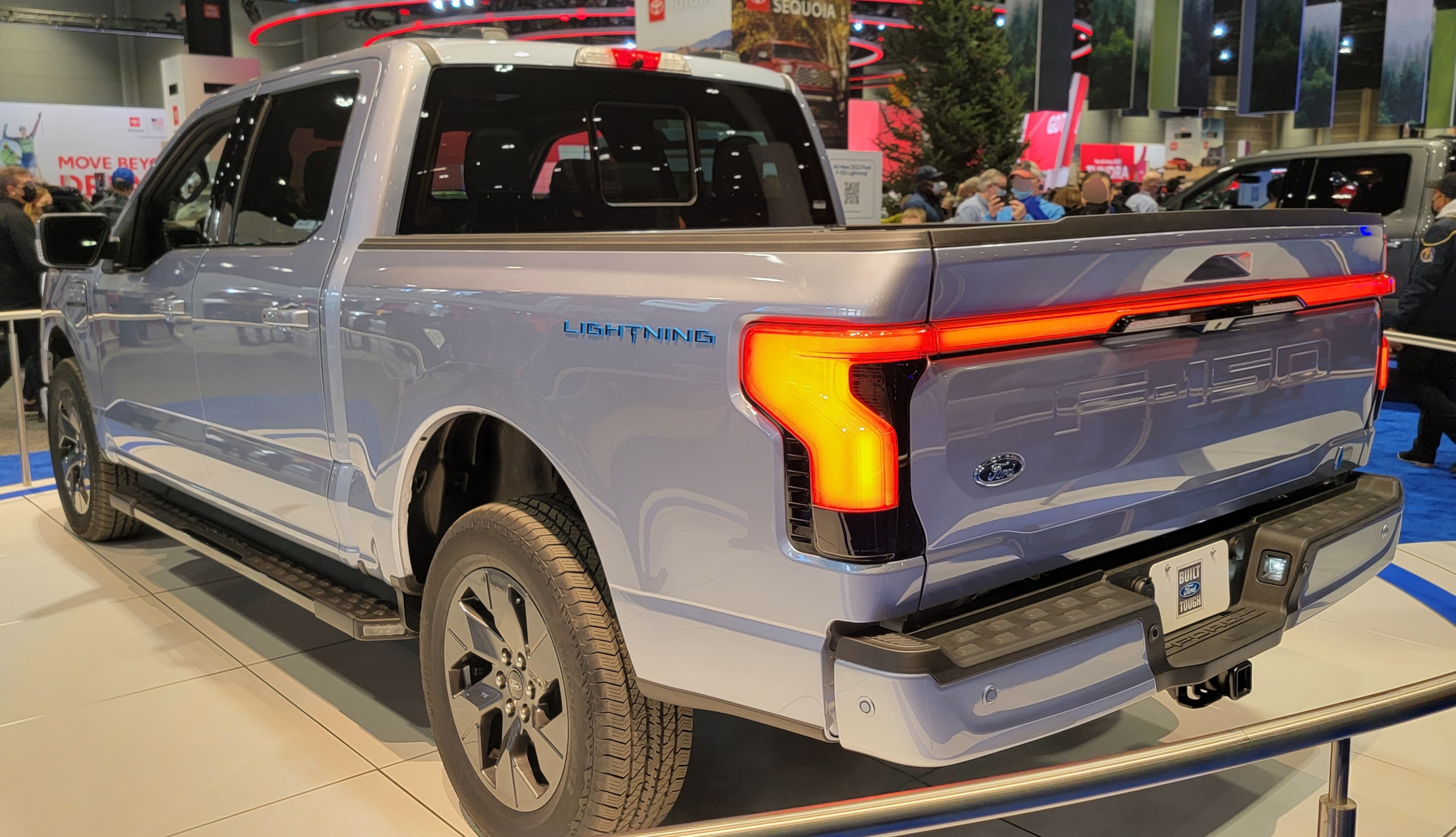
"...the Ford F-150 commercials as an example, it was, I mean, not only did they know their target demo, right, they, they got Kevin Leary..."
The Ford F-150 is a popular truck that many people use for work and outdoor activities. It's known for being tough and reliable.
The Ford F-150 is a full-size pickup truck known for its durability, versatility, and strong performance. It has been one of the best-selling vehicles in the United States for decades, appealing to both work and recreational users.
"...I think Range Rover and Jeep have done a similar thing. If you think of who the target group of Jeep and Range Rover..."
The Range Rover is a fancy SUV that can drive off-road and is very comfortable inside. It's great for people who love nature but also want luxury.
The Range Rover is a luxury SUV known for its off-road capabilities and premium features. It combines ruggedness with comfort, making it appealing for both adventure and everyday use.
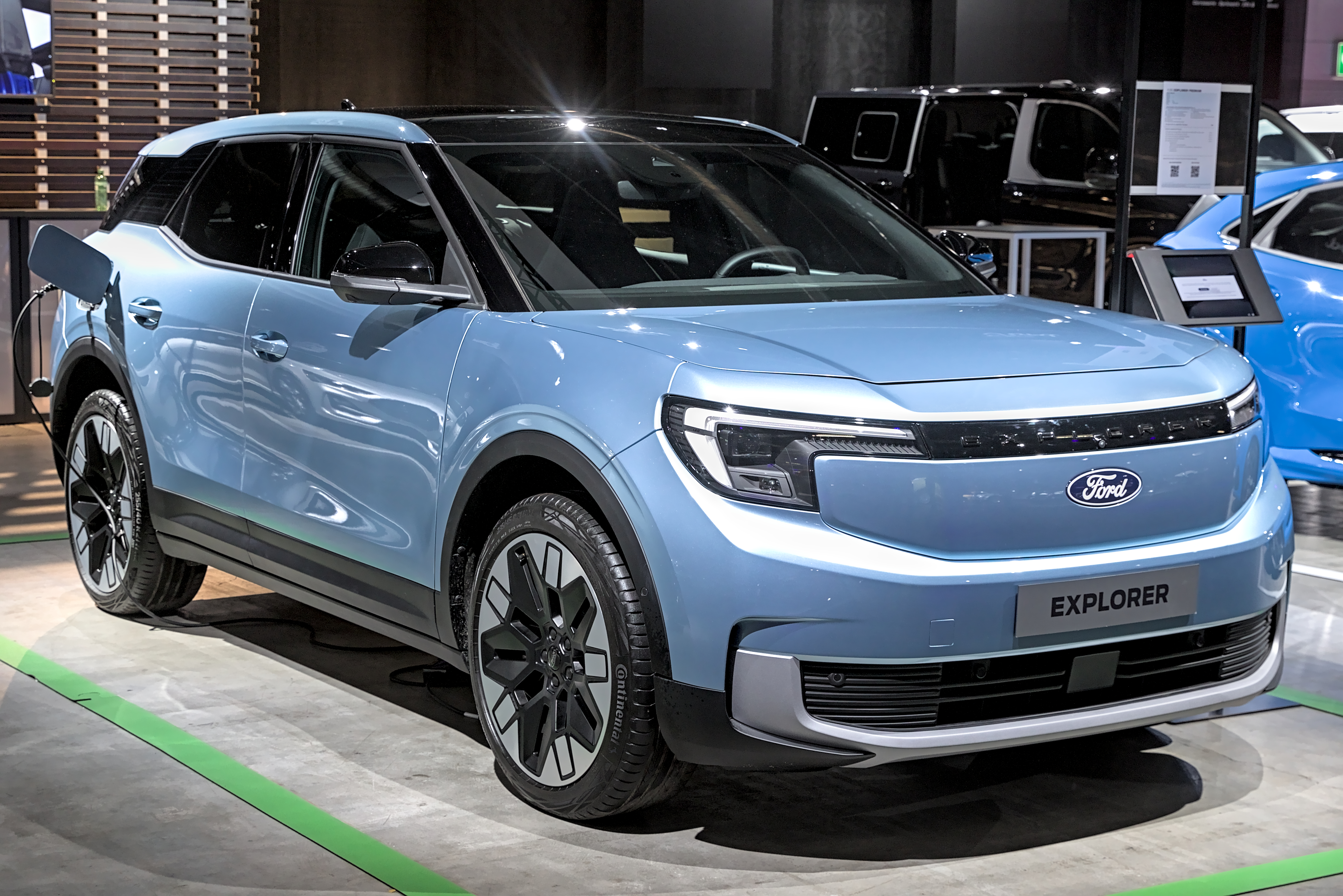
"...he features. Right. Because I'm range over a Ford Explorer, a Jeep, you know, at the end of the day, other t..."
The Ford Explorer is a large family car that can carry many passengers and their stuff. It's designed for comfort and is good for both city driving and going on trips, which is why people often talk about it.
The Ford Explorer is a mid-size SUV that has been a staple in the American automotive market since its introduction in 1990. Known for its spacious interior, versatility, and family-friendly features, the Explorer is often discussed for its balance of performance and comfort, making it a popular choice for both urban and outdoor adventures.
"...it's interesting to kind of track because we talk so much in the auto industry about the end user experience..."
End user experience is about how customers feel when they use a product, like a car. It includes how well the car works and how easy it is to buy and maintain it.
End user experience refers to how customers interact with and perceive a product or service. In the automotive industry, it encompasses everything from the vehicle's performance to the buying process and after-sales service.
"...we're talking about the features, we're talking about the resale value of the car. I mean, these are all foundational things."
Resale value is how much money you can get when you sell your car later. Some cars hold their value better than others.
Resale value is the amount of money a vehicle is expected to sell for after a certain period of ownership. It is influenced by factors like brand reputation, condition, mileage, and market demand.
"Well, yeah, it's amazing. And I want to say it was Audi's presentation now that I think of it."
Audi is a car brand from Germany that makes luxury cars. They are known for their stylish designs and advanced technology.
Audi is a German automotive manufacturer known for its luxury vehicles and advanced technology, including all-wheel drive systems and high-performance models.
"...Toyota being astute car makers and marketers said, you know, we need to launch Lexus with dual dealerships..."
Dual dealerships are car dealerships that sell two different types of cars, like regular and luxury cars, in the same location.
Dual dealerships refer to a sales model where a manufacturer operates two types of dealerships under one roof, often combining luxury and standard vehicle sales to maximize market reach.
"And they were looking at a luxury cars. They got older. They weren't considering Toyota as that, you know, that luxury van, that luxury vehicle. And that's when Lexus filled that gap."
Toyota is a car company from Japan that makes many different types of cars, known for being dependable and not too expensive.
Toyota is a Japanese automotive manufacturer known for producing reliable and affordable vehicles. It has a wide range of models, including sedans, SUVs, and hybrids.
"Yeah, that certainly doesn't come into view. These are all touch points, I feel, for the customer experience, but also the dealer experience."
Customer experience is how a person feels about a company when they buy something or get service from them. It includes everything from how they are treated to how the product works.
Customer experience refers to the overall perception and feelings a customer has when interacting with a brand or company. It encompasses every touchpoint, from initial contact to post-purchase support.
"Yeah, you know, it's a great point. We call that sales choreography and that's part of a sensible longing that we have written in the book."
Sales choreography is about how a company organizes the way they sell their products to make sure customers have a good experience. It’s like planning a dance to make everything flow smoothly.
Sales choreography refers to the strategic planning and execution of the sales process to create a seamless and engaging experience for customers. It involves the arrangement of interactions and touchpoints to enhance customer satisfaction.
"The interesting thing is, if you remember, Saturn, Saturn, I think, if I'm not mistaken, it was a GM sister brand, and they wanted to reinvent carbine that you wouldn't barter, you wouldn't just surprise."
Saturn was a car brand under General Motors that tried to offer a different buying experience, focusing on customer satisfaction.
Saturn was a brand created by General Motors (GM) in the late 1980s, aimed at producing affordable, compact cars with a focus on customer satisfaction and innovative manufacturing processes.
"...you're trying, let me try and upsell you on all these additional features."
Upselling is when a salesperson tries to convince you to buy a more expensive version of something or add extra features to your purchase.
Upselling is a sales technique where a seller encourages a customer to purchase a more expensive item, upgrade, or add-on to increase the overall sale value.
"...I used to drive Cadillac, and I gave up buying Cadillac escalates, I had three Cadillac escalates, but I saw buying them..."
The Cadillac Escalade is a big luxury SUV that is popular for its comfort and high-end features, often seen as a status symbol.
The Cadillac Escalade is a full-size luxury SUV known for its spacious interior, high-end features, and powerful performance. It is often associated with luxury and status.
"Well, I think BMW and Porsche do a really good job. I have to give them kudos."
Porsche is another famous car brand from Germany that makes high-performance sports cars. They are known for their iconic models like the 911.
Porsche is a German automotive manufacturer renowned for its high-performance sports cars and luxury vehicles. The brand is particularly famous for models like the Porsche 911.
"...nd new. If I was a Ford dealer, I would be having Mustang meetups at my dealership every Saturday morning. ..."
The Ford Mustang is a sporty car that people love for its speed and cool looks. It's been around for a long time and has a lot of fans who enjoy meeting up to talk about and show off their cars.
The Ford Mustang is an iconic American muscle car that debuted in 1964 and has become a symbol of performance and style. With its powerful engines and sporty design, the Mustang has a dedicated fan base and is frequently celebrated in automotive culture, making it a popular topic among car enthusiasts.
"... Because you know, there's Mustang enthusiasts or Bronco off-roading enthusiasts or whatever it might be. ..."
The Ford Bronco is a tough SUV that people use for off-roading, which means driving on rough trails and in nature. It's popular because it looks cool and can handle challenging terrains, attracting a lot of fans.
The Ford Bronco is a rugged SUV that was originally introduced in 1966 and has recently made a comeback, appealing to off-road enthusiasts and adventure seekers. Known for its robust design and off-road capabilities, the Bronco is often discussed for its blend of nostalgia and modern technology, making it a hot topic among car lovers.
"...Jeep, I mean, Jeep, that's long hanging fruit..."
Jeep is a car brand famous for making vehicles that can go off-road, like the Jeep Wrangler. Many people love to take their Jeeps on adventures.
Jeep is an automotive brand known for its off-road vehicles, particularly the Jeep Wrangler. The brand has a loyal fan base that enjoys off-roading and outdoor activities.
Select text to request an explanation
So in a business like the auto or automotive retail, for example, where specs and price dominate conversations, what does that look like to be able to lead with emotion? I believe that all auto brands are anchored in strong emotional cues and give an example. When you think of Volvo, what is the emotional equity they own? It's safety, right? BMW, it's about performance, right? And it's not about the features.
The ability that you see when it comes to providing an emotionally connected, positive customer experience. We call that noise and a lot of it is anchored in functional. You know, we're talking about the features, we're talking about the resell value of the car. Those are the critical factors. And when you start clouding the consumers' brain with functional things, you're asking them to use their left brain and here's the insight. The brain doesn't like the work.
So you're actually anti-selling the customer when you start talking about features and benefits. One of the things that I enjoy most about producing the dealer playbook is hearing from you. The messages that I get of people who are getting so much value out of the podcast, applying it to their day-to-day workflows and finding a thriving career right here in the retail auto industry. It means the world to me. And you know, one of the ways that we make doing this possible is through my agency FlexStealer.
And of course, in the spirit of providing value, I think this is a perfect time to head over to www.FlexStealer.com to show even further support for you. My beloved DPB gang, right now, if you go to my website, FlexStealer.com, you can get a full free PDF of my number one bestselling book, Don't Wait Dominate. And the reason I think it's so special is that a lot of the topics that are discussed in this book are even more relevant today than ever with this surge in popularity.
So I'm going to be able to realize AI and people wondering, well, what can I do next? How can I have a competitive advantage? Well, that's all here in this book. And so I'd love to be able to offer you a free copy of this. If you go to FlexStealer.com, it would mean the world to me, because that is how we continue to produce this show for you.
JP Laquois, the president and founder of SLD, a global branding firm that helps businesses create strong emotional connections with customers with more than three decades as a designer, strategist and futurist. He is known for championing the blink factor, a design led approach that anchors brand choice in emotions.
Laquois has authored several books on design and customer experience and his latest work, Think Blink Manifesto distills his philosophy into seven tenants that help brands build lasting connections and an instant JP. Thanks so much for joining me on the dealer playbook podcast.
Well, thank you, Michael. This is going to be a lot of fun. I'm looking forward to sharing some of our insights.
I mean, anytime I can connect with a fellow Canadian, I feel like it's just going to be a good conversation.
We're not going to be talking about hockey though.
There's so many things that I want to dig into here, especially as a marketer myself, understanding the the effectiveness of tying into people's emotions, you you often say people decide emotionally and then validate rationally.
So a business like the auto or automotive retail, for example, where specs and price dominate conversations, what does that, what does that look like to be able to lead with emotion and can you maybe share an example of a dealer or a brand that made the shift and saw results.
I think there to be can we go. I believe that all auto brands are anchored in strong emotional cues through their advertising through how they engage with customers.
Yeah, at the end of the day, there was a, you know, a functional rational decision. Do I want all these features or not, but a lot of those decisions are done in the subconscious and are done emotionally given example.
And brands that have done a really good job when you think of Volvo, what is the emotional equity, they own it's safety.
Right, BMW, it's about performance, right, it's not, it's not about the features and benefits. It's about how that car makes me feel or how that car makes my family feels safe.
You know, or how that car is reliable gets me where I need to go, or how that car like Tesla makes a statement about my commitment to the environment, you know, the car itself is as functional needs and obviously if
these cars have high recalls and they're not working properly, you know, that emotional connection is going to break because you need to anchor the emotional connections with very functional frictionless experience. And so once those are met, what differentiates one car from the other is the emotional connection.
You know, why is BMW being able to charge a premium over, let's say, a cat or a cat like, or a, well, use cat like a small luxury brand, but, you know, an old mobile, you know, what, what is the, what is the rationale why you would pay more. Oh, yeah, it's German engineering. Yeah, it's not about that. It's about that car makes me look sexy. It makes me look smart.
It made me look above the crowd. And that's really what's driving that purchase decision.
It makes, it makes me think of a couple of things.
The, the, the five levels of marketplace sophistication, which always ends up in an emotional place. And we see that I'm thinking about years ago, the Ford F-150 commercials as an example, it was, I mean, not only did they know their target demo, right, they, they got Kevin Leary.
I think the guy's name, he had a raspy gritty kind of voice. And, and, and I remember the narrative. It was like, want to know the next truck, you should buy, look over the fence at your nearest construction site, boom, there it, and it, and it, and it was like, wait, this is an emotional experience for anybody who works in that, or, or is in that target audience to be like, I want to feel manly and gritty and rough and tumble and, and, you know, that, you know, that's what I'm saying.
That sort of a thing. And, and, I mean, gosh, Ford did an excellent example campaign with those things because for the longest time, it was like F-150 after F-150.
Yeah, I think Range Rover and Jeep have done a similar thing. If you think of who the target group of Jeep and Range Rover, there are people really enjoy the outdoors.
You don't want to connect with nature. And, if you look at their commercials, it's all about connection with nature. It's about driving in the woods, be reliable. Yeah, all of those functional things, but the end of the day.
It's allowing that segment of the customers to have access to nature in a comfortable way. Right. And so they're really queuing in on what are the emotional needs that that target group is looking for.
And how do we amplify that in how we communicate to them. And it's not about the features. Right. Because I'm range over a Ford Explorer, a Jeep, you know, at the end of the day, other than the price tag, there's a lot of similarities in the sense of performance and reliability.
Yeah. It's, it's, it's interesting to kind of track because we talk so much in the auto industry about the end user experience, the customer experience.
And I know that's something that weaves a thread throughout your literature.
You talk about simplicity wins the blank. And I could, I could come up with a whole list of ways that we over complicate experience and emotional connection and human connection in the auto industry.
But I'm curious just from your experience from your vantage point, what are some of the common sources of complexity that you see when it comes to providing an emotionally connected positive customer experience.
We call that noise and a lot of it is anchored in functional, you know, we're talking about the features, we're talking about the resell value of the car.
I mean, these are all foundational things. Yeah, they're important, but they're not the drive the decision. And so they cloud the messaging, you know, it should, to your point, it should start with what experience will this car give you.
Right. And then why are you looking for this type of experience. And then you can amplify some of the features, but it has to start with what is the experience you're looking for in this vehicle.
Is it safety? Is it discovering a venture? Is it ruggedness like the F-150? You know, what is or is it cachet that you want to be above the crowd. Those, those are the critical factors.
And when you start clouding the consumers brain with functional things, you're asking them to use their left brain. And here's the insight.
The brain doesn't like to work call it mental shortcuts. Right. That's why a visual is going to be more effective than a bunch of words. They're going to remember a visual more than, you know, a word.
And by adding words, you're complicating and you're asking the user left brain and they don't like that. And so you're actually not, you're actually anti selling the customer when you start talking about features of benefits.
You're actually making it harder for them to make that buying decision. It doesn't sound logical. Right. If you're a left brain thinker. Hey, listen, we spent billions of dollars developing this car features of benefits. And it's better than the competitors.
And we need to vlog that and reinforce that with the target group. Yeah, but if you don't get the feeling right. If you don't create that, that visual experience that they're going to expect purchasing that car, the rest is it's, you know, it's, it's just an afterthought.
Yeah, I didn't think about this as deeply as I thought I could until I went to the Toronto auto show.
Well, yeah, it's amazing. And I want to say it was Audi's presentation now that I think of it. I actually interviewed Omar Gandhi who is the architect of that display.
To realize even the depth of of the environment in shaping a customer's experience that shapes their buying decision.
Because it creates a much more elevated feeling than like what you're talking about just, oh, yeah, it's got AC.
It's got a power third row. You know, it's like all the boring stuff that I can find out online. But nothing really validating why I should choose this business to do to transact with or to do business with.
Yeah, you know, it's interesting when we launched the Lexus dealership program in Canada, you know, we we faced the challenge that, you know, Nissan had launched their luxury car and had failed that they were actually the deals were going bankrupt.
And so, you know, Toyota being astute car makers and marketers said, you know, we need to launch Lexus with dual dealerships, but there was a hidden agenda there.
And that was, you know, Toyota was losing car sales to BMW to the foreign European foreign luxury cars, you know, as the consumer traded up from their first car, the second car, their van.
And they were looking at a luxury cars. They got older. They weren't considering Toyota as that, you know, that luxury van, that luxury vehicle. And that's when Lexus filled that gap.
And so now the consumer come to Toyota dealership with a Lexus side along store and they could aspire now emotionally to look as they're considering their next car, you know, it could be a crola, they're going, well, let me take a look at, you know, Lexus.
You know, Lexus, what kind of style do they have and then that allow the consumer to aspire so that when they were considering that luxury car, they're considering that luxury car within the Toyota franchise.
And so Lexus experience was very unique. It was curated, you know, expensive woods, you know, marble floors, a lot of key elements that were distinct and very separate from the Toyota dealership, which is stark white colors.
You know, a little bit more pristine, if you like, a little bit less sophisticated. So they created this contrast that allow the customer to aspire to the Lexus.
I think about all of the hidden things that we just don't think of like as you're saying this, I go, yeah, never thought of that.
Yeah, that certainly doesn't come into view. These are all touch points, I feel, for the customer experience, but also the dealer experience.
I don't think we do a great job inside the industry, sharing with our teams, the people that are actually going to be responsible for providing a good customer experience.
All of the, I don't have a better word, the tangible intangible tangibles that go into shaping what that customer feels, what they believe about you, and how they're going to feel when they drive away on their new vehicle.
Yeah, you know, it's a great point. We call that sales choreography and that's part of a sensible longing that we have written in the book.
The interesting thing is, if you remember, Saturn, Saturn, I think, if I'm not mistaken, it was a GM sister brand, and they wanted to reinvent carbine that you wouldn't barter, you wouldn't just surprise.
There was one price, it was all inclusive, there was no surprises, it wasn't tiered with all the additional features that come back to haunt you when you, you sign the check, but they didn't do well.
Right, they fell, and what do they fell, they fell because it was focused on functional with anchored, not on what the car, how the car made you feel, it was anchored on, you know, the anti carbine process, it was anchored on the process of buying a car, not on the benefit of the car from an emotional standpoint.
And so guess what, it tanked, and I think it's a lesson learned, but like, I drive a BMW, I have a great dealership, I go to for my servicing, my BMW is now seven years old, but it's just like brand new.
But when I bought the car, the experience was no different than if I had gone to, you know, a GM dealership or, or Chrysler dealership, it was all very transactional, is this the car you want, here's the features, you're trying, let me try and upsell you on all these additional features.
There's no differentiation, an interesting thought was, I used to drive Cadillac, and I gave up buying Cadillac escalates, I had three Cadillac escalates, but I saw buying them, and the dealer called me said, you know, Mr. LeQuien, notice that you're not, you're not coming back, what's going on, he said, well, I'm not buying your car anymore.
And they said, why, it's because you treat me the same way as a customer comes in, buys a chivette, we're at the same blow of experience, I'm spending $140,000 in a car, and you're treating the same way as somebody coming in and spending $20,000 in the car.
How does that make sense, like, how do I feel special, privileged, how does that reflect the contribution I'm giving to your organization, and I left, and I think Cadillac has struggled on, I mean, they're coming back now,
realizing that the experience is really important, it's more than the car, it's more than the car features in the style, it's about what the car does for them, and the experience of the car.
So I'm seeing that revitalization, but they really missed a mark.
Hey, does your marketing agency suck?
Listen, before we hop back into this episode, I know you know me as the host of the dealer playbook, but did you also know that I'm the CEO of FlexDealer, an agency that's helping dealers capture better quality leads from local SEO and hyper targeted ads that convert.
So if you want to sell more cars and finally have a partner that's in it with you that doesn't suck, visit flexdealer.com, let's hop back into this episode.
It reminds me of what you were saying, you know, the sense of belonging. I think about this from a tech perspective, but I'm thinking about it now currently through the customer experience perspective.
But you know, my thesis, especially with a everybody's talking AI this and that, and I probably shouldn't approach it with that tone because I'm developing AI tool.
But, but my thesis is that we're going to get so deep in this technology conversation that it's actually going to amplify our base human desire for connection, deeper connection, human to human connection, which a dealer or any brick and mortar business for that matter has the ability to provide.
You talked about belonging and how belonging can drive growth and this sense of, you know, this crave this innate desire that I have this craving I have to to belong in an industry like retail automotive where a repeat sale is often months, if not years down the road, right.
How do you recommend businesses in that situation where dealers really create a sense of belonging or a sense of connection.
Well, I think BMW and Porsche do a really good job. I have to give them kudos. They have, you know, the BMW performance course and same with Porsche.
And if I'm not mistaken, RangeOver also does it the off road challenge. And so they invite their members to go off road with their vehicles and they're training them how to go deep in the woods without getting stuck in that sense of camaraderie and that sense of belonging.
I think that's brilliant. So again, they're selling an experience. They're not selling a car and they're amplifying that experience through these networking clubs activities that anchor the brand on the values and the experience that customers are looking for. And I think that's brilliant.
I think more of them need to do that. I think you need to go beyond we have an office in Shanghai and Mercedes Benz has Mercedes Benz cafes.
They're a whole experience. It's part dealership, part museum, part performance center and they had formula one cars there that you could virtually drive and create that whole experience that went beyond selling the car.
And I think you're going to see more and more of these immersive experience because transactional selling more cars. That's still important.
But if the consumer doesn't see the emotional value, then it's an uphill battle and you're going to be starting to compete on price and we know where that leads, it leads to commoditized category.
This is so interesting to me. I mean, validators for me about what you're sharing with us.
Gosh, I mean, whether it's a luxury vehicle, a mid-tiered vehicle or an entry vehicle, a backpack, a camera, whatever it is, it's interesting how much we want to be connected to also whatever source introduced us to the thing that we like.
So I think about, you know, there's actually a famous photographer, Peter McKinnon, and that based out of Toronto area, maybe Grimsby or one of those, you know, Sarana market.
I can't tell you how many products he, and he's not even selling them, but he is selling them, you know what I mean?
How many products I have bought simply because I liked the way I felt when he showed them to me.
And I can only imagine to your point, if I then am part of, I'm really excited to buy my, you know, my BMW.
And then I learned that there's a community of BMW owners and an experience that they offer.
It just deepens my buy into that brand at a degree that I'm with you. I don't think enough dealers are thinking about it.
If I was a Ford dealer, I would be having Mustang meetups at my dealership every Saturday morning.
Because you know, there's Mustang enthusiasts or Bronco off-roading enthusiasts or whatever it might be.
Jeep, I mean, Jeep, that's long hanging fruit. We all know. I mean, I would be having duck, duck and dash ducks meetups.
But it just, I guess the point JP that I come around to is it makes complete and perfect sense, marrying this sense of belonging to a community that elevates my experience of ownership.
And actually, like you had mentioned earlier, makes me feel the right amount of special for what I've bought into.
And the other one is storytelling. I mean, the car industry has done a really poor job of telling storytelling, you know, what is the timeless challenge, you're the, you, the customer, the hero.
They're there to help you, they're to support to the hero, you know, how do you overcome on what's the opportunity. I mean, they're really not telling a compelling story.
And storytelling is how we learn. It's how we absorb information. It's how we remember information. That's how we grew up. That's how we learned about, you know, safety is some storytelling.
But they're not doing, you know, it's all about, you know, a sexy hero shot of the car, maybe a little, you know, 30 second or 60 second commercial of the car driving on the highway.
I mean, we're also going to drive a car if it's on the highway or on the road.
Right.
You know, like get more creative than that, you know, like at the end of the day, some of the startup car, like the beginner cars talk about, you know, the music in the car, the speakers.
The idea that it's a social vehicle. I think they're on the right thing. I mean, the starter car really is giving the buyer freedom to explore or freedom to travel this independence.
But it's so nuanced. He really got to dig through a lot of features and functional messaging to get through it. But they just got to get back to, how do we want that customer the feel when they buy that car or what projected experience that we want to communicate when they're considering buying our car.
And now it's all features and benefits. It's a bunch of highways, you know, side roads, you know.
It makes me think about that the another challenge we have, which is how to measure our efforts. And, and often I mean, gosh, you know, one of our companies is a marketing agency.
And I can't make this up getting on a call with one of the big, you know, oversight companies out there that, you know, is supposed to have the dealer's best interests. It's hard.
Saying that the work wasn't done well enough, using, I can't make this up using data from four and a half months ago.
And I think about what you just said, what do we want the customer to feel? Well, in a similar regard, there's a danger because we keep looking historically, we keep looking back.
How do you, how do you recommend measuring what matters with more accurate information? I mean, you know, we talk all about big data. The industry, gosh, was big data craze.
Yeah, hasn't changed that craze hasn't changed. And, and it was all we could talk about for a year.
How do you, how do you recommend navigating that so that we are, we are measuring what matters and that we can do it with a measure of accuracy?
Well, you know, it gets measured, gets done, what gets rewarded, gets repeated. And, and right now the metrics that the car industry is looking at are really functional leftbrain metrics and surprise, surprise.
Who's running the companies? A bunch of engineers. So why wouldn't they have leftbrain thinking it's, it's comfort zone, it's biases, it's historical data.
Luckily, with emergence of new technologies, your phone is no longer a phone. It's a computer. It's no longer a computer. It's actually a sentiment analysis.
It actually measures, it hasn't, it's there. It's enabled. It's just not activated to, to send your sentiment. The banks have been doing it for the last five years when you call their phone line.
In the background of that attendant that you're talking to is AI listening to the conversation and giving that associate clues on your sentiment, your level of frustration, your anger level, all of these things that are important when you're engaging in providing empathy to your audience.
So the nice thing is that there are metrics, or there are tools, and there are metrics, I mean, read, read my book, I mean, tenant number six is all about measurements and the tools and metrics that you should be considering.
Interesting point. So we did a study in 2020 on that whole thing about measuring what matters. We measured the retail industry, the banking industry and the healthcare industry, and it's interesting how shallow those metrics.
For example, employee engagement, you know, car salesmen is critical in creating that experience, that buying experience.
But what are the metrics they're measuring? They're all about sales, customer, you know, employee retention. They're not anything to do with how do that, you know, how do they feeling about selling the car.
You know, what are the pain points that they have these anxiety level pain points. It could be about new features that were introduced, or maybe it's a new buying plan that's confusing. All of these things lead to anxiety, but companies don't measure those right.
They measure sales, upsells, number of transactions, you repeat customers, depth of customer loyalty, all these things, don't get me wrong, they're important.
They're the, they're not the leading indicators, the tailwind, they're after the fact, they're not before the fact, an emotional metrics or before the fact, they're the indicators of how that consumer is going to respond, but they're not being measured.
I mean, and I find, maybe it's dark comedy, maybe it's not, but I can't help, but think that we have, we are surrounded by all of this intelligent technology, and we're, we're slowly forgetting the intelligence that rests between our ears, because we're not using that at all.
Or they're becoming a crutch, right? I mean, the thing is that it's doing, the good news is doing a lot of low value processing that really we shouldn't, we shouldn't have to do.
It's all allowing to consolidate a lot of data points, which was, and being able to respond on those data points very quickly. So there's a lot of positive things that are happening with technology, not just AI, but robotics.
It's all miniaturization, micro technologies that are going to revolutionize the phone industry. So there's lots of positive things, but they're human enablers, they're not human replicers.
So understanding how they get used by people, and a great example of the banking industry. So the bank industry gets all excited about launching their mobile apps and their online banking to make it more convenient for customers.
And listen, we're going to use the branches to educate the customers on a use these platforms.
It's not working. Then you go back and find out, why aren't you training customers on using the mobile app? Why are they, why are they constantly calling the assistant channels, the phone lines to get help? Why aren't you helping them? Well, simple, they're going to replace my job.
So why would I promote those technologies? I'm going to become obsolete wrong. That's not true. We're actually going to elevate your level of knowledge, become experts, and we're going to remove those low value transactions so that you can spend more time with your customers building relationships.
Well, because it's packaged in a negative way, and there's a fear factor involved in that learning doesn't happen. And I think that's what AI has done. It's created a fear factor. It's a pro, you know, it's a good and bad scenario.
Yeah, I mean, it's, it's great for the people that are looking to adopt and scale with it and who understand what you just said that it can scale me, not replace me.
It's, it's a fear factor for people who are being honest with themselves and realize they have zero desire to get involved. They're learning about it.
I want to ask you this as we wind down, attach to this topic, you know, looking at all of the advancements and texts, you brought up robotics, there's EV technology, battery, tech, all those sorts of things, AI, of course.
What do you recommend to businesses or dealerships in this case to, I don't want to say future proof, but to future enable around these things?
Well, you know, the EV platform created a lot of opportunity, but also a lot of conflicts in the industry.
We can see that there's a bit of a pullback on EV sales. Maybe it's the infrastructure. So it's, we call it scenario planning. Listen, if you're a dealer, you know, you don't have a marketing department, you have a sales department.
You don't have strategic foresight consultants like us to help you kind of create the vision. That's where the manufacturers should be providing those insights and creating those scenarios and saying, you know, if this happens, here's a strategy for your dealership to be able to respond.
If this happens, like if we have trade barriers, which we knew was coming 10 years ago, what's the scenario to deal with trade barriers if you're a dealer or anti European purchases or anti American purchases or anti something, what are the scenarios, how do you deal with that?
What do you communicate to your customers? How do you respond? And the reality, none of that is happening. So really, it needs to be elevated from the dealer to the manufacturer and they need to take a more active role and they do it, by the way.
They all do strategic foresight because it's part of their value, chain strategy, the resourcing strategy, but they're not applying it to the consumer side of their business, they're applying it to the manufacturing and sourcing.
So they need to wake up and say, what does it look like to be customer centric and be future proofing the customer experience? What does that look like and how do we activate the dealers to respond to that?
Powerful. Well, I don't know. I mean, I probably have at least 10 more questions, but we'll have to save that for when you come back in the meantime, JP, how can those listening and watching get a copy of your book?
Simple, just go to our website, that's www.sld.com.
Love it, man. Thank you so much for joining me on the dealer playbook podcast.
Thank you, Michael. Hey, thanks for listening to the dealer playbook podcast. If you enjoyed tuning in, please subscribe, share and hit that like button.
You can also join us and the BPD community on social media. Check back next week for a new dealer playbook episode. Thanks so much for joining.
You
Request an explanation for:
6 cars
6 cars featured
Request an Explanation
Heard something you'd like explained? We'll add it to this episode.
Sign in to request explanations for terms you heard.
Want to learn more?
Browse our glossary for plain-English explanations of automotive terms, jargon, and concepts.
See something that's not quite right? Our annotations are AI-generated and can sometimes miss the mark.
Click the flag icon on any annotation to suggest a correction.