
Jeff Pierce’s lifelong Volkswagen obsession threads through stories of classic Beetles, projects, and community. A 14-year-old buy of a wrecked 1970 Beetle kicks things off, and the current 1973 Super Beetle “Butters” ties it all together. Along the way, they swap parts ideas like transaxle/core exchanges, debate Super Beetle stereotypes, and compare show culture—welcoming, patina-friendly, and volunteer-driven—against more judgmental car scenes.
From a $300 Beetle at age 14 to a garage full of VW memories, Jeff Pierce shares the story behind his beloved Super Beetle, Butters, and a lifetime spent living the VW lifestyle.
What starts as a childhood memory of a family Beetle turns into a lifelong Volkswagen addiction.
In this episode of Dub Life Diaries, Joe sits down with Volkswagen enthusiast Jeff Pierce, owner of a beloved 1973 Super Beetle named Butters. From buying his first Beetle at just 14 years old while working at McDonald's to owning nearly 20 Volkswagens throughout his life, Jeff shares the stories, lessons, successes, and mistakes that shaped his VW journey.
Joe and Jeff dive into what makes the Volkswagen community different from every other automotive scene. They discuss the friendships, roadside rescues, garage-built projects, and the welcoming culture that keeps people coming back generation after generation.
Topics include:
• The story behind Butters the 1973 Super Beetle
• Jeff's first VW purchase at age 14
• Owning nearly 20 Volkswagens over the years
• Why the VW community is unlike any other car culture
• Air-cooled vs. water-cooled Volkswagens
• Rare finds, barn finds, and estate auction discoveries
• Major VW events including Eureka Springs and Port City Volkswagen Show
• The challenges of finding skilled air-cooled mechanics today
• Why younger generations aren't entering the hobby at the same rate
• Jeff's dream Volkswagens still on his bucket list
Whether you're restoring your first Beetle, cruising in a Bus, building a Cal-Look car, or simply love hearing stories from passionate enthusiasts, this episode is packed with Volkswagen memories and community spirit.
🎙️ Follow DubLife Diaries for more stories from the people who keep Volkswagen culture alive.
"...aries. [SPEAKER_00]: If you ever looked at a beat up Volkswagen and thought to yourself, you know what? [SPEAKER_..."
The Volkswagen up! GTI is a small Volkswagen city car with a sportier setup than the regular version. It’s meant to be easier to drive in town while still feeling more exciting. People bring it up when talking about compact cars that have performance upgrades.
The Volkswagen up! GTI is a small, sporty version of the up! city car, built to deliver a more fun driving experience than the standard model. It’s notable because it brings “hot hatch” style performance to a very compact platform. In a podcast discussion, it may be mentioned as a standout example of a Volkswagen that’s both practical and enthusiast-oriented.
"And we sold it right before we moved to Oklahoma. And From that moment because my brother and I used to ride it behind the back seat..."
Oklahoma is the state they moved to. It’s part of the story about what happened to the car after they left.
Oklahoma is mentioned as the destination after selling the family’s 1968 Volkswagen Beetle. It frames the timeline of the family’s move and why the car became a lasting memory.
"From that moment because my brother and I used to ride it behind the back seat in the package tray Yeah, we know that grocery store, whatever with my mom and she always called it the rumble seat"
“Rumble seat” is what they called the back area behind the seats. It’s basically the spot in the back where you could sit or hang out in the car.
“Rumble seat” is a nickname for the rear seating area/shelf behind the back seat, associated with the Beetle’s classic rear layout. It’s not a modern feature name so much as a descriptive term people used for that space.
"From that moment because my brother and I used to ride it behind the back seat in the package tray Yeah, we know that grocery store, whatever with my mom and she always called it the rumble seat"
A “package tray” is the shelf behind the back seat. It’s the spot you can put things, and in this story it’s where they’d sit while riding in the car.
The “package tray” is the rear shelf area behind the back seat in many cars. In a Beetle, it’s where you might place items—and in this story, where the brothers used to ride while the car was moving.
Place
Lake Havison
"My wife and I used to take a lot of trips out to Laughland, and I had a house in Lake Havison. And so we'd go out there at the same time."
Lake Havison is where the car was advertised and where they planned to go check it out. It’s part of the story of how they found the Beetle.
Lake Havison is mentioned as the area where the guest’s father-in-law found the Beetle for sale. It anchors the purchase story and the logistics of driving to inspect the car.
Place
Laughland
"My wife and I used to take a lot of trips out to Laughland, and I had a house in Lake Havison."
Laughland is a location they used to visit. It’s mentioned to explain how often they drove the car and why it became important.
Laughland is referenced as a place the guest and his wife used to travel to with their Volkswagen Beetle. It’s part of the personal context for why the car matters to them.
"And so it, actually my father-in-law asked, well, you want to, you guys want to head back early and take the car back. And I'm like, man, I'm not driving a 50-year-old car across the desert and into Oklahoma."
He’s saying the car is really old—about 50 years. With older cars, people worry more about whether everything will work reliably on a long trip.
The phrase “50-year-old car” highlights the age-related reality of classic Volkswagen ownership—older cars often require more care, and driving them long distances can feel risky. Here it’s used to explain why the guest didn’t want to haul the car back immediately.
"And it's good that I didn't because apparently the front struts were shot. You hit a bump and it just slammed."
Struts are part of the suspension that help your car absorb bumps. If the front struts are worn out, the car can bounce or drop hard when you hit a bump.
Struts are suspension components that combine a shock absorber with a structural mounting point. When the front struts are worn out, they can fail to control wheel movement over bumps, which can make the car feel like it “slams” or crashes down.
"But Oklahoma has horrible roads and so I'm just going a few miles from my house I got to start on this and it had some ignition problems and just a little basic things, but yeah glad I did not drive that you know a thousand miles or whatever it is from here to there,"
“Ignition problems” refers to faults that prevent the engine from starting or cause hard starts and intermittent running. Common causes include issues with the ignition switch, ignition coils, spark plugs, or related sensors.
"...spot that. [SPEAKER_01]: That's a GTO, that's the Mustang. [SPEAKER_01]: And, but these cars, you know, wit..."
The Ford Mustang is a sporty car made by Ford, usually as a coupe or convertible. People talk about it a lot because it’s famous and has been around for many years. It’s the kind of car enthusiasts often notice and discuss when they’re out driving or at car events.
The Ford Mustang is a classic American sports coupe/convertible known for its performance-focused styling and strong enthusiast following. It often comes up in car conversations because it’s a widely recognized “muscle car” icon and has had many generations over the decades. In a podcast like this, it’s likely mentioned as part of the broader mix of classic and enthusiast cars people spot or collect.
" [581.8s] [SPEAKER_01]: Oh, a couple years ago, it was actually a super beetle, and I was wanting to get a transaxial from Rancho.
[592.3s] [SPEAKER_01]: But I didn't want to really spend anything.
[595.5s] [SPEAKER_01]: So I did this little deal with a friend of mine who had picked this up."
A transaxle is the drivetrain unit that combines the gearbox and the rear differential in one assembly. On a Beetle, it’s a big deal because it affects how power gets to the wheels.
A transaxle is the combined transmission and differential assembly used on many rear-engine, rear-wheel-drive layouts. On a Volkswagen Beetle/Super Beetle, the transaxle is a major drivetrain component, so sourcing the right one matters for keeping the car on the road.
"...ER_01]: Oh, a couple years ago, it was actually a super beetle, and I was wanting to get a transaxial from Ranch..."
The Volkswagen Beetle is a classic Volkswagen car with a very recognizable rounded design. A “Super Beetle” is a particular version of the Beetle. People often talk about it when they’re working on older cars and replacing parts like the drivetrain components.
The Volkswagen Beetle is a long-running, iconic Volkswagen model known for its distinctive shape and strong collector/enthusiast appeal. In the context provided, it’s specifically tied to a “Super Beetle” and a discussion about transaxle-related parts or components. That makes it a relevant topic for owners who are maintaining or restoring these cars.
" [581.8s] [SPEAKER_01]: Oh, a couple years ago, it was actually a super beetle, and I was wanting to get a transaxial from Rancho.
[592.3s] [SPEAKER_01]: But I didn't want to really spend anything.
[595.5s] [SPEAKER_01]: So I did this little deal with a friend of mine who had picked this up."
Rancho is the name he mentions for where he wanted to get the transmission/differential parts. It’s a parts source for older Volkswagen projects.
Rancho is referenced here as the supplier he wanted to buy a transaxle from for his Volkswagen Super Beetle project. In enthusiast circles, vendors like this are often used to source specific drivetrain parts for older air-cooled VWs.
" [624.2s] [SPEAKER_01]: Yeah, um, he got this button for me, and I, um, and I sold a tune.
[629.0s] [SPEAKER_01]: I was like, all I want is that transaxle, because I wanted the core.
[633.7s] [SPEAKER_01]: I didn't want any downtime."
A “core” is the old worn-out part you turn in when you buy a replacement or rebuilt unit. He wanted the core so he could handle the exchange without losing time.
In parts-supply terms, a “core” is the old, used unit you return when exchanging for a rebuilt or replacement part. He wanted the transaxle core so he could keep the project moving without paying for downtime or extra money.
Topic
cars for sale on marketplace
" [653.1s] [SPEAKER_01]: So I tried to work things like it didn't always work out, but I tried to pull stuff off like that.
[658.6s] [SPEAKER_00]: I love that type of stuff, because it is.
[660.7s] [SPEAKER_00]: And you always see this too.
[662.8s] [SPEAKER_00]: You see these cars for sale a lot of times, especially on marketplace, but there's always that little sentence at the bottom that gets a lot of [SPEAKER_00]: Yeah, yeah."
They’re talking about how people advertise cars for sale online and how the small details in the listing matter. It’s about shopping for cars, not a specific car part.
This segment is about how enthusiast cars are commonly listed for sale online, especially on Marketplace, and how the listing text can hint at the real situation. It’s more of a buying/selling observation than a technical automotive topic.
"...iced is you could take something like say, like a corvette club. [SPEAKER_01]: Or there's like around here, ..."
The Chevrolet Corvette is a sports car from Chevrolet. It’s designed to be fast and fun to drive, and many owners form clubs around it. That’s why it often shows up in conversations about car communities.
The Chevrolet Corvette is an American sports car built for performance, typically with a low, aerodynamic shape and a strong focus on driving feel. It’s frequently discussed in enthusiast circles because there are dedicated clubs and communities around it. In this podcast context, it’s likely referenced as an example of a car that has an active owner culture.
Term
break system
"And so all the break, the whole break system was shot. And one of the guys, uh, and our local part club lives the next street over from me."
They’re talking about the brakes. If the “break system” is “shot,” it means the braking parts weren’t working right and the car couldn’t stop safely until it was fixed.
“Break system” here refers to the vehicle’s braking system—everything involved in slowing and stopping the car. When the host says the whole system was “shot,” they mean the brakes were no longer functioning properly and needed repair.
Concept
community goers
"There's there's been some community goers around here that, you know, have seen some tragedy or may have had an engine fire or their bus got flooded or just something like that."
They’re talking about local people in the car community. The idea is that sometimes something bad happens to someone’s car, like a fire or flood, and the community steps in to help.
This phrase is used to describe local community members who show up around the scene and may have personal experiences with car-related incidents. In context, it’s about people dealing with events like engine fires or flood damage and then getting help from others.
"It makes my [SPEAKER_01]: when I, when I sold the last one, it had too much rust.
I wasn't going to do all this body work."
Rust is corrosion of metal, and on older cars it can be structural—affecting floors, frame points, and suspension mounting areas. The speaker mentions too much rust as a reason they didn’t want to do extensive body work, which is a common and expensive issue on vintage VWs.
"And we were, She found it was an estate auction online and she's like, she's like, look at this and you know, you're trying to tell from pictures online and yeah, sometimes stuff looks better than it is."
An estate auction is when someone’s belongings are sold at an auction after they’re done with them (often due to an estate). With cars, you may not know everything about the condition until you inspect it.
An estate auction is a sale where items (including vehicles) are auctioned off as part of an estate. For car buyers, it often means you’re buying based on limited information and photos, so condition surprises—like hidden rust or worn brakes—are more likely.
"We actually, she won the auction and the only thing bad with it really was the brakes and the wheels were horrible, they were rusty, but it was owned by a couple that we talked to there in nephew and he said, all they did with it was drive it in cranes."
Brakes are what make the car slow down and stop. If someone says the brakes were bad, it usually means they weren’t working well and likely needed repair.
Brakes are the safety system that slows and stops the car, and when they’re described as “bad” or needing work, it usually means reduced stopping power or components that are worn or seized. The speaker says the main issues were the brakes and rusty wheels, implying the car needed mechanical refresh after sitting.
"...o cool, man. [SPEAKER_00]: Magia, my wife's got a Carmen Gia that has a similar story. [SPEAKER_00]: only one ..."
The Volkswagen Karmann Ghia is an older Volkswagen coupe known for its distinctive, stylish look. People often choose it because it’s a classic car that stands out. In the podcast, it’s mentioned because someone’s family owns one and has a similar story to the discussion.
The Volkswagen Karmann Ghia is a classic Volkswagen model known for its stylish, low-slung coupe body and vintage enthusiast following. It’s often discussed because it represents a more design-focused side of Volkswagen’s history, and it’s a common “story car” for owners who enjoy older vehicles. In the podcast context, it’s referenced through a personal connection—someone’s wife owning one with a similar background.
"We found it in the barn up in Pennsylvania... This is the definition of bar and find in my opinion... 46,000 miles and it just absolutely hums it's such a quiet well built machine..."
A Super Beetle is a later version of the classic Volkswagen Beetle. Here, they’re talking about a mostly untouched one they found in a barn that still runs smoothly and quietly.
The Volkswagen Super Beetle is a late-’60s/’70s evolution of the classic Beetle, known for a more modernized body and interior compared with earlier cars. In this segment, the hosts are describing a barn-find Super Beetle that starts up and runs quietly, with low mileage and intact seals.
"I'm like, you have got to be kidding me. This is the definition of bar and find in my opinion."
A “barn find” is a car that’s been sitting unused for a long time, usually in a barn or garage, and then gets found again. People often restore it because it may be surprisingly original.
A “barn find” is an old vehicle that’s been stored away for a long time—often forgotten in a barn or garage—then rediscovered and restored or driven again. The key idea is the car’s long period of storage before being brought back to life.
"Like sometimes when I'm at the red light, I'll look down at my generator light and stuff on my dude and am I still running?"
The “generator light” is a warning light on the dashboard that tells you whether the car’s charging system is working. If it’s on, the battery may not be getting charged.
The “generator light” is a dashboard indicator tied to the charging system—essentially warning you when the alternator/generator isn’t charging the battery properly. The host mentions it while stopped at a red light to show how the car’s electrical/charging behavior stays normal and the car remains quiet.
"when we got that thing through that auction... And what was interesting, it was done by a place called Yoder Auction."
They talk about an auction video they found online and the auction company that ran it. It’s included as part of the car’s backstory.
The hosts discuss finding a video of the car’s auction and mention the auction house involved. This is part of the story of how the Super Beetle changed hands.
"My parents used to [SPEAKER_01]: Mill and I, neighbor sleeping, you don't go in the car, you put a neutral, you push it down the street park and somewhere, just see the reaction so it happened with both cars so there's I don't have a lot of memories of California so much as I was young when I moved to Oklahoma."
Neutral is the gear position where the engine isn’t actively driving the wheels. That’s why the car can roll when you push it.
Putting a car in neutral disconnects the engine’s drive from the wheels (so the vehicle can roll). The speaker describes pushing the car down the street to see how it reacts, which only works if the transmission is in neutral.
"It was a Hyundai Excel, I think.
And it was still optional air conditioning."
The Hyundai Excel was an older, smaller Hyundai car. The host is pointing out that, at the time, some versions didn’t include air conditioning unless you paid for it.
The Hyundai Excel is an early Hyundai compact from the 1980s/early 1990s era. In this story it’s notable because it’s described as having optional air conditioning, which highlights how common “no AC” was on some budget cars back then.
"And it was still optional air conditioning.
And so they died without air conditioning."
This means the car didn’t automatically come with AC. You had to choose it as an extra option, or add it later.
“Optional air conditioning” means the car’s AC system wasn’t standard equipment and had to be ordered (or added) separately. That matters because it changes how livable the car is in hot climates and affects what buyers had to pay for at the time.
"But it went away and down the road for me, friend of mine Randy, his dad, oh, the salvage art.
[1861.9s] [SPEAKER_01]: And his dad calls me one day and he says, hey, no, I got this 73, another 73 super beetle."
“Salvage” refers to a vehicle that’s been declared a total loss by an insurer and is typically sold for parts or repair. In the transcript, it’s used as part of the speaker’s explanation of how the next Beetle came into their life.
"So I set up a little toggle switch system on the dash and figured out what went to where your accessory, you know, probably a couple of years until I moved to Tulsa..."
That sounds like extra switches the owner added on the dashboard to control something electrical. Instead of relying on the factory controls, they wired in their own way to turn accessories on and off.
A toggle switch system on the dash is an aftermarket or DIY electrical control setup, typically used to route power to accessories or to manage circuits that the factory wiring doesn’t provide. In older cars, enthusiasts sometimes add these to control things like lighting, fans, or other add-ons.
"Um, and between that and like the tech articles in, uh, in WWE's, which wasn't going to help me in my situation, I just thought that, you know, at that age, I was like, oh, magically, somehow I'm going to pop this engine and I'm going to get the same running, which never happened."
“Pop this engine” is enthusiast slang for removing an engine from the car to work on it. On older VWs, engine-out projects are common because many repairs or upgrades require access that’s easier once the engine is out.
"It was just, The engine was out of the car and I don't even remember the history about it, it could have just been some guy took it out for the help, but I don't know, I've never got it back in and I got rid of it."
The engine being out means the car is temporarily disassembled for work. It usually takes more effort than a quick repair because you have to put everything back together afterward.
When the engine is out of the car, the vehicle is in an “engine-out” state, usually for repair, diagnosis, or replacement. This often turns a simple fix into a bigger project because you have to manage reinstallation steps and reconnect systems correctly.
"I found a guy in Tulsa that he kind of restored Volkswagen's and he had a 73 beetle and I paid $1300 for it and it still gave me a couple thousand left over from the interest thing so I got a little money into it."
This is a 1973 Volkswagen Beetle. It’s a classic VW that a lot of people fix up and customize, and in the episode it’s the car the speaker bought to start a new project after everything that happened.
A 1973 Volkswagen Beetle is an iconic air-cooled VW that many enthusiasts restore and modify. In this story, the speaker buys a restored 1973 Beetle as a project car after a crash, then drives it for years before trading it away.
"What's your process when you might look for a flip or buy a flip or start a new VW project?"
A “flip” is when someone buys a car that needs work, fixes it up enough to improve it, and then sells it again. The question here is how the person looks for those opportunities and how they start new VW projects.
In car culture, a “flip” usually means buying a vehicle (often a project or fixer-upper), doing enough work to make it sellable, and then selling it for a profit. The host is asking about the guest’s process for finding or buying flips and starting new Volkswagen projects.
"I have this, uh, this meme that I put out, I don't know, six or eight months ago or so, um, I think I had a, I build it, but it said something like super beetles need love to, and it, it was like this, you know, [SPEAKER_00]: This chick kind of squatting down next to a super beetle and it, you know, it, I don't know it."
A meme is a funny or relatable image/caption people share online. In this case, the host is using it to talk about how people feel about Super Beetles.
A meme is a piece of internet culture—often an image or caption—that spreads because people find it relatable or funny. Here, the host uses a meme to express a viewpoint about Super Beetles needing “love,” reflecting how online communities shape car opinions.
Term
slip window
"But I always think that range of 60s, and there's the rare unicorn that's like an oval or a slip window, something like that, and that's cool."
A “slip window” is a particular kind of window setup on some Beetles. The host is saying it’s an unusual variant you don’t see very often.
A “slip window” is a specific Beetle window configuration where the side window design differs from later, more common layouts. The host is using it as an example of an uncommon “unicorn” variant that shows up rarely.
"But I always think that range of 60s, and there's the rare unicorn that's like an oval or a slip window, something like that, and that's cool."
“Oval” here is about a Beetle’s shape—an older style that has an oval-looking window/roof area. The host is saying it’s a rare version compared with the more common cars.
In Beetle circles, “oval” typically refers to the oval-shaped window/roofline styling used on certain earlier Beetle body configurations. The host is treating it as a “rare unicorn,” meaning it’s an uncommon variant you don’t see often at shows.
"I was looking at the back of it with the deck lid.
And I was like, I'd never seen this before.
There's a little flap under the under the vents on the deck lid."
The “deck lid” is the Beetle’s rear cover over the engine. Here, the host is talking about a flap under the vents in that rear cover that changes how much air gets to the engine area.
The “deck lid” is the rear hinged panel on the Volkswagen Beetle that covers the engine compartment. In this discussion, the host focuses on a flap located under the deck-lid vents, which affects how much airflow is directed to the engine area.
"There's a little flap under the under the vents on the deck lid.
And it was actually a thermostat setting just like the one on the engine.
And this little flap would open the vents to get more area.
And that was a later model bug."
A “thermostat setting” means something that reacts to temperature. In this case, it controls a flap under the Beetle’s deck-lid vents so the vents open to let in more airflow when needed.
A “thermostat setting” here describes a temperature-controlled control used on the Beetle’s deck lid area. The host says the flap under the deck-lid vents opens based on that thermostat, similar to how a thermostat controls engine temperature-related behavior.
"Yeah.
I don't know what it is about those 70s models.
I think you're right, too.
One of the things I've chalked it up to in my own findings in my own life is the metal dashboard seems to be a lot more popular for people."
A “metal dashboard” means the Beetle’s front dash is made of metal. The host is saying the metal-dash cars seem to show up more often in their experience.
A “metal dashboard” refers to an earlier Beetle interior trim style where the dashboard is made of metal rather than later plastic/covered designs. The host suggests this metal dash configuration is more common among the people they’ve encountered, implying it correlates with certain years or preservation preferences.
"There is always that tricky thing when you're redoing breaks that you're like, I've been pumping these things and bleeding them all day, and we still got there in the lines kind of thing."
Brake bleeding means getting air out of the brake lines. Air can make the brakes feel weak or “spongy,” so bleeding helps them work properly.
Brake bleeding is the process of removing air from the brake lines so the hydraulic system can apply pressure consistently. If air remains, the pedal can feel spongy and braking performance won’t be as strong or predictable.
"There is always that tricky thing when you're redoing breaks that you're like, I've been pumping these things and bleeding them all day, and we still got there in the lines kind of thing."
They’re talking about doing brake work on the car. Their experience is that it can take way longer than you think because there are always little problems to fix.
“Redoing brakes” here refers to brake service work—typically replacing components and then ensuring the hydraulic system is properly set up. The speaker’s point is that brake jobs often take longer than expected because small issues can keep you chasing problems.
Term
transactile
"And of course, I don't know anything. I've never cracked open a transactile and I've probably never will."
It sounds like a mis-transcribed word for a brake part. They’re saying they haven’t taken that part apart before, so they end up doing the brake work with more uncertainty.
“Transactile” appears to be a transcription error for a brake-related component the speaker hasn’t opened up before. The context is brake work, so they’re basically saying they don’t have experience taking apart that specific part.
"And he has a, he has a Bay window, Westphalia.
[2823.0s] [SPEAKER_01]: And she has a 73 thing, the same color as my wife's."
This is a Volkswagen bus that’s set up for camping. “Bay window” describes the bus’s classic window design, and “Westphalia” means it has the camper features inside.
A “Bay window” Volkswagen refers to the T2 Transporter/Bus generation (roughly 1968–1979) with the distinctive front side window shape. “Westphalia” is the camper conversion brand/trim, meaning the bus is set up for camping with interior amenities rather than being a plain cargo van.
"And she has a 73 thing, the same color as my wife's.
[2826.7s] [SPEAKER_01]: Oh, cool."
“The Thing” is a weird-looking Volkswagen from the 1970s. Saying “73” means they’re talking about the 1973 version.
The “Thing” is the Volkswagen Thing, a quirky, open-air-ish offbeat model built on the VW platform with a distinctive, rugged look. Mentioning “73” points to the 1973 model year, which helps place it in the late production era.
"You got a 2024 GTI. Tell me all about this car.
Oh, uh, this was, um, well, I wouldn't say it was a bad decision... And I'm like, this is a year to get one, because I don't like all of my things... 24 is the last year for the manual."
A GTI is Volkswagen’s sporty version of a small hatchback. Here, the person is talking about a 2024 GTI and why that specific year mattered to them—especially because it was the last year they could get it with a manual.
The Volkswagen GTI is the brand’s performance-focused compact hatchback, known for a sporty, driver-oriented setup and strong enthusiast following. In this episode, the host specifically mentions a 2024 GTI and ties it to a decision about getting the last model year that still offers a manual transmission. That makes this a notable “why this year” purchase story rather than just a generic car mention.
"And I've been doing my research on that, and 24 is the last year for the manual.
And I'm like, this is a year to get one, because I don't like all of my things."
A manual is a car you shift yourself using a clutch and a gear stick. The speaker is saying that for the 2024 Volkswagen GTI, that was the last year you could still get it with a stick shift.
A manual transmission is a gearbox where the driver uses a clutch pedal and gear lever to select gears. When the speaker says “24 is the last year for the manual,” they mean that this model year is the final one that still offered the car with a stick shift option. That’s a key detail for buyers who prefer driver involvement over automated shifting.
"And I'm like, this is a year to get one, because I don't like all of my things... the only time I have killed a standard in traffic since I was a teenager, was in that GTI."
When someone says they “killed” a standard, they mean they stalled the engine while driving a stick shift. The speaker is saying they only stalled their manual GTI once in traffic, which is basically their way of saying it’s been pretty smooth.
“Killing” a standard (manual) means stalling the engine—typically by letting the clutch out too quickly or not matching engine speed to the drivetrain. The speaker uses it as a personal anecdote to show that they’ve only stalled their manual GTI in traffic once since being a teenager. It’s a common learning-curve moment for manual drivers.
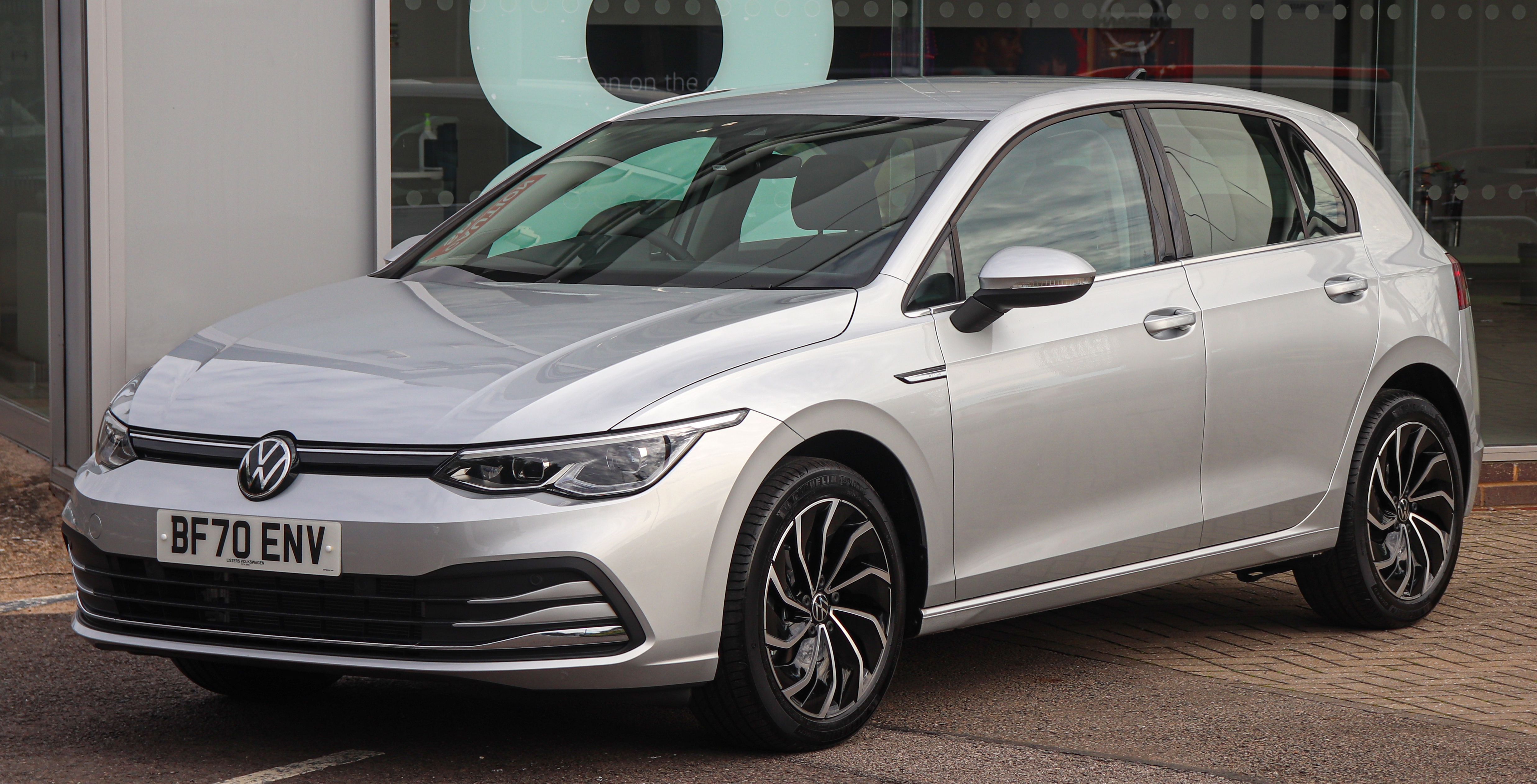
"... love to have like one of the first or second gen GTIs. [SPEAKER_01]: Those would be cool to help."
The Volkswagen Golf is a compact car that’s built for everyday driving. Some versions are sporty, like the GTI, and people like them for a balance of practicality and fun. The podcast mentions it because certain Golf generations are especially desired by enthusiasts.
The Volkswagen Golf is a compact car line known for being practical, widely used, and available in performance-oriented trims like the GTI. It’s often discussed because earlier generations helped define the modern “hot hatch” formula. In this podcast context, it’s mentioned as a car people would like to own, especially for those who like the GTI heritage.
"And so I never put one in back then and I just go check out the cars and things like that and now these days to go to one you've got the patina cars you've got something that looks like they shouldn't be on the road all but somehow they drove them there and I like the fact that no matter what it is your driving in to these shows that you're accepted and it's not like."
“Patina” means the car looks naturally aged—like the paint is faded or it has some wear from real life. The point here is that these “not perfect” cars are accepted at shows now.
“Patina” refers to the worn, aged look a car develops over time—like faded paint, surface rust, and general weathering. In the Volkswagen show culture the speaker describes, patina cars are now accepted alongside restored cars, because the emphasis is on presence and history rather than perfect condition.
"...0]: Yeah, to be the common car was like the Honda Civic, you know, millions and millions of them made and..."
The Honda Civic is a small, everyday car made by Honda. It’s popular, so there are a lot of them on the road. That’s why people often use it as an example of a very common car.
The Honda Civic is a mainstream compact car known for being widely produced and used as an everyday vehicle. It’s significant because its popularity makes it a “common car” in many places, so it often appears in discussions about what people drive and how many are on the road. In the podcast context, it’s mentioned as an example of a car that’s been made in huge numbers.
"There used to be this mean where there was like some hot rod on the street and right next to it is a Tesla and it said in 50 years, nobody's going to be rebuilding a Tesla."
Tesla makes electric cars. The host is comparing how people talk about today’s EVs versus older cars that get rebuilt and kept alive.
Tesla is an electric-vehicle brand, and the episode contrasts it with older hot rods and classic cars. The point being made is that future generations may still care about today’s EVs, even if they don’t seem “rebuildable” or interesting to current enthusiasts.
"And then, and then they'll do the stuff that we're doing to the bugs now.
[3707.9s] [SPEAKER_00]: They'll put an air-cooled engine.
[3710.0s] [SPEAKER_00]: Yeah, that's love.
[3711.1s] [SPEAKER_00]: Instead of a [SPEAKER_00]: Let's talk about maybe your aside from butters."
An air-cooled engine runs without liquid coolant. It relies on airflow to keep the engine from overheating, which is part of what makes some classic Volkswagens so distinctive.
An air-cooled engine uses airflow (instead of liquid coolant) to remove heat from the engine. Volkswagen’s classic Beetles are famous for this design, which is why enthusiasts often talk about “putting an air-cooled engine” into older VW builds.
"Um, it had one bad one bad floor pan. So, and this was in like, uh, 2,000, I think it's what I got."
The floor pan is the metal panel that makes up the car’s floor. If it’s “bad,” it usually means rust or damage that needs fixing so the car stays solid and safe.
A floor pan is the structural sheet-metal section that forms the vehicle’s floor. When it’s described as “bad,” it often points to rust or corrosion that can compromise rigidity and safety, which is why it’s a common target for repair or replacement on older cars.
"And rebuilt the engine went in and had a painted. I did all the interior, I came out looking this great."
Rebuilding an engine means taking it apart and fixing worn or damaged internal parts so it runs like it should again. It’s a bigger job than a quick repair.
“Rebuilt the engine” means the engine was taken apart and repaired or replaced internally—typically with new or refurbished components—then reassembled to restore proper operation. In the context of an older car, it’s often done when wear, damage, or chronic issues make a simple repair insufficient.
"[4018.4s] [SPEAKER_01]: It was a 73 tentop.
[4024.8s] [SPEAKER_00]: It was a 24."
A “tentop” is a Volkswagen bus where part of the roof can come off so you get an open-air feel. “73” means it’s from the 1973 model year, which is a popular vintage Bus to collect.
A “tentop” is a Volkswagen Type 2 (Transporter/Bus) with a removable roof section that turns it into an open-air style. The “73” indicates a 1973 model-year example, which is part of the classic early-70s Bus era that enthusiasts often chase for its look and vibe.
"[4040.4s] [SPEAKER_01]: Yeah.
[4042.6s] [SPEAKER_00]: A lot of guys are hopped up on the, you know, the split window.
[4045.7s] [SPEAKER_00]: Those early bays are my favorite buses."
“Split window” means the early VW bus has a windshield that’s split into two parts. People like it because it’s a distinctive early look that collectors chase.
“Split window” is an enthusiast term for an early Volkswagen Type 2 Bus windshield setup where the glass is divided into two sections (instead of a single-piece windshield). It’s a visual identifier that many collectors specifically seek because it’s tied to the early Bus styling.
"You're gonna go crazy, but you know when it comes like an engine. I'm not big on mods on those Okay, that's all right, I'm good with that."
“Mods” are changes people make to a car from how it came from the factory. The speaker is saying they prefer not to change theirs too much.
In enthusiast talk, “mods” means modifications made to a car from stock configuration—often for appearance, handling, or performance. Here, the speaker says they’re not big on mods, implying they prefer keeping the VW close to factory spec.
"Probably the obvious 10-millimeter.
Very obvious.
Maybe maybe that in a role of electrical tape, you know."
A “10-millimeter” is the size of a wrench or socket. It’s a very common tool size on many Volkswagen cars.
A “10-millimeter” refers to a metric socket/wrench size commonly used on European cars, including Volkswagens. It’s a go-to tool size because many fasteners on VW platforms use 10mm hardware.
"Very obvious.
Maybe maybe that in a role of electrical tape, you know.
Yeah, good stuff, man."
Electrical tape is tape used to cover wires and keep electricity from shorting out. People use it for quick, temporary fixes on cars.
Electrical tape is an insulating tape used to cover and protect electrical connections temporarily. In DIY car contexts, it’s often used for quick fixes like bundling wires or insulating exposed terminals until a proper repair is done.
"One piece of advice that you'd give to maybe your 14-year-old self or that 14-year-old now, that's buying their first train wreck of a project.
I would say, don't sell any car you buy and keep at the project..."
A “project” car is a car you’re working on over time—often a fixer-upper. The speaker is saying it’s better to stick with it instead of giving up early.
In car culture, a “project” usually means a personal vehicle build or restoration that’s worked on over time rather than a one-off repair. The speaker frames it as a long-term learning process—especially for someone buying their first “train wreck” project car.
Select text to request an explanation
[SPEAKER_00]: Welcome to Dub Life Diaries.
[SPEAKER_00]: The podcast where passion meets the open road.
[SPEAKER_00]: I'm Joe Parson, your host, and also a lifelong lover.
[SPEAKER_00]: Book a love, because this ride is just beginning.
[SPEAKER_00]: This podcast is sponsored by Volk's Mania Magazine.
[SPEAKER_00]: Good times, great cars, awesome Volk's Maniacs.
[SPEAKER_00]: Visit Volk'sMania.com to learn more about this class leading VW Magazine.
[SPEAKER_00]: Welcome back to Dublife Diaries.
[SPEAKER_00]: If you ever looked at a beat up Volkswagen and thought to yourself, you know what?
[SPEAKER_00]: I think I could bring this one back to life.
[SPEAKER_00]: This episode's gonna be for you.
[SPEAKER_00]: Today's guest is the definition of built, not bought.
[SPEAKER_00]: At 14 years old while most kids were worried about homework and playing video games, this guy went out and bought a completely wrecked 1970 Beetle.
[SPEAKER_00]: Something that was way beyond his skill level at the time and instead of quitting, [SPEAKER_00]: That moment didn't just start a project.
[SPEAKER_00]: It actually started a lifelong obsession.
[SPEAKER_00]: We're talking decades of Jason V.W.'
[SPEAKER_00]: 's restore them, breaking them down, breaking them.
[SPEAKER_00]: Learnin' the hard way, and then buildin' a garage that tells a story most of us can only dream about.
[SPEAKER_00]: From growing up around a 68-beadle that planted a seed to owning multiple Volkswagen's in every stage of both chaos and beauty, to now cruise in a 73-superbeadle which is behind me, named Butters.
[SPEAKER_00]: alongside a family that's even bought into this lifestyle.
[SPEAKER_00]: This isn't just about cars.
[SPEAKER_00]: This is about patience, about failure, about identity, and about the kind of passion that doesn't just fade after 40 years.
[SPEAKER_00]: It actually gets stronger.
[SPEAKER_00]: But here's the real question.
[SPEAKER_00]: What makes somebody dedicate their entire life to a machine that a lot of people overlook?
[SPEAKER_00]: Well, we're about to find out.
[SPEAKER_00]: This is Dublife Dyeries, and this is the story of Jeff Pierce.
[SPEAKER_00]: Jeff, welcome to Dublife Dyeries.
[SPEAKER_00]: Awesome.
[SPEAKER_00]: Me too.
[SPEAKER_00]: Yeah, right.
[SPEAKER_00]: I got to show this weekend.
[SPEAKER_00]: We got to over 150 cars register.
[SPEAKER_00]: We're going to have a good time before we dive into this conversation.
[SPEAKER_00]: I do want to give a quick shout out to my sponsors.
[SPEAKER_00]: You guys know, first up on the list is always Volk's mania magazine.
[SPEAKER_00]: You guys know how I feel fly as to VW Magazine on the face of the planet.
[SPEAKER_00]: Check these guys out Volk's Mania.com.
[SPEAKER_00]: You can use Double-Life 10 at checkout.
[SPEAKER_00]: That's DUB LIFE, the number one zero at checkout to get 10% off your subscription.
[SPEAKER_00]: Also, shout out the salty dub.
[SPEAKER_00]: From the beach to the base, salty dub is tearing up the coastal VW scene put on epic events and shows.
[SPEAKER_00]: Same discount code works for merch on the website.
[SPEAKER_00]: So, Double-Life 10 to get 10% off of your purchase.
[SPEAKER_00]: No limit there.
[SPEAKER_00]: Fill up your cart.
[SPEAKER_00]: enjoy the salty dub merch.
[SPEAKER_00]: Next shout out, Vera, a poultry of St. Pete.
[SPEAKER_00]: These guys got it going on.
[SPEAKER_00]: Check them out.
[SPEAKER_00]: Vera, a poultry.com.
[SPEAKER_00]: Both marine and automotive, they've got their new automotive line.
[SPEAKER_00]: We're not talking about.
[SPEAKER_00]: recover in some seats type stuff.
[SPEAKER_00]: We're talking about the highest class beautiful, the craziest stuff you could ever think of custom, you know, why's check these guys out, go to their website, look at them, Vera, a poultry of St. Pete.
[SPEAKER_00]: Last shot out and then it's back to you, my friend.
[SPEAKER_00]: is these amazing folks right here, guys.
[SPEAKER_00]: Trippin seed tied die, Levi and Sherry.
[SPEAKER_00]: Guys, thank you so much for sending me this.
[SPEAKER_00]: Now, those of you that have listened to the podcast in the past, you guys know Levi and Sherry came on and they had their episode with me, the Trippin seed tied die.
[SPEAKER_00]: And when we were on, we talked about the 62 beetle that I have.
[SPEAKER_00]: And we're talking about themes, [SPEAKER_00]: And I said, you know what, I'd like to do a Mickey Mouse theme with this car because I think it just be so cool because it's already that like, you know, really cool color gray, add some red, add some black, add some white, you know, for the gloves, and we're Mickey Mouse out, you know, I think it'd just be really cool.
[SPEAKER_00]: And we just set it and we just had a conversation about it.
[SPEAKER_00]: Guys, about two weeks ago, I opened up my mailbox and I got a custom tie that I made.
[SPEAKER_00]: Okay, that's the Mickey Mouse head with a Volkswagen logo in it.
[SPEAKER_00]: You all check this out.
[SPEAKER_00]: How awesome is that?
[SPEAKER_00]: Levi, Sherry, thank you guys so much.
[SPEAKER_00]: All right, done with the shout outs.
[SPEAKER_00]: Done with all that back to you, my brother, back to you.
[SPEAKER_01]: All right.
[SPEAKER_00]: All right, let's get going, man.
[SPEAKER_00]: So tell us, for those that don't know you, who is Jeff Pierce?
[SPEAKER_01]: Jeff Pierce is someone who's been obsessed with Volkswagen who says entire life and I was born in California and in Long Beach, California, I lived in Lakewood and of course, you know, Volkswagen is everywhere out there for a long long time.
[SPEAKER_01]: And I got an interesting story I need to come back to that ties that car to my birth.
[SPEAKER_00]: Oh, cool.
[SPEAKER_01]: Hell, I'm afraid of my forget something.
[SPEAKER_01]: But yeah, my parents had a bug, 68 when I was little.
[SPEAKER_01]: And we sold it right before we moved to Oklahoma.
[SPEAKER_01]: And [SPEAKER_01]: From that moment because my brother and I used to ride it behind the back seat in the package tray Yeah, we know that grocery store, whatever with my mom and she always called it the rumble seat and From that moment, I never got that smell of that car out of my head Just the shape of it.
[SPEAKER_01]: I mean, it's like a toy You know, and I was obsessed with it from day one and my family never had another one again [SPEAKER_01]: Um, to lie eventually got my own later down the line, I was a teenager.
[SPEAKER_00]: Okay.
[SPEAKER_00]: That's who Jeff is.
[SPEAKER_00]: So let's touch on butters.
[SPEAKER_00]: What's the story behind butters?
[SPEAKER_00]: Tell us why this car matters so much.
[SPEAKER_01]: My wife and I used to take a lot of trips out to Laughland, and I had a house in Lake Havison.
[SPEAKER_01]: And so we'd go out there at the same time.
[SPEAKER_01]: And we're having breakfast one morning, and my father-in-law calls.
[SPEAKER_01]: He's like, hey, I saw this bug in this ad.
[SPEAKER_01]: It's here in Havison.
[SPEAKER_01]: If you want to come check it out.
[SPEAKER_01]: Yeah, and I can't remember how far the drive is like maybe an hour and a half to get to have a suit and he's like all come pick you up and so I went and drove that thing around few blocks and I was like, yeah, yeah, I'm I'm going to get this so we're driving around like have a suit and I didn't pick the name because my wife said it's so bright and yellow, it reminds me of butters from South Park.
[SPEAKER_01]: And I was like, okay, that name sticks, I'll take that.
[SPEAKER_00]: Yeah, yeah.
[SPEAKER_00]: Even though how we come up with these names.
[SPEAKER_01]: Yeah.
[SPEAKER_01]: Yeah.
[SPEAKER_01]: And so it, actually my father-in-law asked, well, you want to, you guys want to head back early and take the car back.
[SPEAKER_01]: And I'm like, man, I'm not driving a 50-year-old car across the desert and into Oklahoma.
[SPEAKER_01]: I don't know anything about this.
[SPEAKER_01]: and so I left it in garage.
[SPEAKER_01]: And eventually, a few weeks later, I had a shipping company bring it out to me.
[SPEAKER_01]: And then it was kind of tear into it.
[SPEAKER_01]: So, right on.
[SPEAKER_01]: And it's good that I didn't because apparently the front struts were shot.
[SPEAKER_01]: You hit a bump and it just slammed.
[SPEAKER_01]: But actually have us who had some really nice streets.
[SPEAKER_01]: So I didn't even notice it.
[SPEAKER_01]: But Oklahoma has horrible roads and so I'm just going a few miles from my house I got to start on this and it had some ignition problems and just a little basic things, but yeah glad I did not drive that you know a thousand miles or whatever it is from here to there, you know What do you think it is about Volkswagen's that truly just capture people that hook people for life?
[SPEAKER_01]: I think it's that they don't look like anything else.
[SPEAKER_01]: I mean, they stand out.
[SPEAKER_01]: I mean, you know, a lot of new cars are all kind of generic.
[SPEAKER_01]: And, but, you know, even the 60s, 70s, you could go down the road and you could be like, if you'd say you were in the shabby's, you could be like, oh, that's a bit to seven shabby, I can spot that.
[SPEAKER_01]: That's a GTO, that's the Mustang.
[SPEAKER_01]: And, but these cars, you know, with the shape and everything, they almost didn't look real.
[SPEAKER_01]: They almost kind of like almost like a half kind of joke.
[SPEAKER_01]: You know, they're so goofy to me.
[SPEAKER_01]: I just loved them and I always wanted to have one and I wanted to keep one.
[SPEAKER_01]: But every time I bought another one, something wouldn't happen.
[SPEAKER_01]: And I'd sell it, regret it, like everybody does.
[SPEAKER_01]: Oh yeah, I'd eventually find another one, and then back to it.
[SPEAKER_01]: But when I got this one, I'm like, I'm to the eighth now.
[SPEAKER_01]: There is no reason to sell it home.
[SPEAKER_01]: And so, I joke that I'm gonna be buried in this.
[SPEAKER_01]: Yeah, I doubt that my wife takes it as a joke.
[SPEAKER_01]: She probably will bury me in this thing.
[SPEAKER_01]: So, we shall see.
[SPEAKER_00]: How many actual VWs have you had over the course of your life now?
[SPEAKER_01]: Just off the top of my head, I would say, right around 18 to 20.
[SPEAKER_01]: Wow.
[SPEAKER_01]: Some were really short.
[SPEAKER_01]: Some were like, I just flipped them to pay for another project that's going on.
[SPEAKER_01]: I actually had one.
[SPEAKER_01]: Oh, a couple years ago, it was actually a super beetle, and I was wanting to get a transaxial from Rancho.
[SPEAKER_01]: But I didn't want to really spend anything.
[SPEAKER_01]: So I did this little deal with a friend of mine who had picked this up.
[SPEAKER_01]: and I've always had a lot of guitars always.
[SPEAKER_01]: I've played in bands over the years and so and I said, hey, I'll trade you this guitar for that bug and he's like, okay, so I get it running I sell it and so I take that money and I put towards this transmission.
[SPEAKER_01]: Well, like the same time, a guy that you had on your podcast, Kyle, from the Dust Court City Show.
[SPEAKER_01]: Yeah, um, he got this button for me, and I, um, and I sold a tune.
[SPEAKER_01]: I was like, all I want is that transaxle, because I wanted the core.
[SPEAKER_01]: I didn't want any downtime.
[SPEAKER_01]: So I ordered the transaxle, they shipped it.
[SPEAKER_01]: I sent the one Kyle took out that set back for the core, and then the one that was in my [SPEAKER_01]: I sold to another guy.
[SPEAKER_01]: So I never had any downtime, and I didn't actually put any money to it, because the guitar that I traded for the bug was actually free.
[SPEAKER_01]: So I tried to work things like it didn't always work out, but I tried to pull stuff off like that.
[SPEAKER_00]: I love that type of stuff, because it is.
[SPEAKER_00]: And you always see this too.
[SPEAKER_00]: You see these cars for sale a lot of times, especially on marketplace, but there's always that little sentence at the bottom that gets a lot of [SPEAKER_00]: Yeah, yeah.
[SPEAKER_00]: Oh, this guy's down to make some some bargain moves.
[SPEAKER_00]: Okay, I see [SPEAKER_00]: Yeah, yeah, awesome man.
[SPEAKER_00]: I've had several throughout my life, too.
[SPEAKER_00]: Not 18, but several got my first one fresh out of high school.
[SPEAKER_00]: I think I was 17 and it was 1995 maybe 96.
[SPEAKER_00]: I got a 72 standard auto clutch and it was great.
[SPEAKER_00]: Great car, low miles.
[SPEAKER_00]: It was a one-on or a bottle off this little lady.
[SPEAKER_00]: you know, she wanted me to drive it and everything first.
[SPEAKER_00]: I was like, lady, I'll take it.
[SPEAKER_00]: I'll take it.
[SPEAKER_00]: I'll take it.
[SPEAKER_00]: It was too grand.
[SPEAKER_00]: I'll take it.
[SPEAKER_00]: You know, she's like, well, you may want to drive it first.
[SPEAKER_00]: I'm like, no, no, no, I don't need to.
[SPEAKER_00]: I'll take it.
[SPEAKER_00]: She's like, well, okay.
[SPEAKER_00]: So yeah, I got the title.
[SPEAKER_00]: All this happened in Tyrone Square Mall Park and lot.
[SPEAKER_00]: It was a good, good, good stuff.
[SPEAKER_01]: Awesome.
[SPEAKER_00]: Yeah, man.
[SPEAKER_00]: Yeah.
[SPEAKER_00]: What do you think make somebody a VW person as opposed to just a car person, right?
[SPEAKER_00]: Because a lot of people are attracted to cars.
[SPEAKER_00]: But I feel like the Volkswagen community is just a little bit different.
[SPEAKER_00]: So what makes a VW person versus somebody who is just a car person?
[SPEAKER_01]: I'm going to try to explain this without sounding rude.
[SPEAKER_01]: OK, so I mainly go to exclusive full swing shows.
[SPEAKER_01]: Sometimes, I'll do ones where they have different classes.
[SPEAKER_01]: You know, old hog rods and stuff.
[SPEAKER_01]: But what I've noticed is you could take something like say, like a corvette club.
[SPEAKER_01]: Or there's like around here, there's a meodaclum.
[SPEAKER_01]: So people have a different attitude than those kind of clubs.
[SPEAKER_01]: And I don't know what it is.
[SPEAKER_01]: I don't know if it's like, hey, look how much money I spent or, you know, if it's more of a status symbol or not, but when I go into the Volkswagen shows, it's not so much about the cars.
[SPEAKER_01]: I mean, sure you want to check out the cars, but there is a real sense of community with everybody that's around there.
[SPEAKER_01]: The first show that Kyle did, the quirk city of Volkswagen show, started out kind of small and got bigger.
[SPEAKER_01]: But that was that kind of feeling.
[SPEAKER_01]: You know, you can walk up to anybody there and there's no a judgeman like, you know, somebody's got a rusty one over here.
[SPEAKER_01]: If someone's got something, they dumped a lot of money into over here and they're all the same people.
[SPEAKER_01]: That to me is the biggest difference in the Volkswagen community as opposed to anywhere else.
[SPEAKER_00]: I can take it.
[SPEAKER_00]: I can take it.
[SPEAKER_00]: Definitely something different about us.
[SPEAKER_00]: I can say it because I'm I'm in it.
[SPEAKER_00]: Definitely something different.
[SPEAKER_00]: I've been to a lot of other car groups car shows car themes [SPEAKER_00]: there's no nobody out there like Volkswagen community and in your right it's it's more of a a community you know type vibe there's not a lot of comparison there's not a lot of you know minds bigger than yours my engine's bigger got more horsepower even if you do that's not really the vibe with us and and again it doesn't matter if [SPEAKER_00]: You know, it's patina and rusted up and, you know, it there's just as much love for that car as there is for the one with a a $15,000 paint job on it, you know, so yeah, I think that's also pretty cool about our our community and our culture.
[SPEAKER_01]: Yeah, I mean, here's a good example is I don't have this car anymore, but it was a, it was a, it was a really read it out, uh, 73 thing.
[SPEAKER_01]: Um, I was going to try to get going.
[SPEAKER_01]: And so all the break, the whole break system was shot.
[SPEAKER_01]: And one of the guys, uh, and our local part club lives the next street over from me.
[SPEAKER_01]: And I call him up.
[SPEAKER_01]: Hey, you want, we help out.
[SPEAKER_01]: And we can be here.
[SPEAKER_01]: You know, and then two more guys from Carham show up.
[SPEAKER_01]: And we all knocked that thing out.
[SPEAKER_01]: And roughly and after noon.
[SPEAKER_01]: Wow, because I couldn't have done that by myself that quick.
[SPEAKER_01]: And you know, and they didn't have to.
[SPEAKER_01]: They just, you know, people willing to help out, you know, I see that more with both wagons and I see that with anything.
[SPEAKER_01]: But I might be biased for the same time.
[SPEAKER_00]: You know, it does happen a lot.
[SPEAKER_00]: And I can give it, you know, some examples there too.
[SPEAKER_00]: There's there's been some community goers around here that, you know, have seen some tragedy or may have had an engine fire or their bus got flooded or just something like that.
[SPEAKER_00]: And [SPEAKER_00]: My partner, Alan, he host these events at his house where he just has a whole ton of people come over and volunteer to just do everything in one night.
[SPEAKER_00]: You know, hours and hours and hours worth of work.
[SPEAKER_00]: You know, they knock out in four or five hours.
[SPEAKER_00]: They knock out 30, 40, 50 hours worth of work.
[SPEAKER_00]: And, you know, get these cars running again.
[SPEAKER_00]: And it's like, man, that's community.
[SPEAKER_00]: You know, that's, we're proud of that.
[SPEAKER_00]: We're proud of that.
[SPEAKER_01]: Yeah, and that's why I think it's great about it.
[SPEAKER_01]: Yeah, you know, nobody's really stuck.
[SPEAKER_01]: unless you want to be.
[SPEAKER_01]: If you're not asking for advice or help, you're probably not going to get anywhere unless, you know, the type that just searches you two will pay.
[SPEAKER_01]: And, you know, that does come in, you know, handy sometimes, but sometimes you need the advice of the people that's done it before.
[SPEAKER_00]: Yeah, totally, totally agree.
[SPEAKER_00]: What's in the garage right now?
[SPEAKER_00]: What's your garage look like right now?
[SPEAKER_01]: Well we're kind of kind of separated.
[SPEAKER_01]: I've got a, I've got a shop building outside of the garage and that's where butter sets and I've got a camper up there.
[SPEAKER_01]: And the garage is my wife's 74th thing and it's as close to an original car that I've ever owned.
[SPEAKER_01]: It makes my [SPEAKER_01]: when I, when I sold the last one, it had too much rust.
[SPEAKER_01]: I wasn't going to do all this body work.
[SPEAKER_01]: And we were, [SPEAKER_01]: She found it was an estate auction online and she's like, she's like, look at this and you know, you're trying to tell from pictures online and yeah, sometimes stuff looks better than it is.
[SPEAKER_01]: And so the auction's live, we're just out running errands on Saturday and she's on her phone, you know, just keeping up with it and, you know, she's like, well, wish you that big.
[SPEAKER_01]: So I was like, well, don't go past this much and we'll be safe.
[SPEAKER_01]: We actually, she won the auction and the only thing bad with it really was the brakes and the wheels were horrible, they were rusty, but it was owned by a couple that we talked to there in nephew and he said, all they did with it was drive it in cranes.
[SPEAKER_01]: and then put it back in the garage.
[SPEAKER_01]: And that was it.
[SPEAKER_01]: So, and they bought it, I believe in 83.
[SPEAKER_01]: So we're the third owners.
[SPEAKER_01]: So, a maze to get a walk wagon that hasn't been through a hundred different hands, you know, before you put it, is really nice.
[SPEAKER_01]: Yeah.
[SPEAKER_00]: So cool, man.
[SPEAKER_00]: Magia, my wife's got a Carmen Gia that has a similar story.
[SPEAKER_00]: only one owner though, 46,000 miles.
[SPEAKER_00]: We found it in the barn up in Pennsylvania.
[SPEAKER_00]: We drove up there.
[SPEAKER_00]: Sure enough, man.
[SPEAKER_00]: We meet this guy 15, 20 minutes out from his house out in the country.
[SPEAKER_00]: And we, he meets us at this gas station and when we follow him in, we get to the driveway and he's like, you know, talking, you know, like, there's this build up, you know, I pulled him like, where is this thing, you know, I'm like ready to, you know, attack it, you know, because I already seen all the pictures and I was ready, you know, [SPEAKER_00]: he finally looks at us and he's like, all right, you ready to see this thing?
[SPEAKER_00]: I'm like, uh, yeah, I was ready 30 minutes ago.
[SPEAKER_00]: So the garage opens and here it is in the very back corner of the garage covered and dust.
[SPEAKER_00]: I'm like, you have got to be kidding me.
[SPEAKER_00]: This is the definition of bar and find in my opinion.
[SPEAKER_00]: Yeah, man, it took a little bit, but it started up and it needed some breaks and you know some some minor stuff, but 46,000 miles and it just absolutely hums it's such a quiet well built machine that just has [SPEAKER_00]: You know, all of the seals and, you know, everything is still intact, right?
[SPEAKER_00]: So it's like, you drive down the road.
[SPEAKER_00]: It's not like some of the other hot rod beetles and stuff that I've owned in the past.
[SPEAKER_00]: Like sometimes when I'm at the red light, I'll look down at my generator light and stuff on my dude and am I still running?
[SPEAKER_00]: Because it's like so quiet, you know?
[SPEAKER_01]: Yeah, yeah.
[SPEAKER_00]: Yeah.
[SPEAKER_01]: Well, I'll tell you one thing, [SPEAKER_01]: when we got that thing through that auction, I was just on Instagram one day and I was just scrolling through on a different ideas for stop people doing the things.
[SPEAKER_01]: And I found the video of the auction.
[SPEAKER_01]: Some guy happened to be there and just filmed it.
[SPEAKER_01]: And what was interesting, it was done by a place called Yoder Auction.
[SPEAKER_01]: I was like, Yoder, that sounds kind of homage.
[SPEAKER_01]: And in the video, you just see honest people walking around it as they're bidding.
[SPEAKER_01]: No.
[SPEAKER_00]: It's really strange.
[SPEAKER_00]: You're going to buy it, but that's crazy.
[SPEAKER_00]: Hey, man, that could have been their wagon.
[SPEAKER_01]: Yeah, you could be in.
[SPEAKER_01]: Of course, you're ready to go.
[SPEAKER_00]: Right on.
[SPEAKER_00]: Let's go back to Lakewood, California.
[SPEAKER_00]: This is where you said you were born and grew up, right?
[SPEAKER_01]: Yeah, so there's a lot of beaches where I was born, Lakewood is just right next door to it.
[SPEAKER_01]: So a few miles down the road, where I was born, then there was Lakewood, and which kind of brings me back to butters.
[SPEAKER_01]: When I have sent off for one of those the birth certificate for the car and so you know you get your all the info and port of entry the date when you get it and all that yeah and so be a 73 it was actually made in September of 72.
[SPEAKER_01]: It went into the court of Los Angeles.
[SPEAKER_01]: I was born October of 72.
[SPEAKER_01]: That thing was probably setting and the law or being transferred right when I was being born.
[SPEAKER_01]: By the time it shipped.
[SPEAKER_01]: And when I saw that I was like, it's meant to be.
[SPEAKER_01]: It was just, it was kind of crazy.
[SPEAKER_00]: I had an opportunity recently with [SPEAKER_00]: my wife's gear to trade it away for an early bay window bus and I almost did it.
[SPEAKER_00]: If gas prices wouldn't have done what they did and all this crazy stuff, I was actually about to drive all the way to Connecticut and make this deal happen.
[SPEAKER_00]: I mean, I love this bus that this guy had so much.
[SPEAKER_00]: But it didn't work out for one reason or another.
[SPEAKER_00]: But my point was, the guilla, and the date, I still have the original, I have all the original paperwork from this guilla.
[SPEAKER_00]: And I have the original slip from the day that the lady bought it from the Volkswagen dealership.
[SPEAKER_00]: And it was the same thing.
[SPEAKER_00]: It was a, you know, 71, and it was purchased in an October.
[SPEAKER_00]: And his birthday, he was born in October of 71.
[SPEAKER_00]: So it was like, dude, this is my car, man.
[SPEAKER_00]: Like, this is that.
[SPEAKER_00]: You know, so it was a very, and I was really happy for it to go to him.
[SPEAKER_00]: We just, we, we couldn't make it happen, but I love it when the dots connect like that.
[SPEAKER_00]: And I see, I, I feel like they do a lot in these Volkswagen's in this community.
[SPEAKER_00]: You know, those, we look for those reasons, right?
[SPEAKER_00]: But they do.
[SPEAKER_00]: They show up all the time and, and they, the numerology and all that other stuff's there.
[SPEAKER_00]: I wanted to ask you about the 68tho back, back, back in your, in your Lakewood days.
[SPEAKER_00]: What do you really remember about that, that car early on?
[SPEAKER_01]: Well, I remember, besides the writing of the back of it, it originally started out.
[SPEAKER_01]: My parents got it, it was black and they wanted to repaint it.
[SPEAKER_01]: So back in the day, there was the the Earl Chival, pain in e-car for whatever was 59, 99, and one of the, they went to one of those places and they had it open red.
[SPEAKER_01]: Okay.
[SPEAKER_01]: And our neighbors actually had a bug as well.
[SPEAKER_01]: And my parents used to [SPEAKER_01]: Mill and I, neighbor sleeping, you don't go in the car, you put a neutral, you push it down the street park and somewhere, just see the reaction so it happened with both cars so there's I don't have a lot of memories of California so much as I was young when I moved to Oklahoma.
[SPEAKER_01]: But most of them revolved around that box like wherever I was going, we were going down by the beach, if we were going to the grocery store, wherever we were going, we were pretty much in that or my dad's got some B210.
[SPEAKER_01]: That was our, you know, that was our lunch-free vehicles right there.
[SPEAKER_01]: And out there, you don't need air conditioning.
[SPEAKER_01]: And so those cars were just a little grayed out there.
[SPEAKER_01]: Driving went around here.
[SPEAKER_01]: Some are August and Oklahoma is rough.
[SPEAKER_00]: Come to Florida, come to Florida.
[SPEAKER_01]: we might be pretty close on the humidity issue here.
[SPEAKER_01]: It's bad.
[SPEAKER_01]: I only have ever lived one other place with humidity this bad, and that was Houston.
[SPEAKER_00]: I can't really drive my cars in the late summer months.
[SPEAKER_00]: It's too wet, meaning humid, and it's just too hot, dude.
[SPEAKER_00]: I mean, especially the gear, it's got full heat, you know, and you can't turn it off.
[SPEAKER_00]: I mean, you can, but I don't want to mess with it.
[SPEAKER_00]: It's all original, and it's absolutely perfect.
[SPEAKER_00]: I can't drive it dude.
[SPEAKER_00]: Especially in the summer.
[SPEAKER_00]: It's wailing the heat and it's just, yeah.
[SPEAKER_00]: It's unpleasant to say the least.
[SPEAKER_00]: You know, I've wanted and thought about, I've wish loose nuts would make one.
[SPEAKER_00]: Somebody needs to make a safari windshield for a Carmen guilla.
[SPEAKER_00]: You know, they make them for everything.
[SPEAKER_01]: Yeah.
[SPEAKER_00]: I'd be right on board.
[SPEAKER_00]: I'd get one in the front, one in the back window, and I'd let that air just come right through because then I'd be able to drive these cars in the summertime.
[SPEAKER_00]: But man, Florida's relentless for that.
[SPEAKER_00]: That's why a lot of the shows and stuff don't happen in the summer time here.
[SPEAKER_00]: Stu, uh, yeah.
[SPEAKER_01]: Yeah, I was like, I'm in a suburb of Tulsa, it's a small town.
[SPEAKER_01]: I lived in Tulsa for around 20 years.
[SPEAKER_01]: And so, and I used to drive a fun daily when I lived in Tulsa and traffic, that was not fun.
[SPEAKER_01]: But then again, I was like in my 20s, so I didn't care.
[SPEAKER_01]: All right, if I went in to drive that into Tulsa now, it's set and traffic, I wouldn't do it at all.
[SPEAKER_01]: Because when I leave this house, [SPEAKER_01]: I mean, this is a town of like, I think 9,000 people, and then so I'm like, I'm usually going to a show or I'm just going to be putting it around, you know, so I'm not, I can get some speed going and I did put pop outs in the back, you know, so that helps, but yeah, if I still live and told it, it would come out very little.
[SPEAKER_00]: Yeah.
[SPEAKER_00]: I understand that feeling for sure.
[SPEAKER_00]: Do you remember were you too young to remember what it maybe what it felt like or do you remember when your parents sold it?
[SPEAKER_01]: I vaguely remember I just remember it being gone and that they were looking for another car because we were moving across country.
[SPEAKER_01]: And I remember what wasn't happy about it because of my parents had that one, my grandpa lived there as well in 1962, but I never actually got to see it with science pictures.
[SPEAKER_01]: I might have actually seen it, but I was probably too young to remember.
[SPEAKER_01]: But [SPEAKER_01]: You know, with with those cars back then when I got a little bit bigger and I could you know, because they let kids get in front seats when they shouldn't have back really by the day standards But I remember the typical thing you come to a stop sign and you might slide forward a little bit and your mom throws a arm out and hold you back Right, you know, because we weren't going to see bell stuff.
[SPEAKER_00]: He was wearing the seat belts But yeah, 70s and he's we drank from garden hoses all that fun stuff for sure.
[SPEAKER_01]: Yeah, exactly [SPEAKER_00]: then moving to Oklahoma.
[SPEAKER_00]: I know we're kind of in the in the timeline there.
[SPEAKER_00]: How old were you because I mean, I know you said you started I guess buying your first your first beetle at 14 so so how old were you when in your mind this went from almost an interest to maybe an obsession with could you been into both life right.
[SPEAKER_01]: I was, um, I was probably about six or seven when they sold that 68.
[SPEAKER_01]: Okay.
[SPEAKER_01]: And when we moved to Oklahoma, I don't know where I was, but I had seen somewhere the Hot VW's magazine.
[SPEAKER_01]: And I would buy them religiously and I was obsessed.
[SPEAKER_01]: So I would set my room and I'd go through, you know, there were a lot of counter-location issues back then.
[SPEAKER_01]: And, and I'd do VW trends and stuff like that.
[SPEAKER_01]: but I would just keep thinking of when I get the money or I'm old enough to drive, this is what I'm gonna get.
[SPEAKER_01]: And that's what I was working towards.
[SPEAKER_01]: And my parents had, to them, a bug was just, the throwaway card, like it was for a lot of people back then.
[SPEAKER_01]: Right.
[SPEAKER_01]: And so then, no interest in getting another one.
[SPEAKER_01]: And they kind of looked at it odd when I got one.
[SPEAKER_01]: It's like, why do you want that old thing?
[SPEAKER_01]: And like, to me, this is a car, you know, this is what you should have.
[SPEAKER_01]: And most cars a lot of cars didn't even, you know, have air conditioning even at that time.
[SPEAKER_01]: And so I didn't care about that, because I remember my parents getting a...
[SPEAKER_01]: It was a Hyundai Excel, I think.
[SPEAKER_01]: And it was still optional air conditioning.
[SPEAKER_01]: And so they died without air conditioning.
[SPEAKER_01]: And they drove it for like two weeks.
[SPEAKER_01]: And they were like, we're taking it back to the dealer and getting an AC put in.
[SPEAKER_01]: And people just, you know, it's so used to be on the way to have that, right?
[SPEAKER_01]: That yeah.
[SPEAKER_01]: Of course, you know, every new car's got AC now, but back then I didn't care.
[SPEAKER_01]: You know, and I still don't to a point.
[SPEAKER_01]: There's some days.
[SPEAKER_01]: I'm like, no, that car's not coming outside.
[SPEAKER_01]: I'm staying at home.
[SPEAKER_01]: Or I'm getting in my, my other car or whatever or so.
[SPEAKER_01]: Yeah, I have what they're doing.
[SPEAKER_00]: I can relate to that.
[SPEAKER_00]: I drove mine around too, you know, as a daily, my 72, and I never cared, you know, looking back back then.
[SPEAKER_00]: I'm like, you know, I'm 17, 18.
[SPEAKER_00]: I didn't care, man.
[SPEAKER_00]: You know, that it was hot as hell in Florida, and it was always windows down and pop outs out, no safaris or any of that kind of stuff back then.
[SPEAKER_00]: But I don't want to look back.
[SPEAKER_00]: I don't think, man, I was miserable.
[SPEAKER_00]: Now, as I'm 48 years old, I don't drive the car because I'm miserable, certain times in the summer.
[SPEAKER_00]: So again, I relate to that.
[SPEAKER_00]: But let's go to, I guess that time when you're 14 now, because now you buy your first beetle at 14.
[SPEAKER_00]: Walk me through that experience, maybe that story.
[SPEAKER_00]: How did it happen?
[SPEAKER_00]: Obviously you're not 16 yet you're 14, but let's walk through that.
[SPEAKER_01]: Right, yeah, it was me and a couple of friends were just walking through town and we're going down some alley behind houses.
[SPEAKER_01]: And I see this orange spot sitting off there and kind of typical thing going on.
[SPEAKER_01]: Hey, you want to sell that?
[SPEAKER_01]: I got to like, yeah.
[SPEAKER_01]: I don't quite remember exactly what I paid for, but I was like, I don't have a way to get it home.
[SPEAKER_01]: He's like, oh, I'll get it there.
[SPEAKER_01]: And so he comes back and up into our yard in my parents' house, and there's the bug, he rolls it off, and then he sets the engine on the ground.
[SPEAKER_01]: And my parents come out, and my mom's like, what did you do?
[SPEAKER_01]: I was like, oh, I'm going to feed him.
[SPEAKER_01]: Like, she's like, I knew what I was doing.
[SPEAKER_01]: Yeah, I didn't even have the idiots guy yet at that time.
[SPEAKER_01]: Wow.
[SPEAKER_01]: So, I mean, I spent most of my time just going through the interior and seeing what I could do, and then I realized a bad age, I didn't have the money for this, I didn't have the knowledge for it, and so I'm out of many trades and deals I've owned over the years, I don't know exactly how that went left.
[SPEAKER_01]: But it went away and down the road for me, friend of mine Randy, his dad, oh, the salvage art.
[SPEAKER_01]: And his dad calls me one day and he says, hey, no, I got this 73, another 73 super beetle.
[SPEAKER_01]: And he's like, it runs.
[SPEAKER_01]: Are you interested?
[SPEAKER_01]: I was like, yeah, so I come down there.
[SPEAKER_01]: And I think it was like $300 he wanted for it.
[SPEAKER_01]: and he loved me to make payments.
[SPEAKER_01]: Good at us who's working at McDonald's at the time.
[SPEAKER_01]: Yeah, I think we could like 3.25 an hour or something back then.
[SPEAKER_01]: Well, guys, I thought we had a salvage yard every payday and hey, and I remember I could not find or I didn't have the money for the key was gone.
[SPEAKER_01]: So I set up a little toggle switch system on the dash and figured out what went to where your accessory, you know, [SPEAKER_01]: probably a couple of years until I moved to Tulsa and then I was kind of bugless for a while at that point.
[SPEAKER_00]: Bugless for a little while.
[SPEAKER_00]: That was the one at 14.
[SPEAKER_01]: No, no, the 14 was the orange one that I couldn't fix.
[SPEAKER_01]: That's right.
[SPEAKER_01]: I got rid of it.
[SPEAKER_01]: And then I got.
[SPEAKER_00]: So let's go, let's go back to that one because we're we're we're a little bit ahead of that one.
[SPEAKER_00]: I still want to stay on that one just for a second.
[SPEAKER_00]: When you were working on that one at 14, you made the comment that you didn't really know what you were doing.
[SPEAKER_00]: Yeah, to to she did you have, you know, there was no YouTube or anything back then.
[SPEAKER_00]: Did you have guidance.
[SPEAKER_00]: Did you have anybody helping you around at that that young age?
[SPEAKER_01]: No, I had it was some odd Volkswagen manual.
[SPEAKER_01]: I don't remember what was because there wasn't one of the main ones or anything.
[SPEAKER_01]: Um, and between that and like the tech articles in, uh, in WWE's, which wasn't going to help me in my situation, I just thought that, you know, at that age, I was like, oh, magically, somehow I'm going to pop this engine and I'm going to get the same running, which never happened.
[SPEAKER_01]: And it would, like, if I had that car today, I'd be like, okay, there's a decent side project.
[SPEAKER_01]: I can take care of this because I didn't have bad pants.
[SPEAKER_01]: I was no major body rot or anything.
[SPEAKER_01]: It was just, [SPEAKER_01]: The engine was out of the car and I don't even remember the history about it, it could have just been some guy took it out for the help, but I don't know, I've never got it back in and I got rid of it.
[SPEAKER_00]: How old were you when maybe things started to click for you like mechanically?
[SPEAKER_01]: It was probably around 1920 somewhere in there.
[SPEAKER_01]: I was 20 years old.
[SPEAKER_00]: I come in a car as did you have up to this point, where you now started maybe feeling a little bit more mechanically confident.
[SPEAKER_01]: Well, actually zero.
[SPEAKER_01]: I had that.
[SPEAKER_01]: I was bumming rocks and stuff like that.
[SPEAKER_01]: And I was still using my parents' cars looking at home.
[SPEAKER_01]: And I [SPEAKER_01]: I, and leaving a party one night, I've had no alcohol, nothing.
[SPEAKER_01]: I'm just driving home and there's a, this bar, they say on the street on the way, my parents house, they don't, I'm 20, I'm not old enough to go to a bar anyways, but some guys that are leaving the bar, [SPEAKER_01]: Ran a stop sign and I plowed into my head a drunk driver.
[SPEAKER_01]: Oh my god, dude, total this car They get out of the car and like they're gonna try to hide the evidence so I look over it And they're smashing beer bottles in a parking lot [SPEAKER_01]: like that's going to save you, the beer bottles are all in place.
[SPEAKER_01]: And so the cops show up, those guys could haul that.
[SPEAKER_01]: And so then we get, you know, paid by insurance for all that.
[SPEAKER_01]: And I get paid in suffering because I had broken my right hand and fractured every finger.
[SPEAKER_01]: Um, because I just saw like 10 stuff, I had 10 stuff when, uh, when the wreck, I'm sorry, wouldn't my rice might let.
[SPEAKER_01]: I had the steering wheel out, 10 stuff, boom, boom, boom.
[SPEAKER_01]: So I walked around looking like a boxer for a while, this weird cast on.
[SPEAKER_01]: And so I, uh, [SPEAKER_01]: I found a guy in Tulsa that he kind of restored Volkswagen's and he had a 73 beetle and I paid $1300 for it and it still gave me a couple thousand left over from the interest thing so I got a little money into it.
[SPEAKER_01]: And I drove that thing around for probably four years and then I foolishly traded it away for a motorcycle.
[SPEAKER_01]: Hmm, which is not good in Oklahoma because it doesn't snow a lot here, but the sub 30 degree temperatures that happened here a lot makes it hell when I was driving like maybe 10 miles to work at the time and I'm like, oh, yeah, I'm 21 at the time.
[SPEAKER_01]: Like yeah, I'm no problem.
[SPEAKER_01]: Take a motorcycle work.
[SPEAKER_01]: Then you get there and you're just freezing your ass off after that.
[SPEAKER_01]: Like I can't just have a motorcycle.
[SPEAKER_01]: This is stupid.
[SPEAKER_00]: So you've had a lot of cars up through your life now.
[SPEAKER_00]: You've even mentioned that you have had some flips.
[SPEAKER_00]: I'm curious to know somebody that's gone through this and had this experience a lot.
[SPEAKER_00]: What's your process when you might look for a flip or buy a flip or start a new VW project?
[SPEAKER_01]: I kind of base it on if the depending on what the condition's like, I've done four pans before N.A.H.
[SPEAKER_01]: and I don't want to do.
[SPEAKER_01]: So I'll get one that has that four pans and think, okay, well, this one's going to be a flip.
[SPEAKER_01]: See if I'm just getting around and make it a little more enticing for someone to buy.
[SPEAKER_01]: And then those people are willing to, you know, do the work.
[SPEAKER_01]: Like the last one I sold, I got the engine running and sounded great and all that.
[SPEAKER_01]: And the guy shows up and he's like, well, actually my wife has a bug and all we want is the engine and the dash.
[SPEAKER_01]: He's like, I'm here with the rest of his life.
[SPEAKER_01]: That's like, well, that's perfect.
[SPEAKER_01]: That's all I did to it.
[SPEAKER_01]: So I kind of do it like that.
[SPEAKER_01]: So a plate, if I come across one that isn't a lot of rust and body work because I'm not a body guy, I can't do that.
[SPEAKER_01]: then I'll go through it and maybe keep it for a while and then sell if there's something like that.
[SPEAKER_01]: But when it came to a butters driving that round the first six months or so I had it, I was like, I'm never selling this car.
[SPEAKER_01]: I don't know, there's an odd connection with it and I don't know what it is, but this one's never going anywhere.
[SPEAKER_01]: I love it.
[SPEAKER_01]: Yeah, and, you know, there's, there's the typical thing.
[SPEAKER_01]: There's always the, there's always the hate on super beetles, you know, there's the, uh, there is a nickname of, they're the, they're the fat chick, they're all that kind of stuff.
[SPEAKER_00]: I have this, uh, this meme that I put out, I don't know, six or eight months ago or so, um, I think I had a, I build it, but it said something like super beetles need love to, and it, it was like this, you know, [SPEAKER_00]: This chick kind of squatting down next to a super beetle and it, you know, it, I don't know it.
[SPEAKER_00]: Yeah, I, I don't understand that.
[SPEAKER_00]: Honestly, they ride well.
[SPEAKER_00]: They're great.
[SPEAKER_00]: I don't, I don't really see the disconnect on the super.
[SPEAKER_00]: I really don't personally myself.
[SPEAKER_00]: But yeah, the community sure seems to have some opinions on the super.
[SPEAKER_00]: I don't personally.
[SPEAKER_01]: Yeah, I mean, it takes to each the room and for sure, because like, I love standard beetles, but I also at the same time think at least in my experience, you go to, you go to Carsonos, and a majority of them, there tend to be like 60's malls.
[SPEAKER_01]: And for me, and I see very few 70s.
[SPEAKER_01]: I'm not a super standard, whatever.
[SPEAKER_01]: But I always think that range of 60s, and there's the rare unicorn that's like an oval or a slip window, something like that, and that's cool.
[SPEAKER_01]: But the majority are that.
[SPEAKER_01]: And I think so many 70s models got either scrap, stripped down for parts.
[SPEAKER_01]: Eventually, they're going to be a little more rare than, you know, then what they would have been, but yeah, I like seeing the odd balls stuff.
[SPEAKER_01]: There's a kid that shows up to every show I go to.
[SPEAKER_01]: Um, he's barely out of high school.
[SPEAKER_01]: And I keep it way years bugged.
[SPEAKER_01]: It's a standard.
[SPEAKER_01]: And I was looking at the back of it with the deck lid.
[SPEAKER_01]: And I was like, I'd never seen this before.
[SPEAKER_01]: I was like, what is this?
[SPEAKER_01]: There's a little flap under the under the vents on the deck lid.
[SPEAKER_01]: And it was actually a thermostat setting just like the one on the engine.
[SPEAKER_01]: And this little flap would open the vents to get more area.
[SPEAKER_01]: And that was a later model bug.
[SPEAKER_01]: And I saw that maybe three, four years ago.
[SPEAKER_01]: So you never know, you run into something you think you know it all and you don't.
[SPEAKER_00]: Yeah.
[SPEAKER_00]: I don't know what it is about those 70s models.
[SPEAKER_00]: I think you're right, too.
[SPEAKER_00]: One of the things I've chalked it up to in my own findings in my own life is the metal dashboard seems to be a lot more popular for people.
[SPEAKER_01]: Oh, yeah.
[SPEAKER_00]: Right.
[SPEAKER_00]: Outside of that when it started to be that that plastic slash foam.
[SPEAKER_00]: covering if you will.
[SPEAKER_00]: I don't know if that was as desirable for folks if they're going to try to put a bunch of money into a car, et cetera.
[SPEAKER_00]: Again, I don't understand it.
[SPEAKER_00]: My first car was a 72.
[SPEAKER_00]: I absolutely loved it.
[SPEAKER_00]: If I, I would, [SPEAKER_00]: Do next to darn near anything to have that car back, especially with the memories I created in that car from 16, almost 21 years old, but yeah, man, I mean, a lot of East Coast trips surfing with my buddies, a lot of down south.
[SPEAKER_00]: trips again, surfing with my buddies, stories that I could go on all night about, you know, as you obviously have these same types of stories and remember, yeah, being a teen growing up in a beetle man, my buddies went from not trusting it never, never wanting to ride in it, never wanting to be seen in it to be in, you know, we're not going unless Joe's taking his beetle.
[SPEAKER_00]: You know, so that was cool too for for sure, but back to the build and the build process.
[SPEAKER_00]: Do you have a favorite part of when you, you know, strip these cars down or, you know, when you're, I don't know, putting your touch on them to resell them or anything like that.
[SPEAKER_00]: Is there a favorite part in the process for you?
[SPEAKER_01]: not so much, there's lease papers.
[SPEAKER_01]: Let's say about, I'll go with that.
[SPEAKER_01]: Yeah, let's say about them.
[SPEAKER_01]: There is always that tricky thing when you're redoing breaks that you're like, I've been pumping these things and bleeding them all day, and we still got there in the lines kind of thing.
[SPEAKER_01]: I, you know, there's always like somewhere a little thing you're chasing with breaks.
[SPEAKER_01]: And of course, I don't know anything.
[SPEAKER_01]: I've never cracked open a transactile and I've probably never will.
[SPEAKER_01]: So I've kind of got to say like, I'll do the breaks.
[SPEAKER_01]: I'll do something like that.
[SPEAKER_01]: But in my experience, there's always been more work than there should have been in the first place.
[SPEAKER_01]: It's that whole thing where you're 30 minute job last half a weekend.
[SPEAKER_01]: That's kind of deals.
[SPEAKER_01]: So when I look for something, I try to keep that in mind.
[SPEAKER_01]: Like, do I really want to get into that?
[SPEAKER_01]: you know, oh, these drums are just completely frozen up.
[SPEAKER_01]: Okay, well you got to knock the crap out of that and get that going, but you know, it's not like it's horrible work, it's just tedious, and you think you're going to get it quick and you don't.
[SPEAKER_00]: Okay.
[SPEAKER_00]: I mean, that makes sense.
[SPEAKER_00]: I'm not the best mechanic.
[SPEAKER_00]: I'll be the first person to admit that to say that and I say this all the time, you know, because I, well, I just, I don't, I don't really care.
[SPEAKER_00]: I don't really have anything to prove to anybody.
[SPEAKER_00]: I got a bad back.
[SPEAKER_00]: Number one, real bad, I've had back surgery and I can't really spend a lot of time on the ground type stuff and a lot of bars have been pretty low.
[SPEAKER_00]: So you really got to, you know, be down there and and, you know, and be really.
[SPEAKER_00]: low and, you know, I just don't really do that well and then there's this for me at the age that I'm at number one I don't have to do the work myself.
[SPEAKER_00]: I can pay for somebody else to do it and number two [SPEAKER_00]: Because I'm not an expert.
[SPEAKER_00]: I mean, I know enough to be dangerous for sure, right?
[SPEAKER_00]: Get myself in all kinds of trouble and have to resort to my buddies and YouTube and the community and I do at times.
[SPEAKER_00]: But then when it drives me to the point where you are, where you're talking about, man, this three-hour project is taking me 30 hours.
[SPEAKER_00]: Dude, I just go pay for somebody else to do it.
[SPEAKER_00]: All right, then it's still not to worry about it.
[SPEAKER_00]: Man, an expert fixed it, right?
[SPEAKER_01]: Okay.
[SPEAKER_01]: There's some stuff.
[SPEAKER_01]: If I think that I'm going to spend majority of the weekend or during the week, after work, there is a guy not far from here, as James Jack Harvey, he's got this only does Volkswagen's only air pool.
[SPEAKER_01]: And this man is 87 years old.
[SPEAKER_00]: Oh my goodness.
[SPEAKER_01]: He is like the wealth of knowledge and there's some stuff I've taken him thinking I drop it off on a Saturday because he has shops next to his house.
[SPEAKER_01]: So take it over any time and he called me on my way home.
[SPEAKER_01]: Hey, car's ready.
[SPEAKER_01]: There's been a few, there's been a few where he's had it for a couple days, you know, weight non-parts.
[SPEAKER_01]: But yeah, when it gets like two major, I agree with the on that.
[SPEAKER_01]: Especially on butters.
[SPEAKER_01]: Now if I'm flipping a car, I'll put the time into it.
[SPEAKER_01]: But I'm keeping, I'm like, I'm going to drive.
[SPEAKER_00]: Right.
[SPEAKER_00]: That I'm going to drive.
[SPEAKER_00]: I don't want to do that.
[SPEAKER_00]: I just don't.
[SPEAKER_00]: I don't want to take risks on the stuff that I'm putting my kids in or that I'm going to drive, because there are people that are better mechanics than me.
[SPEAKER_00]: It's just it's okay.
[SPEAKER_00]: It's I don't need to I got nothing to prove like I said, man, you know, it's okay with me.
[SPEAKER_01]: Yeah, it's kind of like that whole, uh, the whole, uh, built not bought kind of thing.
[SPEAKER_01]: I'm like, who really cares?
[SPEAKER_01]: Exactly.
[SPEAKER_01]: Oh, exactly.
[SPEAKER_01]: Who really cares?
[SPEAKER_00]: We're, we're having it.
[SPEAKER_01]: We're at the same car show, or I saw you in the same parking lot.
[SPEAKER_00]: Yeah, exactly.
[SPEAKER_01]: Who paid for what?
[SPEAKER_01]: I know.
[SPEAKER_00]: I air cooled as just as air cooled as yours.
[SPEAKER_01]: Yeah, exactly.
[SPEAKER_01]: And most of the stuff's not original anymore anyways.
[SPEAKER_01]: So what does it matter?
[SPEAKER_00]: Right, right on.
[SPEAKER_00]: Tell me how important it is for your spouse to share this passion that you have.
[SPEAKER_01]: Um, my wife, Laurie, she was, uh, she's always been a carpenter's, uh, as long as I've known her.
[SPEAKER_01]: And she would, she was never in the Volkswagen's, but she was, uh, she'd been on the power tour.
[SPEAKER_01]: She was in the Corbex and, uh, and I think like that, and she was a big Volvo fan, actually.
[SPEAKER_01]: Hey, um, her favorite one, she had a Volvo B70R and talk about a fast station wagon.
[SPEAKER_01]: Those things are insane.
[SPEAKER_01]: Um.
[SPEAKER_01]: But, and we were going to, they do a big show every year and Eureka Springs art and saw.
[SPEAKER_01]: Oh, yeah.
[SPEAKER_01]: It's, it's massive.
[SPEAKER_01]: And so I've been out of VW's for a while.
[SPEAKER_01]: I was like, I just want to go check out the show.
[SPEAKER_01]: And so we go over there and the more I'm looking around, I said, [SPEAKER_01]: by this time next year, I'm going to have a car in here.
[SPEAKER_01]: I was like, I've got to do it.
[SPEAKER_01]: It's been too long.
[SPEAKER_01]: And so then I end up dragging her along, you know, to all this stuff.
[SPEAKER_01]: And then, you know, she, she knows I'm pretty well herself.
[SPEAKER_01]: And, um, [SPEAKER_01]: So when we got the last thing that I had I had a great because there's just a big rust bucket that was going to be hers.
[SPEAKER_01]: And then the one popped up in that state auction let's tell you about.
[SPEAKER_01]: And so that's her deal, that's her thing.
[SPEAKER_01]: She loves it.
[SPEAKER_01]: And [SPEAKER_01]: I mean, there's a day that the go by that we're not somehow discussing the whole swing.
[SPEAKER_01]: And I'll just say that there's some neighbors live on the street behind us, and they're also in the same car club, a couple, David Christie.
[SPEAKER_01]: And he has a, he has a Bay window, Westphalia.
[SPEAKER_01]: And she has a 73 thing, the same color as my wife's.
[SPEAKER_01]: Oh, cool.
[SPEAKER_01]: She's had it for us.
[SPEAKER_01]: Oh my god, I've probably 20 years, so it's nice having somebody that close, you know, that you have stuff in common with, especially, absolutely.
[SPEAKER_01]: I'd just see two things in the same neighborhood, it's kind of strange anyway, especially around here it is.
[SPEAKER_00]: I got a, I got a thing story for you.
[SPEAKER_00]: So I had one, a 74.
[SPEAKER_00]: I liked it.
[SPEAKER_00]: My wife and I had a bad experience in it, no roof, no windshield this day.
[SPEAKER_00]: We almost got slaughtered by a dump truck on the interstate doing like 80 is it blew by us.
[SPEAKER_00]: It was like it really scared almost the life out of both of us.
[SPEAKER_00]: I almost pulled out and pulled over and got over in his lane while he was barely buying us and we didn't have seatbelts or anything.
[SPEAKER_00]: It was a disaster, but she told me that day she'd never ride in it again.
[SPEAKER_00]: So I got rid of it naturally because, well, I just don't want that vibe.
[SPEAKER_00]: But here's my story and it's fun because what you just said, it reminded me.
[SPEAKER_00]: seeing two of them in the same town, right, in the, you know, so I'm in my thing one afternoon and I'm coming home and I take this back road that I really never take and you would be absolutely shocked to know that I pull up to a stop sign and pulling up to this stop sign comes a same tan colored thing seven poor.
[SPEAKER_00]: right up to the opposite side of the stop side.
[SPEAKER_00]: We both look at each other and he's got this burruga like old style horn, you know?
[SPEAKER_00]: Yeah, it blows his horn and my horn didn't work and I'm just looking at them like are you kidding me?
[SPEAKER_00]: I have a you know more decently popular in this area uh me and my buddy because we promote shows here in in the area.
[SPEAKER_00]: And I've never seen this thing at any shows or anything.
[SPEAKER_00]: I've never even seen this guy anywhere around here.
[SPEAKER_00]: But that day, we met at the same stop sign intersection.
[SPEAKER_00]: How crazy was that?
[SPEAKER_01]: That is odd.
[SPEAKER_01]: I've never ran into another one in less than some of the show.
[SPEAKER_01]: Right.
[SPEAKER_01]: Right.
[SPEAKER_01]: So, yeah.
[SPEAKER_00]: I'll actually see a vlog here and there.
[SPEAKER_01]: But, uh, I think, no, we've never ran across another one.
[SPEAKER_00]: Isn't that cool?
[SPEAKER_00]: I knew I'd share that with you.
[SPEAKER_00]: That'd be a cool story.
[SPEAKER_00]: All right, let's talk about your daily.
[SPEAKER_00]: You got a 2024 GTI.
[SPEAKER_00]: Tell me all about this car.
[SPEAKER_01]: Oh, uh, this was, um, well, I wouldn't say it was a bad decision.
[SPEAKER_01]: It was getting sucked into thinking.
[SPEAKER_01]: Um, they were doing a thing at the, uh, Don Thorton Volkswagen and Tulsa.
[SPEAKER_01]: They would do a dubs and donuts thing once a month.
[SPEAKER_01]: And so I've been thinking about a GTI.
[SPEAKER_01]: I tried my [SPEAKER_01]: And I've been doing my research on that, and 24 is the last year for the manual.
[SPEAKER_01]: And I'm like, this is a year to get one, because I don't like all of my things.
[SPEAKER_01]: And, and, and, and, and, and, and, and, and, and, and, and, and, and, and, and, and, and, and, and, and, and, and, and, and, and, and, and, and, and, and, and, and, and, and, and, and, and, and, and, and, and, and, and, and, and, and, and, and, and, and, and, and, and, and, and, and, and, and, and, and, and, and, and, and, and, and, and, and, and, and, and, and, and, and, and, and, and, and, and, and, and, and, and, and, and, and, and, [SPEAKER_01]: the only time I have killed a standard in traffic since I was a teenager, was in that GTI.
[SPEAKER_01]: The way they shipped, it was interesting to get used to it.
[SPEAKER_01]: They were so smooth, but letting out the clutch, I was setting down like 50, one years old the time, and I killed it with a salesman right next to me.
[SPEAKER_01]: This is kind of a staring at me, like I don't know how to try and stick.
[SPEAKER_01]: Like I drove here in one, you know?
[SPEAKER_01]: And so I come back to the show, so going on.
[SPEAKER_01]: I was trading in.
[SPEAKER_01]: I had a 2019 jet.
[SPEAKER_01]: And I was like, well, the jet is not here.
[SPEAKER_01]: So I got time to think of it on down and on the dry home.
[SPEAKER_01]: And so I drove the bug home.
[SPEAKER_01]: And I was like, yeah, I'm doing it.
[SPEAKER_01]: I'm turning around.
[SPEAKER_01]: I'm going to get that going on.
[SPEAKER_01]: And one thing that I kept saying, they all kept referring to it is the road rocking.
[SPEAKER_01]: And [SPEAKER_01]: Yeah.
[SPEAKER_01]: There's truth and advertising there.
[SPEAKER_01]: It is such a fun car to drive.
[SPEAKER_01]: I bet.
[SPEAKER_01]: As far as, as far as a new car, you know, I would love to have like one of the first or second gen GTIs.
[SPEAKER_01]: Those would be cool to help.
[SPEAKER_01]: But I love this car.
[SPEAKER_01]: I drive it roughly round trip to work about 70 miles a day.
[SPEAKER_01]: So I put a little bit of miles on the car, but you drive it.
[SPEAKER_00]: That's good.
[SPEAKER_01]: Yeah, yeah, I mean, I've had it almost exactly two years now and I'm at 36,000 miles and I got it with 13 on it.
[SPEAKER_01]: Oh, so yeah, I wrecked a mileage pretty quick and then, but I don't want to get rid of this one, especially being the last year, you know, for the manual on this for sure.
[SPEAKER_00]: So around your area, the Tulsa area, what's the scene like these days from your opinion?
[SPEAKER_01]: There's kind of, do in my opinion, there's kind of an end and flow to it.
[SPEAKER_01]: There'll be times where there's decent little gatherings and meetups between shows and stuff.
[SPEAKER_01]: And then sometimes it's this kind of debt.
[SPEAKER_01]: Um, so if somebody will do a little meet-up, you know, kind of like the dealership was doing and then there is we've had people do stuff at donut shops or you know, we've meet up here and go on a little cruise for the day, but in this area, uh, the main weapon is Kyle's port city Volkswagen show.
[SPEAKER_01]: Um, every at first week in a June every year.
[SPEAKER_01]: Um, and I never do his count, but I know he gets like a few hundred cars there.
[SPEAKER_01]: Um, and it gets them from all over the place.
[SPEAKER_01]: And, but beyond that, and you're going to bring, uh, which is massive.
[SPEAKER_01]: That's like a, I think about a three hour drive from my house.
[SPEAKER_01]: Okay.
[SPEAKER_01]: Um, so it's not bad.
[SPEAKER_00]: Um, did you see I had Jeff on?
[SPEAKER_00]: And I did, yeah, great guy, unbelievable, amazing talented builder, but you know, when he told me on that episode about Eureka Springs, I was like getting the goosees, you know, I'm like getting the feels just because they're, you know, what's behind it and, you know, day three, they go out to all the nursing homes and they kind of bring the show cars and I'm just like dude.
[SPEAKER_00]: You know, he said, you know, three or four thousand people come into town, you know, for that, that show, you know, hundreds and hundreds of cars.
[SPEAKER_00]: Now there's a car show there, then a separate one down the road.
[SPEAKER_00]: Then even another one, a third car show that started because it's all overflow from what can't fit.
[SPEAKER_00]: And I'm just like, dude, I'm going to add that to the bucket list.
[SPEAKER_00]: That's a bucket list show for me now.
[SPEAKER_01]: So yeah, yeah, they do.
[SPEAKER_01]: The main show is done.
[SPEAKER_01]: It's like a best Western hotel, their large parking lot and local convention center.
[SPEAKER_01]: and that could fill up.
[SPEAKER_01]: I usually try to stay across the street from there in the smaller hotel because they have a pretty good swap me.
[SPEAKER_01]: And so that shows going on.
[SPEAKER_01]: And the overflow show is from the fall air club, which I've been in for a while.
[SPEAKER_01]: They're not very active these days, but it's the fall air overflow show.
[SPEAKER_01]: And that's done at a Harley dealership, a little outside of downtown, and they do another once the Euro rally.
[SPEAKER_01]: And that's mostly watercooled stuff like that.
[SPEAKER_01]: And plus there's trollies that run around that town.
[SPEAKER_01]: So I go pop my card in the fat-all-air show and I just, you know, pop on the trolley, go from show to show, leave it over there all day, and if you want to come back and hang out, you know, no big deal.
[SPEAKER_01]: But yeah, that, um, that is, uh, [SPEAKER_01]: Typically, most people get in on a Thursday there.
[SPEAKER_01]: And then Friday, it starts ramping up Saturday show.
[SPEAKER_01]: Then Sunday, they do their, like you're saying, the nursing home thing.
[SPEAKER_01]: And they do a cruise, because driving to the Ozarks in that part is just some of the most beautiful scenery you'll see.
[SPEAKER_00]: Yeah.
[SPEAKER_00]: And you're in the stress.
[SPEAKER_01]: So yeah, I heard, you really should look up some pictures of you're in the spring because it's like an old Victorian town.
[SPEAKER_01]: And the streets are like steep like San Francisco.
[SPEAKER_01]: And it is crazy.
[SPEAKER_01]: And so it's really, there's a lot of different car weekends there.
[SPEAKER_01]: There's like hardly a weekend.
[SPEAKER_01]: There's Corvette weekend, stuff like that.
[SPEAKER_01]: And it's one of your favorite sales hard.
[SPEAKER_01]: Yeah.
[SPEAKER_01]: I think the only thing I ever saw better than that was, was buses by the bridge.
[SPEAKER_01]: And I just happened to be there by accident.
[SPEAKER_00]: Oh, cool.
[SPEAKER_00]: Yeah.
[SPEAKER_01]: where I got my bag and had a suit.
[SPEAKER_01]: We would go to have a suit occasionally, we would do these charter flights to Laughlin.
[SPEAKER_01]: And so we got our flight booked, and I love it, I was like, [SPEAKER_01]: Let's go in on this weekend.
[SPEAKER_01]: I was like, I'll never get a chance.
[SPEAKER_01]: I gotta go.
[SPEAKER_01]: Gotta go.
[SPEAKER_01]: Right on.
[SPEAKER_00]: Yeah, I've never seen that many buses in my life.
[SPEAKER_01]: And that was insane.
[SPEAKER_01]: I mean, there are some other good shows here.
[SPEAKER_01]: There's a Volkswagen Club in Oklahoma City.
[SPEAKER_01]: And they do a few different ones.
[SPEAKER_01]: They do.
[SPEAKER_01]: I was like, VW's on auto alley, they do a show in Mustang, Oklahoma, which is kind of a suburb of Oklahoma City.
[SPEAKER_01]: Fowler club does one in the fall in Telequaw, which is a college town.
[SPEAKER_01]: So there's, there's smaller ones around, there's some bigger ones, but yeah, between Kyle's and Eureka Springs, those two shows are really dated for me.
[SPEAKER_00]: Cool.
[SPEAKER_00]: Talk to me about how the culture's changed over the years, because you've been in and around Volkswagen's a long time, especially in the community, which you could probably discuss.
[SPEAKER_00]: How's the culture changed over the years for you, with a lifetime being around these cars?
[SPEAKER_01]: I was actually saying something about this long back to a fellow Volkswagen friend.
[SPEAKER_01]: There used to be years ago, there was the Volkswagen Club of Tulsa and they did all kinds of events and stuff.
[SPEAKER_01]: And one year, I went to London.
[SPEAKER_01]: They were doing it at a go-kart trek.
[SPEAKER_01]: And so I go in my bag of 73 and back then, it to me, it seemed like you had to have one in really nice shape to be in the show.
[SPEAKER_01]: And so I never put one in back then and I just go check out the cars and things like that and now these days to go to one you've got the patina cars you've got something that looks like they shouldn't be on the road all but somehow they drove them there and I like the fact that no matter what it is your driving in to these shows that you're accepted and it's not like.
[SPEAKER_01]: Okay, we're looking for, you know, showroom or concourse or something like that, you know, I think that's the biggest, the biggest change.
[SPEAKER_01]: Besides the fact that there's not as many around as there used to be.
[SPEAKER_01]: And I don't see a whole lot of younger guys, girls getting into it, there still are, but I don't see it like I used to.
[SPEAKER_00]: I was going to ask you about that.
[SPEAKER_00]: That's actually one of my next questions, something I wanted to dive into.
[SPEAKER_00]: because I talk about this a lot with guests and that's like the younger enthusiasts that are getting into it right now.
[SPEAKER_00]: I was going to ask you, what do you think that there are maybe some things that the younger enthusiasts are doing right and what do you think that some of the younger enthusiasts are doing wrong?
[SPEAKER_00]: You're obviously you're not so air-cooled that you're against water-cooled.
[SPEAKER_00]: You drive a water.
[SPEAKER_00]: So this should be interesting coming from your perspective.
[SPEAKER_01]: I don't think there's anything they're doing right or wrong.
[SPEAKER_01]: I think it's kind of like we're in a Volkswagen's.
[SPEAKER_01]: There was a whole generation that we're into like a T-bockets where people that there were model T-clubs and things like that and you don't see as many of those anymore.
[SPEAKER_01]: Those guys have kind of, you know, been older, died off things like that.
[SPEAKER_01]: You don't see the big kind of stuff from them and you'll see a lot of younger guys doing these, you know, like the Honda [SPEAKER_01]: And I think, for me, I was going for not just a car that I had when I was a teenager, and that's like, you know, memories, but when I was younger, like when I first was in a 68, when I was little.
[SPEAKER_01]: I think you kind of go with what's what you grew up with or what you did in quite have when you grew up.
[SPEAKER_01]: So seeing these younger guys doing these cars that, you know, I wouldn't think are going to be cool or classic.
[SPEAKER_01]: It's the same thing of probably guys looking at older guys looking at us going, why are you messing with a bug?
[SPEAKER_01]: You know, I throw away cars back in the day.
[SPEAKER_01]: Right.
[SPEAKER_01]: So I think it's just a generational thing and I think one day, [SPEAKER_01]: it I don't think it's going to be as big as it was just because there's not the there's not the do because he has him because you don't see him around as much in you.
[SPEAKER_00]: Right.
[SPEAKER_00]: Not as common, right?
[SPEAKER_00]: Yeah, exactly.
[SPEAKER_00]: Yeah, to be the common car was like the Honda Civic, you know, millions and millions of them made and you're right.
[SPEAKER_00]: We're all getting older.
[SPEAKER_00]: The ones that think these cars are, you know, the cats me out.
[SPEAKER_00]: They're the best things out there, you know, funnest cars on the road.
[SPEAKER_00]: We're dying off, man.
[SPEAKER_00]: Yeah.
[SPEAKER_00]: my son's literally said to me that why why why why do you care I mean you don't want to Lambo you know you don't you know it really is kind of crazy but you're right I kind of guess I see it going in the same direction that's why I spend a lot of time because I feel like it's up to us you know to kind of make these cars cool and make them you know attractive to the youth [SPEAKER_00]: You know, I feel like it's kind of up to us, you know, the guys that are getting older in the scene that are aging up and unfortunately some of us are even aging out, you know, because we're dying off, I know a guy locally, that was one of the one of my favorite mechanics.
[SPEAKER_00]: that got real sick with cancer and passed away inside like a six month window.
[SPEAKER_00]: I mean, he went from, you know, taking text messages and doing odds and ends shit my driveway and, you know, working for pennies literally because he loved it.
[SPEAKER_00]: Very, very talented guy to perish.
[SPEAKER_00]: He's gone, you know, and it's like, wow, man.
[SPEAKER_00]: So that's the kind of stuff that, you know, I kind of, I kind of, [SPEAKER_00]: to hold onto and harbor even use for motivation to say, okay, we got to make these cars cool and really kind of make sure that you, you know, celebrate them, um, at least to a certain extent.
[SPEAKER_01]: But yeah, that's just where I used to see, I used to see this a lot.
[SPEAKER_01]: There used to be this mean where there was like some hot rod on the street and right next to it is a Tesla and it said in 50 years, nobody's going to be rebuilding a Tesla.
[SPEAKER_01]: And like, you know what, they probably will be right, because they're probably, it might not be interesting in the older stuff, and that is going to be the older stuff today.
[SPEAKER_01]: And like your card will be the classic.
[SPEAKER_01]: Yeah, it doesn't sound interesting to me at all, but to some generation, it's going to.
[SPEAKER_00]: Yeah.
[SPEAKER_00]: And then, and then they'll do the stuff that we're doing to the bugs now.
[SPEAKER_00]: They'll put an air-cooled engine.
[SPEAKER_00]: Yeah, that's love.
[SPEAKER_00]: Instead of a [SPEAKER_00]: Let's talk about maybe your aside from butters.
[SPEAKER_00]: What was your best fine story?
[SPEAKER_00]: Maybe even let's talk about the one that got away.
[SPEAKER_01]: The one that got away was a 65th meal.
[SPEAKER_01]: I had found it as typical, it was out in the field.
[SPEAKER_01]: I got it for $300.
[SPEAKER_01]: Um, it had one bad one bad floor pan.
[SPEAKER_01]: So, and this was in like, uh, 2,000, I think it's what I got.
[SPEAKER_01]: And rebuilt the engine went in and had a painted.
[SPEAKER_01]: I did all the interior, I came out looking this great.
[SPEAKER_01]: I loved it, it was my daily, drove it for a long time.
[SPEAKER_01]: And at the same time, I had, this was an oddball car.
[SPEAKER_01]: I had a 1963 Chrysler Duport.
[SPEAKER_01]: That car was a boat.
[SPEAKER_01]: And so I would drive that in the box, and I would work back and forth.
[SPEAKER_01]: And, you know, just some of those bad decisions you make, you end up selling a car, but I put that 65 on eBay at the time, and the sky in Dallas won it, and he sends me an email, he's like, hey man, I'm taking a greyhound up to Tulsa.
[SPEAKER_01]: Can you just bring the bug to the greyhound station?
[SPEAKER_01]: Like, yeah, sure, no problem.
[SPEAKER_01]: So I go down there, talk to him for a minute.
[SPEAKER_01]: He takes off.
[SPEAKER_01]: I was like, hey, by the way, you're leaving late.
[SPEAKER_01]: Sixfold lights aren't the brightest.
[SPEAKER_01]: And you're gonna be, and none of you have been in Dallas traffic, but those people drive like race car drivers and Dallas.
[SPEAKER_01]: They're nuts.
[SPEAKER_00]: That's an absolutely nuts.
[SPEAKER_01]: Yeah, that's like, hey, just let me know you made it home safe.
[SPEAKER_01]: And so later on, I get an email.
[SPEAKER_01]: He's like, yeah, you're right about the likes and that.
[SPEAKER_01]: But I got here, so apparently it runs well.
[SPEAKER_01]: And I really, really missed that car.
[SPEAKER_01]: That was, that was the one I probably put the most work into because I was doing it all.
[SPEAKER_01]: And we were, there was me in a buddy doing all this work that we did the body work with primary everything and we did it out front of an apartment building we went in.
[SPEAKER_01]: We were doing all the same and everything just out in the street, you know, I don't think I can get away with that these days if I still live in the same place or you can't be somebody calling in a complaint or something like that.
[SPEAKER_00]: I don't think the edge of the way I'd like it.
[SPEAKER_00]: Exactly.
[SPEAKER_00]: Do you ever think in your life that you'll stop collecting?
[SPEAKER_01]: Um, no, I tell myself it's going to be different, but you know, I'll see a lot of cars like on marketplace, Craigslist, wherever, and I'm like, yeah, and not interested in audiences.
[SPEAKER_01]: And then I'll do that one thing.
[SPEAKER_01]: It's like, is this really worth what they're saying?
[SPEAKER_01]: Nah, I don't think so.
[SPEAKER_01]: But I know occasionally one pop set where I'm like, I just need to do this.
[SPEAKER_01]: I've got to find a way.
[SPEAKER_01]: Yeah, I've got to do that.
[SPEAKER_01]: Even if I don't keep it for long, I need to jump on this because this is a deal.
[SPEAKER_01]: And it's not always about finding it for the cheapest and flipping it for the most.
[SPEAKER_01]: It kind of catches your eye, you know.
[SPEAKER_01]: And you can see yourself working on it.
[SPEAKER_01]: Not kind of like I can see myself in butter so a day I die.
[SPEAKER_01]: I'll see these cars.
[SPEAKER_01]: I can see myself working on that and I can see myself not buying this at all and staying far away from it, you know, absolutely.
[SPEAKER_01]: Some are just, you don't want to open some can of worms.
[SPEAKER_00]: Describe the Volkswagen community for me and just one word.
[SPEAKER_00]: Community.
[SPEAKER_00]: Community.
[SPEAKER_00]: I can take definitely.
[SPEAKER_01]: I've never, I've never seen a friendlier group of people and things that I've been in in my life and beat where.
[SPEAKER_01]: being in bands, being in shows, hanging out with other bands, things like that, years ago when I was in my early 20s, I used to have a club, it was a live venue for bands.
[SPEAKER_01]: And we met a lot of people that want to cool people that way, but I'd never seen anything like the gathering of people in a Volkswagen's.
[SPEAKER_01]: You know, you're all there for that common thing, and you're completely, a lot of people are completely different from you that you probably would normally hang out with, right, you're drawn together like that.
[SPEAKER_00]: Yeah.
[SPEAKER_00]: And it's a common bond.
[SPEAKER_01]: I was used to.
[SPEAKER_01]: It was a, it was a great group of people to meet up with and they always have been.
[SPEAKER_01]: And no matter where I go, it was show or was statement.
[SPEAKER_01]: It's, it's almost like exactly the same.
[SPEAKER_00]: Yeah, I'm gonna have to agree with you.
[SPEAKER_00]: All right, man, I got some rapid fire questions for you.
[SPEAKER_00]: These are our questions that demand a fast response.
[SPEAKER_00]: They're designed for you to answer fast, but let's not shy away from a story if a story comes of any of these questions.
[SPEAKER_00]: You ready for them?
[SPEAKER_01]: Sure, let's see what happens.
[SPEAKER_00]: All right, let's see what happens.
[SPEAKER_00]: First one, you can only pick one.
[SPEAKER_00]: I know you drive both, but you can only pick one.
[SPEAKER_00]: Aircooled or watercooled?
[SPEAKER_00]: Aircooled.
[SPEAKER_00]: I already know the answer to this one, but I'm going to ask it.
[SPEAKER_00]: Beetle or bus.
[SPEAKER_01]: Oh, definitely Beetle.
[SPEAKER_01]: So I've had a bus before.
[SPEAKER_01]: Only one.
[SPEAKER_01]: But what year was it?
[SPEAKER_01]: It was a 73 tentop.
[SPEAKER_00]: It was a 24.
[SPEAKER_00]: Yeah.
[SPEAKER_00]: Lovely.
[SPEAKER_00]: Lovely.
[SPEAKER_01]: A real estate on wheels there.
[SPEAKER_00]: I love the tentop.
[SPEAKER_00]: I love the transporter.
[SPEAKER_00]: I actually like the early bay, the 68, 69, 771.
[SPEAKER_01]: Yeah.
[SPEAKER_00]: My favorite bus out there.
[SPEAKER_00]: A lot of guys are hopped up on the, you know, the split window.
[SPEAKER_00]: Those early bays are my favorite buses.
[SPEAKER_00]: I'm going to have one one day.
[SPEAKER_00]: Like, I told you that story earlier.
[SPEAKER_00]: I almost got my hands on one pretty recently.
[SPEAKER_00]: In fact, just a few months ago.
[SPEAKER_00]: But the war started and the gas prices went crazy.
[SPEAKER_00]: And I had to took my car to Connecticut.
[SPEAKER_00]: I was looking [SPEAKER_00]: If you were across the street, you know, this would happen already, you know, but you're not.
[SPEAKER_00]: I got to get there.
[SPEAKER_00]: Then I got to get home.
[SPEAKER_00]: And it's just, it just didn't work.
[SPEAKER_01]: But here's something that was unexpected.
[SPEAKER_01]: It was 2018 when I got buzzers.
[SPEAKER_01]: And when I had a shift from Lake Havasu to Oklahoma, I paid $550 to have a shift.
[SPEAKER_01]: Yeah, I know that.
[SPEAKER_01]: Yeah, I mean, that price is way up there.
[SPEAKER_00]: Now, crazy, it was almost five grand for me because what I had to do was send my Carmen Gia up to Connecticut and do a swap and then do a swap and then come back.
[SPEAKER_00]: So I actually priced it and it was it was a little over $5,000 to get my car there and bring that bus home.
[SPEAKER_00]: I was like, oh.
[SPEAKER_00]: you know, man, it's just that it's just not working.
[SPEAKER_00]: You know, if we could have traded straight up, it would have worked, but you know, I hate that it didn't, but all good.
[SPEAKER_00]: All good.
[SPEAKER_00]: All good.
[SPEAKER_00]: That's that's the life we live.
[SPEAKER_00]: All right.
[SPEAKER_00]: Once stock or slammed.
[SPEAKER_01]: stock.
[SPEAKER_01]: With the exception of, I think there's a few cars that look better slammed.
[SPEAKER_01]: The thing is one of them, even though we don't cars in the slant.
[SPEAKER_01]: I like seeing them like that.
[SPEAKER_01]: I like seeing some of a slip window buses like that.
[SPEAKER_01]: I'm not so big on it with bugs, but I typically go for stock.
[SPEAKER_00]: All good.
[SPEAKER_00]: All good.
[SPEAKER_00]: This is all about you, my friend.
[SPEAKER_00]: When you are looking to, you know, put some [SPEAKER_01]: That's that's where I'm not too keen on because engine engine wise things like that.
[SPEAKER_01]: I like to keep that stock as I possibly can I think those things run like a top when those engines are left.
[SPEAKER_01]: How they are now change up wheels, tires, stamps, things like that.
[SPEAKER_01]: Yeah, interior.
[SPEAKER_01]: You're gonna go crazy, but you know when it comes like an engine.
[SPEAKER_01]: I'm not big on mods on those [SPEAKER_00]: Okay, that's all right, I'm good with that.
[SPEAKER_00]: I was, as you were saying that, I'm looking at the car behind me and I'm like, well, you got these wheels and stuff though and certainly you, and then you said it.
[SPEAKER_00]: I'm like, okay, yeah, yeah, yeah.
[SPEAKER_00]: Yeah, yeah, yeah, okay, good stuff, good stuff.
[SPEAKER_00]: Dream, VW, that you have an own yet.
[SPEAKER_01]: It might be a tie between a type 34 key and a notch back.
[SPEAKER_01]: Hmm, if I could have either one of those, I think I'd be done buying anything.
[SPEAKER_01]: They're so hard to find.
[SPEAKER_00]: Yeah, the notch probably hands down one of my favorite air cooled as well.
[SPEAKER_00]: I've said this to a lot of people, you might not agree with me, and it's okay.
[SPEAKER_00]: But this is just what I see, okay?
[SPEAKER_00]: When I look at a notch because of the rounded front fender and then the back fender that kind of comes up to the point, I see a little mini 57 bell air.
[SPEAKER_01]: That's just what I see that especially if you if you make a little mini version of the the strike on the side for the bell air.
[SPEAKER_01]: Yeah, take it.
[SPEAKER_00]: That's just what I see.
[SPEAKER_00]: It really is, and I love that car so much.
[SPEAKER_00]: It's definitely one of my favorites as well.
[SPEAKER_00]: So that's pretty cool.
[SPEAKER_00]: We have that in common.
[SPEAKER_00]: All right, here's an awkward question, but let's see if we can get through it.
[SPEAKER_00]: Most overrated VW model of all time, overrated.
[SPEAKER_01]: Overrated, I'm gonna say, is any split we know about us.
[SPEAKER_00]: And I think very common answer, very common answer.
[SPEAKER_01]: Yeah, I think it's because it's almost like a super beetle in the debate windows get a lot of hate because they're, you know, they're made in the wrong decade.
[SPEAKER_01]: I don't know.
[SPEAKER_01]: How about under rated most the most under rated VW model of all time well, that's where I'm going to come back to do you the super be people Because you might like to look of a standard better and I can see that but the handling of a super beetle I mean look with look when they do a majority of them look cars you know make them in rally cars and things like that they do handle a lot better But you know they got that better front end.
[SPEAKER_01]: So [SPEAKER_00]: How about one tool that you can't live without?
[SPEAKER_01]: Probably the obvious 10-millimeter.
[SPEAKER_01]: Very obvious.
[SPEAKER_01]: Maybe maybe that in a role of electrical tape, you know.
[SPEAKER_00]: Yeah, good stuff, man.
[SPEAKER_00]: How about this one?
[SPEAKER_00]: One piece of advice that you'd give to maybe your 14-year-old self or [SPEAKER_00]: that 14-year-old now, that's buying their first train wreck of a project.
[SPEAKER_01]: I would say, don't sell any car you buy and keep at the project because if just like I did when I was younger, I was like, I can't do this.
[SPEAKER_01]: I got rid of it.
[SPEAKER_01]: You know, I can, who knows, I can still have that car today.
[SPEAKER_00]: When we talk about legacy in your life, how do you want people in the VW world to remember you, Jeff Pierce?
[SPEAKER_01]: Um, that I was one of the people that showed up consistently, you know, it's some of these shows you have to have in, you know, the attendance or not just shows, but any of the meetings and anything like that.
[SPEAKER_01]: If you don't have the people showing up, the stuff dies on and it's the same as working on them and younger generations and things like that.
[SPEAKER_01]: It's show up no matter what it is, you know, [SPEAKER_01]: Sure, you got an emergency, you can't show up a one, but beyond that, go, you know, just make sure that this is still going to stick around for the next generation.
[SPEAKER_00]: Do you have a story to tell or know somebody else who's living the dove life?
[SPEAKER_00]: Awesome.
[SPEAKER_00]: Reach out to us.
[SPEAKER_00]: You can find us on all socials and dove life diaries.
[SPEAKER_00]: Or shoot me an email.
[SPEAKER_00]: I'm not hard to find.
[SPEAKER_00]: The dove life diaries at gmail.com.
[SPEAKER_00]: Until next time, keep the engine tummen and the wheels turning and always follow the road that inspires you.
[SPEAKER_00]: This is Joe Person.
[SPEAKER_00]: I'm signing off.
[SPEAKER_00]: I'll catch you on the next ride.
Request an explanation for:
11 cars
Scroll for more
11 cars featured
Request an Explanation
Heard something you'd like explained? We'll add it to this episode.
Sign in to request explanations for terms you heard.
Want to learn more?
Browse our glossary for plain-English explanations of automotive terms, jargon, and concepts.
See something that's not quite right? Our annotations are AI-generated and can sometimes miss the mark.
Click the flag icon on any annotation to suggest a correction.
Report incorrect info
Suggest better explanations
Flag missing cars
More from DubLife Diaries The VW Lifestyle Podcast